

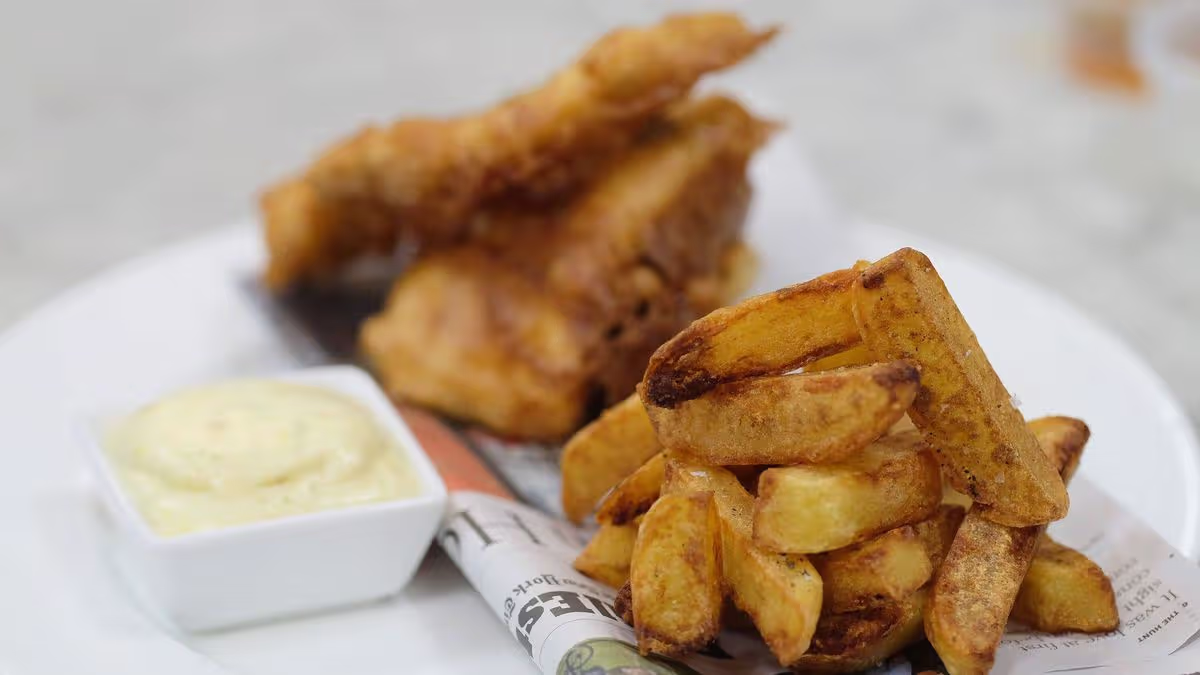
A professional chef has explained how he used to make triple-cooked chips on an “industrial scale” — and explained that one ingredient would “give them the best flavour”
Adding a single ingredient to chips while cooking them will “give them the best flavour you could possibly get”, according to a professional chef. Will Murray, who co-runs Fallow, Roe and FOWL restaurants in London alongside fellow chef Jack Croft, recently took viewers through his method for making the “perfect” triple-cooked chips — a dish he maintains has its origins in Britain.
He revealed that he used to prepare them “a lot” during his time at Dinner by Heston Blumenthal, the celebrity chef’s namesake restaurant, though a “few things have changed” since those days.
Will shared his step-by-step guide on how to cook the beloved side dish in a video for the Fallow YouTube channel, explaining how he once produced them on an “industrial scale” — and revealing the one ingredient that would “give them the best flavour”.
He said: “We had to do it on an industrial scale, and a few things have changed since then. We actually found out a better potato to use than the one we used to use.
“Crucially, I’m going to use beef fat or beef dripping to give them the best flavour you could possibly get. If you wanted to do these at home: patience, a bit of fridge space, you could.”
He stressed that you “can’t make good chips” using a potato with an excessively high starch or sugar content, noting that he was using the Agria potato. While peeling them, he highlighted that this step was essential in achieving those desirable “ruffled edges”.
Will said: “You need to allow for at least 15 per cent of the potato to come away, and you’ll pretty much lose 15 per cent of the spud. That’s going to allow for these beautiful little sort of fissures all over your potato.”
As he rinsed the slices, Will observed that the starch had begun to come away. Agria potatoes, however, contain high levels of the enzyme amylase, which he noted “contributes to crispiness”, helping them to remain fluffy on the inside while developing a crisp exterior.
He cautioned that an excess of starch can be a “bad thing”, making it essential to strike the right balance — ensuring sufficient starch for crispiness, while avoiding too much, which can cause the chips to “brown” too quickly.
Will drained the water, then rinsed the chips until it ran clear. He then added salt to a pot of simmering water before placing the chips in, advising viewers to leave enough room in the pan so they could be moved around.
After around six or seven minutes, the ruffled edges should become visible, at which point the key is to continue stirring them gently “over and over again”.
Once 18 minutes had passed, Will switched off the hob and left the chips to sit and finish cooking through, carefully turning them with a wooden spoon.
He then carefully lifted the chips out using a ladle and arranged them on a tray, acknowledging that some may begin to break apart, though he noted the smaller fragments would be the “nice, crispiest bits”.
Will popped the chips into the freezer while he readied a pan for frying, choosing vegetable oil for the cook. Regarding temperature, he stated he would fry them at 120 to 140 degrees for approximately eight minutes.
At this stage, Will showed viewers the beef fat to be used for the final fry. He mentioned that most delis and butchers stock beef fat which you can render yourself, or alternatively dripping or lard.
He then retrieved the chips from the freezer for the first fry, observing that he’d “chilled them down” until cold, though he clarified that people at home could simply use their fridge for this step.
His oil sat at around 140 degrees, emphasising the need for a “gentle heat” and warning against overcrowding the pan. Will advised checking the chips don’t stick to the pan’s bottom, while cautioning that they’re “delicate”.
Fry the chips for eight to 10 minutes before lifting them from the pan (though he acknowledged his took 12 minutes owing to the pan’s size), noting they shouldn’t have “lots of colour” at this stage.
Will returned the chips to the freezer to cool while he prepared for the subsequent fry. He then incorporated beef fat into the oil (using a one-to-four ratio of beef fat to oil) and heated it to 180 degrees.
He placed the cooled chips into the pan, remarking that the final fry would take between four and five minutes. Finally, Will removed the chips and seasoned them with fine salt, explaining it’s best done while they’re hot.













































You must be logged in to post a comment Login