Connect with us
DAPA Banner

NewsBeat

DHS boss rescinds restrictive $100,000 approval process

Published

on

DHS boss rescinds restrictive $100,000 approval process

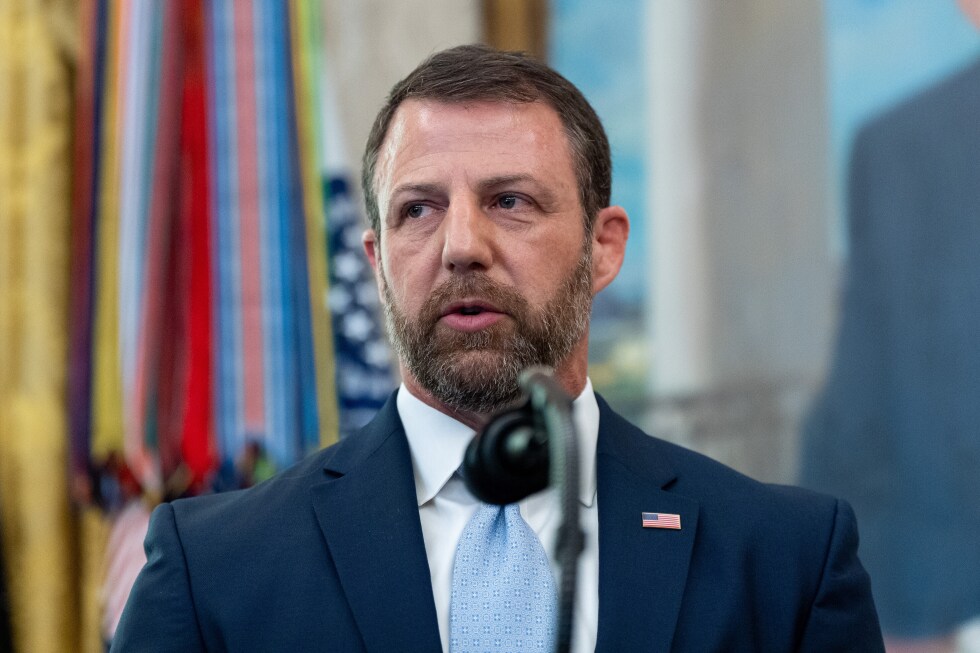
WASHINGTON (AP) — Homeland Security Secretary Markwayne Mullin on Wednesday rescinded a rule that DHS expenditures over $100,000 be personally approved by his office, ending a widely criticized policy implemented by his predecessor Kristi Noem that critics said put a particular burden on the Federal Emergency Management Agency ’s work aiding disaster response and recovery.

The decision marks the first major action by the new Homeland Security leader, sworn in last week, to change a policy implemented by Noem, whom President Donald Trump fired in March.

Mullin’s move is expected to ease a spending bottleneck that lawmakers and states said delayed disaster response and recovery funds, though those impacts are unlikely to be widely felt until after the end of the DHS shutdown, now in its 47th day.

A DHS spokesperson confirmed that Mullin rescinded the rule Wednesday, telling The Associated Press the secretary “re-evaluated the contract processes to make sure DHS is serving the American taxpayer efficiently.” CBS News first reported Mullin’s decision.

Advertisement

The spokesperson said Mullin’s action will streamline the contracting process and allocate aid more efficiently.

The International Association of Emergency Managers praised Mullin’s decision. “We appreciate Secretary Mullin’s common-sense approach to this matter, and we look forward to working with him,” said Josh Morton, president of IAEM-USA.

Noem issued a directive last June requiring that she personally approve any Department of Homeland Security expenditure over $100,000. Critics said the rule undermined FEMA in particular, an agency that routinely issues contracts and reimbursements well over that amount in its work preparing for and responding to natural and manmade disasters across the U.S.

The policy created “an untenable situation for emergency managers,” Morton said, and a bottleneck that also hindered mitigation and preparedness programs, “putting Americans at increased risk from disasters.”

Advertisement

A recently released report by Democratic members of the Senate Homeland Security and Governmental Affairs Committee found the approval rule had delayed at least 1,000 FEMA contracts, grants or disaster reimbursements by September.

The policy came under scrutiny after news reports linked it to unstaffed call centers and delays deploying FEMA Urban Search and Rescue teams to Texas during deadly floods last July, and brought sharp rebuke from some state officials and lawmakers, especially Republican Sen. Thom Tillis of North Carolina, whose state is still recovering from devastation wrought by Hurricane Helene in 2024.

“You’ve failed at FEMA,” Tillis told Noem at a Senate hearing two days before she was fired.

About $2.2 billion in recovery and mitigation dollars were in the DHS approval queue Wednesday, according to FEMA data seen by the AP.

Advertisement

“It’s got a great mission, and I think people at FEMA want to do their job,” Mullin told lawmakers at his March confirmation hearing, sparking cautious hope that he would ease the tumult experienced at the agency under Noem.

Mullin said he would keep the agency ”adequately staffed” after it lost over 2,400 employees last year, and said he was already considering nominees for a permanent FEMA administrator, which the agency still lacks.

Trump has repeatedly floated the idea of eliminating FEMA, saying as recently as Tuesday that the agency is “very expensive and it really doesn’t get the job done.”

Michael Coen, FEMA chief of staff during the Obama and Biden administrations, said, “Hopefully this a step toward transparency and stability between FEMA and states.”

Advertisement

DHS is reviewing other policies across the agency, pausing the purchase of new warehouses for immigration detention this week as it reviews contracts signed under Noem.

Lifting the spending approval rule will not necessarily mean a rapid flow of FEMA reimbursements to states, tribes and territories, as the agency is still impacted by the DHS fund impasse, now the longest government shutdown in U.S. history.

While FEMA disaster response and recovery activities are paid out of a non-lapsing Disaster Relief Fund, that money is running low, a FEMA official warned lawmakers in a House hearing last week, with about $3.6 billion remaining. The DHS appropriations bill would add just over $26 billion to the fund.

Republican lawmakers on Wednesday signaled an agreement to end the shutdown could be reached in the coming days.

Advertisement

——

A previous version of this story misstated that the DHS shutdown was in its 46th day, not its 47th, and that the Senate hearing where Tillis rebuked Noem took place one day before her firing, not two.

Advertisement

Source link

Continue Reading
Click to comment

You must be logged in to post a comment Login

Leave a Reply

NewsBeat

Face of man who threatened police officer with knife during chase

Published

on

Cambridgeshire Live

The man was fleeing police after a suspected drug deal took place

A man who threatened a police officer with a knife during a chase has been jailed. Ricky Green, 42, attempted to flee from police on October 7, 2025, when officers suspected a drug deal was taking place in Searle Street, Cambridge.

Advertisement

During a police chase, Green pulled a knife from his pocked and approached one of the officers in a threatening manner. The 42-year-old was then arrested and a search revealed he was carrying 24 wraps of heroine and 63 wraps of cocaine.

These had a combined street value of around £900. He also had £80 in cash.

Green, of Victoria Road, Cambridge, was found guilty of possession with intent to supply cocaine and heroin. He also pleaded guilty to possession of a pointed article and threatening with a pointed article in a public place.

At Huntingdon Law Courts on Friday (March 27), he was sentenced to three years and nine months in prison. Detective Constable Henry Marshall, who investigated, said: “Green’s behaviour that night posed a serious risk to both our officers and the public.

Advertisement

“Threatening an officer with a knife is completely unacceptable and the sentenced handed down reflects the gravity of his actions. We are committed to removing dangerous individuals who deal harmful drugs and carry weapons from our streets.”

Do you want more of the latest Cambridgeshire news as it comes in from across the county? Sign up to our dedicated newsletter to make sure you never miss a big story from Cambridge or anywhere else in the county. You can also sign up to our dedicated Traffic and Crime newsletters for the latest updates on the topics you are most interested in.

Source link

Advertisement
Continue Reading

NewsBeat

Iran war deals a heavy blow to Iraq’s oil-dependent economy

Published

on

Iran war deals a heavy blow to Iraq's oil-dependent economy

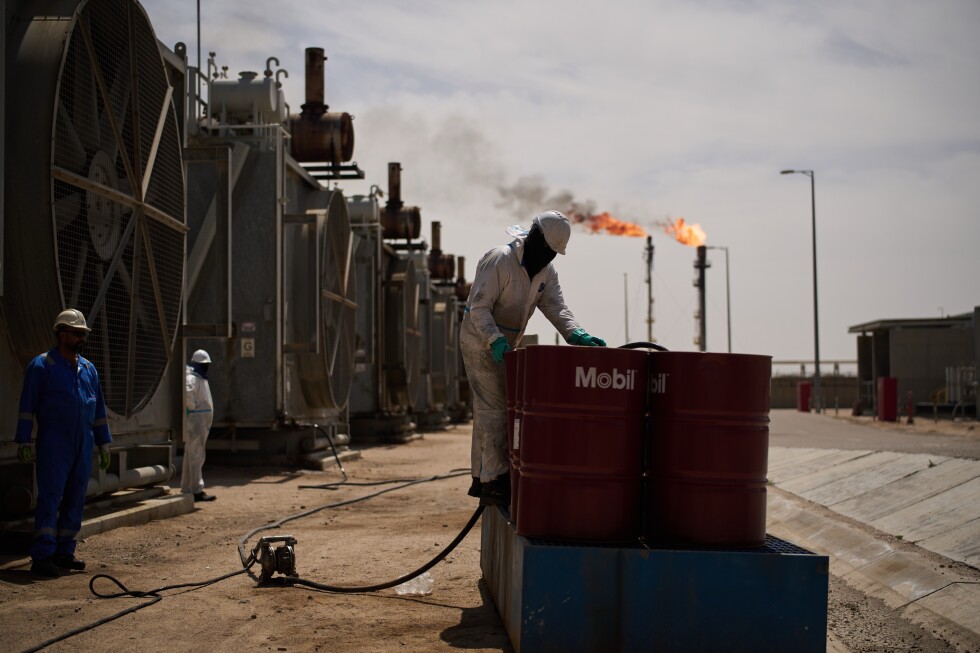
BASRA, Iraq (AP) — Iraqi oil fields once alive with the buzz of workers are nearly deserted. Ports that pulsed with the churn of cargo have fallen still, the din of commerce replaced by the soft rhythm of waves.

A month after the war in Iran started, workers at ports and oil fields in the province of Basra, where almost all of Iraq’s crude is produced and exported, have grown accustomed to rockets streaking across the sky, aimed at U.S. air bases and other strategic facilities.

The war, which began with U.S.-Israeli strikes, is dealing a heavy blow to Iraq’s economy. Iraq relies on oil revenues for roughly 90% of its budget, and most of its oil is exported through the Strait of Hormuz, the narrow mouth of the Persian Gulf where Iran has effectively stopped cargo traffic during the conflict. The war also has led to a sharp reduction in the volume of imported goods reaching southern Iraq’s ports, while attacks have halted traffic at the border it shares with Iran.

Unlike other countries in the Middle East touched by the war, Iraq hosts both entrenched Iran-aligned forces and significant U.S. interests, leaving it exposed to attacks from both sides. Since the war started, oil production in southern Iraq, where Basra is located, has fallen by more than 70% and the volume of imported goods reaching the country’s ports has been cut in half. Drone and missile attacks have targeted American companies and military bases. Iran’s allied Iraqi militias also have struck oil fields and energy infrastructure. Many foreign workers have left.

Advertisement

The Iraqi government should have enough funds to get through mid-May without new oil sales, according to experts, but then it will have to borrow money.

“After that, the government would resort to issuing bonds,” said Ahmed Tabaqchali, an expert in Iraq’s economy. “But not without consequences.”

Oil production suspended

Across southern Iraq, the closure of the Strait of Hormuz has prompted oil fields to scale back production and focus on domestic needs, while oil prices around the globe have risen. Basra’s Zubair oil field, once producing around 400,000 barrels per day, has seen output drop to roughly 250,000, officials said.

Iran has offered assurances that Iraqi crude can safely transit the strait, said Bassem Abdul Karim, the head of the state-run Basra Oil Company, which oversees production in the province. However, because Iraq lacks its own tanker fleet and depends on chartered vessels, shipments ultimately hinge on whether tanker owners are willing to accept the heightened risks of making the journey. Most are not.

Advertisement

At a degassing station in Zubair, where crude is processed, production has also slowed dramatically. “It’s quiet now because of the reductions,” said chief engineer Ammar Hashim. “Of course we are worried.”

The downturn in Zubair reflects a broader decline in Basra. Output has dropped from 3.1 million barrels per day to roughly 900,000 across the province, according to Abdul Karim.

“Exports are currently completely halted. At the moment, we are considering alternative loading areas, but none are fully operational,” he told The Associated Press.

That morning, a drone crashed in the Majnoon oil field north of Basra without detonating. A security official said it’s an increasingly common occurrence, adding that the drone was likely headed toward U.S. bases in Kuwait. Production at the field has been suspended due to the frequency of these events. The official spoke on condition of anonymity because he was not permitted to speak to news media.

Advertisement

Hundreds of employees from American, British, Italian, French and other international oil companies have left Iraq due to the war. The departures accelerated after a March 6 drone strike hit the Burjisiya complex in Basra, a key logistics hub for Iraq’s oil industry used by numerous companies. The attack targeted U.S. oil services company KBR, striking its chemical storage facility.

Another drone struck the British-Petroleum operated Rumaila oil field, prompting some foreign workers there to leave, said Abdul Karim. The field is still operating, he said. On Wednesday, multiple drones attacked a fuel warehouse linked to BP in northern Iraq.

Efforts to reroute Iraq’s oil face major constraints: The country doesn’t have the capacity to boost exports via its northern pipeline, and trucking through Jordan and Syria is costly and inefficient, said Abdul Karim.

Shipping lanes closed

Umm Qasr, Iraq’s primary deep-water port, was once so noisy with imported cargo that it could give you a headache, workers there said.

Advertisement

Now, with the Strait of Hormuz closed, large mother ships bringing shipments to Iraq can no longer get to the port. Instead, they dock in the United Arab Emirates, where the cargo is carried by trucks and then smaller ships to get to Umm Qasr, a costly workaround.

The port’s jetties are running well below their former capacity, with volumes halved by the war, according to port director Mohammed Tahir Fadhil.

When the AP visited, just one cargo ship from the U.A.E. had docked.

The threat to shipping lanes escalated after Iran destroyed two tankers on March 11 in Iraqi waters, the Marshall Islands-flagged Safesea Vishnu and the Malta-flagged Zefyros.

Advertisement

“Today, our only gateway for goods is the United Arab Emirates,” said Farhan Fartousi, director of the Iraqi Ports Company.

Trade disrupted

On Sunday morning, Haidar Abdul-Samad, deputy director of Basra’s Shalamcha border crossing with Iran, was on the phone with an Iranian official, complaining about electricity cuts that had halted trade, urging a quick resolution. The power cuts followed an airstrike that hit the Iranian side of the crossing.

Such disruptions, local officials say, have become routine.

Before the war, the crossing saw constant movement, reflecting strong familial and commercial ties between Iranians and Iraqis in the area. It is also a key transit point for traders and pilgrims heading to Shiite holy sites in central Iraq.

Advertisement

That morning, trucks were backed up for miles.

“Priority is given to food supplies to prevent price increases,” Abdul-Samad said. “Passenger movement is not at the same level as before; activity has declined due to the war in Iran.”

Once electricity was restored, 30-year-old Iranian trader Atefa Al-Fatlawi arrived with her husband and young son. She buys goods at lower prices in Basra to sell back home.

“We are scared because of the bombings,” she said. “Shalamcha was targeted. Today, there were no transport vehicles at the garage because of the attack.”

Advertisement

Source link

Advertisement
Continue Reading

NewsBeat

How Sweden’s communal laundries shield renters from rising energy bills

Published

on

How Sweden’s communal laundries shield renters from rising energy bills

People in many parts of the world are worried about rocketing energy bills as the conflict in the Gulf continues. But for the majority of renters in Sweden’s apartment blocks, this is not so much of an immediate concern.

Part of the reason for this is that many buildings have communal laundries where washing machines and dryers (as well as water and heating) are provided and the cost is included in the rent.

In Sweden, nearly one third of all water and energy is consumed domestically, with two thirds of this through activities relating to cleanliness. Electricity for washing and drying clothes also accounts for a substantial share of residential electricity use.

Communal laundries are one of Sweden’s environmental success stories. They began as part of the post-war million homes project, when modern apartment blocks were equipped with shared tvättstugor (laundry rooms) instead of individual residents having to buy their own machines. These rooms usually have a handful of semi-industrial washing machines, dryers and drying rooms serving an entire building. Access is through a communal booking system, and use is free to residents of the building.

Advertisement

I live in the Swedish city of Lund. Since I met my husband 11 years ago he’s been the go-to person for laundry, and takes the loads down to the communal room. For our family, using this facility is convenient because someone else takes care of maintenance and servicing of the machines and we don’t pay extra for washing clothes. It’s all included in the housing association fee, which is negotiated for the building annually.

Tvättstugor rose to prominence during the Swedish government’s widespread building programme of the 1960s and 1970s, as part of a commitment to improving living conditions and creating a fairer society.

Clean running water, reasonably priced central heating and access to a laundry were part of a broader social project: raising living standards collectively, through shared infrastructure. This often meant that shared facilities such as laundry rooms and heating were included in the rent at no extra cost. This means that many people living in apartment blocks dotted around many Swedish cities don’t have to worry about too much about hikes in energy costs for washing, or heating, if, as expected, household energy prices rise this summer, due to the conflict in the Gulf.

Around 51% of Sweden’s housing is in these apartment blocks (2.3 million homes). And a survey of tenants in Sweden in 2020 found that around 53% have access to the tvättstuga.

Advertisement

How communal laundries save resources

If each household in Sweden had its own appliances, the material stock of machines – and future waste – would escalate quickly. A tvättstuga, by contrast, can serve dozens of residences with just a few semi-industrial machines that are built to last, maintained professionally and replaced strategically. It is a denser, leaner way of organising cleanliness.

Shared laundry spaces change how often we wash. Interviews and time-use data suggest that people with easy access to their own machine tend to wash more frequently, with smaller loads. If the washing machine is in the next room and energy and water are relatively cheap, it is tempting to wash “just in case”, or to avoid the minor inconvenience of airing clothes or dabbing away a single stain. When you have to book a slot, carry clothes down to the basement and work within a fixed time window, the calculation shifts. People batch their washing, fill machines properly and think twice before throwing something in after a single wear.

Communal laundries also make technological improvement easier. Upgrading a handful of machines in a shared space is far more straightforward than relying on hundreds of individual households to replace old appliances. Shared infrastructure can be a powerful lever: change the system once, and many people benefit.

But tvättstugor are also social spaces. Where I live the laundry room doubles as a small community centre. There’s a children’s book swap, a noticeboard with local events, and a steady trickle of neighbourly encounters. My husband has his gang of dads that he sees there every Sunday. They chat while folding, sharing tips about laundry liquid and life. Negotiations over booking times, cleaning lint filters and wiping benches are not always idyllic – there are passive-aggressive notes and the odd conflict – but they are also a form of everyday democracy. We learn, in a very concrete way, how to share resources, negotiate conflict, respect common rules and live together.

Advertisement
Two dads folding the washing in the author’s communal laundry area.
Tullia Jack, CC BY

Despite the environmental and social benefits, communal laundries are disappearing from new housing schemes. Many municipal housing companies are not including tvättstugor in new builds. This is a shame because it’s not possible to solve the energy crisis individually.

We need shared infrastructures – from tvättstugor to public transport to district heating (a centralised heating system that distributes heat to a range of buildings). Sweden shows how these facilities can work in practice: these shared laundry rooms spread costs, reduce waste and nudge people towards sufficiency. Just as importantly, they give us a reason to meet, compromise and practice our negotiation skills. This can help us build the solidarity needed to tackle the climate crisis.

Source link

Advertisement
Continue Reading

NewsBeat

‘Manchester United need the training’ Armagh star dismisses training camp row

Published

on

Belfast Live

Liverpool fan and former Northern Ireland under-19 soccer star Oisin Conaty couldn’t resist a dig after the Carton House misunderstanding

Oisín Conaty has poured cold water on claims of a training ground stand-off between Armagh and Manchester United – insisting the whole thing “never happened”.

Advertisement

Rumours gathered pace online earlier this week, suggesting both teams were due to use Carton House at the same time, with Armagh allegedly forced to step aside as the pitches were lined out for soccer instead of GAA.

But Conaty, who was a talented soccer player himself and represented Northern Ireland at under-19 level, says the reality was far less dramatic.

“The pitches weren’t lined out, so we just went back up the road and we trained in Armagh,” he explained.

“It was a Saturday and Sunday, no big deal. We got three good sessions in and we’re happy with the weekend.

Advertisement

“I saw it coming out yesterday, a few tweets, but it didn’t affect us.”

Rather than any clash with the Premier League giants, Armagh simply adjusted their plans – with no disruption to their preparations.

“Everything was the same – the meetings, the trainings, everything,” Conaty added.

“We got two good sessions in and another walk-through session. It was perfect.”

Advertisement

The Orchard County ultimately lost nothing from the change of venue – aside from a night away.

“We got the same number of training sessions in Armagh that we would have done in Carton House,” he said.

“The only difference was we slept in our own beds.”

And while the supposed run-in with Manchester United never materialised, Conaty couldn’t resist a cheeky dig – especially given his footballing loyalties.

Advertisement

“If United were there, I’m a Liverpool man, so there could have been a bit of a stand-off,” he joked.

“United need the result, don’t they?

“They need the training in the last few years they’ve been going through.”

* Oisin Conaty is an AIB ambassador ahead of the 2026 GAA Championship

Advertisement

Click here to sign up to our sport newsletter, bringing you the latest sports news, headlines and top stories

Source link

Continue Reading

NewsBeat

12 amazing things you need to know about the Artemis II mission to the moon

Published

on

Wales Online

Here are all the amazing things we think you should know as NASA makes history

NASA’s Artemis II mission, the first human spaceflight to travel beyond low‑Earth orbit in more than 50 years, successfully launched on April 1, 2026, from the Kennedy Space Center in Florida, embarking on a historic journey around the Moon.

Advertisement

The 10‑day flight marks humanity’s return to deep‑space exploration since the end of NASA’s Apollo program and will test critical spacecraft systems ahead of planned lunar landings in years to come.

Here are 12 amazing things we think you should know about the Artemis II mission:

1. First time in 50 years

The Artemis II mission marks the first time in more than 50 years that astronauts have been sent on a mission around the Moon. The last such journey took place during Apollo 17 in 1972.

2. A powerful launch from Florida

The mission lifted off from the Kennedy Space Center aboard NASA’s Space Launch System, the most powerful rocket the agency has ever built. It generated 8.8 million pounds of thrust, rising slowly at first before accelerating into the sky, leaving a bright plume visible for miles and a deep rumble felt by spectators.

Advertisement

3. Delays and last-minute technical concerns

Artemis II faced several delays in the months leading up to launch, including hydrogen and helium leaks discovered during testing. In the final hour before liftoff, engineers also had to resolve a battery issue in the launch abort system, briefly pausing the countdown before confirming the rocket was safe to fly.

4. The four-person crew on board

The astronauts on the mission are commander Reid Wiseman, pilot Victor Glover, and mission specialists Christina Koch and Jeremy Hansen.

The four astronauts include the first woman, the first Black astronaut and the first Canadian astronauts assigned to a lunar mission. A moment in history!

5. A 10-day mission timeline

The mission is expected to last around 10 days, during which the crew will travel further from Earth than any humans before. However, unlike the Apollo missions, Artemis II is not designed to land on the Moon but to test systems for future missions.

6. Initial testing in Earth orbit

After launch, the Orion spacecraft entered Earth orbit, where the crew is spending the first day carrying out system checks. These include testing navigation, communications, and life-support systems to ensure the spacecraft is ready for the journey into deep space.

7. The journey towards the Moon

Once initial checks are complete, Orion will fire its main engine and begin its journey of approximately 244,000 miles to the Moon. This phase, lasting several days, is critical for assessing the spacecraft’s performance outside Earth’s immediate environment.

8. They will not actually be landing on the moon

On day six, the spacecraft will perform a flyby of the Moon, travelling thousands of miles beyond it. The astronauts will capture images and gather data, helping NASA understand how systems operate in deep space conditions.

Advertisement

9. Returning using gravity

After the flyby, Orion will use the gravitational pull of both the Moon and Earth to guide its return. This planned trajectory allows the spacecraft to conserve fuel while safely heading back home.

10. Re-entry through extreme heat

As the capsule re-enters Earth’s atmosphere, it will experience temperatures of around 1,650°C. The service module will separate before re-entry, leaving the crew module to withstand the intense heat as it descends.

11. They will land the module in the Pacific Ocean

The mission will end with a parachute-assisted splashdown in the Pacific Ocean, where recovery teams will retrieve the astronauts. This method follows procedures used during earlier lunar missions.

12. Preparing for future Moon landings

Although Artemis II will not land on the Moon, it is a key step towards future missions that will. NASA plans to use data from this flight to prepare for crewed landings later in the decade, with the long-term goal of establishing a sustained human presence on the Moon and eventually sending astronauts to Mars.

Get daily breaking news updates on your phone by joining our WhatsApp community here. We occasionally treat members to special offers, promotions and ads from us and our partners. See our Privacy Notice

Source link

Advertisement
Continue Reading

NewsBeat

Arrests made after manhunt for Bristol shooter and schools in lockdown

Published

on

Daily Record

The force has confirmed three people have been arrested after a ‘shocking’ daylight shooting in Bristol

A man was left ‘seriously injured’ after a shocking shooting in Bristol on Wednesday. Police have confirmed three people have since been arrested after a major manhunt.

A man in his 20s was rushed to hospital after sustaining gunshot wounds at around 1.47pm yesterday (Wednesday, April 1). Avon and Somerset Police descended on the scene after reports a gun had been fired at a car in Speedwell Road near a pub and car wash.

Advertisement

Officers cordoned off the area, near the Wackum pub, according to Bristol Post, while several local schools went into lockdown.

A manhunt gripped the city yesterday with a helicopter in desperate search for the suspected shooter.

The force have since issued a major update in the early hours as three people have been arrested in connection with the incident.

Advertisement

A man in his twenties was arrested just after 2.30am on suspicion of attempted murder, and another man and a woman in their twenties were arrested on suspicion of assisting an offender.

All three are in police custody.

The police said that enquiries are continuing, however they are not looking for anyone else in connection with this incident at this time.

Advertisement

A scene remains in place in St Anne’s Woods, near Brislington, as an area of interest and members of the public can expect to see a heightened police presence in this area and in the Speedwell area of Bristol.

A spokesperson for Avon and Somerset Police said: “We understand that this may have been a very concerning incident, but we have deployed a significant number of resources as part of our response, including the National Police Air Service helicopter, specially-trained firearms officers and drone units.

“We continue to appeal for anyone who witnessed the incident to come forward, including anyone with footage of the incident. If you can help, please call us.”

Source link

Advertisement
Continue Reading

NewsBeat

Home or away? Why planning a sustainable holiday is about more than swapping planes for trains

Published

on

Home or away? Why planning a sustainable holiday is about more than swapping planes for trains

As we emerge from a relentlessly gloomy winter in the UK, many are itching for a holiday in the sun. For some that means seeking warmer climates abroad and hopping on a plane to get there.

But as climate change brings wetter winters to the UK, flying for holidays is fuelling rapidly rising aviation emissions. And addressing this not only needs a shift towards climate-friendly travel but a reimagining of where holidays take place.

For years we’ve been sold the promise of guilt-free flying through green technologies such as sustainable aviation fuels and carbon offsetting from polluting airlines.

But all come with significant limitations and none are ready to deliver the emissions reductions we need within the time we have. Ultimately, without curbing demand, current climate policies will not deliver any major emissions reductions in aviation. That makes it more important to reduce how much we fly.

Advertisement

In the UK, aviation is set to become the largest emitting sector by 2040 and this rise is being driven primarily by leisure travel. This includes vacations and visiting family or friends with the majority of departing passengers flying for holidays.

Beyond switching planes for trains

The good news is the growth in aviation emissions isn’t being caused by your annual holiday to Spain. Most flights are taken by a relatively small number flying several times a year, with 70% of flights taken by just 15% of people. This group is also more likely to take frequent short-haul flights which could be replaced by train. Shifting the behaviour of this elite group (from planes to trains) would have a significant impact on cutting emissions.

Trains are significantly better for the climate compared to flying, with a single flight from London to Berlin clocking up the same amount of carbon as 11 trips by train.

As a researcher focusing on how to promote flight-free holidays to reduce aviation emissions, I used to find this reassuring. We didn’t necessarily need to change where we went for holidays. We just needed to get frequent flyers on trains instead of planes.

Advertisement

But, sadly, it isn’t that simple. Recent research has found the majority of UK aviation emissions actually come from long-haul leisure flights. So even if all flights on routes that could be completed by rail in under 24 hours were replaced, this would only address around 14% of UK aviation emissions.

Reducing aviation emissions therefore requires not only getting frequent flyers to shift from planes to trains, but asking wider questions about where people want to go and why.

Flying long haul is one of the worst things you can do in terms of the environment.
Steve Worner / Shutterstock

Rethinking what a ‘proper’ holiday looks like

Reducing demand for flying isn’t just a structural challenge addressing cheap flights and expensive trains, but also a social one. Five minutes scrolling on Instagram bombards you with bucket list destinations and influencers implying a life well lived is a passport full of stamps.

Since the rise of budget airlines in the 1990s, flying for holidays has become increasingly normalised socially, despite largely remaining something only a relatively wealthy few do regularly. And the pull isn’t just about cost and convenience.

Advertisement

Research shows if cost and time weren’t an issue, people say they would fly more. Flying has become a means to an end in reaching the exotic, unfamiliar and – crucially for British people – the sun.

Tourists associate distance with novelty, contributing to domestic holidays being less popular than those abroad. There’s almost a hierarchy of destinations where places furthest away and more novel feel more desirable. My ongoing research on how people talk about holidays reflects this – some questioned whether the UK even counts as a holiday.

I have found that holidays in far-away places seemed to impress participants more than those spent in the UK and Europe, often with responses such as “wow” and “amazing”. Destinations further afield were referred to as “grand”, “swanky”, “extravagant” and “big”, contrasting with the language used when discussing holidays closer to home with “only”, “little” and “just”. In this way, the places we visit on holiday act as social currency in conversations. Being well travelled grants us cultural capital, the accumulated knowledge and experience of the world signalling social status.

But ideas of a good holiday are open to change. In one survey, half of the respondents said they flew less because they knew someone who had given up flying due to climate change. So social influence works in both directions.

Advertisement

Some, for example those part of the slow travel movement, are already resisting the idea that closer destinations are somehow lesser. Participants in our ongoing research described planning trips around where they can feasibly get to by train, making the journey part of the holiday or foregrounding quality time with loved ones over the destination.

This isn’t about giving up holidays abroad and foregoing the sun, especially if you’re only flying to a European destination once or twice a year. Structural change, like fairer pricing and better rail connections, is also essential (and long overdue) if people are to make changes.

Even taking the train from London to Edinburgh costs on average 60% more than flying and this will persist until airlines are taxed fairly and train tickets are made the same price or cheaper than plane tickets. These are policies which the public supports.

So as we look ahead to summer it’s worth asking if what we’re actually longing for – whether it be warmth, rest, adventure, quality time, cultural interest or a change of scenery – really requires a long-haul flight (or lots of short-haul flights). A sustainable holiday starts with asking that question before deciding where to go.

Advertisement

Source link

Continue Reading

NewsBeat

Belfast school accused of using charity donations for low-income families for ‘promotional prizes’

Published

on

Belfast Live

The school – which is currently operating in a £2.7m deficit – has been accused of using gifts intended for some of their most disadvantaged pupils as promotional ‘prizes’

Advertisement

A West Belfast school is facing accusations it misappropriated donations of toys and electronics intended for 80 of the school’s most disadvantaged pupils – and used them for marketing purposes.

De La Salle College is understood to have received toys and other items through the Cash for Kids Mission Christmas Appeal in the run up to Christmas 2025.

The charity confirmed to Belfast Live that the school applied for support for 80 children, who were at risk of waking up with nothing on Christmas morning.

Cash for Kids said organisations applying to the appeal are asked to identify the children who will receive support, including details such as age and any additional needs, with items intended for those specific recipients. However, concerns have since been raised about how the donations were used.

Advertisement

Belfast Live spoke to multiple sources at the school who alleged not all of the items were distributed to the children identified in the application. It was further claimed that some of the goods were instead used as prizes at the school’s ‘Open Night’ in January and distributed more broadly in classrooms.

As part of our investigation, Belfast Live was shown footage that appears to show a large quantity of toys and high-end electronic items stored within the school. Separate footage, posted by the college on social media, shows similar items being distributed to local primary school children following the Open Night. It is not known whether the items shown in either video include those received as part of the Cash for Kids appeal.

When Belfast Live contacted Cash for Kids, the charity confirmed this was the first time they had been made aware of the allegations and are now in contact with the school.

Advertisement

Cash for Kids asks recipient groups to distribute items to children identified in their application and issues a monitoring form in January seeking feedback on how donations were used.

The terms and conditions set out for receipt of the grants explicitly state that: “donated goods must not be sold, cannot be used for fundraising purposes and are strictly non-transferable. Any unused donations must be returned to Cash for Kids for redistribution to support local underprivileged children.”

Organisations that do not meet the terms of a grant application may be refused future support, among other potential steps, depending on the circumstances.

These allegations come on the backdrop of financial pressures at the school. Education Authority records show that the school, which had been operating with a healthy surplus until 2019, is now operating in a budget deficit of £2.7m following a sharp decline in pupil numbers.

Advertisement

In 2016, De La Salle College had an enrolment of 1,117 pupils. By 2024/25, enrolment figures had fallen by more than 30% to just 774 pupils, with more than 50% in receipt of free school meals.

There is no suggestion that the school’s financial position is directly linked to the concerns raised about the use of the donated items.

Belfast Live contacted De La Salle College and presented them with the findings of this investigation. We posed a series of questions to the school, including whether all items were distributed to intended recipients and whether any were used as prizes at the school’s Open Night.

Advertisement

The school was also asked to clarify whether items had been distributed more broadly within the school and to outline its policy on handling charitable donations.

Despite multiple attempts to contact the school via phone and email, no response was received by the time of publication.

For all the latest news, visit the Belfast Live homepage here and sign up to our daily newsletter here

Source link

Advertisement
Continue Reading

NewsBeat

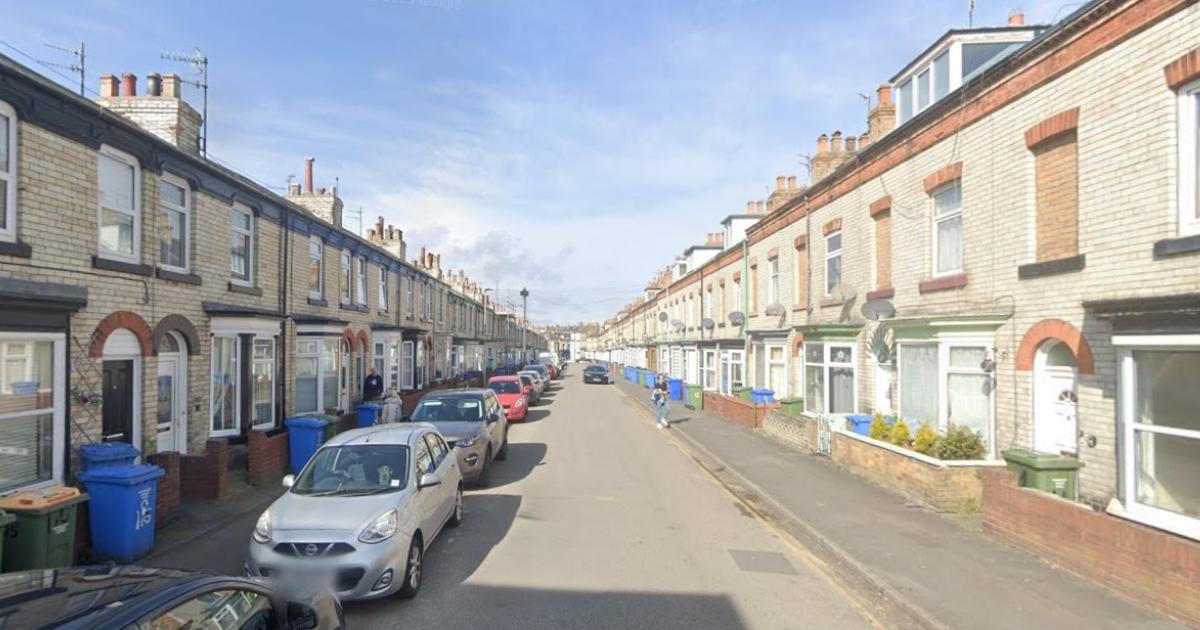
Scarborough – Suzuki car thieves target town centre street

Published

on

Scarborough - Suzuki car thieves target town centre street

As a subscriber, you are shown 80% less display advertising when reading our
articles.

Those ads you do see are predominantly from local businesses promoting local
services
.

These adverts enable local businesses to get in front of their target audience – the local
community
.

It is important that we continue to promote these adverts as our local businesses need
as much support as possible during these challenging times.

Advertisement

Source link

Advertisement
Continue Reading

NewsBeat

Liverpool injury update: Jeremie Frimpong, Mohamed Salah, Alexander Isak, Alisson Becker latest news and return dates

Published

on

Liverpool injury update: Jeremie Frimpong, Mohamed Salah, Alexander Isak, Alisson Becker latest news and return dates

The 33-year-old goalkeeper, who has been absent with fitness issues on several occasions this term, withdrew from the Brazilian squad due to “injury,” according to the country’s football federation, while Slot – speaking in his last post-match press conference on March 21 – said “let’s see afterwards” after confirming that Alisson would “definitely be out during the international break”.

Source link

Continue Reading

Trending

Copyright © 2025