Connect with us
DAPA Banner
DAPA Coin
DAPA
COIN PAYMENT ASSET
PRIVACY · BLOCKDAG · HOMOMORPHIC ENCRYPTION · RUST
ElGamal Encrypted MINE DAPA
🚫 GENESIS SOLD OUT
DAPAPAY COMING

NewsBeat

DNA uncovers a dynamic history of migration to Britain

Published

on

DNA uncovers a dynamic history of migration to Britain

Each of us tells a story about who we are, often tracing our identity back through an imagined line of ancestors. Though identity is fundamentally cultural, we tend to anchor it in biology – in the idea of a stable genetic inheritance passed down through generations.

Population genomics has exposed a history far more complex, dynamic and intertwined than we might wish to imagine. Even in a place such as Britain, long imagined as an island of deep and uninterrupted heritage, genetic data suggest a history marked by intense migration, mixture and cultural reinvention.

Two new studies have reinforced this picture, by analysing DNA from the skeletal remains of British individuals who lived during Roman and medieval times.

Prehistoric Britain witnessed periodic major migrations interspersed with smaller and more regular movements of peoples across what was then a contiguous landscape.

Advertisement

After about 6100BC, rising sea levels isolated Britain from mainland Europe, helping to promote later historical narratives of a population relatively isolated.

Yet even early observers recognised otherwise. Writing in the first century AD, the
Roman historian Tacitus noted the diversity of Britain’s tribes, suggesting their origins lay in Germany, Gaul and Iberia.

Druids incite the Britons to oppose the landing of the Romans.
Edouard Zier

Such conclusions were drawn from physical, cultural and linguistic observations. Now it is testable, thanks to rapid advances in population genomics and ancient DNA sequencing, allowing direct ancestry reconstruction across demographic and political changes.

A major recent study by Marina Silva, from the Francis Crick Institute in London, and colleagues analysed more than 1,000 ancient genomes from across Britain during the first millennium AD.

Advertisement

The pre-print, which has not yet been published in a journal, asks one simple question: could the main historical events of Britain – the Roman occupation, Anglo-Saxon migration, the Viking Age and the Norman conquest – be detected in the genetic data of the populations that lived through these eras?

The answer was complicated. The Roman period, for all its political and cultural upheaval, left surprisingly little mark on the genetic structure of the wider population. About 80% of the individuals who lived during Roman times in Britain cluster almost exactly with those of the immediately preceding Iron Age, arguing for genetic continuity and no replacement. Even in urban centres where occupying Roman elites were most prevalent, the broader population retained overwhelmingly local ancestry.

In contrast, the early medieval period, from around 410AD (when Roman rule collapsed) to 1066AD, saw a substantial influx of new ancestry from across the North Sea. The researchers were able to detect this influx by comparing the British samples with genetic data from populations in other parts of north-west Europe. Continental ancestry associated with Anglo-Saxon migration appears in more than 70% of of the burials in southern “Anglo-Saxon” Britain.

Thus, migration was not just cultural but demographic on a scale sufficient to leave its imprint on the shape of population structure.

Advertisement

Yet even this transformation cannot be generalised. From about 700AD to 1000AD, further waves of continental influence appear in Britain, with the arrival of settlers from central Europe (seemingly from France and the Rhineland) and, to a lesser extent, the south of Europe. However, the Viking Age leaves a more uneven and regionally variable genetic signal than its historical prominence might suggest.
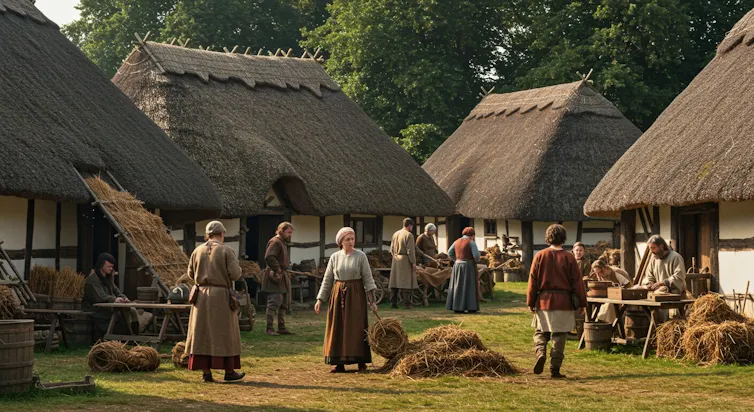
The early medieval period saw a substantial influx of new ancestry from across the North Sea
The early medieval period saw a substantial influx of new ancestry from across the North Sea.
Shutterstock AI

While a Scandinavian component is clearly present in northern and eastern regions,
it is rarely of a magnitude comparable to that found in early medieval migrations.
Most surprisingly, the Norman conquest of 1066 appears to have been largely an
elite process, leaving little detectable trace in the genomes of the common
population.

Genome-wide ancestry profiles straddle the date of the conquest, with
no hint of abrupt population replacement. Despite all its drama, the conquest seems, at the level of population genetics, to have involved elite replacement by relatively few individuals.

A second pre-print study provides a closer view of what this looked like on the ground. Focusing on a rural cemetery at Priory Orchard in Surrey, Flavio De Angelis, from Arizona State University in Tempe, and colleagues examined individuals buried across the centuries before and after the Norman conquest.

Again, the results are surprising: rather than any clear genetic break after 1066, both pre- and post-conquest burials fall within the same cluster, showing shared ancestry and no evidence for demographic turnover. The continuity is not just qualitative, but visible in the statistical similarity of ancestry components
across generations.

Advertisement
Norman cavalry attack Anglo-Saxon foot soldiers during the Battle of Hastings, as depicted on the Bayeux tapestry.

Norman cavalry attack Anglo-Saxon foot soldiers during the Battle of Hastings, as depicted on the Bayeux tapestry.
funkyfood London – Paul Williams

Instead, the community reflects a much longer history of interaction across the North Sea world. Its ancestry includes Anglo-Saxon-associated components, significant Scandinavian input dating to the Viking period, and smaller continental contributions.

Crucially, these elements are already present before the Norman arrival and persist
afterward. The Norman conquest, in genetic terms, is barely visible. What looks, on historical timelines, like a moment of dramatic rupture appears, at the level of the common individual, as a continuation. Genes tell the story of populations and detect localised impacts of migration, but they do not map neatly onto geopolitics.

Taken together, these studies point to a crucial distinction. Cultural and political change does not necessarily equate to demographic change. Britain’s history is neither one of uninterrupted continuity nor of repeated population replacement, but something more complex: long-term mixture punctuated by events that reshape institutions more than populations.

Some migrations – such as those of the early medieval period – left deep and
measurable genetic legacies. Others, despite their prominence in historical
narratives, left only faint traces. The discrepancy is striking: the scale of genetic change does not map neatly onto the scale of historical attention.

Advertisement
Cardiff castle was built by the Normans on top of a Roman fort.
meunierd / Shutterstock

Modern genetic data reinforce this picture. Contemporary populations across the
British Isles do not form a single, uniform group. Instead, they cluster into
overlapping but distinct lineages reflecting different regional histories and varying degrees of past migration.

These patterns echo the ancient record, but they did not affect all regions equally. Wales and Ireland retain stronger continuity with earlier populations, while England shows clearer evidence of ancestry linked to early medieval migration from northern Europe. Scotland occupies an intermediate position, reflecting both long-term continuity and later Scandinavian influence.

Importantly, these differences are matters of degree, not kind. All populations of the British Isles share deep common ancestry overlaid by layers of migration whose
effects vary regionally. The structure we see today is the product of these layered
histories, not the survival of isolated or “pure” populations.

What emerges is not a story of rooted, bounded identities, but of continual
connection. British identity – like all identities – has been assembled over millennia through movement, interaction and adaptation.

Modern genomes do not simply tell us who we are; they preserve how we got here.
History does not make migration exceptional – it reveals it as the norm.


Advertisement

Source link

Continue Reading
Click to comment

You must be logged in to post a comment Login

Leave a Reply

NewsBeat

Major improvements needed at Welsh A&E department, says watchdog

Published

on

Wales Online

Concerns were reported after the inspection about leadership, governance and risk management within the emergency department at Ysbyty Glan Clwyd

A Welsh emergency department has been told by inspectors that significant improvements are needed after issues with leadership, overcrowding, and the safety and experience of patients waiting for care. An unannounced inspection of at Ysbyty Glan Clwyd, in Denbighshire, took place in May 2026.

Advertisement

As a result of of the inspection, Healthcare Inspectorate Wales (HIW) designated the Emergency Department as a service requiring significant improvement (SRSI).

HIW is the independent regulator of healthcare and the inspectorate for NHS services in Wales. For our free daily briefing on the biggest issues facing the nation sign up to the Wales Matters newsletter here.

Concerns were reported after the inspection about leadership, governance and risk management within the Emergency Department at Ysbyty Glan Clwyd.

The department was previously subject to SRSI arrangements between May 2022 and August 2024. This latest designation indicates that the improvements made during that period have not been sustained.

Advertisement

However, the regulator says patients who need urgent or emergency care should continue to attend the department.

They say improvements are needed to support consistently safe and well‑managed care, underpinned by effective leadership and oversight.

HIW say clear and urgent improvement, supported by stronger oversight, with enhanced monitoring and follow‑up to track progress is needed.

The regulator says that while they know there is significant demand on the service, the decision is based on whether systems, accountability and oversight are sufficiently robust to manage those pressures safely and reduce the risk of variation in care.

Advertisement

The regulator is now working with Betsi Cadwaladr University Health Board and says that will continue until it is satisfied that the necessary improvements have been made.

The full inspection report, setting out detailed findings, will be published in September 2026.

Chief executive of Healthcare Inspectorate Wales, Alun Jones, said: “We have designated the Emergency Department at Ysbyty Glan Clwyd as a Service Requiring Significant Improvement following concerns about leadership, governance and the management of risk.

“This designation means we expect clear and urgent improvement, supported by stronger oversight and accountability.

Advertisement

“While we recognise the pressures facing emergency departments, services must have effective arrangements in place to manage those pressures safely. We will continue to monitor progress closely and will report our full findings in September.”

The health board’s chief executive Carol Shillabeer said: “Following an unannounced inspection by Healthcare Inspectorate Wales in May 2026, the Emergency Department at Glan Clwyd Hospital will be designated as a Service Requiring Significant Improvement. The decision reflects serious concerns and we fully accept the findings.

“The issues relate to leadership and culture, patient safety, overcrowding and the safety and experience of patients waiting for care. We are sorry that, in some areas, the standard of care has not been where it needs to be for our patients.

“We know this will be concerning for the people we serve and for our staff, who are working under sustained pressure, and we want to reassure them that immediate action is underway.

Advertisement

“We have a clear understanding of the issues identified and a strengthened improvement plan is already being implemented with pace and strong oversight. This includes reducing overcrowding, strengthening patient safety, improving leadership and oversight within the department, and ensuring patients receive safe care from the point they arrive, including while they are waiting to be seen.

“Next week, the board will also consider plans to strengthen staffing in our emergency departments across North Wales. This represents another key step in delivering safe, timely and sustainable improvements in urgent and emergency care, complementing ongoing joint efforts with partners to address the structural issues of constrained patient flow and capacity, which are often the root cause of long waiting times, delayed ambulance handovers, and overcrowding within our emergency departments.

“These challenges cannot be addressed by the health board alone and we remain hugely grateful to our colleagues in local authorities and partner organisations for working with us to deliver the required improvements.

“We welcome the scrutiny from HIW and will continue to report openly on the progress we make. Our focus is on delivering safe, timely and high-quality care for the people of north Wales”.

Advertisement

Source link

Continue Reading

NewsBeat

Archbishop Holgate’s, York, awarded for young carers support

Published

on

Archbishop Holgate's, York, awarded for young carers support

Archbishop Holgate’s School in Hull Road has been presented with the Young Carers in Schools award for the way it champions and supports young people with their education while they are also juggling caring responsibilities.

The accolade is part of the Young Carers in School programme run by charities The Children’s Society and Carers Trust.

Archbishop Holgate's CE School (Image: Newsquest)Archbishop Holgate’s, York, awarded for young carers support.

The recognition follows recent praise in the school’s most recent Ofsted inspection which recognised its high aspirations, ambitious curriculum and inclusive ethos.


Recommended reads:

Advertisement

Two arrested after drug raids at separate addresses in North Yorkshire

York’s Viking past comes alive as immersive theatre returns to Barley Hal

Global superstar heads jam-packed week of major shows in North Yorkshire


The programme provides primary and secondary schools across England with step-by-step guidance for teachers, leaders and non-teaching staff to gain the practical tools they need to help young carers.

Advertisement

Archbishop Holgate’s Young Carers Lead, Samantha Stead, said: “Receiving the Young Carers in Schools Award is a momentous milestone for us.

“Young carers often face invisible barriers to their education, balancing homework and exams with the emotional and physical demands of supporting a loved one. Our goal has always been to ensure that no young person has to choose between their education and their family.”

Archbishop Holgate’s School won the award by demonstrating how it supports young carers. This includes dedicated homework clubs and accessible drop-in sessions.

By working in close partnership with the York Carers Centre, the school actively gathers the insights and voices of identified young carers to directly shape and improve its in-school support systems.

Advertisement

The school also prioritises staff development, equipping them with the tools to recognise early signs of young carers and ensuring every student receives the timely, targeted support they deserve.

Headteacher, Lucie Pond, said: “Our young carers show remarkable resilience, compassion and maturity every day. This recognition celebrates not only the work of our staff, but the incredible young people we are privileged to support.”

Young carers are children under 18 who are responsible for the care of a family member who, due to illness, disability, mental health condition or addiction, can’t manage without their support.

Nathaniel in Year 10 said: “As a young carer, school supports me by being more flexible with homework, offering more support whenever I need it, and generally supporting me and other young carers with general life.

Advertisement

“We also have monthly drop-ins where we can socialise with other young carers getting to know more people like us.”

Research from the Carers Trust found that 40 per cent of young carers do not feel they receive enough support to balance education and caring responsibilities. Separate research by The Children’s Society found young carers achieve, on average, one GCSE grade lower than their peers and often report lower levels of confidence and wellbeing.

Samantha Stead added “While we are incredibly proud of this recognition, our work doesn’t stop here. We will continue to evolve our support systems so that every young carer at our school feels seen, valued, and empowered to reach their full potential.”

Advertisement

Source link

Continue Reading

NewsBeat

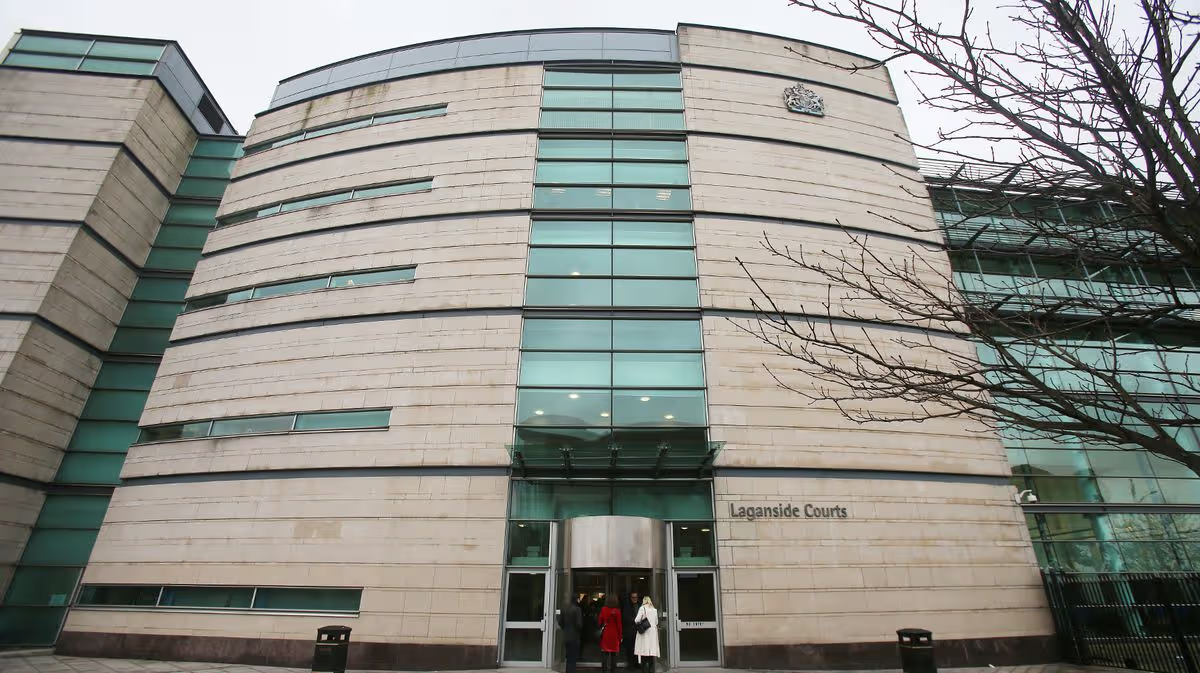
Man drank half bottle of vodka after work before ‘getting swept up in’ Newtownabbey riot, court hears

Published

on

Belfast Live

Max Mrowca , 29, appeared in court today

A man drank half a bottle of vodka straight after finishing work before he “got swept up in” disorder in Newtownabbey where he was seen throwing bricks at police, a court heard.

Advertisement

Max Mrowca , 29, from Newtownabbey appeared at Belfast Magistrates Court on Tuesday, June 16, where he faced two charges in connection with disorder at Cloughfern Roundabout on Tuesday, June 9.

The court heard that Mrowca had handed himself into police after an image was released as part of police’s Operation Exposure to identify those involved in last week’s violent disorder.

He had reportedly been seen on CCTV over the course of 50 minutes, dressed in black with a scarf over his face throwing bricks and masonry at police.

Mrowca’s representation said his client was applying for bail as he had recently started a job as a customs compliance specialist at a business in East Belfast and would lose it if remanded in custody.

Advertisement

He also said Mrowca deserved credit for handing himself over to officers, accepting he was in the image and apologising to police.

The court heard that Mrowca had an alcohol problem. On June 9, he drank half a bottle of vodka straight after finishing work and attended the roundabout after seeing social media posts about a gathering. He then got “swept up in” the disorder with the alcohol he had consumed playing a factor in this.

However, his bail was refused as he could pose a risk of harm to the general public and is due to appear in court again on July 9.

For all the latest news, visit the Belfast Live homepage here and sign up to our daily newsletter here.

Advertisement

Source link

Continue Reading

NewsBeat

Windfarm scheme risks future generations, says councillor

Published

on

Windfarm scheme risks future generations, says councillor

The meeting, organised by the Hope Moor Action Group, will take place at 7pm on Thursday, June 25, in the main hall at Richmond School.

The group says many residents in Richmond and Arkengarthdale have had limited exposure to the consultation process surrounding proposals by renewable energy company Fred. Olsen Renewables.

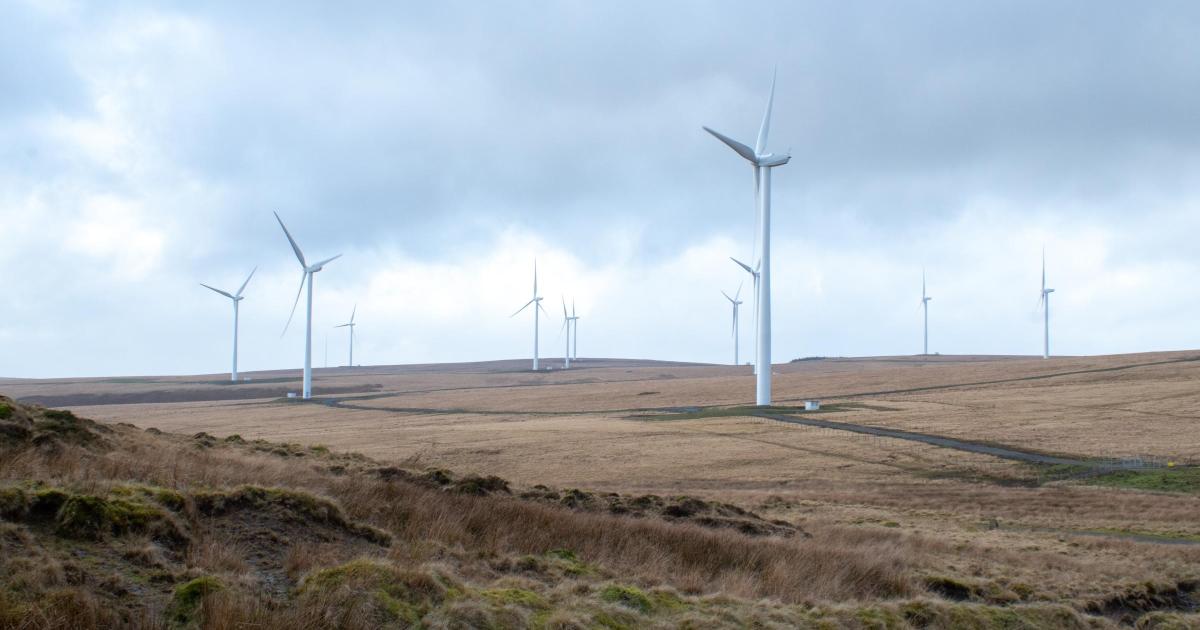
The plans would see 23 wind turbines, each up to 200 metres high, installed across around 2,700 acres of moorland between Arkengarthdale and Teesdale.

Advertisement

Opponents of the scheme have raised concerns about its visual impact, effects on wildlife habitats and peatland, and the disruption that could be caused during construction.

The meeting will be chaired by North Yorkshire councillor for North Richmondshire, Angus Thompson.

Cllr Thompson said the development would have a significant impact on the landscape and local communities, describing it as “an absolute sacrilege” which could cause damage to wildlife habitats and peat bogs while creating disruption on local roads during construction.

He added: “This is the biggest international infrastructure planning proposal Richmond has ever had to deal with and its full impact will be far-reaching.

Advertisement

“It will just decimate this beautiful area and I think we owe it not just to ourselves but to future generations to fight this all the way, to resist it all the way.

“I’m not anti-wind turbine, and I’m not anti the green agenda but I think there’s a place for them. If you go down to Redcar for example, there’s about 15 of them in the sea and you hardly notice them.”

The public meeting will feature presentations examining the scale of the proposed development, its potential effects on flora and fauna, the loss of peatland, possible flood implications and the challenges of delivering a major infrastructure project in a remote upland area.

Hope Moor Action Group says communities across the area need to work together to ensure their views are represented as the project progresses through the planning process.

Advertisement

The developer has welcomed feedback and encouraged anyone with an interest in the Hope Moor proposals to share their views.

The company has said the site was chosen because of its strong and consistent wind speeds, which could help cut carbon emissions and improve energy security.

The developer has acknowledged concerns about peatland, saying initial surveys suggest much of the site contains relatively shallow peat and organic-rich soils rather than deep peat.

It says further assessments will be carried out to help avoid sensitive areas, minimise environmental impacts and identify opportunities for peatland restoration, and that the long-term carbon savings from the wind farm are expected to outweigh construction emissions.

Advertisement

More information is available at hopemoor.co.uk

Source link

Advertisement
Continue Reading

NewsBeat

West End Theatre to be renamed Dame Judi Dench Theatre

Published

on

West End Theatre to be renamed Dame Judi Dench Theatre

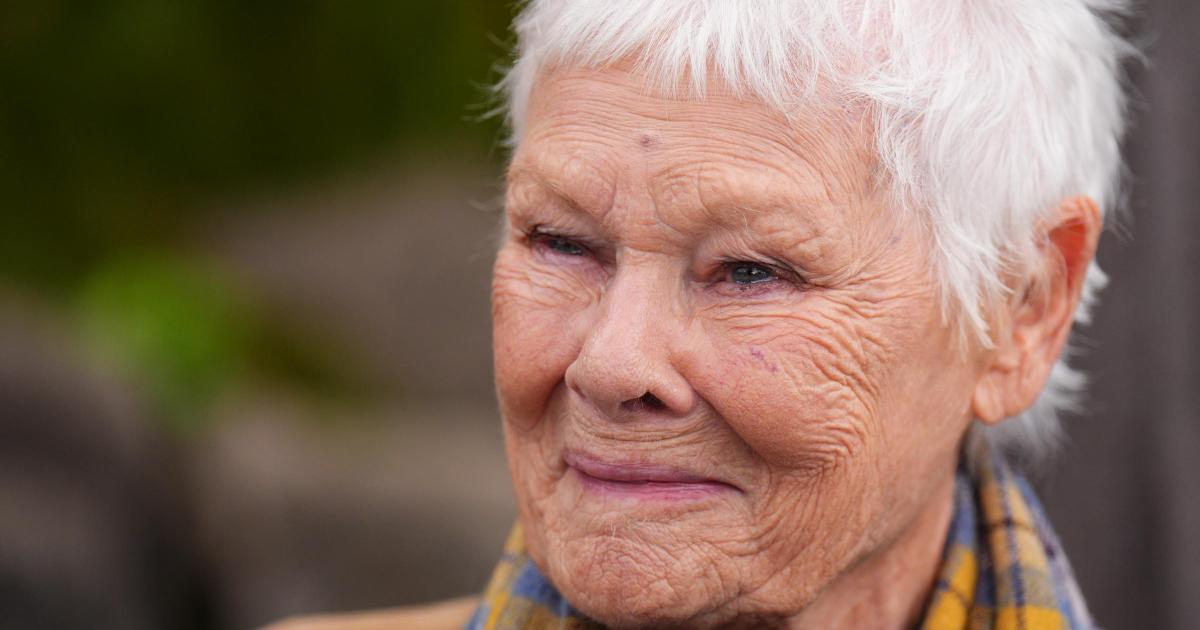
Shaftesbury Theatre, the largest independent theatre in the West End, has announced today (June 16) that it is set to become the Judi Dench Theatre from February 2027.

The theatre says the tribute will honour Dame Judi Dench’s exceptional contribution to British theatre and the performing arts, as well as being the first time a West End theatre has been named after an actress.


RECOMMENDED READING:


Dame Judi Dench said: “The Shaftesbury Theatre has always held a special place in my heart.

Advertisement

“My relationship to the Theatre of Comedy and to the Taffner family goes back many years and to have this beautiful theatre renamed after me is truly overwhelming.

“Live theatre continues to be so important as a way of telling stories and entertaining audiences, something I have aimed to do all my working life.”

Dame Judi’s – who was born in Heworth and had her start as an actress in the York Mystery Plays – was a founding member of the Theatre of Comedy and helped secure the future of the Shaftesbury in the 1980s and early 1990s.

This work also led to a close relationship with the Taffner family, who own the theatre and a production company, and saw her staring in the long-running television series As Time Goes By, which was produced the family.

Advertisement

The Shaftesbury Theatre in Central London (Image: Google Maps)

Donald Taffner Jr, chairman, said: “Dame Judi has been a close friend of the DLT family for so long, particularly from her involvement with As Time Goes By, and we will always treasure the time she made in her busy schedule to make the programme.

“We have such fond memories of Judi at the Shaftesbury from the meetings for the Theatre of Comedy members to when her husband was performing in a number of the Theatre of Comedy productions.

“We are therefore delighted to recognise her extraordinary talent and extensive contribution to many in the renaming of our theatre.”

Eleanor Lang, chief executive, said: “We are so excited to rename the Shaftesbury Theatre in honour of Dame Judi.

Advertisement

“Not only does she play an important role in our history, but she is an iconic figure of the stage and screen landscape.

“We don’t celebrate brilliant women enough in our West End theatre names, so we are delighted that her name will be forever in lights above our doorway.”

Source link

Advertisement
Continue Reading

NewsBeat

Three men’s health drugs that were originally designed for a different purpose

Published

on

Three men’s health drugs that were originally designed for a different purpose

Many medicines begin life with one purpose and end up proving useful for a completely different reason.

Few areas show this more clearly than men’s health. Three drugs in particular have become household names not because of their original uses, but because of what researchers later discovered they could do.

Their stories show how scientific serendipity, careful observation and patient experience can reshape modern medicine.

Sildenafil

Sildenafil is perhaps the most famous example of drug repurposing in modern medicine.

Advertisement

In the early 1990s, scientists were testing it as a treatment for angina, a type of chest pain caused by reduced blood flow to the heart. Sildenafil works by blocking the enzyme phosphodiesterase type 5 (PDE5), thereby relaxing blood vessels and, in theory, improving circulation.

Although it was largely ineffective for angina, trial volunteers kept reporting a different effect: persistent erections.

Researchers quickly realised that sildenafil improved blood flow not just to the heart, but also to the penis. This helps achieve and maintain an erection when sexually stimulated.

This discovery led to the development of the first oral treatment for erectile dysfunction, launched in 1998 and branded as Viagra. Sildenafil helped reduce the stigma around discussing male sexual health.

Advertisement

Today, sildenafil is also used for pulmonary hypertension, a rare condition involving high blood pressure in the lungs. This second repurposing shows how a single mechanism (widening blood vessels) can have multiple medical benefits.

Side-effects from sildenafil are usually mild and can include headaches, face flushing and nasal congestion. Sildenafil can interact with certain heart medications, such as nitrates, so medical advice is essential before using it.

Finasteride

Finasteride was initially developed in the 1980s to treat benign prostatic hyperplasia (BPH), a condition where the prostate gland becomes enlarged and causes urinary symptoms.

The drug works by blocking an enzyme called 5 alpha reductase, which converts testosterone into a more potent hormone (dihydrotestosterone) that drives prostate growth. By lowering dihydrotestosterone, the prostate in men with BPH shrinks – thus alleviating symptoms.

Advertisement

But during clinical trials, researchers noticed something unexpected. Men taking finasteride began reporting reduced hair loss. And, in some cases, new hair growth.

Recognising its potential, researchers tested finasteride specifically for androgenetic alopecia(male pattern hair loss). This led to a lower dose version being approved in the late 1990s for the condition, which is linked to the same hormone pathway as BPH. Blocking DHT prevents it from shrinking hair follicles, allowing weakened follicles to recover and grow thicker, longer hair.

Finasteride is now used for hair loss worldwide. Although it’s generally well tolerated, there can be uncommon side-effects, such as reduced libido or erectile difficulties. Some people also report psychiatric side-effects, such as depression and suicidal thoughts.

Finasteride’s journey shows how a drug targeting one hormone-driven condition can unexpectedly help another. It also illustrates how closely connected different aspects of men’s health can be.

Advertisement

Minoxidil

Another drug which has been repurposed for hair loss is minoxidil.

Minoxidil is now commonly used as a hair loss treatment.
Helena Nechaeva/ Shutterstock

Minoxidil began life in the 1960s as a treatment for severely high blood pressure. It works by relaxing and widening blood vessels, helping blood flow more easily. But researchers soon noticed something unusual: patients taking it often developed increased hair growth, sometimes in unexpected places.

This side-effect sparked interest in whether minoxidil could help with male pattern hair loss. So researchers developed a topical version (a liquid or foam applied directly to the scalp), which was approved in the 1980s.

Minoxidil works in multiple ways. An enzyme in the scalp (sulfotransferase) converts minoxidil into minoxidil sulfate, the active form of the drug. People naturally have different levels of this enzyme, which helps explain why minoxidil works well for some but less effectively for others.

Advertisement

Minoxidil is thought to increase blood flow to hair follicles as well, so they receive more oxygen and nutrients – creating a healthier environment for growth.

Minoxidil also affects the hair cycle. It shortens the telogen (resting) phase in hair follicles, which means these resting follicles move more quickly into growth mode. It also extends the anagen (active growth) phase, so hairs grow for longer and become thicker.

Because telogen is shortened, some people notice increased shedding in the first few weeks. This is temporary and usually means older hairs are making way for new growth. Research suggests minoxidil also supports follicle health in other ways.

It’s now widely used by men of all ages, often as a first-line treatment for thinning hair. Minoxidil is also effective for many women with female pattern hair loss and was licensed in the 1990s.

Advertisement

Side-effects are usually limited to scalp irritation or dryness. Because it works locally, it avoids the whole-body effects associated with finasteride.

Health advances

Repurposing medicines is not just about convenience. It can make treatments faster to develop, cheaper and safer, because the drugs have already been tested in humans. For men’s health, an area where stigma can delay diagnosis and treatment, repurposed drugs have played a particularly important role.

These repurposed drugs’ stories also remind us that medical progress is not always linear. Sometimes breakthroughs come from unexpected places: a trial side-effect, a curious researcher or a patient who notices something new.

The next major advance in health might already be sitting on a pharmacy shelf, waiting for someone to look at it differently.

Advertisement

Source link

Continue Reading

NewsBeat

Why Harbottle and Breamish Valley make a perfect easy day out

Published

on

Why Harbottle and Breamish Valley make a perfect easy day out

Tucked into Coquetdale, Harbottle is a tiny stone village with the ruins of a 12th-century castle above it, while nearby Breamish Valley opens out into one of the most beautiful stretches of river and rolling hillside in the Northumberland National Park.

Harbottle is small enough to wander without a plan, then take in the castle ruins and the view up towards the Drake Stone before heading deeper into the countryside.

The setting is quietly dramatic rather than showy, which is exactly why it stands out.

A short drive away, the Breamish Valley gives you the bigger walking payoff.

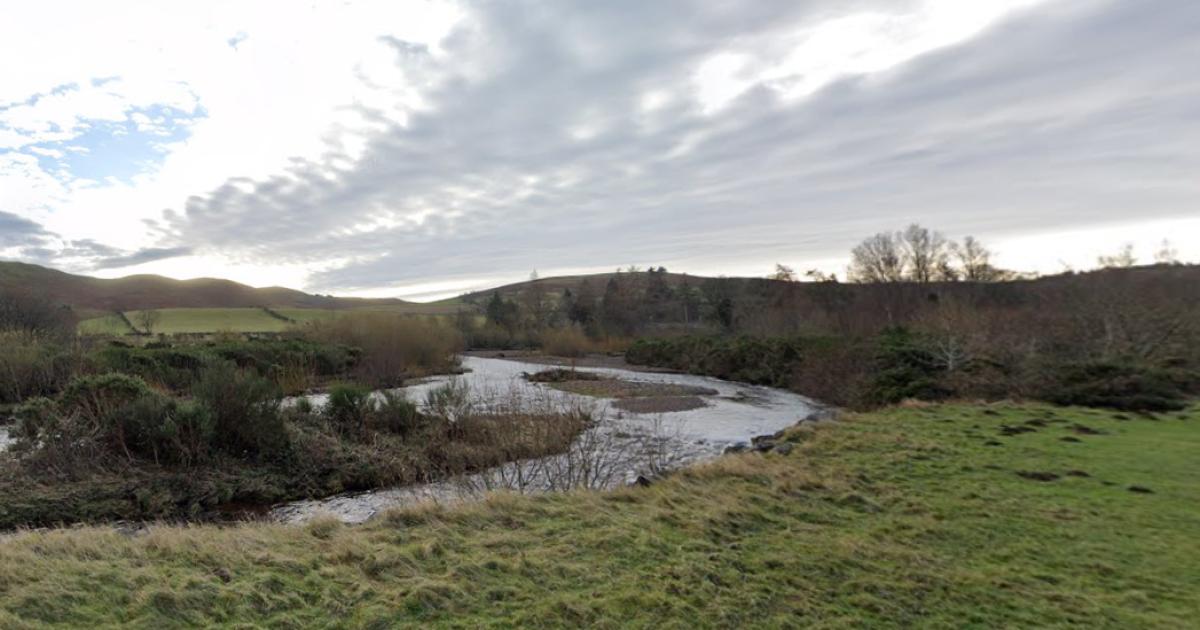
Breamish Valley (Image: Google Maps)

The area is known for its broad river valley, with routes ranging from easy riverside stretches to hillier trails above Ingram.

Advertisement

A Northumberland National Park description calls Breamish “a breath‑taking setting for family picnics and exhilarating walks.”

It is also a strong pick for dog walkers, though some parts of the valley cross grazing land and areas used by ground-nesting birds, so leads are important in places.

Visitors can park near Ingram and follow one of the lower-level routes through the valley, with time for a paddle or picnic by the river before heading back.

For walkers wanting pub grub at the end, the obvious stop is The Star Inn in Harbottle, right in the village and well placed for both Harbottle itself and the Breamish Valley.


The Star Inn in Harbottle is currently rated 4.8 out of 5 on TripAdvisor.

Advertisement

The pub describes itself as dog-friendly and popular with walkers and cyclists, serving beers, hot drinks and food including wood-fired pizza, pasta, fish and meat dishes.

Also serving as an option for an overnight stay, one reviewer describes it as having “clean accommodation with a little garden area, helpful staff, good quality pub food and great breakfast.”

Source link

Advertisement
Continue Reading

NewsBeat

Will ‘ordinariness’ be enough to swing the result in Makerfield?

Published

on

Will ‘ordinariness’ be enough to swing the result in Makerfield?

Authenticity and the performance of ordinariness are increasingly attractive elements of a political candidate’s brand. Social media particularly can be a space to present the “no-filter self” using more casual language, posting images and videos of everyday situations and using emojis or memes – just like the average person would.

In terms of authenticity, at election times, being ordinary, approachable and in touch are seen as potential vote-winning attributes. In Canada’s 2025 election, for example, research has found that these strategies were seen as necessary to stop the candidates coming across as out of touch at a time when politicians might seem to be a breed apart.

This approach has been particularly effective for populist candidates. These political hopefuls often market themselves as anti-elitist outsiders, in keeping with their claim to be the true representatives of the people.

But whether authenticity is a performance or actually the unfiltered self is up for debate. In the Makerfield byelection, the latter appears to be case for Reform UK’s candidate, Robert Kenyon. His appearance on a special edition of the BBC’s Question Time on June 4 might have seemed unpolished, but it perhaps reflected a true performance of self.

Advertisement

Comments under a selection of excerpts of Kenyon on the programme, posted by the Reform UK account to YouTube, were very positive. Viewers described Kenyon as “sincere”, “no fluff, tells it like it is” and praised him as “a northern lad … says it as it is and not afraid to be challenged”.

Robert Kenyon’s tell-it-like-it-is approach impressed viewers on Reform UK’s YouTube channel.

The comments, although presumably from a supportive audience, suggest viewers felt Kenyon believed in what he said and spoke without a filter or script. Even when challenged on how some policies would be delivered, his response – that it was for the leadership to work out – had a ring of honesty. While Kenyon was challenged over historic tweets of a sexist nature, his choice of defence here was to highlight his ordinariness.

In another interview, Kenyon stated he is not a “career politician”. But he added that if he were Makerfield’s MP “people would feel like they had a voice now, whereas in the last 40 years they’ve not”. Excusing his “crass” social media posts, he argued that he is just “a local lad” and “not a polished professional”.

Advertisement

This framing is indicative of someone who believes sections of the electorate would be sympathetic to his argument – even if they find the content inappropriate.

‘Looked down on and left behind’

Like Hannah Spencer, who won the nearby constituency of Gorton and Denton for the Green party in a byelection in February 2026, Kenyon is a plumber. Spencer spoke about marginalised groups, including the white working class, in her maiden speech in the Commons, offering a sense of authentic representation.

She said: “I do know is what it feels like to be looked down on. To be let down and left behind. To be less worthy because of something about me.” Kenyon seems to be channelling similar notions of standing up for society’s underdogs on the basis that he is one of them, rather than a career politician.

Spencer and Kenyon, and their appeal to voters, partly represents something of a societal shift. The argument is that as more “ordinary” people become prominent – for example, as celebrities and influencers through mainstream and social media – they are viewed as more trustworthy. Elite figures, on the other hand, are seen as more remote.

Advertisement

The populist turn in politics is an equivalent phenomenon. Many people feel democracy is not working for them and that their elected representatives do not share their struggles. Even worse, some believe that those dominating political institutions are self-seeking and remote. Fieldwork, especially in post-industrial working-class areas has uncovered a rejection of mainstream politicians and a desire for so-called common-sense voices.

Demographically, Makerfield is similar (albeit with lower relative deprivation) than many of the red-wall seats where Reform and its antecedent parties have polled well. The area faces challenges due to years of austerity and the cost of living.

Many voters there may well share the notion that most politicians are out of touch. This explains why some perceive Kenyon’s rival Andy Burnham as a strong candidate to hold the seat for Labour, given his local roots and unashamedly working-class persona.

But when true ordinariness is held up as offering a more authentic sense of representation, Kenyon may well be seen as the true voice of the people. After all, Burnham – for all his popularity in Greater Manchester and his working-class background – has been a career politician for 25 years. These days, the voices of ordinary people are heard across social media and can even dominate the news agenda and shape policy. Kenyon – and Reform – will be hoping to ride the demand for authentic representation and cause a major upset on June 18.

Advertisement

Source link

Continue Reading

NewsBeat

easyJet new ‘Drop Everything’ 48-hour cheap flight deals

Published

on

easyJet new ‘Drop Everything’ 48-hour cheap flight deals

The launch comes after new research revealed that almost three-quarters of Britons (73%) believe their best holidays were never planned at all, while nearly half say they would be packed and ready to leave within two days if the right deal landed in their lap.

A growing number of Brits are abandoning carefully planned holidays in favour of spur-of-the-moment getaways – and easyJet has just launched a new feature designed to make that easier than ever.

And it appears many travellers are already embracing the trend.

Advertisement

In a stunt that quickly went viral online, Capital Breakfast presenter Sian Welby shocked listeners when she left her live radio show after spotting a bargain easyJet fare she couldn’t resist.

The broadcaster continued presenting from the back of a taxi as she headed for the airport, with clips from the moment racking up thousands of views across social media.

Flights are available here.

The nation’s most common holiday killer is the group chat

Advertisement

Around a third of people said they had missed out on a trip entirely because friends could not agree on plans quickly enough.

To help travellers act fast, easyJet’s new tool adds a “Within 48 Hours” filter to its Inspire Me platform, allowing customers to search destinations by budget, travel dates and trip type.


Recommended reading:


The airline says the feature is designed to help holidaymakers discover destinations they may not have previously considered while taking advantage of ultra-last-minute deals.

Advertisement

For travellers needing inspiration, easyJet highlights Barcelona, Amsterdam, Nice, Lisbon and Milan among its top spontaneous city-break destinations this summer.

With flights available from less than £50, the biggest question may no longer be where to go – but whether you’re ready to drop everything and leave.

Would you go on a last-minute holiday? Tell us in the comments below.

Advertisement

Source link

Continue Reading

NewsBeat

Tesco to make major technology change at 3,000 UK stores

Published

on

Tesco to make major technology change at 3,000 UK stores

The rollout will begin at four locations to start —one Express store and three larger supermarkets—before expanding to around 3,000 UK locations over the next two years.

Supplied by Chinese technology firm Hanshow, the digital labels will allow Tesco to update prices and product details instantly from its central office.


Kevin Tindall, managing director of UK operations at Tesco, said: “Moving to a digital system will not only support our sustainability ambitions by significantly reducing paper use across the Tesco estate, but it will also mean that our colleagues can focus on what matters most – serving our customers.”

Advertisement

The technology aims to improve pricing accuracy for customers and reduce manual tasks for staff.

The decision follows a successful pilot at Tesco’s Royston and St Neots stores last year.

Electronic shelf labels are already in use among several UK supermarkets, including Asda, Lidl, Co-op, Waitrose and Sainsbury’s.


Advertisement

Morrisons began its trial of the technology in October last year, and Sainsbury’s started rolling out the labels after its own pilot last summer.

Tesco plans to introduce the labels gradually, updating stores as it refreshes its pricing systems.

Liangyan Li, senior vice president and head of global sales at Hanshow, said the partnership shows a shared commitment to improving store efficiency.


Recommended reading:

Advertisement

How to get Tesco freebies

Anyone wanting a chance to receive the offers needs to have a Tesco Clubcard and use the Tesco app.

More than 24 million UK households already have a Clubcard, giving them access to personalised discounts, reward partners and exclusive promotions.

With free products set to drop every Thursday, shoppers may want to keep a close eye on their app over the next few weeks.

What’s your favourite supermarket? Let us know in the comments

Advertisement

Source link

Continue Reading

Trending

Copyright © 2025