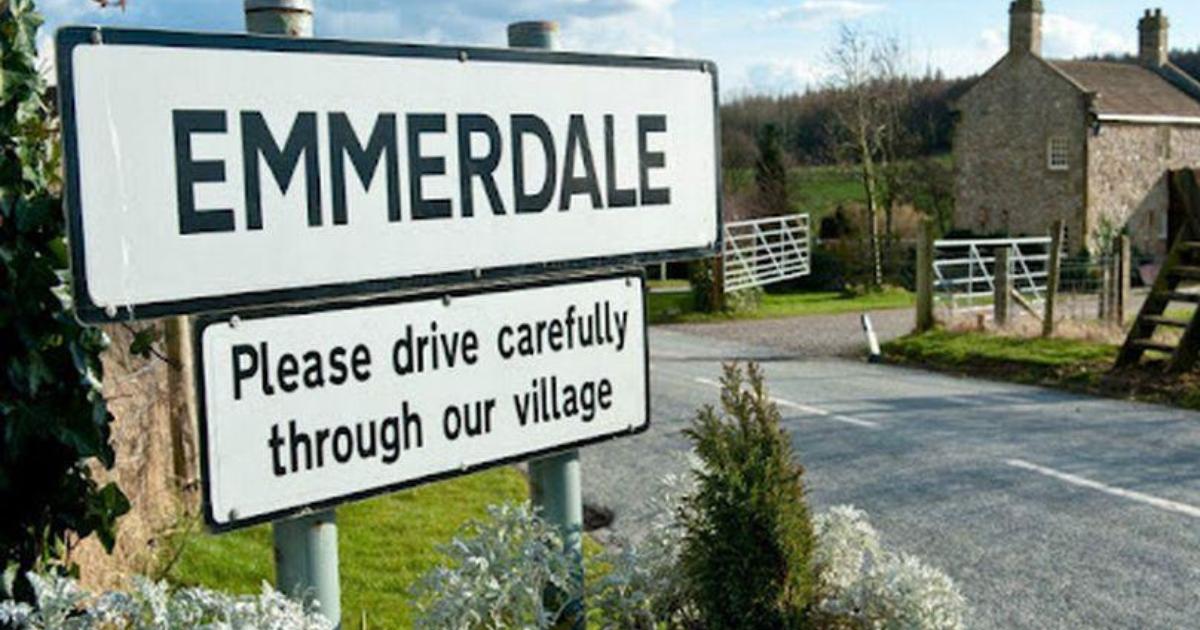
The ITV soap hopes to “challenge the perception of what homelessness looks like”.
The broadcaster has partnered with charities, including The Salvation Army, to develop the plot, which will centre on mechanic Kammy Hadiq, played by Shebz Miah, as it emerges that he’s homeless.
Despite maintaining a job and relationships in the village, fan-favourite Kammy has secretly been sleeping rough in vehicles and in barns.
Advertisement
Emmerdale’s most emotional exits
Emmerdale producer Sophie Roper said: “This storyline is a vital look at ‘hidden homelessness’, showing that people can be living on the edge of society, sleeping in their vehicle or barns, while still successfully holding down a job and maintaining relationships.
“For many reasons, a person’s circumstances can change dramatically and we wanted to challenge the perception of what homelessness looks like and prove that what people present to the outside world isn’t necessarily the whole story.
“We hope this narrative encourages our viewers to look closer and remember that things are not always quite as they seem.”
Emmerdale said it hopes the storyline will raise awareness of the realities of hidden homelessness and that those concealing their struggles often “miss out on the support and help they need”.
Advertisement
This is not the first time the soap has addressed homelessness.
Back in 2019, Emmerdale was praised for Bob Hope’s storyline, which saw the character, played by Tony Audenshaw, sleeping rough after a relationship breakdown.
More recently, the soap worked with the charity Missing People for a plot in which teenager April Windsor, played by Amelia Flanagan, ran away from home during the Christmas season.
Emmerdale airs weeknights at 8pm on ITV1 and STV, and from 7am on ITVX, STV, and YouTube.
What do you think has been the most powerful Emmerdale storyline? Tell us in the comments below.
US President Donald Trump is touting a new peace deal with Iran, with Vice-President JD Vance saying Tehran’s nuclear programme has been “comprehensively destroyed”.
But former President Barack Obama says any new agreement is unlikely to be “significantly different” from the deal he struck with Iran in 2015.
The BBC’s Gary O’Donoghue takes a look at the contrasting approaches of the two presidents.
The Department for Work and Pensions has launched a compensation scheme for people who suffered financial loss due to incorrect decisions during their move from legacy benefits to Universal Credit
Linda Howard Money and Consumer Writer and Ashlea Hickin Content editor
03:38, 16 Jun 2026
The Department for Work and Pensions (DWP) has introduced the Successful Legacy Appeals Compensation Scheme for individuals who experienced financial disadvantage after transitioning from legacy benefits to Universal Credit due to a decision subsequently deemed incorrect.
The scheme follows a 2020 Court of Appeal ruling involving claimants who successfully appealed decisions to terminate their existing benefits but were unable to return to them after already claiming Universal Credit.
Under Universal Credit regulations, once an individual submits a claim for the benefit, their former legacy benefit ceases and typically cannot be reinstated. According to new GOV.UK guidance published on Thursday, individuals may be entitled to compensation if they received lower payments on Universal Credit than they had been receiving from their previous benefits.
Advertisement
The compensation scheme is available to claimants throughout Scotland, England and Wales, reports the Daily Record.
Legacy benefits covered by the scheme include:
Housing Benefit
Child Tax Credit
Working Tax Credit
income-related Employment and Support Allowance (ESA)
income-based Jobseeker’s Allowance (JSA)
Income Support
Who is eligible
You may be eligible for compensation if all the following apply:
You have proof you were receiving one or more means-tested legacy benefits listed above
A decision was made to end one of your legacy benefits, ending your entitlement
Because of that decision, you successfully claimed Universal Credit within one month of your legacy benefit ending
The amount of Universal Credit you were entitled to was less than what you received from your legacy benefit before the move
You challenged the decision that stopped your benefit, and won, meaning you should have continued receiving your legacy benefit rather than claiming Universal Credit when you did
The DWP stated only individuals who satisfy all of these criteria will be entitled to compensation.
According to the guidance, payments will be calculated based on the claimant’s largest monthly financial shortfall multiplied by 12.
The DWP explained the lump sum is designed to reflect compensation comparable to what a court might have awarded for the financial hardship caused by someone being prevented from returning to their previous benefits. Individuals can apply by filling out a form accessible on GOV.UK or by submitting a letter containing the equivalent information requested on the form.
Advertisement
Applications can also be submitted by telephone for those unable to manage the paperwork independently.
The Department stated it strives to deliver decisions within six weeks of receiving an application.
It also noted the scheme is designed to ensure those affected by comparable circumstances do not need to seek additional compensation via the courts or a tribunal.
The compensation scheme follows the Court of Appeal case TD, AD and R v Secretary of State for Work and Pensions [2020] EWCA Civ 618, which determined some claimants experienced financial loss after being compelled to transfer to Universal Credit following incorrect decisions regarding their legacy benefits.
Advertisement
Complete information about the compensation scheme and the claims process can be located on GOV.UK.
He discovered that the right path is not always the one you originally planned.
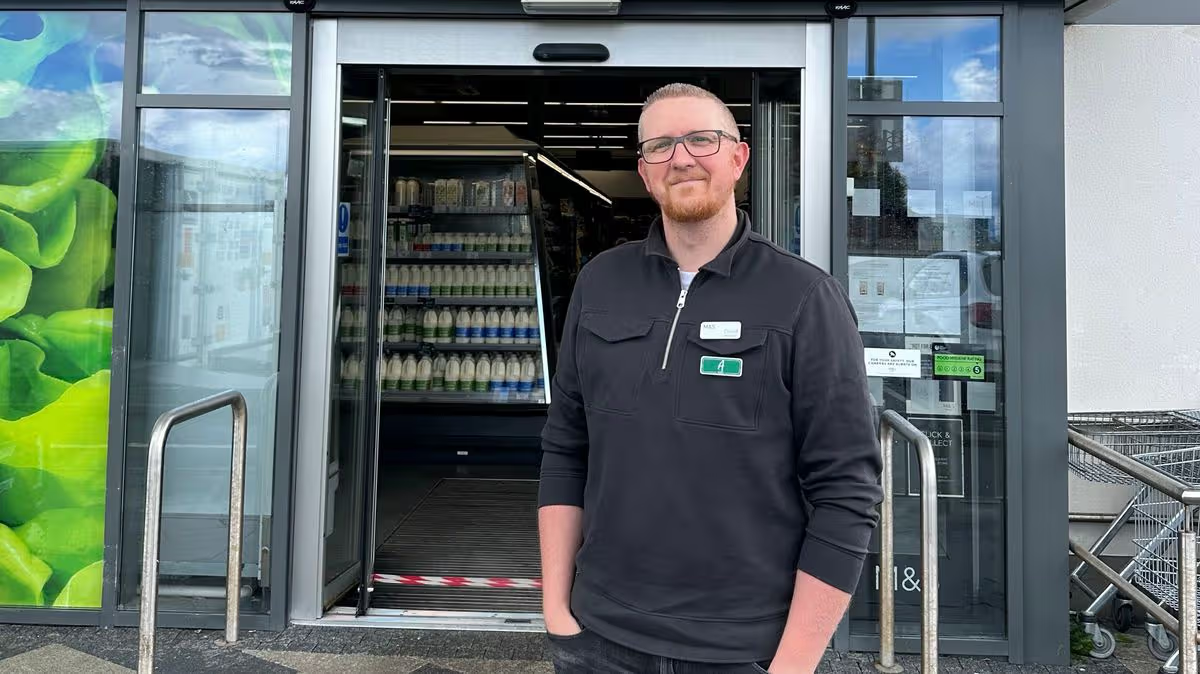
This is David Brady who is encouraging local people to consider a career in retail, having discovered himself that the right path is not always the one you originally planned.
Advertisement
David first joined M&S on Lisburn Road in 2006 at the age of 16, taking on a part-time role while pursuing his ambition of becoming a civil engineer.
“I genuinely thought M&S would just be a temporary job until I started my engineering career. I enjoyed the work, but my focus was always on becoming an engineer,” he said.
After eight years with M&S, David qualified in civil engineering and left the business in 2014 to pursue his chosen profession full-time. However, it quickly became clear that the career he had worked towards was not the right fit.
“I realised within my first year that I wasn’t enjoying it as much as I expected. Engineering was very computer-based and often involved working alone on sites. Looking back, I probably should have stayed in retail.”
Advertisement
Alongside his day job, music was a major passion. In his spare time, he performed original material, toured across England and played weddings and events as a guitarist. When engineering wasn’t what David had hoped it would be, he decided to take a leap and turn music from a side passion into his full-time focus. However, not long after making this decision, the Covid-19 pandemic arrived in 2020.
With live events paused, David says he returned to retail, working across a range of roles before progressing into management: “Going back into retail reminded me how much I enjoyed it, especially working with people. That was what I had missed. I realised the part I value most in any job is human interaction.”
In 2023, David returned to M&S as a Team Manager in the Lisburn store: “I’d never had a bad experience working for M&S. It was always a positive environment. Retail can be busy and bring pressure, but it is a type of pressure I enjoy. I like helping people, developing teams and being part of a store at the heart of its community.”
From Lisburn, David joined the Aldergrove store in October 2025 as Relief Store Manager through the ‘Stepping Into Store Manager’ programme, before being permanently appointed in January 2026.
Advertisement
Now overseeing the store’s biggest transformation in recent years, he is keen to encourage others to consider the opportunities available.
“Retail has given me a career that I genuinely love. If you had asked me at 16 where I would end up, I would have said engineering without hesitation. Life does not always work out the way you expect, but sometimes that works in your favour,” he added.
As part of the Aldergrove redevelopment, M&S is recruiting for up to 25 roles across the store, including customer-facing shop floor positions, in-store bakery roles and backstage operations focused on stock management and supporting store operations. Contracts ranging from 12 to 30 hours are available, with successful applicants invited to the assessment centre in Lisburn on June 23 and 24.
Yeast is a single-cell organism that needs food, moisture and warmth to thrive – here is what you need to know about active dry yeast and instant yeast for bread baking
Few things rival the aroma of a freshly baked loaf of bread drifting through the home. Baking bread is surprisingly straightforward, and the reward is well worth the modest effort involved.
Advertisement
One of the most vital elements in crafting the perfect loaf is the yeast, but which variety should you be using?
There are two types of yeast commonly used in bread and dough recipes. These are active and instant yeasts.
Both function in the same manner, in that they will give your bread that slightly fermented flavour and airy rise.
Yeast is a single-cell organism that requires food, moisture and warmth to flourish. It feeds on sugar and starch (a process known as fermentation) and produces carbon dioxide and alcohol.
Advertisement
It is the release of carbon dioxide that causes bread to rise.
Active yeast refers to any form of dry yeast that requires activation prior to use, whereas instant yeast is ready to use from the moment you unseal the packet.
Active yeast must be combined with warm water and sugar before being incorporated into your dry ingredients, allowing the yeast to “bloom”.
Advertisement
This is because the organisms within active yeast remain dormant until awakened by the water and sugar.
If your active yeast has been sitting in the cupboard for some time between baking sessions and you attempt to activate it, it may well have passed its best.
You’ll be able to identify this, as expired activated yeast will not produce light, foamy bubbles in water.
Advertisement
Active yeast has a shorter shelf life than instant yeast. Instant yeast features smaller, finer granules and doesn’t require dissolving in warm liquid beforehand; it can be mixed straight into your dry ingredients and will prove more quickly.
Instant yeast can produce a lighter, fluffier bread, which is ideal for a baker who’s short on time.
The raid took place in Halliwell and a woman has been arrested.
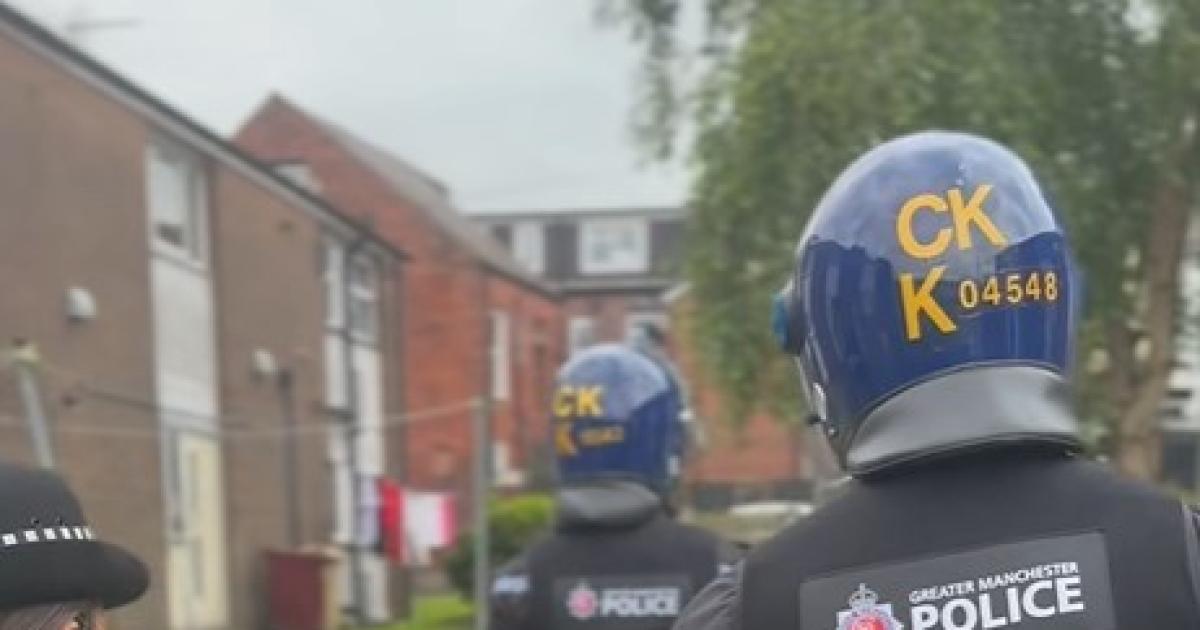
A spokesman for GMP Bolton said: “This evening, officers from Bolton’s Neighbourhood Teams have executed a warrant at a property in Halliwell.
“This was in response to complaints from the community about drug supply in the area.
Advertisement
“A 38-year-old woman has been arrested on suspicion of being concerned in the supply of drugs.
“She remains in police custody for questioning.
“You can provide information about crime in your area, anonymously, to CrimeStoppers on 0800 555 111.”
Advertisement
The raid is the latest to take place in the area and across Bolton to tackle the drugs trade.
Previously, desperate mums have raised the issue at the regular Partners and Communities Together Meetings (PACT), which allow locals to meet their local police officers and address any concerns they have.
A women’s only PACT heard how children are targeted by those selling drugs.
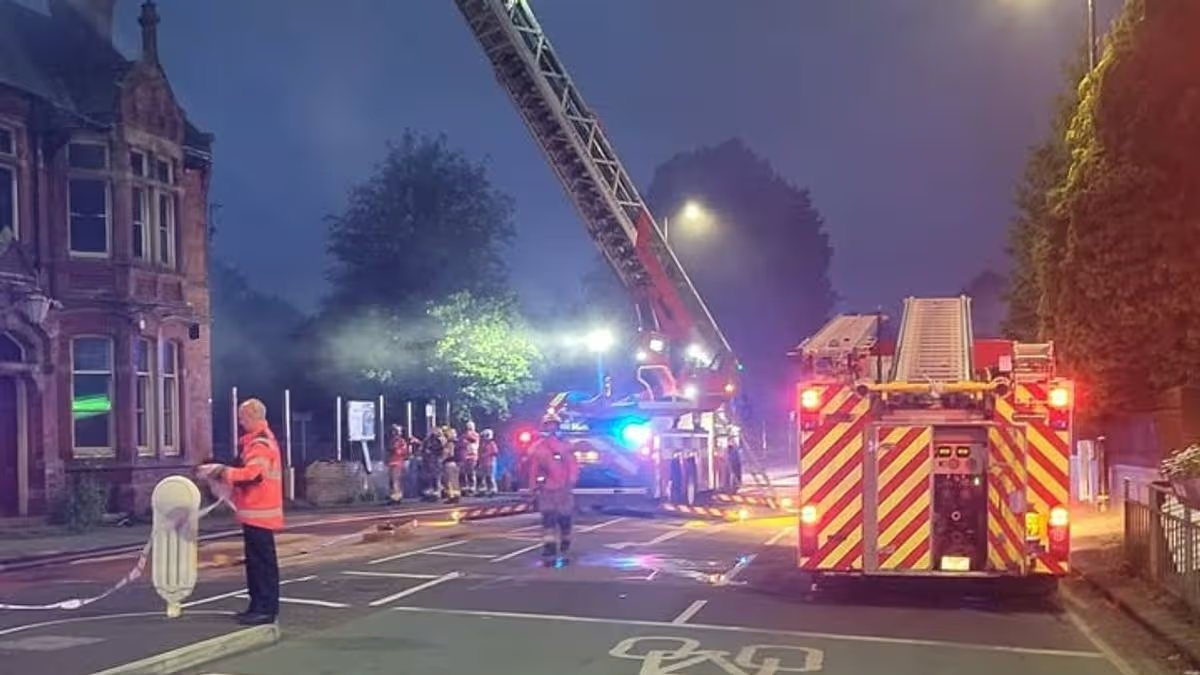
A road was cordoned off after a blaze broke out at a derelict pub in Stretford on Monday evening (June 15). Fire crews raced to the scene at The Robin Hood pub on Barton Road.
Smoke was seen billowing from the roof of the venue, which has been empty since 2018, as firefighters tackled the blaze. An ‘avoid the area’ warning was put in place amid the incident.
Click here to get the biggest stories straight to your inbox in our Daily Newsletter
Advertisement
After the pub closed, the local community had a chance to purchase it and come up with proposals for its future. However, a crowdfunding campaign failed to raise the cash needed.
On Monday night, a number of fire engines were seen outside the pub as the area became covered in smoke. Videos shared with the M.E.N showed crews in attendance trying to bring the fire under control.
Advertisement
Emergency services were first alerted to the incident shortly before 10pm, with multiple fire engines racing to the scene. Residents nearby were also urged to keep their windows and doors closed.
A spokesperson for Greater Manchester Fire and Rescue Service (GMFRS) said: “Shortly before 9:55 this evening (Monday 15th June) fire engines from Stretford, Sale, Moss Side, the turntable ladder from Manchester Central, the scorpion from Salford and a further breathing apparatus emergency appliance from Salford fire station were called to reports of a fire at a derelict building on Barton Road, Stretford.
“Firefighters arrived quickly and are currently working to extinguish the fire and make the area safe. Crews remain in attendance at this time. Nearby residents are advised to keep their windows and doors closed and to avoid the area.”
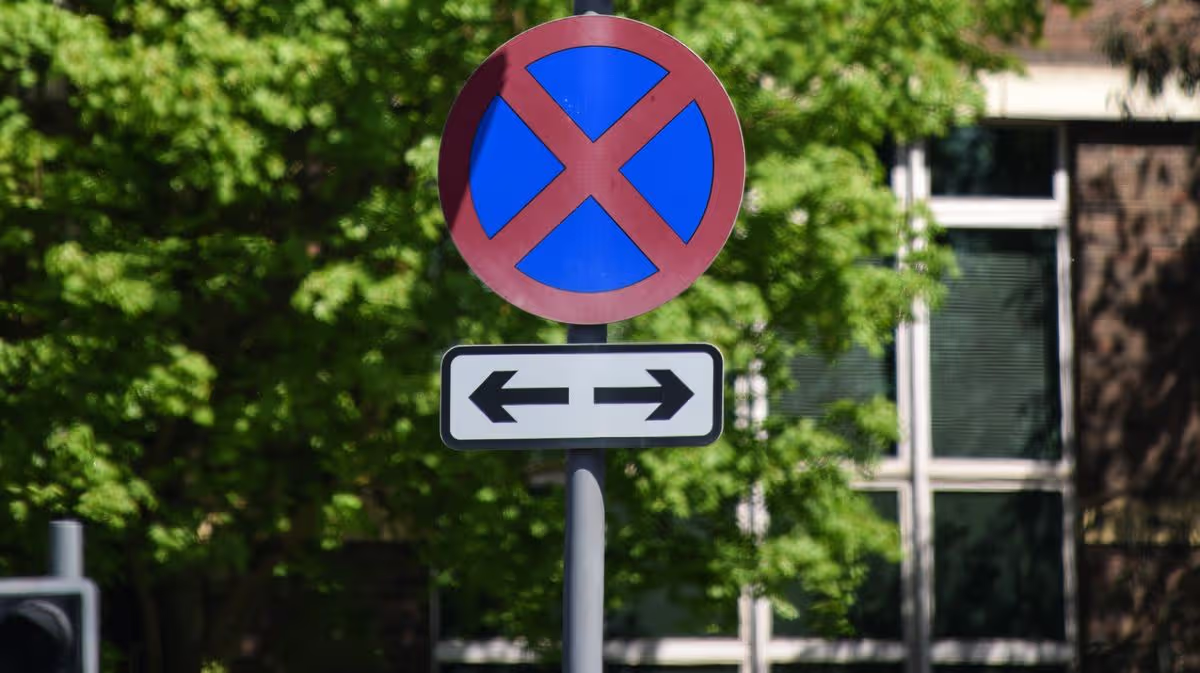
The red and blue cross road sign is frequently seen up and down the country — but drivers are left baffled by its meaning
Drivers are being encouraged to refresh their understanding of traffic signs following revelations from industry specialists that a substantial proportion of us remain baffled by particular symbols. The UK Government’s official publication, Know Your Traffic Signs, extends to an impressive 172 pages, so it’s hardly surprising that certain signs leave road users perplexed.
Advertisement
Social media channels are frequently utilised by road users seeking explanations regarding the significance of different road markings and signs.
This specific sign, featuring a red cross on a blue background, is widespread across the UK, meaning there’s every likelihood you’ve encountered it — in fact, one Reddit user replied to an enquiry about its significance by declaring: “This is one of the basic signs people who drive in this country should know. Not knowing what the sign is or how to check is an absolute failure.”
Another contributed: “How do you exist as a driver with a license without knowing what a sign like this means?”
Notwithstanding those blunt remarks, there’s a good chance you don’t know what this sign means, even if you’ve seen it countless times. The sign features a red circle with a blue background and a red diagonal cross within.
Advertisement
According to insurance experts at One Sure Insurance, misinterpretation of road signs is considerably more common than many realise. Furthermore, figures from the AA show that while the vast majority of drivers consider themselves to be safe motorists, approximately half acknowledge they find certain elements of the Highway Code difficult. This knowledge gap can result in motorists inadvertently contravening the regulations or misinterpreting signs while driving.
What does the red-and-blue cross sign mean?
The red-and-blue cross sign denotes a clearway, meaning motorists are prohibited from stopping at any time. Unlike certain other restrictions that operate only during specified hours, the clearway regulation means you cannot halt your vehicle on that section of road for any purpose whatsoever, unless faced with an emergency.
This includes stopping to:
Advertisement
Pick up or drop off passengers
Check directions
Make a phone call
Wait briefly in the car
The UK Government’s official guidance states: “The red cross means no stopping, not even to pick up or set down passengers. The sign is used to indicate a 24-hour clearway (usually on a rural road) or may be incorporated into other signs with the words ‘No stopping’ (eg the ‘no stopping except local buses’ sign at bus stops).
“On a 24-hour clearway, the prohibition of stopping applies to the main running carriageway, slip roads and any acceleration and deceleration areas. You may stop in a lay-by unless there are signs to say otherwise. A 24-hour clearway does not have any special road markings, but smaller repeater signs might be provided at intervals along the road as a reminder to drivers.”
Since stopping is entirely prohibited, any motorist who halts within a clearway area risks receiving a fine or penalty notice. However, one significant reason the sign generates such confusion is its resemblance to other blue-and-red traffic signs throughout Britain, each with marginally different meanings.
For instance, a sign displaying a single red line through a blue circle denotes an “urban clearway”.
An urban clearway operates in a comparable manner to a standard clearway, but with specific conditions. These are generally accompanied by supplementary information, such as the exact times and days when restrictions apply. Mixing up the two could lead to drivers thinking they’re adhering to the law when, actually, they’re violating it.
Clearways are generally implemented on heavily-trafficked routes where stopping could create congestion or pose safety hazards, such as major roads leading into city centres or heavily-used main roads. By preventing vehicles from stopping entirely, authorities seek to maintain free-flowing traffic and minimise the risk of sudden braking or obstructions on the road.
For motorists uncertain about road markings and signage, experts advise referring to the Highway Code to develop a comprehensive understanding of the regulations – particularly as misinterpreting them can result in financial penalties or hazardous situations. Refreshing your knowledge of road signs, they suggest, could assist drivers in avoiding fines, collisions, and insurance claims.
A spokesperson for One Sure Insurance said: “We see a lot of accidents or traffic violations happen because drivers simply don’t understand or recognise certain road signs. These mistakes may seem minor at first, but they can lead to fines, insurance claims, and in worst-case scenarios, serious accidents. It’s vital to take the time to understand every road sign you encounter.”
Each mile of this journey will be dedicated to those lost to suicide, families living with loss, and those currently struggling with their mental health
With just days to go until the dad of a talented young model who died suddenly aged just 20 sets off on an extraordinary challenge, organisers say they have been overwhelmed by an outpouring of public and business support from across Northern Ireland and beyond.
Advertisement
Zachary Geddis from Coleraine died by suicide in March 2017, whilst attending the University of the Arts, London where he was studying Fashion Illustration.
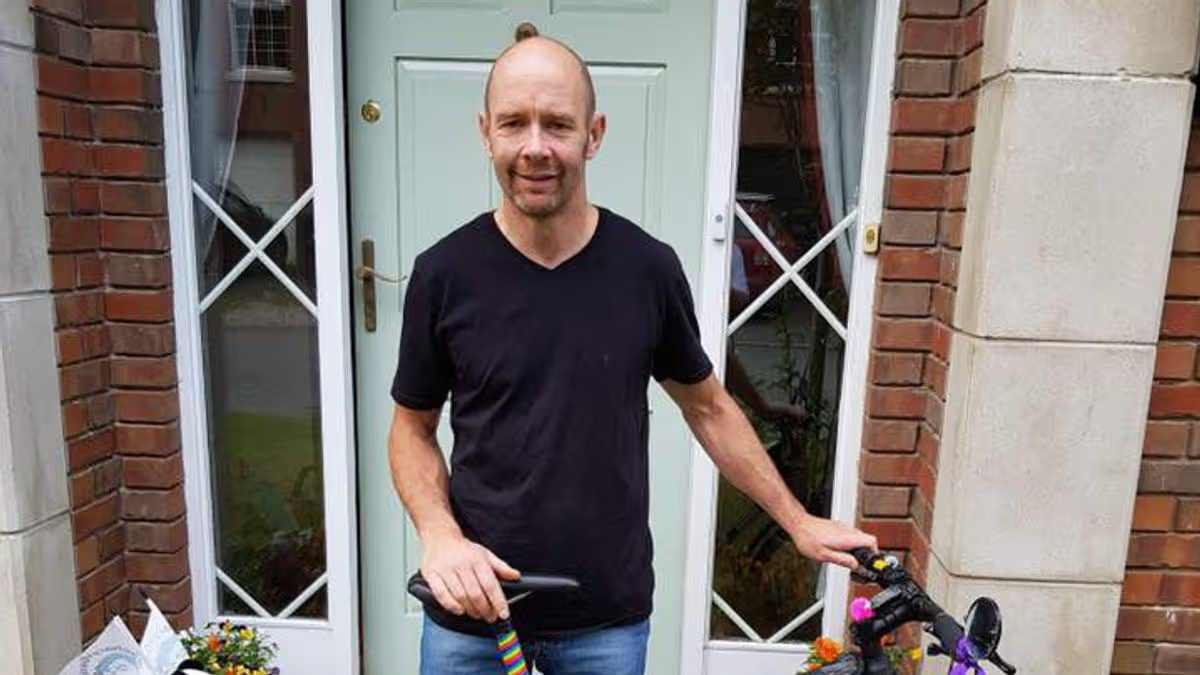
On June 19, his dad Terry Geddis will embark on an extraordinary 24-hour charity cycle from Coleraine to Mizen Head in Cork, Ireland’s most south-westerly point, as part of the Cycle for Suicide campaign.
Aiming to honour his son’s memory and raise vital mental health awareness, Terry will depart Coleraine on Friday, aiming to cycle to Mizen Head in Cork, Ireland’s most south-westerly point all in aid of The Zachary Geddis Trust, which provides free, professional mental health support services across Northern Ireland.
Each mile of this journey will once again be dedicated to those lost to suicide, families living with loss, and those currently struggling with their mental health, reinforcing the campaign’s central message that help is available and conversations matter.
Advertisement
As the countdown continues, the campaign has gathered remarkable momentum, with generous donations and backing from local businesses, organisations and individuals determined to support both Terry’s challenge and the vital work of the Trust.
Among those contributing to the fundraising effort are Lynas, Kingsbridge Foundation, East End FC, Maine Group, Coleraine FC, Zarion, The Dental Care Centre Belfast and the Bushmills Distillery Group, which has pledged a unique prize of a year’s worth of tasting tours to help boost fundraising initiatives.
Zachary’s sister Yasmin Geddis, who is Chief Executive of The Zachary Geddis Trust, said the response has been incredibly moving: “We have been overwhelmed by the generosity shown by our local community and business supporters.
“It is a powerful reminder that people want to stand together to support mental health initiatives and help ensure that no one feels alone. Every donation, every message of encouragement, and every shared story is encouraging Terry as he trains and will help us continue our important work supporting people who need our help.”
Advertisement
Meanwhile, Terry has been intensifying his training regime in preparation for the gruelling challenge, putting in long hours in the saddle as he builds endurance for the 24-hour journey.
Despite the physical demands ahead, Terry remains focused on the purpose behind every mile, honouring his son Zachary and supporting others facing mental health challenges.
This will be Terry’s sixth charity cycle for the Trust. To date, he has cycled more than 20,000 miles and raised close to £50,000 for mental health causes. The 2026 Cycle for Suicide aims to build on that success and help meet increasing demand for services, which currently support more than 200 clients each week.
Advertisement
As the start date approaches, people are being encouraged to show their support by donating, sharing the campaign or even by sending messages of encouragement. For Terry and his family, the ongoing support from the community is both humbling and motivating.
“The support we’re seeing means everything,” said Yasmin. “It shows just how many people believe in the importance of this work and the difference it makes every day.”
With momentum building and the community firmly behind him, Terry is preparing to take on one of his toughest challenges yet, carrying with him not only personal determination, but the encouragement of an entire community.
The Iranian national anthem was booed by some spectators inside the SoFI Stadium in Los Angeles on Monday evening as Iran began their World Cup campaign against New Zealand in Group G.
The team flew into the US on Sunday from their training base in Tijuana, Mexico, touching down in Los Angeles just as a deal was announced to end the conflict.
Around 300 to 500 protesters gathered outside the stadium before the game, waving anti-Iranian government signs and flags. They said they did not want to attend the match as it would imply support for Tehran, as they protested against the country’s regime and its crackdown on pro-democracy protestors.
Advertisement
Inside, some fans then jeered Iran’s anthem as it was played ahead of their opening match.
Los Angeles is the biggest home to the Iranian community outside of Iran after many fled the country following the Islamic Revolution in 1979.
Iran’s participation in the tournament has been beset by controversy against the backdrop of the war, which began in February when the US and Israel launched strikes on the country.
That followed nationwide protests in January inside Iran in which thousands were killed in a bloody government crackdown.
Advertisement
Iran played New Zealand in Los Angeles (Getty)
In recent weeks, the football team changed their base from Arizona to Mexico, while their federation complained that not all their staff received US visas and that tickets allocated to supporters had been withdrawn.
A US administration official explained: “We will not allow the Iranian team to abuse this system to sneak terrorists into the United States under false pretences.”
Fifa’s ban on the pre-revolutionary Iran flag was upheld on Monday morning after an expedited hearing. The flag has the same colours as the current official flag but has a different lion-and-sun motif and is historically associated with the country’s previous Shah-led regime.
Fifa prohibits flags or apparel that have “political, offensive and/or discriminatory nature”.
Judge Curtis Kin ruled that the ban should be allowed to stand, stating: “Free speech is incredibly important, it is sacred, a bedrock of our society, but it is not without limitation, such as private actor, on private property, and as shown by previous cases, regulating in reasonable way. I deny the application.”
Preston Davey died after collapsing at the home of adoptive dads Jamie Varley and John McGowan-Fazakerley
Rachel Smith and Husna Anjum Senior Reporter
22:39, 15 Jun 2026
The grim reality of a depraved couple has been uncovered after the devastating death of one-year-old Preston Davey. In late 2018, Jamie Varley and John McGowan-Fazakerley met in a bar in Manchester’s Gay Village.
They hit it off straight away and when McGowan-Fazakerley went to stay at Varley’s home in Blackpool, he never really left. A year later they bought a house together in Staining Road, Blackpool, an extended three bedroom semi fitted out with marble floors, bifold doors and chandeliers in the bedrooms.
Advertisement
They also bought a dog, Maximus, a miniature pinscher, who they doted on like a baby. ManchesterEveningNews reports that together, they built a life that was Insta-ready – all they needed was a child to complete their picture perfect family.
But behind the veneer of respectability lay a much more sinister picture. This was one of Britain’s most depraved couples.
They came from very different backgrounds. Varley, 37, was one of five siblings in a matriarchal family in Blackpool. They were a close knit unit headed up by their mother who lived nearby, in an area bordering Grange Park, a notorious estate among the most deprived areas of the UK.
McGowan-Fazakerley, 32, was an only child, raised by his doting parents and grandmother in Congleton, an affluent market town on the edge of Cheshire’s golden triangle. Privately educated at Kings School, Macclesfield, he went on to study at Keele University progressing to phD level before leaving to pursue a career in sales.
Together their careers flourished. Despite severe dyslexia, Varley gained his teaching qualifications and was promoted from technician to teacher in the textiles department of Blackpool’s South Shore Academy – later progressing to head of year. McGowan-Fazakerley rose through the ranks of the finance company he worked for to become operational manager for the north west, based from offices at Salford Quays.
They spoke about marriage and children from early in the relationship but after attending a family wedding, where the couple’s child was part of the celebrations, they decided not to wait.
McGowan-Fazakerley said: “I’ve always wanted children and Jamie’s always wanted children. It just fitted. Careers were in the right place, we were in that house, we were settled – it felt like the right time.”
Advertisement
In late 2021, he began making enquiries with Adoption Now, the agency which provides adoption services for councils in Greater Manchester and Lancashire. The pair went through the initial vetting process, delving into their health, finances, family backgrounds, and criminal records checks, with some training sessions held online due to Covid.
There was nothing to alert the authorities to the evil truth behind this seemingly perfect couple.
The pair took a break to allow Varley to support his students through their GCSEs, and his father who had been diagnosed with cancer, before moving onto the next stage the following year.
Advertisement
This involved eight face-to-face meetings with social worker Vicky Readett, along with VR safeguarding training, and in January 2023 the couple were approved as adopters.
The same month, Oldham Council granted an adoption order for Preston Davey. Born to a killer serving time at HMP Styal, little Preston was a beautiful bouncing baby.
At five days old he had been removed from his mother and placed in foster care in Oldham where he was thriving. Preston’s grandmother, Debra Davey, 66, hoped to take care of her only grandson but after being diagnosed with cancer she was told she couldn’t look after her daughter’s child.
She said: “Sarah wanted him right from the start. The plan was I would help her with having him.”
Social worker Amy Shepherdson created a profile for Preston on the Adoption Now website. She chose not to upload a photo as she wanted would-be adopters to be drawn to his character, and not simply his cheeky smile and adorable curly locks.
Within weeks, Preston was matched with Varley and McGowan-Fazakerley and an informal meeting was arranged at a restaurant in Ashton-under-Lyne. As a friendly and sociable baby, Preston was happy to be held and fussed over by his new dads-to-be.
Back in Blackpool, the couple hosted a ‘Chosen Shower’ with cake, decorations and a social media friendly balloon arch. The baby’s bedroom was decorated in neutral tones and Varley painted a mural on the wall, with the name ‘Preston Elijah’ – the name they chose to give the little boy.
Advertisement
Varley, it was decided, was to be Preston’s main carer. He had more experience with children and his job was based around the school year. Meanwhile, McGowan-Fazakerley had the ability to earn large bonuses which would boost their photogenic lifestyle.
On April 3, 2023, Preston waved goodbye to his foster mum and was handed over to his new family – but his birth family were not happy with the move.
Debra said: “I told them I didn’t agree with it and Sarah knew right from the start. Not because it was two men, she just got a horrible gut feeling about it. She told social services and the foster parents but they just took him. She didn’t sign anything.”
Advertisement
Tragically, the mother’s intuition proved correct and within four months of being placed with the couple, little Preston was dead. He was aged just 13 months old.
In his time in Blackpool, the innocent little boy was subjected to ever increasing physical, emotional and sexual abuse at the hands of evil Varley.
Every day, McGowan-Fazakerley picked up his briefcase and went off to work, leaving the child he had vowed to protect in the care of a monster. Varley treated Preston as a plaything for his own amusement, showing little regard to the boy’s wellbeing.
Yet his abuse flew under the radar as Preston’s life grew ever more miserable. Social workers, doctors and healthcare workers failed to spot the warning signs that something was very wrong in the pristine home.
Advertisement
Snap-happy Varley captured it all and when police scoured the thousands of photos and videos on his camera roll, after Preston had died, the sickening truth emerged.
Varley’s depraved interest in the helpless tot was first seen in disgusting photographs during a bath with Preston, weeks after he arrived in Staining Road. As time went on, more and more bruises could be seen on Preston’s body – including a shocking human bite mark on his bottom.
Videos showed Varley’s ill treatment of the little boy – frightening him, keeping him awake and spinning him so fast on a playground ride that he went cross-eyed. Later videos showed Preston in a state of frozen watchfulness – a trauma response seen in abused infants where they appear passive and quiet, but hypervigilant to their environment.
Trophy photographs taken four days before he died showed Preston slumped over the bars of his cot after being sexually abused by both men. A photo of his injured bottom was further evidence of his abuse that day.
Advertisement
The final footage, captured at 4.45pm on Thursday July 27, 2023, showed Preston fighting for his life after a serious sexual assault by Varley. When McGowan-Fazakerley returned from work at 6.15pm he was met with a scene of horror as the tragedy he could so easily have prevented unfolded.
Preston was taken to Blackpool Victoria Hospital but it was too late. He was pronounced dead at 7.18pm.
Both men were invited into the room to spend Preston’s final moments with him. As McGowan-Fazakerley made his way to the bedside, Varley collapsed on the floor and wailed for his own mother in a desperate bid to buy time.
It wasn’t long before his lies began to unravel. On the day Preston died, Varley claimed he had left him alone in the bath seat for a matter of minutes while he went to get some clothes. He returned to find Preston partially submerged, he said.
Advertisement
But doctors found no water in Preston’s lungs or stomach as they attempted to resuscitate him and a post mortem showed no signs of drowning. Instead, the examination pointed to a litany of physical and sexual abuse – including a serious sexual assault which had restricted Preston’s airways hours before he died.
There were 40 separate non-accidental injuries to Preston’s little body, including bruising to his head and body, his mouth and throat, his bladder and injuries to his bottom. His elbow had been fractured by forceful twisting and old blood in his lungs indicated he had been suffocated at least once before.
Despite the irrefutable scientific evidence, Varley maintained his lies – throughout a three year investigation and six week trial at Preston Crown Court. McGowan-Fazakerley claimed he was unaware of the peril he was leaving Preston in when he left for work each day.
Throughout the investigation, until their arrests in June 2025, the couple continued their relationship, living together at a detached house in Grimsargh, near Preston, which they were buying at the time Preston died.
Advertisement
They claimed they did not discuss Preston as it was ‘too upsetting’ and in the witness box, Varley maintained they were still a couple. It was only when McGowan-Fazakerley’s defence barrister, Anne Whyte KC, said her client reluctantly accepted Varley had committed the crimes he was accused of that Varley’s charade dropped.
Once the jury had left the courtroom, Varley flounced from the witness box, refusing to look at his now ex-partner, as he was taken straight to the cells.
When it was McGowan-Fazakerley’s turn to give evidence he was quite insistent. Jamie Varley was his ex. He too had been fooled by the act which had taken in doctors, social workers, teachers and family members, he insisted – claiming to have known nothing about the abuse.
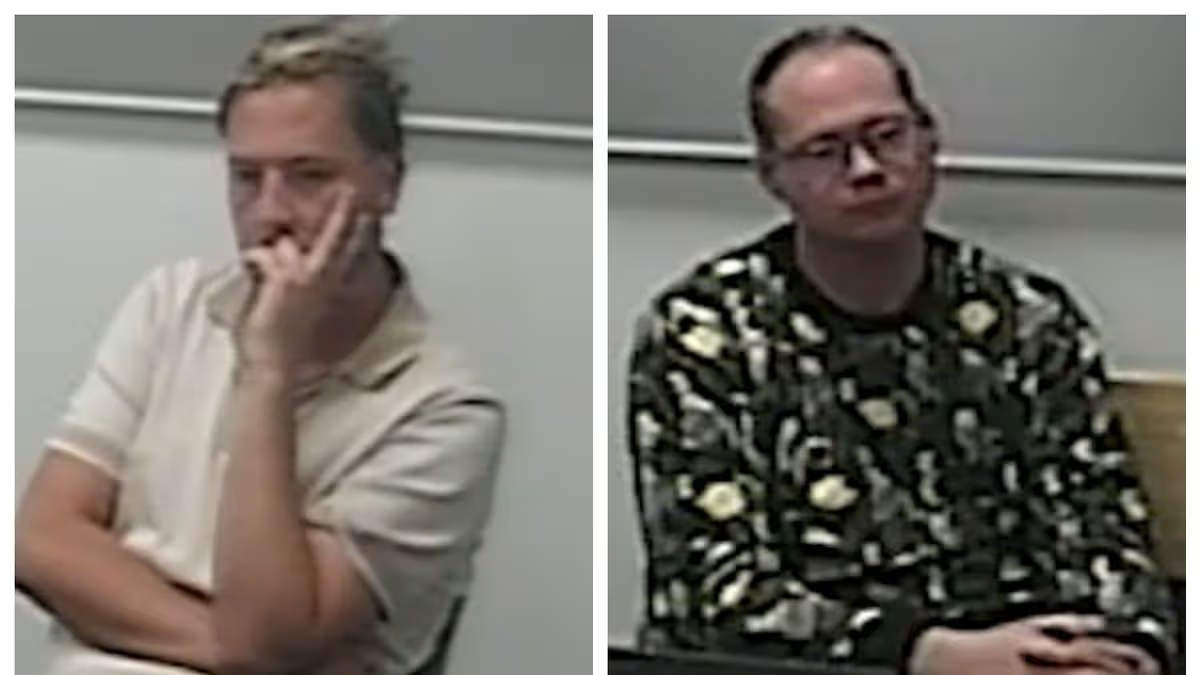
DCI Andy Fallows, who led the murder investigation, said: “The jury will have seen, at length, segments of the suspect interviews, and the body-worn video capturing Jamie Varley’s performance outside Blackpool Victoria, where he’s very theatrical.
Advertisement
“That is a marked difference to the man that is later interviewed on June 25 2025. Difference in attitude, difference in demeanour. I think you see two sides to Jamie Varley throughout viewing those interviews and that body-worn video.
“I think Jamie Varley has sought to deceive right from day one. I think Jamie Varley has tried to control the narrative and it’s only through working through these events and piecing them together and looking at them side by side do you really see that he is a manipulative character, or he certainly had tried to be, and ultimately by adopting that approach we’ve been able to show him for what he is.
“Even in his evidence under cross examination, you saw more of an obtuse, spiky side to him. He’s a man that has claimed to have tried to assist the investigation and give the investigation answers in relation to what happened to Preston, but the reality is far different.
“The reality is he’s concealed, he’s lied, his account is, or was, wholly inconsistent and disbelievable. Difficult to deal with. The questions were asked, his answers have ultimately been found wanting, in my opinion.
Advertisement
“McGowan-Fazakerley is a man who, if you like, has seen no evil and heard no evil. He denies any wrongdoing. He did not want to believe some of the evidence that was presented with him. He presented and has presented as a man who works away a long time and wasn’t aware of the number of bruises to Preston that we’ve seen, or the jury have seen, frequently over the days, weeks, and four months that he was in their care.
“He says he was unaware of how these bruises were caused and it is hard to understand how anyone could live in that household with that many injuries to a child of that age who is immobile, is not yet walking, and not know that something very, very sinister is going on.
“They’ve tried to present as the perfect family, living in the perfect home, having the perfect lives. Instagram ready, aren’t they? Everything’s on social media, everything is brilliant, and if you scrape away the veneer of that you come to something that is entirely different. Everything wasn’t good within the household. There were clearly arguments, bickering, clearly issues about long hours at work. Jamie struggling as a parent, as any new parent does, but it went further than that.
“The picture they tried to present to the outside world was one of respectability. The truth is far more sinister and darker than that.”
Advertisement
Karen Tonge for the Crown Prosecution Service said: “This has been one of the most shocking and horrific cases I have dealt with in my career.
“Jamie Varley and John McGowan-Fazakerley had a responsibility to care for and protect baby Preston. They violated that responsibility and 13-month-old Preston was abused with sickening ease.
“It is difficult to comprehend how the very people who should have loved him could inflict such sickening physical and sexual harm on an innocent child.
“No child should have to go through what Preston went through in the last four months of his short life and I cannot begin to imagine the toll this has taken on those that loved Preston. My thoughts remain with them all.”
Advertisement
Ensure our latest stories always appear at the top of your Google Search by making us a Preferred Source. Click here to activate or add us as your Preferred Source in your Google search settings.













































You must be logged in to post a comment Login