Every February 11, the anniversary of the untimely death of my 19-year-old best friend hits me and I feel a heaviness that doesn’t lift until the day’s end.
The day when you lost a loved one, had an accident, or experienced another traumatic event can trigger grief, anger, sadness and anxiety – and also cause physical symptoms, like sickness and insomnia. In more severe cases, people suffering from PTSD may relive experiences in vivid flashbacks or dreams.
Experts call this “anniversary syndrome” or the “anniversary effect,” and every person’s experience is unique. Some 70 percent of U.S. adults say they’ve experienced at least one traumatic event, according to the National Council for Behavioral Health.
“During these times, these feelings and reactions can be strong and often ‘take you back,’” the U.S. Centers for Disease Control and Prevention says. The symptoms might begin in the weeks before and intensify as the date nears, the CDC adds. Some may continue for weeks after the anniversary.
Advertisement
But these symptoms don’t last forever and experts have identified several steps people can take to feel relief, both mentally and physically.
Traumatic anniversaries can bring up feelings of grief, anxiety and sadness. Experts say there are steps to help counter these effects (AFP via Getty Images)
The rhythms of health
Getting the federally–recommended seven hours of sleep a night is important but so is sticking to a schedule. If you don’t keep a sleep routine, it can throw off your circadian rhythm – the body’s way of regulating hormones, digestion and temperature, according to the Cleveland Clinic.
Disrupting that internal clock can worsen the anniversary effect and also increase the likelihood of developing anxiety and depression.
So stick to a sleep schedule. That means going to bed and waking up at the same time, including on weekends, the Mayo Clinic instructs.
Advertisement
Going for a walk in sunlight, within the hour you wake up, helps signal to your brain and body that it’s daytime, says Banner Health nurse practitioner Alexandra Lessem, “setting the circadian clock.”
If you can’t be outside, sitting by an open window with direct sunlight has a similar effect.
A balanced diet packed with fruit and vegetables is crucial for a good night’s sleep. Several foods naturally contain melatonin, such as cherries, pistachios, almonds, eggs and fish, the National Institutes of Health says, and can help make you sleepy.
It’s important to drink plenty of water and move your body every day. As little as 10 minutes of moderate or vigorous activity, such as walking briskly or running, is enough to get more restorative sleep, Benjamin Baird, research assistant professor of psychology at the University of Texas at Austin, said.
Advertisement
Mindful medicine
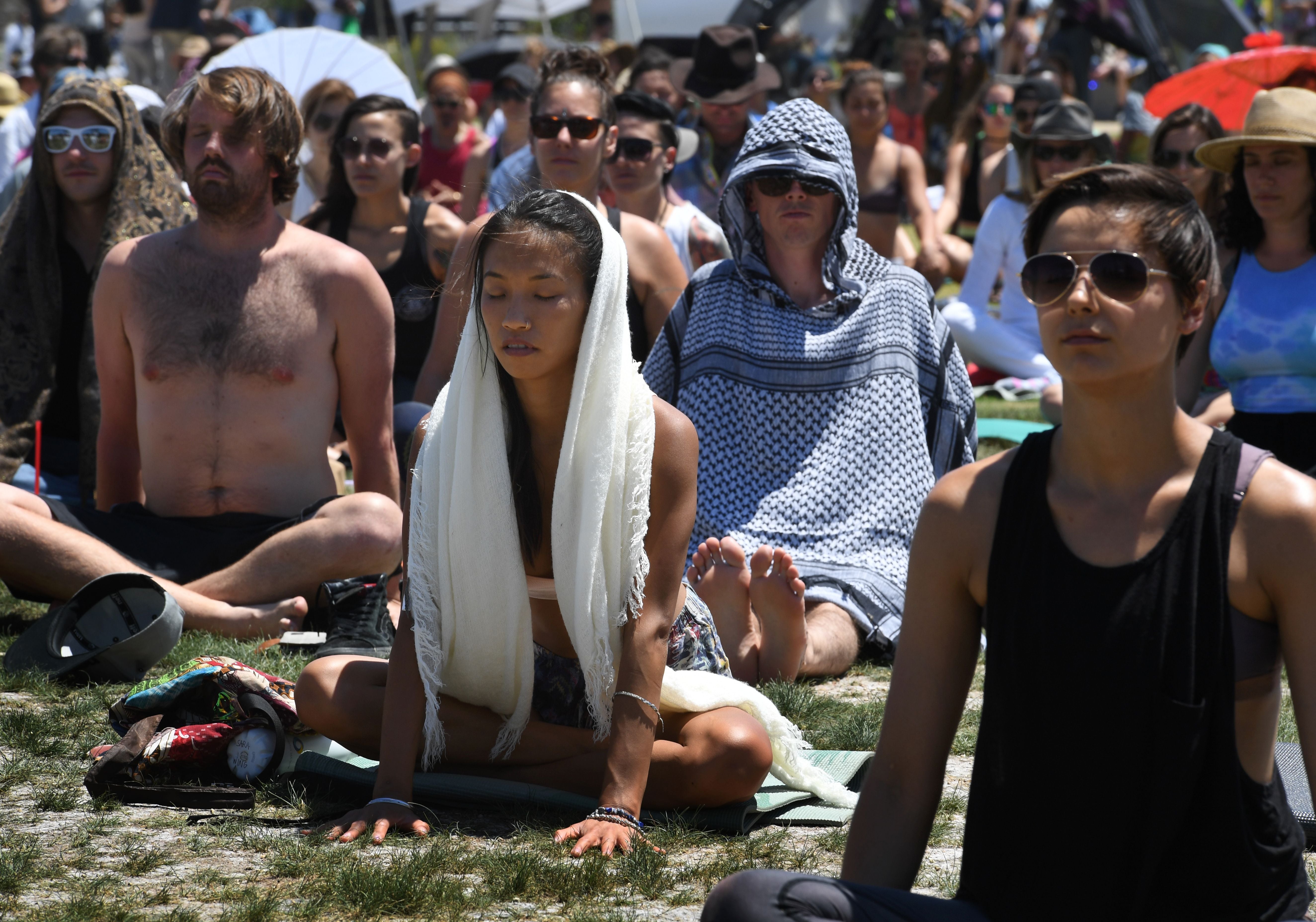
A few minutes of meditation a day helps with symptoms of anxiety, depression and trauma, and lets people connect with their inner self.
The ancient mind-body practice regulates the sympathetic nervous system, lowers the heart rate and levels of the stress hormone cortisol, the Cleveland Clinic says.
If you are new to meditation, begin with just a minute and build from there. There are a number of styles but some easy places to start include mindfulness meditation, which focuses on the breath, a certain image or feeling, or mantra meditation which has users repeat a certain word or phrase.
Advertisement
Guided meditation – following an expert in person or in one of many online apps – can help beginners tap into the process.
Journaling is a valuable practice for coping with the “anniversary effect.” It is widely used in therapy to help patients process painful feelings – and focus their minds on what they are grateful for or positive experiences.
“It may feel safest to bury painful feelings and avoid confronting them, but acknowledging what happened and how it has impacted you is an important part of healing,” the non-profit Mental Health America says.
Meditation can help to lower heart rate and levels of the stress hormone cortisol. The practice is thousands of years old (AFP via Getty Images)
Social service
As a difficult date on the calendar approaches, reach out to family and friends.
Advertisement
“There are some folks that, even months before, are nervous about the anniversary,” Laura Murray, a senior scientist in mental health and a clinical psychologist at Johns Hopkins Medicine, said in a statement. “They’re thinking about it, trying to figure out how to manage it – we sometimes describe this as spinning.”
Telling others not to bring up a death or traumatic event in the days before an anniversary can help friends or family struggling with trauma to avoid undue stress.
Make plans – even if it’s something small like going to a movie with a loved one or a board game night with friends. “It is important not to isolate yourself. Instead make efforts to be with others,” the National Center for PTSD says.
If you don’t want to confide in friends and family, talk to a trauma therapist. These experts are specifically trained in techniques such as eye movement desensitization and reprocessing therapy. The therapy, first tested in 1989, involves moving your eyes a specific way while you process traumatic memories. It can improve mood without having to talk about negative events, the Cleveland Clinic says.
Advertisement
All in the technique
Mental health experts recommend some tools that can alleviate the anniversary effect.
If you are feeling stressed or stuck thinking about the event, focus on the five senses – sight, smell, touch, sound and taste – to bring you back to the present, the National Alliance on Mental Illness says. This might start with the feel of your clothing, the sound of bird chirping nearby or the smell of food wafting from a restaurant.
“Then notice four of each, then three of each, and so on,” the alliance advises.
Advertisement
Being told to stay positive may make you roll your eyes, but thinking positively can reduce stress, according to Johns Hopkins Medicine. Bring up some of those silly cat videos on your phone – the simple acts of smiling and laughing fight stress by lowering heart rate and blood pressure.
Or pay it forward: send someone a thoughtful card or buy a coffee for a stranger. Making others feel good can make you feel good about yourself.
Homestead Kitchen, opened by chef Peter Neville and his partner Cecily Fearnley in 2021, is situated in Goathland, and was praised for making one of March’s “standout dishes” according to the culinary experts.
The North Yorkshire Moors village that “feels like being transported back to the 1960s” is known as the real-life location of ITV drama Heartbeat.
Sharing its recent foodie guide, Michelin said: “With the Michelin Guide Inspectors on the road throughout the year, they eat a vast array of dishes from all cuisine types and restaurant styles.
Advertisement
“Each month we ask our Inspectors to choose a standout dish of the month from their recent restaurant visits.
“This could be the most creative dish they ate, something that hit the right note at just the right time or simply the one that stuck in their memory for the longest.”
What did the Michelin Guide say about Homestead Kitchen?
In March, it was Homestead Kitchen’s Homestead moorland stottie with Hartlepool kipper butter and caramelised Botton cheese fondue that impressed Michelin Inspectors.
Found on the Chef’s Tasting Menu, an Inspector commented: “It’s always a pleasure to dine at this utterly charming restaurant in the North Yorkshire village of Goathland – which was used for the filming of long-running TV series Heartbeat.
Advertisement
“My meal kicked off with their version of a stottie – a traditional bread popular in this part of the world – which is made with locally milled flour, fitting their ethos of low food miles in every dish.
“It was accompanied by a subtly kipper-infused butter and, the star of the show, a light cheese fondue with a touch of mustard.”
Other dishes found on the Chef’s Tasting Menu include brassica salad with roasted cauliflower puree, soy and maple glaze and roasted pumpkin seeds, as well as North Sea turbot poached in brown butter with salsify fritters, brill and cep mushroom sauce, and kalettes.
Advertisement
Homestead Kitchen also offers other menus, including à la carte, lunch and Sunday lunch – all of which can be found on the restaurant’s website.
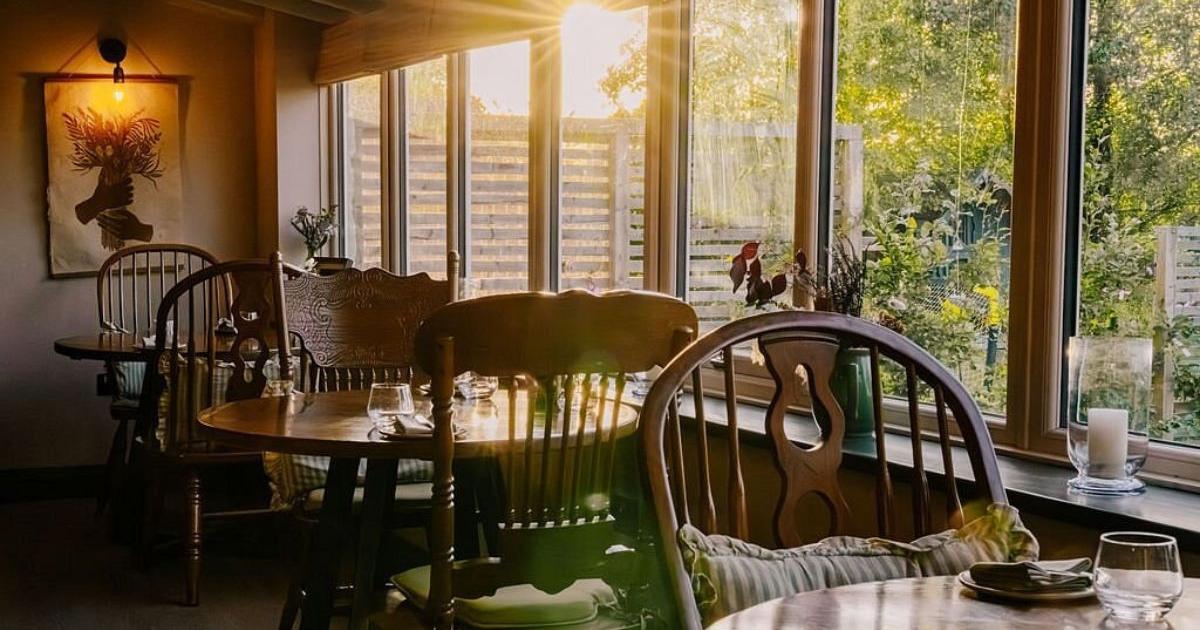
The highly rated foodie spot details: “When you take a seat in the restaurant, this is your time to relax, look out over the rolling North York Moors, and sample dishes that have been carefully created to showcase the finest ingredients that have been sourced locally, and most importantly seasonally.
Michelin stars explained (what each one means)
“The menu follows the ebb and flow of the seasons, using home grown organic vegetables, local suppliers, and even produce kindly donated by local folk who kindly bring anything they have an abundance of.”
As well as being known for its relaxed fine-dining, Homestead Kitchen is a converted 18th century farmhouse that also provides a self-contained holiday cottage and a family home.
Advertisement
Over on Tripadvisor, the eatery currently has an “excellent” 4.8/5 rating based on 157 reviews.
This happy customer wrote: “After living and working in London for thirty years and visiting many top end restaurants the end to end experience I had yesterday was one of the best in a long time and the best I have had in North Yorkshire.
“Your food was delicious and beautifully thought through, the location is stunning , the decor is just right, the warmth was spot on and even the music playing was perfect.
Do you opt for fish or meat dishes when eating at a restaurant? (Image: Tripadvisor)
“A huge part of success of the meal was the waitress , she was attentive, interested and a credit to your business.”
Advertisement
Someone else posted: “Just fabulous from start to end. The young sommelier/manager just had it all in hand and managed a perfect mix of being friendly but also so knowledgeable and efficient and service was spot on.
“We chose a mix from the fixed price lunch menu and the à la carte – everything was beautiful.
“We will certainly return – thank you team Homestead.”
Have you been to any restaurants in North Yorkshire that the Michelin Guide are raving about? Let us know in the comments below.
It is the first time they have attended the Easter service since 2023
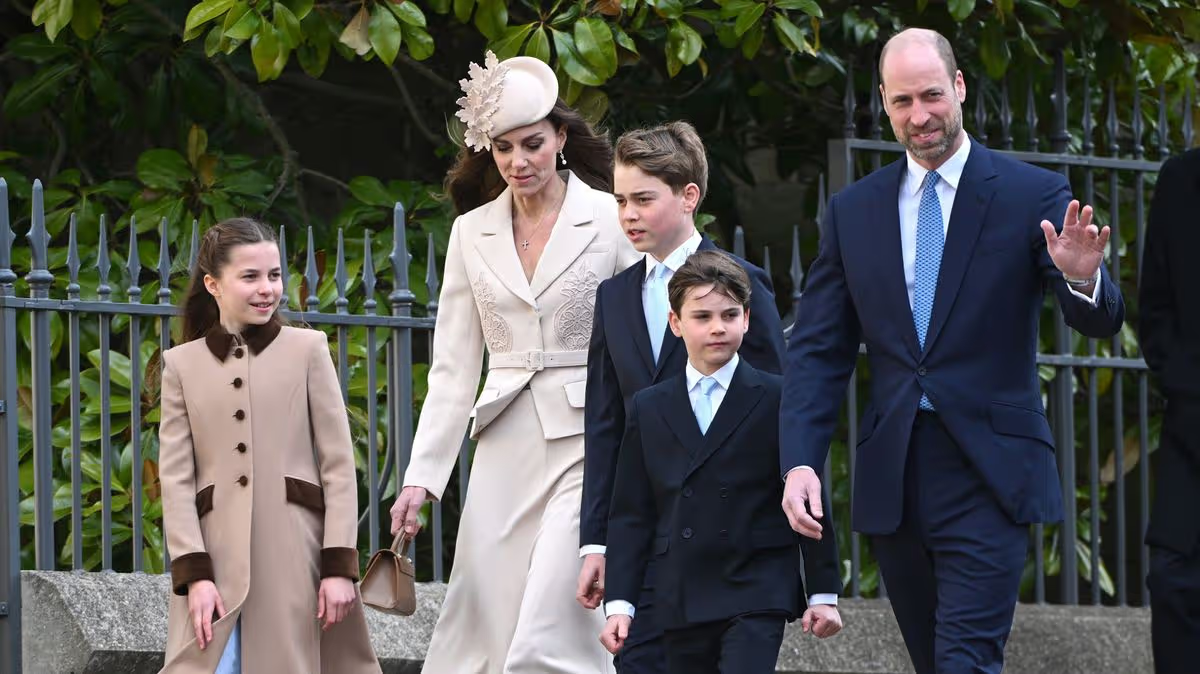
The Prince and Princess of Wales along with their children have joined the wider Royal Family at today’s Easter Sunday service (April 5). It is the first time the Wales family have attended the Easter Matins Service since 2023.
Advertisement
This is because they have prioritised spending the holiday privately as a family following Princess Catherine’s cancer diagnosis at the start of 2024. It is also not customary for the heir and their family to attend the event every year.
Prince William, Prince George and Prince Louis all wore dark-coloured suits. The Heir to the throne matched a white shirt with a blue tie, while his sons wore matching sky blue ties. Catherine wore a cream-coloured outfit, paired with a matching coloured hat. Princess Charlotte wore a beige, buttoned knee-length coat and opted not to wear a hat in the blustery conditions.
No official guest list has been released by Buckingham Palace but we can predict who will attend based on previous attendance. The King and Queen are expected to be joined by his siblings, the Princess Royal, and her husband, Vice Admiral Sir Tim Laurence, and the Duke and Duchess of Edinburgh.
Advertisement
Four family members will not be attending this year. Andrew Mountbatten-Windsor and Sarah Ferguson remain in royal exile following their links to convicted sex offender Jeffrey Epstein, while their daughters Princess Beatrice and Princess Eugenie have made alternative Easter plans.
He was diagnosed with cancer in December 2023 after he had just started university.
A Northern Ireland student has opened up about how a home from home support service helped in his recovery from a rare and aggressive form of cancer.
Advertisement
Young Lives vs Cancer first opened the doors to their Belfast Home from Home Amy’s House in early 2016. Ten years on, staff, supporters from the community, young people with cancer and families who have previously stayed at the Home have gathered to celebrate the milestone anniversary and the support it has provided over the past decade.
They include Romeo, who was studying music at Ulster University in Derry when he was diagnosed with Ewings Sarcoma, a form of bone or soft tissue cancer that primarily occurs in children and young adults, at 18 years old in December 2023.
Now 21, he stayed at Amy’s House for eight months during the entire duration of his treatment whenever he wasn’t in hospital.
Advertisement
Romeo said: “Amy’s House made one of the greatest impacts on my treatment outside of the actual treatment in hospital. At the time with most of my friends starting university, I was on my own. Without Amy’s house I would have likely struggled to find a place to live while undergoing treatment. Now I’m currently recovering still and trying to manage the after-effects of my surgery from cancer as well as the fatigue I have along with it to this day.”
Young Lives vs Cancer is the leading UK charity for children and young people (0–25) with cancer and their families. Amy’s House is one of Young Lives vs Cancer’s ten Homes from Home across the UK, and one of two in Northern Ireland. Each Home provides young people and families with a free place to stay nearby to where they or their child is having cancer treatment.
Treatment can often be a long way from home, which can be stressful and expensive so being able to stay at a Home from Home lessens that stress and helps families stay together.
Advertisement
Since opening in 2016, more than 700 families have stayed at Amy’s House. It is located just a short walk away from Belfast City Hospital and has five ensuite bedrooms for families to use. The Home also has communal areas, with a fully equipped kitchen and lounge areas, allowing families to meet, talk and share experiences with each other if they want to.
Rachel Kirby-Rider, Chief Executive at Young Lives vs Cancer, said: “This anniversary celebrates an incredibly special and vital service our charity provides in Northern Ireland. We wouldn’t be here and able to provide our Home from Home without our supporters and everyone who donates. We want to thank the community for their continued support.
“When a child or young person is diagnosed, they are often miles from their home, their family and friends. We know how much having their families able to stay close by to them in hospital helps, and the financial pressures Amy’s House eases for young people.
“We’re thankful we’ve been able to support young people with cancer and so many families in Northern Ireland at Amy’s House, and it’s been a special occasion hearing the impact the Home from Home has had over the past decade. Thank you to all our supporters, incredible house staff and social workers for everything they do to help be there for children and young people with cancer.”
Advertisement
To celebrate the ten-year milestone, Young Lives vs Cancer staff were joined by families who have previously stayed at Amy’s House. They marked the occasion with balloons, cake and swapping stories of how important the Home was to them.
Geraldine Burns, Accommodation Manager at Amy’s House, said: “We are so glad we can be there, for young people like Romeo, at a time when they need it most. This anniversary is a special occasion to take a moment to recognise the impact Amy’s House has in the community for so many people – and to celebrate and thank all the supporters who, through their vital donations, allow us to continue to be there for young people and families.
“I feel incredibly proud of Amy’s House and all the staff here who make the Home what it is for young people and families. In the last year, 119 young people and families have stayed at Amy’s House. Long may our service to the community continue, so we can be there for every child, young person or family member that needs us.”
Advertisement
To find out more about Young Lives vs Cancer’s Homes from Home and the support the charity provides, visit their website: www.younglivesvscancer.org.uk.
*Astro line horoscopes are updated every Thursday. Calls cost 65p per minute plus your telephone company’s network access charge and will last approximately five minutes. You must be over 18 and have the bill payer’s permission. Service provided by Spoke. Customer service: 0333 202 3390
NEW YORK (AP) — U.S. stocks drifted higher in hesitant trading on Monday, ahead of a deadline that President Donald Trump has set to bomb Iranian power plants.
The S&P 500 rose 0.4%, coming off its first winning week in the last six. The Dow Jones Industrial Average added 165 points, or 0.4%, and the Nasdaq composite climbed 0.5%.
Oil prices likewise rose after seesawing through the day amid uncertainty about what will happen in the war with Iran and how long it will slow the global flow of oil and natural gas. Iran on Monday rejected the latest ceasefire proposal and instead said it wants a permanent end to the war.
“We won’t merely accept a ceasefire,” Mojtaba Ferdousi Pour, head of the Iranian diplomatic mission in Cairo, told The Associated Press. “We only accept an end of the war with guarantees that we won’t be attacked again.”
Advertisement
Fighting continued in the war, meanwhile, including an Israeli attack on an Iranian petrochemical plant. And in the background was the clock ticking toward a deadline, one that Trump has moved multiple times, where he has threatened to attack Iranian power plants if it does not open the Strait of Hormuz. A fifth of the world’s oil typically sails through the strait during peacetime.
Trump on Monday suggested that his latest deadline of Tuesday at 8 p.m. Eastern time will be the final one, saying he’d already given enough extensions. “The entire country can be taken out in one night, and that night might be tomorrow night,” Trump said.
Monday also offered the first chance for U.S. stock prices to react to a report from Friday that said U.S. employers hired more workers last month than economists expected. The unemployment rate unexpectedly improved.
They’re encouraging signals for an economy that’s had to absorb painful leaps in costs for gasoline since the war’s beginning. The average price for a gallon of regular gasoline is nearly $4.12 across the country, according to AAA. It was below $3 a couple days before the United States and Israel launched attacks to begin the war in late February.
Advertisement
For countries that don’t produce as much oil as the United States, the pain has been even worse. That’s because they are more reliant on oil coming from the Middle East, and the war has blocked in much of the crude produced in the Persian Gulf area. That oil typically gets to customers around the world by exiting the Strait of Hormuz.
The price for a barrel of benchmark U.S. crude rose 0.8% to settle at $112.41 after erasing an earlier modest dip. Brent crude, the international standard, added 0.8% to $109.77 per barrel and remains well above its roughly $70 price from before the war.
Advertisement
Sign up for Morning Wire:
Our flagship newsletter breaks down the biggest headlines of the day.
Advertisement
On Wall Street, a split performance for the Big Tech stocks that dominate the U.S. market kept things in check. Apple rose 1.1%, and Amazon added 1.4%. Tesla slid 2.2%, and Microsoft fell 0.2%.
Bank stocks were strong, including a 1.3% rise for JPMorgan Chase.
CEO Jamie Dimon said in his annual letter to shareholders released on Monday that the U.S. economy continues to be resilient, and businesses still look healthy. He, though, also acknowledged that prices for stocks and other assets are high, which could imply “anything less than positive outcomes could have a dramatic impact on global markets.”
All told, the S&P 500 rose 29.14 points to 6,611.83. The Dow Jones Industrial Average gained 165.21 to 46,669.88, and the Nasdaq composite climbed 117.16 to 21,996.34.
Advertisement
In the bond market, Treasury yields held relatively steady. The 10-year Treasury yield was sitting at 4.33%. That’s still well above its 3.97% level from before the war. The rise has pushed up rates for mortgages and other loans going to U.S. households and businesses, which slows the economy.
A report on Monday said that finance, transportation and other U.S. businesses in services sectors grew in March for a 21st straight month of expansion. But the growth was slightly slower than economists expected, and a measure of prices accelerated at its fastest pace since 2022 in a potentially discouraging signal for inflation.
In stock markets abroad, Japan’s Nikkei 225 added 0.5%, and South Korea’s Kospi jumped 1.4%. Many other markets in Europe and Asia were closed for holidays.
___
Advertisement
AP Business Writers Yuri Kageyama and Matt Ott contributed.
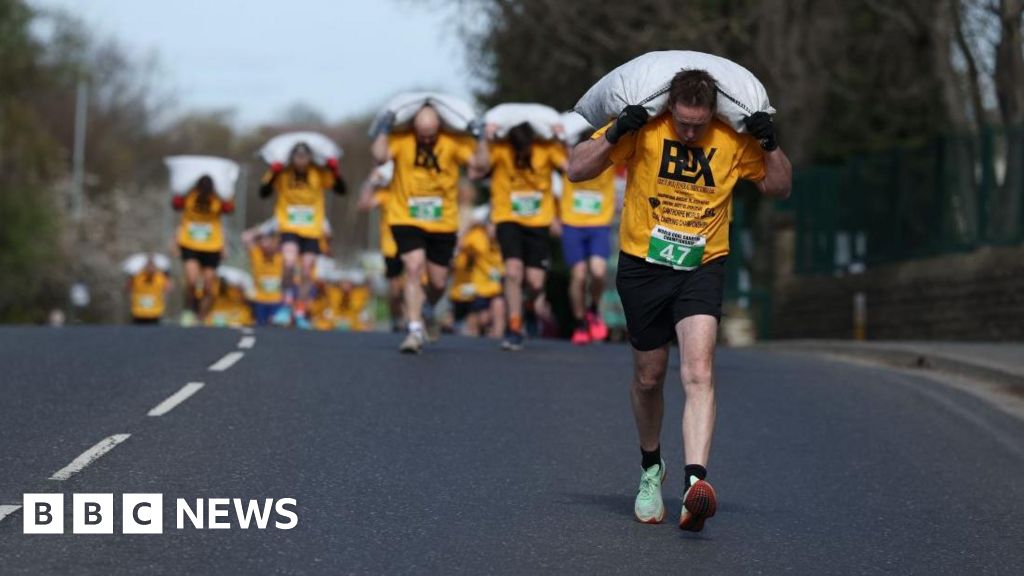
The annual World Coal Carrying Championships in the village of Gawthorpe, near Ossett, saw 240 entrants haul sacks of coal across a distance of 3,320ft (about 1,000m). Men carried 7st 12lb (50kg) sacks of coal, with women racers shifting 3st 2lb (20kg) bags, from the Royal Oak pub to the village’s Maypole Green.
As we emerge from our winter hibernation, many of us will be dusting off our gym leggings and limbering up for our first exercise class in, oh, we wouldn’t like to say. But, for a dedicated tribe, however, spring means even more than that: the start of marathon training season.
This lot has probably (*hopefully*) already been pounding the pavements and parks for months now, but if not, there’s no better time to get started than the New Year, with the London Marathon set to happen a mere few weeks away (April 26).
Running a marathon is a mammoth feat and the ultimate test of endurance – and more of us than ever are signing up to do it.
That’s not to say it gets any easier though. If you need some last minute motivation, here’s what to know about how to do it right, from the experts.
Advertisement
When your training should have started
Ania Gabb finishing the London Marathon
Asics
Training for a marathon should start many weeks in advance.
“If you’re a beginner, if it’s your first ever marathon then I would always suggest [starting] 16 to 20 weeks before the marathon. If you’re intermediate, or advanced, or if you’ve done a marathon before, then I’d say 12 to 16 weeks,” says Ania Gabb, an ASICS frontrunner and a coach.
Advertisement
For Gabb, the important thing is to start slow: it’s all about getting the body used to endurance running. Start with running 30 minutes a day, then building it up to 45 minutes, increasing week by week.
“You start with a small mileage and then increase that by 10 per cent: week one would be five, six miles. Then you gradually increase it and when you get to the end of about six weeks you’ve got to around 10 miles.”
There’s another bonus to the long training time, too: it means it’s possible to skip a week here or there (for instance, due to illness) without falling too far behind.
First things first: don’t start carb loading now. “There’s some people that start from week one, thinking, ‘I’ve got to start carb loading now,’ says Gabb. “It’s near the end of the marathon training you start focusing on that and testing things out before your long runs.”
Advertisement
Instead, keep it healthy: vitamins, minerals, healthy fats from things like avocados and fish.
“I always say to people, don’t try anything new,” she says. “Make sure that you’re getting all the right nutrition because you’re putting your body under such stress. You need to make sure that you’re looking after yourself.”
Chris Hatfield
Asics
Kitting yourself out in all-new gear for the biggest run of your life does sound tempting – but it’s a trap.
Advertisement
“‘Never wear gear for the first time on race day’ is one of my biggest pieces of advice,” says Chris Hatfield. He’s an ASICS ambassador who has recently completed the mammoth task of running 30 half marathons in 30 days across different cities. During the runs, he’s been encouraging members of the public to run alongside him and chat, in the hopes of raising awareness about mental health and the importance of opening up.
Hatfield says it’s important to always wear things in in advance. “Even before this challenge, I wore everything beforehand on a shorter run just to test it out,” he adds.
“There’s nothing worse than going on that longer run and you’ve put that T-shirt on for the first time, or a pair of shoes or socks and then [they’re uncomfortable] and you’re like, I’ve still got to do X amount of kilometres in these.”
Where’s good for kit? To start with, check out athletics brand Sweaty Betty: their gear is not only lightweight and comfy, but they have a pleasing number of running vests and T-shirts that will stay airy and cool amid the heat of a race. Factor in their range of leggings and running shorts (essentially, gear to suit any weather) and it’s a no-brainer.
Advertisement
247
For something that marries performance with fashion, 247 is also an excellent shout. These guys are the sporting offshoot of fashion brand Represent, but they’re plugged into the running scene, with collabs, expert input and even a line of precision-engineered cult fave trainers, the ARC-1 and ARC-2. The clothes themselves are nothing to sniff at either: the women’s performance leggings and long-sleeved tops are optimised for endurance, and are surprisingly breathable, even for long-distance running. Plus, they look great.
For girls, things can be a little bit more complicated. For instance, what if your period starts on the day, or the day before? Well, period brand Snuggs has recently launched a collab with Man City Women’s football team to create a line of sports underwear, but the rest of their range also features great leak-proof underwear that’s well worth a look.
Plus, while we’re talking about underwear, Australian brand Step One are a gamechanger when it comes to anti-chafe gear. They sell both bras and pants that are both comfy and breathable: a must, really.
Check your gait to get the right trainers
Advertisement
No matter how far you’re running, every runner should get a gait analysis done to benefit their race.
“Understanding your running style, regardless of shoes is really helpful,” says Hatfield. “It can help you be more conscious of how you’re training, maybe of your potential deficiencies, and of where you can strengthen.”
It can also help you prevent injuries. “A lot of runners out there don’t realise that they need stability shoes, as they might pronate or supinate,” says Gabb. To explain: pronation is where the foot rolls inwards on striking the ground, and supination is where it rolls outwards. “If they’re wearing a neutral shoe, they can injure themselves.”
During a gait analysis, people will often be asked to walk and run on a treadmill where a camera assesses their gait. Afterwards, the store attendants will be able to talk through the results and pick a trainer that suits their running style.
Advertisement
Fortunately, gait analyses are relatively easy to find in London – and they should be free to do, as well. The ASICS stores in Oxford Street and Canary Wharf do it, as do The Running Lab and Runner’s Need: they all cater to every type of runner, from beginner to expert, and should be able to offer excellent advice.
Strength training is important too
Runners crossing Tower Bridge during last year’s marathon (PA)
PA Wire
Don’t skimp on the weights, even if it sounds counter-intuitive: Hatfield calls it a “non-negotiable.”
Advertisement
“There’s this big fear, I think, of ‘if I do too much strength training, I’m going to put on size.’ But I think it’s better to look at it as building resilience and durability for your body,” he says.
“Running is a single-leg sport. And every single time you’re doing it, you’re not doing it in moderation, you’re doing a thousand reps’ equivalent of it. And that’s not building muscle, it’s often depleting muscle or causing muscle storage to deplete.”
In addition keeping your body in fighting shape, strength training is a way to safeguard yourself against injury: for instance, not rolling an ankle if you misstep, because the tendons are stronger. Hatfield himself went to the gym “probably two or three times a week” for the six months building up to his challenge: it’s an important element to build into your training routine. And not just the lower half of the body, but the upper, too: all of the body is working during a run, so don’t go missing arm day.
It’s natural to feel anxious before the race – expected, even. But there are ways to manage those nerves in a healthy way.
Advertisement
“I think one of the biggest things is being conscious of your self-talk,” says Hatfield. “I think we’re so aware of what other people say to us, or how we speak to others, but less so of ourselves. If you’re starting to tell yourself, ‘I can’t do this, I’m not going to finish, I’m not going to be able to achieve this,’ then your brain’s confirmation bias is going to come in and tell you all the reasons why this isn’t going to work, and then of course the body is often going to follow that as well.”
In addition to working on more positive self-talk, it’s also important to set realistic expectations around the race itself.
“I think sometimes people almost go in too much with a hope of perfectionism and then something will go wrong and they’ll think, ‘Oh my god, it’s ruined,’” he says. Instead, factor in an awareness that things can — and do — go wrong.
Gabb agrees: she recommends putting an ‘A, B and C’ goal into place with regards to expectations around the race.
Advertisement
“The A goal being the one where, that’s going to be your PB [by a long way]. B could be just, go for a personal best, so whether that’s even 30 seconds faster. Then C is just enjoy it, get round and complete the distance.”
Runners taking part in the London Landmarks Half Marathon run past St Paul’s Cathedral (James Manning/PA)
PA Wire
Let’s face it: the idea of running 26.2 miles, or even half of that, is a daunting prospect if you’ve not done it before — or even if you have. So don’t look at it that way, says Gabb.
“I think people panic, so I will say: break it into segments,” she explains. “Just focus on getting to the first five miles or focus when you’re taking your next gel. That’s the way I do it. That kind of mindset break it into segments and it’s just a lot easier.”
Advertisement
The other thing to be wary of is getting overtired at the start of the race. Ideally, the first two miles should be about 10 to 20 seconds lower than your average; an easy thing to forget in the heat of the moment.
“You need to get your body used to that pace and then you start going into it,” she says. “I would say always make sure you don’t go off too fast to start with: start slow and gradually build.
“Music helps. So, kind of going to the beat of the music. That’s a great way to pace yourself,” she adds.
Gabb recommends investing in a pace app, or a good old-fashioned pace band, to keep track of your speed. If you’re listening to music, it’s also important to find headphones that don’t fall out of your ears during the run itself. Beats have a great new Powerbeats Pro 2 earbud made for runners, which hooks over the ear and keeps everything cemented in place — a must for long runs.
Advertisement
Otherwise, Bose’s Ultra Open Earbuds are also a good shout: they clip over the outside of the ear and rest on the conch, as opposed to within the actual ear canal. That means you can listen to music while also hearing what’s going on around you — which in turn means you can keep an ear out for friends and family who’ll motivate you to get to that finish line!
He took on the supersized project following his retirement
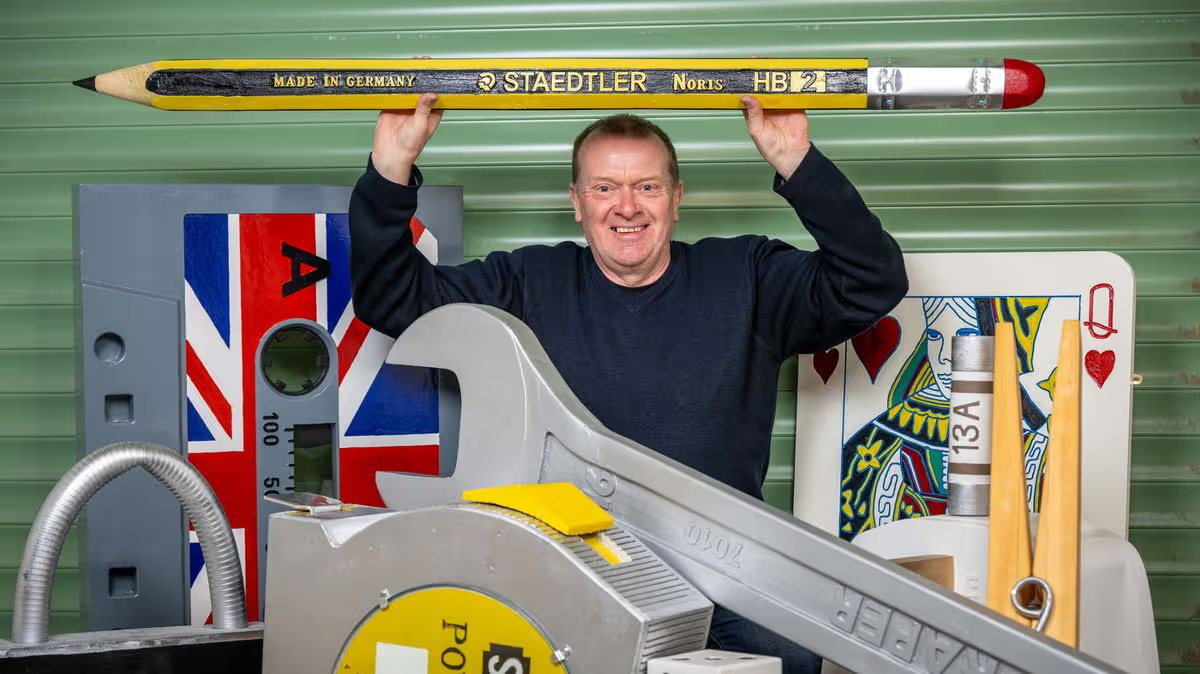
A retired electrician who says “you can only cook and clean for so many hours” has earned himself the nickame “Mr Big Stuff” thanks to his new and rather unusual hobby. DIY-fanatic Steve Wainwright builds supersize versions of everyday household objects.
Advertisement
So far in Steve’s collection, he has made items including a giant pencil, cassette tape and a playing card. These usually palm-sized objects are made out of wood, metal and plastic and can take anywhere from three days to two weeks to complete.
Steve, 62, and from Stanground near Peterborough makes his models from a workshop at the bottom of his garden and has now made 20 different models, including a 1.5m tall Staedtler pencil and a 1m tall cassette tape.
He said: “I took on the role of a house husband as I retired before my wife. You can only cook and clean for so many hours so I decided I wanted to build something. I didn’t want to be bored in the house.
“I had a tape measure in my hand when I saw an electrical plug and I thought I could build that bigger. I settled on ten times the size as it’s easy maths but sometimes I do use a bit of artistic licence.
Advertisement
“Anything that will fit in the palm of my hand, I will give it a go – lipstick, screws, pencil sharpeners.”
Steve, who also worked with the ambulance service for 10 years, describes himself as a “maker of things”. He started building in his garage but soon moved into a £4k workshop which he built himself. His sculptures catch the eyes of those passing by, and he has also exhibited some items for charity.
He said: “From the male point of view, they’ll say ‘This is amazing!’ But from the female perspective, they usually ask where I could possibly keep everything. I’ve been asked to support charities and the blind find they can identify items by touch, especially with the original, smaller version alongside it. The public loves the pencils.”
Advertisement
Steve has made a table-sized retractable tape measure whic took two weeks to build, whilst the pencil sharpener took him three days. He has even sulpted giant keys – one shed and one Yale – and said he’d love to take them into Timpson.
Steve says that he thinks he has spent around £2.5k on the materials, but added: “It was never about the money. The joy of it would fade. People don’t appreciate the skills they have and look over just how capable they can be.”
Coronation Street favourite Debbie Webster, played by Sue Devaney, was dealt with heartbreak yet again on Easter Monday’s episode as she realised how she was being conned again
Coronation Street’s Debbie Webster appeared to disown her long-lost son on Easter Monday’s episode of the ITV soap. The hotelier, who is played by Sue Devaney, has only just been released from prison after winning an appeal off-screen after she took the blame for son Carl’s dangerous driving during the Emmerdale crossover.
Advertisement
Up until recently, Debbie was said to be Carl’s sister but she revealed the truth to him just before she was sent to prison. Back at work at the Chariot Square hotel Carl (Jonathan Howard) was soon up to his old tricks and asking Debbie to bail him out financially yet again. He claimed that he was £10,000 in debt to ruthless businesswoman Fiona (Sara Poyzer) yet again and she agreed to help him out, on the condition that he paid her back by working at the hotel.
Debbie, who was diagnosed with vascular dementia last year after producers confirmed that the much-loved character will be killed off at some point in the future, seemed to be happy to make this arrangement but her husband Ronnie Bailey (Vinta Morgan) smelled a rat instantly.
Ronnie is the former flame of Fiona, so had no qualms out calling her up to check on the situation. As he did this, Carl had been pestering Debbie to make the transfer all day and she fobbed him off with excuses about bank security checks causing a delay. When Ronnie turned up on the scene later that afternoon, Debbie said: “I know, Ronnie, you don’t approve of it, but once he’s paid off this debt, he can start afresh!”
Ronnie told Debbie: “I’ve just been to see Fiona. His debt was five grand. Not ten. He’s fleecing you. Five grand on the debt, and another five in his back pocket. He’s playing you, babe. “
Debbie was visibly heartbroken as the truth dawned on her as she turned to Carl and said: “After everything I’ve done for you?” On the verge of tears, she said: “Do you know what? We’re done! Camels and straws and all that etc. I can’t do this anymore, Carl. I can’t do it.”
Viewers will know that Carl is one of five potential murder victims, as teased in a flashforward that aired earlier this year. On April 23, fans will finally discover whether Carl, Jodie Ramsey, Maggie Driscoll, Megan Walsh, or Theo Silverton will be killed off.
Fans were thrilled that Debbie had finally seen the light, but some were concerned that Carl may be able to return to his ways once her condition deteriorates.
Taking to X, one fan said: “Debbie cutting Carl off now that she’s lucid but will he take advantage when she has a memory symptom? A part of me thinks Carl will ruin the hotel as retaliation thus ruining the #Swarla wedding but another part says if he ruins the hotel he won’t have a place to live. #Corrie.”
Another said: “I did love watching Debbie wash her hands of Carl. Let’s hope it sticks though,” whilst a third wrote: “Tell him Debbie,” and emblazoned their tweet with a clapping-hands emoji.
A fourth said: “Debbie’s finally accepted that Carl is playing her. She’s known for a while, she’s been understanding, she’s forgiven him but he just keeps doing it & now she’s had enough!”
ITV local news programmes suddenly disappeared off-air on Monday evening including bulletins from Northern Ireland
James Holt Senior Live and Breaking News Reporter and Karen Price Assistant Editor of Screen Time
20:16, 06 Apr 2026
ITV regional news broadcasts abruptly vanished from screens on Monday evening (April 6), prompting baffled viewers to flood social media asking ‘what’s going on?’.
Television sets displayed nothing but a static ITV News graphic as local news services experienced widespread disruption. Concerned viewers flocked to X to report the technical fault, which seemed to have knocked out Granada Reports throughout the North West region.
Advertisement
Additional reports suggested programmes in Northern Ireland, Yorkshire, and the West Country were also hit by the outage. The broadcaster’s other channels continued to operate without issue.
Local news bulletins on the flagship channel went dark across various parts of the nation, leaving audiences staring at animated regional studio logos, reports the Manchester Evening News.
One viewer wrote: “Looks like a full network breakdown on@ITV1 with no regional news bulletins across the whole of the UK including @GranadaReports and with them unable to return back to national for @ITVNews.
“What’s happened to the Granada tv region signal? Its frozen on the ITV news logo,” queried another, while a third asked: “ITV1 seems to be down. Just a massive ITV logo and the region name below. Supposed to be airing the news right now.
“What the hell is happening with the local news/ national news in Yorkshire area as nothing on ?” another questioned.
In a message posted on X, ITV Granada confirmed the broadcaster had been encountering technical difficulties. It stated: “Apologies to viewers tuning in for our bulletin this evening – ITV has been experiencing technical problems and is working hard to fix the technical issues.”
Advertisement
The issues with the ITV news programmes came days after it was reported that ITV was closing one of its biggest channels. The iconic CITV is reportedly shutting down for good after 42 years, with its last broadcast on ITV2 scheduled for April 10.
Having launched the careers of several well-known telly stars, including Stephen Mulhern, Holly Willoughby and Cat Deeley, the channel also aired much-loved shows, such as Art Attack with Neil Buchanan, Tots TV and Horrid Henry.
CITV officially closed in 2023, however a programming block showing all the classics launched on ITV2, so viewers could still get their fix. But now, it’s no more, with the channel reportedly being shut down for good.
Advertisement
Announcing the news of the CITV’s demise this week, a social media account said: “This really means the end of the iconic CITV brand that’s been around for 42 years. Farewell CITV, this time for real.”
However, revealing that some of the shows would be picked up by CBBC while the rest will be under ITVX Kids, the post continued: “CBBC will have some of CITV’s programming while the rest will be under ITVX Kids.”










.jpeg?trim=33,0,2,0&quality=75&auto=webp&width=960)













































You must be logged in to post a comment Login