One of the musicians at the heart of the band’s early blues sound was Jeremy Spencer, who was born in West Hartlepool on July 4, 1948.
That Hartlepool connection gives the County Durham coastal town a place in one of rock music’s most recognisable stories.
From North East to fame
Spencer, now in his late 70s, took piano lessons as a young boy, but later lost interest after hearing the new sound of rock and roll.
Advertisement
While attending Stafford Art College, he discovered the music of American bluesman Elmore James, whose slide-guitar style became a major influence.
It was a long way from Hartlepool to international fame, but Spencer’s musical path soon took him into the emerging British blues scene.
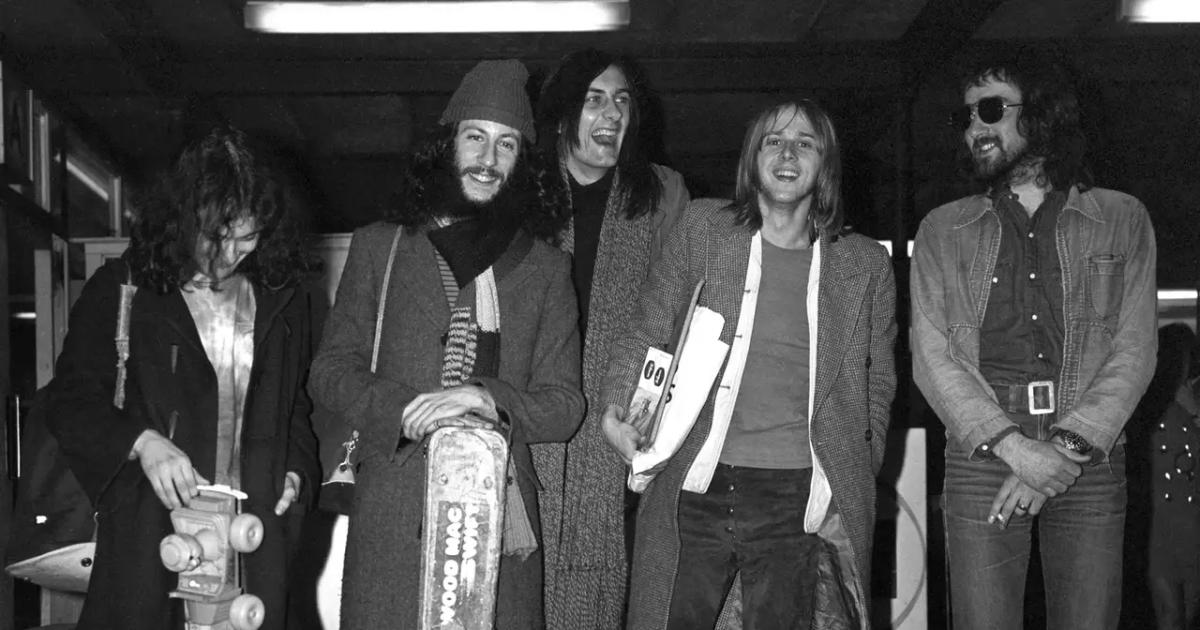
He joined Fleetwood Mac in 1967, becoming one of the band’s original members alongside Peter Green and Mick Fleetwood, with John McVie joining later that year.
Spencer’s speciality was slide guitar, although he also played piano and contributed to the band’s early blues-rock identity.
Advertisement
The Hartlepool-born musician featured on the group’s 1968 debut album, Peter Green’s Fleetwood Mac, and also appeared on English Rose, released the following year.
The early line-up was rooted firmly in British blues, rather than the polished California rock sound that would later make the group a global phenomenon.
Spencer was also known for his playful performances and impersonations of established rock and roll stars, including Elvis Presley.
That lighter side of his stage presence added a touch of fun to a band otherwise renowned for its serious blues credentials.
Advertisement
Leaving Fleetwood Mac
His time with Fleetwood Mac came to an abrupt end in 1971, when he left during an American tour and later joined the religious group Children of God.
The unexpected departure surprised his bandmates and marked a dramatic change in direction for the Hartlepool-born musician.
Spencer later continued making and performing music, releasing solo material and working on projects outside Fleetwood Mac.
In 1998, he was inducted into the Rock and Roll Hall of Fame as a member of Fleetwood Mac.
So, while Hartlepool may be better known for its maritime history, football and unmistakable North East character, it can also claim a link to the early story of Fleetwood Mac.
Advertisement
Jeremy Spencer carried a little piece of the North East with him from West Hartlepool to the world stage, taking the sound of Elmore James, the energy of early blues and a distinctly unusual career journey along for the ride.
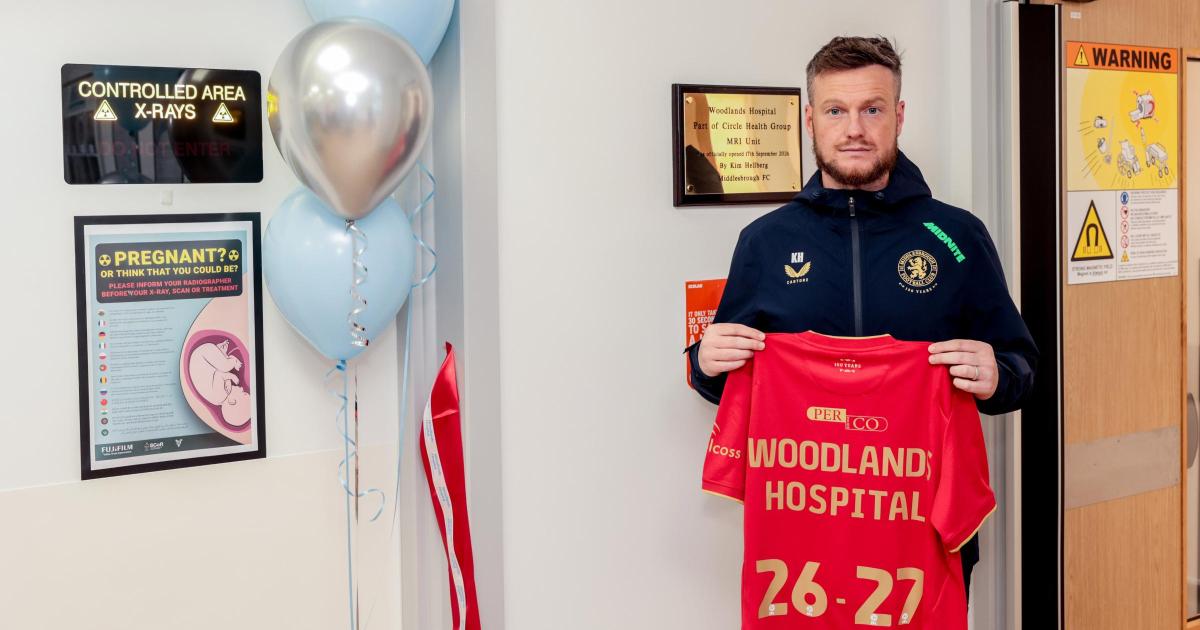
Hellberg cut the ribbon at a launch event attended by hospital staff, partners and guests.
MRI Unit at Woodlands Hospital opened by Kim Hellberg, Middlesbrough FC manager (Image: SARAH CALDECOTT)
MRI Unit at Woodlands Hospital opened by Kim Hellberg Middlesbrough FC manager, also pictured Adam Reed and Ian Gray Imaging Manager (Image: SARAH CALDECOTT)
MRI Unit at Woodlands Hospital opened by Kim Hellberg, Middlesbrough FC manager (Image: SARAH CALDECOTT)
The new scanner has been installed by Circle Health Group and will be used to provide imaging services for patients across the region.
Woodlands Hospital, which is the Elite Healthcare Partner of Middlesbrough Football Club, will also use the scanner to support the club’s players.
MRI Unit at Woodlands Hospital opened by Kim Hellberg, Middlesbrough FC manager (Image: SARAH CALDECOTT)
MRI Unit at Woodlands Hospital opened by Kim Hellberg Middlesbrough FC manager, also pictured Adam Reed and Ian Gray Imaging Manager (Image: SARAH CALDECOTT)
MRI Unit at Woodlands Hospital opened by Kim Hellberg Middlesbrough FC manager, also pictured Adam Reed and Ian Gray Imaging Manager (Image: SARAH CALDECOTT)
Debbie Dobbs, Executive Director of Woodlands Hospital, said: “I would like to extend my sincere thanks to Kim Hellberg for officially opening our new MRI scanner.
Advertisement
“This significant investment by Circle Health Group demonstrates our continued commitment to providing the highest quality healthcare and diagnostic services for our patients and local community.
MRI Unit at Woodlands Hospital opened by Kim Hellberg, Middlesbrough FC manager (Image: SARAH CALDECOTT)
MRI Unit at Woodlands Hospital opened by Kim Hellberg, Middlesbrough FC manager (Image: SARAH CALDECOTT)
“The installation of this new scanner represents an exciting step forward for Woodlands Hospital.
“It enhances our diagnostic capabilities and helps ensure that patients can access high-quality imaging technology closer to home.”
The hospital has an existing relationship with Middlesbrough FC and says the new equipment will also be available to players requiring MRI scans.
Advertisement
Mrs Dobbs added: “We have a proud history of working alongside Middlesbrough Football Club and are delighted that our new MRI scanner will support the health and wellbeing of the players.
“We look forward to continuing to develop our relationship with the club and supporting them throughout the season ahead.”
The scanner forms part of wider investment by Circle Health Group at Woodlands Hospital, with the hospital saying it will improve access to diagnostic imaging for both local patients and professional sportspeople.
In a speech to the United Nations in New York, the Prime Minister said the UK had faced an ‘industrial scale assault by hostile actors’ aimed at undermining the country since leaving the EU.
In recent days, the PM has suggested that unnamed ‘outside actors’ had manipulated opinion during the 2016 referendum.
In his UN speech on Tuesday night, he said the situation had worsened since Brexit – and named Russia as the main culprit.
Advertisement
Downing Street said a new National Centre for Information Defence announced by the PM – and dubbed the ‘Ministry of Truth’ – would detect and disrupt ‘hostile state information attacks’.
Mr Burnham has hinted this week he could commit Labour to rejoining the EU in the party’s next manifesto.
And in his UN speech he vowed to draw a line under a ‘corrosive’ decade.
‘It is now ten years since Brexit, my country has lived through the destruction, and it has given us a unique perspective that I want to share with you today,’ he told UN delegates.
Advertisement
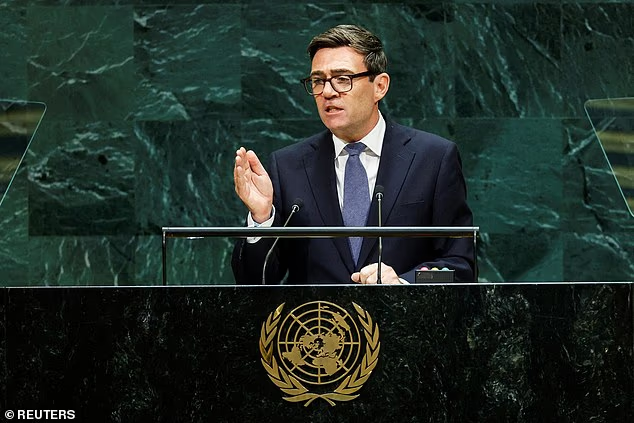
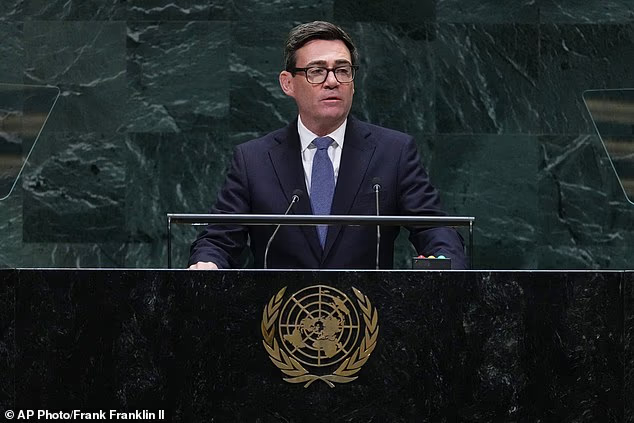
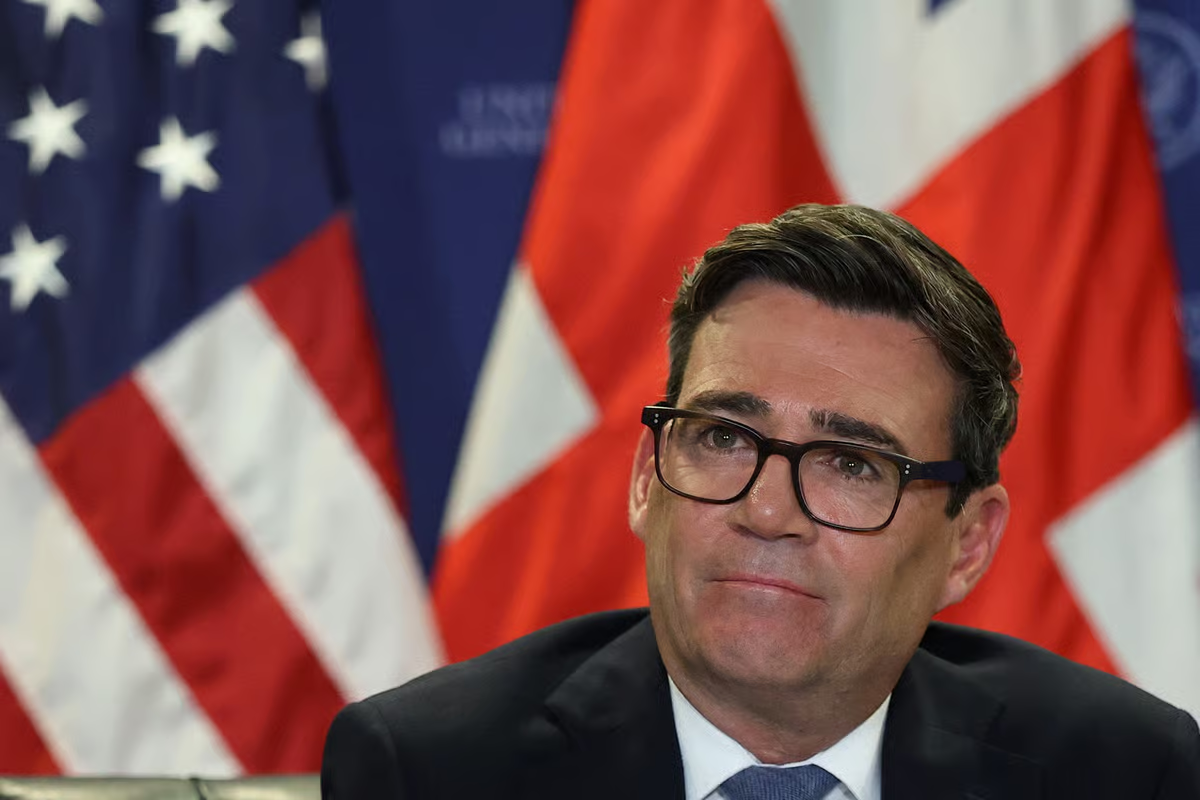
Andy Burnham delivered his first speech to the United Nations General Assembly on Tuesday night
The PM claimed Vladimir Putin had been exploiting Brexit to divide the country
‘I know this is a shared challenge. So we are going to use our experience in the UK – and the fact that we have already been through this shock – to help other countries.’
He said hostile agencies had ‘amplified far right narratives’ and ‘tried to interfere with the 2019 General Election’.
The PM said the Kremlin spends £1.3 billion a year ‘manipulating information’.
No 10 said the new disinformation unit would operate alongside intelligence agencies, the police and social media companies and focus on ‘improving local community cohesion and preventing a distorted and untrue narrative about Britain’.
Advertisement
Mr Burnham said the UK ‘will not play Russia’s game of trading escalatory rhetoric,’ adding: ‘Instead, we will be prepared but not panic. Clear-eyed but cool-headed and unflinching in defending our people and our allies.’
The PM has said that for now he will stick to the Brexit red lines in Labour’s manifesto, which include no return to the single market or free movement.
Advertisement
But he has said he hopes Britain will rejoin the EU in his lifetime.
Asked this week if he could pledge to rejoin in Labour’s next manifesto, he said the question was for ‘another day’.
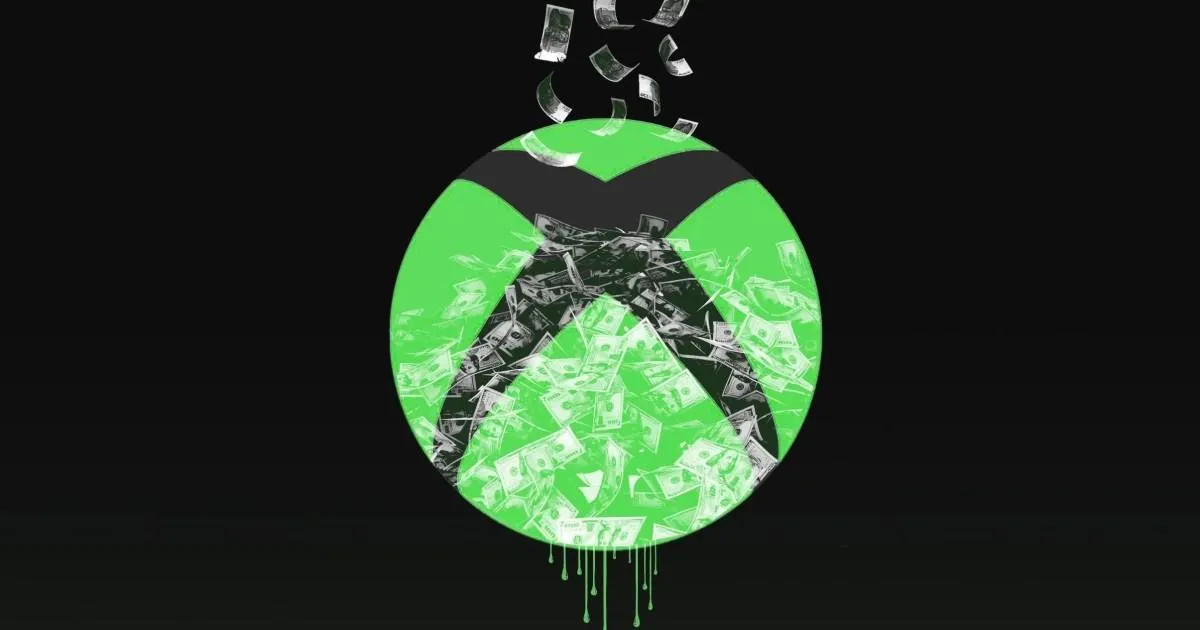
Is Microsoft serious about saving Xbox? (Microsoft)
As hundreds more Xbox developers lose their jobs, GameCentral asks whether they’re necessary cutbacks or simply the latest step towards Microsoft giving up on gaming entirely.
Perhaps the worst thing about Xbox’s latest round of job cuts is knowing that there’s over 1,300 more of them to come. Microsoft announced back in July that they were cutting ‘approximately 3,200’ jobs within the next year, with 1,600 going that day. So Tuesday’s annoucement that 268 more people have been laid off still leaves over a thousand developers fearing for their jobs.
These are staggering numbers, each one an individual that no doubt viewed working in the games industry as a career highlight, if not a life goal. Many of them will be veterans with many years’ worth of experience, who will no doubt view their treatment as encouragement to get out of the industry entirely. Institutional knowledge and experience, of the sort that takes decades to build, is being lost on a scale that has never been seen before in the industry, and it’s not over yet.
Suggesting that Microsoft doesn’t care is besides the point as it’s never been clear that Microsoft, as an entity, cares about anything to do with video games. Most of the people working at Xbox do but there’s been little sign from anyone outside the division that they view it as anything other than a minor distraction, a money drain that the company can easily afford but is increasingly irritated by.
Advertisement
There’s one school of thought that new Xbox boss Asha Sharma was brought in to offer only palliative care, her true goal being to slowly and quietly bring an end to Microsoft’s role in the games industry, so that the company loses as little face as possible when it eventually gives up entirely.
That is a possibility and you could argue that this week’s news is all part of that grand plan, as the number of semi-independent studios is drastically reduced, so that Activision and Bethesda are in charge of almost everything. British developer Rare, who can trace their lineage all the way back to Ultimate Play the Game in the early 80s, is now under the direct control of the same publisher that has done almost nothing but publish Call Of Duty games for the last two decades.
Expert, exclusive gaming analysis
Sign up to the GameCentral newsletter for a unique take on the week in gaming, alongside the latest reviews and more. Delivered to your inbox every Saturday morning.
The next Halo is to be made by an unnamed Activision studio (implying it won’t be out until well into the next decade); half of World’s Edge, who handle the Age Of Empires franchise, have reportedly been laid off; Ninja Theory and Arkane Studios are likely going to be shut down; Obsidian Entertainment is now under Bethesda’s aegis; and Turn 10 and Playground Games are to become one studio.
Advertisement
Halo: Campaign Evolved hasn’t been much of a success (Xbox Game Studios)
Is this, as Xbox claims, a necessary attempt to streamline the business or has it just put all its game studios in a giant trash compactor, which will continue to squeeze and compress them until there’s nothing left? If it is the latter, then there’s not really much to discuss, as ordinary developers are forced to pay for the mistakes of incompetent management, that has so long been blamed for Xbox’s problems but will inevitably be the last to go.
But if this is a genuine attempt to save the business, can it work? Asha Sharma may, by her own admission, not know much about video games, but she appears to be a competent businessperson. Even if she suffers from the typical Microsoft fault of not realising how her ghoulishly fake smiles, and assurances that the business is still doing great, come across when she’s announcing that hundreds of people are losing their jobs.
If you were making a genuine effort to revive the business, then it’s easy to see most of the purchases orchestrated by former boss Phil Spencer as a mistake that needs to be addressed. It’s not going to be easy to offload Activision Blizzard now, even if they do regret the purchase, but the smaller bespoke developers, none of which were known for creating bestsellers or prominent IP, have now mostly all been dealt with.
What have they got to smile about? (Microsoft)
It’s cruel and unfair, and a terrible waste of talent, but the mistake was Microsoft buying them in the first place, which was not Sharma’s doing. Acquiring Bethesda made more sense, especially as they were in financial trouble at the time, but Microsoft’s complete inability to take advantage of the Fallout TV show’s surprise success is another prime example of how slow and inefficient Xbox is as a business.
Sharma has made it a point of saying that they should focus on their most popular properties and while that seems blindingly obvious it’s something Xbox has been terrible at for two generations in a row now. If the new Halo does come out in, say, 2032 it will be over a decade since the last new game, which was itself a major disappointment.
By that point there’s a good chance it’ll be too little, too late, which may already be the case for Gears Of War and this year’s prequel E-Day. As a result, much depends on the reception to next year’s Fable reboot, but how much can you really expect from a series that hasn’t had a new mainline entry in 17 years and was never that acclaimed or successful in the first place?
Advertisement
Nevertheless, these games do represent Microsoft’s best chance for the future, with The Elder Scrolls 6 another key title, for which a very important decision needs to be made about its potential exclusivity. The same is true for Hideo Kojima’s OD and Physint, with Microsoft jumping in to save the latter after Sony tried to cancel it, a move that seemed more like an overly eager attempt to get one over on Sony than it did a sound business decision.
But ultimately, it’s not the games that are the root of the Xbox games business. Microsoft can happily go on as a third party publisher without any problem but for the Xbox name to mean something they have to have a hardware platform – or a widely used streaming service. At the moment they have neither.
The Xbox Series X/S has been a complete disaster and considering their recent changes to how you pay for streaming, one can only assume that’s not going well either. Microsoft is keen to insist that the next gen Project Helix is real and will be released soon but what is it? If it’s a traditional console it’s impossible to imagine that it can be a mass market success, given the decline in the Xbox hardware business and the inevitably high price of the new console.
Advertisement
Could they make a success of some sort of cheaper, redesigned Xbox Series X? Perhaps a hybrid console in the style of the rumoured new PlayStation device? Perhaps, but what would be the selling point to anyone that isn’t already part of the Xbox ecosystem, considering PlayStation and Nintendo already exist as far more viable alternatives?
Only Microsoft currently knows the answer to that but unless it’s a good one, it’s difficult to see any future for Xbox as anything other than a third party publisher. And if that’s all it’s to become then it’s very likely Microsoft will just try to sell the division off to someone else. An ignoble end to a business that, in the last decade, has caused nothing but trouble for everyone involved.
Andy Burnham last night urged world leaders to come together to prevent AI from destroying humanity.
In a speech to the United Nations General Assembly, the Prime Minister said global action was needed following a string of warnings that the technology could pose a threat to life if it is allowed to continue developing at breakneck speed.
He said the future of artificial intelligence was ‘too important’ to be left to the private sector and urged leaders to agree a set of common global rules.
The stance puts him on a collision course with Donald Trump, who has railed against the idea of regulation.
OpenAI chief Sam Altman is due to address the UN today.
President Trump has dismissed warnings about the threat to life from AI as a ‘hoax’ designed to dent the lead of US firms in the race to produce what he yesterday branded ‘super intelligence’.
In his speech in New York last night, Mr Burnham said it was time for the world to act.
Advertisement
Andy Burnham addresses the 81st session of the United Nations General Assembly at U.N. headquarters on Tuesday
The Prime Minister said AI had the power to transform the economy and cure diseases such as cancer if it was properly regulated to serve human interests.
But he added: ‘We know that AI will also be a source of disruption to the way we live and work – and a multiplier of risk. We’ve all heard the warnings, which we must heed. I know how worried people are. So we have to rise to this moment.
Advertisement
‘Fundamental decisions on this technology are too important to be left to chance. They must be taken by elected governments who serve working people. And we need to give people the support they need through this change – ensuring that it becomes an engine for reindustrialisation and opportunity as well.’
Mr Burnham said there should be no repeat of a recent incident in which the UK’s AI Security Institute was denied pre-release access to the latest version of Anthropic’s Claude Mythos programme. He said security chiefs had been asked to establish a new National Centre for Information Defence to detect and disrupt attempts by hostile states to manipulate opinion and undermine society in the UK through disinformation.
The PM said Britain held ‘a unique position as an honest broker’, adding: ‘We are going to step into that role. And we are going to start with one of the most significant challenges and opportunities of our age – frontier AI.
‘The UK has some of the best tech and AI talent anywhere in the world. And when it comes to guarding against the risks, we have our world-leading AI Security Institute – working hand in glove with the US and the leading labs on AI safety. But we need to go further.’
Advertisement
Mr Burnham likened the situation to the global financial crisis when world leaders came together to prevent the collapse of the banking system.
‘That is the kind of approach we need now,’ he said.
‘So we will bring the right people together on the key issues: delivering on the potential of AI for good, and dealing with the risks.
‘And we will work towards agreeing a single set of global principles and standards to ensure the transparency and access we need to increase our preparedness – and to ensure that AI development is safe.’
Mr Trump, who has previously dismissed concerns about AI safety as a “hoax”, told the UN: “The United States totally rejects any attempt to construct a globalist scheme of control for the artificial intelligence being spoken of so much now – hereinafter officially called super intelligence.”
The solar farm will operate for 45 years, which will allow the soil fertility to improve
A solar farm has been approved on farmland next to a small Cambridgeshire village. Huntingdonshire District Council’s development management committee met to decide on the application for land off Vicarage Lane in Diddington, just west of the A1.
Advertisement
Buckden Parish Council and Southoe and Midloe Parish Council had objected to the plans as they said “there should be no more solar farms on greenfield sites until all residential and commercial roof spaces and brownfield sites have been fully utilised”.
Edmund Thornhill spoke in favour of the application and said the solar panels, expected to generate 35MW of electricity, are proposed on the “poorest performing” fields.
He said: “There needs to be careful consideration around best use of land even if that use is for a finite period – the farm already provides food, housing and space for nature. We want to support energy production as well over the poorest land.
“This scheme would provide diversified income to help fund moving to more regenerative agriculture on the rest of the farm.”
Advertisement
Around 45 hectares of land will be covered and the solar farm is expected to operate for 45 years, which Mr Thornhill said would allow the soil fertility to improve. The company behind the plans, Cell Energy Limited, said it has an agreement with Anglian Water to provide the company with energy.
An underground cable will be built to their facility at Grafham Water which the planning application said was a “very significant energy user”.
Cllr Jon Neish, of Holywell-cum-Needingworth, said he couldn’t see a reason to object to the plans aside from the parish council’s objection.
The Conservative councillor said: “Unfortunately they haven’t come to explain a bit more in detail their views so at the moment I would struggle anywhere to say why we shouldn’t agree with it.”
Advertisement
Cllr Lara Davenport-Ray, of St Neots East, said renewable energy projects are “really important” as natural gas is still used to generate much of the electricity in the area.
The Green councillor said: “If we don’t stop creating carbon emissions then our planet will continue to warm and it will make the growing of any crops impossible. I am disappointed to see no battery storage included but because of the overall direction that we need to go in I will suggest that we approve this application.”
The plans were approved with 12 voting in favour and one against.
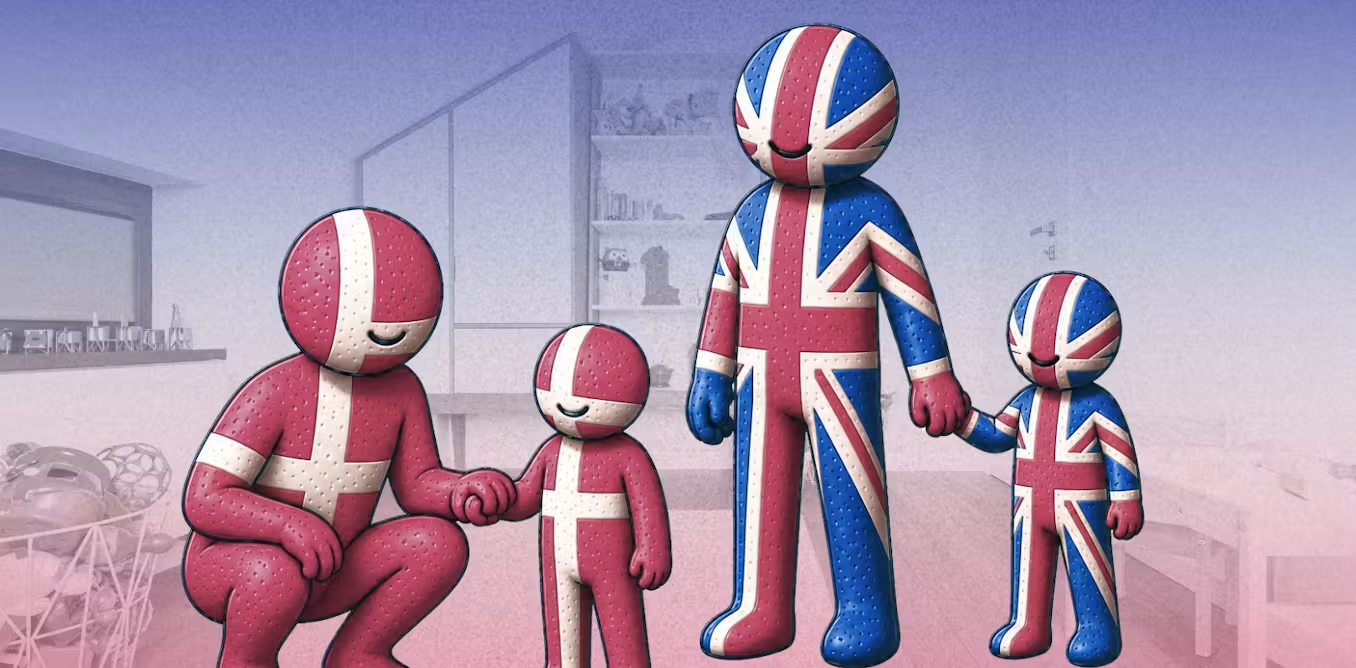
The Danish way of parenting has inspired a slew of manuals that have become bestsellers. To parents elsewhere, the picture presented is a near utopia of supportive government policies and effortless rearing of happy babies.
But how different is parenting in Denmark really from other countries, like the UK?
I am a professor of psychological science at Aarhus University in Denmark. My research focuses on mental health and parenting in the early years. Here’s what the evidence shows.
Advertisement
Health Gap / Sundhedskløften is a collaborative series from The Conversation UK and Denmark’s Videnskab.dk exploring what the two countries can learn from each other when it comes to health and wellbeing.
From cycling and alcohol to inequality, healthcare and everyday habits, the series looks beyond hospitals and medical treatment to explore how culture, politics and society shape the way people live – and how healthy they are.
More leave for dads
Denmark and the UK differ on leave for new parents in two striking ways: how much compensation is provided and how leave can be shared between parents.
Advertisement
Denmark provides more generous leave compensation than the UK and assigns equal amounts of leave to each parent that cannot be transferred.
In 2022, Denmark implemented a reform offering 11 weeks of leave to fathers, and the equivalent to mothers, that is “use it or lose it”, and fathers are now estimated to take most of their nontransferable leave.
For fathers in the UK, the statutory leave entitlement is much shorter, at just two weeks. It is also less well paid, at around 19% of average earnings, compared with about 50% in Denmark.
Employers in both countries can offer enhanced paternity leave that provides more time off or higher pay than the legal minimum. But nonetheless, UK fathers take much less leave than fathers in Denmark, with a recent survey finding that most took around two weeks.
Advertisement
But mums still do nights
Danish nontransferable paternity leave is intended to make the sharing of infant care more equal between parents and help mothers stay in paid work.
Childcare does seem to be shared more than is the norm in the UK and financial support helps to smooth mothers’ transition back to work.
Fathers may be around more in Denmark, but night-time wakings are still often dealt with by mum. pexels/william fortunato
Despite these strong policies to support father’s involvement in early care, in most families in Denmark, as in the UK, it is still mothers who are the primary caregivers. Even during paternity leave, our research shows that mothers are the ones who report getting up more often at night.
This matters for mothers’ health and their postpartum experiences. Disrupted sleep in the months after birth is associated with low mood and, in some cases, symptoms of depression.
Advertisement
Danish fathers and mothers, too, endorse traditional ideas about men’s and women’s parenting ability, with most parents believing that mothers are better than fathers at early childcare.
So while policy clearly helps fathers take an active role, it does not fully equalise the caregiving load of fathers and mothers, or mean that men and women are perceived as equally competent carers.
Naps outside
Beyond policy, there are cultural beliefs about what is good for babies that differ between Denmark and the UK, too.
One highly visible example is the practice of leaving babies to nap outside, despite temperatures that frequently dip below zero.
Advertisement
Uncommon in the UK, babies in Denmark and the Nordic countries often sleep outside during daytime hours, well bundled up in prams. Parents believe that the fresh air is good for a baby’s developing immune system, improves sleep quality and buys mothers some time for themselves.
Though, it is perhaps easier for Danish parents to engage in such a practice against a backdrop of relatively high social trust. In Denmark, 74% of respondents in a nationally representative survey agree that most people can be trusted, whereas only 43% of adults in the UK say the same.
Calmer babies?
Given the generosity of Danish parental policies and the trust in others that allows outdoor napping, it is little wonder that headlines about contented Danish babies appear in the media with some regularity. Indeed, one analysis positioned British babies as crying “the most” and Danish babies “the least”.
Various explanations have been suggested: that Danish parents are less stressed because of generous parental leave; that outdoor napping promotes calmer babies; or simply that Danish parents view crying as a normal way for babies to communicate rather than something to fear.
Advertisement
Scandinavian babies generally spend more time outdoors compared to British babies. pexels/josh willink
However, a close look at the evidence suggests reason for caution. The estimates of Danish infants’ crying came from only a handful of studies conducted more than two decades ago, involving relatively small numbers of infants.
What distinguishes parenting in Denmark from the UK is not a single factor, but a combination of family policies, parenting practices and cultural ideas about what is good for children. Policies encourage fathers to be involved early on and make it easier for many mothers to remain in paid work.
They do not, however, mean that care is shared equally between parents. And based on the evidence to date, there is no guarantee that the Danish way results in babies that cry any less!
This series was commissioned as part of a partnership between Videnskab.dk and The Conversation, where articles are published in English and Danish.
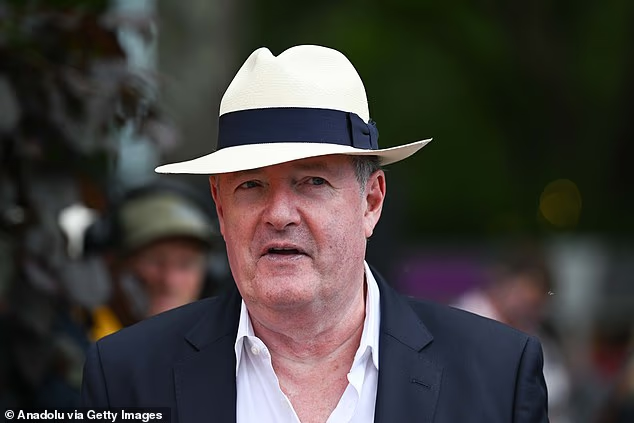
Morgan has threatened to sue Earl Spencer over ‘fabricated inaccuracies’ and ‘examples of brazen falsity’ in Swan Song: Diana, My Sister, which has been serialised by the Mail.
Spencer claims Morgan ‘snarled with annoyance’ when told he was not invited to Diana’s funeral.
The allegation is part of an anecdote told by Spencer about his decision to uninvite all national newspaper editors from the funeral. Morgan was editor of the Mirror at the time.
Advertisement
Spencer also wrote that he ‘assumed Morgan must be feeling particular guilt because, four years earlier, he and his Sunday Mirror counterpart’ published photos of Diana ‘taken with hidden cameras’.
But the pictures, which showed Diana in a leotard working out at the gym, were published in the Sunday Mirror in 1993 while Morgan was still working at The Sun. He joined the Mirror as editor in 1995.
Speaking on his YouTube show Piers Morgan Uncensored, Morgan read an extract from the book, which said: ‘The only one who sounded surly, as opposed to merely confused or embarrassed, was Piers Morgan of the Mirror, who snarled with annoyance before he hung up.’
He then told viewers the book ‘contains fabricated inaccuracies which will strike to the heart of his credibility’.
Advertisement
Piers Morgan threatened to sue Earl Spencer over ‘fabricated inaccuracies’ in his new book
Charles Spencer’s book Swan Song: Diana, My Sister has been serialised by the Mail
‘Well, this is all pretty extraordinary stuff, isn’t it? And very damning, particularly about me,’ he said.
Advertisement
‘I come across in the most despicable manner imaginable. There’s just one problem. It’s all bullshit and very, very easy bullshit for me to prove it.’
He addressed the earl directly and said ‘you’ll be hearing, and your publishers, from my lawyers’.
‘Because I would like the complete lie that you’ve published about me, and those photographs, to be removed from your book,’ Mr Morgan said.
‘And I would like a donation to be made to the King’s Trust for the damage that you’ve caused with your lie, after all.’
Advertisement
Spencer apologised for the error on Tuesday but stood by his account that Mr Morgan was ‘surly and annoyed’ when he called the journalist to tell him he was not welcome at Diana’s funeral.
A statement said: ‘Earl Spencer’s account of his conversation with Piers Morgan is accurate.
‘Mr Morgan was surly and annoyed when Earl Spencer called personally to tell him that he was not welcome at his sister’s funeral.
‘The book then records Earl Spencer’s assumption that Mr Morgan’s response was because he was editor of the Daily Mirror when the Mirror Group had published highly intrusive photographs of Princess Diana at the gym.
Advertisement
‘The photographs were published by the Sunday Mirror on November 7 1993. Mr Morgan has pointed out that he did not join the Daily Mirror until October 1995.
‘As an historian, accuracy is important to Earl Spencer. He therefore wishes to clarify that his assumption was incorrect. Earl Spencer apologises to Mr Morgan for this error.’
Earl Spencer’s book, pictured being sold for half price in a London bookshop, was releasedon Tuesday
Morgan later repeated his threat of legal action, writing on social media: ‘Earl Spencer has apologised to me for his defamatory lies published in his new book, Swan Song.
Advertisement
‘But I am pursuing legal action against him and his publisher Penguin to have the lies removed, and damages paid to the King’s Trust.’
Morgan had also accused the earl of ‘using the Harry and Meghan playbook’ of ‘putting their truth before the truth’, continuing: ‘I expect there will be many more examples of brazen falsity after what I’ve uncovered.’
He referred to other claims in the book, including that the King told Spencer ‘we’ll forget [Diana] soon enough’ and sounded ‘giddily elated’ in the wake of the crash which killed her.
He said: ‘Many allies of His Majesty have called into question these facts, ever since the most salacious accusations were serialised by the Daily Mail.
Advertisement
‘Many royal commentators and experts have lined up to say that they simply don’t ring true. The King himself issued a furious rebuke that is almost without precedent.’
The earl has stood by his account of the King’s alleged comments.
Scientists have known for more than 60 years that animals can sense the Earth’s magnetic field, and there is a wealth of behavioural evidence supporting their use of this cue as a navigation mechanism. But despite this evidence, there’s no consensus as to how animals actually sense the magnetic field.
Magnetic cues appear to be used by animals in all sorts of circumstances, not simply for long-distance navigation. Magnetoreception is used for orientation in invertebrates, fish, amphibians and reptiles. Mammals use it in behaviour such as nest building and hunting, as well as homing.
Yet there is no obvious sensory organ for this process, as there is with other sensory systems (think nose for smelling, eyes for seeing). This has led to some scientists calling it a “sense without a receptor”. However, this is not entirely accurate.
In fact, there may be as many as six kinds of magnetic mechanism across all animal species, after a recent study added a new potential option in homing pigeons. But we can’t be sure that any are actually the sensory receptor, as direct evidence is missing in every case.
Advertisement
It’s a situation that reminds me of the Hitchhiker’s Guide to the Galaxy’s description of currencies. “Monetary units: none. In fact, there are three freely convertible currencies in the Galaxy, but none of them count.”
Here are the six magnetic mechanisms that scientists have identified in animals to date:
1) A light-dependent mechanism in birds, insects and amphibians, thought to be based on a light dependent photoreceptor;
2) A receptor based thought to be based on iron particles in cells in the beak of birds;
Advertisement
3) A receptor also thought to be based on iron particles, but this time in the eye of mammals;
4) A receptor proposed to be based on the induction of ions (atoms with an electrical charge) in the semicircular canals of the ear, again in birds;
5) Another proposed to be based on the electroreceptors of some fish, again through the induction of ions;
6) And finally, hot off the press and possibly most surprising of all: the suggestion of a receptor in the liver of pigeons.
Advertisement
Disoriented homing pigeons
In the recent study, published in Science, a team of Germany-based researchers treated homing pigeons with a chemical, clodronate, that removes macrophages (a type of white blood cell) from the liver, but not other areas of the body. They then released these birds 19km from their loft when the sun was hidden by clouds, and tracked their path home.
The birds that had been treated with the clodronate were disoriented and did not return until the sun came out. In contrast, pigeons that didn’t get the chemical, and pigeons with the clodronate treatment that had been released under sunny conditions, were unaffected.
How do birds navigate their long journeys? Wiwat nikhom/Shutterstock
How does this show that magnetoreception was affected? A previous study had shown that pigeons are disoriented under overcast weather if they have magnets attached to their heads, but not under sunny conditions. So, it has long been argued that homing pigeons use the sun as a compass if it is available – but if not, revert to a magnetic compass.
The researchers in the new paper infer that removing macrophages from the liver stops the pigeons from detecting the magnetic field.
Advertisement
How can this work?
Macrophages are not sensory cells; they are part of the immune system. However, one of their roles is to remove degraded red blood cells from the liver – and what do red blood cells contain? Iron.
The paper suggests that as macrophages hoover up more iron, they begin developing magnetism – and thus start to be influenced by the Earth’s magnetic field. The researchers argue that they collect in an area of the liver that is rich in nerve cells, so this might be the way they communicate the magnetic field direction to the brain.
While this might seem far-fetched to some scientists, the idea is not so different to some of the other proposed mechanisms. But nor does it overwrite or reject them.
One of the other mechanisms is thought to be based on a blue light-sensitive molecule called cryptochrome, which is involved in animals’ biological clocks. Cryptochrome probably did not evolve to be a magnetoreceptor, but magnetic fields seem to influence chemical reactions requiring light. And so, by chance, cryptochrome may have become a magnetic sensor.
Advertisement
The German study is not the only one to suggest iron particles in cells may act as a magnetoreceptor. The beak’s trigeminal nerve, responsible for sensation and motor functions in the face, has been shown to be necessary for birds, including pigeons, to detect the magnetic field in some circumstances.
Nature’s many solutions
So it’s possible that nature has found not just one solution to magnetoreception, but many.
Calculations from quantum mechanics tell us that the light-dependent mechanism might not work in daylight, because the strong light puts the photoreceptor into a state that does not respond to the subtle effects of the magnetic field.
For a pigeon, which is navigating in daylight, another mechanism would be necessary – like the liver macrophages. For a night-migrating bird (remember night is not complete darkness), a light-dependent mechanism may actually be the best solution. So, perhaps magnetoreception depends on the species ecology or evolutionary history.
Advertisement
There’s still too much uncertainty to say for sure whether any of the mechanisms scientists have suggested definitely sense the magnetic field. However, we now have six strong contenders.
Or as the Hitchhiker’s Guide might put it: “Mechanisms of magnetoreception: none. In fact, there are six, but we don’t yet know if any of them count.”
During the clip, Alex samples several items from the family-run business, including a scotch egg, corned beef slice and a pork pie, but it was the sausage roll that appeared to make the biggest impression.
Taking a bite, he said: “Man, that is good, holy smokes.”
He later described the pork pie as “really good”, while claiming the scotch egg was “egg-celent”.
The video quickly caught the attention of local residents, who flooded the comments section with recommendations and praise for some of Taylor’s most popular products.
Advertisement
The video quickly caught local residents’ attention, prompting a flood of praise for Taylor’s most popular products.
After watching Alex try the pork pie, viewers agreed he had chosen one of the shop’s best products.
One said: “No other pork pie will ever measure up now you’ve had Taylor’s.”
Another added: “Try the pork pie with some Branston’s Pickle.”
Advertisement
Alex’s praise for the sausage roll struck a chord with regular customers, too.
One viewer wrote: “I have a spreadsheet of sausage rolls and Taylor’s is number 1 by a long way.”
Taylors in Skinnergate, Darlington. (Image: Stuart Boulton)
Others used the video as an opportunity to celebrate independent butchers and local food producers, with one person describing them as “elite”.
The comments showcased local customers’ affection for Taylor’s as they backed Alex’s review and shared their favourite products.
Advertisement
For many viewers, Alex’s video offered a fresh perspective on a Darlington favourite, while introducing thousands of people from outside the area to a butcher that locals were more than happy to recommend.















































You must be logged in to post a comment Login