Connect with us

NewsBeat

here’s what we learned from this bloodless affair

Published

on

here’s what we learned from this bloodless affair

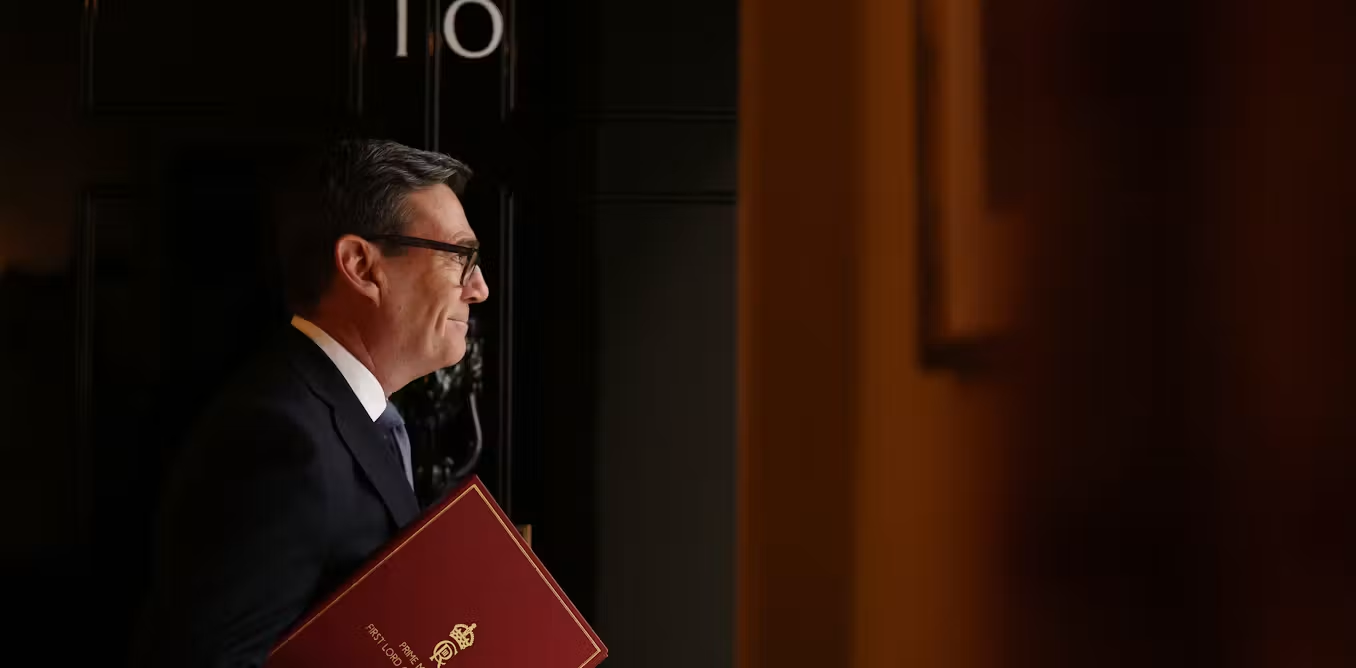
For Andy Burnham, walking into the bear pit that is Prime Minister’s Questions, it must have been hard to stay calm. His audience was a room of closely packed MPs, some hostile, some friendly – all very loud – many wanting to make a mark.

And the full audience for PMQs extends far beyond the MPs in the chamber. Prime ministers are thinking about the media, external groups, foreign governments, voters and financial markets. The reactions of any of these matter. The PM has the dual worry of dealing with opposition questions while also demonstrating his or her worth to the party members sitting behind them. Backbenchers can signal a lack of confidence through quietness or just not turning up.

It is no wonder that preparing for PMQs is, in itself, demanding. Alastair Campbell, who advised Tony Blair when he was opposition leader and in the early days of the New Labour government, is clear about just what it took. Preparation can take hours. Nerves don’t disappear. And it doesn’t appear to have got any easier in recent years.

Burnham is, of course, new to this. And unlike many in his position, he hasn’t had a chance to rehearse as opposition leader. He was wise to spend part of Tuesday’s return to parliament on a statement and a lengthy question-and-answer session. It gave him a warm-up for the main event.

Advertisement

After Keir Starmer was ousted as prime minister, Labour MPs will be willing Burnham to show that he can succeed. So how did he do in his first PMQs, and what can we glean from it?

Restraint?

This was not a “full-blooded” PMQs. Burham chose not to mount attacks where others might have. A question from Reform UK’s Danny Kruger, for example, could have led to a reply focusing on the party’s reported problems. That it did not, may mean Burnham wants to move away from such attacks – or that he considers Reform less significant than it has been in recent years.

Burnham’s jibes at the Conservatives were not fierce either. He merely criticised past statements made by Tory leader Kemi Badenoch and her shadow cabinet and sought to associate them with the economic failings of past governments. Prime Minister’s Questions is an adversarial event and it will be worth watching whether more obvious hostilities develop in future.

Sharper exchanges in turn end up generating sharper questions, so PMQs could move from point-scoring debate to abusive exchange. But Burnham may have some way to go to match David Cameron, who was identified by researchers as the rudest prime minister at PMQs.

Advertisement

At length

Speaker Lindsay Hoyle warned that Burnham’s long answers may cause the session to overrun. Burnham clearly wanted to spend time on each answer, but this can be a blessing and a curse for a PM. Longer answers mean you can say everything you want. But sometimes the short, sharp reply is most effective at putting your opponent off their stride. The prime minister may have to learn brevity.

Into the bear pit.
House of Commons, CC BY-NC-ND

Moving on

One of the tricks of dealing with difficult subjects is the “bridge”. That is, taking the topic and linking to something else that you actually do want to talk about. Burnham showed some ability here, linking at one point from a question about public spending to the needs of young people not in education, employment or training (Neets).

His bridge from the Bayeux Tapestry and French president Emmanuel Macron to small boat crossings didn’t work, however. He is clearly a bit rusty in the use of this technique.

Advertisement

Are you listening?

Badenoch was keen to paint the PM as someone who won’t answer questions about spending, and as such as a PM who leans towards more tax and more spend. This may be the beginning of a strategy to frame him as vague and unwilling to commit to specific action in the face of obvious problems. Once an idea like this takes root, it is very hard to shift.

But neither Badenoch nor Burnham has the proper measure of the other yet, and it will take a few more outings before there is a sense of how successful this strategy may prove.

The right man for the job?

As Burnham did not ascend to Downing Street immediately after a run of other roles in parliament, or after a general election, he needed to make his experience clear. He name-checked things he had achieved or initiated, specifically in Greater Manchester, as a way of underlining his credentials.

These references, plus the use of “I”, were designed to demonstrate his ability to get things done, rather like the way it is used in job interviews. Using “I” instead of “my government” or “we” also demonstrates engagement with the topic.

Advertisement

Play nicely

During some replies, Burnham touched on cross-party working, and made an on-the-spot pledge to meet Cornish MPs (not all of whom are Labour) for talks. Offering cross-party working can remove the sting from an attack and make the prime minister seem reasonable. This appears to be a feature of Burnham’s approach and it will be interesting to see if it develops into genuine cooperation with at least some other parties.

Prime ministers often say they want to change aspects of PMQs. Burnham himself has indicated that he wants a different, less Punch-and-Judy tone. Back in 1997, Tony Blair made the move from two shorter sessions a week to one longer one. Blair said he wanted a more considered approach, with more questions and more answers. Whether prime ministers get what they want, of course, is not entirely down to them. They may get the last word, but they don’t control the cast.

Source link

Advertisement
Continue Reading
Click to comment

You must be logged in to post a comment Login

Leave a Reply

NewsBeat

Death of Robin Hood Northern Irish filming locations as blockbuster lands in cinemas

Published

on

Belfast Live

The Death of Robin Hood follows a severely wounded Robin Hood as he finds himself in the care of a mysterious woman

The Death of Robin Hood, the highly anticipated new take on the legendary outlaw filmed in Northern Ireland, landed in cinemas on Wednesday,

Advertisement

Directed by Michael Sarnoski, the film stars Hugh Jackman as an older, battle-worn Robin Hood confronting the consequences of a life marked by violence.

Production was based at Belfast Harbour Studios, with filming taking place across Northern Ireland and supported by Northern Ireland Screen. The production completed its Belfast shoot in March 2025.

The film also stars Jodie Comer, Bill Skarsgard, Noah Jupe and Murray Bartlett

A darker and more introspective reimagining of the familiar legend, The Death of Robin Hood follows a severely wounded Robin Hood as he finds himself in the care of a mysterious woman who may offer him a chance at redemption.

Advertisement

Here are the NI filming locations used in The Death of Robin Hood according to Northern Ireland Screen:

Belfast Harbour Studios

Belfast Harbour Studios, an 8-acre site located within the 340-acre Giants Park, are the newest purpose-built studios in Belfast.

The new studios incorporate high-performance acoustic fabric, high-level walkways and rigging gantries with power, lighting and internal environment options to suit the full spectrum of film production uses.

Advertisement

Silent Valley, Co Down

Ringed by mountains, ‘The Valley’, is located within the Mourne Area of Outstanding Natural Beauty, houses beautiful parkland, lakes and a pond. It attracts around 50,000 visitors per year most of whom come to enjoy the peace and solitude of this mountain area with its unique landscapes and varied wildlife.

The Silent Valley Reservoir was built to gather water from the Mourne Mountains and is still today the main water supply source for most of County Down and a large part of Belfast.

Glenarm Estate, Co Antrim

This 17th century castle on the Causeway Coastal Route is set on a hilltop with glorious views of the ocean. The ancestral seat of the McDonnell family, Earls of Antrim, since it was built in 1636.

Glenarm Castle is one of few country estates that remains privately owned but open to the public. It is steeped in a wealth of history, culture and heritage and attracts over 100,000 visitors annually from all over the world.

In November 2023, Glenarm Castle Walled Garden won the Historic Houses 2023 Garden of the Year Award, sponsored by Christie’s. This was the first time a garden from Northern Ireland was shortlisted and subsequently crowned winner of this prestigious national UK award.

Myra, Strangford, Co Down

Myra Castle is a historic 19th-century estate in County Down, Northern Ireland, located on the shores of Strangford Lough near Downpatrick.

Advertisement

It is another location that was used to create the world of the HBO hit Game of Thrones. It was used to portray Ashford in the first series of the spin-off A Knight of the Seven Kingdoms and the exterior of the Dreadfort in the original series.

Murlough Bay & Fairhead, Co Antrim

Murlough Bay is a bay on the Antrim coast between Fair Head and Torr Head near Ballycastle.

Known for its remote location, the area overlooks Rathlin Island and has views across the Irish Sea to the Mull of Kintyre, Islay, Jura and other Scottish islands making it a very scenic location to imagine the ‘isle of Berk’.

Advertisement

White Park Bay, Co Antrim

The spectacular sandy beach forms a white arc between two headlands on the North Antrim Coast. Its secluded location means that even on a busy day there is plenty of room for quiet relaxation.
The beach is also backed by ancient sand dunes that provide a range of rich habitats for bird and animal life.

Tollymore Forest Park, Co Down

Located at Bryansford, near Newcastle, at the foot of the Mourne mountains, it was listed as the first state forest park in Northern Ireland in 1955.

It has proven immensely popular with large film and TV productions, featuring in Game of Thrones, Dungeons & Dragons: Honour Among Thieves, Dublin Murders, Philomena, and many more.

Shane’s Castle, Co Antrim

Shane’s Castle on the shore of Lough Neagh is the family seat of the O’Neills of Clanaboy. The Demesne is one of the most beautiful and well-maintained on the island of Ireland.

Advertisement

Although the Castle has been in ruins since a fire in 1816, the remaining structure, including a unique Camellia House, is a striking feature on the landscape.

The Death of Robin Hood is in UK and Irish cinemas now

For all the latest news, visit the Belfast Live homepage here and sign up to our What’s On newsletter

Source link

Advertisement
Continue Reading

NewsBeat

CCTV, patrols, and partnership: How Belfast community is working to reduce interface disorder

Published

on

Belfast Live

“We should challenge this type of behaviour, but we should never give up on the young people behind this activity.”

Broadway Interface Antisocial Behaviour

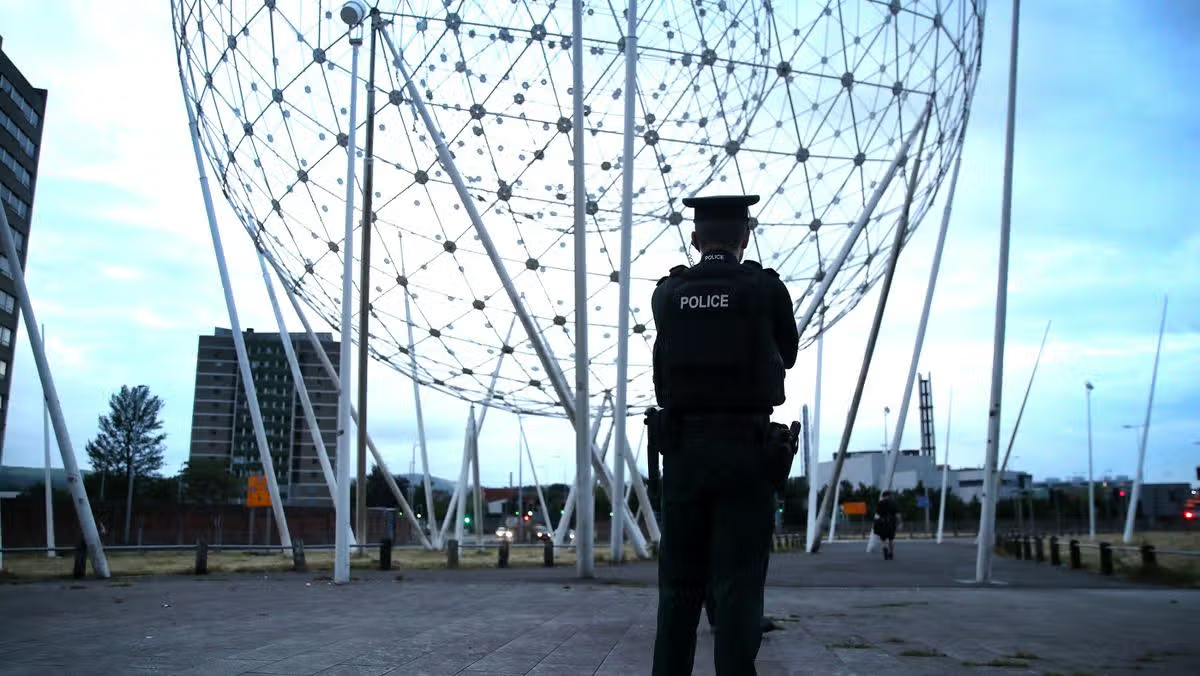
An interface community in Belfast is working alongside police to take practical steps to reduce disorder at a flashpoint.

The Broadway roundabout area has been a regular site for interface anti-social behaviour, and police alongside community groups are urging young people to be aware that their actions can have long-lasting consequences.

The PSNI have released a video created with St Peter’s Immaculata Youth Club in West Belfast and Greater Village Regeneration Trust in South Belfast, to highlight the cross-community approach being taken to tackle anti-social behaviour in the area.

Practical steps taken to prevent disorder in the Broadway area include cameras placed at the interface, alongside police patrols, and partnership activity with local groups.

Advertisement

West Belfast Superintendent Mark Conway said: “Police have dealt with interface anti-social behaviour at Broadway for a considerable period of time. This has caused distress to residents in the area and for those involved and apprehended by police, resulted in criminal convictions and detrimental impacts on future plans.

“Anti-social behaviour is sometimes described as low-level crime. For the people living in communities, there is nothing low-level about its impact. It can leave people frightened, damage communities and place enormous pressure on police resources.

“This is why we have relaunched our video aimed at reaching young people in these communities to remind them of the consequences of their actions.

“Through the wider partnership under the Broadway action plan, we have invested in prevention and taken practical steps to make this area safer. That has included additional measures such as cameras placed at the interface alongside policing engagement and sustained partnership activity.

“Cameras and police patrols alone are not the deterrent to help build communities. When a young person engages in anti-social behaviour, whether that’s throwing masonry or other forms of criminality, they potentially damage something in their own community or caught up in disorder.

“They can hurt another person, harm the community their own family lives in and more importantly damage their own future. This can impact on travel plans, career aspirations or future endeavours due to reckless activity having a negative impact on their communities.”

Advertisement

Stephen Hughes, from St Peter’s Immaculata Youth Club in West Belfast said: “Our partnership with police is about securing the best outcome for young people, preventing their participation in the justice system and reducing crime and anti-social behaviour in our communities”

Zara Gregg, from Greater Village Regeneration Trust added: “Through strong partnerships, we can reduce harm, protect our communities and ensure our young people have safer opportunities beyond anti-social behaviour.”

Superintendent Conway added: “We should challenge this type of behaviour, but we should never give up on the young people behind this activity. We want them to recognise the power they have not to damage their communities.

“This is not just a policing matter. This belongs to all of us including families, youth workers, community leaders, statutory partners and most importantly young people themselves.

Advertisement

“The work of the last year has shown what partnership can achieve. The next step is bigger than reducing incidents. It is about creating communities where people feel safe, where young people feel they belong and where they can see a future worth protecting.”

For all the latest news, visit the Belfast Live homepage here and sign up to our daily newsletter here.

Source link

Advertisement
Continue Reading

NewsBeat

Next year’s two-day London Marathon could wreak havoc for businesses and residents across the route

Published

on

Next year's two-day London Marathon could wreak havoc for businesses and residents across the route

“The Marathon delivers significant benefits to London, including supporting charities, boosting local economies and promoting physical activity. I am keen to ensure these benefits are shared widely, including through community engagement, volunteering opportunities and local participation, so that Londoners continue to feel proud of and connected to this world-leading event.”

Source link

Continue Reading

NewsBeat

Andy Burnham shares joke with Macron on Bayeux tapestry tour with the King

Published

on

Manchester Evening News

Charles, Camilla, Emmanuel Macron and Andy Burnham walked the length of the 70-metre masterpiece at the British Museum in London on Wednesday evening

The King quoted Shakespeare saying “what is past is prologue” after touring the Bayeux Tapestry with the French president and the Prime Minister.

Advertisement

In a public display of warm Anglo-French relations, Charles, Camilla, Emmanuel Macron and Andy Burnham walked the length of the 70-metre masterpiece at the British Museum in London on Wednesday evening. They were joined by France’s first lady Brigitte Macron and Mr Burnham’s wife Marie-France van Heel.

The tapestry – the woven record of the Norman conquest – has returned to the UK for the first time in almost 1,000 years, on loan until September 2027 as part of a special trilateral agreement between the UK, France and the museum.

Click here to get the biggest stories straight to your inbox in our Daily Newsletter

At the end of their walk, it was pointed out to Mr Burnham, Mr Macron and the King that a further 1,000 years of history is not included in the work.

Advertisement

The Prime Minister joked to the French president, who was stood beside Charles: “Made in England, they couldn’t bear to show the end… too difficult.”

The French president smiled and replied “happy end, we’re here”, prompting a laugh from Charles.

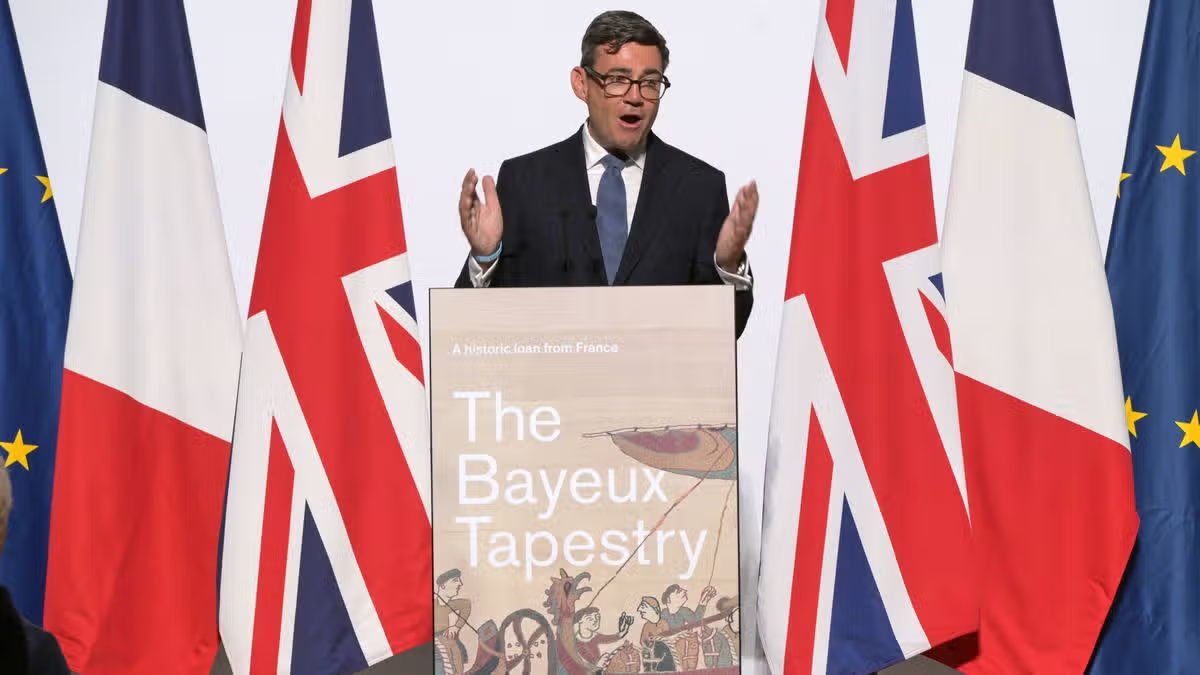
In his speech after the tour, at a podium backed by European Union, French and Union flags, the King told the French president: “I well remember our discussing this possibility during our state visit to France in 2023. It is a particular joy, therefore, to see the hope become reality.

“Indeed, it is thanks to the certainty you have always had – and which I very much share – that we are here this evening in order that the tapestry should be seen, in London, for the benefit of the peoples of both our countries: the best possible symbol of that ‘entente amicale’, of which we have both spoken so fondly.”

Advertisement

Standing on the same podium, Mr Macron later echoed the “entente amicale” sentiment as he spoke of “advancing the UK reset” with the EU.

Addressing the Prime Minister, the French president said: “While we do not always see eye to eye, we respect one another, remain open to discussing everything, including advancing the UK reset with the European Union, always closer and together.

“And this is why I really do hope that the entente amicale he announced will inspire this new path forward.”

The tapestry’s journey across the Channel through British and French-built tunnels “is a reminder of what our two countries can achieve when they join forces”, he added.

Advertisement

In the dark exhibition space, the three leaders and their wives shared laughter and peered down at the woven record of the Norman conquest, listening intently to curators.

Charles showed the French president his preferred section, turning around to tell Mr Macron “oh, this is my favourite bit” while pointing to a group of Normans pulling a cart.

The two men laughed as the King said “they’ve got an enormous amount of wine”.

The three men then gave their speeches watched by a crowd including school children in the museum’s Great Court.

The tapestry was “most likely to have been embroidered in Canterbury by English”, Charles said, before joking: “The Bayeux Tapestry – or the Canterbury embroidery as it might just have been called… recounts a conflict, yet here it is today, nearly a thousand years later, as a precious symbol of trust, at a time when trust seems sadly to be in short supply between nations.

“I cannot help but feel that its protagonists, on both sides of the Channel, would look with satisfaction on the Franco-British gathering here today, and be pleased that our two great nations, which share such fundamental values, have prospered together – across the tides of history.

“As Shakespeare said in The Tempest: ‘what is past is prologue’. We have defended our values together in times of peril. We continue do so today across the world.”

Advertisement

Before their arrival, Great Russell Street was lined with members of the public waiting to catch a glimpse of the leaders.

Mr Burnham waved to a crowd of press as he and Mrs van Heel, wearing a white dress, exited their car shortly before 6pm to wait for their companions.

About 10 minutes later, to cheers from onlookers, the King and Mr Macron drove up in one car and Camilla and the first lady, both also in white dresses, in another.

Advertisement

Director of the British Museum, Dr Nicholas Cullinan, and the museum’s chairman, George Osborne, welcomed them.

They all walked up the museum’s grand stairs and were greeted by Mr Burnham and his wife in its Western Great Hall.

The French president stayed close to the King’s side as they spoke to politicians from both sides of the Channel, while Mr Burnham hung back, chatting with other attendees.

Source link

Advertisement
Continue Reading

NewsBeat

Labour creates yet another ‘massive quango’ to tackle the size of the state

Published

on

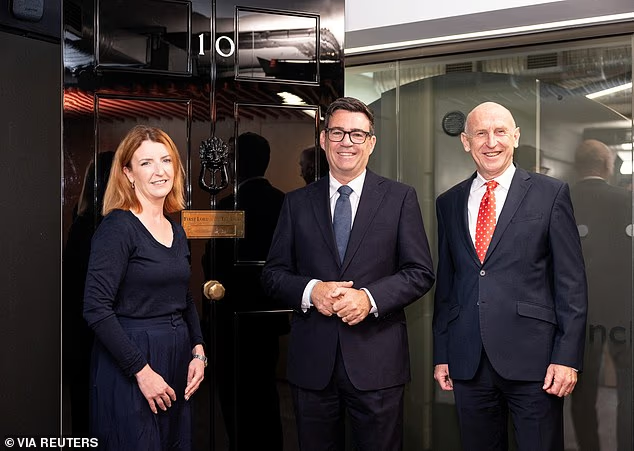
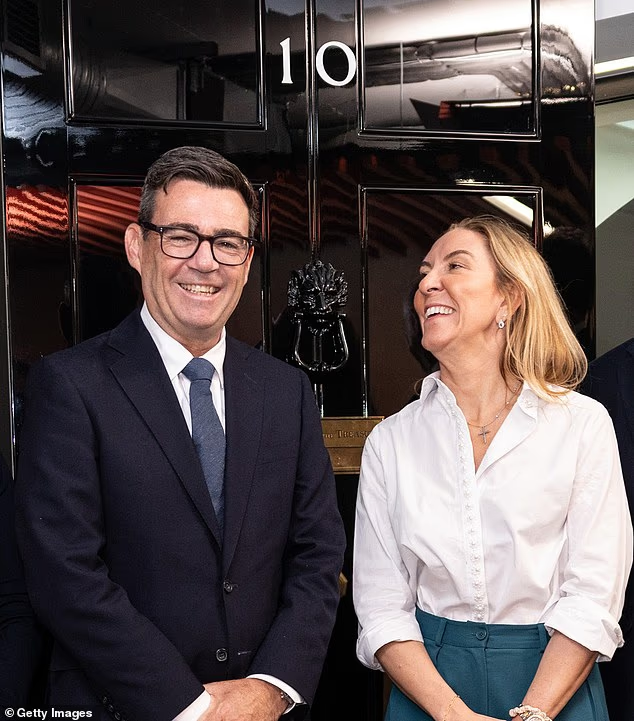
Louise Haigh pictured alongside Andy Burnham and Chancellor John Healey at the opening of his new 'No10 North' in central Manchester

Labour was accused of creating yet another quango as it announced a bid to ‘streamline’ the state.

First Secretary of State Louise Haigh said she had created three taskforces to deliver the Prime Minister’s promises.

But the Conservative deputy leader Alex Burghart said it was ‘unfortunate’ that she had also announced a ‘massive new quango’ to reform the civil service.

He said that the OneGov Delivery Agency was a ‘step in the wrong direction’ because it would leave ministers responsible but not in charge.

Advertisement

Following her Commons statement on ‘rewiring’ the state, he questioned Ms Haigh on why she had created a new government body.

‘On quangos, we’ve seen over time that they have led to ministers having less agency over important decisions that affect our constituents’ lives,’ he told MPs.

‘So it is unfortunate that the [First Secretary of State] has today announced the creation of a massive new quango in OneGov delivery agency.

‘This is going to be in charge of government recruitment, civil service pensions, shared services, security vetting, and so on.

Advertisement

Louise Haigh pictured alongside Andy Burnham and Chancellor John Healey at the opening of his new ‘No10 North’ in central Manchester

‘It will oversee considerable public money. It is a step in the wrong direction because ministers will retain responsibility for those services, but they will lose power over them.’ 

However, Ms Haigh told the Commons that the ‘central civil service is expected to shrink’ under Andy Burnham’s devolution plans.

Advertisement

She said it would mean ‘fewer civil servants at the centre’ despite the Tories claiming that headcount had risen 11,000 since the general election.

She said that she wanted to ‘streamline the state’ and said there was a ‘serious commitment’ within Government to ‘tear away that red tape’.

‘We’ve already been very clear that the central civil service is expected to shrink, that we do want it to be more streamlined, more efficient, and that our commitment to devolution and to rewiring the state absolutely means fewer civil servants at the centre,’ she said.

‘And building the capacity and capability of regional and local government, which has been a huge, huge victim of the decade of austerity and has held back growth in our local economies.’

Advertisement

During the Commons clash, Mr Burghart said he was disappointed that Ms Haigh – Mr Burnham’s Cabinet Office enforcer – had not tried to restrain the Treasury’s power.

He noted that she had previously described Number 11 as ‘imperial’ and said he had hoped that she’d lead the charge to ‘smash the barricades’.

But instead, he said that the ’empire has struck back’ and said the plans for Number 10 North to take charge of growth had been watered down.

‘The real power remains within Number 11 South,’ he added, referring to the Treasury which is under the control of Chancellor John Healey.

Advertisement

‘The Treasury… was the behemoth created in its modern form by Gordon Brown, designed to control Whitehall, designed to reduce department ministers’ authority over their spend and over their decisions,’ he said.

‘So I was genuinely interested to hear (Ms Haigh) say over the summer that the Treasury was an ‘imperial finance department’, and I rather hoped that she was going to lead the charge to smash over the barricades and destroy this terrible imperial power.

‘But instead, it appears that the empire has struck back, because the briefing that we were given initially was that Number 10 North was going to take control of growth.

‘That seems to have been watered down.’

Advertisement

He also demanded to know what ‘powers, levers and budget’ she would have as the head of Number 10 North to increase growth.

Ms Haigh said functions had been moved from the Treasury to Number 10 North, describing it as ‘a little bit of a chip in its empire’.

‘In terms of the new functions of Number 10, we have transferred a number of strategic functions into Number 10 North, including moving local economic growth and devolution strategy from the Ministry of Housing, Communities and Local Government and local economic growth policy from HM Treasury,’ she said.

In response to Mr Burghart asking how much Number 10 North was costing, she said it had been ‘fully funded within existing Cabinet Office budgets’.

Advertisement

Their exchange took place after Ms Haigh delivered a statement on ‘rewiring the state’, outlining the Government’s plans for devolution, economic growth and resilience.

She announced three taskforces to tackle the cost of living, control over essential services like housing, water, energy and transport, and community renewal.

There is expected to be a continued drive for devolution and she said she would work with regional mayors to deliver the changes.

Source link

Advertisement
Continue Reading

NewsBeat

Britain’s top civil servant snubs Kemi Badenoch’s demand to hold access talks with Whitehall ahead of a potential snap general election

Published

on

Antonia Romeo (right) has rejected Kemi Badenoch's request for access talks with civil servants

Advertisement

Britain’s top civil servant has rejected Kemi Badenoch‘s request to hold pre-election access talks with Whitehall.

This weekend, the Mail on Sunday revealed that the Tory leader had written to Cabinet Secretary Antonia Romeo, requesting the talks to ensure civil servants are across her radical plans for change before any potential snap poll.

Ms Badenoch argued that she now believes Mr Burnham will call an election sooner rather than later.

She said civil servants must be ready to implement her policies, including quitting the European Convention on Human Rights, slashing benefits, hiking defence spending, and scrapping stamp duty.

Advertisement

But on Wednesday Ms Romeo rejected her request, insisting that Mr Burnham has no intention of going to the country any time soon.

A senior Conservative Party source said that the Cabinet Secretary had set out that pre-election talks can only be approved by Mr Burnham himself, but because he says there is no election planned, the request would be denied.

Access talks traditionally take place about 12-16 months prior to the end of a parliament, and are used to help the civil service and opposition parties prepare for a possible change of government.

Advertisement

Antonia Romeo (right) has rejected Kemi Badenoch’s request for access talks with civil servants

Kemi Badenoch believes Andy Burnham will now go for a snap election sooner rather than later

Kemi Badenoch believes Andy Burnham will now go for a snap election sooner rather than later

Access talks can only be granted by the Prime Minister, who continues to insist he will not call a snap general election

Access talks can only be granted by the Prime Minister, who continues to insist he will not call a snap general election 

Speaking in Ukraine last week, Mr Burnham insisted that an early election is not ‘what people are looking for right now’.

Advertisement

Asked by ITV News why he wouldn’t capitalise on Labour’s recent rise in the polls to overtake Reform UK, Mr Burnham said: ‘I will tell you why not – because I am focused on the needs of the country and not party-political interest. I am not going to call an election.

‘I said outside Downing Street that I would do politics differently, that I would try to bring people together and focus on problem solving rather than point scoring.

‘I am ruling it out right in front of you. I am going to try my best as we go through the Autumn to bring people together, to get some confidence going.

‘We have had some early signs that there is more confidence in the economy. I want to build that confidence through the budget, working with the Chancellor.

Advertisement

‘That is what I think we should be doing in the best interests of Britain.’

Advertisement

Source link

Advertisement
Continue Reading

NewsBeat

Brydon Carse left out of England squad for Pakistan Test after nightclub scandal

Published

on

Brydon Carse left out of England squad for Pakistan Test after nightclub scandal

The third Test begins next Wednesday, with England heavy favourites to complete a series sweep over tourists who have slipped into meltdown in recent days. In remarkable scenes, the Pakistan Cricket Board sent seven players home, called up a raft of replacements and replaced red-ball head coach Sarfaraz Ahmed with his white-ball counterpart Mike Hesson.

Source link

Continue Reading

NewsBeat

Jack Kerouac’s 1951 epiphany: The ‘On the Road’ manuscript

Published

on

Jack Kerouac's 1951 epiphany: The 'On the Road' manuscript

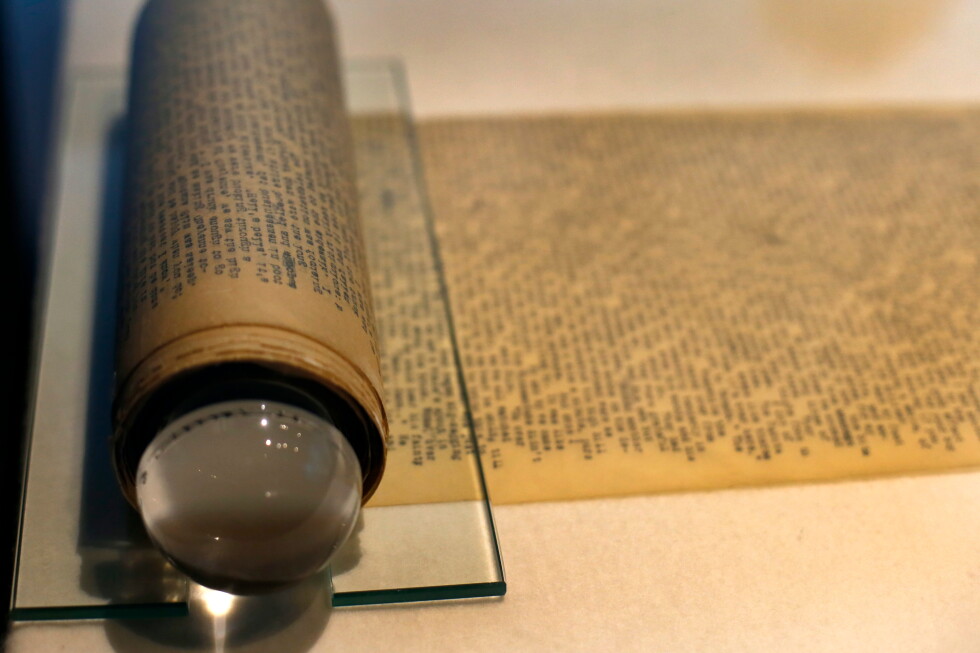
NEW YORK (AP) — In the spring of 1951, the muse landed so hard in the caffeinated mind of Jack Kerouac that within three weeks he had hurried out a full-length, single-spaced manuscript — a draft for “On the Road” that he taped together into a scroll some 120 feet long.

Published six years later to instant acclaim and notoriety, “On the Road” may not be the Great American Novel, but Kerouac’s epiphany surely stands as the Great American Manuscript.

“It was a once-in-a-lifetime, once-in-a-century achievement. In short, a literary singularity,” says the author and editor Gerald Howard.

Kerouac was among the novelists who embodied the mad American quest to “say it all,” to somehow capture the country’s spirit within a single narrative — the kind of epic ambition behind such canonical books as Herman Melville’s “Moby-Dick” and F. Scott Fitzgerald’s “The Great Gatsby.” In “On the Road,” the raw, wild energy that drove Kerouac to type down his thoughts as quickly as they came to him would inspire one of the defining tales of the post-World War II era — two young Beats out for adventure, for kicks, “desirous of everything at the same time.”

Advertisement

Howard says Kerouac had been working on the book for three years before his sudden inspiration. The 29-year-old author was in the Manhattan apartment of then-wife Joan Haverty, with rolls of architectural tracing paper that fit seamlessly into his manual typewriter.

“He realized that by feeding the paper in it would prevent him from having to change a sheet of paper over and over, which would pretty much guarantee a higher level of spontaneity,” Howard says.

The scroll is now a piece of literary history, but it initially helped delay the novel’s release. His publisher, upon seeing Kerouac unfurl his draft, allegedly told him it couldn’t be edited. Kerouac stormed out.

Kerouac’s agent, Sterling Lord, spent years trying to attract interest in Kerouac’s jazzy, unorthodox tale before Viking signed it up, for an advance of $1,000. “On the Road” has since sold millions of copies and inspired countless literary — and literal — quests to “find America.” The manuscript itself has made several stops since Kerouac’s death in 1969. Earlier this year, country star Zach Bryan bought it from more than $12 million.

Advertisement

“Jack never called it a scroll,” notes Kerouac biographer Gerald Nicosia, adding that the author found the word too pompous. To Kerouac, he said, “it was like the white line of the highway unrolling in front of your front tire as you were speeding down the highway.”

Hillel Italie has been writing about books for The Associated Press for more than 25 years. Part of a recurring series, “American Objects,” marking the 250th anniversary of the United States. For more American objects, click here. For more stories on the anniversary, click here.

Advertisement

Source link

Advertisement
Continue Reading

NewsBeat

The promises the Welsh Government is making to NHS patients

Published

on

Wales Online

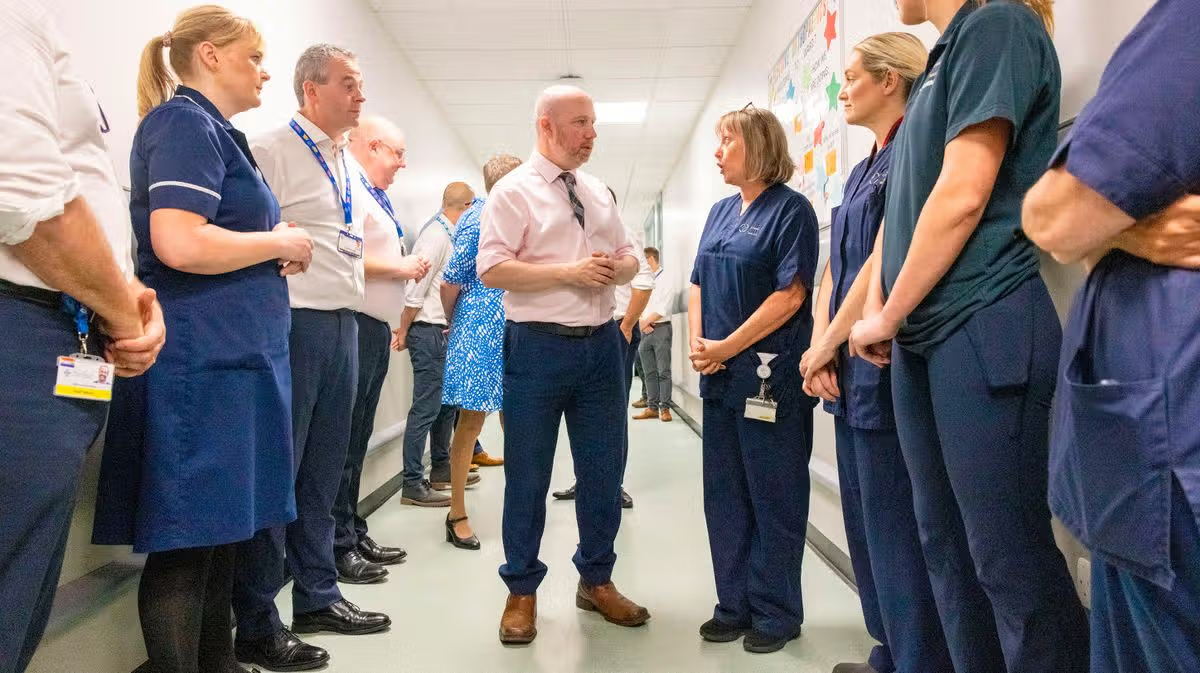
Patients will be seen and treated quicker under new plans announced by the Welsh Government. An ambitious list of pledges has been announced by the Plaid Cymru health minister as he tries to meet the promises he made during the election campaign and reduce Wales’ stubbornly high waiting times.

The plans mean, the Welsh Government say, that patients will be assessed, diagnosed and treated quicker, rather than spending months or years moving between different stages of the system.

They say health boards will work together to increase surgical capacity, including at weekends, targeting the specialities where waits are longest. For our free daily briefing on the biggest issues facing the nation, sign up to the Wales Matters newsletter here

Advertisement

The six specialities being focussed on are orthopaedics, eye care, gynaecology, general surgery, ENT and oral surgery.

Referrals will be also reviewed earlier so people receive the right advice, tests or treatment first time to help avoid unnecessary delays, direct patients to the most appropriate pathway and ensure available capacity is focused where it is needed most.

Many patients attend routine follow-ups they no longer need. The new approach will see patients contact services when they need support rather than attending appointments they may not need, freeing up tens of thousands of appointments for other clinical activity including for those waiting to be seen for the first time.

Faster scanning and testing will be central to the approach, with investment in diagnostic capacity and digital tools to cut the time between referral and diagnosis.

Advertisement

New standards will also make sure people who have waited longest are treated next, unless there’s a clear clinical reason to prioritise someone else.

The pledge by the end of this government term in 2030 is that longest waits of more than 104 weeks are completely eliminated; the overall waiting list is down; 196,000 more appointments are released; and more pathways for diagnosis and referrals are created.

While many of the proposals or plans are not new as such, there has, we understand, been an increased buy-in from health boards since the change in government.

The Welsh Government say there are examples of good practice all across Wales but this is about joining those up and ensuring patients, wherever they are, receive the same treatment. Patients will see that variability, between, for example, what is classed as urgent by one surgeon in one area removed.

Advertisement

They say this plan is fundamentally different, because it doesn’t just reduce waiting list volumes – as a plan under Labour did – but is a clinically-led programme designed to create a sustainable system which not only eliminates long waits but improves the NHS in Wales year on year.

A plan last year was all about reducing waiting lists by creating more outpatient capacity and 200,000 appointments outsourced to private operators.

While waiting times did improve temporarily, Wales has over a million outpatient follow-up waits and across the NHS overall demand is growing.

Improvements couldn’t be delivered sustainably because of the way services are run.

Advertisement

A financial investment of £145m had already been announced, including £100m to reduce NHS waiting times, £25m in new surgical and diagnostic hubs, and £20m on essential maintenance.

The Welsh Government says under this new plan it will require health boards to show it has done work before they are paid resulting in a tighter control of finances.

Health minister Mabon ap Gwynfor said: “Waiting two years for planned care is not acceptable. This investment is tied to health boards changing how they work, permanently, so the progress I expect to see doesn’t slip back as it has in the past. That’s the difference between a short-term fix and lasting change.

“Patients should receive timely advice, diagnosis and treatment through services that are designed around their needs, not around organisational boundaries.

Advertisement

“Alongside additional capacity, we are supporting changes that make services more sustainable, including better referral management, increased diagnostic capacity, more surgical hub activity and improved follow-up arrangements.

“None of this is possible without the hard work and expertise of NHS staff. Their leadership sits at the heart of this approach, and every health board must now work together to deliver further improvements for patients.”

Source link

Advertisement
Continue Reading

NewsBeat

Trump says Apple Maps has now changed Lake Ontario to ‘Lake America’ for him: ‘Complete, ratified and binding’

Published

on

Trump says Apple Maps has now changed Lake Ontario to ‘Lake America’ for him: ‘Complete, ratified and binding’

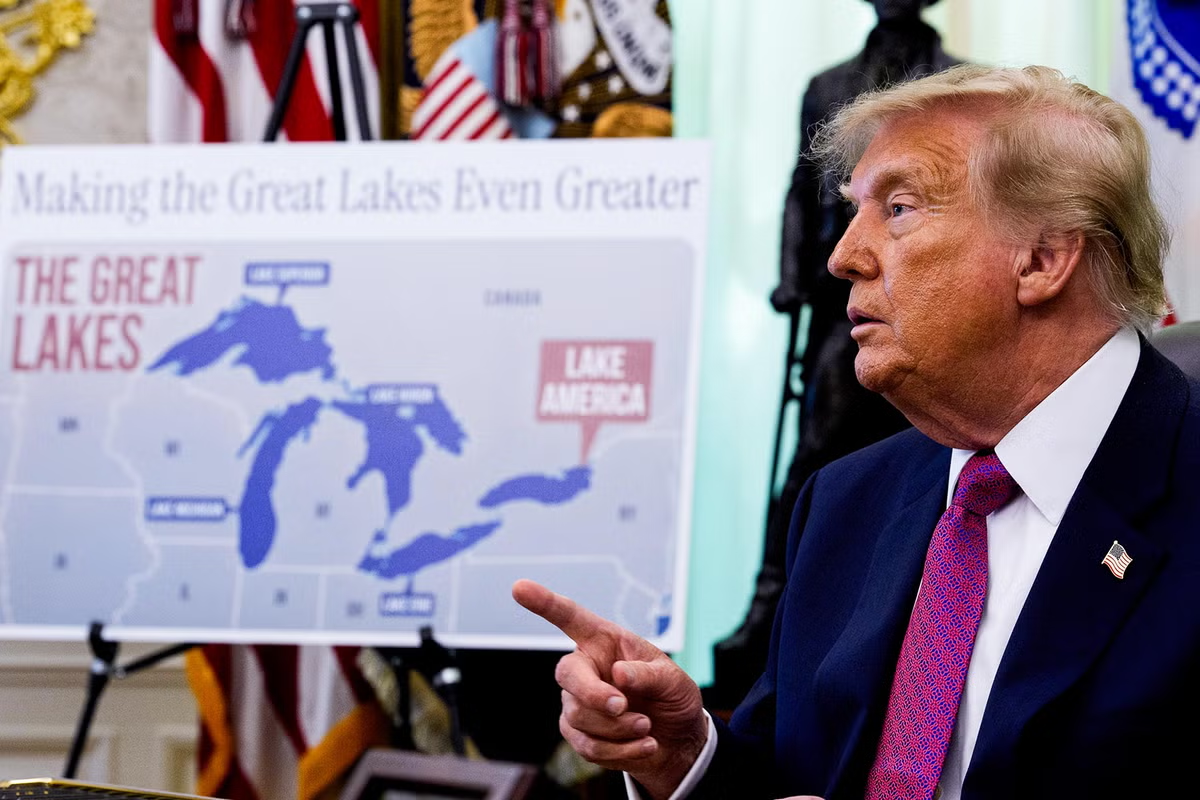
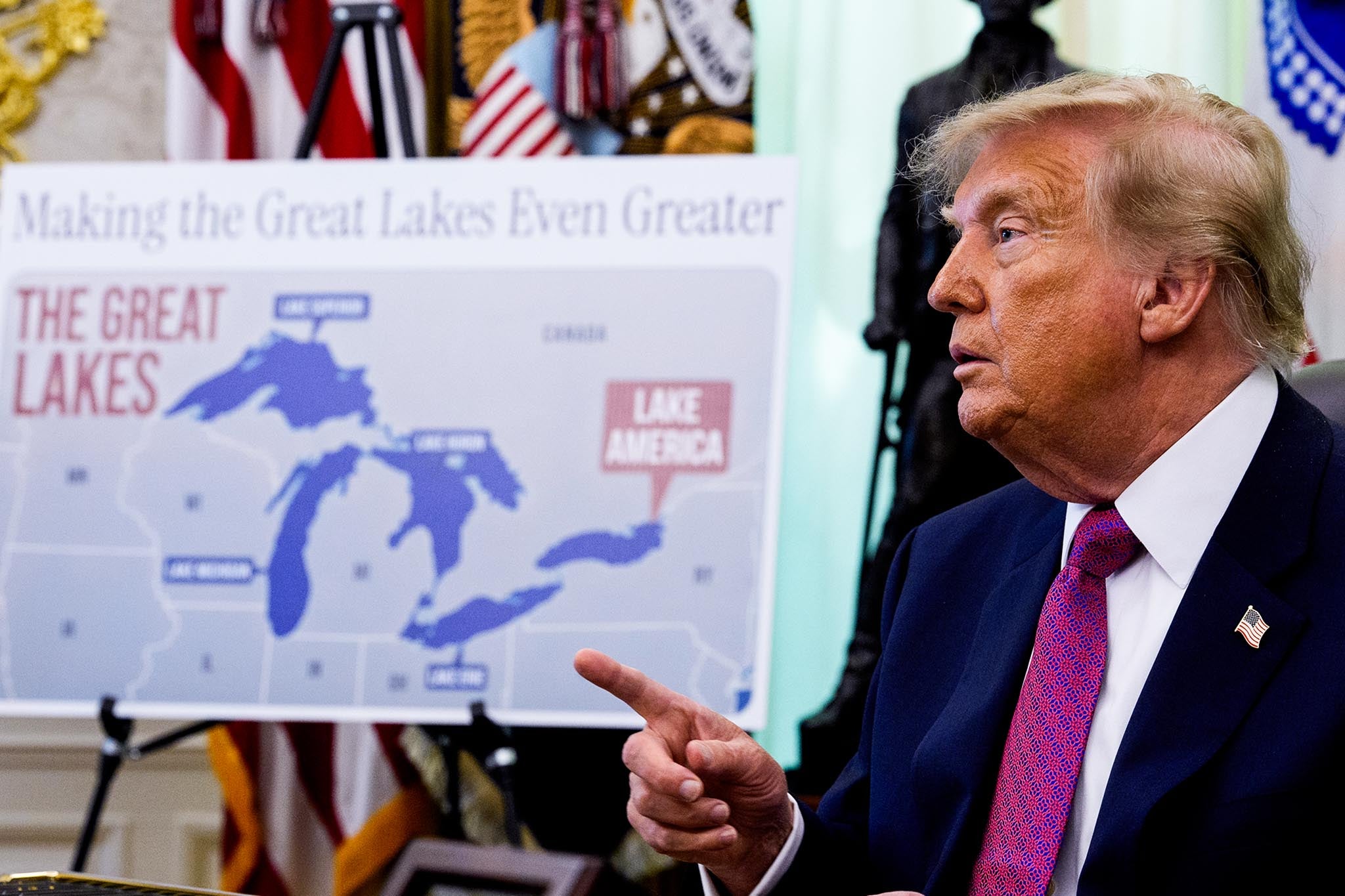
President Trump is celebrating that major tech companies have updated their mapping apps in line with his move to rename Lake Ontario to Lake America as part of the administration’s ongoing trade war with Canada.

“Apple Maps has just announced that it has changed the name of Lake Ontario to Lake America, so now that very important change of names, between Google Maps and Apple Maps, is complete, ratified, and binding,” the president wrote on Truth Social on Wednesday.

The change, first displayed on Tuesday, is visible for U.S. users.

“I know that the president reached out to Apple directly,” Interior Secretary Doug Burgum told Fox News on Monday.

Advertisement

The Independent has contacted Apple for comment.

President Trump celebrated on Wednesday after Google Maps and Apple Maps renamed Lake Ontario to Lake America for U.S. users, in line with his administration’s position
President Trump celebrated on Wednesday after Google Maps and Apple Maps renamed Lake Ontario to Lake America for U.S. users, in line with his administration’s position (Getty)

Google began showing American users the new name on Saturday, two days after the president’s executive order renaming the Great Lake in the U.S. Geographic Names Information System.

“These updates follow our long-standing policy for bodies of water with names that vary from country to country, and are starting to roll out now,” the company wrote in a blog post, noting that users outside the U.S. and Canada would see the lake listed as “Lake Ontario (Lake America).”

MapQuest, meanwhile, has said it’s not changing the name of Lake Ontario.

The mapping service, which began falling out of fashion with the rise of Google and Apple Maps, saw a surge in downloads amid the naming controversy.

Advertisement

Canada, for its part, has strongly condemned the Trump administration’s actions.

The change in Apple Maps came after the Trump administration updated the name of Lake Ontario in the U.S. Geographic Names Information System
The change in Apple Maps came after the Trump administration updated the name of Lake Ontario in the U.S. Geographic Names Information System (@RealDonaldTrump/Truth Social)

“The name is more than 400 years old, predating both the Confederation of Canada and the Declaration of Independence of the United States of America,” Prime Minister Mark Carney wrote on X last month. “We know that America is changing. Their trading relationships, their foreign policies, their national monuments, their hydronyms. Canadians also know that naming reality means calling it Lake Ontario – then, now and always.”

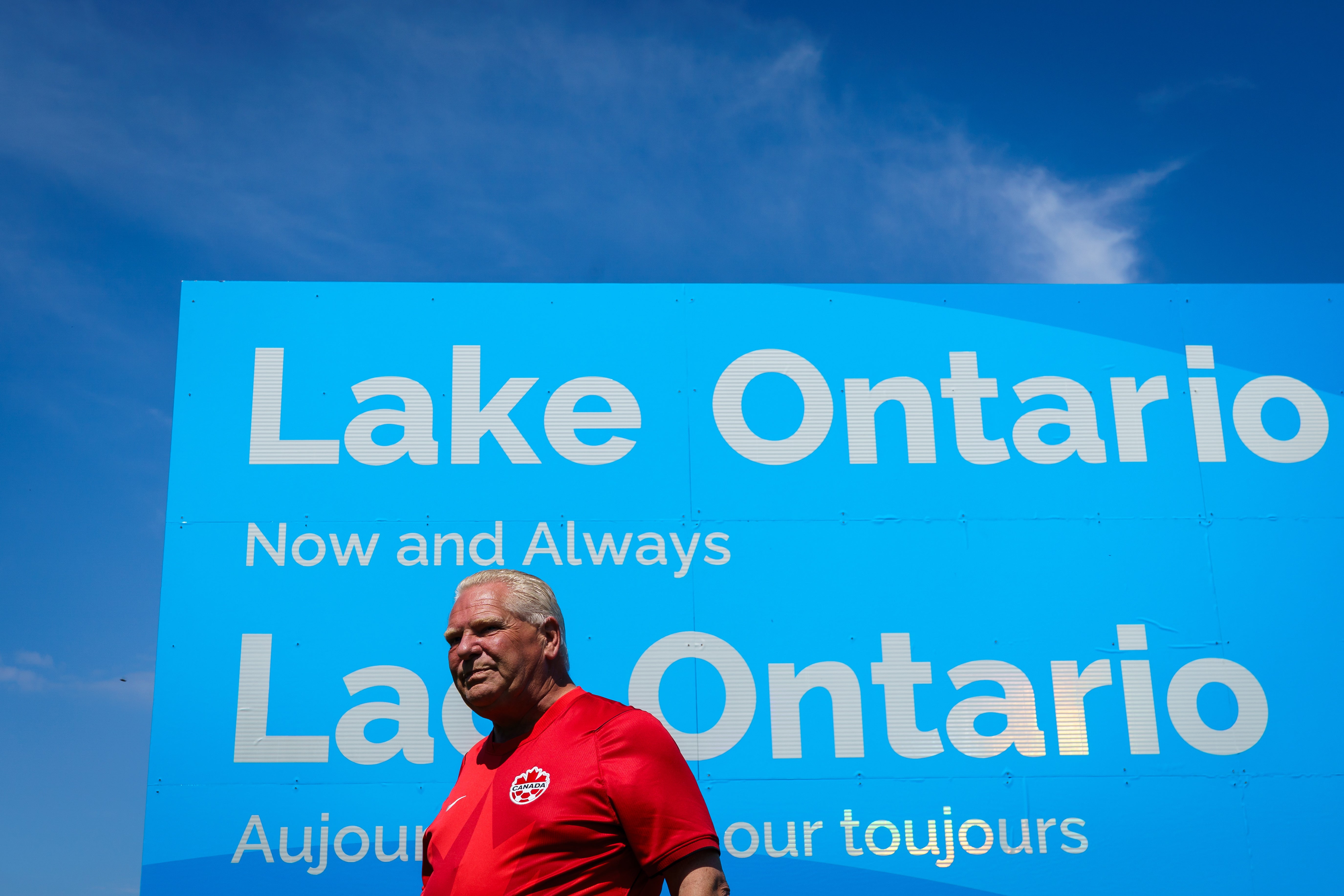
On Saturday, Ontario Premier Doug Ford unveiled a large billboard on the Canadian side of the lake reading “Lake Ontario. Now and Always.”

The mapping dustup is part of a larger trade war between the U.S. and Canada, after negotiations between the historic allies broke down in mid-August.

The U.S. has imposed 50 percent tariffs on billions of dollars worth of Canadian goods, and Canadian retaliatory measures of up to 50 percent will kick in next week.

Advertisement

Other U.S. officials have joined the president in trolling the Canadians. Defense Secretary Pete Hegseth mocked Canada’s military online.

Canada has sharply criticized the move to rename Lake Ontario, and it has called on the U.S. to ‘stop doing memes’ and get back to resolving the ongoing trade war
Canada has sharply criticized the move to rename Lake Ontario, and it has called on the U.S. to ‘stop doing memes’ and get back to resolving the ongoing trade war (The Canadian Press)

Treasury Secretary Scott Bessent has threatened that Canada isn’t strong enough to go “tit for tat” with the larger U.S. economy.

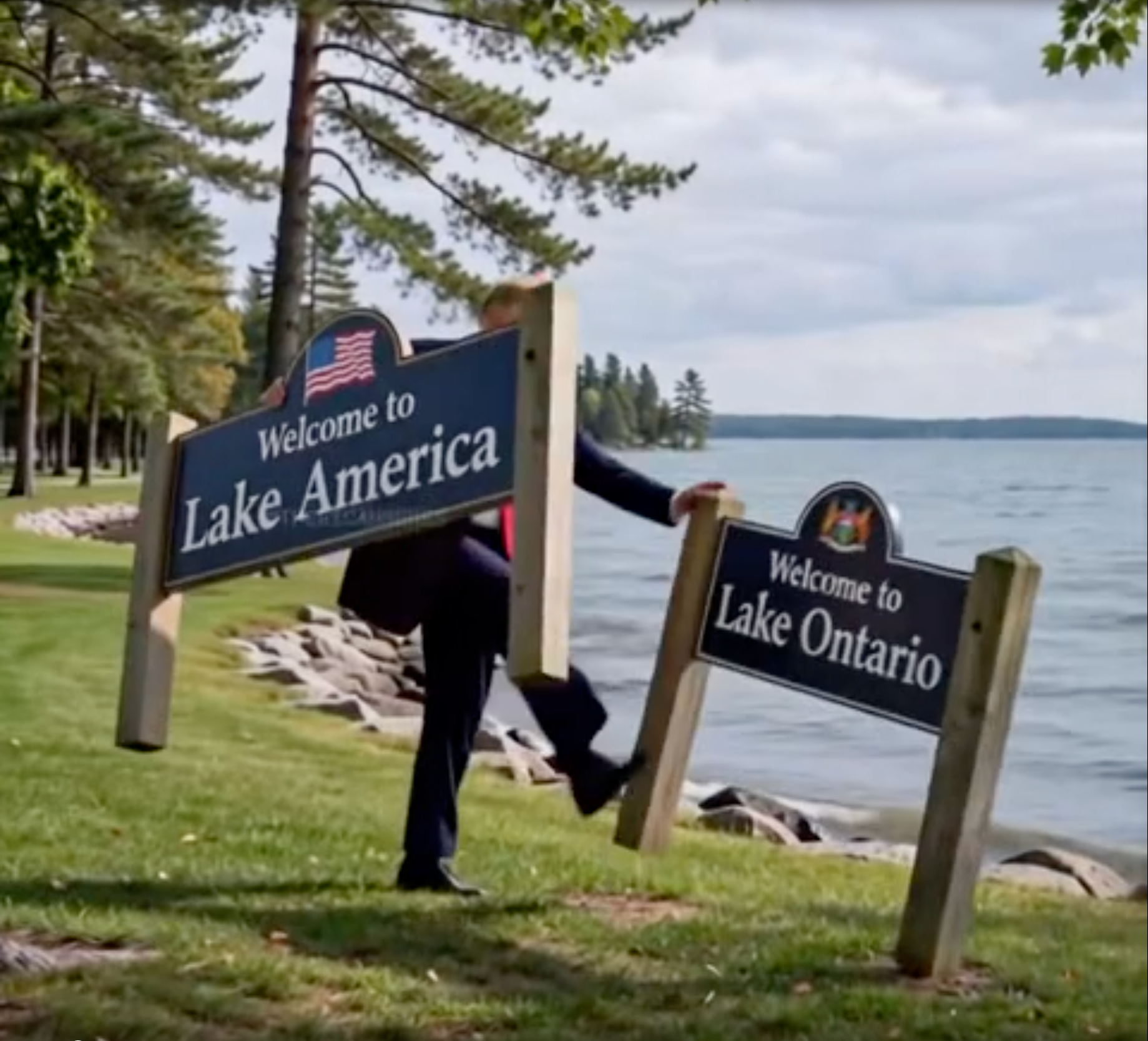
President Trump, meanwhile, has shared an AI-generated video on Truth Social where he kicks over a “Welcome to Lake Ontario” sign and replaces it with one reading “Welcome to Lake America.”

Canada has called on the Trump administration to “stop doing memes” and get back to the bargaining table.

“When the Americans stop doing memes, stop throwing shade and stop trying to be tough, and start being serious about having those discussions, we can have those discussions,” Carney said Tuesday. “It’s not constructive, but that’s their democracy.”

Advertisement

The U.S. and Canada have a trading relationship valued at nearly $900 billion per year.

Source link

Continue Reading

Trending

Copyright © 2025