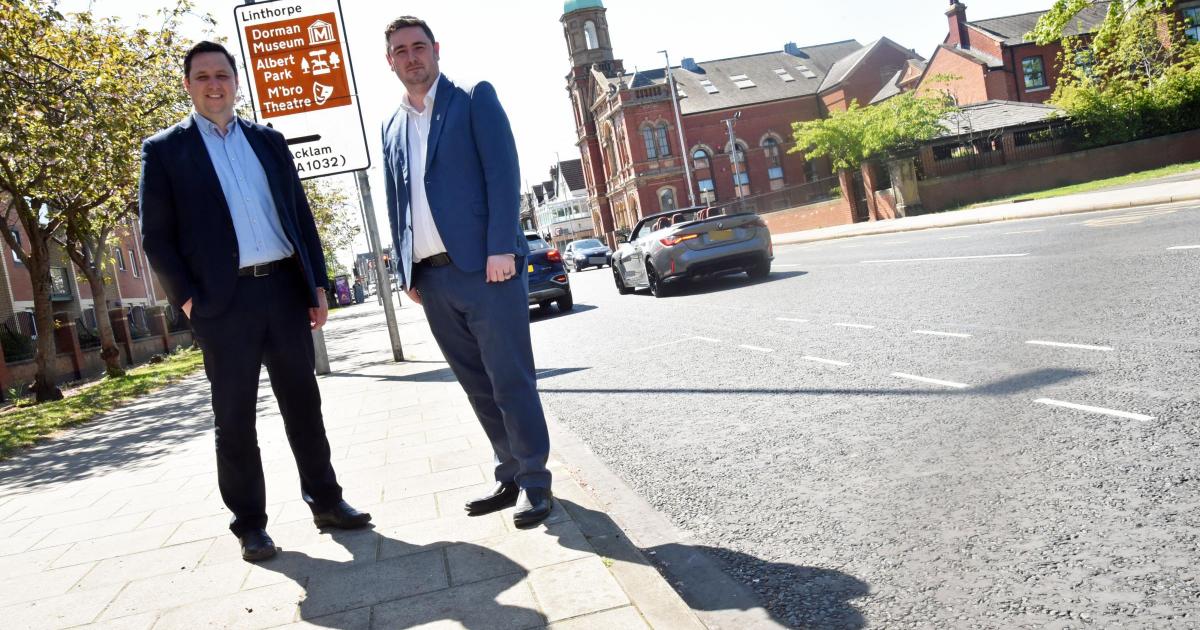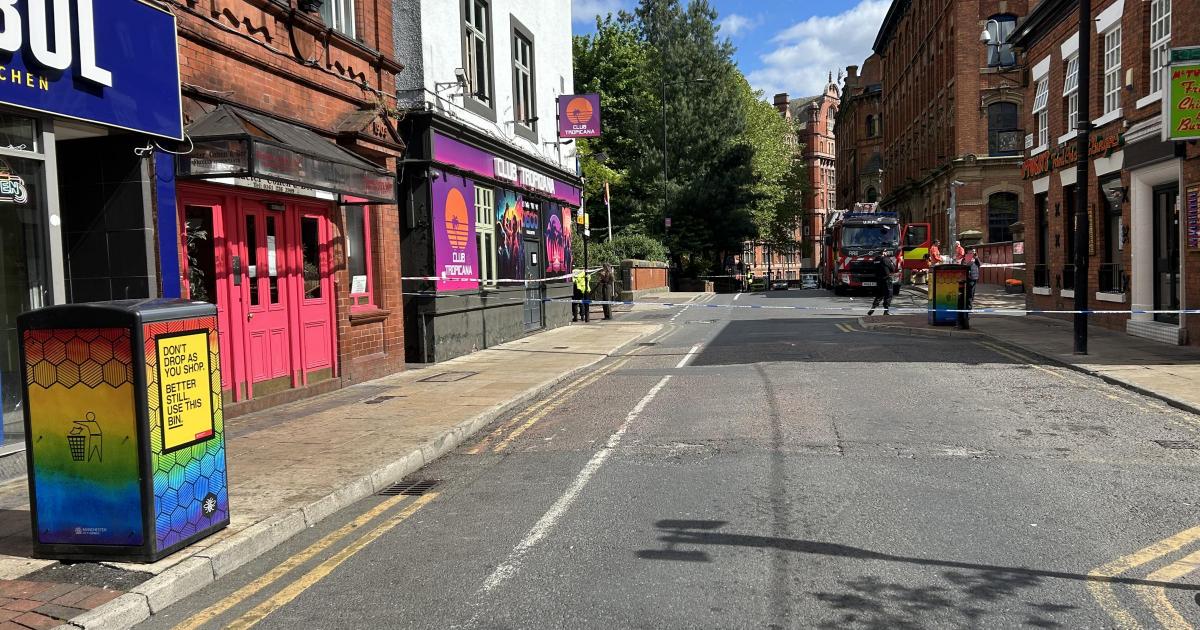
The busy street was initially pedestrianised in December 2025 for a six month pilot
The pedestrianisation of a busy Belfast city centre street has been extended for a further six months, the Infrastructure Minister has confirmed.
Advertisement
Hill Street became a pedestrianised zone on December 4, 2025 as part of a six month pilot scheme which would extend until June 3, 2026. This week, the Infrastructure Minister confirmed the scheme will be extended for a further six months.
Since the street became pedestrianised, there has been an almost 80% reduction in cars using Hill Street. The scheme permits access for certain vehicles at prescribed times of the day, such as loading and unloading exemptions, as well as exemptions for blue badge holders to ensure accessibility to amenities in the area.
During the extended six month period for the scheme, the Minister said officials will carry out engagement with stakeholders to determine if any amendments are needed, before introducing permanent legislation.
Advertisement
Hill Street, located in the Cathedral Quarter area, has become the central cultural spine of Belfast’s nightlife over the past 20 years. Its pedestrianisation had been spoken of for years, as concerns had been expressed over the dangerous potential for accidents as revellers and vehicles passed side by side through the tight cobbled thoroughfare.
The street was temporarily pedestrianised in 2020 during coronavirus by the Department for Infrastructure, with a view to making the move permanent, but this was consistently delayed to the frustrations of locally elected politicians at City Hall. It was estimated last year the proposal would cost around £5,000.
North Belfast MLA, Phillip Brett, asked the Infrastructure Minister earlier this week whether the pedestrianisation scheme would be extended. In response, the Minister said: “I was pleased to announce the pedestrianisation of Hill Street from 4 December 2025.
“It is a thriving area in the Cathedral Quarter of Belfast as more and more visitors come to enjoy the hospitality on offer. Importantly this scheme will facilitate a vibrant social space that prioritises people by making the streets safer for pedestrians.
Advertisement
“By contributing to a more pleasant and enjoyable environment it will help maximise the street’s potential and enhance the nighttime and weekend economy.
“The current experimental Order was introduced as a six month pilot which currently extends to 3rd June 2026.
“The scheme does permit access for certain vehicles at prescribed times of the day, such as loading and unloading exemptions between 6am and 12pm. Exemptions are also in place for Blue Badge holders to ensure accessibility to amenities in the area.
“I am pleased to note that since its introduction, survey results indicate an almost 80 percent reduction in cars using Hill Street.
Advertisement
“At present I see no reason why the experimental scheme cannot be extended for a further six months during which time, officials will carry out engagement with key stakeholders to determine if amendments are required before introducing permanent legislation.”
Phillip Brett has welcomed the progress towards permanent pedestrianisation of the street. Mr Brett said: “I am pleased to have secured progress towards the permanent pedestrianisation of Hill Street, building on the success we have already seen since the scheme was introduced.
“The transformation of this part of the Cathedral Quarter is already delivering real benefits, with traffic reduced by over 70% and a safer, more welcoming environment created for residents, visitors and local businesses.
“Hill Street is a key part of Belfast’s cultural and hospitality offering, and it is important that we continue to support its growth by prioritising people and enhancing the overall experience in the city centre.
Advertisement
“The decision to extend the current arrangements for another 6 months is a positive and sensible step, and I will continue to work with the department and stakeholders to deliver the permanent pedestrianisation as soon as possible.”
In 2026, St John Ambulance celebrates the 40th anniversary of its National Cadet of the Year competition, recognising four decades of young people who have demonstrated exceptional commitment to learning lifesaving skills and serving their communities.
The milestone was marked at a special event on Friday, April 10, attended by HRH The Princess Royal, St John Ambulance’s Commandant-in-Chief – Youth.
We also had the privilege of welcoming the very first National Cadet of the Year from 1987, Simon Stockill, alongside several holders of the title from across the four decades of the competition, up to the present day.
Advertisement
Since the award was established, many former National and Regional Cadets of the Year, including Simon, have gone on to careers in healthcare, medicine and the emergency services.
Others have taken the confidence, discipline and sense of social responsibility developed through their time as Cadets into a wide range of professions.
That journey often begins through St John Ambulance’s Badgers and Cadets programmes, where young people from the age of five learn first aid, build resilience and develop a practical understanding of helping others.
Readers interested in youth opportunities with St John Ambulance – whether that is for their children or as a potential Youth Leader or Helper – can find out more at https://www.sja.org.uk/get-involved/young-people/.
Advertisement
Yours faithfully,
Kevin Munday,Chief Commissioner, St John Ambulance
Sarah Kasseum is one of five defendants who are currently on trial accused of murdering 47-year-old Paul Foster
Husna Anjum Senior Reporter and Adam Everett
21:48, 16 Apr 2026
A mum accused of murder claimed she was ‘smoking crack’ in a car outside, while a man was fatally stabbed in a flat.
Paul Foster died aged 47 after suffering a single stab wound to the back during a “taxing” on Muirhead Avenue in West Derby.
Advertisement
His assailants were said to have been “tooled up” with a knife and an imitation firearm at the time of the robbery, stealing drugs and a quantity of cash from the address before fleeing. Four men and a woman, Elsadig Abrahim, Zayd Alasaly, Dylan Blundell, Michael Fields and Sarah Kasseum are currently on trial at Liverpool Crown Court accused of his murder.
Kasseum began giving her evidence to the jury this afternoon, Thursday (April 16) LiverpoolEcho reports. Under questioning from her barrister Peter Finnigan KC, she also described how Blundell told her in the aftermath of the stabbing that he had witnessed Fields “passing a knife” to Alasaly, who was reported to have “given a smack” to Mr Foster.
Wearing all black in the witness box, Kasseum appeared to become tearful as she was sworn in on the bible before denying having intended for the victim to be killed or seriously injured. She also maintained that she was not aware that others who attended the apartment had been armed with a knife and an air pistol and claimed she was unaware of any planned robbery.
Kasseum went on to detail how she had been a crack cocaine user for “many years”, having also sold drugs in order to fund her habit. Turning to the hours before the stabbing, she recalled how she had been present at the address of a man named Tony Conroy on St Mary’s Close in Wavertree and said: “I was having a pipe in the living room.
Advertisement
“I think Ziggy [Abrahim] and Dylan were in the living room with me. Zayd, Mick and Tony were in the kitchen talking.
“We had our pipe and then we got off.”
Asked “how much crack she had consumed” that day, Kasseum reported “I couldn’t tell you, a lot”. Of the drug’s effect on her, she said: “It keeps me awake really.
Advertisement
“I’m having my pipe, chilling. I’d been up for two or three days. I was alright. I was aware what was going on around me.
“They was all just trying to get heroin. It was too late.
“They weren’t on. They weren’t answering. Some people are on 24/7.
“Sometimes they run out of heroin or they have crack more.”
Advertisement
When Mr Finnigan asked about the topic of conversation at this time, Kasseum replied: “Just the usual. Chatting s****. Mick waffling on.
“His usual s****. Crack talk basically, nothing out the ordinary.”
Having been homeless and staying with various friends at the time, Kasseum recalled: “I was meant to say at Tony Conroy’s, but I wasn’t staying there because Kieran Hannon was staying there. It’s not that I couldn’t.

“I could have, but I didn’t want to because of Kieran Hannon. He was just a pest, always trying to get on me.
Advertisement
“I was gonna go back to either Eugene [Brown]’s or [Paul] Tully’s, but Tully was in town, so I took the decision to go back to Eugene’s. I asked Mick could he drop me off.
“He said yeah. He said just shoot down here with me first.
“He said just shoot here with me, meaning Muirhead Avenue, then I’ll drop you back off. He said he’s going to Muirhead Avenue to see that kid, Pablo.
“I’d just heard through Mick about him, just that Mick was owed money off him. He’d give him bits previously, stuff to sell, and he owed him a bit of dough.
Advertisement
“That was just the conversation throughout the day in Eugene’s.”
Having left in Fields’ Kia Ceed car in the front passenger seat with Blundell, Abrahim and Alasaly in the rear, Kasseum said: “The conversation in the car was whether he’s even going to get an answer off the kid, Pablo.
“He’d been blanking him for a few days. Mick had heard nothing off him.
“He said, would you get out for me? You’ve got more chance of getting in, he’s gonna blank me.
Advertisement
“I said yeah, alright. I didn’t know nothing. I just thought he was going to get his dough he was owed.
“He was just gonna get his money off that kid. Also, he was saying that he could have bobby [heroin] for them, Ziggy and Dylan.
“I got out. I’m just in front a little bit. They were behind me.
“I buzzed the buzzer. A girl come, knocked on the top window.
Advertisement
“She went away from the window, then the door buzzed to gain access.”
Having opened the door to the flat, Kasseum said she then “went off, went back to the car” and added: “I was having my pipe in the car. Just listening to my music.”
Kasseum reported that the males later returned to the car “quick, all like ‘just get in the car’, shut the doors” and said: “I said to Mick, what happened?
“Did you get your money? He said, did I f***. My man smacked him up. Give him a smack.”
Advertisement
Fields was said to have gestured towards Alasaly at this stage before the car was driven “fast, heading back towards the way we come”.
Kasseum said of this: “We pulled up into Tony’s close. Dylan and Ziggy were in the car.
“Zayd and Mick got out the car and ran into Tony’s. I turned around to Dylan and said, what the f***’s gone on kid?
Dylan turned round and said he seen Mick passing Zayd the knife.”
Advertisement
Kasseum stated she later asked for “someone to phone me a taxi” as she “wanted to get off”. Having left with Abrahim and Blundell in the vehicle, she said of the “atmosphere” at this stage: “They were quiet.
“It was horrible. My head was everywhere. I didn’t know what had gone on.”
The jury of six men and six women previously heard during the prosecution’s opening last week that Mr Foster dealt drugs from the home of a now deceased woman named Lyndzi McCowan on Muirhead Avenue, where Fields was said to have driven his four co-defendants to in his black Kia Ceed car shortly after after 1.30am on October 15 2024.
David McLachlan KC, appearing for the crown, said: “They were not going to Muirhead Avenue for a little drive on a Tuesday morning in the early hours.
Advertisement
“The prosecution say that they were in the car for a purpose, and it was not a good purpose. The purpose was to rob Paul Foster of his money and his drugs in what is known commonly as taxing, and they went tooled up. By that, we mean that they were armed with a knife and an imitation firearm.”
Upon their arrival, Kasseum was said to have been “deployed to gain entry” to the address using the intercom, having apparently been “in the know” and “close enough to Paul Foster to know where he was and close enough to know what he did”.
Mr McLachlan told the court: “Lyndzi McCowan buzzed her in. It did not work and, in fact, nobody arrived at the flat, so Lyndzi McCowan walked down to speak to the girl, Sarah Kasseum, who had been buzzed in.
“As she made her way downstairs, she was confronted by three males running at her. They were dressed in black. She did not see the girl that she had seen from the window. Lyndzi McCowan ran back into the flat, no doubt as fast as she could, and tried to shut the door against the males that were trying to barge in. She was screaming. She realised that the males were there to rob Paul Foster.”
Advertisement
These men were heard to say “where is he?”, “where’s the bits?” and “where’s the money?” and were said to be armed with “what appeared to be a gun”. Mr McLachlan added: “During that confrontation, Paul Foster was fatally stabbed in the back.
“What did they do? Well, they legged it. They fled the scene. They took cash, stolen from the flat. They were described as wearing all black clothing and balaclavas. A bloodstained piece of black metal, which was the plastic slide component of an air pistol, was recovered from inside 40A Muirhead Avenue. The knife was never recovered.
“It is the prosecution case that Paul Foster’s death was a direct consequence of a drug taxing where he was living and dealing drugs. It is the prosecution case that Michael Fields drove the offenders to the scene, that Sarah Kasseum was present at the scene and acted as a decoy by posing as someone who intended to purchase drugs from Paul Foster.
“But she was there for an entirely different purpose, that being to facilitate access to the flat for the purpose of the taxing that was to take place. Thereafter, the males went in, Michael Fields, Elsadig Abrahim, Zayd Alasaly and Dylan Blundell. They went in to do their business armed with weapons, a knife and an imitation firearm.
Advertisement
“The prosecution case is that all five defendants went to 40A Muirhead Avenue to rob Paul Foster of his drugs and money. They went mob handed. They were armed with a knife and an imitation firearm. The prosecution case is that they shared a common purpose, and that common purpose was, without a doubt, to rob Paul Foster and, if it came to it, and, sadly, it did, to commit murder.
“Was the stabbing of Paul Foster within the scope of a joint enterprise if the need arose? That will be a question that you will grapple with. The prosecution case is that it obviously was, and it will be necessary for you to consider, individually, what the intentions of each of the defendants was in this case.
“The prosecution case is that, whilst the defendants went to rob Paul Foster, they did so in the knowledge that, if it got on top, they could resort to using the weapons that they had, that were in their joint possession, to wound or to inflict grievous bodily harm with intent. The knife was not a toy, members of the jury.”
Abrahim, aged 61 and of Croxteth Road in Toxteth, 23-year-old Alasaly, of Corinto Street in Toxteth, 26-year-old Blundell, of Corsewall Street in Wavertree, 41-year-old Kasseum, of Lower Breck Road in Anfield, and 50-year-old Fields, of no fixed address, all deny murder and possession of a bladed article in a public place. Abrahim, Alasaly and Kasseum have also pleaded not guilty to robbery and carrying an imitation firearm with intent to commit an offence.
Advertisement
Blundell and Fields, however, admit these two counts, with the latter having similarly pleaded guilty to manslaughter. The trial, before Judge Simon Medland KC, continues.
Ensure our latest stories always appear at the top of your Google Search by making us a Preferred Source. Click here to activate or add us as your Preferred Source in your Google search settings.
Parents that have applied for primary school places for this September received offers on Thursday (April 16)
The percentage of Cambridgeshire children offered places at their first preference primary school this September has been published. According to Cambridgeshire County Council, the percentage of Cambridgeshire children offered their first choice has increased from 94.1 percent to 94.7 per cent.
Advertisement
The proportion offered a place at either their first, second or third choice school has also marginally risen to 98.9 per cent this year, compared to last year. This means that just over one per cent (65 pupils) have been allocated places at other schools.
This is the second lowest proportion recorded in the last five years. This year saw a slight fall in the total number of applications received for a primary school place – from 6,457 in 2025 to 6,313 this year.
“We’re committed to providing children with the best possible start in life and offering a high quality education that’s close to home is key,” Cllr Edna Murphy, chair of the Children and Young People Committee at Cambridgeshire County Council said.
Cllr Murphy added: “I’d like to thank the council’s admissions and place planning team who I know have worked really hard to offer as many Cambridgeshire children as possible a place at their preferred school.”
It is set to tour the country, showcasing the talents of 10 dancers from the hit BBC show, including Gorka Márquez and Luba Mushtuk.
The tour kicks off on April 29 before making its way across the UK.
Neil Jones and Jowita Przystał (Image: Johan Persson)
It will come to Salford’s The Lowry Lyric Theatre on May 19 and 20 and will culminate at the Blackpool Opera House on May 30.
The show promises an evening of world-class dance, “stunning choreography,” and “glamorous costumes”.
Advertisement
Performers include Australian Dancing With The Stars favourite and new Strictly dancer Julian Caillon, 2023 Strictly winner and 2024 finalist Vito Coppola, four-time British National Champion Neil Jones, and Gorka Márquez.
Alexis Warr & Julian Caillon (Image: Johan Persson)
Also taking to the stage are Italian Dance Championship winner Luba Mushtuk, 2024 Strictly finalist Lauren Oakley, 2022 Strictly winner Jowita Przystał, and American So You Think You Can Dance 2022 winner Alexis Warr.
They are joined by 2021 Strictly finalist Kai Widdrington and World Latin Dance Championships Under 21 finalist Nancy Xu.
Gorka Márquez said: “Speaking on behalf of all my fabulous fellow pros, we’re super excited to be heading out on tour with this great show.
Advertisement
“The audiences should be ready to have a fantastic time when they come to watch us across the UK because we are going to give them our best performance.
Nancy Xu and cast of Strictly Come Dancing The Professionals Tour (Image: Johan Persson)
“We can’t wait to hit the dance floor to entertain everyone.”
A spokesperson added: “Every move, every beat, every shimmer of sequins pulls you into the heart of the action, creating the ultimate night out.”
More information and tickets are available now at strictlytheprofessionals.com.
WASHINGTON (AP) — The U.S. military has widened its efforts beyond the blockade of Iran’s ports to allow its forces around the world to stop any ship tied to Tehran or those suspected of carrying supplies that could help its government, from weapons to oil, metals and electronics.
Gen. Dan Caine, chairman of the Joint Chiefs of Staff, specifically pointed to operations in the Pacific, saying the U.S. would be targeting vessels that left before the blockade began earlier this week outside the Strait of Hormuz, a crucial waterway for energy and other shipments.
U.S. forces in other areas of responsibility “will actively pursue any Iranian-flagged vessel or any vessel attempting to provide material support to Iran,” he told reporters at the Pentagon.
The military also detailed an expansive lists of goods that it considers contraband, declaring that it will board, search and seize them from merchant vessels “regardless of location.” A notice published Thursday says any “goods that are destined for an enemy and that may be susceptible to use in armed conflict” are “subject to capture at any place beyond neutral territory.”
Advertisement
The expansion of U.S. military efforts to target Iranian shipping is another pressure point for Tehran and comes as a ceasefire is set to expire in mere days. Mediators are pressing for an extension to a truce that has paused almost seven weeks of war between Israel, the U.S. and Iran.
US military details items that could be seized from Iran-linked ships
The military’s new list of banned materials includes products such as weapons, ammunition and military equipment that are classified as “absolute contraband.” However, it also lists items such as oil, iron, steel, aluminum and other goods as “conditional contraband” that it argues can be used both for civilian and military purposes.
Otherwise innocuous items like electronics, power generation equipment or heavy machinery can be seized if “circumstances indicate intended military end-use,” the notice says.
More than 10,000 American troops are helping enforce the blockade on Iranian ports. While no ships have yet been boarded, defense leaders say the military is warning Iran-linked ships that it could fire warning shots or escalate to other force if they try to outrun the Navy.
Advertisement
In the first three days of the military action, 14 ships have turned around rather than confront the naval blockade, according to U.S. Central Command, which oversees the Iran war.
Some Iran-linked or sanctioned vessels that left through the strait have appeared to halt their movements, turn off their radio transponders or head back toward Iran’s coast, shipping data firms say.
Ships near th
e blockade face US warnings
Vessels that approach the blockade, which is being enforced in Iran’s territorial seas and international waters and not in the Strait of Hormuz, get a warning, Caine said.
“Any ship that would cross the blockade would result in our sailors executing pre-planned tactics designed to bring the force to that ship — if need be, board the ship and take her over,” he said.
Advertisement
U.S. Central Command has released a recording of a radio broadcast sent to vessels in the region that said the military was ready to use force if needed to compel compliance.
“Vessels will be boarded for interdiction and seizure transiting to or from Iranian port,” the message said.
Defense Secretary Pete Hegseth told reporters that “less than 10% of America’s naval power” is being used to enforce the blockade. The Navy has 16 warships — 11 destroyers, three amphibious assault ships, an aircraft carrier and a littoral combat ship — in the Middle East out of a battle force of roughly 300 total warships.
Also supporting the blockade are a series of aircraft as well as surveillance, reconnaissance and intelligence operations designed to give the Navy the latest information on the vessels it is encountering.
Advertisement
The Navy is likely tracking ships linked to Iran through satellites, drones and other forms of surveillance as well as each commercial vessel’s past history, said Kevin Donegan, a retired vice admiral and former commander of the Navy’s Fifth Fleet, which is based in Bahrain.
“It’s a pretty complex operation to make work,” said Donegan, who spoke Thursday during a webinar hosted by the Middle East Institute. “Not just from the intelligence standpoint, but positioning all the ships in the right way to make the intercepts if you have to.”
Donegan stressed that the blockade is only one pressure point on Iran and that it won’t end the conflict on its own.
“For it to be most effective, this military tool is added to the other operational tasks that were being done and paired with — hopefully, diplomacy,” Donegan said. “And if those two are scripted together in the right way, we can potentially get the outcomes we want.”
Advertisement
US Central Command chief appears at the Pentagon
As Hegseth and Caine discussed the blockade, Adm. Brad Cooper, the head of U.S. Central Command, made a rare appearance in the Pentagon briefing room.
He said that before the ceasefire took hold, American service members and troops from allied countries in the Persian Gulf had “fought together side by side.”
“In creating the largest air defense umbrella in the world across the Middle East, we embedded specially trained U.S. military air defenders alongside our partner nation soldiers,” Cooper said, adding that Bahrain’s king and crown prince knew American soldiers by name.
The indoor riding area is described as ‘crucial to the future sustainability of the business’
Plans have been put in place to develop an indoor horse-riding area on the outskirts of Cardiff. According to the application the new area would be at Wenallt Farm in Rhiwbina and used for the exercise and training of horses stabled at a nearby livery.
Advertisement
A livery is a type of stable where the owner pays for stabling, care, and maintenance but does not own the land.
The area will take a “simple rectangular form” and will be “low in height” and have a “typical agricultural appearance” if approved.
It reads: “Rockwood Equestrian Limited is a successful livery business that has been run from Wenallt Farm for in excess of 40 years. The holding extends to 45 acres and has stabling for 25 horses.”
Advertisement
It continues: “The horses stabled are all privately owned. The facility is in high demand and an important recreation, social, and health resource for the area with associated economic benefits.”
The indoor riding area is called “crucial to the future sustainability of the business” and would serve the needs of the existing customer base as opposed to a new business venture.

Regarding the current site the application reads: “The business has a small outdoor exercise area but this is insufficient to serve the exercise needs of the livery and is positioned under the pylons and so can’t be covered over.
“With 25 horses stabled at the property there is limited opportunity for customers to ride and exercise their horses.”
Advertisement
It continues: “The applicant is also a British Horse Society-accredited coach. As part of the full livery service she also offers lessons to horse owners, many of which are children, but again, existing capacity for this is limited particularly during the winter and lessons frequently have to be cancelled. “
To reduce the impact on the local landscape and reinforce its character new native trees and woodland scrub are proposed to be planted behind and alongside the building with “occasional tree planting in front”.
According to the application “this will aid in bedding the building into the landscape and filter views of the building from public vantage points”.
SAN DIEGO (AP) — The smell of rotten eggs permeates Steve Egger’s Southern California home, especially at night as the nearby Tijuana River foams up with sewage from Mexico before emptying into the Pacific Ocean.
Egger, 72, says he and his wife have frequent headaches and wake up congested and coughing up phlegm. Their home is outfitted with a hospital-grade filtration system that cycles the air every 15 minutes.
Despite those measures, “most nights we breathe in a horrible stench,” he said. “It’s awful.”
Since 2018, more than 100 billion gallons (378 billion liters) of raw sewage laden with industrial chemicals and trash have poured into the Tijuana River, according to the International Boundary and Water Commission. The river traverses land where three generations of the Egger family once raised dairy cows. The United States and Mexico signed an agreement last year to clean up the longstanding problem by upgrading wastewater plants to keep up with Tijuana’s population growth and industrial waste from factories, many owned by U.S. companies.
Advertisement
Steve Egger stands near what scientists call “the Saturn hot spot,” a section of the Tijuana River where the contaminated water splashes out of pipes and creates pools of foam near his home Friday, March 6, 2026, in San Diego. (AP Photo/Gregory Bull)
Advertisement
Steve Egger stands near what scientists call “the Saturn hot spot,” a section of the Tijuana River where the contaminated water splashes out of pipes and creates pools of foam near his home Friday, March 6, 2026, in San Diego. (AP Photo/Gregory Bull)
Advertisement
Advertisement
Advertisement
Advertisement
Steve Egger looks out from his door where the outer doorknob has turned black at his home Friday, March 6, 2026, in San Diego. (AP Photo/Gregory Bull)
Advertisement
Steve Egger looks out from his door where the outer doorknob has turned black at his home Friday, March 6, 2026, in San Diego. (AP Photo/Gregory Bull)
Advertisement
Advertisement
Steve Egger looks over what scientists call “the Saturn hot spot,” a section of the Tijuana River where the contaminated water splashes out of pipes and creates pools of foam near his home Friday, March 6, 2026, in San Diego. (AP Photo/Gregory Bull)
Advertisement
Steve Egger looks over what scientists call “the Saturn hot spot,” a section of the Tijuana River where the contaminated water splashes out of pipes and creates pools of foam near his home Friday, March 6, 2026, in San Diego. (AP Photo/Gregory Bull)
Advertisement
Advertisement
In the meantime, tens of thousands of people are being exposed to the sewage. Environmental Protection Agency Administrator Lee Zeldin said during a February visit to San Diego that it will take about two years to resolve one of the nation’s worst and longest-running environmental crises, which affects a largely poor, Latino population.

Raw sewage doesn’t just smell bad. It emits hydrogen sulfide, a toxic gas that can erode neurons in the nose and trigger asthma attacks. It can cause headaches, nausea, delirium, tremors, cough, shortness of breath, skin and eye irritation and even death, according to the Centers for Disease Control and Prevention. Its long-term health problems are only starting to be understood.
Advertisement
There is no federal safety standard for hydrogen sulfide except for workers at sites where the risk is extreme, such as wastewater treatment plants or manure pits. A few states set standards decades ago, but those are outdated. A California proposal would require the state’s 56-year-old standard reflect the health risks of the gas. In Texas, lawmakers are also considering updating its law.
“I think when you look back when the standard was first established and then it was reviewed, it was all about nuisance — basically it was all about odor,” said the California bill’s author, Democratic Sen. Steve Padilla, who represents the Tijuana River Valley. “I don’t think we had the understanding scientifically of what the health impacts were here, and now we do.”
Even if the bill passes, the new standard would likely not be developed until 2030.
Toxic gas from the river’s sewage infuses the air
Advertisement
A sign warns of sewage and chemical contaminated water along a beach Tuesday, March 10, 2026, in Coronado, Calif. (AP Photo/Gregory Bull)
Advertisement
A sign warns of sewage and chemical contaminated water along a beach Tuesday, March 10, 2026, in Coronado, Calif. (AP Photo/Gregory Bull)
Advertisement
Advertisement
A “Stop the Stink” sign is on Egger’s fence, part of a campaign that Citizens for Coastal Conservancy launched to demand officials clean up the cross-border sewage.
The 120-mile (195 km)-long river starts in the Mexican city of Tijuana, crosses into California and empties into the ocean. San Diego County beaches nearby have closed for years, and Navy SEALs who train in the water have fallen ill.
Advertisement
Sign up for Morning Wire:
Our flagship newsletter breaks down the biggest headlines of the day.
Advertisement
Just since January, the Tijuana River has carried 10 billion gallons (38 billion liters) of mostly raw sewage and industrial waste across the U.S. border, according to International Water and Boundary Commission data. By comparison, a massive pipe that ruptured in January sent 244 million gallons (924 million liters) of untreated sewage into the Potomac River, affecting affluent, largely white communities. That spill prompted federal intervention within weeks.
Advertisement
Trent Fry, right, and Leila El Masri handle a water sample of the Tijuana River, as part of a research team from the University of California, San Diego, Wednesday, March 11, 2026, in San Diego. (AP Photo/Gregory Bull)
Advertisement
Trent Fry, right, and Leila El Masri handle a water sample of the Tijuana River, as part of a research team from the University of California, San Diego, Wednesday, March 11, 2026, in San Diego. (AP Photo/Gregory Bull)
Advertisement
Advertisement
Trent Fry, right, and Leila El Masri clean a bucket after collecting a water sample of the Tijuana River, as part of a research team from the University of California, San Diego, Wednesday, March 11, 2026, in San Diego. (AP Photo/Gregory Bull)
Advertisement
Trent Fry, right, and Leila El Masri clean a bucket after collecting a water sample of the Tijuana River, as part of a research team from the University of California, San Diego, Wednesday, March 11, 2026, in San Diego. (AP Photo/Gregory Bull)
Advertisement
Advertisement
Advertisement
Maddie Tibayan pauses while wearing a respirator while collecting a water sample of the Tijuana River, as part of a research team from the University of California, San Diego, Wednesday, March 11, 2026, in San Diego. (AP Photo/Gregory Bull)
Advertisement
Maddie Tibayan pauses while wearing a respirator while collecting a water sample of the Tijuana River, as part of a research team from the University of California, San Diego, Wednesday, March 11, 2026, in San Diego. (AP Photo/Gregory Bull)
Advertisement
Advertisement
Advertisement
Advertisement
Justin Hamlin, left, and Maddie Tibayan, walk along the Imperial Beach pier after gathering a sample of seawater as part of a research team from the University of California, San Diego, Wednesday, March 11, 2026, in Imperial Beach, Calif. (AP Photo/Gregory Bull)
Advertisement
Justin Hamlin, left, and Maddie Tibayan, walk along the Imperial Beach pier after gathering a sample of seawater as part of a research team from the University of California, San Diego, Wednesday, March 11, 2026, in Imperial Beach, Calif. (AP Photo/Gregory Bull)
Advertisement
Advertisement
Advertisement
In 2024, a sampling by San Diego County and the CDC representing the roughly 40,000 households close to the Tijuana River found 71% could smell sewage inside their homes and 69% had a member get sick from being exposed.
Advertisement
Even at low levels, “you’re going to feel like it’s in your sinuses. You can’t get rid of the smell. It’s going to be a constant irritation,” said Ryan Sinclair, an associate professor of environmental microbiology at Loma Linda University School of Public Health.
The EPA said it is working with local and state officials to find ways to mitigate the smell.
San Diego County this year distributed over 10,000 air filters to homes. But the air remains a threat. The river’s foam can now be seen from space.
Hydrogen sulfide levels stun researchers
Advertisement
Surfers look on as Justin Hamlin, right, and Maddie Tibayan, gather a sample of seawater with a bucket off the Imperial Beach pier as part of a research team from the University of California, San Diego, Wednesday, March 11, 2026, in Imperial Beach, Calif. (AP Photo/Gregory Bull)
Advertisement
Surfers look on as Justin Hamlin, right, and Maddie Tibayan, gather a sample of seawater with a bucket off the Imperial Beach pier as part of a research team from the University of California, San Diego, Wednesday, March 11, 2026, in Imperial Beach, Calif. (AP Photo/Gregory Bull)
Advertisement
Advertisement
In September 2024, Kimberly Prather, a chemistry professor at the University of California, San Diego, and a team of researchers installed air monitors in the neighborhood where Egger lives.
What they found stunned them: The hydrogen sulfide concentrations were 4,500 times higher than typical urban levels and 150 times higher than California’s air standards when river flows peaked at night.
Advertisement
Many residents, like Egger, felt vindicated.
“They’d been being more or less gaslit and told, ‘There’s gas. It’s a nuisance. It smells, but it’s not bad,’” Prather said.
She said her researchers have since detected thousands of other gases coming from the river that don’t smell, “and many of them are more toxic.”
Doctors recommend people move
Advertisement
Trent Fry, part of a research team from the University of California, San Diego, takes a sample of seawater Wednesday, March 11, 2026, in Imperial Beach, Calif. (AP Photo/Gregory Bull)
Advertisement
Trent Fry, part of a research team from the University of California, San Diego, takes a sample of seawater Wednesday, March 11, 2026, in Imperial Beach, Calif. (AP Photo/Gregory Bull)
Advertisement
Advertisement
Egger said doctors have told him to move, though they have not given him a written diagnosis as suffering from hydrogen sulfide exposure.
But his family’s roots run deep. His wife grew up in Tijuana. His brother and his late brother’s family live in the neighboring houses on what was Egger Dairy. Nearby are the dilapidated milk barn and rusting farm equipment.
Advertisement
“This is where I’ve lived all my life, with my family, my parents, my grandparents,” he said. “This is home.”
Surfers pass under a wave alongside the Imperial Beach pier Wednesday, March 11, 2026, in Imperial Beach, Calif. (AP Photo/Gregory Bull)
Advertisement
Surfers pass under a wave alongside the Imperial Beach pier Wednesday, March 11, 2026, in Imperial Beach, Calif. (AP Photo/Gregory Bull)
Advertisement
Advertisement
Advertisement
Advertisement
When Egger was a boy, he swam in the river that ran only during the rainy season. Now mostly filled with sewage and industrial waste, it goes year-round. He says the river should be restored to its historical route, which is closer to the border and farther from most residences and schools. He believes then it would not pond, creating hot spots of hydrogen sulfide gas.
Less than half a mile from Egger’s home, the smell is overwhelming where the river shoots out of pipes after being forced briefly underground near Saturn Boulevard.
Scientists call it “the Saturn hot spot.” The stench permeates passing cars with the windows up, lingering inside for days.
When river flows go up, so do the number of patients
Advertisement
Oscar Romo walks among debris that has been captured by a trash boom installed in the Tijuana River at the border near where the river enters the United States from Tijuana, Mexico, Wednesday, April 8, 2026, in San Diego, Calif. (AP Photo/Gregory Bull)
Advertisement
Oscar Romo walks among debris that has been captured by a trash boom installed in the Tijuana River at the border near where the river enters the United States from Tijuana, Mexico, Wednesday, April 8, 2026, in San Diego, Calif. (AP Photo/Gregory Bull)
Advertisement
Advertisement
Dr. Matthew Dickson and his wife, Dr. Kimberly Dickson, run a clinic about a mile from the hot spot. Many of their patients suffer from migraines, nausea, wheezing, eye infections and brain fog. Those with asthma say they use their inhalers more when the air reeks.
“They’d say, ‘You know, I feel better when it doesn’t smell outside,’” Dr. Kimberly Dickson said.
Advertisement
In August 2023, a tropical storm caused the river to overflow onto the streets. Within days, the doctors’ caseloads tripled.
Oscar Romo looks out over debris that has been captured by a trash boom installed in the Tijuana River at the border near where the river enters the United States from Tijuana, Mexico, Wednesday, April 8, 2026, in San Diego, Calif. (AP Photo/Gregory Bull)
Advertisement
Oscar Romo looks out over debris that has been captured by a trash boom installed in the Tijuana River at the border near where the river enters the United States from Tijuana, Mexico, Wednesday, April 8, 2026, in San Diego, Calif. (AP Photo/Gregory Bull)
Advertisement
Advertisement
Advertisement
Advertisement
Electronic health records confirmed what the doctors suspected. When the river flows have jumped, the number of patients they have treated for respiratory problems has increased by 130%, they said.
“Every day that this isn’t fixed,” Dr. Matthew Dickson said, “more people are getting sick.”
Advertisement
A man walks along the an aqueduct holding the Tijuana River as it arrives to the border and enters the United States, above, from Tijuana, Mexico, Wednesday, April 8, 2026. (AP Photo/Gregory Bull)
Advertisement
Advertisement
Advertisement
___
Pineda reported from Los Angeles.
___
Advertisement
The Associated Press receives support from the Walton Family Foundation for coverage of water and environmental policy. The AP is solely responsible for all content. For all of AP’s environmental coverage, visit https://apnews.com/hub/climate-and-environment
Both sides emerge from the tunnel and we are just moments away from kick-off at the City Ground. Here is a reminder of how the two sides line up tonight:
Following twelve weeks of demanding challenges and high-pressure boardrooms, the BBC contest reached its climactic end this evening, with finalists Karishma Vijay and Pascha Myhill battling it out for Lord Alan Sugar’s £250,000 backing.
The finale witnessed both entrepreneurs creating a brand and marketing strategy for their respective ventures before presenting them to Lord Sugar, prominent industry figures and several icons from the programme’s two-decade history, including Margaret Mountford, Nick Hewer, Dr Leah Totton, Ricky Martin and Dean Franklin.
In the ultimate boardroom showdown, Lord Sugar selected his new business associate, declaring Karishma victorious.
The Surrey-based beauty entrepreneur, who takes pride in being her family’s first businesswoman, had already captured public affection and even earned several rare words of praise from Baroness Karren Brady, reports the Express.
The 28-year-old had previously revealed in an exclusive interview how she went from £7 in her bank balance to taking hundreds of orders per day, and even making £250,000 while The Apprentice aired.
Lord Sugar commented: “As always, it was close competition in the final after two outstanding pitches by two brilliant young businesswomen.
Advertisement
“But Karishma really impressed me throughout the process and has proven why she deserves my investment. She’s a proper grafter, and she’s got that entrepreneurial spirit that I always look for.
“The cosmetics industry is one I know a lot about, and I know our partnership will pave the way for a bright future.”
Following the result, Karishma revealed: “I can’t believe it.”
Advertisement
She continued, “I feel like I’m going to be calling Lord Sugar every other day, saying ‘what do I do now? I don’t know what I’m doing’.
“Because when I was doing it by myself, I was going at my own pace. Now, there’s a bit more pressure, because I have to really convince him that he made the right decision to have picked me.
“I feel like I will never get over this experience. Nothing in my life will ever compare. I just got engaged – so what?!”
Talking about the experience, she continued: “The best highlight ever was Baroness Brady. Even just saying my name out loud, but also for her to acknowledge me. She thought I was good. Apparently, she never says that to anyone.
“She said ‘Karishma you really stood out, you’re the big boss’. In what world does Baroness Brady speak about candidates like that? I feel so honoured.
“She backed me, she really backed me, and I feel like that made Lord Sugar think, ‘wait, there must be something here for my right hand to be talking about her like this’.”
Reflecting on what she’s learned about herself through this experience, Karishma continued: “I am so much more confident. I feel like I can talk to anyone now. I can sell my stuff in public. I’ve never had that exposure. Now I’ll be at exhibitions, and I’m screaming and shouting and singing. People love it. Nothing makes me nervous.
Advertisement
“If you can sit in front of Lord Sugar, Baroness Brady, and Tim, and put a sentence together, you can now talk to anyone. Those people are the epitome of power, and now I just feel so brave. No one scares me. Nothing intimidates me now.”
Prior to learning of her victory, Karishma had boldly pledged that she would be generating income with or without Lord Sugar’s backing, telling us: “For me, as a business, we’ve done quarter of a million now, so Lord Sugar, you’re making money with me, or you’re making money without me, but I’m still making money.”
She has since shared her optimism for what lies ahead following Lord Sugar’s investment, saying: “Now doors are gonna open, that we probably never would have even knocked on. And now they’re gonna blow wide open because of Lord Sugar. It’s all about his network, his advice, and his expertise. He is the blueprint of business – I feel like I’ve got the godfather of business behind my shoulder now.”
Advertisement
The Apprentice is available to watch on BBC iPlayer.
You must be logged in to post a comment Login