






Connect with us

NewsBeat

How ‘housing first’ is helping people leave rough sleeping behind

Published

on

How ‘housing first’ is helping people leave rough sleeping behind

A housing model that gives people a permanent home before asking them to tackle the other problems in their lives has achieved striking results. Now its principles are being built into England’s new approach to rough sleeping

When Michael became homeless in Plymouth in 2022, he struggled to find the support he needed, and made what he describes as an “impulsive” decision to come to London.

For his first week in the capital, he slept on the pavement without even a sleeping bag. Then he overheard people talking about The Connection at St Martin-in-the-Fields, the homelessness charity next to the National Gallery, and decided to show up.

Advertisement

Michael moved between the streets and temporary accommodation before eventually securing a place through the UK government’s Rough Sleeping Accommodation Programme. But it was time limited, and as the end of his tenancy approached the uncertainty returned.

Advertisement

Then he heard about Solo Homes, The Connection’s version of a homelessness approach known as Housing First. Michael was assigned a support worker, Gen, and within weeks he had visited a flat and signed a tenancy agreement. Rent is paid using his benefits, while the charity covers the cost of his care needs, including mental health support. 

Gen helped him settle in and access mental health support, while Michael began making the place his own, even building some of his furniture. After years of uncertainty, he finally felt he had somewhere he could stay.

“Since then it’s just been amazing,” he says. He has not returned to the streets since.

Michael’s experience now sits within a much bigger change in how England is approaching rough sleeping. In August, the government announced a £442m rough sleeping programme, combining an immediate push to offer everyone sleeping rough a route off the streets before Christmas, with longer-term accommodation for people who have spent extended periods homeless.

Advertisement

More than 1,000 settled homes are expected to be provided over the next three years, alongside intensive support. The programme is broader than Housing First, but government guidance says its longer-term housing offer will build on Housing First principles.

In August, the government announced a £442m rough sleeping programme. Image: Maria Ziegler

Advertisement

Those principles reverse much of the conventional thinking about homelessness. Instead of expecting someone to progress through hostels and temporary accommodation, perhaps addressing addiction, poor mental health or other problems before they are considered ready for a permanent home, Housing First starts, as its name suggests, with housing.

People are offered a settled home of their own, while a support worker helps them access whatever services they need. Crucially, keeping that home is not conditional on accepting treatment or reaching particular milestones. Support can include mental healthcare, drug and alcohol treatment, benefits advice or help reconnecting with family and community.

The principle is that recovery becomes more achievable when someone is no longer worrying about where they are going to sleep.

Costanza Barbieri, a mental health practitioner, who has worked with people sleeping rough in London, says it reflects a broader shift in thinking about the relationship between someone’s surroundings and their wellbeing.

Advertisement

When stable housing is prioritised, we see reduced pressures on emergency services, A&E departments and the criminal justice system

“There’s a real shift in focus towards wellbeing these days, whereas in the past it wasn’t given much consideration – as if a person was capable of coping with their depression or stress by simply setting aside the environment in which they live, as if not having a home, sofa surfing, or living with a family of five in a studio flat could simply be brushed aside,” she says.

Evidence accumulated over several years suggests the approach can be particularly effective for people who have experienced long-term rough sleeping alongside mental health problems, substance dependency, trauma or contact with the criminal justice system.

Beginning in 2018, the government funded large Housing First pilots in Greater Manchester, Liverpool and the West Midlands, ultimately supporting more than 1,000 people.

Among the group followed by researchers for a year, 84% were living in long-term accommodation after six months, rising to 92% after 12 months. Before joining the programme, 86% had been living in precarious or unstable circumstances.

Advertisement

Researchers also recorded improvements in mental health and wellbeing. The proportion of participants describing themselves as often or always lonely fell from 35% to 16% during their first year, while GP registration rose from 60% to 92%. There were also reductions in reported antisocial behaviour and contact with the criminal justice system.

Stable housing did not instantly resolve every problem. After a year, researchers found no statistically significant reduction in overall drug use or alcohol dependency, while employment remained low. Several years into the programme, many participants were still receiving treatment for physical and mental health conditions.

More than 1,000 settled homes are expected to be provided over the next three years, alongside intensive support. Image: Zoran Zeremski

Advertisement

That finding helps explain why Housing First is built around long-term support rather than the idea that handing someone a key will immediately undo years of trauma, ill health or addiction. Government researchers concluded that recovery could be slow and non-linear, particularly among people who had spent long periods on the streets.

In London, the homelessness charity Spear runs Housing First services across five boroughs. Elena Brooks, its assistant director of operations, and Carmen Jeffery, one of its Housing First team leaders, point to clients who have retained their homes for the full four years of a project despite previously spending long periods sleeping rough.

They also measure progress in less dramatic ways. Somebody attending a GP appointment, consistently turning up to addiction recovery meetings or simply starting to manage the routines of living independently can be a significant step.

Advertisement

Francesca Albanese, executive director of policy and social change at Crisis, another homelessness charity, says that stable housing can also reduce some of the repeated emergency interventions that accompany long-term homelessness.

“The results clearly show that when stable housing is prioritised, we see reduced pressures on emergency services, A&E departments and the criminal justice system. It’s also a far better way of spending money – directing it towards ending homelessness instead of managing it,” she says.

It’s a far better way of spending money – directing it towards ending homelessness instead of managing it

The need for a different approach remains considerable. Across England, an estimated 8,748 people slept rough at some point during June, with 3,253 classed as long-term rough sleepers.

London shows another part of the challenge. Between April and June, 3,959 people were recorded sleeping rough. Among those who had previously slept rough and moved into accommodation during the period, 80% entered temporary accommodation and only 20% moved into settled housing.

Advertisement

The Connection says that long-term rough sleeping has also been rising in the borough of Westminster. Its Solo Homes programme remains small, but the early results are striking. Since February 2025, the charity says it has supported eight long-term rough sleepers into their own tenancies through the scheme, and all eight have so far kept their homes.

Finding enough suitable homes remains one of the biggest obstacles to expanding programmes like it. Brooks and Jeffery say that housing shortages have already slowed Housing First schemes in London, while the government’s own evaluation identified housing availability, long-term funding and access to specialist mental health services among the main barriers.

The best thing about this is you’ve got someone to help you and you can feel stable

Responding to the government’s new programme, Cllr Anthony Okereke, London Councils’ executive member for housing and homelessness, welcomed the investment but added: “Alongside this welcome investment, we need a sustained focus on prevention and housing supply.”

The government has allocated £178m of the new programme specifically for settled accommodation, with councils able to acquire existing properties, bring empty homes back into use, convert buildings and, where possible, build new homes.

Advertisement

Housing First is not intended as the answer for everyone who becomes homeless. Some people may need short-term help after a sudden housing crisis, while others may prefer supported or shared accommodation. Its focus is on people whose homelessness has become entrenched and whose lives are often complicated by several overlapping problems.

For Michael, the change has been simpler to describe.

“After three years of uncertainty, it was just nice to know I don’t have to worry about it anymore. I’ve got stability now,” he says. “The best thing about this is you’ve got someone to help you and you can feel stable.”

After years spent wondering where he would sleep next, he has a front door, furniture he helped build himself and no deadline telling him when he has to leave.

Advertisement

Main image: iStock/insta_photos

Because the world needs it

Positive News reports on the people and ideas driving progress. We believe that giving attention to solutions helps them spread.

Our journalism is independent and powered by our readers. There are no media moguls or shareholders extracting profits: your contribution funds our work to investigate what’s working, understand why, and bring those stories to a wider audience.

Advertisement

If you value a fuller picture of what’s happening in the world, please become a Positive News supporter today.

Support Positive News

Source link

Advertisement
Continue Reading
Click to comment

You must be logged in to post a comment Login

Leave a Reply

NewsBeat

What does 1.5 goals mean in betting and when to bet on it

Published

on

What does 1.5 goals mean in betting and when to bet on it

Betting on goals is one of the most popular ways to wager on football, and the over/under 1.5 goals market is where punters bet on the total number of goals scored by both teams combined in a match.

1.5 is set as the line on betting sites, with the addition of the half goal (the .5) removing the possibility of a draw.

This is one of the easier markets to understand when it comes to betting on football, offering only two possible outcomes, yet it’s versatile enough to feature in several betting strategies for the beautiful game.

Advertisement

How 1.5 goals works in betting

Team A faces Team B in a league game. You decided to bet on there being over 1.5 goals, and the final score is a 2-0 victory for Team A. That result means the bet is a winner, as two goals have been scored in the game – over the 1.5 goals required for the selection to win.

If the match were to end 1-0 to Team A, the selection would lose, as this is below the 1.5 line.

For the purposes of this bet, football betting sites aren’t interested in the result, just the total number of goals in a game.

Advertisement

The .5 line, or half-goal, is used to avoid producing draws. For example, without the extra .5, one goal being scored would be neither over or under the line. The half-goal ensures that one bet – either the over or the under – wins in each game.

1.5 is a common alternative line to the most popular market, over/under 2.5 goals. Similarly, over/under 3.5 goals is another common alternative.

2.5 is usually the most common market as most football matches average around 2 to 3 total goals.

However, if you think a football game is going to be a low-scoring encounter, bettors may want to consider backing under 1.5 goals, rather than under 2.5 goals, given the difference in price they are likely to receive.

Advertisement

Similarly, if the game looks like it will be high-scoring on paper, there may be little point backing over 1.5 goals when the betting odds on over 2.5 goals are likely to be larger.

What affects a match’s total goals

There are a few things to weigh up before betting on the over or under 1.5 goals market.

Looking at a team’s or league’s typical goals-per-game average against the 1.5 line can help judge the value of a price on over/under 1.5 goals.

Advertisement

Context around a game, such as it being a relegation six-pointer or two tight defences, can also help shape your bets.

Consider both sides’ attacking and defending form, team news – such as suspensions or injuries to key defenders or attackers.

Other goals markets worth knowing

When learning how to bet on football, punters are advised to stick to the simplier goal-related markets available from online bookmakers. These include alternative goal lines to 1.5 goals and both teams to score (BTTS).

Advertisement

Both teams to score is another wager with just two options: whether both teams will score in a game.

More advanced goal markets include the total number of goals in one half of a match, the time at which a goal might be scored and team-related goal markets.

Bettors are reminded to always gamble responsibly by using the safer gambling tools available on betting sites.

We also recommend setting a budget, taking regular breaks, and not chasing losses when gambling.

Advertisement

Betting should only be viewed as a source of entertainment, never as a reliable income.

Over/under 1.5 goals FAQs

What happens if a match finishes 1-0?

If you have selected over 1.5 goals and a game finishes 1-0 – no matter which side wins – your bet will lose. This is because the half-goal (.5) is included to avoid a draw. However, if you selected under 1.5 goals and a match finishes with exactly one goal, your bet wins.

Advertisement

Is over 1.5 goals a good bet for defensive teams?

Typically, yes, but it depends on the price listed. If one side in a game has a high-scoring record, you may find value in choosing under 1.5 goals if you’re confident in the other side’s defence stopping them from scoring as many goals as usual.

Source link

Advertisement
Continue Reading

NewsBeat

Jack Draper decides not to play again this season

Published

on

Jack Draper

Draper will not qualify for a protected ranking if he does return in January, as only those who are out for over six months are able to retain the ranking they had when they left the tour.

He is currently ranked 155, which means he would require wildcards or have to come through qualifying to play in Grand Slams and ATP Tour events.

But none of that will worry him if he is able to play freely and without so much pain.

Draper peaked at four in the world last June after winning a first Masters 1000 title in Indian Wells and finishing runner-up at another in Madrid.

Advertisement

“Last summer, all the dedication and work I had put into this sport was coming together,” Draper added.

“It was all going my way and the path seemed so clear. However a complicated injury made things incredibly challenging, and since that moment I’ve been desperately trying to get back and feel as I once did on the court.

“Managing so much change, adversity and pain has helped me to grow massively in many areas of my life but has also made me feel a level of fatigue.”

Draper has taken a holiday with friends in recent weeks and has been trying to aid his recovery by taking a mental break from the sport.

Advertisement

He is expected to make a gradual return to training over the next few weeks, as his team try to work out the principal causes of the injury.

Source link

Continue Reading

NewsBeat

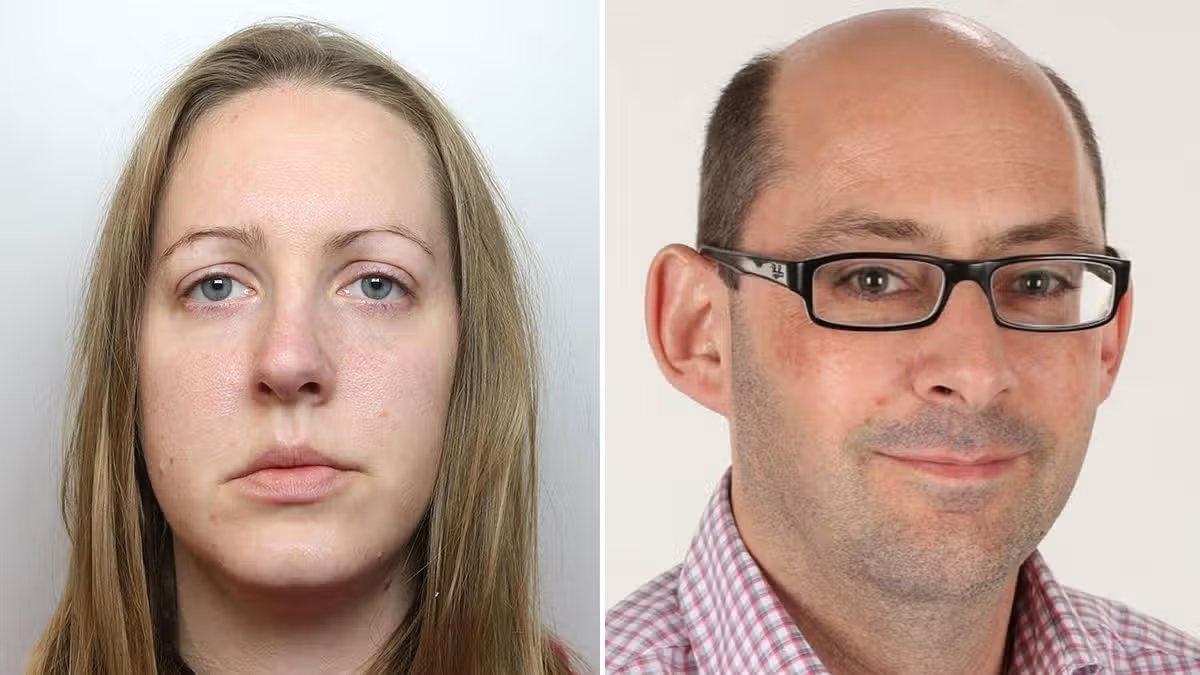
Lucy Letby inquiry latest: Nurse’s ‘boyfriend’ doctor ‘put her before patients’

Published

on

Daily Mirror

The families of Letby’s victims have been waiting years for answers. They have said that the government must fully implement the recommendations of the inquiry into the killer nurse.

Specialist medical negligence lawyers at Irwin Mitchell, representing seven children harmed by Lucy Letby, said the publication of the inquiry’s findings will be an important and difficult moment for everyone affected.

Tamlin Bolton, from Irwin Mitchell, said: “The publication of the Thirlwall Inquiry’s findings will likely be difficult reading for our clients and for everyone affected by Lucy Letby’s actions who have already had to go through both a criminal trial and several months of evidence for this Inquiry.

“For the families we represent, this Inquiry has always been about understanding how these devastating events were able to happen and ensuring that meaningful lessons are learned.

Advertisement

“While no system can guarantee the prevention of criminal acts by a determined individual, patients, families and clinicians are entitled to expect that their concerns will be listened to and that those concerns will be investigated properly and acted upon.”

She added: “The key questions are whether the systems, culture and governance within our NHS were sufficiently robust to identify risks and respond to them appropriately and where, in this instance, those systems have failed.

“With the families, we will consider Lady Justice Thirlwall’s findings carefully, but whatever the detail of the report, it is vital that lessons are learned and any recommendations are implemented by the UK Government so that confidence in patient safety is strengthened.

“Families need to have confidence that everything possible is being done to prevent similar failings happening again, whether in Chester or elsewhere in the NHS.”

Advertisement

The Countess of Chester Hospital.(Image: Getty Images)

Source link

Continue Reading

NewsBeat

Noah Donohoe: Inquest verdict delivered but questions remain

Published

on

Jack Clark, a man with short brown hair, dressed in a blue coat

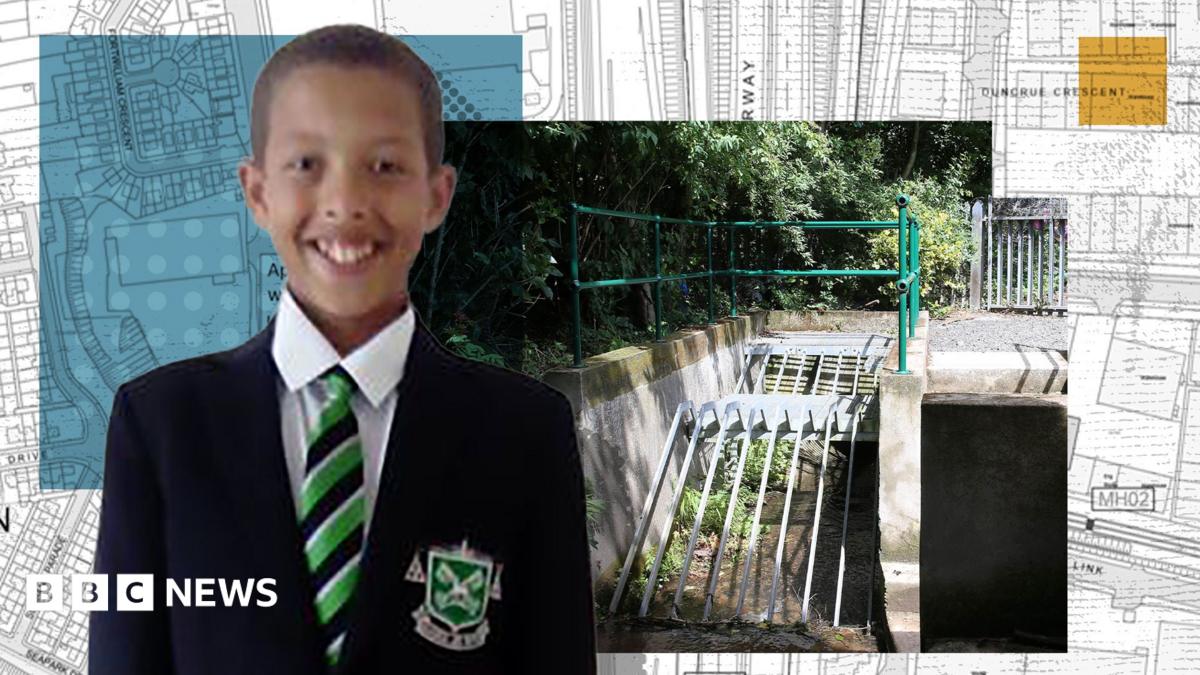
It’s been more than six years since teenager Noah Donohoe was found dead 600m into a freezing underground water tunnel in Belfast.

His death – and the speculation over what happened to him in the week between his daylight disappearance and the discovery of his body – became a huge news story that provoked countless unanswered questions.

Now, after an inquest and months of exhaustive hearings and long deliberations by a jury, there is a verdict – but much is still unknown about what happened to Noah.

Why, the night before he disappeared, did he leave his home in the middle of the rain-soaked night? Where did he go? Why did he come back 34 minutes later, as documented by CCTV, barefoot?

Advertisement

LIVE: Noah Donohoe inquest jury finds failings by department officials possibly contributed to death

Hours later, on Sunday 21 June 2020, he left the south Belfast home he shared with his mother for the final time.

Why did he leave and go to an unfamiliar part of north Belfast? Why was the teenager naked when he was last seen in the area of the water tunnel entrance?

And what might have been if he had seen the social media message sent him by one of two friends he planned to meet in north Belfast telling him their plans were cancelled?

Advertisement

An autopsy found Noah had died from drowning, with the tunnel he was found in heading towards Belfast Lough and its tides.

Now, after years of delays, a jury has found that it was possible, but not probable, that failings by the Department of Infrastructure over the tunnel in which he was found contribute to his death.

They also found 13 failings by the Police Service of Northern Ireland (PSNI) but that these did not in any way contribute to the 14-year-old’s death.

Having spent months in court following all the evidence, it was clearly not an easy process for the men and women of the jury.

Advertisement

They heard from dozens of witnesses and received voluminous amounts of official and expert documentation.

This week they deliberated on Monday and Tuesday. But it came more than two months after the inquest was dramatically adjourned in the early hours after three days of deliberations did not lead to a verdict.

Source link

Advertisement
Continue Reading

NewsBeat

Two dead after car hits group of pedestrians in Doncaster

Published

on

Jack Clark, a man with short brown hair, dressed in a blue coat

Two people have died and four have been seriously injured after a car crashed into a group of people in Doncaster.

South Yorkshire Police said officers were called to White Rose Way when a black Mitsubishi L200 hit a group of pedestrians at 11:00 BST on Sunday, before hitting a black Audi and silver BMW on the opposite carriageway.

The force said two of the pedestrians had died at the scene while four other people were taken to hospital with serious injuries.

The driver of the Mitsubishi, a 30-year-old man, was arrested on suspicion of two counts of causing death by dangerous driving, two counts of causing serious injury by dangerous driving and driving while unfit and later released on bail.

Advertisement

Source link

Continue Reading

NewsBeat

Great Ancoats Street bus crash LIVE as road shut off with as emergency services ‘assessing injuries’

Published

on

Manchester Evening News

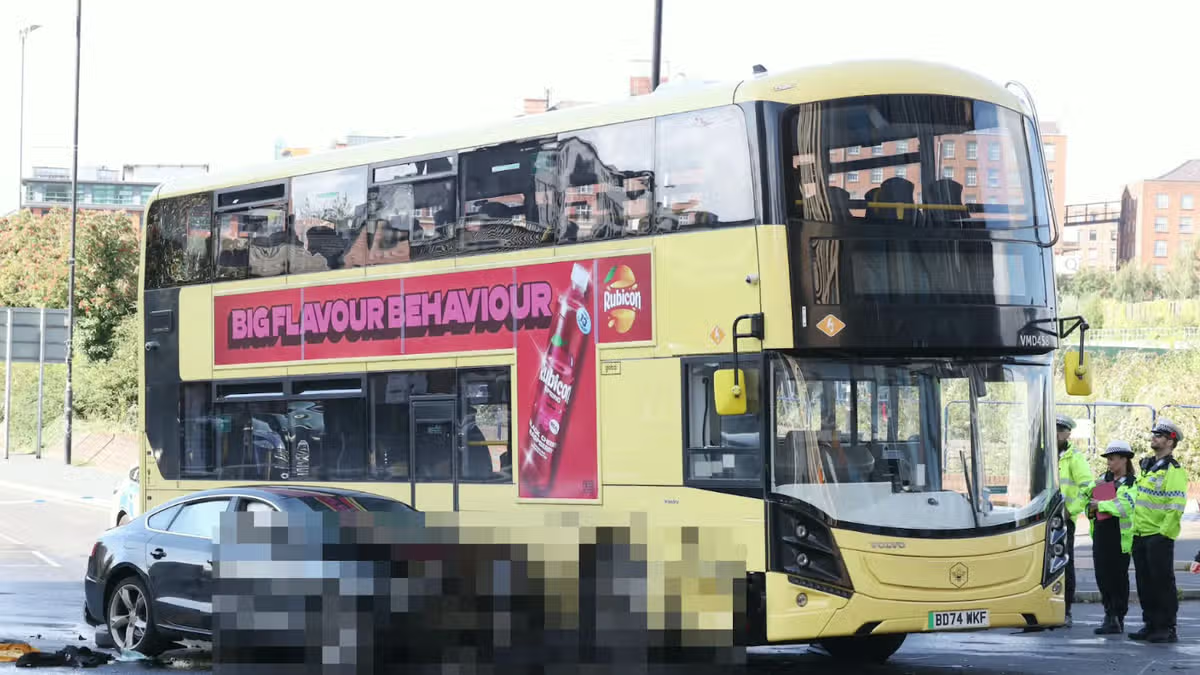
In a statement, GMP said: “Officers were called at 1.09pm to Great Ancoats Street in the city centre to reports of a collision between a car and a bus.

“Emergency services are at the scene assessing injuries and enquiries are ongoing.”

The M.E.N has also contacted the North West Ambulance Service for more information.

Advertisement

Source link

Continue Reading

NewsBeat

‘Aggressive’ Tube passenger, 29, punched and killed Elizabeth Line worker, 61, after missing his train, court told

Published

on

Ayodele Jamgbadi, 29, of Kingston Road, Ilford, is accused of murdering 'adored' father Jorge Ortega (pictured), 61, with 'significant force'

An ‘aggressive’ London Underground passenger killed an Elizabeth Line worker with a single punch to the face after missing his train, a court heard.  

Ayodele Jamgbadi, 29, of Kingston Road, Ilford, is accused of murdering ‘adored’ father Jorge Ortega, 61, with ‘significant force’.

On December 4, 2024, the defendant allegedly kicked an advertisement frame when he missed his train from Ilford station to Stratford at around 8.45pm.

Inner London Crown Court heard Mr Ortega and two other Transport for London (TfL) colleagues then intervened and tried to calm the irate passenger down. 

Advertisement

However, Jamgbadi floored the 61-year-old with one punch, knocking him unconscious after he hit his head on the concrete platform.

Mr Ortega was taken to hospital but died of a severe traumatic brain injury two days later, the court heard. 

Jamgbadi was initially charged with causing grievous bodily harm but that was upgraded to murder following Mr Ortega’s death.

Judge Benedict Kelleher told the jury that Jamgbadi is not fit to enter a plea, and they therefore have to determine whether he did the act.

Advertisement

Ayodele Jamgbadi, 29, of Kingston Road, Ilford, is accused of murdering ‘adored’ father Jorge Ortega (pictured), 61, with ‘significant force’ 

On December 4, 2024, the defendant allegedly kicked an advertisement frame when he missed his train from Ilford station to Stratford at around 8.45pm

On December 4, 2024, the defendant allegedly kicked an advertisement frame when he missed his train from Ilford station to Stratford at around 8.45pm 

Inner London Crown Court heard Mr Ortega and two other Transport for London colleagues then intervened and tried to calm the irate passenger down

Inner London Crown Court heard Mr Ortega and two other Transport for London colleagues then intervened and tried to calm the irate passenger down 

Advertisement

The key questions they have to consider is whether Jamgbadi threw the punch and whether it was a significant cause of Mr Ortega’s death. 

He said: ‘He is unfit to plead which means that he is not mentally well enough to stand trial and he is in hospital for that reason.

Patrick Dennis, prosecuting, told the court that Mr Ortega was on duty at the time of the incident. 

He said three TfL staff members, including Mr Ortega, had approached a man on the platform after being alerted by banging noises. 

Advertisement

He said: ‘The defendant arrived at the railway station. CCTV shows that he missed the train heading into London to Stratford.

‘After he missed the train, the defendant effectively kicked an advert frame.

‘As a result Mr Ortega and two other staff members came out of the office and they effectively tried to calm Mr Jamgbadi down.

‘As Mr Ortega retreated backward, the defendant punched him once in the face and that caused Mr Ortega to fall onto the platform and strike his head and that rendered him unconscious.

Advertisement
Patrick Dennis, prosecuting, told the court that Mr Ortega was on duty at the time of the incident

Patrick Dennis, prosecuting, told the court that Mr Ortega was on duty at the time of the incident 

He said three TfL staff members, including Mr Ortega, had approached a man on the platform after being alerted by banging noises

He said three TfL staff members, including Mr Ortega, had approached a man on the platform after being alerted by banging noises 

‘The defendant displayed aggressive behaviour.’

Mr Dennis described what the CCTV images showed: ‘They don’t get particularly close – the defendant then started to walk away from them but he then turned around and started to walk toward Jorge Ortega, who started to back away.

Advertisement

‘It is at that stage he punched Jorge Ortega with significant force.’

Mr Dennis said an ambulance arrived and Mr Ortega was taken to hospital but ’48 hours after the incident he tragically died’.

Following his arrest, Jamgbadi told British Transport Police officers: ‘I punched him in the face, I literally punched him in the face. 

‘What are you going to do about it, are you going to nick me?’

Advertisement

Mr Ortega, a customer experience assistant, was with colleagues in an office on the platform when they heard ‘banging noises’ from outside, the court heard.

They went outside and saw Jamgbadi kicking an advertising frame and asked him if he was OK.

Mr Ortega’s co-worker, Mohammed Alim, said the man ‘seemed a bit disturbed, a bit angry and just said “Who’s got a problem?”‘.

Mr Alim told the court: ‘Within a split second he swung a punch on Jorge’s left-hand side. The attacker used his right hand.

Advertisement

‘It struck Jorge near the temple area. The impact of the punch was with so much force that I saw something fly out of his mouth.

‘He was floored. He hit the back of his head.’

Mr Alim said he feared the man was going to attack Mr Ortega again when he was on the floor, telling the court ‘he went to Jorge’.

Mr Alim said ‘he looked at Jorge and he looked like he was going to attack him but I said ‘what are you doing?’

Advertisement

The attacker then turned to Mr Alim, who said he thought he ‘stopped him’ from doing anything else.

Mr Alim said: ‘I raised my hands up in a defensive motion and said “take it easy”.

‘Something came to [the attacker’s] head and he just turned back and walked off.’

Mr Ortega’s co-workers and members of the public carried him in to an office where he was ‘going in and out of consciousness’, Mr Alim recalled.

Advertisement

The attacker then moved away after Mr Alim said something to him and towards a third member of staff, before he left the scene, the court heard.

The man then pushed through the barriers without paying in order to leave the station.

The jury were told that pathologist Dr Michael Parsons concluded: ‘The overall pattern of head injury is entirely consistent with a substantial impact to the back of the head caused by a heavy fall from a standing height.

‘There was bruising and a laceration to the right eyebrow and adjacent cheek which are entirely consistent with a punch to the face.’

Advertisement

Mr Ortega was a member of the RMT union and worked as a customer experience assistant for MTREL, which runs the Elizabeth Line.

Mick Lynch, who was RMT’s general secretary at the time, expressed his condolences to Mr Ortega’s family after the attack.

Then-prime minister Sir Keir Starmer said the incident was ‘absolutely tragic’.

In a tribute, Mr Ortega’s son said: ‘Our dad was the most loving person, the kindest soul you could have the pleasure of meeting. 

Advertisement

‘Everyone who has met our dad or who has ever worked with him over the years will tell you this. 

‘He had a brilliant mind, enjoyed cooking, loved drawing, and was highly skilled in art. 

‘He was an amazing family man and would always put other people first. He loved his grandchildren, and in turn, they adored our dad.’

The trial continues.

Advertisement

Source link

Continue Reading

NewsBeat

Jodie Kidd’s clever new waterproof jacket range is a ‘game-changer’ for autumn

Published

on

Daily Mirror

Jodie Kidd has just launched Delta Roam’s brand new modular outerwear range which lets you mix and match your layers and it’s a ‘game changer’ for unpredictable weather

Advertisement

We can all agree that trying to prepare for every weather autumn throws at us is almost impossible. Rainy showers one moment, sunny spells the next, a chilly morning followed by an unexpectedly hot afternoon all mean that you’ll almost never get it right when picking which coat or jacket to wear on any given day.

However, Delta Roam has just answered all of our weather woes, as it launches the brand new Modular Outerwear System with British supermodel Jodie Kidd. The new range includes three pieces – two of which are available now, and one which launches next month – which have been cleverly designed to be mixed and matched together to prepare for all eventualities.

READ MORE: Michelle Keegan just dropped the must-have jacket for autumn in her new Very collection

READ MORE: M&S’ stylish waterproof coat will keep you ‘totally dry’ in autumn’s unpredictable downpours

Advertisement

This is Jodie’s second collection with Delta Roam, after launching the chestnut brown version of the brand’s best-selling Beaumont Robe last year. After returning as a brand ambassador for a second year, Jodie said: “The Modular Outerwear System is a complete game-changer for anyone living an active, outdoors lifestyle. It combines high-fashion tailoring and sleek silhouettes with incredible practical utility – taking you effortlessly from morning commutes to weekend adventures, no matter what the British weather throws at you.”

The new Modular Outerwear System is built around Delta Roam’s signature combination of practicality and style, and rethinks how we layer up in the autumn and winter weather. The modular system lets you combine all three of the products into one ultra-warm and waterproof piece of outerwear, or wear them as three individual items. Or, each one can be mixed and matched together into different versions to suit all weathers.

The main item in the collection is the Drift Parka (£210), which comes in both black and forest green and is a lightweight, easy to carry long waterproof jacket that’ll keep you protected from the rain. It’s made from a durable 10k waterproof nylon ripstop, with fully taped seams to protect you from heavy downpours. It has an adjustable waist for a tailored fit, an adjustable hood and cuffs for extra protection from wind and rain, and even the pockets have been designed to keep everything warm and dry, with zip fastenings and deep, fleece-lined hand-warmer pockets.

Advertisement

When you’re not wearing the Drift Parka, it folds up nearly into itself to create a crossbody bag, and even has integrated internal straps that let you wear it across your back so you don’t need to carry it between showers. Its lightweight design means you can wear it as a standalone jacket, or you can adapt it to a warmer, cosier layer by attaching the Core Gilet (£110) through the clever connection system.

The gilet lets you add warmth without unnecessary bulk, and can be worn on its own or zipped into the parka. It’s filled with responsibly-sourced insulation, has external hand pockets and can also be folded into its own integrated pouch that fits easily inside a backpack.

There’s some other great multi-way jacket options, like the Hikebound II 3-In-1 Waterproof Jacket which is £200 from Columbia which also has three individual jackets built into one. You can wear the outer shell in mild but wet weather, the inner fleece in mild and dry weather, or zip them together in cold and wet weather.

You can also shop the Alaskan Womens 3 in 1 Long Waterproof Jacket which is now on sale at Mountain Warehouse down from £219.99 to £129.99 and combines an outer waterproof shell and inner warm lightweight jacket, which you can wear separately or both together. Finally the Women’s Breckenridge Waterproof 3 In 1 Jacket is now just £99.98 down from £199.95, which has a fully seam sealed jacket which has been tested to a 10k waterproof rating, and a classic Passenger fleece that zips inside for when you need protection from the elements.

Source link

Advertisement
Continue Reading

NewsBeat

Data centre leaks 5,000 gallons of fuel after suspected ‘glitch’ | News World

Published

on

Data centre leaks 5,000 gallons of fuel after suspected 'glitch' | News World
The leak (not pictured) is under investigation (Picture: Google Maps)

A waterway has been polluted with thousands of gallons of fuel after it leaked from a data centre in New Jersey.

Roughly 5,000 gallons of fuel leaked from a storage tank at Equinix’s NY2 data center in Secaucus and flowed into Anderson Creek – a narrow tributary running through the New Jersey Meadowlands wetland in the northeast of the US state – on Friday evening.

Secaucus mayor Michael Gonnelli said the spill had been caused by a ‘computer glitch’.

However, Equinix – the ‘largest global data center and colocation provider for enterprise network and cloud computing’, according to its website – said an investigation into the cause of the leak was still underway.

Advertisement

Containment barriers and vacuum trucks were sent out to suck a mixture of diesel and water out of the creek in a bid to stop the pollution from spreading.

The New Jersey Department of Environmental Protection (DEP) said the fuel did not reach the Hackensack River, a 45-mile-long river stretching through New Jersey and neighbouring New York, ultimately flowing into Newark Bay.

Sign up for all of the latest stories

Start your day informed with Metro’s News Updates newsletter or get Breaking News alerts the moment it happens.

Data centre leaks 5,000 gallons of diesel fuel into river after 'computer glitch' Equinix's NY2 data center in Secaucus
Environmental campaigners branded the leak from the data centre – circled in red -a ‘slap in the face’ (Picture: Google Maps)
Data centre leaks 5,000 gallons of diesel fuel into river after 'computer glitch' Equinix's NY2 data center in Secaucus
Equinix said the investigation has not yet concluded (Picture: Google Maps)

But environmental campaigners and experts have branded the leak a ‘slap in the face’ and wondered whether it could have been contained entirely.

Hackensack Riverkeeper Bill Sheehan told the nonprofit news outlet Gothamist: ‘The tributaries are the capillary system of the whole ecosystem.

Advertisement

‘All the water that runs off of our land goes into the creeks first, and then runs through the creeks out into the river.’

Equinix said a fuel release was detected from a tank outside its facility on Friday, but that staff stopped the leak environmental contractor Clean Harbors and the fire brigade were called in and the DEP and Hudson Regional Health Commission were notified.

Mayor Gonnelli said the data centre had been operating from the site since 2001. ‘We’ve never had a problem before this time,’ he said.

‘There’s a lot of complaints about data centers, I can tell you that. But right now, they did everything they had to do.’

Advertisement

The DEP diesel fuel which had leaked from the facility had been contained.

Equinix said a full investigation had been launched to establish the cause of the incident and to prevent future accidents.

The company said: ‘We are working closely with those agencies, local officials, and community stakeholders to ensure a thorough remediation,’ adding that it remained ‘committed to resolving this quickly, transparently, and responsibly.’

Advertisement

Source link

Advertisement
Continue Reading

NewsBeat

Council rejects claims homes are intended for asylum seekers

Published

on

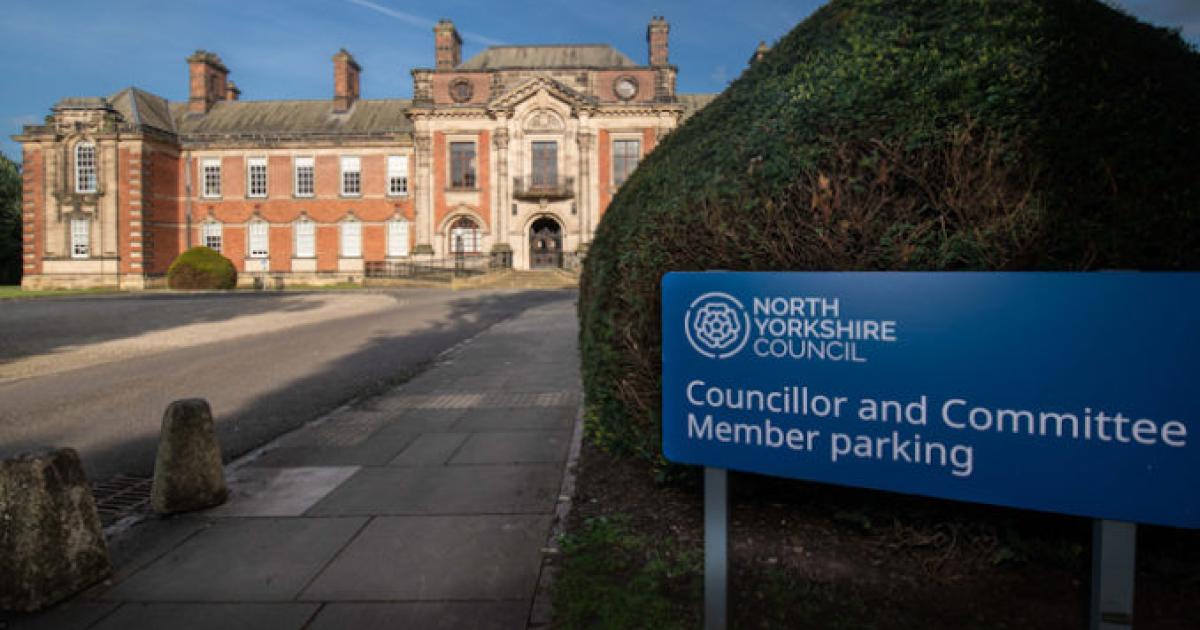
North Yorkshire councillors' home addresses to be secret

Deputy council leader Councillor Peter Wilkinson told a meeting of the authority’s executive today (Tuesday, September 15) that the properties were instead being provided to meet the council’s statutory responsibilities towards homeless households.

Councillors were considering a revised business case which would increase the council’s temporary accommodation programme from 90 to 112 homes.

The scheme was originally approved in 2024 amid increasing demand for temporary accommodation and rising costs from placing homeless households in hotels and bed and breakfasts.

Advertisement

Addressing claims about the scheme at the meeting at the Civic Centre in Selby, Cllr Wilkinson said: “I’m aware that there has been some discussion on social media regarding the purpose of these homes.

“For clarity, this programme is not for asylum accommodation. Accommodation of asylum seekers is arranged separately by the Home Office.

“These homes are intended for households to whom North Yorkshire Council owes homelessness duties, including families with children, people fleeing domestic abuse and other vulnerable residents who would otherwise have nowhere suitable to stay.”

Dozens of comments have been posted online in recent days suggesting the homes would be used to house migrants.

Advertisement

One person said: “British people born in this country need houses. Forget the migrants. Send them back. They are not our problem.”

Another added: “This will be to house migrants as they want them out of all hotels etc.”

But the council’s report confirms the purpose of the programme is to provide temporary accommodation for homeless households across North Yorkshire.

It says demand has increased, partly because households are spending longer in temporary accommodation.

Advertisement

Twenty properties have already been delivered — 11 in Scarborough, six in Norton, two in Catterick and one in Ripon — with another 40 properties acquired or already owned by the council being prepared for occupation.

The revised programme would increase the overall budget from £11.6m to just around £18.1m, with the council saying the additional investment would reduce its reliance on more expensive emergency accommodation.

The report says there is a particular shortage of one and two-bedroom temporary accommodation for homeless single people and couples, as well as shortages in parts of Harrogate, Selby and Scarborough.

Once all 112 homes are available, the council estimates the programme could eventually produce savings and avoid additional costs of up to £2.71m a year, with the additional benefit expected from 2028/29 onwards.

Advertisement

Cllr Wilkinson said the properties would remain council-owned assets.

He added: “Overall, this is a prudent investment that reduces ongoing revenue pressure, supports some of our most vulnerable residents and represents good stewardship of public money.”

The council has a legal duty to help people who are homeless or threatened with homelessness.

Its report also points out that families with children and pregnant women cannot legally be housed in B&B accommodation for more than six weeks.

Advertisement

Source link

Continue Reading

Trending

Copyright © 2025