

Connect with us

NewsBeat

Huntington home ‘ransacked’ during burglary – police

Published

on

Huntington home ‘ransacked’ during burglary - police

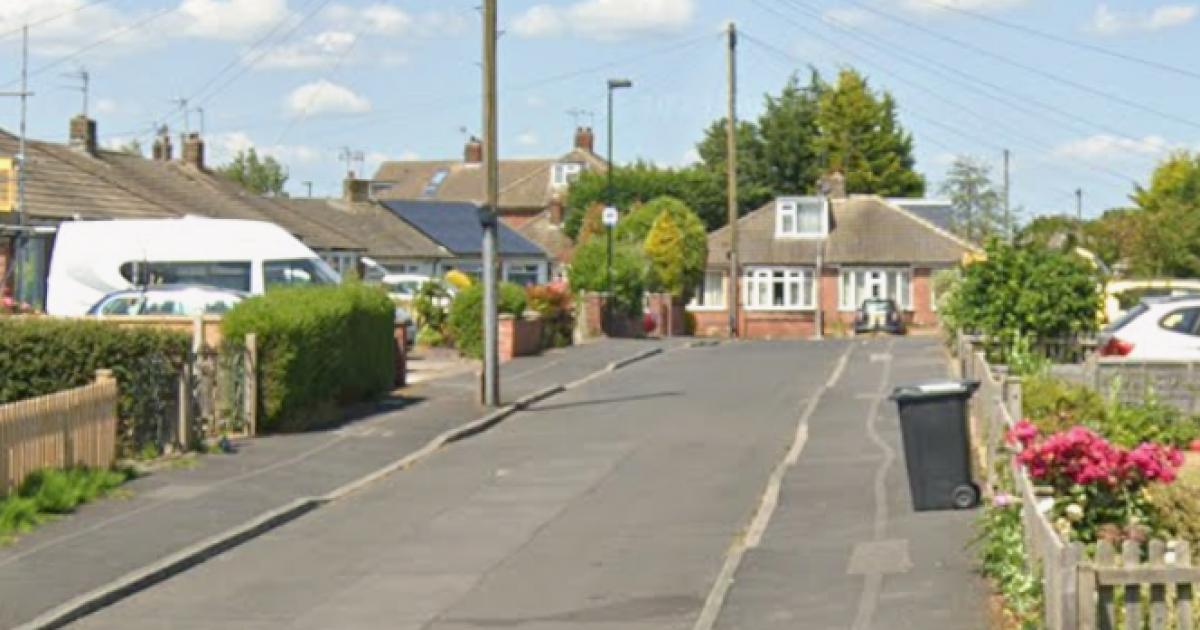
Officers are appealing for information after the break-in in Beech Glade, Huntington, on Thursday (March 5).

North Yorkshire Police said the burglary happened between 12pm and 9.20pm.

It “involved a suspect breaking a window of a bungalow and ransacking all the rooms before leaving via another window”, a force spokesperson said.

Advertisement

Police are now urging nearby residents and anyone in the area at the time to come forward with any information about the burglary.

“We’re particularly appealing for information from anyone who lives or was in the area between the above times, or anyone with CCTV footage of the area,” the police spokesperson said.

“Please email lewis.appleby@northyorkshire.police.uk if you have any information that could help our investigation.

“Alternatively, you can call North Yorkshire Police on 101 and ask for collar number 1074, or contact Crimestoppers anonymously on 0800 555 111 or via their website.

Advertisement

“Please quote reference 12260040426 when passing on information.”

Source link

Advertisement
Continue Reading
Click to comment

Leave a Reply

Your email address will not be published. Required fields are marked *

NewsBeat

Daughter’s relief after Soham murderer dad dies after being attacked in prison

Published

on

Daughter's relief after Soham murderer dad dies after being attacked in prison

Child killer Ian Huntley has died in hospital after being brutally attacked in prison. His daughter has spoken of her relief, while questions remain about his funeral arrangements.

Ian Huntley’s daughter was overcome with emotion when she heard of her father’s attack in prison. The notorious child killer died in hospital today after the violent incident at HMP Frankland left him sprawled in a pool of his own blood.

Huntley was rushed to hospital last Thursday after reportedly being struck in the head multiple times with a metal pole in a workshop, allegedly by triple murderer Anthony Russell. He was left with severe brain injuries and was placed in a medically induced coma. Huntley, who murdered two little girls Holly Wells and Jessica Chapman, was apparently completely ‘unrecognisable’ to his mother on his deathbed, due to his injuries.

On Friday night, medics reportedly withdrew the ventilator that was keeping him alive, following consultations with his mum, reports the Mirror. Following his attack, Huntley’s daughter, Samantha Bryan said that she was “glad” it had happened, telling The Sun on Sunday: “I started crying because I thought he was dead – it was an overwhelming sense of relief. Being his daughter has been a heavy burden. It felt like I could breathe again. I felt if he died, that burden died with him.”

Advertisement

The 27 year old beautician only discovered she was Huntley’s daughter when she was taking part in a school crime project aged just 14. She then came across a pixilated photo of her and her mum Katie in connection with Huntley.

Her mum Katie, 45, fled Huntley’s brutality after becoming pregnant at 16. The death of Huntley will undoubtedly stir up distressing memories for Samantha, who has previously disclosed the unsettling methods the murderer used to prevent her from discovering the truth.

After finding out about her father’s existence as a teenager, Samantha sought to visit him in prison. She hoped to gain further insight into the dreadful murders he had committed.

However, he rebuffed her with a brief letter stating: “Given the probable length of my future and your current motives I doubt there will be enough time for a significant shift in circumstances in order for us to ever meet”. He added: “You are still my daughter for whom I have much love. With Love, Ian”, and tersely wished her a merry Christmas.

Advertisement

Speaking to The Sun on Sunday, she said: “He’s shown he’s a pitiful, twisted, manipulative coward. There’s so many other things I could call him. I feel contempt. His letter has left me with even more questions than I had before.

“He might be ill but I don’t know for sure given he’s written about the probable length of his future. I don’t know what that means. But surely if he is sick you’d want to give some answers – you’d have nothing left to lose. Or maybe he is referring to the length of his sentence.”

Prior to his passing, Samantha also stated that there’s “a special place in hell waiting for dad”.

The grim demise of the murderer may offer a shred of solace to the families torn apart by his horrific deeds. Huntley had been serving a life sentence with a minimum term of 40 years for the murders of 10-year-olds Holly Wells and Jessica Chapman, who disappeared after leaving a family barbecue to buy sweets in Soham, Cambridgeshire, on August 4, 2002. The former school caretaker then disposed of their bodies in a ditch.

Advertisement

It’s difficult to envisage who will grieve the passing of a double child killer who reportedly strutted around prison and kept a macabre memento of his crimes in his cell. But what does happen to high-profile killers who die in prison or in a prison hospital? And will he have a funeral?

Nusrit Mehab, a former superintendent with the Metropolitan police and a senior lecturer in criminology and criminal justice, informs the Mirror that the fate of Huntley’s remains all depends on what he declared before his death.

Of his final moments, she explained: “Authorities would have been prison logs keeping an idea of how he’s deteriorated. Medics will have written down his time of death and notified the police immediately, because a death in custody is automatically treated as a crime scene. The prison and probation ombudsmen also have to begin an independent investigation if he dies in custody.

“The body will be removed and sent to the coroner’s controlled mortuary and they’ll have to have a postmortem. Despite the attack, they still have to determine a cause of death – that’s mandatory for deaths in custody. They will have an independent investigation into his death and an inquest.”

Advertisement

Despite being one of the most despised murderers in modern British history, Mehab says he will still be entitled to a funeral. The expert disclosed: “His body will be released to the next of kin or an appointed representative. I don’t know what his situation was – he’s been in prison for a long time and doesn’t have a lot to do with his family.

“But if they are the next of kin, they still have a right to claim the body. Unless he’s put a will in, or asked somebody else. If he has assigned somebody else as a representative, then they become the legal claimant.

“If his family are the legal guardians, they can claim it. If he’s put somebody else in as a representative, or made a will, then they become the legal claimants, and if nobody comes forward, then it falls on the public health authority to do it.”

Former superintendent Mehab cautions that if his family do decide to hold a funeral, there will likely be serious security concerns given Huntley’s heinous crimes. She stated: “If his family are next of kin, they can take the body, do a private funeral, a cremation, whichever they want.

Advertisement

“It will be a very high profile death, so there will still likely be security concerns. So they might want a private burial in an undisclosed location, which usually happens, with minimal attendance. They might even just choose a cremation. It will be very low key, from what I can tell.

“If nobody claims the body, then the prison service [and] local authority will arrange it, depending on where he’s from. So that will be a low cost funeral or cremation – on the taxpayer. There’d be no public ceremony and it will likely be a quiet cremation rather than a funeral, in my experience.

“They do a cremation because they don’t want to give him a grave. His ashes would go to the family if they are next of kin. If not, they could be scattered by the local authority. Or – and this has happened before to my knowledge – they just get stored and put down as unclaimed.

“With high risk criminals, they receive anonymous, unpublicised disposals, that’s the term, to avoid public attention. So it will be done very quietly if they do dispose of them.”

Advertisement

Source link

Continue Reading

NewsBeat

48 hour dispersal order for Leigh town centre issued

Published

on

48 hour dispersal order for Leigh town centre issued

Greater Manchester Police has said it is implementing a Section 34 dispersal order for 48 hours, which will some into effect at 2pm on Saturday (March 7) and ending at 2pm on Monday (March 9).

A section 34 dispersal order allows officers to exclude a person, or people, from an area for up to 48 hours through written notice.

GMP said the aim of the notice is to “minimise behaviour contributing to, or likely to contribute to anti-social behaviour or crime or disorder in the area”.

The area where the dispersal order has been issued for (Image: GMP)

Neighbourhood Inspector Sam Davies from GMP’s Wigan and Leigh district said: “These measures are in place to prevent further disorder and ensure the safety of those living, working and visiting the area.

Advertisement

“We have identified a number of individuals connected to these incidents already, and are in the process of establishing the identity of others.

“We will not tolerate antisocial behaviour and will take robust action against anyone involved.

“These powers are crucial to preventing any further offences from taking place. If you have any concerns or any information, then please speak to those officers who are there to help, there will be extra patrols in the area during this time.”

Read more:

The dispersal order is contained within the boundaries of Windermere Road, Chester Street, Hope Street, Henrietta Street, Church Street, Charles Street, Chapel Street (including 91–93), Leigh Road (including 162–164, Hilton Park), A572 (Spinning Jenny Way / Market Street), A578 (Wigan Road), Parsonage Retail Park, St Helens Road , Twist Lane, returning to Windermere Road.

Advertisement

Anyone with information is urged to contact police by calling 101 or use the LiveChat function on www.gmp.police.uk quoting log 1350 of March 5.

Alternatively, members of the public can contact the independent charity Crimestoppers, anonymously, on 0800 555 111.

Source link

Advertisement
Continue Reading

NewsBeat

Mansfield v Arsenal live: FA Cup latest score and updates

Published

on

Mansfield v Arsenal live: FA Cup latest score and updates

Mansfield 1-2 Arsenal

(Getty Images)

Flo Clifford7 March 2026 14:30

‘Tough place to play’ – Eze

Matchwinner Eberechi Eze tells TNT Sports of his goal: “I saw the space and saw opportunity to to take it and took it. Tough place to play today.

Advertisement

On the fight for the quadruple, he says: “It’s what we aim for and pushing for. To be in this position is important, it’s where we want to be.

“It’s the mentality of taking each day as it comes. Do what needs to be done. If we don’t trust the process, we don’t get there.”

Flo Clifford7 March 2026 14:25

Advertisement

FULL-TIME: Mansfield 1-2 Arsenal

What a day for Mansfield, who are warmly applauded by their fans, who are still here in numbers.

(Getty Images)

Flo Clifford7 March 2026 14:20

FULL-TIME: Mansfield 1-2 Arsenal

A costly afternoon for Arsenal too, with Calafiori and Trossard both picking up injuries and having to go off.

Kepa gives a rather morose-looking Salmon a hug; a tough outing for the 16-year-old today.

Advertisement

Flo Clifford7 March 2026 14:17

FULL-TIME: Mansfield 1-2 Arsenal

A superb FA Cup tie. On the balance of chances, Arsenal probably just about deserved victory but Mansfield had 18 shots, forced Mikel Arteta to change shape, to bring on players such as Bukayo Saka and the match-winner Eberechi Eze. What an effort by them, but Arsenal’s quadruple quest continues.

Richard Jolly7 March 2026 14:13

Advertisement

FULL-TIME: Mansfield 1-2 Arsenal

A much tougher outing than Arteta would have liked; Arsenal were made to work much harder in this encounter than they have been in several Premier League games this year. Huge credit to Mansfield.

Matchwinner Eze is all smiles as he hugs and shakes hands with the home players.

Flo Clifford7 March 2026 14:11

Advertisement

Mansfield 1-2 Arsenal

‘90+5: Martinelli goes for goal but it’s wide!

Roberts punts it up the pitch for one more go. The Mansfield fans are still singing at the top of their voices. This has been a brilliant outing for the home side, even though it isn’t going their way.

Flo Clifford7 March 2026 14:10

Advertisement

SAVE! Mansfield 1-2 Arsenal

‘90+3: Evans gets away from 18-year-old Dixon down the left channel but Mosquera swings across to boot it clear.

Hewitt has a throw-in, it’s flicked on by Blake-Tracy, headed forward to Tottenham loanee Irow but Kepa gets his gloves to it!

Flo Clifford7 March 2026 14:07

Advertisement

Mansfield 1-2 Arsenal

‘90: Six minutes added on here. Madueke aims for the top corner but spanks it wide, to gleeful jeers.

Flo Clifford7 March 2026 14:05

Advertisement

Mansfield 1-2 Arsenal

‘88: Knoyle, king of the goal-line clearance, is replaced by Hewitt. Mansfield are looking a bit tired and jaded now.

Flo Clifford7 March 2026 14:02

Source link

Advertisement
Continue Reading

NewsBeat

Morrisons confirms significant change to UK store checkouts

Published

on

Morrisons confirms significant change to UK store checkouts

That’s because the supermarket is currently updating a “significant proportion” of tills across all of its UK stores, to make them “more efficient”.

Some customers may have noted new, sleeker black versions of the technology, to replace the older checkouts, as part of the big refresh which aims to provide “excellent levels of service”.

Just one of the locations which has undergone a till make-over in recent days is in Swindon.

Advertisement

Morrisons began the checkout transformation back in May last year and have said the project is due to complete “very soon”.

Why is Morrisons introducing new checkouts across the UK?

A Morrisons spokesperson said: “Since May 2025, we have been updating a significant proportion of both colleague-operated and self-service checkouts across all of our stores to make them more efficient, with the refresh due to complete very soon.

“The new technology will ensure we can continue to offer our customers excellent levels of service, now and into the future.”

Advertisement

It comes as Morrisons has also revealed another big change to its stores this week by introducing stoma-friendly toilets in all of its accessible bathrooms nationwide.

The initiative aims to support independence, dignity and comfort for people living with a stoma and has been rolled out following customer feedback. 

Morrisons’ stoma-friendly toilets include features advised by Colostomy UK such as hooks for clothing or bags, a shelf for supplies, a bin for discreet disposal, and a mirror to help with appliance checks.

Do you think Tesco self-checkouts are ‘too loud’?

Following the new checkouts being launched in Morrisons stores across the UK, Tesco shoppers have been complaining the self-service tills are “too loud”.

Advertisement

Some have even said they feel like the robotic voice sometimes “screams” at them, while one revealed the noise is the main reason they “never go” to Tesco.

It comes as someone shared a post on X that has had more than 200,000 views, which said: “Tesco self checkout are TOO LOUD. Hear ye hear ye [customer name] club card has been accepted. So uncouth.”

To which this person replied: “I never go to Tesco for this reason.”

An account shared: “Being outed with the APPROVAL NEEDED declaration is always fun.”

One profile responded: “No genuinely I never go into a tesco but the one time I did I was like why are you screaming at me.”

Advertisement

Also commenting on their experience of volume issues on the Tesco self-service tills, this user put: “Announcing to the whole store that I need an adult just bc I dared swipe a can of Monster at the self checkout.”

Newsquest has contacted Tesco for comment.

Source link

Advertisement
Continue Reading

NewsBeat

Soham killer Ian Huntley’s lies over murders of Holly and Jessica

Published

on

Soham killer Ian Huntley's lies over murders of Holly and Jessica

The former school caretaker murdered ten-year-old schoolgirls Holly Wells and Jessica Chapman in Soham, Cambridgeshire, in August 2002 and died in prison aged 52 following a fatal attack

His name is as infamous as any criminal in recent memory, but many will be eager to forget Ian Huntley following his death at the age of 52. The former school caretaker murdered ten-year-old schoolgirls Holly Wells and Jessica Chapman in August 2002, in what became one of the largest and most notorious police investigations in British history.

Advertisement

As the nation became caught up in the desperate search for the two girls from Soham Huntley cold-heartedly tried to conceal his actions by participating in searches and posing as a concerned helper desperate to find them.

He audaciously invited journalists covering the case into his own home, where he had killed the pair just days earlier, for cups of tea and coffee. He even boldly appeared on TV to discuss the ongoing search and how he was likely the last person to see the girls before they vanished.

Unbeknownst to anyone but himself at the time, Huntley had murdered both Holly and Jessica, who would now be aged 34, inside his three-bedroom cottage before discarding their bodies and setting them on fire in a ditch 17 miles away. Police eventually apprehended him after becoming suspicious of his behaviour, which included speaking to officers about the girls in the past tense and asking how long DNA evidence lasts.

Even following his arrest, Huntley appeared convinced he could deceive his way out of the situation. He initially claimed he had only briefly spoken to them as they walked past his house on their way to buy sweets, reports the Mirror.

He subsequently changed his account, alleging Holly had accidentally drowned in his bath whilst he was helping her with a nosebleed, and Jessica had accidentally been smothered to death as he attempted to stop her screaming.

He later tried to persuade detectives he was insane by refusing to speak during interviews, and even dribbling, which briefly resulted in him being taken to Rampton secure hospital instead of a jail cell. His attempts at deception represented clear and audacious efforts to cheat the system, but given Huntley’s history of avoiding justice, they were hardly surprising.

The fiend, who was born into a working-class family in Grimsby in January 1974, had previously had multiple run-ins with police in his hometown in his early 20s after conducting a string of sexual relationships with schoolgirls, including one aged just 13. However, despite mounting allegations, he avoided prosecution time and again.

Advertisement

He was accused of indecently assaulting an 11-year-old girl in September 1997, but police decided there was insufficient evidence to prosecute. He was also charged with burglary, but the case was dropped in court.

And he was charged with raping a teenager in an alley before the case was later discontinued. Huntley was also suspected of another sexual assault on a woman shortly before moving to Soham, but the investigation against him was dropped when his girlfriend, Maxine Carr, provided him with an alibi, just as she later did in Holly and Jessica’s case.

At the age of 20, Huntley met his first wife Claire Evans in December 1994 whilst he was employed as a machine operator in a food factory. He won over the 18 year old and they quickly married after a whirlwind romance, but their relationship deteriorated within days and she later moved in with his younger brother, leaving him furious.

Advertisement

Following the split, Huntley, described as a “latent predatory paedophile” by a psychologist, engaged in sexual relationships with at least four underage girls, three of them aged 15 and one 13, between August 1995 and May 1996. A subsequent inquiry also revealed that, between 1995 and 2001, Huntley had sexual contact with 11 underage girls, aged between 11 and 17.

At the age of 23, he fathered a daughter with then 15-year-old Katie Bryan, who has since waived her anonymity, after he groomed her and tricked her into believing he was her boyfriend. He also raped her, forced her to eat cat food, cut off her hair and threw her down a flight of stairs when she was pregnant.

Despite at least ten contacts with the police and five with social services, he remained free to continue offending. Social services never linked the cases together, and only the burglary charge was placed on the police national computer on the orders of a judge.

Huntley wooed his young admirers by wearing smart suits and telling tall tales about his past, including that he was a former RAF pilot and a lottery winner. In reality, he had been a sickly child who was in the bottom set for most subjects and ridiculed by other pupils because of his large forehead, leading him to be nicknamed “Spadehead” and the “white cliff of Dover”.

Advertisement

Huntley moved between bedsits in Grimsby and other nearby towns in what was then the county of Humberside, whilst working low-paid jobs, including in a Heinz factory with his mother, who later upset him by setting up home with a lesbian lover.

In February 1999, he met Maxine Carr, then aged 22, in a nightclub in Grimsby. Whilst living together in a rented property in Scunthorpe, Huntley falsely claimed they were emigrating to the US.

Instead, the pair initially moved 160 miles to Wangford, Suffolk, before later relocating to Cambridgeshire, where Huntley conned his way into a £16,000-a-year position at Soham Village College using the name Ian Nixon. Carr, who had agreed to marry him, was employed as a teaching assistant at the local primary school where Holly and Jessica were pupils.

The bodies of the girls were discovered near RAF Lakenheath – just a few hundred yards from where Huntley and Carr had resided in Wangford – 13 days after their disappearance. The likely cause of death, as determined by pathologists, was asphyxiation, and extensive hair and fibre residue linked Huntley to the victims.

Advertisement

Disturbingly, due to severe decomposition, it was impossible to ascertain whether they had been sexually assaulted.

Carr received a three-and-a-half-year prison sentence after being found guilty of perverting the course of justice by providing Huntley with a false alibi. Upon her release, she was given a new identity and an indefinite anonymity order, as a judge ruled that disclosing her new name publicly would put her life at risk.

Huntley was convicted of both murders and sentenced to a minimum of 40 years in prison in December 2003, which meant he wouldn’t have been eligible for parole until 2042, at the age of 68. Their convictions led to the Bichard Inquiry in 2004, which highlighted critical shortcomings in police vetting and data sharing.

The inquiry’s findings led to a significant revamp of child protection laws and safeguarding procedures in the UK, including the introduction of the Police National Database in 2011. This system amalgamated intelligence from all 43 forces in England and Wales to prevent information on suspects from being lost between jurisdictions.

Advertisement

The Criminal Records Bureau underwent reforms to enhance the sharing of “soft” intelligence, including unproven allegations, rather than just convictions. It later evolved into the Disclosure and Barring Service, which improved the vetting of individuals working with children.

Last week’s fatal prison attack was not the first time Huntley had been rushed to hospital. In 2005, an inmate threw boiling water over him whilst he was on the healthcare wing of Wakefield Prison, West Yorkshire.

In September 2006, prison officers found him unconscious in his cell following a suspected drug overdose and he was rushed to hospital again. And in 2010, he underwent emergency surgery after fellow convict Damien Fowkes slashed his throat.

Fowkes later pleaded guilty to attempted murder at Hull Crown Court.

Advertisement

Huntley reportedly gained significant weight in his final days, which he largely spent hiding away in his cell watching TV and playing computer games whilst fearing another attack. In 2016, a fellow prisoner told The Mirror Huntley had claimed he felt remorse over the killings and wanted to apologise to Holly and Jessica’s parents.

But he also told how Huntley remained so obsessed by the double murder he regularly paraded around jail in a replica Manchester United jersey similar to those the pair were wearing when he killed them. They were famously pictured wearing the matching tops, with David Beckham’s name and his number 7 on the back, at a family barbecue just before their murders.

The inmate told us: “I couldn’t believe it when I first saw him wearing it. It’s an insult to their memory. He knows how offensive people find it and receives constant abuse whenever he wears it, but he just carries on.

“It’s like he’s trying to remind people of exactly what he’s done. He’ll often wear it in the morning and then change to the blue away shirt from the same year in the afternoon.”

Advertisement

The former prisoner added: “He’s still a sick man and even though he says he’s sorry he doesn’t deserve anybody’s sympathy. He’s a master of manipulation.”

Huntley’s own daughter, Sammie Bryan, 27, who only discovered he was her father when she was 14 whilst participating in a school crime project, summed up the feelings of most following the fatal attack. The beautician, from Cleethorpes, said: “He’s definitely up there with people like Fred and Rose West and the Yorkshire Ripper. There’s a special place in hell waiting for him”.

Source link

Advertisement
Continue Reading

NewsBeat

Brendon McCullum: England coach makes ‘no apologies’ for informal environment

Published

on

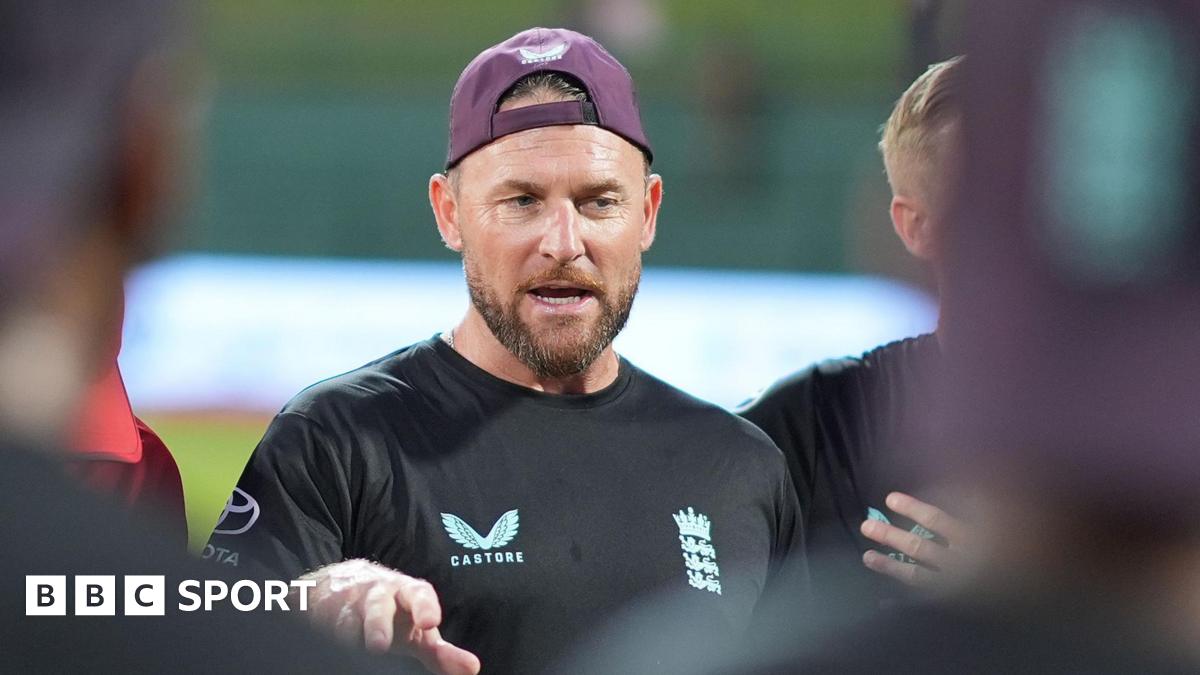
England head coach Brendon McCullum addressing players in training

A relaxed environment has been part of McCullum’s England set-up since he took over the Test side in 2022 – an attempt to relieve players of the pressures of playing international cricket.

England were accused of a lack of adequate preparation for the Ashes, playing only one warm-up match against England Lions at a club ground in Perth before the first Test.

After the Ashes it was revealed Harry Brook was punched by a nightclub bouncer the night before a one-day international in New Zealand, while a mid-series trip to Noosa was heavily scrutinised.

A review by the England and Wales Cricket Board into England’s winter is under way, the culmination of which will confirm McCullum’s future, but there have already been some changes.

Advertisement

There will be a warm-up match when they travel to Australia for the 150th anniversary Test next year and preparation matches are also likely before next winter’s other tours.

England also added fielding coach Carl Hopkinson to their set-up for the World Cup after a host of dropped catches in Australia. That addition brought greater intensity to their training to the World Cup.

McCullum will now return home to New Zealand before any formal announcement on his future is made.

“We’ll allow this period to land and you look back on the last five or six months, which has been pretty intense, and you look at what you got right, what you got wrong and start trying to work out ways you can improve on the areas that you need to,” said McCullum.

Advertisement

“That’s just doing it with a bit of sound reason and logic when your emotions are out of it.

“I make no apologies for running an informal, positive environment but to call it a casual environment is not quite fair.

“But in the end people are always going to have their views on how you go about things and that’s the role of the leader.”

Source link

Advertisement
Continue Reading

NewsBeat

‘Lots planned’ as Spark is officially in York until 2030

Published

on

'Lots planned' as Spark is officially in York until 2030

City of York Council approved Spark’s bid to stay at is site in Piccadilly for an additional five years last October.

The venue, which offers space in converted shipping containers for food and drink start ups along with events and meeting spaces, said its lease extension has now been officially signed off by the council.

A Spark spokesperson said the lease is “now signed, sealed and sorted”, as they thanked everyone who has supported the venue since it opened in 2018.

Advertisement

“This is our fourth extension from the council, but by far the longest yet,” they wrote on social media.

“We’re thankful this time for nearly five years of (hopefully) clear water ahead of us and a chance for some surety over our existence for our team and our traders.

“It feels like some kind of hard-earned acceptance from the powers that be for the value spark brings to York, and also validation for the hard work of so, so many people over the last 10 years.

“We’ve got lots planned across the next six months in terms of improvements to the venue and reinvestment in our spaces, but for now we just wanted to say a big thank you to everyone for supporting the project and turning up.”

Advertisement

How did we get here? Background to Spark’s five more years in Piccadilly

Spark first opened in 2018 and its stay in Piccadilly was previously extended in 2022.

The venue has said it plans to move to York Central eventually but this move would not be feasible until 2029 at the earliest.

Spark’s own estimates state it has supported around 65 fledgling businesses and around £5 million-a-year had been turned over there since it first launched.

The site has, however, faced backlash, including from its neighbours.

Advertisement

Objectors told the council’s meeting in October that neighbours faced the prospect of another five years of noise disturbing them despite being told the venue, which one branded a “grotesque monstrosity”, was temporary.


Recommended reading:


Twelve objections were lodged, including from people living nearby, to the council complaining about noise and smells from the venue as well as shipping containers being put in York’s historic city centre.

The council also received 11 historic complaints about noise from six different addresses since the venue opened, including two since its permission was extended in 2022.

Advertisement

Eighteen comments were lodged in support of the application, saying it was a valuable community venue that supported a variety of arts and campaigning groups alongside businesses.

Cllr Tony Clarke, Labour councillor for Guildhall which includes Spark, said it played an important social and economic role in the city but it had not been a good neighbour.

Source link

Advertisement
Continue Reading

NewsBeat

Concerns about US stockpiles of certain weapons grow during Iran war

Published

on

Concerns about US stockpiles of certain weapons grow during Iran war

WASHINGTON (AP) — The U.S. and Israeli strikes on Iran have raised concerns among Democrats and others about diminishing American stockpiles of certain weapons, illustrating a long-standing production problem that some experts say could present challenges if another conflict emerges.

The Trump administration has repeatedly said American forces have all of the weapons they need to fight the Iran war, now in its second week. President Donald Trump posted Friday on social media that several defense contractors had agreed to quadruple production of weapons “as rapidly as possible,” although he did not detail the specific systems being manufactured.

Questions about the nation’s weapons stockpiles have grown as the U.S. campaign against Iran escalates, with many Democratic lawmakers arguing that Trump is waging a “war of choice.” Missile defense systems are under the most strain, according to experts, with Patriot and Terminal High Altitude Area Defense, or THAAD, interceptors in high demand in Ukraine and Israel, respectively.

“I’m not particularly worried about us actually running out during this conflict,” said Ryan Brobst, a scholar focused on U.S. defense strategy at the Foundation for Defense of Democracies. “It’s about deterring China and Russia the day after this conflict is over.”

Advertisement

The U.S. is using both systems to take down Iranian missiles fired in retaliation for the American and Israeli attacks, but U.S. officials have said they are struggling to stop waves of drones launched by the Islamic Republic and that they are bringing in an American anti-drone system proven to work against Russian drones in Ukraine. The system known as Merops also is cheaper than firing a missile that costs hundreds of thousands of dollars at a drone that costs less than $50,000.

Pentagon says the military has ‘everything it needs’

Sean Parnell, the Pentagon’s chief spokesman, said in a statement that the U.S. military “has everything it needs to execute any mission at the time and place of the President’s choosing and on any timeline.”

Defense contractor Lockheed Martin posted on X late Friday that it had agreed to “quadruple critical munitions production” and “began this work months ago.” Trump and Lockheed did not offer a timetable of when the production increases would reach their target.

Some Democratic lawmakers, meanwhile, have questioned the long-term impact to the U.S. and its allies.

Advertisement

“We’ve been told again and again and again one reason that we can’t provide interceptors for the Patriot system or other munitions for Ukraine is that they’re in short supply,” Sen. Richard Blumenthal, D-Conn., told CNN on Thursday.

Sen. Mark Warner, D-Va., told reporters that American supplies are dwindling after the military fought the Houthi rebels in Yemen and engaged in more recent conflicts under the Republican administration. The top Democrat on the Senate Intelligence Committee did not specify what type of munitions he was referring to.

“Our munitions are low. That’s public knowledge,” Warner said. “It will require additional funding, funding where we have other domestic needs as well.”

Already in high demand

Supplies of defense interceptors are the most taxed, said Brobst, who is deputy director of the Center on Military and Political Power at the Foundation for Defense of Democracies, a hawkish Washington think tank.

Advertisement

The THAAD system is designed for defeating medium-range ballistic missiles, while the Patriot system is for taking down short-range ballistic missiles and crewed aircraft. About 25% of the entire THAAD stockpile was estimated to be used defending Israel from Iran’s ballistic missiles in the 12-day war with Iran last summer, Brobst said.

“These were already in very high demand and we had not procured enough before the conflict,” Brobst said. “And now we’ve probably used, between the two of them, probably several hundred more.”

The exact number of U.S. THAAD and Patriot systems is classified, with administration officials and Democratic lawmakers declining to offer details.

Demand for interceptors is likely falling as the U.S. and its allies take out Iran’s weapons’ capabilities, Brobst said. Gen. Dan Caine, chairman of the Joint Chiefs of Staff, told reporters this week that the number of ballistic missiles fired by Iran was down by 86% from the war’s first day.

Advertisement

Other munitions in demand include cruise missiles and precision-guided missiles, known as “standoff” weapons, Brobst said. Their stockpiles are likely healthier, and their use probably peaked at the beginning of the war as U.S. forces hit Iran’s early-warning systems, air defenses and other targets.

Defense Secretary Pete Hegseth said as much — that American forces used more “standoff munitions at the start, but no longer need to.” He told reporters Wednesday that they would be using “500-pound, 1,000-pound and 2,000-pound GPS- and laser-guided, precision gravity bombs.”

The U.S. has a healthy supply of those types of weapons, which are cheaper but require aircraft to fly closer to their targets, Brobst said.

But the U.S. military is moving to bolster its anti-drone capabilities in the region with the Merops system that flies drones against drones. It is small enough to fit in the back of a midsize pickup truck, can identify drones and close in on them, using artificial intelligence to navigate when satellite and electronic communications are jammed.

Advertisement

Root cause of the stockpile concerns

Brobst said the problem of not having enough advanced munitions, particularly interceptors, was around well before the war in Iran, though “this has definitely not made it get any better by using up these munitions.”

“Successive administrations over multiple decades did not procure sufficient quantities of these interceptors, and when that happens, companies don’t have an incentive to expand their production capacity,” Brobst said, adding that it takes “significant time” to ramp up production.

The administration in recent months has promised to boost defense spending and to speed up production, while calling on the Pentagon to call out defense contractors that underperform and insufficiently invest in building manufacturing.

Katherine Thompson, a former deputy senior adviser at the Pentagon during this Trump administration, said then-President Joe Biden had diminished some of the stockpile of interceptors by sending them to Ukraine.

Advertisement

“It was a short-term win for the Biden administration but a long-term strategic problem for the United States as a whole,” said Thompson, who left her Pentagon position in October and is now a senior fellow in defense and foreign policy studies at the libertarian Cato Institute. “I would hope that the Trump administration doesn’t make that same mistake here.”

Riki Ellison, chairman of the Missile Defense Advocacy Alliance, said the U.S. military could shift interceptors from one part of the world to another or get them from allies if needed. He also noted the Pentagon effort to get defense contractors to boost production.

“We’re moving in that direction,” Ellison said. “That’s not going to be ready next week or anything, but it’s moving.”

___

Advertisement

Associated Press writer Emma Burrows in London contributed to this report.

Source link

Advertisement
Continue Reading

NewsBeat

Why your gut microbiome and heart are closer than you think

Published

on

Why your gut microbiome and heart are closer than you think

The gut microbiome plays an important role in many aspects of health, from digestion and immune function to metabolic balance and neurological processes.

Several diseases have even been associated with changes in the microbiome’s composition, including inflammatory bowel disease, colorectal cancer, obesity and mental health disorders. As links between gut microbes and disease grow stronger, scientists are now looking at the emerging connection between the gut and the heart.

Heart disease remains the leading cause of death globally. Factors such as smoking, high blood pressure, obesity and diabetes are known to be risk factors. But researchers are increasingly finding that the balance of microbes in our gut may shape how these risks develop, and how heart disease progresses.

This newly recognised association, termed the “gut-heart axis”, has gained traction in recent years. It may help explain why diet and heart disease are so closely intertwined.

Advertisement

Large studies show that people with cardiovascular disease have distinct gut microbiome profiles compared with healthy people.

While no single “heart disease microbe” has been discovered, cardiovascular disease is consistently associated with a few key factors. These include reduced microbial diversity, loss of beneficial bacteria and an overgrowth of microbes linked to inflammation.

Microbial diversity refers to the variety and balance of different microbes living within the gut. Growing evidence suggests that a reduction in microbial diversity reflects deteriorating microbiome health, and may signal the onset of disease.

One recent paper examined the results from 67 studies that explored the gut microbiome in several cardiovascular diseases, comparing over 6,000 patients with acute coronary syndrome, atrial fibrillation, coronary artery disease, heart failure or stroke with healthy people. It showed that people with cardiovascular disease consistently had lower levels of the beneficial fibre-fermenting bacteria Faecalibacterium.

Advertisement
People with cardiovascular disease have lower levels of the beneficial gut bacteria Faecalibacterium.
PRB Arts/ Shutterstock

Microbial fingerprints of heart disease

Your gut microbes act as miniature factories that break down food components. In doing so, they produce hundreds of small molecules called metabolites, which can be taken up by other microbes or absorbed through the intestine into the blood stream. While some of these metabolites are beneficial to the body, others can be harmful in excess.

So, alongside studying what microbes are present in patients with cardiovascular disease, scientists are also looking at metabolites to understand what effect these can have on health.

One of the strongest links between the gut microbiome and heart disease involves a metabolite called TMAO (trimethylamine N-oxide). Certain gut bacteria convert nutrients found in red meat, eggs and dairy into a metabolite called trimethylamine (TMA). The metabolite is then processed by the liver and turned into TMAO.

High levels of TMAO in the blood have been associated with increased risk of heart attack, stroke and death from cardiovascular disease. Importantly, TMAO production varies between people depending on the type of microbe. This means two people can eat the same food but produce different amounts of this potentially harmful compound.

Advertisement

But not all gut-derived metabolites are harmful. Some may actually protect the heart.

A growing body of research is investigating indoles – compounds made when gut bacteria break down tryptophan. Tryptophan is an essential amino acid found in protein-rich foods such as poultry, eggs, dairy and nuts. It plays an important role in mood, sleep patterns and appetite.

The majority of tryptophan is absorbed by the body. But a small fraction of this amino acid is also broken down by gut bacteria and transformed into indole-derivatives. While some of these can contribute to inflammation under certain conditions, others appear to have powerful cardioprotective benefits.

One of the most promising is indole-3-propionate (IPA), which is thought to be produced mainly by the bacteria Clostridium sporogenes. Several studies have shown that people with higher blood levels of IPA have lower rates of type 2 diabetes and cardiovascular disease.

Advertisement

IPA also strengthens the gut barrier. This prevents harmful microbial products from leaking into the bloodstream. Research is ongoing to fully understand how and why tryptophan is broken down into beneficial or harmful metabolites.

Prevention and treatment

The discovery that our gut microbes help shape cardiovascular risk is transforming how scientists think about prevention and treatment. Researchers are now exploring how microbial “fingerprints” could one day be used in combination with known risk factors to identify people at risk, long before symptoms appear.

In the future, beneficial gut microbes (probiotics) could be used therapeutically to slow cardiovascular disease progression or eliminate microbes known to contribute to disease onset.

While this science is still emerging, it’s clear that the gut microbiome should be viewed as part of the whole body system that shapes our overall health. It points towards a powerful idea: caring for your heart may start not just with what you eat, but with how your gut microbes process it.

Advertisement

Source link

Continue Reading

NewsBeat

Canadian prime minister backs Andrew’s removal from line of succession | UK News

Published

on

Mark Carney. Pic: Reuters

The Canadian prime minister has joined a growing list of Commonwealth leaders backing the removal of Andrew Mountbatten-Windsor from the line of succession.

Mark Carney, who previously served as the governor of the Bank of England, condemned the former prince’s behaviour as “deplorable” and said his actions “necessitate” his removal.

While the Canadian prime minister acknowledged the possibility of Andrew Mountbatten-Windsor – who is eighth in line to the throne – becoming King was small, he believed it was a “point of principle”.

The arrest of the former prince last month on suspicion of misconduct in public office reignited calls for him to be formally removed from the royal line of succession.

Advertisement

Advertisement

New Zealand would support Andrew’s removal from line of succession

Any changes to the line of succession in the UK can only be made with an act of parliament and requires the agreement of the 14 other countries that also have King Charles as head of state.

Advertisement

Mr Carney did not release a formal statement, but was responding to questions from reporters in Tokyo on the final day of his tour of Japan.

He said that even though Mountbatten-Windsor is “well down” the line of succession, the “point of principle stands”.

More on Andrew Mountbatten Windsor

Advertisement

The Canadian PM added: “I certainly think his actions are deplorable and have caused him to be stripped of his royal titles, certainly…necessitate his removal from the line of succession.”

He also said there is a process to remove someone from the line of succession, which he said should be followed.

Mr Carney has become the latest leader to back that move, after Australia’s Prime Minister Anthony Albanese and New Zealand came out in support of the action in February.

Australian PM Anthony Albanese (left) and Canada's PM Mark Carney. Pic: Reuters
Image:
Australian PM Anthony Albanese (left) and Canada’s PM Mark Carney. Pic: Reuters

Read more from Sky News:
Inside bombed-out Beirut
Badenoch’s scathing attack on PM

Speaking in February, Sky’s royal commentator Alastair Bruce said the procedure would not be straightforward.

Advertisement

He said: “It takes a lot of time, and I think parliaments across the world who have the King as head of state will not be looking forward to having to find time to do this.”

The former prince is currently eighth in line after Princes William and Harry and their five children.

The ex-Duke of York gave up his royal titles in October last year after new details about his links to disgraced financier Jeffrey Epstein were released by the US Department of Justice.

Andrew Mountbatten-Windsor has always denied any wrongdoing.

Advertisement

Source link

Continue Reading

Trending

Copyright © 2025