Connect with us

NewsBeat

‘If I collapsed I think someone would rob me’: Life in the least friendly place in the UK where unhappy neighbours say, ‘Keep yourself to yourself – that’s the best thing to do around here’

Published

on

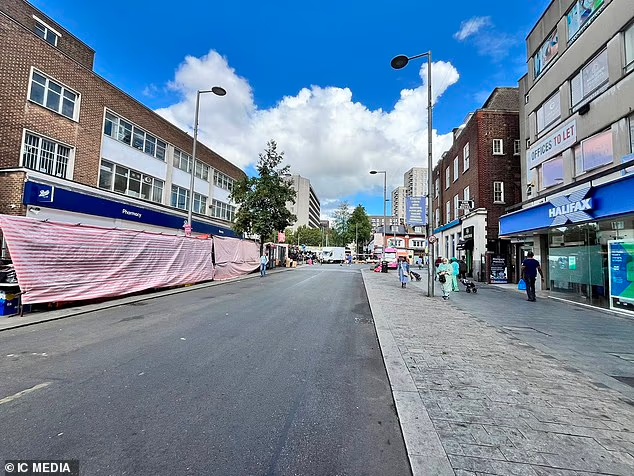
The London borough of Barking and Dagenham has been named the least friendly place in the UK - and residents and traders in Barking, with one of its main streets shown, are unhappy

It has just been branded the unfriendliest place in the UK – and people living for years in the ‘miserable’ east London town of Barking say they agree.

One grandmother told the Daily Mail she expected not to be helped but instead robbed, should she collapse – and advised others to best ‘keep yourself to yourself’. 

The London borough of Barking and Dagenham has the unenviable ranking in a new study drawing on government data from a community life survey.

The area might have given the world football stars such as Barking’s Sir Alf Ramsey, Bobby Moore and John Terry as well as EastEnders actor Ross Kemp, singer-songwriter Billy Bragg and Lord Carey, former Archbishop of Canterbury.

Advertisement

Meanwhile, Dagenham’s celebrity count includes former Ford Dagenham car plant clerk and later Eurovision winner Sandie Shaw, comedy legend Dudley Moore and TV personality Stacey Solomon.

Yet locals suggest Barking and Dagenham is on the decline – and while some still have hope and pride for the area, others agree with the gloomy new findings. 

This latest report measures how often people chat to neighbours, how lonely they feel, local pride and levels of participation in civic life.

Next up, in order, on the ‘unfriendly’ list are Stoke-on-Trent, then Ashfield and Mansfield – both in Nottinghamshire – before Ipswich in fifth.

Advertisement

The London borough of Barking and Dagenham has been named the least friendly place in the UK – and residents and traders in Barking, with one of its main streets shown, are unhappy

Others, however, have spoken about the positive elements Barking does have to offer - with stores such as this still trading on the streets

Others, however, have spoken about the positive elements Barking does have to offer – with stores such as this still trading on the streets

In contrast, the friendliest place in England was named as the Isles of Scilly, followed by South Hams in Devon, then West Devon, Derbyshire Dales and Richmond-upon Thames in south-west London.

Advertisement

The labelling of Barking came as little surprise to Martha Davis, a grandmother in her late 60s who has lived there for 28 years but spoke of its downturn – and her fears.

She said: ‘Absolutely it’s unfriendly. They spit in your face rather than talk to you.

‘Keep yourself to yourself – best thing to do in Barking.

‘I’m in and out, I wouldn’t spend the whole day here. There are pickpockets – the place is dying.

Advertisement

‘It’s terrible. I feel unsafe. People are so miserable. If I collapsed I think someone would rob me.’

While many the Daily Mail spoke to spoke up for their area, plenty criticised ‘miserable’ and uncommunicative residents for hardly helping its feel and reputation.

The unfriendliness findings come from an Independent Commission on Community and Cohesion study using data from the Government’s Community Life Survey. 

Barking has plenty of history - and famous names born and bred there - though there are concerns amid its main high streets and surrounding areas about more 'miserable' people

Barking has plenty of history – and famous names born and bred there – though there are concerns amid its main high streets and surrounding areas about more ‘miserable’ people

Advertisement

The area scored eight out of 100 on the National Conversation’s ‘connection barometer’. 

Ten per cent of locals say they feel lonely ‘often or always’ and only 21 per cent said they could trust their neighbours.

It is a view shared on the street where residents fear being spat on or attacked.

Omar Mukhtar, 40, who has been in Barking for 23 years, said: ‘It depends on your aura.

Advertisement

‘You can interact with anyone. People are approachable – they could smash your face but also ask for directions.’

Local resident Faysal Khan, who has lived in Barking for six years, said: ‘Yes and no on whether it’s unfriendly.

‘It depends on the person basically. People are chatty, every kind of people you find in Barking. Some people are good as gold.

‘I go with the flow – I just try and listen to others instead of debating.’

Advertisement
Barking resident Omar Mukhtar, 40, told of the contrasts in how people you approach behave

Barking resident Omar Mukhtar, 40, told of the contrasts in how people you approach behave

Cafe worker Sally O’Brien, 44, said: ‘Our customers are lovely, but the average person out there isn’t.

‘There’s a fear of what might happen. People are rude and obnoxious.

‘The community has gone as well really. People don’t know each other. It’s a lost area.

Advertisement

‘People don’t even smile. They constantly spit out there or they’re on their phones.

‘Our cafe is very friendly but being out there is like another world.’

Martin Whitting, 44, who has run an ice cream van in Barking for several years, said in response to people in Barking being unfriendly: ‘It depends really. If they can speak English and communicate, then it’s a good community.

‘There’s lots of drugs and that’s the trouble. It’s a nice place but a bit unpredictable. You never know what you’ll get.’

Advertisement

Janice, a woman in her 40s, said: ‘It’s just weird – Some people are polite but everywhere I go it is bad mental health: Barking is bad for mental health. People don’t smile. They don’t speak.’

Ice cream van man Martin Whitting called Barking 'nice' yet also 'a bit unpredictable'

Ice cream van man Martin Whitting called Barking ‘nice’ yet also ‘a bit unpredictable’

Adnan Tariq, a shopkeeper in Barking for 14 years, said: ‘Maybe yes, maybe no. I’m not going to say everyone is horrible.

‘If you walk around, you’ll see yourself people are nice.

Advertisement

‘What you hear and what you see are different – I’m pretty sure there are worse areas than Barking.

‘Barking used to be a bit trickier but a few years passed by and it’s getting better now.

‘There used to be gangs, but they’ve removed bad council estates and they’ve cleaned up Barking.’

Dave Parsons, 45, a delivery driver, felt people were often rude, adding: ‘I think it’s the area that gets people down. They probably don’t think they’ve done well if they’re here.

Advertisement

‘I get a lot of people who simply don’t say thank you – it’s sad really but I am used to it now.’

The National Conversation is run by the Conservative ex-Home Secretary Sir Sajid Javid and former Labour policy coordinator Jon Cruddas – himself a former MP for Dagenham between 2001 and 2024.

Adnan Tariq, a shopkeeper in Barking for 14 years, spoke up for the town - insisting it had improved in recent years and he was 'pretty sure there are worse areas'

Adnan Tariq, a shopkeeper in Barking for 14 years, spoke up for the town – insisting it had improved in recent years and he was ‘pretty sure there are worse areas’

Organisers say it aims to help better understand the country’s state of connection and cohesion to create a vision for how people can live well together. 

Advertisement

The foreword from its first report published last year claimed that ‘communal life in Britain is under threat’ due to declining infrastructure and institutions, a loss in trust in those institutions, growing inequality and chronic neglect from policymakers.   

It also identified threats causing social disconnection such as the mismanagement of immigration, cost of living pressures and social media-driven extremism.

The commission warned the results show that the UK was ‘sitting on a tinderbox of disconnection and division’.

Mr Cruddas said: ‘I nearly choked on my cornflakes when my old area came rock bottom. 

Advertisement

‘I think government stats miss a lot of what really makes an area tick, including my old town. 

‘But that’s why we have developed it, to spark a conversation – because what we really want is your view on your area.’

The areas ranking the most and least friendly in the UK

Top 10 ‘most friendly’ areas

  1. The Isles of Scilly
  2. South Hams
  3. West Devon
  4. Derbyshire Dales
  5. Richmond upon Thames
  6. Stratford-on-Avon
  7. Stroud
  8. Rutland
  9. Winchester
  10. Lewes

Top 10 ‘least friendly’ areas 

  1. Barking and Dagenham
  2. Stoke-on-Trent
  3. Ashfield 
  4. Mansfield 
  5. Ipswich 
  6. Walsall 
  7. Brent 
  8. Sandwell 
  9. Thurrock 
  10. Crawley

Source link

Advertisement
Continue Reading
Click to comment

You must be logged in to post a comment Login

Leave a Reply

NewsBeat

Sandra Bullock’s devastating SIX YEARS in hiding: Insiders reveal actress was so ‘lonely and scared’ that her ‘personality changed’… and how ALS death of partner Bryan at 57 nearly ruined her

Published

on

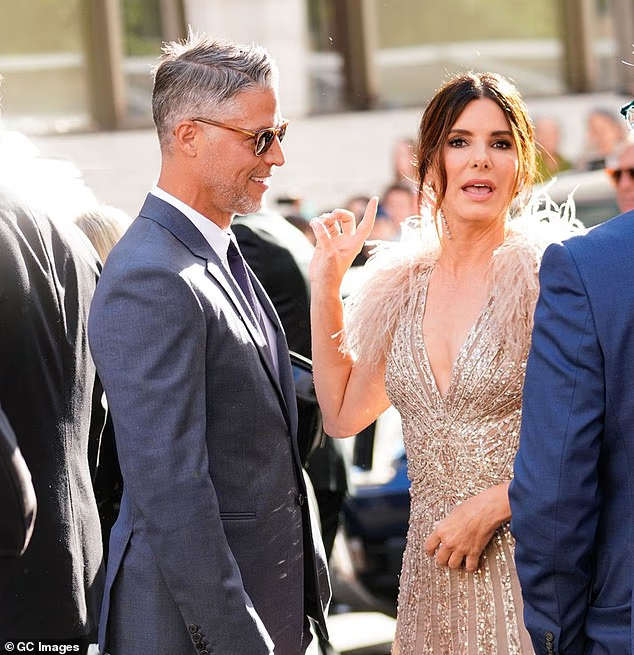
Pictured in 2018: Sandra Bullock, 62, has opened up about the passing of her partner, Bryan Randall, following his three-year battle with amyotrophic lateral sclerosis (ALS)

Three years after the tragic passing of Sandra Bullock‘s longtime partner Bryan Randall from the degenerative condition ALS, the beloved Hollywood star has finally begun to open up about Randall’s ‘traumatic’ diagnosis and her journey through grief.

It is a welcome shift for Bullock, who, up until her appearance on pal Jason Bateman’s Smartless podcast this week, had been on an almost total disappearing act for the last two years. 

The Oscar-winning actress, 62, and mother of two had practically dropped off the radar after Randall’s death, only recently making public appearances to promote her upcoming film Practical Magic 2.

Indeed, the sequel to the 1998 cult classic film – which will mark Bullock’s first leading feature role in four years – has arrived at a time when Bullock finally feels ready to open up about Randall’s death, sources told the Daily Mail.

Advertisement

‘Sandra is finally doing better, which is why she made Practical Magic 2,’ the first insider said.

‘She felt it was time to talk about Bryan, like it is okay now. She doesn’t mind opening up about him, as she wants to honor him in the best way with sweet memories,’ they said. 

Pictured in 2018: Sandra Bullock, 62, has opened up about the passing of her partner, Bryan Randall, following his three-year battle with amyotrophic lateral sclerosis (ALS)

Advertisement

It was August 2023 when Randall, a former model and photographer, succumbed to the fast-progressing nervous system disease at 57, his family revealed in a statement at the time.

For Bullock, the three years she spent caring for her long-term partner, who was diagnosed with ALS amid the Covid-19 pandemic, were marked by ‘pretty dark’ periods of isolation, she shared. 

‘Sandra really closed herself off when Bryan got sick, she was all about him and her kids. Her personality changed too, the laughs stopped coming. She was a much more serious person,’ the source continued.

The couple, who met in 2015 when Bullock hired him to photograph her son Louis’ birthday party, had already been together for five years and raised her two adopted children together at the time of his diagnosis.

Advertisement

But Randall’s desire to keep his deteriorating health private left Bullock feeling ‘isolated,’ between organizing his medical care and parenting her kids during the pandemic.

‘During Covid, Sandra was really scared. She was always isolated and lonely during that period and the couple of years that followed,’ a second insider told the Daily Mail.

Bullock confided in her sister, Vermont-based pastry chef Gesine Bullock-Prado, and her sister’s husband, storyboard illustrator Ray Prado, who she said were the only people who ‘knew for a while’ about Randall’s diagnosis.

Eventually, Bullock said she also informed Hollywood pal Jennifer Aniston, along with Bateman and his wife Amanda Anka, about her partner’s condition. 

Advertisement
Randall, a former model and photographer, met Bullock in 2015 when he was hired to photograph her son's birthday party. The source said her children referred to Randall as 'dad'

Randall, a former model and photographer, met Bullock in 2015 when he was hired to photograph her son’s birthday party. The source said her children referred to Randall as ‘dad’

Pictured in 2018: Bullock said she felt 'isolated' as Randall was diagnosed with ALS during the Covid-19 pandemic

Pictured in 2018: Bullock said she felt ‘isolated’ as Randall was diagnosed with ALS during the Covid-19 pandemic 

Despite being ‘very close’ to her sister, however, the source acknowledged that Bullock was still ‘pretty isolated’ during that time.

It likely didn’t help matters that Randall had become an important ‘father figure’ to Bullock’s two adopted kids, son Louis, 16, and daughter Laila, 12.

Advertisement

The actress became a first-time mom in January 2010 when she adopted three-month-old Louis, and again in December 2015 when she adopted two-year-old Laila. 

Bullock was previously married to motorcycle builder Jesse James in 2005, though their marriage ended in a highly publicized divorce in 2010 after it was revealed James had cheated.

Randall marked Bullock’s first serious, public relationship since the devastating divorce, as she shared on the podcast that her daughter saw Randall as ‘a father figure.’ He also has an adult daughter named Skylar from a previous relationship.

‘Bryan was an extremely nice person,’ the second source added.

Advertisement

While Bullock and Randall were never legally married, the Daily Mail exclusively revealed the pair exchanged ‘vows’ on the beach in the Bahamas back in 2017.

Three years after his death, some fans may now be left wondering how Bullock will be able to move on from the tragic loss of her life partner, who she previously described as the ‘love of [her] life’ in 2021. 

Bullock is set to make her long-awaited return to the big screen with the September release of Practical Magic 2, her first feature film role in four years (pictured in April 2026)

The source said Bullock is 'finally doing better' and 'felt it was time' to talk about Randall's death (pictured April 2026)

The source said Bullock is ‘finally doing better’ and ‘felt it was time’ to talk about Randall’s death (pictured April 2026)

Advertisement

But it appears that part of Bullock’s healing journey includes returning to work, as she’s set to make her return to the big screen this September with Practical Magic 2.

The Daily Mail previously reported that Bullock, who hadn’t starred in a movie since the 2022 adventure-comedy The Lost City, would make her long-awaited return to acting ‘in her own time and on her own terms,’ especially if there was a project she couldn’t pass up.

Back in April, Bullock surprised fans when she made her debut on Instagram, sharing behind-the-scenes photos and videos from the Practical Magic 2 set. She has also slowly begun to re-enter the public eye, attending events like CinemaCon with Kidman last April and appearing on Bateman’s podcast. 

While the first insider suggested that Bullock may feel a little ‘awkward’ diving back into Hollywood after her years-long hiatus, the star’s return to the spotlight is a welcomed change for fans.

Advertisement

‘She has to do press again, which she has not done in a while, so that is awkward for her,’ they said. ‘That is why she started her Instagram page. Everyone was like, “You have to do it.”‘

The Daily Mail has contacted representatives for Bullock for comment.

Source link

Advertisement
Continue Reading

NewsBeat

Social media companies ‘endangering’ society by failing to remove content depicting illegal activity

Published

on

Belfast Live

The incident has drawn commentary about videos of children driving dangerously circulating on social media platforms

Social media companies are “endangering” society by failing to remove content depicting dangerous and illegal activity, a government minister in the Republic has said.

Advertisement

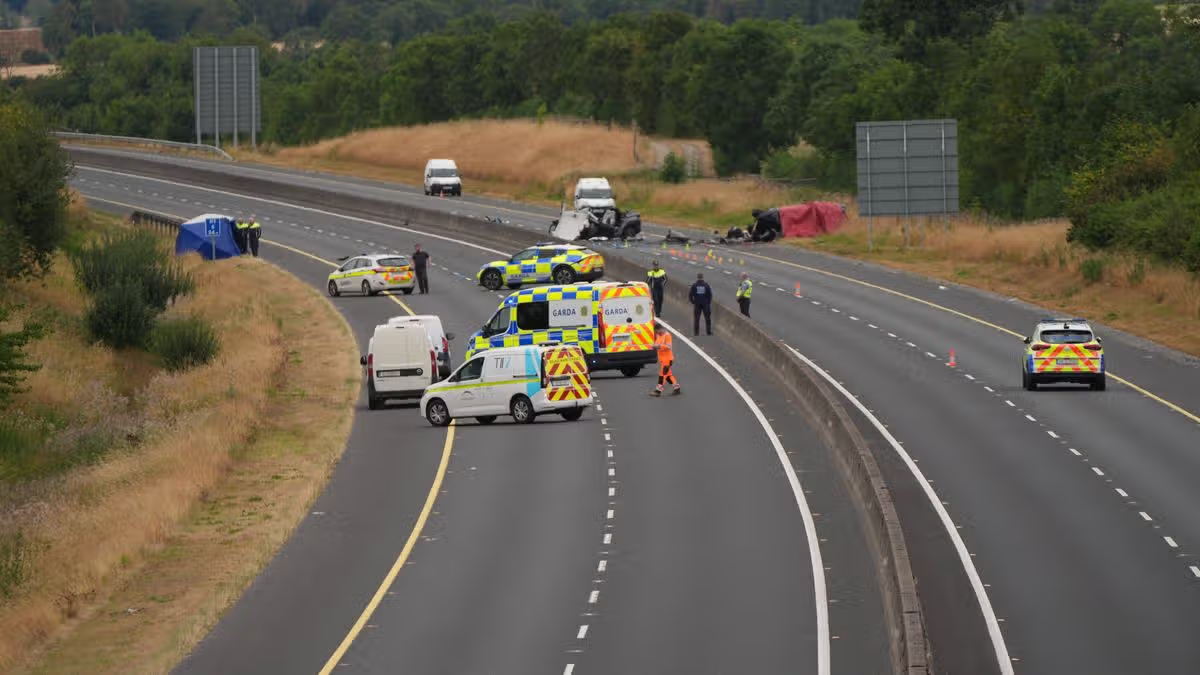
There has been increased attention on social media regulation in the week after five teenagers died when the car in which they were travelling the wrong way down the M9 motorway collided head-on with another vehicle, seriously injuring three women and a boy in the same family.

There was further tragedy on Sunday in England when two men and three teenagers died when their car travelling the wrong way down the A66 crashed and killed two police officers.

The two brave policemen, PC Matthew Blades, 37, and PC Tom Clough, 38, were killed when their patrol car was hit. Now Cleveland Police have released the names and ages of those who died in the VW Passat.

They are: Michael Robert Cahill, 23, Theo Rae, 17, Cole Robert Worthy, 16, Jacob Matusiak, 23, and 18-year-old Makai Saddington. A police spokesman said: “Family Liaison Officers are continuing to work with the families all of those who sadly lost their lives in the collision. “

Advertisement

The M9 incident in the Republic has drawn commentary about videos of children driving dangerously circulating on social media platforms. The Republic’s Enterprise Minister Peter Burke said social media companies have a “very significant responsibility” to ensure that they are moderating dangerous content.

Mr Burke told RTÉ’s This Week: “We’ve seen how many people have been let go from social media companies over the last number of months, and yet this content keeps appearing.

“This moderated content is not properly taken down on time – which is not good enough. I’ve always been very clear on this: Irrespective of what money the State ever takes in terms of tax receipts from any company or social media companies, that our children are most precious and most important in any society and they always come first.

Advertisement

“And Government will never, ever, ever be behind in taking action on our social media companies when they endanger our society like they are doing in this case.”

After the M9 crash, funerals were held for teenagers Joe Carthy, Alex McCarthy and Kamil Pustkowski on Friday, while services for Jeremy O’Brien and Jack Kennedy will be held on Monday and Tuesday. A child and three women from the same family, who were in the other car, were taken to hospital for treatment of serious injuries.

Ella Hendricken and Niamh and Alma Kinsella were travelling with the child to the airport for a holiday. A vigil in support of the family took place in Carlow on Friday, while an online fundraiser had raised 730,000 euro by lunchtime on Sunday.

Advertisement

For all the latest news, visit the Belfast Live homepage here and sign up to our daily newsletter here.

Source link

Continue Reading

NewsBeat

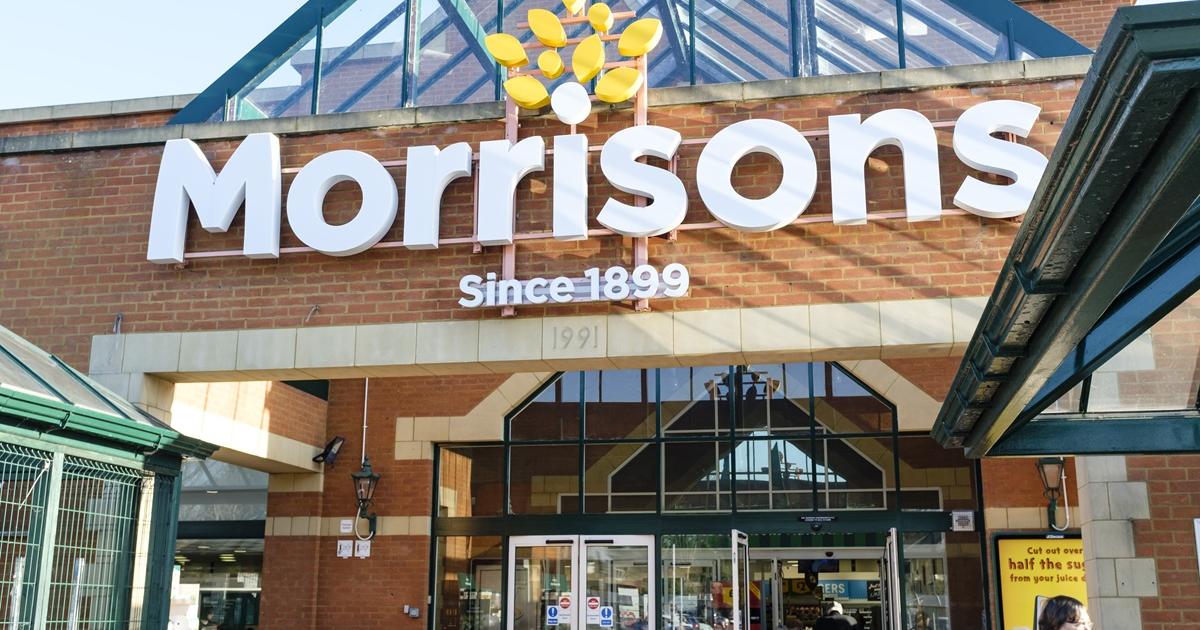
Morrisons promises not to be beaten on price by rivals

Published

on

Morrisons promises not to be beaten on price by rivals

The pledge covers more than 500 essential items and forms part of the retailer’s latest strategy to win back shoppers in the highly competitive UK grocery market.

The Bradford-based supermarket chain, which operates around 500 stores and 1,700 convenience outlets, has seen its market share decline in recent years.

In the 12 weeks to August, Morrisons held an 8.5% market share, according to Worldpanel, placing it behind Tesco, Sainsbury’s, Asda, Aldi, and Lidl.

Advertisement

Morrisons has since launched its new “unbeatable prices” promise, ensuring that customers will not pay more for selected items than they would at any of its five main competitors.

Alex Paver, customer and marketing director at Morrisons, said: “Customers shouldn’t have to choose between great prices and great quality – and at Morrisons, they don’t have to.

“Our unbeatable price commitment means customers can trust that the prices on these products simply won’t be beaten by Asda, Tesco, Sainsbury’s, Aldi or Lidl.

“And uniquely at Morrisons, that unbeatable value comes alongside the quality, freshness and expert service we’re famous for – from bread baked fresh in store to food prepared by our skilled Market Street colleagues.”

Advertisement

The price promise covers a range of fresh produce, including bananas, tomatoes, and carrots, as well as everyday staples like bread, butter, and chicken fillets.

It also applies to fresh food prepared at Morrisons’ Market Street counters, including products from its in-store fishmongers and bakeries.

The move comes two years after Morrisons launched a price match scheme against Aldi and Lidl in an effort to stem customer losses to the German discounters.

Advertisement

It also follows recent financial disclosures revealing that the retailer cut nearly 5,000 jobs last year as part of wider efforts to stabilise the business and improve performance.

What supermarket do you shop at? Let us know in the comments.

Source link

Advertisement
Continue Reading

NewsBeat

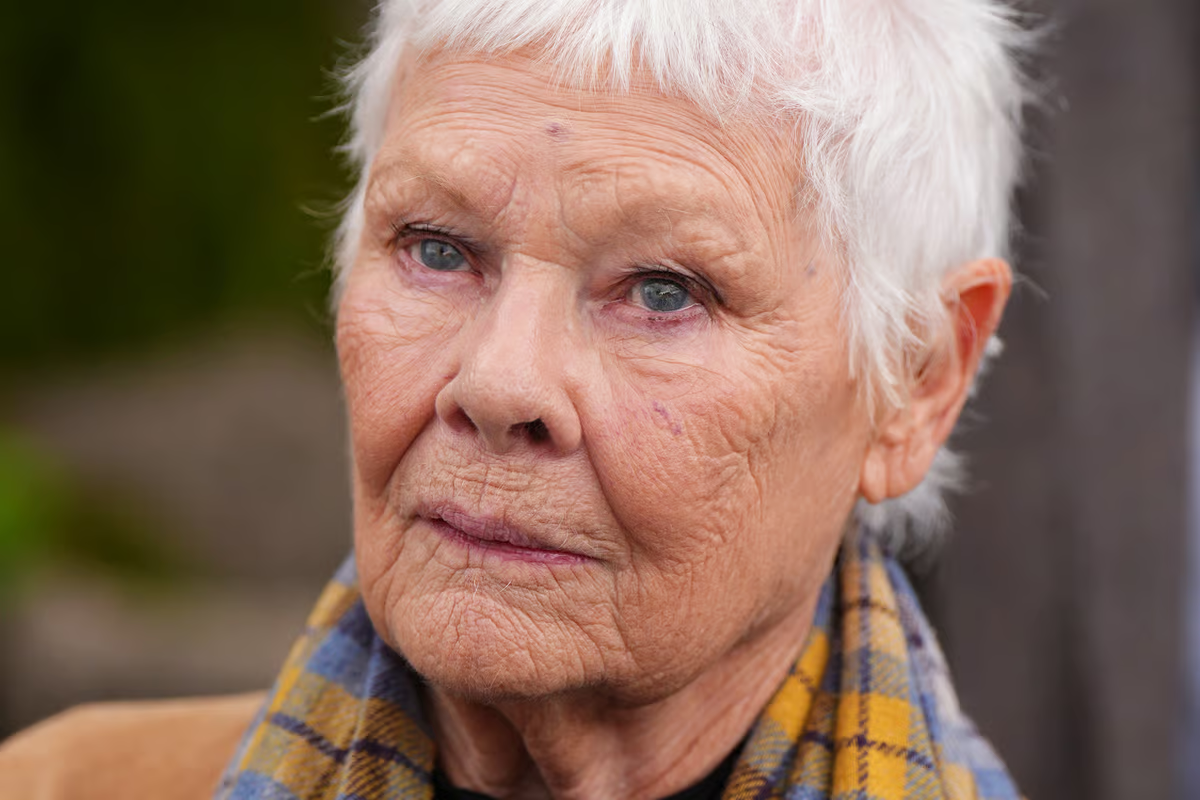
Dame Judi Dench wants people to be able to ‘live authentically as themselves’

Published

on

Dame Judi Dench wants people to be able to ‘live authentically as themselves’

Speaking about whether she believed their discussion could impact people around the world, she said: “It’s a private matter, but nobody should ever feel that they can’t intrinsically be themselves, but also nobody should be made to feel that they have to declare anything about themselves, sexuality, religion, their age, nothing.

Source link

Continue Reading

NewsBeat

Shein aims for almost $27bn valuation in stock market debut

Published

on

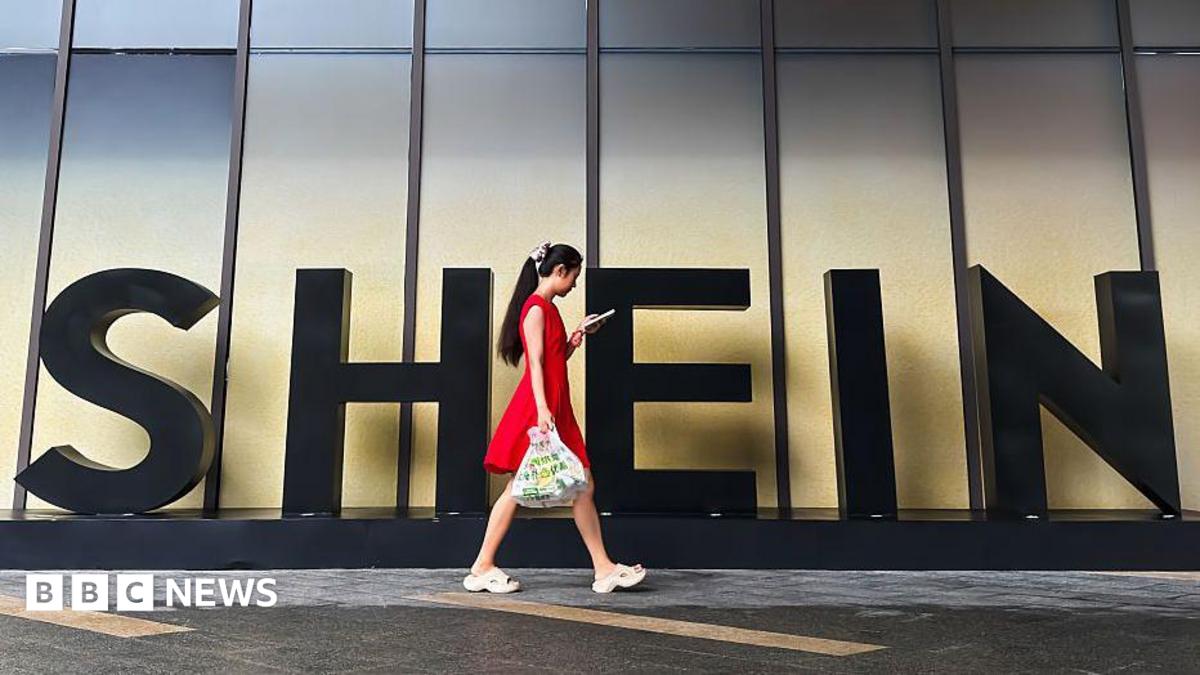
A woman in a red dress looks at her smartphone while walking past a Shein sign outside the company's office in Guangzhou, China.

Fast-fashion giant Shein says it plans to raise up to HK13.86bn (£1.3bn; $1.77bn) when its shares start trading on the Hong Kong stock market on 1 September.

In a filing on Monday, external, Shein said it will offer nearly 280 million shares for between HK$47.60 and HK$49.50.

At the top of the range, it would value the firm at almost $27bn (£19.8bn). But that is much lower than the $100bn valuation it reached in a round of private fundraising in 2022, reflecting weaker sales growth and higher costs.

The long-awaited move comes after failed attempts to list in the US and London due to regulatory challenges amid scrutiny of Shein, which has its headquarters in Singapore but was founded in China.

Advertisement

The initial public offering (IPO) is being backed by Wall Street investment giants Goldman Sachs, Morgan Stanley and JP Morgan.

In July, Shein said it had swung to a quarterly loss as its sales slowed after US President Donald Trump removed an import duty exemption on small packages.

The company said it lost $99m in the first three months of the year, compared with a net income of $395m a year earlier.

It also came as uncertainty remains over the tit-for-tat US-China tariffs wars, which is currently paused.

Advertisement

“In response to the increased duties and taxes, we are pursuing a wide range of options, including increasing our prices in the US market to offset a portion of the increased costs,” Shein said at the time.

The company also said the Iran war had hit demand, increased costs and caused delays of deliveries in some markets.

The first-quarter figures also partly reflected a paper loss of $328m due to an accounting change for special investor shares. The shares can be turned into ordinary stock later, and their value can change before a listing.

Since it was founded in 2008, Shein has risen to become one of the world’s biggest fast-fashion retailers, with customers in more than 150 countries.

Advertisement

The e-commerce giant is known for selling ultra-cheap clothes, backed by a vast network of factories in China that are able to quickly manufacture new products based on the latest trends.

Its revenue has far outstripped rivals like H&M and Zara.

As of the end of March 2026 Shein had 281 million active customers – a rise of more than 16% on a year earlier – who placed a total of more than one billion orders.

But Shein’s fast-fashion business has faced concerns over its environmental impact, and allegations of forced labour in supply chains. Shein has previously told the BBC it has a “zero tolerance for forced labour”.

Advertisement

Its attempt to go public on the London Stock Exchange collapsed after the company came under scrutiny over its refusal to answer questions about its supply chain practices.

Source link

Continue Reading

NewsBeat

The Duskbloods Network Test review – FromSoftware offers multiplayer vampires

Published

on

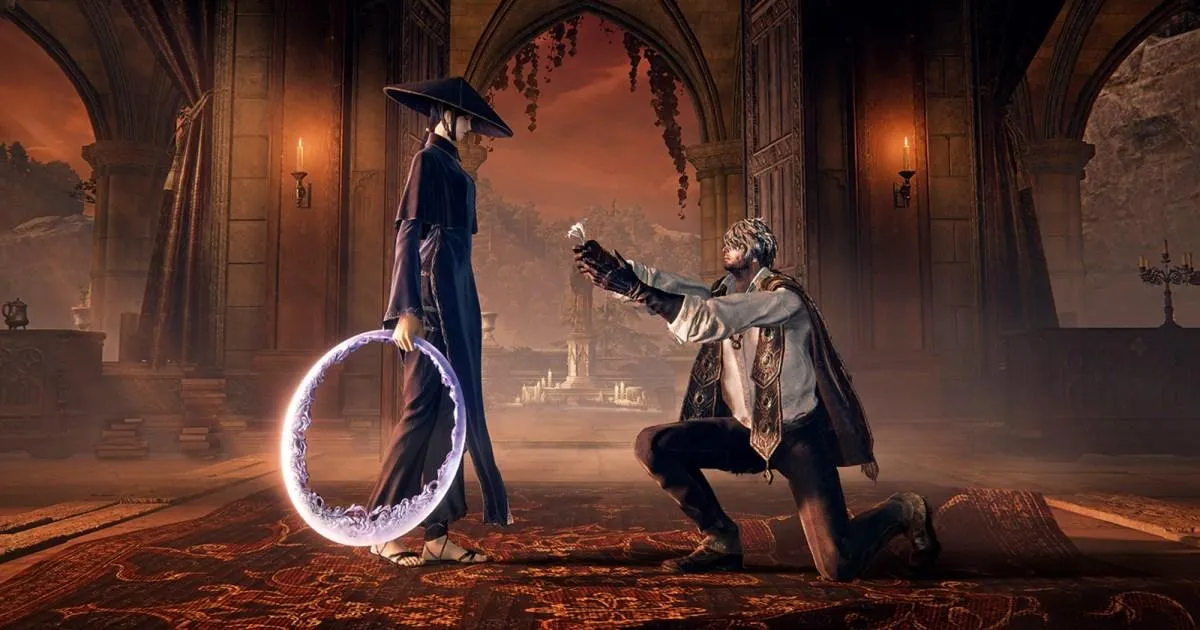
The Duskbloods Network Test review - FromSoftware offers multiplayer vampires
A big proposal (Nintendo)

GameCentral dives into FromSoftware’s Switch 2 exclusive, where fast-paced Dark Souls combat collides with a knockout tournament.

FromSoftware’s pantheon of classics are primarily thought of as single-player experiences, but the majority have at least some form of multiplayer. Across Dark Souls and Elden Ring, you can summon others to assist you with bosses, engage in competitive fights, or scatter messages across the open world. They are optional features, but these shared elements offer a collaborative struggle which makes their punishing worlds less overwhelming.

Over recent years, FromSoftware has pushed this sense of jolly co-operation to the forefront. Last year, the studio released Elden Ring Nightreign, a flawed roguelike co-op remix of the original. It was an interesting experiment, but as a project not directed by CEO Hidetaka Miyazaki, it didn’t carry quite the same level of prestige as the studio’s best. 

The Duskbloods might share DNA with Nightreign, but the expectation is different. This is a new IP, with Miyazaki in the driving seat, and the studio’s first Nintendo Switch 2 exclusive. FromSoftware titles often have some secrecy to them, but aside from it being geared around multiplayer, The Duskbloods has been almost a complete mystery since it was announced – until the Network Test over the weekend. 

Advertisement

It’s presumably only a small slice of the overall game, to stress test the servers, but this early taste shows off the core gameplay loop. At first glance, The Duskbloods is a familiar brew. The combat fundamentals of past FromSoftware games – a mix of light, strong, long range, and character-specific attacks – are intact, and the burning gothic landscapes of the only map you can play, named Lowanro City, harkens back to Bloodborne’s Yharnam. 

A key difference is the fluidity, and flexibility, in your movement. You can jump as normal with a mere tap, or hold down for a supersized launch into the air, which can be extended with three extra mini-jumps. It’s as if you’re permanently riding on Torrent in Elden Ring, only on two feet instead of four. However, with a complete lack of fall damage (and respawns), you’re bounding around these environments in a more cartoonish, haphazard way compared to the studio’s prior titles. 

Expert, exclusive gaming analysis

Sign up to the GameCentral newsletter for a unique take on the week in gaming, alongside the latest reviews and more. Delivered to your inbox every Saturday morning.

It’s a design choice to remove friction on a semi-large multiplayer map. At its core, The Duskbloods is a competitive – yet occasionally collaborative – knockout competition across multiple phases. Your primary goal is to collect Virtue, which you can gather in various ways; whether by killing enemy players, taking down bosses, wiping out low-level scrubs, or finding offerings from pillars and corpses by exploring the map. 

Advertisement
The Duskbloods screenshot of combat
A fight for Virtue (Nintendo)

If you collect more Virtue than your opponents, you’ll be saved from the ‘culling’ at the end of each phase. Matches start with eight players, but by the final fourth phase, only three remain, who all fight to the death in a small battle arena to determine the winner. 

The overarching structure is simple, but the depth within these parameters is what makes The Duskbloods compelling. You can make a pact with a ‘kin’, which essentially adds a permanent summon to your ranks – ranging from a singing prisoner to a whip-slinging brute. Additionally, while you’re in competition, you can team-up with your fellow players temporarily; whether to take down a difficult ‘trespasser’ boss or to form an alliance, whereby you share your Virtue rewards with another player and are unable to harm them until the final phase. 

There are other layers nestled beneath the surface. You’re trying to level up your Bloodsworn character at the same time as collecting Virtue, to boost your HP and attack power, and to earn more advanced skills for an extra edge. There are Sigils too, which if equipped, will give you a small mini-mission – like taking down a specific player or forming an alliance – that banks more Virtue if successfully completed. 

It’s an ambitious mix of ideas which strives to make competitive fights (almost) optional. Sure, you can wage war against every enemy player you encounter, but your journey to the next phase might be better assured if you join others to take down a boss, or if you avoid other players altogether and farm experience points by heading to one of the points of interest – like the clock tower or nearby cave – to find a particular enhancement. 

Advertisement

At a base level, it’s a fun adaptation of FromSoftware’s bread and butter gameplay and storytelling into a multiplayer setting, with some excellent characters to mess around with. A vampire swordsman named Albert is the default starter, who packs blood sword attacks and a submachine gun. Our personal favourites were Senator Samir Patres, who can assume the form of a dinosaur and charge foes, and Zork, a Bioshock-esque diver who can barrel across the landscape with a jetpack. 

Between its accelerated speed and zany abilities, The Duskbloods has the energy of a chaotic mod laced over FromSoftware’s stunning art direction and world design. In truth, after several hours in the Network Test, we’re still not sure how we feel about it. It’s undeniably enjoyable, but whether it has any staying power will take much longer than these few days to determine.

A Network Test was never going to provide the full picture, but we are intrigued by the missing details. Miyazaki has promised comprehensive amounts of story tied to the hub area you inhabit between matches, along with character customisation, additional maps, and a new fourth phase where you team up to kill a new boss, instead of each other. If it can meaningfully integrate story progression around its concept, or provide some other cogent incentive, The Duskbloods could be an enticing and fresh proposition in the multiplayer arena. 

If any studio were to innovate when it comes to narratives in multiplayer games, FromSoftware is the safest bet  – but right now The Duskbloods is still too vague a proposition to truly quantify. It’s frantic, unashamedly silly, and unlikely to win over anyone who hasn’t chimed with the studio’s previous PvP work, but it’s a long time since From has made an actively bad game and this doesn’t look likely to break that chain.

Advertisement
Two characters in The Duskbloods
Team up with your kin (Nintendo)

Email gamecentral@metro.co.uk, leave a comment below, follow us on Twitter.

To submit Inbox letters and Reader’s Features more easily, without the need to send an email, just use our Submit Stuff page here.

For more stories like this, check our Gaming page.

Advertisement

Source link

Advertisement
Continue Reading

NewsBeat

The 120-year-old history behind the Rivington parking row

Published

on

The 120-year-old history behind the Rivington parking row

Between comments from visitors, comments from businesses, and comments from politicians, the plans have proved extremely controversial.

But one point keeps cropping up – one that takes us more than a century back into the history of Rivington Estate and its surrounding areas.

This is the history of William Lever, 1st Viscount Leverhulme, and the park he granted for locals to use, free of charge, in perpetuity.

Rivington Reservoir (Image: Gillian McGowan)

A gift

William Lever was born in Bolton in 1851, making his fortune in the soap trade as a founder of Lever Brothers – now better known as the international conglomerate Unilever.

Advertisement

A local lad, the soon-to-be Viscount Leverhulme retained strong ties to his hometown despite his expansionist and occasionally globetrotting tendencies. This led him to purchase the Rivington Estate in 1899/1900 for a sum of £70,000 – more than £8,000,000 in 2026 currency.

The estate afforded the Viscount around 2,100 acres of private land on which to indulge himself. This was, apparently, more than he felt he needed, as, in 1901, only two years after the initial purchase, he wrote to then Mayor of Bolton John Miles to offer 400 of those acres for use as a public park – absolutely free.

What’s more, the park would be developed and maintained entirely at William Lever’s expense.

Not one to look a gift horse in the mouth, Mr Miles gladly accepted this gracious gift, doing so on behalf of the people of Bolton.

Advertisement

It was to these people whom Lord Leverhulme intended to act as benefactor, etching it into the stone pillars of the park’s entranceway to act as an eternal reminder: “For the benefit of the citizens of his native town and neighbourhood.”

Water Wars

The reservoirs work by gravity – each one cascades into the one below it (Image: Derek Cartwright)

Perceptive visitors to Rivington may have noticed the area is not just comprised of land, this being due to the presence of several quite large bodies of water.

These are, of course, the Rivington reservoirs, constructed in the 1850s using then-state-of-the-art technology to supply water to the bustling port city of Liverpool.

It was Liverpool Corporation – now Liverpool City Council – that offered the first challenge to Lord Leverhulme’s dream of a perpetually free and perpetually open public park.

Advertisement

This was because they owned the reservoirs around which the park was built.

Despite previously declining an opportunity to purchase the land themselves, Liverpool Corporation changed their minds when they saw Lord Leverhulme had decided to purchase it for himself, going so far as to promote a parliamentary bill to acquire the land compulsorily on the grounds of watershed protection.

Lever, of course, contested this, resulting in an Act of Parliament, passed on May 30, 1902, which, although granting Liverpool Corporation some of the land for the protection of the water supply, also granted Lord Leverhulme the right to build his park.

This act – the Liverpool Corporation Act 1902 – stated the owner of the land would:

Advertisement

“Permit [Lord Leverhulme] at his own expense to lay out the said lands as a public park herein-after described as “Lever Park” for the use and enjoyment of the inhabitants of the county borough of Bolton and generally of the public for ever… and generally to form, lay out, and deal with Lever Park as may appear to him to be desirable in order to secure their free and uninterrupted enjoyment by the public.”

Rivington Reservoir (Image: Derek Cartwright)

“In accordance with Lord Leverhulme’s wishes”

In 1974, stewardship of Lever Park passed into the hands of the North West Water Authority, the predecessor organisation of what we know today as United Utilities.

It was 23 years later, in 1997, that North West Water would make its first attempt to introduce car parking charges in the area via the Lever Park Bill.

This bill would also have increased the group’s freedom to manage the park, set up a management trust, and extended the management area boundary to include the terraced gardens.

Advertisement

It would be an understatement to say this was controversial. Detractors, including the 5,807 signees of a petition dedicated to fighting the bill, believed it gave North West Water too much power. They were concerned not only with parking charges, but entry fees and changes to its landscape and layout.

The petition ended with the following request: “Wherefore your Petitioners pray that your honourable House reject the Lever Park Bill in order to preserve free access to the park for the public, in accordance with Lord Leverhulme’s wishes.”

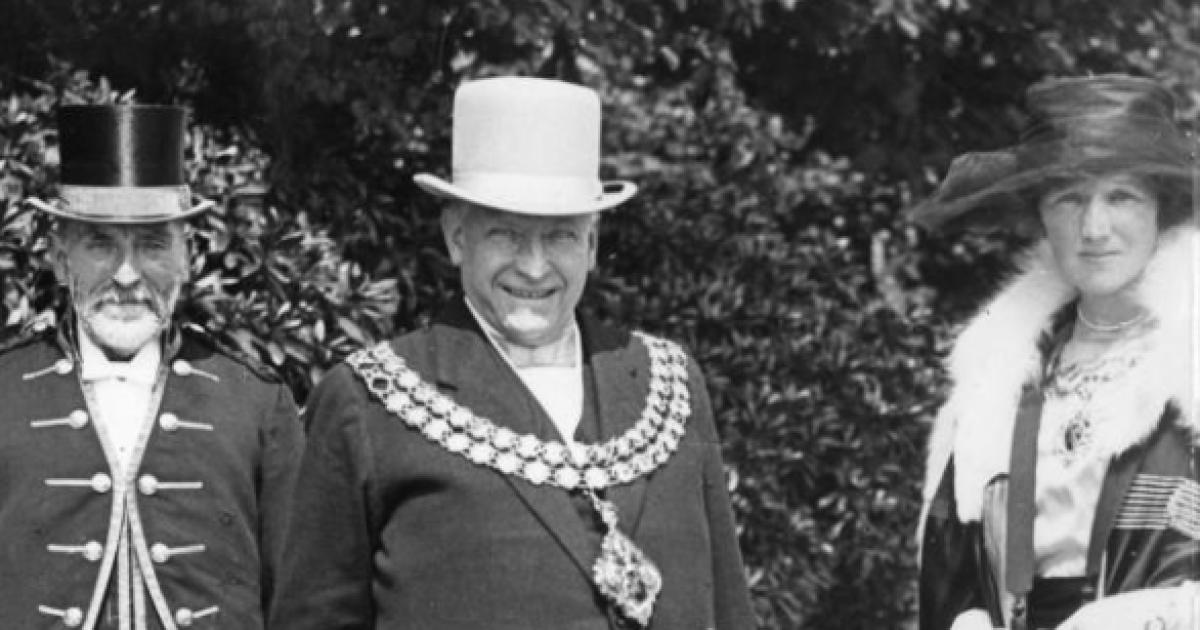
Lord Leverhulme talking to a group (Image: Martini)

Den Dover, then MP for Chorley, was incensed enough to cancel a trip to Brussels, allowing him to personally speak on the bill’s opening in the House of Commons. In his speech, he referenced the 1902 Liverpool Corporation Act:

“We object because Lord Leverhulme, who established the Unilever empire, gave that land, and did not want it commercialised or entry or parking charges made. The Bill’s spirit is to over-commercialise the park. I am against such commercialisation–which is appropriate at Park Hall but not at the heritage site left by Lord Leverhulme, whose wishes we should honour.”

Advertisement

At the end of July of this year, United Utilities – the successor of North West Water – submitted a planning application for “eight number plate recognition cameras and four payment machines” at various locations around Rivington Reservoir.

Unsurprisingly, Lord Leverhulme has figured heavily in much of the public and political reaction to this.

Horwich Cllr David Grant said: “In 1902, Lord Leverhulme gifted Lever Park to the people of Bolton for free, open-air recreation. Under subsequent acts, maintaining the estate was explicitly meant to be covered by the water authority as part of their landowning duties.”

United Utilities, however, maintain the potential charges are for the good of the park.

Advertisement

Rivington Reservoir at a distance (Image: Derek Cartwright)

A spokesperson said: “Funds generated from car parking will be ringfenced and used to support improvements such as the creation of new car parks and refurbished car parks with bay marking, upgraded footpaths and signage, new toilets, new visitors centre, restoration of heritage assets including Liverpool Castle, the creation of education and engagement spaces and on-site staff who can help manage visitors, improve safety and protect the landscape.”

Debate is currently raging around the proposals. But, despite dying over a century ago, it seems at times as though Lord Leverhulme’s voice still rings the loudest.

Source link

Advertisement
Continue Reading

NewsBeat

What if our cities were designed for wildlife as well as people?

Published

on

What if our cities were designed for wildlife as well as people?

On a warm evening in May, swifts scream over rooftops, chasing insects above the traffic. A fox slips along a garden wall while gulls squabble on a supermarket roof. We tend to treat these animals as visitors. But they’re residents too, living alongside us in places designed for people.

My recent research argues this needs to change. Instead of asking how nature can make cities better for humans, urban planners should consider what cities owe the many species that already live in them.

More than half the world’s population now lives in urban areas, while cities continue to expand into wildlife habitats.

In the UK, swifts provide a distinct example. They nest in gaps under eaves and roof tiles, which can disappear when older buildings are demolished, re-roofed or insulated. UK swift numbers have fallen by around 60% since 1995. In 2021, the species was added to a list of birds at greatest risk of extinction.

Advertisement

The issue isn’t simply how we can make cities greener. It’s who we think cities are for.

For my new study, I compared approaches to incorporating nature into urban planning, including environmental offsetting, sustainable development and nature-based solutions such as green roofs, street trees and wetlands. I also examined cases where governments and courts have given species and ecosystems a different status in decision-making.

The pattern I found was striking. These approaches have become increasingly good at showing how nature benefits people, but much less willing to ask whether other species have interests of their own.

Trees are planted because they cool streets. Wetlands are protected because they can hold floodwater. Parks are funded because they improve our health.

Advertisement

All of those benefits are important. But they can also leave nature looking like a service provider for people. If a tree no longer provides enough shade, or a wetland becomes more valuable as development land, what happens to the argument for protecting it?

This is where the idea of “multispecies justice” comes in. It starts from a different premise, where animals, plants and ecosystems are not simply amenities that provide benefits to people. They are co-inhabitants of places we share.

That changes the question urban planning asks. Instead of only considering what nature can do for us, it asks what responsibilities we have towards the species with which we live.

What would change?

This doesn’t mean turning cities into wildlife reserves. It can involve small changes to decisions that shape urban life.

Advertisement

For example, before restoring a river, planners could consider whether the proposed changes are likely to create conditions in which fish and frogs can thrive. They could then assess the project not only on its effects on flooding or visitor numbers.

A development could be designed around established wildlife routes rather than treating them as obstacles to mitigate later. Environmental assessments could consider what a new road does to the routes used by badgers, bats or other animals, alongside its effects on drainage and emissions. Some places might be left undisturbed during breeding seasons.

There are already examples of governments experimenting with this type of approach. In New Zealand, the Whanganui River was recognised as a legal person in 2017, with guardians appointed to represent its interests. Colombia’s Atrato River was recognised as a subject of rights in 2016, with a similar system of guardianship.

The Whanganui River in New Zealand.
Robert Harding Video/Shutterstock

These cases aren’t straightforward solutions. The rights granted to rivers still have to operate within existing political and legal systems. Research suggests implementation in Colombia has been uneven.

Advertisement

But they illustrate a different way of thinking. Nature doesn’t have to justify its existence solely through the benefits it provides to people.

The idea is also beginning to appear in more conventional urban planning. Barcelona has built green corridors linking parks to the hills beyond the city so that wildlife can move through it.

In the UK, Scotland has become the first nation by law to require swift bricks in new buildings. These hollow bricks contain a nesting cavity and cost roughly £30 each. But its significance is larger than the brick itself. It treats the presence of another species as something that should be considered when we design buildings, rather than as an unexpected problem to deal with afterwards.

In England, efforts to require swift bricks by law were rejected by the House of Lords. The UK government has instead pursued their inclusion through planning policy and development requirements.

Advertisement

A different way of designing cities

None of this makes urban planning simple. Species can have competing needs, and protecting wildlife can sometimes conflict with other environmental or social goals.

A protected predator might threaten a vulnerable population. Preserving a habitat might complicate a development intended to reduce overheating. There won’t always be a simple answer.

But those conflicts already exist. The difference is that they’re often resolved using systems that give human interests the greatest weight. Multi-species justice asks us to make those choices more explicit.


À lire aussi :
Why building nature-centric housing involves a mindset shift

Advertisement

Cities are already shared habitats. The birds nesting in our roofs, the insects in our gardens, the bats above our streets and the organisms in our soils are not simply passing through. They are part of urban life.

The challenge for planners is to decide whether they’ll continue to design cities primarily around human needs, adding nature where it provides a benefit, or begin to treat the flourishing of other species as a legitimate consideration in its own right.

Source link

Advertisement
Continue Reading

NewsBeat

“No excuses” – Cliftonville boss Jim Magilton refuses to blame TIG investment news for Linfield loss

Published

on

Belfast Live

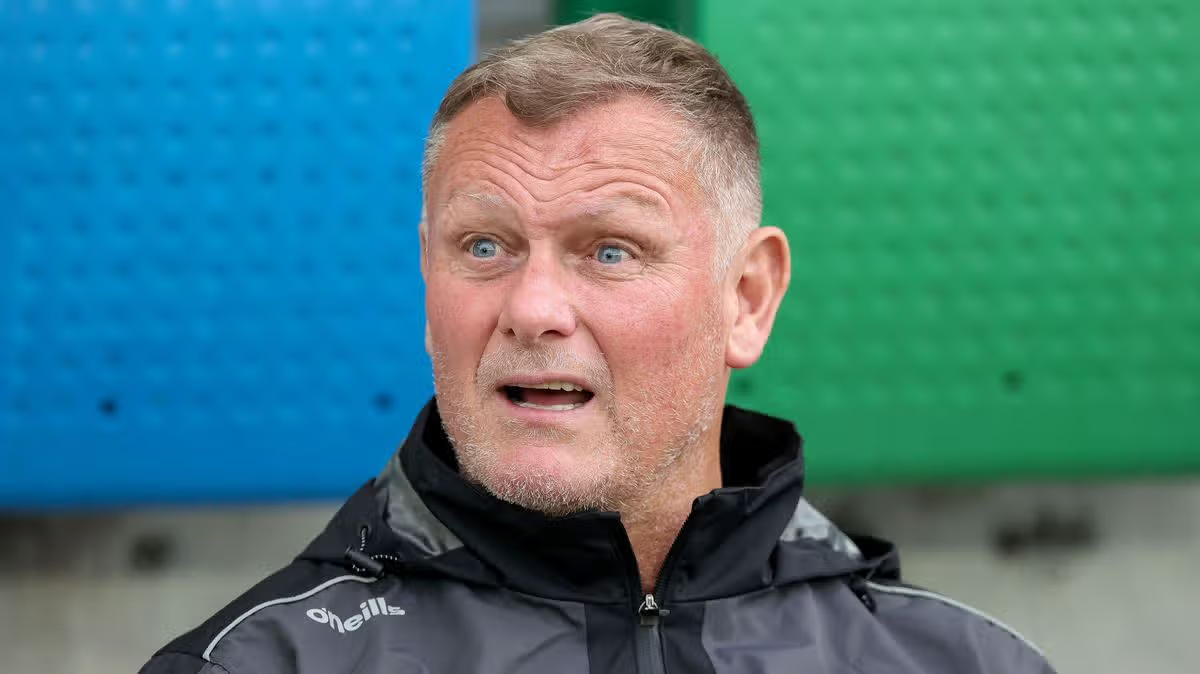
Ethan McGee’s header settled Friday night’s tie in favour of David Healy’s side at Windsor Park on a week when the Toronto Investment Group’s takeover of Cliftonville finally got over the line

Jim Magilton focused on the cloud rather than the silver lining after a momentous week for Cliftonville ended with a 1-0 defeat to Linfield at Windsor Park.

With confirmation of the Toronto Investment Group’s takeover finally arriving after a protracted saga, there is a renewed sense of optimism among many at Solitude, having witnessed far too many players walk out the door to join wealthier rivals.

It should mean Magilton has the opportunity to build something meaningful in north Belfast rather than wheeling and dealing every summer, but in the immediate aftermath of losing to an Ethan McGee header from a corner, the Reds boss was only concerned with the here and now.

Advertisement

When asked if the noise around the club in recent days might have been a distraction for his players ahead of Friday night’s game, Magilton was having none of it.

“I’ve kept them well away from it,” he said. “Obviously, the press… they’re not deaf and they’re not blind. They know the news.

“Everyone has a sense of real optimism around the place and that’s great. But as a football manager and football players, the focus is on the game. You’re not distracted.

“I don’t think I’ve ever been distracted whatever noise is coming off the pitch and I bring that to our players.

Advertisement

“The focus is on the game. Do whatever you have to do.

“They were very clear on their roles and responsibilities, with and without the ball tonight. Set pieces very clear. So there are no excuses.

“I just didn’t think we turned up for large parts of the game.”

The former Northern Ireland star did concede that it was good to finally have clarity on the club’s future, but after a shot-shy performance in south Belfast, he reiterated his opinion that reinforcements are urgently needed to help his squad out.

Advertisement

He added: “The board have worked extremely hard. It’s a members’ decision, TIG have made great noises around the football club and what they want to do with the football club.

“That’s fantastic. But I’m here trying to win football matches and whilst it’s great news for everybody, it’s not great news for me tonight in terms of how I dissect this game because I’m disappointed.

“If we want to be successful here we need players of quality. Last weekend we lost Rhys Campbell, Bayo Fapetu and Lewis Ridd for weeks.

“So that’s three bodies down and we’re still struggling. So that’s a board decision again. I will always look to bring good players in.

Advertisement

“We’re nearing the window closing. So it’s to help the players that we have here.

“The quality that we have brought in, I think, has been very good but we need more.”

Want to see more of the stories you love from Belfast Live? Making us your preferred source on Google means you’ll get more of our exclusives, top stories and must-read content straight away. To add Belfast Live as a preferred source, simply click here.

Click here to sign up to our sport newsletter, bringing you the latest sports news, headlines and top stories

Advertisement

Source link

Continue Reading

NewsBeat

Welsh harbour hotel has lush views over the marina and seafood worth travelling for

Published

on

Wales Online

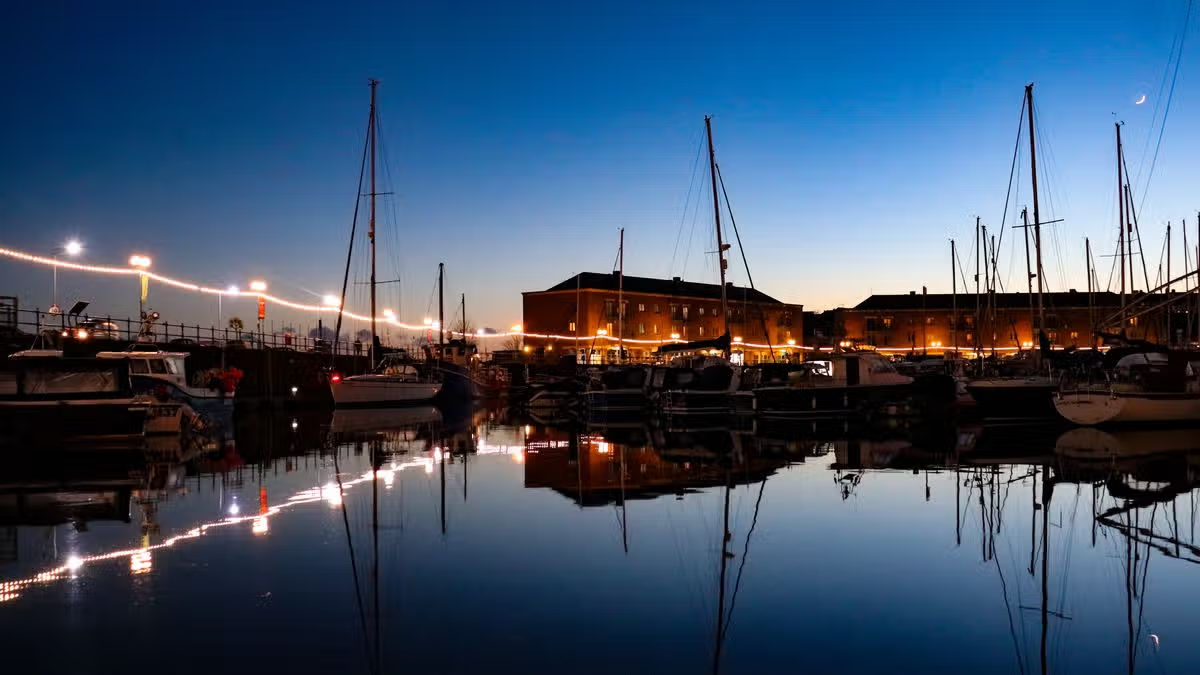
One of Pembrokeshire’s largest hotels has 100 bedrooms, a gorgeous glass-fronted restaurant worth travelling for and exceptional marina views.

With approximately 1,680 miles of coastline in Wales, we’re spoiled with plenty of seaside towns, beaches, and harbour boltholes for a minibreak. One of my favourite spots for a weekend away is an underrated harbour town in Pembrokeshire with an award-winning hotel that’s surprisingly affordable.

From a 17th-century Quaker whaling town and shipbuilding outpost to a modern marina, Milford Haven is now a chic destination with a renovated waterfront packed with indie shops, restaurants, and the swish Ty Milford Waterfront Hotel.

Formed by a ria, or drowned valley, the Milford waterway is known for being one of the deepest natural harbours in the world and is still Wales’ largest fishing port and home to the local inshore fleet.

Advertisement

As part of a multi-million-pound redevelopment programme, Milford Waterfront and Marina is fast gaining a reputation as an emerging spot in Wales. Today the harbour is a mixed-use space for locals and tourists and is a brilliant place for a budget break.

One of the most striking additions to Milford’s astonishing facelift is the Tŷ Milford Waterfront hotel, which opened in 2022.

It’s managed and operated by the team behind the iconic five-star Celtic Manor Resort and forms part of The Celtic Collection’s expanding portfolio and the Tŷ Hotels family, in partnership with the Port of Milford Haven.

Tŷ Milford is one of Pembrokeshire’s largest hotels, with 100 bedrooms, a gorgeous glass-fronted restaurant worth travelling for and exceptional marina views. It’s fast become one of my favourite places to stay.

Since opening, the hotel has garnered positive reviews and was crowned Hotel of the Year at the Visit Pembrokeshire – Trade Croeso Awards in 2024.

Despite its four-star status and stylish interiors, it’s surprisingly affordable, especially for families. If you’re planning an overnight stay, you can currently take advantage of a seasonal offer at Tŷ Hotel Milford Waterfront.

Located overlooking the marina, the hotel is offering free stays for children sharing a family room with their parents between 13 July and 1 September 2026. Prices start from £74 per room, per night.

Advertisement

The 46,000 sq ft property features four floors of contemporary bedroom accommodation, with superb views across Milford Marina.

With a wide range of rooms available, including family rooms, the hotel suits all types of business and leisure travellers and provides the perfect base to explore the local or wider area.

All rooms include free wifi, complimentary parking, tea- and coffee-making facilities, Elemis toiletries, and a 43in TV perfect for a post-dinner movie.

Advertisement

The largest rooms feature a seating area, waterfront views, and balconies where guests can experience the incredible sunrises and sunsets over the marina. Family rooms are super-comfortable and stylish, accommodating up to two adults and two children.

The Dulse restaurant and bar is a real highlight and serves some of the best seafood in Pembrokeshire. This stylish restaurant is named after Pembrokeshire’s edible and versatile seaweed, which grows abundantly around the rocky coastline.

Executive head chef Simon Crockford is at the helm, and he has cooked for famous faces including US President Barack Obama at the 2014 Nato Summit and Tiger Woods at the 2010 Ryder Cup.

Decked out in soothing shades of deep-sea blue that contrast with muted tones, the light-filled restaurant aims to provide a relaxing, memorable dining experience. It offers expansive marina views through floor-to-ceiling windows and locally sourced seafood.

Typical à la carte dishes include whole Tiger prawns, seafood chowder, mussels of the day, lamb rump, vegetable risotto and market fish in Tenby Harbwr beer batter.

Over the summer, the restaurant is hosting Tŷ-Side Fridays, a chilled, end-of-week wind-down in the sun.

Expect seasonal tunes from the resident DJ, crafted cocktails, and light bites from the Tŷ Airstream, all served on the Tŷ-Side terrace overlooking the harbour.

Advertisement

What’s nearby

If you can drag yourself away from the hotel, there is plenty to discover nearby.

The boat-filled marina offers plenty of bars, independent shops, and cafes to explore. History and heritage are also thoughtfully displayed through walking trails and the volunteer-run Milford Haven Museum. The museum tells the story of Milford Haven and its proud maritime heritage.

Advertisement

Inside, you can explore the exhibits and collections covering the Nantucket Quaker Whalers, the fishing industry, and the nautical town’s crucial role in supporting the world’s energy demands.

Wander further along the waterfront, and you’ll find boutique shopping, cafes, seafood restaurants, and even a chocolate shop.

The port also hosts a busy calendar of events, including its popular summer campaign, which features a fish festival, beer festival, and street food festival. Children’s activities and seasonal events, such as fireworks displays and Santa visits, also take place throughout the year.

Looking for activities? At Milford Beach Activity Centre, you can experience stand-up paddleboarding and kayaking from the Hot Water Slip and explore the historic Milford Haven Waterway shorelines surrounding Milford Haven.

This local business operates out of a blue shipping container overlooking Milford Beach and offers guided tours, stand-up paddleboard rentals, and kayak hire.

Take a guided tour of the estuary with their experienced guides to better understand the area’s history, including the Vikings who settled here, the Welsh fishing industry, the town’s military connection, and past industries.

Milford Haven is also a fantastic base for exploring the Pembrokeshire coast year-round. Discover coastal hikes, sandy beaches, indie cafes, wildlife, and watersports.

Advertisement

Walking the Pembrokeshire Coast Path is one of the best ways to appreciate the natural beauty of Milford Haven and its surroundings.

This trail stretches 186 miles along the rugged coastline, offering impressive ocean and cliff views.

A popular route is the stretch from Milford Haven to Dale, which takes you past picturesque coves, sandy beaches, and charming villages. Keep an eye out for wildlife as the area is home to various seabirds, seals, and even dolphins.

Advertisement

Nearby, you’ll also find sandy beaches including Marloes Sands, Dale Beach, and Broad Haven Beach.

You can check prices and book your stay at the Tŷ Milford Waterfront hotel on Booking.com and Expedia.

Source link

Advertisement
Continue Reading

Trending

Copyright © 2025