Connect with us

NewsBeat

In Ukraine, the frontline has become the DRONELINE… and the brave defenders are dealing death on Russians from many miles away in tactical revolution that could force Putin to sue for peace

Published

on

Flying high above the kill¿zone to avoid Russian electronic warfare are Ukraine's Queen Bee motherships, whose pilots are several miles behind the frontline

Nothing moves in the Ukrainian city once known as the Soviet Union’s ‘capital of glass’. 

Kostiantynivka’s streets, buckled and deformed from years of artillery fire, missiles and bombs, are deserted. Its houses lie crumpled in ruins.

The factories that gave this faded industrial titan its moniker – and forged Lenin’s crystal sarcophagus and the ruby–red stars that still adorn the Kremlin – lie abandoned. Or so it seems.

‘Look at the screen,’ Volodymyr says, gesturing to live, full colour images from an observation drone that hovers hundreds of metres above in the eastern region of Donetsk. 

Advertisement

‘It looks like an empty city – but it isn’t,’ whispers the 42–year–old Ukrainian drone pilot, who cannot be fully identified.

‘Our people are there. The Russians are there. Nobody dares show their face. That’s what war looks like now.’

Hiding from swarms of drones that map every inch of this war–ravaged hellscape, among the ruins and the foliage provided only during the summer months, Russian infiltration teams and Ukrainian defenders are engaged in a desperate fight that will decide the next turn of this war.

The Daily Mail was given rare access to the Seraphymy Unmanned Systems Battalion of the 104th Independent Territorial Defence Brigade in Donetsk last month.

Advertisement

Flying high above the kill–zone to avoid Russian electronic warfare are Ukraine’s Queen Bee motherships, whose pilots are several miles behind the frontline

The Daily Mail was given rare access to the Seraphymy Unmanned Systems Battalion of the 104th Independent Territorial Defence Brigade in Donetsk last month

The Daily Mail was given rare access to the Seraphymy Unmanned Systems Battalion of the 104th Independent Territorial Defence Brigade in Donetsk last month

A Ukrainian-made Vampire heavy bomber drone loaded with bombs takes off during a test flight along the fortress belt in the Donetsk region in May 2026 (file photo)

A Ukrainian-made Vampire heavy bomber drone loaded with bombs takes off during a test flight along the fortress belt in the Donetsk region in May 2026 (file photo) 

Advertisement

Here we witnessed the battle for Kostiantynivka, one of four cities in the Donbas that make up Ukraine’s ‘fortress belt’. 

Logistically vital, the belt stands between Moscow and its stated war aim to seize this region – and collectively forms the backbone of Ukraine’s remaining defences in Donetsk Oblast.

While many feel it is only a matter of time before Kostiantynivka falls (it has already been breached by up to 200 invaders), the manner in which Ukraine has harnessed drone innovation to slow Russia’s advance may offer a blueprint for how it repels them completely from the three remaining key cities.

In short, the revolution happening here will determine if this will be the last great fortress Russia takes – and, if that proves to be the case, could ultimately force Vladimir Putin to finally enter peace talks.

Advertisement

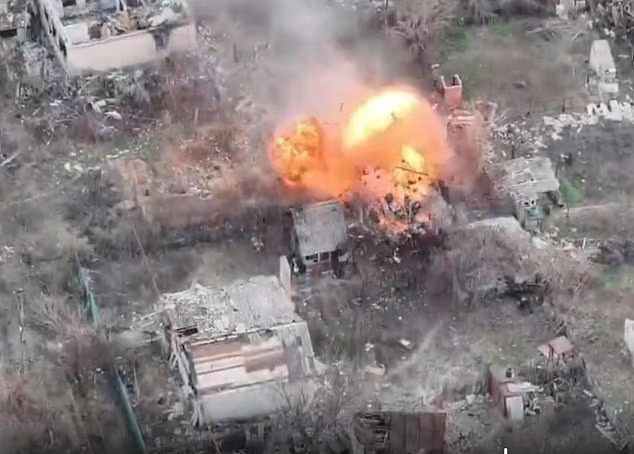
Kostiantynivka is the stuff of science fiction. Within the 15–mile ‘kill–zone’, vehicles, heavy armour and tanks have all but disappeared in the past 12 months. 

Artillery, still vital, is heavily camouflaged and used sparingly. Too big. Too easily spotted. Here, where drones rule the skies, they often become ‘weapons of self–destruction’.

Instead, men move in ones and twos, from foxhole to foxhole, cellar to cellar. Detection from above is death.

The second human activity is identified, the entire building in which it is spotted is brought down by drones. 

Advertisement
A Ukrainian serviceman of the 100th Separate Mechanized Brigade of the Ukrainian Armed Forces fires a Bohdana self-propelled howitzer towards Russian troops (Pictured: November 29 2025)

A Ukrainian serviceman of the 100th Separate Mechanized Brigade of the Ukrainian Armed Forces fires a Bohdana self-propelled howitzer towards Russian troops (Pictured: November 29 2025)

‘People are like ants,’ Volodymyr explains. ‘They’re hiding, crawling, constantly moving underground. The moment someone is spotted, 15 drones are on their way.’ Shaking his head, he adds: ‘It’s a terrible war.’

But Volodymyr is not among the ants. Thanks to cunning Ukrainian innovation, he is piloting his hulking 17in bomber drone from 37 miles away in a secret location the Daily Mail was invited to.

On larger drones such as this, Kyiv has attached Starlink terminals to give them a secure satellite connection that is largely unjammable. 

Advertisement

It means bomber pilots who once sat within three miles of their machine have been moved out of the kill–zone.

This is a game–changer. Lest the peril for those who remain on the frontline needs spelling out further, beside Volodymyr’s observation screen and a tablet showing the tactical map of the city sits a third monitor which we were not allowed to photograph. 

It carries the day’s operational picture. A Russian soldier has been located in a house. That is now the target.

Reconnaissance crews, drone pilots and commanders coordinate the strike in real time. 

Advertisement

The operation unfolds in silence. The drone pilots continue talking over the radio. A bomber drone releases its munition. It fails to explode. The Russian soldier breaks cover, sprinting from the house into a patch of bushes.

A First Person View (FPV) kamikaze drone carrying a 1.5–kilogram high–explosive dives after him. 

The onboard picture rushes into the foliage – and disappears. There are no cinematic explosions here. The screen simply goes black. 

This is how soldiers meet their maker in the 21st century. Volodymyr is now free to go and make a cup of coffee. His radio sits within arm’s reach. 

Advertisement
Ukrainian serviceman walks near apartment buildings damaged by Russian military strike, amid Russia's attack on Ukraine, in the frontline town of Kostiantynivka in Donetsk region (Pictured: December 18 2025)

Ukrainian serviceman walks near apartment buildings damaged by Russian military strike, amid Russia’s attack on Ukraine, in the frontline town of Kostiantynivka in Donetsk region (Pictured: December 18 2025)

Whenever reconnaissance identifies another target in the ruins of Kostiantynivka, he returns to his workstation, takes control of his bomber drone and flies another mission.

This way of waging war is the brainchild of Mykhailo Fedorov, the recently sacked Defence Minister whose dismissal by Volodymyr Zelensky after just six months in post prompted nationwide protests earlier this year. 

In his previous role as head of Ukraine’s Ministry of Digital Transformation, Fedorov ramped up drone procurement on an unprecedented scale in response to Russia’s 2022 full–scale invasion.

Advertisement

It was here that the concept of the Drone Line – using unmanned systems as the backbone of a front held by too little infantry – received institutional backing. 

Given Ukraine has only a modest air force and a serious manpower challenge, the concept was to harness drones to preserve the lives of personnel and repel the Russians. 

The unmanned systems would be used to establish a kill‑zone through which the enemy cannot advance without sustaining heavy losses.

When Fedorov was promoted to Defence Minister in January, the Drone Line program surged drastically, as he pumped 90 per cent of the weapons budget (not including the vast arsenals supplied by the West) into robotic warfare.

Advertisement
This way of waging war is the brainchild of Mykhailo Fedorov (Pictured: July 1 2026), the recently sacked Defence Minister whose dismissal by Volodymyr Zelensky after just six months in post prompted nationwide protests earlier this year

This way of waging war is the brainchild of Mykhailo Fedorov (Pictured: July 1 2026), the recently sacked Defence Minister whose dismissal by Volodymyr Zelensky after just six months in post prompted nationwide protests earlier this year

In Kostiantynivka, this has manifested in its most extreme form.

Russia had begun creeping assaults on the city and by May this year, as explained, some 200 men had successfully infiltrated.

Yet this city has not fallen. With Ukraine’s increased drone capabilities, invaders are identified and liquidated almost instantly.

Advertisement

‘What fascinates me is the war we’re fighting now,’ Serhii Kostynskyi, commander of the battalion, tells us. 

‘The way we fought in 2022 and 2023 was terrifying. You spent your days being blanketed by artillery. The enemy never had to come within rifle range. They simply erased you with artillery and mortars. Then the tanks moved in. The Russians had an overwhelming advantage in artillery – it really was the First World War.

‘Now it’s different. Both we and they have an incredibly wide range of tools at our disposal.’

Within the kill–zone, infantrymen are scattered in teams as small as two or three. Hiding in dugouts and basements, they largely act as lookouts to call in drone strikes on any infiltrators.

Advertisement

Unmanned robotic vehicles support them with supplies and evacuate casualties. 

Giving them cover are pilots, also hiding on the frontline, who fly FPV kamikaze drones on gossamer–like fiber–optic cables. 

These drones, which have a range of about nine miles and cannot be jammed, are launched by a separate team of soldiers.

A year ago troops would drive into position, unload and speed away, but the proliferation of enemy observation and attack drones means that’s now impossible. 

Advertisement

So the launchers enter in pairs, on foot. One pushes a handcart loaded with drones, batteries and ammunition. The other walks ahead, scanning the ground for mines with a drone detector around his neck.

A Ukrainian serviceman walks along a road near anti-drone nets and destroyed military vehicles as he takes part in a mission to protect the stretch from Russian drones between frontline towns of Druzhkivka and Kostiantynivka

A Ukrainian serviceman walks along a road near anti-drone nets and destroyed military vehicles as he takes part in a mission to protect the stretch from Russian drones between frontline towns of Druzhkivka and Kostiantynivka

Flying high above the kill–zone to avoid Russian electronic warfare are Ukraine’s Queen Bee motherships, whose pilots are several miles behind the frontline. 

These carry swarms of smaller FPV strike craft and drop them up to 20 miles deep behind enemy lines.

Advertisement

Then there are the heavy bombers loaded with anti–tank mines and mortar shells connected to pilots like Volodymyr via Elon Musk’s Starlink dishes. 

They use thermal imaging cameras to erase Russian armour and smash concrete fortifications while their crews are safely out of range. 

Protecting both men and machines are interceptor drones – ultra–fast, highly agile quadcopters equipped by AI tracking, which take out surveillance drones and effectively blind the enemy.

The Drone Line is stitched together with a constant layer of fixed–wing AI reconnaissance drones that map every inch of the battlefield and feed it live into a battle management system.

Advertisement

Software automatically flags shifting pixels on digital screens, instantly identifying hidden Russian troops and automatically sending the coordinates to the nearest drone crew. 

Russia possesses a roughly similar array of drones and this is an ongoing, evenly matched contest.

For the moment, Ukraine holds the advantage thanks to grassroots initiative and integration into Western technology – most importantly Starlink. 

It is little wonder the men of Seraphymy believe a day may be coming soon when men are all but removed from the battlefield. 

Advertisement

Volodymyr thinks soon every drone, not just heavy bombers, will operate through Starlink. Reconnaissance crews and FPV teams will no longer have to occupy exposed positions on the edge of Kostiantynivka’s kill–zone.

Instead, he is adamant they will work from rooms like his, with coffee machines, reliable internet connections and dozens of kilometres separating them from the battlefield.

Within the kill¿zone, infantrymen are scattered in teams as small as two or three. Hiding in dugouts and basements, they largely act as lookouts to call in drone strikes on any infiltrators

Within the kill–zone, infantrymen are scattered in teams as small as two or three. Hiding in dugouts and basements, they largely act as lookouts to call in drone strikes on any infiltrators

For the moment, Ukraine holds the advantage thanks to grassroots initiative and integration into Western technology ¿ most importantly Starlink

For the moment, Ukraine holds the advantage thanks to grassroots initiative and integration into Western technology – most importantly Starlink

Advertisement

He adds: ‘Within a year, infantry will all but disappear from the kill‑zone. Ground robots will carry weapons. Everyone will be sitting behind a control console, connected through Starlink, miles from the fighting.

‘Watch what happens over the next six months… everything will be done remotely. That’s the direction this war is heading.’

Despite Fedorov’s untimely removal, investment continues to pour into Ukraine’s drone units. 

The 104th Independent Territorial Defence Brigade is already in the final stages of raising a second unmanned systems battalion. 

Advertisement

Seraphymy, a territorial brigade, is one of the lowest rankings in the army, yet is receiving cutting–edge supplies. In just six months, the army is aiming to increase the number of drone crews sixfold.

Military expert Bob Seely, a partner in Ukraine–UK defence firm Trypillian, says: ‘We are witnessing a significant evolution of warfare. Sadly not enough soldiers and politicians in the West understand this.’

Moving pilots out of the kill–zone has long been ‘a Ukrainian priority’ and as a consequence we are now seeing ‘the rise of the machines’, Mr Seely, a former MP and British soldier, adds. 

‘It is likely that war in the future will be largely fought by decision–making machines – overseen at least on our side by humans,’ he said.

Advertisement

‘It’s the quality and survivability of your machines that will dictate whether you win or lose.’

While observers marvel at Ukrainian advances, experts generally push back on claims that the infantry will disappear. 

Anton Zemlianyi, Senior Analyst of Ukrainian Security and Cooperation Center, said such claims are ‘premature’ as control of territory ‘continues to depend on the infantry’.

Paraphrasing Mark Twain, Retired American Colonel Frank Sobchak, professor at the US Naval War College, said: ‘Reports of the infantry being outmoded are greatly exaggerated.’

Advertisement

Noting how often before this has been falsely predicted, he adds: ‘The infantry will always have a role on the battlefield, as there is no other element that can seize and hold terrain.’

While it is still unclear how NATO would fare in such a war, despite its vastly superior logistics and air power, the alliance is undoubtedly playing catch–up.

Ukraine is in the ascendancy but it has learnt this guarantees nothing. The pendulum could swing back as early as this autumn.

Russia is already rolling out technology it believes can jam Starlink. It is looking for alternatives to use itself offensively.

Advertisement

This is why Mr Zelensky’s removal of Mr Fedorov at such a critical juncture is so troubling.

Now the widely respected General Mykhailo Drapatyi has taken over as Commander–in–Chief while former head of intelligence Yevhenii Khmara is Fedorov’s acting replacement.

It must be hoped that they can quickly get to grips with this revolutionary battlefield as well as the Ministry of Defence, which spends more money than all the country’s other ministries combined. 

The future of Kostiantynivka, and the rest of Ukraine, depends on it.

Advertisement

Source link

Continue Reading
Click to comment

You must be logged in to post a comment Login

Leave a Reply

NewsBeat

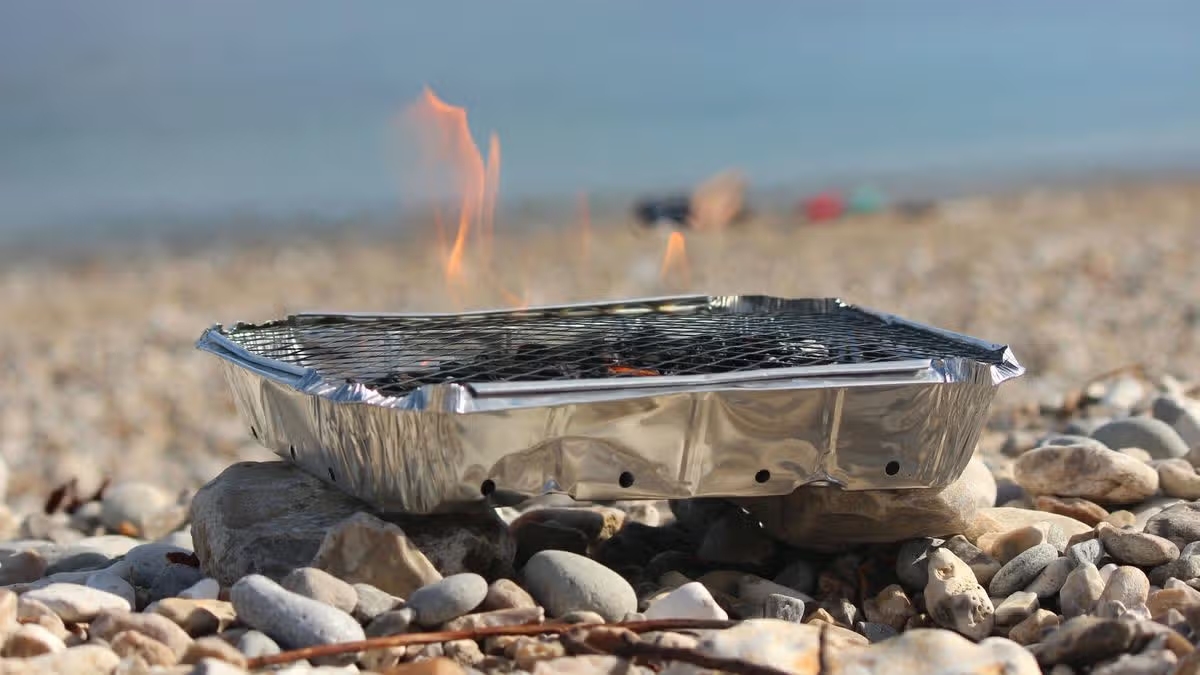
Shops urged to withdraw disposable barbecues from sale by Andy Burnham over wildfire risk

Published

on

Daily Record

Most major UK supermarkets have suspended sales of disposable barbecues in recent weeks

The Prime Minister has urged retailers to withdraw disposable barbecues from sale following a high-level emergency meeting about the number of wildfires the UK has dealt with this summer.

Andy Burnham urged “all retailers big and small” to pull the barbecues from their shelves as he warned extreme heat conditions “could be with us for some weeks yet”. The Government’s emergency Cobra committee held a meeting earlier on Wednesday in response to the prolonged spell of exceptionally hot and dry weather.

Advertisement

England and Wales have already seen as many wildfires this year as in the whole of 2025. Some 1,017 wildfires have been recorded in England and Wales this year, according to data shared by the National Fire Chiefs Council (NFCC), the same as last year’s record-breaking total.

Most major UK supermarkets have suspended sales of disposable barbecues in recent weeks in line with voluntary guidance from the NFCC. Mr Burnham urged all shops to stop selling them and indicated that an outright ban could be considered in future summers.

He said: “The big risk in terms of risk to the wider regions across the country is the risk of wildfires. What we are seeing is multiple serious incidents across the country.

“Fire services, by and large, are supporting each other through mutual aid to deal with those incidents but we are keeping a very close watching brief on them. There is advice to the public here not to use disposable barbecues.

Advertisement

“We have today confirmed through the National Fire Chiefs Council that the framework restricting the retail sale of those disposable barbecues is being extended. Now I would ask all retailers big and small to adhere to that framework.

“Longer term we will look at whether a temporary ban in the summer months is justified.”

The Prime Minister said there had been a “significant number of excess deaths from heat this summer already” and urged the public to follow health advice, including checking in on elderly friends and relatives.

Asked if there was still a case for drilling the outstanding North Sea fossil fuel deposits given the impact of climate change, Mr Burnham replied: “It is really important that we deal today with the situation that we are in right now and we focus on making sure that we have the serious incidents under control across the country, and those incidents are under control.”

Advertisement

He later said: “The bigger questions obviously will come at the right moment in time. But I have said that we have had it all but confirmed that this is the hottest summer on record, and as we go through it, we need to realise that these conditions could be with us for some weeks yet.

“There is some rain forecast, but not necessarily rain that will change the situation fundamentally. So we are looking at a dry prospect going forward.”

Fire chiefs warned the prolonged dry spell and the high heat had turned parts of the country into a “tinderbox”.

Advertisement

NFCC chairman Phil Garrigan told PA: “Most wildfires in the UK are caused because of human behaviours, careless, accidental or unfortunately intentional acts. But as climate change brings more frequent periods of hot, dry weather, the conditions for wildfires are becoming more dangerous, increasing their scale and intensity.

“Hot, dry weather and drought are turning parts of the UK into tinderbox landscapes, allowing fires to spread faster, burn longer and place greater pressure on fire and rescue services.”

Nearly three-quarters of England and the whole of Wales are in drought, heaping pressure on water resources for households, agriculture and the environment, and temperatures are expected to climb as high as 38C in some parts of England on Thursday.

A key climate adviser has warned it “gets worse from here” until the greenhouse gas emissions – mostly caused by burning fossil fuels in power plants, vehicles, home heating and industry – behind global warming are cut to zero overall, known as net zero.

Advertisement

Baroness Brown, who chairs the independent advisory Climate Change Committee’s adaptation work, told PA: “We need to remember that this is as good as it gets. It gets worse from here. Until we get to net zero, things go on getting worse.”

She also urged the Government to take steps to help the UK adapt to rising temperatures, such as air conditioning in hospitals, schools and for vulnerable families.

In the latest heatwave, rare amber “extreme heat” warnings have been issued by the Met Office for London and parts of the South East, East Midlands, East of England, West Midlands and South Yorkshire from 9am to midnight on Thursday.

Southern Water has applied for a rare drought order which would ban businesses from non-essential water use, including cleaning cars and filling non-domestic swimming pools, saying an “exceptional” lack of rain has threatened supplies in Hampshire and the Isle of Wight.

Advertisement

It warned that 165,000 people in the Southampton West supply area could face restricted supplies. Environment Secretary Angela Eagle will decide on the application, which would be the first such ban since May 2006.

Ensure our latest stories always appear at the top of your Google Search by making us a Preferred Source. Click here to activate or add us as your Preferred Source in your Google search settings.

Source link

Advertisement
Continue Reading

NewsBeat

Five foods that can help keep children hydrated during a heatwave

Published

on

Five foods that can help keep children hydrated during a heatwave

“Have another drink.” It can become a familiar refrain for parents during a heatwave, particularly when a child is busy playing and has little interest in stopping for a glass of water.

Keeping up fluid intake becomes more important as temperatures rise because heat increases water loss, particularly through sweating. But a child’s fluid intake does not have to come solely from a cup or water bottle – the water in food also counts.

That contribution can be substantial. An analysis of Australian dietary data found that moisture in food supplied 29% of total water intake among children and adolescents. And research involving children aged four to ten found that those who ate more fruit and vegetables tended to have better measures of hydration.

Water-rich foods should supplement regular drinks rather than replace them. But if getting children to drink enough feels like a battle, food can provide another way of adding fluid to their day.

Advertisement

Here are five options.

1. Watermelon and other juicy fruits

Many fruits and vegetables are around 90% water, which is why foods such as watermelon, strawberries, oranges, peaches and melon can contribute to fluid intake.

There is child-specific evidence for this. In a study of 442 children aged four to ten, solid fruit and vegetables provided around 12% of their total water intake. Children who ate more fruit and vegetables also had better measures of hydration.

So offering watermelon, berries or sliced fruit during hot weather provides another source of water alongside regular drinks.

Advertisement

2. Homemade ice lollies

If repeatedly offering a drink is getting you nowhere, changing how it is served may help.

Reusable ice-lolly moulds can be filled with milk, yoghurt, blended fruit or diluted fruit juice. Water consumed through foods and other fluids still contributes to total water intake, so a homemade lolly offers another way to provide fluid.

Making them yourself also gives you control over the ingredients. Although homemade lollies are not automatically healthier, you can choose what goes into each lolly, making it easier to create lower-sugar versions while also involving children in deciding which combinations they would like to try.

3. Cucumber, tomatoes and peppers

Fruit may be the obvious choice when you think about juicy foods, but vegetables can contribute to water intake too.

Advertisement

Cucumber has a particularly high water content, while many other vegetables also contain a large proportion of water. More importantly, research in children has directly linked greater fruit and vegetable consumption with higher water intake and better hydration.

Cucumber, tomatoes or pepper strips can be served alone or alongside familiar foods such as hummus or cream cheese. They also work well in lunchboxes and snack plates when nobody particularly wants to cook or eat a large hot meal.

Juicy fruit and vegetables can help keep children hydrated when it’s hot.
TracyReid/Shutterstock

4. Yoghurt, milk and dairy foods

Fruit and vegetables are not the only foods that can add fluid to the diet. Milk and dairy products also contribute to children’s overall intake of water and nutrients.

In British children, yoghurt consumption has been associated with higher intakes of nutrients including calcium, iodine and riboflavin. The study was observational, so it cannot show that eating yoghurt caused those differences, but it demonstrates that yoghurt can fit into a nutrient-rich diet.

Advertisement

Yoghurt can be eaten cold with fruit, blended into a smoothie or frozen into a lolly. Milk can also contribute directly to fluid intake, and research comparing different drinks has shown that milk can support fluid balance.

Fortified dairy alternatives are another option, although their nutritional composition varies between products.

5. Build a hydrating ‘picky tea’

You do not have to serve each water-rich food separately. A snack-style meal can bring several together.

A plate could contain melon or berries, cucumber and pepper sticks, yoghurt, cheese, hummus and bread or crackers. Fruit, vegetables and other moisture-containing foods can collectively make a meaningful contribution to total water intake.

Advertisement

It can also be worth being flexible about what constitutes dinner during exceptionally hot weather.

On holiday recently, my nephew asked for a bowl of cereal for dinner because he did not fancy anything else. I thought that was a perfectly sensible choice. It was cool, familiar, contained milk and, crucially, he wanted to eat it.

Would I suggest cereal for dinner every night? Probably not. But we do not usually have heatwaves every night in the UK, although recent summers sometimes seem determined to test that proposition.

Food helps, but keep offering drinks

Water-rich foods can contribute appreciably to children’s total water intake, but studies suggest that differences in how much people drink still account for most of the variation in overall water consumption. So fruit, yoghurt and ice lollies are useful additions rather than replacements for regular drinks.

Advertisement

Parents should also take possible dehydration seriously. A study of dehydration in children found that no single symptom is sufficient to diagnose it reliably, so a combination of changes in a child’s appearance, behaviour and fluid intake may be more informative than watching for one particular sign.

The useful principle is simple: keep offering drinks, but remember that hydration can arrive on a plate as well as in a glass.

Source link

Advertisement
Continue Reading

NewsBeat

Rewilding link to record fires: After 1,017 wildfires ALREADY this year, eco-dogma is blamed for turning the country into a tinderbox

Published

on

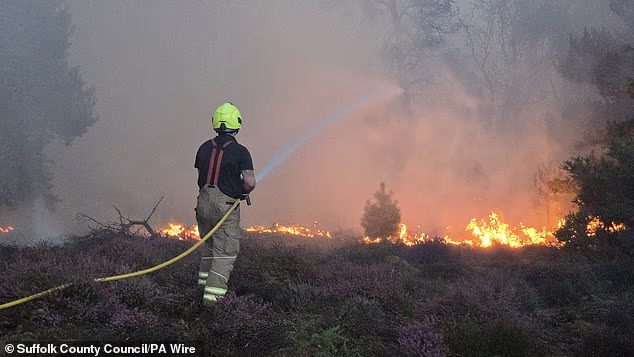
Firefighters battling a wildfire at Dunwich Heath, near Leiston in Suffolk, on July 30. There is no suggestion this fire was as a result of rewilding

A record year for wildfires was last night blamed on Labour’s environmental policies.

Some 1,017 infernos have ravaged England and Wales this year – already as many as there were in the whole of 2025, the previous worst year.

With temperatures forecast to hit 38C today, campaigners say the Government has ignored warnings that its policies have turned swathes of countryside into tinderboxes.

They say Labour’s rewilding drive, which involves allowing nature to look after itself without human interference, has caused a huge build-up of dry vegetation primed to ignite in heatwaves. 

Advertisement

Gamekeepers and farmers traditionally carried out controlled burning of heather and grasses in the cooler months – encouraging new shoots on which grouse and sheep graze.

Last year, Labour extended rules preventing the burning on 1.6million acres of land. 

It says the move, targeted at peatlands, would improve air quality and protect environmental and public health.

Jonathan Roberts, of the Country Land and Business Association, said: ‘Last year was the worst on record for wildfires, yet ministers responded by making it harder for land managers to carry out the controlled burning necessary to stop wildfires taking hold in the warmer months.

Advertisement

Firefighters battling a wildfire at Dunwich Heath, near Leiston in Suffolk, on July 30. There is no suggestion this fire was as a result of rewilding 

Drivers were ordered to abandon their vehicles and walk down the side of the A31 when the fire took hold on Sunday afternoon. There is no suggestion this fire was as a result of rewilding

Drivers were ordered to abandon their vehicles and walk down the side of the A31 when the fire took hold on Sunday afternoon. There is no suggestion this fire was as a result of rewilding

‘Government has in effect banned the single-most important method of preventing wildfires, and we are now living with the consequences. Put simply, they must reverse the policy immediately.’

His concerns are echoed by the Countryside Alliance, which said ministers had made a ‘foolish decision’.

Advertisement

‘Moorland communities are facing increasing challenges, the Government having recently more than trebled the area over which the controlled burning of vegetation is effectively banned in our uplands,’ it said. 

‘The Countryside Alliance has repeatedly warned that by ignoring the latest scientific evidence, the Government is significantly increasing the risk of catastrophic wildfires.’

The warnings came as more than 100 firefighters tackle a major blaze in the New Forest that has raged for four days. 

Numerous other fires around the country have stretched resources, with crews in South Wales yesterday describing ‘carnage’ as they battled seven separate blazes, some of which they believe were set maliciously.

Advertisement

Andy Burnham last night called on shops to stop selling disposable barbecues, which he said were behind many of the blazes. He hinted at a summertime ban in the future.

Lord Botham, a vocal critic of rewilding, urged the Prime Minister to take ‘decisive’ action and place the Department for Environment Food and Rural Affairs (Defra), which manages the policy, into special measures for ‘reckless incompetence’.

The blaze tore through hundreds of acres of heathland and forced fire chiefs to declare a major incident. There is no suggestion this fire was as a result of rewilding

The blaze tore through hundreds of acres of heathland and forced fire chiefs to declare a major incident. There is no suggestion this fire was as a result of rewilding

‘Our wildfire crisis is man-made. It is the result of dreadful policy mistakes repeated year after year,’ the former England cricket captain said.

‘For two decades we have added far too much vegetation to our landscape and are now suffering the inevitable consequences. Unless Andy Burnham acts decisively there will be fatalities.’

Advertisement

Natural England insists heather burning damages carbon-storing peat and it instead promotes mechanical cutting – but critics say while this reduces the so-called fuel load, it leaves ignitable materials behind.

‘The winter burns used to create firebreaks. Now we have huge expanses of continuous, ageing vegetation. The result is disaster after disaster,’ Lord Botham wrote in a newspaper. 

‘The new winter burning season is due to start on October 1. The Prime Minister has only weeks to reverse last year’s ban and get these preventative winter burns restarted.’

Andrew Gilruth, of the Moorland Association, said: ‘Rewilding sounds like a good idea, unless you end up facing a wall of flames.

Advertisement

‘We simply have far, far too much vegetation covering our landscape and until we reverse rewilding, the wildfires will get worse and worse.’

Defra said its policies were a ‘long-term’ solution.

A spokesman said: ‘Peatland restoration is the most effective, sustainable, and long-term solution for reducing fuel load on degraded peatlands, as wetter, healthy-functioning peatlands hold more water in the landscape for longer and are more resilient to the impacts of wildfire.’

Source link

Advertisement
Continue Reading

NewsBeat

Eurovision Unveils New Rules Around Countries In ‘Armed Conflict’

Published

on

Eurovision Unveils New Rules Around Countries In 'Armed Conflict'

Eurovision bosses are introducing some new rules ahead of next year’s contest.

On Wednesday afternoon, organisers confirmed that new regulations were being put in place from 2027 onwards, which most notably say that a winning country will no longer be permitted to serve as host if it is involved in any kind of “armed conflict”, “sensitive geopolitical situation” or “any other situation [which] materially affects the security, safety or stability of their state or immediate region”.

In the event that a winning country does fall into this category, organisers will “identify an alternative host broadcaster” which will “not be required to stage the event on behalf of another member” as the UK did with Ukraine in 2023.

Meanwhile, Eurovision has said that an alternative host country might be also chosen if the reigning winners are deemed to be unsuitable, either due to them not “abiding by the rules of the ESC”, being “found to have attempted to unfairly influence the results or outcome of the ESC in favour of its own entry”, undermining the “non-political character” of the contest, or being unable to “guarantee the safety, security, integrity, continuity or smooth operational delivery of the event”.

Advertisement

Source link

Continue Reading

NewsBeat

Ariana Grande hard launches on-again Ricky Alvarez romance after announcing hiatus from public life amid weight fears

Published

on

Ariana Grande slipped a cozy picture of herself with her on-again boyfriend Ricky Alvarez into a new Instagram album on Wednesday. Above, in 2016

Ariana Grande slipped a cozy picture of herself with her on-again boyfriend Ricky Alvarez into a new Instagram album on Wednesday, brushing off the intensifying clamor of fan concerns about her wellbeing.

She shared the album days after announcing plans to withdraw temporarily from public life once she finishes her current run of concerts on September 1.

Her hiatus statement, which cited ‘endless, ongoing public scrutiny,’ came amid a roiling online outcry over her new music video Petal, in which her figure was so thin that her sternum was distinctly visible.

In her new Instagram post, the 33-year-old projected a cheery disposition as she documented her travels on the road with her Eternal Sunshine Tour.

Advertisement

One photo showed Alvarez, a former backup dancer whom she previously dated in 2015 and 2016, with one of his arms wrapped lovingly around her.

Although their faces were kept out of frame in that photo, she included another snap of her clinging to him in which his face was in the shot but the image was blurred.

The Daily Mail has contacted Grande’s representatives for comment.

Advertisement

Ariana Grande slipped a cozy picture of herself with her on-again boyfriend Ricky Alvarez into a new Instagram album on Wednesday. Above, in 2016 

One photo showed Alvarez, a former backup dancer whom she previously dated in 2015 and 2016, with one of his arms wrapped lovingly around her

One photo showed Alvarez, a former backup dancer whom she previously dated in 2015 and 2016, with one of his arms wrapped lovingly around her

Although their faces were kept out of frame in that photo, she included another snap of her clinging to him in which his face was in the shot but the image was blurred

Although their faces were kept out of frame in that photo, she included another snap of her clinging to him in which his face was in the shot but the image was blurred

The gathering public concern for Grande rose to a fever pitch last week after the release of the Petal music video, in which she plays a young aspiring starlet attempting to navigate the rigors of showbiz.

Advertisement

‘Tеll me who’s to blame, is it the people or myself?’ she sings at one point in the number. ‘But this time feels so very different. This is not a cry for help.’

Her protruding bones in the video ignited a firestorm of feverish online speculation about her health, with some commentators comparing her to Karen Carpenter, the 1970s pop star who succumbed to heart failure aged 32 after years of anorexia.

Two days after the Petal video dropped online and went viral, a representative for Grande confirmed she would be ‘taking a step back from visibility after she completes the Eternal Sunshine Tour,’ via People.

A family insider then exclusively informed the Daily Mail that Grande’s intimates had ‘begged’ her to take a ‘break’ from her career. 

Advertisement

The hiatus entailed her departure from a planned West End revival of the classic Stephen Sondheim musical Sunday in the Park with George, which would have reunited her with her Wicked co-star Jonathan Bailey

Nevertheless Grande insisted onstage during a subsequent concert that her respite had been planned ‘a long time ago’ and that ‘boundaries need to be set.’

The Dangerous Woman singer poured further fuel on the conjecture by liking a post by psychotherapist podcaster Terri Cole about improving one’s health. 

Her hiatus announcement came amid a roiling online outcry over her new music video Petal, in which her figure was so thin that her sternum was distinctly visible

Her hiatus announcement came amid a roiling online outcry over her new music video Petal, in which her figure was so thin that her sternum was distinctly visible 

Advertisement
In her new Instagram post, the 33-year-old projected a cheery disposition as she documented her travels on the road with her Eternal Sunshine Tour

In her new Instagram post, the 33-year-old projected a cheery disposition as she documented her travels on the road with her Eternal Sunshine Tour

‘Unfortunately,’ said Cole in the upload: ‘I can confirm that not everyone will like the healthier version of you. That’s OK. Get healthier, anyway!’ 

Grande teased fans about her renewed romance with Alvarez during a concert this July by changing a line in her breakup single Thank U, Next.

The song originally contained the lyric: ‘Wrote some songs about Ricky, now I listen and laugh,’ but Grande amended the second half to: ‘We always find our way back.’

Advertisement

She laid the Easter egg shortly after news broke that her controversial romance with her Wicked co-star Ethan Slater had collapsed.

Their relationship had begun in 2023 as an on-set affair during the shoot of their two-part film adaptation of the hit Broadway musical. 

They were plunged into scandal on account of the fact Slater was married to his now ex-wife Lilly Jay, who shares a three-year-old son with him.

She made the disclosure shortly after news broke that her controversial romance with her Wicked co-star Ethan Slater had collapsed

She made the disclosure shortly after news broke that her controversial romance with her Wicked co-star Ethan Slater had collapsed

Advertisement

Grande, heaped with opprobrium, retorted by releasing a single called The Boy Is Mine that was widely regarded as being about Slater.

Sources told the Daily Mail that the song was a ‘slap in the face’ to Jay, who was claimed to believe Grande was ‘rubbing it in’ that she ‘stole him’ from her.

In the early part of June, the Daily Mail confirmed that Grande and Slater had amicably broken up after a relationship of nearly three years.

Grande’s first runaround with Alvarez came shortly before she plunged into her two-year relationship with rapper Mac Miller, whom she broke up with a matter of months before he died of an overdose at the age of 26.

Advertisement

She was then briefly engaged to Saturday Night Live lothario Pete Davidson and married for nearly two years to luxury real estate agent Dalton Gomez, whom she separated from months before her affair with Slater went public. 

Source link

Continue Reading

NewsBeat

PETER HITCHENS: Why I fear it will take a terrible tragedy before our leaders crack down on the scourge of e-bikes and scooters

Published

on

E-bikes on pavements present hazards for pedestrians, especially for the disabled and elderly. 'Where are Health And Safety when you really need them?' writes Peter Hitchens

Aren’t we supposed to be the Land Of Health And Safety, banning everything from cheese-rolling contests to Remembrance Parades because authorities say it just isn’t safe to hold them?

Yet the Government has deliberately blessed the arrival on our roads and streets of two extraordinarily dangerous menaces, e-scooters and e-bikes. Where are Health And Safety when you really need them?

There is hardly a town or city that has not heard the rush and whine of these machines, or seen the changes they bring.

This week the BBC reported that three trauma centres – in Liverpool, Manchester and Sheffield – say they have treated 477 under-16s for e-scooter injuries since 2019, with the number of cases per year rising from fewer than ten in 2019 to nearly 150 in 2024. Detective Constable Steve Pennington, from Greater Manchester Police, warned e-scooters ‘are not harmless toys and could lead to horrific consequences when used by inexperienced riders’.

Advertisement

The official answer to this is that the privately-owned scooters so often involved in these accidents remain illegal. Technically you cannot ride them on public roads. But any road or pavement user knows that this law has ceased to be enforced in any systematic way.

They are everywhere. And one main reason for this is that the Government has undermined its own law. It has licensed the use of hired scooters in more than 50 English cities, including London and my home town of Oxford.

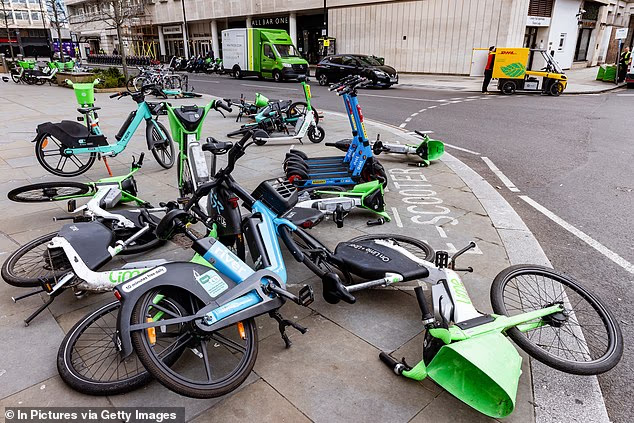
E-bikes on pavements present hazards for pedestrians, especially for the disabled and elderly. ‘Where are Health And Safety when you really need them?’ writes Peter Hitchens

Advertisement

Recently it added schemes in Leeds, Brighton and Hove and Plymouth, plus Cornwall.

These exemptions are supposed to be experiments, though they began in 2020, under the pretext of Covid, and there is no sign of them coming to an end or any clear indication of what would have to happen for them to be deemed a failure.

If the Government had been actually trying to make the law look ridiculous, it could not have thought of a better way. Oxford is full of these devices, swerving and bumping about, zooming through red lights, menacing pedestrians and cyclists and making the roads more chaotic for drivers.

They have more or less taken us into the Third World. They lie about in ugly orange heaps near historic monuments or are parked in equally ugly official reservations provided for them by the local authority. They are, of course, frequently just left where their riders finished with them.

Advertisement

Special sites for them are marked out on the pavement. If they are legal, how can anyone take the ban on privately-owned scooters seriously?

A survey of 29 police forces found that 5,544 illegal e-scooters were seized and taken off the streets between 2023 and late 2025. That isn’t very many. From what I have seen, this must mean that tens of thousands go unmolested.

As for the legal ones, they have greatly diminished the quality of life. I have myself been walloped (fortunately quite mildly) by one of them in Oxford’s majestic High Street. At the time I was helping a pedestrian who had tripped and fallen.

The most amazing thing was the rider’s total lack of remorse, embarrassment or even interest in what she had done. I can only assume she was medicated in some way. I have never seen the police stop people breaking clear rules for hired scooters, such as the one saying only one person should ride them at a time.

Advertisement
I have myself been walloped (fortunately mildly) by an e-scooter in Oxford’s majestic High Street. At the time I was helping a pedestrian who had tripped and fallen, writes Peter Hitchens

I have myself been walloped (fortunately mildly) by an e-scooter in Oxford’s majestic High Street. At the time I was helping a pedestrian who had tripped and fallen, writes Peter Hitchens

This happens so often that perhaps those involved think it must be legal and I can hardly blame them. The police, even when present, are plainly uninterested.

I can find no specific figures for the numbers stopped or fined for this blatant, frequent offence. This is often a problem with revealing what is going on with e-scooters or their more menacing cousins, e-bikes. Central records are hard to find. Enforcement of rules against harder-to-spot misdeeds, such as riding while drunk or on drugs, or riding underage or without any sort of licences must be weaker still.

Everyone in the real world knows that speed limiters on e-scooters and e-bikes, supposedly keeping them below 16mph, are a sick joke. Many of these devices can do 40mph, often more, and can be seen tearing round the streets – doing so with impunity. For, as muggers, phone-snatchers and other criminals have quickly discovered, they are the ideal vehicles for crime. They have no number plates and cannot be traced. They have the freedom of the pavements, because nobody will prevent them being there. Who can catch them?

Advertisement

Anyone with two ounces of imagination could surely have seen the likely consequences of allowing these ‘experiments’ in a country where the police are largely absent from the streets.

We work ourselves into a national frenzy over the possible menace of Artificial Intelligence. Maybe it will end our civilisation. It is hard to tell. But e-scooters and e-bikes are a real problem here and now. They take the solid form of hard, fast hunks of metal hurtling about in our midst.

The actual arrival in our cities of powerful, cheap, lightweight, easily-recharged electric motor vehicles has stimulated almost no thought at all – even though it is one of the most significant technological changes since the invention of the motor car.

Anyone who brings up the subject, or suggests it may matter, is almost always met with empty-headed catcalls on anti-social media of: ‘Haven’t you anything more important to worry about?’

Advertisement

The licensing of them has barely been debated in Parliament.

E-bikes were permitted on roads and cycle tracks through an EU regulation confirmed without debate. E-scooters were semi-legalised through a fishy procedure called the ‘negative process’ by which the new rules would go through (in a few short days) as long as there was no substantial opposition. And there wasn’t.

Back in July 2020, a little-known body called the Secondary Legislation Scrutiny Committee asked: ‘Is it a pilot scheme to test the viability of a controversial vehicle on British roads? Is it a means to rapidly expand transport capacity in cities all over the country during the Coronavirus pandemic? And are those two objectives compatible?’

It said MPs and Lords might wish to ask the transport ministry for more evidence to support its case for scaling up the number of trial schemes. It wondered if there was enough data on safety, nuisance and likely costs to local authorities to justify this expansion. It sought clarity on the actual targets and objectives of these trials.

Advertisement

It also said that similar schemes in other countries had been ‘very divisive’, which is one way of describing the fury against them in cities such as Paris.

I see no sign that anybody listened. Is there some strong, rich lobby pushing the other way? We need a proper national debate and proper Parliamentary scrutiny.

I have searched for years for any sign that anybody in government is thinking seriously about the problem. Will it be the usual thing, that we must wait until a terrible tragedy has taken place, perhaps captured by cameras in all its grisly pain and misery, before anything is done?

Source link

Advertisement
Continue Reading

NewsBeat

Man who left dog emaciated in filthy Rochdale house banned from keeping animals

Published

on

Manchester Evening News

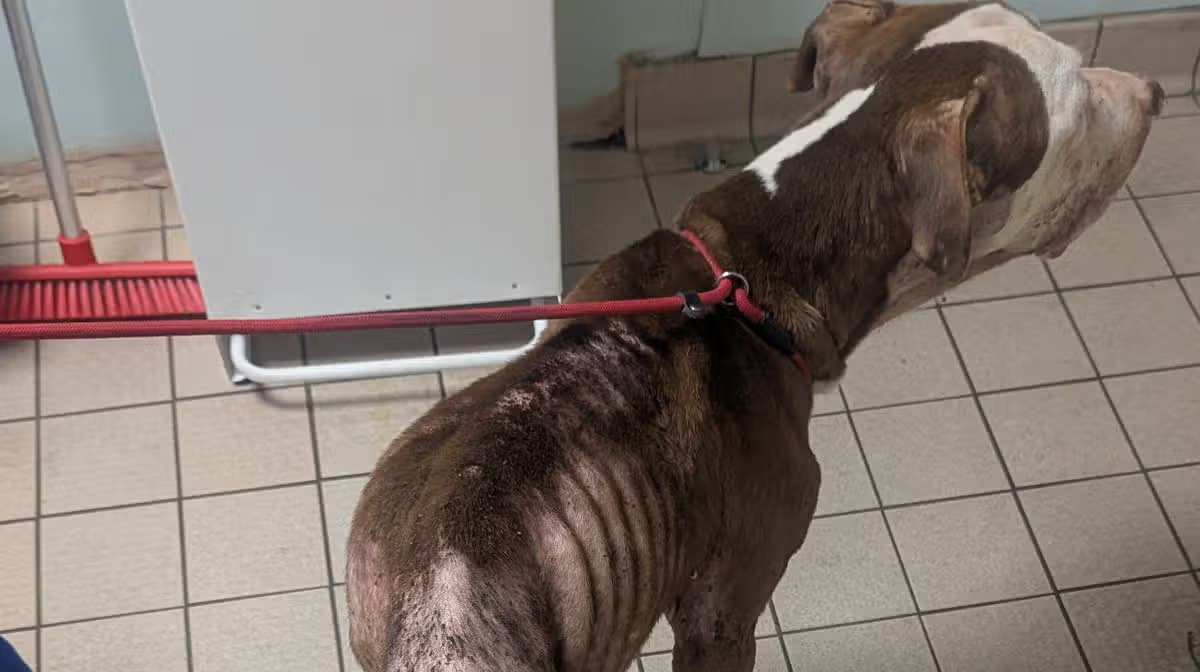
Kano the bullbreed was found with visibly protruding ribs and crawling with fleas

A man has been banned from keeping animals for fifteen years after RSPCA officers discovered an emaciated dog at a Rochdale address.

Advertisement

Paul Dawson, 37, of Brownside Road in Burnley, was handed the ban at Tameside Magistrates’ Court on July 31 after pleading guilty to three offences of causing unnecessary suffering to an animal.

His dog, a bullbreed named Kano, was discovered by RSPCA inspectors at an address linked to Dawson on Alice Street in Rochdale after members of the public ‘expressed concern’ that the dog had been left unattended in the property.

Click here to get the biggest stories straight to your inbox in our Daily Newsletter

Inspector Beth Fazackerley and rescue officer Francesca Iraci saw Kano through the keyhole ‘looking very skinny’ on August 6 last year, the charity said.

Advertisement

Ms Fazackerley pushed some wet dog food through the letter box, which the dog ate. Calls for Dawson to come to the door got no response.

A warrant was obtained and they returned later that evening with a police officer who gained entry to the property, at which point Kano ‘walked around five metres and then slumped to the ground’.

Ms Fazackerley detailed to the court how she witnessed Kano covered in ‘large clumps’ of fleas and observed him scratching himself to gain some comfort.

“His ribs, hip bones, spine and other bones were easily visible. I noticed two wounds with scabs above his left shoulder and the other on his right elbow.”

His nails were untrimmed, his fur and skin were said to ‘appear dirty’ with ‘brown crust’ visible in ‘multiple places’ on his body with fur loss around his headquarters.

Photos from the property show a filthy mattress and rubbish covering the floor, with belongings and faeces ‘piled high’.

Kano was rushed to for urgent treatment and the vet’s verdict was that he was suffering with hunger and severe weight loss.

“He was very hungry when food was offered. Kano was suffering for a minimum of three weeks, but likely longer.

“No preventative treatment was provided for flea infestation. Fleas cause irritating itchy bites and if large amounts of fleas feed on the animal they can cause fatal blood loss. In extreme cases flea infestation can cause anaemia which happened in this case.”

“The amount of rubbish and objects in the rooms and corridor would make it difficult for the dogs to move around. In my professional opinion dogs were being kept in unsuitable, unsanitary conditions and were suffering.”

Advertisement

The judge said it was “the most serious case of animal cruelty I have ever dealt with.” In mitigation, his lawyers said he showed remorse and offered a guilty plea, and that he was suffering from a bereavement.

After pleading guilty to failing to three counts of causing unnecessary suffering to an animal – by failing to provide a suitable diet, adequate veterinary care and a suitable living environment – Dawson was handed a 22-week prison sentence suspended for 12 months, and was banned from keeping animals for 15 years.

He was also ordered to complete 18 Rehabilitation Activity Requirement days, 80 hours unpaid work and ordered to pay £400 costs.

Advertisement

Inspector Fazackerley said: “Providing an appropriate diet, veterinary care and environment is a fundamental responsibility for any pet owner.

“In this case it was clear Kano’s basic needs were not being met, and he was suffering for some period of time. We are grateful to the members of the public that reported him to us, so we could rescue him before his condition deteriorated further.

“If you can no longer care for your pets, it’s vital that you make arrangements to ensure their welfare. For any pet owners struggling, there’s cost of living advice on the RSPCA’s website.”

Source link

Advertisement
Continue Reading

NewsBeat

Alaska community split on plan to create a gold mine in the middle of a national park

Published

on

Alaska community split on plan to create a gold mine in the middle of a national park

An Alaskan community is split on a plan to create a gold mine in the middle of a national park amid environmental concerns.

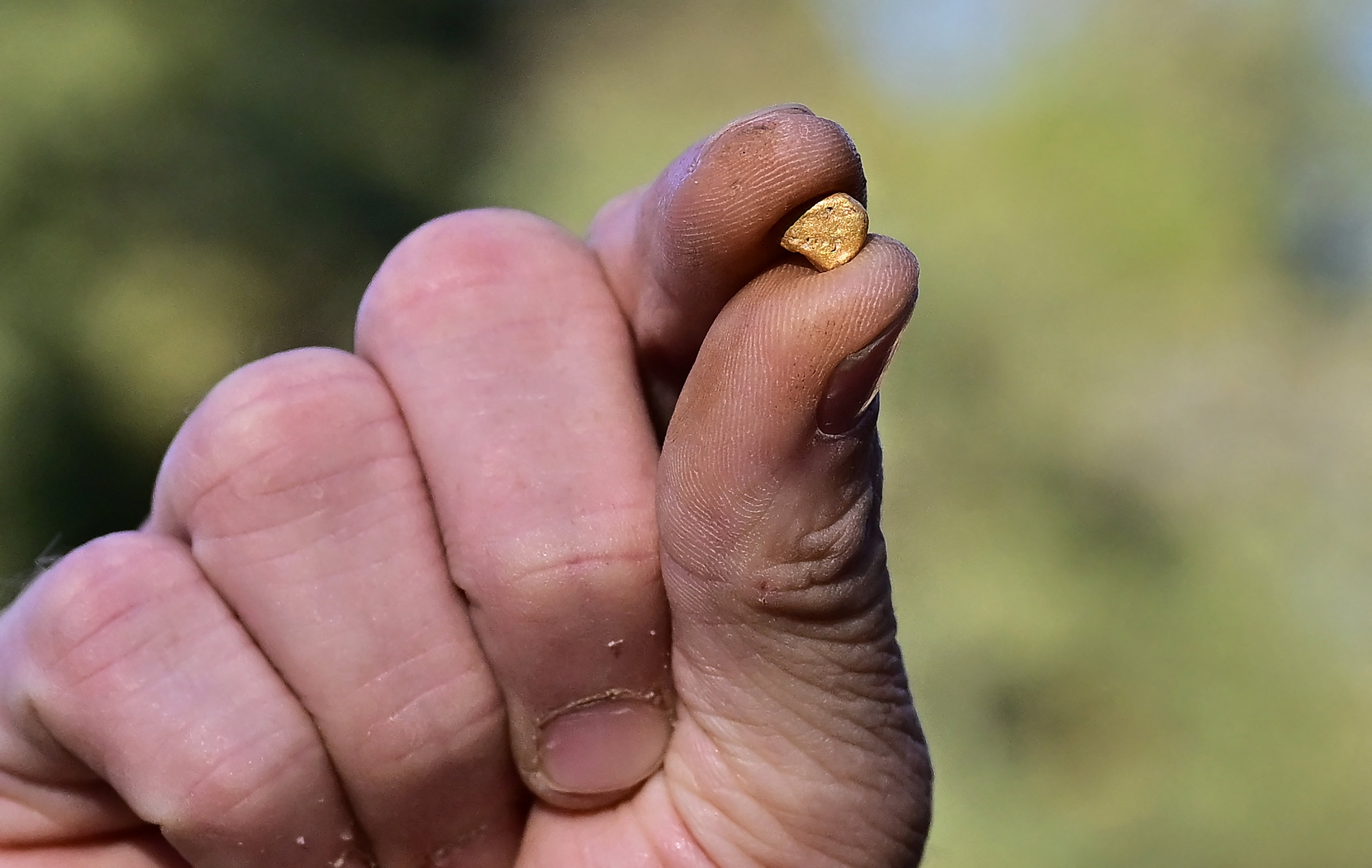
The federal government granted Alaska Native-owned Cook Inlet Region Inc. the rights to Johnson Tract, a nearly 21,000-acre property surrounded by Lake Clark National Park, in the 1970s as part of a land exchange agreement. Mining company Contango Silver & Gold now has a lease agreement with Cook Inlet Region and plans to create a mine on the mineral-rich Johnson Tract.

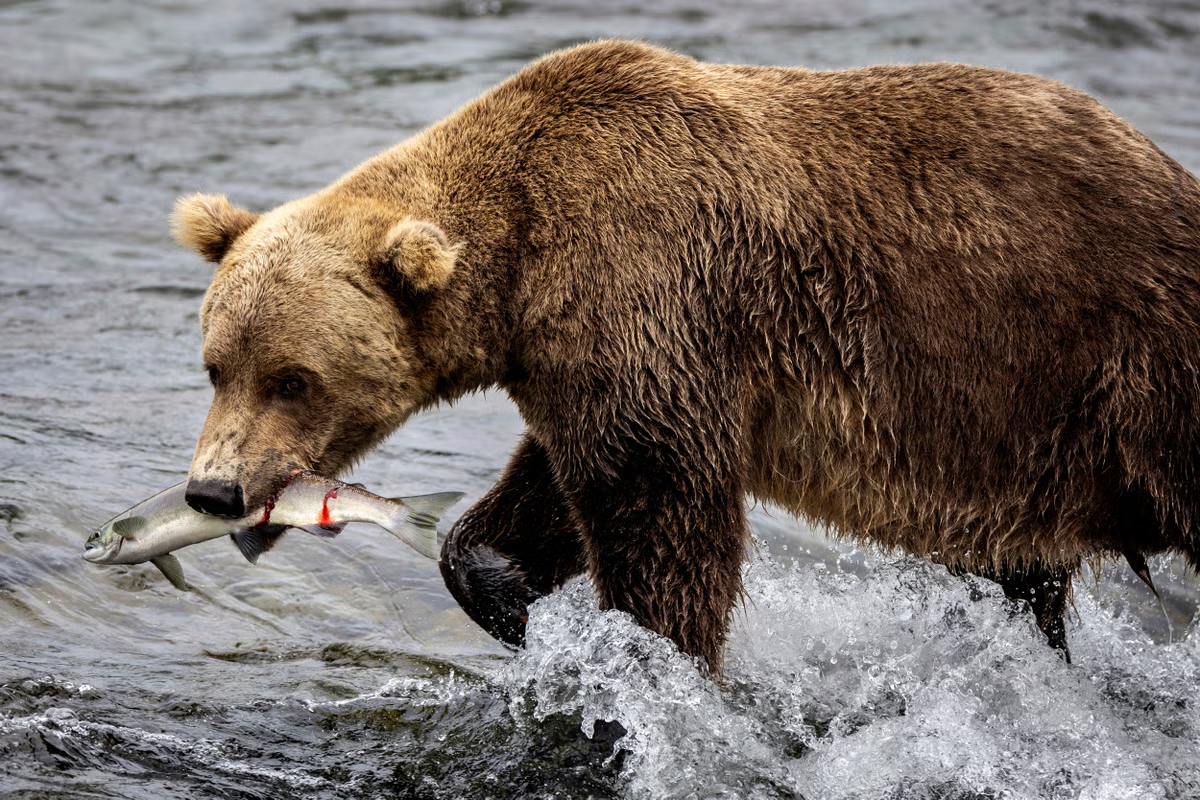
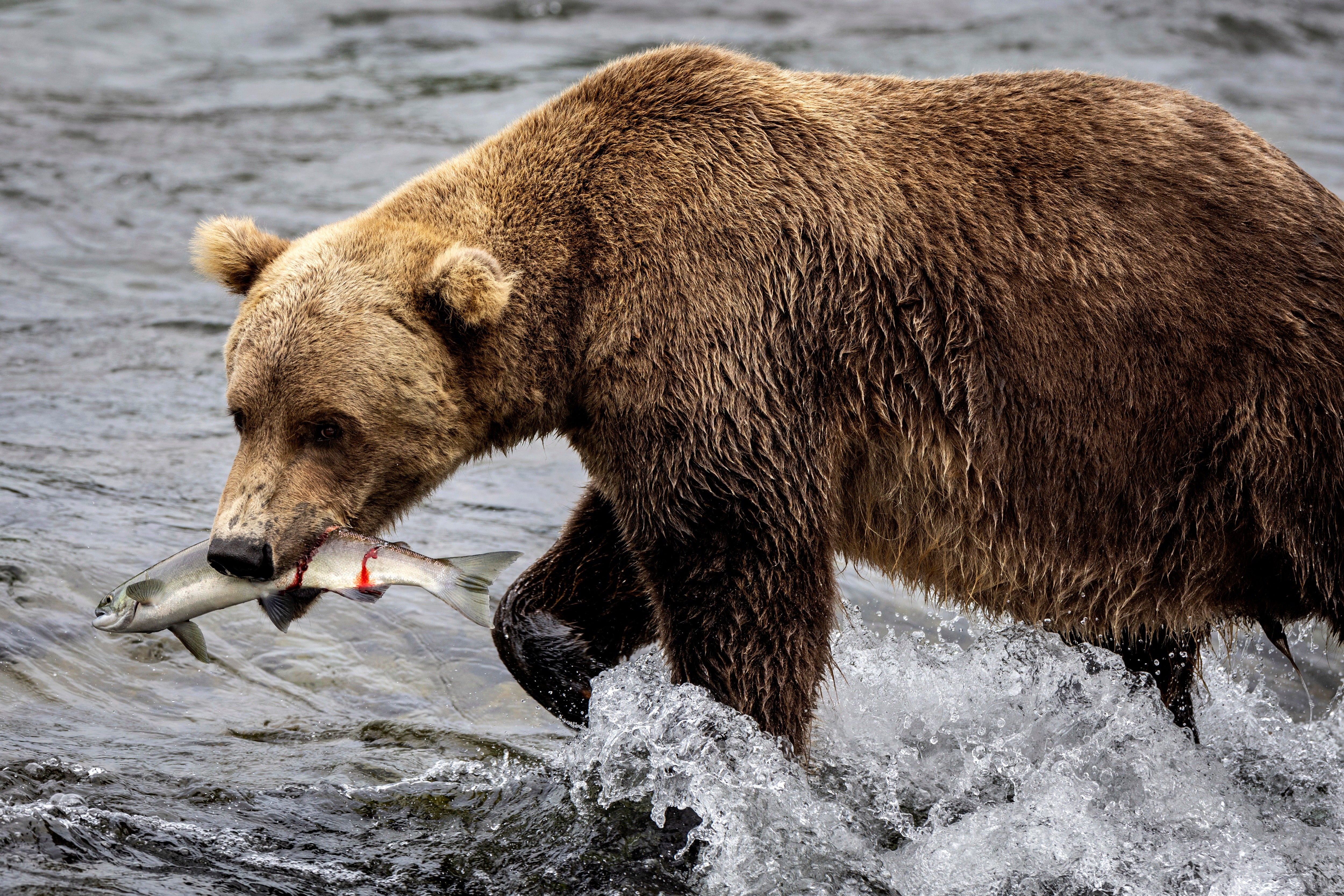
While opponents of the project have voiced concerns over the potential effects on beluga whales and brown bears in the region, supporters say the environmental impacts will be minimal, and it would be an economic boost for local tribes.

Contango plans to ship ore mined at Johnson Tract to an existing mill facility, instead of processing the materials there. This would lessen the company’s environmental footprint in the area, but according to The Wall Street Journal, local business owners worry transporting ore through the park will scare off the brown bears that visitors come to see.

Advertisement
An Alaskan community is split on a plan to create a gold mine in the middle of a national park amid environmental concerns
An Alaskan community is split on a plan to create a gold mine in the middle of a national park amid environmental concerns (Getty Images)

“Over many, many years, they started bringing their cubs into the yard, and then they started nursing in front of us,” Joanne Edney-Coray, who runs the Silver Salmon Creek Lodge with her husband, told the publication. “It can be ruined in an instant with teams of people on mining trucks.”

Environmental groups and the Chickaloon tribal council filed a lawsuit last year against the U.S. Army Corps of Engineers, arguing that it violated the Clean Water Act by granting a permit for the Johnson Tract project.

The Army Corps did not ensure endangered Cook Inlet belugas are protected from water and noise pollution or thoroughly evaluate the project’s potential to cause acid mine drainage and leach contaminants into the nearby Johnson River, the Center for Biological Diversity, one of the plaintiffs in the lawsuit, alleged in a May 2025 press release.

When The Independent reached out to the Army Corps of Engineers, it said it “does not comment on matters in litigation,” and referred to the Justice Department.

Supporters of the project say the environmental impacts will be minimal, and it would be an economic boost for local tribes
Supporters of the project say the environmental impacts will be minimal, and it would be an economic boost for local tribes (AFP via Getty Images)

Contango CEO Rick Van Nieuwenhuyse argued that his company is “not ruining a park.”

“We’re going to do everything in a way that is really minimizing any of the impacts,” he told the Journal.

Advertisement

The Journal noted that Contango is performing a baseline wildlife survey, which includes monitoring the belugas to assess where they swim.

Greg Encelewski, the president of the local Ninilchik Traditional Council, also pointed out the potential economic benefits of the mining project.

“Our tribes are trying to become self-sufficient, and without some type of economic engine we’re not going to,” he told the Journal.

The Independent has reached out to Contango, Cook Inlet Region and the Justice Department for comment.

Advertisement

Source link

Continue Reading

NewsBeat

Solar eclipse health tips if you looked directly at the sun amid eye warnings

Published

on

Daily Record

Here are some warning signs to look out for.

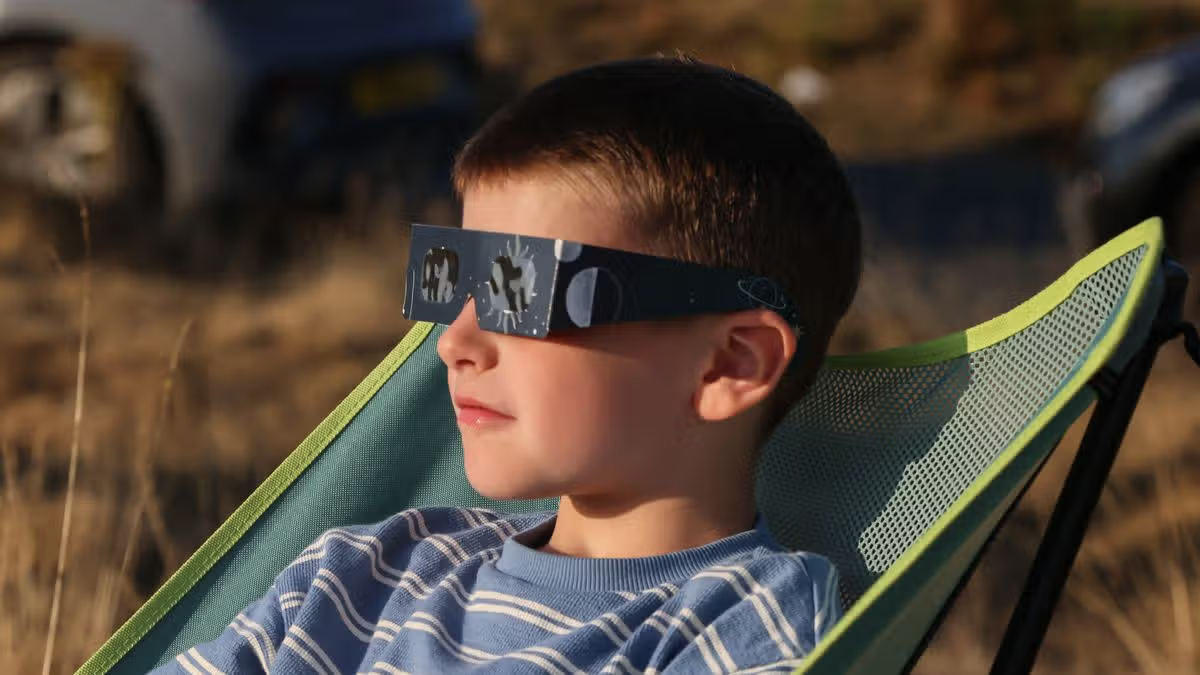
The dazzling solar eclipse was seen by thousands of skygazers across the UK today – hopefully most wearing specialist glasses.

Eye health experts have warned there is a risk for those who stared directly at the eclipse. Earlier this evening, the Moon passed directly between the Earth and the Sun, blocking the Sun’s face. Although it was a partial eclipse, the experts say there is a real risk to eye health for those who tried to watch with their own eyes.

Advertisement

Nkosi Yearwood, optometrist and The College of Optometrists council member for Wales said: “People often forget that the sun gives out a lot more light than just visible light. There are also ultraviolet rays, infrared rays, and it’s this whole spectrum that is harmful to our eyes.

“Because the sun starts dimming in the eclipse, many people think that it’s safe to look at, but actually even if it’s a 90% coverage, you’ve still got 10% of the sun that you’re staring at, and that’s still a lot of energy.”

How can looking directly at the solar eclipse without certified filters impact your eyes?

“If you look directly at it, it can cause damage to the back of the eye and can cause some retinopathy,” Patrick Laidlaw, an optometrist based at Optegra Eye Clinic Sheffield said.

Advertisement

“If you look at it for too long you could even develop a central bit of field loss.”

This is because looking directly at a solar eclipse can affect the macula.

“There’s a point at the back of the eye called the macula, which is where you get your central vision from, and it’s highly populated with photoreceptors. Intense light can cause toxicity and can essentially burn the back of the eye,” explains Laidlaw.

Yearwood notes that history suggests that this damage can occur even when you look at it for short period of time.

Advertisement

“In the days following the last eclipse in the Nineties, around 70 people across the UK presented to eye departments with some level of solar retinopathy, and about 40% of these people looked at it for less than a minute,” says Yearwood.

What red flag eye symptoms should we look out for?

People tend to get delayed symptoms.

“It can take a few hours or even couple of days before you start feeling the symptoms,” says Yearwood.

He explains that many people don’t notice it straight away because there usually isn’t any pain associated with it.

Advertisement

“The retina doesn’t have any pain receptors, so you can do this damage and not know about it,” says Yearwood.

However, there are other signs to look out for that can range from mild to drastic.

“The main things to look out for is any blurring in vision, distortion, a dark spot or a change in your colour vision,” says Yearwood.

“If you experience any of these symptoms or just feel like things aren’t quite right, seek advice from an optometrist at your local opticians straight away.”

Advertisement

Laidlaw adds: “I would also look out for any severe light sensitivity or any reduction in vision.”

What do optometrists look for?

“We look for any changes to the macular region, because that’s the part of your eye which focuses on the very fine detail. Whenever you’re looking at something, your macula is focused on it, and we tend to see changes to the retinal cells,” says Yearwood. “It generally shows up as a yellowish spot.”

Can this damage be treated or reversed?

Advertisement

There is no treatment for it, but it can heal itself.

“Similar to sunburn, it does in most cases does heal itself,” says Yearwood.

“The length of time to heal and how high the chance of healing depends on how long you look at the eclipse for.

“So, if you did end up staring at it for too long, you do risk permanent vision damage. If you are worried, go to your local opticians and let them assess you.”

Advertisement

Ensure our latest stories always appear at the top of your Google Search by making us a Preferred Source. Click here to activate or add us as your Preferred Source in your Google search settings.

Source link

Continue Reading

NewsBeat

Eclipse wows thousands across the UK – but not everyone’s happy

Published

on

Daily Mirror

You can’t please everyone…

Hundreds of thousands of people across the UK stepped outside on Wednesday night to watch the largest partial eclipse in 27 years.

Many gathered on hills and other locations to watch the sun largely disappear behind the moon, with some areas seeing more than a 90 per cent covering.

Advertisement

Social media was flooded with requests from people trying to get their hands on special viewing equipment to watch the celestial phenomenon.

Click here to get the biggest stories straight to your inbox in our Daily Newsletter

However, not everyone seemed quite as enthusiastic.

Amongst those who took to X, formerly Twitter, was Tony Blackburn OBE.

Advertisement

He wrote: “I’m in North Devon and the eclipse was a disappointment, hardly went dark, nothing like the last one which was special, mind you the news channels still going on about how great it was. Not in the UK it wasn’t.”

And it seems he was not the only one.

@lynzr33: “I’ve been ill in bed since Saturday so was looking forward to the eclipse & what an absolute letdown it was. If I didn’t know there was one I’d never had noticed such was the lack of difference in the light. I expected more.

One user @daniel_defalco wrote: “Glad I’ll be dead when the next one happens. What a let-down. Hardly any difference.”

Advertisement

Another, @Siouxsiequ, said: “Seriously disappointed with the so called eclipse. Massive hype over nothing.”

@xxoMarina said: “The eclipse was so underwhelming I thought it was gonna go dark outside lmao.”

@52Vinyl said “That eclipse. Bloody rubbish. Barely went dark and sun always too strong for any discernible change.”

Source link

Advertisement
Continue Reading

Trending

Copyright © 2025