Connect with us
DAPA Banner
DAPA Coin
DAPA
COIN PAYMENT ASSET
PRIVACY · BLOCKDAG · HOMOMORPHIC ENCRYPTION · RUST
ElGamal Encrypted MINE DAPA
🚫 GENESIS SOLD OUT
DAPAPAY COMING

NewsBeat

Inside Lindsey Graham’s final hours after complaining he felt unwell… before his sudden death at 71

Published

on

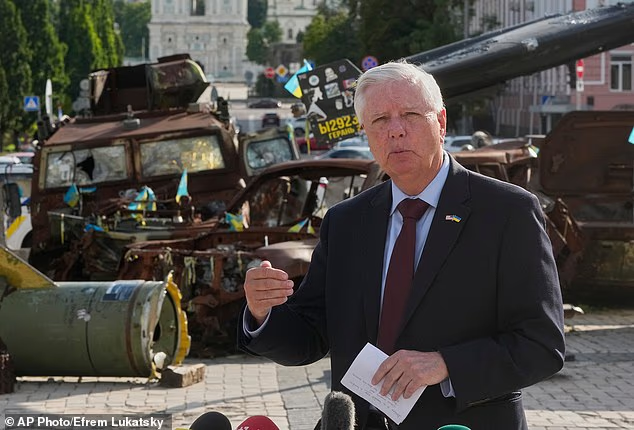
US Senator Lindsey Graham died unexpectedly on Saturday night. He is pictured answering questions from the media near an exhibition of damaged Russian vehicles in central Kyiv, on July 10, 2026

In the hours before Senator Lindsey Graham‘s unexpected death, he discussed the issues he would like to tackle – and shrugged off his health concerns.

The longtime Republican from South Carolina spoke with President Donald Trump by telephone on Saturday night when he discussed his recent trip to Ukraine, and the president confided in him about his planned strikes on Iran, Axios reports. 

An unidentified person who spoke with Graham in the moments after, told the outlet he complained he was feeling unwell.

When the person then urged Graham to immediately seek medical attention, the Republican from South Carolina said he would do so on Sunday morning after his scheduled appearance on NBC’s Meet the Press.

Advertisement

He then joked, ‘I can’t die now. I still need to do the Russian sanctions, get Iran sorted out and do Israeli-Saudi normalization,’ according to the outlet. 

But just a few hours later, the senator, 71, was seen laying on the gurney as first responders attempted life-saving measures on Saturday night in the pictures obtained by TMZ

He appeared to be intubated as EMTs pushed the gurney into a nearby ambulance that was headed for George Washington University Hospital.

Authorities first received a 911 call about a ‘cardiac arrest’ at Graham’s home at around 8.30pm, according to multiple reports. Hordes of first responders were then seen descending on the street outside Graham’s house.

Advertisement

US Senator Lindsey Graham died unexpectedly on Saturday night. He is pictured answering questions from the media near an exhibition of damaged Russian vehicles in central Kyiv, on July 10, 2026

Just about 25 minutes after the call, first responders had started CPR as the senator suffered from cardiac arrest, according to police scanner audio obtained by The Washington Post.

By the early hours of Sunday, Graham’s office announced he had ‘passed away from a brief and sudden illness.’ 

Advertisement

His cause of death has since been revealed to be ‘Aortic Dissection due to Arteriosclerotic Cardiovascular Disease.’ 

The Mayo Clinic defines an aortic dissection as a tear in the inner layer of the aorta, the body’s main artery. It can be fatal if blood rushes through the tear. In Graham’s case, plaque buildup on his heart weakened the aortic walls, causing a tear.

‘The death certificate will be PENDING until all the toxicological and microscopic testing are finalized, and at that point the death certificate will be updated to reflect the cause of death and appropriately classify the manner of death,’ Graham’s spokesperson said in a statement just before 5pm.

DC Fire and EMS medical units and EMS supervisors deliver Senator Lindsey Graham to George Washington Hospital Emergency Room on the night of July 11, 2026. Senator Graham passed away in the early hours of July 12, 2026

DC Fire and EMS medical units and EMS supervisors deliver Senator Lindsey Graham to George Washington Hospital Emergency Room on the night of July 11, 2026. Senator Graham passed away in the early hours of July 12, 2026

Advertisement

Amidst the July 4th recess break in Washington, DC this past week, Graham travelled to Ukraine, met with President Volodymyr Zelensky, and even visited a drone facility which was later destroyed by the Russians.

Graham has also been targeted by Iranian leaders. An Iranian State TV host noted in a Sunday broadcast that she congratulated ‘the Iranian people on the death [of] U.S. Senator Lindsey Graham, who has been sent to hell.’

Political commentators, liberal and conservative alike, stepped up with their own theories about Graham’s cause of death after agents from the Federal Bureau of Investigation were spotted at Graham’s residence.

Director Kash Patel had said his agency was providing all necessary resources for the probe. 

Advertisement
FBI Director Kash Patel is seen at a press conference in Washington, DC on July 1, 2026

FBI Director Kash Patel is seen at a press conference in Washington, DC on July 1, 2026

Megan Mobbs, Director of the Center for American Safety and Security at the Independent Women’s Forum, a conservative think tank, noted on X that ‘cardiac arrest tells us how his life ended. It does not tell us why his heart stopped.’

She also added that, ‘given the threat environment, the identities of America’s adversaries, and Senator Graham’s prominent role confronting them, the American people deserve certainty.’

‘That means a complete forensic autopsy, preservation of all relevant biological specimens, comprehensive toxicology and histology, and consultation with federal law enforcement and counterintelligence authorities,’ Mobbs concluded.

Advertisement

Conservative commentator Matt Van Swol shared a video of Graham on X from Ukraine this last week, noting, ‘I’m sorry, but Lindsey Graham dying out of the blue like this doesn’t make any sense at all.’

‘We have him on camera yesterday looking perfectly healthy. None of this is making any sense,’ Van Swol said.

Advertisement

Right-wing journalist Laura Loomer called for an ‘investigation,’ into Graham’s death, especially as Russian president Vladimir ‘Putin’s advisor Alexander Dugin called for Lindsey Graham to be ‘flattened’ exactly 4 months ago.’

While several figures were quick to assume foreign involvement in Graham’s death, others pointed to medical explanations.

Townhall columnist Dustin Grage shared that he was ‘told by a source in South Carolina that Senator Lindsey Graham has dealt with blood pressure issues since his 40s,’ also noting that, ‘His father also died of cardiac arrest at age 69.’

‘I know the conspiracy theories won’t stop, but sometimes life just happens. Not everything is a conspiracy,’ Grage added.

Advertisement

Top conservative talk radio host Dana Loesch commented on Grage’s post, noting that she agreed with his sentiment that Graham’s death appeared to be ‘sudden, but cardiac issues usually are.’

Trump shared a tribute to the late Senator on Truth Social shortly after the announcement was made.

Advertisement

‘Senator Lindsey Graham, one of the greatest people and Senators I have ever known, is dead! He was always working, and was a true American Patriot. Lindsey will be greatly missed!!! DETAILS AND ARRANGEMENTS TO FOLLOW. So sad!,’ Trump wrote on his Truth Social platform.

Graham was one of Trump’s closest allies in the US Senate, consistently voting to enact the President’s agenda. The White House has lowered the flags to half-mast in his honor.

The senator was also a staunch supporter of Ukraine and Israel, and he advised the President on foreign policy matters pertaining to Russia and Iran.

In late March 2025, just a little more than a month after Trump took office, the President posted a lengthy endorsement of Graham, referring to the senator as ‘a wonderful friend.’

Advertisement

Vice President JD Vance posted his own lengthy tribute to Graham on Sunday, with whom he spent two years as colleagues in the US Senate, specifically adding that Graham ‘fought like hell for the things he believed in, and he was just as willing to go to bat for you when it counted.’

Congressman Jim Clyburn, the only Democrat representing South Carolina in Washington, also offered his condolences, sharing that their ‘political relationship was sometimes partisan and passionate, but always pleasant and productive on behalf of the people of South Carolina.’

Advertisement

Source link

Continue Reading
Click to comment

You must be logged in to post a comment Login

Leave a Reply

NewsBeat

Labour’s new pay-per-mile road tax to clobber businesses, ministers admit

Published

on

Labour's new pay-per-mile road tax to clobber businesses, ministers admit

Advertisement

Labour’s new pay-per-mile road tax on fully electric and hybrid vehicles will clobber businesses, ministers have admitted.

An internal Government impact assessment acknowledges the levy, part of the effort to reach Net Zero, will affect around 5.6million vehicles and that ‘the impact will be material’ on some firms.

While it does not give a figure for the potential impact, it is yet another blow to businesses following Chancellor Rachel Reeves‘s Employer National Insurance hike, inflation-busting increases in the minimum wage and amid sky-high energy costs and changes to employment law already expected to cost businesses £5billion.

Critics warned the new levy, known as eVED, threatens to further push up prices for consumers as firms will look to pass on any increase in costs.

Advertisement

Ministers said yesterday they would push ahead with proposals to charge electric vehicle owners 3p a mile to ensure they make a ‘fair contribution’ to road upkeep costs. Plug-in hybrid drivers will also be charged 1.5p per mile.

The new tax will be introduced from April 2028, with a typical electric vehicle driver expected to pay about £240 per year.

The charge is on top of road tax, which is around £200 for most vehicles but £600 a year for the first five years for cars with a price tag of £40,000 or more – which includes many electric and hybrid models.

Advertisement

Howard Cox, founder of the FairFuelUK campaign, said: ‘Labour’s new pay-per-mile road tax on electric and hybrid vehicles is yet another hammer blow to British businesses, ministers have now been forced to admit.

‘Once again, it is businesses and ultimately consumers who will pay the price for Labour’s tax-raising agenda. This stealth tax on greener vehicles shows this government has no understanding of the pressures facing companies trying to stay competitive.’

Ministers claim the raid is necessary to plug a projected drop in fuel duty revenues as petrol and diesel are phased out, with new sales of petrol and diesel cars set to be banned from 2030.

Advertisement

At present, fuel duty raises more than £25billion a year.

But the internal impact assessment which emerged today says businesses who have invested in fleets of EVs and hybrids, after being encouraged to by ministers, will be clobbered particularly hard.

It states: ‘For some businesses, particularly large fleets, the impact will be material.

‘One-off costs for businesses are expected to include updating processes to estimate mileage for their vehicles and pay eVED.

Advertisement

‘We also expect there will be ongoing costs for businesses including putting in place new systems to estimate and pay eVED.’

Rachel Reeves, the Chancellor, announced the pay per mile tax in the Budget last November.

The Treasury was contacted for comment.

Advertisement

Advertisement

Source link

Continue Reading

NewsBeat

Bridlington and Scarborough cocaine ring men plead guilty

Published

on

Bridlington and Scarborough cocaine ring men plead guilty

Humberside Police has unmasked four men behind a class A drugs operation after they all entered guilty pleas at Hull Crown Court yesterday (July 13).

Nathan Langton, 32, formerly of Burstall Hill in Bridlington, Liam Langton, 28, of Quay Street in Scarborough, and Lewis Wenn, 29, of The Close in Cottingham, each pleaded guilty to conspiring to supply class A cocaine.


RECOMMENDED READING:


Jordan Withey, 27, of St Georges Avenue, Bridlington, admitted conspiring to supply class A cocaine, possession with intent to supply class A cocaine, and possession of criminal property.

Advertisement

They are due to be sentenced at the end of the month (July 28).

The investigation into the group was launched in January 2026 when officers from the Kinetic Organised Crime Group Team identified a mobile number used to advertise and sell cocaine in Bridlington and surrounding areas.

Further enquiries revealed that the number was part of a wider network of burner phones used to send bulk messages advertising Class A drugs.

Detectives identified Liam Langton and Lewis Wenn – both of whom were out on licence from prison for drug offences – along with Jordan Withey, as key members of the gang.

Advertisement

After a series of warrants in Bridlington and Scarborough on March 4, Langton and Withey were arrested, with a search of Withey’s address uncovering a significant quantity of class A drugs and around £7,000 in criminal cash.

Langton was also arrested during a raid at his home and officers witnessed him attempting to dispose of a mobile phone, which was seized and later found to contain key evidence.

The phone contained communications with Lewis Wenn and conversations with his brother, Nathan Langton – who was directing the operation from inside his prison cell.

Mobile data analysis, CCTV footage, and financial records established that the group worked together to advertise, prepare, and distribute cocaine, police said.

Advertisement

CCTV showed Lewis Wenn purchasing a top-up voucher for one of the drug line phones before leaving in a vehicle insured by Liam Langton.

It was also established that Jordan Withey provided a base for storing and supplying the drugs, and was responsible for holding cash generated by the operation.

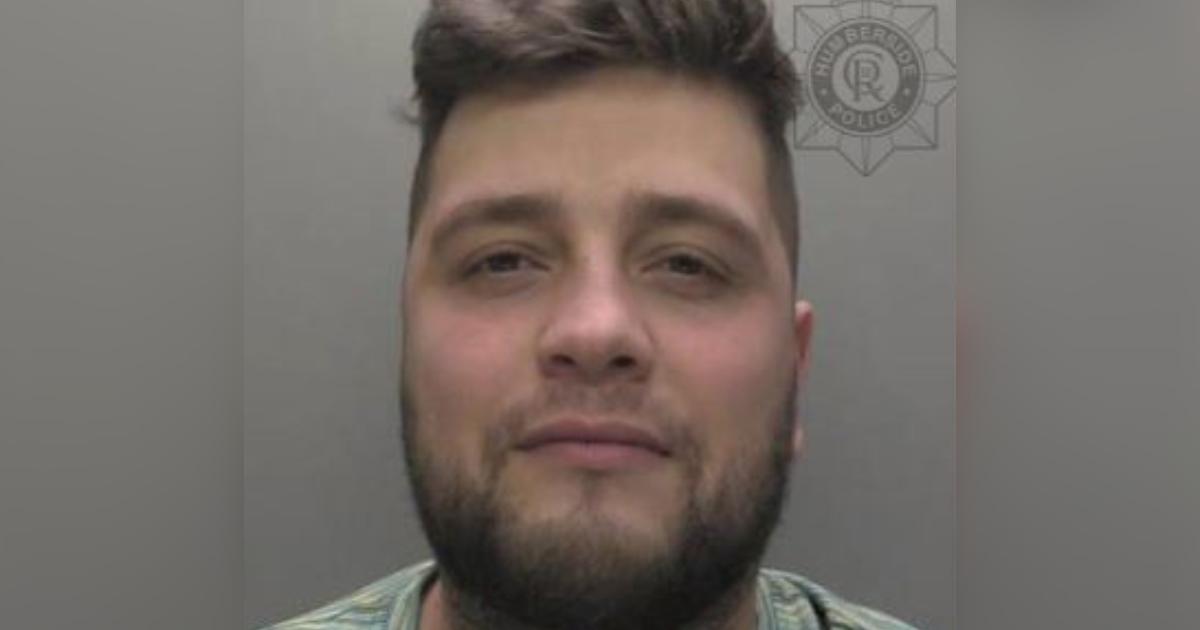
(L-R) Liam Langton, Lewis Wenn, and Jordan Withey (Image: Humberside Police)

Both Withey and Liam Langton were detained, questioned, and later charged and remanded in custody.

On Wednesday, April 1, Lewis Wenn was located at a holiday property near South Cave; two mobile phones recovered from the property contained messages arranging cocaine deals.

Advertisement

Messages between Wenn and a contact saved as “Fat” (traced to Nathan Langton) discussed the preparation and distribution of drugs and boasted about the money he was making, despite being behind bars.

He also referred to plans involving drones to deliver prohibited items into the prison.

On Thursday, May 7, a specialist prison search team entered Nathan Langton’s cell and recovered a concealed mobile phone, which he originally attempted to hide by diving into bed.

The phone had been used to contact the drug line and associates outside prison, but once the phone was seized, the drugs line stopped operating.

Advertisement

Constable Karl Freeman said: “This investigation is a perfect example of organised crime not being glamorous or untouchable.

“It’s a group of individuals motivated by money, willing to exploit addiction and bring harm into our communities.

“Even after three of his associates had been arrested, Nathan still tried to keep the drugs line alive, convinced he could stay one step ahead, which inevitably failed.”

Humberside Police said that they will continue to work with the Home Office Clear Hold Build Initiative in Bridlington to stop organised crime and selling drugs.

Advertisement

Constable Freeman added: “Thanks to the dedication of our officers, specialist analysts and our partners within the prison service, four people who played significant roles in this network face the consequences. Thank you to members of the public who continue to report information to us.

“Every organised crime group we dismantle makes our communities safer, disrupts the supply of dangerous drugs and sends a clear message that there is nowhere criminals can hide, not even behind prison walls.”

Members of the public with information are urged to contact police via the non-emergency 101 line or by speaking to local officers, and to call 999 in an emergency.

Information can also be reported anonymously through the independent charity Crimestoppers by calling 0800 555 111.

Advertisement

Source link

Continue Reading

NewsBeat

France vs Spain LIVE: World Cup 2026 match stream, latest team news, lineups, TV, prediction

Published

on

France vs Spain LIVE: World Cup 2026 match stream, latest team news, lineups, TV, prediction

Spain squad: David Raya, Joan Garcia, Unai Simon, Marc Pubill, Alex Grimaldo, Eric Garcia, Marcos Llorente, Pedro Porro, Aymeric Laporte, Pau Cubarsi, Marc Cucurella, Mikel Merino, Fabian Ruiz, Gavi, Alex Baena, Rodri, Martin Zubimendi, Pedri, Ferran Torres, Dani Olmo, Yeremy Pino, Nico Williams, Lamine Yamal, Mikel Oyarzabal, Victor Munoz, Borja Iglesias

Source link

Continue Reading

NewsBeat

Man dressed as fox pulls out of Nigel Farage by-election saying it’s got too silly

Published

on

Daily Mirror

Rob Pownall, who stood against Andy Burnham in Makerfield, has dropped out of the Clacton by-election, dismissing the Nigel Farage-triggered contest as a ‘circus’

A candidate who famously dressed as a fox to battle Andy Burnham in Makerfield has dropped out of Nigel Farage’s Clacton ‘circus’ – saying the by-election has got too silly.

Advertisement

Rob Pownall, who picked up 18 votes in the contest that brought Mr Burnham back to Parliament, said it is impossible to take Mr Farage’s race seriously. Wildlife campaigner Mr Pownall had planned to stand after the Reform UK leader said he was triggering a by-election in a surprise announcement last week.

But no other parties opted to field a candidate, meaning Mr Farage’s main rival is likely to be parody candidate Count Binface. Mr Pownall wrote on his blog: “Farage can be the ringleader of his new circus, we’re not here to be one of his performers.”

The Reform leader attempted to frame his decision to step down and seek re-election as a “people versus the establishment” contest. He had been facing a Parliamentary standards investigation over a £5million ‘gift’ from crypto tycoon Christopher Harborne which he did not declare.

But Labour, the Lib Dems, Conservatives and Restore all said they would play no part, with Kemi Badenoch accusing Mr Farage of having a “hissy fit”.

Advertisement

Mr Pownall has previously stood in Makerfield and Edinburgh Central as a Protect the Wild candidate – campaigning to end hunting, shooting and badger culling. He initially announced he would be on the ballot paper in Clacton, but explaining his change of heart said: “What made Makerfield and Edinburgh Central different is that they were real elections, contested seriously by every major party, where our campaign was one voice among a genuine democratic process. Clacton isn’t that.”

Warning that no one was taking the by-election seriously he said: “Whilst we like attention, British wildlife protection is a serious issue, and I take this cause incredibly seriously. I have to weigh up the point at which being part of something stops helping that cause and starts undermining it.

“Being lumped in on a stage alongside a lineup of people treating this as a punchline isn’t the platform we set out to find, and I don’t think it’s the one that best serves the animals we’re trying to protect.”

Advertisement

Damning polling seen by The Mirror reveals 52% of voters think Mr Farage decided to fight the by-election in Clacton to divert attention away from a standards probe into the large amount of cash he accepted in 2024. Just a quarter of respondents did not believe he is trying to avoid scrutiny, polling firm Survation found.

Even among current Reform voters, a third think Mr Farage is attempting to swerve questions about his finances. The Reform leader faces a humiliating battle after all the main parties refused to take part in the “circus” contest, clearing the way for parody candidate Count Binface to be his main rival.

Veronica Hawking, Campaigns Director at 38 Degrees, said: “The British public don’t suffer fools gladly. They see this by-election for what it is: an attempt by Nigel Farage to avoid scrutiny and accountability that all our politicians should be held to. Farage says he represents the people but not many people get £5m gifts from billionaire friends. It’s time to clean up politics for good.”

Mr Farage was being investigated by Parliament’s standards committee after it emerged he had accepted a large sum from Thailand-based Christopher Harborne shortly before the 2024 general election. He did not declare the money, which he insists was an unconditional personal gift.

Parliamentary rules say gifts and donations in the 12 months before becoming an MP. If he is found to have broken rules, Mr Farage could potentially face a suspension and a possible by-election. The investigation is expected to resume if he returns to Parliament after the August 13 contest.

Mr Farage could face a second standards probe over allegations that convicted fraudster George Cottrell – an ally of the party leader – provided benefits including security, drivers, staff and accommodation. The Lib Dems last week called on the commissioner, Daniel Greenberg, to investigate following reports in The Times.

Mr Cottrell’s lawyers said they dispute reports of financial assistance to Mr Farage. On top of that it was reported last week that two £250,000 donations by Mr Cottrell’s mum Fiona are being investigated by the Met Police to determine the original source of the funds.

Advertisement

Two people have been interviewed under caution but no arrests have been made since it was referred to police by the Electoral Commission last Thursday. Damian Lyons Lowe, founder of Survation, said: “The public may be split on whether Farage should re-stand, but they are not split on why he is doing it. Twice as many voters see this as an escape from scrutiny than a genuine appeal to Clacton, and even among Leave voters he fails to win the benefit of the doubt.”

The Survation polling, of 2,058 adults, found 50% of people who intend to vote for Reform thought Mr Farage was not trying to dodge scrutiny. Worryingly for the right-wing party, 31% of his parties believe he was.

On Tuesday last week Mr Farage announced he was stepping down as an MP to contest a by-election in his Clacton constituency. He claimed to be the victim of an establishment stitch-up and said voters could decide his fate – despite the standards probe being ongoing.

Count Binface is expected to be the main challenger to Mr Farage. Polling by Ipsos last week found 33% of Brits want the parody candidate – real name Jonathan Harvey – to win, compared with 21% for Mr Farage. Nearly a third said neither deserve to win, and 13% are undecided.

Advertisement

Mr Farage’s finances have come under increased finances in recent weeks. Desmog has calculated he has earned £2.3million on top of his £98,599 salary since entering Parliament. Reform UK has been contacted for comment.

Source link

Continue Reading

NewsBeat

How much microplastic are we actually breathing in? Here’s what we do and still don’t know

Published

on

How much microplastic are we actually breathing in? Here’s what we do and still don’t know

You’ve already inhaled thousands of microscopic particles today. Some will be dust, pollen or soot, and some are plastic. Microplastics – tiny fragments shed from clothes, tyres or packaging – have been found pretty much everywhere. They’re in oceans, soils, wildlife, remote mountaintops and deep-sea trenches and the atmosphere is no exception.

But how much plastic are we really breathing in? And should we be worried?

A modelling study published in the journal Nature earlier this year suggests the answer may be more complicated – and perhaps less alarming – than previously thought. Measuring this atmospheric microplastic remains difficult, however, and scientists haven’t yet agreed on exactly how to do it.

The particles come from many different sources, including road dust generated by tyre wear, sea spray, or agricultural soil dust, disturbed by wind and farming activities. Indoors, the major source is textiles, particularly synthetic fabrics. Your fleece or your leggings will shed fibres during everyday use.

Advertisement

As plastics fragment into ever smaller pieces, detection becomes increasingly difficult. Current methods struggle to identify the smallest particles, meaning they are probably underestimated and, in the very smallest cases, remain largely theoretical.

Estimating microplastics in the air

Scientists can’t measure every microscopic particle directly, so they rely partly on computer models that estimate how much plastic enters the environment, how it breaks down into smaller pieces, and how these particles move through the atmosphere. Different models led to different estimations of anywhere between 324,000 tonnes and around 10 million tonnes entering the air each year.

The larger end of microplastics are visible to the naked eye.
Svet / Alamy

But real-world measurements didn’t find as much plastic in the atmosphere as these models predicted – not even close. After adjusting the flawed models to match the real-world measurements, the scientists behind the Nature paper came up with a much lower estimate: around 4,500 tonnes per year.

Advertisement

Why were the earlier estimates so much higher? The authors argue that previous models probably overestimated emissions from land-based sources such as car tyres or textiles. Those models had to make assumptions about how much plastic difference sources released and the sizes of the particles they produce – two things scientists still don’t know with confidence.

The Nature modelling study uses revised assumptions that better match what’s actually being found in the atmosphere. But this research is unlikely to be the final word. In a few years, with better data and more understanding, we may find ourselves having a similar conversation about another more refined estimate.

Different researchers looking at different things

The scientists behind the new study emphasise the lack of a “universal sampling protocol” for microplastics, including those found in the atmosphere. Different studies collect different particles in different ways, and this makes comparisons between them difficult. Some sample particles suspended in the air using pumps, while others collect particles that settle onto surfaces over time.

The samples are then examined under a microscope to identify features like colour and size, before chemical tests confirm whether the particles are actually plastic and if so which polymer they are made from.

Advertisement

Because studies use different equipment, focus on different size particles, and have different reporting methods, the results are often not directly comparable. This makes it much harder to estimate how much plastic people are actually breathing in.

Should we be worried?

Microplastics have been found throughout the human body, including in the blood and lungs. This naturally raises questions about the health effects. However, detecting microplastics is not the same thing as demonstrating they are harmful.

For now, researchers cannot say that the levels of airborne microplastics people typically inhale are causing diseases. What we can say is that evidence from laboratory experiments increasingly shows that these particles are linked to inflammation and a risk of damage to DNA and cells, though these experiments don’t necessarily reflect everyday life.

What needs to be done next

A few simple changes would help researchers make progress on atmospheric microplastics. We should have internationally agreed standards for sampling, analysis and reporting, for instance. This would mean the data generated is better quality and more easily comparable.

Advertisement

We’ll need studies that track the health harms of exposure over the long-term – not just on us, but on plants, animals and ecosystems too. And we need more research looking at the original sources of this microplastic and how it gets into the environment. This will help us develop better strategies for mitigating the problem.

Atmospheric microplastics are out there, and people are inhaling them every day. But we still don’t know exactly how much is in the air or what effect it will have on our health. Better measurements will help us answer that question. For now, the evidence does not support panic, but it does justify concern.

Source link

Advertisement
Continue Reading

NewsBeat

Great Yorkshire Show hears food production investment calls

Published

on

Great Yorkshire Show hears food production investment calls

The Harrogate showground was busy from early morning, as farmers, school groups, traders and exhibitors turned out in numbers.

Tickets, which are only available in advance, were a sell-out, with 150,000 people and 8,500 livestock due to attend across the four days.

NFU president Tom Bradshaw was among the industry leaders present, and speaking at a briefing chaired by NFU North regional board chairman William Maughan, who farms near Darlington, spoke of the importance of building more resilient farm businesses through innovation and long-term investment from government.

Mr Bradshaw said he will be looking to speak to Prime Minister-in-waiting Andy Burnham early in his premiership about food security, and the economic benefits of a thriving food and farm sector for every constituency in the UK.

Advertisement

The NFU press conference at the Great Yorkshire Show, with president Tom Bradshaw, right (Image: HANNAH CHAPMAN)

The panel also examined the growing role of Artificial Intelligence (AI) and other innovative technologies in improving productivity, supporting sustainable farming practices and helping businesses adapt to future challenges.

Mr Bradshaw said: “Investment in food production is critical to the nation’s future.

“Everyone, whether they live in rural Yorkshire or in one of our towns and cities, depends on a resilient food system.

“The resilience of our farms will determine our ability to produce food, manage inflation, protect national security and support economic growth. But resilience starts with profitable businesses that have the confidence to invest for the future.

Advertisement

“Profitability is not a dirty word. It is the foundation of sustainable farming, economic growth and long-term food security.”

A key part of that future, the NFU says, will be the adoption of new technology and AI-driven innovation.

Panel member Steve McLean, chief executive of The Agri-Tech Centre, said: “Yorkshire is home to world-class farming businesses which are already embracing new technologies to improve productivity and sustainability.

Cattle judging on the first morning of the 2026 Great Yorkshire Show (Image: SARAH CALDECOTT)

“Artificial intelligence, robotics, precision farming and data-led decision making all have an important role to play in helping farmers manage risk, improve efficiency and build resilience in an increasingly uncertain world.

Advertisement

“With the right support, Yorkshire can continue to lead the way in agricultural innovation while producing high-quality food and supporting rural economic growth.”

Elsewhere on the showground, York and North Yorkshire mayor David Skaith formally launched his rural action plan, which includes commitments on affordable housing, improved digital connectivity, transport and access to healthcare, announcing it would be backed with £1m of funding.

Washing off ready for showing – and keeping cool – at the Great Yorkshire Show (Image: SARAH CALDECOTT)

A huge audience packed out the Ariat GYS stage to hear from Liz and Kelvin Fletcher, of popular ITV show Fletchers’ Family Farm, which has been recommissioned for a further two series.

The couple, who had earlier presented rosettes in the Zwartbles sheep classes and visited the Forestry section, spoke of the reasons behind their decision to change tack from a planned move to California to buying a farm in the Peak District, and how it has changed their lives.

Advertisement

Liz and Kelvin Fletcher on the Ariat GYS stage (Image: SARAH CALDECOTT)

They told host Christine Talbot they were honoured to be asked to give out the prizes, and proud of how their four young children have embraced the farming life.


Strictly Come Dancing winner and former Emmerdale star Kelvin added: “So many people from within the farming community, the way they have been so helpful and so giving with information.

“You can do farm visits and farm tours, you can go on someone else’s farm and just have a nosy around. People are so open with their systems, I’ve never known an industry like it.”

Providing another talking point was the world’s largest combine harvester, the New Holland CR11 from Russells, on the President’s Lawn, while on display for the first time at a UK farming show was Toyota’s hydrogen powered Hilux prototype which is being developed with cutting-edge hydrogen fuel cell technology developed in the UK by the firm.

Advertisement

Source link

Continue Reading

NewsBeat

How apocalyptic worldviews are moving from the fringes to the corridors of power

Published

on

How apocalyptic worldviews are moving from the fringes to the corridors of power

It recently emerged that tech billionaire Peter Thiel is running a secret society that brings together fellow CEOs and billionaires with political leaders. Members reportedly include figures like Nato supreme commander Alexus Grynkewich and son-in-law of US President Donald Trump, Jared Kushner.

Thiel, a German-American entrepreneur and activist, was a co-founder of PayPal and software firm Palantir. Revelations about the society – known as “Dialog” – have attracted widespread attention. And Thiel himself gave a confidential lecture series in San Francisco this year, in which he framed issues of politics and technology in biblical terms.

Thiel has said he believes that humankind faces existential threats from nuclear war or runaway artificial intelligence (AI) that could lead to “Armageddon”. In such an end-times era, so the thinking goes, only the most ingenious – like those in the secret society – would survive.

Thiel is an extreme, but by no means isolated, case. Other powerful people in politics and technology are viewing today’s world through a lens of civilisational crisis and impending catastrophe.

Advertisement

Politics of the end times

Over the centuries, political leaders have often invoked fears of decline and collapse. In ancient times, Augustus, the first Roman emperor, championed the narrative that Rome faced moral collapse to justify concentrating power in his own hands. Yet the current moment of “end-times politics” is different on several fronts. Threats, both real and imagined, spread faster than ever, diffused through social media algorithms that favour hysteria and conspiracy.

In Silicon Valley, influential figures routinely discuss AI as either humanity’s salvation or an extinction event. Palantir CEO Alex Karp has described the AI race as “our Oppenheimer moment”, when the world’s rich nations must decide whether to halt the development of a dangerous technology or tip the balance of power in its favour.

Yet the phenomenon extends beyond eccentric tech circles. End-times narratives have made their way into the halls of power, as political figures seize the opportunity to propagate radical politics.

US military personnel have filed a large number of complaints, stating that their commanders have been using biblical end-times rhetoric to justify the US attacks on Iran. Their leadership reportedly made reference to the Armageddon, viewing the war in Iran as a necessary step in bringing about the return of Christ.

Advertisement

Weaponising Jesus.

This occurs in a context where the Trump administration has been catering to the Christian right, particularly evangelicals, as a major constituency for its “spiritual warfare”. The US secretary of war, Pete Hegseth, in particular has been portraying himself as an instrument of god in an existential civilisational battle for Christianity.

Hegseth and other central figures have reportedly been stacking their departments with evangelicals and Christian Zionists. These instances can be viewed as elements of a larger shift, where political and corporate leaders mix their interpretation of Christianity with beliefs about US supremacy.

Radical minds, radical politics

Trump’s threats towards Iran, including his decree in April that “a whole civilisation will die tonight, never to be brought back again”, indicate the consequences of this myth-making. It paves the way for radical politics in the US, and also beyond.

Advertisement

The Trump administration has claimed that Europe is facing continental decline and “civilizational erasure” due to immigration and European integration. In the same vein, Nigel Farage, leader of Reform UK, has sounded the alarm about the UK facing “societal collapse”.

Research has shown that people are more willing to support extraordinary measures when they believe they face an existential threat. It has also been shown that political leaders’ psychological dispositions matter more in times of uncertainty. The unforeseeable effects of technological and environmental transformation create risks and anxiety – and the danger is that leaders treat opponents, social movements or minority groups as mythical foes.

End-times politics then becomes a struggle over the definition of the ultimate threat to humankind. We are in a time when humans face multiple risks. These worldviews eventually determine how national politics and geopolitics evolve.

There is another reason to pay attention. For much of the modern era, the most influential people were elected leaders and state officials. Today, a novel type of leader has emerged: technology executives with wealth and media influence. Their influence can extend deep into the state – symbolised by Elon Musk’s role in the US Department of Government Efficiency and the critical role of SpaceX in US global strategy.

Advertisement

For a long time, scholars explained global politics in terms of institutions and structural relations, and globalisation through business interests. Now, the future of both increasingly depends on the psychology of a small political and corporate elite.

End-times leaders will exaggerate certain threats while downplaying others. Often, technology executives will establish links between a prosperous future and the necessity of disruptive innovation. US venture capitalist Marc Andreessen has been a proponent of “technological accelerationism” – the idea that unregulated technological development is the only way to overcome the world’s existential problems.

The challenge is distinguishing between genuine threats and narratives that amplify fear while obscuring more pressing problems. At a time when the debate is saturated with predictions of collapse, it may be more important than ever to focus on the risks that are supported by evidence – the climate crisis and an erosion of democratic systems, for example.

On the question of whether technology can overcome climate change and bring world peace, it might be wise not to take the word of tech billionaires. After all, Thiel has recently been hedging his bets between a bunker in New Zealand and a refuge in Javier Milei’s Argentina.

Advertisement

Source link

Continue Reading

NewsBeat

Grassroots sports clubs on the South Coast invited to join Cash for Kids Sports Challenge 2026

Published

on

Grassroots sports clubs on the South Coast invited to join Cash for Kids Sports Challenge 2026

Hundreds of grassroots sports clubs, schools and community groups across the South Coast are being invited to sign up for the Cash for Kids South Coast Sports Challenge 2026, the charity’s annual fundraising competition that has channelled more than £5.6 million into grassroots sport across the UK since it began in 2018.

Source link

Continue Reading

NewsBeat

Trump abruptly kills his Strait of Hormuz toll after just one day… and reveals what Gulf states must do instead

Published

on

In a stunning twist, President Donald Trump has executed a breathtaking U-turn on his threat to slap a 20% toll on cargo passing through the strategic Strait of Hormuz

Advertisement

President Donald Trump has announced a U-turn on his threat to slap a 20 percent toll on cargo passing through the Strait of Hormuz.

The President said on Tuesday that the US will instead agree ‘massive’ investment deals with the ​Gulf states.

Trump wrote on Truth Social: ‘Based on highly productive conversations with Middle East leadership, I have decided to replace the 20% United States Reimbursement Fee with Trade and Investment Deals that the various Gulf States will be making into the United States,’ Trump said on social media. 

He said the investments will be significant though it’s unclear if these would be new commitments relative to what Trump announced after a visit last year to the Middle East. 

Advertisement

This comes after another round of strikes exchanged with Iran overnight. The US launched strikes earlier in the day, and Iran responded by attacking American allies in the region.

The latest exchange of fire has shattered an interim agreement designed to pause hostilities, reopen a vital global energy waterway and allow time for permanent peace talks. 

Instead, renewed fighting has engulfed the region, threatening the global economy and triggering warnings for commercial airlines.

Advertisement

In a stunning twist, President Donald Trump has executed a breathtaking U-turn on his threat to slap a 20% toll on cargo passing through the strategic Strait of Hormuz

Vessels at the Strait of Hormuz, pictured off the shore of Musandam, Oman, July 13

Vessels at the Strait of Hormuz, pictured off the shore of Musandam, Oman, July 13

Advertisement

Source link

Advertisement
Continue Reading

NewsBeat

Delays in replacing eyesore gap on High Street branded ’embarrassing’

Published

on

Cambridgeshire Live

Fenland District Council’s cabinet said it was ‘not acceptable’ the building was left ‘rotting for 20 years’

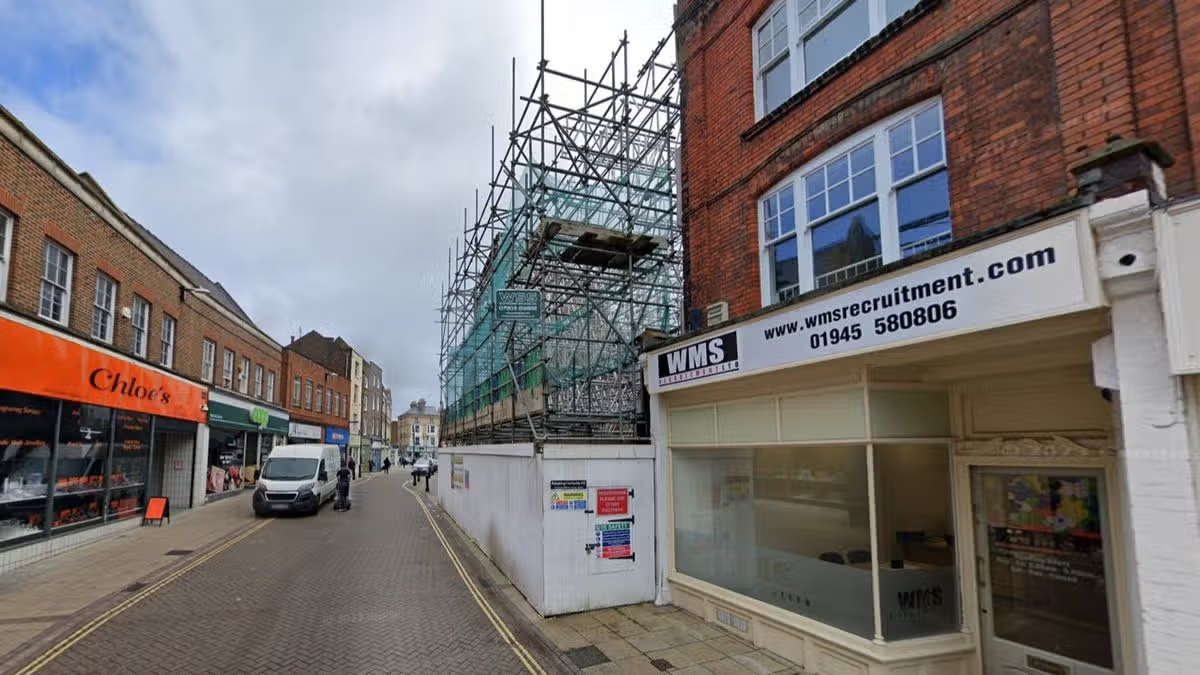
A delay in plugging an eyesore gap on Wisbech High Street has been branded “embarrassing” after the council were not told about issues with the plans.

Advertisement

Fenland District Council’s Conservative cabinet were told a full planning application was submitted for 11-12 High Street, two properties which were demolished in 2020 after lying vacant for years.

Cllr Samantha Hoy, of Wisbech South, said: “I’m sorry, it’s just really not acceptable – this building has sat there decaying for 20 plus years and this district council is responsible. It’s under our ownership and we must not let it carry on.”

She said it had also taken “so long” to redevelop 24 High Street and they “need to get the work started”.

Cllr Steve Tierney, also of Wisbech South, said it is “just not acceptable for this building to have sat rotting for 20 years”. He said if the work is not complete before the council is abolished after local government reorganisation, it “will be remembered, rightly, as a failure of ours”.

Advertisement

He said: “It’s not good enough, we should be getting it done by summer like we said we would.”

Cllr Christopher Seaton, the portfolio holder for Wisbech High Street projects, said the new mayor had asked for a “proper business case”, done by real estate agents Avison Young.

He said: “In all honesty, the officers said to me they did not have the sufficient experience to put forward a business case.”

Cllr Hoy said it had been “ten weeks” since the application was validated on May 13, after being received on April 10 and said “the whole thing is embarrassing”.

Advertisement

She said: “I know there’s a process, but we’ve had other applications – more controversial applications – that have not only been validated but decided and a decision notice issued in six weeks. When we want to do things within the time frame, we can, and this has sat there for ten weeks and we are not any further along on this at all.”

Cllr Dee Laws said the planning application had been rejected and there was an “issue regarding the bat survey, and we can’t overrule ecology”. She confirmed the proposal would be put before September’s planning committee.

Cllr Tierney said: “Having just been told that officers didn’t feel they had enough experience to write a business plan for this building – I think most members of the public watching this meeting will say, what sort of officers are we employing if they can’t make a business plan for something like that?”

Cllr Boden said: “My disappointment is that we’re only now, as members of the cabinet including the portfolio holder, hearing about this bat survey problem and what happened. I’m amazed it hasn’t been referred back to us prior to this.”

Advertisement

Cllr Seaton said: “I’m extremely concerned to find out during a meeting that the planning application is in this position because I haven’t been told that information. That is, to me, extremely bad – it makes me look stupid and it makes us all look a little foolish about it.”

Council leader Chris Boden said it was “astonishing” that there had been a failure to communicate “over such a long period of time”.

He said: “We must have an explanation about how this has ended up happening. It’s embarrassing to the council, to be quite honest, that we should be put in this position.”

Source link

Advertisement
Continue Reading

Trending

Copyright © 2025