Airlines have been struggling with jet fuel supplies following the Iran conflict.
Despite this, the Government has advised travellers not to change plans, saying that UK airlines are “not currently seeing a shortage of jet fuel” and that “it is typically bought in advance”.
Now, budget airline Jet2 has also reassured passengers, saying it expects to operate flights as scheduled this summer.
Advertisement
Jet2 issues update to passengers amid fuel supply issues
The travel company said today (May 20) that it has “reported positive updates about fuel supply”.
Steve Heapy, CEO of Jet2, said: “We are in regular dialogue with our fuel suppliers, and the current picture is one of increased production and imports, meaning we continue to look ahead with confidence.
“We have already been very clear about our plans to operate our schedule as normal this summer, and our message to holidaymakers is that summer is on.”
Mr Heapy added: “This confidence, on top of the incredible value that our award-winning holidays offer right now, means it is a fantastic time to get that well-deserved holiday locked in, and we know that many people are taking advantage of that right now.
Advertisement
“Everything is geared up and ready for a busy summer and we look forward to welcoming everybody on board and creating fantastic memories with Jet2.”
Jet2 had previously reassured customers that it would not introduce surcharges on any booked flights or holidays to cover cost increases.
It also removed the surcharge provision across all flights and holidays.
Mr Heapy said previously: “Holidaymakers should have every right to book their hard-earned break in the sun, without worrying about being hit with additional costs, and they can have that complete assurance when they book a flight or holiday with Jet2.
“As a result of today’s announcement, customers booking with Jet2 know that they are locking in their price without additional cost surprises later and we strongly believe that is the right thing to do by them.”
Advertisement
Brits warned of long queues due to EES
While travel plans will remain the same, Brits have been warned over lengthy queues this summer due to the EU’s new entry/exit system (EES).
Non-EU nationals travelling in Europe are now required to provide personal data, and have their fingerprints scanned and a photograph taken.
Major airlines, including Jet2 and Ryanair, have called for the rollout of the new system to be suspended until after the summer to allow for a “smoother airport experience” during peak travel season.
CEO of Ryanair’s Malta subsidiary, Malta Air, David O’Brien, has also threatened to pull all flights to Malta due to the extended wait times caused by the EES at airports.
Advertisement
Brits are now being warned of six-hour waits at airports in Portugal caused by the new EES.
A Portugal travel advisor, known as @travel_luckk on Instagram, said: “Last week a family I advised landed in Lisbon and stood in line for 6 hours and 40 minutes.
“Their toddler slept on a suitcase. They missed their transfer to the Algarve.
“This wasn’t bad luck. This is Portugal in 2026—and almost no one is talking about it yet.”
Advertisement
Porto is currently a quieter and more efficient alternative, according to @travel_luckk, for entry into northern and central Portugal.
Recommended reading:
The Portugal travel advisor said: “OPO is 40% faster through EES than Lisbon right now.
She warned that the travel through Lisbon can be especially difficult, particularly on Monday mornings between 6am and 11am.
Advertisement
Ryanair has called on the Portuguese Government to pause the rollout of the EES until September.
Have you got any holidays planned this summer? Let us know in the comments below.
Tens of thousands of people faced long waits to buy the first tickets to see the Bayeux Tapestry when it goes on display at the British Museum in September.
The 11th Century embroidery, which depicts the Norman conquest of England in 1066, is being loaned to the UK while its usual home, the Bayeux Museum in Normandy, undergoes a major renovation.
The 70m-long masterpiece will go on display in London for 10 months – the first time the tapestry has been exhibited on British soil.
More than 65,000 people joined in the online queue after the first batch of tickets were released at 10.00 BST on Wednesday.
Advertisement
Some social media users said they had spent hours in the virtual queue only for their request to time out, but others said they had secured tickets successfully.
Before tickets went on sale, the British Museum said it had been “expecting huge demand and interest”.
The museum’s director Dr Nicholas Cullinan told BBC Radio 4’s Today programme on Wednesday that the tapestry’s arrival in the UK was an “incredible event”.
Dr Cullinan said great care would be taken to protect the embroidery during its visit, and that British ticket buyers would have the rare opportunity to see it at its full length.
Advertisement
“It will be laid flat, which is the best way to show it in terms of conservation, but the other thing that’s very exciting is it will be shown in one long line.
“This is the first time in centuries that people will be able to see the entire length of the tapestry.”
The embroidery will be transported in the coming weeks via the Eurotunnel, and will go on display in a specially manufactured glass case.
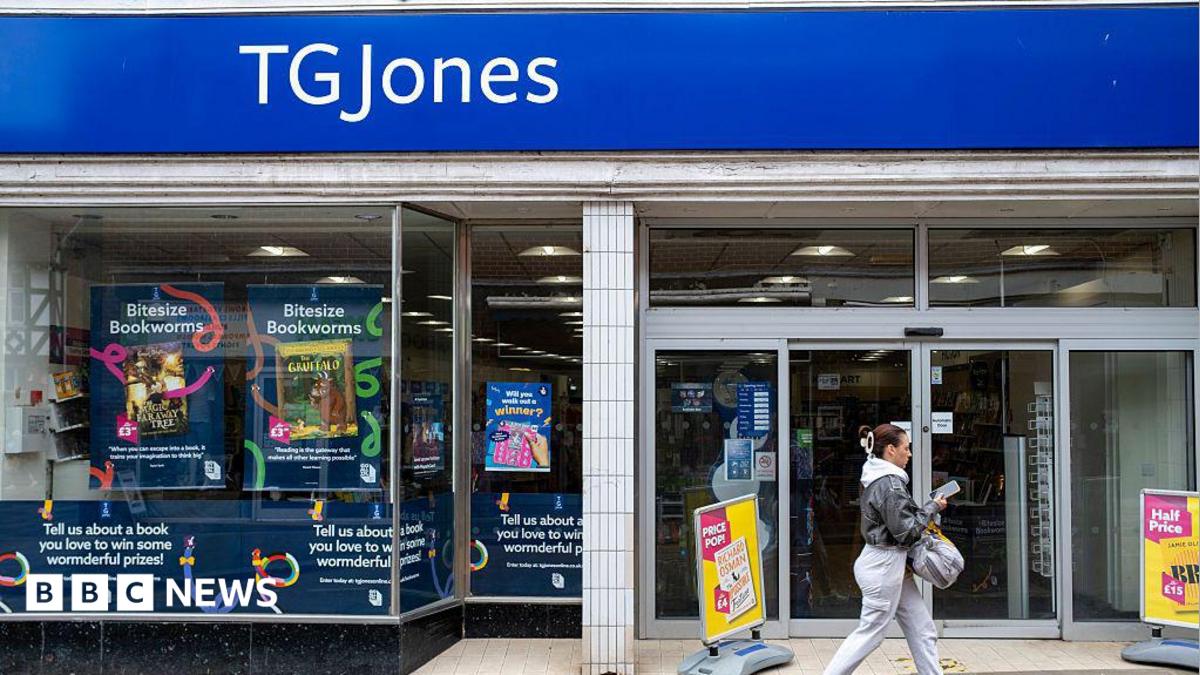
The owner of TG Jones, WH Smith’s former High Street business, has won approval for a sweeping restructuring which will see up to 150 shops close as well as steep rent cuts on most of the remaining stores.
Modella Capital bought the chain stores last year and they were then rebranded under the name TG Jones. There are currently 451 stores employing 4,700 workers.
WH Smith travel stores, in railway stations and airports, weren’t part of the deal and the business kept the rights to the historic brand name.
But less than a year later, Modella announced a radical restructuring plan blaming “challenging retail conditions”.
Advertisement
As well as store closures, some 120 landlords will receive no rent for up to three years; and rent will be cut on hundreds of other stores by between 15% and 75%.
Modella says the plans are vital for the survival of the business and will use some of the cost savings to invest in stores as part of its turnaround strategy.
The High Court heard this week that the retailer was on the brink of insolvency and was facing a cash shortfall of nearly £8m by the end of this week, unless the rescue deal was approved.
Tom Smith KC, for TG Jones, told the hearing that the business is “highly distressed” and “running on fumes at the moment”.
Advertisement
He said the business would have run out of cash in April had it not been for a £10m loan from Modella and a deferral in liabilities including a large tax bill from HMRC.
Modella said some of the problems were due to serious underinvestment in stores by the chain’s previous owners, saying long-term sales had declined.
But it also blamed its current poor trading on “challenging retail conditions” and its inability to keep the WH Smith brand name.
There was considerable opposition to the plans, led by property owner British Land who described them as “fundamentally unfair”. Modella sweetened the deal with several concessions, which convinced British Land to drop its opposition. Many suppliers are also taking a big financial hit.
Advertisement
The restructuring plan forecasts the business will end up with 302 stores depending on how many landlords exercise their rights to terminate the lease instead of accepting reduced rents.
The judge, Mr Justice Hildyard, had to decide if the restructuring was fair – whether creditors would be no worse off under than plan than if the retailer were to go into administration.
Mr Justice Hildyard gave the green light to Modella’s plans this morning.
In a summary of his judgement he described the plans as “complex in their terms and far-reaching in their effect”.
Advertisement
He said he’d been most concerned about the potential financial impact on landlords, but was persuaded the rescue deal was “objectively, the lesser of two evils” resulting from the company’s “trading failures and financial predicaments”.
Alex Willson, TG Jones chief executive, welcomed the court’s approval.
He said: “This decision allows us to move ahead with our turnaround strategy.
“The plan protects the substantial core of the store estate and makes TG Jones a stronger, more sustainable business.
Advertisement
“We are incredibly grateful to all the colleagues, partners and stakeholders who engaged constructively throughout the process, and to Modella Capital for its continued financial commitment.”
ATLANTA (AP) — Germany is out of the World Cup. Brazil was pushed to the edge by Japan and the Netherlands was sent packing.
Soccer’s traditional super powers have been rattled by a combination of fearless underdogs and emerging forces who are shaking things up.
And England coach Thomas Tuchel has no issue with it at all.
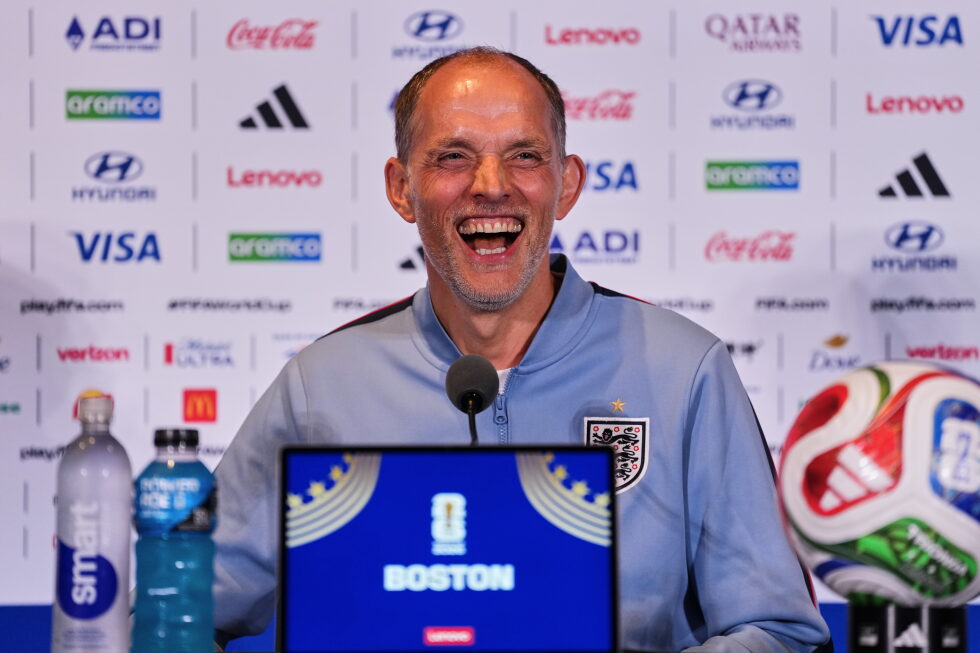
“I think it can calm us down in a way. It’s just narrow margins. It’s just tight football matches and it helps us not to over expect. It helps to put it in the right framework what is happening in this World Cup and in world football,” he said ahead of England’s round of 32 game against Congo in Atlanta on Wednesday.
Advertisement
England is the overwhelming favorite to advance against a team that is playing in the knockouts for the first time and is in its first World Cup since 1974.
But Tuchel, whose team was criticized after its goalless draw with Ghana in the group stage, said the gap is closing in international soccer.
That was evident as four-time world champion Germany lost a penalty shootout to Paraguay. Record five-time champion Brazil needed an added time winner to rally to a 2-1 victory against Japan.
“It’s difficult for any team to break teams down, especially when you arrive as a favorite. Especially when you face teams who have nothing to lose,” Tuchel said. “For me and for us it almost helps us to calm our minds, to accept the situation, and make the most of it.”
England’s Harry Kane (9) celebrates with England’s Jude Bellingham (10) after scoring their second goal during the World Cup Group L soccer match between Panama and England in East Rutherford, N.J., near New York, Saturday, June 27, 2026. (AP Photo/Steve Luciano)
Advertisement
England’s Harry Kane (9) celebrates with England’s Jude Bellingham (10) after scoring their second goal during the World Cup Group L soccer match between Panama and England in East Rutherford, N.J., near New York, Saturday, June 27, 2026. (AP Photo/Steve Luciano)
Advertisement
Advertisement
Advertisement
Congo’s Fiston Mayele (19) and Ngalayel Mukau (6) celebrate a win during the World Cup Group K soccer match between DR Congo and Uzbekistan in Atlanta, Saturday, June 27, 2026. (AP Photo/Erik S. Lesser)
Advertisement
Congo’s Fiston Mayele (19) and Ngalayel Mukau (6) celebrate a win during the World Cup Group K soccer match between DR Congo and Uzbekistan in Atlanta, Saturday, June 27, 2026. (AP Photo/Erik S. Lesser)
Advertisement
Advertisement
Advertisement
Advertisement
While Morocco’s shootout victory against the Netherlands was less of a surprise, the African champion has quickly gone from underdog to serious contender at the World Cup.
Congo is some way from those heights, but goes into the match against England without fear.
“It is true we are looking at a difficult match, but in no way insurmountable. We have proven this against teams that were supposed to be superior to us, that we could actually put in a good performance,” said coach Sébastien Desabre. “So we are focusing on our strengths, we are walking our path and once you get to this point in the competition, it’s difficult for everyone.”
There has been a mixed response to England’s performances so far, despite topping its group with an unbeaten record of two wins and a draw.
Advertisement
Tuchel said he was determined to entertain fans and had no problem coping with the expectations of a country that hasn’t won a trophy since lifting the World Cup in 1966.
Tuchel, a serial winning coach from Germany, was specifically hired with the intention of breaking that barren run.
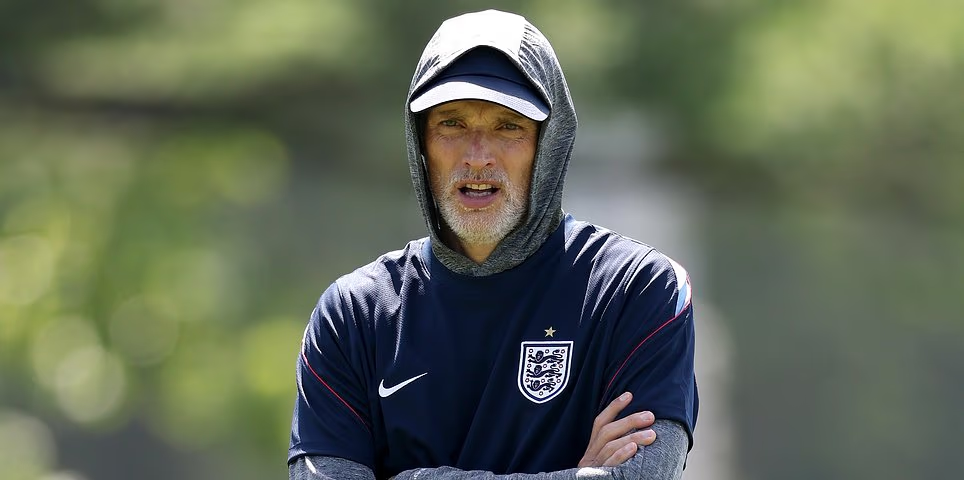
“I love these situations. I feel it’s a privilege to be in these situations. We can just accept it. We are the favorites. We play against our own expectations,” he said. “We expect to go further than the round of 32. That’s just how it is.
“So why would our fans not expect it? Why would the public opinion not be the same?”
The 23-year-old threatened the man and woman with a knife
15:09, 01 Jul 2026Updated 15:16, 01 Jul 2026
A 23-year-old launched an unprovoked attack on a woman and a man over missing drugs. Somtochukwu Igboayaka was at a friend’s home in Cambridge on Boxing Day when he became angry about some missing cannabis.
Igboayaka thought a woman had stolen it, so he punched her multiple times in the face and tried the shove her head down a toilet. He then grabbed a knife from the kitchen and tried to stab her.
The victim suffered multiple wounds to her hands where she tried to defend herself. A man who was also at the house tried to stop the attack. Igboayaka threatened the man with a knife and then hit him over the head with a glass vodka bottle. Both victims were taken to hospital.
Advertisement
At Cambridge Crown Court on June 24, Igboayaka, of Stanmore Road, Duckett’s Green, London, was jailed for two years and nine months after admitting wounding without intent, and possession of cannabis.
DC Matthew Grace, who investigated, said: “This was a vicious and senseless attack and Igboayaka is clearly a very dangerous individual. The level of violence was extreme, and this is a prime example of the violence and devastation that drugs can have on our society so I am pleased he’s now behind bars for his crimes.”
Author Donna Vann’s book about a teleporting canine has won The Wishing Shelf Book Award. According to judges, GALACTIC DOG! is ‘a hilarious, fast-paced space adventure about a brave dog who must save a galaxy from a mischievous evil cat – perfect for kids who love laughter, action, and out-of-this-world fun.’ It is suitable for ages six to ten.
Gregor Poynton MP has written to Shirley-Anne Somerville MSP, calling on her to make support for families affected by Reinforced Autoclaved Aerated Concrete (RAAC) one of her first priorities in office.
Livingston’s MP has urged Scotland’s new Housing Secretary to make RAAC support an early priority.
Advertisement
Gregor Poynton MP has written to Shirley-Anne Somerville MSP, calling on her to make support for families affected by Reinforced Autoclaved Aerated Concrete (RAAC) one of her first priorities in office.
The Livingston MP has congratulated the new Housing Secretary on her appointment while urging her to move quickly to address the uncertainty still facing homeowners and tenants affected by RAAC across West Lothian.
His letter follows renewed calls from campaigners, including Craigshill resident Kerry Macintosh, for the Scottish Government to meet with those affected and bring forward meaningful support for homeowners.
Mr Poynton has also invited the Cabinet Secretary to visit Craigshill and meet with Almond Housing Association, affected tenants and homeowners to hear first-hand about the challenges facing local families and ensure a joined-up approach to finding solutions.
Advertisement
Housing is a devolved responsibility of the Scottish Government.
Mr Poynton said: “I’d like to congratulate Shirley-Anne Somerville on her appointment as Cabinet Secretary for Housing, but from day one she inherits one of the biggest unresolved issues facing families affected by RAAC across Scotland.
“I’ve met residents in Craigshill and heard directly about the uncertainty, financial pressure and emotional toll this has placed on families. They have waited patiently for answers for far too long.
“I hope one of the Cabinet Secretary’s first actions will be to meet with the national RAAC campaign group, including local campaigners from West Lothian, and set out how the SNP Scottish Government intends to move this issue forward.
Advertisement
“I’d also welcome the opportunity for her to meet with Almond Housing Association alongside affected tenants and homeowners here in Craigshill.
“Everyone’s experience is different, but it’s important that we take a joined-up approach so every option is on the table and nobody is left behind.
“This is a new Scottish Parliament, but families affected by RAAC in the Livingston constituency cannot afford to wait another parliamentary term without meaningful action.
“The SNP Government now has an opportunity to provide the certainty and support that residents have been calling for over a number of years.”
Advertisement
In his letter, Mr Poynton says he hopes the appointment of the new Cabinet Secretary marks “a fresh opportunity” to move the issue forward and has urged her to work closely with campaigners, housing providers and elected representatives to deliver a fair outcome for everyone affected by RAAC.
Don’t miss the latest news from the West Lothian Courier. Sign up to our free newsletter
England vs DR Congo – World Cup LIVE: Team news ‘LEAKED’ as Thomas Tuchel faces his biggest Three Lions challenge yet – and fans get set to bunk off work and head to the pub to watch Round of 32 clash
Follow Daily Mail Sport’s live blog as England take on DR Congo in Atlanta in the last 32 of the World Cup.
Advertisement
Share or comment on this article:
England vs DR Congo – World Cup LIVE: Team news ‘LEAKED’ as Thomas Tuchel faces his biggest Three Lions challenge yet – and fans get set to bunk off work and head to the pub to watch Round of 32 clash
BBC co-commentator Danny Murphy surprised viewers with a bizarre anecdote about the disappearance of his cat during World Cup commentary.
Murphy was alongside commentator Steve Bower for the broadcaster’s coverage of Norway’s last-32 match against the Ivory Coast on Tuesday.
The former midfielder offered up his story after Norway had introduced Fulham winger Oscar Bobb as a 71st minute substitute, as they looked to seal a 1-0 victory.
Advertisement
Bobb’s first touch of the football saw him clear the ball deep into Ivory Coast’s half, giving Murphy the opportunity to take the commentary in an unlikely direction.
‘Here’s Bobb’s first involvement,’ Bower said, followed by a pause before Murphy offered: ‘I used to have a cat called Bob.’
‘The game’s not that bad,’ Bower replied.
Advertisement
BBC co-commentator Danny Murphy surprised viewers of Norway’s match with the Ivory Coast with a brief anecdote about the disappearance of his cat Bob
Murphy’s story followed Norway winger Oscar Bobb coming off the bench as a substitute in their eventual 2-1 win
‘He jumped in the back of a Royal Mail van and lost him,’ Murphy continued.
The co-commentator then offered a ‘sad really… anyway’, with Murphy’s deadpan comment prompting a laugh from Bower
Advertisement
Bower repeated ‘anyway’, before returning the focus of the commentary back to the match.
The story prompted a reaction on social media, with one viewer quipping that Royal Mail should have delivered ‘Bob’ back to Murphy.
Bower’s interjection that the game was ‘not that bad’ proved prophetic, with the Ivory Coast scoring an equaliser just one minute later.
A flowing Ivory Coast move ended with Amad Diallo exchanging passes to break into the Norway box, with the Man United winger cutting onto his left foot and firing into the net.
Advertisement
Norway would ultimately book their place in the last-16 with Erling Haaland scoring the winning goal four minutes from time.
Norway’s reward for their victory is a showdown against Brazil on Sunday in New Jersey.
How much is David Beckham set to pocket from his World Cup brand deals? Take on our quiz in our newsletter HERE
Advertisement
Share or comment on this article:
BBC pundit derails World Cup commentary with bizarre anecdote about his CAT and its mysterious disappearance
The family of a pregnant woman who was murdered by her Youtuber boyfriend who then staged a fake gaming livestream to cover up his crime have hit out as he appeals his jail sentence.
Stephen McCullagh was jailed last month for 31 years after he was found guilty of murdering Natalie McNally on December 18 2022.
Belfast Crown Court heard that McCullagh concocted a twisted alibi ahead of time, having pre-recorded himself playing Grand Theft Auto on a Christmas-themed stream he entitled ‘No Time To Die‘.
During the stream, he repeatedly told viewers it was Sunday and claimed the ‘live chat’ functionality was malfunctioning – both covering the fact he wasn’t really sat in front of his computer.
Advertisement
In fact, McCullagh used the six hours of fake gameplay to travel to his partner’s home where he beat, strangled and stabbed her to death in a ‘brutal and frenzied attack’.
A day later he made a faux-hysterical 999 call after ‘discovering’ her body, telling an operator: ‘No… she’s cold. There’s blood everywhere.’
Police initially ruled him out as a suspect but after they deduced that the live stream was fake he was arrested in February 2023 and charged with murder.
But now McCullagh, who denies the murder, has launched an appeal against his sentence.
Advertisement
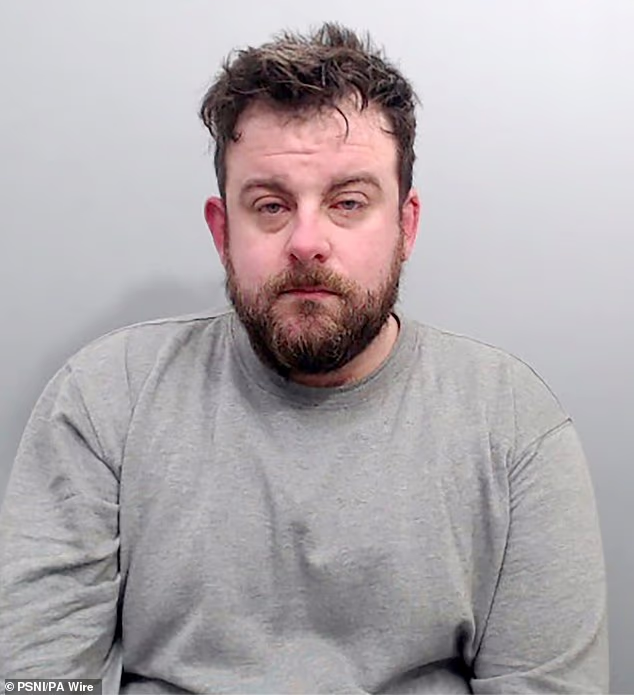
Stephen McCullagh (pictured) was jailed last month for 31 years after he was found guilty of murdering Natalie McNally on December 18 2022
Pictured Natalie McNally who was murdered by McCullagh who concocted a twisted alibi ahead of time, having pre-recorded himself playing Grand Theft Auto on a Christmas-themed stream he entitled ‘ No Time To Die’ to cover up his crime
Natalie’s brother Declan McNally has blasted McCullagh adding he’s not surprised the murderer is trying to quash his conviction.
Advertisement
He added that the saga had ‘completely re-traumatised’ the family.
Mr McNally said: ‘It’s just another blow. My mum and dad, they’re strong and resilient people.
‘We shouldn’t have to be so strong again and again and again, it’s just completely re-traumatising the whole family.’
Mr McNally added: ‘It just speaks to the character of the murderer, the way he’s acted before, during, and after the murder, after the trial, you just expect the complete worst from that individual.
Advertisement
‘He hasn’t shown any remorse, no regret, no responsibility, and now he’s going to court again, looking to reduce his sentence. It’s astonishing.’
Natalie had been watching the World Cup final with her family just hours before she was murdered.
In a tragic turn of events, the family were once again watching a World Cup game yesterday when they received the news McCullagh was appealing his sentence.
Speaking to BBC Radio Ulster, Mr McNally said: ‘It just speaks to his character completely.
Advertisement
‘That he would do it just speaks to his hideous nature… If they’re going to look at the sentence again, the only way the sentence should be going is up.’
During McCullagh’s sentencing in June, the judge described the murder as ‘cold-blooded and calculated’.
To hide his crime further, McCullagh sought to frame his partner’s ex-boyfriend for the murder – and turned to his victim’s family for comfort as he maintained his illusion of innocence.
He attended her wake on Christmas Day at her parents’ home and a public rally in her memory on January 28, where he was described as her ‘loving partner’.
Advertisement
The 36-year-old also secretly recorded conversations at her family home by deliberately leaving his mobile phone behind.
Prosecutors said he did so to find out whether her family suspected him or had discussed the police investigation.
The fake livestream remained available to view on his YouTube channel – which had 37,000 followers – until he was found guilty of murder in March.
It was described by trial judge Mr Justice Kinney as an ‘integral’ part of his plan to murder his partner, whom it emerged had slept with a former boyfriend in October 2022, two months after she had begun dating the gaming streamer.
Advertisement
She had also been in contact with other men, one of whom had asked if she and McCullagh were planning to break up.
Prosecutors suggested that he may have been driven to kill her after seeing the messages. He had previously assaulted a former ‘on-off’ girlfriend after she shared intimate images with another man.
On Tuesday the Public Prosecution Service (PPS) in Northern Ireland said it has been notified that an appeal against the sentence has been lodged.
Three teenage boys were handed non-custodial sentences in May despite being convicted of a combined 10 rape offences and seven indecent image offences
Emma O’Neill Content Editor and Berk Uyal
14:29, 01 Jul 2026
Detention was the “only appropriate sentence” for three teenage boys who escaped custody after being found guilty of raping two girls, the Court of Appeal has heard.
Two 15 year old boys, referred to as X and Y, and a 14-year-old, referred to as Z, received non-custodial sentences in May despite being found guilty of a combined 10 rape offences and seven indecent image offences involving two victims.
Advertisement
The girls were separately assaulted in Fordingbridge, Hampshire, in November 2024 and January 2025. The two older boys participated in both assaults, while the 14 year old encouraged the rape of the second victim.
The Attorney General referred the sentences to the Court of Appeal as “unduly lenient” following widespread public outcry, reports the Mirror.
At a hearing on Wednesday, barristers contended detention was the only suitable punishment and stated aspects of the sentencing judge’s approach were “fundamentally flawed”.
The boys, who have not attended the hearing in London, are challenging the attempts to have their sentences increased.
Advertisement
Tom Little KC, for the Attorney General, said: “We accept… that the judge did try to apply the relevant principles, but our submission is he misapplied them along the way, the cumulative effect of which was to lead to unduly lenient sentences.”
He continued: “It is difficult to understand how the judge could properly have come to the conclusion that he did, given the sheer number of rape offences, which the judge does not properly address in any way in… his sentencing remarks, the underlying seriousness of the offending and the harm sustained.”
Sentences received
X received a three-year youth rehabilitation order (YRO) with 180 days of intensive supervision and surveillance for raping and taking indecent images of both victims.
Y was handed the same sentence for three charges of rape against each of the two victims and four counts of taking indecent images by filming the incidents.
Z was issued an 18-month YRO for two charges of rape relating to the latter victim after encouraging the second defendant, and for an offence of indecent images.
Judge Rowland stated at sentencing that while X and Y were assessed by Youth Justice Services as “medium risk” of reoffending but “high risk of serious harm” to young females, he was required to take their backgrounds into account.
He noted that X had been diagnosed with ADHD and “long-standing anxiety”, while Y had an IQ in the bottom 1%, had ADHD with “extreme neurodevelopmental impairment” and presented “more like an eight-year-old”.
Mr Little acknowledged in court that Z was “plainly in a different position” from X and Y owing to his younger age and involvement in only one of the rapes, but maintained that his offending was “sustained”. However, in written submissions, he continued: “In summary it is submitted that the extent and nature of the offending was so serious such that the only appropriate sentence for X, Y and Z was detention.”
Advertisement
The barrister further argued that the restraining order placed on the three boys, barring them from contacting either victim for 10 years, ought to have been indefinite, noting that this had caused the victims “very significant concern”.
‘Unduly lenient’
Clare Wade KC, representing X, contended that Judge Rowland “approached the sentencing exercise correctly”.
She stated: “The sentences imposed broadly provide the best opportunity for the child offenders to learn and develop and provide the most effective way of protecting women and girls in future by preventing future offending.”
Edward Henry KC, acting for Y, informed the court that his client “behaved deplorably and disgracefully and deserves to be punished”, but had been rendered a “pariah” amid the public outcry that followed his sentencing, which inflicted upon the boy “substantial additional punishment that he is ill-equipped to bear”.
Advertisement
Mr Henry argued that in referring Y’s sentence as “unduly lenient”, the Attorney General “has not engaged with the compelling evidence that the child whom I represent has a constellation of comorbid conditions that dramatically reduced his culpability”. He said: “The sole question is whether the sentence was outside the range of sentences reasonably open to a judge, who presided over the 29-day trial, heard all of the evidence, and applied the correct legal framework with conspicuous care. In our submission, it was not.”
In a statement issued to the Press Association prior to the hearing, one of the victims stated that the attack on her “has left me harmed so severely that I do not think I will ever be the same” and that the trial of her attackers “broke something inside me”.
She said: “I feel like I am carrying what happened every day. I wake up with it, I go to school with it, I try to sit exams with it, and I go to sleep with it. It is always there. I cannot just switch it off. I cannot just move on.”
The proceedings, before the Lady Chief Justice Baroness Carr, Lord Justice Edis and Ms Justice Norton, are expected to conclude on Thursday.

























































You must be logged in to post a comment Login