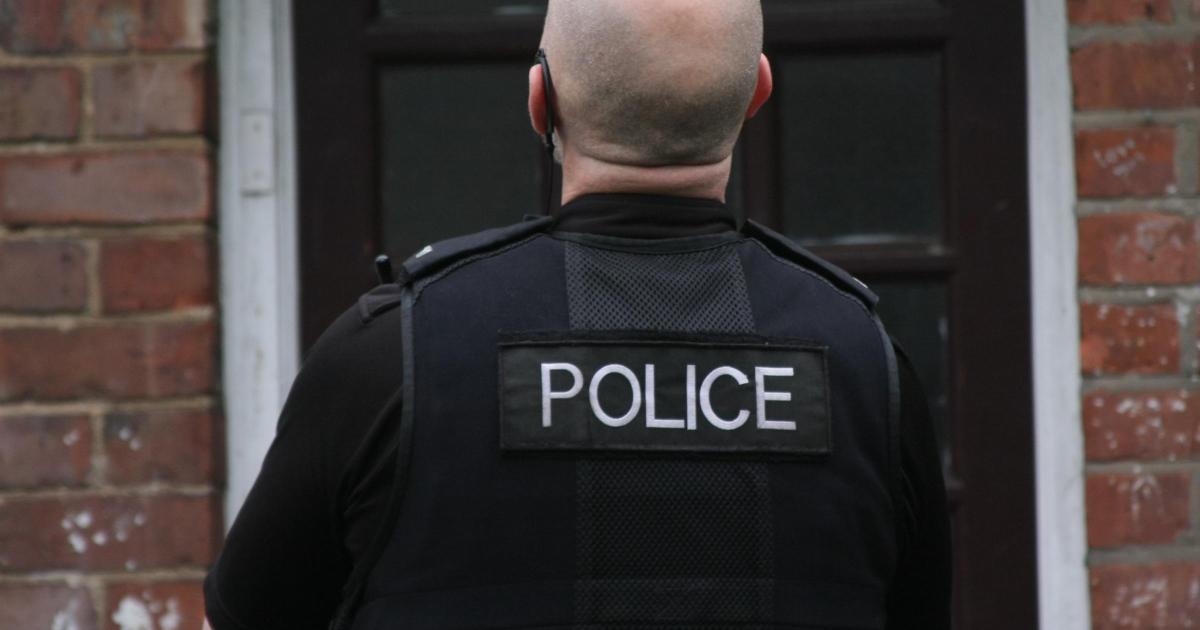
The man was arrested after police were called to an address in the Langthorpe area of Boroughbridge on Monday, August 3.
North Yorkshire Police said the man was arrested “in connection with a number of offences” and taken into custody.
He was assessed by a mental health professional and detained under the Mental Health Act then transferred to hospital to receive further treatment and support, the force said.
Advertisement
A police spokesperson said its investigation into the incident remains ongoing but “there is no wider threat to the public, and officers would like to thank local residents for their patience and understanding during the police activity in the area”.
“The man was in possession of a knife and making threats to harm himself and others,” they said. “However, he was in the property on his own at the time of police attendance.
“Thank you to residents who gave their cooperation during this incident so we could safely resolve it.”
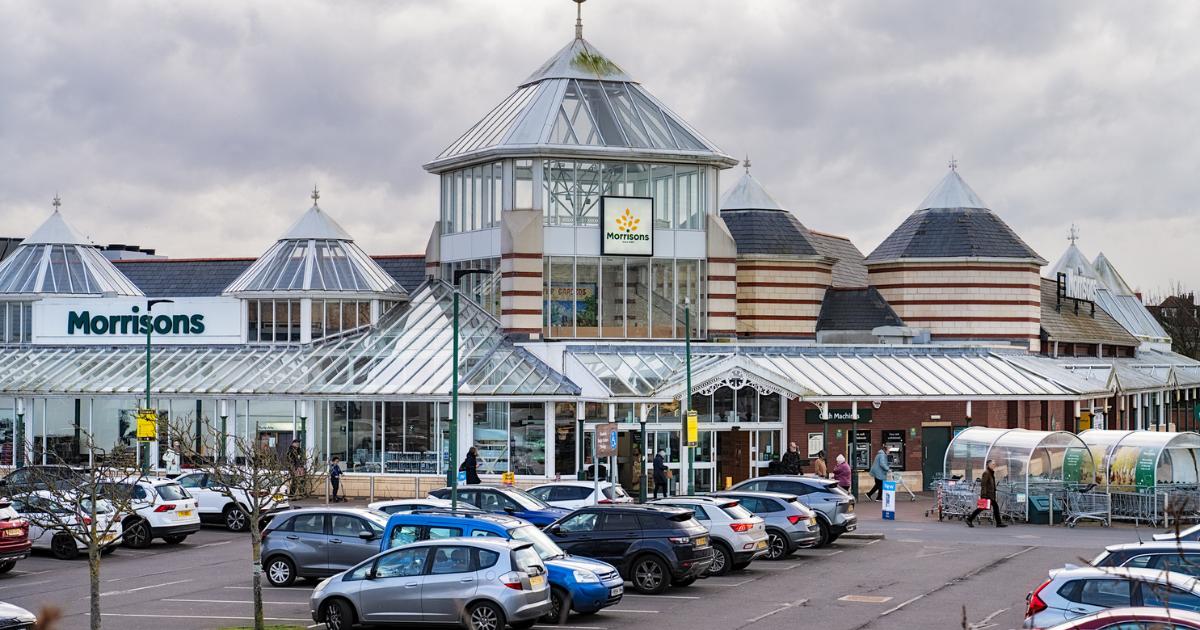
However, they’re not the usual reduced item stickers you usually see in supermarkets.
They have been introduced to show customers how the supermarket is supporting UK charity Marie Curie.
The supermarket has joined forces with the charity to launch the Every Pack Gives Back campaign this summer.
Advertisement
The fundraising event will help support the end-of-life charity and the people who rely on it.
When shopping at your local Morrisons store or ordering online, you might spot the bright yellow stickers on items such as the Coburg Cob, a staple at the supermarket’s bakery.
That’s because the yellow sticker is a nod to the charity’s emblem and means that when buying the bakery item, 25p from every sale will be donated to Marie Curie during the fundraising event.
Throughout August, there will be hundreds of Every Pack Gives Back promotional products including:
Warburtons Crumpet Thins (8 pack)
Lenor Scent Booster Spring Awakening 735g
Soreen Malt Loaf 250g
The products will appear on Morrisons shelves and online so customers can support the campaign from home too.
So far, Morrisons and Marie Curie have reached a significant milestone, having successfully raised £7 million.
Advertisement
The supermarket aims to raise £15 million for the charity by October 2027.
Customers can also choose to donate their Morrisons More Card points to the charity in multiples of 1,000 (£1 value).
David Scott, Corporate Affairs Director at Morrisons, said: “Marie Curie’s dedication to people and communities up and down the UK could not be more important, so we are urging customers to pick up a special ‘Cob for Care’ and show their support for end of life care.
“Throughout August, customers can help raise all-important funds for Marie Curie by buying a product in our promotional Every Pack Gives Back range – where a percentage of the sale price is donated to the charity.”
Advertisement
Emma-May Ward, Marie Curie Clinical Nurse Specialist, said: “Every day, I meet patients and families whose stories stay with me long after my shift ends.
“Every person deserves dignity, support and compassion at the end of their life.
“As a charity, we depend on the generosity of the public to fund the expert care we provide day and night for people who need us most.
“The Every Pack Gives Back initiative helps to raise vital funds so we can reach more patients and families when and where care is needed.”
Advertisement
Morrisons to make self-checkout change at 200 stores
Morrisons is making a major change to its self-checkouts as it introduces new AI-driven technology.
The Evercheck system, developed by technology company Everseen, will be installed in 200 stores during the first phase of the supermarket’s rollout, reports What’s The Jam?
It uses real-time computer vision to compare scanned items with those visibly placed in a customer’s basket and alerts shoppers on-screen if it detects a potential missed item.
The system intends to improve efficiency at self-checkouts by reducing interruptions and wait times and the need for staff intervention in cases of routine scanning errors.
Have you seen the yellow stickers in stores or online? Tell us in the comments below.
The statement was issued after a Suffolk wildfire destroyed a National Trust reserve
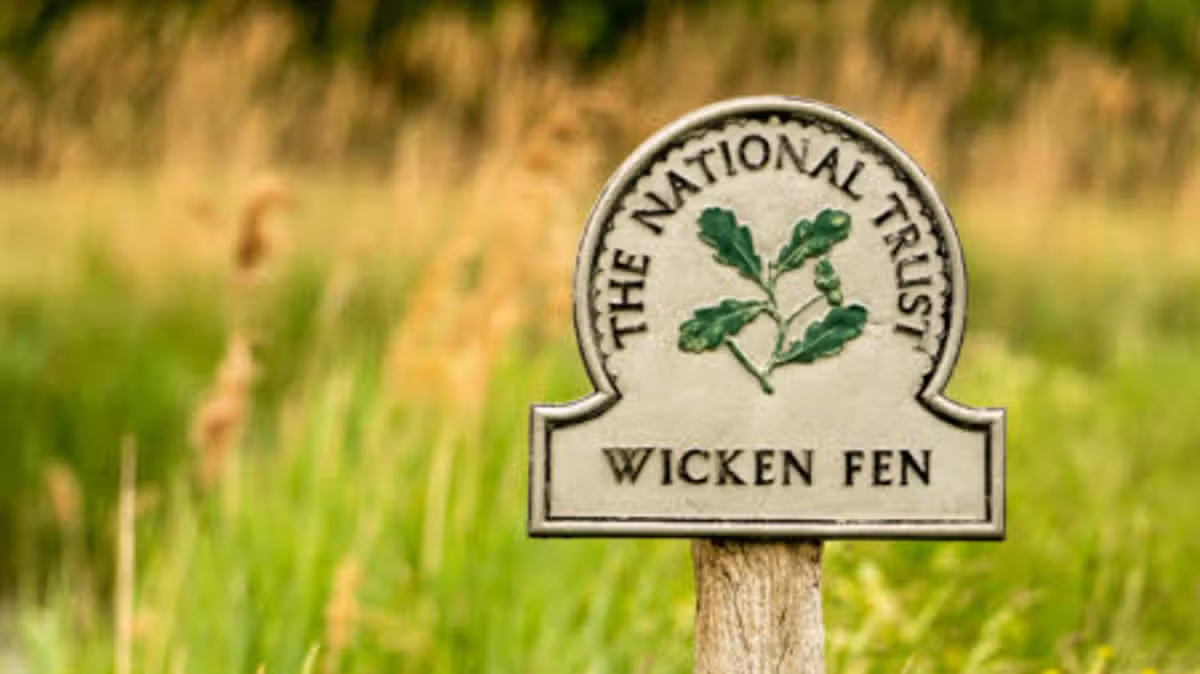
Visitors to a Cambridgeshire nature reserve have been urged to help “protect” it due to a “high risk of fire”. Wicken Fen Nature Reserve has told the public to not bring or light barbeques there due to the “hazardous summer season”.
Advertisement
Visitors have also been asked to not smoke there and to dispose of all litter or take it home. This follows a “devastating fire” at Dunwich Heath, which grew to the equivalent of 220 football pitches in size, according to the National Trust.
A spokesperson for Wicken Fen Nature Reserve added: “Our thoughts are with our colleagues on the Suffolk Coast. We are also mindful of what a fire could mean at Wicken. Thank you for helping us to keep the Fen as safe as possible in this hazardous summer season.”
Firefighters were called at about 5pm on July 29 to a wildfire, which later spread onto Dunwich Heath. The entire landscape was engulfed in flames.
Close the door, shut the windows and turn up the heating, and you have all the ingredients for a sick bedroom in your home – and you spend about eight hours in there every night.
Kitchens and bathrooms usually take the blame for stale air and damp. But researchers spent a winter monitoring airtight, naturally ventilated homes across Scotland. In more than four out of five homes the carbon dioxide (CO₂) in the air remained above the level considered a safe threshold for the entire night. Despite this, more than nine in ten of the occupants thought the air in their bedroom was good.
The reason is not the room. It is you. Awake in the living room, you are a thermostat with hands. When the air turns stuffy, you crack a window. When you feel cold, you close it. This correction stops in bedrooms once you fall asleep, and two things build up: the CO₂ you breathe out and moisture with it.
High levels of CO₂ act as a proxy for stale air. CO₂ levels are measured in parts per million (ppm), a unit of measurement used to describe very small concentrations of a substance.
Advertisement
A study examining 40 Danish bedrooms revealed a troubling threshold: when CO₂ levels reach 1,800ppm, participants’ cognitive function the following day suffered. And sleep quality starts to suffer well below that.
Recognising this risk, strict European standards allow living spaces to reach 1,350ppm above outdoor levels, while restricting bedrooms to just 950ppm above outdoor levels. For reference, CO₂ levels in fresh outdoor air are typically between 420 and 450ppm.
Between 2022 and 2025, I continuously monitored temperature, humidity and CO₂ data using sensors from around 200 Irish rooms in highly energy-efficient but airtight Irish social housing. The bedrooms spent roughly two hours every night in winter above unhealthy levels, while the living rooms next door were fine. The same bedrooms were fine again during summer. The likely reason is that people keep their windows shut in winter to stay warm and open in summer.
Serious health consequences
Two sleeping adults breathe out about a pint of water a night. I run a dehumidifier at home over the winter – it holds two litres, and from October onwards I empty it every other morning.
Advertisement
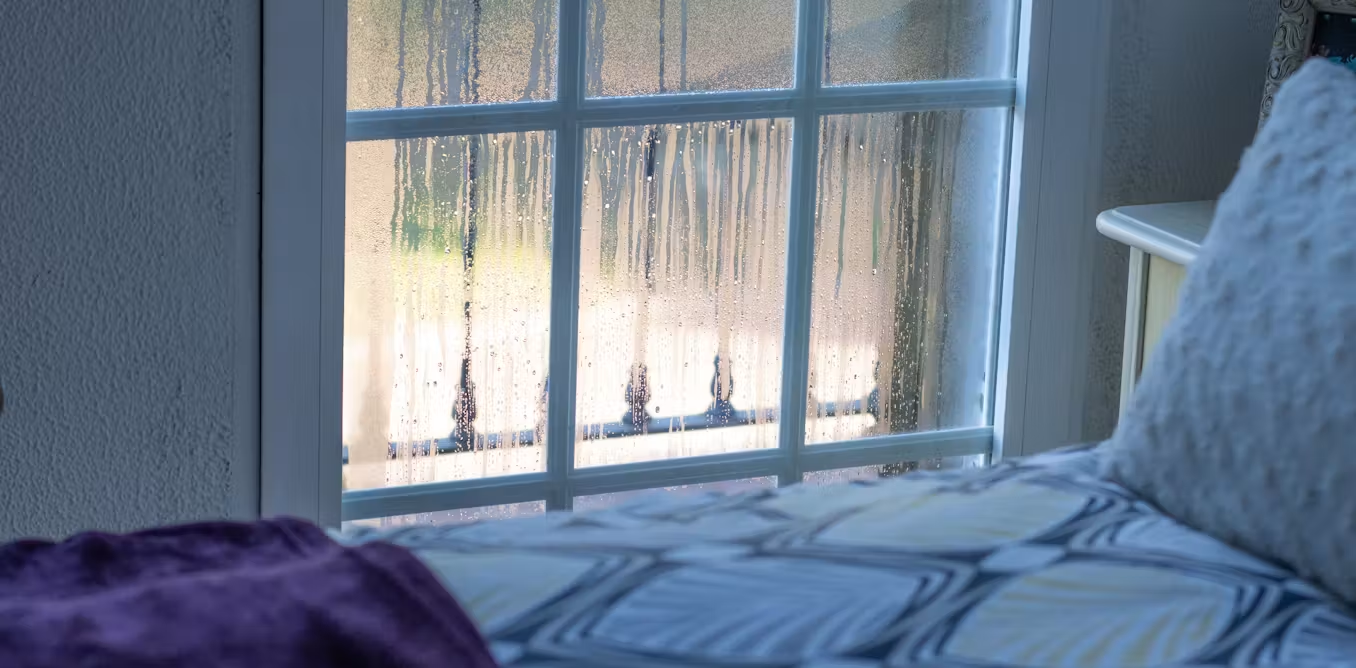
Moisture, when trapped indoors, settles on the coldest surface – usually, the window or the wall behind a wardrobe. A cold, damp surface in a warm, moist room is an ideal condition for mould to grow.
This is not just a cosmetic problem. Prolonged exposure to mould in a flat in Rochdale, a town in Greater Manchester, killed two-year-old Awaab Ishak in 2020. Consequently, Awaab’s law now legally compels social landlords in England to address damp and mould within strict, fixed deadlines.
Small children are the most exposed of any of us, their lungs and immune systems are still developing, and they sleep longer than adults.
Airing a room by opening the window clears the stale air and the moisture at once, but it lets the heat out. That is the trade-off between fresh or warm air.
Advertisement
The trickle vents (small slots built into window frames for background airflow) are often found shut after energy upgrades, and a 2024 Irish study of retrofitted homes found bedroom CO₂ higher after the work than before, with around half showing visible mould.
People often shut trickle vents. s.borisevich/Shutterstock.com
This feels like deja vu. After the oil shocks of the 1970s, offices were sealed and ventilation cut to save fuel, and the occupants got headaches, itching eyes and a fog that lifted only when they went home. It was called sick building syndrome. It’s the same – except nobody gets to go home from their bedroom.
Energy-efficient but sick buildings often cost society far more than they save. Renters sit in the middle of it, unable to carry out expensive building changes.
What to do
If an open window loses heat, at least keep trickle vents open. Leave the bedroom door ajar, which gives the moisture somewhere to go.
Advertisement
A generational practice and German daily ritual of Lüften is now popularised on TikTok as “house burping”. By throwing the windows wide open for ten to 15 minutes immediately after getting up, you rapidly purge the stale air and moisture while saving heat loss.
When it is extremely cold, even for Lüften, people often reach for a dehumidifier. These devices cost roughly between £90 and £300, and a typical dehumidifier draws around 250 watts and costs around 6p to 9p an hour to run.
Most dehumidifiers have a humidistat (a small electronic device used to measure and control the humidity) that you can set to a minimum target. A sensible target for a bedroom is 60% – the machine runs until the room reaches it, shuts itself off, and wakes again when the humidity creeps back up. Others run for a specified period, set as desired, or continuously.
Dehumidifiers are a genuine help for a cold, damp bedroom when there are few other options.
Advertisement
While none of this replaces a proper ventilation system, it changes what you breathe at night. For definitive proof of bad air quality in your bedroom, use an indoor air quality monitor. Seeing the hard data is often the best prompt to open a window, clear a vent, or switch on a dehumidifier.
The people of this coastal town are proud of their history, community and vibrant painted streets
When you picture charming painted houses beside the sea in a beautiful Welsh setting, perhaps your thoughts immediately transport you to Tenby, but they probably shouldn’t because there’s a delightful little town considerably further along the coast that has been greeting visitors with spectacular views of colourful homes for generations.
As you descend into it, or pop round the bend while walking along the renowned coastal path, an explosion of pastel hues and darker shades welcomes you — virtually every Georgian and Victorian era property can claim a lovely colour to make their frontage stand out and, when gathered together, the chorus of colour is captivating. For more home, renovation and interiors stories sent to your inbox twice a week sign up to the property newsletter here.
The town may not be unique in providing houses that lift even the greyest of days but perhaps what enhances the delightful visual spectacle is that so many of the houses appear identical in design and scale and that is largely due to the area’s distinctive history. According to website Coflein the town was conceived and construction commenced in 1805 by the Reverend Alban Thomas Jones as he started upgrading the harbour to establish a more functional port.
The charming central square bears Alban’s name, though architect Edward Haycock was equally instrumental in shaping the town, and together their endeavours earned considerable acclaim, with Aberaeron being described as ‘one of the best examples of a planned township of small scale in Wales’.
According to the website aberaeron.info, a significant number of the houses surrounding the harbour were owned by local sea captains, with many named after distant destinations such as Gambia and Melbourne.
This single phase of construction accounts for the striking consistency found along many of the predominantly Georgian townhouse and Victorian cottage-lined streets, though more recent periods of development are also evident as you venture further from the town centre.
The town flourished as the port expanded, at one point boasting as many as 35 pubs, yet with the arrival of the railways from around 1911, its seafaring heritage gradually faded.
Advertisement
Today, Aberaeron is a thriving tourist destination that swells its resident population of 1,274 by hundreds of visitors, yet even on a cold, wet Tuesday in November, it retains a bustling atmosphere with a warm, community spirit.
The area is also fast establishing itself as a culinary destination, boasting an impressive selection of notable dining spots to suit all tastes, including the renowned Harbourmaster, The Hive, McCowans, The Stubborn Duckling, Y Seler, New Celtic Restaurant, Osteria 1815, and Naturally Scrumptious, alongside a number of pubs serving food such as The Black Lion.
Just two miles outside the town, The Moody Cow is truly special place to unwind and take in sweeping views of the lake and surrounding countryside.
Advertisement
Back in the town centre, the area is equally celebrated for its artisan bakeries, fish and chip shops and Chinese cuisine, alongside charming independent retailers stocking beautiful Welsh homeware, gifts, clothing and accessories, including Seld and Glanmor. The town has also earned a notable reputation for honey production.
Yet it is the town’s picturesque streets, adorned with a wonderful array of heritage colours along most roads, that truly captivate every visitor. Living in one of these iconic painted houses — endlessly photographed and featured across websites and magazines — must be both a privilege and something to grow accustomed to, particularly for those residing on the roads that line the harbour, where visitors flock throughout the year to stroll and snap photographs.
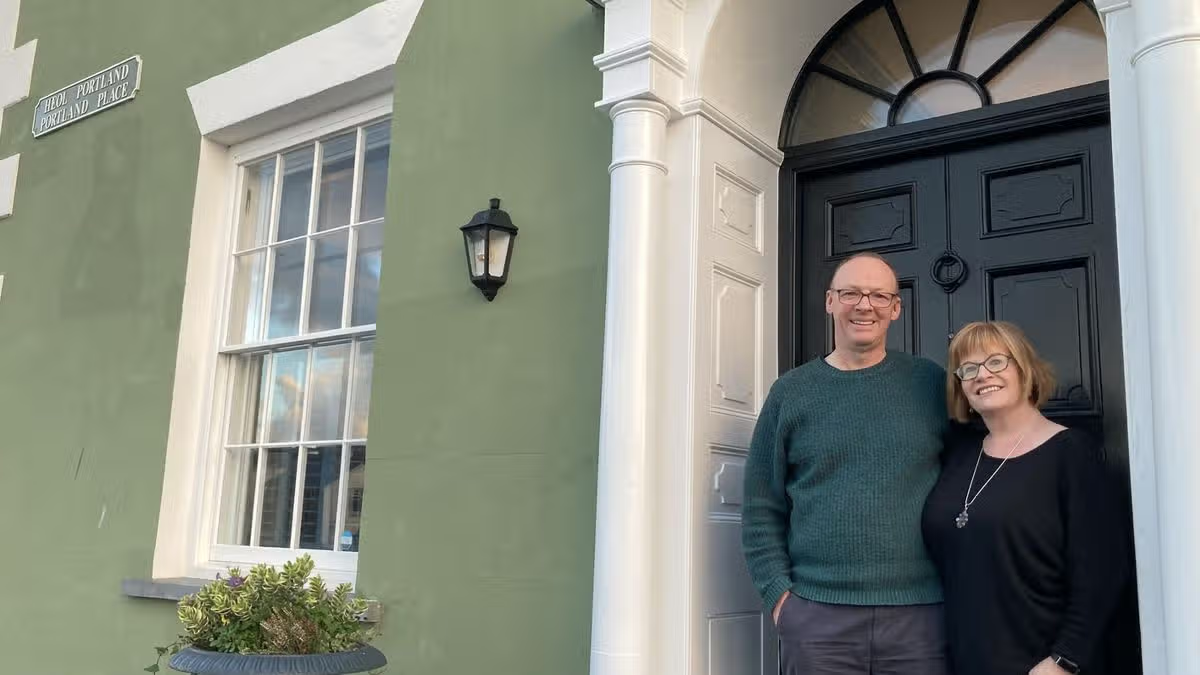
Chris and Jen have resided in their terraced townhouse on one of the more prominent painted streets since 2019, having relocated to the area to support elderly parents. Chris explains: “We fell in love with Aberaeron when we came to visit and looked at a variety of properties because we love the sea, it’s an ideal place and it was a beautiful house as well so we were very lucky to find this.”
Advertisement
The property was perfectly suited to their requirements as, beyond its warm and inviting atmosphere, it required no renovation work and served as an ideal base for Jen’s wellbeing venture, Seedling Retreats and Holidays, which provides sessions and courses across a range of disciplines — from mindfulness and yoga to breathwork — both locally in Aberaeron and on retreats overseas.
Passers-by have occasionally stopped to photograph the property and even peered through the windows, yet Chris remains entirely unfazed by the additional attention their home attracts. He says: “I don’t see it as an intrusion, of course it gets busy during the summer season and the holiday season but that’s part of the nature of a town like this.
“We have some wonderful businesses and restaurants around here and without the tourism we wouldn’t be able to invest as a town into those facilities, and enjoy them for ourselves.
Advertisement
“Throughout the year the town has got carnivals, festivals and there’s a real community here, it’s a lovely place to live. We were living in a more rural location so living in a townhouse on the harbour is a bit different but it’s a wonderful location; waking up in the morning and looking out of the window to the beautiful scenery and the houses, it’s really lovely. We’re by the sea, there’s New Quay nearby, dolphins visiting – the list goes on.”
The pair have maintained the same exterior colour on their house’s façade, believing it was a fundamental part of the property’s character, and integral to the overall street scene and the town’s identity.
Chris says: “It’s a real feature, Aberaeron is well photographed, it’s so picturesque , every angle seems to have a lovely view, we’re really proud of how the town is kept and you can see it all around, it’s echoed in the way the people keep their houses looking so good.”
Advertisement
Local resident Sian grew up in the area and attended secondary school in the town, giving her a deep connection not only to her hometown but also to the house she now lives in — the very property where the trend for painting houses in the town first began.
Sian and her partner Billy purchased Portland House four years ago, though they didn’t move in until June 2023, as the four-storey property was virtually derelict and full of unpleasant surprises, including dead birds. Despite this, Sian was determined to rescue it, having always had a deep admiration for the building.
Sian says: “I used to walk down the back road behind the house into town from our old house and would think ‘who on Earth would buy this house?’ Then it came on the market and I had my moment of madness and decided it would be me.
Advertisement
“I’ve always had a particular connection to this house because when I was in secondary school the pupil ‘houses’ were named after the first three chairs of the governors and one of them was Portland House, and I was captain of Portland House, so it’s always been a house that’s had a connection for me, an emotional link, and I used to hate to see the state it was in.”
Yet Portland House holds a distinction that surpasses all its vibrant neighbours — a former owner was the very first person to introduce colour to Aberaeron, having encountered and fallen in love with brightly painted properties in harbour villages during a visit to Ireland. Sian says: “When my mother used to come to town she used to say that it was all grey, a dull town, and every house was just stone.”
During the 1950s, Phyllis Sewell owned three houses in Aberaeron as houses of multiple occupation and, inspired by her Irish travels, painted them all bright pink.
Advertisement
“There was an absolute uproar, everyone thought it was terrible, what was she doing to Aberaeron? The council even got involved,” says Sian, “but gradually people started coming round to the thought that it was a lovely idea and everybody started painting their houses and now there’s probably less than half a dozen houses that aren’t painted, but I actually think that’s quite nice, to see the original houses as they were and then the contrast.”
Portland House now looks stunning, both inside and out, with the faded yellow façade that had replaced Phyllis’ controversial pink now giving way to a serene, deep green — Sian’s preferred colour — offering three floors of living space for the couple, alongside a two-bedroom basement flat that currently operates as a holiday let.
Lucy, 36, lives on one of the quieter side streets off the main road that winds through the town, where the atmosphere is far more relaxed and the likelihood of being disturbed is considerably lower.
Advertisement
She has called Aberaeron home for 15 years and adores living there. She says: “It’s quite busy in the summer but it’s very friendly, everybody knows everybody and they’ll help you if you need help, it’s just a nice place to live.”
A terraced house has been her home for roughly the past five years, and it has recently been transformed from light green to a shade of pink.
Lucy says: “It was recently painted last year, I just wanted something different to stand out really, the painter gave us a chart and we just chose it from there, it’s in a conservation area so there are only certain colours that you’re allowed.
Advertisement
“I’m not changing it any time soon, I’m so indecisive, it took me ages to choose this colour. It is easier to paint your house in Aberaeron because you look down the street and everyone has got different colours, so I think it makes it a bit easier to choose something a bit brighter, but I say if you’re thinking about it just go for it, it just looks so much better.”
For more property, renovation, and real life stories join our Amazing Welsh Homes Facebook group here.
The talented 22-year-old qualifies for both Wales and England
Dual-qualified centre Joe Jenkins says he wants to play international rugby but admits he doesn’t know yet where his loyalty will land between Wales and England.
Advertisement
The 22-year-old will turn out for Leicester Tigers this season after making the move to the East Midlands following four years with Bristol Bears. While he has been held back by injuries at times, Jenkins impressed when given an opportunity in the first team at Ashton Gate and hopes that his big move will help him take another big step forwards in his career.
While he is primarily focused on first earning his stripes with Leicester, the dynamic centre is also determined to make it to the Test arena. However, he admits he is keeping an open mind about who he wants to represent on the international stage.
Jenkins was born in Halifax but is eligible to play for Wales due to his father hailing from Llanharan. After attending Monmouth School, he vied for a place with the Dragons U16s’ side before being scooped by Bristol and becoming their youngest-ever PREM Rugby starter in 2022, at the age of 18.
“He’s Welsh-qualified,” Hayward said previously. “[His dad] said Joe felt obligated to England because he’d come through their U18s programme, and they had rehabbed him through a knee injury which is totally explainable. I understand and quite admire his loyalty.
“He is 100% Welsh and assured me that Joe wants to play for Wales at senior level and sees himself as a Welshman. However, at this moment in time he felt a loyalty to England because they’ve looked after him.”
Three years on, however, Jenkins admits that he is yet to decide for sure where his senior international loyalties lie, with the youngster keeping “an open mind”.
Advertisement
“For my career to develop, this was the best move for me,” he told The Rugby Paper as he opened up on his Leicester switch. “I want to play international rugby and being at Tigers gives me a really good opportunity to do so.
“Who that will be with, I have an open mind. I came through the England pathway but my whole family are Welsh. They are very passionate and, clearly, I see a lot of them!
“Firstly, I need to earn my right to play for the club first because the competition is fierce,” Jenkins added. “They got to the play-off semis last season and you’re never going to come straight to a place like this and walk into the team.”
With Wales currently lacking gainline presence in midfield, having someone like the 6ft 3in, 16st Jenkins on board would be a boost to head coach Steve Tandy, who also has the likes of Bryn Bradley and Steffan Emanuel to consider as new centre options ahead of next year’s World Cup.
Advertisement
Jenkins will form part of an impressive Welsh contingent at the Tigers this season, with Aaron Wainwright joining fellow back-rowers Tommy Reffell and Olly Cracknell at Welford Road for the 2026/27 campaign.
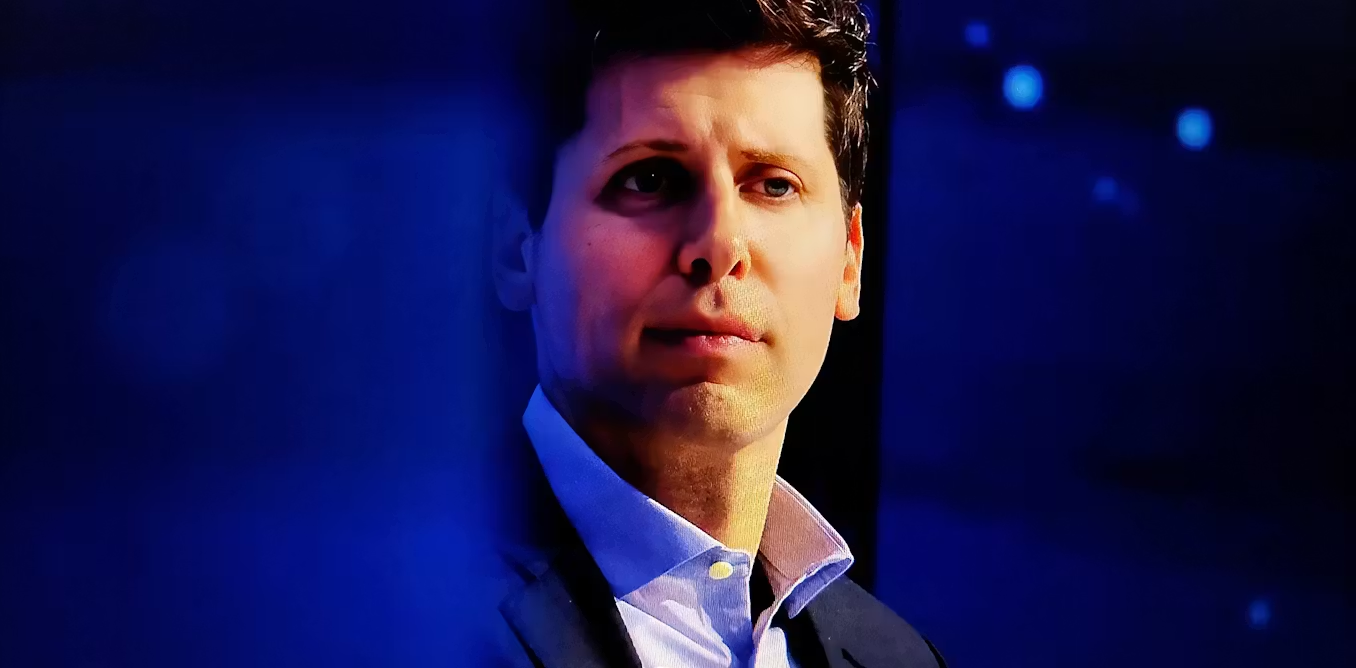
OpenAI’s CEO Sam Altman has speculated about how long it will take for artificial intelligence to replace senior leadership teams in organisations. “Shame on me,” Altman told the Conversations with Tyler podcast in November 2025, “if OpenAI is not the first big company run by an AI CEO.”
The promise of an AI CEO, powered by machine learning and neural networks, is that it can streamline decision-making and improve management operations. This vision is not new: in 2017, Jack Ma, CEO of Chinese e-commerce company Alibaba, was already predicting the rise of android business leaders.
Since then, several companies have installed a humanoid AI bot as their chief executive, including Chinese videogame company NetDragon Websoft and Polish drinks company Dictador. While these examples are probably publicity stunts dressed up as corporate strategy, the theory is that AI can do anything a human leader can do – only better and cheaper.
Advertisement
Sam Altman in conversation at the Progress Conference last year.
For Altman, though, there is a problem: not with AI – you can already run a company by algorithmic processes – but with humans. Workers might not be ready to accept an AI CEO that has the power to hire and fire at will, for example.
For this reason, Altman said he could see himself remaining the public face of OpenAI – a charismatic leader of an organisation that is otherwise largely automated.
Human face, AI brain
Altman’s vision aligns with what we call the “reversal of the Mechanical Turk”, a phenomenon that involves hiding AI behind a human face.
Advertisement
The original Mechanical Turk was a chess-playing machine designed and constructed by the engineer and inventor Wolfgang von Kempelen. Unveiled in 1770 at the Austrian imperial court to impress Empress Maria Theresa, it displayed an Ottoman-dressed figure seated behind a chessboard on top of a large cabinet. The doll appeared to play chess, usually beating its human opponents.
For nearly a century, the Mechanical Turk toured Europe and the US, defeating such eminent figures as Napoleon and Benjamin Franklin. Finally, Edgar Allan Poe’s family doctor acquired it and confirmed what had long been suspected: the machine was an illusion, operated by a human chess player hidden inside the cabinet.
The future of leadership in Altman’s vision is the exact opposite of the Mechanical Turk: a company that appears human (with Altman as its friendly face) but is actually machinic.
In Altman’s view, AI can do all the things a human CEO is supposed to do – including formulating a corporate vision, communicating organisational values and making strategic decisions. But the public will see only the human in the loop, not the algorithms behind the scenes.
Advertisement
Leadership in the age of AI
Could an AI CEO really do the job better than its human counterpart? If the role of CEO is to maximise efficiency and pursue market growth at all costs, then the answer might be “yes”. After all, AI is built to produce high-probability outputs based on patterns in data.
But most people expect more from leaders than algorithmic optimisation – a means-ends logic without heart or soul. The importance still placed on popular concepts like authenticity, responsiblity and value-driven leadership indicate that what we want from corporate leaders is something intrinsically human.
Just as we know that computers are infinitely better at number crunching than humans, we also know that computers are incapable of key leadership qualities like empathy or ethical judgment. A large language model (LLM)-based chatbot is unable to exert true leadership, just as a dishwasher is unable to fall in love.
Yet an AI CEO might be able to imitate the qualities we expect from good leaders. It’s plausible, for example, that an AI CEO could convince us that it cares about its employees or that it feels strongly about the company’s mission, in the same way that any chatbot tells us things we want to hear.
Advertisement
But none of this would be true. An AI CEO can only ever be a bundle of predictive algorithms geared towards operational effectiveness.
Against the anthropomorphisation of AI
The idea of an AI CEO is an extreme form of the anthropomorphisation of LLM-based systems. We already use terms such as artificial intelligence, reasoning models and hallucinations when talking about non-sentient machines. The word “leadership” applied in this context is no different.
The anthropomorphism of AI creates the illusion that chatbots operate “just like a human leader”. At the start of this year, the US AI company Anthropic published an 84-page constitution in which the company set out its “vision for Claude’s character”, including the personality traits for its AI chatbot.
These traits included intellectual curiosity, warmth and care, and a deep commitment to honesty and ethics – all qualities that we normally associate with good leadership.
Advertisement
It is important to call out such chimeras. Doing so can avoid amplifying the illusion of the Mechanical Turk reversed: a belief that an AI CEO could really take the place of a living, breathing corporate leader, supplanting their most quintessential human qualities.
AI has long been discussed as a threat to jobs and livelihoods. But what’s the reality? In this series, we explore the impact it is already having on different occupations – and how people really feel about their AI assistants.
Clarkson’s Farm star Harriet Cowan has been busy since her stint on the Prime Video show, but recently took time out from work to enjoy Y Not Festival with her pals
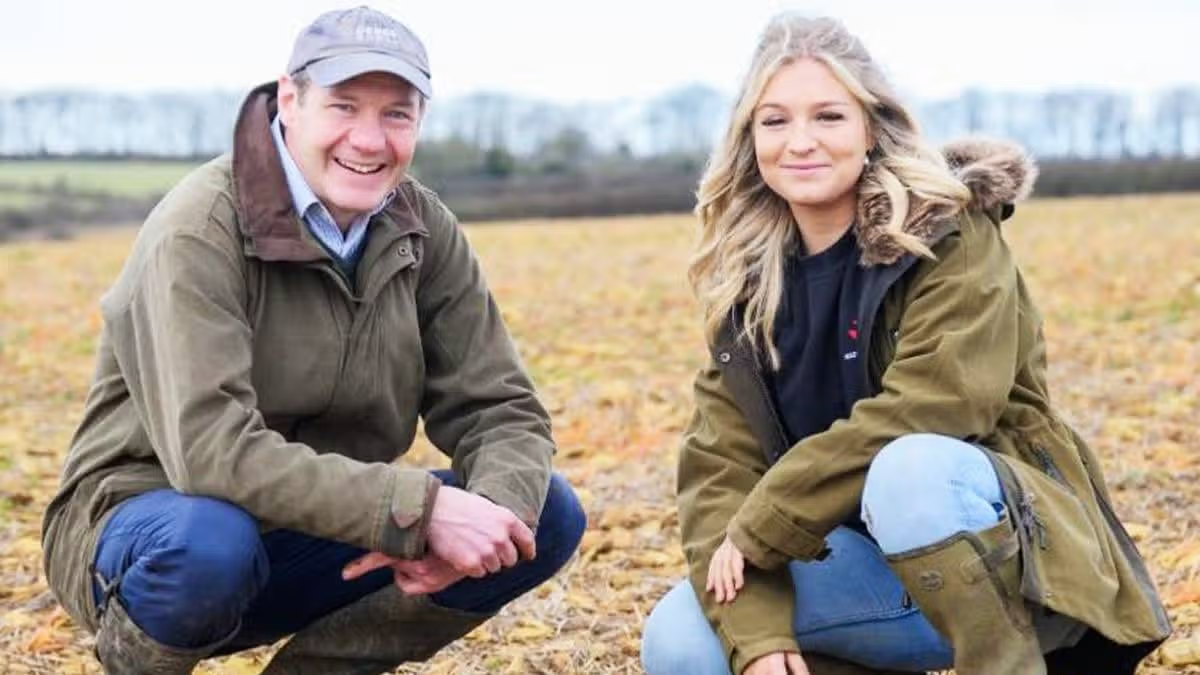
Clarkson’s Farm star Harriet Cowan has showcased a strikingly different persona after glamming up for a music festival alongside her friends. The 25-year-old rose to fame following her appearance on Jeremy Clarkson’s Prime Video series in its fourth series, temporarily replacing farmhand Kaleb Cooper while he undertook his solo tour, The World According to Kaleb.
Advertisement
Harriet, a TikTok content creator and healthcare worker at the time, rapidly adapted to her responsibilities and established herself as a popular member of the programme. Upon securing the role, however, she confessed she’d never actually watched the series before, which is recorded at former Top Gear presenter Clarkson’s estate at Diddly Squat Farm in Chipping Norton in the Cotswolds.
Despite this, she eagerly immersed herself in the duties, tackling tasks in the cattle barn, the stables, and across the farmland. Accompanied by several pals, Harriet recently attended Y Not Festival, which ran from July 30 to August 2 in Pikehall in the Peak District, drawing approximately 33,000 attendees.
In a video she shared on TikTok, she donned a white form-fitting bodysuit, paired with burgundy cowgirl boots and a coordinating leather jacket. The ensemble was a stark contrast to the clothing viewers typically see her wearing alongside Jeremy Clarkson and fellow cast members on screen.
“Festival weekend,” she wrote in the caption as she twirled for her 844,000 followers. Harriet also turned to Instagram to post a collection of photographs from the festival.
Advertisement
Content cannot be displayed without consent
The opening image captured her revelling with friends as darkness fell over the main stage. “Did someone say festival season?” she wrote.
Harriet was also snapped enjoying a few drinks, and sharing her delight at discovering another festival attendee wearing one of Clarkson’s Hawkstone Brewery t-shirts. She struck further poses before the festival’s helter-skelter and mingled amongst the crowds of revellers.
“Damn, I watched that more than I should have…,” one admirer confessed in the comments. A second gushed: “Wow, you look good in that outfit girl.”
A third contributed: “Farm is treating you well!” While a fourth TikTok user declared: “Wow! Simply wow!”
Advertisement
Following her appearance on Clarkson’s Farm, it has emerged Harriet has formed her own private company called Farmfluence, with the organisation registered on July 1, 2025. Based on latest company documentation, the business operations are described as “motion picture, video and television programme post-production activities” with Harriet acting as the sole director/shareholder.
Alongside her growing prominence and recent agency partnership, Harriet has revealed her tie-up with Country Moos, a sock manufacturer specialising in bovine designs, which she will be championing through her social media channels.
This year’s Y Not Festival delivered an exceptional programme, with The Libertines, The Streets, Two Door Cinema Club, and Reytons securing the top billing. The remarkable roster also featured Kaiser Chiefs, The Vaccines, Happy Mondays, Sophie Ellis-Bextor, The Royston Club, Scouting For Girls, Ash, Reverend And The Makers, Keo, and Freddie Halkon.
Get daily breaking news updates on your phone by joining our WhatsApp community here. We occasionally treat members to special offers, promotions and ads from us and our partners. See our Privacy Notice.
In this article, deaf is used as an umbrella term to include Deaf, deaf, hard of hearing, hearing-impaired, deafened and people with hearing loss.
Theatre and cinemas are increasingly lauding their commitment to access and diversity; yet deaf people are still excluded from most performances and films.
Many theatre performances are not captioned or British Sign Language (BSL) interpreted and if they are, theatres typically offer one captioned and one interpreted show in a run, regardless of the number of performances.
Most films are distributed with caption tracks, but cinemas, on average, caption only 1% of all showings. This is despite statistics showing that in the UK, one in seven people – approximately 14% of the population – are deaf or have hearing loss.
Advertisement
This is not meaningful inclusion; it is managed exclusion and amounts to what is termed “deafwashing”.
This article is part of our State of the Arts series. These articles tackle the challenges of the arts and heritage industry – and celebrate the wins, too.
As a deaf/deafened researcher, a lifelong theatregoer and amateur performer, I have spent years watching accessibility being treated as a specialist add-on rather than an integral part of arts and culture. Theatre was once one of the places where I felt most connected to the wider world. Now, however, access barriers have made participation almost impossible, transforming what should be a positive social experience into a demoralising logistical challenge.
Advertisement
The issue matters for reasons that extend beyond the arts. Worse mental health among deaf people is well documented, with higher rates of conditions such as depression and anxiety, and a higher prevalence of social isolation and loneliness.
Going to the theatre, cinema or a live performance is not simply entertainment. It is a way of connecting with others, participating in shared conversations and feeling part of a community.
Advertisement
Restricting access for deaf audiences is often justified through claims that accessibility features are distracting, aesthetically intrusive or unwanted by general audiences. Such assumptions persist despite a lack of evidence to support them.
Some cinemas have begun offering captioning glasses, which is a welcome improvement on a complete lack of access. However, these solutions still risk stigmatising deaf audiences, and some may feel uncomfortable wearing them and being visibly singled out.
In fact, many hearing people also find captions helpful or even necessary, including neurodivergent people, those with developmental conditions, older adults and non-native speakers. More broadly, captions can support understanding of complex or fast-paced dialogue. Given the widespread demand for captions, it is unsurprising that global platforms such as YouTube and TikTok have made them standard. Why, then, do theatres and cinemas continue to treat accessibility as an optional extra?
This exclusion stems from a long history of institutional exclusion. Accessibility is frequently viewed through the lens of accommodation rather than inclusion: accommodation asks how institutions can make occasional adjustments for a minority group, positioning inclusion as a burdensome add-on.
Advertisement
Inclusion, by contrast, asks how environments can be designed so that a wider range of people can participate from the outset. This is embodied in the concept of universal design; designing with built-in access for everyone rather than additional special features for disabled people.
A recent production of Under Milk Wood at Theatr Clwyd in Wales ably demonstrates how theatre can successfully incorporate deaf inclusion. Created by Craidd, a collaboration of Welsh theatre companies, the performance integrated captions, BSL interpretation and audio description into the artistic fabric of the show.
The captions moved and performed alongside the action, almost becoming supporting actors, while the BSL interpretation bounced between the cast, fully immersed in the performance. Far from being an unwelcome distraction, this enhanced the performance for all audiences providing additional textual, visual and emotional interpretations alongside traditional spoken words and acting. This is supported by research showing that visually rich and emotionally attuned captioning augments comprehension and emotional engagement.
Advertisement
Sara Beer, director for change at Craidd, notes: “Lots of people liked the captions – even those without hearing loss – because they helped them make sense of what was happening. It’s another way of telling the story, and lots of people like it even if they don’t need it as an access requirement.”
The question, then, is not whether accessibility in the arts is possible, we know it is.
“It’s about deciding at the start what access will work best for the production, not adding it on afterwards,” says Beer. “It has a cost implication, but if you budget for it at the start in the way that you budget for everything it just becomes what you do.”
It is time inclusivity becomes the norm rather than the exception. For deaf audiences, inclusion means more than being welcomed in principle; it means being able to attend performances with the same spontaneity and freedom as everyone else.
Advertisement
We need more deaf creatives in positions of genuine creative influence, and to move beyond measures that superficially support access, but merely contribute to ableist norms being perpetuated. Access should be part of universal design not an afterthought.
The city has lost many beloved eateries over the years
It’s fair to say we are spoiled for choices these days when it comes to food in and around Glasgow City Centre, with countless restaurants and eateries offering almost every type of cuisine imaginable.
Advertisement
Due to an endless revolving door of new food spots, the restaurant industry is now a lot more competitive and a lot of places fail to withstand the test of time.
This is of course with the exception of a select few iconic Glasgow venues that are still standing today including Café Gandolfi, Sloans, La Lanterna and Cafe D’Jaconelli.
However, there are many beloved restaurants that we have lost along the way.
Taking it back to simpler times, here are some Glasgow favourites from the 1970’s that closed their doors for the final time much to locals’ dismay.
Advertisement
Do you remember any of them?
Dino’s
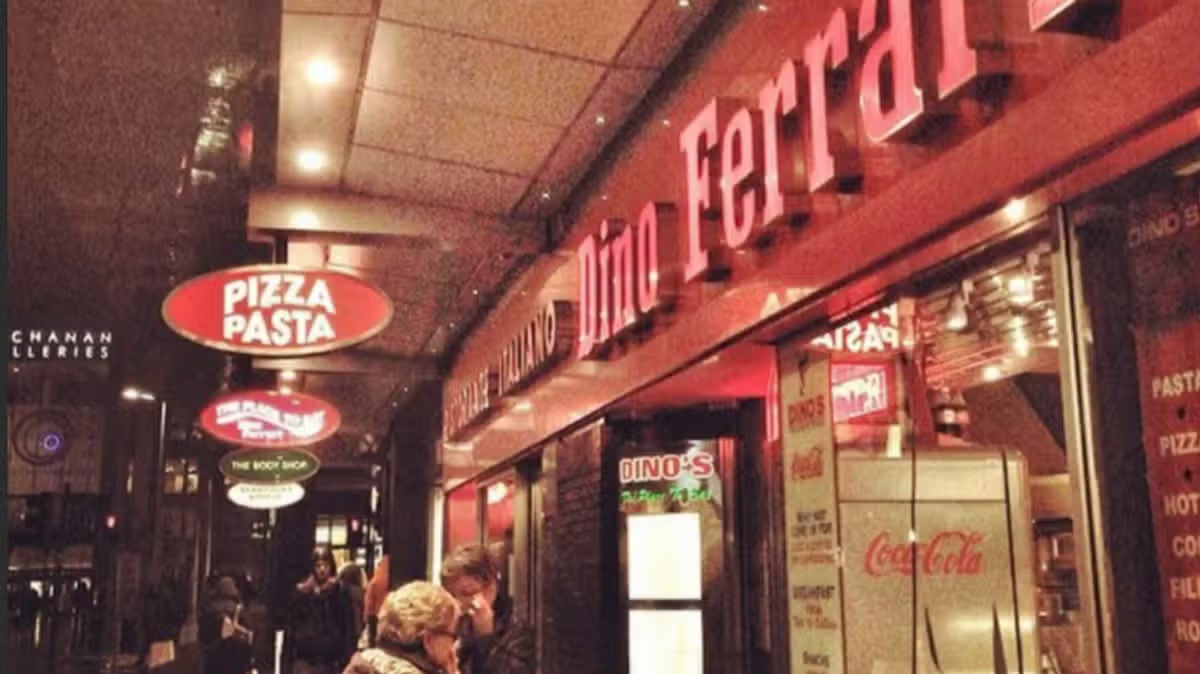
Dino Ferrari’s on Sauchiehall Street was once a Glasgow institution.
Founded in 1966 on Buchanan Street, the Italian eatery relocated to Sauchiehall Street in the 1970’s.
Advertisement
It offered many Scots their first taste of the continental culinary delights that are pizza and pasta.
Dino’s announced their heartbreaking closure in 2014 after almost 50 years in business when owner Alfredo Crolla retired.
Speaking fondly of Dino’s on a nostalgic Reddit thread about defunct restaurants in Glasgow, one Scot wrote: “Nothing has ever replaced the Dino’s £3.80 10’ pizza. What a class place that was.”
Danish Food Centre
The beloved Danish Food Centre once stood on St Vincent Street after it opened in the city in 1969.
Advertisement
The restaurant was a chain and its Glasgow location came as the third of its kind in the UK after the first stores were built in London and Manchester.
Famed for its smoked mackerel and it’s ‘Smorgasbord’ buffet, the food joint introduced Glaswegians to a wide range of Danish grub.
Speaking of the ‘missed’ Glasgow eateries on a Reddit thread, one Scot wrote: “Going way back to the early 70’s, the Danish Food Centre.”
Advertisement
Rogano
Rogano was first opened back in the 1930’s and was a popular joint in the 70’s and 80’s for those who remember.
The historic seafood restaurant was located just off Royal Exchange Square in Glasgow City Centre.
Loved by locals, it was also popular with celebrities including Elizabeth Taylor, Mick Jagger and Kylie Minogue.
Advertisement
The famed art deco fish joint sadly closed during the pandemic over a legal dispute about flooding damage sustained during lockdown.
In a Reddit thread about closed down Glasgow restaurants, one Scot described it as: “One of a kind.”
Buck Rogers
One of Glasgow’s most famously themed eateries was Queen Street’s Buck Rogers Burger Station which was inspired by the NBC TV series that ran from 1979 to 1981.
Opened by the city’s Lord Provost in November 1982, the iconic Burger Station was designed to whisk its patrons directly into the 25th century.
Food and drinks were even served by the show’s robot Twiki and the entire eatery was decorated in futuristic furnishings.
The sci-fi themed eatery was later transformed into one of the city’s best-known nightclubs, Archaos.
Wimpy
There were several Wimpy restaurants across Glasgow in the 1960’s including at The Sauchiehall Centre, Ingram Street and Union Street.
Advertisement
The classic UK burger chain was a hit in the city, selling American-style fast food that was served at your table with proper plates and cutlery.
Famed for their burgers and milkshakes, one Scot fondly remembers another dish of theirs.
In a Reddit thread about defunct Glasgow restaurants, they wrote: “Wimpy’s Sauchiehall Street. They made damn good fish n’ chips.”
Advertisement
The burger chain’s outlets gradually disappeared in the 1990’s. However, you can still find Wimpy restaurants in a limited number of places around the UK














































You must be logged in to post a comment Login