Connect with us

NewsBeat

LAURA TROTT: The soft bigotry of low expectations dressed up as progressive reform

Published

on

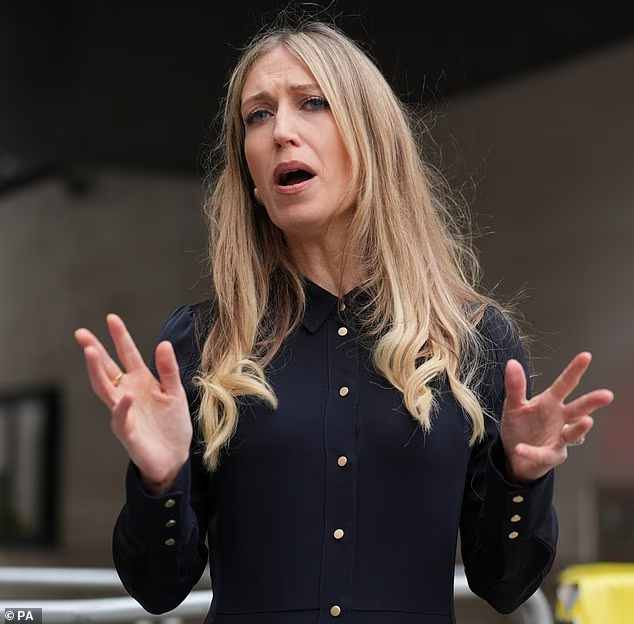
Shadow education secretary Laura Trott says this Government has made hiring more expensive while leaving welfare unreformed

Advertisement

Youth unemployment is at its highest level in more than a decade.

Over a million young people aged 16-24 fall into the Neet category – not in education, employment or training. This is a crisis.

Too many businesses have stopped hiring young people because Labour have piled extra costs on to employers through their Employment Rights Act, increasing the minimum wage and hiking employers’ national insurance contributions.

At the same time, a welfare system that too often rewards inactivity has become ever harder to challenge.

Advertisement

But what are Labour doing to fix it? Perhaps by making it cheaper to hire young people? Or stopping the incentives for young people to go on welfare rather than work? No, they are choosing to sabotage the part of the state that is working well: Schools.

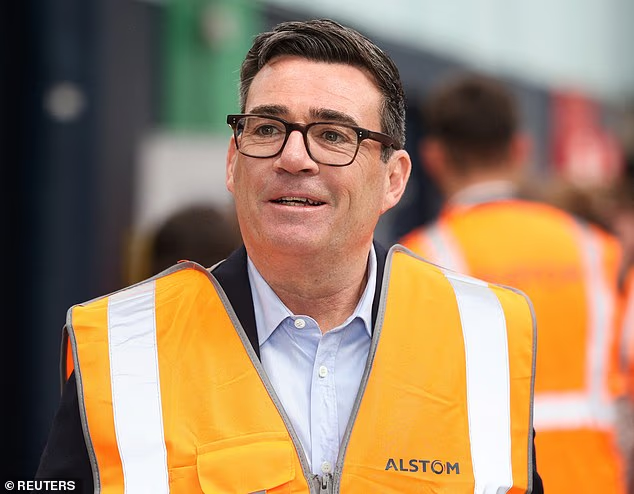
Yesterday Andy Burnham proposed to offer technical subjects to pupils from the age of 14. Subjects such as manufacturing and AI would be available from Year 10 and linked to local industries.

Yet what Labour is presenting will result in a move away from high standards in schools. Lucy Powell, the Education Secretary, has argued that an ‘over-focus on academic outcomes has left behind too many young people’.

But that fails to acknowledge how academic standards do not hold children back – they lift them up.

Advertisement

Young people at schools like the one I went to, my local comprehensive, were written off at the age of 14. It is a tragedy of lost opportunities that I don’t want to see unfold again.

Shadow education secretary Laura Trott says this Government has made hiring more expensive while leaving welfare unreformed

Britain’s greatest success story in recent years has been proving that children from ordinary backgrounds can achieve world-class qualifications at state schools. That should be celebrated.

Advertisement

The purpose of education is not to limit a child’s ambitions to whatever jobs happen to exist nearby. It is to equip them with the qualifications to succeed in any path they choose to pursue.

There is another danger. Successful schools with highly academic intakes will still focus on high achievers, while schools serving more disadvantaged communities will come under pressure to steer pupils into technical routes far earlier. It is the soft bigotry of low expectations dressed up as progressive reform.

Labour’s 2005 14-19 reforms were meant to strengthen vocational education, but too often children from poorer backgrounds were channelled away from rigorous academic subjects. Instead of raising aspirations, they lowered expectations.

But Conservative policies – such as the 2010 Academies Act and curriculum overhauls that prioritised knowledge in subjects such as maths and English – have challenged that culture. They proved that disadvantaged children could thrive in academic schools.

Advertisement

It would be a mistake to return to a system that too readily decided some children would never achieve academically.

None of this is an argument against technical education: Quite the opposite. Britain needs more high-quality apprenticeships. But all young people deserve the benefit of a strong academic education.

The Conservatives have a plan to boost employment for young people. By stopping dead-end degrees, doubling apprenticeships and raising the bar for welfare claims, we can help the next generation into work. Labour’s approach pulls in precisely the opposite direction.

This Government has made hiring more expensive, left welfare unreformed and is blaming schools for the consequences.

Advertisement

Laura Trott MP is the shadow education secretary. 

Advertisement

Source link

Advertisement
Continue Reading
Click to comment

You must be logged in to post a comment Login

Leave a Reply

NewsBeat

A heat wave threatens to reignite France’s mega-fire near Bordeaux

Published

on

A heat wave threatens to reignite France’s mega-fire near Bordeaux

LEGE-CAP FERRET, France (AP) — Fire crews battled a mega-fire four times the size of Paris in southwest France while facing tinderbox temperatures forecast to climb above 40 degrees Celsius (104 degrees Fahrenheit) on Wednesday.

The heat wave and forecast winds could hamper progress against the blaze that has forced 220,000 people from their homes, authorities for the Gironde region around Bordeaux said.

In a Wednesday morning update on the huge firefighting effort, Gironde authorities said the situation overnight had been “calm” and that the blaze hadn’t spread — although it’s still not contained a week after it started.

The onset of heat-wave temperatures and winds heightened the risk of flames flaring again.

Advertisement

On Tuesday, Gironde authorities ordered 4,000 more people evacuated from tourist sites along the Atlantic coast, widening what may be France’s largest peacetime evacuation.

“The situation remains complicated. That’s clear. We’re not out of the woods,” Gironde prefect Sophie Brocas said Tuesday evening. But she also gave the go-ahead for 60,000 evacuees to return to their homes in three Bordeaux suburbs that haven’t burned.

The opposing movements — thousands ordered out of coastal resorts while those returning were told to be on the alert — underscored how precarious the fire’s hold remained.

Across France and Spain, roughly 330,000 people have been driven from homes and vacation sites by huge wildfires. Spain braced for its fourth heat wave of the summer, with several blazes still burning out of control, including the largest in its recorded history.

Advertisement

Even so, Spanish authorities began lifting evacuation and stay-at-home orders for thousands of people after firefighters made progress.

At its most violent, the Gironde blaze created a gargantuan black thundercloud, electrified and lit from within. It generated lightning, violent winds and new fires beyond the original front. The phenomenon, known as a pyrocumulonimbus cloud, was the first recorded in France.

More than 1,160 square kilometers (448 square miles) have burned across France this year, according to the Interior Ministry.

Europe is the world’s fastest-warming continent, heating at more than twice the global average, according to the European Union’s Copernicus climate service. Western Europe recorded its hottest June on record, with extreme heat and widespread dryness contributing to the spread and intensification of fires in France and Spain, Copernicus said.

Advertisement

Source link

Continue Reading

NewsBeat

Is Spider-Man: Brand New Day Worth Watching? Reviews So Far

Published

on

Is Spider-Man: Brand New Day Worth Watching? Reviews So Far

Great news for Spider-Man fans – years after the franchise’s last installment, Spider-Man: Brand New Day is finally out.

And Tom himself has said he’s “loving” promoting both the Marvel flick and his other summer blockbuster, The Odyssey.

“When you’re doing press for movies you’re really proud of, it’s really easy. Because when they ask you questions about, ‘Why should people go and watch this movie?’, you’re not lying to anyone. You really feel like people should go see it,” he told the hosts of Waitrose’s Dish podcast recently.

The film follows a half-forgotten Peter Parker who undergoes a transformation he “may not have the power to control”.

Here’s what the reviews say so far:

Advertisement

What do critics think of Spider-Man: Brand New Day?

It’s earned a very impressive 90% on review aggregation site Rotten Tomatoes. Though responses to the film’s plot are mixed, there’s one thing reviewers seem unanimous on: Tom Holland’s performance as Peter Parker is his best yet.

“Zendaya saves this film. She rescues it from silliness and the generic deja vu overfamiliarity that is always threatening to sink it… Otherwise, things are the same in Spideyworld in ways that we will recognise with affectionate exasperation.”

“If the back half of the film feels a little sluggish, [director] Cretton… never fully loses focus of the guy behind the mask. Spider-Man is always at his best doing the friendly neighbourhood stuff, and when this film remembers that, we’re reminded why he’s still Marvel’s ace in the pack.”

Advertisement

“The dominant thread… at least until full-scale mayhem erupts, is Peter Parker’s identity crisis, which gives a never-better Tom Holland soulful new notes to play… All this chugs along satisfyingly even with the occasional patch of sluggishness and the usual overly convoluted plot contortions.”

Spider-Man

“For the first time, [Zendaya and Tom Holland] make a persuasive romantic pairing and the now-classic shot of MJ falling to her doom, only for Spider-Man to swoop to the rescue, has a palpable emotional charge… corniness sits well in Cretton’s palette, and is amply counterbalanced by the sort of grounding, street-level texture that all but vanished from the series since it was absorbed into the wider Marvel project.”

“The film is… bogged down by the same thing that has caused late-stage Marvel Cinematic Universe films to sag: the weight of tying all of the stories together… while hardcore M.C.U. fans might be pleased, the rest of us are, demonstrably, getting kind of tired of having to do our homework. Nothing can erase the enjoyment of witnessing Holland’s performance.”

Spider-Man

“Tom Holland… provides all the requisite humor, heart and highflying style to make this work so well, graduating to a new level but still retaining what we have related to in the series that just seems to get better. What he and Zendaya (now married in real life) manage to still do chemistry-wise in a plot that seeks to keep them at a distance is no easy feat.”

“[Director] Cretton, who steps into the director’s chair after Jon Watts directed the last three Spider-Man movies, is the first MCU director to really respect Peter Parker’s internal life… By giving these characters that we’ve lived with for almost a decade (!) some much-needed depth, Cretton also manages to foster some of the best performances that Holland and Zendaya have ever given.”

“Coming after No Way Home, Spider-Man: Brand New Day feels at moments like a balm of contemplative drama… watchable without ever being transporting.”

Advertisement
Spider-Man

“The story matters, and it works. I wish I could say that much for the plot… It’s only on the car ride home you realize the villain’s plan makes no sense… But, and I say this from the bottom of my heart, screw the plot… We don’t get many great MCU movies anymore. That this is one of the highlights of the whole franchise feels amazing. And spectacular. And sensational.”

[Tom Holland] delivers his most nuanced and mature Spider-Man performance to date…Much like Spider-Man, the Marvel Cinematic Universe knows that it can’t go back to the way things were, but it’s also absolutely clueless about how to push forward.”

Spider-Man

11) The Independent (4/5)

“The full span of [Tom Holland’s] character, in all his strengths and vulnerabilities, has never been more felt than here… Brand New Day offers a maturation not only of its hero, but of the franchise’s entire vision, too.

“The best Spider-Man movie in more than 20 years.”

“The best looking Spidey has been since the days of Raimi, and that is no coincidence. Cretton brings a quieter, more measured gaze into Peter Parker’s world, still keeping the lightheartedness the MCU is known for, but painting in grays and blacks, and the shadings of life.”

Spider-Man

“If nothing else, Spider-Man: Brand New Day is proof that you can at least try to build a better Marvel movie – even with its flaws, this one is superior to most. That’s partly thanks to Holland, a smart, sensitive actor who, inside a stretchy suit or not, takes his character’s emotional travails just seriously enough. It doesn’t hurt that as MJ, Zendaya is allowed to do more than scowl disapprovingly.”

Advertisement

Source link

Continue Reading

NewsBeat

Wildfire ‘catastrophe’ on Greek holiday island as villages are evacuated and people flee to beaches with huge blaze burning out-of-control

Published

on

Footage shared on social media shows bright orange flames rising above the mountains as dark clouds of smoke engulf the island

Wildfire evacuations are underway on the Greek Aegean island of Paros where a massive forest fire has been burning through the island overnight and into Wednesday morning.

Footage shared on social media shows bright orange flames rising above the mountains as dark clouds of smoke engulf the island.

Nine villages have been evacuated due to the growing flames. Local media has reported that residents are fleeing to the beaches on the instructions of emergency services. 

According to Greek news outlet Proto Thema, emergency crews have been battling the blaze non-stop since Tuesday afternoon. 

Advertisement

The response team includes 66 firefighters, specialised forest firefighting units from Athens, five helicopters, and two water-bombing planes. 

They will soon be reinforced by 20 additional firefighters travelling from the mainland town of Rafina.

Haris Giourtzidis, the deputy mayor of Paros, has said they ‘don’t yet have a clear picture of the extent of the damage. So far, we know that two barns have burned down.’

He added that ‘the wind is blowing constantly and very strongly,’ making the firefighters’ work more difficult.

Advertisement

Footage shared on social media shows bright orange flames rising above the mountains as dark clouds of smoke engulf the island

Nine villages have been evacuated due to the growing flames

Nine villages have been evacuated due to the growing flames

According to Greek news outlet Proto Thema, emergency crews have been battling the blaze non-stop since Tuesday afternoon

According to Greek news outlet Proto Thema, emergency crews have been battling the blaze non-stop since Tuesday afternoon

Advertisement

Early Wednesday morning, residents in Trypiti, Glyfa, Pyrgaki, and Aspro Chorio were ordered to evacuate toward Dryos. 

This followed an earlier evacuation notice directing people in Ageria to flee toward Aliki beach. 

These urgent measures build on Tuesday afternoon’s operations, which successfully cleared the areas of Agios Charalambos, Kambi, Bougados, Aneratza, and Kamari. 

The Deputy Mayor said there were cases where emergency services ‘forcibly removed residents from their homes’ after they refused to leave their animals behind.

Advertisement

Local outlets report that the Paros wildfire has split into two advancing fronts, heading toward Faragas Beach and Tripiti. 

The village of Agkairia has been hit particularly hard by the flames. Conditions are expected to deteriorate on Wednesday as the island enters a category 3 high forest fire risk designation. 

In response, local authorities are maintaining a state of high alert until the blaze is fully contained.

The Fire Department’s press spokesman, Yiannis Artopoios, said the flames are slowly being subdued by the 86 firefighters tackling the blaze.

Advertisement

‘The battle continues so that the fire does not escape,’ he emphasised.

One person who had to evacuate to neighbouring island Antiparos told Swiss outlet Blick: ‘This is turning into a real catastrophe! The fire spread further south with the wind in just three hours.’

The fire on Paros comes as Europe is battling some of the worst wildfires in living memory across multiple popular holiday destinations as temperatures hit up to 47C.

Around 4,000 holidaymakers were evacuated yesterday from a popular French beach resort.

Advertisement

Officials ordered campsites, holiday villages, tourist residences and leisure parks to be cleared in the surfing hotspot of Lacanau, around 35 miles west of Bordeaux, as firefighters battled what has become France’s largest wildfire since 1949.

Firefighters in France and Spain were battling to contain the blazes before the arrival of a fourth heatwave of the summer brings scorching temperatures.

Flames have torn through vast swathes of forest in both countries, incinerating properties and forcing the evacuation of tens of thousands of people.

In a sign of progress, Spain’s interior ministry said it would end evacuation orders for 13 municipalities on Tuesday afternoon, without providing details of how many people were covered.

Advertisement

Conditions are set to worsen as a fresh heatwave hits western Europe this week, with temperatures climbing again in France from Tuesday and Spain from Wednesday, according to meteorologists.

French firefighters were ‘on the offensive’, commander Eric Pitault insisted, standing beside a 50-metre-wide, 25-kilometre-long firebreak cut with the help of civilian volunteers on the Cap Ferret peninsula.

Over the past six days, the largest French wildfire since 1949 has raged west of Bordeaux, forcing more than 220,000 people to flee and destroying 240 homes.

The prefect’s office said that, while there were flare-ups overnight, these were under control and the burnt area had not increased.

Advertisement

Outside Spain’s Aldea del Fresno, on the edge of the vast fires burning west of Madrid, evacuated locals queued up in their cars in the hope of returning to properties and pets.

They were among 60,000 people forced to flee by fires that have consumed 190,000 acres, an area almost the size of New York City.

For now, though, the Guardia Civil gendarmerie was blocking their return, blaming the risk of smoke inhalation.

Galia Borisova, a 55-year-old domestic helper, wanted to reach her animals in nearby Picadas but was having to wait.

Advertisement

‘They say there’s so much smoke that you can’t breathe, even with a mask. And I believe it, because you could see it from here.’

Firefighters use controlled burning to halt a wildfire that continues to spread near Cebreros, Spain, on July 28, 2026

Firefighters use controlled burning to halt a wildfire that continues to spread near Cebreros, Spain, on July 28, 2026

Residents smother embers with dirt to prevent reignition after a wildfire was brought under control near La Adrada, 95 kilometres west of Madrid, on July 28, 2026

Residents smother embers with dirt to prevent reignition after a wildfire was brought under control near La Adrada, 95 kilometres west of Madrid, on July 28, 2026

Firefighters work as flames and smoke rise during a wildfire, amid drought conditions following a heatwave and water shortages across much of France

Firefighters work as flames and smoke rise during a wildfire, amid drought conditions following a heatwave and water shortages across much of France

Advertisement
Firefighters respond to a forest fire both from the air and land in the Seydikemer district of Mugla, Turkey on July 29

Firefighters respond to a forest fire both from the air and land in the Seydikemer district of Mugla, Turkey on July 29

Firefighters respond to a forest fire in Turkey

Firefighters respond to a forest fire in Turkey

Europe has been gripped by successive heatwaves and a major drought this year, which scientists have attributed to human-caused climate change.

Extreme heat has parched the ground and dried out vegetation that had grown vigorously during wet and mild weather earlier in the year, creating tinderbox conditions.

Advertisement

The leaders of both France and Spain warned of the new reality that climate change has created.

Spain’s Prime Minister Pedro Sanchez has called the fires ‘the most painful expression of a climate emergency’, while French President Emmanuel Macron said: ‘The coming weeks will be tough and we have to hold out.’

While the focus is currently on Western Europe, the EU’s crisis management chief warned that conditions elsewhere on the continent could spark new fires, stretching already strained resources.

‘Extreme conditions are looming for Hungary, Slovakia and the Czech Republic, in addition to France, the Iberian Peninsula… where the situation is expected to worsen, including in Portugal starting today,’ commissioner Hadja Lahbib said.

Advertisement

Source link

Continue Reading

NewsBeat

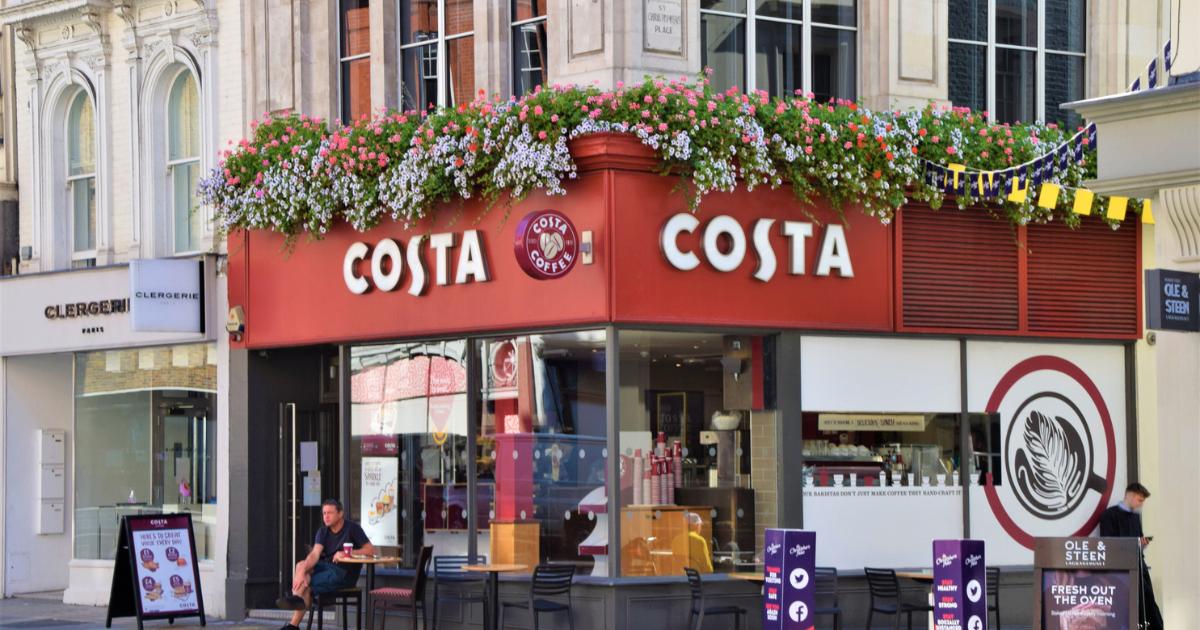
Costa Coffee adds scones back to menu after 5 years away

Published

on

Costa Coffee adds scones back to menu after 5 years away

The coffee chain is now selling scones served with jam and cream at more than 1,000 stores as part of a new afternoon offer.

Scones were removed from menus around 2020 or early 2021, during the Covid-19 pandemic.

Their return has reignited the debate over whether jam or cream should be spread on scones first, as reported by creatorzine.com.

A Costa Coffee mug of coffee next to a sconeCosta Coffee has added scones back to its menus following a break that started during the Covid-19 pandemic (Image: Costa Coffee)

Costa Coffee brings back iconic British treat to menus after 5 years

Costa has launched a “50/50” scone, topped with a balanced swirl of both jam and cream, in a bid to save the arguments.

Advertisement

The toppings are piped together using a custom-made dual piping bag.

The first of these scones was served to the mayors of Saltash and Kingsbridge at Costa’s Saltash branch, located near the Devon–Cornwall border, an area that’s the symbolic centre of the traditional cream tea rivalry.

Cornish tradition dictates that jam should be spread before the cream, while the Devon method places cream underneath the jam.

Councillor Brian Stoyel, mayor of Saltash, said: “We’re proud that Saltash has become the home of Britain’s latest chapter in the great scone debate.

Advertisement

“The beauty of Costa’s 50/50 scone is that it celebrates both traditions rather than choosing between them.

“After trying it for myself, I can confirm it’s every bit as delicious as it sounds – proof that sometimes bringing people together is even better than settling the argument.”

Costa Coffee’s research found that 71% of Brits prefer the Cornish, jam-first method.

However, 29% of people said they preferred cream first.

More than a third admitted judging somebody for preparing a scone the “wrong” way, and one in five had refused to eat one assembled in the opposing order.

Advertisement

Andrea Stewart, global head of food at Costa Coffee, said: “Our research shows Britain remains divided when it comes to how people top their scones, so we thought it was about time someone brought both sides together.

“Rather than choosing between two much-loved traditions, we wanted to create a playful compromise that celebrates both approaches.”


Recommended reading:


The poll also found 52% of younger people believed cream teas were finding a new audience online.

Advertisement

Meanwhile, 55% pronounce “scone” to rhyme with “gone”, compared with 45% who favour rhyming it with “bone”.

The returning scones are part of Costa’s new Afternoon Bundle.

The deal, which includes a regular hot or iced drink and one scone with cream and jam, starts at £6.49.

It will be available to buy until October 21 at selected Costa Coffee stores.

Advertisement

Do you put jam or cream on your scone first? Let us know in the comments below.

Source link

Advertisement
Continue Reading

NewsBeat

Peter Kay announces final dates for record-breaking tour

Published

on

Peter Kay announces final dates for record-breaking tour

The Better Late Than Never tour has been on the road for four years and will culminate in a special run of charity performances.

The Bolton comedian is to perform over four weekends this autumn. In addition to evening performances, a series of matinee shows will also be staged to help generate even more funds for charity.

Peter Kay’s final tour dates (Image: SJM)

All profits from the shows will be donated to three charities – The Lily Foundation, a UK Mitochondrial disease charity; Maggie’s, which provides cancer care around the UK and the Be More Laura Foundation supporting research into brain cancer.

Peter Kay said: “It’s been an incredible four-year tour. I’ve absolutely loved it. If doing a few more shows can help raise money for these overlooked and sadly underfunded charities, then that’s the least I can do.”

Advertisement

He will play Cardiff on September 6; Hull on October 10; Brighton on November 13 and 14 and end the tour with two shows at Blackpool Opera House on Saturday, November 21.

Tickets go on sale at 10am on Friday

Source link

Advertisement
Continue Reading

NewsBeat

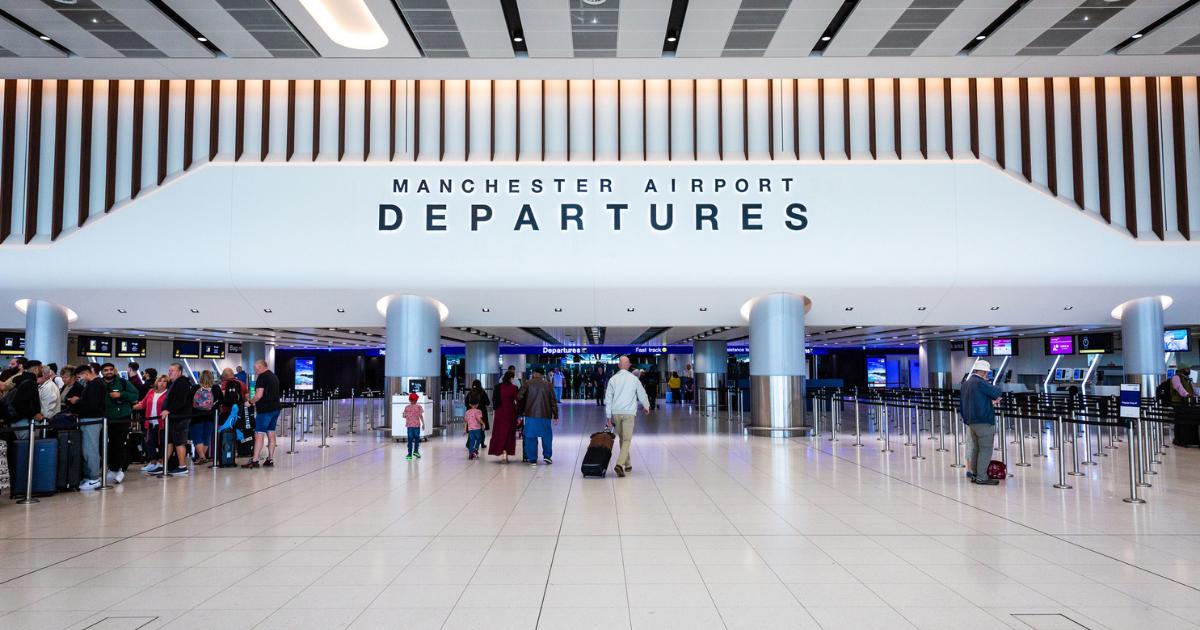
Full list of Manchester Airport flight cancellations and delays

Published

on

Full list of Manchester Airport flight delays or cancellations

As of Wednesday, July 29, two Loganair services and one Jet2 flight have been cancelled, while several departures earlier in the day have left more than 20 minutes later than scheduled.

The cancelled flights are the 2.05pm Loganair service to Exeter, the 4.55pm Loganair service to Southampton and the 7pm Jet2 service to Heraklion in Greece.

Flights to destinations including Rhodes, Dubrovnik, Malaga, Faro, Antalya, Dalaman, Alicante, Corfu and Tenerife were among those delayed by more than 20 minutes.

Advertisement

Flight delays can happen for a number of reasons.

Common causes include poor weather, air traffic control restrictions, technical issues with aircraft, late-arriving inbound planes, staffing shortages and operational problems affecting airlines or airports.

During the busy summer holiday period, delays can also build throughout the day as aircraft and crews fall behind schedule.

Passengers due to travel today are advised to check the latest information with their airline before setting off for the airport, as departure times can change at short notice.

Advertisement

Source link

Continue Reading

NewsBeat

Andy Burnham’s ‘cross-party talks’ on social care farce: Neither Kemi Badenoch nor Ed Davey can attend after ‘being given just 18 hours’ notice’ – while Nigel Farage is snubbed

Published

on

Andy Burnham will hold cross-party talks on social care today - but neither Kemi Badenoch nor Ed Davey can attend in person and Nigel Farage has been snubbed

Andy Burnham will hold cross-party talks on social care today – but neither Kemi Badenoch nor Ed Davey can attend in person and Nigel Farage has been snubbed.

The Prime Minister wants to build a ‘spirit of collaboration’ on tackling the social care crisis and vowed to expend ‘whatever political capital I have’ on fixing the system.

He has insisted the time for ‘playing politics’ on the issue is over, ‘when the human cost of that means carers struggling, families paying the price and our NHS buckling under the strain’.

Both the Tories and Liberal Democrats have accepted Mr Burnham’s invitation to attend Wednesday’s meeting, which will happen after the PM gives a speech.

Advertisement

But Mrs Badenoch, the Tory leader, is unable to attend – due to a non-serious pre-planned medical appointment – and will send shadow health secretary Stuart Andrew on her behalf.

Meanwhile, Sir Ed will join the meeting via Zoom as he is in France with his son who needs round-the-clock care.

A Tory official criticised Mr Burnham for only giving short notice of Wednesday’s meeting and for holding it during Parliament’s summer break. 

‘If Burnham was serious about working cross-party he would have given us more than 18 hours’ notice for a 30-minute meeting during recess and the invitation wouldn’t have been immediately press-released,’ they told Politico. ‘It’s almost like it’s only being done for show.’ 

Advertisement

Andy Burnham will hold cross-party talks on social care today – but neither Kemi Badenoch nor Ed Davey can attend in person and Nigel Farage has been snubbed

Kemi Badenoch has warned Mr Burnham she will not support any proposals for social care that involve raising taxes or increasing Government borrowing

Kemi Badenoch has warned Mr Burnham she will not support any proposals for social care that involve raising taxes or increasing Government borrowing

Mr Farage also hit out at the PM for not extending an invite to his Reform UK party. He said: ‘It’s remarkable that he’s chosen to ignore the party that led over 300 national opinion polls and represents thousands of councillors and millions of Britons across the country.

Advertisement

‘It’s now clear that Burnham is conspiring behind closed doors with the failed political establishment to foist further tax rises on the country.’

Green Party leader Zack Polanski, who has also been snubbed, urged Mr Burnham to reach out to him.

He told BBC Newsnight: ‘I would like to be there. Of course, I would, and I’d encourage the PM to extend that invitation.

‘I think the point here, though, is not politicians’ personal egos. The point is, adult social care is a ticking time bomb.’

Advertisement

It has been estimated the PM’s plan to make social care free at the point of use will cost an extra £18billion a year. 

He has previously championed a ‘national care levy’ and this week failed to rule out a 10 per cent charge on all estates after the owner dies to replace current inheritance tax – dubbed a ‘death tax’ by critics.

Nigel Farage hit out at the Prime Minister for not extending an invite to his Reform UK party

Nigel Farage hit out at the Prime Minister for not extending an invite to his Reform UK party

Sir Ed Davey will join the meeting via Zoom as he is in France with his son who needs round-the-clock care

Sir Ed Davey will join the meeting via Zoom as he is in France with his son who needs round-the-clock care

Advertisement

According to The Telegraph, Government officials have also drawn up alternative plans for a new tax on income to fund social care.

This could be set at 1.8 per cent of earnings above £6,240, paid by workers over the age of 34. The fund would be invested on behalf of working-age people to use for the cost of care when their cohort reaches old age, the newspaper reported.

Mrs Badenoch has warned Mr Burnham she will not support any proposals for social care that involve raising taxes or increasing Government borrowing, while Mr Farage has vowed his party ‘will fight a death tax every step of the way’.

Ahead of his speech on social care in London on Wednesday, the PM said: ‘Last week I said we needed a different kind of politics: problem-solving, not point-scoring. 

Advertisement

‘Nowhere is that more urgent than social care. For decades, governments have kicked this issue down the road because they’ve seen it as too risky, too difficult, and too complicated.

‘Politicians might have different views, but I’m serious about fixing this issue and to do that, we have to find common ground and listen to others to find a way forward.’

Michelle Dyson, CEO of Alzheimer’s Society, said: ‘We warmly welcome and support the PM’s commitment to tackling social care.

‘For people living with dementia, it is critical. People living with dementia need good quality care as early as possible, but too often families are left to navigate a fragmented system, bearing huge emotional, practical and financial pressures.

Advertisement

‘Dementia is one of the biggest drivers of demand on the care system. Getting social care right depends heavily on getting dementia care right, making the most of the new opportunities afforded by scientific breakthroughs, which mean we can intervene earlier and keep people well for longer.

‘The public is fully behind us on this – our recent polling shows that four out of five people want dementia to be made a national healthcare priority.

‘Urgency is key. We are looking forward to working with our new PM on quick wins like dementia training for care workers, together with longer-term plans for reform that will leave a lasting legacy for people living with dementia now and in the future.’

Source link

Advertisement
Continue Reading

NewsBeat

Eight steps you must take to avoid midlife money meltdown

Published

on

The march of AI into the workplace has led to well-founded fears that the equal opportunities women fought so hard to win are being bulldozed in front of our eyes, writes Ruth Sunderland

For middle-class women of a certain age, redundancy, divorce and illness are the triplet of financial torpedos that can blow up a previously comfortable existence.

When the solid-seeming foundations supporting our lives are ripped away, the emotional and financial fall-out is profound.

No one, male or female, is immune to shocks. But women face particular challenges in bouncing back.

The march of AI into the workplace has led to well-founded fears that the equal opportunities women fought so hard to win are being bulldozed in front of our eyes.

Advertisement

Women aged over 55 are being overtaken in their careers by young, male tech bros, according to recent research by Google. Even the most tech-savvy can find their CV thrown in the digital bin by sexist bots who couldn’t care less about decades of achievement.

Which is why an article in the Daily Mail last week by fifty-something former fashion editor Stacey Duguid struck such a chord with so many of her peer group.

Stacey’s problems finding a job after taking time off work following a divorce plunged her into a stomach-churning downfall from a six-figure salary to the JobCentre.

None of us is immune from a financial shock, no matter how enviable our careers – but it need not turn into a full-blown midlife money meltdown. A descent like Stacey’s is every middle-class woman’s worst nightmare and I’m not going to pretend to have a magic set of answers.

Advertisement

The march of AI into the workplace has led to well-founded fears that the equal opportunities women fought so hard to win are being bulldozed in front of our eyes, writes Ruth Sunderland

However, I have navigated potential financial crises myself, including my husband’s cancer diagnosis and, more recently, my move from a full-time executive job to starting my own business.

My message, based on my experience and 30 years of writing about money, is this: the more financial control and confidence a woman acquires, the greater her chances of surviving life’s disasters and maybe even coming out stronger.

Advertisement

This is not merely a feminist manifesto. The more financially resilient we are, the better we can step up for our families.

My mum’s earnings as a teacher kept our household afloat when my father was made redundant in the 1990s. Similarly, I was thankful to able to act as breadwinner when my husband was laid low with cancer. I’ve talked to three female financial experts – and one male one – on how to beat a midlife money meltdown.

Knowledge is power

‘One of the best ways for women to build resilience is to take an active role in your finances,’ says Clare Moffat, tax and pensions expert at Royal London.

In other words, if you have a partner, do not leave the finances to them. Ideally, have open, regular conversations about money and be aware of one another’s savings, investments and debts.

Advertisement

‘Financial independence isn’t about having to manage everything on your own. It’s about having enough knowledge and confidence, so you’re not left in the dark if circumstances change,’ adds Moffat. ‘Taking decisive action can help protect your financial future.’

Stacey Duguid has faced problems finding a job after taking time off work following a divorce

Stacey Duguid has faced problems finding a job after taking time off work following a divorce

Control your spending

Going through your outgoings to identify wasteful and needless spending is a good regular practice.

Why are you paying for a subscription you haven’t used for years? Check out comparison sites to see if you can cut bills. The boss of Moneysupermarket.com’s parent company told me last week that his customers collectively saved around £3 billion last year by using the site.

Advertisement

Almost all of us could pare back on household bills. That money can be put to work for you to build financial muscle for the future.

Thinking of safety first

A girl’s best friend is not diamonds but an emergency fund.

Financial advisers recommend setting aside six months to a year’s outgoings.

That sounds a lot – but even small, regular amounts accumulate over time.

Advertisement

How much is enough really? Lisa Doig, a financial adviser with Thorntons Wealth, says: ‘It’s all relative to your wealth, but £20,000 is a comfortable amount for many. That would cover a new boiler, a deposit for a car and so forth.’

Building up some wealth 

Having a cash emergency fund that you can access quickly is essential. The problem with deposit accounts, however, is they have a nasty habit of losing value because of inflation. The best way, therefore, to accumulate long-term wealth is to invest in stocks and shares.

'One of the best ways for women to build resilience is to take an active role in your finances,' says Clare Moffat, tax and pensions expert at Royal London

‘One of the best ways for women to build resilience is to take an active role in your finances,’ says Clare Moffat, tax and pensions expert at Royal London

It’s possible to do this with small, regular sums from £25 a month. Spread the risk by buying funds such as investment trusts that hold a collection of shares and other assets. If you use an Individual Savings Account (Isa), it’s tax-free.

Advertisement

‘Research suggests that women are actually better investors than men,’ says Richard Watkins, a chartered financial planner at Continuum. ‘They trade less, leave ego and emotion out of decisions and plan for the long term.

‘This results in better performance of around 0.8 pc a year, which might not sound much but turns into a significant outperformance over 20 years or more.’

If you start in midlife, you might even become an Isa millionairess.

Take inspiration from Jane Barr, now 77, who retired in her 50s after a divorce. She built up a portfolio worth just over £2million in her Isas by investing regular amounts from her modest salary, as she explained to my colleague Jeff Prestridge.

Advertisement

Prioritise pensions

Never neglect your pension. It is essential for the fabulous ‘future you’ who will emerge from the current crisis.

Because of generally lower pay and career breaks to care for children, women typically retire with savings worth around 55 pc less than men.

So pay as much into a pension plan as you can, whenever you can.

In an ideal world, women would have been building their financial strength gradually, so that when a trauma strikes they start off well-equipped to handle it. Even if that is not the case, midlife is not too late to bounce back.

In an ideal world, women would have been building their financial strength gradually, so that when a trauma strikes they start off well-equipped to handle it. Even if that is not the case, midlife is not too late to bounce back.

Advertisement

If you work for an employer, you will benefit from free payments from them into your plan, as well as tax relief on contributions at your highest rate.

‘Making pension saving a priority throughout your career, and being confident about negotiating pay and progression, can make a significant difference to financial security in later life,’ says Moffat.

In divorces, pensions are often overlooked, even though they are usually the biggest asset after the family home.

As a consequence, divorced women reach retirement with around 61 pc less private pension wealth than divorced men. Don’t let that be you.

Advertisement

Know your rights and make sure you get what you’re entitled to. There are three main options when dealing with pensions in a divorce. You can share them on a clean-break basis, one partner can earmark some of the income to be paid out after retirement or you can offset their value against other assets.

If you are made redundant and don’t need to use your entire settlement, it may make sense to stash some of it in your pension, particularly if you are close to the age of being able to draw on it.

You can pay up to £60,000 or 100 pc of your annual earnings, whichever is the lowest, into your pension each year.

That will boost your retirement income and save tax.

Advertisement

‘Paying part of a redundancy package into a pension can be a tax-efficient option,’ adds Moffat.

If you are aged 55 or over, you can start drawing your private pension, but bear in mind that means less in the pot for later.

Invest in yourself

The best investment you can make is in yourself.

Up-to-date skills are crucial for midlife women. Mid-level admin and service roles typically held by women are under particular threat from AI.

Advertisement

Kate Alessi, the boss of Google in the UK and herself a midlife woman, recently commissioned research that found only 4 pc of women aged over 55 are advanced AI users.

She says: ‘There is a risk existing inequalities will become more entrenched, so it’s important we address this, but the good news is that it is very solvable. It is quite simple for anyone to use AI skills.’

For details of online AI courses, including for beginners, see the government hub: aiskillshub.org.uk/aiskillsboost/ or type grow.google into your search bar.

Even if you feel secure in your career right now, it is worth keeping your professional profile up to date on LinkedIn and other networking and job sites. Invest in real-life friendships and professional contacts.

Advertisement

Human beings who know how brilliant you are will be far more likely to help you find work than a sexist, ageist bot.

Self-employment is another route. I’m working like a demon now I am in business for myself, but I love being my own boss.

Don’t panic

The immediate period after a trauma is not an ideal time to make big financial decisions such as selling a property.

Wait until emotions have calmed and consider consulting a professional financial adviser.

Advertisement

‘I often work with women going through divorce in midlife, mainly coming out of long marriages and not used to handling the finances,’ says Louise Oliver, a financial expert at Piercefield Oliver.

‘They reach out to me as an expert and they often feel safer with me being a female financial planner.’

Unfortunately, only 16 pc of advisers are female, according to Louise, who adds: ‘The same emotions and principles can apply to redundancy.’

Richard Watkins advises keeping a sense of perspective. In most cases, he says women can handle midlife shocks without a catastrophe.

Advertisement

‘Full-on money meltdowns among professional women are actually fairly rare in my experience,’ he says.

‘Women today can earn more and may inherit more than their mothers did. In my experience, professional women are articulate and well able to act on financial matters.’

Divorce, redundancy or both in midlife may feel like the end of the world. But Lisa Doig says: ‘It doesn’t have to be.

‘I am on my second divorce and it’s actually a happy one.’

Advertisement

You can obtain free information from organisations such as the government-backed Pension Wise, but not advice or recommendations.

For individual advice to fit your personal circumstances, you need a qualified adviser regulated by the Financial Conduct Authority.

You can find an adviser on websites such as unbiased.co.uk or vouchedfor.co.uk, which show details of companies in your area or that suit your needs.

Initial meetings with a financial adviser, lasting an hour or so, are usually free. That is a very useful resource, but keep in mind an hour isn’t long when discussing decisions that could shape the rest of your life.

Advertisement

It’s not too late

In an ideal world, women would have been building their financial strength gradually, so that when a trauma strikes they start off well-equipped to handle it.

Even if that is not the case, midlife is not too late to bounce back.

‘Financial resilience isn’t built overnight, but small steps taken today can make it much easier to cope with whatever life throws at you tomorrow,’ says Moffat.

‘A setback in your 40s or 50s doesn’t mean you can’t rebuild.’

Advertisement

5 tips to survive and thrive

Take stock: Get a clear, unemotional picture of debts, assets and spending. A short pause for breath will produce better outcomes than panic moves.

Consider independent advice: Heightened emotions can lead to poor decisions. Friends and family may not be objective. A professional adviser may be the answer.

Self-belief: Research from bodies such as the Financial Conduct Authority’s Financial Lives survey has repeatedly found that women report lower financial confidence than men, even when their underlying knowledge is comparable. That can lead to excessive fear and caution. Back yourself.

Rent a room: The Rent a Room scheme allows up to £7,500 a year tax-free for a single owner letting out a spare room in their main home.

Advertisement

Monetise a hobby: A good friend began making money in her 60s from her hobby by offering workshops on how to make jewellery from sea glass. Baking, sewing, tutoring, photography and writing may all be ways of bringing in income. 

Have you survived a financial meltdown? Email moneymail@dailymail.co.uk

Source link

Advertisement
Continue Reading

NewsBeat

Portable speaker ‘perfect for taking on holiday’ slashed to lowest ever price on Amazon

Published

on

Belfast Live

The Anker Soundcore 2 Portable Bluetooth Speaker has been reduced to its lowest price to date on Amazon UK – ideal for summer holidays and garden parties in 2026

Summer holidays and garden gatherings are upon us – and nothing captures that holiday feeling quite like brilliant music. Amazon has unveiled a discount on one of its best-selling speakers just in time.

The Anker Soundcore 2 Portable Bluetooth Speaker has dropped in price from £39.99 to £24.98 in an offer labelled as ‘selling fast’ on the e-commerce platform. The manufacturer boasts “unbelievable sound” from this “powerful” device – and customers have been thoroughly impressed, awarding it an average of 4.7 out of five stars across more than 140,000 reviews.

Advertisement

Now reduced by 38% – taking the device to its lowest ever price, according to Amazon price tracker CamelCamelCamel this speaker’s features include 24 hours of playback from a single charge alongside waterproof construction. These key attributes, combined with its portable and lightweight design, make it perfect for outdoor use or summer travel, reports the Daily Star.

The £24.98 cost also positions the Anker Soundcore 2 as a more affordable alternative to other well-reviewed Bluetooth speakers. Take, for instance, TechRadar’s top recommendation, the JBL Flip 7, which the publication described as “a compact yet mighty speaker that has it all”, but carries a substantially steeper price of £99.99 on the manufacturer’s site.

In a similar vein, What Hi-Fi? crowned the JBL Charge 6 as their top pick, currently available for £129.99 directly from the manufacturer and at major retailers including Argos and Currys. Despite commanding a premium price, reviewers hailed the JBL Charge 6 as “about as good as a Bluetooth speaker gets at this level”, praising its “clear, detailed, hugely confident” audio performance.

Advertisement

Meanwhile on Amazon, the Anker Soundcore 2 Portable Bluetooth Speaker has earned particular praise as an ideal companion for summer getaways, outdoor excursions and garden gatherings, according to customer feedback.

One satisfied customer shared: “I bought this little Bluetooth speaker with the intention for us to take on hotel trips and holidays to have a little music on the go, not so loud as to disturb other guests. It’s a great size for this sort of task, taking up minimal space in a weekend bag or a carry-on.”

Another buyer agreed: “Bought this to take on holiday and am seriously impressed! A lot louder than I was expecting and the bass is great. Haven’t had to recharge it yet, so very happy with the battery life as well.”

A third customer commented: “Bought for a festival this summer, lasted the whole weekend and the sound was good. Would recommend for the price.”

Advertisement

While another user noted: “Great speaker – used for a garden party and was very happy with the sound. Everyone liked it – some even bought one for themselves.”

While 80% of customers have awarded the Anker Soundcore 2 a perfect five-star rating, the speaker hasn’t won over everyone. “Sound is quite deep and have to alter sound in my Android sound settings every time,” one customer reported.

Another reviewer observed: “It does seem to get way quieter the father you get from it than any other source of sound I’ve heard before, which has its pros and cons – you won’t disturb the neighbours even on full volume, but it’s not great for say a larger party in the garden.”

Source link

Advertisement
Continue Reading

NewsBeat

How To Stop Your Daughter Falling Out Of Love With Sport

Published

on

How To Stop Your Daughter Falling Out Of Love With Sport

The data around how many girls end up falling out of love with, and ultimately, stop engaging with, sport is damning.

More than 1.3 million teenage girls in the UK who once considered themselves “sporty” disengage from sport after primary school, according to Women in Sport.

Research from the Youth Sport Trust also found enjoyment of PE dropped from 86% among girls aged seven to eight to just 56% by ages 14 to 15.

Another survey – this time by ASICS – found 64% of UK girls drop out of sport before they turn 16. It’s a bleak trend that will impact girls’ physical and mental wellbeing both in the short and long-run.

Advertisement

What are the barriers to girls sticking with sport?

The Youth Sport Trust highlighted lack of confidence, having their period and being watched by others as key barriers for girls, while Women In Sport’s research listed a fear of feeling judged by others, lack of confidence, pressures of schoolwork, and not feeling safe outside as major hurdles.

ASICS found another key barrier appears to be what girls wear, with 70% of 14- to 16-year-old girls surveyed saying they would be more likely to participate in school PE lessons if their kit was more comfortable.

A national Girls’ Day School Trust (GDST) survey of 1,358 girls aged nine to 18 across England and Wales found that confidence drops significantly between the ages of 14 and 18.

Advertisement

GDST is now calling for a rethink on how girls’ sport is viewed, arguing that staying involved in sport helps develop confidence, resilience and leadership skills.

Coutts Coutts-Wood, Director of Sport for Wimbledon High School GDST, said removing the barriers that make participation more difficult for girls is key to encouraging them to stay in sport.

Morsa Images via Getty Images

Smiling professional soccer players after session on field. Girls in sports jersey during break time. They are looking away.

How parents can support girls to stick with sport throughout school

Advertisement

1. Don’t always focus on winning

Changes in friendship groups, confidence and self-image during adolescence can make sport feel intimidating, even for talented players.

Hannah Morrell, Director of Sport for Blackheath High School, urged parents to stop asking kids, ‘did you win?’ and start asking, ‘did you enjoy it?’, ‘did you feel part of the team?’ or ‘what were you most proud of?’.

“Belonging, enjoyment and confidence are stronger predictors of long-term participation than results alone,” she added.

Advertisement

She encouraged parents to celebrate attendance, teamwork, courage and commitment “just as visibly as medals and match results”.

“Staying in the game is often a bigger success than winning it,” she added.

Similarly, Dr Patapia Tzotzoli, clinical psychologist and founder of My Triage Network, previously suggested that instead of focusing on outcomes (ie. winning or scores), parents should comment on the effort and approach young people make to help boost confidence.

2. Treat confidence dips ‘like growth spurts’

Advertisement

Adolescence is one of the biggest turning points for girls’ confidence, with concerns around body image, peer judgement and social comparison becoming more pronounced.

Instead of treating dropping out of sport as an inevitable part of growing up, Coutts-Wood suggested “treating confidence dips like growth spurts: they’re expected, but they need support”.

“Encourage girls to stay connected to sport, even if they reduce their competitive commitments for a period,” she said.

3. Talk about sport differently

Advertisement

That after school netball or hockey club isn’t just an extracurricular activity they’re doing to fill time. Experts stress sport is one of the most powerful leadership activities girls will experience.

Every training session develops resilience, communication, teamwork, decision-making, confidence and the ability to recover from setbacks – qualities consistently identified as essential for future leadership.

“Talk about sport differently. Help girls recognise that what they’re learning on the hockey pitch, athletics track or netball court is preparing them for university, careers and leadership, not just the next fixture,” Coutts-Wood added.

4. Encourage them to keep up sport even during exam season

Advertisement

Some parents might think their children should quit sport in order to focus on exams and revision – but this is actually one of the things that could help them cope with stress during this period.

The experts noted that sport provides routine, stress relief and social connection during some of the most demanding years of school, yet it is often the first commitment girls sacrifice.

Morrell continued: “When exam pressure builds, it can be tempting to put sport on hold. But staying active, even in a reduced or more flexible way, can be one of the best ways to manage stress, build resilience and protect wellbeing during one of the most demanding periods of school.”

5. Schools can play a part, too

Advertisement

It’s not just parents who have a role to play in all this. As for the ways schools can encourage more girls to stick with sport, Coutts-Wood suggested tweaks like offering a wider choice of activities, recognising that participation looks different for every girl, and ensuring the PE kit is designed with girls’ comfort and confidence in mind.

She ended: “Small changes like these can make a real difference in helping girls stay active throughout their school years and developing a lifelong love of sport.”

Source link

Advertisement
Continue Reading

Trending

Copyright © 2025