Connect with us

NewsBeat

Like us, Norway hit the North Sea oil and gas jackpot in the 1970s… but their politicians created the world’s biggest wealth fund – while ours frittered the money away: ROBERT HARDMAN

Published

on

In the 1970s, Norway hit the same oil jackpot as Britain. Pictured: The Statfjord B oil platform in the North Sea

Just imagine that a quarter of Britain’s working-age population decided to call in sick for an entire year – on full pay and with the taxpayer picking up the tab. Or that it was a basic student right to keep on studying until the age of 30 – with interest-free loans all the way.

Or that the number of foreign-born citizens quadrupled in 25 years, with the option of full benefits for all, while ministers built themselves new offices costing £1million per desk.

In next to no time, Britain would be bankrupt and, in all likelihood, in the throes of civil disorder.

Not so here in Norway, though. That is the current state of affairs in this safe, clean, largely contented – and very wealthy – nation of 5.6million. So what if Britain had made better use of the same geological blessing which we share with our North Sea neighbours: massive energy reserves beneath the same seabed?

Advertisement

In a week when our new Prime Minister has signalled the end of Whitehall’s puritanical celibacy towards oil and gas, we already have a glimpse of the potential rewards. 

The mere suggestion of a resumption of British drilling has not only raised the prospect of billions for the Treasury. 

By yesterday morning, it had already kickstarted the £2billion sale of BP’s previously moribund North Sea operation.

Advertisement

In the 1970s, Norway hit the same oil jackpot as Britain. Pictured: The Statfjord B oil platform in the North Sea

Andy Burnham has been urged to 'get Britain drilling' after he admitted that North Sea oil revenues could ease the cost of living

Andy Burnham has been urged to ‘get Britain drilling’ after he admitted that North Sea oil revenues could ease the cost of living 

Crowds meander around Oslo’s spectacular waterfront, dominated by the new Opera House, a gleaming marble-clad iceberg every bit as striking as its Sydney counterpart. People simply stroll up its sloping sides to walk all over the roof.

No litter, dog mess or graffiti. At street level, they queue patiently for a table at busy restaurants where a beer starts at £15 and pizzas go for £20. 

Advertisement

Back on the quayside, business is brisk at the floating saunas, with people hopping between their log-fired ovens and a dip in the harbour.

Year after year, Norway ranks at the top (or second) in the official league table of civilisation: the UN Human Development Index.

So far, so very Scandinavian, except that Norway spends far more on benefits than its Nordic neighbours in Sweden and Denmark but without charging higher taxes.

It can do so because, in the 1970s, it hit the same oil jackpot as Britain. The story of what happened next goes in two very different directions.

Advertisement

For the Norwegians put the profits from their new-found fortune into a government wealth fund which is now the largest in the entire world – at two trillion US dollars. 

They are also continuing to pump out oil and gas to meet the demands of an unstable world, while charging a 78 per cent tax on what emerges.

Today, its Oil Fund earns far more from its global investments – from a brewery in Malaysia to a cheese firm in Australia, a huge chunk of Microsoft and a quarter of Regent Street in London’s West End – than from the seabed.

Here in Britain, by contrast, we blew all our North Sea profits paying day-to-day government bills and keeping down taxes. We have since decided that oil and gas are a very bad thing. 

Advertisement

So they stay in the ground while we strive to get by on wind and solar power. Since that is impossible – for now – we will just have to buy in oil and gas from countries like, well, Norway.

That, at least, was the status quo as long as Net Zero zealots like Ed Miliband were in charge of the Department of Energy. 

Now he has gone to the Foreign Office, our new Prime Minister has indicated that we might actually open two new fields in the North Sea.

And if Andy Burnham is serious about this, then we can advance the national debate on from an argument about fossil fuels – and the vital matter of our own energy security – to the question of what to do with the proceeds.

Advertisement

In short, should we just pour them into the bottomless pit of the public sector? Or should we follow those crafty Norwegians and build a fund? 

Join the discussion

Should Britain prioritise economic relief by tapping North Sea oil, even if it means risking climate goals?

What could have been: Crowds meander around Oslo's spectacular waterfront, dominated by the new Opera House, a gleaming marble-clad iceberg every bit as striking as its Sydney counterpart (file pic)

What could have been: Crowds meander around Oslo’s spectacular waterfront, dominated by the new Opera House, a gleaming marble-clad iceberg every bit as striking as its Sydney counterpart (file pic)

Advertisement

Their one was established with clear, cast-iron rules. Overall, it was to ‘create a qualitatively better society’. 

Nor could a desperate government just stick its hand in the till. The state can merely expect up to 3 per cent of the pot while the rest is allowed to grow. 

Nor can it invest inside Norway, for fear of destabilising local markets and the national currency, the kroner.

The result has been simply astonishing. For that fund now dwarfs those of Saudi Arabia, Qatar and other oil-rich nations. 

Advertisement

Spread across stock markets, bond markets and real estate around the world, the Oil Fund is the ultimate example of what can be done when wise politicians take the long view. It means that every single Norwegian has a personal trust fund of £350,000, not that they can touch it. 

Instead, each year, the fund now pays around £45billion into the Norwegian treasury, amounting to between a fifth and a quarter of national expenditure.

To put that into a British perspective – in a nation with 12 times the population – it would be like the Chancellor of the Exchequer receiving a cheque for nearly £500billion every year. 

Never mind gimmicks like £2 bus fares or a few quid off the electricity bill. Andy Burnham could give the entire country a new car.

Advertisement

Of course, Britain would not achieve 12 times Norway’s oil and gas production. But such a windfall would help sort out our welfare and defence budgets without any talk of a wealth tax.

‘Being the finance minister of Norway is a pretty easy job compared to any other European country,’ says Kjetil Alstadheim, political editor of the newspaper Aftenposten. 

‘So, if you decide you want to give more money to Ukraine, you have it.’ Despite its small size, Norway has handed billions to Kyiv since Russia invaded.

Professor Ulf Sverdrup of the Norwegian Business School, says ‘Oil Fund’ is a misnomer, adding: ‘First, it’s not just about oil, but gas, too, and the taxes from oil and gas are much smaller now than the return on investment.’ 

Advertisement

He highlights another important point, namely transparency. ‘Most countries with major oil resources have had corruption or mismanagement. In Norway, the politicians should be very proud of what they have achieved.’

Such is the transparency of the fund that I end up talking to the Norwegian in charge of it while he is on holiday. 

Back in 2020, Nicolai Tangen was the London-based founder of a global hedge fund with £15billion in the pot. 

An Anglophile with a postgraduate degree from the London School of Economics, he and his wife raised three children in the UK.

Advertisement

He remains especially proud of the fund’s holding in Regent Street (for which it paid the Crown Estate half a billion pounds in 2011). 

He had already been giving away a substantial chunk of his fortune to philanthropic causes when he decided to swap the life of a downsizing gazillionaire to go home, become a public servant and run the national piggy bank on a civil service wage.

He has no regrets: ‘It combines all the things I feel strongly about.’ He puts the success of the fund down to three ingredients: strong cross-party political ‘anchoring’, a strict spending policy – ‘so that you can’t just plunder the whole thing’ – and ‘a very high level of transparency’.

Year after year, Norway ranks at the top (or second) in the official league table of civilisation: the UN Human Development Index (file pic)

Year after year, Norway ranks at the top (or second) in the official league table of civilisation: the UN Human Development Index (file pic)

Advertisement

As the world’s most powerful asset manager, he must be the financial equivalent of Norwegian striker Erling Haaland. 

He laughs. ‘I am not a celebrity. But if I meet someone in the forest, they might say they like the way we run the fund.’

That is the general consensus wherever I go. Student Elsa Marino, 20, tells me that, thanks to the fund, the state can help fund her education at Boston University in the US. 

Former fisherman Kag-Inge Flode says it’s the fund that helps build roads and keeps down fuel costs. 

Advertisement

The effects are felt in the poorer parts of town. I head to Stovner, an outlying suburb with the largest immigrant population in Norway, and the local shopping centre is calm and clean. 

‘Sweden’s got cars and we’ve got oil – and I’d much rather be here,’ says former factory worker Tedke Helvik, 77.

Crime, such as it is, is most prevalent in Oslo’s eastern suburbs, like Gronland, though it’s not a patch on the worst bits of Manchester or London. 

‘It’s fine and peaceful here,’ says pharmacist Abdul Karim, 29, who came to Norway as a young refugee. 

Advertisement

‘I went to see relatives in London but came home after two days as it felt dangerous. Sweden’s the same. But this is a good place.’

However, there is one tiny glimmer of satisfaction for despairing Brits. All this prosperity comes at a price. 

One of last year’s best-selling books here was a study of Norwegian complacency by former management consultant Martin Bech Holte. He called it The Country That Got Too Rich. 

‘The fund is a test of human nature,’ he tells me. ‘If you are used to working hard, you have grit and you put in the effort to get results and then you win a lottery, will you continue towards long-term success? Or do you take shortcuts?’

Advertisement

 He has no quarrel with the fund – and even Nicolai Tangen calls it ‘an important book’ – but Bech Holte has kickstarted a major debate on how the windfall should be spent. 

‘We have the highest sick leave in the world, we have the highest share of our population on welfare in the world. 

‘Whenever there’s a problem, the government bails people out. Gas prices or electricity a little bit high? OK, the government pays everyone out.’

A BP platform in the North Sea's Clair Ridge field

A BP platform in the North Sea’s Clair Ridge field 

Advertisement

He also points to some of the state’s profligate ‘pork barrel’ projects, like futuristic government offices costing more than £1.2million per desk. There are also two new national museums housing Norway’s most famous painting.

Edvard Munch painted The Scream twice. I find one in the National Museum, a huge metal box (£100million over budget) that replaced the empty Museum of Decorative Arts. 

The other is in the Munch Museum, another huge box that replaced the equally empty Edvard Munch Museum, which came in at £180million over budget.

Both are cheaper than another stupendous project that will kick off with a very loud bang next year way up north.

Advertisement

High explosives will blow a hole in a cliff face and work will begin on the world’s first shipping tunnel. Cut through a mile of rock, it will enable ships and fishing boats to avoid a notorious headland called Stad. 

The tunnel will save a 35-mile trip around a point that has cost 33 lives since 1945. The downside: an estimated cost of £800million and an economic return of £1 for every £9 spent. 

Considering that Norway’s annual maritime death toll is around 100 people, it is hardly the most efficient use of public funds to preserve human life.

Yet Norway’s great ship tunnel is expected to open five years from now. To put this into a UK perspective (ie multiply by 12), imagine the squawking if Andy Burnham splurged £10billion on a subway for fishing boats. But Norway will soak it up.

Advertisement

Professor Einar Lie, of Oslo University’s history faculty, points out that Norwegians have started to feel insulated from global monetary woes. 

‘During all the financial crises of recent years, problems were always reported on the foreign pages of our papers,’ he says. 

‘That has led to a feeling of invulnerability in Norway – a sense that the state can handle anything discomforting.’

There is one point on which everyone seems to agree: The fund is a great asset and the ‘handlingregel’ – the rule preventing the state taking more than 3 per cent of the annual total – is correct.

Advertisement

The debate is what the government should do with its annual windfall – currently some £50billion. 

Lefties want it to divest from big tech and anything with the faintest whiff of Israel. Mainstream parties agree that, subject to an ethical code, it should still invest in whatever maximises returns for everyone.

Martin Bech Holte, whose book has caused this great debate, has no problem with the fund itself. He believes it is the government’s mollycoddling that is storing up problems. 

When I ask him what would have happened if Norway had never had oil – or else blown it all like Britain – he points to life before the Oil Fund really exploded. 

Advertisement

‘In 2013, the mainland economy of Norway had a higher income per capita than the US and almost all European countries,’ he says. ‘That was because we were the country that utilised digital technology faster and better than any other country.’

In other words, Norway used to be made of the Right Stuff – but it’s gone soft. The falling birth rate is also a problem. 

As Kjetil Alstadheim points out, only half jokingly: ‘We are going to run out of people before we run out of cash.’

I drop in on the Norwegian parliament, the Storting, where I meet Tom Staahle, an MP from the Right-wing opposition Progress Party, the second-largest parliamentary grouping.

Advertisement

He sits on the committee that monitors the fund and thinks the 3 per cent rule is fine. He is just fed up with the waste. 

‘Cut taxes, cut official spending, stimulate more private investments,’ he says. ‘Give families more money in their pockets to spend. People are smart. It’s not necessary for the state to think for them.’

For now, we see a nation cheerfully shelling out record sickness benefits while writing blank cheques for big northern infrastructure (sound familiar?) – all paid for with an oily magic wand.

Yes, the Oil Fund might raise a few awkward questions about Norway’s long-term capacity to get back to work. 

Advertisement

Yes, it has led to some serious waste. But, right now, would that not be a nice problem for Britain to have?

Source link

Continue Reading
Click to comment

You must be logged in to post a comment Login

Leave a Reply

NewsBeat

New details after death of Karl Holland, 18, at Dovestone

Published

on

New details after death of Karl Holland, 18, at Dovestone

At Rochdale Coroners’ Court on Thursday (July 30), an inquest was opened into the death of Karl Holland, who was pronounced dead at the Oldham beauty spot on the evening of July 10.

Tributes were paid to the teenager, with one person describing his death as “horrible news” while another added it was “such sad news”.

Police coroner’s officer Katie Burrows told the court that Mr Holland, who was born in Tameside and lived on Fir Road in Denton, visited the reservoir with friends on July 10.

Rochdale Coroners’ Court (Image: Newsquest)

The court heard Mr Holland was on an “inflatable mattress” with two others, which slid down the rocks and into the water.

Advertisement

PCO Burrows said Mr Holland’s two friends came out of the water but Mr Holland “didn’t resurface”.

Emergency services attended after 7pm and Mr Holland’s body was retrieved, with resuscitation attempts made.

However, the efforts were “unsuccessful” and Mr Holland, who was said to be single and unemployed, was pronounced dead at the scene.

The court heard there are “no suspicious circumstances” surrounding Mr Holland’s death, with assistant coroner for Manchester North Julie Mitchell saying the cause of the teenager’s death is “pending.”

Advertisement

Tributes made after Mr Holland’s death included one person writing: “Heart is well and truly broken for his little sister, nanna and grandad.

“His mum must have needed him up there. What horrible news this is. May God give you the best bed.”

Another person commented: “RIP Karl, thoughts to your friends and family, such sad news, you’re back with your mummy now.”

Ms Mitchell said a full inquest was necessary and scheduled for it to be held on October 15 this year, with the court requesting a toxicology report.

Advertisement

Ms Mitchell offered her condolences to the family and friends of Mr Holland.

Following Mr Holland’s death, Detective Inspector Steven Horton of Greater Manchester Police’s Oldham district said: “I would like to take this opportunity to remind the public of the dangers of open water.

“We strongly encourage people to stay safe and refrain from entering large bodies of water, including reservoirs, rivers, canals, or ponds.

“Your safety is our priority. Please look after yourselves and enjoy the weather safely.”

Advertisement

Source link

Continue Reading

NewsBeat

Parents to get first look of Little Years Sand Hutton

Published

on

Parents to get first look of Little Years Sand Hutton

Little Years Sand Hutton, located on the York Biotech Campus,  just off the A64, opened this month and is welcoming visitors to a Family Fun Day on Saturday (August 1). 

The event promises a welcoming atmosphere, giving families the opportunity to explore the new space and meet the team in a relaxed setting.

On the day, there will be a bouncy castle, an ice cream van, face painting and even baking in the nursery’s child-sized kitchen.


Recommended reading:

Advertisement

The nursery offers a blended indoor-outdoor learning experience for children aged 0 to five, designed to nurture curiosity and confidence through real-world exploration and play.

The child-sized kitchen aims to encourage more hands-on learning and will open for baking on the dayThe child-sized kitchen aims to encourage more hands-on learning and will open for baking on the day (Image: Little Years)

A spokesperson for Little Years Sand Hutton said: “Families are warmly invited to join the Family Fun Day on 1st August to experience the nursery for themselves.”

The purpose-built site includes connected playrooms, a large outdoor garden with direct access to a nearby woodland, a child-sized working kitchen, and a dedicated workspace where parents can settle in while their child starts the day. 

There is a dedicated workspace where parents can settle in while their child starts the dayThe nursery features a dedicated workspace where parents can settle in while their child starts the day (Image: Little Years)

The nursery follows a mixed-age approach to learning, reflecting family life at home and helping children develop friendships and a sense of belonging.

Advertisement

Little Years Sand Hutton will offer both term-time and full-year care, with opening hours from 7.30am to 6pm.

The site is part of a growing network of nurseries, with a sixth location set to open in Monks Cross in January 2027.

Source link

Advertisement
Continue Reading

NewsBeat

Fresh questions over sporting and charitable achievements of Cambridge’s youngest ever black professor amid plagiarism row

Published

on

Jason Arday was described as a ‘distinguished and highly respected scholar of race, inequality and education’ in a letter complaining to the editor of Times Higher Education

One day last September, a five-page letter landed on the desk of Chris Havergal, the editor of Times Higher Education.

It was sent by Carter-Ruck, a famously combative law firm whose roster of clients has included various Russian oligarchs, crypto fraudsters and scandal-affected celebrities, along with the ultra-litigious Church of Scientology.

This time, they were representing a different sort of complainant: Jason Arday, a man the letter described as a ‘distinguished and highly respected scholar of race, inequality and education’ at Cambridge University.

Arday, 41, is a high-profile academic who boasts a Hollywood-style life story. Raised on a housing estate in Clapham, south London, by working-class immigrants from Ghana, he was allegedly diagnosed with a severe form of Asperger’s aged three.

Advertisement

This not only rendered Arday unable to speak until the age of 11 (and incapable of eating unaided until he was seven), it also resulted in him being completely illiterate for his entire childhood.

After finally learning to read and write when he was 18, in 2003, Arday’s life was transformed. Dragging himself up by the bootstraps, in a manner reminiscent of Forrest Gump, the disabled child from a hard-scrabble background (who had been written off by teachers and society) commenced a remarkable career in academia.

First, Arday studied for a BTech at the local college. Then, in 2008, he earned a bachelor’s degree (in PE and education). Two master’s degrees followed, plus a PGCE teaching qualification, and, in 2016, a PhD from Liverpool John Moores University.

Professor Arday, as he duly became, continued his miraculous ascent up the greasy pole of higher education via a series of increasingly senior jobs at Leeds Beckett, Warwick, Glasgow and Durham universities.

Advertisement

Jason Arday was described as a ‘distinguished and highly respected scholar of race, inequality and education’ in a letter complaining to the editor of Times Higher Education

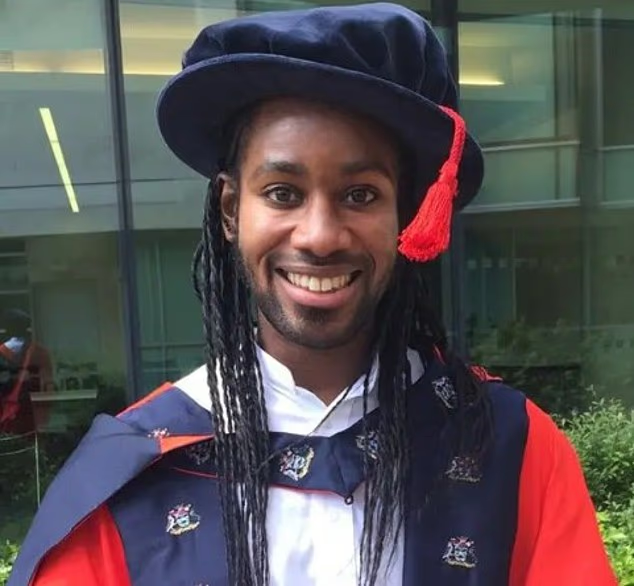
Professor Arday appeared on This Morning in March 2023 to discuss becoming Cambridge's youngest ever black professor

Professor Arday appeared on This Morning in March 2023 to discuss becoming Cambridge’s youngest ever black professor

In 2023, he was made Professor of Sociology by Cambridge, the academic equivalent of climbing Everest. Fawning interviews in The Guardian and on the BBC duly celebrated his status as the ancient seat of learning’s ‘youngest ever black professor’. Oh, and along the way, he single-handedly raised £5.5million for charity.

Advertisement

Lucrative accolades followed, with Arday hired to give Ted talks and motivational speeches at corporate events in the UK and US. At least four universities handed him honorary degrees and he was nominated three times for a Pride of Britain award. The Royal Society of Arts made him a fellow, and he was invited to guest-host a Christmas edition of Radio 4’s Today programme.

So far, so heartwarming. Yet in the dusty corridors of academia, where petty rivalries often fester, not everyone was convinced by the fairytale rise of this poster boy for diversity.

Specifically, there were growing rumours that much of Arday’s work, including his PhD thesis and several studies he’d published in academic journals, had been plagiarised. Some peers had concerns about his methodology.

Perhaps unfairly, given not only his background but also the fact that he identifies as dyslexic, there was also sniping about spelling and grammar. Critics noted that the title of his PhD thesis contains an errant apostrophe, while in a 2019 presentation about alleged racism in the university sector he’d complained about the ‘poultry numbers’, rather than ‘paltry’, of ‘black academic leaders’.

Advertisement

That’s where Times Higher Education came in.

The prestigious magazine, which covers academia, was tipped off in early 2025 about the thorny allegations. A reporter named Jack Grove had spent at least four months scrutinising them, before submitting a series of questions to Professor Arday.

By September, an article was on the verge of publication, only for Carter-Ruck to send off its five-page letter, which threatened dire consequences should any such claim of wrongdoing be made.

Grove never did publish an article about the plagiarism claims. Or to put things another way, the story appears to have been killed. Good controversies are rarely hushed up for ever, though. And last week, the plagiarism controversy finally reared its ugly head via a blog post from one Nathan Cofnas, an academic formerly of Emmanuel, a Cambridge college, but now based at Ghent University in Belgium.

Advertisement

He identified more than 100 passages from Arday’s thesis that he claims are identical (or nearly identical) to an obscure 2009 PhD thesis by Paula Zwozdiak-Myers, of Brunel University in west London. After several newspapers, including the Daily Mail, reported his findings, various online sleuths piled in, using X to post screenshots of purportedly flawed or plagiarised studies and articles from his back catalogue.

Perhaps inevitably, the whole thing quickly became the subject of a vigorous culture war.

More than 100 passages from Arday’s thesis were claimed to be identical (or nearly identical) to an obscure 2009 PhD thesis

More than 100 passages from Arday’s thesis were claimed to be identical (or nearly identical) to an obscure 2009 PhD thesis

Professor Jason Arday after delivering a lecture on equity, diversity and belonging, which was chaired by Professor Heath Rose and Dr Debbie Aitken

Professor Jason Arday after delivering a lecture on equity, diversity and belonging, which was chaired by Professor Heath Rose and Dr Debbie Aitken

Advertisement

Cambridge insists there is no case to answer, saying it ‘takes allegations of academic misconduct incredibly seriously’ and stating that ‘allegations of plagiarism regarding his thesis and some of his journal publications have been investigated by Liverpool John Moores University and the journals in question’ with no wrongdoing found.

A Left-wing pressure group, the Good Law Project, went a step further, urging supporters to sign a ‘solidarity letter’ claiming the controversy was part of a ‘smear campaign’ motivated by racism. Signatories include such hard-Left politicians as Zack Polanski, Clive Lewis and John McDonnell.

On the other side of the divide stand a host of academics and commentators (including, I am told, many at Cambridge). They believe the university’s handling of the dispute risks seriously damaging its reputation for academic integrity. Several high-profile figures have argued that, to quote an article by the philosopher Professor Kathleen Stock, Arday is being given special treatment due to his ‘heroic, DEI-friendly back-story’ – ‘DEI’ referring to ‘diversity, equity and inclusion’.

Whoever is right, the dispute comes at an awkward time: Arday will, at the end of the month, publish an autobiography called Great And Unfortunate Things.

Advertisement

It purports to be an ‘unforgettable book about resilience and love’ and carries an endorsement from the actress Kathy Burke, who dubs him a ‘unique and extraordinary man’. The publisher Simon & Schuster has arranged for Arday to undertake a ‘lecture tour’ across both Britain and America to promote it.

Such events won’t just be overshadowed by a plagiarism row, either. For Arday is now navigating further scrutiny of claims he’s made about his life outside higher education.

The most striking involve the aforementioned charity work. Since his elevation to academic superstardom, the professor has been repeatedly dubbed a ‘prolific fundraiser’ and ‘philanthropist’. Specifically, he claims to have raised an astonishing £5.5million for good causes, largely by taking part in a series of sponsored athletic-endurance events.

Like so much about Arday’s life, this contention hinges on a heartwarming back-story, which has been told, and retold, countless times since he achieved fame. It begins at homeless shelter, where he was taken by his mother at the age of 18 in 2003, the year he says he learned to read. After being introduced to residents, Arday claims to have decided, to quote a 2021 Ted talk, ‘to dedicate my life towards helping people… dedicate my life towards charity’, saying: ‘My lifelong ambition was to raise £1million for charity before I turned 40. And at 36 I have raised just over £5million.’

Advertisement

His citation for a Pride of Britain award said that ‘in total, he has raised more than £5million for 80 charities over an 18-year period’. And by 2024, the amount had risen to £5.5million, according to a paid speech Arday made in New Orleans to America’s National Funeral Directors Association.

Perhaps ironically, given that he was facing a room of people who make their living from cremation, his speech was entitled You Can’t Start A Fire Without A Spark.

‘My target was to raise £1million for charity before I turned 40, but by the time I’d got to 30 I’d raised over £3million and at the moment it’s £5.5million and counting,’ he told the assembled undertakers. Five and a half million pounds is a spectacular sum. In fact, it would make Arday one of Britain’s most successful charity fundraisers since Captain Tom.

But details about his selfless exploits (for which he once claimed to have been offered, but turned down, an MBE) are shrouded in mystery.

Advertisement

It’s unclear, for example, which charities were among the 80 lucky recipients of Arday’s largesse (only three or four have ever been named). There have been no media reports or press releases issued to mark him handing over five or six-figure sums to particular good causes. No financial breakdown of his donations has ever been published.

The most detail Arday has provided came in that National Funeral Directors Association speech, in which he told the audience that almost all the loot was raised via three big sponsored runs: ‘I had an opportunity to do a series of ultra-marathons over a five-year period, which earned just over £5million for charity,’ he said.

It seems that the five-year period in question kicked off in 2010, when local newspapers in south London covered an attempt by Arday to complete 30 marathons in 35 days, mimicking a similar initiative by the comedian Eddie Izzard.

A JustGiving page for that project, which was quite widely documented by the local media, shows that it generated a grand total of £6,285 for the Shooting Star Children’s Hospices.

Advertisement
Professor Arday runs the first of 30 marathons across 35 days in 2010, which was shown to raise £6,285 for the Shooting Star Children’s Hospices

Professor Arday runs the first of 30 marathons across 35 days in 2010, which was shown to raise £6,285 for the Shooting Star Children’s Hospices

Arday completed his ultra-marathon challenge at Piccadilly Circus and later was reported to be running to raise loot for the homeless charity Shelter

Arday completed his ultra-marathon challenge at Piccadilly Circus and later was reported to be running to raise loot for the homeless charity Shelter

The charity said this week that he’d raised just over £10,000 in total. Arday was photographed completing the challenge at Piccadilly Circus. Whether he actually completed his second high-profile fundraiser is trickier to establish, however.

In July 2011, the Wandsworth Guardian reported that he’d be running 300 miles in three days on treadmills to raise loot for the homeless charity Shelter, starting at the Fitness First gym at Clapham Junction and finishing at Latchmere Leisure Centre in Battersea. ‘He aims to be on the treadmill from 6am to 10pm every day,’ it wrote.

Advertisement

A post on Shelter’s social media feed five hours into the endeavour, which kicked off on August 10, suggests that he did indeed start. But no photos or other records of him finishing survive.

A Facebook page dedicated to the challenge suggests it ended in failure, with a post from someone called ‘Elain’ saying: ‘You’ve overstepped the mark and your body has said enough !!! . . . sorry that your challenge is over but your body and health come first.’

Since Arday has, in recent years, given dozens of speeches claiming that he did run 300 miles in three days, we must assume he tried again at a later date. No records of such a venture survive, however, and it received no contemporary local media coverage. A surviving JustGiving page for the initial attempt records earnings of £380.

The Cambridge professor’s third and most extraordinary feat of alleged endurance came in 2015. This time he claims to have run from Edinburgh to London. Although the cities are 400 miles apart he says he covered 600 miles in just six days.

Advertisement

Arday has repeatedly spoken about this remarkable journey, but his memory of specifics can be sketchy. In a speech at the Greenbelt Festival in 2024, for example, he claimed the whole thing put his earnings for charity over the £1million mark, rather than the £5million he cited at the later speech in New Orleans.

‘The final challenge when I was 30, I ran 600 miles in six days. And I was fortunate that I got to that target of £1million before I turned 30,’ he said.

No photographs or other contemporary records of the 600-mile run have ever been published. Which, in turn, has led to scepticism among experts. Damian Hall, who has represented Great Britain at ultra-running, told reporters this week: ‘I haven’t heard of Jason before. Running 30 marathons in 35 days is perfectly possible and several runners, not necessarily elite, have done similar.

‘Running 100 miles in 24 hours is also perfectly possible, but it’s very hard to keep that going for two more days without good breaks for sleep. Not impossible, but pretty unlikely.

Advertisement

‘The 600 miles in six days is, again, not impossible, but would be remarkable, akin to the very best record-breaking ultra-runners. It seems odd that there appears to be no evidence of that.’

Intriguingly, Southampton Solent University, which awarded Arday an honorary degree in 2023, recently changed the original reference of 600 miles in six days to 600 miles in 12 days on its website.

Whatever actually happened, Arday’s exploits came at a physical cost. Andy Murray, who met him during the 2012 Olympic torch relay, once told journalists that Arday ‘is an epileptic who ran 30 marathons in 35 days. He told me on the 20th day he fell – he had a seizure – and had a hairline fracture in his leg but carried on . . . It was pretty cool speaking to someone like that’. In a separate interview, Arday has claimed that the fracture caused his leg to swell up to twice its normal size.

Epilepsy isn’t the only severe medical issue he claims to have overcome, either. In a 2022 interview, Arday made the dramatic admission that while studying for his PhD (and, we assume, training to run 600 miles in six days) he was also suffering from a debilitating brain tumour.

Advertisement

‘I completed my PhD in 2.5 years working full time, but the reason why it was particularly significant . . . is that at the time I had a brain tumour, and I had my brain tumour removed two weeks before I had my viva.’

He added that he’d also suffered a stroke ‘straight after’ the operation ‘so I didn’t remember anything’ during the viva, Cambridge’s much-feared oral examinations, at which candidates are interrogated in person by dons to defend their theses.

Whether this chapter in his medical history features in his autobiography is unclear. But it suggests that the professor is a living, breathing medical miracle with remarkable powers of recovery, especially since in a 2023 interview The Guardian reported that ‘he has barely slept over the past 15 years . . . working through most nights – often on his academic and charity work, but sometimes just to make ends meet’.

No photographs or other contemporary records of the promised 600-mile run from Edinburgh to London have ever been published

No photographs or other contemporary records of the promised 600-mile run from Edinburgh to London have ever been published

Advertisement
Arday said he suffered a stroke ‘straight after’ an operation and therefore ‘didn’t remember anything’ during the viva, Cambridge’s much-feared oral examinations

Arday said he suffered a stroke ‘straight after’ an operation and therefore ‘didn’t remember anything’ during the viva, Cambridge’s much-feared oral examinations

Arday’s mysterious sporting prowess doesn’t just involve running, either. He has also claimed to be an elite soccer player, telling one interviewer: ‘As a child, I was fortunate to play football well, so I was in the academy system and then played semi-professionally.’

It’s unclear which academy he represented, but his senior career, such as it was, seems to have involved a stint as goalie for Lewisham Borough in the Southern Counties East Division One, which is the tenth tier of English football, at the bottom of the non-league pyramid.

Elsewhere, confusion surrounds other aspects of his charitable endeavours. A potted biography on the Greenbelt Festival website, for example, states that he ‘has also undertaken and completed relief work in South America and West Africa with WaterAid installing water points, which provide drinkable and clean water’.

Advertisement

Oddly, according to WaterAid’s website, it has a policy of never sending volunteers abroad, adding that ‘out of respect for the people we work with, we don’t encourage or facilitate self-funded visits either’. WaterAid has no record of him doing any volunteer work, but says it’s possible that he travelled overseas with a partner organisation of some sort.

After questions were raised about this discrepancy, the Greenbelt Festival web page (which carried a recording of his speech) disappeared.

Of course, whether the professor’s academic reputation (along with that of his employers at Cambridge) is also about to vanish remains to be seen.

Source link

Advertisement
Continue Reading

NewsBeat

‘Aggressive’ homeless man named as ‘prime suspect’ after Scots woman found stuffed in suitcase

Published

on

Daily Record

A man reportedly known for carrying a knife and being aggressive towards women has emerged as a key suspect.

A homeless man has been named as a “prime suspect” in the police investigation of a Scottish woman found stuffed inside a suitcase in Greece, according to reports.

The body of Elisabeth Jane Ross, 38, was discovered around 1pm on July 18 by a homeless man on Evelpidon Street in the neighbourhood of Kypseli, Athens. According to local police, Elisabeth, also known as Lisa, from Edinburgh, had been dead for approximately eight days and had no visible wounds of any clear signs of struggle.

It is now understood Greek police are desperately trying to find a man called ‘Markos’ who is known to frequent the Kypseli district where Elisabeth’s remains were discovered, as reported by the Daily Mail. According to the outlet, Markos regularly slept rough in the derelict space where the suitcase was found but has not been spotted since it was declared a crime scene – prompting a citywide manhunt.

Advertisement

It’s understood that police have now turned their attention to Markos, who has been described as a known heavy drinker and drug user with a reputation for being aggressive and threatening particularly towards women.

Hamid Reza, a homeless man who lives in a makeshift shelter close to where Elisabeth’s grim discovery was made, said police told him that Markos is their number one suspect. The Iranian, 67, told the Daily Mail: “They want to find and question him very quickly. They have been asking a lot of people and driving around the area looking for him.

“Everybody knows that Markos carries a knife, and local women are scared of him. He was always around this area, even living in the car park, but nobody has seen him since the body was discovered.”

Advertisement

Markos has been described as around 40 years old and heavily covered in tattoos. A Greek police source said his potential involvement is being probed by detectives investigating Elisabeth’s death, but stressed it had not been reported at the time, and the suggestion only came to light in recent days.

The source said: “We have a lead on a homeless man. We want to question a particular individual. But we are also looking for a number of other people as part of this investigation.”

Elisabeth is understood to have travelled from the US to Greece via Cyprus on June 29. Officers are trying to determine her final movements and speak with anyone who may have come into contact with her before her death. The force alleged messages were sent from her mobile in the days after her death up until she was identified by media. It’s believed that her father, from Edinburgh, had been receiving messages from July 15 to 29.

A Greek officer said the phone, which remains missing, was “being used to make people believe she was still alive.” Detectives have established Elisabeth was staying with Greek friends – who have been cleared of any wrongdoing – in the Keratsini district and told them on July 15 that she was leaving to stay with Americans she knew in Kypseli. However, according to reports, police are now questioning whether these American friends actually exist, given they haven’t been traced.

Advertisement

A police spokesman said: “We do not yet know who the people she visited (in Kypseli) are, nor whether they are Americans or if they even exist. We are trying to find out where she went and who she stayed with.”

Cops couldn’t identify Elisabeth at the scene due to reportedly not having any identification on her. She was believed to be around 30 years old, 5ft 4in tall, with reddish hair tied in a bun and wearing black shorts, with a French university insignia on them, and a T-shirt.

It’s understood the rough sleeper discovered her after following a foul smell inside the abandoned property, which had lain empty for two years. The homeless person then spotted a human limb visible from the outside of a suitcase. An autopsy is due to be carried out. Interpol and US investigators have been called in by the Greek authorities to assist with the probe. On Monday, Interpol notified the Hellenic Police that DNA testing revealed that the body belonged to a British woman.

Advertisement

Police Scotland are liaising with authorities in Greece regarding the probe. Officers are also providing support to her family in Scotland. No official suspect has been identified at this time. A spokesperson for the force said: “We are aware of the death of Scottish woman in Athens and are liaising with authorities in Greece. Officers are providing support to her family in Scotland.”

A UK Foreign, Commonwealth, and Development Office spokesperson said: “Our thoughts are with Elisabeth’s family during this difficult time. We are providing consular support and are in contact with the local authorities.”

Source link

Continue Reading

NewsBeat

CPS to target assets of jailed Legacy funeral director Robert Bush

Published

on

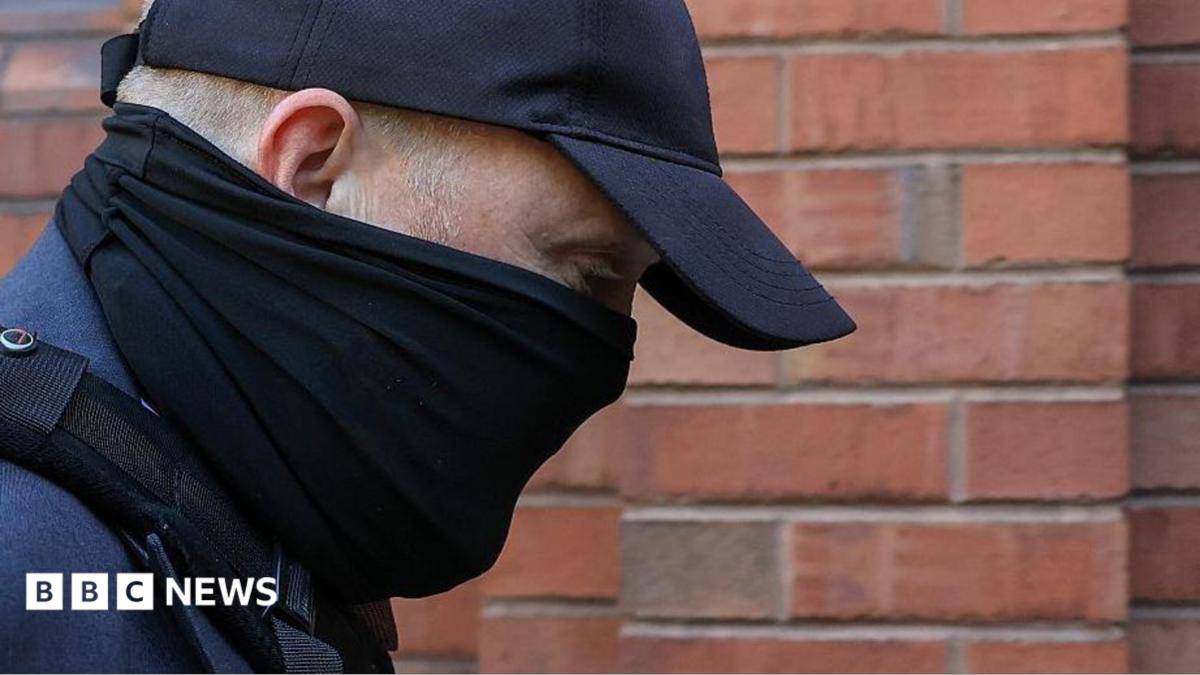
A close-up of the head and shoulders of a man with his face obscured by a black scarf and black cap as he walks towards a red-brick court. His eyes can be seen and his is looking downwards. He is wearing a blue suit jacket and the strap of a bag over his shoulder.

Until he moved to an address in Otley, West Yorkshire, as part of his bail conditions, Bush lived in an affluent part of the East Riding of Yorkshire.

He enjoyed motorcycle racing and was arrested at Heathrow Airport after a holiday in the United States.

Describing it as a “shocking” case, with “really serious breaches of trust”, Tams said more than 13,000 pages of prosecution evidence had been compiled.

Families had been misled by Bush since 2012, investigators found.

Advertisement

Besides the failure to cremate bodies placed in his care, it became apparent there were “much wider aspects” of Bush’s offending, said Tams.

“He was fraudulently trading in funeral plans when he wasn’t authorised to do so, and there was over 200 people that were affected by that.

“They thought that they were investing in their future funeral care, they thought that he [Bush] would have been investing that money with financial institutions. But, in fact, he had kept that money for his own purposes.”

Tams said the CPS’s priority throughout had been to ensure it built a “robust” case that showed the full extent of Bush’s offending “so that the families could get justice”.

Advertisement

Source link

Continue Reading

NewsBeat

Residents fear approved 400-room student accommodation plan ‘morphed into a monster’

Published

on

Cambridgeshire Live

St John’s College, part of the University of Cambridge, said the rooms will be used by a number of colleges

Cambridge City Council has approved plans to replace a student accommodation block with one with around 300 more rooms. St John’s College applied to knock down the aging Wolfson Court building off Clarkson Road with a total of 147 rooms. The plans were recommended for approval by officers.

Advertisement

The University of Cambridge college said the new building will have 408 rooms which will also be used by students from nearby Newnham College, Lucy Cavendish College, and the Sir Isaac Newton Institute of Mathematics.

21 objections were submitted by Newnham residents concerned with the size of the scheme. Jackie Meeks told the council’s planning committee: “We do support getting Wolfson Court back into college use – it shouldn’t be left decaying as it has been – but this isn’t the right way to do it.

“A more modest scale of building would be appropriate to this residential area. Basic refitting of the existing buildings would be appropriate for the planet. Now the applicant seeks to open accommodation to all of Cambridge University and Anglia Ruskin and any of their associate or affiliated entities.” She said that the application “has morphed into a monster” and managing the block “looks virtually unworkable”.

An agent for the applicant told the committee that many of the students would be postgraduates, with their rooms being occupied year-round. He said rooms for undergraduates would be used by conference delegates and those attending educational courses, and “will not be utilised by tourists or as an aparthotel”.

Advertisement

Councillor Hugh Clough, of Newnham, said St John’s had made their case on the basis that the rooms would only be used by three colleges – but “without explanation” are now seeking for it to be used by academic staff, visitors and students from Anglia Ruskin University.

The Green councillor said: “The extent of occupancy must be compatible with this sensitive location. The institutions requested should certainly not include ARU – that institution is too remote from the site.”

He said the application was initially “exclusively for postgraduate students” but “once again, the applicant has altered the target and now there are contradictory statements”.

Advertisement

Cllr Peter Rees, county councillor for Newnham, said it was discovered that there are student accommodation facilities “housing non-students for more than 50 per cent of the time”. The Green councillor said: “So, are they really student accommodation?

“If it was, as initially intended, to be restricted to postgraduate students on a 12-month lease, this would be far more welcome among residents. I’m afraid I have to conclude that this is greenwashing. There is an alternative approach which would not use this large-scale demolish and rebuild – which is to reuse and refurbish.”

Cllr Kathryn Fisher, of Petersfield, asked what materials the building was used. Officers replied that the frame would be reinforced concrete.

The Green councillor said: “I’m honestly very shocked that’s been passed – that is so bad.”

Advertisement

Cllr Dave Baigent, of Romsey, asked if they would be able to reject the application to “encourage” the applicant to use better materials – but officers said there was no policy reason to reject it.

The Your Party councillor said: “How can we encourage people to use better materials to protect against global warming without actually rejecting something and sending it back?” Officers said that the council’s local plan could only encourage the use of more sustainable materials – not enforce it.

Cllr Fisher said: “I don’t understand what’s the point of having this policy – like, why do we bother? Why are we here? We’ve got wildfires burning across Europe, we’re running out of water. We are in the midst of climate collapse and we’ve got a climate policy that we can’t even speak to to hold one of the largest developers to account. It’s crazy. It’s insane.”

The application was approved with three votes in favour and two against.

Advertisement

Source link

Continue Reading

NewsBeat

Plans for National Care Service welcomed by councillor

Published

on

Plans for National Care Service welcomed by councillor

The announcement marks a “significant step” toward reforming the UK’s social care system, City of York Council has said.

Promises of better investment in staff, closer integration with health services, and putting the needs of service users at the centre of change, has been met with strong support from Executive Member for Health, Wellbeing and Adult Social Care, Cllr Lucy Steels-Walshaw.


Recommended reading:


She said: “Today’s announcement is really welcome.

Advertisement

“For too long, we’ve expected our care workers to do extraordinary things without giving them the recognition they deserve.

“That’s why these plans matter.”

“For too long, we’ve expected our care workers to do extraordinary things without giving them the recognition they deserve” (Image: Supplied)

It comes after the Prime Minister, Andy Burnham, announced that he had asked Baroness Louise Casey to focus on how the government could set up the National Care Service, and to bring forward her review of adult social care in England by a year, to 2027.

The PM announced cross-party talks with Kemi Badenoch and Sir Ed Davey on the issue, along with the unveiling of The Big Conversation on Care to ensure people across the country can feed in their views.

Advertisement

A statement from him read: “I just don’t accept that this problem is too big to solve.

“What we need is a new way of doing politics where we come together, face the challenge head on and build an integrated system that gives people security and dignity.

“That’s the commitment I am making to people across this country, and I will give it my all in trying.”

‘I hope every carer in York sees this as a sign that their work is valued’

Responding to the news, Cllr Walshaw paid tribute to the “skill, patience and compassion” of carers across York.

Advertisement

She said: “Whether you’re supporting someone at Glen Lodge or Marjorie Waite Court, helping people regain their independence through our reablement service, visiting people in their own homes or caring for a loved one yourself, what you do matters.”

Drawing on her experience in the charity sector, Cllr Walshaw described care work as “one of the most rewarding jobs there is.”

She said: “We won’t transform social care overnight, but today feels like a real step forward.

“More than anything, I hope every carer in York sees this as a sign that their work is valued, because it absolutely is.

Advertisement

“What you do matters.”

Source link

Advertisement
Continue Reading

NewsBeat

Five key moments from Belfast Council in July

Published

on

Belfast Live

Council officers are working feverishly towards the Fleadh Ceoil na hÉireann, as business for elected reps in the chamber pauses

July traditionally sees a winding down of business from elected representatives at City Hall, and it was no different this year. But behind the scenes, if anything, activity has ratcheted up for council officials, who are feverishly preparing the city’s first Fleadh Ceoil na hÉireann.

Advertisement

The month saw the final touches regarding licensing for Fleadh events, an appeal for the council to intervene against alley trashers, and a decision made away from the public eye to give £100,000 to an Irish language group.

Here is your latest round up of Belfast Council matters in July:

Appeal made after treasured “Foxglove Alley” trashed six times in 10 days

An appeal was made to Belfast Council after a man was caught in the act trashing a much treasured restored alleyway in South Belfast.

Advertisement

Volunteers who set up the charming “Foxglove Alley” in Stranmillis called upon the council to adopt a policy of emergency clean ups for those alleys that have been restored by the local community. In ten days the alley was rubbished six times.

CCTV footage was taken of a man in his 60’s lifting several full binbags taken from a nearby bin, and scattering the contents all over the alley, then scavenging for keepsakes among the rubbish.

Read more here

Belfast Council awards £100,000 to Irish language group in secret meeting

Belfast City Council agreed to give a one-off £100,000 “stabilisation” grant to an Irish language and cultural organisation based in South Belfast.

Minutes from a City Hall committee, published for the full July council meeting, showed that in a secret meeting behind closed doors and away from the public and press, elected representatives agreed to give £100,000 to An Droichead, which has its headquarters at Cooke Street, off Ormeau Road.

The brevity of the minutes give no indication as to whether the money amounts to a full rescue package for the organisation. By agreeing the committee minutes at the full July council meeting, the chamber sealed the £100,000. There was no discussion at the full council on the matter.

Read more here

Advertisement

Easier and quicker to flytip bulky items in Belfast than to book council, City Hall hears

A DUP Councillor lambasted bulky waste collections provided by Belfast City Council for large items, suggesting that it has become easier and quicker to get rid of items by flytipping them, rather than using the council service.

At the latest meeting of the council’s People and Communities Committee DUP Councillor Ruth Brooks said: “The bulky waste collections appear to be taking too long. We are facing an uphill battle trying to get bulky waste items that have been flytipped and left in alleyways, right across the east of the city, and no doubt in other people’s areas.

“If people are booking in for a bulky waste collection, and they are being told it will be two or two and half weeks, and they find out they can fire the sofa out in the alleyway and it is collected in a day or two, I think it really defeats the purpose.”

Advertisement

Read more here

Belfast Fleadh entertainment approved for Bank Square, Castle Street and cathedral car parks

The last of the Belfast Fleadh outdoor entertainments was formally approved at a special meeting at City Hall.

A special summer meeting of the Belfast City Council Licensing Committee approved entertainment for Bank Square, the car parks at St Anne’s Cathedral, and the Fountain area including Castle Street.

Advertisement

Belfast for the first time will host the Fleadh Ceoil na hÉireann, the world’s biggest celebration of Irish music and culture, from Sunday August 2 to Sunday August 9. Qualifying competitors from all over the world will showcase the best of traditional music, song, dance and language in All-Ireland competitions.

Read more here

Plans lodged to turn old pub in North Belfast into one-bed apartments

An application was lodged to demolish a former public house in North Belfast to make way for a four storey apartment building.

Advertisement

Laurence McDaid of Shorts Visits Ltd wants to knock down the former McKenna’s Public House, 903 Crumlin Road, in the Ballysillan area.

In its place he hopes to build an apartment building, consisting of 14 living units in all, 11 one-bed studios, three one-bed apartments, one common room, two kitchens and a roof terrace amenity area.

Read more here

For all the latest news, visit the Belfast Live homepage here and sign up to our daily newsletter here.

Advertisement

Source link

Continue Reading

NewsBeat

Trump says Greenland will be under US control by the time he leaves office

Published

on

Trump says Greenland will be under US control by the time he leaves office

President Donald Trump has predicted that Greenland will be under U.S. control by the time he leaves office in January 2029.

Trump has fiercely pushed to acquire the semi-autonomous Danish territory in the Arctic since before he returned to the Oval Office. The globally unpopular move has helped strain America’s relationship with its European allies, who see it as a threat to Greenlanders’ sovereignty.

Real America’s Voice host Steve Gruber told Trump during an audio interview Friday, “I made a prediction on this program that before you left office, that Greenland would be under our operational control.”

“You’ll be right. They want to do something,” Trump said. “Greenland is important from our standpoint, not from their standpoint…You should make that bet.”

Advertisement
President Donald Trump has predicted that Greenland will be under U.S. control by the time he leaves office in January 2029
President Donald Trump has predicted that Greenland will be under U.S. control by the time he leaves office in January 2029 (Getty Images)

Trump has argued that the US needs to acquire Greenland for national security purposes, arguing that if he doesn’t take it, American adversaries, namely Russia and China, will.

The president’s threats to acquire Greenland reached a boiling point in January, when he threatened to slap a 10 percent tariff on goods imported from several European allies, including Denmark, until a deal was reached for the “complete and total purchase of Greenland.”

Tensions seemed to subside days later when Trump announced he would not impose the tariffs after a “very productive” meeting with NATO chief Mark Rutte, in which they “formed the framework of a future deal with respect to Greenland.”

But Trump has never let go of his fixation with controlling Greenland. Earlier this month, the president posted an edited photo on Truth Social of him showing European leaders in the Oval Office a map of the countries, including Greenland, with an American flag superimposed over them.

President has claimed the US needs to acquire Greenland for national security purposes — a move that European allies see as a threat to the Arctic island’s sovereignty
President has claimed the US needs to acquire Greenland for national security purposes — a move that European allies see as a threat to the Arctic island’s sovereignty (AFP via Getty Images)

While conservative media personality Gruber believes Trump will get his hands on Greenland, traders on prediction markets don’t think so, at least not for some time.

There’s just a four percent chance on Polymarket that Trump will acquire Greenland before 2027.

Advertisement

On Kalshi, there’s just a 6.8 percent chance the US will acquire any new territory before 2027, though the odds are slightly better on a longer timeline. There’s a 22 percent chance the US will acquire a new territory before Trump’s term ends on January 20, 2029.

Source link

Continue Reading

NewsBeat

Zetland paddling pool reopens just in time for summer

Published

on

Zetland paddling pool reopens just in time for summer

The Zetland paddling pool on Redcar’s seafront is back open to the public following essential maintenance and improvements to the surrounding park by Redcar and Cleveland Borough Council.

Anna Turley, MP for Redcar, took to social media to welcome the news and highlighted its importance to the community.

Ms Turley said: “I’m so pleased to say that the repairs to Zetland paddling pool and the improvements to the play park are now complete.

“This has been a much-loved spot for generations of local families, and it’s fantastic to see it looking its best again, ready for even more children to enjoy.”

Advertisement

MP for Redcar, Anna Turley, showing her support for the attraction. (Image: MP for Redcar Anna Turley)

She also thanked council cabinet members Adam Brook and Neil Bendelow, as well as ward councillor Jade Lavan, for their work on the project.

The paddling pool reopened on Friday, July 24, to a warm welcome from families, residents, and community groups.

Zetland Park and paddling pool in Redcar reopened last week following essential maintenance work. (Image: MP for Redcar Anna Turley)

The East Redcar Residents Association said in a statement on Facebook: “It was a great atmosphere throughout the day with lots of families and children splashing about, having picnics and lots of free fun.”

“One little girl said it was the best day ever.”

Advertisement

The pool is now open every Friday, Saturday, and Sunday until mid-September.

It will be emptied each Monday, then cleaned, checked and refilled ahead of reopening later in the week.

Zetland paddling pool in Redcar reopened last week following essential maintenance work. (Image: East Redcar Resident’s Association)

Visitors are also being encouraged to enjoy the nearby play areas and The Stray Café.

The pool is within walking distance of Redcar East train station and is accessible via Coast Road bus routes.

Advertisement

Zetland Park and paddling pool in Redcar reopened last week following essential maintenance work. (Image: East Redcar Resident’s Association)

The community has been thanked for helping to keep the area tidy, with families and volunteers regularly cleaning up after busy days.

Redcar has seen an increase in vandalism recently, so residents are asked to report any anti-social behaviour or damage to Cleveland Police, to keep spaces safe and usable for all members of the community.

With the school holidays now underway, local leaders are encouraging families to make the most of the free seaside attraction throughout the summer.

Advertisement

Source link

Continue Reading

Trending

Copyright © 2025