Fire crews are responding to a blaze at a derelict building on Milltown Street in Radcliffe. Greater Manchester Fire and Rescue Service said the incident is producing a large plume of smoke, with people in the surrounding area advised to keep windows and doors closed. Motorists and pedestrians are being asked to avoid the area while crews remain at the scene. We will bring you live updates as more information becomes available.
Child Benefit payments will stop automatically after a child’s 16th birthday unless parents confirm their teenager’s educational plans here’s what you need to do
Linda Howard and Fiona Callingham Lifestyle writer
06:20, 13 May 2026
Parents are being warned they could lose out on vital funds if they neglect to complete one crucial task. HM Revenue and Customs (HMRC) is calling on parents of 16 to 19-year-olds to renew their Child Benefit claim if their teenager plans to continue with certain types of education or training after completing their GCSEs or National 5s.
HMRC has warned that Child Benefit payments will cease automatically on August 31 on or after a child’s 16th birthday unless parents confirm their teenager’s future plans.
Advertisement
According to the Daily Record, approximately 1.5 million reminder letters are being sent out to parents and guardians between now and early May.
Yet parents needn’t wait for their letter to arrive. HMRC’s digital renewal service went live on April 1, enabling those who already know their teenager’s plans to take action straight away to avoid any interruption to monthly payments of £108.20.
Claim renewals can be made through the HMRC app or online at GOV.UK. The letters also include a QR code giving direct access to the digital service.
Child Benefit is valued at £27.05 weekly and paid every four weeks, delivering some £2,406.60 throughout the 2026/27 financial year for the eldest or only child.
Advertisement
HMRC pays £17.90 weekly for each additional child. Last year, 874,000 parents extended their claim, with over half doing so online or through the HMRC app.
Myrtle Lloyd, HMRC’s Chief Customer Officer, said: “Child Benefit is a real financial boost for families, so if your teenager already knows they’re staying in education or training after their GCSEs or National 5s, you don’t need to wait for our letter.
“You can extend your Child Benefit claim today in minutes via the HMRC app or online at GOV.UK.”
Child Benefit can continue to be paid for children who are studying full time in approved non-advanced education, which includes:
Advertisement
A levels or Scottish Highers
International Baccalaureate
home education – if it started before their child turned 16, or after 16 if they have a statement of special educational needs and it was assessed by the local authority
T levels
NVQs, up to level 3
Child Benefit will also continue for children studying on one of these unpaid approved training courses:
Scotland: Employability Fund programme and No One Left Behind
Wales: Foundation Apprenticeships, Traineeships or the Jobs Growth Wales+ scheme
Northern Ireland: PEACEPLUS Youth Programme 3.2, Training for Success or Skills for Life and Work
If a child changes their mind about further education or training, parents can simply inform HMRC online or in the app and payments will be adjusted accordingly.
If a Child Benefit claimant or their partner has an individual income of between £60,000 and £80,000, the higher earner may be liable for the High Income Child Benefit Charge (HICBC).
Use the Child Benefit tax calculator on GOV.UK for an estimate. Parents can pay the charge through their PAYE tax code using the HICBC digital service, or through Self Assessment.
A male was arrested at the scene of the crash and remains in police custody
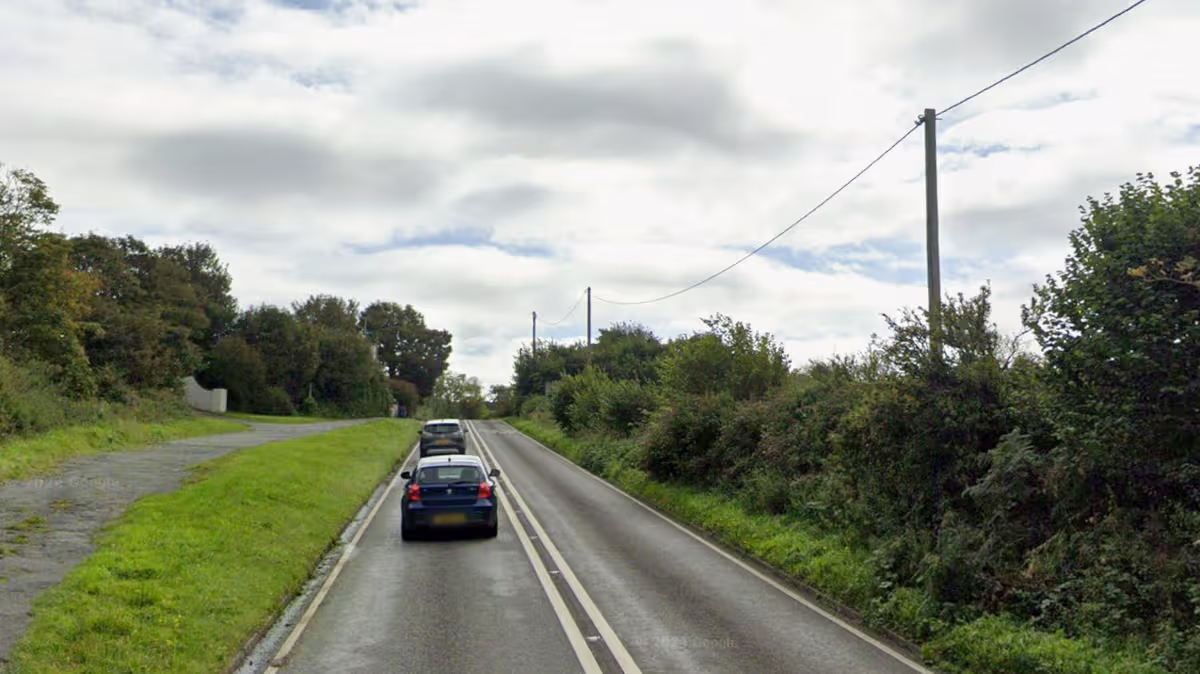
A motorcycle rider has died following a crash with a car along a busy Welsh road. Police also arrested a male at the scene of the incident on the A5025 in Llanfachraeth, Anglesey.
Advertisement
North Wales Police received a report of a collision involving a grey Jaguar I-Pace and a white Triumph motorcycle around 6.57pm on Tuesday, May 12. Emergency services attended the incident but, despite their best efforts, the male rider of the motorcycle was pronounced dead at the scene.
The rider’s next of kin have been informed and are being supported by specialist officers.
The A5025 remained closed overnight to allow the Forensic Collision Investigation Unit to continue their investigation at the scene.
North Wales Police are appealing for information from the public regarding the fatal crash.
Advertisement
Sergeant Alun Jones from the Roads Crime Team, the lead investigating officer, said: “I would like to offer my deepest condolences to the family at this extremely difficult time.
“This collision is now being investigated as a fatal road traffic collision, and we are working to establish the full circumstances.
“We are urging anyone who may have witnessed the collision, or anyone who has private CCTV, dashcam, or doorbell footage that may have captured either vehicle in the moments leading up to the collision, to please get in touch.”
Anyone with information is urged to contact officers from the Roads Crime Unit via the North Wales Police live webchat, or by calling 101, quoting reference number O073031.
Advertisement
Get daily breaking news updates on your phone by joining our WhatsApp community here. We occasionally treat members to special offers, promotions and ads from us and our partners. See our Privacy Notice
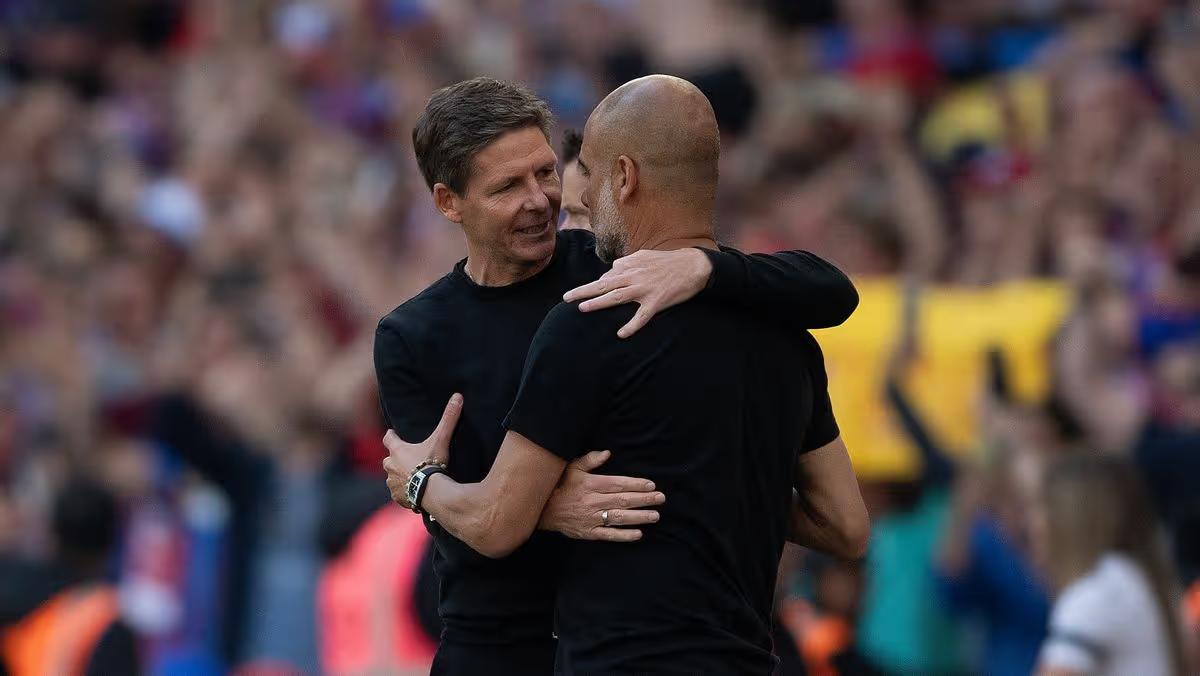
Manchester City manager Pep Guardiola spoke about Crystal Palace potentially resting players when they face Arsenal
Pep Guardiola told the Premier League to stay out of Oliver Glasner’s plans for Crystal Palace against Arsenal on the final day of the season. The Gunners travel to Selhurst Park on the day that could decide the title, and Glasner has suggested that Palace could rest players ahead of their Conference League final three days later.
Advertisement
That has sparked questions over the integrity of the league, with Arsenal potentially being given a helping hand on the final day – if the title race gets that far – by the random allocation of the fixture list and how well Palace have done in Europe. Glasner has dismissed such ideas as nonsense, and Guardiola backed the Austrian up by saying he should be allowed to pick any team he likes for each of his remaining three games without anyone else getting involved.
“Leave the managers to do what they have to do,” the City boss said. “The less the Premier League is involved in all the decisions, will be better for all of us. So, leave it all over, so the managers do what they have to do. No problem.”
Click here to find out the latest Manchester City news in our daily newsletter
City will be hoping to take the title race to the final day, starting with a win over Palace tonight to cut the gap at the top of the table to two points with just two games to play. Victory at Bournemouth next Tuesday would send it to the last game, and the Blues have experience from a number of different years how tense the final day can be, even for a team in control.
Advertisement
Wherever City end up though, Guardiola does not want them to blame referees, other teams or anything else if they are unable to pip Arsenal. And, as Palace’s manager pointed out, he has to do what is best for his football club regardless of how it ends up for the title chasers.
“I don’t know what we’re doing yet,” Glasner said. “Maybe we’ll be playing with the same line-up that we’ll play against Rayo [Vallecano].
FA Cup final VIP tickets for Man City vs Chelsea
This article contains affiliate links, we will receive a commission on any sales we generate from it. Learn more
Seat Unique offers hospitality packages for Manchester City’s FA Cup final clash with Chelsea, including ‘premium’ seats at Wembley and complimentary food and drink.
“It feels like the league title (may be) decided on the last day, but at the end, it’s a result of 38 matchdays and everybody gets what they deserve. To be honest, if somebody criticises (me for this), it would be nonsense.
“It’s (not) just the last game. There were 37 games played before and that means if another team rotated against City or Arsenal, they affected the title race as well.
“I’m not responsible for Arsenal, and I’m not responsible for Manchester City. I’m responsible for Crystal Palace, and I get paid for doing the best things for Crystal Palace.”
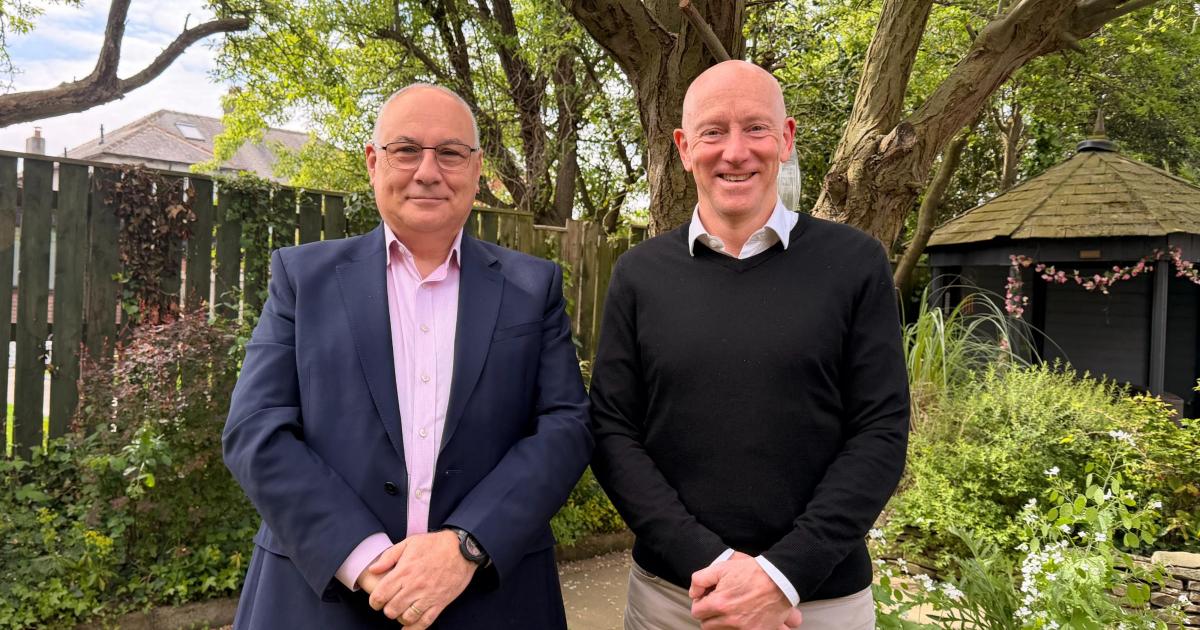
Teesside Hospice, in Middlesbrough, and Butterwick Hospice, in Stockton, plan to unite in a bid to ensure “long-term sustainability” of end-of-life care across the North East.
Both hospices continue to face “unending” financial challenges, spending more money than they are bringing in at a time when demand is increasing year on year.
Both Teesside and Butterwick now feel that they can generate more income together, with no immediate noticeable changes to services.
Advertisement
While the hospices will now jointly support more than 6,700 people across Teesside and County Durham, the merger has meant that two Butterwick staff now sadly face redundancy.
“By making these decisions now, we are protecting ourselves for the future”, Mike Thornicroft, CEO of Teesside Hospice, told The Northern Echo.
(Image: SARAH CALDECOTT)
“We would always want to reach more people and deliver outstanding care. Demand is going up year on year, and we want to do more for more people.
“I think by working together we can share costs, we can bring more income in, and each hospice is protected by the other one’s success.”
Advertisement
Edward Gorringe, CEO at Butterwick Hospice, said the two hospices are “stronger together”.
“They can better serve communities in the future”, he said. “We have got strengths in different areas at each hospice. We can hopefully create something taking the best elements of each.”
Both hospices ‘under pressure’
The merger, which follows a lengthy decision process, has been agreed to ensure services for those living with life-limiting illnesses and their families will continue.
Mr Gorringe, who has been in his role since 2022, said all North East hospices have been working together for years.
Advertisement
In the last few months, the merger came about as an “opportunity to build something special”.
Mr Gorringe said: “At some point in time, we could have [a financial challenge] that we cannot cope with. It could be anywhere between two months to a year from now.
“We are all under pressure with costs going up.
Advertisement
“For the whole sector, the hospice’s funding model is based on a simple approach to providing care. But we are akin to a small hospital – and the funding model does not sustain that.”
(Image: SARAH CALDECOTT)
However, Mr Gorringe did say that the hospice has made significant progress, recently reducing a £1 million deficit by around half.
“The government needs to take these issues seriously”, he argued. “They need to wake up and take it seriously because if they don’t they will lose hospices.”
He previously said difficult decisions could lie ahead for Teesside Hospice, which faced a deficit of around £300,000 last year – but there are plans in place to tackle the next forecasted deficit.
He said he hopes the merger will bring the potential for new roles within the hospices – but, with the ongoing crisis, cannot guarantee there won’t be cuts in the future.
(Image: SARAH CALDECOTT)
“I think both Teesside Hospice and Butterwick Hospice over the last few years have been delivering expert care to our communities”, Mr Thornicroft said.
“We both face challenges around financial sustainability, and we have both been experiencing a deficit budget. Over the last few years we have been eating into our resources.
Advertisement
“It just makes sense to work together and be stronger together rather than competing for funding in our local areas. We feel that, working together, we can generate a lot more income.”
Mr Thornicroft said the changes will largely be felt behind the scenes: “Nobody outside of the hospice should notice any change to services.
“It is purely to make us more efficient and save money.
“We are going to work on the basis of a group structure, but both Butterwick Hospice and Teesside Hospice’s identities will be remaining.
Advertisement
“They’ll still have separate bank accounts but we will have one leadership team across both.”
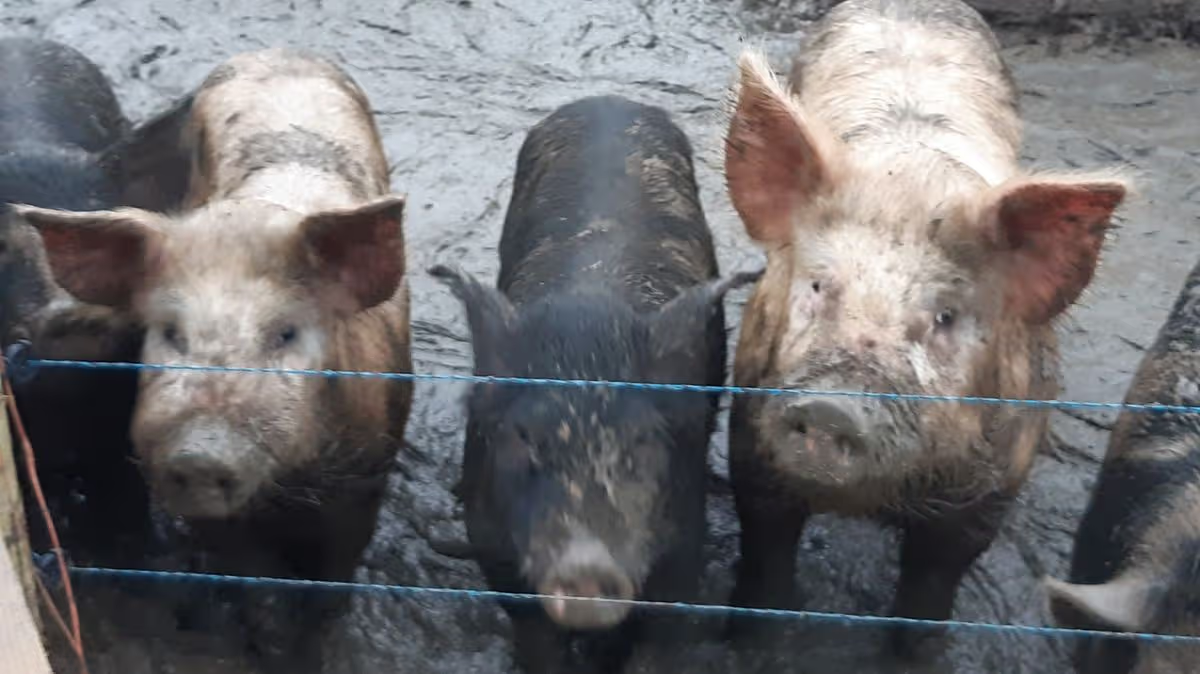
Horses, pigs, sheep, and goats were found living in pens of thick mud, with no dry lying area
A mother and son who kept animals in “a hazardous environment” have been temporarily banned from keeping animals. Animals belonging to the pair, including horses, sheep, pigs, and goats were found living in muddy pens.
Advertisement
William Dickinson, 27, of no fixed abode, and his mother Tara Thorneycroft, 56, of Hilton St, Over, kept livestock at Greengage Farm in Impington. Officers from Trading Standards had visited the holding on nine separate occasions since April 2024. They gave advice to the pair on how better to meet the needs of the animals and poultry.
When the advice wasn’t followed, an Improvement Notice and Warning Notice were issued, but the welfare issues continued. On some of the inspection days, temperatures reached 28 and 30 degrees, and sheep, goats, pigs, and poultry had no water. Horses, donkeys, and sheep also lacked grazing.
Horses and donkeys were found to be living in a hazardous environment, and a horse was lame. In additon to this, pigs had been left with no bedding or wallow. Days before their first court hearing, a re-inspection took place and found horses, pigs, sheep, and goats in pens of thick mud with no dry lying area and no water.
Dickinson and Thorneycroft pleaded guilty to 19 offences contrary to the Animal Welfare Act 2006 and the Animal Health Act 1981. On May 6, Cambridge Magistrates’ Court disqualified the pair from owning and keeping animals other than cats and dogs for five years.
They were also imposed with a 12-month community order requiring them to carry out 150 hours of unpaid work. Each was ordered to pay £2,000 in costs.
Peter Gell, Head of Service for Cambridgeshire County Council’s Trading Standards team, said: “This case sends a clear message that we will not tolerate breaches of basic animal welfare standards in Cambridgeshire.
“Whilst it is accepted Mr Dickinson and Mrs Thorneycroft were new to livestock keeping, when bringing animals into their care they have a duty to research how to meet the basic needs of those animals and put all measures in place to ensure their welfare needs are met.
“Officers visited time and time again, providing them with extensive advice on what was required of them, and yet serious welfare breaches continued and animals in their care continued to suffer.
“Other enforcement sanctions did little to accelerate progress, so prosecution became the only remaining recourse to protect the animals on the small holding. The sentence today will ensure that no animals suffer in their care for the next 5 years.”
Archaeologists have found something unexpected inside a 1,600-year-old Roman-era Egyptian mummy: a fragment of Homer’s Iliad. It wasn’t placed beside the body, but inside the mummy’s abdomen. But the real surprise isn’t just where the fragment was found. It’s how it got there. To understand, we must go back – to the Iliad itself, and to what it became in the Roman world.
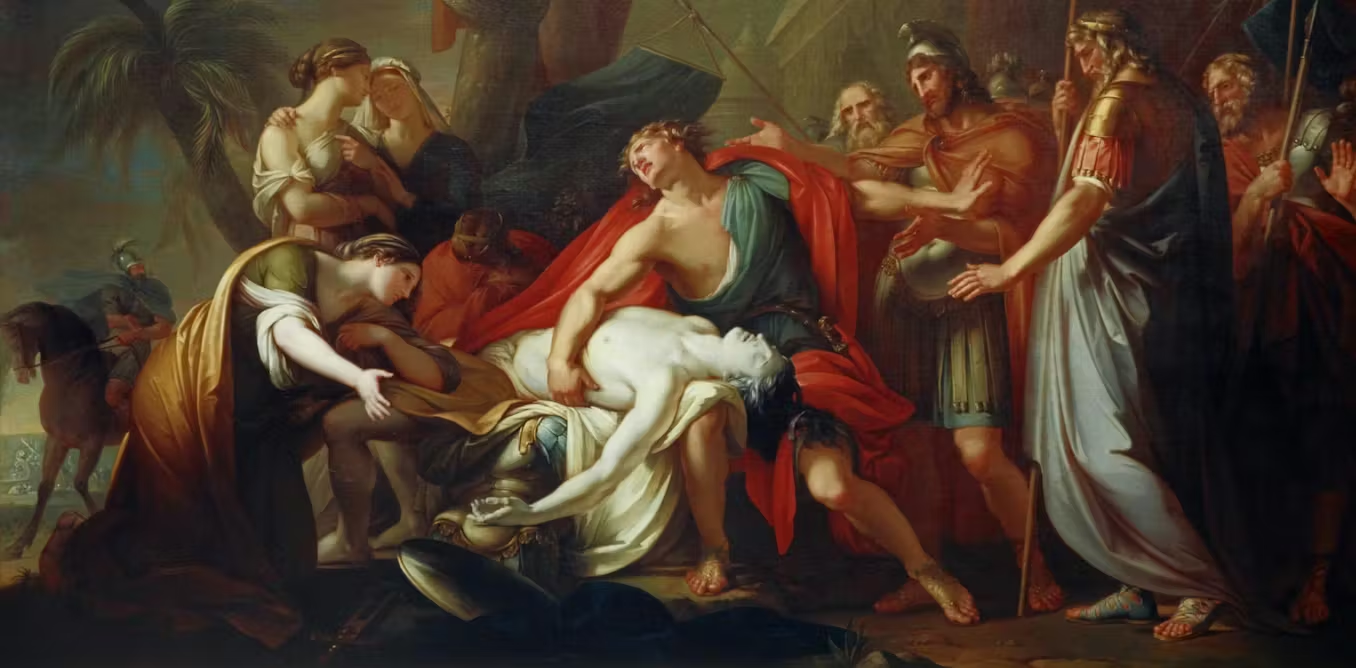
In The Iliad, a poem shaped in the 8th century BC and attributed to Homer, the Trojan war does not end in triumph or renewal. It ends in devastation. The poem closes at the edge of collapse, with Troy reduced to a landscape of heroic ruin. And yet, this is not where the story ends.
According to later Roman tradition, one Trojan escaped. Aeneas – son of Anchises and the goddess Aphrodite – fled the burning city carrying his father on his shoulders and the household gods in his hands. He moved west, across the Mediterranean, towards Italy, where he became the ancestor of Rome.
This continuation did not come from the Iliad itself. It was shaped centuries later, most famously in Virgil’s Aeneid. But it changed the meaning of the Trojan war entirely. The past, in other words, was actively reorganised – through stories that could be reworked, extended and connected across time and space.
Advertisement
Painting by Pompeo Batoni (1753), depicting Aeneas fleeing the burning city of Troy with his father Anchises and the household gods, as the fall of Troy is recast as the beginning of a journey toward the foundation of Rome. Galleria Sabauda
Turning defeat into origin
For Roman audiences, the Trojan war was more than a distant Greek legend. It became a way of thinking about origins, identity and power.
Claiming descent from Troy was more than a matter of tracing a lineage. It required constant cultural work – through storytelling, education and shared knowledge. The Iliad provided the raw material: characters, events and genealogies that could be reshaped and redeployed across generations.
Across the Roman Empire, educated elites learned Homer as part of their schooling. They quoted him in speeches, analysed him in classrooms and used him to signal cultural authority. To know the Iliad was to speak a language that others across the empire understood.
A senator in Rome, a teacher in Asia Minor or a student in Egypt could all draw on the same stories. The poem created a shared frame of reference – one that allowed very different people to situate themselves within a common past.
Advertisement
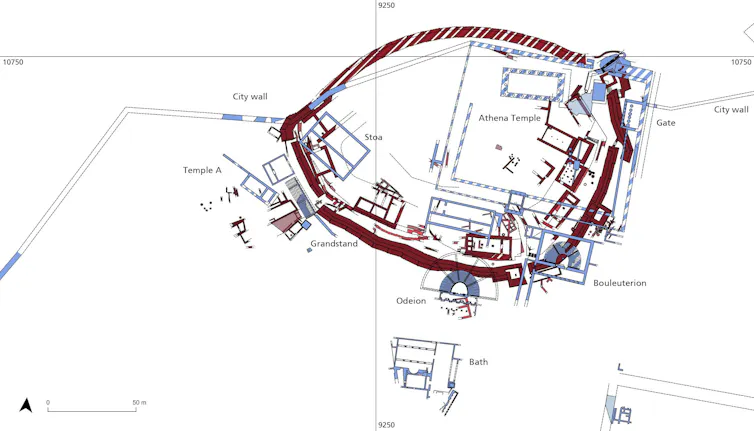
Plan of the late bronze age citadel of Troy (c. 1300–1109BC) shown in red, with Roman-period structures in blue, integrated into the ancient fortification in such a way that the surviving walls functioned as a theatrical backdrop of ‘authentic antiquity’, transforming archaeological depth into a deliberately scenographic experience. University of Tübingen, CC BY-SA
In the Roman imperial period, the site of ancient Troy – located in modern-day Turkey – became a destination. Emperors invested in its development, tying it directly to Rome’s claimed Trojan origins. Under Emperor Augustus, Troy was folded into the political language of empire. And under Emperor Hadrian, it became part of a wider culture of travel, memory and heritage.
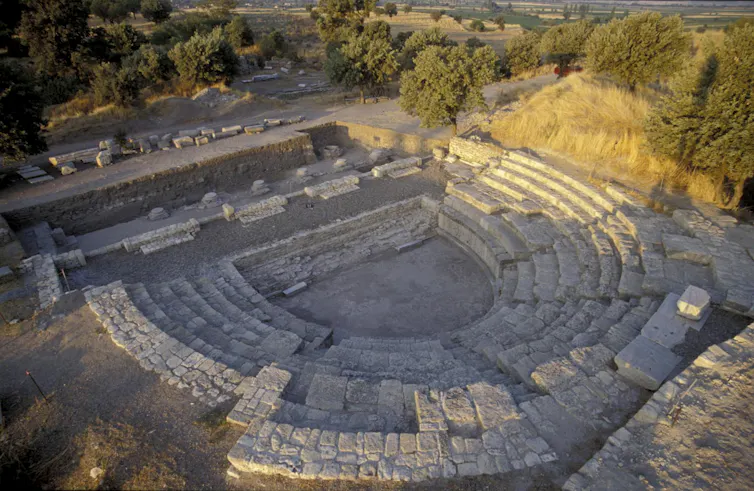
A visitor to Troy in the 2nd century AD would have arrived at a curated landscape. There were baths, places to stay and spaces for performance. A small theatre – the Odeion – was built directly into the ancient citadel, so that the remains of the bronze age city, understood as the setting of the legendary battles around Troy, formed a dramatic backdrop.
Visitors could walk through what was presented as the setting of Homeric epic, experiencing the Trojan war as something anchored in the ground beneath their feet.
From Troy to Egypt
Across the Roman Empire, the Iliad circulated as a living text: copied, taught and read. Egypt, one of Rome’s most important provinces, was no exception. Yet here, Homer circulated within a cultural landscape that differed in important ways from the Greek literary world in which the poem had first taken shape.
For Roman observers, Egypt often appeared as a place where antiquity was materially preserved as well as remembered – through temples, monuments and practices that emphasised continuity with the past. At the same time, it was a deeply hybrid society, where Egyptian, Greek and Roman traditions interacted in complex ways.
Advertisement
Homer was among the most widely copied authors in Roman Egypt – read and taught as a marker of education and cultural belonging and deeply embedded in everyday literary culture.
The Odeion of Troy, a small covered theatre inserted into the fabric of the ancient citadel and constructed in the early 2nd century AD, exemplifies the Roman reconfiguration of the site’s urban and cultural landscape. University of Tübingen, CC BY-SA
The Homeric version of the Trojan War was particularly prominent among the Greek-speaking elite, especially in urban centres such as Oxyrhynchus, where the mummy was found. Other versions of the story – which placed greater emphasis on Paris and Helen’s stay in Egypt, as reported by Herodotus based on accounts from Egyptian priests – were probably more widespread among the broader Egyptian population.
The initial media coverage of the discovery of the fragment inside the Egyptian mummy suggested the text was deliberately chosen to accompany the deceased. As a personally meaningful object, perhaps reflecting their education or cultural identity.
The most telling explanation, however, may be the most straightforward. Discarded or damaged papyri could be reused as inexpensive material. The fragment may therefore have functioned as stuffing – bundled together and inserted into the body cavity without particular regard for its literary content.
The very fact that a scrap of the Iliad could end up as disposable filling, however, speaks to how deeply Homer had penetrated everyday life in Roman Egypt.
Advertisement
A text in motion
To make sense of the past in the Roman world meant moving between story and monument, between genealogy and deep time. Each perspective made the others more intelligible.
The Iliad helped create a world in which different pasts could be connected, compared and reshaped. By linking stories, places and traditions across the Mediterranean, the Roman world turned the past into a flexible resource – one that could generate identity, authority and belonging in shifting contexts.
This is why the Iliad mattered: it circulated across many different settings. It shaped elite education, but it was also part of everyday reading culture. At Troy, it helped transform the city into a place of cultural memory. The text itself also had a long material afterlife, surviving not only as an authoritative story, but through manuscripts and writing materials that were copied, passed on – or even reused for entirely different purposes.
Its most enduring insight is therefore this: the past is not something simply preserved, but something continuously made and remade – through the stories, practices and materials that carry it across time.
Advertisement
This article features references to books that have been included for editorial reasons, and may contain links to bookshop.org. If you click on one of the links and go on to buy something, The Conversation UK may earn a commission.
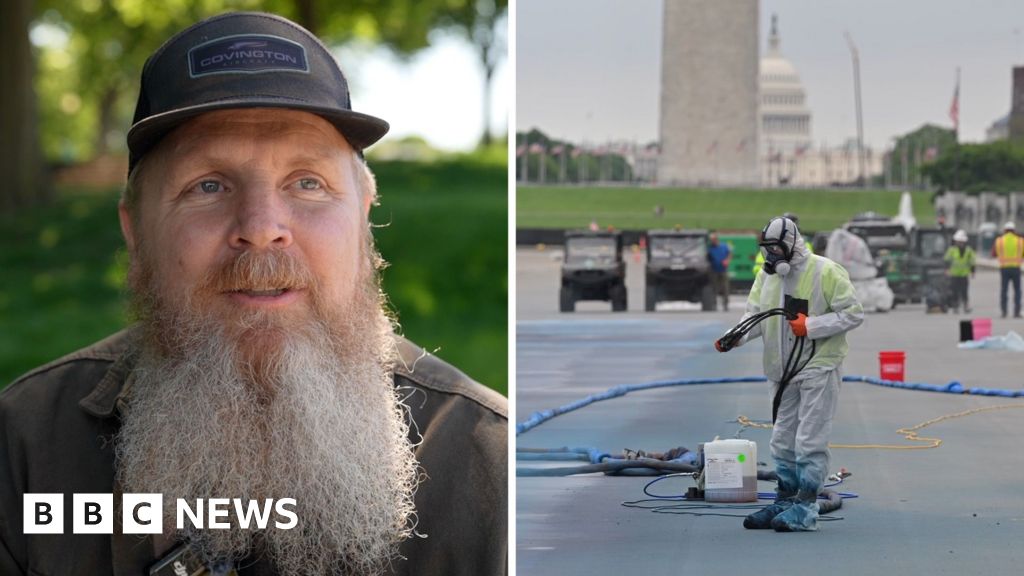
President Donald Trump has commissioned the renovation of the Lincoln Memorial Reflecting Pool as part of his initiative to make Washington DC ‘safe and beautiful’ ahead of the nation’s 250th birthday this summer. As part of that, contractors began work last week to paint the pool blue.
The historic pool, stretching 2,030ft (620m) between the Lincoln Memorial and the Washington Monument, has long been plagued by leaks, structural deterioration, faulty pipes, algae growth and bird droppings.
Trump has said his project to restore and paint the monument would solve the leaking problem and make the pool more beautiful than ever. But it is unclear whether the repairs can specifically fix the underlying structural issues at the attraction, which was built in 1922.
The BBC spoke tourists and locals near the pool, who were conflicted on the renovation.
Advertisement
Video by Meiying Wu, produced with Madeline Gerber
Blood cancer survivor Dan is now cancer-free after being diagnosed aged 28, sharing how one surprise symptom which wasn’t lumps or weight loss was his key warning sign
A cancer survivor diagnosed with the condition at 28 has revealed how his primary symptom wasn’t one commonly linked to the condition. Dan, who has nearly 14,000 followers on TikTok where he posts as daninprogresss, frequently shares details about his diagnosis, treatment and recovery journey.
Advertisement
Having been declared cancer-free more than a year ago, he now dedicates himself to supporting others through their physical and mental rehabilitation. In a recent video, he discussed the principal symptom that prompted him to seek medical assistance, reports the Mirror.
“If I had to pick the biggest sign that I had cancer at 28, it wouldn’t be what most people think,” he said. “My name’s Dan, I got diagnosed with blood cancer at the age of 28 and I went into hospital for chemo and a transplant. Now I’m rebuilding my life both mentally and physically and trying to help as many people do the same as I can.”
He continued: “Most people, when it comes to cancer, think about lumps or sudden weight loss. For me it was fatigue.
“But when I say fatigue I don’t mean being tired for work or being tired after going to the gym the previous day. I mean doing absolutely nothing and feeling like you just run a marathon.
Advertisement
Content cannot be displayed without consent
“For me, I just remember being out shopping and out of nowhere just coming across really lightheaded and faint and I started to see [those], like, squiggly lines in your eyes. And I was like, I need to go home, I don’t feel great.
“So I got home and just remember literally collapsing and falling asleep for like six or seven hours, and then, when I woke up I felt even worse than when I went to sleep. I just knew something wasn’t right.
“It just felt like my body was shutting down. I’m not gonna life, I was very lucky that I listened to my body when I did because that was just the start.”
Common signs of cancer
Identifying the possible warning signs of cancer at the earliest opportunity is crucial to ensuring treatment proves effective, according to Cancer Research UK. While there are numerous different indicators, the charity highlights some of the most frequently occurring:
Advertisement
General signs
Heavy night sweats or fever
Feeling more tired than usual
Unexplained bleeding or bruising
Unexplained pain or aches
Unexplained weight loss
An unusual lump or swelling anywhere on the body
Symptoms affecting the mouth, throat, or voice
Croaky voice, hoarseness, or a cough that won’t go away
A mouth or tongue ulcer that lasts longer than three weeks
Difficulty swallowing
Symptoms affecting breasts or the chest
Changes to the size, shape, or feel of breasts or the chest area, including the nipple
Symptoms affecting breathing
Breathlessness
Persistent cough
Symptoms affecting the tummy
Persistent bloating or stomach pain
Loss of appetite
Persistent heartburn or indigestion
Symptoms affecting going to the toilet and the genitals
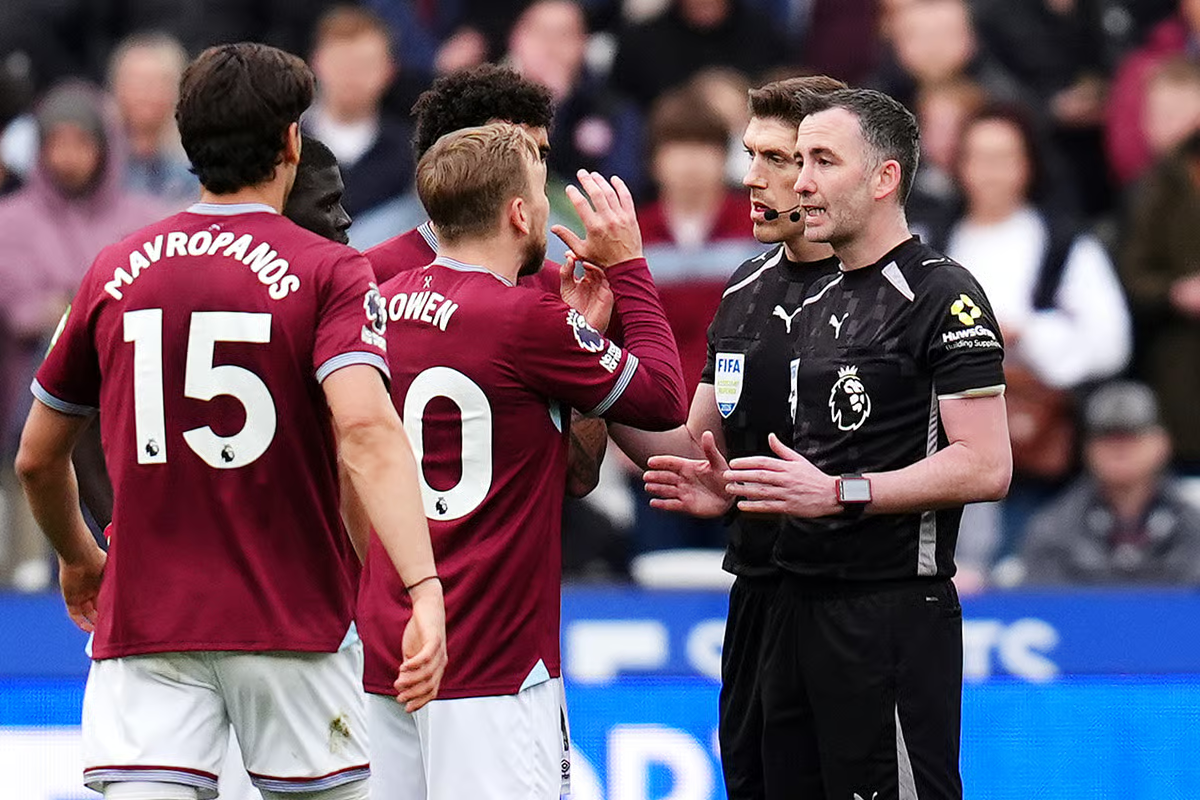
VAR: Let’s get a tighter angle on the goalkeeper please. Slow it down, frame by frame. For me, there is a foul. Potential foul with the arm. His hand is holding his arm down. That’s impactful for me. The left arm, there, is holding, across the body and head. He’s holding the left arm of Raya there, which impedes his ability to get to the ball properly. Doesn’t look that impactful from that angle.
The Welsh star, 74, is currently in hospital in Faro, Portugal and was placed into an induced coma to help her recover after an intestinal surgery.
On Monday, May 11, it was reported that Tyler had to be “resuscitated after going into cardiac arrest” when doctors tried to bring her out of the induced coma.
Portuguese daily Correio da Manha reported that the singer’s medical emergency was due to a burst appendix.
Advertisement
A close friend of Bonnie Tyler has told Good Morning Britain he’s praying she shows some sign of improvement in hospital today.
The 74 year old Welsh singer went into cardiac arrest when doctors in Portugal tried to bring her out of an induced coma following surgery for a burst… pic.twitter.com/NK9MWr2wIN
The singer will remain in an induced coma in an intensive care unit at Faro Hospital until doctors can control the “serious infection” caused by a perforated intestine, according to the paper.
Bonnie Tyler resuscitated after cardiac arrest
Tyler’s close friend Liberto Mealha gave an update on the singer while appearing on Good Morning Britain on Tuesday, May 12.
Advertisement
Sharing: “I could not see her because she is in intensive care and we are praying to get better news.
“The doctors are positive about the situation, but so far, it’s not that good.”
The singer’s friend previously said, “She started feeling unwell during a concert in London and went to a doctor for tests, but they didn’t detect anything there.
“She decided to travel to the Algarve, where she began to feel severe abdominal pain.
Advertisement
“Two days later, she went to a private hospital, which urgently transferred her to the hospital in Faro because her appendix had burst and she needed emergency surgery.”
A spokesman for the singer told fans last week: “Bonnie has been put into an induced coma by her doctors to aid her recovery.
“We know that you all wish her well and ask for privacy at this difficult time, please.
“We will issue a further statement when we are able to.”
Advertisement
Born Gaynor Hopkins, Tyler rose to international fame in the 1980s and is known for her distinctive husky voice.
Recommended Reading
Her other hits include It’s a Heartache and If You Were a Woman (And I Was a Man).
The Grammy-nominated artist is due to tour Europe later this year to celebrate 50 years since her breakthrough hit Lost in France, released in 1976.
Advertisement
Tyler is due to perform in Malta and Germany later this month, with additional shows planned across the UK, Austria, Hungary, Turkey, and Romania.
She was awarded an MBE in 2023 for services to music.



















































You must be logged in to post a comment Login