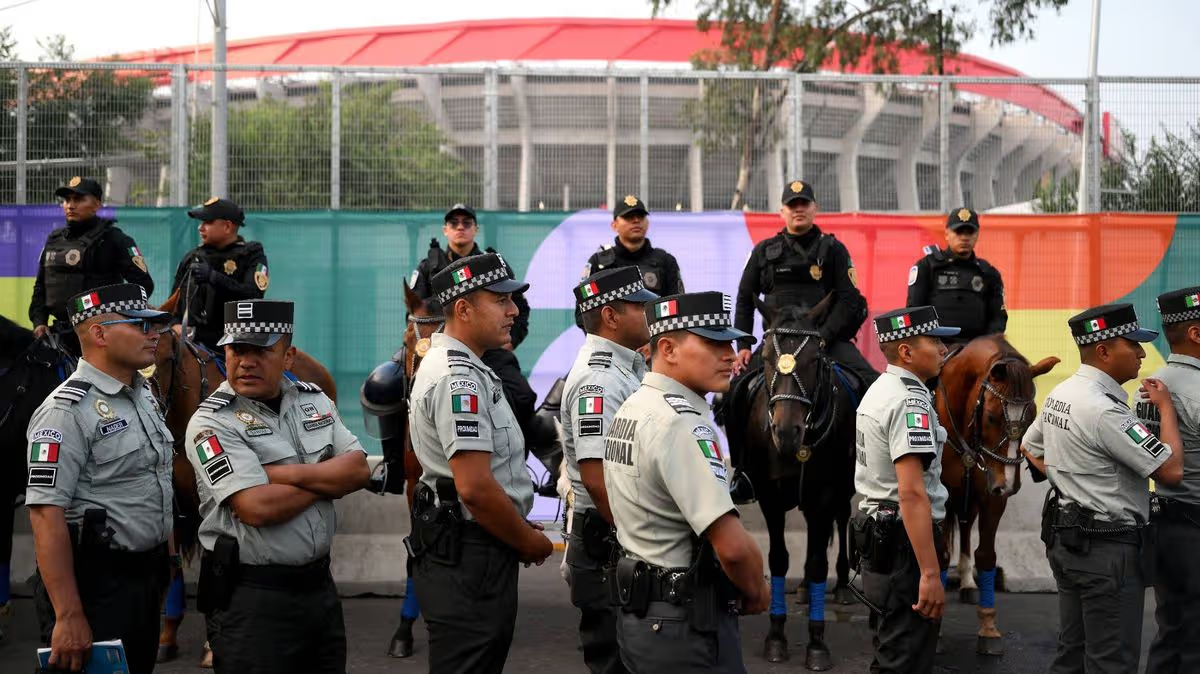
The 2026 FIFA World Cup officially kicked off with the opening fixture between Mexico and South Africa, but the match was overshadowed by reported violent clashes outside the Estadio Azteca — where an 80-year-old man also died after a suspected heart attack
21:34, 11 Jun 2026Updated 21:34, 11 Jun 2026
Video footage appears to capture scenes of disorder erupting close to the Estadio Azteca stadium, where the World Cup curtain-raiser saw Mexico take on South Africa.
The inaugural match of the eagerly awaited tournament, staged at the legendary Mexican venue, was marred by chaotic incidents as substantial crowds reportedly assembled near Gate 8.
Certain accounts indicate demonstrators were launching Molotov cocktails, with online footage seemingly depicting groups hurling objects at police formations while officers in riot equipment attempted to manage the disturbance.
Advertisement
Unrest has escalated throughout Mexico City as visitors and football supporters from across the globe descend upon the capital, with residents claiming authorities have prioritised the major sporting occasion over pressing social issues.
The previous evening, over 1,000 family members of Mexico’s disappeared individuals walked towards the stadium carrying candles and photographs, according to The Express.
The fixture itself, forming part of the FIFA World Cup’s opening day schedule, was proceeding inside the stadium during tonight’s disturbances, although worries persisted regarding access points and crowd security surrounding the ground.
Advertisement
Alongside the broader turmoil, a distinct emergency situation unfolded shortly before kick-off when an elderly attendee passed away at the stadium. An 80-year-old gentleman is believed to have suffered a suspected heart attack at Gate 1 of the Mexico City stadium moments before kick-off.
Emergency crews were summoned and medics from the World Cup security medical unit are said to have arrived at the location within minutes, administering cardiopulmonary resuscitation (CPR) and stabilising the gentleman before his transfer to hospital.
Initial reports suggested he had been resuscitated in the ambulance and was being monitored in a stable state, according to local officials, but he subsequently passed away. Authorities have yet to disclose additional information.
The 2026 tournament formally commenced at 8pm local time with the opening match between Mexico and South Africa, as the United States, Mexico and Canada gear up to collectively host 48 nations throughout a six-week contest.
Advertisement
The run-up to the World Cup has also been characterised by broader disputes, including geopolitical strains, with Iran having previously released statements indicating it might pull out of matches under specific circumstances.
Officials have yet to verify any detentions or casualties connected to the disturbances outside the ground, and there has been no formal confirmation regarding any interference with entry protocols or match proceedings.
Donald Trump has said he warned Andy Burnham that he is ‘killing’ the UK with an influx of migrants.
Speaking from the Oval Office, the US President said he had spoken to the new Prime Minister and claimed ‘people [are] coming from all over the world and just camping out’ in Britain.
He added: ‘He’s going to have to mention it because it’s killing your country.
‘I know Starmer did very little about it, and they’re coming from all over the world.
Advertisement
‘They’re coming from Africa, they’re coming from South America, they’re coming from different parts of Asia, and they’re invading Europe.’
Mr Trump indicated the UK was a ‘prime’ destination for migrants.
The President said he also spoke to Mr Burnham about energy, adding that the new leader had indicated he was keen to take oil from the North Sea.
He said if the Prime Minister followed through on his commitment the UK was ‘going to be a wealthy country’.
Advertisement
Donald Trump (pictured on Wednesday) has said he warned Andy Burnham that he is ‘killing’ the UK with an influx of migrants
Trump said he had spoken to the new Prime Minister (pictured) and claimed ‘people [are] coming from all over the world and just camping out’ in the UK
The US president, a vocal supporter of fossil fuels, has long championed the move as he has railed against ‘windmills’.
Advertisement
‘He’s got windmills all over the place, and any time you see windmills, you see a failing country,’ Trump said.
‘They’re made in China, not used by China, but they’re made in China.’
He went on: ‘You have one of the most valuable oil finds anywhere in the world, and if the United Kingdom would use it, they’d be a wealthy country again. And I tell you what, I could not get Starmer to use it. It was incredible.’
Mr Trump said: ‘You have your own oil and gas. If you use the North Sea, the UK will be a really rich country. I cannot get the point across.
Advertisement
‘The new gentleman, when I spoke to him, he said he’s going to open up the North Sea. Let’s see if that happens.’
Following the phone call between the two leaders on Mr Burnham’s first day in office, Downing Street would not be drawn on any potential future plans for North Sea drilling after Mr Trump talked up a change in policy under Mr Burnham.
Just days after Mr Burnham took office, Trump wrote on Truth Social that the UK was a ‘poverty-stricken disaster’.
Migrants board an inflatable boat on the beach at Hardelot-Plage in an attempt to cross the English Channel in northern France on July 28, 2026
Advertisement
He claimed that new drilling in the North Sea would ‘make the United Kingdom, from a Poverty Stricken Disaster, to one of the Richest Countries anywhere in the World’.
Advertisement
Mr Trump had lost a legal battle with the Scottish Government to stop a wind turbine development visible from his Aberdeenshire golf course.
Labour’s 2024 manifesto said the party would not issue new North Sea licences.
Labour’s deputy leader Lucy Powell said on Sunday Mr Burnham would stick to the party’s manifesto commitments on North Sea drilling but would ‘pursue a more pragmatic approach’.
In 2024 Labour said the party would not issue new North Sea licences, arguing to do so would ‘not take a penny off bills’ or improve energy security while accelerating climate change.
Advertisement
But Mr Burnham is said to be ‘open-minded’ about the policy.
It is understood Mr Burnham believes he would not breach the manifesto by backing further drilling in the Scottish Rosebank and Jackdaw fields because licences had already been granted there.
Ms Powell did not say whether Mr Burnham would back more drilling but said she expected a ‘change of emphasis’ rather than a ‘change of policy’.
Regulators initially approved oil exploration at the two locations in 2022 and 2023 under the then-Tory government, but saw their efforts overturned last year after a legal challenge.
Advertisement
Ed Miliband, who held the energy and Net Zero brief under Sir Keir Starmer and had been a strong supporter of the election pledge, has now taken up the Foreign Secretary role.
We hope you love the products we recommend! All of them were independently selected by our editors. Just so you know, HuffPost UK may collect a share of sales or other compensation from the links on this page if you decide to shop from them. Oh, and FYI — prices are accurate and items in stock as of time of publication.
If there’s one thing I’m qualified to speak on, it’s sofas. Mostly because that’s where I spend 95% of my time, which yes, does make me authorised to comment on this topic.
But, still, I have a confession: I only recently got a corner sofa – and it was truly life changing.
Advertisement
For some reason, I have – until now – lived my life believing that sofas have to be perfectly rectangular.
But it turns out there’s a whole world out there of L and C-shaped sofas to explore, which (news to me) can even maximise your space and give you more options of where (and how) to sit. Not to mention the napping potential.
Here, I’ve tracked down the best (not to mention, most stylish) corner sofas on the market – whether you, too, are entirely new to the category, or simply want to upgrade your current corner sofa.
The best corner sofas to shop now
Advertisement
Best velvet corner sofa
If there’s one sofa fit for a royal, it’s this burgundy one from Furniture 123. With smooth velvet seating, it looks practically like a throne.
But don’t worry, it’ll fit more than the queen (or king) of your home, because it comfortably seats up to four.
And, although I think we’re living through a burgundy renaissance, it also comes in green if that fits the colour scheme of your living room better.
Advertisement
Dimensions: 320 x 93 x 80cm.
Best IKEA corner sofa
Ah, IKEA: the place of excellent meatballs, mini Daim bars, and the source of so many couples’ arguments.
Not with this sofa, though, because it’s supremely easy to assemble. I have a similar one and it’s the perfect balance of comfort and structure.
The seats are nice and wide, which makes it great for napping on, or simply lying back to enjoy a spot of gossip.
Advertisement
If you’re scared of what could happen to a white sofa, it also comes in a range of colours including grey, yellow, blue, and beige.
Best small corner sofa with storage
When you’re tight for space, you might find yourself in the uncomfortable position of having to weigh up your need for storage with your desire for comfort.
Luckily, with this Castlery sofa, you can have both. Each part of the sofa doubles as hidden storage, so you can stash cushions, books, or bedding out of sight.
Plus, if you move to a bigger space you can add on to the sofa with a footstool or extra sofa seat.
Advertisement
Dimensions: 187.5 x 165 x 81cm.
Most affordable small corner sofa
Want to make the most of your space? This sweet striped sofa comes in at just 180cm wide, so it’ll fit into small spaces, while maximising your seating (and napping) space.
You won’t have to worry about delivery, either, because it arrives in small packages so it can get through even the tiniest of doors.
Reviewers also note this is the perfect kitchen sofa, as the fabric is super durable and makes an ideal seat for middle of the day slumps.
Advertisement
Dimensions: 82 x 180cm x 133cm.
Best leather corner sofa
If you’re looking for a sofa that can withstand the every day mess that comes with having pets and children, leather has got to be the way.
This one from Castlery comes highly rated thanks to the butteriness of its leather, which holds up over time along with its cushions that don’t sag or sink.
It’s also close to the floor, so it’s easy for little ones to clamber onto – not to mention it looks sleek in your space, without hogging all the attention.
Advertisement
Dimensions: 302 x 239 x 70cm.
Best mid-century corner sofa
To add a touch of retro to your living space, this sofa from Orla Kiely takes inspo from the squareness of mid-century sofas.
But naturally, it comes with all the modern touches to make it a practical and comfortable addition to your space, including deep cushions coated in a durable fabric for lasting lounging.
Dimensions: 273 x 197 x 85cm
Advertisement
Best cotton corner sofa
Doesn’t this just look like the most inviting seat you’ve ever seen?
Underneath your choice of cover (ours is the pink candy stripe) is a cloud of feather-coated foam filling, which we imagine is tantamount to floating on a cloud.
Not to mention the cover is 100% cotton, so it won’t get too hot in summer, unlike velvet or corduroy.
Dimensions: 224 x 80 x 93cm
Advertisement
Best corner sofa bed
With 19 fabrics to choose from, this corner sofa bed from DUSK can be customised to fit any space.
To stop you losing your mind (or inadvertently ending your relationship), it offers tool-free assembly, so you’ll have extra storage and a new bed in no time.
Like the Sofa Club sofa, this version comes with hidden storage to keep all the bedding for the pull-out sofa bed in. Assembling the bed is just as easy as setting the sofa itself up: all you have to do is pull the seat portion out and it turns the sofa into a double bed.
Dimensions: 217 x 90 x 142cm.
Advertisement
Best for speedy delivery
Amidst her renovation chaos, our head of content, Dayna McAlpine, did the brave and selfless task of testing this corner sofa from Sofa Club.
As she says in her review, assembling a sofa can be a total faff. But the good news is, this sofa was a dream to build.
Not only do they offer next day delivery, which is impressive when you consider that most sofa delivery services can take up to six months, but they’ll even assemble it for you.
Should you opt against that, this sofa will arrive in just two easy to assemble pieces, including the storage-filled chaise, and the sofa portion with a fold-out bed.
Advertisement
You’ll also have 100 day to return it if, after a little lounging, you decide it’s not for you.
The Environment Agency was made aware of the substance and has investigated. An EA spokesperson said: “An environment officer went to the river to investigate. We also talked to Cam Conservators, which manages the river.
“As is often the case, substances on the surface go as quickly as they appear, and there was nothing for us to see.” The EA added that the hot weather can change the colour of rivers and also produce algae.
The spokesperson added: “This looked like algae, but it is normally green, blue or brown. It looks like the river is now okay.
“Anyone with new concerns about the Cam or any river is urged to call the Environment Agency’s 24-hour incident hotline: 0800 807060.”
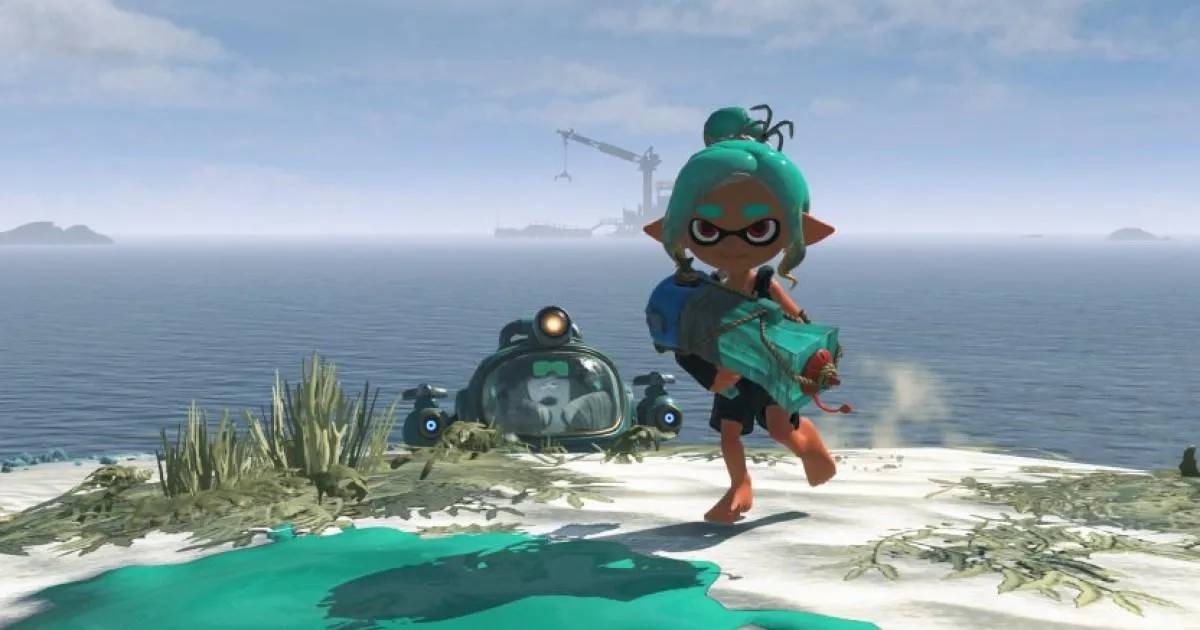
Splatoon Raiders – do you trust its user score? (Nintendo)
The Thursday letters page is frustrated at August’s release schedule for new games, as one reader calls for Assassin’s Creed to renew its present day storytelling.
Games Inbox is a collection of our readers’ letters, comments, and opinions. To join in with the discussions yourself email gamecentral@metro.co.uk
Surprise score I’m as confused as anyone about the Splatoon Raiders user reviews and becoming the seventh best game of all-time. I haven’t played it but I’m going to go out on a limb and say it’s not actually better than The Last Of Us and every Zelda game ever made.
But then I’ve never put any stock in user reviews. Things like Metacritic are questionable enough given some of the no-name websites they include in the total, which seems to make everything a green score. But the user scores are all just fanboy wars, with people either marking games down for some imagined slight or boosting it just because they like the company (but not necessarily the game). Look at the scores and somehow half of them are always either 10 or zero.
Advertisement
It’s like this with user scores on other sites too. Less than 4 out of 5 seems incredibly rare on the PlayStation Store and the only one that actually seems to have sensible scores, that aren’t based on review bombs or trivial complaints, is Steam. And I think that’s because it has much more people voting in it.
So on this occasion I will say that I am not convinced Splatoon Raiders is the best Nintendo game ever and I’ll stick with the regular reviews for my advice. Wotan
Expert, exclusive gaming analysis
Sign up to the GameCentral newsletter for a unique take on the week in gaming, alongside the latest reviews and more. Delivered to your inbox every Saturday morning.
Advertisement
Co-operative arguments Very happy to see Capcom already talking about Pragmata 2 but I am never going to get used to the time it takes to make a game now. Oh, they’re fast-tracking a sequel? Yep, so fast that it probably won’t be out until next decade and the PlayStation 6. Seems crazy that as recently as the Xbox 360 era we were getting sequels every year and waiting three years was seen as a pretty extreme gap.
I can’t really talk about what I’d like to see for the sequel without getting into spoilers, but the game did set itself up well for a follow-up, even if it’s hard to say what the specifics will be.
It’s pretty obvious that the only real problem to solve is variety, but I’m sure they’ll be on that. More enemy types, more weapons, and more complex hacking puzzles and I think you’re golden. I’d also be interesting in seeing if a co-op mode would work, although you’d probably end up getting very angry with your teammate. Korbie
Advertisement
Slow month I know August is not traditionally a busy time for buying games – who wants to be playing games when you can go outside in the burning sunshine, right? – but given what’s happening with the release dates this year, did no company think that maybe they should move one of their September games to August instead?
Although there’s some that might be all right, I can’t say I’m all that excited by any of the games in your list of the best for August. It’s barely any better than July and that’s really disappointing.
There’s going to be so many flops in September and October, because they’re too grouped together, but I’m not sure how much sympathy I’m going to have considering how they’re just blindly walking into the meat grinder. Cubby
Play less Very interesting that Shigeru Miyamoto’s advice for making a game is to base it on a hobby you’re interested in. I feel that if you asked a Western developer for similar advice you’d get much more technical advice and probably a shopping list of games to use as inspiration.
I doubt Miyamoto has ever looked at any Western game for fun or work. In fact, the only one not by Nintendo I’ve ever heard him talk about positively was Pac-Man, which apparently he’s a big fan of. I’m not sure there’s any evidence he’s liked anything else since.
This to me is all a very clear explanation for the quality and imagination of his games, and Nintendo in general. He’s not chasing trend or trying to emulate something someone else has already made, he’s just coming up with ideas and making things he thinks will be cool.
I’m not saying he always gets it right – I never really liked Pikmin – but I suspect if more developers played less games they’d probably make something more interesting. Londi
Advertisement
Don’t miss Gaming news! Add us as a Preferred Source
As a loyal GameCentral reader, we want to make sure you never miss our articles when searching for gaming stories. We have all the latest video games news, reviews, previews, and interviews, with a vibrant community of highly engaged readers.
Click the button below and tick Metro.co.uk to ensure you see stories from us first in Google Search.
GameCentral has been delivering unique games news and reviews for over a decade
Advertisement
£5 off Was in town the other day and decided to take a look in CeX, because we all like a physical game, especially in the current climate/incoming situation annnnnnnd… Mario Kart World, 60 quid, used you know, second-hand, refurbished… £60.
Now a quick look on Google and I found it in Currys for £65, brand new, sealed, with that (I presume), new game smell! Is it any wonder second-hand games shops are dying out, that’s lack of competition, I guess. big boy bent
Radio silence I was wondering, what with all of this furore about Sony calling an end to disc based games, what’s your level of access to Sony, Microsoft, and Nintendo? Do you put in interview requests? How often do you communicate with the high-ranking decision makers of these corporations? I found an interview that you did with Jim Ryan from 2015 and in that interview you didn’t hold back at all with regards to asking difficult questions.
Instinctively I’m guessing that any high-level employee of a company would be significantly guarded even if a journalist did succeed in cutting through layers and layers of public relations minions to talk to them. It’s all about the share price isn’t it? One wrong answer and the value of stock can plummet.
Advertisement
It would be nice to read an interview with someone at Sony at this, apparently, emotionally charged time, but I suppose there’s no advantage to any representative from that company putting their head above the parapet. Michael Veal
GC: Microsoft and Sony haven’t given proper interviews to gaming press since before Covid. It’s not just us; they hardly speak to anyone anymore. Sony’s plan at the moment is clearly complete silence. But who knows, if the dissent about physical media goes on maybe they’ll be forced to make a statement.
Trucking on Will you be reviewing Truxton Extreme? I’d love to hear your opinion, I hope it’s good. I’ve been hoovering up horizontal and vertical shooters recently and such a respected game getting a new entry is exciting.
Thanks again for being the best source for reviews out there, you guys and gals are the best. Beastiebat
Advertisement
GC: Thanks very much. We’ll try to, although we haven’t got a copy in yet.
Start from the beginning I’m a huge Assassin’s Creed fan and have been since the very first game. I’m also one of the few people who actually enjoyed the modern day sections.
Personally, I feel the overall story disappeared when Desmond died. The modern day storyline was what tied everything together and gave the historical stories a bigger purpose.
Advertisement
What made Assassin’s Creed special was that the whole point of using the Animus was to go back through your ancestors’ memories to discover clues about Pieces of Eden and other First Civilization secrets. The modern day Assassins were reliving those memories to find where these artefacts had been hidden in the present day, before the Templars could get to them.
I’d love to see Assassin’s Creed return to its roots. Bring back the mystery surrounding the Pieces of Eden, the conflict between Assassins and Templars and a strong modern day narrative that actually matters. Most importantly, I’d like to see a young protagonist who learns the ways of the Assassins throughout the game. Watching characters grow and develop was a huge part of what made Altaïr and Ezio so memorable.
These days, many of the protagonists seem to begin their journeys already as elite warriors, master assassins or highly skilled fighters. This removes the sense of progression and discovery that made the earlier games so rewarding.
I still enjoy the games, but I miss the feeling that everything was building towards something bigger. Adam_Lion_23 (PSN ID/gamertag)
Advertisement
Inbox also-rans What EA Sports FC needs is a simple yearly update rather than releasing a brand new game every year. What do you think? Henry
GC: We think EA would prefer you give them £70 every year. Or even better, £140.
The small print New Inbox updates appear every weekday morning, with special Hot Topic Inboxes at the weekend. Readers’ letters are used on merit and may be edited for length and content.
You can also submit your own 500 to 600-word Reader’s Feature at any time via email or our Submit Stuff page, which if used will be shown in the next available weekend slot.
You can also leave your comments below and don’t forget to follow us on Twitter.
Waitress runs at the Grand Opera House in Belfast until Saturday, August 1
21:55, 29 Jul 2026Updated 22:09, 29 Jul 2026
It’s not often I’ve wanted to jump to my feet for a standing ovation before the end of a performance, but when you witness a talent like Carrie Hope Fletcher that can’t be helped.
Taking on the role of Jenna Hunterson in Waitress, she perfectly portrayed the anguish of the downtrodden wife trapped in an unhappy, loveless marriage, who just wants a little joy.
Despite the heavy themes touched upon in the production as she navigates falling pregnant by cruel husband Earl, played by the excellent Mark Willshire, Fletcher brings a lightness and great comedic timing to what is a very funny and uplifting show.
Advertisement
We follow as expert pie-maker Jenna (Fletcher) finds herself falling for her affable gynaecologist Dr Pomatter, who comes to life thanks to the charming performance of Dan Partridge, and she finds a little happiness while coming to terms with having a child with a man she wants to leave.
They embark on an affair which helps Jenna find her spark again, alongside making the best pies around, that leads to a joyful ending for our leading lady.
Her performance of She Used To Be Mine was spell-bounding and received rapturous applause from the captivated audience, with many maybe feeling the urge to jump to their feet like me.
Advertisement
But as impressive as Fletcher was in her role as Jenna, the whole show is an utter joy because of the rest of the cast as well and the chemistry between them all. I loved every single character and how they were portrayed. Not an over exaggeration, they really were all excellent.
The trio – Jenna, Becky (Sandra Marvin), and Dawn (Evelyn Hoskins) – bounced off each other as the waitresses in Joe’s Pie Diner, bringing plenty of laughs and their own standout performances as each character gets their chance to shine.
Sandra Marvin brought great humour to her role of Becky, perfect timing and a powerful voice who commanded attention on stage. The show would not have been the same without her.
Evelyn Hoskins’ portrayal of Dawn was again very funny and endearing and her chemistry with love interest Ogie (the hilarious Mark Anderson) brought a great lightness and quirkiness to Waitress.
Advertisement
Aside from the performances, special mention must go to the impressive set that changed between a diner with booths, Jenna’s home, a doctor’s surgery and kitchen seemlessly.
I also loved that the band were on stage the whole time as well, blending well in the corner of the diner and being treated as customers at points as well.
I had no idea what to expect before seeing Waitress, I had heard of the show and its rave reviews but had never listened to the soundtrack but I just fell in love with the show.
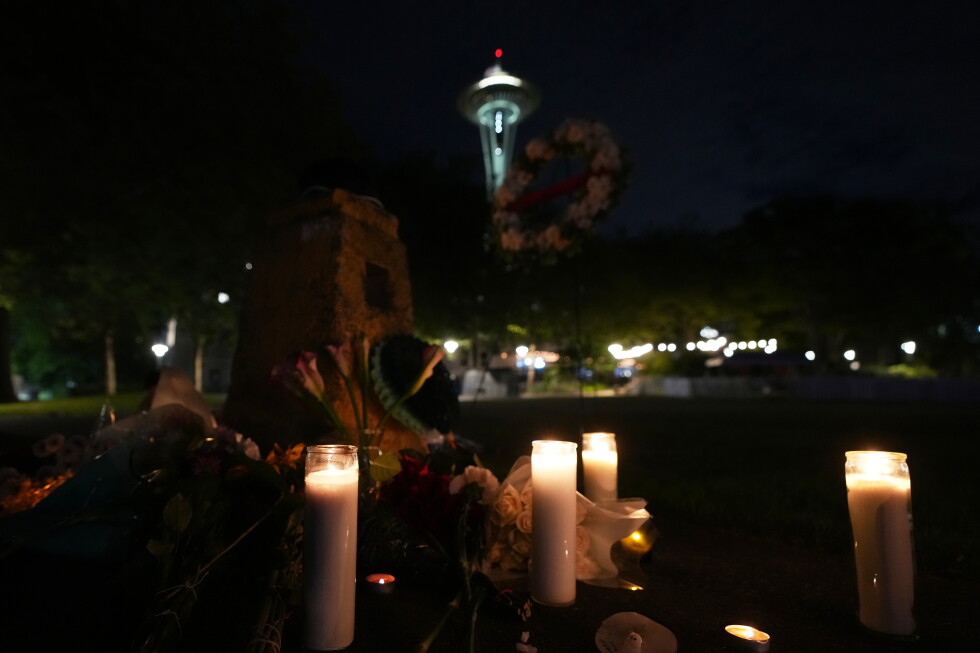
SEATTLE (AP) — The bullets that killed two bystanders during a shootout at a crowded Seattle food festival last weekend do not appear to have come from the gun that a 15-year-old arrested at the scene was firing, police said in court documents filed Wednesday.
The King County prosecutor’s office filed charges of first-degree assault with a firearm enhancement as well as unlawful possession of a handgun by someone under 18. In a statement supporting the charges, police said the teen was seen firing an untraceable ghost gun into a crowd, but preliminary testing of bullets recovered from the two bystanders killed showed they did not match that weapon.
Shell casings found at the scene of Sunday’s shooting indicate four weapons were fired during the shootout, the document said.
Police say a 19-year-old suspect died in the gunbattle, and that as police escorted the 15-year-old past that suspect’s body, the 15-year-old said, “Love you bro.”
Advertisement
Police have been trying to identify at least one other person involved in the shooting. The statement did not indicate who might have fired the bullets that killed the bystanders.
The shooting in the waning hours of the three-day Bite of Seattle festival left three people dead, including a 19-year-old gunman, and at least four people injured, including a toddler. Authorities say they believe the violence was gang-related, and they are reviewing any available surveillance video and interviewing victims and witnesses in an effort to identify others who may have been involved.
An eighth person with a possible gunshot wound checked themself into a Seattle hospital after the shooting, but checked out before investigators could conduct an interview, Police Chief Shon Barnes said Tuesday. Legal obstacles have prevented detectives from obtaining the patient’s identity, he added. It’s unclear if the injury was related to the festival shooting or whether the person might have been involved in it, but Barnes asked for the person to come forward and speak with investigators.
Prosecutors on Wednesday asked a judge to move the case to adult court, a decision that can take months after the judge considers arguments from both sides.
Advertisement
If the teen is convicted as an adult, the charges would carry a sentencing range of about eight to 10 years in prison, plus possibly another five years for the firearm enhancement. However, judges in Washington may also choose to sentence juveniles as juveniles even if they are convicted in adult court.
Advertisement
Sign up for Morning Wire:
Our flagship newsletter breaks down the biggest headlines of the day.
In juvenile court, the charges would carry a sentencing range of two to 2 1/2 years. It was not immediately clear whether the firearm enhancement might add additional time in juvenile detention.
A short time ago, Suffolk County Council released a new update on the emergency response which said preparations are being made to evacuate 200 caravans if required.
It said: “Firefighters remain at the scene, with relief crews now in attendance to maintain firefighting operations. The incident ground has been reorganised into a number of sectors to support the ongoing response.
“As a precaution, crews have been focused on protecting properties including Coastguard Cottages, Mount Pleasant Farm and Cliff House Holiday Park. Preparations were also made for the potential evacuation of around 200 caravans at the holiday park should conditions require it.
Advertisement
“Specialist drone support is being used to help assess fire behaviour and support operational decision-making through the night. Members of the public are still advised to avoid the area and keep roads clear for emergency vehicles.”
St Mark’s in Friday Bridge has invited comparisons to the iconic Italian tower because of its lean
Permission has been granted to remove the spire of a church with a lean which has invited comparisons to the leaning tower of Pisa. The application for St Mark’s in Friday Bridge was made to Fenland District Council following fears that the spire was structurally unsound.
Advertisement
The planning officer’s report said the grade II listed church is a “notable landmark” which is “distinguished by its prominent spire”. The conservation officer said they had “considerable concerns and sadness” for the loss of the spire but concluded it is “ultimately structurally unsound and the issues are live”.
They said the scale of repairs “is simply not affordable” but that “it is hoped that this removal is temporary, subject to funds becoming available”.
Historic Buildings and Places were also consulted and called the application a “very difficult case”. They said the church is among “several historic buildings in Fenland which have been or are threatened by unstable ground conditions.”
They said: “The analogy of the leaning spire with Pisa is sufficiently long-established for it to be assumed that the lean has been manifest for decades – settlement of this sort tends to take place in the first decade of a building’s existence after which it begins to stabilise.” They said they would opt to support the application if it meant repairing the rest of the church.
Advertisement
The planning officer’s report said they gave “substantial weight” to evidence “that the spire is structurally unsound and presents an ongoing risk to public safety”.
They said the plans would remove “this structural liability” and “help secure the continued use, maintenance and long-term preservation of the church as an important place of worship and community facility”.
The council approved the planning application on July 16.
A Rochdale mental health worker has been hailed as a hero for his brave actions after he saved a person from a canal.
Advertisement
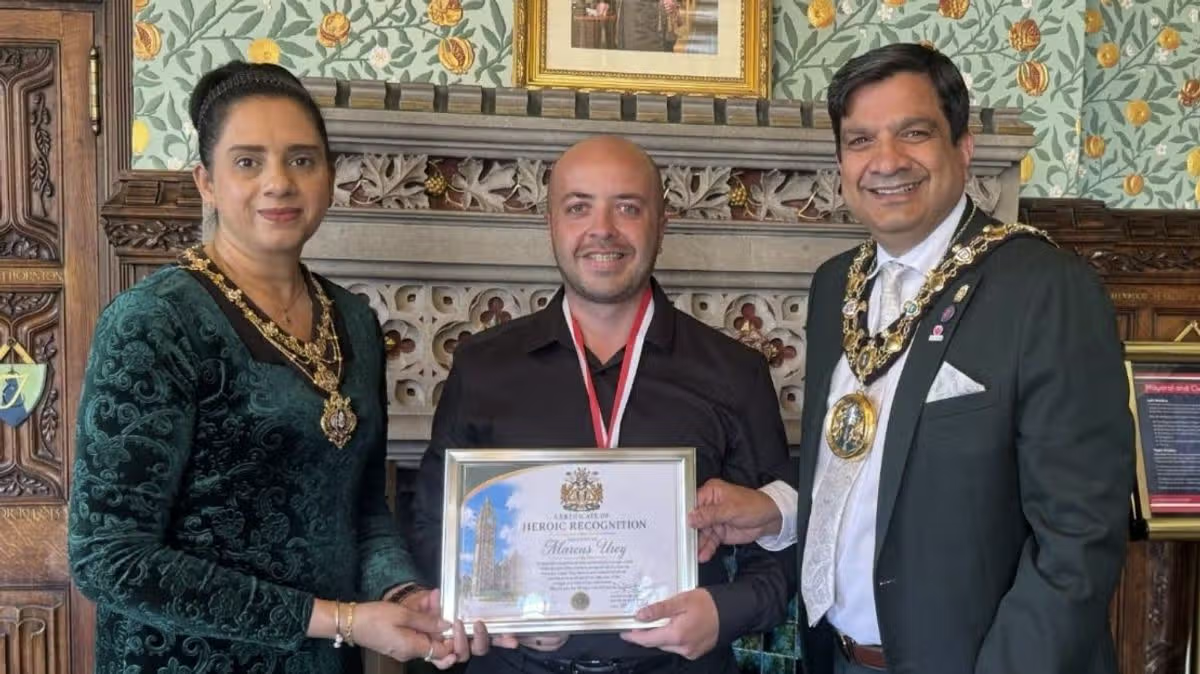
Marcus Urey has been granted ‘heroic recognition’ by Rochdale Borough Council for his ‘incredible bravery and compassion’, saving the person and later ‘making sure they received support’.
The Pennine Care NHS Foundation Trust shared on Facebook that Mr Urey works at Stansfield Place, a rehabilitation centre for men with serious mental illnesses.
Click here to get the biggest stories straight to your inbox in our Daily Newsletter
The trust said he ‘acted quickly to save someone from the canal’ while not on shift’, showing ‘incredible bravery’ to assist the person.
Advertisement
He was handed the certificate by mayor Faisal Rana and mayoress Iram Faisal at a ceremony at the town hall.
The trust wrote: “Care and compassion don’t stop at the end of a shift.
“We’re incredibly proud of Marcus Urey, technical instructor at Stansfield Place, whose bravery has been recognised by The Mayor and Mayoress of Rochdale.“Marcus acted quickly to save someone from the canal, making sure they also received the support they needed.“He showed incredible bravery and compassion in a difficult situation, acting without hesitation to help someone in need.“It’s fantastic to see Marcus recognised for his actions. He is a real credit to Stansfield Place and Pennine Care.“Marcus said: “Thankfully I was in the right place at the right time and did what I hope anyone would do to help someone in need.“I’m grateful the person was able to get help, and I’m humbled by the kind words from my colleagues.”
She was wearing a cream top and pink shorts and was carrying a blue Lilo and Stitch bag
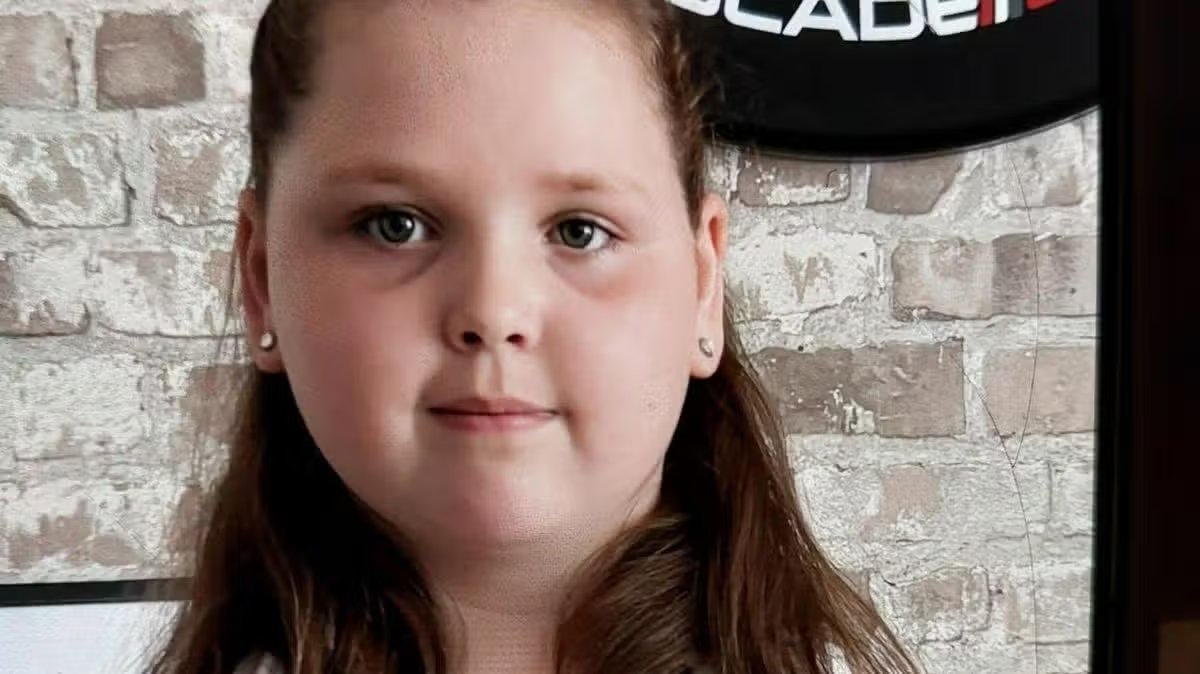
A seven-year-old girl has gone missing from a town in Rhondda Cynon Taf on Wednesday evening.
Advertisement
Ivy was last seen at around 9pm on Wednesday on Enid Street, Trealaw in Tonypandy. Her hair is brown and is styled in two braids.
She was wearing a cream top and pink shorts and was carrying a blue Lilo and Stitch bag.
A South Wales Police spokesperson said: “Help us find Ivy, 7, missing from Tonypandy, Rhondda Cynon Taf.
“Ivy was last seen at around 9pm this evening (Wednesday, July 29) on Enid Street, Trealaw.
Advertisement
“She has brown hair in two braids and was wearing a cream top and pink shorts. She was carrying a blue Lilo and Stitch bag.
“If you have seen Ivy, or have any information which will help us to find her, please contact us quoting ref: 2600245630. Or phone Crimestoppers, anonymously on 0800 555111.”
Get daily breaking news updates on your phone by joining our WhatsApp community here. We occasionally treat members to special offers, promotions and ads from us and our partners. See our Privacy Notice




![Trump said he had spoken to the new Prime Minister (pictured) and claimed 'people [are] coming from all over the world and just camping out' in the UK](https://i.dailymail.com/1s/2026/07/29/22/110331737-16014827-image-a-85_1785359510444.jpg)














































You must be logged in to post a comment Login