








Connect with us

NewsBeat

McDonald’s announces hand-breaded chicken expansion and new menu items

Published

on

McDonald’s announces hand-breaded chicken expansion and new menu items

McDonald’s is planning a major menu overhaul as it spends $8.5 billion over the next decade to modernize its global network of restaurants.

With fast-food customer traffic flat across major markets including the U.S., McDonald’s Chairman and CEO Chris Kempczinski told investors at the company’s Chicago headquarters that future growth depends on grabbing market share from competitors and raising store-level productivity. To achieve this, the fast-food giant plans to improve kitchen operations and automate administrative tasks like shift scheduling and inventory management.

“The winners will be the companies that create more demand and deliver it more efficiently,” Kempczinski said.

McDonald’s shares fell 5% during afternoon trading on Wednesday, marking their largest single-day percentage drop in six years, as investors reacted to the eye-popping cost of updating 46,000 global stores.

Advertisement

On the product front, McDonald’s stated that hand-breaded chicken—currently being tested across 10,000 restaurants in Asia and a small group of outlets near Chicago—has lifted both overall sales and consumer quality ratings. Major competitors like Chick-fil-A and KFC already feature hand-breaded chicken. The company plans to expand these tests to additional U.S. and Irish markets next year.

McDonald's President and CEO Chris Kempczinski noted that low-income consumers, defined as U.S. households earning $45,000 or less, continue to visit fast-food outlets, though less frequently than before
McDonald’s President and CEO Chris Kempczinski noted that low-income consumers, defined as U.S. households earning $45,000 or less, continue to visit fast-food outlets, though less frequently than before (Getty)

McDonald’s also plans to roll out grilled chicken sandwiches and wraps across the U.S. and other international markets, while experimenting with items such as egg bites and bowls to cater to consumers seeking higher protein content and varied portion options.

Skye Anderson, the president of McDonald’s USA, noted that roughly 30 million Americans now use GLP-1 weight loss medications and are seeking smaller, protein-dense options as a result. However, internal research indicates that 60 million Americans are actively looking to add more protein to their daily diet.

“This is an opportunity. We need to keep giving them more reasons to make McDonald’s their first choice,” Anderson said at McDonald’s investor day.

McDonald’s said the restaurant modernizations will feature dedicated lockers for delivery orders, enlarged play areas, updated kitchen layouts, and visible coffee preparation stations to elevate quality perceptions. Scales designed to ensure order accuracy—already deployed at 10,000 locations worldwide—will be installed in 20,000 stores by 2028, according to the company.

Advertisement

The business is rolling out its ArchIQ platform, developed alongside Google, which utilizes artificial intelligence to boost order accuracy while automating routine tasks like inventory tracking and shift scheduling. Meanwhile, Archy, the company’s AI-powered drive-thru ordering system, can now process orders in both English and Spanish with a 90% accuracy rate.

Archy could eventually save at least 50 labor hours per week in a typical McDonald’s restaurant, Chief Financial Officer Ian Borden stated. However, he noted that the strategy is not intended to trim total staffing levels, but rather to allow workers to focus on hospitality or labor-intensive tasks such as hand-breading chicken.

Kempczinski noted that customer feedback regarding Archy during initial trials has been positive because it helps ensure orders are accurate.

“It’s not AI is bad or AI is good. We try to be really thoughtful about how we use it,” he said.

Advertisement

McDonald’s is also launching new employee training programs focused on hospitality and food quality, according to Tiffanie Boyd, McDonald’s chief people officer. The experiential training will show workers what a perfectly prepared Big Mac tastes like and encourage friendlier customer interactions.

At the same time, McDonald’s remains focused on value offerings. Kempczinski noted that low-income consumers, defined as U.S. households earning $45,000 or less, continue to visit fast-food outlets, though less frequently than before. While bundled offerings like the $5 meal deal have proven effective, the chain is exploring ways to offer entry-level prices on a core menu of items in the U.S., similar to structures used in European and other international markets.

“This is the environment that we’re in right now. You have to be on your game and deliver that value,” Kempczinski said. “The pressure around cost of living isn’t going away.”

U.S. franchisees typically spend up to $450,000 every 10 years on required store remodels. Under the company’s new blueprint, franchisees will have to spend an additional $800,000 over time, though McDonald’s will cover a portion of that expense through capital support and rent relief.

Advertisement

Borden explained that capital investments will be introduced gradually when individual franchisees and markets are ready for them. Once completed, operational efficiency gains will deliver roughly $100,000 in additional annual cash flow benefits to the average U.S. restaurant, a portion of which can be reinvested into operations, Borden said.

“We’d love to see it going into hospitality to elevate the experience with our customers,” Borden said.

Source link

Advertisement
Continue Reading
Click to comment

You must be logged in to post a comment Login

Leave a Reply

NewsBeat

New vocational GCSE subjects to be introduced in schools

Published

on

Two teenagers at a classroom bench, wearing aprons., They are in a catering class and are adding cream cheese to bowls, and are being supervised by their female teacher, also in an apron, who is standing to the left of them.

New analysis of school funding by the independent Institute for Fiscal Studies shows the budget per pupil is growing faster than expected, by 9% in real terms between 2025-26 and 2028-29.

This is partly because of various government top-ups to the budget and falling pupil numbers in some areas.

Economist Luke Sibieta said asking schools to offer more vocational routes would be a “big change” on top of the significant reforms to support for pupils with special educational needs and disabilities.

He said there was a “big question mark” over whether there were enough people to teach technical and vocational subjects, with further education colleges already struggling to recruit.

Advertisement

The Association of Colleges (AoC) suggested schools worked with them because they could offer “industry standard facilities” and qualified staff.

David Hughes, from the AoC, said this would help ensure learning was “authentically different to school and properly employment focused”.

Daniel Kebede, from the National Education Union, said “sustained investment and resources” was needed to make a success of the new qualifications.

While Pepe Di’Iasio, of the Association of School and College Leaders, described the government’s plans as “well intentioned” but without making sure schools had the staffing and resources would not remove barriers to young people.

Advertisement

He welcomed the national push for work experience and said with placements “extremely difficult” to secure more support was needed from employers.

The existing statutory career guidelines for secondary schools in England already require “meaningful” work experience for 14 to 16-year-olds.

Employers are now being asked to contact their local careers hub to offer placements.

Laura Trott MP, who is the Conservative Party’s shadow Education Secretary said she was concerned the changes risked losing the progress England had made in improving standards, and “ripping up the system” could mean “sabotaging young people’s futures”.

Advertisement

“Better schools will continue to protect rigorous subjects but disadvantaged children will be steered towards easier routes, lowering expectations for the very pupils who need high standards most”, she said.

Source link

Continue Reading

NewsBeat

Teenager suffers life-threatening injuries in A1 crash

Published

on

Teenager suffers life-threatening injuries in A1 crash

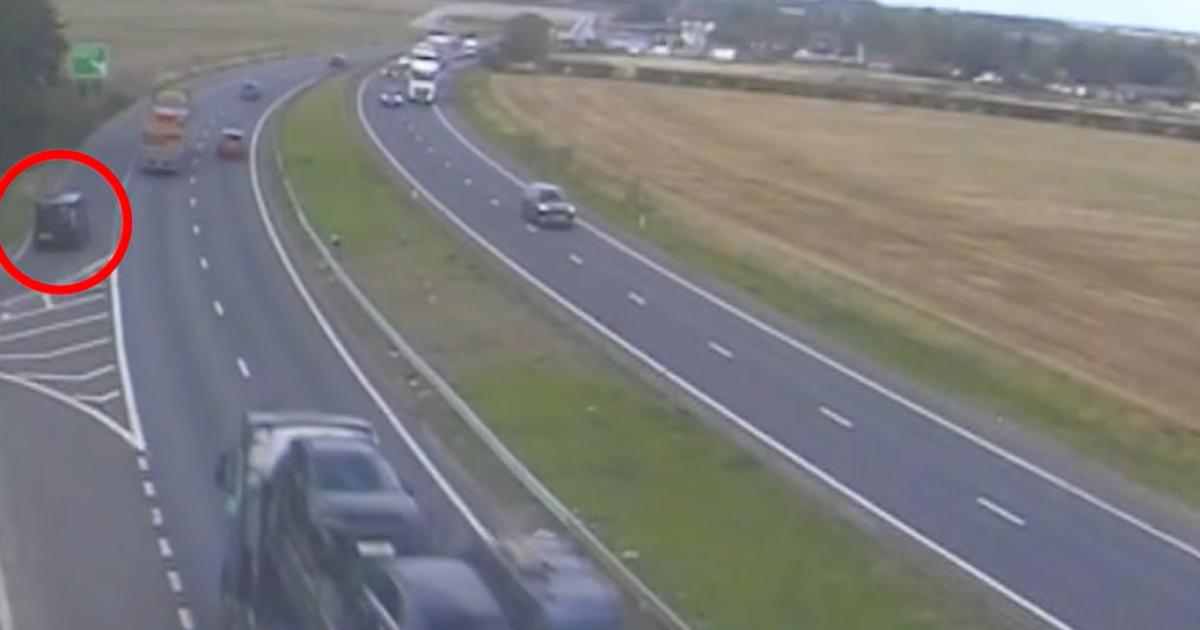
West Yorkshire Police has released a video and is appealing for the public’s help after a crash in the northbound carriage of the A1 for the B6474, between Wentbridge and Darrington, shortly before 2.20pm on Monday (September 21).

As reported by The Press yesterday, West Yorkshire Police said a blue VW Polo, which was joining the A1, collided with a northbound Scania HGV car transporter.


RECOMMENDED READING:

Advertisement

The driver of the Polo, a woman in her teens, suffered serious head injuries and remains in hospital in a serious condition.

“Officers would like to hear from the driver, occupants, or anyone who can assist in identifying a black van, possibly a Ford Transit, which was seen entering the northbound A1 from the B6474 a few moments prior to the collision,” said a spokesperson for the force in an update posted today.

They added that officers are keen to speak to the driver or occupants of the van, or anyone who can help identify it.

Advertisement

Anyone with information is asked to contact West Yorkshire Police on 101 or online at https://www.westyorkshire.police.uk/LiveChat, quoting reference 0858 21/9.

Source link

Advertisement
Continue Reading

NewsBeat

MSPs hear fears of ‘cuts upon cuts upon cuts’ ahead of Scottish Budget

Published

on

MSPs hear fears of ‘cuts upon cuts upon cuts’ ahead of Scottish Budget

Deputy First Minister and Finance Secretary Jenny Gilruth will unveil her tax and spending plans for 2027-28 on December 3, but Dave Moxham, deputy general secretary of the Scottish Trades Union Congress, said: “The cabinet secretary is not going to be able to manage this.”

Source link

Continue Reading

NewsBeat

Arriva to make major bus service changes in Darlington

Published

on

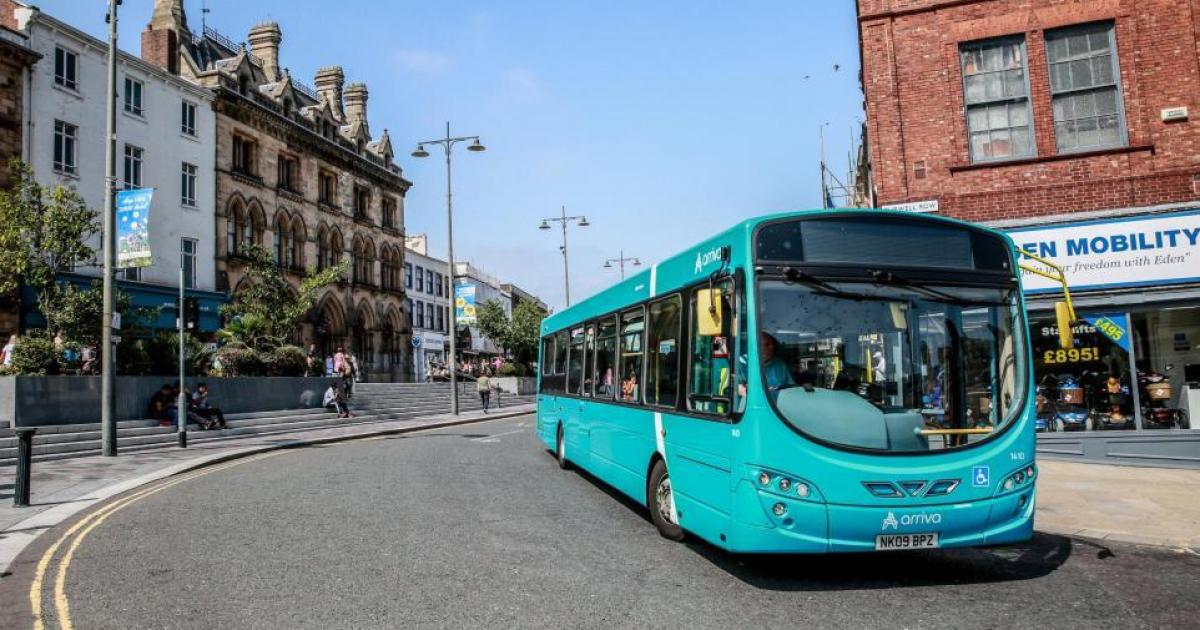
Arriva to make major bus service changes in Darlington

The changes, which come into effect on Sunday, September 27, follow a review of services supported by Tees Valley Combined Authority and customer feedback.

Operator Arriva said the updates would “provide new travel opportunities, improved connections and better links between communities” across the Darlington and Stockton areas.

Major changes to Darlington town services

Service 10 will be revised to focus on journeys between Darlington and Whinfield, while new Services 86 and 87 will provide dedicated links to Sadberge, Bishopton and Stillington.

Advertisement

Service 16 will be withdrawn and replaced by a revised Service 18, which Arriva says will provide “enhanced cross-town links and improved connections” across Darlington.

Darlington Arena, Mowden and West Park to gain new links

Service 17 will be extended to Darlington Arena via Neasham Road and Geneva Crescent.

The extension will create a direct link between Mowden and Darlington Rail Station.

A new Sunday daytime service will be introduced, alongside Monday to Saturday evening buses between Darlington Arena and the town centre, continuing to Mowden as Service 18A.

Advertisement

Service 18 is also being extended to West Park Hospital and Faverdale.

Under the new route, buses will travel via Abbey Road, Hummersknott, Mowden and Cockerton, providing links to Queen Elizabeth College, Darlington Rail Station, Cockerton Village, Faverdale’s retail and industrial areas and West Park Hospital.

The revised route will also create a new connection between Mowden, Cockerton Village and Faverdale.

Sunday daytime journeys and Monday to Saturday evening services will also be introduced, with evening buses operating as Service 18A.

Advertisement

Service 18A will run on Monday to Saturday evenings, linking Darlington Arena, the town centre, Mowden, West Park and Faverdale.

Earlier journeys and new connections

Passengers using Service 1 between Darlington and Tow Law will see two timetable changes.

The weekday morning journey currently departing Faverdale Grange at 6.13am will instead start at 6.12am from Westgate Crescent.

Meanwhile, the Monday to Saturday evening service from Tindale Crescent to Crook will leave five minutes earlier, departing at 10.37pm and arriving in Crook at 11.02pm.

Advertisement

The earlier arrival is intended to provide a connection onto the 11.05pm X46 service towards Durham.

There will also be minor timetable changes on Service 3 between Skerne Park and Hummersknott, including an adjustment to the afternoon school journey, which will leave Hummersknott at 3.09pm to better match school finishing times.

New options for Durham and Aycliffe passengers

Changes are also planned for Service 7 between Darlington and Durham.

Peak-time weekday journeys will be revised, while an additional morning service to New College in Durham will be introduced.

Advertisement

Late-night travellers will also benefit from the 11.30pm service from Durham being extended to Aycliffe Village.

On Service 8 between Darlington and Spennymoor, the 2.52pm journey from Spennymoor will depart at 2.57pm and operate five minutes later throughout.

Faverdale and Newton Aycliffe services revised

Passengers using Service 19 between Darlington and Faverdale will see the route revised to provide more direct access into Faverdale.

The service will no longer serve John Fowler Way.

Advertisement

One bus each hour will terminate at Aldi Warehouse, while another hourly journey will continue to Newton Aycliffe town centre via High Grange, West Park Hospital, Heighington, School Aycliffe and Newton Aycliffe Rail Halt.

New Services 86 and 87

New Services 86 and 87 will provide links between Darlington, communities around Stillington and Stockton.

The routes will replace the existing Service 10 between Darlington and Stillington and Service X86 between Stockton and Stillington.

The services will operate via Tornado Way, Sadberge, Little Stainton, Bishopton, Great Stainton during peak hours, Old Stillington, Stillington, Whitton, Redmarshall, Carlton, Letch Lane, North Tees Hospital and Durham Road before continuing to Stockton High Street.

Advertisement

Journeys will serve both ends of Stockton High Street, providing improved access to the Riverside Park area.


X66 timetable adjustment

Passengers travelling between Darlington and Middlesbrough on the X66 will see evening and Sunday journeys operate five minutes later than at present.

You can find more information on the Arriva website.

Advertisement

Source link

Continue Reading

NewsBeat

Arsenal FC: Jurrien Timber lifts lid on ‘miracle’ recovery from groin injury after missing training

Published

on

Arsenal FC: Jurrien Timber lifts lid on 'miracle' recovery from groin injury after missing training

It seems that cameo did damage, though, as Timber was subsequently ruled unfit to represent the Netherlands at the World Cup. He made a long-awaited return to the pitch last week as Arsenal won at Sunderland, before starting for the first time in six months as the Gunners visited Brighton.

Source link

Continue Reading

NewsBeat

Tories would prevent long-term jobless spending benefits on alcohol and cigarettes

Published

on

Kemi Badenoch

The Tories estimate the proposed changes would move about 350,000 claimants onto the lower rate of Universal Credit, saving around £538m a year.

Under the proposals, anyone fit to work would get six months on full benefits to find a job.

Every two years a claimant has previously worked would buy an extra year on the full rate of Universal Credit – but those who have not contributed enough would drop to a new “Subsistence Allowance”, worth 70% of the full rate.

The party said this would protect “those with a strong employment record”.

Advertisement

For example, a 58-year-old who has worked since leaving school but has been made redundant would keep the full allowance up to state pension age.

Claimants who are sick, disabled or already in work would also be exempt, with only those judged capable of work affected.

The Tories said loading the “Subsistence Allowance” onto a pre-paid card, with restrictions on what the money can be spent on, would ensure taxpayers’ money supports claimants with essentials like food.

Conservative leader Kemi Badenoch said the current system “where someone who can work chooses not to, and earns more benefits than someone in a job” was “unfair”.

Advertisement

“The best welfare is a well-paid job. So, we will be tough on those who exploit the system because the current system is unfair to workers, taxpayers and those who truly need support,” she said.

“Welfare must be a safety net for those who genuinely need it, not a lifestyle choice for those who can’t be bothered.”

However, Helen Barnard, director of policy and research at the anti-poverty charity Trussell, said the proposals were “deeply misguided”.

“Universal Credit already falls well short of what people need to afford the essentials like food and heating, forcing people across the UK to the doors of food banks,” she said.

Advertisement

“We see people’s health being damaged and their ability to find and maintain work undermined by the severe hardship so many are facing.”

Reform UK’s economy spokesman, Robert Jenrick, said the Tories had left record numbers on long-term benefits and the proposals “won’t even put a dent” in the welfare bill.

The Conservatives have already pledged to scrap Personal Independence Payment, the main disability benefit in England, Wales and Northern Ireland, for “low-level” mental health conditions to help cut the welfare bill.

The party also wants to make it harder to claim sickness benefits, which it said would mean more people are required to look for work.

Advertisement

Spending on benefits has ballooned in recent years and is forecast to rise to £408.6bn in 2030/31, according to figures from the Department for Work and Pensions.

Prime Minister Andy Burnham has insisted he will get the welfare bill down, for example by tackling but number of young people not in education, employment or training, but not through “crude cuts”.

Source link

Advertisement
Continue Reading

NewsBeat

North Yorkshire RAF base given Whitby’s highest honour

Published

on

North Yorkshire RAF base given Whitby’s highest honour

RAF Fylingdales in the North York Moors has been given the Honorary Freedom of the Town of Whitby in “appreciation of, and gratitude for, the distinguished service of RAF Fylingdales and, in recognition of its longstanding association with the town of Whitby and its contribution to the defence of the United Kingdom”.

RAF Fylingdales, which is one of the most recognisable structures in the North York Moors, provides a continuous ballistic missile early warning service to the UK and US Governments.

At an extraordinary meeting of Whitby Town Council on Tuesday, September 22, councillors approved the conferral of the honour.

Arrangements will be made with the station for a suitable civic and ceremonial event to take place next year to formally mark the recognition.

Advertisement

A spokesperson for Whitby Town Council said: “It is established civic and military custom for the Freedom of a Town to be conferred upon military formations or establishments, such as regiments, battalions, corps, or RAF stations.

“This recognises their collective service and enduring relationship with the town. Although individual personnel will change over time, the honour remains with the military unit or establishment to which it has been granted.

“In this instance, the proposed honour recognises RAF Fylingdales’ distinguished contribution to national defence and its longstanding association with Whitby, encompassing past, present, and future generations of personnel serving at the station.”

Holders of the title have the “right, privilege, honour, and distinction of marching through the town on ceremonial occasions with colours flying, bands playing, drums beating, and bayonets fixed”.

Advertisement

Town councillors recently granted the same title to the Corps of Royal Electrical and Mechanical Engineers (REME), and a special Freedom Parade was held to mark the occasion this summer.

The base, which is now an integral part of the UK’s Space Command and is described by the Royal Air Force as the United Kingdom’s primary military space sensor, has maintained a longstanding and close association with Whitby and the surrounding area since becoming operational in 1963.

A council report notes: “Generations of personnel serving at the Station and their families have lived, worked, and participated in the life of the local area, while RAF Fylingdales has maintained a visible presence within Whitby through its participation in civic, ceremonial, remembrance, and community events.

Raf Fylingdales. Google Maps

“The relationship represents an enduring connection between the town, the Royal Air Force, and the personnel who have served at RAF Fylingdales throughout its history.

Advertisement

“As an important Royal Air Force station situated on the North York Moors close to the town, it has formed part of the wider Whitby community for more than six decades.”

For almost 30 years, the RAF Station was particularly recognisable for its three large radomes, commonly known as the ‘golf balls’, which became a prominent landmark on the North York Moors.

These were replaced by the present Solid-State Phased Array Radar, whose distinctive pyramid structure became operational in 1992.

The radar provides 360-degree coverage and is capable of detecting and tracking objects thousands of miles into space.

Advertisement

RAF Fylingdales has maintained continuous operations for more than 60 years. Its primary operational role remains the provision of continuous ballistic missile early warning for the United Kingdom and its allies, providing vital warning and assessment of potential missile threats.

A Whitby Town Council report added: “The relationship between RAF Fylingdales and Whitby extends well beyond the geographical proximity of the station to the town.

“Since RAF Fylingdales became operational in 1963, successive generations of Service personnel, civilian employees, and their families have become part of the wider Whitby community, creating an association which has endured for more than six decades.

“Although the operational station is situated on the North York Moors, Whitby has long served as an important home and community for those associated with RAF Fylingdales, with service families having lived within and around the town.

Advertisement

“This physical presence has helped ensure that the relationship between the station and Whitby is not simply ceremonial but is reflected in the everyday life of the community.”

Source link

Advertisement
Continue Reading

NewsBeat

New homes approved despite fears it will overwhelm ‘very poor’ sewage network

Published

on

Cambridgeshire Live

The village alreay experiences the highest number of sewage spillages in the region

A council has approved plans for new homes despite fears from residents of increased sewage spills in a village already suffering from the worst spills in the area.

Advertisement

Huntingdonshire District Council’s development management committee met to decide an outline plan for up to 70 homes on land south of Blenheim Grove in Offord D’Arcy. Offord Cluny and Offord Darcy Parish Council had objected to the plans as they said wastewater treatment plants were already suffering from “capacity problems”.

Simon Young, a parish councillor, said figures from the Environment Agency show that Buckden has an average of 116 raw sewage discharges per year. He said this is 66 per cent higher than the second on the list – Kimbolton at 70 – and four times higher than the average across Huntingdonshire.

He said the villages have “long-been a supporter” of “appropriate developments” but that Anglian Water’s infrastructure is “not fit for purpose”. Anglian Water originally objected to the application in 2025, but this was because the applicant had not identified a suitable connection point to their network.

After two connection points were suggested, they removed their objection. They had always said there was “sufficient capacity” at the nearby Buckden Water Recycling Centre to accommodate the new homes after assessing dry weather flow.

Advertisement

Cllr Young said: “The Buckden Works was discharging raw sewage on August 13, when we all know there’d been no rain for weeks. And the ten hours of discharges in June came after recent light rain – or almost no rain for days. As far as I’m aware, Buckden and the Offords do not have their own microclimate such that it rains more here.”

Cllr Julie Kerr, of St Ives West, said she was “very concerned” by the “high numbers of spillages”.

The independent councillor said: “There really shouldn’t have been any and you have a very poor network by the sounds of it in a village that’s already struggling.”

Advertisement

Council officers advised that it would be “very difficult” to go against the advice of Anglian Water as they do not have the “technical expertise” to be able to defend their decision on appeal.

Cllr Tom Sanderson, of The Stukeleys, said they would not be able to use their decision to “deal with an existing issue”.

The Liberal Democrat councillor said: “Particularly as Anglian Water haven’t raised an objection now, they withdrew the objection they did have, I think it would be very difficult for us to object on that basis.”

Cllr Lara Davenport-Ray said she felt the benefits of the scheme did not outweigh the harms.

Advertisement

The Green councillor said: “If Anglian Water is saying that they have capacity and that there is no problem, then there is no condition that we can word to mitigate a problem that on paper doesn’t exist. Our officers cannot identify harm because they haven’t been shown that there is any harm that’s been created because their experts have failed to do so, but we can.”

The committee first reached an impasse with five votes for and against the application and three abstentions – but it was approved on the second attempt with six for, four against and three abstentions.


Source link

Advertisement
Continue Reading

NewsBeat

Can you lend me a hand? Researchers are developing wearable robotic limbs

Published

on

Can you lend me a hand? Researchers are developing wearable robotic limbs

How many times have you asked someone to hold open a door while carrying something, or fumbled with your front-door keys with your arms full of shopping? Wouldn’t it be great if you could give yourself the extra hand you need?

This is one of the goals of human movement augmentation, a new and growing area of research that aims to extend human capabilities beyond their natural limits. Within this field, researchers are developing and studying artificial limbs that can be added to the human body. These are known as supernumerary robotic limbs, or SRLs.

Current SRLs are largely experimental, but in the future wearable robotic limbs could help in a range of areas. They could have an impact in manufacturing, healthcare, space, music, arts, gaming and rehabilitation.


Advertisement

Technology that boosts people’s physical and mental abilities is no longer the preserve of science fiction. In this new series, we explore cutting-edge ways that human capabilities could be augmented now and in the near future – and the ethics of these innovations.


Unlike prostheses, SRLs increase the overall capacity of the human body, rather than restoring the capacity of a missing limb. If you’re familiar with the Marvel universe, think of Doctor Octopus – his mechanical arms are fictional examples of this type of technology.

In the real world, scientists have created extra arms a little like Doc Ock’s (but benign) as well as additional legs and fingers.

These extra limbs don’t look or behave like actual human arms or legs. They’re combinations of rigid materials, motors and actuators – mechanical devices that produce force. They can be worn like a backpack or watch.

Advertisement

So far, they tend to be controlled using another body part, most often the foot. By using pedals or shoes fitted with sensors, a person can generate forces or make movements with their feet that are then translated into movements of a robotic limb. Recent research has also investigated using the muscles around the ears for control.

Designers typically avoid using the arms and hands as controllers. This is to maximise the added capacity additional limbs provide.

The Third Thumb has been developed by body augmentation designer Dani Clode in collaboration with the University of Cambridge.

A common question is whether robotic limbs could be controlled by the brain. They aren’t yet, though scientists have explored the idea.

When the brain sends electrical signals through the nerves to control muscles, only certain frequencies of those signals actually convey information that instructs movement. There is essentially spare bandwidth in the body’s nervous signalling network.

Advertisement

Some researchers have tried to see if this spare capacity can be harnessed – independently of actual muscle movement and non-invasively – to control SRLs.

Although promising, this approach has had a low success rate. Its complexity and the long calibration and training period needed for users probably makes it unsuitable.

Two arms good, four arms better?

Supernumerary robotic limbs are designed to provide something additional to the natural body. They should work alongside our natural limbs, without limiting their natural functions. The goal isn’t to create autonomous entities that can do a job in place of someone’s body. Rather, it’s to give people additional tools they can control and use.

For example, you might one day wear a backpack with two robotic arms attached and use these to keep a ceiling panel in place while you screw it to the ceiling. Or you could have a belt with two extra legs to keep you stable in an unnatural position, leaving your hands free to fix something. Or you could have a sixth finger, which could allow you to open a bottle with one hand.

Advertisement

These examples might seem science fiction, but they’ve all been realised and tested in the lab.

Industrial uses are beginning to be explored. A future surgeon might operate four surgical tools at the same time, for instance. Or a rescue operator could immediately extract an earthquake victim while lifting debris, without needing to wait for support.

An experimental four-armed surgical system, with two additional arms controlled with foot pedals.

But for now, such uses remain ambitions. This field is still largely experimental, and the performance of SRLs is limited. Existing devices are often heavy, bulky and difficult to wear, and their speed is usually limited for safety.

Learning to use them well also takes a lot of effort, especially as current control interfaces tend to be complex and unintuitive. That said, studies of how people respond to using supernumerary robotic limbs have found that they can learn the basics of controlling a third arm or sixth finger in less than an hour.

Advertisement

Feedback plays a key role in this learning process. Vibrating motors and electrodes that provide a small current can help people “feel” a robotic limb they’re controlling.

This is crucial for motor learning: when you try to play tennis or the piano, your haptic senses play an important role in allowing your brain to learn the correct movement. The same applies with a robotic limb. Sensory feedback is also essential for getting the brain to treat the SRL like it is part of the natural body.

Despite the challenges of learning how to use them, research shows that people become more adept at using extra robotic limbs over time, and that the brain seems to adapt and incorporate these extra limbs to the point that it feels natural having them. This suggests there’s real future potential in the field.

In the meantime, it’s important to raise awareness about human movement augmentation and SRLs specifically. Most people have no idea what human augmentation means or that these devices exist.

Advertisement

Now that you know that they do, what would you use these limbs for?

Source link

Advertisement
Continue Reading

NewsBeat

Robin Das: Essex cricketer charged with two counts of rape

Published

on

Robin Das wearing a black cricket helmet, carrying a cricket bat and wearing a purple top

Essex cricketer Robin Das has been charged with two counts of rape.

The 24-year-old will appear at Inner London Crown Court on Friday, 9 October after he was charged on 23 July.

Das was arrested on 27 August last year following reports of a woman being raped in Brixton in March 2024.

The Metropolitan Police said in a statement: “Robin Das of Queens Road, Waltham Forest, was charged on 23 July 2026 with two counts of rape.

Advertisement

“The charges follow his arrest on 27 August 2025 following reports of a woman being raped in Brixton on 30 March 2024. The woman continues to be supported by specialist officers.”

Das, a top-order batter, has made 60 appearances for Essex and last appeared for the club in a One-Day Cup match against Middlesex on 21 July, his only senior appearance in the 2026 season.

Essex have confirmed that he has been suspended since his arrest, two days after his last appearance for the club.

Essex said in a statement: “Essex County Cricket Club can confirm that a male member of the playing staff, currently under contract with the club, recently appeared in court in relation to an incident that took place outside club activities.

Advertisement

“Throughout, the club has remained in contact with the ECB, PCA, the Cricket Regulator and the player with regard to the matter, which included an immediate and ongoing suspension. The club will continue to follow all appropriate legal processes and guidance.

“As a club we have strict safeguarding and HR procedures in place, and all employees of Essex County Cricket Club are required to meet the highest standards of professional conduct at all times.

“As legal proceedings are in progress, the club are unable to make any further comment at this time.”

Das made his debut for Essex in 2020 and has made nine first-class appearances for the county, along with playing 29 games in 50-over cricket and 24 matches in T20s during his career. Two of the T20 appearances were for Dhaka Dominators in the Bangladesh Premier League.

Advertisement

Source link

Continue Reading

Trending

Copyright © 2025