Kent County Council director of public health Dr Anjan Ghosh said the spread is linked to the movement of people away from Kent.
He told a briefing three scenarios were being looked at over the next four weeks, with the most likely being that students who have travelled away from Kent will “incubate” the bug and there could be “household” cases elsewhere.
He added that these cases would be “containable”.
Advertisement
What is meningitis? The key symptoms to look out for
It comes as the UK Health Security Agency (UKHSA) said the number of cases linked to the outbreak has reached 29, up from 27 previously.
Some 18 cases have been confirmed, alongside a further 11 “probable cases” – all with links to Kent, the UKHSA said.
Dr Ghosh told the briefing that three “rough” scenarios are being modelled for the next four weeks, as “that’s the time it takes for this whole thing really subside”.
The first scenario is that the outbreak remains contained in Kent.
Advertisement
“Second scenario is that there are people who’ve left, they’ve gone off campus, and many of them don’t stay in Kent, they go and stay elsewhere,” Dr Ghosh said.
“They were incubating when they left, and then they become cases, and there are small household, sporadic clusters outside of Kent.”
He stressed these cases would be “containable”.
The third scenario, described by Dr Ghosh as the “worst-case scenario”, would result in another cluster outside of Kent.
Advertisement
However, he said this is “highly unlikely”, with the second scenario “most likely to be the case”.
How to check your vaccination record on the NHS app
Go to The NHS App
Open the GP Health Record tab – read and click through the security warning
Open the Immunisations tab
Scroll down through your list of vaccines and related information
If you do not see a meningitis vaccination, that does not mean you have not already had one. There are a number of reasons why the NHS app may not have all your immunisations records, including:
Old records – vaccinations from many years ago may not be recorded on the app
Overseas jabs – vaccinations received abroad are not automatically added to the app
GP record gap – if your doctor has not updated their records, there will be a gap in the app
Access rights – you may need to ask your GP to enable your ‘detailed coded record’
Your GP or a pharmacist will be able to see your full NHS Summary Care Records (SCR), so if in doubt speak to one of them.
Meningitis symptoms
a high temperature
cold hands and feet
vomiting
confusion
breathing quickly
muscle and joint pain
pale, mottled or blotchy skin (this may be harder to see on brown or black skin)
spots or a rash (this may be harder to see on brown or black skin)
headache
a stiff neck
a dislike of bright lights
being very sleepy or difficult to wake
fits (seizures)
And in babies:
refuse feeds
be irritable
have a high-pitched cry
have a stiff body or be floppy or unresponsive
have a bulging soft spot on the top of their head
Different types of meningitis
Viral
Viral meningitis is the most common form. It is rarely life-threatening but can still cause serious illness. It tends to resolve on its own, though can leave infected feeling very unwell during recovery.
Mollaret’s meningitis is a rare and recurring form of the disease. Mollaret’s is a chronic condition, most often linked to infection with the Herpes Simplex virus type 2.
Bacterial
Bacterial meningitis is a serious and fast-moving condition that requires urgent hospital admission and prompt treatment with antibiotics to prevent life-threatening complications.
Meningococcal disease. This term covers two major illnesses, meningitis and septicaemia (blood poisoning), which can occur independently but more often together, making it especially dangerous.
Pneumococcal meningitis is a life-threatening infection that causes inflammation of the protective layers around the brain and spinal cord, it requires swift medical intervention.
TB meningitis is caused by the Mycobacterium tuberculosis bacteria. This form of the disease is linked to tuberculosis and can be difficult to diagnose due to its gradual onset.
Group B streptococcal (GBS) meningitis is the leading cause of meningitis in babies, and can cause septicaemia and pneumonia, making it a significant concern in newborns.
Neonatal meningitis affects newborns and is divided into “early onset” and “late onset”, depending on how soon after birth the condition develops.
E. coli meningitis is the second most common bacterial cause of meningitis in newborns. E. coli meningitis is a serious condition primarily affecting the very young.
Hib meningitis is like pneumococcal meningitis, and is a life-threatening disease causing inflammation around the brain and spinal cord – though it has become much less common due to vaccination.
Listeria meningitis is caused by Listeria bacteria found in certain foods like unpasteurised soft cheeses, pâté, and shellfish. This form can lead to potentially fatal complications.
Other
Fungal meningitis is a very rare form of the disease and shares similar symptoms but typically develops more gradually rather than suddenly.
Chemical meningitis is unlike most other forms because it is not caused by an infection. Instead, it is triggered by exposure to a particular substance or chemical that causes inflammation.
Parasitic meningitis is extremely rare and occurs when certain parasites infect and inflame the meninges, the protective membranes surrounding the brain and spinal cord.
Cryptococcal meningitis is caused by a fungus found in soil and bird droppings, and is most commonly seen in people with weakened immune systems.
Non-infectious meningitis. Not all meningitis is the result of an infection; this variety is triggered by non-infectious causes like certain medications or other medical conditions.
Malignant/carcinomatous meningitis is a serious condition when cancer cells spread to the meninges. It is associated with advanced cancer and presents significant treatment challenges.
“John Swinney has repeatedly warned that he will push for another referendum if he wins a majority, yet Labour and the Liberal Democrats are complacent on the issue, while the fake Unionists of Reform are fielding pro-independence candidates and providing the Nationalists with a roadmap to breaking up the UK.
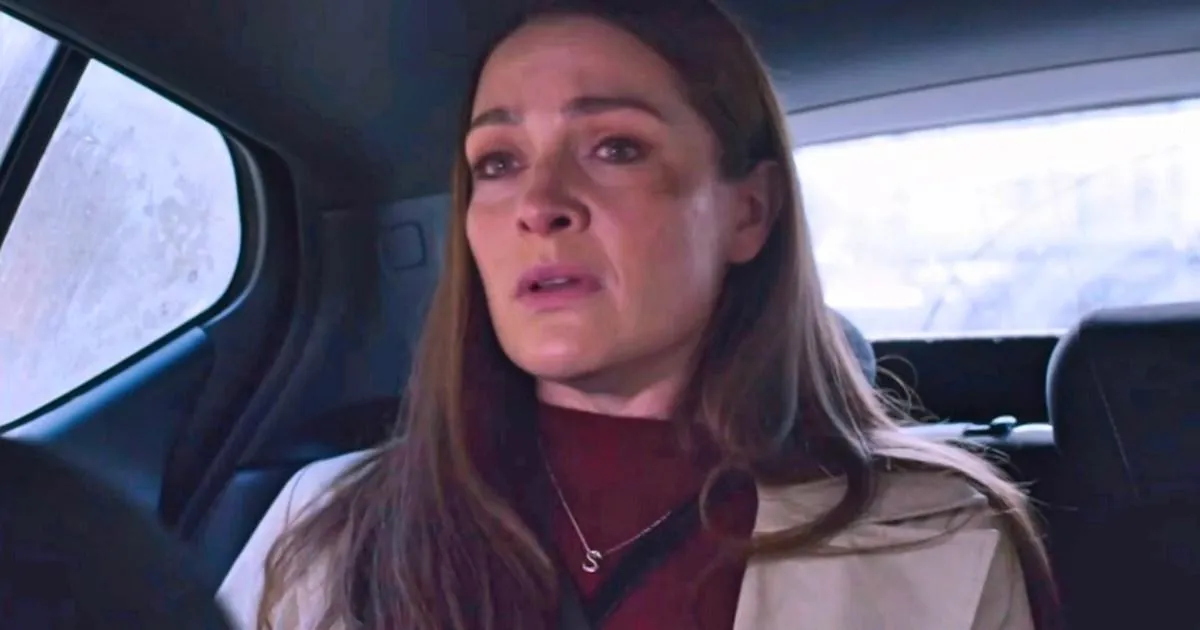
Sienna Blake’s crimes caught up with her (Picture: Lime Pictures)
Hollyoaks spoilers follow for Tuesday’s (May 5) episode that is now available to view on Channel 4 streaming. The episode in question will air on E4 on at 7pm.
Sienna Blake’s (Anna Passey) sins finally caught up with her as her horrified loved ones made the devastating decision to report her to the police after a series of grisly discoveries.
The much-loved show favourite, as viewers know, is no angel, having always skirted the line between light and darkness due to a difficult upbringing at the hands of patriarch Patrick (Jeremy Sheffield).
But despite her past misgivings, she has spent the better part of a decade attempting to make amends for her dastardly deeds, becoming a well-liked and valued resident of the village, who has won the heart of just about everyone she crossed paths with in recent years.
Following the latter incident, Cleo McQueen (Nadine Mulkerrin), who was diagnosed with postpartum psychosis just months ago, was appalled to discover that not only did Sienna claim Clare’s life but that she lied about it, claiming Cleo did it.
Sienna has been tampering with Cleo’s medication and using her mental health against her for weeks, in the hopes of making her believe that she needs to rely on Sienna for everything, but Cleo worked out what she was up to and confronted her this week.
After a showdown, Sienna admitted to her crimes, telling Cleo that she desperately wants to go back to the way things were. Cleo, however, made it clear that such a thing wasn’t an option – at least not without her taking accountability for her actions.
Advertisement
Sienna tried to make Cleo see that they could have a future together (Picture: Lime Pictures)
Working out that Sienna also killed Ethan, Cleo urged her to go to the police, but Sienna managed to convince her to come to the allotment first so that she could complete the floral arrangements for Ste and Rex’s upcoming wedding.
In dramatic scenes, Sienna claimed that Cleo doesn’t love her any more and a grim showdown ensued – with Cleo falling to the floor and hitting her head.
Warren Fox (Jamie Lomas), meanwhile, uncovered the truth about Clare’s ‘demise’, informing Dodger Savage (Danny Mac) that Sienna was the one to blame – not Sophie or Cleo.
Don’t miss a Soaps scoop! Add us as a Preferred Source
As a loyal Metro Soaps reader, we want to make sure you never miss our articles when searching for stories. We have all the latest soaps news, spoilers, videos, and interviews, with a vibrant community of highly engaged readers.
Click the button below and tick Metro.co.uk to ensure you see stories from us first in Google Search.
Now you can ensure you never miss a story from the Soaps team
Sienna was taken away by the police (Picture: Lime Pictures)
When Dodger arrived at the allotment and called for back up, Sienna fled the scene, hoping Warren would help her get out of dodge.
Instead, enraged Warren drove her right back to the village, where she was taken away by the police in front of everyone. Warren told her that he’d see her ‘in hell’ but Sienna made it quite clear that she’ll see him before that, hinting that she’s got unfinished business that needs dealing with.
The question is: have we actually seen the last of the almighty Sienna Blake? Or will she be staging a comeback in the future?
Advertisement
Hollyoaks streams Mondays to Wednesdays from 6am on Channel 4’s streaming platform, or catch episodes on TV at 7pm on E4.
If you’ve got a soap or TV story, video or pictures get in touch by emailing us soaps@metro.co.uk – we’d love to hear from you.
Footage circulating on social media appears to show a brawl between Armagh and Down supporters
14:20, 05 May 2026Updated 14:25, 05 May 2026
Down v Armagh fans involved in heated brawl
Tensions boiled over between Down and Armagh fans ahead of the Ulster Senior Football Championship semi-final in Clones on Sunday, with unsavoury scenes marring the build-up to the match.
Advertisement
Video footage circulating on social media appears to capture a group of supporters from both counties engaged in a violent altercation near a bus in what seems to be a drop-off point for match-goers.
An Garda Síochána confirmed to the Irish Mirror that they “had received no reports of any incidents,” relating to the Ulster semi-final encounter.
On the pitch, Armagh dominated their fierce rivals, cruising into the Ulster final with a commanding 3-33 to 0-14 victory, reports the Irish Mirror. Kieran McGeeney’s side will now face Monaghan as they bid to lift the Anglo Celt Cup for the first time since 2008.
Polls open at 7am across West Lothian and will close at 10am on Thursday. Registered voters should have received their poll card advising where to vote.
Voters are reminded that they do NOT need ID to vote in the Holyrood elections this Thursday.
Advertisement
Polls open at 7am across West Lothian and will close at 10am on Thursday. Registered voters should have received their poll card advising where to vote.
There are now three constituencies covering the county. A new Bathgate constituency covers the northern half alongside the existing Almond Valley constituency around Livingston. The town of Linlithgow has been incorporated into a new East Falkirk and Linlithgow constituency.
The Local Democracy Reporting Service will cover the two counts being held in Livingston and also the Linlithgow one from Falkirk.
Registered postal voters cannot be issued with ballot papers at the polling station, but they can return their completed postal ballot pack to their polling station on polling day by 10pm.
Alternatively, they can hand deliver their postal vote to polling stations in the constituency or to West Lothian Civic Centre in Livingston.
The Scottish elections use a proportional system of voting which means that you vote for both a local constituency MSP and for additional regional MSPs.
This means that when you arrive at your designated polling station, you will receive two ballot papers – a constituency ballot paper and a regional ballot paper.
Advertisement
Your lilac-coloured ballot paper is for your local constituency and will contain a list of candidates running to be your area’s Member of Scottish Parliament (MSP).
Your peach-coloured ballot paper will be used to elect MSPs for your region. On this second ballot paper instead of voting for a specific candidate, you will be asked to cast a vote for a political party.
You must indicate your preferred choice on each paper by putting a cross (X) in the box next to your preferred candidate or party.
Advertisement
If you put a cross (X) next to more than one box on the ballot paper, your vote will be considered a ‘spoilt ballot’ and will not be counted. Once you have completed your ballot papers, fold and put them into the appropriate ballot box – there will be one ballot box for the constituency vote and another for the regional vote.
Staff in the polling places will be available to provide any support you may need. Arrangements will also be in place in polling stations to assist those with accessibility requirements.
Arrangements are available in the polling stations for voters who need help with reading the ballot paper or marking it. No photos can be taken inside the polling station.
MacDonald had thrown a phone at his victim’s face, which injured her lip and chin.
A man has been jailed after harassing and assaulting his former partner. Ryan MacDonald, 29, of Fen View, Stanground, Peterborough, threatened to smash the victim’s windows and doors on March 21, 2025.
Advertisement
The victim reported the incident to the police but two days later, she withdrew the complaint because she felt she and MacDonald, who she had a child with, had been getting on better. Three months later, MacDonald started messaging her at work and said he was outside her home.
Even though he was told to leave her alone, he had been waiting nearby her home when she finished work. The victim went with MacDonald to a park out of fear where they had an argument.
A few days later, the victim was collecting her child from school when MacDonald appeared and started shouting at her. He grabbed her phone and threw it at her face, which injured her lip and chin.
Over the course of around a week, MacDonald followed the victim and bombarded her with calls, text messages, and unannounced visits before he was arrested. While he was on bail, he made several calls to the victim to get her to withdraw the charges.
Advertisement
This led to him being arrested again. On Wednesday, April 29, at Huntingdon Law Courts, MacDonald was sentenced to two years and four months in jail after he pleaded guilty to harassment involving fear of violence, actual bodily harm (ABH), and intimidating a witness or juror.
Counts of stalking involving fear of violence, threats to damage or destroy property, threats to kill, and two counts of assault by beating were ordered to lie on file.
DC Isabelle Wilding, who investigated, said: “MacDonald’s behaviour was persistent, intimidating and left the victim living in fear. This sentence reflects the seriousness of his actions and sends a clear message that harassment and abuse will not be tolerated.
“We take reports of stalking and harassment extremely seriously and would encourage anyone experiencing similar behaviour to come forward and seek support.”
Advertisement
To get more news and top stories delivered directly to your phone, join our new WhatsApp community.Click this linkto receive your daily dose of CambridgeshireLive content.
We also treat our community members to special offers, promotions, and adverts from us and our partners. If you don’t like our community, you can check out any time you like. If you’re curious, you can read ourPrivacy Notice.
Ask Jeeves was among the first internet search engines to launch back in 1996, two years before Google (in 1998).
Visitors to the search engine were greeted with the iconic butler character, known as ‘Jeeves’.
Ask Jeeves was rebranded in February 2006, changing its name to Ask.com.
Ask.com shuts down after 30 years
Now, after 30 years, Ask.com has shut down (effective as of May 1, 2026).
Advertisement
The website says: “Every great search must come to an end.
“As IAC continues to sharpen its focus, we have made the decision to discontinue our search business, which includes Ask.com.
“After 30 years of answering the world’s questions, Ask.com officially closed on May 1, 2026.
“We are deeply grateful to the brilliant engineers, designers, and teams who built and supported Ask over the decades.
Advertisement
“And to you—the millions of users who turned to us for answers in a rapidly changing world—thank you for your endless curiosity, your loyalty, and your trust.
“Jeeves’ spirit endures.”
Ask.com shut down on May 1, 2026. (Image: Ask.com)
“End of an era” – Internet users saddened by Jeeves’ “retirement”
The closure of Ask.com has hit users hard, with some labelling it the “end of an era”.
One person, posting on the Reddit group r/technology, said: “Ask Jeeves. Such an OG. Enjoy retirement.”
Advertisement
Another added: “Oh man. End of an era.”
A third user commented: “It’s actually quite amazing the staying power some of these early internet giants despite having fallen out of relevance decades ago. RIP, Jeeves.”
This person posted: “This was the first search engine I ever used when I first came online. Thank you for your service.”
While another fan wrote: “Nooooo, not Jeeves. What’s next, Alta Vista?”
Advertisement
Do you remember Ask Jeeves? Will you miss the search engine now that it’s shut down? Let us know in the poll above or in the comments below.
If you saw me at a work meeting, out with friends, or honestly anywhere in the wild, I almost always have my arms crossed. With that being my default stance, you would think I’m a miserable person with a bad attitude. But that is far from the truth (most of the time).
I’m crossing my arms for two reasons: 1) I’m probably cold, and 2) it feels like I’m giving myself a hug, and it feels comforting.
As it turns out, crossed arms is the most commonly misunderstood body language sign, according to experts.
“Most of the time, body language reading is quite accurate; we have to remember it’s only a part of the communication, like tone, choice of words, or, in some cases, touch,” as Stephanie Pappas, a licensed marriage and family therapist, told HuffPost.
Advertisement
According to Pappas, our reason for judging a person for their body language is evolutionary. Body language was the prominent form of communication and a major survival skill for our ancestors thousands of years ago, she explains. “We were wired to be attuned to those in our tribe, or potential threats, by the way they moved and expressed themselves around us.”
PixelVista via Getty Images
Professional young woman with glasses standing arms crossed in a bright home office, exuding confidence and competence
So while we don’t have to rely as much on body language for communication, our brains might still read body language and create a story.
Turns out, crossed arms aren’t the only thing people are getting wrong. Here’s what experts say about the most overlooked body language signs.
Advertisement
Here’s what crossed arms actually mean…
While people read crossed arms as being closed off or rude, it’s actually a self-soothing technique for most people, says Pappas. “It’s so easy to cross your arms when you’re feeling stressed or overwhelmed as a way to try to regulate yourself.”
“The biggest mistake is that we judge too quickly,” Linda Clemons, body language expert and author of HUSH: How to Radiate Power and Confidence Without Saying a Word told HuffPost. “Say my arms are crossed. You think, ‘this person is cold, closed off’ and you walk away. Two seconds later, I reach for my sweater. I was literally cold!”
“But you weren’t there to see it, because you judged so quickly.”
Advertisement
In other words, my reasons for crossing my arms are totally valid. And so are yours.
It’s not just crossed arms – people are frequently confused by these body language signs, too.
While Pappas and Clemons agree that crossed arms is the top confusing body language sign, eye contact and even smiles leave a lot of room for interpretation.
“Often, eye contact is given a lot of weight for being the signal that shows attention and respect for the other person,” Pappas said. However, reasons for not maintaining eye contact can go beyond rudeness or indifference. For example, in some cultures, it’s considered disrespectful to make eye contact; some people who are neurodivergent also have difficulty making eye contact because it feels overwhelming or uncomfortable.
Advertisement
Another confusing body language is the smile, according to Clemons. Sometimes people give what Clemon called “a pageant smile,” (AKA a fake smile) because they feel they should be acting like they’re happy.
“People who are truly happy for you, their cheeks will be elevated, and their eyes will be wide,” Clemons said. But with pageant smiles, they’re only using the muscles in their lower faces.
This is how to get better at reading body language cues.
Body language is only a piece of the communication puzzle, says Pappas. “It needs to be taken into consideration with context in order to create as much accuracy as possible.” Here are some tips to better read body language.
Advertisement
Understand Baseline Behaviour
If you know someone closely, you’ll get a full picture of their mood, personality, and communication style, otherwise known as baseline behaviour, Pappas notes. For example. Say you have a friend who often uses their hands when telling stories, suddenly puts their hands on their lap; That may mean a shift in their emotions or mood.
Understanding the person’s baseline was necessary to interpret their non-verbal cues in that context, adds Clemons. “Say we’re at a funeral, we’re paying our respects. Everyone’s expression is very somber, but one person is smiling,” she describes. “It’s the wrong non-verbal cue for this context, so you probably think something is very off with this person. But then maybe someone tells you this person always smiles when they are nervous, or overwhelmed.”
Knowing a person’s reactions to situations can offer better clarity on how to proceed, too.
Advertisement
Look At Behaviours In Clusters
Another thing to pay attention to is to look at behaviour in clusters, according to Clemons. “If the arms are crossed, the tone of voice is dismissive, and the person’s shoulders or feet are turned away, it’s more likely that they really don’t want to be talking to you.”
Congruency is also key, she adds. The words people speak should match their tone and body language. “If I say to my spouse, ‘I want to make this marriage work,’ but I fold my arms and my tone of voice is not congruent with my words, I may be headed out the door,” Clemons said.
Understand Intuition Versus Anxiety
Advertisement
One of the best things you can do when reading body language is learning to distinguish between intuition and anxiety, says Pappas. When you’re overly focused on analysing someone’s signals, you can drop out of the parts of the brain that help connect and communicate (and spiral into anxious storytelling instead).
“Anxiety might tell you, ‘Look at the way they’re standing there, they’re so angry with you, what did you do now?’” Pappas explained. “Whereas intuition is usually an unconscious, nonjudgmental piece of information that helps you make productive decisions.”
In other words, anxiety builds a dramatic narrative while intuition delivers a quiet, neutral signal. The latter is worth listening to, especially in situations where safety is a concern. “Paying attention to your gut feeling, especially in a situation where safety may be a concern, is a skill that our bodies have honed to keep us alive,” Pappas said.
Emergency services raced to the property in Haslingden, Lancashire, where a car had left the carriageway and collided with the side of a house, killing a man and injuring two teens
A man has been killed and two teenage girls are severely injured after a car ploughed into a house in Lancashire.
Advertisement
Emergency services raced to Helmshore Road in Haslingden on Monday night, with police arriving to find a VW Golf which had left the carriageway and smashed into the side of the property.
Cruises are sold as floating holidays, but they are also useful for understanding public health. Cruise ships are carefully designed places where many people live, eat, relax and move through the same shared spaces for days at a time. They show how easily illness can spread when people are packed into a single interconnected environment.
Think of a cruise ship as a temporary city at sea. It has restaurants, theatres, lifts, cabins, kitchens, water systems and indoor gathering spaces. That is great for convenience, but it also means that once an infection gets on board, it can move through the ship in ways that are hard to stop.
The Diamond Princess outbreak is perhaps the best-known example. During the 2020 COVID outbreak, 619 passengers and crew tested positive for the disease. Researchers found that the ship conditions made the novel coronavirus spread more easily. Their modelling suggested that public health measures, such as isolation and quarantine, prevented many more cases, but it also showed that an earlier response would have further limited the outbreak.
Norovirus (the so-called vomiting bug) is the infection most closely linked to cruise ships. In a review of previously published studies, researchers found 127 reports of norovirus outbreaks on cruise ships, with many linked to contaminated food, contaminated surfaces and person-to-person spread. A more recent report from the US also showed that norovirus can spread very rapidly from person to person on a cruise ship.
Advertisement
This helps explain why ships such as Celebrity Mercury, Explorer of the Seas and Carnival Triumph have become familiar names in outbreak reports. These were not unusual in some special way; they were simply settings where shared dining, close contact and frequent movement through common areas allowed infection to spread fast.
Food service plays a big part in this risk. Buffet-style dining, shared utensils and many people touching the same surfaces can make it easier for stomach bugs to spread. If someone is infected but does not yet feel sick, they may still contaminate food or surfaces before they realise they are unwell.
Buffet dining can help stomach bugs spread. Hapsari Ayu/Shutterstock.com
The ship’s design adds to the problem. People spend time together in dining rooms, bars, lifts, corridors, theatres and spa areas. Crew members also live and work in the same environment, often in shared accommodation, so illness can move through the ship from passenger to passenger or between passengers and crew.
Ventilation also plays a crucial role. Cruise ships are not closed boxes, but they do rely heavily on indoor spaces where people spend long periods together. Studies into cruise ship air quality have shown that illness can spread more easily in crowded, enclosed spaces, like cabins, restaurants and entertainment venues, if the ventilation system is not up to scratch. Things like adequate fresh air circulation, specialist filters and air-purifying technology all play a role in keeping passengers safe.
Advertisement
Legionnaires’ disease (a serious lung disease caused by bacteria) shows a different kind of risk. It is not usually spread directly from one person to another. Instead, people can get infected by breathing in tiny droplets from contaminated water systems, hot tubs or showers.
A well-known outbreak among cruise passengers was linked to a whirlpool spa, and recent reports from the US Centers for Disease Control and Prevention have described other cruise-associated legionnaires’ disease outbreaks linked to ship water systems.
Age also matters. Cruise holidays are especially popular with older adults, and many passengers have long-term health conditions that make infections more serious. A stomach bug on a cruise can lead to dehydration, and a respiratory infection can lead to pneumonia or hospital care.
Cruise ships do have medical facilities, but they are limited compared with land-based hospitals. They are built to give first aid, basic treatment and short-term care, not to manage a fast-moving outbreak on a large scale. That is why cruise health depends so much on early reporting, quick isolation and strong cleaning practices.
Advertisement
Other infections such as respiratory viruses, including influenza, can spread in the same crowded indoor settings, and stomach bugs can spread through food, hands and shared surfaces. COVID and flu exploit enclosed air and crowds. Norovirus loves buffets and surfaces. Legionnaires’ targets water systems, which ships can’t easily sterilise. Hantavirus (a severe respiratory illness spread by rodents) outbreaks on ships are rare. However, as recent news of the deaths on the MV Hondius attests, germs in close quarters find it much easier to spread.
How to limit your risk
As an epidemiologist, I have seen many outbreaks in hospitals, schools and even flights. For travellers, the best protection starts before boarding. It is sensible to check whether the cruise line has clear illness reporting, cleaning and isolation policies. Make sure your routine vaccines are up to date. And for older adults, pregnant women and anyone with health problems, consult your GP before travelling. Also, ensure your travel insurance covers illness-related disruptions.
Once on board, washing your hands with soap and water is the most useful step for preventing stomach bugs like norovirus. Hand sanitiser can help, but it does not replace soap and water. If you start to feel unwell, the safest move is to avoid buffets and crowded shared spaces and report symptoms early rather than trying to carry on as normal.
Cruise lines have improved their hygiene and outbreak response systems over time, and many voyages pass without incident. But the basic structure of cruise travel still creates the same challenge: many people sharing the same meals, the same air, the same water systems and the same common spaces. That is why outbreaks keep returning, and why cruise ships remain a useful reminder that public health is shaped as much by design as by germs.
An expert has shared their spring gardening tips to create a blossoming garden in time for summer
Households in the UK are being urged to plant one specific flower in their gardens this May to get a beautiful display in time for summer. With the weather picking up across the country, May is the prime time to head outside and get your spring gardening jobs done.
Advertisement
According to a wildlife and gardening expert, May is all about keeping on top of your garden maintenance, intentional planting, and supporting wildlife during one of the busiest times of the year in the gardening calendar.
James Ewens at Green Feathers has revealed the essential jobs to tick off this month for a thriving summer garden, including the best time to plant sunflowers.
Get MEN Premium now for just £1 HERE – or get involved in our WhatsApp group by clicking HERE. And don’t miss out on our brilliant selection of newsletters HERE
“Spring is in full swing, and now is the perfect time to enjoy our gardens and start making the most of them – whether for relaxing, just pottering around, being green-fingered, hosting family and friends, bird watching, or doing some spring summer gardening,” explains James.
Advertisement
“May is when gardens really come into their own,” explains James. “Everything is growing fast, lawns need regular care, and it’s a fantastic time to plant flowers and vegetables that will reward you throughout the summer months.”
James explains that being proactive in May doesn’t require an exhaustive list, a few simple jobs can support our gardens and the wildlife in it: “You don’t need to overwhelm yourself with jobs in May, with a handful of key tasks – like watering, planting, mowing and supporting outdoor creatures, you and your wildlife friends, are all set for a thriving summer outside.”
What to plant in May
According to James, May is one of the best months for planting as the risk of frost is slim and the soil is starting to warm up. May is the perfect time to fill beds, borders, and containers with colourful summer flowers and start growing your own food.
Advertisement
“May is ideal for creating edible gardens; you can sow vegetables outdoors like beetroot, carrots, lettuce, potatoes, and spinach just in perfect timing for BBQ season – cheers to that! Don’t forget seasoning, May is ideal to grow herbs like basil, parsley and chives,” he says.
“Sunflower season is upon us – thank goodness – and May is the best time to plant sunflowers. Sunflowers are one of my favourites, they’re not only gorgeous, but beneficial for birds and pollinators, too.
“Start them in plants to protect them from pesky slugs, and once they’re a sturdy 30cm, they can be in the ground ready to pop out in August time.”
Looking after wildlife
May is critically important for wildlife due to warmer temperatures, a key time for pollinators, and many birds nesting and breeding.
“Keep bird feeders replenished with nutritious food like high-fat suet balls and sunflower seeds, and ensure birds have a consistent supply of replenished water to bathe and hydrate,” advises James.
“Bonus points if you have a nest box for bird populations, providing bird families with a safe haven in your garden is not only crucial for their survival, but extremely rewarding.
“If you need to tidy your garden, focus on light maintenance instead: tying in climbing plants, removing dead stems, or trimming small areas where you are certain no nests are present to ensure you’re not disrupting or harming wildlife.
Advertisement
“Supporting wildlife during nesting season helps maintain healthy bird populations and keeps gardens full of life and activity.”
No Mow May
No Mow May is a nationwide initiative that urges homeowners to pause mowing for the entire month of May. It is an easy but potent way to support wildlife and give nature a few weeks of breathing space to thrive.
“When you stop mowing, wildflowers like clover, daisies and dandelions are free to bloom, providing essential food for bees, butterflies and other pollinators that are considered endangered in the current climate,” James explains.
“To make your lawn even more wildlife-friendly, you can consider planting more wildflowers, starting by gently raking the lawn to remove any dead grass or cuttings. This helps prevent nutrient buildup, which can stifle the growth of native species. A little prep goes a long way in supporting wildlife.”
















![Who's your favorite girl in Digital Circus? [Money Money Green green meme] #shorts #trend](https://wordupnews.com/wp-content/uploads/2026/02/1771002718_maxresdefault-80x80.jpg)





































You must be logged in to post a comment Login