Connect with us
DAPA Banner

NewsBeat

Northern Irish holidaymaker’s’ ‘frightening experience’ in the Middle East

Published

on

Belfast Live

Thousands have been left stranded in the Middle East as flights are cancelled due to the conflict

Holidaymakers from Northern Ireland in the Middle East have described their “frightening experience” as they take shelter in their hotels amid the sound of explosions.

Advertisement

Thousands of people have been left stranded in a number of Middle Eastern countries this weekend after Iran launched missile strikes against four Gulf Arab nations hosting US military bases — Bahrain, Kuwait, Qatar and the UAE, after it was attacked by the US and Israel on Saturday. During these strikes Iran’s Supreme Leader Ali Khamenei was killed.

The retaliation strikes from Iran have hit a number of popular hotels in cities like Dubai with flights from the UAE being suspended.

READ MORE: Irish expat in Dubai describes terror as missile strikes shake homesREAD MORE: USS Abraham Lincoln ‘targeted with ballistic missiles’ after Iran’s Supreme Leader killed

Tourists have had to take shelter in underground car parks and hotel rooms and have said they are desperate to leave the country for their own safety.

Advertisement

One NI holidaymaker told Belfast Live: “On Saturday afternoon we heard some loud explosions directly overhead which we later found out were the result of missile interceptions.

“On advice of UK Embassy we took shelter in our hotel room and have remained there ever since. A lot of normal activity seemed to continue on Saturday but Sunday definitely feels quieter. A very frightening experience overnight with constant loud bangs and noises.

“Looks like all flights cancelled until 3pm UAE time tomorrow as minimum. Yes everybody just keen to get safely out of the country.”

Deputy First Minister Emma Little-Pengelly said the situation in the Middle East will leave many people feeling apprehensive following a meeting with a UK Government advisor.

Advertisement

She said: “I know that many, many people will be really apprehensive about what is happening in Iran and across the Middle East.

“The Iranian regime is an appalling one, it has created a huge amount of instability in the region, it has killed many thousands of its own citizens.

“I know that there are many hundreds of people from Northern Ireland who are living and working in the Middle East, particularly in the UAE and of course many others that are visiting the region as well.

“I know that there are a lot of people worried about their loved ones and families at the moment.”

Advertisement

The deputy First Minister said the briefing, which was also attended by the Scottish and Welsh First Ministers, was an opportunity to raise questions.

She added: “Also to try to push to ensure that the clear messages are coming out from the UK Government, clear advice to people who are in the region in terms of making sure that all of the support is there to keep people safe.”

A fresh wave of blasts was heard in Dubai and in the Qatari capital of Doha on Sunday as defence forces intercepted missiles headed their way in response to US and Israeli attacks.

The UAE is home to one of Ireland’s largest diasporas per capita, with an estimated 14,000 Irish nationals residing in the country, many of whom live in Dubai and Abu Dhabi.

Advertisement

Ireland’s Department of Foreign Affairs has urged Irish citizens in the Middle East to “shelter in place” following a sharp escalation in conflict across the region.

Minister for Foreign Affairs Helen McEntee said there are currently “no evacuation routes recommended for Gulf countries” as she urged Irish citizens “not to pursue anything other than a shelter in place strategy”.

Ms McEntee added: “I want to provide a further update on the situation in the Gulf and the implications for Irish citizens there,” Minister McEntee said in a statement Sunday.

“A large number of Irish citizens, in particular in the UAE, are already on our Citizen Registration platform, with several hundred registering yesterday. I would encourage anyone in the region either resident or transiting to register.

Advertisement

“I am also aware of suggestions of consideration of land routes to neighbouring countries, such as Oman. However, I strongly urge citizens not to pursue anything other than a shelter in place strategy for now.”

The Foreign, Commonwealth & Development Office (FCDO) is urging Brits abroad in the Middle East to inform the government of their whereabouts for support.

In a post on X, the office said in a statement: “British nationals in Bahrain, Israel, Kuwait, Palestine, Qatar and UAE can register their presence to receive direct updates from the FCDO on the situation in the Middle East.

“You should continue to follow our travel advice for the country you are in and the advice of the local authorities.”

Advertisement

The FCDO also advises British nationals currently in the city of Duqm, Oman, “should immediately shelter in place”.

“Any British nationals currently visiting Salalah, or within 100km, should look to leave as soon as possible if commercial means allow. Remain indoors in a secure location, avoid all travel and follow instructions from the local authorities.”

It advises against “all but essential travel” only to Bahrain, Kuwait, Qatar and the UAE.

To ensure you don’t miss out on all the latest from Belfast Live, be sure to make us your preferred source on Google.

Advertisement

Source link

Continue Reading
Click to comment

You must be logged in to post a comment Login

Leave a Reply

NewsBeat

Martin Lewis reacts as ‘aggressive’ council tax rules end

Published

on

Martin Lewis reacts as ‘aggressive’ council tax rules end

The government has confirmed plans to end “aggressive” debt collection tactics, giving people far longer to catch up on missed payments and capping extra charges.

Under current rules, councils can demand the full year’s council tax just weeks after a single missed payment, often leading to court action and extra fees.

But new proposals will:

Advertisement
  • Give households 63 days (around two months) to catch up
  • Cap admin and enforcement fees at £100
  • Allow bills to be spread over 12 months instead of 10

The changes aim to ease pressure on families already dealing with rising living costs.

‘Most vicious’ debt collection system

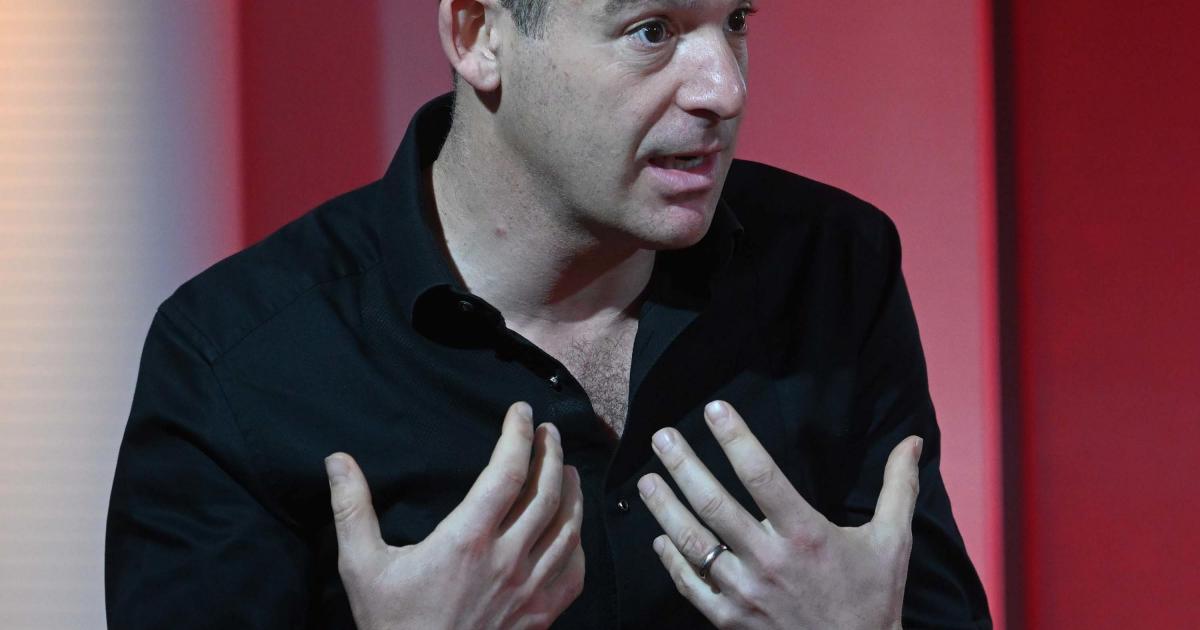
Reacting to the changes, Martin Lewis did not hold back.

He said: “Council tax debt collection is so aggressive it’d make banks blush.

“It’s the most vicious and damaging form of legal debt collection out there – causing counterproductive misery for millions.”

He added that after campaigning on the issue for 18 months, the reform is a major step forward.

Advertisement

“I’m genuinely moved by this huge first step towards making things better,” he said.

Why households were struggling with council tax rules

Under the old system, missing just one payment could quickly spiral:

Full annual bill demanded within weeks

  • Extra charges added
  • Risk of court action or bailiffs

Campaigners have long argued this approach made debts worse rather than helping people repay them.

Steve Reed said the changes are designed to stop families being pushed into crisis.

Advertisement

“Too many families are facing aggressive enforcement action, with people left terrified of bailiffs knocking on the door because one month’s council tax bill was missed,” he said.

“We will stop this and make the system fairer.”


Recommended reading:


The reforms mark the biggest change to council tax collection in decades, potentially helping millions avoid spiralling debt.

Advertisement

While Martin Lewis said there is still room for improvement, he made clear this is a significant breakthrough.

“In a perfect world, it would be even longer,” he said, “but this is still a hugely welcome change.”

Source link

Advertisement
Continue Reading

NewsBeat

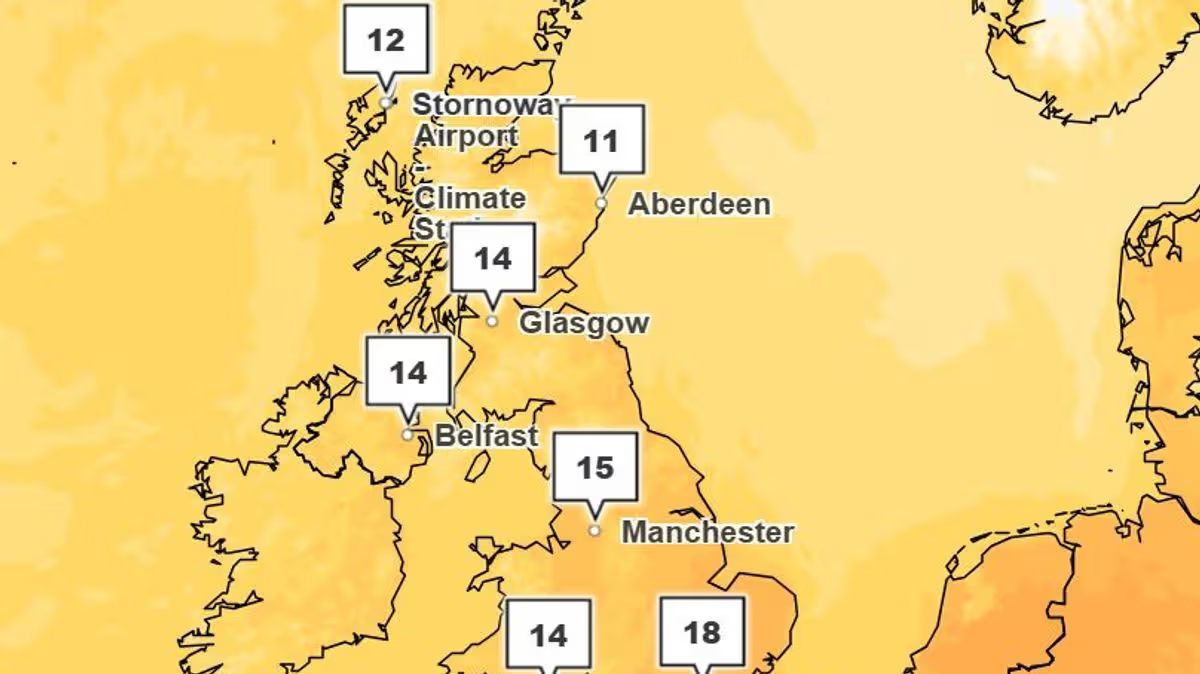
Met Office weather maps show parts of UK that will reach 18C this week

Published

on

Manchester Evening News

The Met Office said temperatures could reach ‘close to’ 20C

Parts of the UK could reach temperatures as high as 18C in the coming days, as the country faces a mixed week of weather.

Advertisement

It comes after the UK saw record-breaking temperatures earlier this month, with highs of 26.5C being recorded in Kew Gardens, south west London, on April 8. This made it the hottest day in the first half of April since 1946, the Met Office confirmed.

Despite the week getting off to a chilly start, the Met Office said that it will steadily turn warmer through the next few days, both by day and by night. But as the air warms it will also become more prone to rising and producing showers, so the week will remain mixed rather than settled, the UK weather agency confirmed.

Click here to get the biggest stories straight to your inbox in our Daily Newsletter

The Met Office forecast: “A familiar split is likely at times: western areas more frequently exposed to incoming fronts from the Atlantic, while parts of the east see longer drier and brighter spells.

Advertisement

“Looking through the week as a whole, the wettest conditions are favoured in western hills, particularly across Wales, north‑west England and western Scotland, as well as Northern Ireland. In contrast, parts of eastern England may see relatively little rainfall overall.”

Wednesday is expected to be ‘notably windier’, the Met Office warned, with some ‘blustery, cloudy and milder’ conditions. Bands of rain are set to move over the UK, with ‘brisk winds’.

But in the warmer air, temperatures could climb into the high teens across parts of eastern England. High teens are also possible along the Moray coast, where winds coming over the hills may give a noticeable lift to temperatures, the Met Office said.

Content cannot be displayed without consent

Winds are then expected to ease over Wednesday night and into Thursday, with a ‘sunny and showery’ day for large parts of the country.

Advertisement

The Met Office said: “Temperatures may dip a little compared with Wednesday, but it should still feel mild for mid‑April, and any sunshine will add a real warmth as the strength of the spring sun increases day by day.”

Friday will see another low-pressure system, bringing rain from the west. There is also a chance of thunderstorms developing, the Met Office warned.

But despite the unsettles conditions, the Met Office said that highs could again reach the high teens, ‘perhaps even close to 20C’ in parts of the country.

Get MEN Premium now for just £1 HERE – or get involved in our WhatsApp group by clicking HERE

Advertisement

Met Office weather maps show temperatures reaching as high as 18C on Friday afternoon in London and its surrounding areas.

Looking at the Met Office’s long range forecast for the UK, which covers the period between April 20 and 29, the country is expected to see widely dry conditions at the end of the month.

The forecast reads: “High pressure to the north or northeast of the UK will bring plenty of dry weather and sunny spells for most at first.

Advertisement

“Low pressure in the Atlantic will try to push weather fronts towards the UK from the south west, but these may remain slow moving. Some parts of the east coast could be on the chilly side with low cloud and onshore breeze, but further west it will likely feel quite warm, especially in sunnier areas.

“From next weekend and into the start of the following week, there are signs that more unsettled weather could return for a time, bringing rain or showers to some areas.”

Source link

Advertisement
Continue Reading

NewsBeat

Drought could be making antibiotic resistance worse, scientists say

Published

on

Drought could be making antibiotic resistance worse, scientists say

Antibiotic resistance is often associated with hospitals and the overuse of antibiotics in agriculture. Both are genuine problems, but new research suggests another potential culprit that many people haven’t considered – droughts caused by climate change.

A recent study published in the journal Nature Microbiology found that when soil dries out, it can speed up the natural processes that create and spread antibiotic resistance. This doesn’t mean drought directly creates superbugs in hospitals, but it suggests climate change could make the problem worse.

This matters a lot for the UK. The Met Office predicts that summers will get hotter and drier, with longer droughts if emissions stay high. Meanwhile, the NHS is already struggling with antibiotic-resistant infections, which are harder to treat and keep patients in hospital longer. When standard antibiotics stop working, doctors are sometimes forced to use powerful alternatives that are kept in reserve precisely because overusing them risks making those resistant too. These are known as “drugs of last resort”.

So what’s actually happening in the soil? Soil is teeming with bacteria, and many of them naturally produce antibiotics to kill off rivals. Other bacteria carry genes that make them resistant to those attacks.

Advertisement

An arms race in the soil

In normal, moist soil, bacteria live in a relatively stable environment. But when soil dries out, water gets squeezed into tiny, isolated pockets. Bacteria get crowded together, nutrients become scarce and competition turns brutal. In these conditions, bacteria produce more antibiotics to attack each other, and more resistance genes emerge to help them survive. It’s an arms race fuelled by drought.

Here’s why that’s relevant to human health: bacteria can swap genes with each other through a process called horizontal gene transfer – think of it like sharing a video game cheat code. This means resistance genes from soil bacteria can be picked up by bacteria that infect humans. In fact, some resistance genes found in soil bacteria have already been spotted in bacteria that infect people, hinting at a long evolutionary connection between the two.

Horizontal gene transfer explained.

Some large studies have found that drier regions of the world tend to report higher levels of antibiotic-resistant infections in hospitals, even when taking differences in wealth and healthcare quality into account. However, these studies show correlation, not direct cause and effect. Other factors like how infections are tracked or how easy it is to access healthcare could also explain this pattern.

Advertisement

Some of the soil bacteria linked to this problem are close relatives of hospital pathogens like Klebsiella pneumoniae and Pseudomonas aeruginosa, which belong to a group called Eskape, responsible for many of the world’s hardest-to-treat infections. Again, this doesn’t mean these bugs come from soil, but it does show how connected environmental and clinical bacteria really are.

Antibiotic resistance already causes millions of infections every year worldwide. Most efforts to tackle it have focused on cutting unnecessary antibiotic use in medicine and farming, which is still vital. But this research suggests the environment itself, and how climate change is reshaping it, also plays a role we can’t afford to ignore.

This is where the idea of One Health comes in. One Health is the idea that human, animal and environmental health are all closely linked. Antibiotic resistance, seen through this lens, isn’t just a medical problem, it’s an ecological one too.

As droughts become more common in the UK and around the world, scientists will need to keep a much closer eye on what’s happening beneath our feet.

Advertisement

Source link

Continue Reading

NewsBeat

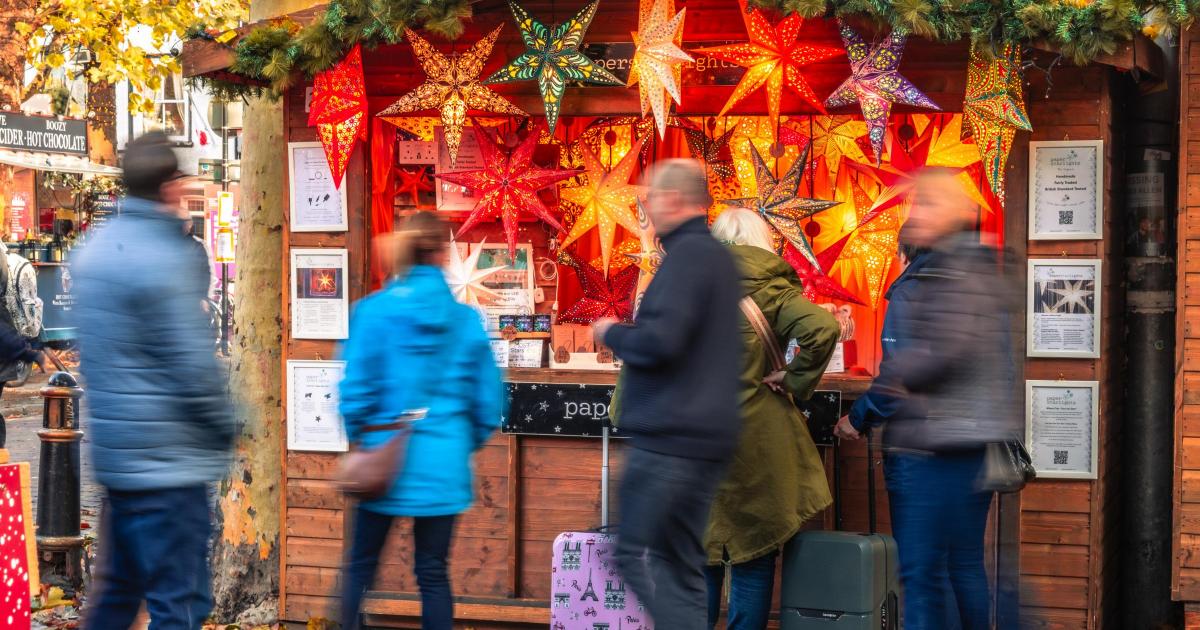
York Christmas Market- rest day plan on hold amid concerns

Published

on

York Christmas Market- rest day plan on hold amid concerns

York Council’s Executive voted to defer a decision on closing the market on Tuesdays following new counter-terrorism advice from North Yorkshire Police.

Cllr Pete Kilbane, the council’s Labour deputy leader, said the proposals would be reconsidered before the executive’s next scheduled meeting in a month’s time to help businesses plan accordingly.

Market traders and businesses near its pitches in Parliament street told councillors they feared the effect closing the market for a day would have on their earnings and staff.

The decision at the meeting on Tuesday, April 13 comes after plans for the rest day were drawn up to ease the impact of the event on Blue Badge holders.

Advertisement

RECOMMENDED READING:


Blue Badge holders were among those banned from driving into York city centre during the market’s opening hours in line with traffic restrictions imposed during the event.

The council approved North Yorkshire Police’s request for an Anti-Terror Traffic Regulation Order (ATTRO) barring vehicles from pedestrianised streets to deter potential attacks which have targeted mass gatherings elsewhere.

The restrictions have since been made permanent and would be activated during future markets and other events on a case-by-case basis in consultation with the council and other emergency services.

Advertisement

Disabled people said last year the measures would restrict their access to the city centre in the run up to Christmas.

Plans for a rest day on Tuesday are among the measures the council has proposed to ease the impact of restrictions during future markets.

A council report stated opening the market one day less a week would improve accessibility in the city centre.

It added Tuesday was chosen as the rest day because it was one of the quietest in terms of footfall but was not as closely linked to weekend visits as Mondays or Thursdays.

Advertisement

A rest day would be trialled during this year’s market and the impact would be analysed early next year.

Christmas Market traders have voiced fears about plans to close future events one day a week (Image: Newsquest)

York’s Business Improvement District (BID), Hospitality Association (HAY), hotels and others lodged concerns with the council over the proposals ahead of Tuesday’s decision.

Traders speaking at Tuesday’s meeting said closing the market could see them lose up to 10 per cent of their revenues.

Simon Long, of Shambles Kitchen, said earnings from the market paid the wages of his 30 permanent staff in January.

Advertisement

The trader said: “I can’t afford to lose any days because of the January payroll.

“What would happen to the price of rent for pitches and would we be expected to make up the losses?

“We’re already facing significant price pressures at the moment, a 10 per cent drop in sales from losing Tuesdays would heighten the pressure massively.”

Louise Harris-Collins, who also trades at the market, said she could have to employ up to 11 fewer people if the plans go ahead.

Advertisement

She said: “Our margins have become thinner, the prospect of losing a day is truly terrifying.

“The market’s a huge asset to the city, people love it and we need more people to get behind it, not strangle it.”

Speaking following the meeting, disability right activist Flick Williams said she never thought the rest day would happen after saying it was better than nothing.

The executive heard the new police advice was a different interpretation of that previously given and related to additional liabilities and risks.

Advertisement

Council Deputy Leader Cllr Kilbane said traders’ views would be taken into account ahead of the decision on the rest day.

The deputy leader said: “The time scales are against us, businesses need to know what’s happening.”

Source link

Advertisement
Continue Reading

NewsBeat

From ‘market value’ to levelling up, the manosphere is shaped by a financial mindset

Published

on

From ‘market value’ to levelling up, the manosphere is shaped by a financial mindset

Louis Theroux’s recent Netflix documentary Inside the Manosphere shines a spotlight on masculinity influencers and the dangers of online misogyny, conspiracy theories and anti-feminist ideologies. Responses to the documentary have ranged from outrage to disbelief, criticising how the manfluencers treat the women in their lives and discussing the importance of role models in countering manosphere influences.

But what has been less talked about is how it reveals the relentless pursuit of financial gain driving these “manfluencers” and the language they use to normalise their views.

Amid a cost of living crisis and a declining job market, Theroux shows why “manfluencers” resonate so strongly with their target audience of boys and young men. Theroux meets four key figures in the manosphere, all of whom sell a carefully curated lifestyle based on conspicuous consumption, hypersexuality and an “alpha masculinity” mindset to their millions of followers.

Although this may seem like a tempting lifestyle to some, the main effect is to reinforce a sense of inadequacy and failure among their audiences. Do this enough times, then you can sell the solution to become a “real man”.

Advertisement


À lire aussi :
How boys get sucked into the manosphere


In Theroux’s documentary, two fans of a manosphere influencer suggest that “life as a man, you’re born without value. We have to build that value. You have to work for every penny”.

The language used in the manosphere is the language of financial markets, with discussion of optimisation, levelling up and marginal gains. Phrases like “sexual market value”, “high/low value man” and “maxxing” convert intimacy into a market and the body into an asset class. Manosphere guidance encourages young men to inspect themselves from the outside, as if conducting a performance review. Men’s bodies are seen as measurable assets and an index of “masculinity”.


À lire aussi :
The pseudoscientific attractiveness scale that grew out of incel forums and is now making money for looksmaxxing influencers

Advertisement

Glow-ups, routines, hacks, looksmaxxing, courses, tips and videos on “ways to increase your value” are deployed as strategies to help fans unlock the secret of being a “real man”. In these spaces, the broader system that turns masculinity and relationships into metrics is never the problem. Instead, men are told that failure lies in their inability to increase their own “market value”. These discourses of “self-improvement” are, in reality, damaging forms of self-surveillance.

Manosphere adherents end up caught in a loop of aspiration and self-loathing: improve, compare, fail, repeat. In this context, the language of “levelling up” becomes especially insidious. Although it sounds playful and empowering, this mindset traps fans in a permanently unwinnable game. There is always another goal to strive for, another skill to master, another level to unlock.

‘Manosphere’ influencers place high value on physical fitness and attractiveness in both men and women.
MDV Edwards/Shutterstock

The dating market

The consequences of this mindset for both men and women is most evident in the language around dating and the idea of the “sexual market”. Attraction is viewed as quantifiable (“high/low value”), competitive (“winners/losers”) and impersonal (“it’s just sex”). Women and men are both consumers and products competing for scarce demand. Rejection is “market feedback”.

These metaphors reduce a deeply social and emotional sphere of life down to a superficial economic reality. By treating people and relationships as metrics, it becomes easier to view them only in instrumental terms. Framing relationships as one-dimensional, transactional and based on hierarchy has negative effects for both men and women.

Advertisement

In Inside the Manosphere, one influencer reveals that he filmed a woman performing a sex act on him for “clout”. Theroux shows a clip from one influencer’s social media arguing that women are “subordinate” to men and should always make themselves sexually available. In one of the most discussed scenes from the documentary, one man advocates for “one-sided monogamy”, where he sleeps with other women while his wife stays at home as the main caregiver.

This man reduces women to an “attractiveness score”, saying that if a man isn’t tall but is physically fit, muscular and makes money, “Maybe [he doesn’t] come to Miami and pull Miami 10s, but I’ll be damned if [he] can’t pull a couple of 8s or 9s in a small town in America”.

Some of this corporate language is used to make misogynistic ideas sound neutral, data-driven and common sense. While recording a podcast, one man uses his “female delusion calculator” to draw attention to the unrealistic expectations a female guest has of a prospective partner. Although presented as a mathematical model based on demographic data, its primary function is to highlight what he claims is the “irrational” nature of women in the contemporary dating scene, and conclude that women “overinflate [their] own sense of self-worth”.

By framing this commentary as a form of objective analysis, it makes hierarchy seem an everyday and commonplace part of life and hides its misogynistic underpinnings.

Advertisement

Influencers in the manosphere often pronounce that they are seeking to elevate the position of men through the language of empowerment. The self-improvement narratives are compelling, but they don’t stand up against the evidence that these men are very much in it for themselves.

The documentary highlights how the manfluencers’ central goal is ultimately self-enrichment, often at the expense of their followers. Theroux “invests” £500 into an interviewee’s trading platform, only to see it whittled away over the course of a few weeks, with the influencer taking his cut. Fans of one influencer pay to have their comments read out live on air. Another influencer courts conspiracy theories to create viral content, describing those in the manosphere as “trying to make a buck” by selling ideologies.

There is a sense that compromising the social contract doesn’t matter, so long as you have a Rolex on your wrist, a Lamborghini to drive and a fancy apartment to hide away in. The ideologies promoted by the manfluencers in the documentary are rooted in misogyny, sexism, violence and exploitation – and there is clearly a market ready and willing to buy them.

Advertisement

Source link

Continue Reading

NewsBeat

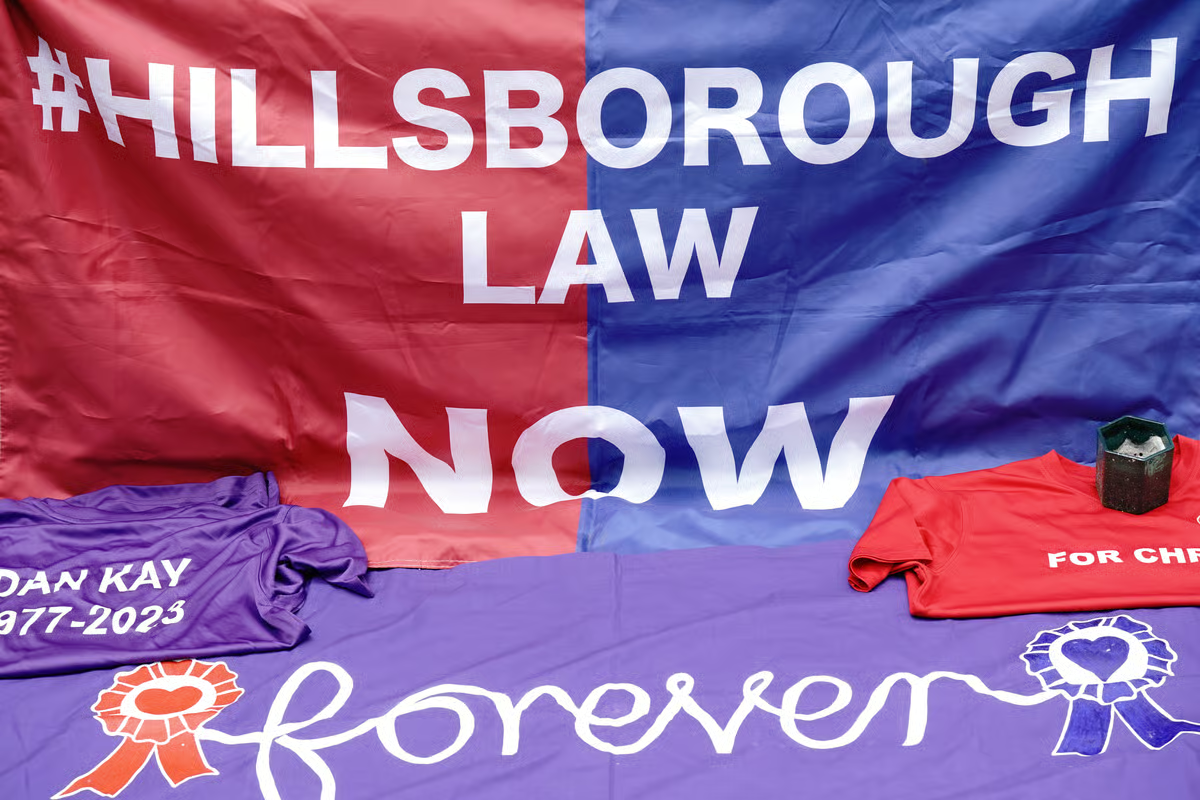
Sir Keir ‘personally committed’ to bringing in Hillsborough Law

Published

on

Sir Keir ‘personally committed’ to bringing in Hillsborough Law

Addressing Sir Keir, he said: “As parliamentary lead to the Hillsborough Law, I stand here with a huge sense of obligation to the 97, all the families, including my constituent, Debbie Matthews, every survivor and every victim of a state cover-up who were all part of this collective campaign.

Source link

Continue Reading

NewsBeat

Cambridge church holds Doctor Who service featuring Tardis and sci-fi icon

Published

on

Cambridgeshire Live

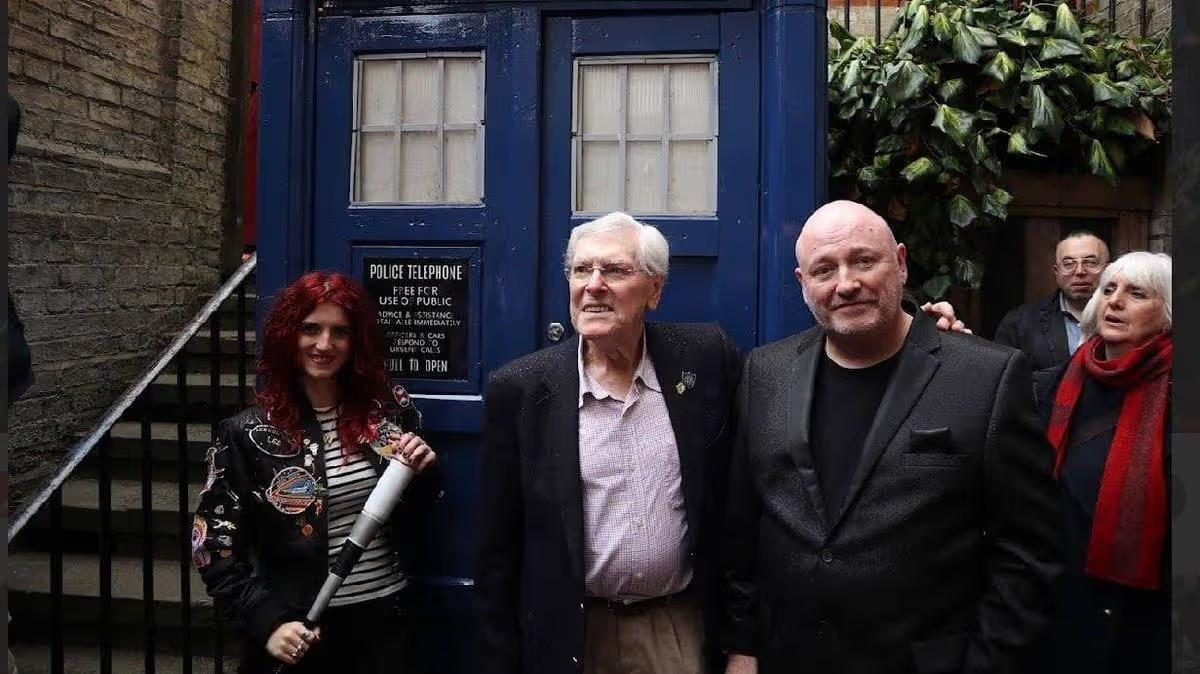
Zion Baptist Church in Cambridge hosted a Doctor Who service with a Tardis replica and Blue Peter star Peter Purves

A Doctor Who-loving vicar has conducted a church service featuring a Tardis – with an iconic sci-fi legend in attendance.

Advertisement

Zion Baptist Church, in Cambridge, received the replica police box modelled on the one from the BBC programme, with actor Peter Purves performing the ribbon-cutting ceremony. The 87-year-old is renowned for portraying Steven Taylor, a companion of the First Doctor played by William Hartnell, before later becoming a Blue Peter presenter.

Devoted fan Reverend Jason de-Vaux said there weren’t many churches that could claim to house the legendary box.

Rev de-Vaux, 57, said: “It is amazing to be able to pick on your favourite sci-fi show and bring it within your own faith context. There are interesting parallels with the Christian faith and the show. Jesus died and he rose again. When Jesus rises again, his followers did not recognise him. Doctor Who regenerates and his companions don’t recognise him.

“The world needs a saviour in Jesus Christ and Doctor Who is looked upon as a saviour of the planet.”

Advertisement

Rev de-Vaux had originally given some advice to the owner of the then run-down Tardis who wished to restore the replica. However, the previous owner offered de-Vaux the Tardis free of charge from its location in Suffolk. It was transported to Zion Baptist Church, constructed in 1837, where it underwent restoration.

The reverend, who has served at Zion Baptist Church for four years, said: “When it was being placed over the wall into the courtyard, we must have had 100 students from the university shouting, ‘It’s the Tardis!’

“It was like Beatlemania. Everyone was stopping to take pictures. They thought we were filming for a Christmas special.”

Advertisement

Reverend de-Vaux has followed the programme since Jon Pertwee’s era in the 1970s, when he was four years old.

He said: “I remember watching the last series of Pertwee in black and white. Then he regenerated and my grandparents had a colour TV. He was a different person – because it was then Tom Baker. Four-year-old me was really upset.”

Zion Baptist Church hosted their own Doctor Who service on Sunday (April 12), attended by Peter Purves and numerous devotees of the programme, with some dressed as their favourite Doctors.

Advertisement

Rev de-Vaux said: “We can use the cultural phenomenon of Doctor Who with the Christian faith. We had good proof of that when we had 75 people sitting in our church for the service. It’s a parallel that can be used to bring hope into the world we currently live in.”

The reverend noted that Peter Purves was “very gracious” at the occasion, which featured cake cutting and a Dalek.

He added: “We’ve been asked to do some filming throughout the summer with the Tardis and we’re open to anyone who wants to throw a Doctor Who Party.

“The local bookies had me down for 1000/1 to be the new Doctor. I wouldn’t turn the part down but we all look forward to who it’s going to be.”

Advertisement

Source link

Continue Reading

NewsBeat

Ben Stokes: England captain ‘might not be here’ after being hit in face by ball

Published

on

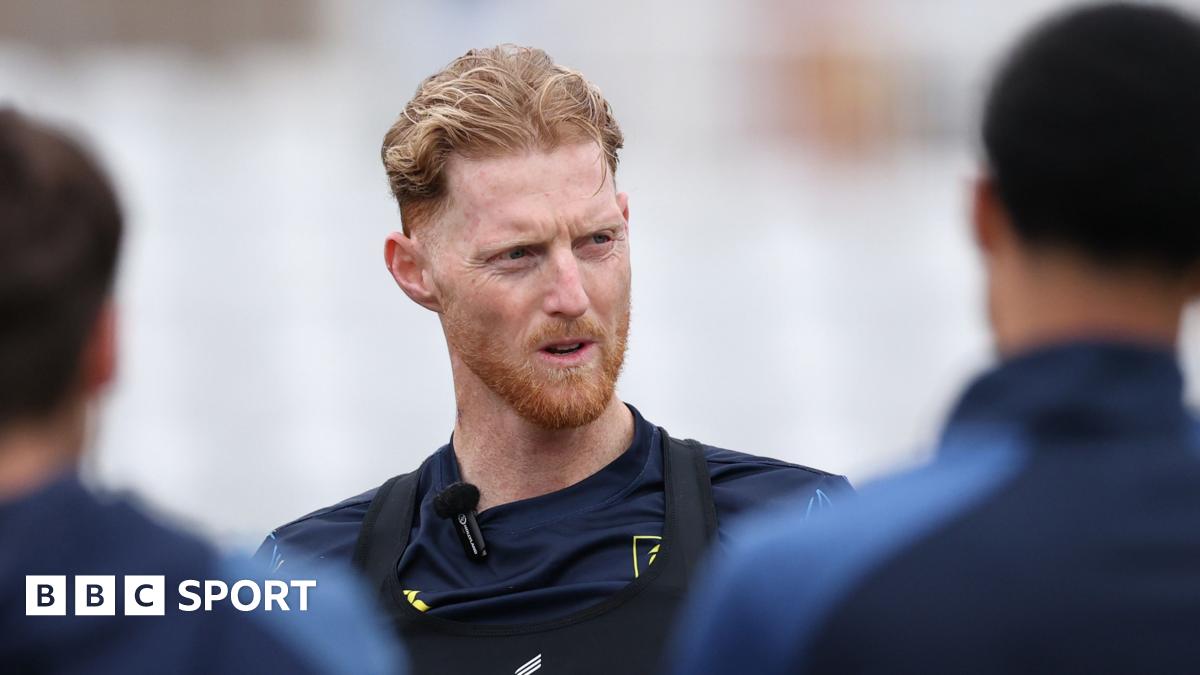
Ben Stokes during Durham training

Some of the Ashes criticism centered around the squad’s relationship with alcohol after their mid-series trip to Noosa.

It also emerged after the Ashes that white-ball captain Harry Brook had an altercation with a nightclub bouncer during a trip to New Zealand last year.

Stokes said some criticism was “harsh and unneeded”, but “a lot of it was warranted”.

“A lot of it was almost put forward in a way that was a bit extreme, but when you look at it deep deep deep you agree with some of it,” he said.

Advertisement

“We have got ourselves to blame for a lot of it.

“If you can’t take that and aren’t willing to understand that and listen to a little bit of it, then we wouldn’t see any progression.”

Stokes, McCullum and managing director Rob Key kept their jobs following an ECB review into the Ashes.

Stokes, who turns 35 on the opening day of the first Test against New Zealand on 4 June, said he did not consider standing down or retiring.

Advertisement

“I actually went the other way,” he said.

“It completely and utterly consumed me. I feel like I would be able to switch off for half an hour and then would get my iPad out and start making notes.

“If I got back and shut myself away, didn’t pay any interest and say ‘we will see what happens – I will let other people make decisions’, I think that is me subconsciously saying I don’t want this.

“How I was proved I am proper in this still.”

Advertisement

Source link

Continue Reading

NewsBeat

Not just for her: Why Slimming World works for everyone

Published

on

Not just for her: Why Slimming World works for everyone

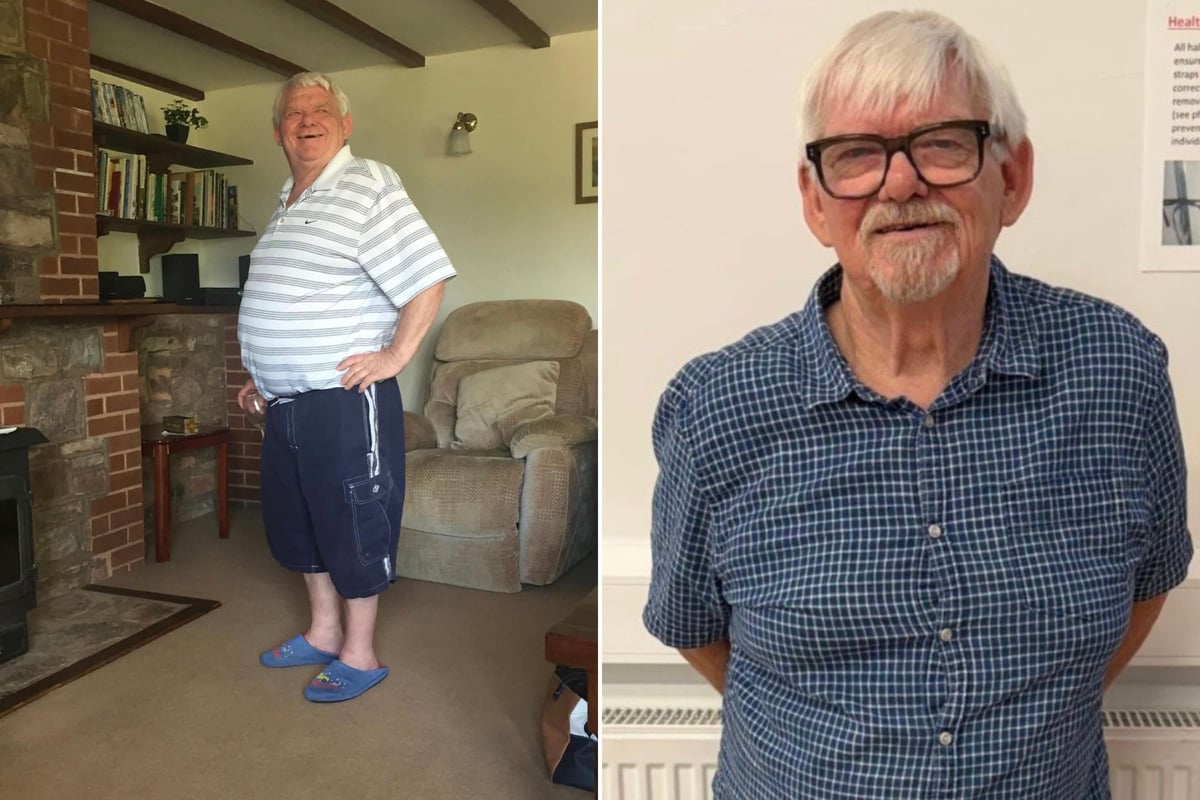
When Trevor first walked through the doors of Slimming World, it wasn’t just for himself it was for family. Wanting to support his niece on her own weight loss journey, Trevor decided to take that first step alongside her. Of course, he also hoped to shed a few pounds and improve his health, but what followed was far more life-changing than he ever imagined.

Source link

Continue Reading

NewsBeat

Mittel River Terrace bar approved by City of York Council

Published

on

Mittel River Terrace bar approved by City of York Council

York councillors approved an application from Pivovar to open its new Mittel River Terrace in the empty Guildhall Restaurant unit, off Lendal.

Jamie Hawksworth, Pivovar’s director, told councillors they wanted to foster a continental atmosphere with customers sitting for drinks and food, not standing shoulder-to-shoulder.

Representatives of three neighbouring businesses said they were worried about noise from the venue’s outdoor terrace, with one saying they had taken a shorter lease as a result.

The application, which Pivovar made through Leeds Tap Ltd, was approved following a City of York Council licensing hearing on Monday, April 13.

Advertisement

RECOMMENDED READING:


Pivovar runs the Elvington Brewery where it produces its Mittel pilsner and lager and it also operates 14 bars and restaurants nationally, including four in York.

It is set to see the empty two-storey building completed in 2022 as part of the £20 million Guildhall refurbishment brought into use for the first time in four years.

Pivovar’s plans include installing a copper brewhouse specially-made in the Czech Republic which will produce a range of lagers that will be served there.

Advertisement

There are also plans to serve food including oysters, rotisserie chicken and pork sourced from local suppliers.

Monday’s meeting heard emphasis would be placed on the venue’s food offer with around £250,000 spent on its kitchen alone, but people would be able to come only for drinks.

The outside of the Guildhall Restaurant, off Lendal, in York (Image: LDRS)

A minimum of 60 people will be seated on the lower floor of the building with 20 on the upper floor.

The lower terrace would have seating for at least 20 people with 40 seated on the outdoor area above when weather permits and standing drinking is not permitted.

Advertisement

No speakers or TVs will be allowed outside.

The venue will operate from 8am to midnight daily, with drinks served from 10am to 11.30pm daily.

But five comments were lodged raising concerns about the plans, including four from neighbouring businesses who work in offices in the Guildhall complex.

Claire Bennett, of the York Science Park, said they always understood that a restaurant would move into the unit but uncertainty remained over how it would affect them.

Advertisement

Julian Richards, of Archaeology Data Services, said his firm was set to move into offices at the Guildhall in June but they had taken a shorter one-year lease because of the venue.

Mr Richards, whose firm’s offices would face onto the terrace, said: “The nightmare scenario is stag and hen dos leaning against our office window and making our business untenable.”

Monday’s meeting heard most customers were expected to come outside of working hours.

Mr Hawksworth told the meeting: “We want to create an atmosphere, we don’t operate shoulder-to-shoulder.

Advertisement

“Out customers are attracted more to seating and we want to take a continental approach, people will want to stay if they’re comfortable.

“The reality is that there’s 52 weeks in a year and only a few of them are sunny, so while it’s nice to offer the outdoor terraces we’ll only be doing that when we can.”

Source link

Advertisement
Continue Reading

Trending

Copyright © 2025