Cosy Bedtime Stories from the Farm is a collection of 10 bedtime stories for readers aged six and above, inspired by her family’s real-life adventures on Ravenseat Farm in North Yorkshire.
RECOMMENDED READING:
The tales offer a glimpse into life on a working farm, from busy days to quiet moments in nature, and are illustrated by Becca Hall.
Amanda Owen (Image: SUBMIT)
Amanda is a shepherdess, mother of nine, TV personality, and Sunday Times bestselling author born in Huddersfield.
Advertisement
She is a first-generation farmer and rose to fame through the hit TV series Our Yorkshire Farm, which attracted millions of viewers across the UK.
Her most recent series, Our Farm Next Door: Amanda, Clive and Kids, has become the highest-rated programme on the channel in the past two years.
The new book has been published in hardback, e-book and audio by Puffin.
Secretary of state for the treasury, Scott Bessent, recently declared that the US is readying a comprehensive package of sanctions targeting Iran that in size and scale amounted to an “economic D-day”. Although a problematic analogy that does disservice to the memory of those Allied soldiers who landed in Normandy, Bessent’s choice of words does at least make clear that the events of June 6 1944 continue to have purchase in contemporary culture.
For the makers of Pressure, this is no doubt reassuring. Directed by Anthony Maras and cowritten with David Haig, the film revisits the well-known story of D-day but with a novel focus: the meteorologists who helped the generals make the decision on when exactly to land. It is beautifully shot and often engaging but flawed in key details and loses its way towards the end.
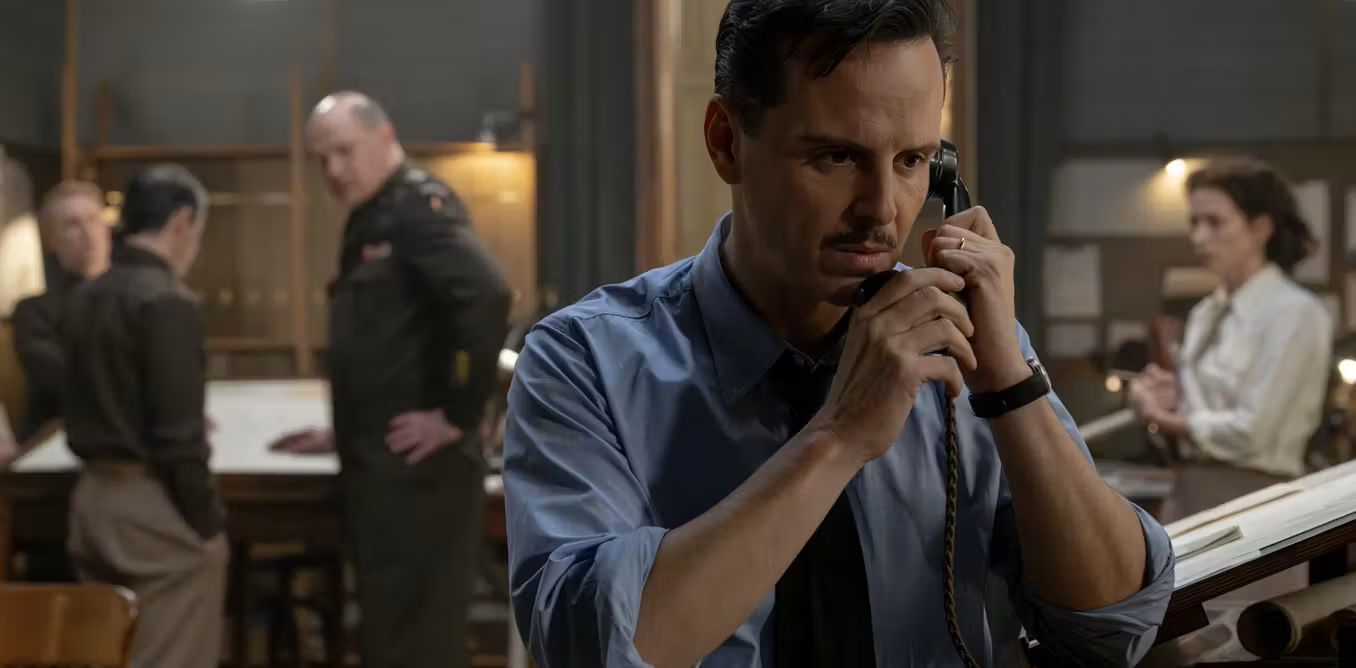
Pressure is an adaptation of Haig’s successful 2014 play of the same name. At its centre is the story of Group Captain James Stagg (Andrew Scott). Stagg was the RAF meteorologist responsible for the weather reports that helped the Supreme Allied Commander, General Dwight D. Eisenhower (Brendan Fraser), prepare for the invasion of France.
Eisenhower’s plan had several specific requirements deemed essential to success. These included a full moon, a low (but rising) tide, and calm seas. Accurate weather reports were an operational necessity. This was especially the case given the famously turbulent nature of the waters between Britain and France.
The trailer for Pressure.
The film is at its best when it sticks closely to what had previously made the play such a success – the often tense interactions between humans dealing with enormous pressure. From the stately grounds of the Allied headquarters (Southwick House near Portsmouth), we see Stagg argue with his American subordinate Colonel Krick (Chris Messina) over the science of forecasting.
Stagg believes in using accurate real-time data from measuring stations far and wide. Krick believes that future weather cycles can be best predicted by looking at what similar pressure systems have done in previous years. On their dispute hangs the likelihood of a successful landing and also, therefore, ultimate victory in the war (or so we are told).
Advertisement
As the narrative builds to its expected crescendo (the invasion), we also see Stagg navigate the challenge of dealing directly with the intimidating figure of General Eisenhower. And in the background throughout is another significant pressure, one that the taciturn Stagg largely keeps to himself: the uncertainty regarding the whereabouts of his pregnant wife. He has lost contact with her following a German bombing raid on her hospital.
Alliance politics
The film offers two overall takeaways. First, that science is a complex and sometimes contested business. Eisenhower wants absolute certainty; Stagg can only offer the data together with his interpretation based on years of hard-won expertise. As he tussles with “Ike” – as Eisenhower was known – we are also given a welcome lesson in the importance of speaking truth to power, regardless of the pressure that results.
The second takeaway is that the success of the operation was at root the work of an alliance of Britons and Americans who worked together towards a common goal. As such, while we see plenty of disagreements and rivalries – Damien Lewis as a self-obsessed General Montgomery is particularly good – the Allies ultimately rally for what Eisenhower famously called the “great crusade”. Given today’s tensions in the transatlantic relationship this, too, is very welcome.
Brendan Fraser as General Dwight D. Eisenhower. Studiocanal
For all its qualities, though, and for all Andrew Scott’s skill in his portrayal of Stagg, the film does have some flaws.
Advertisement
Like several other historically focused productions, Pressure overplays the extent to which it is delivering an “untold” story. After all, it is based on a successful play, while the contributions of Stagg to pre-D-day planning also received attention in both The Longest Day (1962) and, more recently, Ike: Countdown to D-Day (2004). Stagg himself also authored a 1971 account of his D-day role. The story of D-day’s meteorologists might not be widely known; but that’s not the same as saying it is “untold”.
There are also some problems with Fraser’s portrayal of Eisenhower. He successfully captures Ike’s famously short temper as well as the extent to which he almost drove himself to breaking point in the days before the invasion. We’re also given a tantalising glimpse of his close and complicated relationship with Kaye Summersby, his indispensable driver, assistant and confidante (brilliantly played by Kerry Condon).
But we see relatively little of those other qualities which made Eisenhower so well-suited to the job he’d been given. Ike was an instinctive diplomat who successfully managed a transatlantic command team that included a good quota of egos and primadonnas. Unfortunately, though, this does not really come through, and we’re often left with the sense that he brought to the role little more than a capacity to glare, shout, smoke and drink.
Pressure’s final scenes call to mind the 1998 film Private Ryan. Studiocanal
Perhaps the film’s biggest flaw, however, is in its final scenes which drift into what almost becomes a homage to Saving Private Ryan (1998). In doing so, Pressure loses sight of where its real contribution to the cinematic history of D-day lies. Not in revisiting the heroism of those brave souls who landed in the first waves, but in telling the story of those who worked steadfastly behind the scenes to give them the best chance possible of success.
The latest in a long line of D-day focused productions, Pressure is an engaging film that shines a welcome light on an important aspect of the Allied landings. But Maras would have done well to keep the focus throughout on the fallible humans working behind the scenes in England to meet the epic challenges that accompanied an epic operation.
Norway’s Harald V was laid to rest yesterday after a memorial service that evoked profound displays of raw and unfiltered emotion from typically stoic royals.
Harald was Europe’s oldest reigning sovereign after Queen Elizabeth II, ruling over Norway for over 35 years until he sadly passed away on August 28 at the age of 89.
His state funeral was held at Oslo Cathedral on Wednesday as an extraordinary contingent of royals from around the world gathered in the Norwegian capital to pay their respects to the ‘grandfather of the nation’.
Senior members of 11 royal households – including Spain, Denmark, Japan and Jordan – were among the list of VIP guests at yesterday’s historic service that included a procession from the Royal Palace to the Chapel, gun salutes and speeches.
Advertisement
In the end, however, it will be remembered for the quiet gestures of love, the fervent outpouring of grief from otherwise reserved kings and queens and a touching display of solidarity with Norway’s new King Haakon VIII and Queen Sonja.
While Denmark’s King Frederik welled up and was visibly emotional during the poignant service for his beloved ‘Uncle Harald’, the Princess Royal won praise from fans after they noticed the tender moment she shared with Harald’s 89-year-old widow Sonja.
Norway’s new Queen Mette-Marit wiping away her tears as the late Norwegian monarch was laid to rest
Advertisement
The typically reserved Princess Anne held both of her hands as she appeared to console Haakon’s grieving mother with kind words and reassuring smiles
The heir to the Norwegian throne, Crown Princess Ingrid Alexandra shared a heartfelt moment with her younger brother, Prince Sverre Magnus during the funeral
There was not a dry eye in Oslo Cathedral – from King Frederik X of Denmark to Norway’s new Queen Mette-Marit and her heartbroken mother-in-law, Sonja, who was married to Harald for almost 58 years.
The Danish royal house was among the first to send their condolences after Harald passed away peacefully at Rikshospitalet on August 28.
Advertisement
In an open letter to Haakon VIII, King Frederik and Queen Mary remembered his ‘unwavering calm’ and ‘dry humour’ while reflecting on the close bonds between their families.
‘Your father meant a great deal to my mother (Queen Margrethe) and both of us,’ the royal couple wrote. ‘He was an extraordinary man, with a twinkle in his eye and a big heart.
‘For 35 years, King Harald was a strong unifying figure for the Norwegian people. He joined duty and responsibility with presence and compassion. He was cherished like few others, and he will be missed by many.’
During Harald’s funeral, ‘you could see the pain’ in Frederik’s eyes as he mourned the late monarch, fans wrote on X.
Advertisement
At one point, the 53-year-old sovereign reached for Mary’s hand as they bowed their heads when Harald’s coffin was brought into the Cathedral.
Queen Sonja was visibly moved when Norway’s Prime Minister Jonas Gahr Støre paid tribute to the ‘love’ they shared in his speech.
‘Queen Sonja, working by his side, played an inextricable part in King Harald’s service to the nation – her tireless efforts to promote culture, to celebrate nature – and her desire to experience far-flung places it is hard to imagine anyone could live,’ he continued.
Harald’s widow Queen Sonja tenderly plaed a rose on his coffin during the service
Advertisement
Crown Princess Victoria of Sweden was among the speakers at the royal state funeral
Norway’s Crown Princess Ingrid Alexandra was poised and graceful as she joined her family in bidding farewell to her grandfather yesterday. She is seen here with her brother, Prince Sverre Magnus
Norway’s Queen Mette-Marit captured in a sombre moment with her daughter, Ingrid Alexandra
Sverre Magnus looked emotional as he left his grandfather’s funeral service
Advertisement
Princess Ingrid Alexandra could repeatedly be seen thanking Prince William, who attended the funeral without the Princess of Wales, and Princess Anne during a brief exchange before they departed the Royal Palace
Norwegians watching the funeral reportedly began to ‘openly weep’ when the cameras cut to Queen Sonja crying softly during the prime minister’s address.
‘I am in Norway right now, and this was the moment when the Norwegians in the room I was watching the funeral started to openly weep. They loved King Harald, but they mourn and feel with (and love) Queen Sonja,’ one X user reported.
Norway’s Crown Princess Ingrid Alexandra was poised and graceful as she joined her family in bidding farewell to her grandfather yesterday.
Advertisement
In one video posted on X, the heir to the Norwegian throne could be seen comforting her younger brother, Prince Sverre Magnus, when he became overwhelmed by emotion.
The daughter of Haakon and Mette-Marit placed a reassuring hand on Sverre Magnus’s shoulder when she noticed tears in his eyes before he returned her loving gesture with a small smile.
Fans praised ‘the sweet princess’, with one person writing: ‘The Norwegian people have won my respect due to this kindness.’
It wasn’t just Ingrid Alexandra’s compassion that impressed royal watchers when footage of Princess Anne greeting the Norwegian family after the funeral was shared online.
Advertisement
While the Prince of Wales officially represented King Charles III at Harald’s funeral, Princess Anne attended the event in a personal capacity as King Haakon VIII’s godmother.
The Scandinavian kings, Haakon, Frederik and Carl XVI Gustaf, honoured Harald
Mette-Marit with Haakon, who placed a reassuring hand on his mother Sonja’s back
Queen Sonja reacting to the outpouring of love for her late husband as she stepped out onto the balcony of the Royal Palace
Advertisement
Prince William greeting Norway’s heir, Crown Princess Ingrid Alexandra
While Denmark’s Queen Mary tightly held her aunt Sonja’s hand, the King’s sister made time to express her support for Haakon, who ascended the throne after his father’s death.
Following the birth of Haakon on July 20, 1973, Princess Anne was named as one of his godparents, along with his late grandfather, Olav V, Harald’s sister, Princess Astrid, Mrs Ferner, Sweden’s Carl XVI Gustaf, Denmark’s Queen Margrethe and Prince Carl Bernadotte.
Reuniting with her godson, Anne warmly hugged Haakon VIII after Harald V was laid to rest at Akershus Fortress, as their conversation brought a smile to the new King’s face despite the sombre occasion.
Advertisement
When Anne noticed Queen Sonja standing by herself, she politely excused herself as William stepped forward to warmly greet Haakon in their first meeting since he became King of Norway.
After executing a perfect curtsy before Sonja, the typically reserved Anne held both of her hands as she appeared to console Haakon’s grieving mother with kind words and reassuring smiles.
Princess Ingrid Alexandra could repeatedly be seen thanking Prince William, who attended the funeral without the Princess of Wales, and Princess Anne during a brief exchange before they departed the Royal Palace.
The funeral also highlighted the strong bond between Norway and the Netherlands’ future queens – Crown Princess Catharina-Amalia and Ingrid Alexandra – when the ‘royal besties’ reunited yesterday
Advertisement
Catharina-Amalia, the 22-year-old heir to the Dutch throne, gave her friend a hug as she joined her parents – the Netherlands’ King Willem-Alexander and Queen Máxima – for the funeral.
It was previously reported that Catharina-Amalia, Ingrid Alexandra and Belgium’s Princess Elisabeth have a WhatsApp group chat.
Advertisement
In June last year, the Princess of Orange also told journalist Wim Dehandschutter via Australia Women’s Weekly: ‘We stay in contact with each other because we are all living a very specific life and we don’t need much explanation to understand each other.’
She added: ‘It’s a good thing that I can chat with Elisabeth and Ingrid Alexandra about very simple things in our life which are difficult, different for us, friendships, privacy, social media. We discuss how we handle it.’
The late King Harald V was mourned on Wednesday by his 89-year-old widow, Queen Sonja, and son King Haakon with his wife, Queen Mette-Marit. He died due to a rare blood condition known as haemolytic anaemia.
They were joined by other royals from around the world, including King Felipe of Spain, Queen Rania of Jordan and Princess Charlene of Monaco.
Advertisement
The coffin was taken from the palace to the cathedral in a procession of senior Norwegian royals including King Haakon, foreign guests and representatives from Norway’s and other parliaments.
King Haakon walked behind the coffin, draped with the red Norwegian royal standard, alongside his eldest child Crown Princess Ingrid Alexandra, now heir to the throne, his son Prince Sverre Magnus and his sister Princess Martha Louise.
The King’s stepson Marius Borg Hoiby, who is currently serving a four-year prison sentence under house arrest at his parents’ Skaugum Estate while he appeals his conviction for two counts of rape, was also in attendance.
He previously joined his relatives to carry the coffin of late King Harald from the Royal Palace to the palace chapel last week while temporarily released, sparking fierce backlash from royal fans.
Advertisement
The Bishop of Oslo Sunniva Gylver looked somewhat stern as she greeted Hoiby on the steps of the cathedral ahead of the service.
His mother Queen Mette-Marit and Harald’s widow Queen Sonja followed the coffin in a car.
Capturing the perfect wedding picture can be extremely anxiety-inducing for couples (Picture: Getty Images)
The pressure to get the perfect wedding photo is something every couple can relate to. And in recent years, one pose in particular has become popular.
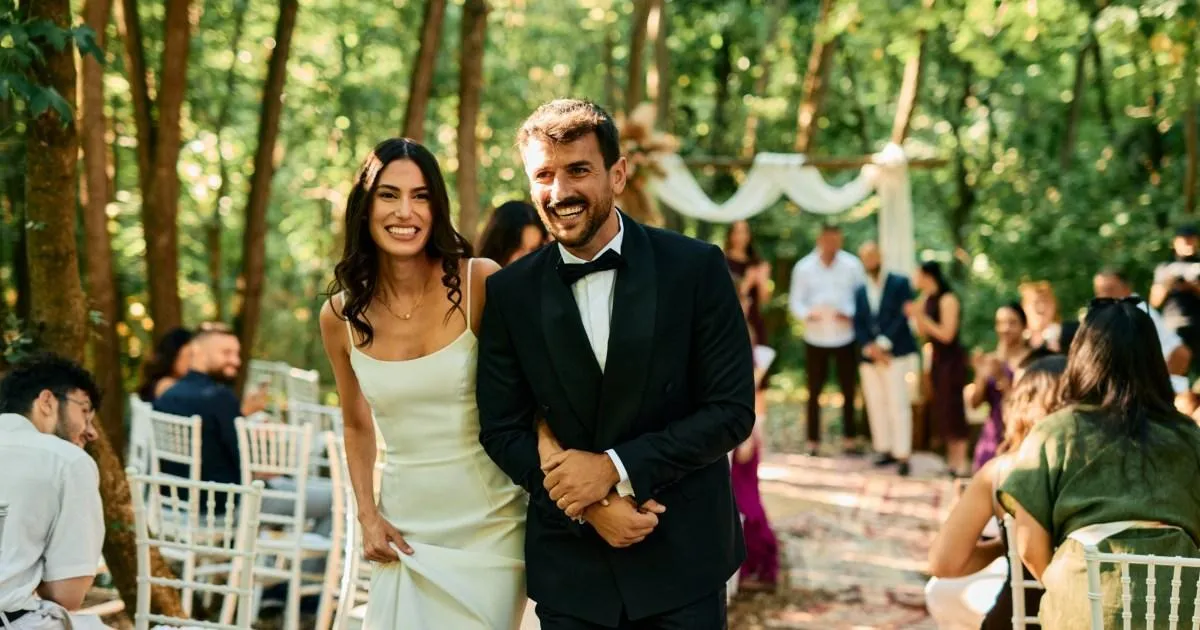
After saying ‘I do’, the bride and groom walk back down the aisle, before executing the ‘kiss and dip’.
Traditional, elegant, and classic, it certainly gets a round of applause.
But some couples aren’t convinced, calling the pose ‘unnatural’. One bride even said she was ‘very scared’ that her husband would drop her.
Advertisement
Not a cute start to wedded bliss.
But now, perhaps in part as a response to this terror, a new pose is emerging: the hand kiss. Here’s everything you need to know…
The iconic moment between the couple has been captured onscreen in a number of dramatised productions over the years (Picture: Shutterstock)
The Carolyn Bessette ‘hand kiss’ pose
Millions of women consider Calvin Klein’s Carolyn Bessette a style icon. From her capsule wardrobe to her effortlessly glossy hair, her style remains as influential as ever.
Unsurprisingly, her fashion legacy has extended beyond her wardrobe, with her wedding to John F Kennedy Jr becoming a blueprint for prospective brides.
One of the most iconic images of Carolyn and John was taken as they walked down the aisle after their ceremony, when John paused to kiss her hand as she smiled.
Advertisement
Ask Metro
Use AI to go deeper into the stories you care about – powered by Metro and trusted publications.
Aptly dubbed the ‘hand kiss’ pose by brides online, this simple yet chic gesture is now cropping up at more and more weddings.
Advertisement
Given the sheer popularity of the recent anthology TV series Love Story, which captured the couples’ romance and untimely deaths, it’s unsurprising Carolyn and John’s wedding is at the forefront of so many people’s minds.
‘I think as social media is at the forefront of brides minds now that they want to curate that moment and that photo.
‘It’s a very timeless pose. I also think it showcases both partners nicely – nobody is bent down dipping, it’s just two people standing together’.
Advertisement
Brides online also like the simplicity of this alternative.
@H&N shared on TikTok that she personally found this pose ‘so much less pressure than the dip’ while @caty added ‘I didn’t previously know this was an option – I love it!’.
Lindsay Sawyer, 30, who is set to be wed this year, tells Metro she’ll be recreating the ‘hand kiss’ pose.
‘I’m deep in #weddingtok (with just two months until my own), and it came up as an idea,’ she shares.
Advertisement
Given the immense ‘pressure’ the kiss and dip pose can put on couples, this is a much simpler alternative (Picture: Getty Images)
‘I think the dip and kiss is a nice idea but the thought of trying to orchestrate that, with everyone looking at you, makes me come up in hives.
‘And trying to get my fiancé to ‘practice’ is just never going to happen.
‘So, the hand kiss seemed like an easier option for us to still get a nice moment, without all the palaver of setting something up’.
Like so many couples ahead of their wedding day, Lindsay is understandably nervous about getting the ‘perfect shot’.
‘You get told by everyone “you’ll be looking at these photographs for 40 years”, so the pressure for the photos to last over several decades, where trends and themes are likely to change drastically, is a lot,’ she explains.
Advertisement
In her eyes, the ‘perfect shot’ will probably be the one her and her fiancé are least expecting: ‘I hope we’re able to capture a quiet, sweet moment when it’s just us two amidst all the chaos of the day’.
That being said, she emphasises that ‘it doesn’t hurt to have a few ideas of what you like’.
Georgie’s advice? Have an engagement photoshoot.
‘It might seem like that won’t be helpful, but have some photos to look back at – see which poses you like, which facial expressions you look good with!
Advertisement
‘Sometimes you can also overthink the photos and you spend the day worrying about that, rather than just enjoying yourself!’
Do you have a story you’d like to share? Get in touch by emailing MetroLifestyleTeam@metro.co.uk
Gardeners may find that their roses are affected by black spot, a fungal disease that can be a major detriment to your flowers’ health and longevity
With autumn drawing ever closer, and many flowers preparing to cease blooming, keeping on top of garden maintenance has never been more crucial. Gardeners may well find themselves confronted with a number of unwelcome and unsightly problems affecting their plants and flowers.
Advertisement
Gardening expert and TikTok creator Michael Griffiths has issued a warning to gardeners about a plant disease that could be wreaking havoc on their plants, with September being the ideal time to address the problem. In a recent video, Michael outlined a series of gardening tasks that fellow green-fingered enthusiasts should be carrying out this month, ranging from lawn preparation to tackling unsightly fungal diseases.
One such concern is black spot, a fungal disease that can pose a serious threat to the health and lifespan of your flowers.
In the video, he said: “Check roses for black spot and remove anything that’s affected.”
Advertisement
What is rose black spot?
For those unfamiliar with the condition, rose black spot is a fungal disease in which affected blooms develop purple and black spots on their leaves, ultimately causing them to drop prematurely.
According to the Royal Horticultural Society, where leaves are infected, the markings will typically appear in spring, persisting over time and potentially causing significant damage to plants.
In addition to the purple and black spots, further symptoms of the disease include yellowing of leaf tissue, leaf drop, and small, black, scabby lesions that may emerge on young stems. There is also the possibility of finding signs of powdery mildew.
How to eliminate rose black spot
Michael’s removal technique is remarkably straightforward to implement. If the disease is confined to a single area, such as the foliage, all that is required is to pinch off any leaves showing signs of black spot.
Advertisement
If you prefer not to use your hands to remove the diseased leaves, you can employ a pair of secateurs instead. Secateurs must then be cleaned thoroughly to minimise any risk of transmitting the disease.
If you notice any affected leaves on the ground, collect them. In an earlier video on the subject, Michael said: “You can pull (the leaves) in the opposite direction to the growth to easily remove them by hand.”
Everything that you collect or remove must be destroyed; do not add it to your compost heap. To minimise the chances of your roses developing black spot again, follow these steps: Prune at the appropriate time, in an open bowl configuration to an outward-facing bud to lessen the likelihood of mould, mildew and black spot establishing themselves.
Content cannot be displayed without consent
Water thoroughly so the plant does not become stressed. Apply mulch to approximately three inches depth, retaining moisture and inhibiting weeds.
Advertisement
If the disease is especially severe, you may discover that flowers and plants will shed all of their foliage. Nevertheless, if you have observed that the black spot has spread throughout the plant, you may need to take more drastic measures to maintain the health of the roses.
Gardening expert Ish recommended using a bicarbonate of soda solution to tackle fungal disease. In a spray bottle, combine one teaspoon of bicarbonate of soda with 500ml of water.
Mix the solution thoroughly and apply a light mist to any plants suffering from powdery mildew or fungal infections on a weekly basis.
Gently spray the plant every week or so, and the solution should eliminate the black spot. This mixture creates a natural antifungal spray capable of targeting mould, black spot, and powdery mildew.
Advertisement
A small dash of washing-up liquid can also be added to the spray. This helps the solution adhere to the plants’ leaves more effectively.
As an antifungal agent, bicarbonate of soda alters the pH level on the leaf’s surface, rendering it less acidic and less hospitable to black spot fungus. The washing-up liquid assists the solution in spreading and sticking to the leaves, ensuring greater coverage across their surface.
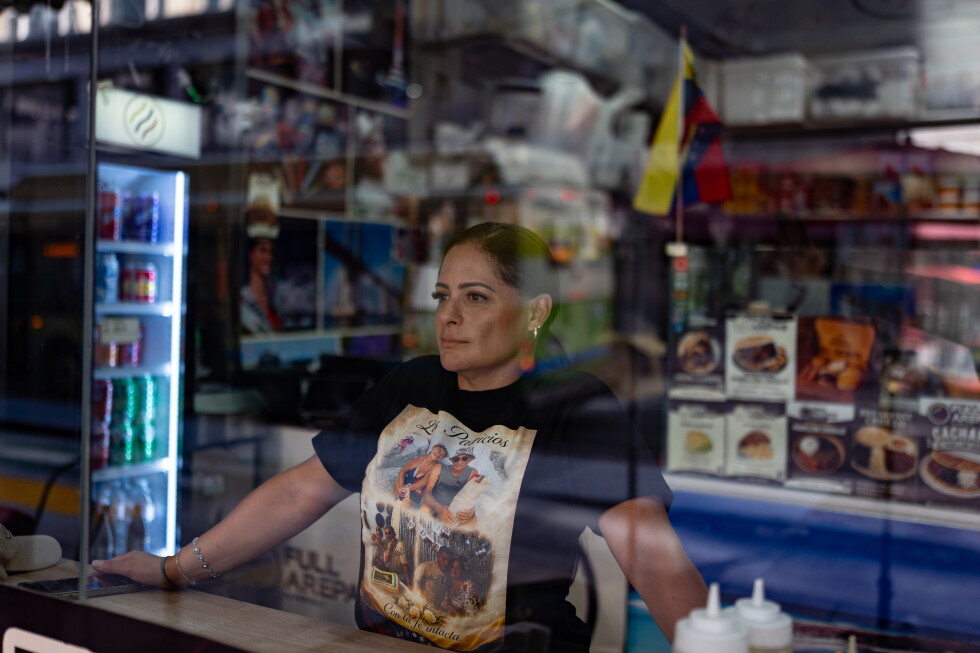
Kelly Granado, whose parents died in Venezuela's June 24 earthquakes, poses for photos at her restaurant in downtown Los Angeles, Tuesday, Aug. 25, 2026. (AP Photo/Jae C. Hong)
2026-09-09T12:14:16Z
LOS ANGELES (AP) — After her parents went missing under the rubble of their Venezuela apartment building, Kelly Granado Montano spent her days here “lost, worried, on the phone,” her body in one country, her mind in another.
“The desperation, the pain, and the anguish grew — from not knowing” their fate, she said.
She was among the more than one million Venezuelans living in the United States who watched one of the worst disasters to hit the South American country unfold from afar.
Advertisement
The powerful back-to-back earthquakes that struck north-central Venezuela on June 24 killed more than 6,500 people, left an untold number missing and damaged thousands of buildings.
As the news overtook social media feeds and family WhatsApp chats, survivor’s guilt, anger toward Venezuelan authorities and a devastating feeling of powerlessness overcame many in the diaspora, a group whose numbers doubled to 1.2 million between 2019 to 2024, as people sought relief primarily from economic hardship.
freestar.queue.push(function () {
window.fsAdCount = window.fsAdCount + 1 || 0;
let customChannel=”/dynamic_” + fsAdCount;
let adList = document.querySelectorAll(“.fs-feed-ad”)
let thisAd = adList[fsAdCount];
let randId = Math.random().toString(36).slice(2);
thisAd.id = randId;
let thisPlacement = “apnews_story_feed_dynamic”;
freestar.newAdSlots({
placementName: thisPlacement,
slotId: randId
}, customChannel);
});
More than two months later, some Venezuelans in the U.S. still navigate the earthquakes’ aftermath — confronting loss and leading recovery efforts — against a backdrop of deepening uncertainty in both countries, largely tied to White House policies.
Some immigrants feel a responsibility to keep shining light on Venezuela’s ongoing needs and unique challenges. “People think we are fine, but we are not,” said Dariela Merchan, an emergency room nurse in Austin, Texas.
Four Venezuelans living in the U.S. shared how they experienced the last two months, and what their futures might hold. This story is a collaboration with Caplin News in Miami and Phoenix-based Conecta Arizona.
(function () {
var APRM_EMBED_ID = “ap-readmore-embed”;
var APRM_MOBILE_MQ = “(max-width: 767px)”;
function APRM_onReady(fn) {
if (document.readyState === “loading”) {
document.addEventListener(“DOMContentLoaded”, fn);
} else {
fn();
}
}
Advertisement
APRM_onReady(function () {
var APRM_embedEl = document.getElementById(APRM_EMBED_ID);
if (!APRM_embedEl) return;
// 🚨 DESKTOP: remove entire module wrapper and bail early
if (!window.matchMedia(APRM_MOBILE_MQ).matches) {
var APRM_rootModule =
APRM_embedEl.closest(“.HTMLModuleEnhancement”) ||
APRM_embedEl.closest(“.HtmlModule”);
if (APRM_rootModule && APRM_rootModule.parentNode) {
APRM_rootModule.parentNode.removeChild(APRM_rootModule);
} else if (APRM_embedEl.parentNode) {
APRM_embedEl.parentNode.removeChild(APRM_embedEl);
}
return; // stop the rest of the script from running
}
});
})();
Advertisement
(function () {
var EMBED_ID = “ap-readmore-embed”;
var BTN_ID = “apReadMoreBtn”;
var FADE_ID = “apReadMoreFade”;
var STOP_SELECTOR = “.Page-below”;
var SIGN_IN_GATE_SELECTOR = “.sign-in-gate-content”;
var HIDDEN_ATTR = “data-ap-readmore-hidden”;
var MOBILE_MQ = “(max-width: 767px)”;
function ready(fn) {
if (document.readyState === “loading”) {
document.addEventListener(“DOMContentLoaded”, fn);
} else {
fn();
}
}
function isElementNode(n) {
return n && n.nodeType === 1;
}
function cancelEvent(e) {
if (!e) return;
if (typeof e.preventDefault === “function”) e.preventDefault();
if (typeof e.stopPropagation === “function”) e.stopPropagation();
if (typeof e.stopImmediatePropagation === “function”) e.stopImmediatePropagation();
e.cancelBubble = true;
e.returnValue = false;
}
Advertisement
function collapseDesktopEmbed(embed) {
if (!embed) return true;
if (!window.matchMedia(MOBILE_MQ).matches) {
var maybeWrappers = [
embed.parentElement,
embed.closest(“.html-embed”),
embed.closest(“[data-type=”htmlembed”]”),
embed.closest(“[class*=’embed’]”),
embed.closest(“[class*=’Embed’]”)
].filter(Boolean);
if (embed.parentNode) {
embed.parentNode.removeChild(embed);
}
return true;
}
return false;
}
ready(function () {
var embed = document.getElementById(EMBED_ID);
var btn = document.getElementById(BTN_ID);
var fade = document.getElementById(FADE_ID);
if (!embed || !btn) return;
Advertisement
if (collapseDesktopEmbed(embed)) return;
var signInGate = document.querySelector(SIGN_IN_GATE_SELECTOR);
if (signInGate) {
embed.innerHTML = “”;
return;
}
// — Analytics: impression when embed enters viewport —
if (“IntersectionObserver” in window) {
var io = new IntersectionObserver(function (entries, observer) {
if (entries[0].isIntersecting) {
window.dataLayer = window.dataLayer || [];
window.dataLayer.push({ event: “ap_readmore_impression” });
observer.disconnect();
}
}, { threshold: 0 });
io.observe(btn);
}
var stopEl = document.querySelector(STOP_SELECTOR);
if (!stopEl) return;
Advertisement
var rootCandidates = [
embed.closest(“.Page”),
embed.closest(“article”),
embed.closest(“main”),
document.body
].filter(Boolean);
var all = root.getElementsByTagName(“*”);
var hidden = [];
for (var i = 0; i < all.length; i++) {
var el = all[i];
Advertisement
if (embed.contains(el)) continue;
if (el === stopEl || stopEl.contains(el)) continue;
var tag = el.tagName ? el.tagName.toLowerCase() : "";
if (tag === "script" || tag === "style" || tag === "link" || tag === "meta") continue;
if (!(embed.compareDocumentPosition(el) & Node.DOCUMENT_POSITION_FOLLOWING)) continue;
if (!(el.compareDocumentPosition(stopEl) & Node.DOCUMENT_POSITION_FOLLOWING)) continue;
if (el.contains(embed) || el.contains(stopEl)) continue;
A restaurant owner searched for her parents from Los Angeles
Granado Montano called her parents over and over the evening of June 24, but there was no answer.
Marina, 66, and Jesús, 80, had last been seen in the underground parking of the building where they kept a beach apartment, about to leave from a family vacation. The 10-story building in the coastal state of La Guaira had completely collapsed.
Advertisement
freestar.queue.push(function () {
window.fsAdCount = window.fsAdCount + 1 || 0;
let customChannel=”/dynamic_” + fsAdCount;
let adList = document.querySelectorAll(“.fs-feed-ad”)
let thisAd = adList[fsAdCount];
let randId = Math.random().toString(36).slice(2);
thisAd.id = randId;
let thisPlacement = “apnews_story_feed_dynamic”;
freestar.newAdSlots({
placementName: thisPlacement,
slotId: randId
}, customChannel);
});
Granado Montano, 43, last saw her parents 11 years ago. Unable to leave the U.S., and with so little help from Venezuelan authorities, looking for her parents alongside relatives and volunteers on the ground became “an odyssey.”
She fundraised for the search efforts and pleaded on social media for more help to reach their building, one of 190 that completely collapsed. A group searching for their loved ones spent thousands hiring a machine to move debris, to little avail. Progress began when someone donated an excavator and a drone operator helped locate missing remains.
Advertisement
Sign up for Morning Wire:
Our flagship newsletter breaks down the biggest headlines of the day.
/*
UTM params to append to the page URL used as the request referrer.
This does NOT modify the subscription payload.
*/
referrerUtmParams: {
utm_source: ’embed’
},
Advertisement
messages: {
invalidEmail: ‘Please use a valid email address.’,
disclaimerRequired: ‘Please check disclaimer before proceeding.’,
invalidBoth: ‘Please provide a valid email address, and check disclaimer.’,
genericError: ‘Something went wrong. Please try again later.’,
botBlocked: ‘Please try again.’,
recaptchaLoadFail: ‘Failed to load reCAPTCHA. Please refresh the page and try again.’,
recaptchaRequired: ‘reCAPTCHA verification is required. Please ensure reCAPTCHA is loaded on this page.’,
recaptchaFailed: ‘reCAPTCHA verification failed. Please refresh the page and try again.’,
verificationFailed: ‘Verification failed. Please try again.’
}
};
In the midst of everything, Granado Montano turned her Los Angeles restaurant, Full Arepas, into a relief hub, filling shipping containers with donations to be sent to Venezuela. “Knowing we are helping people who are going through something similar … it brings me a little relief,” she said.
And so 57 days passed, until the afternoon of Aug. 19. Granado Montano was at work when a cousin sent her a video of her parents’ van, covered in rubble.
freestar.queue.push(function () {
window.fsAdCount = window.fsAdCount + 1 || 0;
let customChannel=”/dynamic_” + fsAdCount;
let adList = document.querySelectorAll(“.fs-feed-ad”)
let thisAd = adList[fsAdCount];
let randId = Math.random().toString(36).slice(2);
thisAd.id = randId;
let thisPlacement = “apnews_story_feed_dynamic”;
freestar.newAdSlots({
placementName: thisPlacement,
slotId: randId
}, customChannel);
});
Advertisement
Inside, volunteers found her mother and father; her cousin and her 9-year-old daughter; her daughter’s friend; her cousin’s boyfriend and his 13-year-old son. Her father had his seat belt on.
Learning they’d been found was “bittersweet,” she said. Her family had been recovered, but “it wasn’t the way we had wanted – alive.”
She processes one day at a time – keeping busy at the restaurant and establishing a foundation to continue helping Venezuelans. Unable to attend the memorial for her parents in Venezuela, Granado Montano and her sister held their own service at a Los Angeles church.
“They were together for 45 years and into eternity,” said Granado Montano. “Because they were found just as I had hoped they would be. Together.”
Advertisement
freestar.queue.push(function () {
window.fsAdCount = window.fsAdCount + 1 || 0;
let customChannel=”/dynamic_” + fsAdCount;
let adList = document.querySelectorAll(“.fs-feed-ad”)
let thisAd = adList[fsAdCount];
let randId = Math.random().toString(36).slice(2);
thisAd.id = randId;
let thisPlacement = “apnews_story_feed_dynamic”;
freestar.newAdSlots({
placementName: thisPlacement,
slotId: randId
}, customChannel);
});
An Austin, Texas nurse ships medical supplies between shifts
Dariela Merchan longed to put her medical skills to use on the ground. But an expired Venezuelan passport prevented the emergency room nurse from returning to the country she first left 14 years, a common issue after Venezuelan consulates in the U.S. shuttered years ago.
With her father and sister safe in Venezuela, her concern shifted to overwhelmed and underresourced medical workers, and the patients who badly needed their help. The healthcare system was already so weakened before the earthquakes that medications were scarce and a hospital’s electricity and water could go out at any time.
“They’re trying to survive and trying to work with what they have,” said Merchan, 28. She asked doctor friends in Venezuela what they needed. They told her, “Literally anything.”
Advertisement
A prolific content producer on TikTok whose nursing-related videos sometimes yield millions of views, Merchan called on her network there. She connected healthcare workers with platforms where they could volunteer free telehealth sessions for those affected. A single TikTok post garnered 500 signups, she said.
freestar.queue.push(function () {
window.fsAdCount = window.fsAdCount + 1 || 0;
let customChannel=”/dynamic_” + fsAdCount;
let adList = document.querySelectorAll(“.fs-feed-ad”)
let thisAd = adList[fsAdCount];
let randId = Math.random().toString(36).slice(2);
thisAd.id = randId;
let thisPlacement = “apnews_story_feed_dynamic”;
freestar.newAdSlots({
placementName: thisPlacement,
slotId: randId
}, customChannel);
});
When Merchan called on brands to contribute, a medical apparel company mailed her 200 sets of new scrubs. Wary of theft by officials or others, she resolved to ship the scrubs door-to-door to a health nonprofit working in the hard-hit state of La Guaira. She crowdfunded part of the $1,200 shipping fee, covering the rest herself.
Between night shifts, Merchan packs more donated supplies for shipment, including packets of electrolyte powder for first responders. She tucks in handwritten notes thanking the health workers, reminding them they’re not alone. “We’re watching and we’re with you,” she wants them to know, “from all over the world.”
Advertisement
A South Florida student grieves relatives while contemplating an uncertain future
One week after his aunt Yolanda died under the rubble of her apartment building, Alejandro Marquina discovered an Instagram message from her, congratulating him on a recent work accomplishment.
He hadn’t seen it and never replied.
The unanswered message is a painful reminder of his grief after the earthquakes killed five of Marquina’s family members in his home state of La Guaira.
“I felt like a really bad person,” said Marquina, 22. “She was really proud of me. And now, she’s gone.”
Advertisement
In the weeks after the earthquakes, recurring nightmares plagued Marquina. He rarely left his house, racked with survivor’s guilt. The Florida International University senior struggled to attend classes and stopped driving – afraid something bad would happen. Going out with friends or his girlfriend sometimes triggered panic attacks.
“I was just feeling like, I’m here having fun, but my family is dying,” he said. “Many people in Venezuela, not even just my family, they’re fighting for their lives.”
Marquina, his parents and sister moved to South Florida in 2015 as his family fled oppression and sought better opportunities outside Venezuela. They landed in Doral, a city in Miami-Dade County with such a large Venezuelan population its nickname became “ Doralzuela.”
Now the faraway tragedy weighs on Marquina as he confronts uncertainties over his future and that of many others as the Trump administration tightens immigration and citizenship policies.
Advertisement
Marquina enrolled in therapy after the earthquakes, which he said helped him begin working through what happened. But it was sending aid that kept him moving forward.
The journalism major used his social media skills to raise awareness. He’s collected $2,000 so far for earthquake survivors, including his own displaced family members.
“I needed to do something,” he said. “I couldn’t just stay in my house.”
From Tucson, Arizona, she watched a second disaster impact her family
Diana Ramos had trouble reaching her parents and grandmother at first, but they were ok, save some minor damage and shattered sentimental dishware.
Advertisement
Overwhelmed by the flood of GoFundMe campaigns and volunteer drives, Ramos, 27, reflected on how to make a difference from Tucson, Arizona, where she first arrived as a recruited college athlete.
Some of her fondest memories of childhood in Guatire, a city 45 minutes east of Caracas, were from school. She messaged one of her teachers and learned her elementary school was shut down after being badly damaged. Ramos raised $4,000 from friends and family to help repair the building.
But weeks later came a new blow: Another huge earthquake in Colombia, home to 2.8 million Venezuelans, including her sister Duneida. Both of her sister’s workplaces in the hard-hit city of Cali were damaged, one totally destroyed, wiping out part of her income. For a while, Ramos heard less from her sister, who was overwhelmed and upset.
“It just feels like I have my heart in two parts of two different countries,” said Ramos. “So that’s just been sad.”
Advertisement
Ramos wonders how much more her people can take after two decades of political turmoil and economic crisis. “All these things are accumulating without anything being solved,” she said.
The recent deal that gives the U.S. access to roughly a fifth of Venezuela’s oil reserves — which some tout as an economic lifeline, while others criticize it as an affront to Venezuelan sovereignty — didn’t change Ramos’ outlook.
She’s moving forward, clutching to her routine in Tucson and the hope of seeing her family again soon. “The earthquakes put into perspective how life can go within a second.”
——
Advertisement
This story is supported by the AP Fund for Journalism and is a collaboration with Caplin News in Miami and Conecta Arizona in Phoenix.
Associated Press coverage of philanthropy and nonprofits receives support through the AP’s collaboration with The Conversation US, with funding from Lilly Endowment Inc. The AP is solely responsible for this content. For all of AP’s philanthropy coverage, visit https://apnews.com/hub/philanthropy.
Comedian Hardeep Singh Kohli has been charged with five alleged rapes and is due to go on trial on October 1, 2027 at the High Court in Glasgow.
A judge has asked lawyers to decide what evidence they can agree ahead of the trial of comedian Hardeep Singh Kohli who is accused of rape and other sex offences. He faces 20 charges involving five women between 2006 and 2022 at locations including the BBC Studios at Pacific Quay in Glasgow and the Radisson Hotel in the city.
Advertisement
The charges include five of rape involving the same woman in 2020 and 2021 in the Glasgow area. The 57-year-old also faces several charges of sexual assault, indecent assault and other charges, including breach of the peace, indecent communication and assault.
The comedian, who was a contestant on Celebrity Big Brother, has pleaded not guilty and special defences of consent have been lodged for some of the charges. A trial has been fixed for October 1 next year at the High Court in Glasgow.
A continued preliminary hearing took place virtually from the High Court in Edinburgh on Thursday to discuss procedural matters relating to the case. Lady Drummond noted that a “very brief” draft joint minute – which sets out agreed evidence – has been prepared and asked defence lawyer Sarah Livingstone and prosecutor Kath Harper to consider how they could expand it.
She set a continued preliminary hearing for July 1 next year. Lady Drummond said: “The purpose of that hearing is for parties to apply their minds to the joint minute and to make sure that they have complied with their duty to agree evidence.”
Advertisement
The charges Kohli faces include an allegation that he indecently assaulted a woman at BBC Studios at Pacific Quay on an occasion between 2006 and 2008 when he allegedly seized and squeezed her buttock and placed his arms around her body.
It is also alleged he indecently assaulted the same woman at the Radisson Hotel and repeatedly rubbed her back and touched her hair on an occasion during that time period. Another charge alleges he sexually assaulted another woman at Yes Bar in Glasgow in December 2016 when he allegedly seized her, placed his arms around her body and kissed her on the mouth.
He is also accused of behaving in a threatening or abusive manner by repeatedly pursuing the same woman and making sexual remarks towards her at the Yes Bar on the same day. Offences are alleged to have taken place at locations including Edinburgh, Glasgow, a hotel in Dumfries and Galloway, and elsewhere.
Kohli has previously appeared on TV shows including The One Show, Celebrity MasterChef and Newsnight Review, and has hosted programmes on BBC Radio 4.
Get more Daily Record exclusives by signing up for free to Google’s preferred sources. Click HERE.
Ex-partner of ‘Gisele Pelicot 2.0’ husband whose wife died after ‘being drugged and raped by other men’ describes horrific abuse he subjected her and their pet dog to
The ex-partner of a man whose wife died after he allegedly drugged her so that other men could rape her has revealed the horrific abuse he put her through.
Daniela Aichinger, 39, died on June 25 after sustaining injuries while being sexually abused.
Police are investigating her 51-year-old husband, Robert Aichinger, who was found to have exchanged messages with men revealing that he had drugged his wife repeatedly and handed her unconscious to men for payment.
The disturbing case has been called ‘Pelicot 2.0’ by prosecutors, in reference to Gisele Pelicot, a French woman who was raped by dozens of men on numerous occasions after being drugged by her husband.
Advertisement
Now, the man’s ex-wife has revealed shocking details of their marriage, telling of her then-husband’s violent outbursts – which saw him abuse their pet dog and punch her in the face.
The 48-year-old woman, who has not been named, said in a police interview that her husband at the time became increasingly violent following the birth of their first son, Austrian newspaper Krone reports.
She said her husband asked her to have sex with other couples, to which she refused.
‘As a result, he sat down on me…and punched me in the face alternately with both fists,’ she said.
Advertisement
Pictured: Robert Aichinger, who has been arrested after he allegedly drugged her so that other men could rape her
Daniela (pictured with her husband) died on June 25
Pictured: The exterior of the home where the alleged absue took place
Advertisement
‘I had never experienced him like that before. Eventually he let go of me and went to sleep.’
The woman was left with a broken jaw, as well as bruising to her jaw and cheekbone.
She also described an incident in which her ex-husband had ‘severely beaten’ their dog, saying that the incident left the pet trembling in fear at the sight of the man.
The woman’s claims come after her ex-husband was arrested following the death of his current wife, who was found lifeless and covered in blood on a waterbed by her teenage daughter back in June.
Advertisement
Her husband, who was intoxicated, initially told first responders his wife had an accident during ‘rough sex’, news outlet 20 Minuten reports.
Police did not initially suspect the 51-year-old husband. However, an autopsy and a search of his phone revealed that the woman’s death was linked to something more sinister.
Following his wife’s death, police found that the man disposed of the waterbed and deleted an app on his phone.
Cops discovered that just days before his wife’s death, the man had allegedly looked up how to drug someone on his device.
Advertisement
Pictured: Robert’s mugshot following his arrest
The couple’s neighbour (pictured) has been arrested and stands accused of sexually assaulting Daniela twice
He subsequently drugged his wife repeatedly over an extended period and handed her, unconscious, to men for payment, including on the night she died, local media reports.
The woman’s husband was paid up to 500 Euros per session and would refer to his wife as ‘dead meat’ in text messages.
Advertisement
Her husband has been arrested alongside a neighbour, who is accused of sexually assaulting the woman twice, including on the night of her death.
He is understood to have left the house before she died.
Text messages between the two men were found to mention the alleged abuse of the woman, newspaper Krone reports.
On the night of her death, her husband allegedly sent his neighbour a photo of his unconscious wife.
Advertisement
In one text, the woman’s husband wrote: ‘I’ll get her properly drunk. Then you can have sex with her again. The way she was whining the other day was amazing.’
His neighbour responded: ‘She almost screamed. You cover her mouth again.’
He also thanked the woman’s husband for ‘allowing me to use her’.
In another text, the husband revealed his wife had not consented to the acts. He wrote: ‘She’s not participating willingly.’
Advertisement
He also said: ‘If it worked, if I had date rape drugs, I would regularly make her available for you to rape.’
The day before the woman’s death, her husband also allegedly shared photos of his wife with the man, and in a separate text message wrote: ‘But he does know that it’s a real rape and she would never go along with it?’
The case has been likened to that of Gisele Pelicot (pictured in October 2025) who was raped by dozens of men on numerous occasions after being drugged by her husband
More suspects remain under investigation as a police probe continues.
Advertisement
The case follows the high-profile trial that shocked France in 2024, in which Dominique Pelicot admitted to drugging his wife Gisele for almost a decade and inviting dozens of men to rape her while she was unconscious.
He was found guilty on all charges last year and sentenced to 20 years in prison, which was the maximum possible.
He admitted his role and did not appeal.
All 50 of his co-defendants were also found guilty of various charges related to the case.
Advertisement
The trial drew international attention after Gisele opposed a closed hearing, a demand made by several defendants.
The court sided with her. Her courage inspired campaigners against sexual and sexist violence, and the shocking case spurred a national reckoning over rape culture in France.
The evidence included stomach-churning homemade videos of rapes and assaults that Dominique Pelicot filmed in the couple’s home in the small Provence town of Mazan and elsewhere.
A peanut butter and jelly sandwich is prepared in New York in August 2026. (Katie Workman via AP)
2026-09-09T12:28:51Z
If there is a single sandwich associated with childhood and school lunches in the U.S.A, it has to be the PB&J.
Sweet and salty, inexpensive, easy to make (maybe the first sandwich many kids make for themselves?), peanut butter and jelly is as close to iconic as a sandwich can get.
Advertisement
It’s been 125 years since the first known written recipe, and the PB&J concept is still going strong. In its simplest form, it’s a lunchbox staple, but it’s also a jumping-off point for creative takes in eateries from delis to high-end restaurants.
It’s nothing if not versatile: When peanut allergies led to school bans, alternative nut butters like almond and seed butters like sunflower, flaxseed and pumpkin seed stepped in.
freestar.queue.push(function () {
window.fsAdCount = window.fsAdCount + 1 || 0;
let customChannel=”/dynamic_” + fsAdCount;
let adList = document.querySelectorAll(“.fs-feed-ad”)
let thisAd = adList[fsAdCount];
let randId = Math.random().toString(36).slice(2);
thisAd.id = randId;
let thisPlacement = “apnews_story_feed_dynamic”;
freestar.newAdSlots({
placementName: thisPlacement,
slotId: randId
}, customChannel);
});
The combo began as a tea sandwich for the wealthy
The recipe that appeared in 1901 in The Boston Cooking School Magazine was written by Julia Davis Chandler. It called for current or crab-apple jelly and was viewed as a fancy tea-time snack for wealthy people.
Advertisement
In the 1920s and ‘30s, commercial peanut butter and machine-sliced bread became widely available. Peter Pan and Skippy were early brands, and then Jif came along in the 1950s.
Natural peanut butter has also carved out a niche, though what “natural” means is up for debate. Many people think of it as peanut butter that allows the natural oil to separate, and requires stirring to emulsify.
The classic old-school sandwich would have to be two slices of soft bread, probably white, maybe wheat, with a layer of peanut butter (crunchy or smooth) on one side, jelly (often grape, maybe strawberry or raspberry, probably seedless) on the other. Simple and perfect.
Not so long ago, a kid who lugged sandwiches to school made with heavy natural peanut butter and sugar-free jam on multigrain bread wouldn’t have found anyone who wanted to trade. (Trust me on that.)
Advertisement
But times and tastes have evolved, and now a sandwich like that would no longer feel crunchy-granola-weird.
(function () {
var APRM_EMBED_ID = “ap-readmore-embed”;
var APRM_MOBILE_MQ = “(max-width: 767px)”;
function APRM_onReady(fn) {
if (document.readyState === “loading”) {
document.addEventListener(“DOMContentLoaded”, fn);
} else {
fn();
}
}
APRM_onReady(function () {
var APRM_embedEl = document.getElementById(APRM_EMBED_ID);
if (!APRM_embedEl) return;
// 🚨 DESKTOP: remove entire module wrapper and bail early
if (!window.matchMedia(APRM_MOBILE_MQ).matches) {
var APRM_rootModule =
APRM_embedEl.closest(“.HTMLModuleEnhancement”) ||
APRM_embedEl.closest(“.HtmlModule”);
Advertisement
if (APRM_rootModule && APRM_rootModule.parentNode) {
APRM_rootModule.parentNode.removeChild(APRM_rootModule);
} else if (APRM_embedEl.parentNode) {
APRM_embedEl.parentNode.removeChild(APRM_embedEl);
}
return; // stop the rest of the script from running
}
});
})();
(function () {
var EMBED_ID = “ap-readmore-embed”;
var BTN_ID = “apReadMoreBtn”;
var FADE_ID = “apReadMoreFade”;
var STOP_SELECTOR = “.Page-below”;
var SIGN_IN_GATE_SELECTOR = “.sign-in-gate-content”;
var HIDDEN_ATTR = “data-ap-readmore-hidden”;
var MOBILE_MQ = “(max-width: 767px)”;
function ready(fn) {
if (document.readyState === “loading”) {
document.addEventListener(“DOMContentLoaded”, fn);
} else {
fn();
}
}
Advertisement
function isElementNode(n) {
return n && n.nodeType === 1;
}
function cancelEvent(e) {
if (!e) return;
if (typeof e.preventDefault === “function”) e.preventDefault();
if (typeof e.stopPropagation === “function”) e.stopPropagation();
if (typeof e.stopImmediatePropagation === “function”) e.stopImmediatePropagation();
e.cancelBubble = true;
e.returnValue = false;
}
function collapseDesktopEmbed(embed) {
if (!embed) return true;
if (!window.matchMedia(MOBILE_MQ).matches) {
var maybeWrappers = [
embed.parentElement,
embed.closest(“.html-embed”),
embed.closest(“[data-type=”htmlembed”]”),
embed.closest(“[class*=’embed’]”),
embed.closest(“[class*=’Embed’]”)
].filter(Boolean);
if (embed.parentNode) {
embed.parentNode.removeChild(embed);
}
return true;
}
Advertisement
return false;
}
ready(function () {
var embed = document.getElementById(EMBED_ID);
var btn = document.getElementById(BTN_ID);
var fade = document.getElementById(FADE_ID);
if (!embed || !btn) return;
if (collapseDesktopEmbed(embed)) return;
var signInGate = document.querySelector(SIGN_IN_GATE_SELECTOR);
if (signInGate) {
embed.innerHTML = “”;
return;
}
Advertisement
// — Analytics: impression when embed enters viewport —
if (“IntersectionObserver” in window) {
var io = new IntersectionObserver(function (entries, observer) {
if (entries[0].isIntersecting) {
window.dataLayer = window.dataLayer || [];
window.dataLayer.push({ event: “ap_readmore_impression” });
observer.disconnect();
}
}, { threshold: 0 });
io.observe(btn);
}
var stopEl = document.querySelector(STOP_SELECTOR);
if (!stopEl) return;
var rootCandidates = [
embed.closest(“.Page”),
embed.closest(“article”),
embed.closest(“main”),
document.body
].filter(Boolean);
var all = root.getElementsByTagName(“*”);
var hidden = [];
for (var i = 0; i < all.length; i++) {
var el = all[i];
if (embed.contains(el)) continue;
if (el === stopEl || stopEl.contains(el)) continue;
var tag = el.tagName ? el.tagName.toLowerCase() : "";
if (tag === "script" || tag === "style" || tag === "link" || tag === "meta") continue;
Advertisement
if (!(embed.compareDocumentPosition(el) & Node.DOCUMENT_POSITION_FOLLOWING)) continue;
if (!(el.compareDocumentPosition(stopEl) & Node.DOCUMENT_POSITION_FOLLOWING)) continue;
if (el.contains(embed) || el.contains(stopEl)) continue;
Twists include adding pickles, chips, marshmallow fluff and more
Griddled or pan-fried versions of the PB&J are popular throughout the South and Midwest. In some regions of the U.S., you might find dill pickles tucked into the sandwich, or potato chips layered in for salty crunch. PB&J with a side of chili is pure school-cafeteria nostalgia — cheap, protein-packed and filling.
freestar.queue.push(function () {
window.fsAdCount = window.fsAdCount + 1 || 0;
let customChannel=”/dynamic_” + fsAdCount;
let adList = document.querySelectorAll(“.fs-feed-ad”)
let thisAd = adList[fsAdCount];
let randId = Math.random().toString(36).slice(2);
thisAd.id = randId;
let thisPlacement = “apnews_story_feed_dynamic”;
freestar.newAdSlots({
placementName: thisPlacement,
slotId: randId
}, customChannel);
});
Texans sometimes take their PB&Js with jalapeño jam and crispy bacon, often double-decked with an extra slice of bread. And at Southern state fairs, you can find the sandwich deep-fried (though I’d advise waiting a while before getting on any rides afterwards).
Advertisement
Restaurant menus play with peanut butter and jelly
In San Antonio, Texas, a restaurant called PB&J with Tay has a whole menu inspired by this sandwich. You might try The Egg-Cellent, which contains peanut butter, hard-cooked egg, bacon and strawberry-jalapeno jelly, or The Kitchen Sink (Double Decker), jammed with peanut butter, banana, walnuts, almond butter, bacon, cream cheese and choice of jelly.
The South Philadelphia Tap Room in Philly has a Fried PB&J made with sourdough bread that is crusted in Frosted Flakes before being griddled.
At Pearl Street in New York City, you can indulge in PB&J Triangles with fois gras ganache on milk bread. Fancy, but it’s noted on the menu that the strawberry jam is Smuckers and the peanut butter is Jif. This mashup will set you back $24.
freestar.queue.push(function () {
window.fsAdCount = window.fsAdCount + 1 || 0;
let customChannel=”/dynamic_” + fsAdCount;
let adList = document.querySelectorAll(“.fs-feed-ad”)
let thisAd = adList[fsAdCount];
let randId = Math.random().toString(36).slice(2);
thisAd.id = randId;
let thisPlacement = “apnews_story_feed_dynamic”;
freestar.newAdSlots({
placementName: thisPlacement,
slotId: randId
}, customChannel);
});
Advertisement
Just changing up the two main ingredients, and the bread, gives you a whole new sandwich
There are a lot of companies making gourmet versions of peanut butter.
At Big Spoon Roasters, in Hillsborough, North Carolina, bestsellers include Pistachio Crunch Almond Butter made with almonds, pistachios, organic maple syrup and sea salt. They describe their Maple Cinnamon Peanut and Pecan Butter as “cinnamon-dusted pecan pie in a jar.” Peanut Butter & Co., based in New York, sells a flavor enticingly named Dark Chocolatey Dreams, and another called The Bee’s Knees, made with honey.
To change up your jelly, add chia seeds, maple syrup, crushed pretzels, sliced peaches or apples, pomegranate seeds.
Try it on a croissant or challah.
Advertisement
No matter how far the PB&J has come from its 1901 currant jelly version, somehow it still tastes like being a kid.
___
freestar.queue.push(function () {
window.fsAdCount = window.fsAdCount + 1 || 0;
let customChannel=”/dynamic_” + fsAdCount;
let adList = document.querySelectorAll(“.fs-feed-ad”)
let thisAd = adList[fsAdCount];
let randId = Math.random().toString(36).slice(2);
thisAd.id = randId;
let thisPlacement = “apnews_story_feed_dynamic”;
freestar.newAdSlots({
placementName: thisPlacement,
slotId: randId
}, customChannel);
});
Katie Workman writes regularly about food for The Associated Press. She has written two cookbooks focused on family-friendly cooking, “Dinner Solved!” and “The Mom 100 Cookbook.” She blogs at https://themom100.com/. She can be reached at [email protected].
A number of trains have been cancelled after what Translink are calling a “tragic incident” on the line between Newry and Portadown.
Advertisement
The 6:50am Dublin Connolly to Belfast Grand Central Station due 08:58 was terminated at Dundalk and will no longer call at Newry, Portadown and Belfast Grand Central Station.
Posting on social media, Translink said: “Due to a tragic incident, the line between Newry and Portadown is closed.
“Bus substitutions will operate from Belfast to Newry and from Portadown to Newry.”
In an update on their website, Translink said: “Due to operational reasons between Newry and Portadown, the line is closed. Train services through these stations may be subject to disruption on all routes. Disruption is expected until further notice.”
Boss who earns almost ten times as much as the PM, likes staff to work from home – and has presided over THREE air traffic meltdowns: GUY ADAMS profiles the head of NATS
Martin Rolfe has, as they say, got one job. As head of National Air Traffic Services (NATS), he’s responsible for making sure an average of 8,000 scheduled flights take off and land safely at 15 of Britain’s airports every day.
Some liken Rolfe’s role to running a sort of motorway in the sky. So long as staff turn up to work and computers don’t crash, travellers and freight shipments generally reach their destination on time and few people give NATS a second thought.
For performing this generally dull role, Rolfe is paid very handsomely indeed.
Last year, he trousered £1.418million in pay and bonuses; the year before £1.493million. In his past five years in the job, which he’s held since 2015, the 54-year-old aerospace engineer has earned a whopping £6.187million.
Advertisement
To put that in context, Rolfe’s Dutch counterpart, Joost Meijs, is paid a mere €262,000 (£225,000) a year.
Given this huge – some might say grotesque – disparity in remuneration, you might expect him to run Britain’s skies with ruthless efficiency. Yet the exact opposite appears to be true.
In the first half of 2025, for example, UK air traffic control was responsible for 2,770 flight delays. For the Netherlands, the figure was just 284.
Ryanair, which dug out those figures a few months back, duly described Rolfe’s pay as ‘a vastly excessive package for a glorified bureaucrat who doesn’t do a particularly good job’.
Advertisement
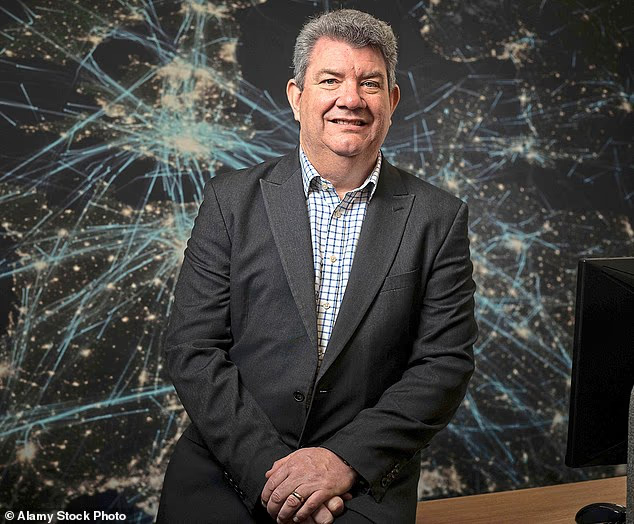
National Air Traffic Services boss Martin Rolfe earned £1.418m in pay and bonuses last year
A ‘technical issue’ brought chaos this week with up to 2,000 flights cancelled and a quarter of a million passengers stranded
This week’s events will add grist to that mill. On Tuesday, a ‘technical issue’ involving NATS’ flight processing system – a computer crash, in other words – brought chaos to the nation’s airports, with nearly 2,000 flights cancelled by Wednesday night and a quarter of a million passengers stranded.
Advertisement
Rolling news bulletins were filled with images of passengers sleeping on floors or confined like cattle on runway-bound planes for hours on end. Various airports resembled homeless encampments.
It wasn’t the first, or even second time in recent years that Rolfe has overseen this kind of disaster.
Another computer crash, in July last year, saw 150 flights cancelled, while a third, during the August Bank Holiday of 2023, saw Britain’s entire airspace closed on one of the busiest weekends of the year, affecting 700,000 passengers and costing the industry at least £65million.
Each time, Rolfe has sought to characterise the incident as a freak occurrence, claiming lessons will be learnt (he described 2023s meltdown as a ‘one in 15million’ event).
Advertisement
Yet his organisation’s technology keeps breaking. Little wonder that patience in the industry, which must count the cost of NATS failures, is now paper thin.
British Airways called this week’s events ‘incredibly frustrating’. Wizz Air boss Yvonne Moynihan called for Rolfe to resign, dubbing his organisation ‘not fit for purpose’.
She said: ‘In any industry, when you have had three failures you need to consider three strikes and you are out.’
Ryanair accused Rolfe of an ‘abhorrent failure’ to learn lessons of previous crises.
Advertisement
Its chief operations officer Neal McMahon said of NATS: ‘They have a crap system and they don’t invest in it. Instead they pay big bonuses to management and they pay huge dividends to the shareholders.’
Rolfe did at least face some music, telling interviewers he ‘understands the frustration’ of travellers and will ‘take accountability and responsibility’.
Yet whether that position is tenable remains to be seen. Rolfe has been in his job for more than a decade.
Advertisement
Stranded passengers were forced to sleep on airport floors during the disruption caused by the NATS system failure
He cannot exactly blame NATS’ creaking infrastructure or accident-prone tech platform on his predecessor. And his status as one of Britain’s best-paid quangocrats adds to his vulnerability.
That £1.4million package, made up of a salary of £650,000 plus a pension and bonus, is almost ten times what the Prime Minister commands, and far more than any civil servant is able to justify.
Yet since 49 per cent of shares in NATS are publicly owned, he is effectively half a state employee.
Advertisement
Rolfe’s pay, which allows him to live in splendour with his firefighter wife Anna in a mansion in Hampshire that boasts a swimming pool and tennis court, would of course be easier to justify were his organisation a model of ruthless efficiency. But evidence suggests that is not the position.
NATS employs more than 5,000 staff at a cost of £585million a year, meaning its average salary and pension package is a whopping £115,000. Even so, it has for years failed to employ sufficient numbers of air traffic controllers.
In 2024, Ryanair suffered a series of cancellations due to NATS’ ‘staff shortages’, prompting boss Michael O’Leary to say: ‘They bunk off. Through the summer on Saturday mornings there’s always a reduction in NATS capacity.
‘And when there’s a big English soccer match there’s a big reduction in capacity the morning after.’
Advertisement
Thanks to the fees it levies on every ticket sold, which equates to just over £2 a passenger, NATS makes a hefty profit, of £165.9million last year, down from £174.6million the year before.
Yet rather than investing this in making its computer systems fit for purpose, it has paid huge sums in dividends to shareholders, including Government and airlines.
Last year it paid £70million; the year before, £170million. From 2010 to 2020, £550million went out the door.
‘The main problem is its core computer in Southampton is decades old: part of it still operates on Cobol, one of the original coding languages,’ says aviation security expert Julian Bray. ‘They bolt on smart new front-end systems, but what they need to do is go back to square one and replace it.
Advertisement
‘But NATS has a very entrenched board that doesn’t want to spend the cash despite this being a major national strategic asset. If it fails it can devastate the economy.’
Employment practices are famously woke, with Rolfe taking great pride in a so-called ‘agile working’ regime that allows many highly paid staff to work remotely.
This exacerbated 2023s disaster, since the on-call engineer supposed to sort out the system when it crashed, was working at home.
He struggled to log in remotely, and had to drive to the office, which took an astonishing 90 minutes.
Advertisement
He then tried a ‘full system re-start,’ which didn’t work. It wasn’t until four hours had passed that someone thought to phone the system’s German manufacturer, who sorted it all out.
An official report into the incident sparked wide criticism, with O’Leary saying engineers were ‘sat watching Football Focus in their jim-jams’.
Yet three years on, NATS continues to endorse home working ‘where possible’.
As hundreds of thousands of passengers endured the chaos that has cost the sector, and Britain’s economy, tens of millions of pounds, the NATS website yesterday declared to potential recruits the virtues of ‘agile working’.
Advertisement
To put it another way, Rolfe has failed to learn from his mistakes, and travellers are paying the price.
Could it be long before Britain’s best-paid quangocrat becomes a former quangocrat?



























































You must be logged in to post a comment Login