



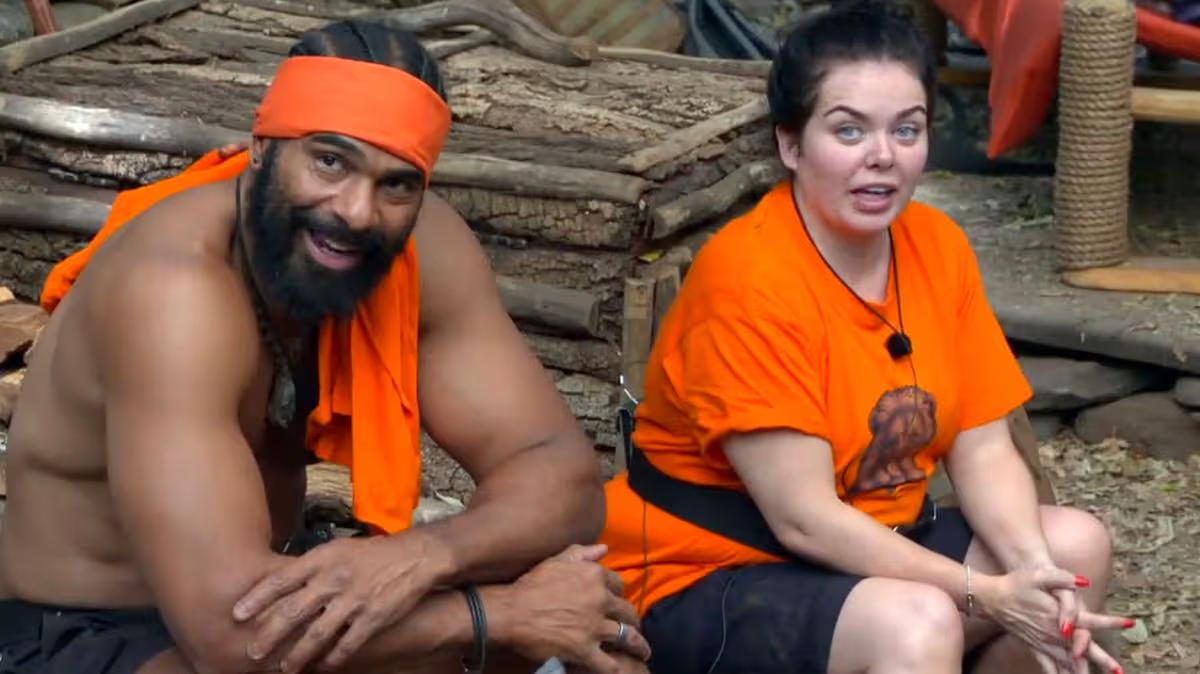
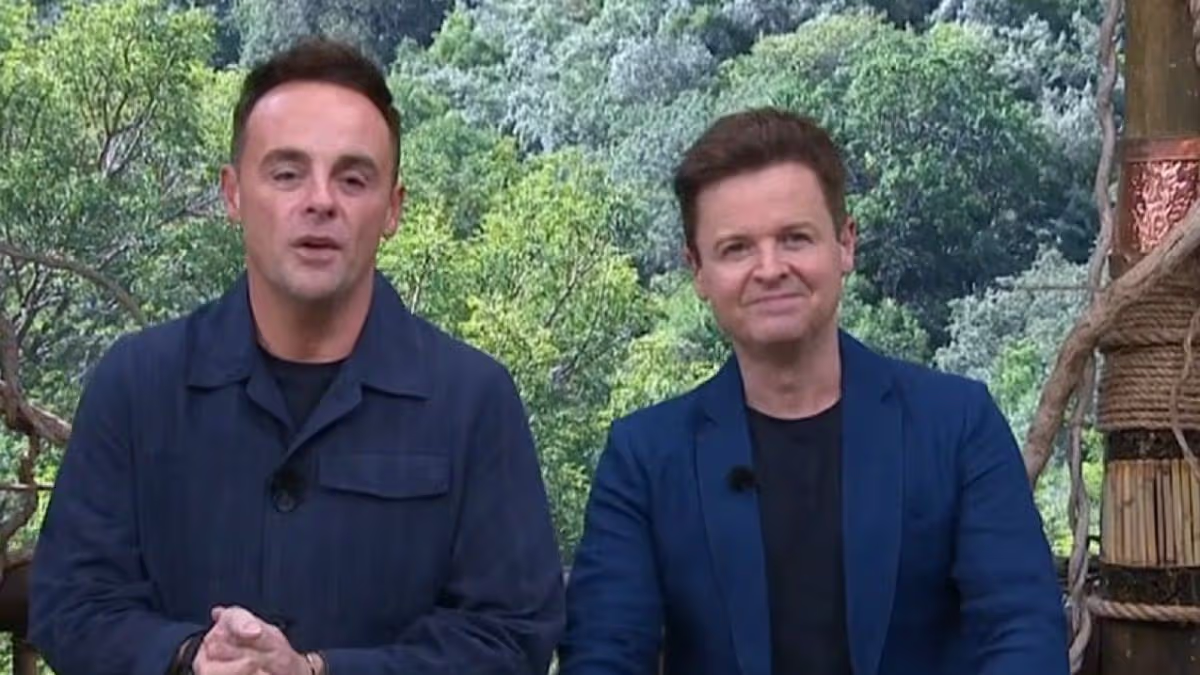
As I’m A Celebrity camp-mates continue to round on under-fire David Haye, the ITV show’s presenters Ant & Dec have taken the rare step of openly criticising a contestant
He’s sparked a sexism storm and has been labelled a ‘bully’ for his cutting comments to Adam Thomas, and now the star names have clearly had enough of David Haye.
On Sunday, the actor shared a heartbreaking post about how the boxer “broke” him during his time on the ITV show in South Africa. Adam suffers with autoimmune illness psoriatic arthritis and requested to sit out a Bushtucker Trial on Friday because he felt unwell and dehydrated.
David, not interested in the reasons why said he wasn’t up for the challenge, said his camp-mate was being “useless” and stated that he “doesn’t like men like that” as he tore a strip off the 37-year-old when he wanted to miss Termite Terror. Adam yesterday released a blunt statement, and if left fans wondering if there’s more to come.
He may have said sorry to him since, but the celebs have already started to round on former world champion David, who last week told the world that his girlfriend Sian had “the personality of a proper ugly bird,” before classlessly adding: “Most ugly girls realise they’re not pretty enough so they tell jokes so people overlook the fact that they’re not aesthetically amazing.”
Ant & Dec
It takes quite something for the show’s presenters top openly criticise a camp-mate.
But both Anthony McPartlin and Declan Donnelly launched into David on ITV1 show’s podcast I’m A Celebrity . . . Unpacked and the pair were clearly uncomfortable with what they were watching.
Ant said on the show: “It’s not a nice watch. He just kind of picks and picks at them. Adam has had a bit of a tough time and he’s not coping well. Clearly the banter has got too much. But David won’t stop.”
Agreeing with his co-star, Dec added. “It’s kind of crossed the line from banter. I don’t find it comfortable to watch.”
Ryan Thomas
The former Emmerdale and Waterloo Road star is a twin and also has an older brother, Coronation Street star Ryan Thomas, 41.
Ryan has been by his side the whole way in the jungle and told him: “I would like to say i would stick up for you in there but hes not the guy to pick a fight with we need to give @tonybellew a call bro!”
His twin Scott told him: “I wish I could have been there for you my brother…it makes me so angry that you went through that…but I’m so proud of how you’ve come out of the other side of all this…the strongest you’ve ever been and on an incredible journey…standing in your power.”
Gemma Collins
Concerned Gemma Collins revealed she had to “protect” Adam in the jungle.
She spilled on I’m A Celebrity: Unpacked. Gemma said: “I think David Haye might have seen a weakness in Adam, there were times where I had to protect Adam in there.
“If I was going full GC mode on David Haye, and a lot of them, then it would’ve been a disaster in there but I had to remain calm and composed and just remember that I’m not here to be performative. I am here as me. I think the fact that I stretched my arms out, I’m sort of saying to ’em all, without biting their heads off, ‘enough’”.
She went on: “I knew if it was ever gonna get too bad I would be taking David on. You know, bring on the next heavyweight champion fighting the world….. because if I feel that something’s too much, I’m not afraid to step up.”
Scarlett Moffatt
No-nonsence Gogglebox legend and former jungle queen Scarlett Moffatt had to beg David to stop as he ripped into Adam.
We saw the telly favourite, who was left angry and lost for words at the boxer’s sexist rant last week, try to get David to leave Adam alone when he became hellbent on trying to force the struggling star to accept the trial.
Scarlett, clearly in despair at the situation developing, said: “Stop it David, he’s not well!” After Adam took to Instagram to detail his jungle ordeal, she told him: “Adam I bloody love you. You’re one of the kindest men I know, if my little boy ends up being as caring as you then I know I’ll have done a good job a mam.”
Adam’s emotional statement
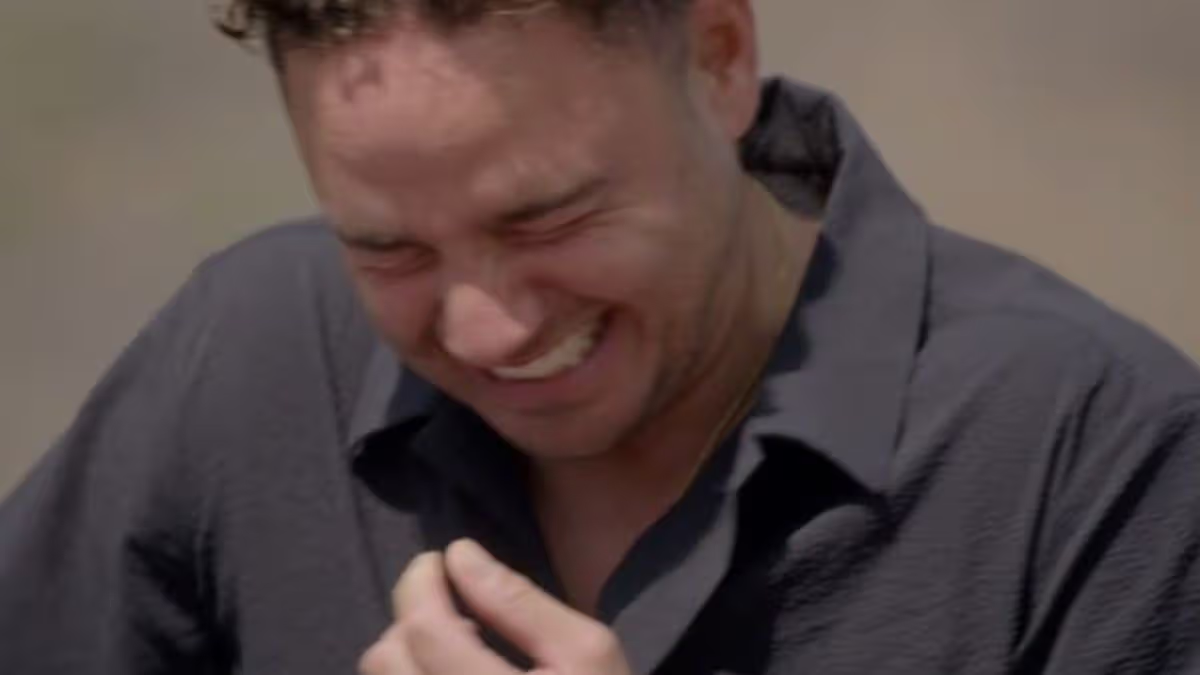
On Sunday, he spoke out and alongside an image from the show, which was filmed towards the end of last year, Adam wrote on Instagram: “Not going to lie,this picture breaks my heart, as I know on the inside what I was dealing with and truth be told I thought it was all my fault. I now know that’s not the reality… My time in I’m a Celebrity South Africa was one of the toughest things I’ve ever been through, physically, mentally, and emotionally.
“Watching it back hasn’t been easy at all. There were moments I felt pushed to my absolute limit, and if I’m honest, times I didn’t even recognise myself. Living with arthritis is something I don’t really talk about, as much as I should do…but in there it really took its toll. My biggest fight was pretending to put on a brave face and trying to hide the pain! that can be exhausting within itself.
“There were days my body just didn’t want to keep going, but I did. “I won’t sit here and say I handled everything perfectly, because I didn’t. I wish I spoke up for myself sooner. I wish I stood my ground instead of trying to keep the peace, but I’ve learned that being kind doesn’t mean being weak, and sometimes it takes going through tough moments to find your voice.
“Since coming out, I’ve taken time to process everything, and I’m in a much better place now. I let go of the anger, had the conversations I needed to have, and chose peace.
“What I’m most proud of, is at times like this I wanted to walk, I wanted to quit but I didn’t. Even when I wanted to walk away, even when it felt like too much, I never give up! and that means everything to me. He broke me in there, he pushed me to my limits, and I’ve told David this and he’s apologised and that’s that!”
* I’m A Celebrity…South Africa airs weekdays at 9pm on ITV and ITVX.





































You must be logged in to post a comment Login