




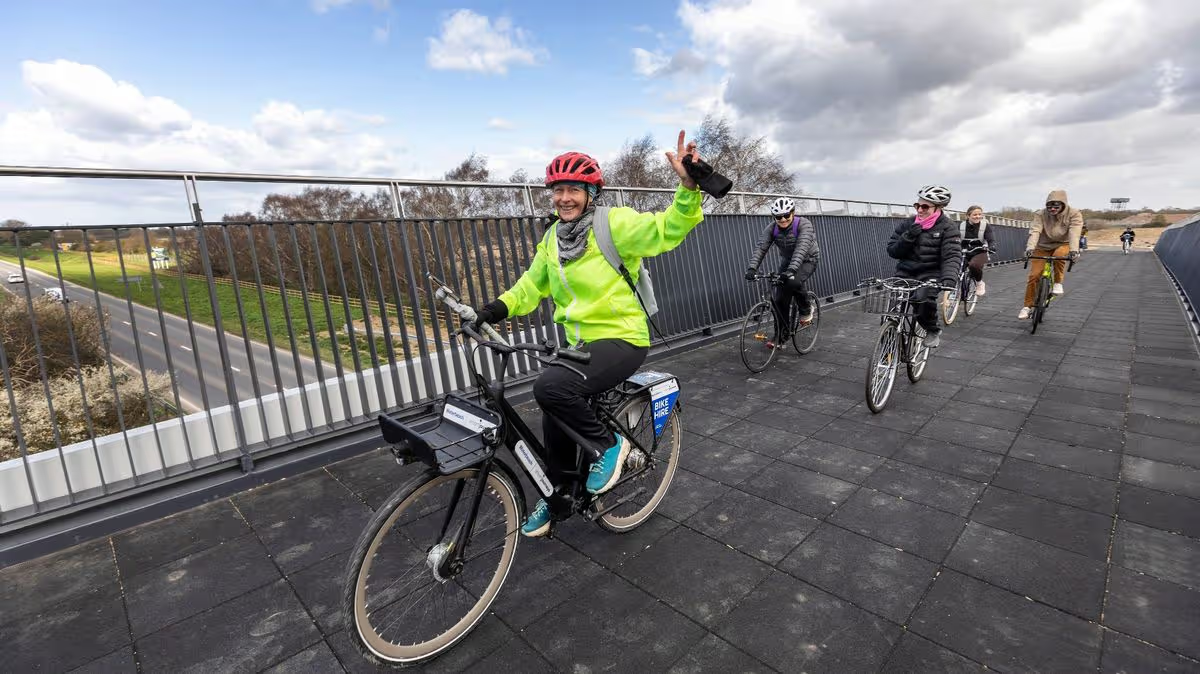
The bridge in Waterbeach forms part of an off-road route between Waterbeach and Cambridge
Cambridgeshire Live readers have mostly welcomed news that a new bridge for pedestrians, cyclists, and horse riders across a major road in Cambridgeshire has officially opened. The bridge forms part of an off-road route connecting Waterbeach with Cambridge.
Local residents were among the first to cross the bridge on foot and by bike, with the formal opening planned for May once landscaping work is completed. The route is intended to a safer, off-road alternative for travelling between Waterbeach and Cambridge. It passes landmarks such as Cambridge Science Park and Cambridge Regional College, before continuing into the city centre.
Fiona Reardon-Rose, Communications and Partnership Manager for the Waterbeach development, said: “The new bridge encourages active, low-carbon travel for residents and the wider community, whether commuting, exercising, or exploring with the family over the Easter break.
“It also makes journeys significantly safer by removing the need for pedestrians, cyclists, and horse riders to cross the A10 at road level. There has been a lot of excitement about the bridge, and now that installation and safety checks are complete, we wanted residents to start using it right away. We look forward to the official opening in the coming weeks.”
Commenter Freddly thinks: “This seems not only a useful and attractive asset, but also appealing because spending on active travel means the money wasn’t available for the endless demands of the motoring lobby. It’s a small win compared to the billions spent on them, but a win nonetheless.”
Gabriel B writes: “With the town set to have over 11,500 homes once complete, and a connection to the new park and ride by the bridge, it’s bound to be well used.”
Michael F agrees: “It’s set to be a fantastic asset for cyclists, walkers, and horse riders alike. I can’t wait to try it and see how it brings everyone together while making journeys safer and more enjoyable.”
Linda B complains: “Another thing for cyclists, I doubt pedestrians will use it, given how recklessly some of these cyclists ride.”
Michael F retorts: “In Cambridge, pedestrians use all the shared cycling and pedestrian bridges without any real problems. Aside from a very small minority, most cyclists are considerate, giving plenty of space and waiting patiently for pedestrians to cross safely.”
Squeaks33 thinks: “It definitely needs some lighting for safety, especially for early mornings, evenings, and during the darker months, to ensure it’s usable and secure for everyone.”
Meanwhile, Skipper says: “Meanwhile, potholes keep multiplying with insufficient funding, causing damage to people’s cars. Will CCC now run a month-long survey to check how much this bridge is actually used and by whom, to determine if the spending was justified? The bridge seems wide enough for cars, so it could be converted for vehicle use if push bikes rarely use it. From the photo, it doesn’t look heavily trafficked.”
Windypants retorts: “Car owners have worn out roads, pavements, and cycleways with their overweight vehicles, yet don’t pay enough tax to fix them. Better suspension could help.”
This new bridge seems like a great boost for cyclists, walkers, and horse riders. Would this make you ditch the car for short trips? Have your say in our comments section.












































You must be logged in to post a comment Login