




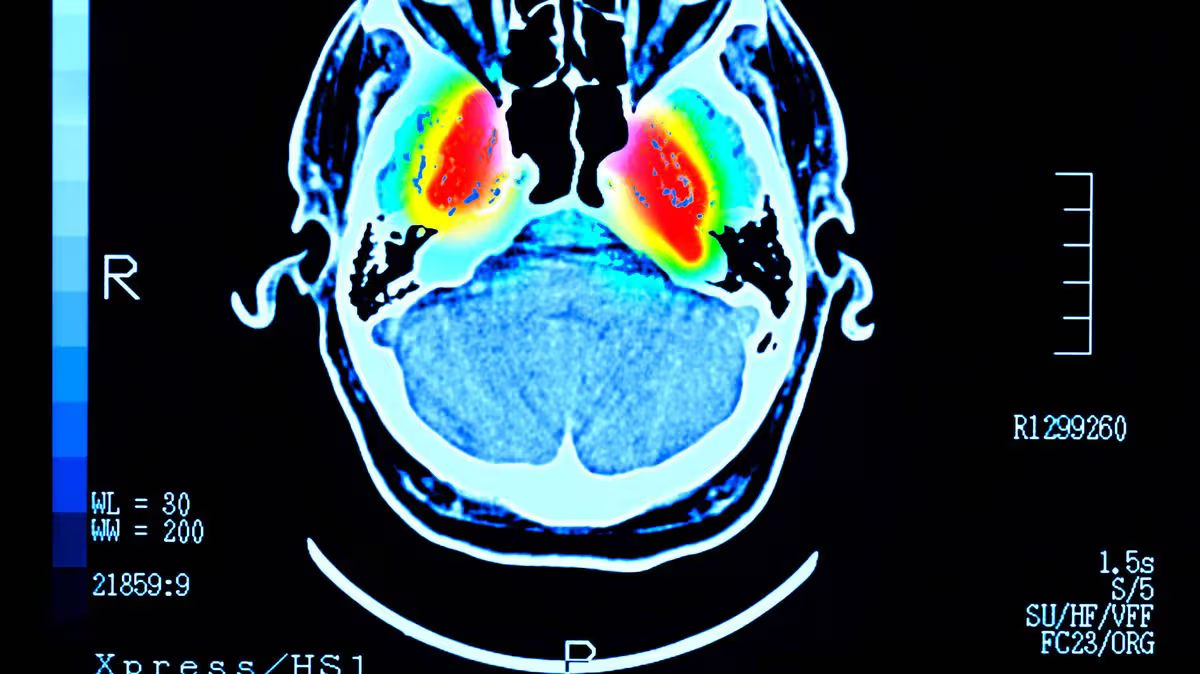
Scientists have warned that even moderate consumption may accelerate the onset of dementia
If you want to reduce your chances of developing dementia, there’s one habit worth giving up, or at least cutting back on.
Research from a study suggests that regular alcohol use may do more than just leave you with a hangover with increasing evidence indicating it could have a significant negative impact on your cognitive health.
According to the NHS, dementia affects more than 944,000 people in the UK. The study highlighted the link between the drink and the condition in a 2023 peer-reviewed journal by Atrium Health. Researchers used a ‘chronic drinking approach’ in which mice were given the option to drink water or alcohol across 10 weeks.
The US-based researchers were especially focused on exploring the link between alcohol consumption and the development of Alzheimer’s disease, which accounts for around 60% to 80% of all dementia cases. Their findings showed that even “moderate” drinking levels were sufficient to speed up brain atrophy.
This refers to the shrinking and deterioration of brain tissue, coupled with a rise in ‘amyloid plaques’ – harmful proteins closely associated with Alzheimer’s. “These findings suggest alcohol might accelerate the pathological cascade of Alzheimer’s disease in its early stages,” said Associate Professor Shannon Macauley, of Wake Forest University School of Medicine, at the time.
“These preclinical findings suggest that even moderate consumption of alcohol can result in brain injury. Alcohol consumption may be a modifiable risk factor for Alzheimer’s disease and dementia”, reports Surrey Live.
Importantly, these results aren’t confined to studies on mice. In 2024, researchers at Oxford University identified alcohol as one of the most significant contributors to declining cognitive health, with the potential to increase the risk of Alzheimer’s.
The team analysed the brain scans of 40,000 individuals to determine this. Professor Gwenaëlle Douaud, who led the study, said: “We know that a constellation of brain regions degenerates earlier in ageing, and in this new study we have shown that these specific parts of the brain are most vulnerable to diabetes, traffic-related air pollution − increasingly a major player in dementia − and alcohol, of all the common risk factors for dementia.
“We have found that several variations in the genome influence this brain network, and they are implicated in cardiovascular deaths, schizophrenia, Alzheimer’s and Parkinson’s diseases, as well as with the two antigens of a little-known blood group, the elusive XG antigen system, which was an entirely new and unexpected finding.”
Current UK guidance from the NHS states that being aware of your units will help you stay in control of your drinking.
To keep health risks from alcohol to a low level if you drink most weeks, it suggests:
- Men and women are advised not to drink more than 14 units a week on a regular basis
- spread ySpreadinking over 3 or more days if you regularly drink as much as 14 units a week
- If you want to cut down, try to have several drink-free days each week
It adds: “14 units is equivalent to 6 pints of average-strength beer or 10 small glasses of lower-strength wine.”
For information on alcohol units and support, visit the NHS website here.
What are the signs of dementia?
Accoridng to Dementia UK: “Dementia is an umbrella term for a range of conditions that affect the brain. There are many different types, subtypes and causes. It is a progressive condition, which means the symptoms always get worse over time.”
It added: “The most common symptoms of dementia include difficulties with remembering, thinking and speaking, which get worse over time. However, there are many other possible symptoms, and everyone has their own unique experience of the condition.”
You can read all about the signs and symptoms of dementia online via the Dementia UK website.






























































You must be logged in to post a comment Login