Connect with us
DAPA Banner
DAPA Coin
DAPA
COIN PAYMENT ASSET
PRIVACY · BLOCKDAG · HOMOMORPHIC ENCRYPTION · RUST
ElGamal Encrypted MINE DAPA
🚫 GENESIS SOLD OUT
DAPAPAY COMING

NewsBeat

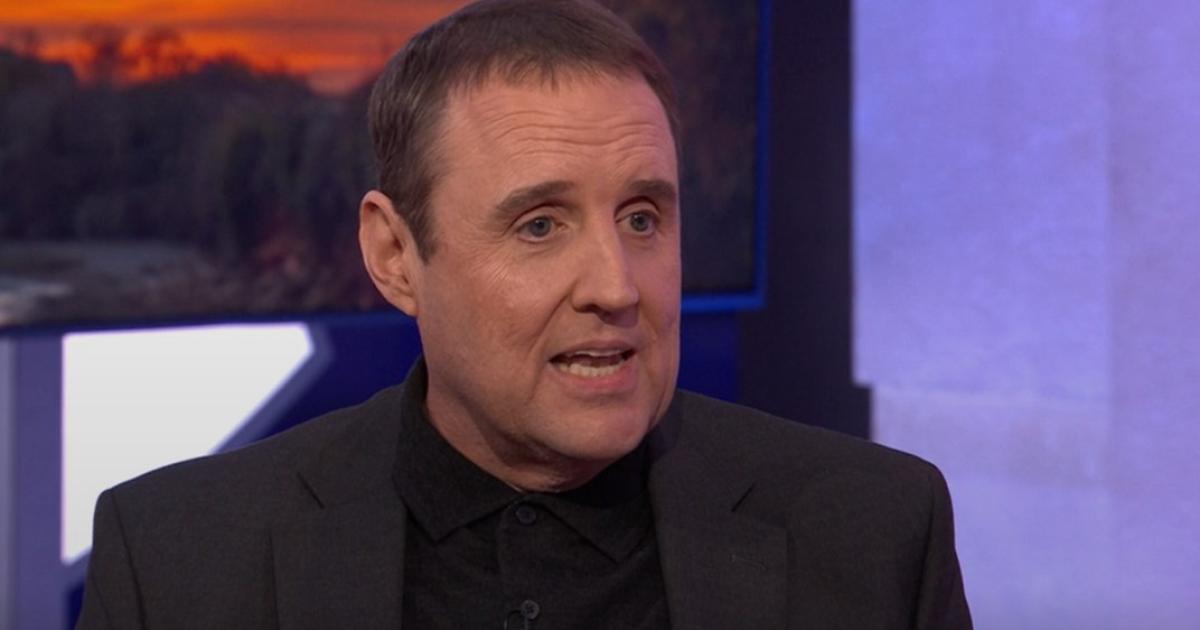
Peter Kay back in Bolton and delights fans with his homecoming gig

Published

on

Peter Kay back in Bolton and delights fans with his homecoming gig

Playing to an audience restricted to those with a Bolton postcode and in aid of Bolton Hospice, he delighted the packed hall.

David Pye, who was one of the lucky ones to have got a ticket said: “It was so good to see Peter back where it all began in his home town to a crowd made up of fellow Boltonians – and he didn’t disappoint.

“After announcing it was his first time back performing at The Albert Halls for 22 years, the first half of his show had a distinctly local feel.

Advertisement

“For anyone who has seen his latest show on his record-breaking tour, the first part of this show was different and without wanted to spoil it for anyone going, it takes a trip down a local Memory Lane.

“I have seen Peter loads of times, from big arenas to intimate warm-up shows and conversation fundraisers and this was as funny as ever. Peter was on top form on home turf.”

And even The Bolton News and local gets a mention as part of the act!

Those with tickets can book a Phoenix Nights themed meal at The Albert beforehand.

Advertisement

The Albert Halls is a venue he last performed at in 2003, recording the iconic Peter Kay: Live at the Bolton Albert Halls, which to this day is the biggest-selling stand-up DVD of all time in the UK.

And for those who are going to see the comic, you will be in for a treat as no one other than Boltonians would really get it.

Last year he appeared with fellow Boltonian Sara Cox at The Lowry Theatre for an ‘in conversation with’ and that was again for Bolton Hospice and also The Crescent Foodbank.

Advertisement

Source link

Continue Reading
Click to comment

You must be logged in to post a comment Login

Leave a Reply

NewsBeat

York man’s memories of TB and Fulford’s open-air school

Published

on

York man's memories of TB and Fulford's open-air school

IN the autumn of 1944 I fell ill and I was diagnosed as having Tuberculosis (TB).

My mother was devastated and confused. TB was associated with poverty, bad sanitation and a poor diet; none of these things applied to me, but the social stigma directed to parents of children contracting the disease didn’t discriminate.

To add to my mother’s worries, in late September my father was reported ‘missing in action’. It would be four months before she learnt he was safe.

At that time the only treatment for TB was extensive bed-rest and exposure to clean, fresh air. So I was confined to bed on a verandah at the rear of the County Hospital, Monkgate. Unfortunately, fumes from the nearby Gas Works prevented exposure to clean air, my condition gradually deteriorated and the TB spread to my spine.

Advertisement

Ivan Martin pictured in 2011.

As a consequence, in late 1945 I was transferred to the Adela Shaw Orthopaedic Hospital at Kirkbymoorside where I was confined to a bed with a frame to restrict my movement, the bed was then situated on a verandah open to the elements.

There I stayed, throughout the severe winter of 1947 until early1948 when I was assessed as ‘cured’.

Upon which I was freed from the bed and then, with the aid of the nurses, I learnt to walk, before returning home.

Meanwhile, in 1945 my father was liberated and came back to York to return to my mother and his trade as a carpenter/joiner.

Advertisement

He had seen me briefly in 1943, it would be 1948 before we saw each other again.

My memories of Fulford’s open-air school 1948-1950

York’s outdoor Open-Air School

When I left Kirkbymoorside I was fitted with a leather back support which was kept in place with two shoulder straps and a waist belt. I had to wear this all day even at night in bed.

My mother had to sew an insert into the back of my shirts to enable the shirts to fasten at the front.

Advertisement

My trousers would not hold up with a belt, so I had to use braces instead.

To hide the modified shirts and the embarrassing braces, my mother knitted special sweaters and sleeve-less pullovers with big chest sizes.

I wore these sweaters and pullovers as much as possible, even on hot days. With these clothes you couldn’t see the back support.

In the September of 1948 my mother first took me to board the school bus to go to the Fulford’s open-air school.

Advertisement

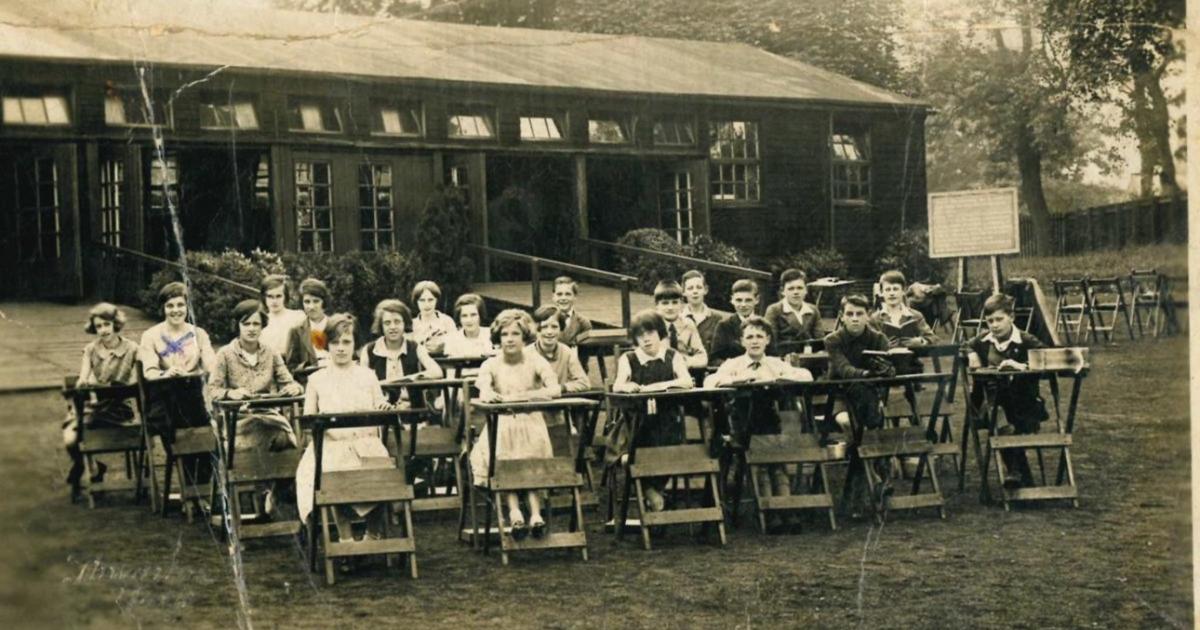
We got off in Fulford near the ‘Cross’, an adult escorted us up a lane before entering the school on the right, which I remember was a collection of dark wooden huts, surrounding a hardened central area.

The huts became our classrooms, they had very large windows which were wide opened most of the time, even during winter. In summer lessons were taken outside on the various grass lawns at the back of the huts.

Each day was the same, starting with a breakfast, usually porridge and toast followed by short walk to our classroom for lessons. Then mid-day ‘dinner’. The stew I remember, with mashed potato, followed by a pudding and custard, then we were always given an apple to eat afterwards.

After ‘dinner’ we were all required to lay down on a camp bed to rest or sleep for an hour. A mass of camp beds were laid out on the hard central ground even in the coldest of weathers (my Kirkbymoorside experience meant I never felt cold).

Advertisement

Pupils like Ivan Martin tooks naps outdoors at Fulford Open-Air School in York

The day concluded by being taken back down the lane to queue next to the ’Cross’ for the bus home.

I didn’t make many friends at the school. Most children knew each other away from school, I didn’t. They were obviously from poorer families, their unkept appearance with dirty clothes and poor personal hygiene, contrasted with a minority of other children, better dressed, but all strangers to each other.

It was to this group I gravitated. There was also a marked division between the ‘have’s’ and the ‘have-nots’. Bullying and petty theft was a problem; I ‘lost’ my gloves, my balaclava, colouring pencils and a penknife. My mother wrote to the school but I never got them back.

There was little time for lessons between meals and the ‘sleep’. Most of the lessons were taken outside sitting on the grass.

Advertisement

I didn’t like sums (maths), reading or writing which was all new to me, but enjoyed drawing, painting and colouring which I had done before in hospital. I also remember enjoying playing with, and stroking the pet rabbits. Academic achievement did not appear to be important, there was no ‘marking’ of work and no tests or reports. Parents were not made aware of needs, progress or lack of it.

Life after Fulford Open-Air School

I left Fulford Open-Air School in the early summer of 1950 and left behind friends that I never saw again. In the September, I went to the Glenn Junior School (later amalgamated with the Avenue School to become Tang Hall Junior School), I didn’t like it.

The lessons I found very difficult (except drawing and painting) and still wearing a back brace made me different, the centre of attention and cruel remarks, especially when I couldn’t play like the other boys.

Advertisement

I was not happy. The first Christmas report to my parents was not very good, I was marked bottom of the class for most subjects (except art) with nothing at all complimentary. The Open-Air School had done me no academic favours.


Recommended reading:


My father took hold of the situation. For months each evening I had to either read to him, copy writing, do simple maths, learn to spell words or explore facts about countries or people.We played games with a maths element like darts and dominoes. He was firm but gentle – I never came bottom of the class again.

The stigma of having had TB was a difficult burden; no-one called for me to ‘play out’ like the other local children did. I was an only and lonely child, spending much time on my own, drawing or painting.

Advertisement

When I was ten, I finally lost the need for my back brace and so dispensed with all movement restrictions.

Ivan Martin is pictured here with the Evelyn cup handed over by chair of YAYAS Rosemary Sutill, to president of York tennis club, John Scott, also pictured are David Brinklow and Ian Drake. Photo – York Press

At last I was the same as all the other boys at school. I now had the physical freedom to learn to play various sports from my father like table tennis, tennis and cricket.

Eventually, playing these sports would give me confidence – the platform for lasting friendships, respect (I played cricket for the school) and many happy times.

At the age of 15, I was finally discharged from the Children’s Health Clinic, ready for the adult world.

Advertisement

In 1964 the Fulford Open-Air School closed. In 1970 the Adela Shaw Hospital also closed. Thankfully the need for both was finally over.

History of York’s open-air school

Children taking classes at York’s outdoor Open-Air School

FULFORD’S open-air school was a very special school in York. It’s official name was Fulford Road School for Delicate and Partially Sighted Children.

In fact, the school was designed for children battling tuberculosis. It was based in a converted army hut in grounds at Fulford Cross.

Advertisement

It opened in Fulford in 1920 but was first established in 1913 in Castlegate – originally in the same building as the Tuberculosis Dispensary, with classes held in a garden next door. In 1919, records show there were 39 children enrolled.

At Fulford, extra accommodation was made and by 1956, 108 children were on the register.

Open-air schools were established across the UK and abroad between the world wars.

Their aim was to tackle the rise of tuberculosis (TB) during that time, under the belief that fresh air would improve health. The schools tended to be away from city centres and sources of pollution.

Advertisement

Children were taught in classrooms with open doors and windows, or outside. And sleeping was done outside or in wards that were exposed to the elements.

Source link

Advertisement
Continue Reading

NewsBeat

Cambridgeshire’s most popular names including Muhammad and Olivia

Published

on

Cambridgeshire Live

Has your child’s name made the list?

The most popular boys and girls names in each area of Cambridgeshire have been revealed. Every year, the Office for National Statistics reveals the most popular baby names from across the year.

Advertisement

Nationally, Muhammad, Noah and Leo topped the list for boys names while Olivia, Lily and Amelia were the top three girls names. Leo is a new entry into the top three this year, replacing Oliver which now ranks as the sixth most popular boy’s name. Lily has also overtaken Amelia, and has risen 11 places over the last 10 years.

But the popularity of a name can vary depending on where you live. Overall, the most popular boy’s name in Cambridgeshire is George, whist the most popular girls’ name is Poppy. You can see the top name for each area of Cambridgeshire below.

The most popular boy names for each area of Cambridgeshire are:

  • Peterborough – Muhammad
  • Cambridge – Gabriel, Oliver
  • East Cambridgeshire – George
  • Fenland – Albie, Edward and Freddie
  • Huntingdonshire – Theodore
  • South Cambridgeshire – George, Oscar

The most popular girls names for each area of Cambridgeshire are:

  • Peterborough – Amelia
  • Cambridge – Olivia
  • East Cambridgeshire – Elsie
  • Fenland – Florence, Grace, Maeve, Ophelia and Poppy
  • Huntingdonshire – Freya
  • South Cambridgeshire – Poppy

Some of the girls and boys name that were most popular in our county also featured in the top 10 across England and Wales. Girls’ names making it to the country-wide list include Olivia, Amelia, Freya and Poppy. For boys, popular Cambridgeshire names that feature in the top 10 across the country include Muhammad, Oliver, George, Oscar, Freddie and Theodore.

You can see how your name has ranked over the years using our interactive gadget.

Advertisement

New entries to the top 100 baby names included Eliana, Gracie, Anaya, Alba, Marnie, Lilah and Frankie for girls, and Vincent, Carter, Stanley and Ruben for boys. Compared with 2024, the names with the biggest increase in popularity in the top 100 were Ada (up 54 places), Maeve (up 24 places) and Charlotte (up 24 places) for girls; and Roman (up 33 places), Harry (up 26 places) and Finley (up 25 places) for boys.

Names that are no longer in the top 100 include Jessica (down 44 places), Ellie (down 31 places), and Amelie (down 22 places) for girls; and Bodhi (down 18 places), Grayson (down 14 places) and Brody (down 7 places) for boys.

Across England and Wales, the top 10 boys names were:

  1. Muhammad
  2. Noah
  3. Leo
  4. Luca
  5. Arthur
  6. Oliver
  7. George
  8. Oscar
  9. Theodore
  10. Freddie

The top girls names across England and Wales were:

  1. Olivia
  2. Lily
  3. Amelia
  4. Isla
  5. Florence
  6. Freya
  7. Poppy
  8. Elsie
  9. Ivy
  10. Isabella

Do you want more of the latest Cambridgeshire news as it comes in from across the county? Sign up to our dedicated newsletter to make sure you never miss a big story from Cambridge or anywhere else in the county. You can also sign up to our dedicated Traffic and Crime newsletters for the latest updates on the topics you are most interested in .

Source link

Advertisement
Continue Reading

NewsBeat

Renewable energy supporters want clean energy to power data sources

Published

on

Renewable energy supporters want clean energy to power data sources

HARRISBURG, Pa. (AP) — As the explosive energy demand of artificial intelligence spurs a renaissance for fossil fuels, renewable energy allies are trying to ensure that massive data centers will be powered by climate-friendly sources, too.

Lawmakers in states with stronger climate policies don’t want data centers to hinder their goal of slashing planet-warming greenhouse gas emissions.

In other states, environmental advocates and corporations with clean energy goals are working regulatory levers to push monopoly utilities that historically control the energy supply and grid access.

The problem clean energy proponents are confronting is that tech giants are demanding power at such speed and scale — some data centers consume more energy than a mid-size city — that the construction of wind and solar simply can’t keep up.

Advertisement

As a result, the AI boom has set in motion the biggest-ever construction boom of natural gas-fired power plants, not to mention moves by utilities, power plant owners and the federal government to keep aging coal-fired power plants operating past their previously scheduled retirement dates.

Legislation on the desk of New York Gov. Kathy Hochul would require data centers over a certain size to meet renewable energy benchmarks starting in 2030 and, by 2040, get at least 90% of their energy from renewable energies. The bill’s author, state Sen. Kristen Gonzalez, a Democrat, said the targets are realistic.

“We are literally talking about the wealthiest companies in the world that are looking to build in New York state, and if they have the resources to put billions of dollars into data center development, then they certainly should have the resources to build out renewable energy sources to power them,” Gonzalez told The Associated Press.

Worries that AI’s energy demands will scuttle climate goals

Michigan, Oregon and Minnesota led the way, enacting laws in the last 18 months designed to protect their pre-existing requirements that electric utilities use only emissions-free energy sources by 2040.

Advertisement

“That’s a challenging thing to meet with the data centers,” said Bob Jenks, executive director of the Oregon Citizens’ Utility Board, a nonprofit that advocates for lower utility bills and cleaner energy. “It was a challenging thing to meet without the data centers.”

Minnesota and Oregon ordered regulators to ensure that the energy that supplies data centers is in line with their emissions-reduction goals, while Michigan required hyperscale data centers to meet a clean energy requirement — 90% within six years — to access its lucrative sales tax exemption.

Bills with similar provisions emerged in more than a half-dozen states, including California, Illinois, New Jersey, Pennsylvania and Virginia.

“We just can’t do business as usual with a demand at this scale and facilities of this scale because the impacts are massive,” California state Sen. John Padilla, who sponsored a bill in his state, told the AP.

Advertisement

Pushing utilities to expand access to the power grid

Along with gas projects, tech giants like Google are investing billions into their own zero-emissions projects like solar, wind, geothermal, nuclear or battery storage.

Tech giants often find themselves confronted with utilities that can’t promptly supply the kind of power they need. So they — along with environmental groups, energy entrepreneurs and business associations — are trying to persuade regulators to expand access to the grid, including in states where legislators are averse to clean energy mandates.

Greg Robinson, whose Raleigh, North Carolina-based firm Aston Power helps procure power for data centers and other big energy users, likened it to the growth of FedEx when the business world decided that the U.S. Postal Service was too slow.

“Then business said, ‘Hey we’re doing more things now, the postal service is not keeping up so maybe there’s an opportunity for a new service,’” Robinson said.

Advertisement

Part of the exercise has been convincing utilities — which profit by building power plants and transmission infrastructure — that this won’t threaten their bottom lines, clean energy advocates say.

For one, utilities will get to connect a power source that they don’t have to charge customers for, especially at a time when electricity bills are rising quickly in many utility territories.

Utilities also get a large, long-term energy customer that pays them to expand the grid, instead of watching big customers build standalone power sources.

Regulators are greenlighting renewable energy projects

Last year, clean energy advocates persuaded Colorado regulators to order the state’s largest electric utility, Xcel Energy, to create a program to let big power users build clean energy projects that can be connected to the grid.

Advertisement

In an April regulatory filing, Xcel Energy said it agreed that a program could benefit customers, and cited two Google projects — one in Nevada to connect 115 megawatts of geothermal energy and another in Minnesota to connect 1,900 megawatts of wind, solar and battery storage — that were approved through similar programs.

Still, a fight over how Xcel Energy wants to design the program looms with clean energy advocates in front of state regulators.

Google’s agreement with NV Energy, Nevada’s largest for-profit utility, received approval from regulators last year and is widely viewed as the first of its kind. Google says it now has similar concepts approved or under consideration in eight other states, including Indiana, Kansas, Missouri and South Carolina.

The Corporate Energy Buyers Association — whose members include tech giants and large corporations — hammered out an agreement with Georgia Power, approved by state regulators there earlier this year, to allow their members to build clean energy sources and connect them to the grid.

Advertisement

They are now seeking something similar in North Carolina.

“These innovations are actually some of the most incredible and understated innovations we’re going to see in regulatory and energy procurement,” Nidhi Thaker, CEBA’s senior vice president of policy, told the AP. “And I think the actions that are being taken right now are actually going to set energy policy for the next two to three decades.”

___

Follow Marc Levy at http://twitter.com/timelywriter

Advertisement

Source link

Advertisement
Continue Reading

NewsBeat

EastEnders Zoe Slater axed and killed off from BBC soap

Published

on

EastEnders Zoe Slater axed and killed off from BBC soap

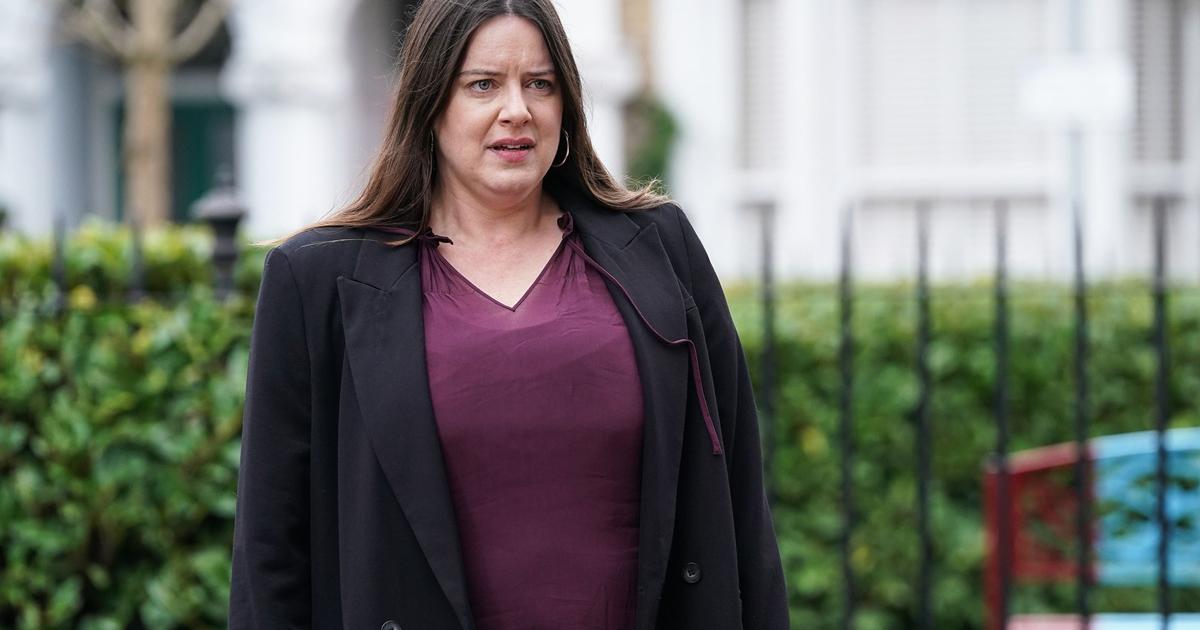
Ryan returned to Albert Square last year after her character, Zoe Slater, had a 20-year absence.

The star originally appeared on EastEnders from 2000 to 2005; Zoe’s return saw the character reconnect with her estranged mother, Kat Moon, played by Jessie Wallace.

But now Zoe is set to leave the BBC soap for good, with reports that scriptwriters have chosen to kill off the character.

Advertisement

EastEnders legend Zoe Slater axed and killed off

Zoe’s exit reportedly has already been filmed, with EastEnders viewers able to watch the scenes later this year.

Discussing the characters depature, a source told The Sun, “Michelle’s long-awaited return has been somewhat flat and lacklustre.

“There’s been a backlash about her comeback, leaving some fans disappointed with her on-screen presence.

“There has been some disappointment backstage that the return was short-lived, as everyone loved Zoe Slater’s historic moments.”

Actress Ryan has been featured in some of EastEnders’ most iconic scenes, including the plot twist that revealed her ‘sister’ Kat was actually her birth mother.

Advertisement

When the pair began to argue, Zoe shouted, “You can’t tell me what to do, you ain’t my mother”, as Kat replied, “Yes, I am!”

Ryan first made her return to EastEnders last June for a brief storyline, before fully returning a few months later in September.

Discussing the reports, an EastEnders spokesperson said, “We can confirm Zoe Slater will be departing EastEnders later this year. We wish Michelle Ryan all the best for the future.

Advertisement

“However, we never comment on future storylines as we don’t want to spoil it for the viewers.”

What is your favourite EastEnders scene with Zoe Slater? Let us know in the comments.

Source link

Advertisement
Continue Reading

NewsBeat

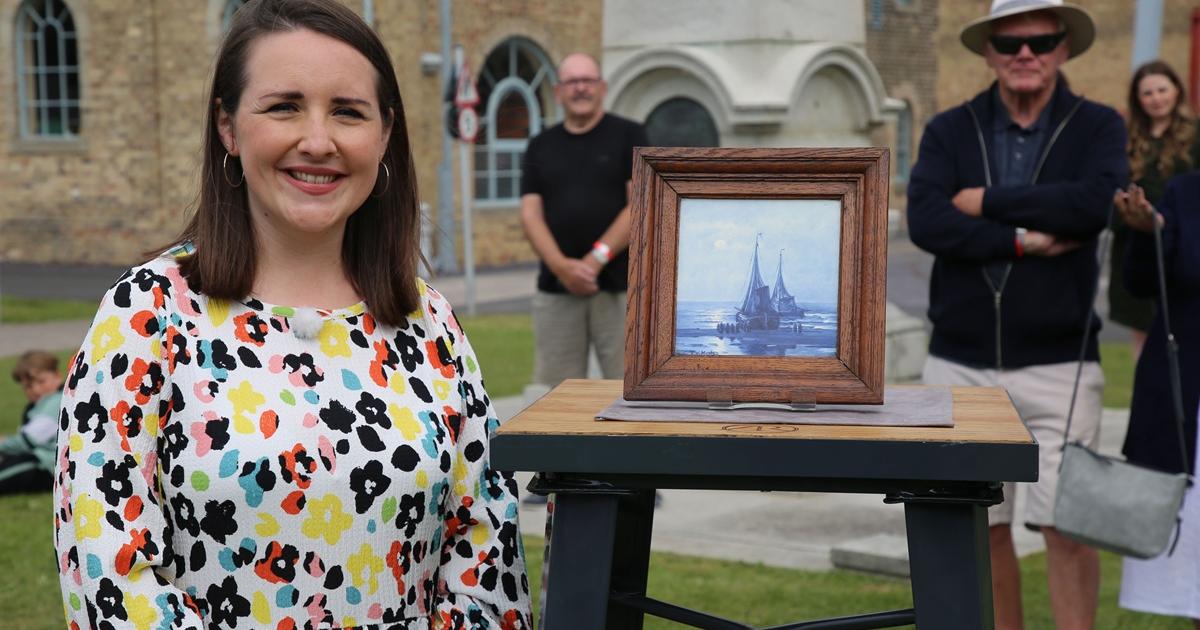
BBC Antique Roadshow star Theo Burrell dies aged 39

Published

on

BBC Antique Roadshow star Theo Burrell dies aged 39

The sad news was shared by Theo’s husband, Alex, in an Instagram post, describing her as an “incredible person”.

Sharing a picture of Theo, Alex wrote, “It is with great sadness that I share the news that Theo passed away peacefully surrounded by her family on Wednesday afternoon.

“Neither she nor her medical team foresaw this happening quite so quickly.

Advertisement

“She was an incredible person who fought hard for her family, friends and raising awareness of this cruel disease.”

Antique Roadshow star Theo Burrell dies aged 39

The touching tribute added, “She saw life events like her son’s first day at school and her wedding that a little over 4 years ago we thought she’d never see.

“The cancer community provided so much comfort and strength to her in her darkest moments.

“But most of all it provided hope, and I think what she would want most of all is for other people to find hope in her story.

“Hope that the statistics aren’t gospel and that one day they’ll be very different.”

Advertisement

In June, Theo had shared a post marking four years since she had been diagnosed with glioblastoma, a malignant brain tumour, adding that she had surpassed the 12-18 month timeframe doctors told her she had left to live.

During her illness, Theo became a Brain Tumour Research Patron in 2023, campaigning in Holyrood and Westminster on the importance of brain tumour research funding.

The Antique Roadshow star also helped launch the charity, Scottish Brain Tumour Research Centre of Excellence, which aims to create new treatments for glioblastoma.


Recommended Reading


Friends and followers of Theo have shared tributes to the BBC star, as Dan Knowles, Brain Tumour Research CEO, said: “We are heartbroken that we have lost the phenomenal, determined and truly inspiring Theo Burrell to this devastating disease.

Advertisement

“She was always very open about her prognosis and knew from the outset her cancer was terminal, but she was absolutely determined to make a difference for others.

“She constantly inspired us with how big her heart was and we will continue on our mission, driven by everything she taught us.

“Our thoughts are with her family, her friends and with all those who had the privilege of knowing her.”

Advertisement

Source link

Continue Reading

NewsBeat

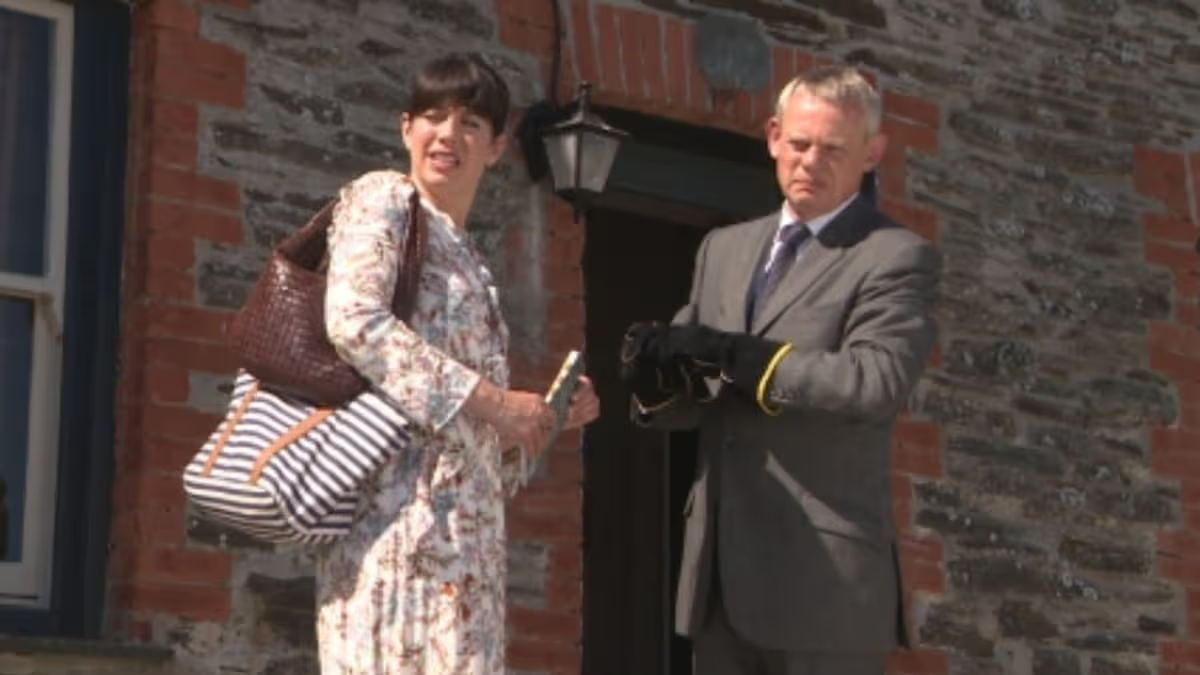
‘Brilliant’ Doc Martin spin-off series fans are ‘obsessed’ with now streaming

Published

on

Wales Online

The American adaptation of the popular ITV comedy-drama Doc Martin has finally arrived on UK screens

The American reimagining of a beloved ITV comedy-drama has finally arrived in the UK following its US premiere earlier this year.

Advertisement

The programme, a spin-off from Doc Martin, features The Good Wife star Josh Charles as Martin Best, an accomplished surgeon who abandons his thriving Boston career in pursuit of a more tranquil existence in a charming coastal community.

However, adjusting to his new surroundings proves anything but simple, as Martin grapples with a severe phobia of blood while dealing with the town’s vibrant and unconventional inhabitants. Having achieved remarkable success stateside, drawing approximately 15 million regular viewers by its concluding episode, the programme has at last reached British audiences.

This heartwarming medical dramedy delivers warmth, comedy and small-town appeal, positioning it as perfect fare for those seeking light, feel-good viewing.

Devotees of the original ITV programme have an additional bonus, with Martin Clunes appearing in a special cameo role, having famously portrayed the brusque yet endearing physician.

The reimagining tracks Dr Martin Best as he abandons urban living for a more peaceful future in the idyllic fishing village of Port Wenn, Maine, reports the Express.

Yet while anticipating a tranquil fresh start, he rapidly becomes entangled in the lives of the town’s distinctive characters, whose constant peculiarities guarantee anything but serenity. Enthusiastically received by audiences as “fantastic” and “delightful”, the programme has already captured hearts across the Atlantic.

On IMDb, one viewer wrote: “I cannot express how much I love this show. Please don’t let anyone, or anyone behind the scenes, quit working on the show. Everything’s perfect the way it is. From the actors chosen, the writers, the set design, the props. Everybody who participated in the show needs a HUGE raise. I hope it’s on TV for 20 years. I love this show!”

Advertisement

Another enthusiastic reviewer declared, “Brilliant Show – Awesome Cast,” while a third commented, “What a fun show! While I am a solid fan of the British Doc Martin, I actually like this version so much better.”

A further viewer added: “Charming and Heartwarming, My Latest Obsession. I have not seen the original Doc Martin, but Best Medicine has really captured my heart. I even watch it live every week which I haven’t done for a show in probably a decade.”

The show’s synopsis states: “Soon he’s introduced to Port Wenn’s community, filled with quirky but loving characters with no end of ailments for him to figure out and diagnose. However, as someone who is quite introverted and likes to keep himself to himself, he struggles with the adjustment.

Advertisement

“He’s also got a huge blood phobia, which doesn’t help his abilities as a doctor who may need to tend to wounds from time to time.

“But behind his brusque attitude and no-nonsense approach to a bedside manner, Dr Martin hides his own personal pain that he is hiding from the world which explains why he is the way he is. Will this little town bring him out of his shell?”

Leading the ensemble is Charles, known for his work in The Good Wife and The Handmaid’s Tale, alongside Abigail Spencer (Grey’s Anatomy) portraying Louisa Gavin, Josh Segarra (Abbott Elementary) as Mark Mylow, Cree (Big Sky) as Elaine Denton, and Annie Potts (Pretty in Pink) as Aunt Sarah.

Advertisement

The supporting ensemble also includes Stephen Spinella (American Classic) as Greg Garrison, Jason Veasey (Only Murders in the Building) as George Brady, Carter Shimp (The Holdovers) as Al Large, Alexandra Cica (I Still Hate You) as Harley, John DiMaggio (Perry Mason) as Bert Large, Clea Lewis (American Rust) as Sally Mylow, and Didi Conn (Harlan Coben’s Shelter) as Geneva Potter.

As a special bonus for devotees of the original programme, Martin Clunes appears in the ninth episode as Robert Best, the on-screen father of Charles’ character.

Best Medicine can be streamed on Sky One and NOW.

Source link

Advertisement
Continue Reading

NewsBeat

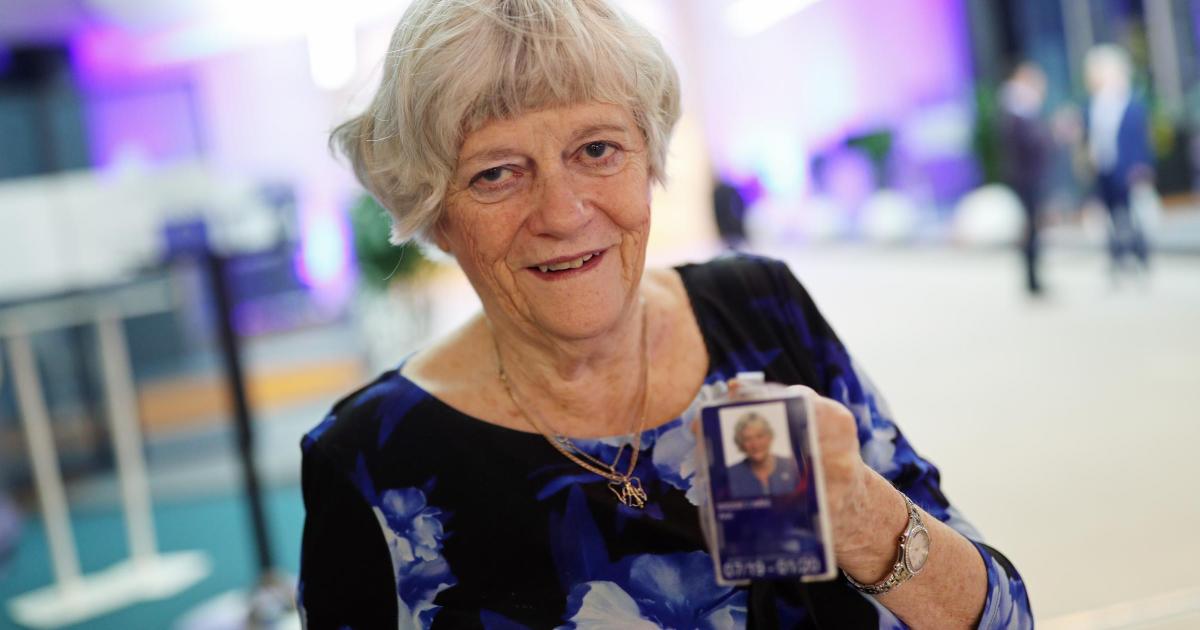
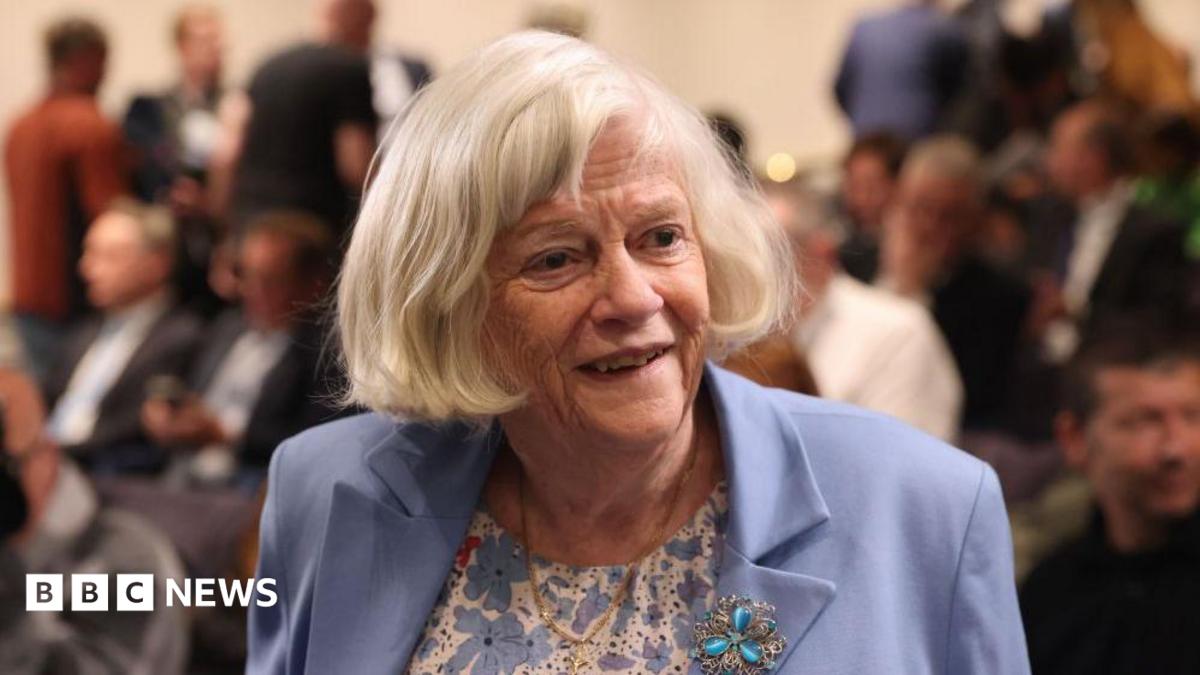
Man, 28, arrested on suspicion of murder of Ann Widdecombe

Published

on

Man, 28, arrested on suspicion of murder of Ann Widdecombe

Devon and Cornwall Police have confirmed that a 28-year-old man was arrested at an address in the South Yorkshire area this evening (July 11).

The suspect, who is a white British national, is now in custody.

Man, 28, arrested on suspicion of murder of Ann Widdecombe

A full statement from Devon and Cornwall Police reads: We can confirm that a 28-year-old man was arrested at an address in the South Yorkshire area this evening (July 11) on suspicion of the murder of Ann Widdecombe.

Advertisement

“The suspect, who is a white British national, is now in police custody.

“Miss Widdecombe’s family have been informed of this development.

“We were supported by Counter Terrorism Policing North East and South Yorkshire Police who carried out the arrest on behalf of Devon & Cornwall Police. At this time, there is still no information to suggest that this is a terrorism related incident and as a force we retain primacy of the investigation.

“This is a live and active investigation, and no further information will be issued tonight. We will look to provide further updates tomorrow (July 12).”

Advertisement

The 78-year-old former MP was found dead at her home on Haytor, Dartmoor, on Thursday (July 9).

Police believe she was attacked in her home at around 12.30pm the previous day.

The latest arrest follows a 26-year-old white British man arrested at an address in Newton Abbot on suspicion of murder on Friday (July 10), but was released from custody this morning (July 11).

Ms Widdecombe began her career as a Conservative MP in Kent in 1987.

Advertisement

She later served as an MEP for the Brexit Party and was a spokeswoman for Reform UK.


Recommended Reading


Outside of politics, she appeared on Strictly Come Dancing and Celebrity Big Brother.

Her family has requested privacy as they grieve.

Advertisement

Information can also be given anonymously by contacting Crimestoppers, and a major incident public portal has also been set up.

Source link

Advertisement
Continue Reading

NewsBeat

Nothing to suggest Ann Widdecombe killing was politically motivated, police say

Published

on

Amelia Lord is a white woman in her late 20s. She has shoulder length brown hair partly pulled back in a ponytail with frontpieces either side of her face. She has defined eyebrows and is wearing makeup, has a central nose ring and earrings, and is smiling at the camera. She wears a sleeveless black top. She is holding a pair of books and stands in front of a bookshelf with collections of books on it, including titles by Rebecca Yarros and the Harry Potter series by JK Rowling.

Police investigating the alleged murder of Ann Widdecombe say there is “nothing to suggest it was politically motivated”.

Devon and Cornwall Police added they are not looking for anyone else in connection with her death, following the arrest of a 28-year-old white British man in Rotherham, South Yorkshire, on Saturday.

The former MP and MEP, 78, was found with serious injuries at her home in Haytor, Devon, on Thursday.

Assistant Chief Constable Matt Longman said officers remained “open-minded” about a potential motive and that there was not thought to be any threat to the wider public.

Advertisement

The arrest was carried out shortly after 21:00 BST by officers at Counter Terrorism Police North East and South Yorkshire Police, on behalf of the force.

There is no information to suggest the attack was terrorism-related, Longman told reporters on Sunday.

Source link

Advertisement
Continue Reading

NewsBeat

‘One-sided’ World Cup refs accused of ‘giving Argentina every decision’ to send Lionel Messi into a World Cup semi-final against England: Switzerland stars rage – just days after Egypt’s ‘rigging’ accusations

Published

on

Lionel Messi approaches referee Joao Pinheiro in Argentina's World Cup quarter-final win

The World Cup referee who oversaw Lionel Messi and Argentina’s win to set up a semi-final against England overnight has been accused of ‘being against’ Switzerland as anger grows against the perceived treatment of the world champions.

Switzerland’s players and manager were incensed with Argentina’s triumph, 3-1 in extra-time, after their striker Breel Embolo became the first player to be sent off as a result of a new rule for mistaken identity.

With the quarter-final level on 72 minutes, Embolo was shown a second yellow card after a video assistant referee review which led to him being adjudged to have dived – rather than being fouled by Argentina’s Leandro Paredes. A new rule introduced for this World Cup states that if a player is booked or sent off – but the foul was actually committed by the opposition – the decision can be changed.

Switzerland’s response was emphatic. Defender Manuel Akanji said: ‘Every little thing was called against us’ and ‘I’ve never experienced such a one-sided game.’ Manager Murat Yakin called the refereeing ‘incomprehensible’.

Advertisement

Their comments will only add to the outlandish World Cup ‘fixing’ conspiracy theories which suggest Messi and Co are being favoured by FIFA to knock out England and lift the trophy in New Jersey next Sunday.

Lionel Messi approaches referee Joao Pinheiro in Argentina’s World Cup quarter-final win

Switzerland's players protest after Breel Embolo was shown a red card late in the game

Switzerland’s players protest after Breel Embolo was shown a red card late in the game

Advertisement

Egypt, who lost to Argentina in the last round, have already called for a FIFA investigation over the manner of their exit. Their winger Mostafa Ziko said: ‘This tournament has been fixed,’ while coach Hossam Hassan said: ‘This match was rigged, and the whole world saw it.’

FIFA’s chief refereeing officer Pierluigi Collina responded, stating that ‘nobody can question the integrity’ of the refereeing and ‘unfounded allegations have no place in our sport’.

FIFA president Gianni Infantino then said: ‘Tonight, I suffered with Argentina…but I’m neutral.’ His comments fueled the online feeling about Messi and his team-mates being handed a path to the final.

And now Switzerland are furious too. Portuguese official Joao Pinheiro was the man in the middle on Saturday night, while the VAR was Guillermo Pacheco of Mexico.

Advertisement

Inter Milan star Akanji, formerly of Manchester City, said: ‘When you have the referee against you, it becomes difficult. Every little thing was called against us. Every dive and every foul by the Argentinians went unpunished. I don’t usually say anything against the officials, but I’ve never experienced such a one-sided game as today.

‘As soon as the game was over, I thought: I’m so proud of our team. What we’ve achieved throughout the entire tournament, and especially today… We played against the world champions, and they didn’t stand a chance.

‘I can’t recall a single scoring opportunity from open play where we were lucky. If the game had continued 11 against 11, it would have likely gone in our favor.’

Egypt were also furious about the refereeing treatment of Argentina in the last round

Egypt were also furious about the refereeing treatment of Argentina in the last round

Advertisement

Team-mate Remo Freuler said: ‘We had high hopes and put in a superb performance until the red card. That, of course, disrupted our flow. I still don’t understand how VAR can intervene in such a situation. FIFA needs to explain that to me.’ 

Manager Yakin added: ‘After the equaliser, we clearly had the momentum on our side. Unfortunately, this was punished by a refereeing error. The referee shouldn’t have given the Argentinian a yellow card in that situation.

‘There’s no reason for it; the incident wasn’t malicious or rough or anything like that. Then he corrects his own mistake and punishes us. That’s incomprehensible and beyond my comprehension.

‘The decision is baffling to me, there was no reason for it. It’s a shame. We missed a great opportunity, and unfortunately, the journey is over. It hurts, but we can be proud. These are my great heroes.’

Advertisement

And captain Granit Xhaka said: ‘The rules are the rules, we can’t change them. But with a decision like this, they’re killing football, that’s my opinion. I appeal to you: Don’t kill the game!’

Down to 10 men, Switzerland clung on until the 112th minute, when Julian Alvarez curled a quite brilliant shot into the top corner. And then, in stoppage time, Lautaro Martinez slotted in a third to set up the latest chapter of one of football’s most storied battles.

Your browser does not support iframes.

Advertisement

Daily Mail Sport’s Daniel Matthews called Embolo’s dive ‘a moment of stupidity’. 

Embolo ended the World Cup just as he began it – separated from his teammates and wondering what he had done wrong. Nearly six weeks have passed since the Switzerland striker was blocked from traveling to the US because of issues with his visa.

It turned out his ESTA (Electronic System for Travel Authorization) was no longer approved. Thankfully, it didn’t take long for Embolo to rejoin the rest of the squad and over the past month he has led the line for Yakin’s side – scoring two goals, creating two more and causing Argentina plenty of problems here, too.

Advertisement

But then the authorities took issue with Embolo once more. Switzerland had just equalized when the referee consulted his monitor and realised that Embolo had dived. The striker was in tears after he was shown the red card.

Source link

Continue Reading

NewsBeat

World Cup 2026: England and Argentina’s football rivalry

Published

on

Michael Owen, Diego Maradona and David Beckham

Was this the moment the footballing rivalry between the two sides really developed? Possibly. Probably.

The two teams met in the quarter-finals in a match Argentina, to this day, insist they were robbed in, claiming Geoff Hurst’s winning goal was offside.

That was just the tip of the iceberg when it came to controversy though, with Argentina captain Antonio Rattin sent off after just 33 minutes for two offences in the space of three minutes.

The first was for a trip on Bobby Charlton, the second was for continuing to argue with German referee Rudolf Kreitlein.

Advertisement

The match was delayed for almost eight minutes as Rattin refused to leave the pitch.

England held on, in an incredibly ill-tempered affair, with Three Lions boss Alf Ramsey describing the Argentine side as ‘animals’ and insisting that his players did not swap shirts.

England’s 1966 World Cup-winning defender George Cohen reflected on the match in the Guardian in 2009.

“Tackling is fine,” he said. “But it was some of the snidey things, the spitting and pulling the short hairs on your neck, pulling your ear. They were trying to intimidate us. The trouble was when they found out they weren’t going to get their way they fell into some of the worst excesses I’ve ever seen.

Advertisement

“I just consider it the greatest shame that they didn’t play the game they were capable of. We might even have got beaten but they just should have got on and shown what they could do.

“There was a lot of commotion in the tunnel after the game. Nobody was allowed out so we didn’t see it.”

The match is also believed to have led to the introduction of red and yellow cards, which were first used in the 1970 World Cup in Mexico. Previously, referees had to rely on verbal warnings.

Rattin, who represented Argentina from 1959 to 1969 and played at the 1962 and 1966 World Cups, died at the age of 89 on Saturday.

Advertisement

Source link

Continue Reading

Trending

Copyright © 2025