Tributes have poured in for a father who was killed in a mass shooting at a traveller site on Sunday morning.
Jimmy Ward, who was in his thirties, suffered fatal gunshot wounds at the Calcutt Traveller Site, a permanent council-approved Gypsy and Traveller site near Cricklade, on the outskirts of Swindon.
Emergency services were called to the site just after 8.15am, where Mr Ward was pronounced dead at the scene.
A residential street has been cordoned off following the incident and a white forensic tent remains in place.
Advertisement
Wiltshire Police have launched a murder investigation following the event, with a man in his 70s and a woman in her 40s had been arrested on suspicion of possessing a firearm and assisting an offender. Both remain in police custody.
Tributes have now flooded in for Mr Ward, who it is believed leaves behind a wife and children.
One mourner wrote: ‘RIP to my daughter-in-law’s dad Jimmy Ward. Please everyone pray for all the family, my heart goes out to them all.’
‘Very hard to believe. Rest in heavenly peace my cousin Jimmy Ward,’ added another.
Advertisement
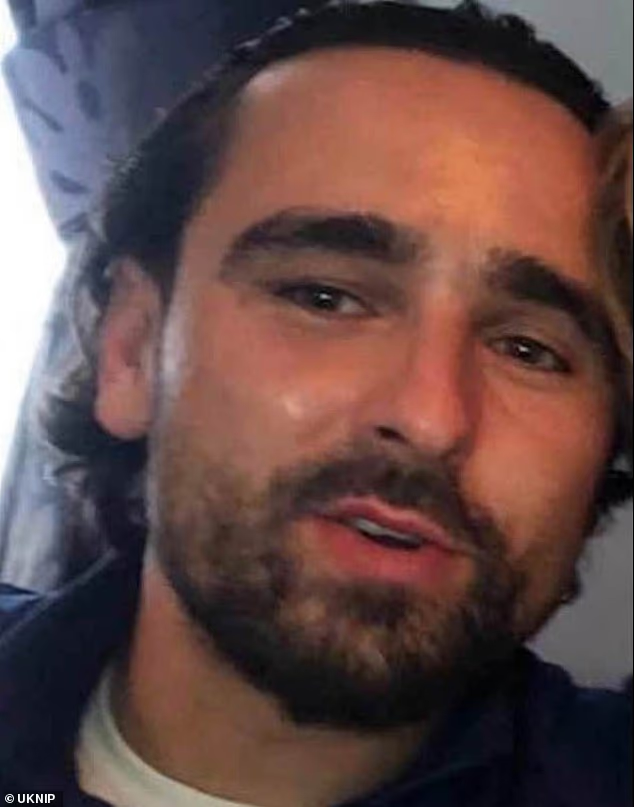
Jimmy Ward, who was in his thirties, was shot at the grounds in Cricklade in Wiltshire on Sunday
Emergency services were called to the site at around 8.15am, but despite the efforts of paramedics, Mr Ward was pronounced dead at the scene. It is believed he leaves behind a wife and children
A man in his 70s and a woman in her 40s had been arrested on suspicion of possessing a firearm and assisting an offender and remain in police custody
Advertisement
Police have launched a murder investigation following the fatal shooting
‘Thinking of all the family and friends at this very sad time, sending lots of love to his wife and children. Far too young to die, rest in peace,’ said another local.
Others have described him as ‘a gentleman.’
Detective Chief Inspector Phil Walker, from Wiltshire Police’s Major Crime Investigation Team, said: ‘This is an incredibly serious incident, and my thoughts are with the victim’s friends and family at this devastating time.
Advertisement
‘Enquiries are ongoing at the site and in the wider area to establish the circumstances which have led to this incident and locate all the people involved.’
He urged people to respect the cordon and road closure while the investigation continues.
Officers are also appealing for anyone who witnessed the shooting or saw anything suspicious in the area this morning to come forward.
Anyone with information is asked to contact police on 101, quoting log 95 of August 2.
Advertisement
Information can also be passed to Crimestoppers anonymously on 0800 555 111.
Share or comment on this article:
Pictured: Father killed in shooting at traveller site as man in his 70s and woman in her 40s are arrested over ‘murder’.
However Zoe, 36, has been totally absent for nearly six months, and after taking part in her usual Vlogmas, she vanished and shared her final post over the festive period.
Zoe posted a roundup of photos in January… then vanished (Picture: Instagram)
The couple have already overhauled the garden of their home (Picture: AlfieDeyesVlogs)
They also have an incredible vegetable garden (Picture: @zoesugg/Instagram)
Alfie, 32, meanwhile, has dipped in and out of his popular social media platforms and last posted back in April. A real contrast to his usual daily YouTube vlogs.
An update on the couple finally came to light recently, and it’s not quite what fans had anticipated.
A post on the local parish council website in Brighton shows Alfie has submitted planning permission for a donkey farm. Yes, that’s right, Farmer Deyes has entered the chat.
Local planning documents reveal that Alfie recently acquired a five-acre plot of land just north of their home and has submitted a planning application to the local council seeking permission to build a tractor parking area, a donkey enclosure and stable, a wildlife pond, and three shepherd huts.
But the application has angered locals over parts of the development, including 2.1-metre-high boundary fencing and new access gates.
The residents have argued that the works will cause safety hazards over the newly created access point onto their private lane, and that the heavy vehicles needed to care for the donkeys will cause disruption and damage the root systems of mature trees.
Advertisement
Zoe and Alfie have been building themselves a donkey sanctuary (Picture: Instagram)
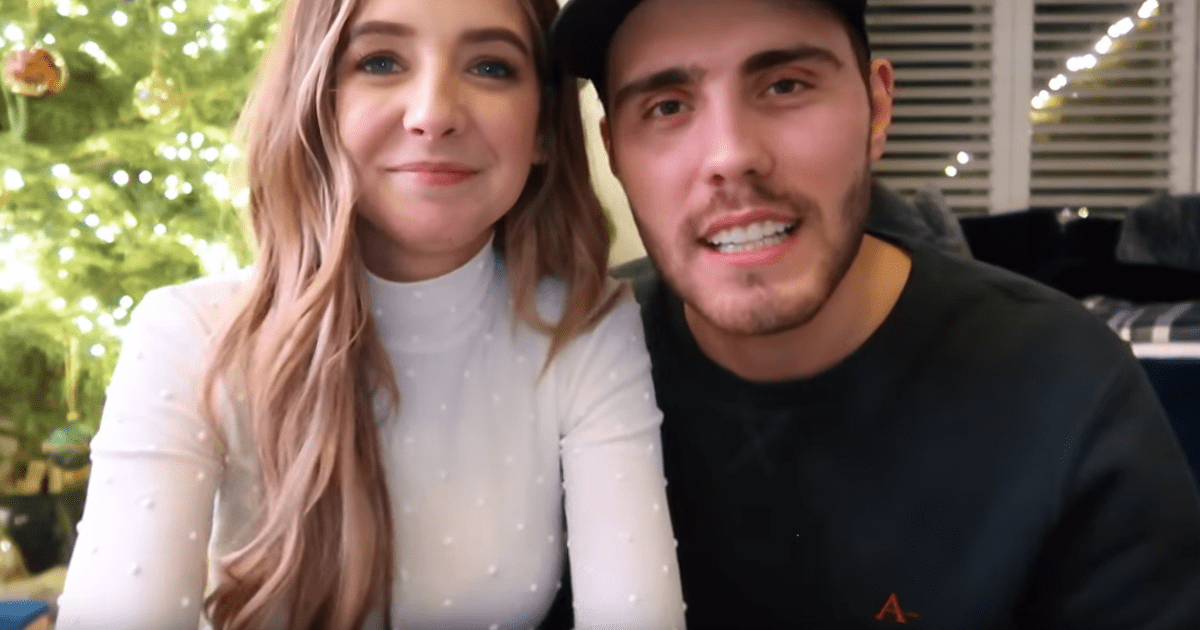
The couple made their relationship public in August 2013 and became engaged in September 2023 (Picture: YouTube)
Alfie’s planning agent has argued that the huts are not for residential or Airbnb use; instead, they will be used to store beekeeping equipment, land maintenance tools, donkey feed, and serve as a daytime rest room by the wildlife pond.
The project has received support from other neighbours, however, who say that the development is a sustainable return to the land’s historical agricultural roots and a genuine ecological asset.
Does that explain Zoe’s social media absence? Not entirely, but it has reassured fans that all is okay in the Deyes/Sugg household.
Metro has contacted representatives for Zoe and Alfie for comment.
Pamela Gwinnett stole almost £300,000 from Joan Green, treating her as ‘her own personal cash cow’
Rachel Smith Court reporter and Adam Care Live News Reporter
15:22, 03 Aug 2026
A runaway fraudster dubbed ‘the Black Widow’ who fled to Tenerife is finally behind bars. Pamela Gwinnett stole almost £300,000 from vulnerable pensioner Joan Green, who lived in Chorley.
Gwinnett wormed her way into the retired accountant’s luxury bungalow posing as a carer who had the pensioner’s best interests at heart. She then set to work isolating frail Mrs Green from her loving family before plundering the widow’s savings, reports LancsLive.
She changed the locks on the gated bungalow and switched the landline, telling cruel lies about family members who tried to reach her. She used Mrs Green as ‘her own personal cash cow’, splashing out on Botox, lavish meals and a luxury car.
Advertisement
When she was finally arrested, Gwinnett fled to Tenerife in a last ditch attempt to evade justice.
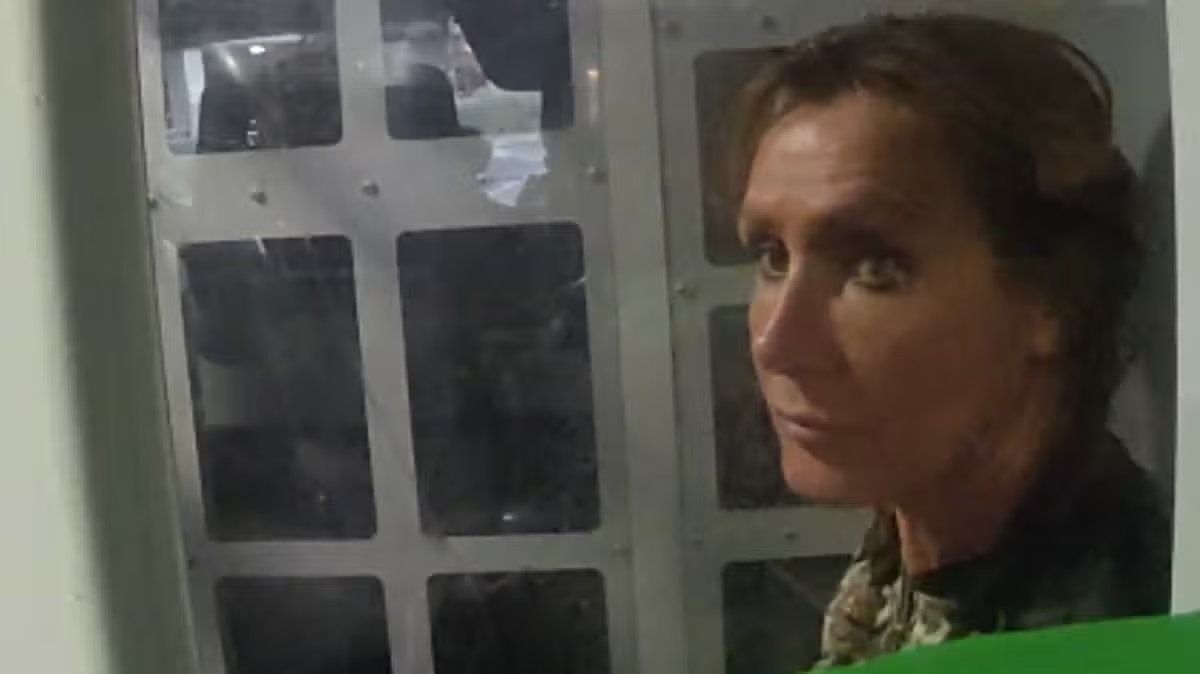
After 16 months on the run, the 63-year-old finally appeared in the dock at Preston Crown Court, dressed in the same leopard print bomber jacket she wore for her return to the UK.
Mrs Green’s grandson, David Bolton, said: “We are just relieved. We are very happy to finally see her in the dock and sent off to prison. It’s been a long time coming.”
Advertisement
Gwinnett’s barrister, Rosalind Scott-Bell, said the escape was driven by ‘fear, anxiety and mental health issues’.
But Mr Bolton said: “She has never apologised once. She’s shown no remorse whatsoever through any of this. Regards her anxiety, that comes with committing crimes and getting caught.
“She wasn’t that anxious when she was swimming in pools and getting her nails done, eating in restaurants and bars in Tenerife.”
In October 2025, Judge Michael Maher sentenced Gwinnett, of Greenfield Road, Adlington, to six years in prison for theft and fraud by abuse of position.
Advertisement
At today’s hearing he added an additional two months after Gwinnett pleaded guilty to a bail act offence.
Judge Maher said: “Despite the apparent difficulties with your mental health it seems you were sufficiently robust to travel outside the UK.”
He said Gwinnett had applied for a variation to her bail in order to scatter her brother’s ashes on the island, but the court was ‘rightly sceptical’’
Advertisement
“No evidence as to the existence of a brother has been produced, much less that he was deceased”, he said. On April 2, additional conditions were placed on Gwinnett, banning her from travelling abroad and ordering her to surrender her passports.
“On April 8, I was informed you had boarded a plane to Tenerife, about five hours after the court had refused your application. Despite the fact one of your passports had been returned to the authorities you used another passport in order to abscond from the jurisdiction.
“During your trial, although you were nearly 2,000 miles away in your Spanish apartment, you continued to besmirch Joan Green’s family with bogus allegations of impropriety.
“You apologise through Ms Scott-Bell for what you did. Quite frankly, your apologies stand no weight at all.”
Speaking outside court, David Bolton said: “We are relieved. We are happy to finally see her in the dock and sent to prison. It’s been a long time coming.
“My nan unfortunately died under Pamela Gwinnett’s control. Hopefully she didn’t believe the lies that Pamela was feeding her.
Advertisement
“She’ll never get justice but we as a family can get on with moving on with the rest of our lives.”
Gwinnett was ordered to pay £350,180 to Mrs Green’s family during a Proceeds of Crime hearing. It is understood property has been seized in a bid to recover the money.
Coronation Street star Kimberly Hart-Simpson, who played Nicky Wheatley on the ITV soap, shared a humorous update about her new living arrangements on Monday afternoon
One former star of Coronation Street has revealed that she is “back living in student halls” six years on from when she found fame on the ITV programme.
Advertisement
Actress Kimberly Hart-Simpson, 39, became known to fans of the world’s longest-running TV soap when she was cast as escort Nicky Wheatley in 2020, and her character became a love interest for Daniel Osbourne (Rob Mallard) shortly after his wife Sinead (Katie McGlynn) had passed away.
The soap star, who has also appeared in Hollyoaks, Brassic and Celebs Go Dating, is taking her play Amnesia to the world-famous Edinburgh Fringe and posted a humorous update to social media about her living arrangements as she prepares to perform at the Pleasance Theatre.
She wrote on Instagram: “I am officially back living in student halls during Ed run. I don’t know who all of my housemates are yet. But I hope they like ne and we take it in turns changing the bin. Also pray I ain’t the biggest sl*g when we inevitably play never have i ever!”(sic)
The Edinburgh Fringe brings in around three million visitors every year and stages more than 1,000 new productions across the summer. Several famous faces got their start by performing at the festival, with comediennes such as Catherine Tate and Sarah Millican as well as Mr Bean and Blackadder star Rowan Atkinson all starring in shows there early on in their careers.
Hit musical Six, which reimagines the six wives of Henry VIII as pop stars based on the likes of Britney Spears, Ariana Grande and Beyonce, premiered there as a university production before going on to dominate the West End and Broadway.
Written and performed by Kimberly, Amnesia sees the soap star playing Kelly, a dementia carer in Rhyl who risks losing everything when her best friend announces that she is moving to a city with a Pret a Manger in it.
Advertisement
Kimberly was first seen on Coronation Street in 2020, and starred throughout that year but has made various guest appearances since, the latest of which was in 2024.
But her alter-ego managed to make it out of Weatherfield alive, so the actress previously shared that she would be happy to make a return to the programme at some point.
In early 2025, Kimberly told The Mirror: “We met Nicky four years ago and I’m still going,” adding that her appearance on the show was initially supposed to be a brief stint but is still “popping back and facilitating storylines.”
Advertisement
Kimberly added: “That’s the great thing about soaps, you chop and change into other characters’ lives. Of course I’d consider going back – I look at that time with such fond memories and have such positive emotions towards the show.”
The giant inflatable aqua park is believed to be the biggest in the region
A new giant inflatable outdoor waterpark has opened near Bolton.
Advertisement
With the summer holidays upon us, families flocked to be first to try out the new North West Aqua Park, which opened on Monday morning at the Anderton Centre, Chorley.
Believed to be the biggest in the region, it’s set against the stunning backdrop of Lower Rivington Reservoir and is big enough to fit 60 people at a time.
Designed for families, friends, community groups and thrill seekers alike, the Aqua Park offers an action packed experience featuring giant inflatable obstacles, slides, climbing walls, balance challenges and splash zones, all under the supervision of a fully qualified lifeguard team.
Click here to keep up to date with the latest Family news in our newsletter
Advertisement
Tickets have already been flying out for the new attraction, which is open almost every day of August – except for 15 and 22 – and then weekends throughout September.
Sessions cost £20 per person for an hour-long session, which includes a safety briefing. Wetsuits and life jackets are included, but if the water is warmer then wetsuits won’t always be essential. Participants also need grippy gel socks, which cost £2 a pair, or they can take their own trampolining socks along.
The launch of the Aqua Park represents ‘a significant investment’ in outdoor recreation at the centre, which is a registered charity and delivers adventure activities including kayaking, archery, paddle boarding and more. The summer school holiday club is booked up but there are spaces available for October half term.
Advertisement
Those behind the new venture say the response from the public has been ‘overwhelming’, with strong demand and bookings continuing to grow as the summer holidays get underway.
Jason Pendlebury, chief executive of the Anderton Centre, said: “Today marks a hugely significant milestone for the Anderton Centre. Seeing the Aqua Park come to life and watching so many people enjoying the experience has been incredibly rewarding for everyone involved.
“The enthusiasm from our first visitors has exceeded our expectations, and we are absolutely delighted by the level of public interest and the number of bookings we have already received.”
He added: “This attraction represents much more than just a great day out. As a registered charity, every booking helps us continue our work in providing outdoor learning and adventure opportunities for children, young people and community groups across the region. We’d like to thank everyone who has supported the project and, of course, everyone who has chosen to visit us on our opening day.”
Promising ‘an unforgettable adventure on the water’, the minimum age is six and minimum height 1.1m. Children aged six to 11 must be accompanied by an adult on the Aqua Park, at a ratio of one adult to two children. Children aged 12 plus will need to be accompanied by an adult if they are not confident in open water or in large groups of people.
Sessions run from 9.30am, with the last one from 4pm to 5pm. Tickets can be booked on the website here.
The court heard Phillips moved downstairs to sleep next to his mother’s body. At times he would open the freezer and hold her hand.
Sylvia Phillips had 26 appointments with her local GP practice in 2021, and six in 2022, after which there was no further contact.
The court heard she was last seen in A&E on 24 September 2022 and her local GP made a house call on 26 September but her son continued to pick up her prescriptions.
Sylvia Phillips was invited to a review by the practice, but her son said she would not come to the surgery and she did not need the blood tests.
Advertisement
Christopher Phillips received a total of £78,190.92 in state pension, pensions credit, attendance allowance, winter fuel payments, cost-of-living payments and housing benefit payments, which would have ceased had the death been reported.
He had been her primary carer since 2008, and the court heard he had resigned from his job in late 2022 when her health declined further. The pair were described as “somewhat isolated”.
Ruth Smith, defending, said Phillips had told police: “I basically didn’t want to let her go.”
She added: “He described talking to her as if she was still alive… Sitting next to her, talking to her about television programmes, Coronation Street, the horse racing, just as they always did,” she said, adding that he was a “vulnerable individual”.
Advertisement
Phillips sobbed in the dock as Smith said her client was “extremely close to his mother” and was in “extreme grief” following her death.
She said he showed a “lack of acceptance” about her passing and “had almost created a false narrative that she was still alive”.
Sentencing Phillips, Judge Lloyd-Clarke said he had “deliberately concealed” his mother’s death and “took steps to give the impression that she was still alive”.
“You continued to collect her prescription and lied to medical professionals and eventually the police,” Lloyd-Clarke added.
Advertisement
“Rather than notify the authorities and make arrangements for her lawful burial, you purchased a chest freezer on March 10th and concealed her body within it,” she said.
Lloyd-Clarke added that a timescale for confiscation proceedings would follow.
The fire service confirmed that a casualty died at the scene
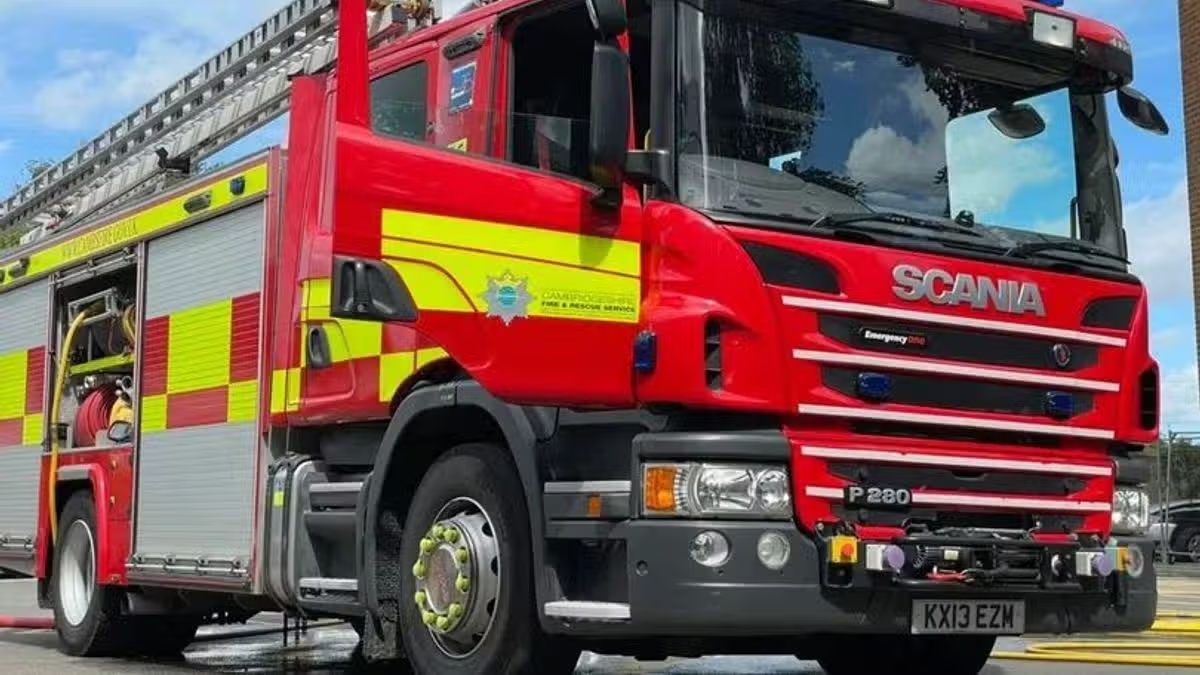
A person has died after a house fire in a Cambridgeshire village. Crews from Ely and Littleport were called to a house fire on Eagles Lane in Little Downham at 6pm on Friday (July 31.
Advertisement
A fire service spokesperson said: “Wearing breathing apparatus, firefighters used a hose reel to extinguish the fire and cleared the smoke using a positive pressure ventilation fan.
“Sadly, a casualty died at the scene. Crews returned to their stations by 8.15pm. The cause of the fire was accidental.”
The fire service did not release any further details about the casualty or the incident.
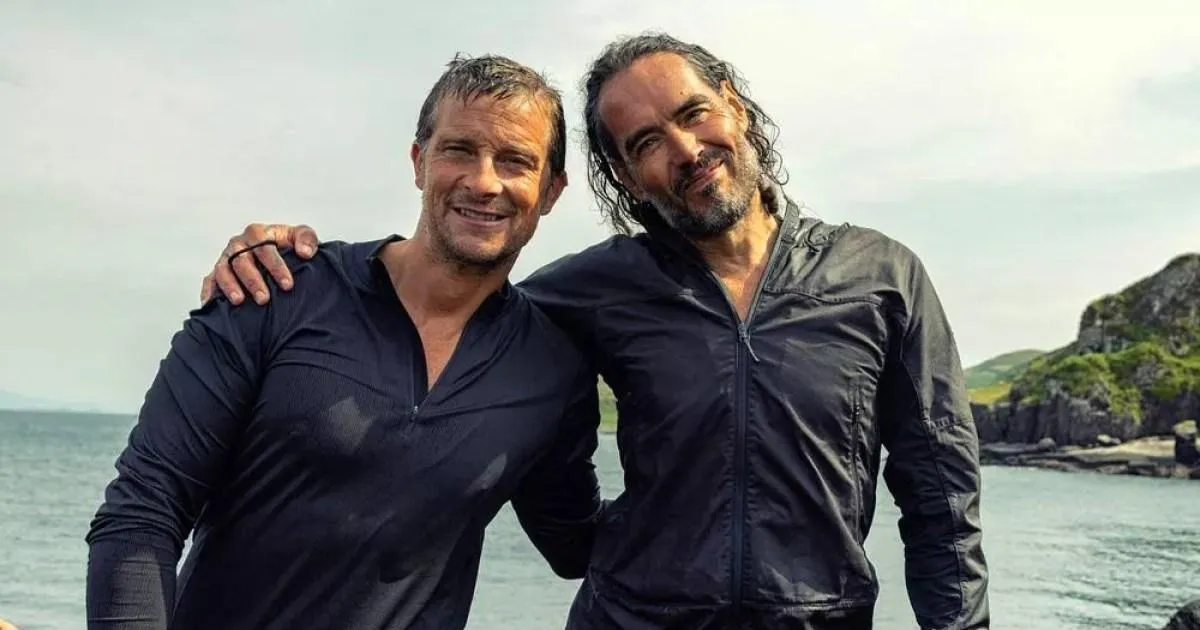
Posting a picture of the trio hugging in the river, Brand wrote: ‘Me, Bear Grylls, The River Thames and of course, The Holy Spirit.
While speaking to Grylls ahead of his new Amazon Prime series The Chosen in the Wild, Metro questioned whether his feelings on baptising Brand have changed in the years since.
After facing backlash for standing in solidarity with the movie star, whom he had filmed an episode of Running Wild with the year before, Grylls initially told the Daily Mail that ‘it is a privilege to stand beside anyone when they express a humble need for forgiveness and strength from above.’
Advertisement
A year later, he doubled down on his decision, telling The Times that he ‘tries to live in a way that I never judge and I always try and love’. He shared that his guiding phrase was often ‘What would Jesus do?’
Two years on, with Brand admitting to having sex with a 16-year-old at age 30 just weeks after pleading not guilty to a string of new rape and sexual assault charges, we ask if he still stands by that ethos?
‘I think all our faith changes and evolves, and I’d also say I have many doubts as well. I really struggle with so much of it.
‘But I don’t know, I think at heart, my faith says we’re connected together and we need each other, and not to judge people and to love people,’ the TV personality says.
Advertisement
He also shares that the phrase, ‘What would Christ do?’, very much remains a steady mantra for him and is one that shapes how he approaches ‘relationships and your own life and risk and adventure and all that stuff.’
‘I really try and keep that as that compass in my life. I don’t know. It’s like I say, I’m not super religious, but I do try and just start the day as a discipline on my knees and to say sorry, and to say thank you, and then to say help for the day ahead, and then I crack on with it.’
As Grylls explores his faith on the public stage, he fulfilled a longtime ambition in 2025 by retelling the life story of Jesus with his Sunday Times bestseller, The Greatest Story Ever Told, a project he worked on while filming the Netflix show, Celebrity Bear Hunt.
His new show sees him take the cast of historical series The Chosen in the wild (Picture: Prime)
Now, he’s getting up close and personal with Jesus in an entirely different way with his new Amazon Prime series, The Chosen in the Wild.
Advertisement
For those not in the know, The Chosen is a wildly popular show about the life and times of Jesus Christ, boasting hundreds of millions of viewers, five seasons and counting and a fiercely loyal global fanbase, including Grylls himself.
Now the Emmy winner is taking the main cast members, Jonathan Roumie (Jesus), Paras Patel (Matthew), Elizabeth Tabish (Mary Magdalene), Noah James (Andrew), and Luke Dimyan (Judas), on their own adventures in the wild.
‘I don’t think I’ve ever had so much emotion across so many episodes, such consistent, honest vulnerability and heart from actors as I have in Chosen in the Wild, because these roles really have changed their lives, and that surprised me. It really did,’ he shares.
In fact, the show has even made one of his lifelong wishes come true, albeit in an unconventional way.
Advertisement
Jonathan Roumie plays Jesus in The Chosen (Picture: Getty Images Europe)
‘I was nervous because my secret dream would be to do Running Wild with Jesus, and this was about as close as I was ever going to get.
‘We’d done President Obama and Modi and Julia Roberts and Ben Stiller and all these people, but this was just special. I was nervous beforehand. I wanted to do it justice because I knew that so many people would be excited about this one,’ he reflects.
In fact, the thrillseeker went as far as to say that out of the dozens of shows he’s done throughout his career, this is the one with ‘the most fan anticipation’.
‘The fans of The Chosen don’t really know what the actors are like. People are desperate in the same way I was. I was a fan of the show, but I was so excited to take Jonathan away to actually find out what he was really like, and this show really shows that in a very visceral, powerful way,’ he teases for the 280 million reported viewers of the beloved series.
He promises a refreshing level of candour from Jonathan, who has a whopping 4.2 million followers on Instagram, who is ‘incredibly honest about his battles and struggles with playing Jesus on a personal level’.
Advertisement
‘[Jonathan] is such a beloved person to so many viewers, so many different cultures and countries. They’re not just watching it for entertainment. The Chosen is different. It really goes into people’s hearts and affects their lives. [This show] felt different from Running Wild for me,’ he shares.
For Grylls, his Christian faith ‘comes alive’ most in nature when he’s in the mountains again, as well as among friends.
‘Even if I lie on the grass a little bit with the dogs or put my feet in a stream or connect with the earth again, for me that is my spirituality.
‘Those two things actually shape my faith: friendships and the outdoors. Chosen in the Wild, as a show, brings those two things together beautifully, and in a way I didn’t anticipate.’
Advertisement
All six episodes of The Chosen in the Wild will be available to stream from August 9, 2026 on Prime Video
In this third part in our series on how the UK has changed in the past 25 years, we turn to demographics, immigration, social attitudes and LGBTQ+ lives.
Demographics
Athina Vlachantoni, professor of gerontology and social policy, University of Southampton
Jane Falkingham, professor of demography and international social policy, University of Southampton
Maria Evandrou, professor of gerontology, University of Southampton
Advertisement
The UK population grew in size from just under 59 million in 2000 to 69.5 million in 2025, and is now projected to reach 71 million by 2034. Contrast this with sharp population declines in eastern and southern Europe that prompted a European parliament resolution in 2021 on reversing demographic trends in EU regions.
The UK’s population growth reflects recent trends in the three drivers of population change – fertility, mortality and migration – which have implications for future generations and the country as a whole.
The UK population is ageing
The 2001 UK census showed that around 16% of the population (9.5 million people) were 65 and over, while just under 2% or 1.1 million were 85 and over. By 2025 the Office for National Statistics estimated that the over-65s and over-85s accounted for 20% and 3% of the population respectively.
Advertisement
More people living longer is both a success for the human race and a challenge for policymakers and societies. A woman and man aged 65 today are expected to live on average for another 23 and 20 years respectively, with important consequences for how long pensions and other savings need to last.
How has the UK changed since the start of the century? From Blair to Burnham, from the dotcom era to AI agents, time has certainly not stood still. In this six-part series, a team of some 35 experts look at everything from defence spending to species populations to the rise of populism to try and make sense of the intervening years.
Advertisement
The House of Lords Economic Affairs Committee found in 2025 that the UK is “strikingly unprepared for an ageing society”, as a result of increasing costs and a shrinking tax base. Incidentally, despite women living longer than men, a greater proportion of their lives are expected to be spent in poor health.
The UK is becoming more ethnically diverse
In 2001, 11.8% of the population was from minority ethnic communities, whereas by the 2021 census it was 18%. Although white British people still constitute the largest part of the population (over 74%), their proportion has decreased. There have been slow increases in people from Asian ethnic communities (9.3%), white “other” (6.2%) and black groups (4%), reflecting patterns of both past and more recent migration.
Migrants contribute to the growth of the population and – importantly – the labour market, driving economic growth. As the Windrush generation ages, we are seeing more diversity in our population across all age groups.
Advertisement
Families are getting smaller
Women are having fewer children. The total fertility rate stood at 1.7 children per woman in 2000, and after a revival in the mid-2010s, reached 1.4 in 2024, the lowest since records began.
The average age of women at first birth in England stood at 31 in 2024 compared to 29 in 2000. This is due to a combination of factors, including increased participation in higher education, delayed marriage and partnership formation, and younger generations’ desire to establish a career, get on the property ladder and achieve financial stability before starting a family.
The Resolution Foundation has warned that “the recent fertility decline appears to be driven, in part, by financial constraints facing young non-graduates, rather than a shift in what people actually want”.
The consequences
As a result of these three demographic shifts – the ageing population, increased ethnic diversity and smaller families – the shape of households is changing. Married couples made up 66% of families in 2025, compared to 70% in 2001. The proportion is decreasing as a result of other family types becoming more prevalent, including lone-parent, cohabiting couple and civil-partner couple families.
The proportion of single-person households has remained relatively stable over the last 25 years (around 30% of all households). However, the composition has changed, with the proportion of 65 and overs in this category increasing from about 46% in 2001 to nearly 50% today.
Demographic changes are taking place at the same time as, and partly because of, the broader socioeconomic changes which have led to greater inequalities for people across the life course. For example, research by the Resolution Foundation has shown that the bottom half of the income distribution is older and more ethnically mixed than 30 years ago, and more likely to be childless and single than before.
Advertisement
Immigration
Rob McNeil, deputy director, Migration Observatory, University of Oxford
There are a lot more foreign-born people in the UK in 2026 than there were in 2001. The exact number is uncertain because the UK’s migration data has been sketchy since the 2021 census, with some fairly wild fluctuations during this period, as you can see in the graph below. But in 2001 the UK’s total foreign-born population was 4.9 million, and by 2024 it was estimated at 13.1 million.
The ONS began using a new method to count the figures in 2012. Estimates using both the old and new methods come with substantial uncertainty. ONS, CC BY-SA
When Tony Blair’s New Labour had stormed to power in 1997, net migration was 48,000. A few years earlier, it had even been negative. Net migration was a niche concept in those days, as the impact of migration on population growth had only been considered a minor issue compared to how it affected culture or the labour market.
By 2001 net migration had more than tripled to around 180,000. This was a pivotal moment when it started to get political traction, with arguments for numerical limits starting to be discussed fairly prominently in policy circles.
Levels rose even more after the expansion of the EU in 2004. They dipped a little after the 2008 financial crisis, but then rose sharply from 2012-16 despite policies introduced in 2011 by David Cameron’s coalition government to try to reach a “net migration target” of under 100,000. It peaked at more than 330,000 in 2015-16, with much of the influx from new EU member states. Concerns about controlling the numbers of people arriving from these countries contributed significantly to the UK’s decision to leave the EU.
Yet migration policies since Brexit haven’t led to lower net migration. After the pandemic, the Boris Johnson government liberalised migration policy, which sent net migration rocketing to a new peak of over 900,000 in 2023. The numbers have been reduced sharply after the governments of Rishi Sunak and Keir Starmer undid those liberalisations. The May 2026 estimates place net migration at 171,000, almost the same level as 2001.
Asylum seekers
Advertisement
In 2001 the Labour government was dealing with a spike in asylum applications – and a media backlash against the UK being a perceived “soft touch” in this area – by implementing various measures to discourage claimants. The measures included preventing asylum seekers from working, restricting access to welfare, and “dispersal accommodation” that housed people around the UK to take pressure off London and the south-east.
In 2026 the UK is once again facing a spike in asylum applications, and the Labour government is introducing a suite of new policies designed to deter asylum seekers from travelling to the UK or claiming asylum.
This is a Migration Observatory analysis of Home Office stats. Positive initial decisions mean grants of asylum or other permission to stay. If successful appeals were included, the number of positive decisions would be higher. Migration Observatory/Home Office, CC BY-SA
As part of that challenge, refugees trying to get to the UK from France has remained a major issue. In the summer of 2001 refugees were filmed jumping on to Eurostar trains near the channel tunnel entrance in the Sangatte area not far from Calais, prompting outrage from media and policy commentators.
Sangatte was then the site of a refugee camp which had become a particular bone of diplomatic contention. It was commonly framed by the British as a ploy by France to offload responsibility for asylum seekers to the UK. They claimed the French authorities did little to stop residents trying to escape to the UK through the tunnel, not unlike today’s UK/France blame games on channel migrants.
The quick fix was a deal between the two countries to close the camp in 2002, but this led to the emergence of a migrant shanty-town in the Calais area dubbed “the jungle”. Now, refugees attempted to stow away in the backs of lorries or other vehicles crossing to the UK through the port.
A massive investment in security at the port made these lorry crossings increasingly difficult, so in late 2018 a number of asylum seekers tried a different tactic, travelling to the UK in small boats. Repeated efforts by the authorities have since failed to prevent these crossings, and numbers have ballooned. They peaked at 45,800 in 2022, but were still 41,000 in 2025. Figures for 2026 currently look a bit lower, though it’s not possible to accurately predict what the total will be. Most of those who successfully make the crossing claim asylum when they arrive in the UK.
Small boat migrants have become a huge political issue in recent years. Yann Avril
The persistence of the UK’s migration issues over the last quarter of a century demonstrates that certain things are not easy to fix and that some types of migration are easier to reduce than others. The UK is party to global treaties that require it to offer protection to asylum seekers. Yet these people are expensive for the state to process and support, so the government would prefer fewer (or none) and makes efforts to stop them getting here.
But after a quarter of a century of spending, deterrence efforts and policy changes, little has really shifted except the tactics used by asylum seekers to enter the UK. On the other hand, Brexit and the liberalisations under Johnson – and the reductions since 2024 – show how government policy can make a difference to net migration. But if reading immigration stories sometimes feels like Groundhog Day, now you know why.
Social attitudes
Michael Skey, senior lecturer in communication and media studies, Loughborough University
Immigration has risen to the top of political and media agendas over the last 25 years. It has underpinned some of the most momentous shifts the country has seen, most notably Brexit and then the subsequent reshaping of the political landscape in favour of the populist right.
Advertisement
Polling data shows that concerns about immigration tend to rise and fall in response to certain issues – national elections, EU enlargement, Brexit. But also noteworthy is the changing nature of migration as a perceived problem and the identity of those who articulate such fears.
Twenty-five years ago, fears about migration were shaped by neo-Powellite fears about the “swamping” of (white) British culture. But the terms of the debate were changed somewhat by EU expansion, as migrants from eastern Europe got categorised as a novel threat for taking jobs, undercutting wages and changing the landscape of local towns.
Post Brexit, the “small boats” phenomenon has become a huge talking point. Fuelled by the right-wing press and social media networks, it far outweighs the actual numbers of people entering the country in this way, which is below 50,000 a year.
When it comes to who is concerned about immigration, the subject has long been a key concern for those who are older, less educated, more likely to identify as English, and – in many cases – live in areas with relatively little experience of immigration.
Advertisement
Anti-immigration campaigners in Margate, Kent. Justin Leighton
The populist right – first Ukip and more recently Reform and Restore – has successfully leveraged the fears of this group. But there is also growing evidence that migration is viewed as a concern by other constituencies within Britain, including ethnic minorities born and brought up in the country.
This was demonstrated by support for Brexit among some south Asian groups in particular. Interestingly, from the mid-2010s onwards, pollsters started treating race and immigration as separate categories: previously if a respondent said they were concerned about borders it was assumed they also had concerns about Britain’s racial composition, whereas now these are tracked as two separate issues.
The liberalism paradox
Equally interesting is the extent to which these debates have taken place against a backdrop in which British people have become more tolerant and more liberal over the last 25 years in everything from LGBTQ people to gender roles.
Advertisement
As data from the National Centre for Social Research shows, there was little change in attitudes during the 1980s and 1990s. But then, according to the centre:
Almost every year since 2011 has witnessed a swing towards a more liberal outlook, such that, in our most recent survey, the scale score stands at 56, 15 points different from just over a decade ago.
Some have argued that growing numbers entering higher education may account for this increased liberalism, others that changing family and work relations have had a profound impact. The answer is likely to be a combination, but essentially what we have is a more liberal country that is increasingly exercised by the issues of migration and belonging. How do we make sense of this?
There is a notable divide between major cities and smaller towns, semi-rural and rural areas, with the cities being much more relaxed about migration and population diversity in general.
St George celebrates slaying the dragon in Newport, Shropshire. David Bagnall (1)
But even outside cities, the attitudes may not always be what they seem. In many cases, migration seems to have become a way for a whole range of people to articulate their anger at changes within local areas that are largely the outcome of wider structural developments. In particular, the savage cuts to public services in the so-called era of austerity.
Migrants have, at one time or another, been seen as responsible for a stagnating jobs market, growing hospital waiting lists, lack of affordable housing, collapsing social services, crumbling schools and various other problems. In other words, migration – and the spectre of the immigrant coming to take “our” homes, jobs and public spaces – is being used to provide some easy answers to very difficult questions.
Rory Fitzgerald, director of the European Social Survey, City St George’s, University of London
There is a general perception that Brexit and increasing support for anti-immigration political parties is due to rising intolerance. But in our analysis of data collected by the biennial European Social Survey (ESS) over 21 years, we find attitudes towards immigration have become significantly more positive over time.
We’ve asked three questions about immigration in every round of our survey: whether immigrants make the UK a worse or better place to live, if the cultural life is undermined or enriched by immigrants; and whether immigration is bad or good for the economy. These questions are all asked on a scale from 0 to 10, with 10 indicating the most positive.
Advertisement
In the UK, 52.7% of respondents were the most positive about immigration (answering 7-10) in the most recent 2023-24 survey. This was second highest after Ireland, which scored 52.9%, of the 18 countries who took part in both the 2002-03 and 2023-24 surveys. In 2002-03 only 20% of Britons were as positive about immigration, compared to 31.8% in Ireland.
There is a similar pattern for the questions on the effect of immigrants on the economy and cultural life in the United Kingdom. On the cultural life between 2002-03 to 2023-24, the mean score has risen from 5.2 to 6.5, and from 4.4 to 6.4 when it comes to the economy.
LGBTQ and family attitudes
Attitudes towards homosexuality have become significantly more positive from the United Kingdom over the 21 years where data is available. One question we asked in the first and latest round of the survey was whether respondents agree with the statement that gays and lesbians are free to live their life as they wish. This was answered on a five-point scale: agree strongly; agree; neither agree nor disagree; disagree; and disagree strongly.
Advertisement
If we consider the percentage of those selecting strongly agree or agree, we find that tolerance has risen in the United Kingdom from 76.0% in 2002-03 to 90.2% in 2023-24 (similar patterns can again be found elsewhere).
Our data also found a softening in opposition to non-traditional family behaviours, as detailed here. This derives from looking at family values in depth in the 2006-07 and 2018-19 surveys. These gauged attitudes towards choosing never to have children; living with a partner without being married; having a child with a cohabiting partner while not married; having a full-time job with children aged under 3; and getting divorced with children aged under 12.
In all five areas, negative attitudes in the UK dropped over this 12-year period, while positive attitudes increased. There were still a “gendered double standard”, particularly in attitudes towards full-time employment with a young child and divorce, where women faced greater disapproval than men. However, disapproval fell for all areas over time.
Our data on increasing tolerance in the UK is supported further in this article. It includes data showing more positive attitudes to non-traditional family values, sexual relationships and abortion, compared to data collected as far back as 1984 in some cases.
Advertisement
The one area where prejudice has risen between 2016-22 is towards people who are transgender. This, perhaps, is something the ESS should cover in future. Yet while traditional media focuses on the divides between us, it’s worth remembering that the data almost exclusively and consistently shows attitudes are becoming more accepting over time.
LGBTQ+ lives
Carrie Paechter, professor emerita, childhood, youth and family life, Nottingham Trent University
One of the earliest changes to the lives and public perceptions of LGBTQ+ people over the last 25 years was the repeal of Section 28 of the Local Government Act 1988. The act’s repeal in Scotland in 2000 and in 2003 in England and Wales meant schools no longer felt forbidden to support young LGBTQ+ young people or to discuss LGBTQ+ parented families – albeit there were still schools overtly conforming with the act 15 years later.
The repeal of section 28 can be seen as ushering in a series of changes that significantly improved the inclusion of LGBTQ+ people in civil society. The Gender Recognition Act 2004 meant trans people’s experienced gender could be legally recognised in the form of a gender recognition certificate. The process to acquire one is long, complicated and expensive, however.
Advertisement
The Equality Act 2010 protects individuals and groups from discrimination across society based on nine “protected characteristics”, including gender reassignment and sexual orientation. It includes a “public sector equality duty” which requires public bodies such as schools, hospitals and local councils actively to consider how their policies, services and decisions affect people with protected characteristics.
Gay marriage has been a significant change since the turn of the century. HOLDING NOT FOR SALE
Gay, lesbian and bisexual couples have also been permitted to enter civil partnerships since 2004, and to marry since 2013 (2020 in Northern Ireland). Single-sex couples have had the right to adopt in England and Wales since 2002, in Scotland since 2009 and in Northern Ireland since 2013. It is clear, therefore, that, over the past 25 years, LGBTQ+ people enjoyed a long period of improving and increasing inclusion into civil society.
The challenges
These changes, however, don’t apply equally to all groups within the LGBTQ+ spectrum. They mostly incorporate the assumption that people are (cis or trans) men and women, and make little allowance for queer and non-binary identities. For example, non-binary people cannot marry as non-binary, because marriages must be registered either as same-sex or as opposite-sex.
Advertisement
My research into non-binary young people’s experience in schools also found that toilet provision was problematic, with some leaving the premises to find suitable facilities and others holding on until they got home. There is also little recognition of polyamorous relationships within either legislation or wider society, with polyamorous parenting in particular ignored in school sex and relationship policies.
The situation for trans people is even more precarious, following a UK Supreme Court ruling in 2025 that “sex” in the Equality Act should be taken to refer to “biological sex”. The new draft code of practice to reflect this has brought fears that trans people will lose access to such things as toilet provision and domestic abuse support.
Meanwhile, puberty blocking medication can no longer be prescribed to under 18s, forcing them to undergo puberty in opposition to their experienced gender. Reform and the Conservatives are now respectively threatening to also rescind all or part of the Equality Act, should they get into power.
So while the last 25 years have mostly seen increased freedom acceptance and inclusion for many LGBTQ+ people, these benefits may have come at a price for those who do not fit in so easily, exacerbating their marginalisation.
Advertisement
The Insights section is committed to high-quality longform journalism. Our editors work with academics from many different backgrounds who are tackling a wide range of societal and scientific challenges.
Spider-Man beat the Avengers at the box office. “Spider-Man: Brand New Day” broke the “Avengers: Endgame” record for the biggest North American opening weekend with $360 million in ticket sales from theaters in the U.S. and Canada, Sony Pictures said Monday.
Sony on Sunday projected that “Spider-Man” would net an estimated $355 million in its first weekend playing in 4,487 theaters, just barely missing the 2019 “Avengers: Endgame” record of $357 million. But the fourth Spider-Man movie starring Tom Holland had a stronger than expected Sunday and ultimately came in ahead.
Tom Rothman, the chairman and CEO of Sony Pictures Motion Picture Group said in a statement, “records are made to be broken, but we will take great pride in this one, for as long as we hold it.”
Before “Avengers: Endgame,” no movie had opened over $300 million domestically. The previous record holders were “Avengers: Infinity War,” which launched with $257 million in 2018, and “Star Wars: The Force Awakens” ($247 million in 2015). In December 2021, during the pandemic, the third Holland Spider-Man movie “No Way Home,” earned a place on the list with a $260 million debut on its way to $1.9 billion globally.
Advertisement
The high-earning combination of “Spider-Man: Brand New Day” and “The Odyssey,” which share actors Holland, Zendaya and Jon Bernthal, also propelled a record weekend overall for movie theaters in the U.S. and Canada.
According to Rentrak, the domestic box office overall is up over 15% from last year with over $6.2 billion in ticket sales to date.






















































You must be logged in to post a comment Login