
















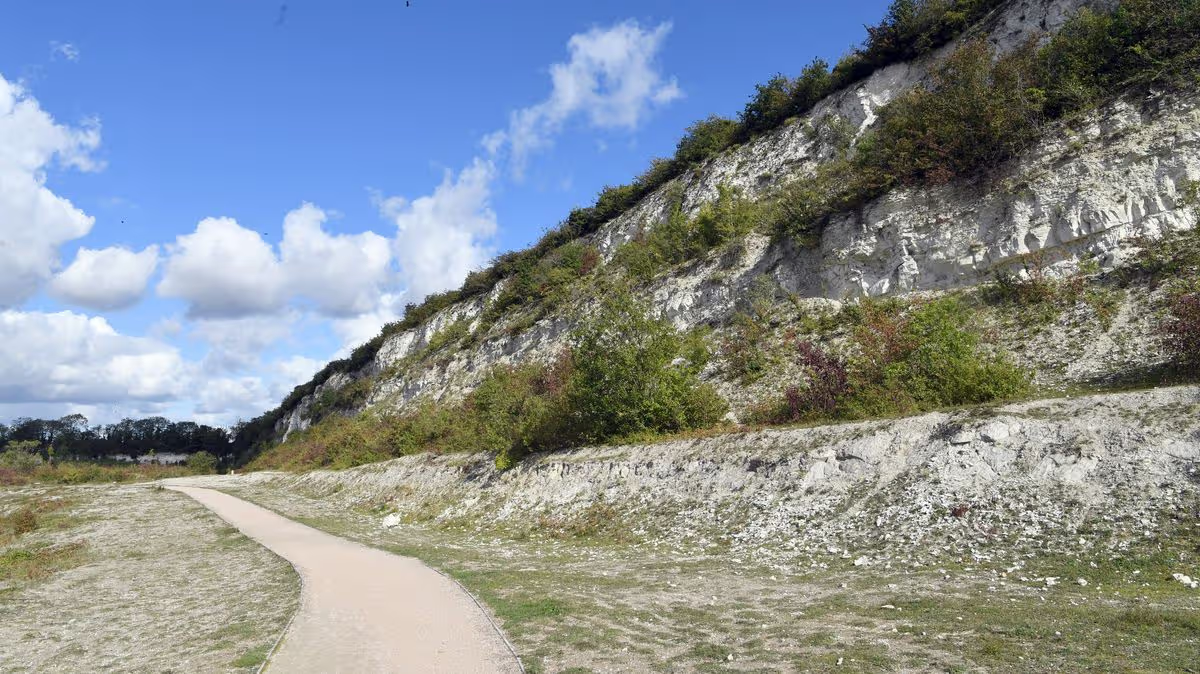
The park was once an industrial quarry used to provide chalk to colleges at the University of Cambridge
There are many beautiful and picturesque places to walk in Cambridgeshire. Cambridge itself has many itself, such as Christ’s Pieces or Midsummer Common.
However, in Cambridge there is also one unusual place to walk that feels very different to some of the other walks on offer. This is Cherry Hinton Chalk Pits, which feels like you are walking among cliffs.
The pits used to be a large industrial quarry. However, quarrying came to an end in Lime Kiln Close around 200 years ago.
When it was active, it provided hard chalk to build some of the University of Cambridge’s colleges, as well as lime for cement. Since then nature has taken over the site, with large ash trees now towering over it.
Chalk grasslands like those at Cherry Hinton Chalk Pits are rare in the UK. The nature park is also home to rare plants and wildlife.
The moon carrot grows here and only two other locations. These are Beachy Head in East Sussex and Knocking Hoe in Bedfordshire. The Wildlife Trust for Beds, Cambs and Northants, which oversees the pits, annually monitors the moon carrots.
Two other rare plants grow at the pits: grape hyacinth and great pignut. The pits have been named as a Site of Special Scientific Interest, due to it being home to the three rare plants.
It is made up of three pits altogether. These are Lime Kiln Close, West Pit, and East Pit. East Pit is the largest of the three, and it was worked on until the early 1980s.
If you stand within this pit, you will be surrounded by steep cliffs of chalk that glow in the late afternoon sun. In 2009, a large excavation was undertaken where a number of interesting things were discovered.
Archaeologists unearthed human remains and Roman artefacts in an Iron Age ditch. People are warned to stay away from the base of the cliffs and not to climb them as rocks could fall down.










































You must be logged in to post a comment Login