It comes as the supermarket expands support for people across the country struggling to put food on the table
Neil Shaw Assistant Editor
10:10, 18 Jul 2026
Tesco shoppers will be asked an important question when they reach the tills this summer. It comes as Tesco is providing extra help to support children and their families facing hunger.
Children who would normally receive free school meals during term time are at risk of missing meals during the holiday period. Trussell says food bank support for children remains 34% higher than before the pandemic, including a 24% increase in the number of emergency food parcels for children under-5.
Advertisement
A recent survey carried out by Felix, the new name for FareShare and The Felix Project, found that 41% of local charities receiving food via its nationwide food redistribution network have experienced an increase in demand in the last 12 months. For a further 13%, demand for food support had more than doubled in the last 12 months.
This summer, from July 6 to August 16 in Scotland and NI and July 20 to August 30 in England and Wales, Tesco will sell its pre-filled food donation bags in all large stores. The bags, which typically cost between £2 and £4, contain healthy and nutritious long-life food and essentials and can be picked up in store and paid for at the checkout. The donated items go directly to Felix and Trussell, who will distribute it to charities and food banks to help families who need it most across the UK.
And From Monday, August 3 to Sunday, August 9, customers will have the chance to round up their bill at the checkout to the nearest pound with the funds being split between Felix and Trussell to support their work over the summer. Online customers will also be able to make a monetary donation through an online giving link on Tesco’s grocery home shopping website as they check out.
For families shopping in store, the supermarket will also be running its Kids Eat Free scheme in its 317 cafés across the UK over the school summer holidays. This year’s it’s been expanded to run for longer across all regions of the UK and now includes weekends. The supermarket’s cafés will be offering one free Kids Hot Meal Deal, Kids Breakfast or Kids Pick ‘n’ Mix deal with each item bought by an adult from as little as 60p, when showing their Tesco Clubcard or Clubcard App at the till.
Advertisement
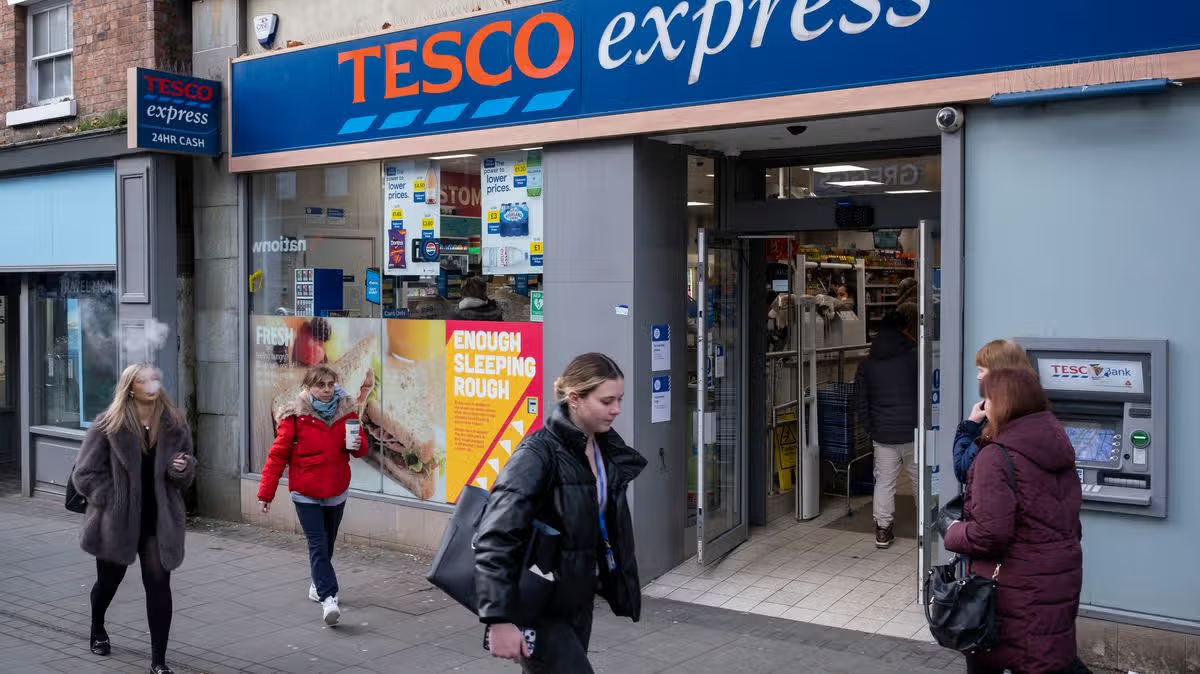
Tesco is also bringing back Free Fruit for Kids for the summer. From 20 July to 30 August, children will be able to pick up free apples at checkouts in more than 800 large Tesco stores and 77 of its large Express stores. Click & Collect customers will also be given free apples for their children at selected stores.
Christine Heffernan, Chief Communications and Sustainability Officer at Tesco, said: “We want to be able to support our charity partners to help those needing a little extra support this summer. Our partnerships with Felix and Trussell are central to this aim.
“When you’re out doing your weekly shop this summer, dropping a few tins into a food collection point, picking up a food donation bag in our stores or rounding up our grocery bill, can make a difference to the lives of thousands of children in communities across the UK.”
Matthew van Duyvenbode, co-chief executive officer at Trussell, said: “Our community of food banks distributed more than 900,000 parcels for children last year, demonstrating the unacceptable levels of hunger and hardship so many families are currently facing. This isn’t right. That’s why the support of our partner Tesco is so crucial, providing in-store summer pick-up bags, making it much easier for people to support their local food bank throughout the school holidays.
Advertisement
“No-one should need to turn to a charity for something as essential as food, and as we work towards achieving the long-term change needed, Tesco’s and the public’s support will make a real difference to families across the UK during this school holiday. We are so grateful to Tesco and to everyone who donates food this summer.”
Charlotte Hill, CEO at Felix said: “We know from speaking to charities receiving food via our network that demand for food support is growing as people across the UK face cost-of-living pressures. During the school holidays, families will be facing additional financial burdens as they juggle the cost of childcare and food. Many will be turning to their local community and charities for support.
“That’s why the donation bags in Tesco stores are vital. The food donated will be shared with charities and community groups that can offer not just meals, but spaces and activities for children to play and make friends during the summer holidays, relieving the pressure on parents.
“Any Tesco shoppers that can donate an item or two to Felix will be making a valuable contribution to helping to support children and their families across the UK this summer. Together we can make a real difference, thank you Tesco.”
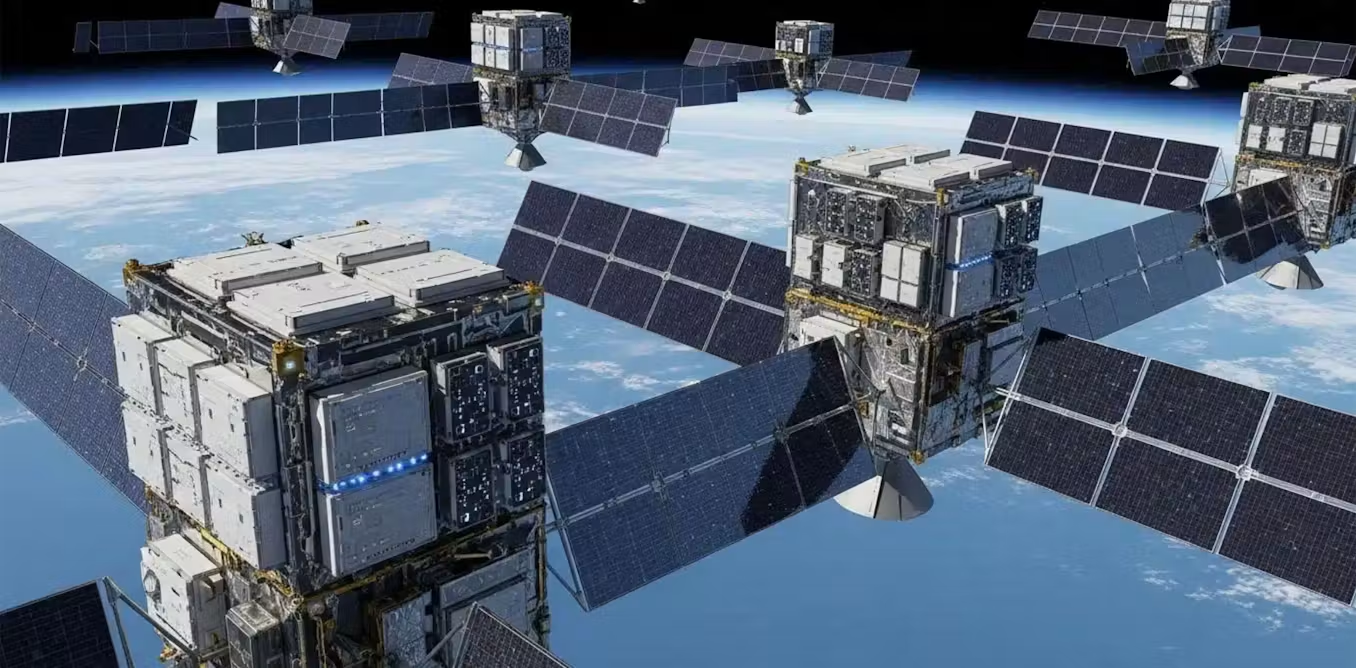
It’s an intriguing plan. But once you factor in the whole life cycle, from water and rocket fuel used to launch these satellites into space, to keeping them cool and eventually disposing of old satellites, the environmental case becomes less clear.
Outer space, out of mind
Off-worlding polluting industries is not a new idea. In the 1970s, when the last Iranian oil crisis caused rocketing fuel prices, Nasa kicked off a plan to build huge solar plants in space. The idea flopped when the oil began to flow again.
Since data centres need so much energy, much of it for AI, such astronomical ideas are back on the table. Regular Earth-based data centres were responsible for around 5% of all electricity used in the US last year, for instance, mostly using fossil fuels. Their share of US power demand will likely triple by 2028.
The fragile frontier
That’s why the cold vacuum of space, with its endless supply of solar energy, is being pitched as a more sustainable alternative to big, noisy, hot data centres in our back yards.
Advertisement
Meanwhile, a recent petition from environmental law charity Earthjustice, is calling for a comprehensive review. They argue these proposals fail to acknowledge any environmental impact. “This is not just poor planning and a missed opportunity”, the petition states, “it violates federal law”.
Indeed, SpaceX’s planning applications come with assurances of no meaningful environmental impact. “It’s always sunny in space,” according to Musk, who says orbital data centres are “obviously the only way to scale”.
Yet data centres in space would be even more prone to overheating than those on earth. That’s because, like a Thermos flask, space keeps things hot. There’s no water or air to carry excess heat away. Instead, keeping powerful AI chips cool in orbit requires massive ammonia-filled radiators that let heat escape as infrared radiation. This isn’t very efficient and those radiators are much larger than the computers they cool. Lifting these huge structures to orbit would require a lot of rocket fuel.
SpaceX’s Starship takes off from its launch pad in Texas, May 2026. UPI / Alamy
Most plans for orbital data centres depend on the future success of SpaceX’s heavy-lift Starship. But every Starship launch burns over 1,000 tonnes of liquid methane, releasing around 80,000 tonnes of CO₂ (about the same as what 20,000 cars emit in a year). The warming associated with soot emissions in the upper atmosphere is 500 times more intense than the same emissions at ground level. We know soot from rockets reduces stratospheric ozone – the stuff shielding us from harmful UV rays. In the lower atmosphere, most soot falls back to Earth in weeks. In the stratosphere, soot stays there for up to four years, prolonging its damaging effects.
While it is always sunny in space, solar panels degrade much quicker there. Microchips are also easily damaged, falling prey to a phenomenon known as “bit flipping” – when high-energy particles rewrite memory hardware randomly changing data from 1 to 0. Retrieving busted hardware from space is not financially viable. SpaceX satellites have a five-year shelf life before being incinerated as they fall back to Earth. The environmental impacts of things burning up in the atmosphere are not well known.
Musk’s AI satellites would be connected by lasers. Should any one of the million or so satellites become untethered and collide with another, it would create further debris, creating more risk of collisions, more debris, and so on. Scientists call this the Kesler Syndrome and worry that orbital debris fields could hinder human activities in space for a very long time.
Orbital data centres would have a huge water footprint too. To catch toxic dust and protect their concrete launch pad from heat damage, a typical spaceport uses a deluge system releasing around 2 million litres of water with every launch. SpaceX has repeatedly broken environmental laws with its deluge system, allowing contaminated run-off from Starship launches to enter protected waters off the coast of Texas.
Some suggest these sci-fi schemes are designed to prop up SpaceX’s teetering stock price, rather than humanity’s computing needs. Others see orbital data centres as just one of many ambitious visions to tackle the environmental costs of AI. Either way, my research suggests this quest to off-world the industry’s headaches will have profound implications that are not well understood.
Turn the clock back to the last 16 of the World Cup, when the former England striker pledged to row down the River Mersey if Norway beat Brazil.
Norway did exactly that, beating the five-time champions 2-1, so BBC Sport pundit Rooney confirmed live on air that he would take on the challenge in the US.
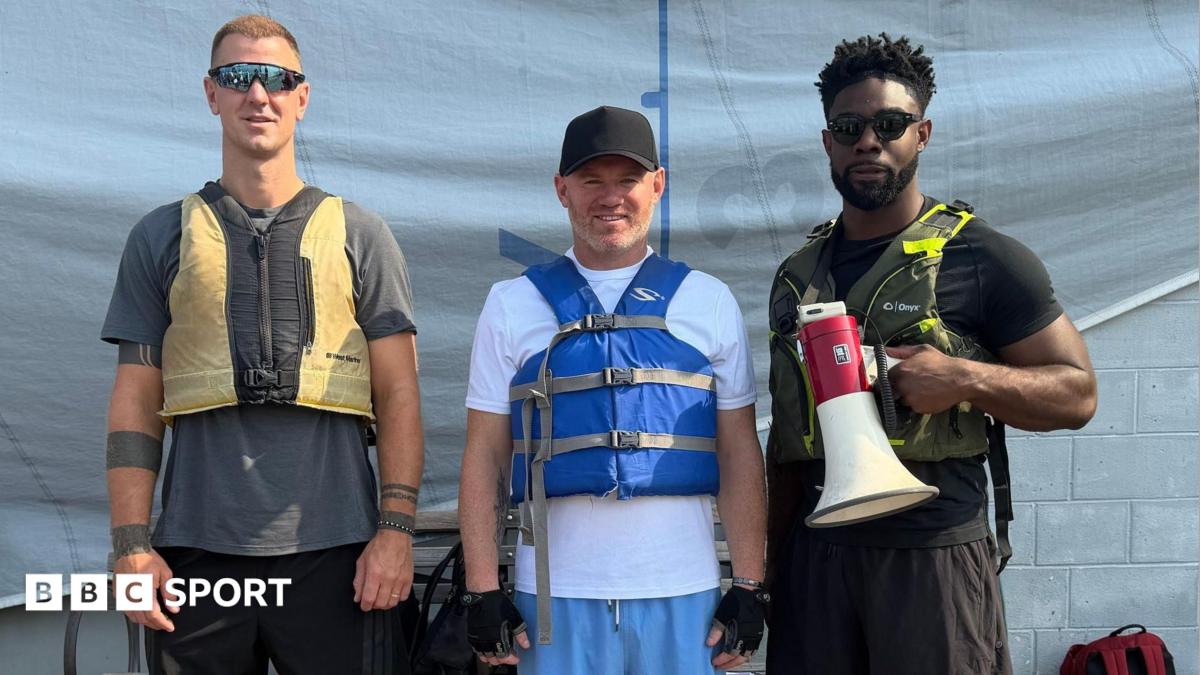
He and fellow pundits Joe Hart and Micah Richards swapped their microphones for oars and took to the Hudson River in New York.
Advertisement
“I loved it,” Rooney said. “The fans were brilliant. So we’ve done it out of respect for the fans.”
Norway fans’ viking row became a sensation at the World Cup, and even Norway striker Erling Haaland was keen to see Rooney in action.
“Wayne, I expect you to go out on a rowing trip,” he said.
Norway were knocked out by England in the quarter-finals.
Advertisement
Rooney, Hart and Richards will be back on dry land alongside Gabby Logan for Sunday’s World Cup final (20:00 BST), which will be available to watch live on BBC One and BBC iPlayer.
England play France in the World Cup third-place match on Saturday at 22:00, also live on BBC One and BBC iPlayer.
Small boat crossings to the UK have almost halved while the irregular crossings to Europe are down almost 40 per cent so far this year, The Independent can reveal.
Analysis of Home Office data shows 12,214 people have arrived in the UK on small boats by 9 July this year – down 42 per cent from 2025, when 21,117 people had made the perilous journey across the English Channel in the same period.
While migration experts are clear that numbers are falling, it is hard to know definitively why this is.
EU border officials have pointed to partnerships in north Africa stemming the number of onward journeys, but experts caution that these pacts come with a deadly cost.
Advertisement
Nearly 1,300 people have lost their lives in the Mediterranean so far this year, according to the International Organisation for Migration (IOM).
Here, The Independent examines how many people are travelling on migration routes into Europe, and onwards to the UK, and why this might be.
How many people are arriving on small boats to the UK?
At the end of June this year, 11,884 migrants had arrived on dinghies – down 41 per cent on the same period in 2025 – a particularly high year for crossings, second only to a record-breaking 2022 – and down 12 per cent on 2024.
Advertisement
Labour has tried to bring the numbers down by paying more money to French police enforcement to stop migrants from leaving their shores and sending small boat migrants back to France in exchange for asylum seekers.
But the “one in, one out” scheme, which began in August 2025, has only removed a comparatively small number of migrants, with 1,087 people sent back to France as of the end of June. There have been reports that the French are looking to end the programme in October this year, to focus on a European-wide strategy of tackling irregular migration.
Why are the number of UK small boat migrants falling?
Advertisement
Dr Mihnea Cuibus, senior researcher at the University of Oxford’s Migration Observatory, said it was hard to identify any one policy change, or factor, as contributing to the fall in crossings.
He said: “Arrivals are down throughout Europe. They were also significantly down last year, which is significant because you would expect a bit of a lag as people travel through Europe to the UK. The decline we saw last year could finally be feeding through into arrivals in the UK.
“The other thing is change in policies, with the new deal with France, and the one in, one out scheme. The share of those who have been removed to France has remained very low, so we wouldn’t expect that to make a massive difference.
“It is likely that there seems to be a bit of an effect [from the different policy changes], but there are other factors such as arrivals into the EU.”
Advertisement
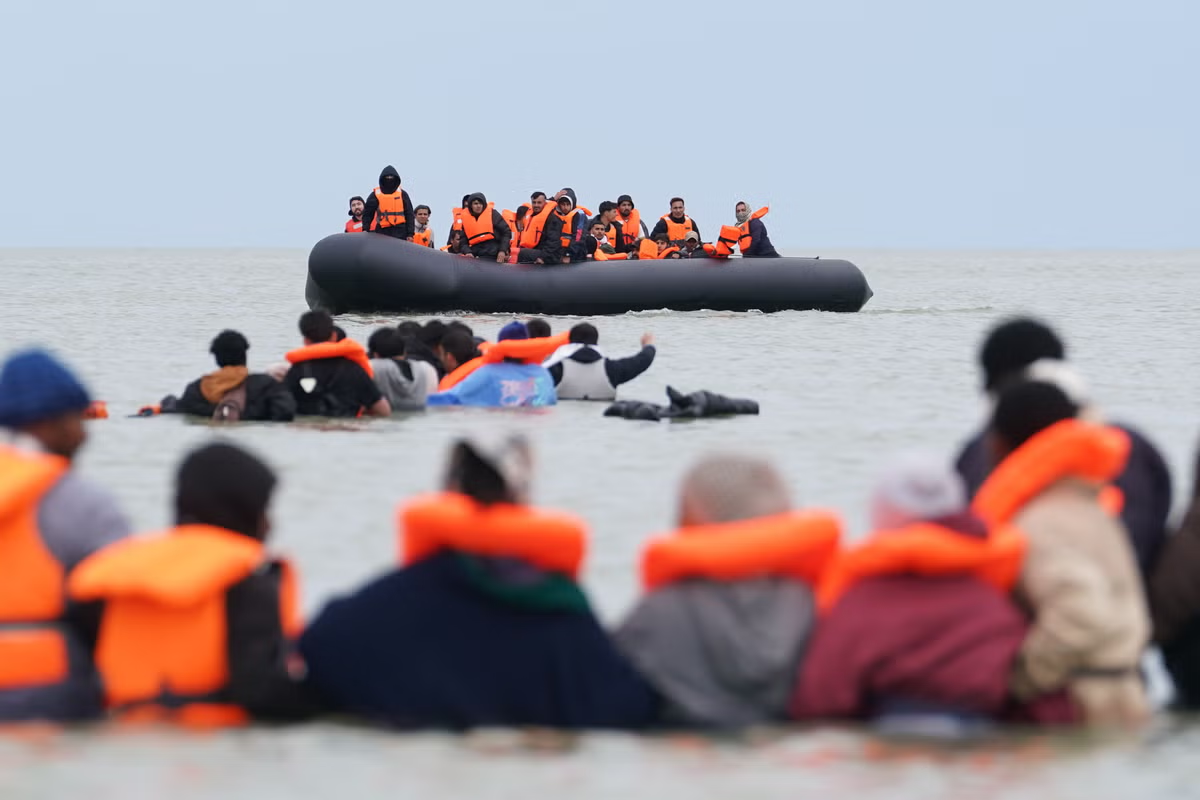
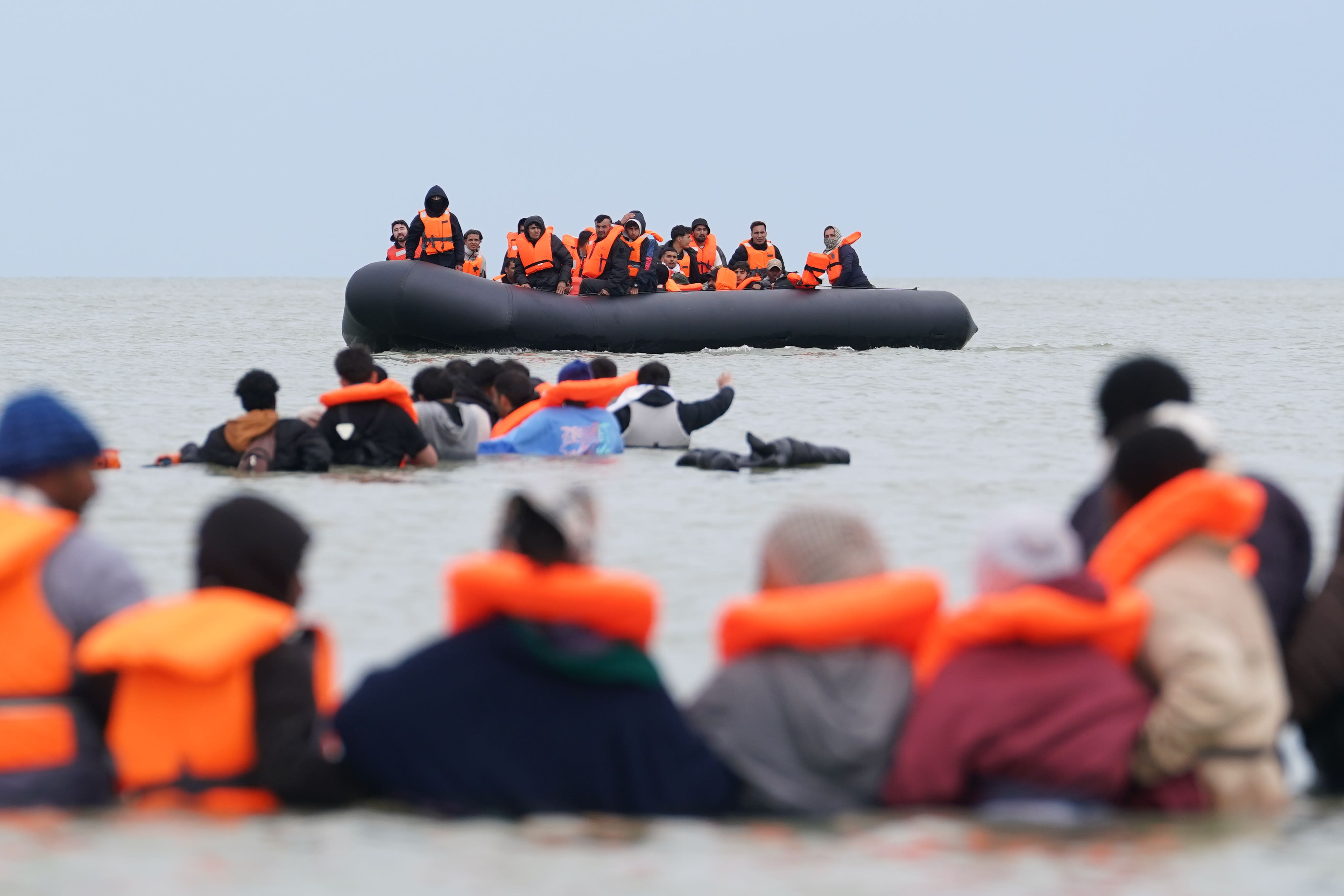
People thought to be migrants wade in the water as they attempt to board a small boat off the coast of Berck, France, during an attempt to cross the English Channel on June 15, 2026 (PA Wire)
In 2026 so far, 187 boats have arrived in the UK, compared to 362 boats in the same period last year. The size of dinghies has increased significantly as smugglers adapt to increased police activity on French beaches. Larger boats now ‘taxi’ around the coast of France and wait to pick up people offshore. In an indication of how big the small boats are now getting, a record 128 migrants arrived in one dinghy this week.
The previous record was 125 in September 2025. In total 41,472 people arrived in 672 boats last year, compared to 36,816 people in 695 boats in 2024.
However, the dip in arrivals in the first half of 2026 compared to 2025 may be due to when the bulk of people arrived last year. In 2025, arrivals were spread out throughout the year, starting with 4,568 people in March and continuing through the summer, with more than 5,000 people arriving in September. In 2024 and 2023 however, more people arrived later in the year, with 5,417 people crossing in October 2024.
This shows that while the arrivals are tracking down this year so far, more could still make the journey in the second half of 2026.
Advertisement
Dr Cuibus cautioned: “We do see these numbers move up and down, at times quite randomly over the past five or six years. We still don’t understand why 2025 was so big, just as we don’t understand quite why there was a surge in people in 2022 – particularly in Albanians.”
He added: “If this trend continues until the end of summer, that will be very interesting. We are in a bit of a waiting pattern until we’ve seen the summer through.”
Where are small boat migrants coming from?
Eritrea was the top country of origin for arrivals last year, with more than twice as many than in 2024. Many leave to escape national service, which is compulsory for all citizens aged 18 to 40 and there is a near-total suppression of civil or religious freedoms in the country.
Advertisement
The number of people coming from Afghanistan, which was the top country of origin in 2023 and 2024, declined to second in 2025 after a peak in 2022, the year after the Taliban takeover – with 8,319 people arriving via small boats.
Figures for the first three months of 2026 show that the Eritrean numbers are being sustained, with 743 citizens making the crossing compared to 735 Sudanese and 598 Afghans.
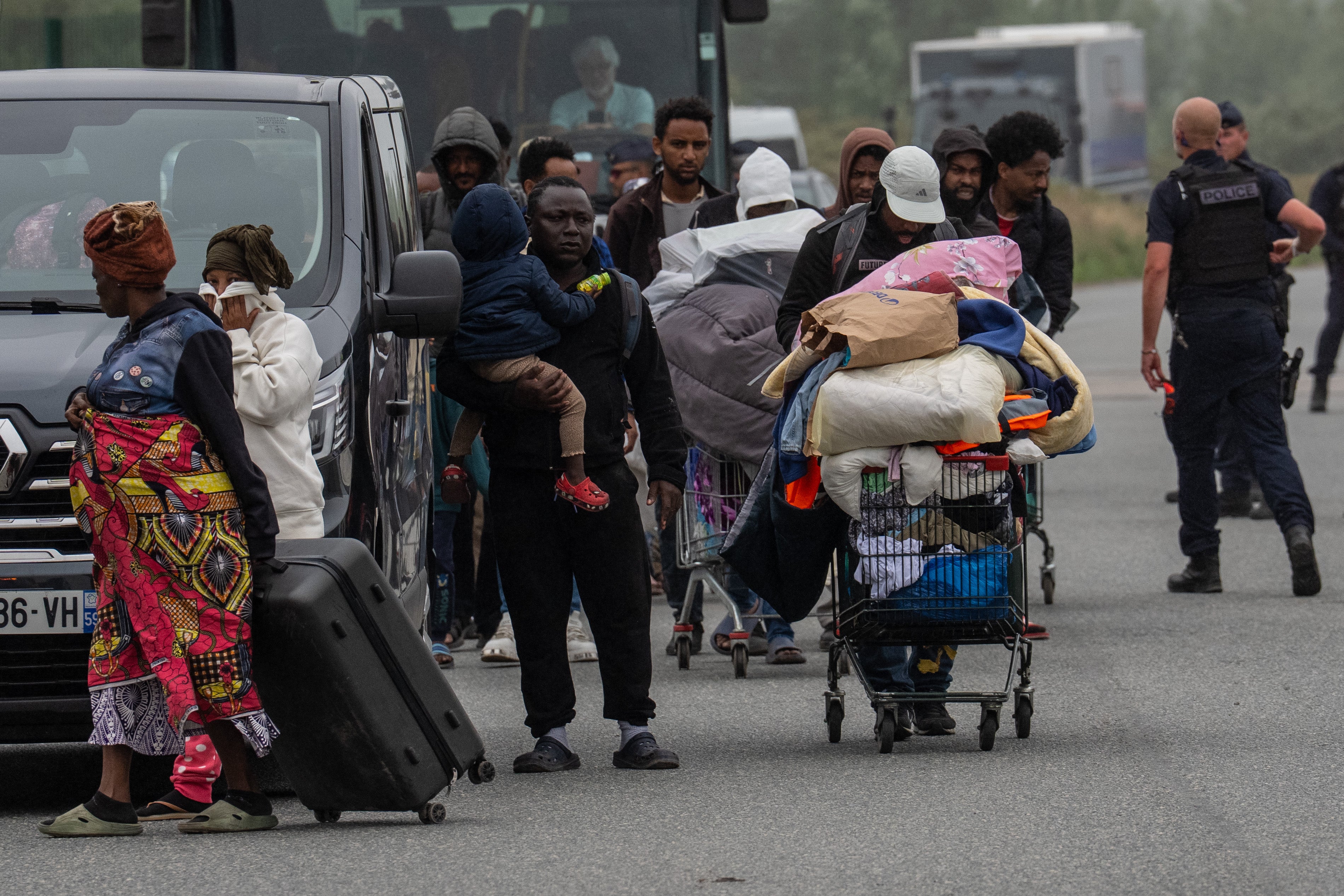
Migrants leave an area of their camp that was cleared by French authorities on July 2, 2026 in Loon-Plage, France. (Getty)
The number of Syrian, Iraqi and Vietnamese nationals also fell in 2025, while those from Sudan, Somalia and Ethiopia all increased.
The numbers of Somalians making the Channel crossing surged from 697 in 2024 to 3,783 in 2025. The steep rise comes after the jihadist group Al-Shabaab made major advances last year in its battle against the Somali government.
In Sudan, where the second highest number of small boat migrants now come from, the country has been experiencing a severe humanitarian crisis after three years of civil war. Over 14 million people have been displaced and two-thirds of the population – 33.7 million people – are in need of humanitarian support, according to the International Rescue Committee.
Advertisement
Judith Sunderland, from Human Rights Watch (HRW), said: “We’ve seen a massive outflow of people from Sudan, many who are stuck in Libya. We’ve already seen an increase in Sudanese on boats to Europe and there could be a really significant increase if various factors align.”
Explaining migration flows more broadly, she added: “There are a lot of people on the move because they are trying to improve their situation and the lives of their family. So long as there is bad governance and poverty, people will try to get someone where they think they can have a better chance.”
Dr Cuibus explained that Syrians and Afghans are now less likely to be granted asylum in Europe than they were in previous years and said this could be contributing to the reduced numbers arriving.
Advertisement
Irregular border crossings into Europe are also down
Irregular crossings into Europe are down almost 40 per cent in the first five months of 2026 compared to the year before, data from border agency Frontex shows.
Nearly 39,000 crossings were recorded in the months January to June – a decline attributed to co-operation between the EU and Africa to increase police enforcement at departure points. The Western African route saw the steepest decline, with detections down by 71 per cent on the year before.
The number of people arriving in Italy from north Africa across the central Mediterranean route, usually the busiest crossing, is also down 52 per cent year-on-year, with 14,340 people making the journey so far in 2026.
Advertisement
Why are small boat crossings to Europe falling?
Judith Sunderland, senior associate director at HRW, said the EU drive to stop people making the journey to Europe “carries with it enormous risks and suffering”. She explained “people are essentially trapped in various locations in their migration journeys”, such as migrants who get sent back to Libyan detention camps when they are picked up trying to cross the Mediterranean.
“Focusing on the numbers hides the suffering that is behind this. It is based on a lot of extremely dubious deals that the EU and individual member states have pursued and support for security forces in places like Libya, Tunisia, Mauritania and elsewhere,” she added.
Giorgia Meloni’s government in Italy, backed by the European Union, is funding, equipping and training both the Libyan and Tunisian coast guards to intercept people on their way to Europe.
Advertisement
Human rights organisations have this week called for the EU to stop funding Tunisia over its security forces “reckless and violent conduct” during interceptions at sea.
According to the charity Statewatch, the EU is also looking to team up with Libya’s eastern forces to stem the number of people launching boats from its shores.
Ms Sunderland explained that there are lots of factors that would influence the numbers getting on boats, such as the weather, smuggling dynamics, and the work of border forces.
Advertisement
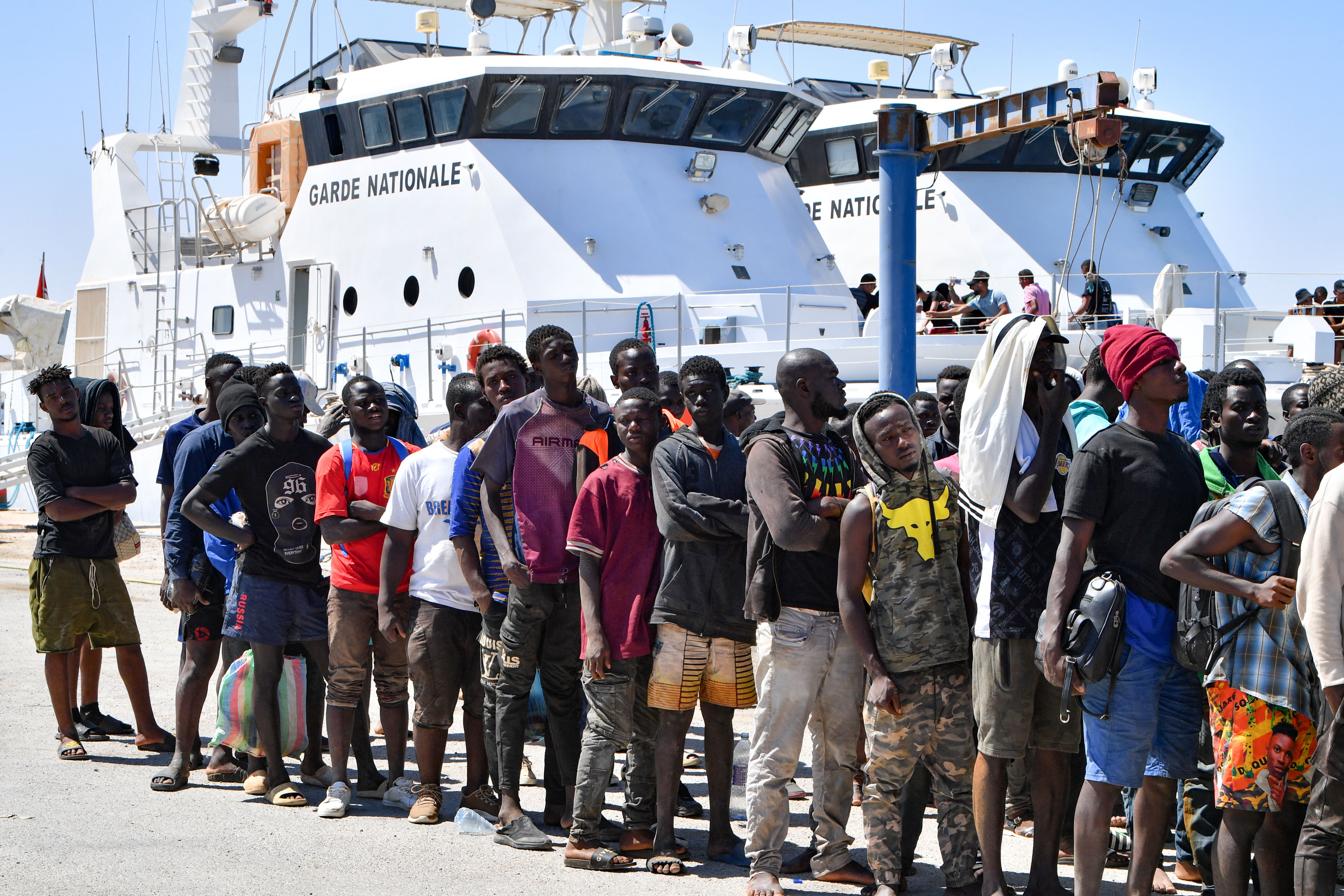
Migrants trying to flee to Europe, disembark in Sfax from a ship owned by the Tunisian coast guards, after being intercepted by them at sea on August 10, 2023. (AFP/Getty)
“The numbers have decreased recently compared to the past several years, but they are still higher than they were six or seven years ago,” she explained.
She said that, those who remain stuck in third-party countries such as in detention in Libya, will not give up their determination to move on. “They will keep trying. Very few turn back. And people smuggling networks adapt and change.”
Dr Cuibus added: “The view is that all of these deals, with Libya, Tunisia, more co-operation with Morocco, these things together do seem to have an effect, because at the end of the day it is about physical prevention. Experience kind of reveals that physical enforcement can stop the boats, if you stop people leaving countries from transit, or at least temporarily divert them to other routes. But there are also broader factors at play, like the changes in the home countries’ situation.”
A spokesperson for the IOM told The Independent: “While the number of irregular arrivals to Europe has declined in 2026, the situation continues to demand urgent attention because too many people are still risking – and losing – their lives on dangerous migration routes.
Advertisement
“The Central Mediterranean continues to be the world’s deadliest migration route… equally concerning is the growing number of migrants who disappear without trace, with increase evidence of so-called ‘invisible shipwrecks’ where vessels are lost and their fate remains unknown.”
North Yorkshire Police is appealing for information after a TAG Heuer watch was stolen in the night from Scarborough.
The theft took place sometime between 10pm on Monday, July 6, and 4am on Tuesday, July 7, near the Crescent Hotel in Belvoir Terrace.
RECOMMENDED READING:
Advertisement
“Enquiries are ongoing to establish the circumstances surrounding the theft and identify those responsible, and relevant CCTV enquires have been conducted in the area,” said a spokesperson for the force.
They asked that members of the public to remain vigilant for the watch being offered for sale online, through social media marketplaces, local selling groups, pawn shops, jewellers, or at car boot sales.
If you have any information that can help the investigation, please contact PC 319 @ nabiel.galab@northyorkshire.police.uk, use the website or live chat, or call 101.
Please quote reference 12260131191 when providing information.
Kylian Mbappe left a comment on Marcus Rashford’s World Cup post
Marcus Rashford has one more international match to go before his summer break and a potential return to Manchester United. In this clash, he will meet old rival Kylian Mbappe – who previously sent him a heartfelt message after sending him home from the World Cup 2022.
Advertisement
Rashford’s England were left heartbroken once again this year as Argentina made an incredible comeback to beat them 2-1 and advance to the final. France were also dumped out of the World Cup after Spain won 2-0 to set up a Europe vs South America finale.
The United forward played a part of the Three Lions’ run to the semi-final, scoring his only goal in a 4-2 win over Croatia in the group stage. Rashford made the starting XI twice and racked up 177 minutes during England’s trip across the Atlantic.
Get MEN Premium now for just £1 HERE – or get involved in our United WhatsApp group by clicking HERE. You can also join our United Facebook page by clicking HERE and don’t miss out on our brilliant selection of newsletters HERE.
Now, he will face Mbappe in a third-place play-off, in what is a rematch of the 2022 quarter-final clash in Qatar. Four years ago, France beat England 2-1 and reached the final before Lionel Messi’s Argentina ended their back-to-back World Cup dreams.
Advertisement
Rashford posted a heartfelt message to his followers as he said: “The last few weeks have been a rollercoaster of emotions, each and every one of our team gave everything we had to be ready for what was thrown at us, we got close, but not close enough.
“I’ll make a promise that we will come again! Thank you for the unconditional support we have received throughout the tournament, it hasn’t gone unnoticed.”
Mbappe left a love-heart emoji on the post, displaying his respect towards Rashford. The United forward then replied: “Good luck with the rest of the tournament brother! Go smash it king.”
At the time Rashford had been flying for United, making 42 goal contributions in a successful 2022/23 season. Things would change dramatically before the next World Cup, as the academy hero would go out on loan to Aston Villa and Barcelona due to a bitter fall-out with manager Ruben Amorim.
During his time in Spain, Rashford faced Mbappe twice more in El Clasico. The pair earned one win each, with the Real Madrid star winning 2-1 in La Liga back in October.
Rashford would get the last laugh as he beat Mbappe in the Supercopa final, winning 3-2 and lifting the trophy. Barcelona would also go on to win the league title, cruising to an eight-point lead over their rivals.
For the time being, Rashford is heading back to United having been waiting to sort out his future until after the World Cup has concluded. But first, he will reunite with a familiar opponent as France battle England for third place on Saturday night.
Advertisement
England’s 2026 World Cup kits
This article contains affiliate links, we will receive a commission on any sales we generate from it. Learn more
England and Nike have launched the new home, away and goalkeeper kits to be worn at this summer’s FIFA World Cup. You can get free delivery on all orders with the code DEAL.
A viable pipe bomb was found following a security alert in Co Derry on Friday.
The Foreglen Road in Dungiven was closed shortly before midday on Friday, July 17, due to a security alert in the area with Ammunition Technical Officers attending the scene.
Following searches a suspected pipe bomb was found with a controlled explosion being carried out after it was deemed to be a viable device.
Advertisement
PSNI North Area Engagement Chief Inspector Mullan said: “A suspected pipe bomb was located earlier today, Friday 17 th July.
“Ammunition Technical Officers (ATO) attended the scene. They carried out a controlled explosion, and later deemed the device to be viable.
“The remnants of the item have now been taken away for forensic examination. “We would like to thank the public for their patience and cooperation as searches in the area were carried out overnight and into this morning. Closing roads causes disruption and inconvenience but, ultimately, public safety is our priority.
“Our enquiries remain ongoing and anyone with information which could assist with our investigation is asked to contact police on 101 quoting reference number 304 17/07/26.
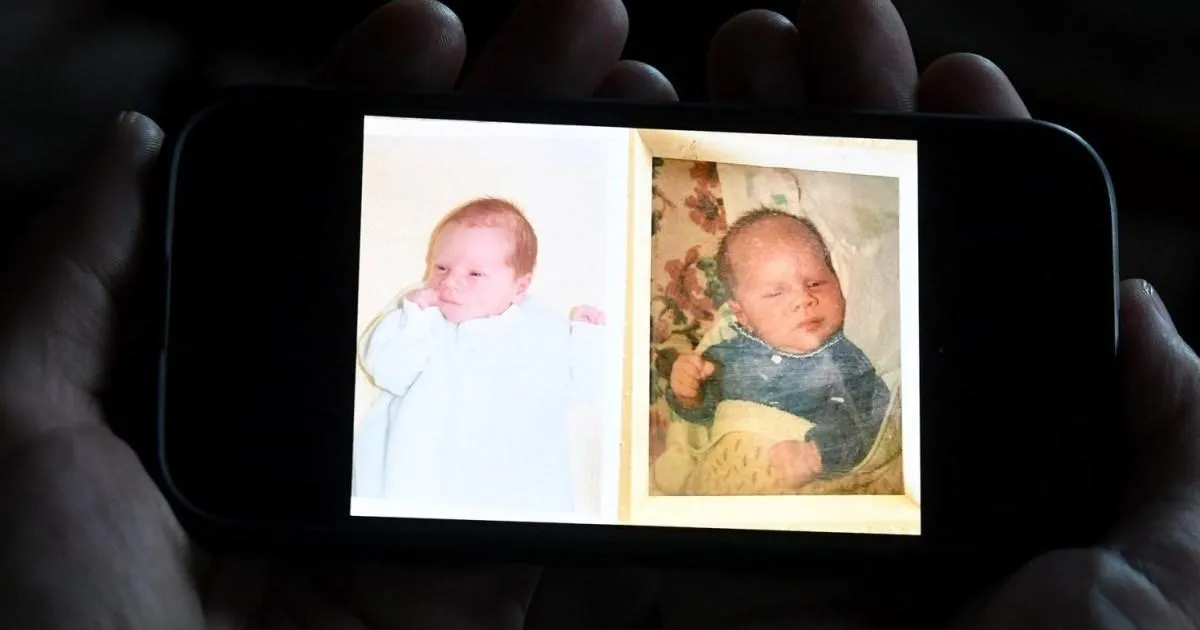
Jeremy Morrison shows a baby photo of him, left, and of the other baby he says was switched at birth (Picture: AP Photo/Thomas Peipert)
Two men found out they’d been switched at birth when one took a chance DNA test after grabbing a kit during a Christmas gift swap.
Kyle Bylin and Jeremy Morrison are now suing the Unity Medical Center in Grafton, North Dakota, saying they have been robbed of the lives they were supposed to lead.
They were the only two babies born there on January 26, 1988.
But somehow they each went home with the wrong parents.
Advertisement
Kyle, born Jeremy Morrison, still has the hospital bracelet misidentifying him as Kyle Bylin.
The mix-up was discovered two years ago when he took an at-home DNA test.
It led him to his biological aunt on a genealogy platform.
When her nephew, Jeremy, then had his DNA tested the truth was confirmed.
Advertisement
‘That’s when my mind was just completely blown,’ Kyle said.
‘We could have never imagined that it was an actual birth switch that occurred.’
Kyle Bylin as a baby
Jeremy Morrison as a baby
Kyle Bylin with his biological mother, Liz O’Toole (Picture: Kyle Bylin via AP)
Jeremy Morriso outside his home in Colorado City (Picture: AP Photo/Thomas Peipert)
Jeremy said he was convinced as soon as he saw a photo of Kyle’s brother and spotted the close similarities in their looks.
Evelyn Newton, who raised Kyle as her own, told The Associated Press: ‘Kyle is still my son — that is never going to change.
Advertisement
‘But I feel robbed of the life I should have had with my biological son.
‘You can’t go back and replace 35 years. First steps, driving a car, getting married — how do you make up for that?’
The hospital does not dispute the two babies were switched at some point.
It says it’s working to better understand what happened but has uncovered no evidence that its administration or staff were responsible for the lives-altering error.
Advertisement
‘We recognize the profound impact this discovery has had on them and their families,’ Unity Medical said in a statement.
‘Unfortunately, because of the passage of nearly four decades, the medical and staffing records that might have provided additional clarity no longer exist, and no members of the delivery team from that time are still employed by the hospital.’
The knowledge hasn’t changed the way Jeremy feels about the family he’s always known.
He still thinks of the parents he grew up with — Elizabeth O’Toole and Terry Morrison — as his parents.
Advertisement
And aside from some challenging times — like wishing he had a sibling to lean on when they divorced when he was seven — he says his childhood was fine.
‘I was loved. I played sports. I did well in school,’ Jeremy said. ‘A DNA test is not going to take away 38 years of memories.’
Kyle Bylin with a computer in the 1990s (Picture: Kyle Bylin via AP)
He now lives in Colorado City, Colorado, and works as a welding inspector for a wind energy company.
Had he not been switched at birth, he figures he’d still be with his biological brother and father, working on the North Dakota grain farm where Kyle grew up.
Ms Newton said she never had any thought that Kyle might not be their biological son as she and her then-husband, Keith Bylin, were raising him.
Advertisement
True, the immediate family had light hair and Kyle’s was dark.
But her husband had relatives with dark hair, and Ms Newton herself was adopted, so she didn’t know what her own blood relatives looked like.
For Kyle, questions about nature versus nurture have become more personal.
As he pursued an academic career far from North Dakota, he figured the political debates over Thanksgiving dinner were just a staple of American family life.
Advertisement
‘You’re just kind of shaking your fist, like, how can this be my family? How am I so different from them?’ Kyle said.
‘It turns out that we’re just totally different people, period.’
Kyle and Jeremy have now met their biological parents — the encounters were welcoming but awkward, they said.
They have yet to meet each other, but have spoken on the phone.
Advertisement
‘We’ve tried to unite as a group and just recognize that no matter what, there’s different ways that this can be socially messy,’ Kyle said.
‘Everyone’s getting to know people that they didn’t know before.’
The National Trust is warning that the popular coastal spot is not a traditional seaside destination.
The conservation charity says visitor numbers soar during warm weather, leading to long traffic queues, full car parks and parking restrictions in nearby residential streets.
Rare male sand lizard (Image: National Trust)
Just over an hour’s drive from Bolton, Formby is one of the North West’s most popular beaches.
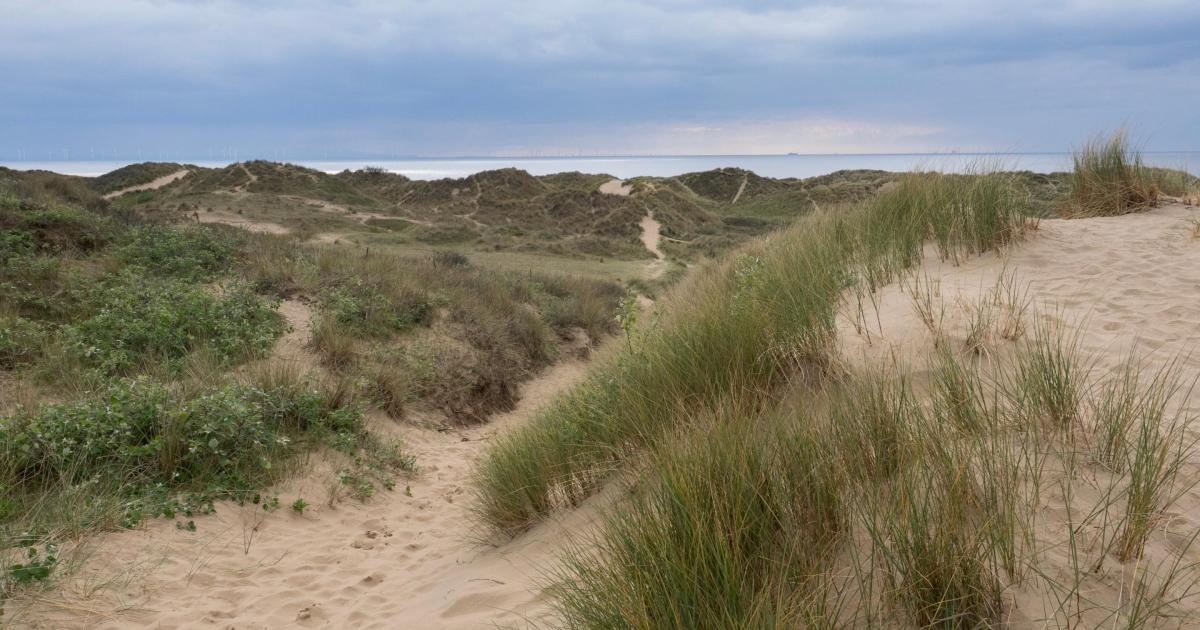
But unlike resorts such as Blackpool or Southport, the beach sits within a protected conservation area with limited facilities and no parking directly next to the sand.
Advertisement
Amy Peacock, operations manager for National Trust places in the Liverpool City Region, said: “Formby is a wild, natural and legally protected conservation area. This means the parking and facilities we can offer here are limited.
“We have two relatively small car parks that fill up very quickly on busy days. They’re tucked away inland away from where the dunes will continue to roll back naturally over time.
“It’s worth noting that reaching the beach involves walking through the woodlands and over the dunes, which can feel a bit of an adventure, especially for little legs and when carrying all the usual seaside essentials.
“For people seeking a traditional seaside experience with quick access and a wide range of amenities, we recommend considering alternative beaches along the North West coast that offer more comfort and convenience.”
Advertisement
Rare dune northern tiger beetle (Image: National Trust)
The National Trust is also reminding visitors not to light fires or barbecues anywhere on site because of the risk of wildfires, and to take all litter home to protect wildlife and prevent rubbish from being washed into the sea.
Formby forms part of the Sefton Coast, one of the largest sand dune systems in England and a legally protected Site of Special Scientific Interest (SSSI).
Its constantly shifting dunes provide a habitat for rare wildlife, including natterjack toads, sand lizards and northern dune tiger beetles.
The National Trust says visitors should be aware that there are only two relatively small car parks, both located inland.
Advertisement
The former Victoria Road car park next to the beach has permanently closed as part of a major sand dune restoration project.
Anyone visiting should also be prepared for a walk through woodland and over the dunes before reaching the beach, which can be challenging when carrying picnic equipment, pushchairs or other beach essentials.
The National Trust is also reminding visitors not to light fires or barbecues anywhere on site because of the risk of wildfires, and to take all litter home to protect wildlife and prevent rubbish from being washed into the sea.
Justin Matthews, lead ranger for National Trust places in the Liverpool City Region, said: “Beyond the parasols and sandcastles, you’ll find a place that’s home to one of Europe’s most important sand dune habitats where lots of rare wildlife lives.
Advertisement
“We want everyone to be able to enjoy this special place, now and in the future, and by planning ahead and being mindful of Formby’s wonderful wildlife, people can play an important part in helping us to protect it.”
Gregor Townsend has made 14 changes to his starting side as they take on the Flying Fijians at Murrayfield
Scotland close their summer Nations Championship campaign with a showdown with Fiji at Murrayfield, with head coach Gregor Townsend naming an almost entirely changed starting side.
Advertisement
With 14 changes made, Gregor Brown is the only the survivor from last weekend’s defeat to South Africa as he shifts from lock to number eight. Darcy Graham returns to the side, with Stafford McDowall named as captain and first starts handed to hooker Gregor Hiddleston and flanker Freddy Douglas.
Scotland’s 42-28 defeat to the Springboks followed an impressive seven-try victory over Argentina in Cordoba, while Fiji are yet to record a Nations Championship win, with their defeat to Wales in Cardiff earlier this month followed by a bruising 73-8 defeat to England last weekend.
Here’s everything you need to know ahead of today’s game.




















































You must be logged in to post a comment Login