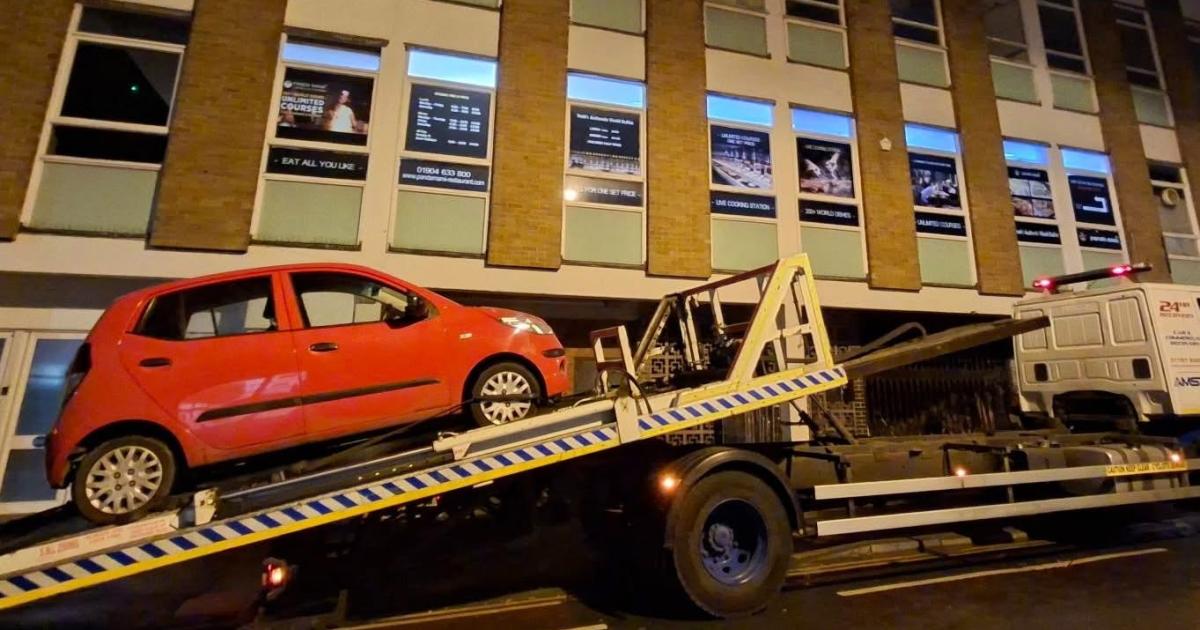
North Yorkshire Police say that on Wednesday night (April 14) officers from their local neighbourhood policing team stopped a vehicle, and spotted that the driver only held a provisional licence.
A force spokesman said: “The car was seized and the driver has been dealt with.
“Driving without the correct licence or supervision isn’t just illegal it puts everyone at risk.
Advertisement
“Provisional licence holders must be properly supervised and meet all legal requirements before getting behind the wheel. These rules exist to keep all road users safe.
“Our teams will continue to take action against unsafe and unlawful driving to help keep North Yorkshire’s roads safe for everyone.
“Stay safe, drive responsibly, and always make sure you’re legally allowed to be on the road.”
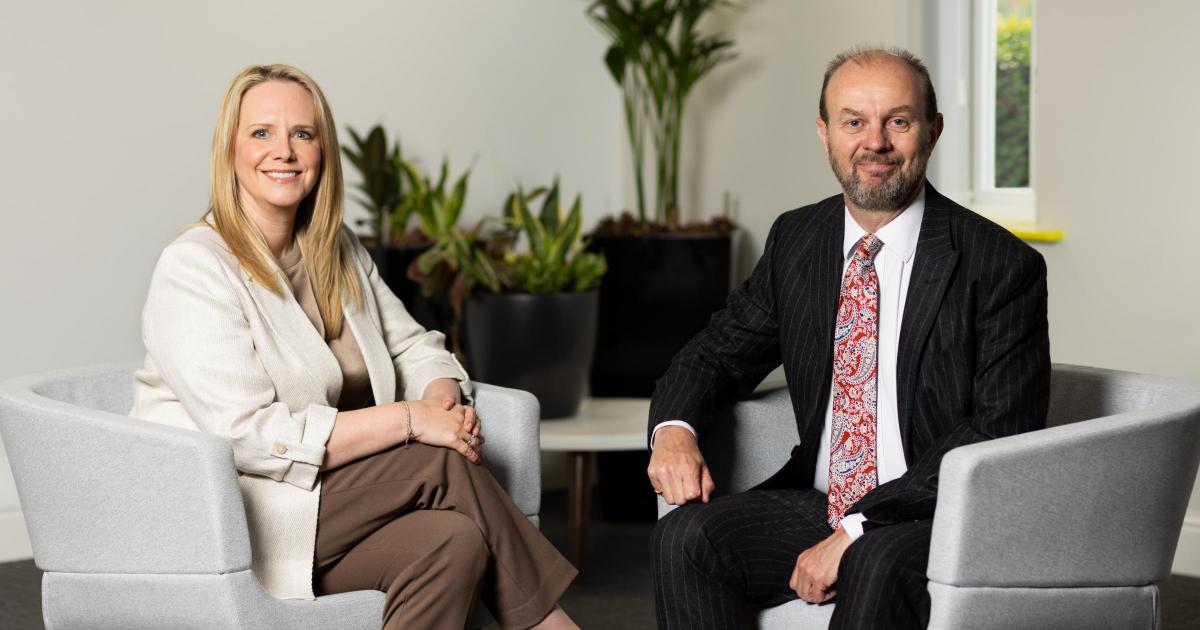
Jonathan Moreland will retire from Durham-based Swinburne Maddison on December 31, closing out 35 years with the firm.
He will be succeeded by Victoria Walton, current partner and head of commercial property, who will take on the role in January 2027.
Head of Commercial Property, Victoria Walton who will take over from the current managing partner, Jonathan Moreland, when he retires on December 31 (Image: LAUREN PETERS)
Mr Moreland joined the firm in 1991, then known as Swinburne Jackson and Moreland, where his late father served as senior partner.
He became a partner in 1995 and played a key role in the 1998 merger with Wilson Maddison, becoming one of the four founding partners of the modern Swinburne Maddison.
Advertisement
Mr Moreland said: “It has been an enormous privilege and honour to lead Swinburne Maddison.
“The role has been about far more than leadership alone – it has meant being part of a firm where people genuinely belong, care about one another and remain deeply committed to supporting our clients.”
He has emphasised the firm’s approach to succession planning, describing it as a carefully planned transition designed to ensure business as usual for all clients.
Since becoming managing partner in 2021, Mr Moreland has led the firm through a period of significant growth and achievement.
Advertisement
During his tenure, Swinburne Maddison was named Law Firm of the Year at the Northern Law Awards in 2023 and 2025.
It also delivered an ambitious three-year business plan, achieving a 38 per cent increase in turnover and expanding headcount by more than 35 per cent.
The firm also secured Silver Investors in People accreditation.
Mr Moreland also expressed strong support for his successor.
Advertisement
He said: “Victoria has played a major role in shaping our success and truly embodies Swinburne Maddison.
“I can think of no one better to lead the firm into its next chapter with confidence, integrity, honour and fresh energy.”
Ms Walton began her career at Swinburne Maddison as a trainee in 1999 and became a partner just seven years later.
As head of commercial property, she led the team to regional and national recognition, including being named Property Law Firm of the Year at the North East Insider Property Awards in 2023.
Advertisement
She is also individually ranked as a Leading Partner in The Legal 500.
Ms Walton said: “My priorities will be supporting our team to progress their careers while continuing to deliver exceptional service to our clients.
“By investing in our team of experts, recruiting for cultural fit and making sure all staff have a voice we will continue to expand within the region while retaining our reputation as Durham’s leading law firm.”
She has served on the firm’s management committee for six years, working closely with Mr Moreland on Swinburne Maddison’s strategic direction.
Advertisement
While taking on the role of managing partner, Ms Walton will continue her work in commercial property, acting for some of the region’s largest developers and property owners.
To support the next phase of the firm’s growth, new leadership roles will also take effect from January 1.
David Low will become head of dispute resolution, and Sharney Randhawa will be promoted to head of employment.
Both have worked closely with Mr Moreland and will continue the approach and client relationships he developed during his time with the firm.
Advertisement
While Mr Moreland’s retirement marks the end of an era, the appointment of Ms Walton signals a confident transition and a fresh chapter for Swinburne Maddison as it looks to the future.
There aren’t many good jokes about politicians, and fewer suitable for publication, but one doing the rounds in Westminster should provoke a wry smile. Goes like this: “A Blairite, a Brownite, and a Corbynite walk into a bar. The barman says: ‘What are you drinking, Andy?’”.
It’s funny because it’s true, as they say, and it gets directly to the essence of Andy Burnham’s great strength and his great weakness as a prospective replacement for Sir Keir Starmer. The attraction is that he is one of politics’ more flexible players, and his supporters can read what they will into current vague lefty vibes. The negative is that his record suggests he might not be any more devoted to principle than the openly pragmatic Keir Starmer.
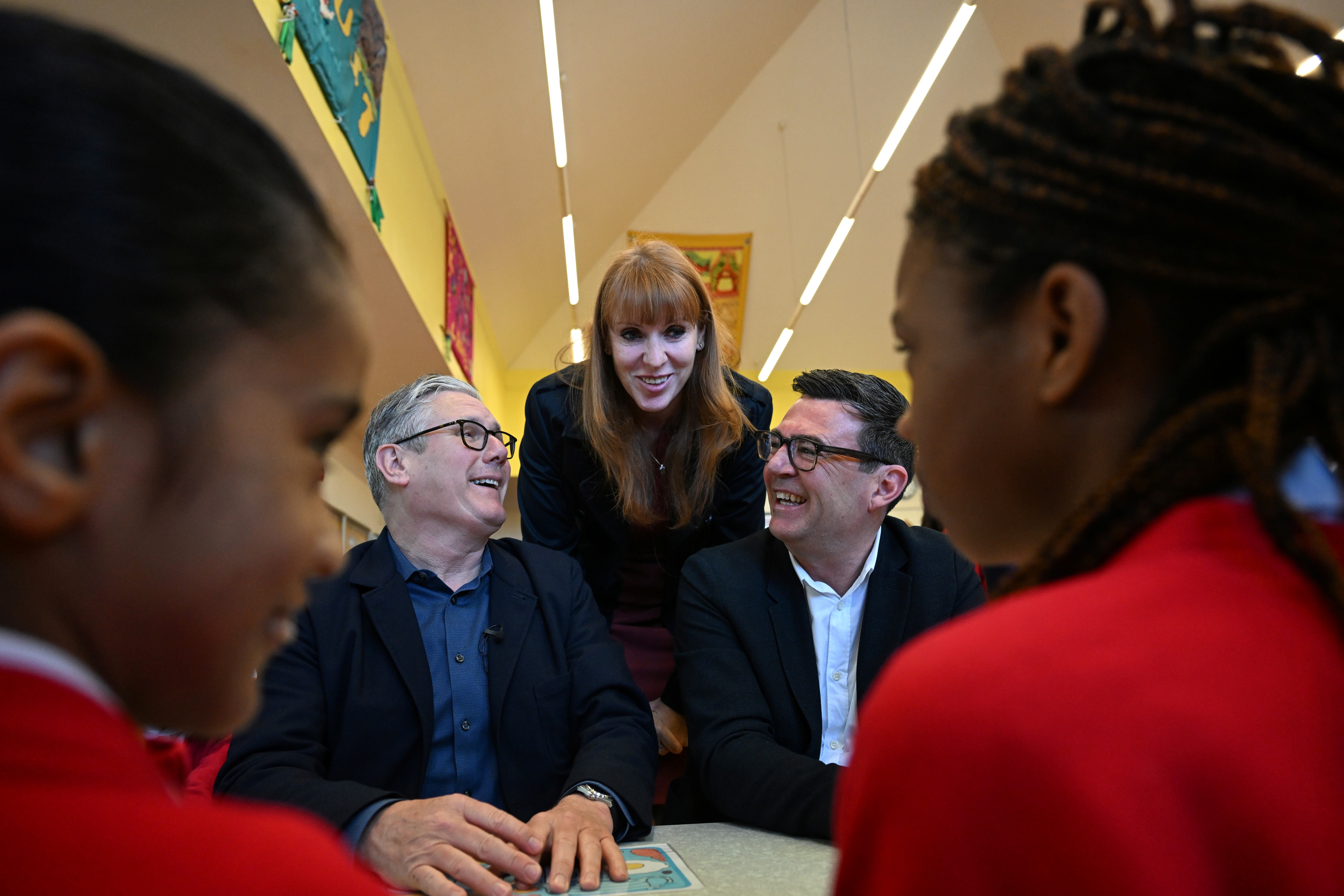
Sir Keir Starmer, Andy Burnham and fellow leadership candidate Angela Rayner meet pupils during a visit to a school breakfast club ((Paul Ellis/PA))
No one, however, doubts his ambition for the premiership, even though it has taken him on a circuitous route – via the North. In fact, it would not be the first time that the mayor of a big city went on to become head of their country’s government, though it’s unusual. Three US presidents have done so (Andrew Johnson, Grover Cleveland, Calvin Coolidge), and in Europe there are the highly notable examples of Chancellor Willy Brandt (graduating from West Berlin), and Jacques Chirac (Paris). Here, of course, we saw Boris Johnson perfecting his populist skills in London before, in due course, graduating to the premiership. The question for 2026 is whether Andy Burnham can make a similar journey from his mayoral HQ at the Tootal Building in Manchester to 10 Downing Street. The by-election in the usually safe Labour seat of Gorton, well inside Burnham’s northern fiefdom, opened up at least the possibility that Burnham might repeat Johnson’s feat. His candidature was, though, blocked by Labour’s National Executive Committee. The good reason was that he might not have won, and, even if he did, his candidature would trigger a by-election for the Greater Manchester mayoralty – and risk the loss of a powerful Labour fiefdom. The more tawdry cause for him being blocked was that Starmer was frightened of having such a rival or critic sitting on the benches behind him, or even around the cabinet table and an obvious replacement for him. Arguably, given that Burnham is still not an MP, and cannot replace Starmer until he is one, Starmer’s Stalinist tactic worked. On the other hand, perhaps Starmer’s Labour would be stronger now and there’d be no leadership crisis. Hypotheticals; but some kind of psychodrama developing in due course was likely.
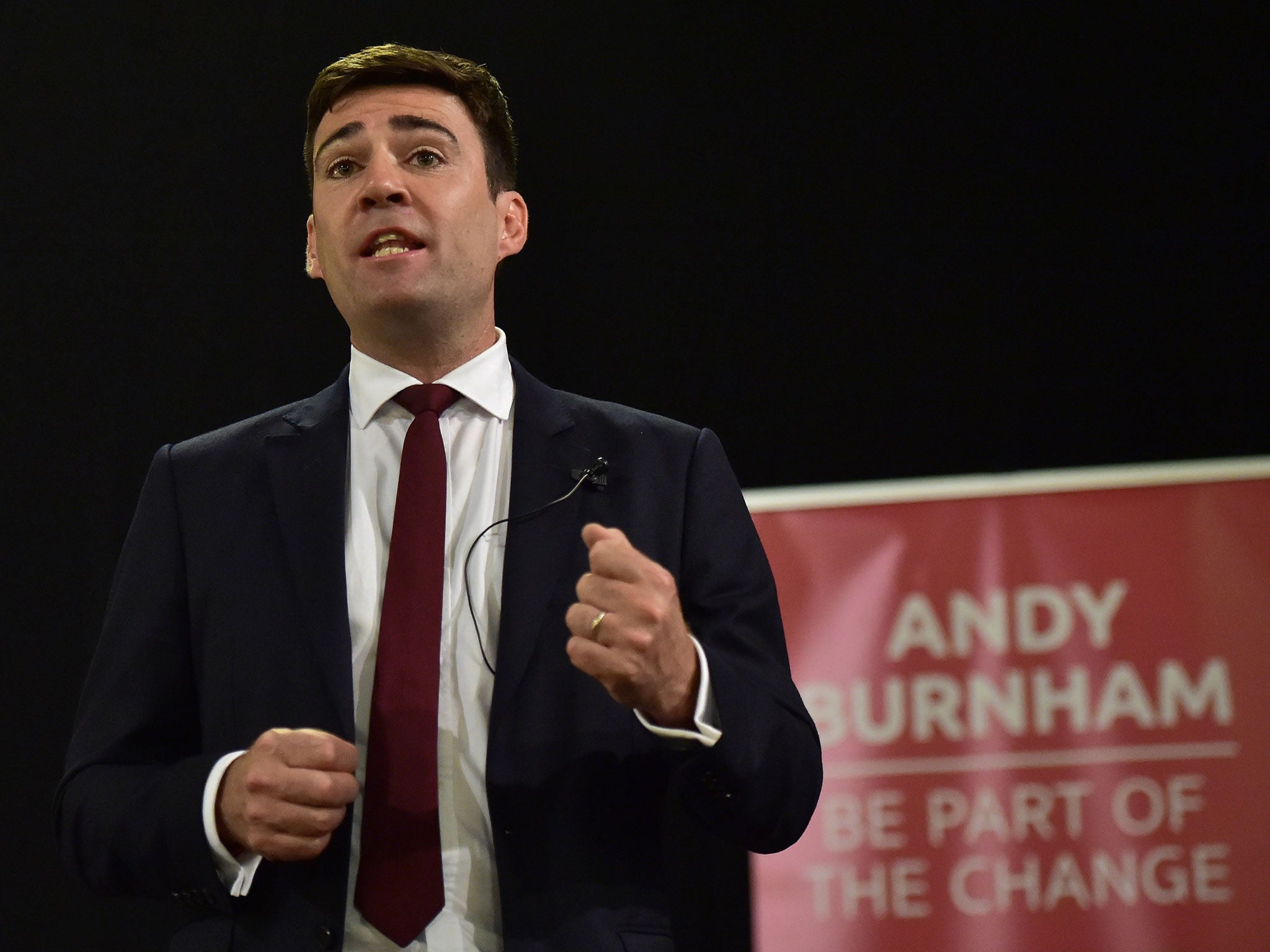
Burnham, a minister in the Blair and Brown governments and who served in Ed Miliband and Jeremy Corbyn’s shadow cabinets, reborn as the mayor of Greater Manchester since 2017, has already been almost prime minister, you know. He may presently be the “King of the North”, enjoying marginally better ratings than the party nationally, but he could now be trying, for the third time, for a rather more exalted position – leader of the Labour Party, and with it, the premiership. It was a laughable proposition for almost the whole of Sir Keir Starmer’s period of previously unassailable dominance, but suddenly, before last autumn’s party conference, in a panicky mood, the Labour Party seemed to have caught what might be termed “the Tory disease” – the delusion that a change of leader can solve all its problems, coupled with an addiction to plotting. Burnham, away from Westminster for most of the past decade, seemed to be the nearest thing they have to a fresh start. Now that there has been a fresh outbreak of that disease, in a far more virulent variant, his name has become prominent in all the speculation once again.
Burnham was blocked from standing in the Gorton and Denton by-election, which was eventually won by Green Party candidate Hannah Spencer – pictured here with leader Zack Polanski (PA Wire)
Last time round, didn’t go that well for our Andy. He seemed to wilt under the heat of media attention, never quite managing to answer that perennial question “will you rule out becoming leader” – an impossible one, to be fair. Then, as now, he refuses to be drawn, a little too obviously torn between a certain vestigial preference for straight talking, his obvious ambition (having tried for the leadership twice before) and some genuine hesitation about the timing – not least because he he’s not an MP and there is no such thing as a safe Labour seat into which he can be dropped. Burnham might have built up some more momentum if he’d had anything more substantial than a sort of vague “soft left” agenda, summed up in the amorphous term “Manchesterism”, which hasn’t exactly caught on. Lucy Powell, fair to say a friend of his, beat Starmer ally Bridgette Philipson for the deputy leadership, which confirmed the membership’s preference for a tilt to the shoft left, but nothing much came of that after.
Last year, despite more government U-turns, more scandals and resignations and ever more dismal poll ratings over the autumn, there was a feeling that Labour had stared into the abyss of a leadership contest, and drawn back. The possible unprovoked attack on another leadership rival, Wes Streeting, by a rogue No 10 spinner seems to confirm that the picture of a leader surrounded by rivals willing to wound but afraid to kill. Neither Streeting nor Burnham, nor the latest party star, Shabana Mahmood, nor Angela Rayner have presented a convincing alternative to Starmer’s policies, and there’s no overwhelming evidence that they’d transform the party’s electoral prospects. Starmer is weak, but his enemies are divided.
Advertisement
That is still true, but they all seem to be much more in earnest these days. Burnham’s ally, Clive Lewis, has published a sort of manifesto making the case for more government borrowing. Given that no one’s taken any notice of it, it’s only fair to quote a key chunk about fiscal responsibility:
“Bond markets do not have ideological preferences. They have functional ones. They prefer clarity, credible revenue streams, productive investment, and a state with a plan. What they punish is not public ambition but incoherence. A properly designed productive state programme would not be a leap into fiscal fantasy. It would be an attempt to end the much costlier fantasy that Britain can keep borrowing to compensate for broken markets while refusing to repair them.”
In any case, this would surely be his final throw of the dice. Even Burnham must be tired of being Labour’s perennial “nearly man”. It feels distant now, but way back in 2015, after Ed Miliband had led Labour to a poor election result and quit the leadership, Burnham was the favourite to succeed him. Had some Labour MPs – who should have known better – not “lent” their nominations to put Jeremy Corbyn on the ballot, Burnham might well have won, beating Yvette Cooper and Liz Kendall. As it was, Burnham lost miserably to Corbyn – 19 per cent to 59 per cent. It was not much better than when he fought, and lost, the leadership election after the 2010 defeat when Gordon Brown stood down. He got 9 per cent and finished behind Ed Miliband, David Miliband, and Ed Balls, and only just ahead of Diane Abbott.
(Left to Right) Liz Kendall, Andy Burnham, Yvette Cooper and Jeremy Corbyn – the Labour leadership candidates in 2015 (Getty)
In 2010, Burnham was too young, but in the 2015 contest, his defeat was his own fault. A late tilt leftwards came too late to rescue him from the Corbynite wave, yet alienated some in his own camp. Then again, he was, and remains, an ill-defined proposition; “soft left” is such an amorphous concept, after all. Still, probably thanks to being vague, Burnham has spotted the opportunity presented by Starmer’s unpopularity in the country – Labour’s 16 per cent opinion poll rating is scarcely believable – and among parliamentarians.
It’s no accident that Burnham was one of the prominent voices in opposition to the government’s attempts to reform welfare, in stark contrast to Angela Rayner’s doomed attempt to strike a deal with the backbench rebels. Rayner, however – the once undisputed Queen of the North – is no longer a rival to Burnham’s ambitions. Burnham could have killed off the destabilising speculation about a leadership challenge last year with one simple, unequivocal statement. Instead he has dodged the question, just as he has so often in the past.
Advertisement
Far from declaring his support for Starmer, Burnham has been busily building up his own support network, Mainstream, for “radical realists”. It’s a leftish version of the Starmerite Labour Together grouping, a Burnham fan club thinly disguised as a think tank or pressure group. Even more audaciously, Burnham virtually launched Lucy Powell’s campaign for the deputy leadership in a television interview shortly after Rayner resigned.
But it came to nought. The pattern in Burnham’s surprisingly long career is that he strikes to wound without thus far having had any success in finishing off his opponents. Even now, it is possible – there’s some wild speculation out there – that Ed Miliband, who could become leader immediately, could overtake him, or somehow recruit Burnham as an ally. The atmosphere is febrile, and memories of Ed’s doomed general election campaign in 2015 are fading. Maybe Ed still believes that “Hell yes, I’m tough enough”.
In 2010, Burnham was too young, but in the 2015 contest, his defeat was his own fault (AFP/Getty)
His two failed attempts to be Labour leader hurt Burnham, who has a peculiar quality of personal sensitivity that is rare in a front-rank politician, yet is allied to extraordinary resilience. It must be self-belief. He tried to put the best spin he could on being beaten by Corbyn a few years later, once he was safely ensconced in power as elected mayor of Greater Manchester: “It’s hard – especially being the frontrunner– but nothing is a given in politics, hence why I fell out of love with Westminster.
“The defeat was bruising; leadership elections always are. Getting rejected [by] people you know was tough, but it epitomised the shallowness of Westminster. I was always the loyal Labour person, a team player, and thought it would serve me well, but it didn’t come my way, and it exposed the fickleness of politics at a national level.”
After a brief spell as Corbyn’s shadow home secretary – this once-rising New Labour star (and now former Starmer loyalist) is ideologically flexible – he ran to be the first mayor of Greater Manchester: in effect, the voice of the North. It has plainly been the making, or at least the refashioning, of Andy Burnham.
Advertisement
Consciously or not, he looks different these days. In his diaries, Alastair Campbell wrote of a 38-year-old Burnham in 2008, shortly after he’d been promoted to Gordon Brown’s cabinet: “Andy seems so young. He needs to get himself some decent suits.” Burnham never looked particularly comfortable in any business wear, and he’s been transformed these days into a rather hip-looking Mancunian, all smart-casual with fashionable specs and the old monobrow neatly bifurcated. He still comes across as a bit needy and put upon, but it suits the new persona, and the new political dynamic, perfectly. If Oasis – Manchester’s favourite sons – can come back, why not Andy?
The impassioned speeches Burnham delivers also sound different from the old New Labour automaton – emotional but authentic, with a real political edge to them. It’s just as well he’s kept his accent. He found a ready audience for the message that his region was being cheated of its financial rights for the sake of a quibble with Boris Johnson over £5m. The North was not going to be picked off on the cheap by a government that was “grinding communities down through punishing negotiations”, nor its citizens “treated as the canaries in the coal mine for an experimental regional lockdown strategy”.
Having said that, Burnham was knocked sideways as Johnson demolished the red wall in the 2019 general election. There is as yet no clear reason to believe that Burnham will stop a similar assault by Nigel Farage and Reform UK, in the North or nationally.
Burnham understands populism, even if he’s not the best exponent of it. He carefully refers to those who work in pubs, and bookies, and drive taxis as “people too often forgotten by those in power”. He has skilfully forged a broad, if fragile, cross-party regional front against the prime minister. “The North, c’est moi” might sum up Burnham, so completely has he merged his identity (and interests) with those of 5 million disparate people in a disparate region.
Advertisement
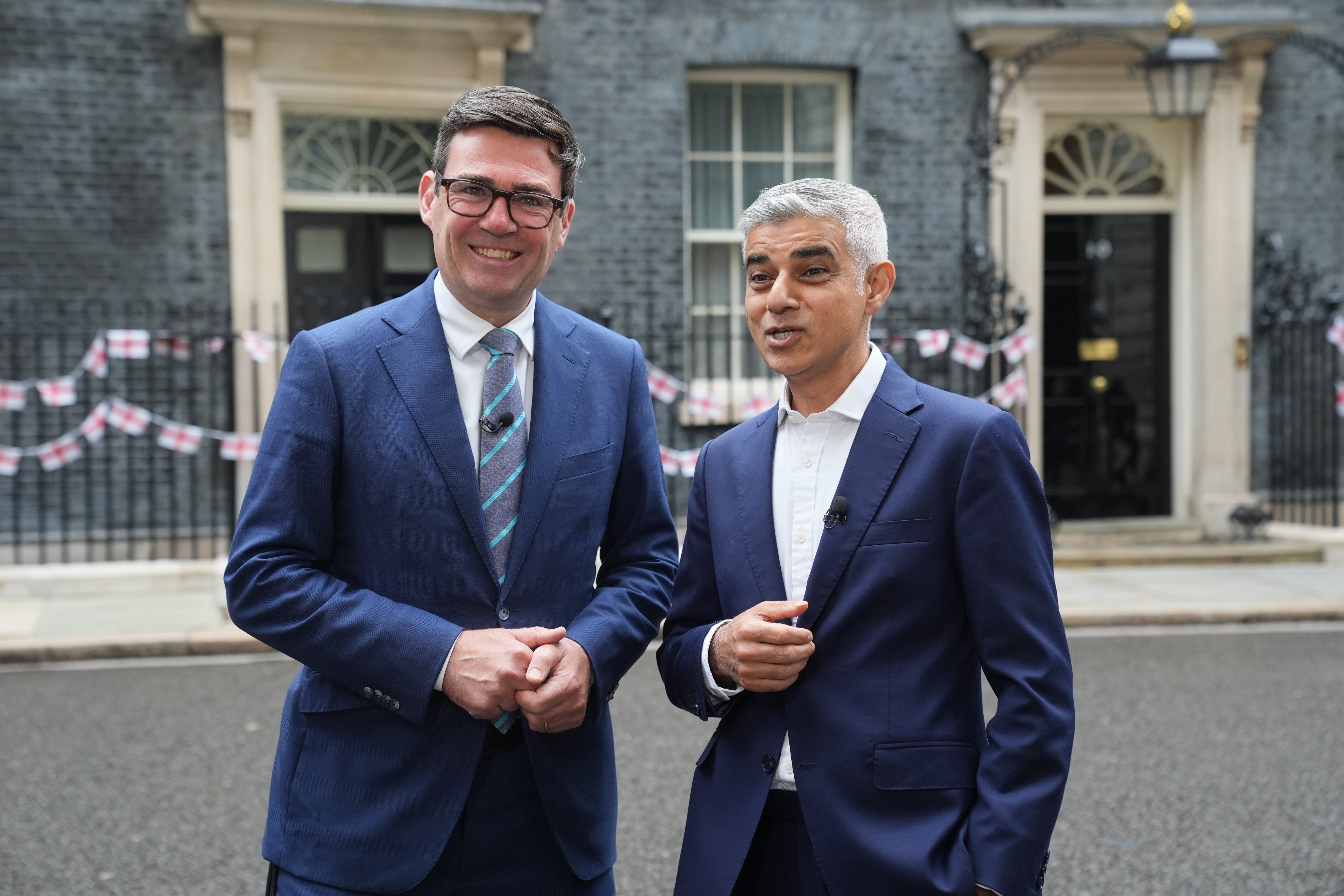
Within what passes for the United Kingdom these days, only Sadiq Khan is a match for him in this new game of territorial politics. The reborn Baron Burnham is a national figure to be reckoned with. His future, whether regional or national, looks brighter these days. After all, Johnson proved his campaigning ability as a two-term mayor of London. As in the US and France, a mayoralty can be an enviable base for a politician on the make (provided Burnham can get a Westminster seat).
Andy Burnham and Sadiq Khan outside Downing Street after a meeting with Keir Starmer earlier this year (PA Wire)
If Burnham wants to return to national politics, he now has the best chance he’s ever had – though the party and the government he seizes might be irreparably damaged by the resulting divisions. In the past, Burnham has complained about not being invited to address the Labour conference, and being left out of the 2019 election campaign. These days he has no difficulty finding a platform: he’s more box office, has some momentum, and is getting harder for the leadership to ignore.
He is a professional northerner, if not yet a master craftsman in the Geoffrey Boycott/Michael Parkinson/Peter Kay league. The placenames on the Burnham CV are evocative, though he’s never claimed, Rebecca Long-Bailey style, to have been born virtually on the pitch at Goodison Park (he’s a lifelong Evertonian). Maybe a racecourse, though: Andrew Murray Burnham was born in Aintree on 7 January 1970. The family lived in Formby, and his mum (a receptionist) and dad (a telephone engineer) met at Maghull phone exchange. They were Protestant and Catholic respectively, but sectarian doubts about Burnham’s father being a suitable husband were assuaged when his girlfriend’s dad realised they’d both been to support Everton against Blackburn.
Burnham was brought up a Catholic, and he holds to the faith – a surviving example of an older type of working-class Labour MP, often as not with Irish Catholic roots and a tendency to social conservatism. Burnham has sometimes been embroiled in controversies about LGBT+ rights. He says his political heroes are the late Paul Goggins (Catholic Labour) and David Blunkett, whose instincts were (and remain) very old-fashioned. There’s a contrast there, in Labour culture, between the metropolitan liberalism of Corbyn or Starmer and the more cautious approach of Blunkett or Burnham.
In due course, the family moved to Leigh, Greater Manchester – at the time a solid Labour seat, which Burnham would proudly represent in the Commons from 2001 to 2017. His first unpaid job was as a newspaper reporter on the Middleton Guardian. Grandad drove a lorry for Tate and Lyle.
Advertisement
His socialism was sparked early on, when he was only nine: “I remember very clearly going to Chester Zoo, not long after the 1979 election. There was a sticker on the car in front that said ‘Don’t blame me, I voted Labour’, and I asked my dad what it was. I remember him saying, ‘Well, there’s a woman called Maggie… ’.” By 14, Burnham had joined the Labour Party, just in time for the miners’ strike.
He says he got his ambition from his gran, who sounds a bit of a proto-Thatcherite: “She grew up in Great Mersey Street and worked for the brewery as a cleaner or in the kitchens. One day she walked over the fields, unbeknown to my grandad Jimmy, and put a deposit down on one of the new houses being built. He couldn’t believe what she had done.” Perhaps it wasn’t such a surprise that Burnham’s doomed 2015 leadership bid had the theme “aspirational socialism”.
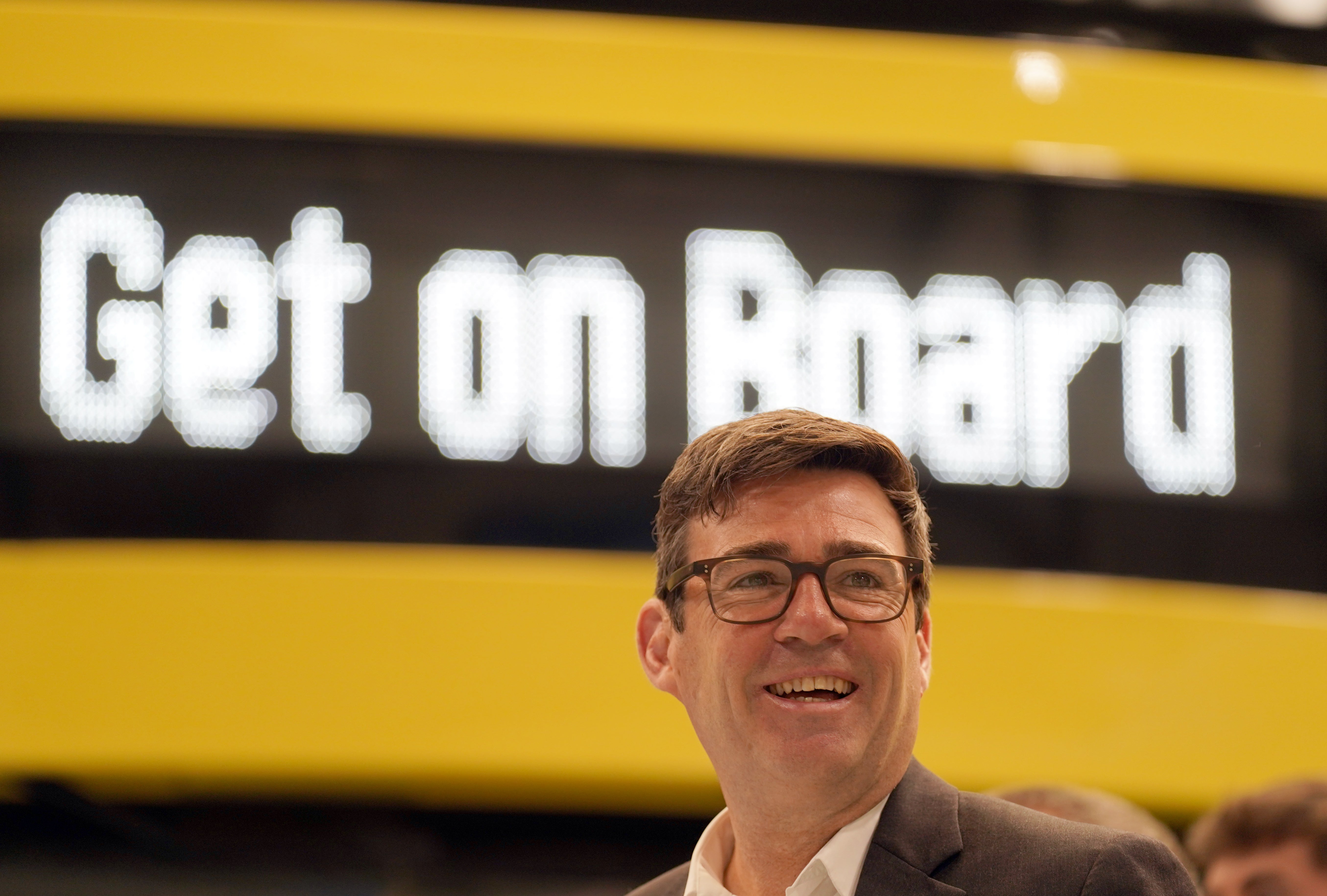
Burnham has boosted his profile since becoming the mayor of Greater Manchester (PA Archive)
He was certainly socially mobile, and has become quietly cosmopolitan. He met his Dutch wife, Marie-France van Heel, known as Frankie, when he was studying English at Fitzwilliam College, Cambridge. Married in 2000, they have three children.
Curiously, Burnham is unlike many of the Labour Party’s modern-day household names in that he can be described as a typical “professional politician”. He was a parliamentary researcher and special adviser before getting his seat and ministerial office. He worked for Tessa Jowell, Chris Smith, David Blunkett and Patricia Hewitt, and was a Treasury minister, culture secretary and health secretary under Gordon Brown. Although he often protests that he’s never been part of the Westminster in-crowd, he certainly gives the impression of it.
In an interview with The Spectator in 2006, after winning the magazine’s “Minister to Watch” award, he admitted to knowing the Miliband brothers, James Purnell, and other youthful outriders of the Blair cult, but tried to imply a certain distance when asked about cosy meals at their homes in Primrose Hill. “The thing that excites me at the moment is a chip shop I’ve found which sells both mushy peas and gravy,” he said. “That’s more me than Primrose Hill. And that is where I do not fit the archetypal New Labour mould.” Like I say, a professional northerner.
Advertisement
To be fair, though, in that same interview you can see how Burnham detected a mood swing in the North that was later to do so much damage to Labour, and urged his party to pause and reflect on people who had become “lost along the way”. Criticising David Cameron, he made a sensitive point about the coming culture wars: “Most of my constituents can’t afford wind turbines on their houses. I sense the metropolitan world being very much wooed. But the larger country is asking, ‘What the hell is this all about?’.”
When he was in government, in the course of quite a long and varied career, Burnham wasn’t too heavily tested. After he was booed at a 20th-anniversary commemoration of the Hillsborough disaster, he persuaded Brown to set up the inquiry that eventually led to justice for the 96. Now, after much lobbying and a change of government, Starmer is reportedly ready to introduce the Hillsborough Law, compelling a duty of candour on public officials. It’s the right thing to do, and partly a result of Burnham’s pressuring for it, but it does handily spike Burnham’s guns a bit.
As health secretary he was accused of failings in the Mid Staffs hospital scandal, but was never officially censured. His two leadership bids were disappointments. The capture of Labour by the Corbynites, the scale of which was aided by Burnham’s lacklustre campaign, left him isolated and at a dead end. Yet the Manchester job has turned out to be much more than some cushy early retirement gig. Weeks after he took over as mayor, he had to respond to the terror attack at the Manchester Arena, which he did in a dignified way, and his recent struggles with Whitehall have given him a national profile. No matter that Johnson just bypassed Burnham and dished out £60m directly to the individual boroughs in Burnham’s fiefdom, Burnham had the better of the politics of it all.
There’s a contrast in Labour culture between the metropolitan liberalism of Corbyn or Starmer and the more cautious approach of Blunkett or Burnham (PA Wire)
People say Burnham is a bit of a flip-flop, but to have survived anywhere near the top of Labour politics in the past couple of decades requires a degree of pragmatism, and Burnham has certainly been all over the place on Brexit – but who hasn’t? Burnham has enjoyed success in fighting Covid, and has done his best to secure better transport links for his region and the North more widely – the cancellation of the Northern extension portion of HS2 was a bitter disappointment. He has, though, taken the best innovative features of integrated public transport in London and applied them to Greater Manchester.
He is popular there, and continues to pursue a war on homelessness in his city region, in the past condemning the “top-down London-centric Labour Party” and banging on about converting the House of Lords into a PR-elected chamber. Rather late in the day, he has added his voice to those calling for a proper public inquiry into the rape gangs scandal.
Advertisement
Probably the best thing that ever happened to him was losing the Labour leadership in 2015 and avoiding the internal traumas of the past decade. At just 55 years of age, Burnham is younger than Starmer, let alone Farage, with whom he shares a certain “authentic” appeal. He’s fond of the band The Courteeners, and once, perhaps tellingly, tweeted the lyrics to their single “Take Over the World”: “I’m only a paperboy from the North West/ But I can scrub up well in my Sunday best.”
Having been a bit of an underperformer, could it at last be coming true for Our Andy? Yes, in a purely tactical sense. The real question remains – why would Burnham would necessarily do things better than Starmer? How would he fix the public finances? Make the economy grow faster? Reform social security? Stop the boats? Placate Trump? It’s time for Andy to once again speak up.
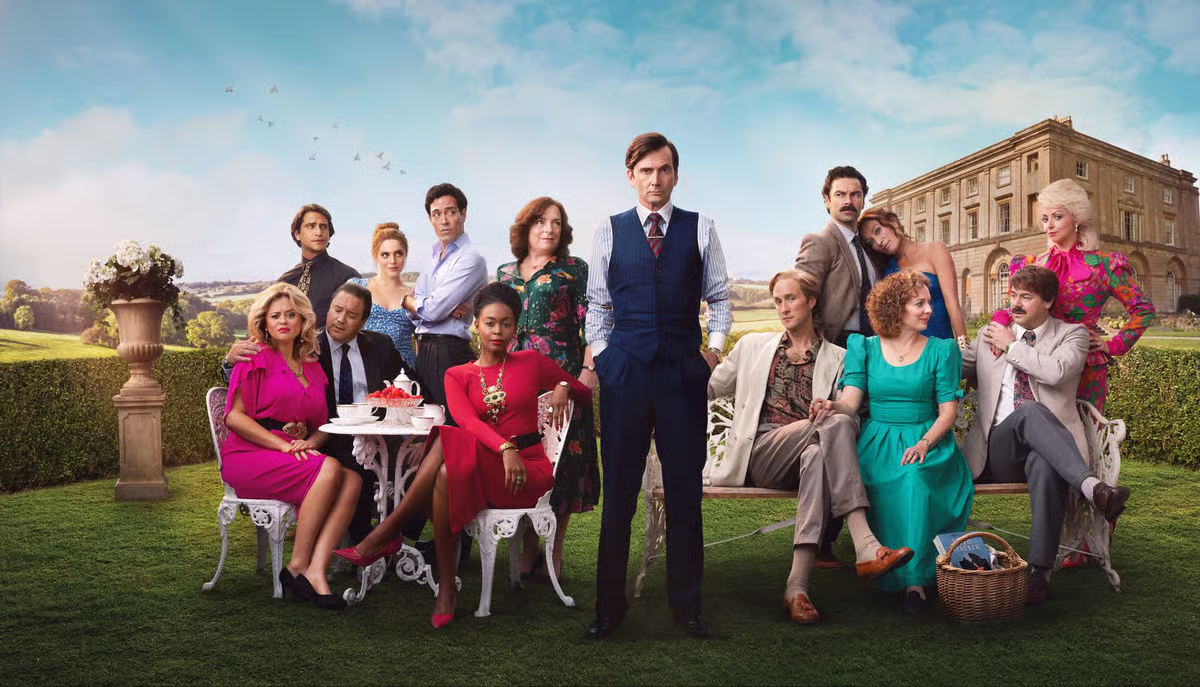
Emily Atack is given more to do this time around as Sarah Stratton, the TV anchor married to another Tory MP, Paul Stratton. In one brilliantly handled scene, with Taggie’s help, she pretends to cook for a dinner party intended to woo Tony and ends up trying to host while guiding unwanted guests in and out of pantries and closets, and dealing with the news that she’s pregnant. Atack is masterful here, sympathetic and hilarious in a Fawlty Towers-level farce.
Celebrity Juice host Leigh Francis shared the awful facial injury given to him by an over-excited fan’s massive fingernail.
Advertisement
The comedian, 53 – best known for his alter ego Keith Lemon – is also a regular on the DJ scene, which comes with its own set of perils, as he recently discovered.
While spinning discs at Sound Bites festival in Syon Park, his sick tunes clearly got the crowd going, leading to a nasty wound in the most unexpected way.
He took to social media to explain what happened, and show the damage.
‘Oh, hello. I’ve just got back to my room, been DJing. Went into the crowd, and someone was overcome with joy, so that was a nice feeling.
Advertisement
‘So she went: “I love you!” and put her hands towards my face and her thumbnail, which was quite long… did that,’ he said.
Leigh Francis recounted the moment he procured a nasty injury while DJing (Picture: Instagram/Leigh Francis)
He then dramatically turned his head to show an angry, red gash from his hair all the way to his eye, luckily just missing the tender organ by millimetres.
With a note of shock in his voice, he noted: ‘Could’ve been worse, could’ve gone in my eye but yeah bit of a naughty one that, innit?’
And in the caption added: ‘I guess I’ve gotta stop going into the crowd. Gonna have to put a bit of vinegar on pet. Stinger!’
Advertisement
His plight raked in a flurry of sympathy from horrified friends and fans.
Friend Stephen Paulson commented on Instagram: ‘Blimey! Even I didn’t do that with you and I had Wolverine claws! Heal fast mate!’
‘Jesus, what was she, Edwina Scissor Hands?’ Jason Penny Cooke joked.
‘Jeeez! Pal, I hope you’re ok,’ P21cey echoed. ‘Ouch! I’m glad you are OK!’ AndreaR said.
The Celebrity Juice star has left TV behind for now (Picture: Shutterstock)
The TV personality then did a follow-up video as another of his alter egos, Avid Merrion, in which he filmed a day in his life for the second day of the festival, with a heavy emphasis on his ‘war wound’.
At one point, he jokingly shows a woman and declared: ‘This is the lady that clawed my face with overexcitement.’
Recounting the incident, he said ‘all the joy left [his] body’ and advised festival attendees not to get ‘too drunk’ when they are having a good time.
Although he quipped he looked like a ‘sexy action man’ and that next time he would perform as another of his characters, The Bear, who no one would dare mess with.
Advertisement
There’s no telling when he’ll return to TV, if ever (Picture: Alan Chapman/Dave Benett/WireImage)
Leigh has been concentrating on his live comedy and music career in recent years and, despite the physical dangers, seems committed to this path for the forseeable future.
He said: ‘Juice will never come back… someone asked me when I’m back on TV and I said I don’t know.
‘I did say it’s pretty difficult doing things these days without offending people.’
Adding that he had got ideas, he caveated: ‘I don’t think comedy is commissioned as easily as back in the day.’
Advertisement
Got a story?
If you’ve got a celebrity story, video or pictures get in touch with the Metro.co.uk entertainment team by emailing us celebtips@metro.co.uk, calling 020 3615 2145 or by visiting our Submit Stuff page – we’d love to hear from you.
WASHINGTON (AP) — From the moment President Donald Trump lands in Beijing on Wednesday, all eyes will be on how much of a spectacle the Chinese government rolls out, such as who lines up to greet him, what music is played and whether Chinese and American children wave flowers and flags.
U.S. President Donald Trump is set to arrive in Beijing on Wednesday for his highly anticipated summit with Chinese leader Xi Jinping at a restless moment for a world worried about war, trade and artificial intelligence.
Advertisement
In China’s rigidly hierarchical world of diplomacy, protocol and ceremony carry weight. The reception of Trump is shaping up to be warm and designed to flatter him, indicative of Beijing’s tactical approach to a U.S. leader known for his love for pomp, but it is unlikely to top the “state visit plus” extravaganza President Xi Jinping extended to Trump in 2017.
“That reflects greater Chinese confidence in their position, greater skepticism of Trump, and the awkwardness of the current relationship,” said Rush Doshi, C.V. Starr senior fellow for Asia studies at the Council on Foreign Relations and an assistant professor of security studies at Georgetown University.
In the past nine years, the China-U.S. relationship has shifted from engagement to competition and has dipped to a low point during the COVID-19 pandemic and trade wars.
Advertisement
Experts say China’s economic clout and its ability to leverage its dominance in the global supply chain have allowed the Chinese leadership to negotiate from a position of strength and led to a more pragmatic China policy by the Trump administration. And now the war with Iran, which has left the Strait of Hormuz blocked and rattled the global economy, has given Xi an upper hand coming into the summit.
The war, which began with U.S. and Israeli strikes on Feb. 28, delayed Trump’s visit, initially scheduled for the end of March. Now, Trump is going to Beijing for a shorter stay than in 2017, and without first lady Melania Trump.
“The context for this visit is wholly different,” said Danny Russel, a former senior U.S. diplomat, who does not expect Beijing to outdo itself this time in receiving Trump. “The schedule has been compressed to basically one day and stripped down to the basics.”
China will roll out the red carpet
But the U.S. holds a special place in China’s foreign relations, and China will shower Trump with plenty of ceremonial pomp because Beijing sees it as a diplomatic tool, Russel said.
Advertisement
If the 2017 trip is any indication, Trump can expect to walk down from Air Force One along a red-carpet stairway with golden edging and be greeted by a warm crowd.
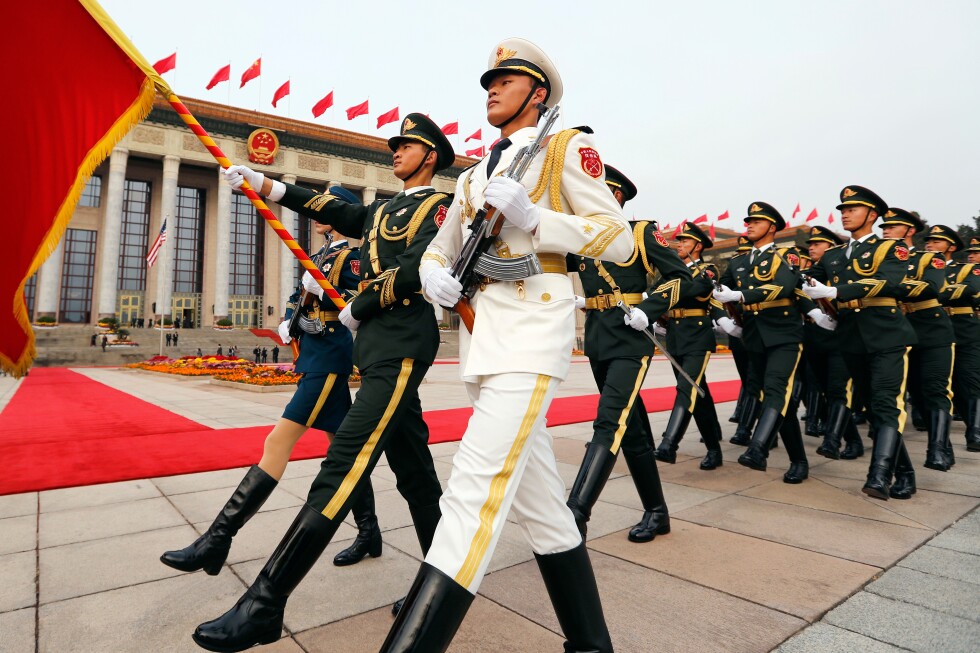
At a formal welcome ceremony the next day, he will be greeted by Xi and other Chinese officials, whose rank could be telling. Trump is then expected to inspect military honor guards, lined up precisely by height, their eyes closely tracking him and Xi as the two leaders walk down the red carpet. And he will likely receive a 21-gun salute.
“It’s no secret to any government that President Trump responds positively to flattery and spectacle,” Russel said. “The pomp and pageantry is designed both to flatter Trump and to pacify him, making him more amenable to Chinese asks and reducing the risk of an embarrassing public confrontation.”
Xi also will offer something extra, as he did during past visits by American presidents. In 2014, it was an evening stroll with former President Barack Obama in the leadership compound of Zhongnanhai. In 2017, he hosted a private dinner for Trump at the Palace Museum, on the grounds of the former imperial palace.
Advertisement
This time, the special relationship between the Chinese and American leaders will play out at the Temple of Heaven, a former imperial site, in front of the Hall of Prayer for Good Harvests, an iconic, blue-tiled building known for its circular design and a triple-gabled roof. The White House says Xi will accompany Trump on a tour of the World Heritage site, where Chinese emperors once prayed for bumper harvests.
The entire park is closed on Wednesday and Thursday, while the main attractions, including the hall and the Echo Wall, were closed on Tuesday for “the maintenance of ancient architecture,” park management said.
This is unusual. The park was not closed for the prime ministers of Britain or Spain when they visited the Palace Museum and the Summer Palace in Beijing, respectively, earlier this year. And Xi didn’t accompany them.
But it is not 2017 anymore
Beijing declared Trump’s first presidential trip to China to be a “state visit plus,” and it is the only one China has held for any foreign leader. The trip was full of unprecedented arrangements.
Advertisement
Xi and his wife, Peng Liyuan, gave Trump and the first lady a tour of the Palace Museum, where they chatted over afternoon tea and watched a traditional opera performance at a royal theater that had not seen a show for a century. They also dined there — a first for any foreign leader.
During the formal welcome ceremony the next day, “The Stars and Stripes Forever” was played as the presidents inspected Chinese military guards, an unusual choice intended to impress Trump.
Trump, who often boasts of his good relationship with Xi, still harkens back to that visit nearly nine years ago.
“You know, last time I went to China, President Xi, he treated me so well, he gave me a display,” Trump said in February. “I never saw so many soldiers, all the same height, exactly the same height within a quarter of an inch.”
Advertisement
How China treats Trump this time will offer clues about the dynamics of the relationship, said Doshi, who served on former President Joe Biden’s National Security Council and helped plan his summits with Xi in 2022 and 2023.
“China uses diplomatic protocol as a method of signaling favor or disfavor. That is why we should pay close attention to how President Trump is received,” Doshi said.
Tyne Rivers Trust has opened its annual photo competition for the 2027 charity calendar, inviting submissions from photographers of all ages and abilities.
Images should feature the River Tyne catchment throughout the seasons, from sea to source.
Sophia Stovall, chief executive officer at Tyne Rivers Trust, said: “We were blown away by the quality of entries last year.
Advertisement
“For the 2027 calendar, we want to see even more of the diverse nature of our waterways, from the hidden tributaries to the iconic main river, the wildlife that calls the Tyne home, and the stunning landscapes that surround it.”
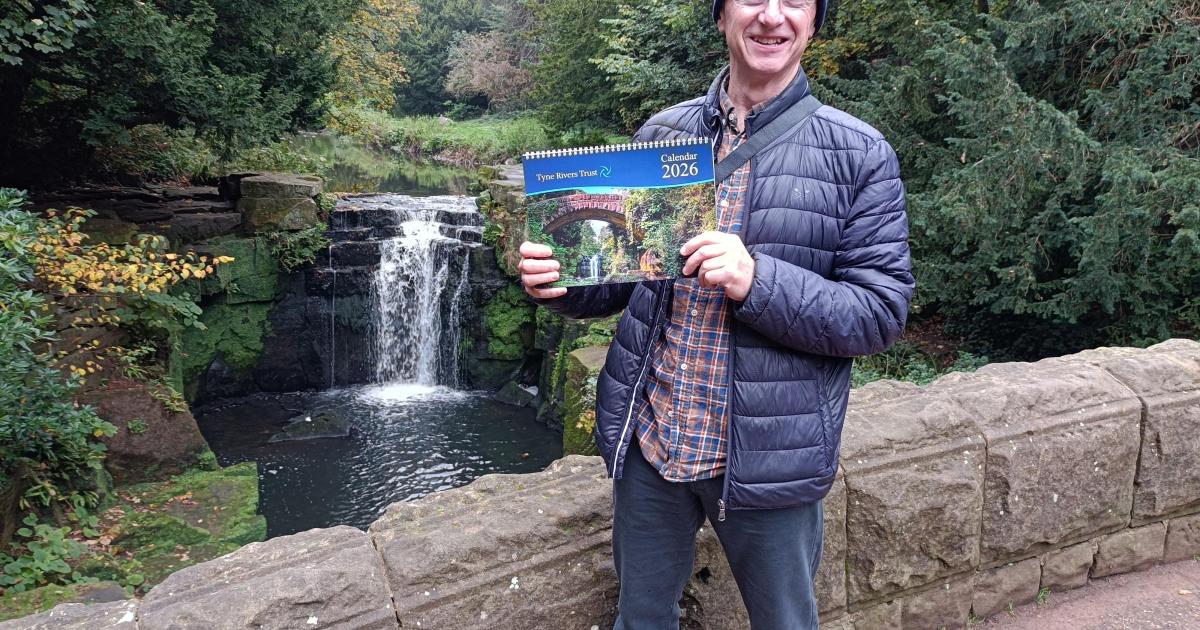
The 2026 calendar generated strong community interest and sold more than 100 copies, raising funds for the environmental charity.
Photos can be professionally shot or taken on smartphones, with the focus on capturing any aspect of the river across the year.
Proceeds from calendar sales help fund the trust’s work to improve water quality, address climate change, and protect the river’s ecosystem for the long term.
Advertisement
The 2027 calendar will feature 12 winning images, with each month available for sponsorship at £1,000.
Sponsors will have their logo and information included in the calendar and all funds will support the trust’s ongoing projects.
The public are encouraged to visit the riverbanks this season and capture their best Tyne-inspired image.
Selected entries will be featured in the printed calendar, giving contributors the chance to see their photography in print and support an environmental cause.
Actor James Cartwright has said he ‘can’t wait’ as his next villainous role was confirmed following his exit from the ITV soap
Former Coronation Street star James Cartwright has said he ‘can’t wait’ as his next villainous role was confirmed, just a couple of weeks after he was seen bowing out of the long-running show.
Advertisement
As fans of the ITV soap know, the actor made his debut on the famous cobbles back in March 2025 as Theo Silverton, who quickly struck up a sizzling romance with local undertaker, Todd Grimshaw.
However, what followed was a heartbreaking and difficult-to-watch 13-month domestic violence and coercive control storyline, during which Todd, played by Gareth Pierce, was seen suffering both physical and mental abuse at the hands of his partner.
Click here to sign up for more Coronation Street updates in our newsletter
But as viewers eventually saw earlier this month, after a flashback episode aired in February revealed five characters as the possible victims of a shocking murder, it was Theo who was killed, putting an end to his long reign of terror in Weatherfield.
Advertisement
That being said, while not physically present, Theo has mentally scarred Todd, who is now in the frame for his murder, as well as his loved ones, George Shuttleworth, Christina Boyd, and Summer, alongside Gary Windass and Theo’s ex-wife, Danielle Silverton, who could also be guilty of Theo’s demise.
While the ‘whodunnit’ continues to unfold on-screen, with DS Lisa Connor-Swain and DC Kit Green leading Weatherfield Police’s investigation, James is planning his acting future as his next role was confirmed, as he will appear in a pantomime this Christmas.
The 41-year-old, who is the son of playwright Jim Cartwright, has landed the role of Abanazar in Bournemouth’s Pavilion Theatre’s production of Aladdin, running from December 5 to January 3, 2027.
Advertisement
Speaking about the job, James told the theatre’s official website: “I can’t wait to be a part of it. Bournemouth is such a beautiful place, and to be here over Christmas, performing for local families and visitors alike, feels really special. Pantomime has such a brilliant tradition, and I’m super excited to dive into that world.”
Producer Martin Dodd of UK Productions added: “Known to many as the very dangerous Theo Silverton in Coronation Street, James brings a commanding stage presence and a sharp edge to his performances – perfect for a larger-than-life villain.”
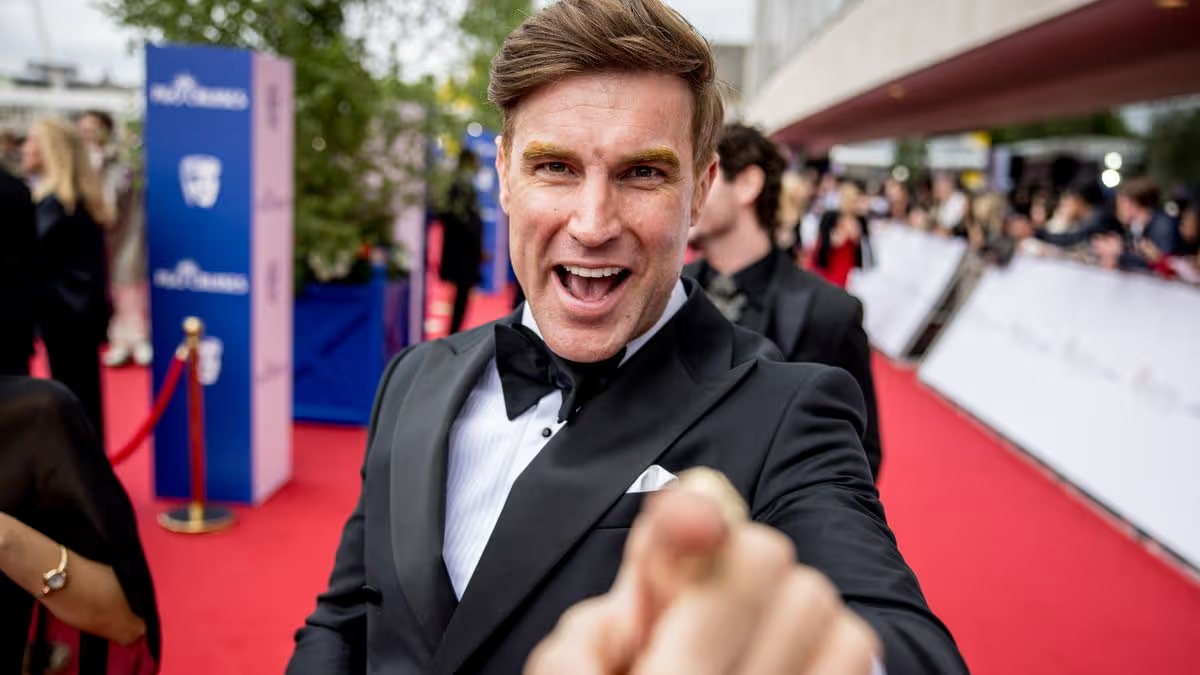
It comes as James and Gareth were reunited over the weekend as they represented Corrie at the 2026 Bafta Television Awards. The soap was up for the soap gong at the prestigious ceremony on Sunday (May 10) night, and Gareth and James, as well as fellow Corrie stars Sue Devaney and Tanisha Gorey, were seen swapping the cobbles for a star-studded red carpet ahead of the ceremony getting underway at the Southbank Centre’s Royal Festival Hall in London.
Sadly, the Bafta hasn’t returned home to Manchester as the soap gong was awarded to EastEnders. On hand to pick up the award was BBC soap stars Michelle Collins, Jessie Wallace, Diane Parish, and Aaron Thiara, as well as former executive producer Chris Clenshaw and his successor, current boss Ben Wadey.
Advertisement
But it didn’t stop the Corrie stars from enjoying their evening. A string of photos was shared of the foursome on Corrie’s Instagram page, in which former on-screen couple Gareth and James looked dapper in matching black suits and bow ties, while the two ladies dazzled in different styles of black gowns, with Tanisha rocking a sleek, sheer-detailed number, while Sue slipped into a bedazzled plunging number before adding a fur shawl around her shoulders.
The World Cup kick-off is fast approaching, and the 64 teams involved are starting to release their squads.
Bosnia & Herzegovina were first to release their squad, which features the 40-year-old Edin Dzeko, before Graham Potter’s Sweden followed suit with a team studded with Premier League stars.
Read on to see all the latest World Cup squads and expected release dates in full!
This article will be updated as and when tournament squads are confirmed.
Advertisement
Expected on or before June 1
Expected on or before June 1
Expected on or before June 1
Goalkeepers: Nikola Vasilj, Martin Zlomislić, Osman Hadžikić
Advertisement
Defenders: Sead Kolašinac, Amar Dedić, Nihad Mujakić, Nikola Katić, Tarik Muharemović, Stjepan Radeljić, Dennis Hadžikadunić, Nidal Čelik
Midfielders: Amir Hadžiahmetović, Ivan Šunjić, Ivan Bašić, Dženis Burnić, Ermin Mahmić, Benjamin Tahirović, Amar Memić, Armin Gigović
Edin Dzeko will hope to inspire Bosnia & Herzegovina
Getty
Expected on or before June 1
Expected on or before June 1
Advertisement
Expected on or before June 1
Expected on or before June 1
Expected on or before June 1
Goalkeepers: Viktor Johansson, Kristoffer Nordfelt, Jacob Widdell Zetterstrom
Advertisement
Defenders: Hjalmar Ekdal, Gabriel Gudmundsson, Isak Hien, Emil Holm, Gustaf Lagerbielke, Victor Nilsson Lindelof, Eric Smith, Carl Starfelt, Elliot Stroud, Daniel Svensson
Midfielders: Taha Ali, Yasin Ayari, Lucas Bergvall, Jesper Karlström, Ken Sema, Mattias Svanberg, Besfort Zeneli
Forwards: Alexander Bernhardsson, Anthony Elanga, Viktor Gyokeres, Alexander Isak, Gustaf Nilsson, Benjamin Nygren
Alexander Isak and Viktor Gyokeres will combine for a lethal strike partnership
Several farms have been targeted by thieves with GPS equipment being stolen
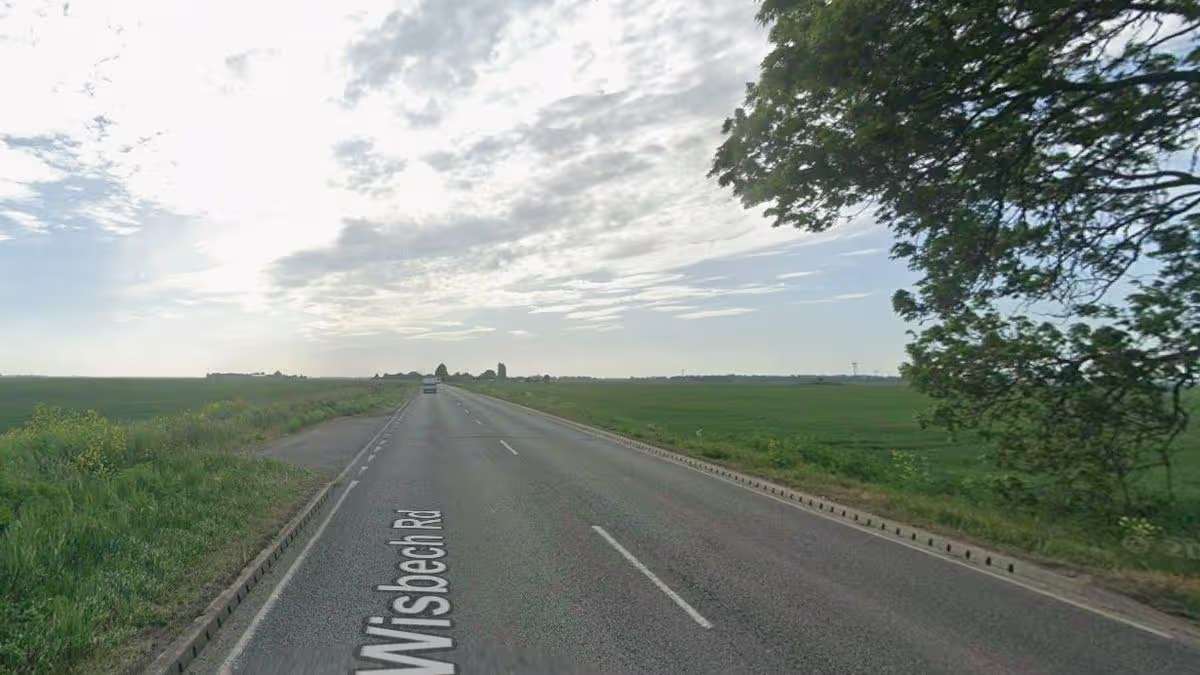
Cambridgeshire Police are asking for anyone who notices any suspicious behaviour in two Cambridgeshire areas to report it. Farms along the A47 between Thorney and Guyhirn were targeted by thieves last night (Monday, May 11) and this morning (Tuesday, May 12) with GPS guidance systems stolen from agricultural vehicles and machinery.
Advertisement
Officers from the Rural Crime Action Team are working closing with farmers and are patrolling the area to target offenders. The police are asking for anyone with footage or who may have noticed anything suspicious in the two areas to come forward.
You can report anything through the force website by quoting the references 35/35067/26, 35/35055/26 and 35/35090/26. You can call 101 if you do not have access to the internet.
You can also report anything anonymously through Crimestoppers on 0800555111.
PC Brady Slack said: “We believe these thefts could be linked because of their locations along the A47.
Advertisement
“We would like to hear from anyone who may have seen any suspicious activity in the Thorney and Guyhirn areas recently. This includes anyone acting suspiciously, unfamiliar vehicles, vans or cars parked near farms and fields, particularly overnight or during the early hours of this morning.
“People may also have been loading items into vehicles or loitering around agricultural machinery. If you have any CCTV, dashcam, video doorbell footage or information about any of this, do get in touch with us.
“These GPS systems are highly specialised, costly to replace and essential to modern farming operations.”
To get more news and top stories delivered directly to your phone, join our new WhatsApp community.Click this linkto receive your daily dose of CambridgeshireLive content.
Advertisement
We also treat our community members to special offers, promotions, and adverts from us and our partners. If you don’t like our community, you can check out any time you like. If you’re curious, you can read ourPrivacy Notice.
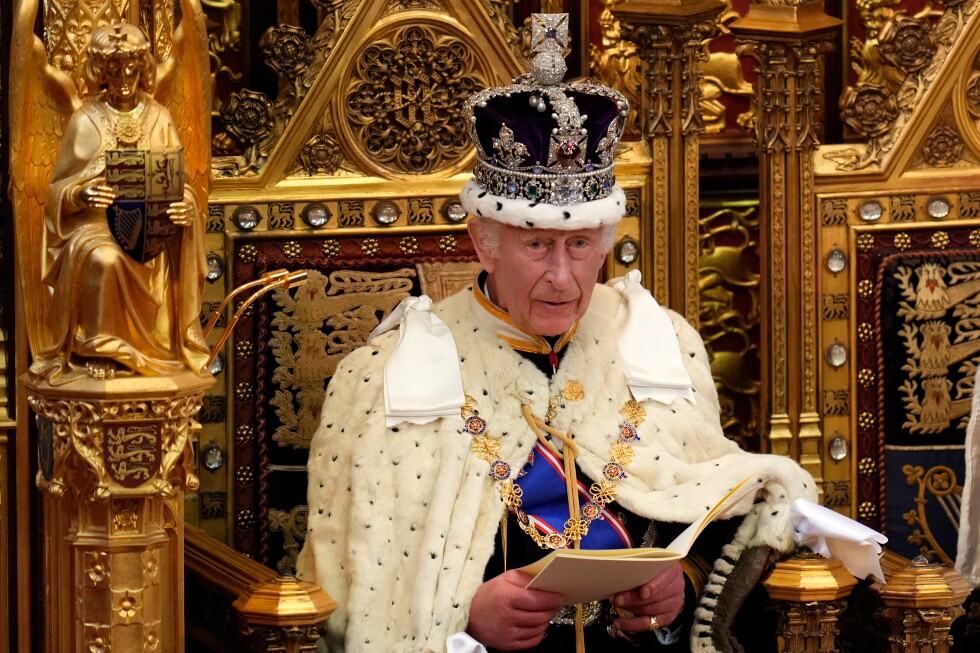
LONDON (AP) — King Charles III on Wednesday will deliver the government’s legislative program for the coming year to lawmakers with all the pomp and historic trappings that accompany the ceremonial opening of Britain’s Parliament.
The question is whether Prime Minister Keir Starmer will be around to implement it and, even if he survives the latest government crisis, whether he will have the authority to push his proposals through Parliament.
The King’s speech will be Starmer’s second attempt to save his premiership after his Labour Party suffered huge losses in local and regional elections last week. That weakened his already tenuous grip on power and fueled calls for him to step down from members of his own party who believe Starmer has been too timid in attacking the rising cost of living, wealth inequality and the country’s creaking public services.
The pressure on Starmer has only increased since a Monday speech to party supporters, promoted as the first leg of his fight back. But it was criticized as “tone deaf” and lacking the bold policies needed to tackle Britain’s problems. Former Safeguarding Minister Jess Phillips resigned from the Cabinet on Tuesday, saying the government needed to “have a row, push back, make arguments, bring people along.”
Advertisement
Historic power collides with modern reality
The King’s Speech will be a moment when the historic power and grandeur of Britain will collide with the reality of the modern United Kingdom, a mid-sized country with an underfunded military, rising debt and waning international influence. It’s a country struggling to control immigration and pay for public services such as health care and education.
The speech is just one element of the state opening of Parliament, a traditional set piece of the political calendar that uses carefully choreographed pageantry to showcase Britain’s evolution from an absolute monarchy to a parliamentary democracy where real power is vested in the elected House of Commons.
This year’s edition will be closely watched because of Starmer’s precarious position.
The speech is likely to take on cost of living crisis
The speech is expected to include proposals to address the cost of living crisis, create a national wealth fund to stimulate private investment in public infrastructure and tighten rules for asylum seekers. It may also include the government’s controversial proposal to abolish jury trials for some cases in England and Wales, lower the voting age to 16 and introduce a “duty of candor” for public officials, requiring them to tell the truth and cooperate with investigations.
Advertisement
The problem for Starmer is that many of the proposals expected to appear in the speech have been announced previously. That raises the question of whether he will be able to win over his doubters.
Even so, the speech is the focal point of a day of ceremony and tradition that has been followed since 1852, with elements of the program dating to the 16th century.
King Charles III visits the Commons
The monarch traditionally travels from Buckingham Palace to the Houses of Parliament, a distance of less than a mile, in a horse-drawn carriage. He then dons the Imperial State Crown and robe of state before leading a procession into the chamber of the unelected House of Lords.
A Lords official called Black Rod, named for the ebony rod he or she carries, then goes to the House of Commons to summon the chamber’s members to a joint sitting of Parliament. The doors to the Commons chamber are slammed in Black Rod’s face to symbolize the chamber’s independence from the monarchy, and they aren’t opened until Black Rod strikes the doors three times.
Advertisement
Once members of the Commons have crowded into the Lords’ chamber, the king delivers a speech written by the government and laying out its legislative program for the coming session of Parliament.
After the speech is read and the king leaves, the two houses of Parliament begin several days of debate on its contents.





.jpg)













































You must be logged in to post a comment Login