In the tradition of Beat Saber comes a new PSVR2 game that turns first person combat into a fitness regime, as you fight the bulge with swords and maces.
The intersection between virtual reality and fitness comes with its own contradictions. On one hand, the fact that VR’s good at making you feel physically transported into a different space, with your arm and head movements tracked and reproduced in-game, immediately makes it a more kinetic medium than conventional gaming, where you normally slump on a sofa or office chair, your thumbs the only part of you getting even a modest workout.
On the other hand, VR has you wearing a bulky display on your head, which encases your face in plastic. Even without having to move around, that invites a degree of stickiness. Games designed with fitness in mind then go out of their way to encourage rapid, vigorous motion. It’s no doubt something that will improve as headset design gets slimmer and lighter but, as it stands, games like Rager are a recipe for sweat.
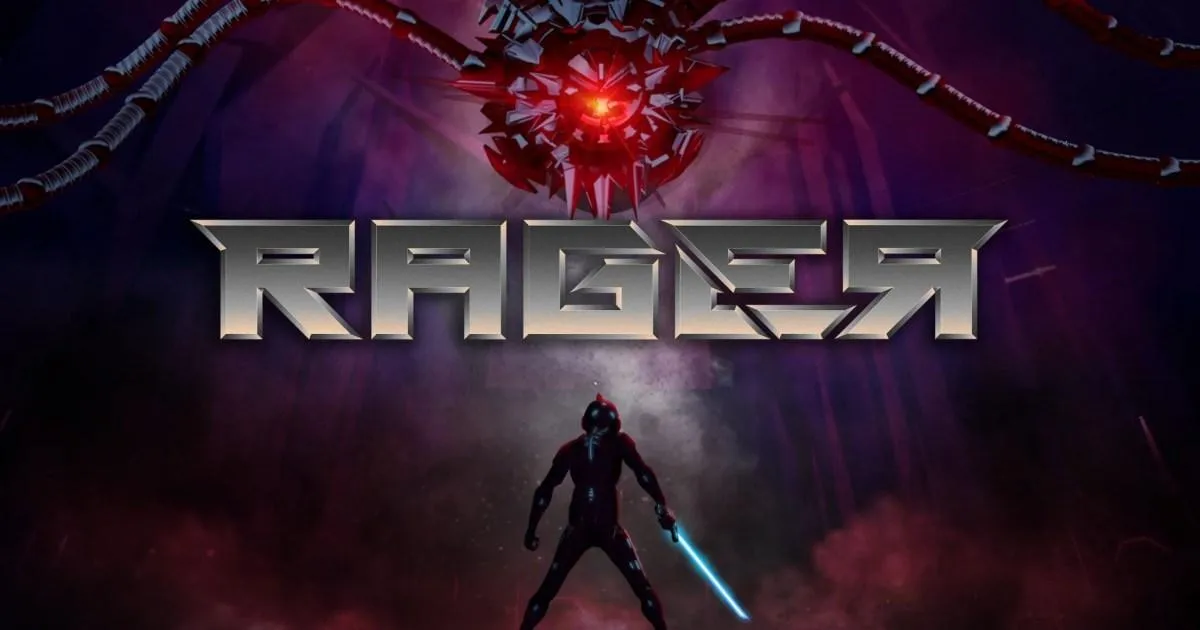
Like Beat Saber and Pistol Whip before it, Rager’s a VR rhythm combat game, which has you smashing digital attackers using various weapons in time to pounding music. Standing in a circular, neon lit arena, muscular looking humanoid robots walk, then run, towards you, unleashing flying kicks, punches, and melee weapons, their blows and your ripostes timed to coincide with the big beats of its EDM soundtrack.
Advertisement
Separated into three zones, each comprising three levels and a boss battle, you’re introduced to the game’s weaponry, which includes swords, maces, claws, and longer two-handed weapons, all of which crackle with electricity, their haptic feedback registering blocks and blows to enemies, as well as moments when your weapons touch each other or scrape the floor. It really is a feast for the senses.
As robotic assailants leap at you, symbols appear in front of them telling you what angle you need to parry or attack them, and which weapon you need to use. In many levels you dual wield, so you need to use combinations of melee weapons to attack and defend yourself, having to adapt to each combatant’s assaults and vulnerabilities as they come at you.
Expert, exclusive gaming analysis
Sign up to the GameCentral newsletter for a unique take on the week in gaming, alongside the latest reviews and more. Delivered to your inbox every Saturday morning.
Advertisement
Originally released on the wireless Meta Quest, you’ll find enemies charging at you from all directions, and to prevent yourself getting tangled up in the PlayStation VR2’s cable, when fighting those coming from behind you, you can use an analogue stick to flick your viewpoint around to meet those attacks, rather than physically pivoting in their direction. Although for some reason the angle you turn seems to vary, rendering it oddly unreliable. You can, of course, simply turn around but if you do you’ll invariably end up with the cable wrapped around your legs at the end of each level.
An additional logistical challenge is that you’ll be swinging both arms wildly in every direction. It would be inadvisable to stand anywhere near your TV, and you’ll also need to be aware of low-hanging light fixtures. We managed to graze a knuckle savagely pummelling a lampshade, resulting in light bruising and a swift tactical relocation of the play area before resuming hostilities.
Advertisement
It is a good workout though, from using both arms to slash, punch and block, to ducking out of the way of forcefields that glide towards you from both sides or above. It only takes one area and a boss fight to find yourself starting to feel as though you’d just warmed up for an aerobics class. Rager’s a game that demands to be played standing up, its physicality fundamentally unsuited to seated play.
Its battles are hugely satisfying, the act of shattering aggressive attackers with elegantly timed slashes and parries, in time to loud dance music feels cool, even if you won’t necessarily look that way to neutral observers. It’s a dichotomy all too familiar to VR players, and at least in this case you can console yourself with the fact that you’re also getting slightly fitter, to help patch up any wounded dignity.
On easy mode Rager’s nine levels and three boss battles will slip by in an hour, although there are leaderboards to compete in, and two higher difficulty levels to take on. There’s also significant replay value just because it’s fun to play, although it remains a slim volume of content for its price, and there’s certainly way less to get your teeth into here than in Beat Saber, even before all its many DLC packs.
Rager is largely bug free though, our only crash occurring after the PlayStation 5 went into power saving mode after one of the game’s training sessions, when we briefly had to take care of stuff in the real world. It’s also come in for criticism online for using an AI voiceover. In its defence, the AI is voicing the character of an AI in the game, its gravelly robotic tones and peculiar intonation suiting its role as a rogue computer, even if it does mispronounce bass – as in the lower frequencies of its musical accompaniment – as if it were talking about sea bass.
Advertisement
There may not be much to it, and if you have a pathological hatred of dance music this won’t be for you, but its engaging rhythm action violence and dedication to getting you moving are a winning combination.
Rager review summary
In Short: Rhythm action combat proves a fun way to get sweaty, assuming you like the style of music, but the extreme brevity is only slightly extended by online leaderboards.
Pros: Satisfyingly hectic melee combat, that works very well in VR. Bosses are large and imaginative and the game does seem to be healthy exercise.
Cons: You’ll complete all 12 levels in around an hour. The habit of swapping weapons to different hands between levels prevents muscle memory forming and turning your viewpoint using the analogue stick is strangely capricious.
Advertisement
Score: 6/10
Formats: PlayStation VR2 (reviewed), PC VR, and Meta Quest Price: £13.99 Publisher: Impact Inked Developer: Insane Prey Release Date: 5th March 2026 Age Rating: 7
Advertisement
Cleaning a sweaty VR headset isn’t funny (Impact Inked)
Bath turned to a quartet of their England backs to turn the tide as they edged into the Champions Cup quarter-finals with a 31-22 victory over Saracens.
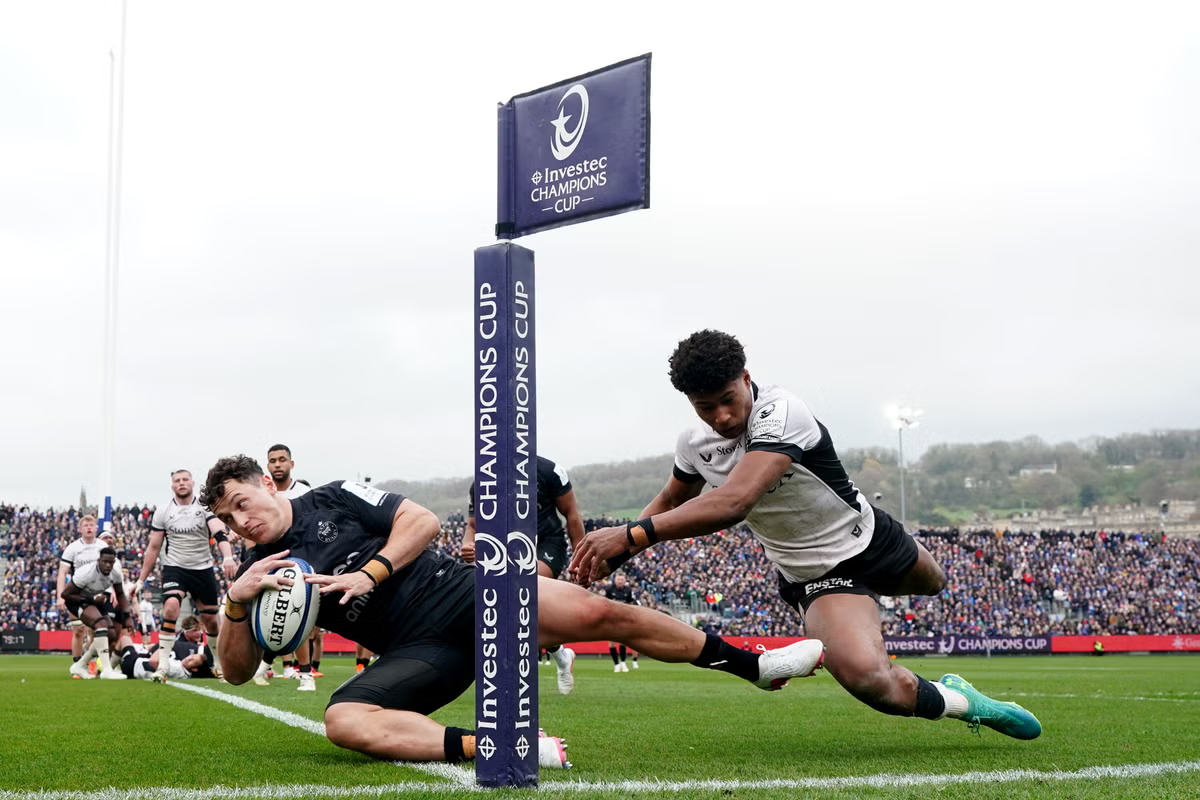
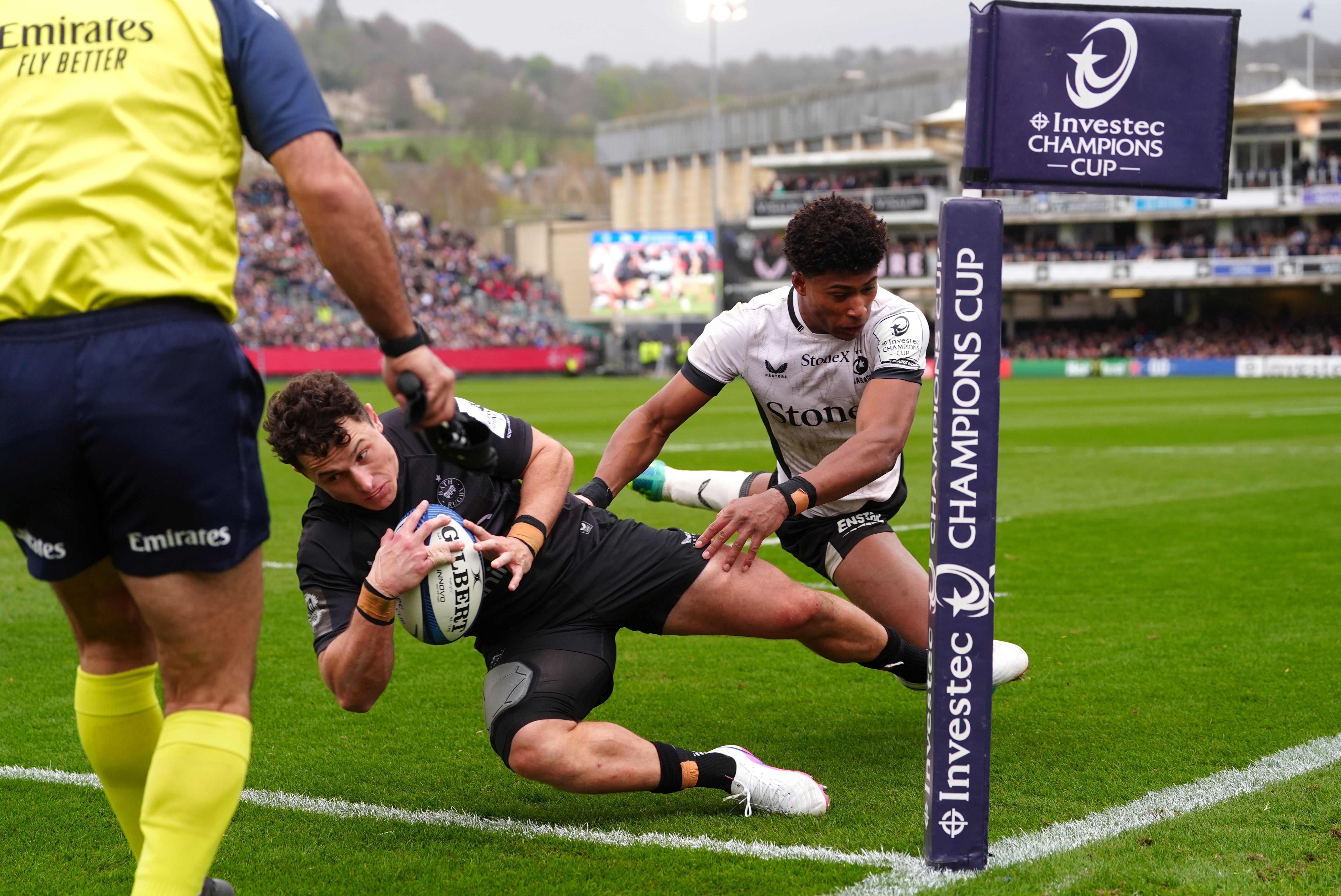
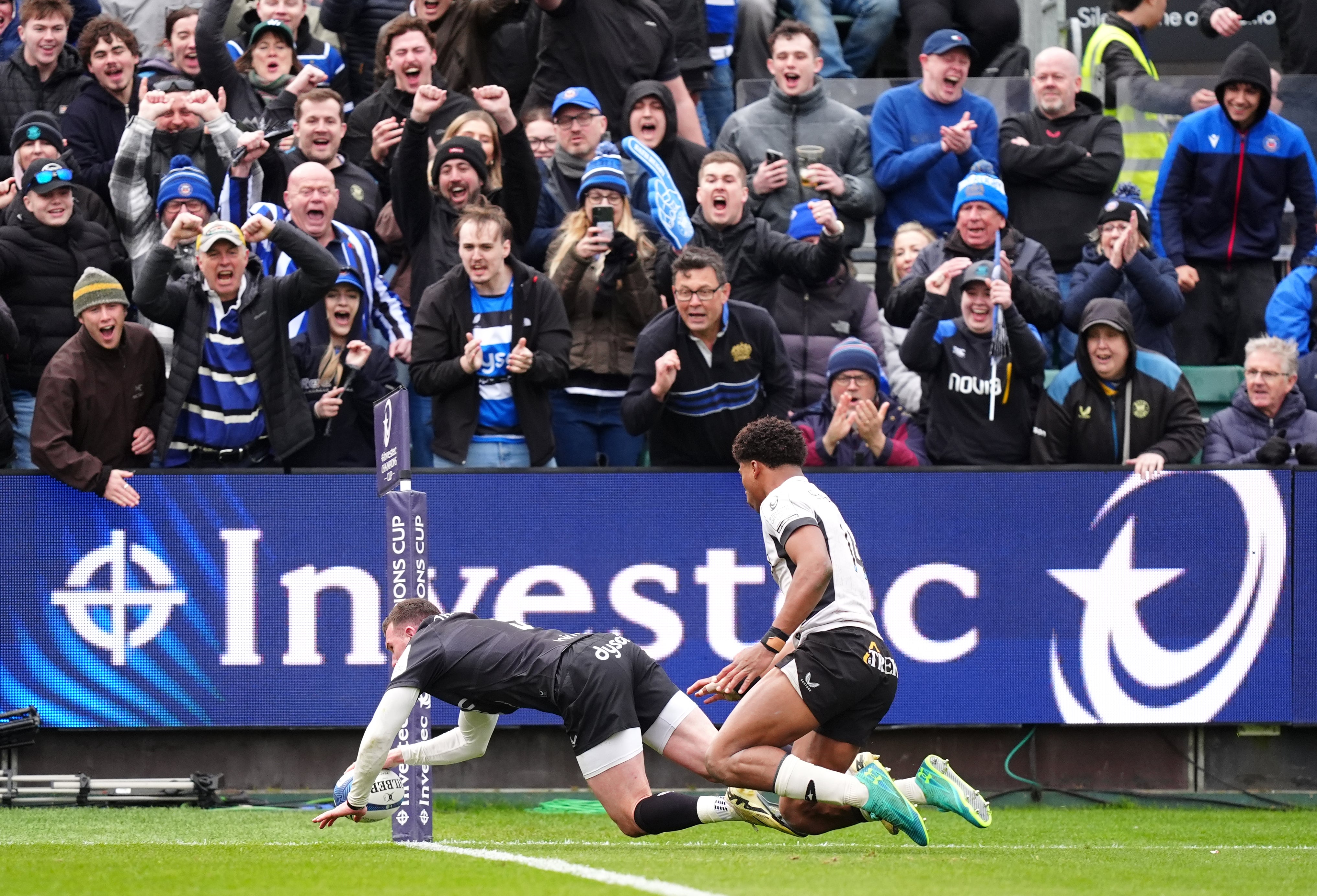
Trailing 10-0 at the interval at the Recreation Ground, the hosts burst into life with tries from Henry Arundell, Joe Cokanasiga, Ben Spencer and Ollie Lawrence as they set up a last-eight appointment at home against Northampton.
Spencer’s 59th-minute finish of an audacious attack that began on their own try-line looked to be pivotal but determined Saracens refused to throw in the towel and were only truly beaten when Arundell ran in his second in the 80th minute.
Henry Arundell shone for Bath (David Davies/PA)
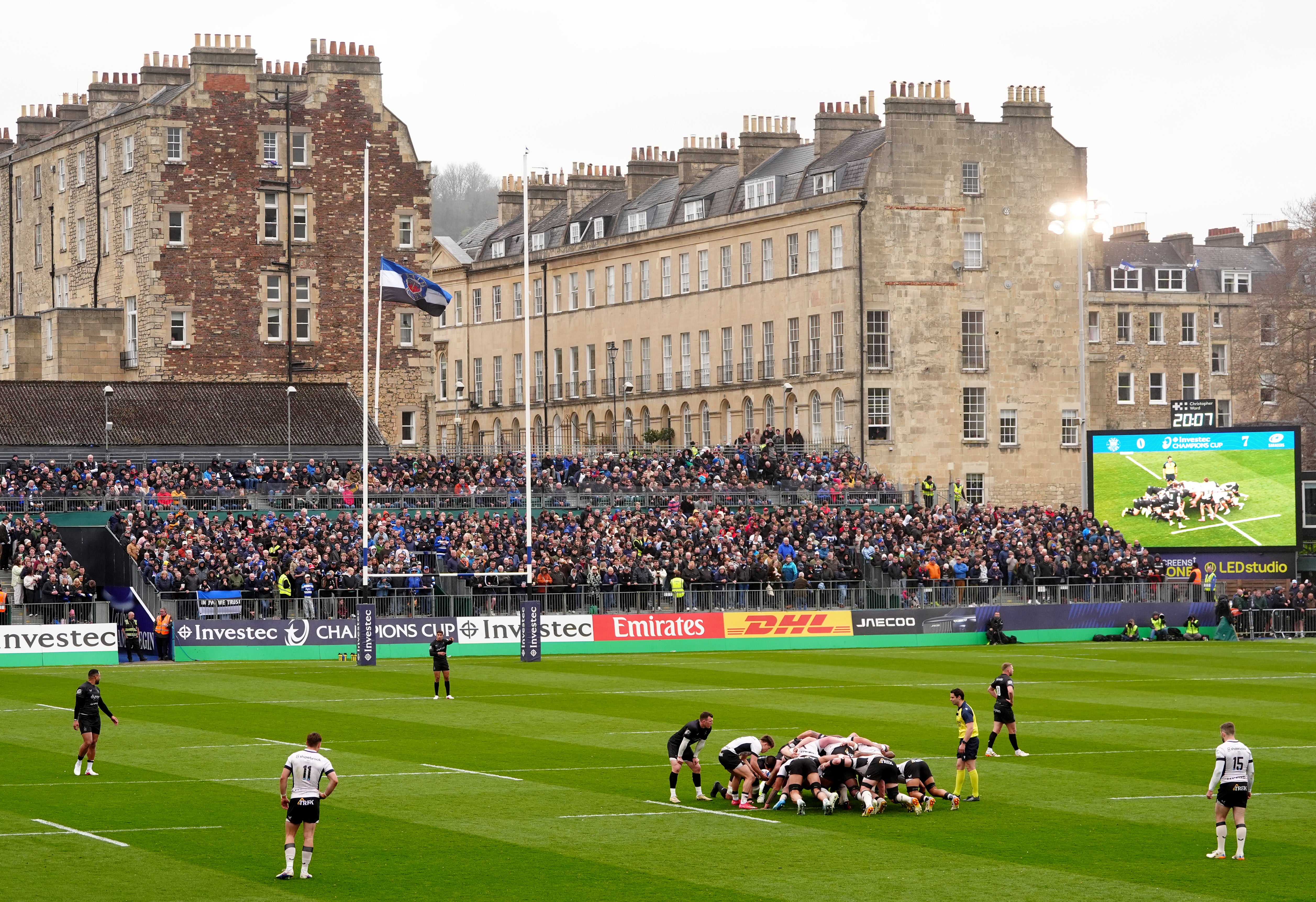
Bath’s scrum needed rescuing after a humbling first half with the introduction of prop Thomas du Toit making the difference and the South Africa tighthead was named man of the match.
Unlike their visit to the Recreation Ground a fortnight ago when they were overwhelmed 62-15, it was clear Saracens meant business from the start as they halted an early Bath onslaught including holding up a forward drive over the line.
Advertisement
Having proved their mettle in defence, they surged ahead in the 14th minute when Charlie Bracken deceived Cokanasiga with a dummy from the base of a maul and raced over.
It was poor defending from Cokanasiga, but at the other end Saracens continued to show far greater determination as the outstanding Tom Willis bulldozed a way through heavy traffic to rescue a dangerous position.
Bath’s scrum was beginning to buckle and they were also suffering at the breakdown, but the visitors were their own worst enemies at times with Fergus Burke failing to find touch with a penalty.
Saracens dominated the scrum in the first half (David Davies/PA)
Rhys Carre rampaged into space and Noah Caluori almost crossed in the left corner before Guy Pepper was shown a yellow card for cynically heading the ball away on the floor.
So many elements of Saracens’ game were firing but the points they deserved proved elusive with a Farrell penalty their only other score in a half they had controlled.
Advertisement
To punish their wastefulness, Arundell sprinted across after being released by Charlie Ewels early in the second half and then Cokanasiga scooped up a loose ball to weave over after Lawrence had carried into space.
The tries sandwiched a dramatic reversal in the scrum with Beno Obano sin-binned for a cumulation of penalties before Du Toit forced a penalty, providing Cokanasiga with the platform to score.
Bath led for the first time and then produced the highlight of the afternoon by stopping Saracens from scoring by dislodging the ball from Andy Onyeama-Christie as he ran at the line before striking with a move that began from their own whitewash.
Ben Spencer scores a try for Bath (David Davies/PA)
Cokanasiga escaped the 22, found Alfie Barbeary who waited for Spencer and the England scrum-half had gas to finish from long range.
Maro Itoje and then Ivan van Zyl burst through the breakdown and Saracens were far from done as a period of pressure ended with Max Malins touching down in the left corner.
Advertisement
But Harry Wilson was the next to see yellow for a dangerous tackle on Miles Reid and soon after Lawrence crashed over from close range. Caluori replied for Saracens, but Bath had the final say at the death through Arundell.
Elsewhere, Toulouse swept into the last eight with a resounding 59-26 victory over Bristol while Glasgow Warriors clinched a close affair 25-21 against the Bulls.
Harlequins were beaten 17-26 by Sale at home with Luke Cowan Dickie twice crossing the line and fly-half George Ford leading from the front as Sharks breezed into the next round.
Cowan Dickie said: “We saw more of a Sale Sharks performance today, we weathered some of their lightning bolt moments and came away with a win.”
Advertisement
However, the closest match-up came with Toulon versus the Stormers as the French side moved into the next round thanks to a single-point victory with a 28-27 win at the Stade Mayol.
The ITV talent show sees people from the UK and across the world audition to show off their unique talents in an attempt to impress the judges and win the £250,000 prize money.
Judges Simon Cowell, Amanda Holden and Alesha Dixon returned to the panel for the news series, and guest judge KSI has become a permanent judge on the show following the departure of Bruno Tonioli.
While Simon Cowell featured at the start of the episode, viewers saw Stacey Solomon temporarily replace him for some of the auditions this evening.
Advertisement
Remember the BGT winners from 2018 to 2025
Students from Braunstone Community Primary School and their headmaster combined comedy with dancing and singing, which impressed Solomon so much she said she believed they deserved the golden buzzer.
The children meet each week at 2pm on Fridays with their headmaster, who gets them all dancing and singing together, something Alesha Dixon said “all schools should roll out because kids need this life force of music”.
What is a golden buzzer on BGT?
The golden buzzer is pressed when a judge or the hosts, Ant and Dec, want to send an act straight through to the live shows to award them for their talents.
It’s only given to a select few acts per series and it means golden buzzer acts can skip some of the other auditions.
Advertisement
What does the winner of BGT 2026 get?
There have been 18 winners of BGT since its first series in 2007, with magician Harry Moulding winning last year.
Recommended reading:
The winner of BGT will take home a prize of £250,000 and will also be given the chance to perform at the Royal Variety Performance in front of the royal family.
In the ITV show’s first three years, winners won a prize of £100,000, while the biggest winners were Ashleigh and Pudsey with a prize pot of £500,000 in 2012.
Advertisement
Who is your favourite winner of Britain’s Got Talent from previous years? Let us know in the comments.
Rohl was able to enjoy his side scoring four goals for the second game in a row at Ibrox, with some influential performances in attack.
As the German said after the match, if Rangers win six games they win the league.
The question is whether the performances suggest they are capable of doing that given the opposition only gets tougher. Rohl is “convinced” they can.
The win against United built on improved attacking performances, something that has been thrown at this Rangers side. Are they creative enough?
Advertisement
They are, though, the top-scorers in the league and looking much more of a threat.
Thelo Aasgaard has been a much-maligned figure in his maiden season at Ibrox but was involved in three of the four goals, including scoring the third.
Djeidi Gassama, whose form has dipped after eye-catching early displays, was impactful off the bench in driving Rangers forward, and set up Aasgaard.
Striker Ryan Naderi grabbed his first Premiership goal too, before being withdrawn with an injury at half-time for Youssef Chermiti.
Advertisement
Rangers’ number nine ended up with four shots and no goals in a busy display but is still looking for consistency, while Andreas Skov Olsen underwhelmed again before being withdrawn at the break.
Nonetheless, there is plenty to build on.
“We have to be on the front foot and if we win six games then we will have something at the end of the season,” Rohl added.
“I am really convinced that my players have the potential to do this. But there is still a long way to go and it’s no secret that next week away to Falkirk is a very, very difficult game.
Advertisement
“We will take things step by step, but we had nine ‘finals’ and we have won the first three of them.
“That gives us a good feeling, but nothing more. We have to be humble and ready for the next fight.”
Also returning to camp with hosts Anthony McPartlin and Declan Donnelly are former football manager Harry Redknapp, singer Sinitta, comedian Seann Walsh, retired boxer David Haye, DJ and Red Dwarf actor Craig Charles, ex-footballer Jimmy Bullard, Coronation Street star Beverley Callard and Waterloo Road actor Adam Thomas.
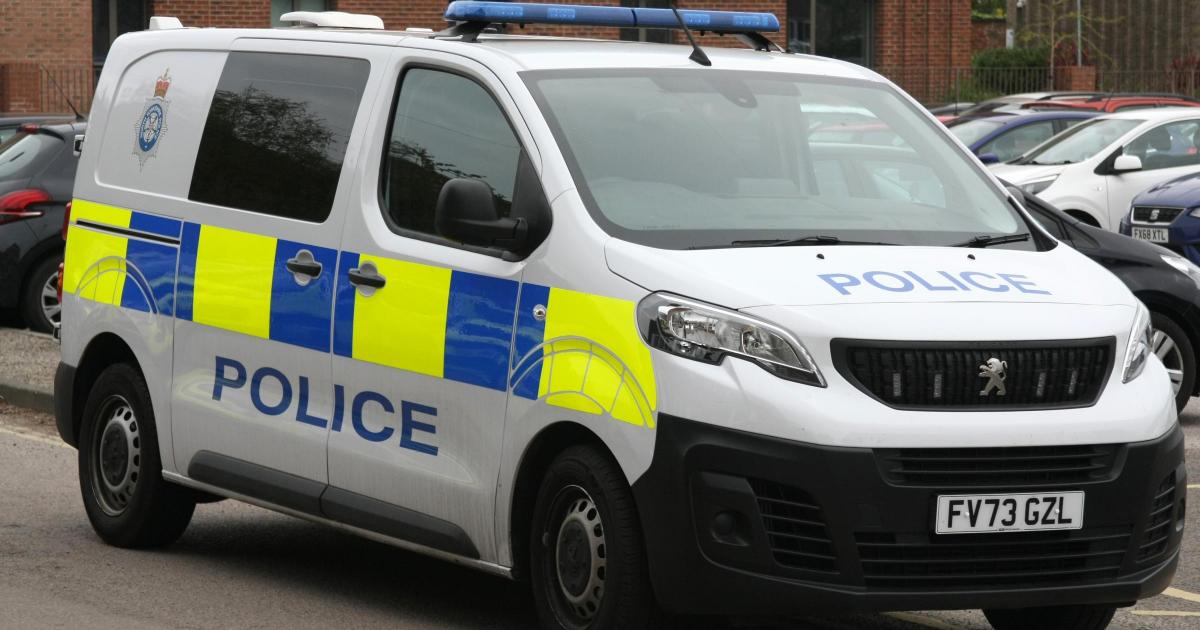
The burglary took place at a home in Pontefract Road, Snaith, near Goole, at 9.23pm on Thursday (April 2).
Humberside Police said a man dressed in dark clothing had walked around the property and smashed a glass side door.
After entering the home, the man had “untidily” searched the house, taking jewellery, including watches, but not before he was confronted by a relative of the homeowner, police said.
Advertisement
Recommended reading:
A force spokesperson said: “The relative fought the intruder off, causing them to drop some of the stolen items as well as their gloves.
“This intruder then scaled a fence and fled, possibly in a white BMW.
“If you have any CCTV footage (including video doorbell), saw anyone acting suspiciously in the area around this time or have any information about the offenders please contact the police on the non-emergency number 101 quoting occurrence ref: 26*44350.
Advertisement
“Alternatively you could call Crimestoppers anonymously on 0800 555 111.
“You don’t have to leave your name and you may even receive a reward.
“You can also provide information anonymously on the Crimestoppers website.”
Publicly, the president has played down this entire incident and suggested it won’t affect negotiations with Tehran to end the war that began with US and Israeli strikes on 28 February. But privately, this is likely to be of serious concern – particularly as Iran’s Islamic Revolutionary Guard Corps is said to have launched its own search for the missing American, reportedly using troops and locals, and offering them a reward of around $66,000 (£50,000) to capture him alive.
Good evening and welcome to our next instalment of the FA Cup quarter-finals as Chelsea host Port Vale at Stamford Bridge. It’s the club sixth in the Premier League versus the side rooted to the bottom of the third tier.
As we’ve just returned from an international break, you would assume it was a quiet week for Chelsea? Well, it’s been quite the opposite.
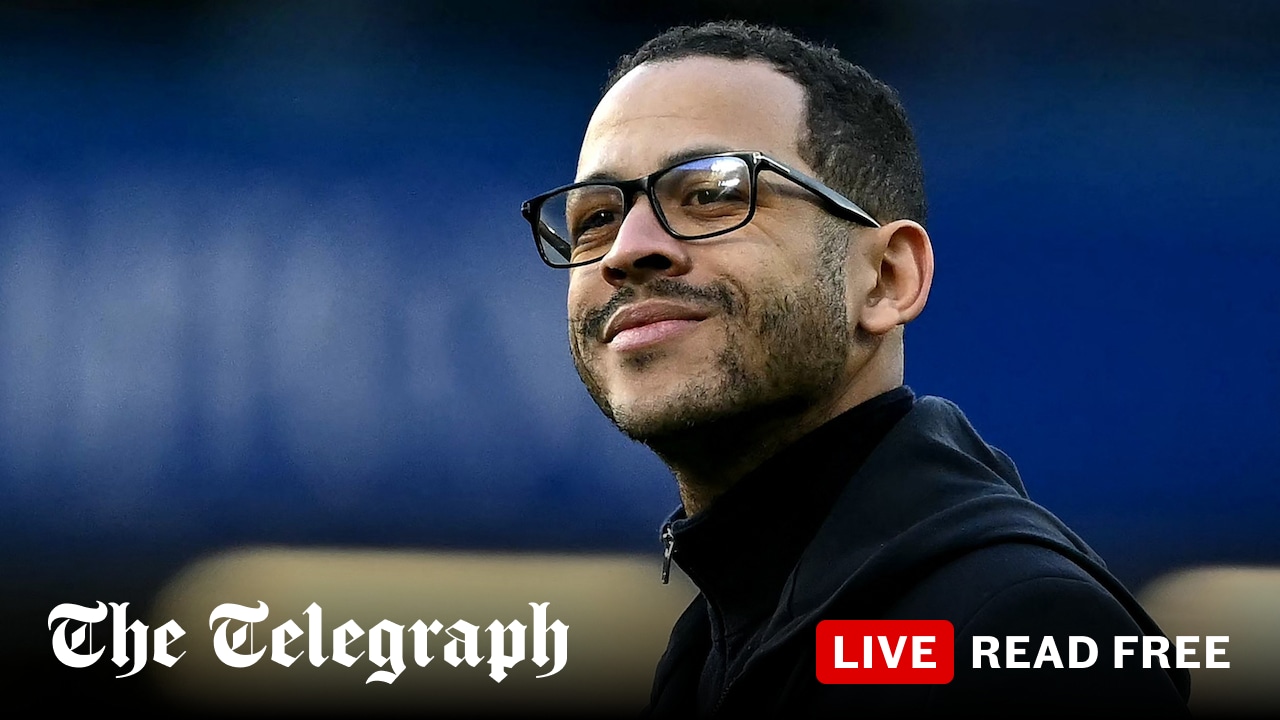
Chelsea manager Liam Rosenior confirmed that Enzo Fernandez has been given a two-game ban because of his controversial comments regarding his future, meaning he will miss this match and next week’s league meeting with Manchester City at Stamford Bridge.
Advertisement
Following the demoralising 8-2 aggregate defeat to Paris Saint-Germain in the Champions League, vice-captain Fernandez plunged his Chelsea future into doubt, telling ESPN Argentina he didn’t know if he would stay at the club. In the international break, he fuelled Real Madrid links by saying: “I really like Madrid – it’s similar to Buenos Aires.”
Marc Cucurella was also vocal in the media, criticising Chelsea’s ownership and questioning the club’s project. The 27-year-old disagreed with Enzo Maresca’s sacking in January, feeling it created “instability” and said that only signing young players will “complicate” chances of winning major trophies. Unlike Fernandez, Cucurella escaped any noteworthy punishment and is available for selection this evening.
Alongside this drama and their Champions League exit, Chelsea have also suffered back-to-back Premier League losses without scoring against Newcastle United and Everton.
For Port Vale, things are looking even bleaker from a league standpoint. They’re bottom of League One, 15 points adrift of safety, although they do have two games in hand over 20th-place Wigan Athletic.
Advertisement
Nevertheless, the FA Cup has been a glorious and welcome avenue of escapism for Port Vale, who are plotting a giant-killing. Jon Brady’s side beat Sunderland in the previous round, and with all eyes on Chelsea, Port Vale could rip up the script and pile even more pressure on their top-flight opponents.
Kick-off is at 5:15 BST, with line-ups on the way shortly.
Millennials and Gen Z savers have until Sunday to use their £20,000 ISA allowance, with major changes to cash ISA limits coming from April 2027 reducing the amount to £12,000
Those born since 1981 are being urged to take note as a significant HMRC deadline approaches tomorrow. The average ISA held by a Baby Boomer — broadly defined as those born between 1946 and 1964 — now stands at £56,260, according to new data obtained by Bowmore Wealth Group via a Freedom of Information request to HMRC — nearly five times the £12,010 held by a typical Millennial — those born between 1981 and 1996.
Advertisement
The figures come to light as the current tax year draws to a close on Sunday, April 5, with ISA allowances resetting when the new year begins on Monday. Yet even Baby Boomers’ ISA savings are overshadowed by those of the “Silent Generation,” individuals born before 1946, who boast average ISA investments of £67,950.
One surprising finding, according to experts, was that Generation Z — those born between 1997 and 2012 — had average ISA investments of £8,690, not considerably lower than their Millennial counterparts.
Bowmore noted that this once again raised the frequently debated question of whether Millennials have set aside adequate savings. Many argue that Millennials have found it difficult to accumulate wealth comparable to earlier generations, owing to sluggish wage growth in the wake of the Global Financial Crisis, combined with soaring housing costs.
John Clamp, Chartered Financial Planner at Bowmore Financial Planning, said: “The data highlights a clear generational divide when it comes to ISA savings. While older generations have benefited from decades of compounding and consistent contributions, younger investors appear to be falling behind at a crucial stage in their financial journeys.
Advertisement
“Even relatively small, regular contributions can build significantly over time thanks to the tax advantages ISAs offer. For Millennials and Gen Z, engaging early with long-term saving and investing is key to narrowing this gap and improving financial resilience in the future.”
With regard to ISAs, savers currently benefit from a £20,000 annual allowance. This resets on the first day of the tax year, April 6, and any unused allowance is lost, reports the Mirror.
From April 2027, reforms introduced by Chancellor Rachel Reeves will mean that only £12,000 can be deposited into a cash ISA. While the overall ceiling will remain at £20,000, the remaining £8,000 up to the full £20,000 will need to be placed into a stocks and shares ISA.
For those with a greater appetite for risk, Bowmore advised that investing a portion of their capital into a stocks and shares ISA is worth considering.
Advertisement
Over the longer term, stocks and shares consistently deliver stronger returns than cash savings held in a cash ISA, the firm added.
John said: “The challenge for many investors is balancing short-term uncertainty with long-term opportunity.
“While holding cash can feel safer, it can also limit the growth potential of savings over time, particularly in an inflationary environment.
“For those able to take a longer-term view, introducing investment exposure through an ISA can be a powerful way to build wealth more effectively, especially when combined with regular contributions and a disciplined approach.”
Greater Manchester Police (GMP) said officers were called to Breightmet at around 1.30pm on Friday (April 3) to reports of a young boy believed to be suffering a medical episode.
Emergency services rushed to Lenham Gardens and the boy was transferred to a hospital.
However, police have confirmed that the child died shortly after arriving at hospital.
Advertisement
GMP has added that there are not believed to be any suspicious circumstances, with enquiries ongoing.
A spokesperson for GMP said: “At around 1.30pm yesterday, officers responded to reports of a four-year-old boy suffering from a suspected medical episode in the Breightmet area of Bolton.
“Emergency services immediately responded and despite their best efforts, the child sadly died shortly after in hospital.
“There are not currently believed to be any suspicious circumstances and enquiries are currently taking place.”














































You must be logged in to post a comment Login