

Connect with us
DAPA Banner

NewsBeat

Republicans resist calls for public hearings on the Iran war

Published

on

Republicans resist calls for public hearings on the Iran war

WASHINGTON (AP) — The United States’ war with Iran is entering its third week, but Congress has yet to publicly test the Trump administration’s case for the conflict.

Republicans in Congress have so far side-stepped public debate over the war, even as Senate Democrats reach for every tool at their disposal to demand hearings with Trump administration officials. Increasingly frustrated, Democrats are threatening this week to force a series of votes on the war, hoping that the effort to gum up the Senate’s voting schedule will prod Republicans to action.

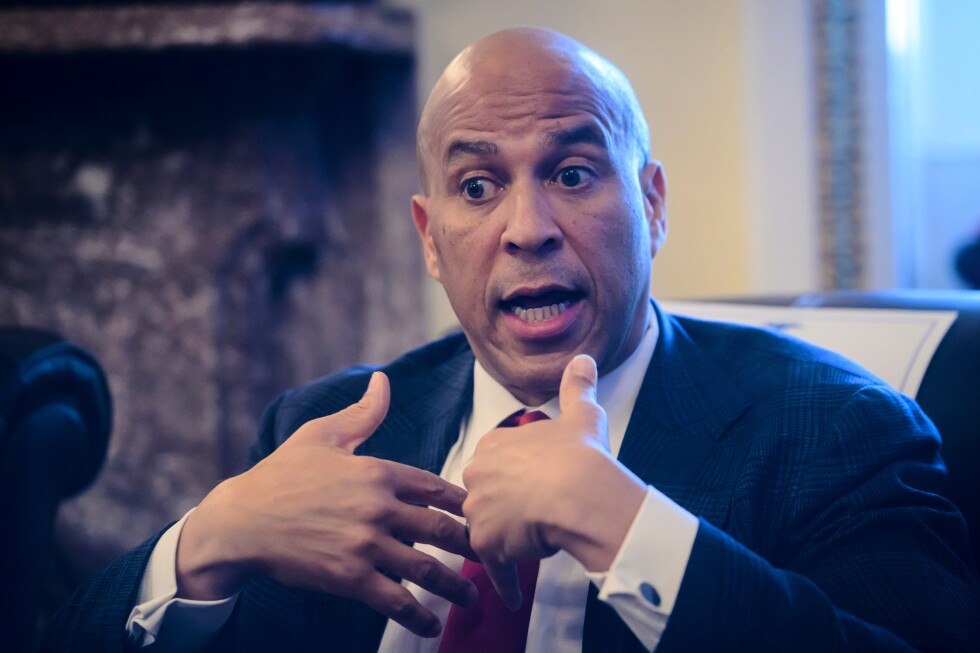
“We’ve had no oversight whatsoever over what the executive is doing as we’re spending a billion dollars a day, and we have failed to have any real substantive debate or discussion,” said Sen. Cory Booker, D-N.J.

The role of Congress in the deliberations is an unsettled question with enormous stakes, given that lawmakers have the power to shape the trajectory of the conflict as it grows in cost and casualties. So far, 13 military members have been killed and billions of dollars have been spent, but President Donald Trump has not sought congressional approval for attacking Iran.

Advertisement

As the 17th day of the conflict dawned Monday, Republican lawmakers remained mostly resistant to the idea of quickly forcing public testimony before Congress.

How GOP leaders are handling calls for hearings

Senate Majority Leader John Thune told reporters last week that he didn’t expect public hearings specifically on the Iran war, but noted it would inevitably come up in the regular rhythm of testimony on military policy and spending.

“They have briefed us,” Thune, R-S.D., said, pointing to classified briefings from the Trump administration. Those sessions have been held behind closed doors and most lawmakers refuse to disclose more than the broad topics of discussion.

Thune also noted there have been regular news conferences from Defense Secretary Pete Hegseth and Gen. Dan Caine, chairman of the Joint Chiefs of Staff. They are “answering the hard questions that are being asked,” Thune said.

Advertisement

The GOP chairs of committees dealing with national security have also said they don’t have plans in the near term to hold hearings specifically on the war, though some acknowledged the value of lawmaker questioning.

Sen. Roger Wicker, the chair of the Senate Armed Services Committee, argued that the regular run of hearings on Capitol Hill would provide lawmakers with plentiful opportunities to ask questions.

“We’re going to conduct generous oversight, thorough oversight,” said Wicker, R-Miss.

Some Republicans are looking ahead to an expected supplemental budget request from the Trump administration to cover the costs of the war. That request, however, is likely weeks away and faces a difficult path through Congress.

Advertisement

Democrats have pointed out that the Pentagon has already received additional funding from Republicans’ marquee tax cut law that was passed last year and provided funding for GOP priorities, including at the Pentagon.

Wariness growing from some Republicans

Still, agitation from a few Republicans at the lack of high-level responses from the Trump administration is starting to show, especially as they brace for a hefty war bill from the administration.

“I don’t want to just be given the invoice from the Department of Defense, saying this is what it’s going to cost,” said Sen. Lisa Murkowski, R-Alaska. “I want them to be engaged with us.”

She added that it was important for lawmakers to get information both in classified briefings and public hearings “so that the public can better understand this, too.”

Advertisement

Another GOP senator on the powerful Appropriations Committee, Louisiana’s John Kennedy, exited a classified briefing last week fuming that it had been a “total waste of time” because the officials were not able to provide the answers that top-level Cabinet officials could.

Republicans have almost uniformly backed Trump’s decision to launch an attack on Iran, though many are wary of a lengthy conflict. Trump has cycled through different objectives for the war, ranging from crippling Iran’s military capabilities to a demand for “unconditional surrender.”

“I think we have to let the objective play out as far as we can, and if then the effort gets murky on how to get to the objective, that might be a good time to have some hearings, but it’s too early,” said Sen. Cynthis Lummis, a Wyoming Republican.

But as the midterm elections approach, Republicans are also aware that public support for the war remains tepid.

Advertisement

“I wish we could disclose a lot of this publicly because it would make it a whole lot easier to explain to the American people,” said Sen. Mike Rounds, R-S.D., adding that classified briefings were necessary to protect U.S. service members now that the war is under way.

How Democrats may force a debate

Democrats, meanwhile, are threatening to do just about everything in their power to bring attention to the war, even if it means repeatedly forcing votes that fail.

A group of six Democrats has said that unless hearings are scheduled with Hegseth, Secretary of State Marco Rubio and other Cabinet officials, they will call up daily votes on a series of war powers resolutions that if passed would require Trump to gain congressional approval before carrying out any more attacks on Iran. Similar resolutions have already been rejected by both chambers in the Republican-controlled Congress.

The votes, however, would eat up valuable time on the Senate floor and set the ground for a debate on the conflict just as Senate Republicans plan to spend much of the week trying to pass Trump’s priority legislation to impose strict new proof-of-citizenship requirements for voting.

Advertisement

The group of Democratic senators also hinted at using other tactics to slow the Senate’s work on other business.

Sen. Chris Murphy, a Connecticut Democrat, told reporters that unless there is a commitment for public hearings, “We’re not going to let the Senate go on with business as usual. We’re not going to let the Senate be silenced.”

Advertisement

Source link

Continue Reading
Click to comment

You must be logged in to post a comment Login

Leave a Reply

NewsBeat

Train driver dead and 16 injured after crash with lorry carrying military equipment | World News

Published

on

The damaged high-speed train. Pic: Reuters

A driver was killed and 16 passengers were injured when a high-speed train and a truck carrying military equipment collided in France.

The crash happened on Tuesday just before 7am at a railway crossing in the town of Bully-les-Mines, authorities said.

More than 200 passengers were on board at the time, with two people taken to hospital in a critical condition.

The 56-year-old train driver was pronounced dead at the scene.

Advertisement

An aggravated manslaughter investigation has now been opened and the driver of the lorry was held in custody.

Image:
Railway workers in Bully-les-Mines.
Pic: AP

It is thought the train was travelling at an estimated 100mph at the time of the impact, which happened as they were travelling from Dunkirk to Paris, the regional administration, Francois-Xavier Lauch, said.

Prosecutor Etienne Thieffry said it is too early to determine the exact cause of the crash.

However, the railroad crossing gates were working correctly, according to Jean Castex, head of SNCF – the national railway authority that operates nearly all rain transport in the country.

Advertisement

Rescue crews were still at the scene on Tuesday clearing the wreckage as investigators continued to probe the cause of the accident.

Read more from Sky News:
What’s at stake in Wales elections

E-bike and e-scooter fires hit record high

Pictures from the scene showed the front of the locomotive was badly mangled and the HGV was also severely damaged.

The wrecked train remained on the tracks and the railway line was closed while emergency teams worked in the area.

Advertisement

It became the second similar incident in the last few weeks, after a lorry driver was killed in a collision with a train at a level crossing in Saint Raphael in southeastern France on 25 March.

Source link

Advertisement
Continue Reading

NewsBeat

John Swinney apologises again over ferry disruption as third of CalMac fleet unavailable

Published

on

Daily Record

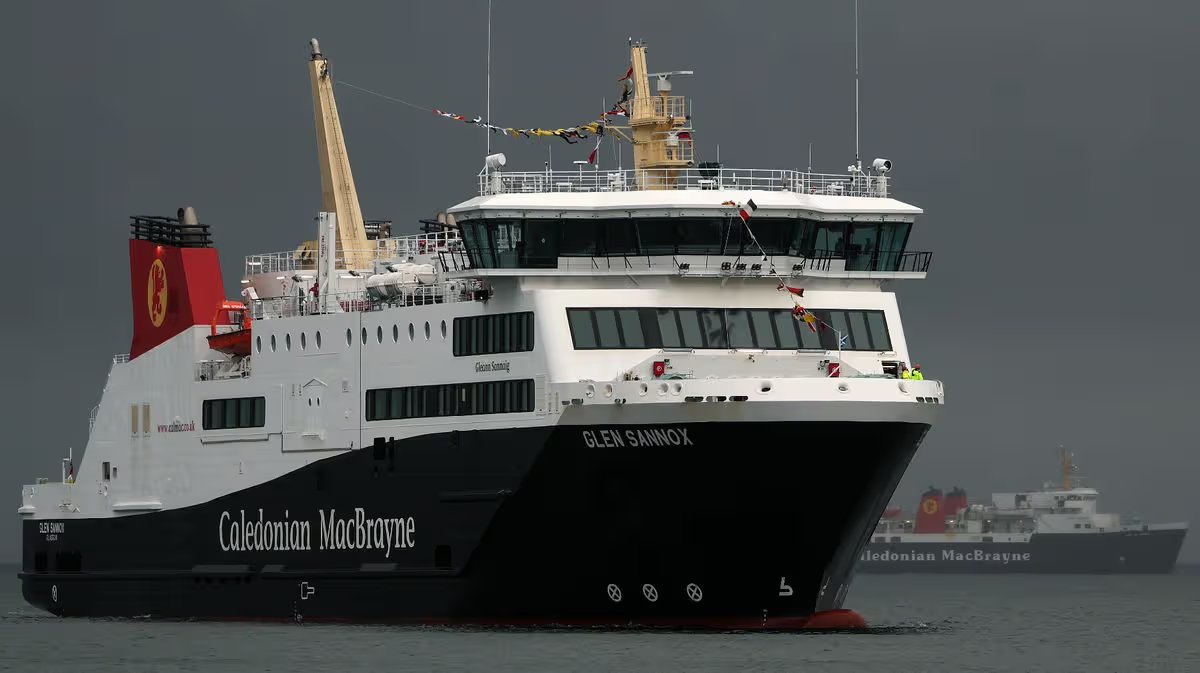
The First Minister was speaking after further Glen Sannox sailing were cancelled.

First Minister John Swinney has issued a fresh apology to islanders over ferry disruption as one of the fleet’s newest vessels remains out of action.

A number of sailings on the Glen Sannox between Troon and the Isle of Arran were cancelled today, Tuesday, April 7, as publicly-owned operator CalMac struggled with a “reoccurring technical issue” in the vessel’s engine.

The ferry has been repeatedly taken out of service since its first sailing last January, after having been at the centre of a political wrangle over how long it took and the cost of the vessel its sister ship the Glen Rosa, which is yet to carry passengers.

Advertisement

The west coast ferry fleet has had a number of problems in recent weeks, with eight out of service at one point in March.

CalMac said today that a third of its entire fleet was unavailable for service due to planned maintenance or unplanned outages.

A total of six major vessels and four small vessels were not available due to various issues.

Speaking to the Press Association on Tuesday, the First Minister apologised again to islanders hit by the disruption as he faced criticism for his government’s handling of the fleet.

Advertisement

“There is very focused work going on to make sure that vessels can be in service and operating,” he said.

“Obviously, the Government is procuring a significant investment in the fleet with three additional vessels coming from the Cemre yard and the Glen Rosa yet to be completed and seven smaller vessels already in production.”

The First Minister said that, while the Government was “investing” in new vessels, he understood the difficulties the disruption caused for islanders.

Advertisement

But Scottish Lib Dem transport spokesman Jamie Greene said the SNP had proven it could not be trusted with the country’s ferries, adding that his party would bring forward legislation in the next parliamentary term to guarantee ferry services for islanders and expand existing compensation schemes.

“Hearing that the MV Glen Sannox is out of action will further frustrate the communities and businesses that depend on this essential route, who have already been let down repeatedly by the SNP,” he said.

“From launching vessels with painted on windows, failing to deal with cancellations, and putting in place an inadequate compensation scheme, the Scottish Government has shown it cannot be trusted with this essential transport infrastructure.”

While Scottish Labour transport spokesman Daniel Johnson said the Government’s “ferry fiasco continues to grow by the day”.

Advertisement

“This crisis has been years in the making and blame lies firmly at the door of this chaotic and incompetent SNP government – but no one has ever been held accountable,” he said.

“Islanders, taxpayers and shipyard workers are all paying the price for SNP failure – but enough is enough.”

CalMac chief executive officer Duncan Mackison said: “Almost a third of our entire fleet is unavailable for service, creating a set of circumstances where significant disruption on multiple routes served by major and small vessels is unavoidable.

“Though the situation appeared to be stabilising, emergent issues across major and small vessels means the unprecedented scenario we find ourselves in has worsened.

Advertisement

“Everyone at CalMac is acutely aware of the level of disruption many islands on our network have faced recently and I apologise for that.

“The full service impact of the current issues is being reviewed and plans will be shared with island communities tomorrow.”

Get more Daily Record exclusives by signing up for free to Google’s preferred sources. Click HERE


Source link

Advertisement
Continue Reading

NewsBeat

The dark side of music as ‘therapy’

Published

on

The dark side of music as ‘therapy’

A violinist plays in a cancer ward. A playlist loops in the waiting room. A surgeon hums along to the radio mid-operation. We assume, almost without thinking, that music helps. But what if it doesn’t – or worse, what if it harms?

Music has been used since the beginning of time, in every culture, as a positive part of social and ceremonial events, including eating, hunting, courtship, weddings, funerals, coronations, sports and social celebrations. But music has also been used as a weapon of war, to torture, humiliate and disorientate people.

Music was used as a form of torture in Guantanamo Bay after 9/11 and by the Nazis, who forced musical prisoners to entertain their captors while they starved and awaited death. It’s a jarring thought that the same force that moves us to tears at a concert can be weaponised to break people.

Similarly, in hospitals and clinics, music is generally seen as a low-risk and harmless way to reduce anxiety in waiting rooms, as background support for staff in the operating theatre and as a stimulation to exercise in rehabilitation. It is rare to recognise music as a double-edged sword.

Advertisement

Music therapists are healthcare professionals, trained to use music as a clinical tool rather than simply a pleasant distraction. They work across a wide range of settings – in hospitals, hospices, mental health units, care homes, specialist schools and community clinics – and their work is grounded in evidence, not instinct. They are experts in using music to improve health and wellbeing, attuned to whether music might cause harm or support wellbeing, yet the research in this field rarely focuses on whether music might sometimes do more harm than good.

In practice, music therapists do remarkable work. They help people with dementia to communicate and connect when words have failed them. They support children with brain injuries to develop speech. They help stroke survivors regain physical movement. Music is also used to help people work through complex trauma. These are serious, skilled interventions – not background noise.

Music was used as a form of torture in Guantanamo.
Phil Pasquini/Shutterstock.com

The wrong note

But music can cause real harm too, and we don’t talk about this nearly enough.

Think about what happens when music is imposed on people who haven’t asked for it. Premature babies and patients with disorders of consciousness are particularly sensitive to sensory overload. Blasting music at them isn’t soothing, it’s stressful.

Advertisement

Residents in care homes are routinely subjected to music they didn’t choose, played at times that suit the staff rather than the people living there. Well-meaning volunteers turn up to hospital wards with guitars and ukuleles, and nobody asks whether the patients actually want a performance. Good intentions don’t cancel out a bad outcome.

Doctors and managers in hospitals and care homes are reaching for music as an easy, feel-good intervention without asking hard questions about whether it’s appropriate. Music can connect people and bring joy, but it can also exclude, irritate, distress and disorient. The same qualities that make it powerful make it problematic when used carelessly.

The principle should be simple: music should always be chosen by the person listening to it, never imposed on them. It should be thoughtfully selected and of decent quality. A study found that more than half of patients on an older people’s ward had no say over what was on the radio or television. That’s not music as therapy – it’s just noise.

This doesn’t mean music shouldn’t be used in hospitals and care homes. Used well, it can reduce pain, lift mood, aid recovery and help people feel less alone. “Used well” means assessing whether a patient actually wants music. It means choosing the right music for the right person at the right moment. It means training staff to understand when music helps and when it doesn’t. And it means being honest that a cheerful playlist isn’t a neutral act, it’s an intervention. And like any intervention, it can go wrong. It’s about qualified music therapists working with music to improve patient wellbeing.

Advertisement

Family visitors can create meaningful playlists to leave with the patient, and listening to music together is possible when other shared activities are difficult. But always ask first, and remember that silence can be just as valuable as any playlist. As the American entertainer Will Rogers said: “Never miss a good chance to shut up.”

Source link

Advertisement
Continue Reading

NewsBeat

Police update on Strictly Come Dancing star arrested over rape allegation

Published

on

Daily Mirror

The man, whose identity has never been made public, was arrested on 13 October 2025 and released on bail under investigation.

A Strictly Come Dancing star arrested on suspicion of rape last year will not face criminal charges, Hertfordshire Police have said. The man, who has not been publicly identified, was arrested on 13 October 2025 and released on bail under investigation.

Hertfordshire Police said today that it had asked for advice from the Crown Prosecution Service and that detectives determined there was “insufficient evidence” to bring forward criminal charges.

In a statement issued on Tuesday, it said: “There will be no criminal charges brought against an individual arrested by Hertfordshire Constabulary in London on Monday 13 October 2025 on suspicion of rape.

Advertisement

“The man, who had his bail extended on Tuesday 6 January until today, Tuesday 7 April 2026, to allow further enquiries to take place, will face no further action.

“Early advice was sought from the Crown Prosecution Service, but detectives determined that there was insufficient evidence to bring forward criminal charges.”

The BBC has not commented on the case and it remains unknown whether the individual will have any future involvement with the programme, which is set to return later this year.

At the time of the arrest, The Sun reported that the alleged incident involved a woman he met through his participation in the BBC dance show but said the woman was not a contestant or professional dancer on Strictly. It is understood that this case was unrelated to the most recent series.

Advertisement

Strictly, which airs from September to December, is filmed at Elstree Studios in Borehamwood in Hertfordshire and is currently without a host after long-running presenters Claudia Winkleman and Tess Daly stepped down.

Source link

Continue Reading

NewsBeat

Arrest after male armed with knife and knuckle duster tried to break into property in North Belfast

Published

on

Belfast Live

The male was arrested after aa foot chase with officers

A male who was armed with a knife and a knuckle duster has been arrested in North Belfast after trying to gain access to a property in the Woodvale area.

Advertisement

Police were called to the incident on Monday, April 7, following reports of a man armed with a knife trying to get access to a property with officers attending the scene and chasing a suspect.

The male was caught and searched by officers who found a knife, knuckle duster and drugs. They were then arrested on suspicion of a number of offences.

READ MORE: Emergency services attend fire at industrial estate in DerryREAD MORE: Girl, 15, allegedly taken to boiler room of underground car park in Belfast city centre to be raped

A PSNI spokesperson said: “Last night, your local officers responded to a report in the Woodvale area that a male was trying to get access to a property armed with a knife.“Police attended and after a foot chase safely detained the suspect a short distance away.“The male was searched and a knife, knuckle duster and drugs were located. The male was arrested for a number of offences including Possessiong of an Offensive Weapon.“Knife crime has devastating consequences. Carrying a weapon doesn’t make you safer it puts lives at risk, including your own.“Our officers are committed to protecting the public every single day. They will continue to act swiftly to keep our communities safe.”

Advertisement

For all the latest news, visit the Belfast Live homepage here and sign up to our daily newsletter here.

Source link

Continue Reading

NewsBeat

American journalist Shelly Kittleson has been freed, Iraqi official says

Published

on

American journalist Shelly Kittleson has been freed, Iraqi official says

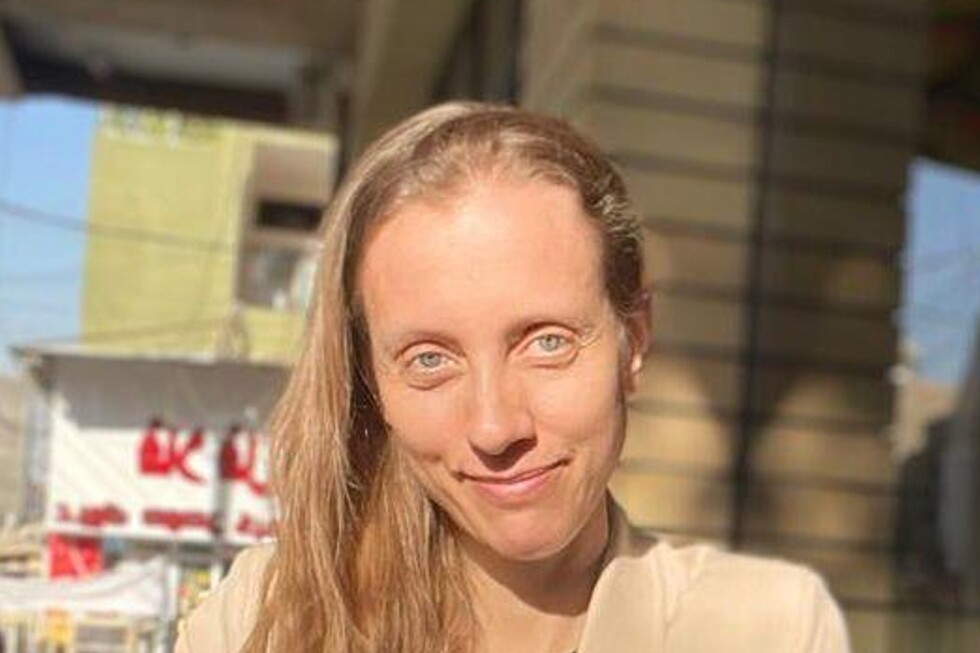
BAGHDAD (AP) — American journalist Shelly Kittleson, who was kidnapped from a Baghdad streetcorner last week, has been released, an Iraqi official with direct knowledge of the situation said on Tuesday.

Kittleson was freed in the afternoon, said the official, who spoke to The Associated Press on condition of anonymity because he was not authorized to comment publicly. He did not share her current whereabouts but said that prior to her release, she had been held in Baghdad.

The powerful Iran-backed Iraqi militia Kataib Hezbollah said in a statement earlier in the day it had decided to free Kittleson, who was abducted on March 31.

The group said its decision came “in appreciation of the patriotic stances of the outgoing prime minister,” Mohammed Shia al-Sudani, without giving more details. It added that “this initiative will not be repeated in the future.”

Advertisement

The statement added a condition — that Kittleson must “leave the country immediately” upon her release.

The U.S. State Department did not immediately respond to a request for comment.

Kataib Hezbollah had not previously acknowledged that it was the one responsible for Kittleson’s abduction, although both U.S. and Iraqi officials had pointed fingers at the group.

Two officials within the militia, who spoke on condition of anonymity because they were not authorized to comment publicly, told the AP that in exchange for freeing Kittleson, several members of the group who had previously been detained by Iraqi authorities would be released.

Advertisement

Kittleson, 49, a freelance journalist, had lived abroad for years before the kidnapping, using Rome as her base for a time and building a respected journalism career across the Middle East, particularly in Iraq and Syria. Like many freelancers, she often worked on a shoestring budget and without the protections afforded by large news organizations to staff.

She had entered Iraq again shortly before her abduction. U.S. officials have said that they warned her multiple times of threats against her, but that she did not want to leave.

Iraqi officials have said that two cars were involved in the kidnapping, one of which crashed while being pursued near the town of al-Haswa in Babil province, southwest of Baghdad. The journalist was then transferred to a second car that fled the scene.

Three Iraqi officials said earlier Tuesday that attempts to negotiate her release had run into obstacles.

Advertisement

The two Iraqi security officials and one official from the pro-Iran Coordination Framework political bloc spoke to the AP on condition of anonymity because they were not authorized to speak about the sensitive case publicly.

One of the security officials said that an official with the Popular Mobilization Forces, a coalition of Iran-backed militias that is nominally under the control of the Iraqi military, had been tasked with communicating with the abductors to secure Kittleson’s release but had run into difficulties in communicating with the Kataib Hezbollah leadership.

Advertisement

“The primary challenge is that the leaders of the Kataib militia — specifically, the commanders of the battalions — are nowhere to be found. No one knows their whereabouts, and the process of establishing contact with them is extremely complex,” they said. “These leaders have gone underground, maintaining no active lines of communication, out of fear of being targeted.”

The political official said a message had been sent to the Kataib leadership to determine their demands in exchange for releasing the kidnapped journalist. Iraqi authorities were willing to release six Kataib Hezbollah members who are currently detained, most of them in connection with attacks on a U.S. base in Syria, they said.

Kataib Hezbollah has previously been accused of kidnapping foreigners.

Elizabeth Tsurkov, a Princeton graduate student with Israeli and Russian citizenship, disappeared in Baghdad in 2023. After she was freed and handed over to U.S. authorities in September 2025, she said that she had been held by Kataib Hezbollah.

Advertisement

The group never officially claimed responsibility for kidnapping her.

Iran-backed militias in Iraq have also launched regular attacks on U.S. facilities in the country since the beginning of the U.S.-Israeli war on Iran.

___

Associated Press writers Matthew Lee and Eric Tucker in Washington contributed to this report.

Advertisement

Source link

Advertisement
Continue Reading

NewsBeat

Sunny skies return to Bolton after stormy Easter weekend

Published

on

Sunny skies return to Bolton after stormy Easter weekend

Temperatures will soar to 19C this afternoon (April 7) before climbing to 20C on Wednesday.

This is a far cry from the weekend, when much of the North West was buffeted by strong winds courtesy of storm Dave.

The Met Office said: “It’s turning warmer over the next couple of days and there will be plenty of sunshine to go alongside it.

Advertisement

“For most across England and Wales it will be dry and settled with lots of warm sunshine.”

Tuesday night into early Wednesday morning will be mild, with temperatures in the ‘high single figures’ according to the MET Office.

“Wednesday will be another dry, settled day with plenty of sunshine, and feeling slightly warmer than Tuesday as well.

“Highs potentially reaching around 26C (nationally) and if we do so that will make it the warmest day of the year so far.”

Advertisement

But the sunny skies are not expected to last long, with ‘bands of rain and heavy showers’ expected on Thursday, making for a ‘more unsettled’ end of the week.

Source link

Advertisement
Continue Reading

NewsBeat

Appeal as Bury man goes missing in the Radcliffe area

Published

on

Appeal as Bury man goes missing in the Radcliffe area

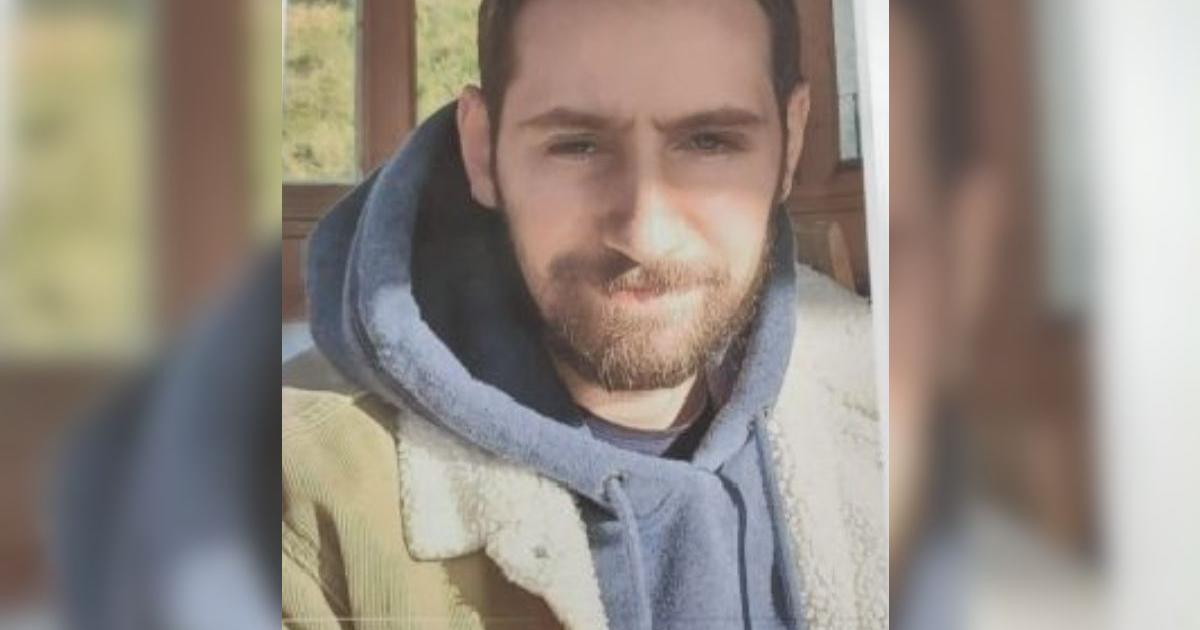
Daniel, 30, was last seen at 6.50am on Monday, April 6, in the Radcliffe area.

Daniel is described as a 5ft 8/9 white male, of a lean build, who has dark, medium-length hair, according to Greater Manchester Police.

Daniel was last seen wearing a black coat, blue jeans, and black and white trainers.

Advertisement

GMP issued an appeal on their Facebook and Twitter accounts, along with a picture of Daniel, to aid the public in identifying him.

GMP said: “Have you seen Daniel from Bury?

“He was last seen in the Radcliffe area earlier this morning.

“Officers are becoming increasingly concerned about him and want to make sure he is safe and well.

Advertisement

“Any info? Call us on 101 quoting log 1431 of 06/04/26.”

Daniel is from Bury but was last spotted in Radcliffe on the morning of Monday, April 6.

Source link

Advertisement
Continue Reading

NewsBeat

2026 bank holiday ‘move’ means three-day week for millions of Brits

Published

on

Manchester Evening News

Boxing Day lands on a weekend, which means a bank holiday substitute day is placed the following Monday

This year, millions of employees across the UK will get a three-day working week over Christmas, thanks to Boxing Day falling on a Saturday. Whenever a bank holiday, such as Boxing Day, lands on a weekend, a ‘substitute day’ is allocated so that there is a bank holiday during the week.

Advertisement

Different nations across the UK have different rules when it comes to bank holidays. England and Wales recognise eight bank holidays per year, with some exceptions for special circumstances. An example of these exceptions was in 2022 when the UK had two extra bank holidays – one on June 3 to celebrate Queen Elizabeth’s Platinum Jubilee and another on September 19 for the Queen’s funeral.

Northern Ireland and Scotland have some extra bank holidays, with the former recognising ten and the latter nine. In 2026, Scotland has an extra bank holiday to celebrate their participation in the World Cup, falling on Monday 15 June.

Get MEN Premium now for just £1 HERE – or get involved in our WhatsApp group by clicking HERE. And don’t miss out on our brilliant selection of newsletters HERE.

Across the globe, India is the nation with the most bank holidays, with 21 days as official national holidays. Sadly for us living here in England, there is only one country in the world which celebrates fewer bank holidays, and that is Mexico which only recognises seven official public holidays.

Advertisement

Historically the UK used to have 33 official holidays on the calendar, made up mostly of saints days and religious celebrations. But in 1834, it was decided this was too many, and by 1871, the Bank Holidays Act had the number reduced and made into law.

This year, Boxing Day (December 26) lands on a weekend, which means a substitute day is given on the following Monday – December 28. And then New Year’s Day falls on the Friday of that week, making it just a three-day working week.

Here is a full list of the remaining bank holidays for England and Wales, Northern Ireland and Scotland.

Advertisement

Bank holidays in 2026 for England and Wales

  • Early May bank holiday – Monday 4 May
  • Spring bank holiday – Monday 25 May
  • Summer bank holiday – Monday 31 August
  • Christmas Day – Friday 25 December
  • Boxing Day (substitute day) – Monday 28 December

Bank holidays in 2026 for Scotland

  • Early May bank holiday – Monday 4 May
  • Spring bank holiday – Monday 25 May
  • World cup bank holiday – Monday 15 June
  • Summer bank holiday – Monday 31 August
  • St Andrew’s Day – Monday 30 November
  • Christmas Day – Friday 25 December
  • Boxing Day (substitute day) – Monday 28 December

Bank holidays in 2026 for Northern Ireland

  • Early May bank holiday – Monday 4 May
  • Spring bank holiday – Monday 25 May
  • Battle of the Boyne – Monday 13 July
  • Summer bank holiday – Monday 31 August
  • Christmas Day – Friday 25 December
  • Boxing Day (substitute day) – Monday 28 December

Source link

Continue Reading

NewsBeat

Arrest after reports of ‘man with gun’ near Horwich pub

Published

on

Arrest after reports of 'man with gun' near Horwich pub

Police were alerted at around 12.30pm on April 5 to an incident on Chorley New Road, close to the Bee Hive pub.

Officers attended and found the item was deemed a “non-viable” weapon, with police confirming it had been made to resemble a gun.

A man in his 40s was arrested at the scene on suspicion of possession of an imitation firearm.

Advertisement

A spokesperson for Greater Manchester Police told The Bolton News: “At around 12.30pm on April 5, officers responded to reports of a male with a firearm on Chorley New Road, Bolton.

“One man, aged in his 40s, was arrested on suspicion of possession of an imitation firearm, and the item has been deemed non-viable.”

Another force spokesperson confirmed to The Bolton News that the item in question closely resembled a stick.

A spokesperson for the Bee Hive said: “The safety of our customers and team is our top priority and we temporarily restricted access to the pub as a result of an incident in the local area on Sunday.

Advertisement

“We’re grateful for the quick response of the emergency services and reopened soon afterwards on the advice of the police.”

Source link

Advertisement
Continue Reading

Trending

Copyright © 2025