Connect with us
DAPA Banner
DAPA Coin
DAPA
COIN PAYMENT ASSET
PRIVACY · BLOCKDAG · HOMOMORPHIC ENCRYPTION · RUST
ElGamal Encrypted MINE DAPA
🚫 GENESIS SOLD OUT
DAPAPAY COMING

NewsBeat

Rutherglen MSP says Scotland continues to lead the way in public EV charging points provision

Published

on

Daily Record

There are over 12,672 across the country – including 601 in South Lanarkshire.

Rutherglen MSP Clare Haughey has said that Scotland continues to lead the way in the provision of public electric (EV) charging points as new figures showed there are over 12,672 across the country – including 601 in South Lanarkshire.

Advertisement

In 2024, Scotland reached its target of installing more than 6000 public EV charge points, two years ahead of the 2026 target..

Scotland continues to have the highest number of public charging devices per head of population of any UK nation.

The SNP Government is committed to making sustainable travel accessible to everyone.

Ms Haughey saidr: “I welcome these new figures that show there are now over 600 public EV charging points working in South Lanarkshire.

Advertisement

“On the back of scrapping peak rail fares on Scotland’s trains, this is further evidence of the SNP Government’s commitment to making sustainable travel accessible for everyone in Scotland.

“I will continue to work with local businesses and private charge point providers to secure more investment here, so that we can maintain this progress and deliver more public charge points locally.

“By fast-tracking EV infrastructure, we’re paving the way for a more environmentally friendly Scotland.”

Neighbouring North Lanarkshire has 583 public electric (EV) charging points.

Advertisement

EV charging points are accessible stations that allow drivers to recharge their cars away from home.

They are located at supermarkets, motorway service stations, and residential streets.

Charging speeds range from slow (7 kW) for overnight top-ups to ultra-rapid (350 kW) for quick 20-minute highway stops.

*Don’t miss the latest headlines from around Lanarkshire. Sign up to our newsletters here.

Advertisement

And did you know Lanarkshire Live had its own app? Download yours for free here.

Source link

Continue Reading
Click to comment

You must be logged in to post a comment Login

Leave a Reply

NewsBeat

Seven climate-friendly ways to transform your home

Published

on

Seven climate-friendly ways to transform your home

This roundup of The Conversation’s environment coverage was first published in our award-winning weekly climate action newsletter, Imagine.

Drastic climate action can feel overwhelmingly difficult and far away. But making changes to your home, whether you rent a room in a city centre or own a house in the countryside, is a tangible and effective way to shift the dial towards a more environmentally friendly society.

This week, we’ve chosen our favourite sustainable solutions – steps you can take now to lower the carbon footprint of the place you live in, make it more nature-friendly and improve its resilience to extreme weather.

1. Do up your driveway

Think about using gravel rather than hard surfaces to make a driveway as that can make a difference in terms of flood risks, but also look to create planted areas around the space where you park your car as well. These can help with air pollution and biodiversity, and might even attract bees and butterflies to your garden. (RJ)

Advertisement

2. Assemble a building ‘passport’

Before upgrading your home with low-carbon technologies, think about how the equipment you install might be repaired, reused or recycled.

“Solar panels and home batteries are not designed to be repaired. Heat pumps quickly become outdated and need upgrades. Without a comprehensive plan of action, this new energy tech could soon end up as electronic waste with nowhere to go,” according to sustainable architecture researchers at Lancaster and Ulster universities.

Retrofit solutions need to prioritise the use of renewable, sustainable materials that minimise the consequences of resource consumption and pollution, alongside technologies that can be repaired and reused. And policymakers need to consider the wider green energy supply chain before rapid rollout to avoid replacing one problem with another by turning our houses into skips filled with life-expired technologies.

Having a building “passport” (an online logbook of information about all aspects of your building) can help record any retrofit strategies, from building fabrics to the type of materials installed and the maintenance required. (AT)

Advertisement

3. Create more shade

We’ve all been grappling with very hot days in Europe recently. And for those of us who live in homes with a lot of glass, we are looking for ways to create more shade and lower the temperature inside the house. As Ben Rogers from Loughborough University points out, many older houses used to have external shutters built in, but in many cases these have disappeared over time.

It’s worth testing out if you can hang a sheet over the outside of a big sunny window, as stopping heat getting into the house makes a significant difference. My niece in Cardiff did this with a hot, hot bathroom and with some ad hoc hanging has found the room is much cooler. It’s definitely worth a try. (RJ)

4. Check your building’s A, B, C

Energy performance certificates for buildings can be hard to decipher but ratings across the EU and beyond are starting to be standardised, thanks to a new directive. Class A indicates a building has zero emissions, while Class G is “among your nation’s worst”, as Lala Rukh at the University of Galway explains. Rukh

“If you are buying, selling or renting in the next three years, check the date on any certificate,” advises Rukh. “A label issued before your country’s rescaling means something different from one issued after, and most existing certificates remain valid for up to ten years.”

Advertisement

She suggests asking which scale your building’s energy performance certificate was issued under. “And trust the number more than the letter: the kilowatt-hours per square metre, per year, printed beside the grade is the one language every scale, old and new, EU and UK, has in common.” (AT)

5. Plant humble hedges

When it comes to marking boundaries, fences provide privacy and a very definite “edge”. But they lack the wealth of environmental benefits offered by hedges, explains Tijana Blanusa, principal horticultural scientist at the University of Reading.

“Hedges act as barriers for pollution, provide habitat for wildlife, support pollinators when in flower, produce berries for birds to feed on, capture rainfall and reduce flood risks, and (to a lesser degree) reduce noise.” For these reasons, hedges deserve more attention, she says, and they don’t have to be showy, expensive or elaborate to bring brilliant benefits. (AT)

Advertisement

Aside from providing shelter and food for wildlife, garden hedges act as natural barriers to sound and help minimise flood risk.
Christina Bauer/Shutterstock

6. Exchange at the window

Electric-powered heat pumps are all the rage – they work like a fridge in reverse, but while most of them keep homes consistently warm, they waste the cold air that is released as part of the process. Plus they are usually expensive and big. In the US, window-mounted heat pumps are cheaper and more portable. These self-contained devices are easy to plug in without professional help and they can provide heat and cooling.

The New York City housing authority has been installing window-mounted heat pumps in apartments in Queens, for example. Each unit serves only one room but they cost much less than a permanent system and can be moved to a new property if the owner relocates, as Moncef Krarti, an engineering professor at the University of Colorado Boulder, explains. (AT)

7. Put nature first

Urban planning can be nature-centric. Ecologist Tom Oliver explains that this begins with being sensitive to the history of a place when designing housing, asking what other beings already have their homes there and considering how people can live alongside them.

Nature-centric housing solutions already exist in places such as Brazil, Italy and the Netherlands. The challenge, Oliver describes, is scaling these solutions up, while adapting them to the nature in each local region.

Advertisement

Experts agree that “the technical expertise to build such homes already exists. What is missing, they said, is the deeper mindset shift needed to bring about such an ambitious programme of social change”. So, as Oliver writes, the biggest challenge is “to expand our imaginations” – for how we can live more in harmony with other species and build political courage for such housing. (AT)


Imagine weekly climate newsletter

Don’t have time to read about climate change as much as you’d like?

Get a weekly roundup in your inbox instead. Every Wednesday, The Conversation’s environment editor writes Imagine, a short email that goes a little deeper into just one climate issue. Join the 50,000+ readers who’ve subscribed so far.


Source link

Advertisement
Continue Reading

NewsBeat

what can the UK and other nations learn from Australia’s world-leading fire response systems?

Published

on

what can the UK and other nations learn from Australia’s world-leading fire response systems?

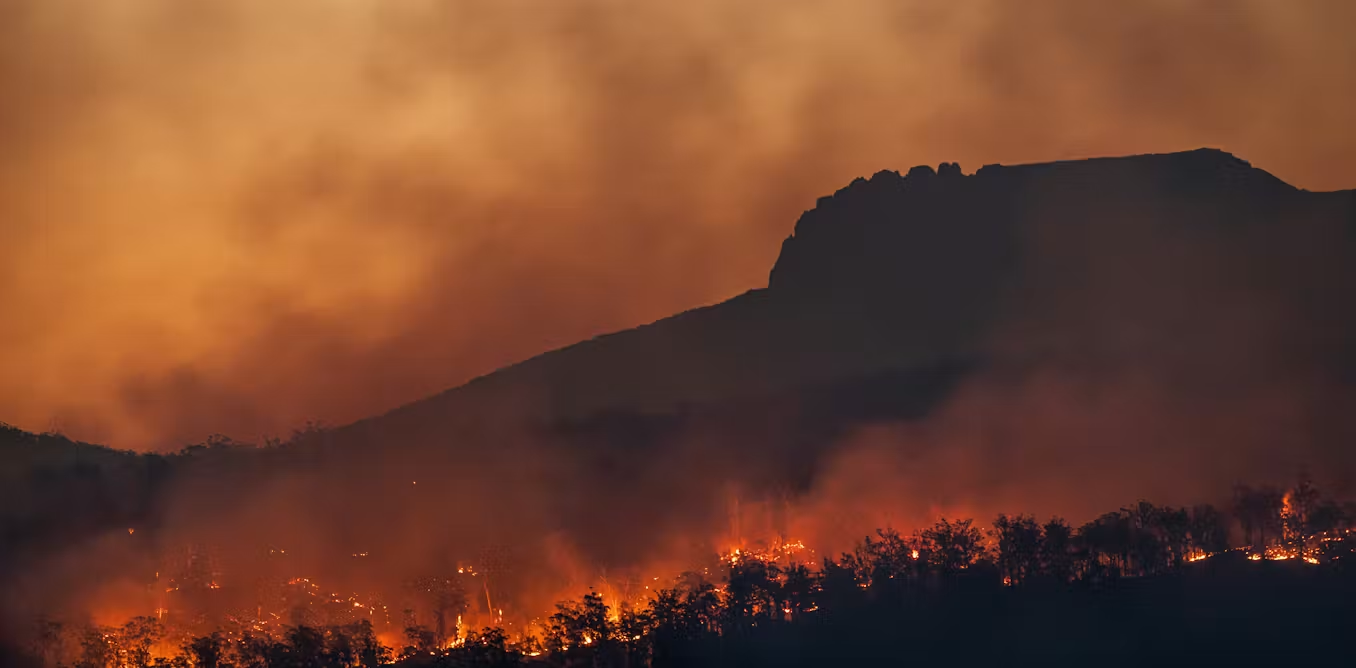
Wildfires are becoming a feature of the UK’s hotter, drier climate.

In July 2026, major fires swept through parts of the UK in a matter of days – notably setting Arthur’s Seat, the extinct volcano in the centre of Edinburgh, alight. The Scottish Greens labelled wildfires a “national emergency” after that fire.

Meanwhile, the Welsh government activated its crisis plan to tackle ongoing blazes in north Wales, while raising concerns about a shortage of helicopters to manage the flames. Other UK fire services said they were under extreme pressure.

In 2025, fire and rescue services in England and Wales responded to nearly 1,000 wildfire incidents, beating the previous record from 2022. Expert projections suggest more days like this ahead.

Advertisement

Wildfires spread across north Wales in July 2026.

Over a million Britons live in fire-prone landscapes, according to Ordnance Survey data. “The homes identified … are located within a patchwork landscape, generally without managed firebreaks as is common in other parts of the world,” said Duncan Moss, co-chair of a national group which provides advice on wildfires to the government.

So far, there’s not a unified UK approach to wildfire management. While Scotland published a plan in March, management in England is largely driven by independent public bodies such as Forestry England – although the UK government recently announced the creation of new wildfire firefighting teams for England.

The UK public mainly hears about wildfires through a mix of news coverage and information from land management agencies and other public bodies. But wildfires remain a largely unrecognised risk, with gaps in understanding of the hazards and their consequences. So, many communities are now asking for clearer information on how to respond.

Advertisement

One potential solution is more real-time emergency alerts sent directly to mobile phones in affected areas. While the UK has a national emergency alert service, so far this system has only been used for floods and storms.

But we believe that emergency alerts should just be one part of a wider communication strategy. The UK is at a critical moment to shape public understanding – not just of the risks, but of the nuances of fire itself. Ultimately, there’s not a one-size-fits-all approach to fires.


À lire aussi :
Wildfire risk is now spreading to cool climates like the Scottish Highlands and Irish uplands


Wildfires can be both destructive and beneficial. Safe, proactive risk reduction often involves lighting small, low-intensity fires to reduce vegetation that could act as fuel and lower the risk of future wildfires. This approach is used widely in other countries.

Advertisement

Managing fire well takes more than early warnings. It will take a public that understands how to live safely alongside it.

What does Australia do and is it effective?

A long history of devastating wildfires has forged Australia’s fire-risk warning framework – very few countries have grappled with this as thoroughly. There are two systems: one that forecasts the level of risk before a fire starts, another that communicates what to do after it has.

The Australian Fire Danger Rating System was introduced in 2022 to provide a clear, nationally consistent warning system. It is designed to communicate to the public how dangerous a fire could be if one was to start.

The system has four levels. Each carries a clear set of messages and recommended actions for people to take before and during days of fire risk: moderate (plan and prepare), high (be ready to act), extreme (take action now to protect life and property), and catastrophic (for your survival, leave wildfire risk areas).

Advertisement

A roadside wildfire warning in Australia.
Thomas Oswell Richards/Shutterstock

The danger ratings are calculated and communicated by Australian state and territory fire agencies. They consider weather, dryness factors and potential fire behaviour.

These warnings reach the public through several channels:

• Roadside signage showing current fire danger ratings;

Advertisement

• Weather forecasts, with fire danger ratings rolled into standard weather reporting and weather apps;

• State emergency websites and apps;

• News coverage, including ABC Emergency, Australia’s national emergency broadcaster, which provides up-to-date information and advice on protecting lives and property.

What happens when a fire starts?

The Australian Warning System (AWS) activates when a fire starts, and sends warnings directly to the public for every fire.

Advertisement

This national approach was established in 2021 to provide consistent, public information for wildfires, floods, storms, cyclones, extreme heat or severe weather. Before this, warnings had been issued separately by state, with inconsistent alert levels and terminology, and different warning systems for different hazards. The AWS has three warning levels:

• Advice (yellow): incident has started but there is no immediate danger. Stay up to date in case the situation changes.

• Watch and act (orange): heightened level of threat. Conditions are changing and you need to start taking action now to protect yourself and your family.

• Emergency warning (red): highest level of warning. You may be in danger and need to take action immediately. If is too late to leave, take shelter immediately. Any delay puts your life at risk.

Advertisement

From October 1 2026, Australia will add another layer to its warning protocol. AusAlert will send emergency messages directly to every compatible mobile device in an affected area during local and national disasters, after a royal commission found this would be an increasingly valuable approach to natural disasters.

Layering messaging channels this way is deliberate, but there can still be problems. During a fire in central Victoria in January 2026, a power outage overloaded mobile networks and the fire destroyed a major telecommunications tower, leaving many residents without access to official warnings, emergency apps or broadcast guidance.

During Australia’s 2019–20 fires, it’s estimated that more than 60,000 people heeded advice to leave fire-prone areas. Official warnings almost certainly played a significant role, but so did the visibility of the crisis, with smoke blanketing entire regions and constant media coverage of mass evacuations.

However, research into people affected by wildfires in New South Wales in 2017 showed that while most people found warnings easy to access and understand, this did not necessarily translate into the response emergency services had called for. Instead, many people chose to stay and defend their homes.

Advertisement

All warning systems face the same basic problem: too much messaging results in communication fatigue, too little messaging and lives can be lost. Australia has spent decades learning how to warn its public. The harder lesson – getting people to act on this advice – remains a work in progress.

Source link

Advertisement
Continue Reading

NewsBeat

School holidays warning to rail passengers over engineering work as trains cancelled

Published

on

Manchester Evening News

A large stretch of track is being replaced

A warning has been issued to rail passengers ahead of a planned track closure due to key engineering work.

Advertisement

As the school holidays begin, Network Rail has urged all commuters seeking to travel between Wigan and Southport to plan ahead.

Engineering teams will begin replacing ‘ageing track’ in the Parbold area of Wigan from next Monday – July 27 – in a programme of work set to last until Friday, July 31.

Click here to get the biggest stories straight to your inbox in our Daily Newsletter

In a statement, Network Rail said: “This means no trains will run between Southport and Wigan Wallgate during this period. Replacement buses will be available between the two destinations. Trains between Manchester and Southport will terminate at Wigan. Trains will begin running again on Saturday 1 August.”

Advertisement

Sleepers and ballast will also be replaced, together with around a a kilometre of track.

Derek Davies, project manager for Network Rail, said the current track was ‘nearing the end of its life’. “Once renewed, the track will benefit from improved drainage and offer a more resilient, smoother, and more reliable railway,” he said.

“We know there is never an ideal time to close the railway and we are using this closure to complete multiple pieces of work, avoiding the need for two or three weekends of disruption. We would like to thank passengers for their patience during the closure.”

Stuart Taylor, Northern’s director of service delivery in Greater Manchester, said: “We’re advising customers to check before they travel and allow extra time for their journeys while this essential engineering work is being carried out. There will be no trains between Southport and Wigan Wallgate, but we will be running rail replacement buses to get customers where they need to go and their tickets will be accepted on alternative routes.”

Advertisement

Northern customers will be able to use their tickets to travel on Merseyrail’s Southport-Liverpool services, and Northern’s Liverpool-Manchester, Preston-Ormskirk and Preston-Manchester services.

Source link

Continue Reading

NewsBeat

Flat with ‘links to Judi Dench’ for sale on Rightmove

Published

on

Flat with 'links to Judi Dench' for sale on Rightmove

The two-bedroom flat is for sale at the Westgate Apartments in Leeman Road, where Dame Judi denied having bought a home – despite rumours that she had done so.

The Westgate Apartments building in Leeman Road, York (Image: Linley and Simpson/Zoopla)

Speaking about the rumours in 2002 when the York-born star was made an honorary Freeman of the City, Dame Judi said: “You tell me who started that rumour!

“I live in a village in the south of England and I am very happy. I would love to live in York, but it isn’t practical.

“But I love coming back. That feeling of coming up and suddenly seeing the Minster, it’s a lovely feeling.” 

Advertisement

Meanwhile, the flat for sale inside Westgate Apartments for £325,000 is an “exceptional” second-floor home, according to Linley and Simpson, which is marketing the property.

Inside, there is a hallway leading to the longue/dining area and modern kitchen.

There are two double bedrooms, with the main bedroom featuring an en-suite shower room and the second bedroom served by the home’s main bathroom.

Advertisement

Recommended reading:


Outside, the home has an allocated parking space and bicycle storage to the rear of the building.

The flat is a leasehold property with the lease running until the year 3001, according to the listing.

There is a ground rent of 150 per year and a monthly £250 service charge. The service charge includes water rates, building insurance and the cleaning of communal areas, the listing said.

Advertisement

For more information, visit the property’s listing on Zoopla and Rightmove.

Source link

Advertisement
Continue Reading

NewsBeat

‘Half the internet’ goes down as Amazon cloud outage disrupts major websites

Published

on

Issues began around 6.40am ET, affecting a range of services including Apple Pay, DoorDash, Reddit and Hulu streaming service, according to Downdetector, which monitors online outages

Advertisement

Dozens of popular websites crashed on Friday, possibly leaving millions of users unable to access online services.

Issues began around 6.40am ET, affecting a range of services including Apple Pay, DoorDash, Reddit and streaming platform Hulu, according to Downdetector, which monitors online outages.

The widespread disruption appeared to be linked to Amazon Web Services (AWS), which confirmed it was investigating connectivity problems affecting multiple services in its US-West-2 region in Oregon.

AWS posted the warning at 4.40am PDT ( 7.40am ET), although the problems may have begun before the company publicly acknowledged them.

Advertisement

The outage affected at least five AWS services, including AWS Direct Connect, AWS Internet Connectivity, AWS IoT Core, Amazon API Gateway and Amazon Elastic Compute Cloud.

AWS provides the computing power and online infrastructure used by countless websites, apps and businesses, meaning a regional failure can disrupt numerous seemingly unrelated services simultaneously.

Amazon EC2 supplies the virtual servers on which websites and apps operate, while API Gateway allows different online systems to communicate with one another.

Problems affecting AWS Internet Connectivity and Direct Connect can also prevent businesses and users from reaching services hosted in the affected region.

Advertisement

Issues began around 6.40am ET, affecting a range of services including Apple Pay, DoorDash, Reddit and Hulu streaming service, according to Downdetector, which monitors online outages

Dozens of popular websites crashed on Friday, possibly leaving millions without access

Dozens of popular websites crashed on Friday, possibly leaving millions without access 

The Daily Mail has contacted AWS for comment. 

Advertisement

AWS later expanded the number of affected services from five to seven, adding Global Accelerator, which directs users along the fastest available routes to websites, and Elastic Container Service, which runs applications across Amazon’s servers.

The additions suggested the failure was affecting multiple layers of AWS’s Oregon network rather than a single product. 

AWS labeled the incident ‘impacted,’ confirming that customers were experiencing problems, although there was no indication that data had been lost or Amazon’s entire global network had failed.

This is a developing story… More updates to come.

Advertisement

Advertisement

Source link

Continue Reading

NewsBeat

Person taken to hospital as multi-vehicle crash causes traffic disruption

Published

on

Wales Online

A man has been taken to hospital after a multi-vehicle collision on the A40 west of Carmarthen

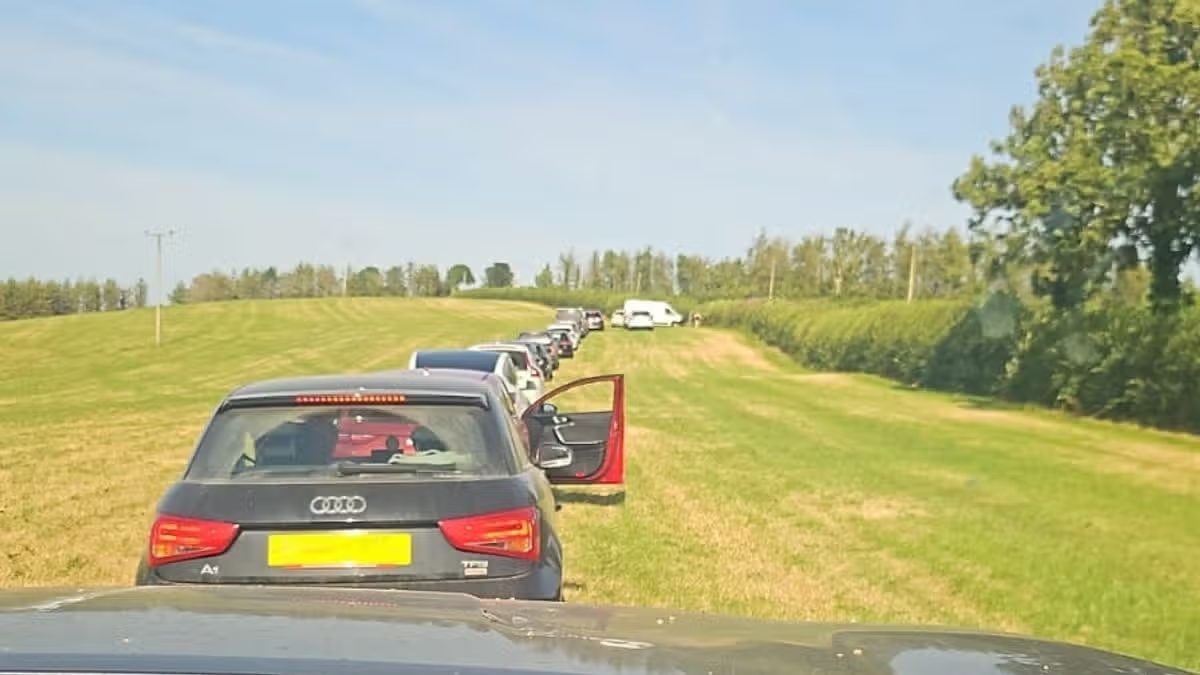
Drivers were forced to park their cars in a field after a serious crash in Carmarthenshire caused gridlock on a busy main road and adjoining country lanes.

A large emergency services response was sent to a section of the A40 between Carmarthen and St Clears late on Thursday afternoon following a serious multi-vehicle collision. Police, fire crews, paramedics and a Wales Air Ambulance crew were all called to the dual carriageway, which is the main transport route heading into Carmarthenshire from Pembrokeshire.

One person was medically trapped and removed from one of the vehicles by firefighters from Carmarthen, who arrived at the scene at around 4.10pm on Thursday. Meanwhile, a Wales Air Ambulance helicopter arrived at the scene shortly after 4.30pm. Stay informed on Carms news by signing up to our newsletter here.

Advertisement

Police have confirmed that a man was taken to hospital but no further information has been released regarding the severity of any injuries sustained.

Both lanes of the dual carriageway were shut in both directions following the crash – which happened between Bancyfelin and Llanllwch – before one lane on each side was reopened on Thursday evening.

The crash caused considerable tailbacks on the A40 itself and on nearby country lanes, which many motorists had decided to use as a diversion. However, those country lanes soon became gridlocked too with traffic involving cars and larger vehicles coming to a standstill.

In an attempt to alleviate the situation, many motorists turned into a field north of the A40 so that congestion on a narrow road being used as a diversion towards Carmarthen could become clear.

Advertisement

A spokeswoman for Dyfed-Powys Police said: “We received a report of a five-vehicle collision on the A40 between Carmarthen and St Clears at around 4:10pm on Thursday, July 24.

“The incident caused traffic delays until the cars were recovered, debris was cleared, and emergency services completed their medical checks at the scene. One person was taken to hospital. The road reopened at around 6:15pm.”

The A40 between Carmarthen and St Clears has become notorious for crashes and has unfortunately seen a number of fatal incidents in recent years.

Just hours after Thursday’s crash, a section of the dual carriageway was again closed due to a collision on Friday morning, reopening shortly before 11am.

Advertisement

Get daily breaking news updates on your phone by joining our WhatsApp community here. We occasionally treat members to special offers, promotions and ads from us and our partners. See our Privacy Notice.

Source link

Continue Reading

NewsBeat

Residents told to clear cherished gardens after 30 years of tending them

Published

on

Residents told to clear cherished gardens after 30 years of tending them
Residents of Summer Close have been told to clear their gardens which they have carefully tended to for 30 years (Picture: SWNS)

For 30 years, residents of two streets in Weybridge have carefully tended to parcels of land outside their homes.

Some have grown flowers and plants in the gardens of Brooklands Road and Summer Close, while others have watched their children and grandchildren play in them.

But now PA Housing has said it’s all got to go.

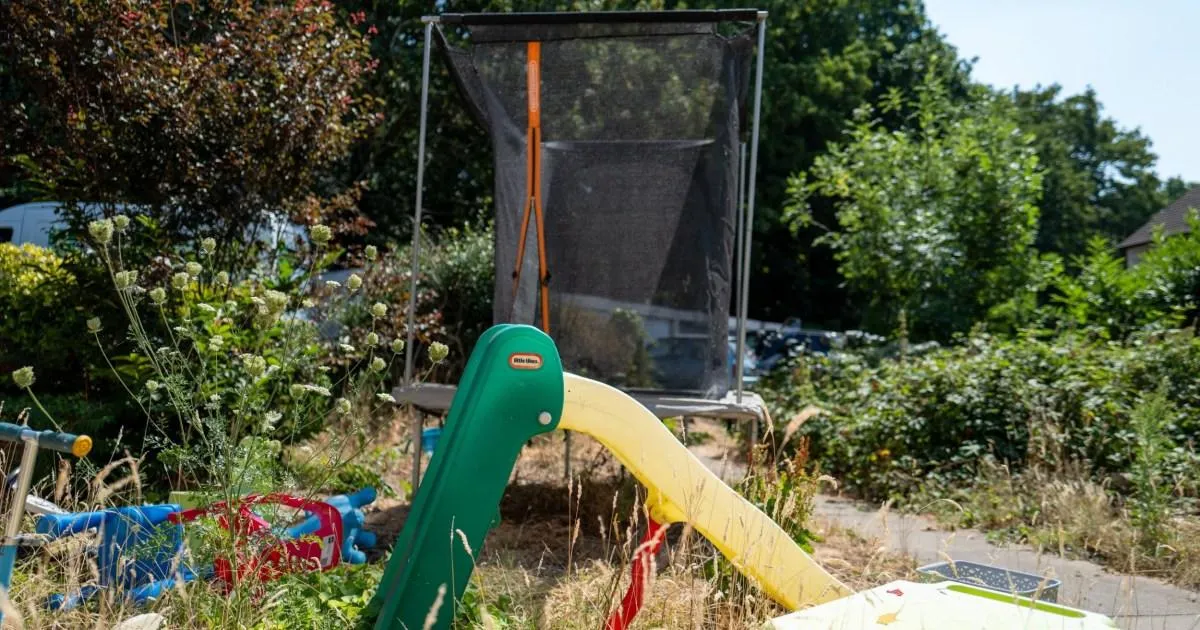
They have told residents in the Surrey neighbourhood that they need to get rid of all their planters, furniture and toys because they have become overgrown and attracting rodents.

Advertisement

Wendy, 66, has lived there for 14 years and says children come from all over to play there.

She said: ‘I don’t understand why they don’t just take over the ones that aren’t being maintained. We all play our part to look after it.’

Some tenants claim their flats were leased decades ago on the premise that the land outside was their own and they were responsible for tending to it.

However, in a letter on June 17, PA Housing said they had ‘confirmed that the garden areas in question form part of the communal land and are not allocated for the sole use of individual residents.’

Advertisement

They added that previous agreements were not ‘legally binding’.

Single mum-of-three Priya, 25, said: ‘It says explicitly on my tenancy agreement that I have a garden.

General view of gardens in summer Close where residents fear they are losing the rights to what they thought were their private gardens, despite having tended to them for more than 30 years. Weybridge. 16th July 2026 . // Fuming residents are locked in a battle with a housing firm after being told their prized gardens are being taken away. People living in Brooklands Road and Summer Close in Weybridge, Surrey have hit out at PA Housing after learning of the changes to the 'garden arrangements'. Tentants claim their flats were leased decades ago on the premise that a patch of garden outside was their own, and they were responsible for tending to it. Some have spent more than 30 years cultivating well-maintained gardens, and say their children and grandchildren use the space to play. But PA Housing has now claimed these gardens back, ordering residents to move their garden furniture and children???s toys off the land by July 20. They say that some gardens have become overgrown and are attracting rodents. Photo released 24/07/2026
PA Housing wants them to clear away toys, furniture and planters (Picture: SWNS)
General view of gardens in summer Close where residents fear they are losing the rights to what they thought were their private gardens, despite having tended to them for more than 30 years. Weybridge. 16th July 2026 . // Fuming residents are locked in a battle with a housing firm after being told their prized gardens are being taken away. People living in Brooklands Road and Summer Close in Weybridge, Surrey have hit out at PA Housing after learning of the changes to the 'garden arrangements'. Tentants claim their flats were leased decades ago on the premise that a patch of garden outside was their own, and they were responsible for tending to it. Some have spent more than 30 years cultivating well-maintained gardens, and say their children and grandchildren use the space to play. But PA Housing has now claimed these gardens back, ordering residents to move their garden furniture and children???s toys off the land by July 20. They say that some gardens have become overgrown and are attracting rodents. Photo released 24/07/2026
Tenants claimed their flats were leased to them on the premise that the land outside was their own and they should tend to them (Picture: SWNS)

‘Now my kids are devastated because they don’t have a garden to play in. There is no safe play area for my children around here.

‘I don’t mind maintaining my garden because I have the support of my neighbours to look after it. My son is being tested for ADHD and he needs his own space.’

Advertisement

Edward, 46, has lived in his home for 12 years. He said he doesn’t think it is a good idea for PA Housing to take over the gardens because, he claims, he’s been pleading with them for over a decade to help maintain public areas.

He said that there are overgrown plants and that new bins brought in outside his bedroom window are what is attracting the rats.

General view of gardens in summer Close where residents fear they are losing the rights to what they thought were their private gardens, despite having tended to them for more than 30 years. Weybridge. 16th July 2026 . // Fuming residents are locked in a battle with a housing firm after being told their prized gardens are being taken away. People living in Brooklands Road and Summer Close in Weybridge, Surrey have hit out at PA Housing after learning of the changes to the 'garden arrangements'. Tentants claim their flats were leased decades ago on the premise that a patch of garden outside was their own, and they were responsible for tending to it. Some have spent more than 30 years cultivating well-maintained gardens, and say their children and grandchildren use the space to play. But PA Housing has now claimed these gardens back, ordering residents to move their garden furniture and children???s toys off the land by July 20. They say that some gardens have become overgrown and are attracting rodents. Photo released 24/07/2026
Some people say they have seen children enjoy the gardens for decades (Picture: SWNS)
General view of gardens in summer Close where residents fear they are losing the rights to what they thought were their private gardens, despite having tended to them for more than 30 years. Weybridge. 16th July 2026 . // Fuming residents are locked in a battle with a housing firm after being told their prized gardens are being taken away. People living in Brooklands Road and Summer Close in Weybridge, Surrey have hit out at PA Housing after learning of the changes to the 'garden arrangements'. Tentants claim their flats were leased decades ago on the premise that a patch of garden outside was their own, and they were responsible for tending to it. Some have spent more than 30 years cultivating well-maintained gardens, and say their children and grandchildren use the space to play. But PA Housing has now claimed these gardens back, ordering residents to move their garden furniture and children???s toys off the land by July 20. They say that some gardens have become overgrown and are attracting rodents. Photo released 24/07/2026
Some gardens are better maintained than others on the estate in Weybridge, Surrey (Picture: SWNS)

He said: ‘If it goes back to the council then they won’t maintain it. I have been asking them for 12 years for a fence.

‘In this heat I can’t even have the windows and doors open. The smell of the urine and poo of the rats and the bins just makes me ill.’

Among the gardens is a tribute to a resident who died four years ago.

Advertisement

Wendy said: ‘Her children still like to come and visit it because she put the mirrors up. The rose bush is also for Rachel, it will be sad if that goes.

‘She was such a character. She used to worship the sun so she was always sat out here.’

A consultation meeting was held on July 8 where 20 residents turned up, however Lorna Alexander, 71, said they don’t know what is going to happen next.

Lorna Alexander, resident of Summer Close. Weybridge. 16th July 2026 . // Fuming residents are locked in a battle with a housing firm after being told their prized gardens are being taken away. People living in Brooklands Road and Summer Close in Weybridge, Surrey have hit out at PA Housing after learning of the changes to the 'garden arrangements'. Tentants claim their flats were leased decades ago on the premise that a patch of garden outside was their own, and they were responsible for tending to it. Some have spent more than 30 years cultivating well-maintained gardens, and say their children and grandchildren use the space to play. But PA Housing has now claimed these gardens back, ordering residents to move their garden furniture and children???s toys off the land by July 20. They say that some gardens have become overgrown and are attracting rodents. Photo released 24/07/2026
Lorna Alexander wants PA Housing to take over the gardens that need TLC and leave the others (Picture: SWNS)

She said: ‘People are not always told what gardens they are tending hence we get issues like this where PA housing turn up and say they are taking them all.

‘It is really not acceptable because of the people who do work hard to maintain them.

Advertisement

‘I am ashamed to have people over because these overgrown gardens are the first thing that they see. I am happy for PA Housing to take over those ones, but not the ones people are tending.’

Sally-Anne Underhill, Director of Neighbourhoods at PA Housing said: ‘We recognise the need to improve the condition of the gardens and we are aware of issues such as pests and overgrowth and are taking steps to address them.

‘The question of whether these spaces are communal or allocated to individual residents is linked to historic tenancy agreements, some of which predate PA Housing and were transferred to us following a merger with Elmbridge Housing Trust in 2007.

‘We will work with residents and homeowners over the next few months to provide clarity in respect of garden spaces and communal areas.’

Advertisement
Advertisement

Source link

Continue Reading

NewsBeat

Latest action film praised as ‘wonderful’ is free to stream on Prime Video despite still being in cinemas

Published

on

Wales Online

The action film was praised as ‘wonderful’ by viewers.

A new action film that viewers have described as “wonderful” and “nostalgic” has arrived on Prime Video. Masters of the Universe premiered in UK cinemas on June 5 and continues to screen in selected venues, despite becoming available for streaming on July 22.

Advertisement

The production was deemed a box-office letdown after generating just over $110million globally (approximately £82million), according to Digital Spy. The entertainment publication noted that had the film performed “strongly” at the box office, its streaming release may well have been postponed.

Despite its underwhelming cinema performance, the production has achieved a solid 86% audience score on Rotten Tomatoes, providing fresh viewers with additional motivation to watch it.

What is Masters Of The Universe about?

Masters of the Universe centres on Prince Adam (Nicholas Galitzine), who reconnects with the Sword of Power 15 years after becoming marooned on Earth.

Upon returning to his home world of Eternia, now under the tyrannical rule of Skeletor (Jared Leto), Adam teams up with Teela (Camila Mendes) and Duncan (Idris Elba) to accept his fate as He-Man and fight to rescue his realm and those dear to him.

Advertisement

The He-Man and Masters of the Universe concept originated in the early 1980s as a Mattel toy designed to compete with the popularity of Star Wars action figures.

The franchise rapidly grew with Filmation’s successful animated series in 1983, transforming He-Man into one of the era’s most recognisable pop culture heroes. The Digital Spy reviewer observed: “The film’s tone is comparable to the likes of Thor and Dungeons & Dragons: Honour Among Thieves.

“While the humour doesn’t always land – there’s probably too many juvenile gags about swords and fists – it works more often than not, whether it’s an excellent slow-motion group shot gag or Adam’s hilarious attempts to be subtle when stealing his sword back.”

Advertisement

Rotten Tomato reviews

Awarding the film a perfect five out of five, one audience member enthused: “Masters of the Universe is a wonderful action film that consistently entertains.”

A further viewer added: “Very fun movie! Seems like an old MCU movie in its action, stakes, and humour.” While a third remarked: “Good movie with a nod to the cartoon series brought back some good childhood memories.”

Professional critics on the same platform were somewhat less generous in their assessments. Randy Myers of the San Jose Mercury News commented: “It’s got the right cast and the right director; now it just needs to surrender to its cheesy outrageousness.”

Tribune News Service’s Katie Walsh added: “One only wishes they might have pushed the camp factor further, as it feels a bit restrained at times. However, it’s Galitzine’s performance that will win you over – he’s truly got the power.”

Advertisement

Masters Of The Universe currently sits at the top spot in the UK on Prime Video, available to stream for subscribers at no additional charge.

Source link

Continue Reading

NewsBeat

Luxury homes go up in flames as tourists flee down single road off ‘French Hamptons’ peninsula as Macron pleads for help to tackle ‘monster’ fire

Published

on

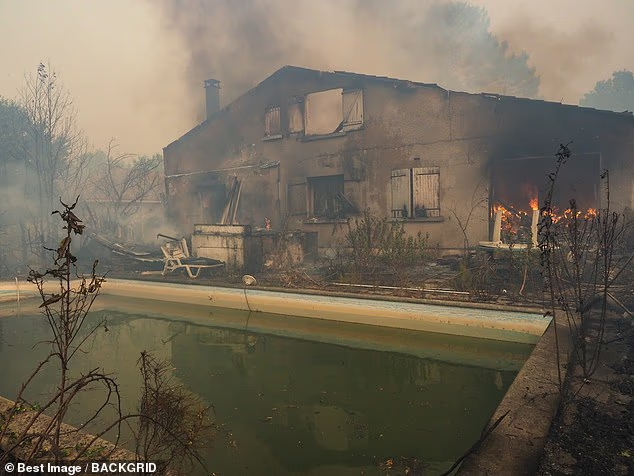
Pictured: The remains of a property in Lège-Cap-Ferret after a fire tore through the outskirts of the French commune

Luxury holiday homes are erupting in flames as desperate tourists flee down a single road off the ‘French Hamptons’ peninsula amid gigantic wildfires.

Lège-Cap Ferret in southwestern France is in the middle of a total evacuation with thousands of hectares of forest burning and sprawling villas going up in smoke.

The fires, which began on Tuesday in Saumos, Gironde, continued to burn overnight with 8,700 hectares (around 21,500 acres) consumed by the flames. 

French Interior Minister Laurent Nuñez said 40,000 people had either been or were in the process of being evacuated from the upmarket Cap Ferret peninsula, which has the Atlantic on one side and the Bay of Arcachon on the other.

Advertisement

‘A total of 80 homes have burnt, around 50 of which have been completely destroyed,’ he told reporters.

A 90-minute drive from Bordeaux, the string of fishing villages is a popular destination for Paris’ elite, with miles of sandy beaches and windswept dunes.

But now, distressed tourists are anxiously fleeing the beloved getaway either on boats or by the only road linking the area with the mainland.

Residents have described the inferno as ‘mega-fire’ and ‘apocalyptic’, while French President Emmanuel Macron has requested urgent help from the European Union as the country’s growing battle against wildfires intensifies. 

Advertisement

Pictured: The remains of a property in Lège-Cap-Ferret after a fire tore through the outskirts of the French commune

Lège-Cap Ferret in southwestern France is in the middle of a total evacuation with thousands of hectares of forest burning and sprawling villas going up in smoke

Lège-Cap Ferret in southwestern France is in the middle of a total evacuation with thousands of hectares of forest burning and sprawling villas going up in smoke

The fires, which began on Tuesday in Saumos, Gironde, continued to burn overnight with 8,700 hectares (around 21,500 acres) consumed by the flames

The fires, which began on Tuesday in Saumos, Gironde, continued to burn overnight with 8,700 hectares (around 21,500 acres) consumed by the flames

Advertisement

‘France has requested the activation of the European Union’s civil protection mechanism. We will soon be able to count on reinforcements from two Croatian Canadair aircraft, two Portuguese Air Tractor planes, as well as two heavy Black Hawk helicopters from the Czech Republic and Slovakia,’ wrote Macron on X on Friday.

Sophie Brocas, the prefect for the Nouvelle Aquitaine region, ordered the ‘final phase’ of the peninsula evacuation early on Friday morning.

People are being told to leave via the main D106 road towards Bordeaux while vessels were being made available for others between 7am and 10am local time (6am BST and 9am BST) from four piers. 

Aircraft from Croatia, Portugal, the Czech Republic and Slovakia are on their way to assist in the emergency, which the local prefect has described as an ‘XXL fire’.

Advertisement

The Cap Ferret peninsula has a year-round population of just under 8,000 but that can swell by 10 times that number in peak summer season. 

A firefighter was injured after a gas cylinder exploded in a burning house. Shocking footage shows the moment a reporter at the scene reacted to the blast. 

Headmaster David Morton, 53, from Gloucester had been on holiday with his wife and sons when they received an emergency text alert overnight on Thursday telling them to evacuate.

They were staying in a house in Petit Piquey, along the peninsula, when they were jolted awake at 3am local time (1am GMT) by emergency texts and an alert on the property’s landline.

Advertisement

‘We got in our car, packed everything up as quickly as we could… and then set off and joined a very long, slow-moving queue of traffic,’ he told the BBC.

‘Everyone was driving with their lights on, driving very slowly – there was lots of fire service people, ambulances, police on the other side of the road controlling things and we could see several fires in the distance as we drove.’

As they drove past the blaze near Lège, Mr Morton described the inferno as ‘enormous’.

‘You could see the whole forest was on fire and that really brought it home what a major fire it was.’

Advertisement

He said the evacuation was ‘well-controlled’ with people being ‘very respectful and sensible’.

‘It’s different from seeing it on the television… seeing it blazing out of control despite hundreds and hundreds of firemen and women helping.’

Headmaster David Morton, 53, from Gloucester had been on holiday with his wife and sons when they received an emergency text alert overnight on Thursday telling them to evacuate

Headmaster David Morton, 53, from Gloucester had been on holiday with his wife and sons when they received an emergency text alert overnight on Thursday telling them to evacuate

Some 20,000 people within the Gironde region had already been evacuated on Thursday, many of whom were visitors to campsites on the peninsula.

Advertisement

Patrick Martineau, a 69-year-old resident of Le Porge, south of Bordeaux, said: ‘The gendarmes came and knocked on every door, the fire was about 500 metres away – we grabbed some things and left.’

Further down the Atlantic coast, around the town of Biscarrosse in France’s Landes region, another major blaze that began on Thursday afternoon has triggered the evacuations of more than 23,000 people.

About 18,000 people in Biscarrosse and 5,000 in Parentis-en-Born had to flee from their homes, campsites, a nursing home and a summer camp.

Videos taken in Biscarrosse captured scenes of chaos, showing several cars rushing down roads to get away from nearing flames.

Advertisement

Separate footage showed horses frantically running down a street as a huge black cloud of smoke engulfed the town. 

Minister of the Interior Laurent Nuñez said on Friday that the fire in Biscarrosse is ‘difficult to control’, adding that around 100 homes had been burned or damaged by the flames. 

It comes as the Landes prefect, Gilles Clavreul, expressed concern due to the fire’s ‘exceptional intensity’, noting that the blaze had affected industrial areas, commercial zones and homes. 

Some 550 firefighters were battling the Biscarrosse fire on Friday and received support from two Canadair water bombers. 

Advertisement

Firefighters have also resorted to using bulldozers to ‘create lines of defence’, according to the local municipality. 

Meanwhile, residents of a Biscarrosse care home have been evacuated to Dax. 

The town’s mayor Julien Dubois on Friday welcomed evacuees in a Facebook post, saying: ‘As mayor of Dax, I want to tell our neighbours in the northern Landes region that they are not alone.’ 

Aerial view of the wildfire spreading toward Lège-Cap-Ferret, in Gironde, on July 23

Aerial view of the wildfire spreading toward Lège-Cap-Ferret, in Gironde, on July 23

Advertisement
Sophie Brocas, the prefect for the Nouvelle Aquitaine region, ordered the 'final phase' of the peninsula evacuation early on Friday morning

Sophie Brocas, the prefect for the Nouvelle Aquitaine region, ordered the ‘final phase’ of the peninsula evacuation early on Friday morning

This handout satellite photograph taken on July 24, 2026 and released by 2026 Planet Labs PBC shows smoke rising from the wildfire in Le Porge and Lège-Cap Ferret

This handout satellite photograph taken on July 24, 2026 and released by 2026 Planet Labs PBC shows smoke rising from the wildfire in Le Porge and Lège-Cap Ferret

A fast-moving wildfire reaches the outskirts of Lège-Cap-Ferret after worsening weather conditions fuel its rapid spread

A fast-moving wildfire reaches the outskirts of Lège-Cap-Ferret after worsening weather conditions fuel its rapid spread

People are being told to leave via the main D106 road towards Bordeaux while vessels were being made available for others between 7am and 10am local time (6am BST and 9am BST) from four piers

People are being told to leave via the main D106 road towards Bordeaux while vessels were being made available for others between 7am and 10am local time (6am BST and 9am BST) from four piers

Advertisement
Aircraft from Croatia, Portugal, the Czech Republic and Slovakia are on their way to assist in the emergency, which the local prefect has described as an 'XXL fire'

Aircraft from Croatia, Portugal, the Czech Republic and Slovakia are on their way to assist in the emergency, which the local prefect has described as an ‘XXL fire’

The Cap Ferret peninsula has a year-round population of just under 8,000 but that can swell by 10 times that number in peak summer season

The Cap Ferret peninsula has a year-round population of just under 8,000 but that can swell by 10 times that number in peak summer season

Lège is the only one of the peninsula's 11 villages that is currently threatened by the fire

Lège is the only one of the peninsula’s 11 villages that is currently threatened by the fire

The Cap Ferret peninsula, often likened to the upscale Hamptons in the United States, is home to expensive properties where wealthy Parisians and Bordelais come to sip white wine and feast on oysters. 

Advertisement

Lège is the only one of the peninsula’s 11 villages that is currently threatened by the fire. 

The flames later reached the edge of Lège, forcing the evacuation of several campgrounds and neighbourhoods close to the forest.

Camper Elizabeth Carron said she was having dinner when she saw the ​flames. 

‘The sky turned red. Black and red. Then little by little, we could smell it. There were ashes on the car, on the caravan, on my grandchildren’s little tent. Then two hours later, they advised us to leave.’

Advertisement

France’s southeast was also being hard hit, with dozens of fires flaring up and being fanned by the Mistral wind around the historic village of Cotignac.

Officials said around 25 houses had been destroyed since Tuesday. 

Two firefighters died on Tuesday tackling another blaze near Bordeaux airport.

Skies over Le Porge turned orange as smoke rose from charred and crackling pine trees, while helicopters made repeated runs over deserted neighbourhoods.

Advertisement

Fires in 2022 damaged a massive area of the same forest, forcing around 50,000 people to flee.

The authorities said the fire had been contained on its northerly flank but was not yet totally under control further south.

EU crisis management commissioner Hadja Lahbib said Thursday that the bloc was providing three water-bombing planes to France.

 In Spain, the government declared a state of emergency in the Madrid region, where more than 10,000 people have been evacuated in recent days.

Advertisement

Emergency services said alert messages had been sent to people in Aldea de Fresno, a town west of Madrid, ordering them to leave.

It is the first time such a measure has been taken due to a wildfire. 

The last time Spain declared the same level of emergency alert was during a massive nationwide power blackout last year.  

Eighteen firefighting units with specialist troops were working to contain the blaze near the city of Toledo, close to another wildfire that forced the evacuation of several villages on Wednesday.

Advertisement
Luxury homes are erupting in flames as desperate tourists flee down a single road off the 'French Hamptons' peninsula amid gigantic wildfires

Luxury homes are erupting in flames as desperate tourists flee down a single road off the ‘French Hamptons’ peninsula amid gigantic wildfires

A volunteer gives indication to holidaymakers from Lège-Cap-Ferret upon their arrival in Arcachon by boat during an evacuation operation of the entire Cap-Ferret peninsula

A volunteer gives indication to holidaymakers from Lège-Cap-Ferret upon their arrival in Arcachon by boat during an evacuation operation of the entire Cap-Ferret peninsula

The order for a total evacuation of the area of Lège-Cap Ferret underlined the severity of the fire that has been burning since Wednesday

The order for a total evacuation of the area of Lège-Cap Ferret underlined the severity of the fire that has been burning since Wednesday

Screen grab of video showing several cars rushing down roads to get away from nearing flames

Screen grab of video showing several cars rushing down roads to get away from nearing flames

Advertisement
People watch smoke from the beach in Andernos-Les Bains during a fire in Lège Cap-Ferret forest

People watch smoke from the beach in Andernos-Les Bains during a fire in Lège Cap-Ferret forest

People in Lege Cap-Ferret watch as flames tear through a forest

People in Lege Cap-Ferret watch as flames tear through a forest 

One video on social media showed the moment horses ran away from incoming flames

One video on social media showed the moment horses ran away from incoming flames 

Firefighters battled through the night, and most residents were allowed to return Thursday.

Advertisement

Hundreds of firefighters and troops were still struggling to contain a much larger wildfire in Guadalajara province, north of Madrid.

In Navaluenga in Avila province, ​residents wearing masks because of the smoke stood watching firefighting helicopters scoop up water from the town’s ​river late on Thursday. 

Spanish Prime Minister Pedro Sanchez said on Friday morning that ‘Spain and neighbouring countries’ were experiencing a ‘dramatic situation’ due to the massive fires that spread simultaneously across western Europe

‘The forest fires are ravaging thousands of hectares and affecting numerous towns and villages,’ the Spanish leader wrote on X on Friday. 

Advertisement

He also urged Spaniards to ‘follow the instructions’ of officials. 

‘Climate change is what kills, what destroys our villages and our natural and cultural heritage,’ civil protection chief Virginia Barcones told Spanish radio.

She warned some fires become so intense that, despite the deployment of aircraft and ground crews, firefighters stand ‘no chance’.

Barcones said conditions at the Guadalajara blaze were improving but that strong winds and extreme heat remained a danger.

Advertisement

Thousands of emergency workers in Italy battled scores of fires in Sicily and in the Calabria region, where a local official said arsonists had started fires by tying rags soaked in flammable liquid to the tails of stray cats to spread the flames.

Along with the stray cats, investigators found candles and delayed ignition devices

Domenico Costarella, of Calabria’s civil protection agency, said: ‘These animals were released into the fields, running around and spreading the fire.’

A water bomber drops water while fighting wildfires In Ares, western France, Friday July 24

A water bomber drops water while fighting wildfires In Ares, western France, Friday July 24

Advertisement
The fire is said to have broken out Saumos on July 22 around midday before it moved toward Lège-Cap-Ferret

The fire is said to have broken out Saumos on July 22 around midday before it moved toward Lège-Cap-Ferret

A couple carries a few belongings while evacuating a residential area during a wildfire near Lège-Cap-Ferret, southwestern France, on July 23, 2026

A couple carries a few belongings while evacuating a residential area during a wildfire near Lège-Cap-Ferret, southwestern France, on July 23, 2026

French President Emmanuel Macron has already requested help from the European Union as the country's growing battle against wildfires intensifies

French President Emmanuel Macron has already requested help from the European Union as the country’s growing battle against wildfires intensifies

A firefighter douses a burned house at a residential area during a wildfire near Lège-Cap-Ferret, southwestern France, on July 23, 2026

A firefighter douses a burned house at a residential area during a wildfire near Lège-Cap-Ferret, southwestern France, on July 23, 2026

Advertisement
A firefighter sprays water on a burning forest close to a residential area during a wildfire near Lège-Cap-Ferret

A firefighter sprays water on a burning forest close to a residential area during a wildfire near Lège-Cap-Ferret

Residents in the department of Gironde watch as a massive cloud of smoke billows in the distance

Residents in the department of Gironde watch as a massive cloud of smoke billows in the distance

Firefighters respond to a wildfire in Lège-Cap-Ferret in the Gironde department amid worsening drought conditions

Firefighters respond to a wildfire in Lège-Cap-Ferret in the Gironde department amid worsening drought conditions

Firefighters drive around a burning forest while monitoring a wildfire close to a residential area near Lège-Cap-Ferret

Firefighters drive around a burning forest while monitoring a wildfire close to a residential area near Lège-Cap-Ferret

Advertisement
Across Europe, three heatwaves in succession this season have intensified drought, strained water supplies, and left vegetation tinder-dry, helping wildfires scorch more land

Across Europe, three heatwaves in succession this season have intensified drought, strained water supplies, and left vegetation tinder-dry, helping wildfires scorch more land

France's southeast was also being hard hit, with dozens of fires flaring up and being fanned by the Mistral wind around the historic village of Cotignac. Pictured: A house devastated by a wildfire in Cotignac

France’s southeast was also being hard hit, with dozens of fires flaring up and being fanned by the Mistral wind around the historic village of Cotignac. Pictured: A house devastated by a wildfire in Cotignac

Officials said around 25 houses had been destroyed in Cotignac since Tuesday. Pictured: A damaged property in the historic French village

Officials said around 25 houses had been destroyed in Cotignac since Tuesday. Pictured: A damaged property in the historic French village

The heat has also been blamed for thousands of deaths. 

Advertisement

France has been particularly hard hit, with the intense heat pressuring its capacity to handle the situation. 

‘Our security forces are engaged in a genuine battle against the wildfires,’ Interior Minister Laurent Nunez said on Thursday evening. 

‘The nation stands with you.’ The pressure on fire departments in southwestern France has been increased by another wildfire that began on Thursday afternoon near Biscarrosse, just 25 miles south of Cap Ferret. 

That fire, which is still not under control, has devastated 2,500 hectares, the prefect for the Landes area, Gilles Clavreul, said in a statement. 

Advertisement

He added that fighting arson would take a ‘shift in mindset… These are inhumane acts. Sadly, men are their own worst enemies’.

One firefighter died after falling ill while battling the flames in Sicily, the interior minister said.

Across Europe, three heatwaves in succession this season have intensified drought, strained water supplies, and left vegetation tinder-dry, helping wildfires scorch more land than the annual average over the past two decades. 

This screen grab from a video posted on the X account of Spain's Military Emergencies Unit UME (@UMEgob) on July 23, 2026, shows UME personnel fighting a wildfire in San Martin de Valdeiglesias, Madrid

This screen grab from a video posted on the X account of Spain’s Military Emergencies Unit UME (@UMEgob) on July 23, 2026, shows UME personnel fighting a wildfire in San Martin de Valdeiglesias, Madrid

Advertisement
The Spanish government declared a state of emergency in the Madrid region, where more than 10,000 people have been evacuated in recent days

The Spanish government declared a state of emergency in the Madrid region, where more than 10,000 people have been evacuated in recent days

Hundreds of firefighters and troops were still struggling to contain a much larger wildfire in Guadalajara province, north of Madrid

Hundreds of firefighters and troops were still struggling to contain a much larger wildfire in Guadalajara province, north of Madrid

‘Winds are blowing, and the situation remains highly dynamic and unfavourable,’ he said. 

More than 23,000 people were evacuated from the Biscarrosse district, mainly in campsites and homes, and a children’s summer camp and a residential care home for the elderly were also evacuated. 

Advertisement

He asked farmers to contribute with water tanks.

European droughts are now more severe, climatologists from the World Weather Attribution group said in a study published on Thursday.

The total area of land burnt so far this year in EU countries is the second largest on record, according to satellite data from the European Forest Fire Information System (EFFIS). 

Source link

Advertisement
Continue Reading

NewsBeat

Differences in human and great ape laughter reveal clues to the origin of speech

Published

on

Differences in human and great ape laughter reveal clues to the origin of speech

Humans are not the only animals that communicate. Birds sing to attract mates, dolphins use signature whistles that identify individuals, and many primates produce complex vocalisations that help them coordinate their social lives.

By studying these communication systems, researchers can reconstruct some of the evolutionary steps that eventually led to one of our defining traits: language.

Language doesn’t just mean making sounds – it requires an extraordinary ability to control them. Human speech demands precise coordination between breathing, the vocal folds across the larynx, and our tongue, lips and jaw.

Humans’ closest living relatives – chimpanzees and bonobos – possess vocal tracts that are more similar to ours than scientists once believed. Yet they do not seem to have the same fine voluntary control over the structures – starting with our lips and tongue – that allow us to produce rapid sequences of speech and such diverse sounds.

Advertisement

This raises an intriguing question: when did our ancient ancestors begin to acquire this remarkable vocal control? One possible clue comes from an unexpected source: laughter.

The evolution of laughter

For several years, I have studied the rhythmic structure of vocalisations in non-human primates. Rather than focusing on what calls mean, I have been interested in how they are produced.

The timing of vocalisations can reveal how breathing and vocal movements are coordinated, offering a window into the mechanisms that generate them. Whether analysing the songs of Madagascar’s indris lemur or the calls of orangutans, I kept coming back to the same question: how much control do different primates have over the rhythm of their voices?

Laughter turned out to be an ideal system for exploring this question.

Advertisement

Unlike speech, our ability to laugh is shared with all the great apes. Chimpanzees, bonobos, gorillas and orangutans all produce laughter-like vocalisations during play. Although these sound quite different from our familiar “ha ha ha”, they serve similar social functions, signalling playful intentions and strengthening social bonds.

An example of bonobo laughter. Video: The Animal Rescue Site.

Human laughter is much more diverse, however. We can produce loud belly laughs, quiet chuckles, giggles, snorts or almost silent laughter. We laugh when we are amused but also when we are embarrassed, nervous or trying to ease social tension. This flexibility makes laughter much more than a simple emotional reflex for us.

Human laughter is highly context-dependent. We laugh differently when we are genuinely amused, when we engage in polite social interactions, when we feel awkward, or when we share an inside joke.

Advertisement

Together with colleagues, I analysed 140 laughter bouts from humans and the four other great ape species. Instead of asking whether laughter sounded similar across species, we examined its rhythm: how quickly each laugh element followed the previous one, and how consistent that timing was. Our results revealed a clear evolutionary pattern.

When laughing, humans show greater temporal variability than our closest relatives. Chimpanzees and bonobos produce laughter at a slower rhythm than humans, while gorillas and orangutans laugh at an even slower pace.

In contrast, human laughter consists of more rapidly repeated elements – successive vocal bursts that together form a laugh. This increased flexibility may be one of the evolutionary changes associated with the emergence of finer voluntary control over vocal production.

In other words, humans’ ability to “laugh fast” may reflect one of the key innovations that eventually made speech possible.

Advertisement

The link between laughter and speech

The evolution of speech may not simply have involved producing new sounds, but changing the very tempo at which vocal actions are organised. Our findings suggest traces of this key evolutionary transition are still preserved in one of our most familiar activities: laughing.

While humans and chimpanzees share a common evolutionary history, we will never hear how our ancient ancestors laughed. Fossils preserve bones not vocalisations, so the only way to reconstruct the evolution of laughter is by comparing living species and inferring the changes that occurred along the hominin lineage.

Because we found that chimpanzee and bonobo laughter differs from human laughter in rhythmic structure and temporal variability, we can use these living species to infer that early hominins may have exhibited laughter patterns which were already distinct from those of other great apes during the evolutionary transition towards modern human laughter.

Advertisement
Chimpanzees playing and laughing. Video: Apes Like Us.

Three-to-four million years ago, early hominins may already have shown some of the foundations of the flexible laughter patterns seen in humans today. Our findings suggest that increased temporal variability in laughter evolved along the hominin lineage. This may have enabled laughter to become increasingly adapted to different social contexts, from playful interactions to maintaining social bonds and signalling affiliation.

Every time we compare ourselves with our closest great ape relatives, we discover that the gap between humans and other apes is smaller than was once imagined. Yet we also uncover subtle differences that may have had profound evolutionary consequences.

Laughter is one of them. It may seem like a simple expression of joy, but hidden within its rhythm is a record of millions of years of evolution – and, perhaps, one of the clues to how our human ancestors eventually found their voice.

Advertisement

Source link

Continue Reading

Trending

Copyright © 2025