Connect with us

NewsBeat

‘She’s a nice girl who’s determined not to be a nepo baby’: ALISON BOSHOFF has all the exclusive details of Suri Cruise’s new acting career – and why there will be no leg-up from her dad Tom: ‘As long as she sides with her mother, there will be no contact’

Published

on

Katie Holmes is said to have respected her daughter Suri's decision to change her surname from Cruise to Noelle – her mother's middle name

Among the cast of Midsummer!, a student production running at the Edinburgh Fringe Festival for two weeks from this Thursday, is a striking young woman whose stellar parental ancestry can be clearly seen in her features, if not in her name.

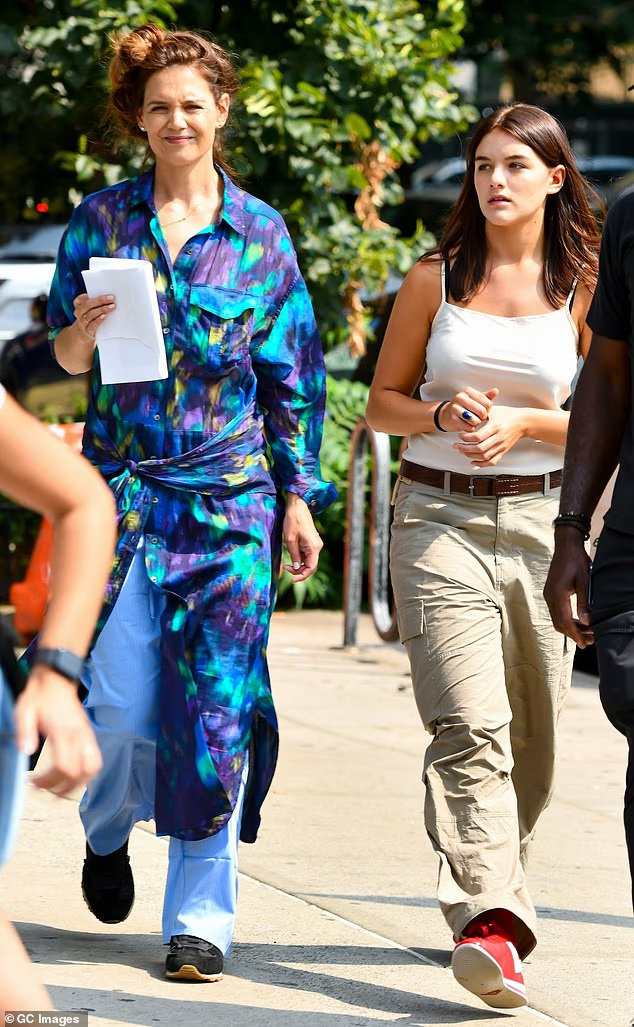
‘Suri Noelle’, 20, is a beautiful mixture of her willowy mother, the actress Katie Holmes, and takes her hazel eyes and defined cheekbones from her A-lister daddy, Tom Cruise.

But while her proud mother, star of Dawson’s Creek and Batman Begins, is expected to slip into the audience to watch her, her father is not.

Cruise, a devout and leading member of the Church of Scientology, would surely feel uncomfortable watching this modern translation of Shakespeare’s A Midsummer Night’s Dream.

Advertisement

Performed by Suri and eight other students from Carnegie Mellon University School of Drama in Pittsburgh, Pennsylvania, the show is described as ‘bursting with queer transformative joy’ and Cruise’s chosen religion is profoundly homophobic.

But more than this, Suri and Tom have no father-daughter relationship at all.

Indeed, Cruise is thought not to have seen his girl since she was six years old, although this week his publicists yet again declined to comment on the record or offer guidance off it.

Yet the schism is so complete and long-standing that Suri has now changed her name to remove Cruise.

Advertisement

Katie Holmes is said to have respected her daughter Suri’s decision to change her surname from Cruise to Noelle – her mother’s middle name

Tom Cruise, pictured holding his daughter in 2008, is said to have not seen Suri since she was six years old

Tom Cruise, pictured holding his daughter in 2008, is said to have not seen Suri since she was six years old

It was revealed this week that Suri is legally Suri Noelle, taking her mother’s middle name as her new family name.

Advertisement

It seems likely that she quietly made this change while living in New York with Ms Holmes, at some point soon after reaching her 18th birthday.

Name changes are routinely filed ‘under seal’ by New York courts, meaning that they are kept private.

A source told Page Six that Suri was fully supported in her decision to do this by her mother.

‘Katie wasn’t surprised by Suri’s decision to legally drop “Cruise” from her last name because that’s just who Suri is,’ said the source.

Advertisement

‘This also wasn’t something that happened overnight. It was a decision that evolved over time, and Katie respected Suri’s process every step of the way.’

Certainly, when she graduated from LaGuardia High School in June 2024, she was already using the name Suri Noelle.

There was another clue in October 2024, during her freshman year at Carnegie Mellon University, when electoral records showed that she registered to vote using that name – residents are required to do so using their legal name.

Ms Holmes and Cruise, pictured with Suri in 2011, were married for six years from 2006 to 2012

Ms Holmes and Cruise, pictured with Suri in 2011, were married for six years from 2006 to 2012

Advertisement
After divorcing the actor in 2012, Ms Holmes is reported to have won custody of their daughter

After divorcing the actor in 2012, Ms Holmes is reported to have won custody of their daughter

At the time, sources close to her explained that she wanted to ‘start fresh at college’ and establish her own identity by dropping the Cruise.

How ironic then that Suri’s chosen path is the very profession which Cruise sits atop: acting.

Initially, it was briefed that she was ‘leaning towards’ a college degree in fashion but in fact she is studying musical theatre.

Advertisement

She took the lead role of Morticia in LaGuardia school’s production of The Addams Family: A New Musical in her senior year in 2023, and was said to be ‘amazing’ by an audience member.

Being part of the small troupe which is travelling to Edinburgh tells its own story of how she is blossoming as a performer.

A source tells me that she is an ‘excellent actress’ already.

The source adds: ‘She is a nice girl and goes by a different name to protect her privacy.

Advertisement

‘The thing is that she is studying her ass off and actually putting in the work to be a trained actor, not just a nepo baby like Apple Martin [Gwyneth Paltrow’s daughter with Coldplay star Chris Martin].

‘She really wants to learn the craft and art of acting. Also she is insanely talented.’

Her father, arguably the last great movie star, will cast quite a shadow over her professional life if she does continue to tread the boards.

But Suri Noelle is clearly determined to forge her own path.

Advertisement

Born in April 2006, Suri was first introduced to the world at five months old in a stunning photo shoot with Vanity Fair.

In the accompanying interview, Cruise – who had previously adopted children Connor and Bella along with second wife Nicole Kidman – positively overflowed with paternal love declaring ‘I always wanted to be a father’.

He said: ‘I always said to myself that my children would be able to depend on me and I would always be there for them and love them.

‘I’m not one of those people who believe you can spoil a child with too much love. You can never give a child too much love. There’s just no way.’

Advertisement

Then living on a 400-acre ranch in Telluride, Colorado, the writer painted an idyllic picture of the Cruise family living a wholesome, outdoorsy life, with Ms Holmes gushing: ‘It’s really special to see them [Bella and Connor] holding their little sister. To hear them talk about all of the fun things they are going to do together.’

For a time, Bella even seemed to act as an unofficial nanny for Suri, and the whole family travelled together as Cruise made films between 2006 and 2012.

Suri was, naturally, the star of the show at the Cruise-Holmes wedding in Italy in November 2006, and later was pictured incessantly, almost always being held by her father.

And then, as soon as her parents split was announced in 2012, all of that ended.

Advertisement

Within five weeks of Ms Holmes ‘blindsiding’ Cruise by filing for divorce, his lawyer Bert Fields had secured a divorce deal, and Suri pretty much dropped from view.

It was reported that her mother had custody, her father would get visits – and would pay $400,000 a year until Suri’s 18th birthday to meet her living expenses.

Ms Holmes moved to New York and took pains to keep her child largely out of the public eye, and her feet on the ground.

Suri – previously home-schooled – was enrolled at the Avenues School and Ms Holmes took a hiatus from her acting career to steady the ship, even helping out as a ‘reader’, akin to a teaching assistant, at Suri’s school.

Advertisement

The question of Suri’s relationship with her father post-divorce became explosively public in September 2012, when Cruise took legal action against two celebrity magazines which said he had ‘abandoned’ his daughter. The lawsuit was settled out of court.

During a deposition, Cruise admitted he had not seen the then-six-year-old for 110 days over the previous summer, immediately following the breakdown of the marriage.

He agreed that over a five-month period, he saw Suri for ten days in total, six of which were during a father-daughter bonding break at Disney World.

Over this period, he flew from Pittsburgh to London and back again for an annual Scientology event. He also spent a few days in the Croatian resort of Hvar with friends.

Advertisement

Cruise explained Suri and he had instead kept in touch over the phone, as his life was busy with filming: ‘I tell wonderful stories and they like hearing it. I’ve gotten pretty good at communicating.’

He said: ‘Things change. Certainly what doesn’t change is the love I have for my daughter, the fact that I didn’t abandon her emotionally, physically, or otherwise.

‘And in terms of how I feel about her in terms of the responsibility that I feel towards my child is not – is not [sic] waned in any way.’

A source close to the actor continues to deny that they are estranged.

Advertisement

But others doubt this, citing Scientology, the controversial religion followed by Cruise and founded by writer L. Ron Hubbard, as the cause of the seeming estrangement.

When they were together, Ms Holmes received instruction in Scientology and the young Suri was raised a Scientologist.

However, after the split, Ms Holmes returned to her childhood Catholic faith and was said to be keen to get Suri away from Scientology.

The organisation is infamous for discouraging its believers from having family relationships with those outside the religion.

Advertisement

So could this be the real reason Cruise appears to keep his distance?

Brendan Tighe, who worked in Cruise’s security detail and was a Scientologist, certainly believes so.

He told me: ‘So long as Suri sides with her mom, which she clearly does, there will be no contact with her dad.

‘This is particularly sad considering how much of an over-the-top affectionate family they were in the early years.’

Advertisement

Mike Rinder, once Scientology’s number three, who knew Cruise and his family first-hand for years, also concurs. He told me he is also convinced that the religion is the reason for the apparent breakdown between Cruise and Suri.

‘As Katie gained custody of Suri, Tom cannot communicate with her as she is connected to her mother. Any good Scientologist chooses Scientology over their personal wishes or even wellbeing,’ he said.

Whatever the truth, Suri is clearly determined to make her own way, free of the shackles of her father’s name and religion.

And as she takes her first steps as an actress, it will be her mother proudly watching from the wings, not her famous father.

Advertisement

Source link

Continue Reading
Click to comment

You must be logged in to post a comment Login

Leave a Reply

NewsBeat

Gianni Infantino chairs crisis talks with FIFA staff in Morocco as pressure mounts on embattled president after being accused of BLACKMAIL by head of Jordan FA

Published

on

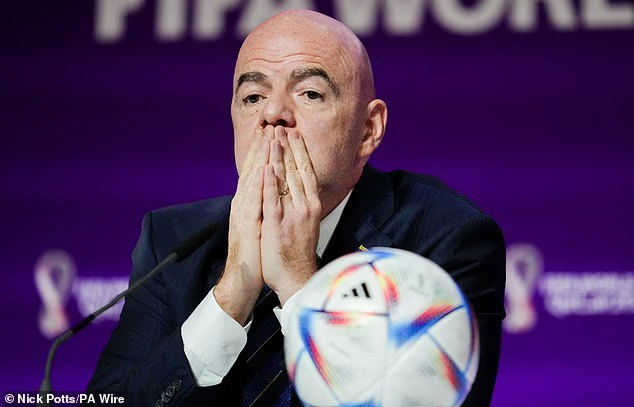
Gianni Infantino has been accused of blackmail by Jordan FA president Prince Ali bin Hussein

Advertisement

Gianni Infantino has summoned senior FIFA officials to a hotel in Morocco for crisis talks as pressure continues to mount on the FIFA president. 

It comes after Jordan FA president Prince Ali bin Hussein accused him of blackmail.

Infantino has come under intense scrutiny since plans to sell £3.1billion in World Cup stakes leaked last week.

The Swiss football administrator has since scrapped the proposals after widespread opposition – including an internal rebellion at FIFA.

Advertisement

UEFA and CONCACAF – the body for North and Central America and the Caribbean – are both calling for Infantino to step down, with Europe declaring a lack of confidence in the FIFA president.

Jordan, meanwhile, are the first Asian nation to rebel against Infantino – taking the total to 91, assuming all UEFA and CONCACAF nations follow the stance set by their continental bodies. 106 nations are needed to depose Infantino as president.

In a statement Hussein ripped into Infantino, accusing him of delaying prize money payments and refusing to address the problem unless Jordan endorsed him for a fourth term at the helm of world football.

Advertisement

 Gianni Infantino has summoned senior FIFA officials to a hotel in Morocco for crisis talks

Infantino has been accused of blackmail by Jordan FA president Prince Ali bin Hussein

Infantino has been accused of blackmail by Jordan FA president Prince Ali bin Hussein 

‘There is no shortage of issues regarding FIFA. Let me start by clarifying what some of these are from an FA perspective, in particular that of Jordan going into a World Cup for the first time,’ Hussein said.

Advertisement

‘We are a small country with a minimal budget for our FA and had to deal with enormous hurdles.

‘First, getting our fans into the USA: not all were granted visas, even though they had tickets – which we also know were sold at exorbitant prices.

‘Secondly, we are being taxed by the US government through FIFA for our participation. Money that should go to players and staff.

‘This was not the case for those who played and set up camp in Canada and Mexico. But we happened to be in the USA so now we face these huge costs in taxes for having participated.

Advertisement

‘Thirdly we have been waiting for reward money for our players since December for the Arab Cup in Qatar, which is a FIFA event.

‘The money our team should receive for having reached the final has not been delivered yet, while at the same time FIFA brags about how many billions they have in reserve.

‘It is clear the problem really is with leadership. For months, FIFA has been refusing to help us on any of these or other matters – until it was verbally communicated to me during the World Cup that if I endorsed Infantino it would go a long way to helping our FA out.

‘We pride ourselves in Jordan in upholding ethical values. We did not endorse him before and certainly will not now.

Advertisement

‘But the whole situation amounts to blackmail and we refuse to give in to that.’

Daily Mail Sport have contacted FIFA for comment.

Advertisement

Source link

Advertisement
Continue Reading

NewsBeat

How rewilding could help stop the spread of Britain’s wildfires

Published

on

How rewilding could help stop the spread of Britain’s wildfires

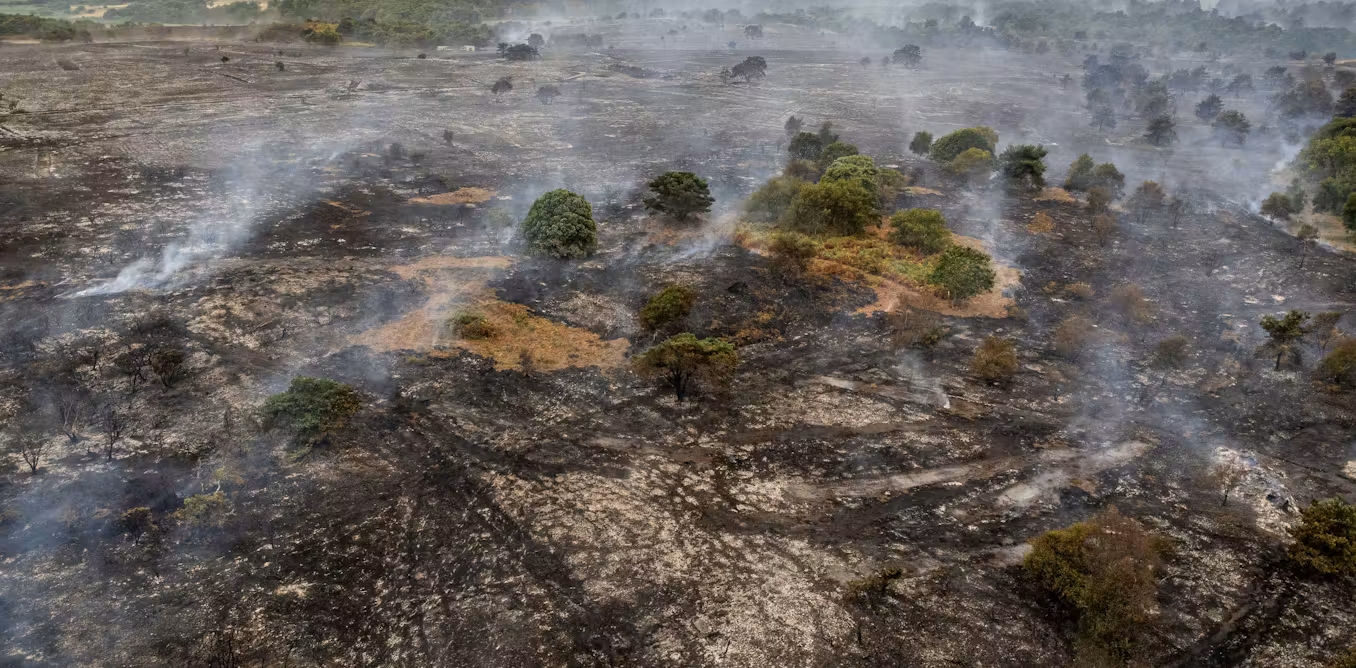
Fire is natural in some ecosystems, but almost all British “wildfires” are started by people. Whether they become catastrophic increasingly depends on the landscapes they burn through. That’s why wildfire policy can’t only focus on preventing ignitions – it must go hand in hand with rebuilding landscapes that resist fire.

Rewilding is often presented as a wildfire problem; when you stop grazing, cutting or burning, vegetation accumulates and there is more fuel for fires.

But this is not the full story. Carefully planned rewilding that focuses on restoring functioning ecosystems can make landscapes wetter, patchier and more fire resistant.

Fire-prone landscapes often look ‘natural’

The purple, treeless moors found across Britain’s uplands can look timeless and wild. In Jane Eyre, Charlotte Brontë described “the purple moors” as “a wilderness of heath”. Yet these moors have been shaped by clearance, drainage, grazing, pollution and burning.

Advertisement

Flammable and unnatural: the purple heather of Hathersage Moor, the inspiration for Jane Eyre.
Matthew Taylor / Alamy

Peat records from Keighley Moor in West Yorkshire, not far from Brontë country, reveal a longer story. For most of the past 1,000 years, this landscape would have been much wetter, with abundant peat-forming Sphagnum moss, rather than today’s extensive heather-dominated vegetation created through rotational burning.

Seeing today’s moors as timeless and natural obscures how changes made relatively recently – the past 150 years or so – has made the uplands increasingly fire prone. Data shows that nearly 80% of England’s peatlands are dry and degraded, while just 1% are dominated by water-retaining species such as Sphagnum mosses. Dry heather, for instance, can act as a fuse, carrying fire across the surface and, if peat soils are exceptionally dry, into the carbon-rich peat below.

How to rebuild nature’s fire defences

Rewilding is not land abandonment; it requires carefully considered action to restore natural processes and functions. We must learn from the complex habitat mosaics that once characterised Britain’s uplands, while preparing them for a climate with no historical equivalent.

Advertisement

The task is to manage short-term transition risks while allowing ecosystems to reorganise into functional, climate-resilient states. Here are a few suggestions:

1. Bring back the bog

This starts by making fire-prone landscapes much wetter. Blocking drains, covering bare peat and restoring Sphagnum keeps water in the ground and reduces deep peat combustion. After a wildfire in Scotland in 2019, analysis showed degraded peat burned most severely, while vegetation in restored, wetter peatlands was far more resilient.

Research across Canada and northern Europe shows that rewetting and moss restoration can reduce the risk of deep, carbon-rich peat catching fire. But, choosing the right species for the right places under future climates is critical, and we’ll have to accept that fire-resilient uplands may look very different from those we know today.

2. Restore wet riverscapes and ponds

Upland headwaters and valleys have been drained and straightened, speeding water out of these landscapes. Emerging science suggests that re-meandering streams, reconnecting floodplains and recovering wetlands can act as firebreaks. During dry weather, wetter and more varied river corridors could interrupt continuous fuels and provide refuges for wildlife.

Advertisement

In the North York Moors, six beaver dams increased water storage and dry-weather flows. Beaver-dammed rivers also burned less severely during three North American megafires. Ponds could also add another layer of defence, as open water can reduce the spread of fires , while accessible ponds provide water for wetting firebreaks and suppressing spot fires.

3. Bring back missing giants

Cattle, horses, deer and bison create patchier vegetation by grazing, browsing and trampling in different ways. Instead of continuous areas of flammable vegetation, they produce a landscape with natural breaks that slow the spread of fire.

Deer in thick vegetation

Red deer browsing in Scotland. In a natural ecosystem, animals that graze (eat from the ground) and browse (from higher up leaves and branches) complement each other.
jonathan hunter / Alamy

But the diverse communities of large herbivores that once shaped Britain’s uplands have been replaced by managed livestock – mostly sheep – often at high densities. This creates even-aged vegetation that can become dense and fire-prone when the animals aren’t grazing.

In Portugal’s Côa Valley, semi-wild horse grazing has become a rewilding strategy to counter the impacts of land abandonment. This is consistent with a wider systematic review which found that herbivores reduce fuel effectively when grazers and browsers complement one another.

Advertisement

4. Recover broadleaf woodland

Evidence from more than 26,000 wildfires in Spain shows broadleaf woodland had the lowest ignition risk, while pine and shrublands were among the most fire-prone habitats. Even under extreme fire weather modelling, broadleaf woodland reduced fire intensity fivefold.

Yet Britain has lost the vast majority of its native woodlands. Today, only 14% of the UK is wooded, and about half of that is coniferous woodland – mostly in managed plantations.

The ecologist Oliver Rackham wrote that “English native woods burn like wet asbestos” – that is, hardly at all. It’s time these woods were restored to the parts of the British uplands they once covered.

5. Rewild with people

Our research shows rewilding must include support from communities learning to coexist with more unpredictable landscapes. In the short term, prevention, intensified monitoring, early detection and professional response must manage the risks of transition. Better warnings, rapid reporting and early detection can make visitors and residents part of the defence.

Advertisement

Britain won’t prevent every wildfire, but it can do something about the sorts of landscapes those fires burn through. Climate-smart rewilding should be treated as national resilience infrastructure: restoring bogs, rivers, woodlands and wild animals, so fires are less likely to become landscape-scale disasters.

Source link

Advertisement
Continue Reading

NewsBeat

North Yorkshire deputy mayor aware of HMO concerns in Scarborough

Published

on

North Yorkshire deputy mayor aware of HMO concerns in Scarborough

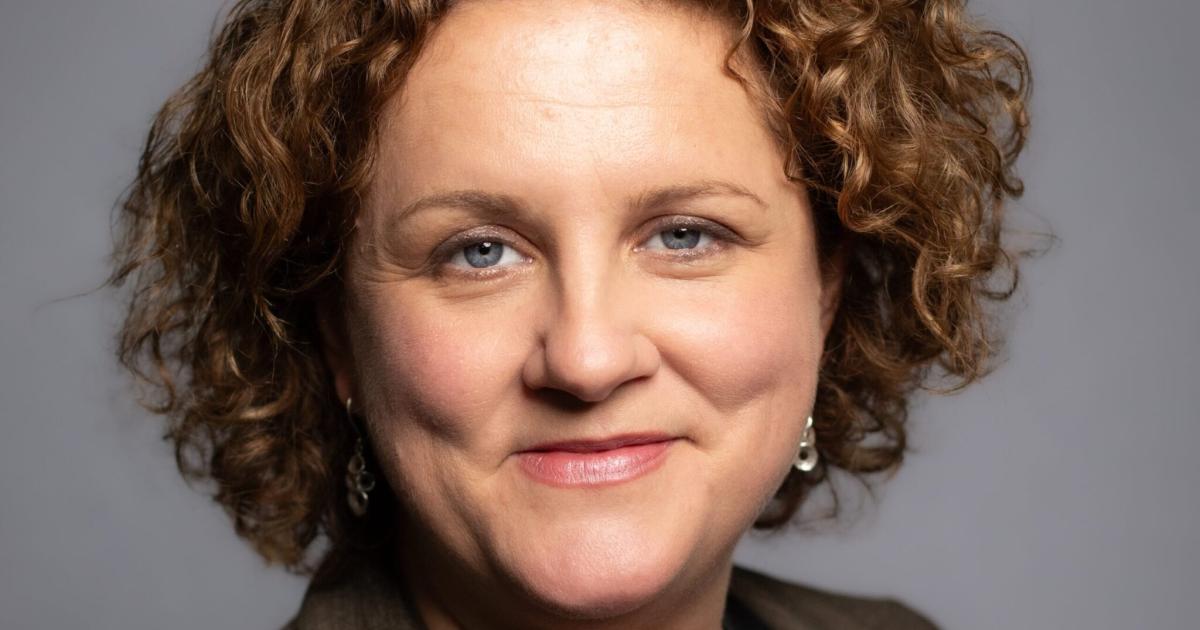
​Jo Coles, the deputy mayor for crime and policing, has proposed convening a meeting with partners to “understand how to improve the experience for all residents of Scarborough”.

​It follows concerns from residents, the town council, and councillors about how HMO conversions and emergency accommodation sites in the North Yorkshire town are impacting neighbours.

​Cllr Janet Jefferson, who represents Castle ward, said: “The coastal area of North Yorkshire is seeing an increasing number of applications for conversions of hotels and other buildings into emergency accommodation, proportionally much higher than other parts of the country.

​“Due to concerns from residents about disturbances, there are frequent call-outs to police officers. However, they advise that issues around disturbances and security are the domain of the agency/owners.”

Advertisement

​Speaking at a recent meeting of the North Yorkshire Police, Fire and Crime Panel, she added: “People have a right to accommodation, but there has to be some clear accountability around how best to support such circumstances.

​“Given the increase in such situations, is the deputy mayor concerned by the ongoing frequent use of police resources and is there a better way forward to ensure situations are approached in a legal and respectful manner with clear accountability?”

Jo Coles, the deputy mayor for York and North Yorkshire, said she was aware of the issue and had already provided a written answer.

​Speaking at the meeting, she added that Alison Hume, the MP for Scarborough and Whitby, had also raised concerns with her “about the number of HMO applications coming through, especially on the coast, and I think it is particularly Scarborough”.

Advertisement

​Ms Coles said: “We’ve provided a written update and the police will always be there to respond based on the threat risk and harm to the community, and they will make those decisions operationally.”

​However, she added that some responses should come from a partnership approach.

​The deputy mayor said she would be “very happy to convene a meeting of partners, including housing partners and commissioned service providers”.

​She said: “We have our wonderful women’s centre in Scarborough, but given the nature of the response, we would also want to better understand what is happening for men in some of those accommodations in terms of drug and alcohol services being made available to vulnerable residents on the coast.”

Advertisement

North Yorkshire Police, Fire And Crime Panel, July 2026. NYC

Responding to a question about how North Yorkshire Police responds to planning applications, Ms Coles added: “It is certainly not for the police to decide where people are accommodated; that’s a matter for the council to oversee.

“It’s absolutely vital that we are alive and alert to particular community problems when they are emerging, which they appear to be around these HMO properties on the coast.

​“I will take that away and liaise with Cllr Jefferson to convene something with partners so we can understand how to improve the experience for all residents of Scarborough.”

Advertisement

(Image: Newsquest)

Source link

Continue Reading

NewsBeat

Life-saving defibrillators rolled out to 14 new public sites in Northern Ireland council area

Published

on

Belfast Live

Each device is in a public access cabinet, ensuring the lifesaving equipment is available at any time, day or night, when every second count

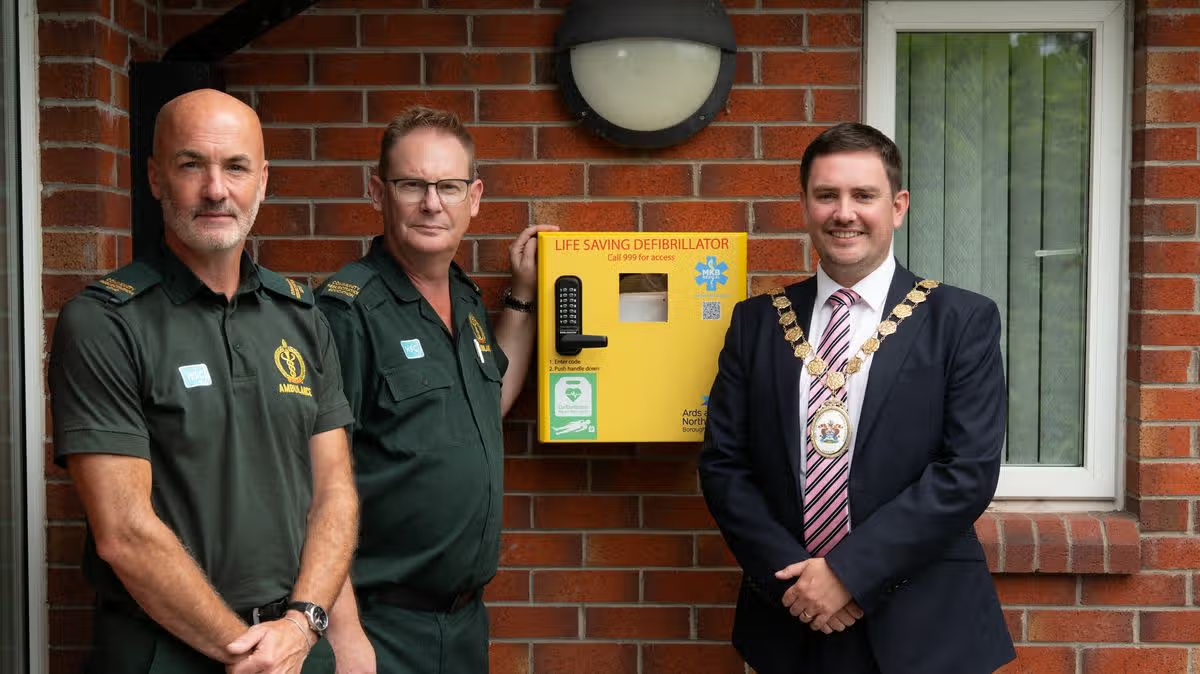
A local council has announced the installation of 14 new automated external defibrillators at its public buildings across the borough.

Advertisement

Each device is in a public access cabinet, ensuring the lifesaving equipment is available at any time, day or night, when every second counts. Two of the council’s existing AEDs have been relocated to external cabinets, improving public access to these devices outside normal opening hours. Each of the defibrillators have been added to “The Circuit,” the national defibrillator network.

In Northern Ireland, more than 1,400 people experience an out-of-hospital cardiac arrest each year, with fewer than 10 percent surviving to hospital discharge. However, early intervention can dramatically increase survival rates.

READ MORE: Key moments from Ards and North Down Borough Council in July

READ MORE: Fleadh Cheoil na hÉireann to kick off in Bangor, not Belfast

Advertisement

Ards and North Down Borough Council’s rollout supports the internationally recognised “Chain of Survival,” which outlines four essential steps proven to improve outcomes. The first is early recognition of cardiac arrest and calling 999, the second is early cardiopulmonary resuscitation, or CPR, to maintain blood circulation, the third is early defibrillation using an AED, and lastly, early advanced care provided by emergency medical services.

CPR is an emergency life-saving procedure performed when someone’s breathing or heartbeat has stopped. It combines chest compressions and rescue breaths to keep oxygen-rich blood flowing to the brain and vital organs. It is used if a person is unresponsive and not breathing normally or only gasping in emergencies like cardiac arrest, drowning, or a severe drug overdose.

Survival chances decrease by approximately 10 percent for every minute without CPR and defibrillation, highlighting the importance of quick action and community access to AEDs. In a life-threatening emergency, members of the public should always dial 999 immediately. Emergency medical dispatchers can provide CPR instructions and direct callers to the nearest available AED.

The council will be facilitating a series of free community defibrillator and CPR workshops, which will be delivered by the Northern Ireland Ambulance Service. The workshops are open to all and will include a practical CPR training element, giving attendees the opportunity to develop hands-on lifesaving skills.

Advertisement

Sessions will take place on Monday August 10, 7pm to 8.30pm at the Alderman George Green Community Centre, 1 Rathgill Parade, Bangor,Thursday September 3, 12 noon to 1.30pm, at Manor Court Community Centre, Mill Street, Newtownards, Friday October 2, 1.30pm to 3pm at Kircubbin Community Centre, 4 Church Grove, Kircubbin, and Wednesday November 4, 7pm to 8.30pm at Donaghadee Community Centre, the Parade, Donaghadee.

Mayor of Ards and North Down, Councillor Craig Blaney said: “It is great to see this life-saving equipment being installed across the borough, helping to ensure that more people have access to a defibrillator in an emergency. These devices have the potential to save lives, and I encourage everyone to take advantage of the free awareness training available so they can feel prepared and confident to act when it matters most.

“This initiative also reflects the council’s commitment to building and strengthening a community of lifesavers across the Ards and North Down area, empowering residents with the skills and confidence to respond effectively in an emergency and help save lives.”

To register your interest in attending any of these training sessions, email communityhalls@ardsandnorthdown.gov.uk

Advertisement

For all the latest news, visit the Belfast Live homepage here and sign up to our daily newsletter here.

Source link

Continue Reading

NewsBeat

Prisoner who ran off from outside courtroom now back behind bars

Published

on

Daily Record

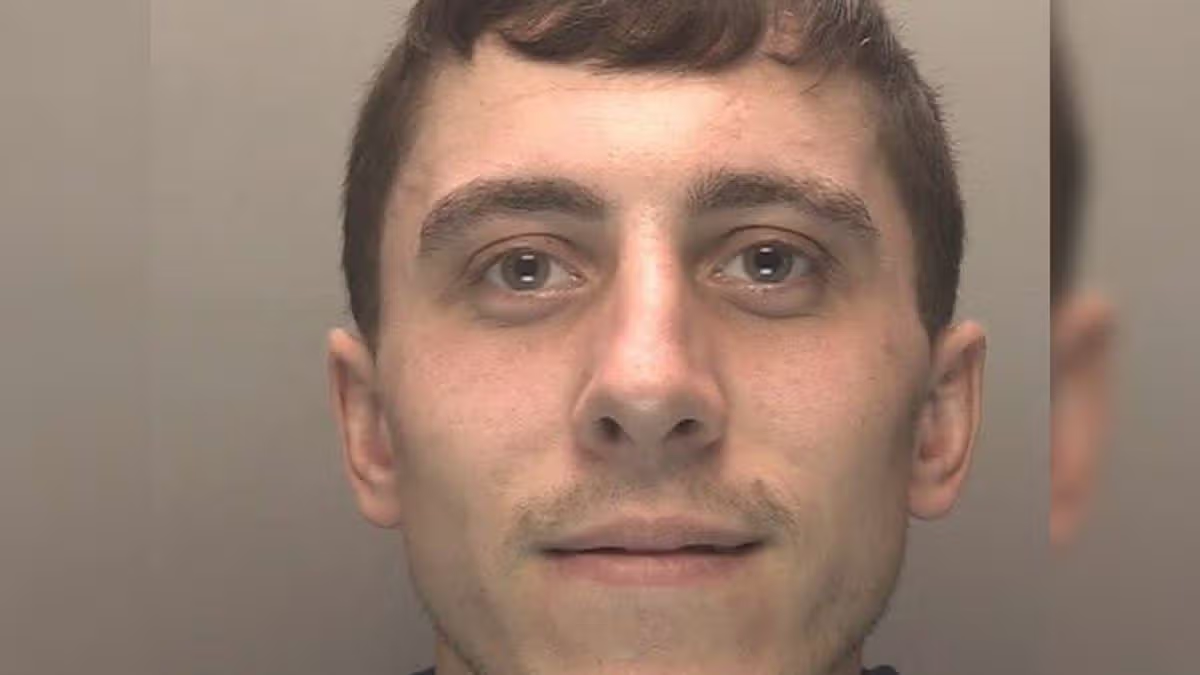
Stephen Grzyb disappeared on Saturday, prompting a major manhunt

A prisoner who fled from the police after he was dropped outside a court is now back in custody, police said.

A manhunt was launched after Stephen Grzyb, 22, ran off after being taken to Liverpool Magistrates’ Court on Saturday, Merseyside Police said.

Advertisement

Grzyb, of Princess Drive, Liverpool, was due to appear in court charged with a domestic burglary.

Police said he fled down Red Cross Street in the direction of The Strand just after 10am.

He had been taken to the court from a police custody suite by security firm GeoAmey, which is contracted by the Ministry of Justice to transport prisoners.

READ MORE: Suspect in murder of woman found dead in suitcase spouted hate for Christian aid workers online

Advertisement

READ MORE: Ex-Celtic star’s wife begged for her life as machete thugs broke into her home

According to its website, the firm oversees more than 8,500 prisoner movements every week.

In a statement on Tuesday, Merseyside Police said: “An escaped prisoner who absconded outside Liverpool Magistrates’ Court after being transported from Belle Vale custody suite by GeoAmey has been arrested and is in custody.”

Ensure our latest stories always appear at the top of your Google Search by making us a Preferred Source. Click here to activate or add us as your Preferred Source in your Google search settings.

Advertisement

Source link

Continue Reading

NewsBeat

No, shoppers will not need ID at city-owned grocery stores in New York

Published

on

No, shoppers will not need ID at city-owned grocery stores in New York

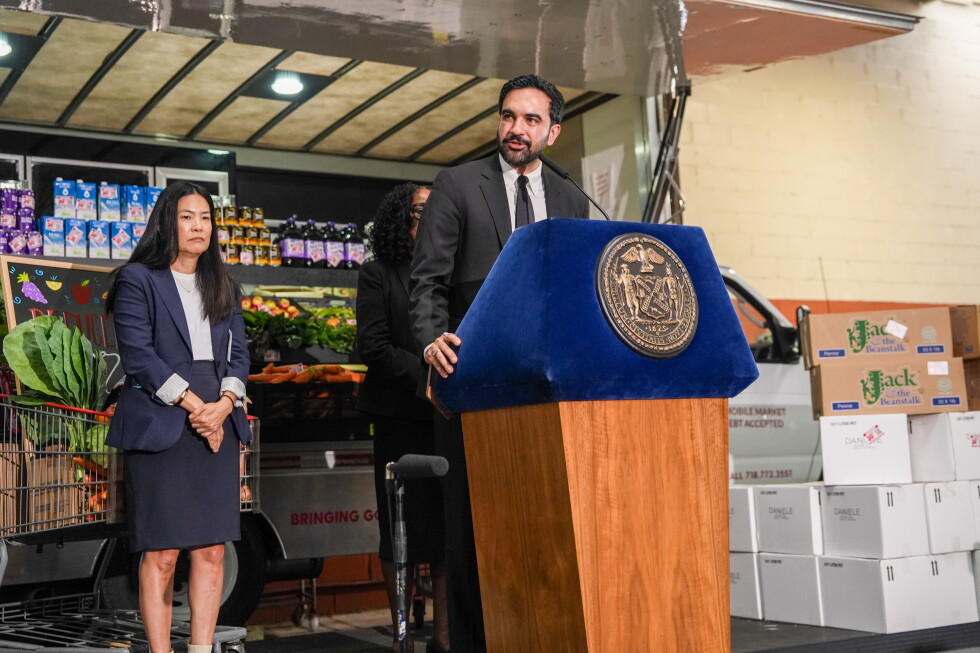
New York City Mayor Zohran Mamdani’s plan to open five city-owned grocery stores is being misrepresented online in posts that claim identification will be required to shop there. The claims are juxtaposed against Democratic resistance to nationwide voter ID requirements.

Republican officials and other major public figures, as well as conservative social media influencers, were among those who made the claim.

Misinformation began spreading in response to a comment made at a press conference last week by Jeanny Pak, the interim president and CEO of New York City’s Economic Development Corporation. Asked how the city will stop people from taking advantage of lower prices at the stores, Pak mentioned the possibility of a “library-card-esque” system.

But city officials say there will be no ID requirement for shoppers.

Advertisement

Here’s a closer look at the facts.

CLAIM: ID will be required to shop at city-owned grocery stores in New York City.

THE FACTS: This is false. No one will be asked to show ID to shop at stores owned by the city, according to officials. A customer card, akin to a loyalty savings card at a traditional supermarket, is being discussed as a way to manage supply and stop people from reselling large amounts of discounted items, but the program would be voluntary and would not require ID to access.

Mamdani laughed off the claim during an appearance on The Joy Reid Show on Monday night, saying: “When we’re talking about a city-run grocery store, one in each borough, which by the way, you do not need an ID to shop at, no matter what you’ve just heard in the news of today, we’re talking about actually addressing the question of skyrocketing grocery prices.”

Advertisement

Joe Calvello and Dora Pekec, both spokespeople for Mamdani, similarly refuted the claims in X posts that evening.

“Insane that this even needs to be said, but to be absolutely clear: NYC Grocery stores will be open to everyone,” Calvello wrote. “There will be no system to verify identity, residency or income, and no one will be asked to show ID to shop. This is the dumbest and fakest online news cycle I have seen.”

The system Pak referred to as “library-card-esque” at last week’s press conference is a customer card that would help stores manage supply and keep aspiring resellers from buying discounted items in bulk, according to Cassio Mendoza, another Mamdani spokesperson. He explained that obtaining such a card would not require ID, residency, or income verification and would be available to anyone who wants one.

In a request for proposals seeking private grocery store operators to run the city-owned shops, the system is described as “a voluntary free-to-access membership card program to monitor sales activity, and implement the discount program and any associated demand management measures.” It makes clear that the cards should not be required for physical access to the stores.

Advertisement

A statement from the Mayor’s Office further clarified that “the operator selected through the City’s procurement process will determine the specific design of that card system” and that “it is not something people will need to apply for through City Hall or another government agency.”

The false claim spreading online is being used to criticize opponents of voter ID laws, many of whom are Democrats. In particular, President Donald Trump’s SAVE America Act would require people to show documentary proof of citizenship before registering to vote and impose nationwide voter ID requirements. The measure has passed the U.S. House but has not gotten a vote in the Senate, where even some Republicans oppose it.

“Comparisons to voter ID laws or the SAVE Act simply do not apply,” the Mayor’s Office statement reads. “This is not an identification system, nor is it a mechanism to verify who someone is, where they live, or how much they earn.”

___

Advertisement

Find AP Fact Checks here: https://apnews.com/APFactCheck.

Source link

Advertisement
Continue Reading

NewsBeat

Scotland’s best places to watch biggest solar eclipse since 1999

Published

on

Daily Record

On Wednesday, August 12, the Moon will pass directly between the Earth and the Sun, blocking much of the Sun’s light and creating a dramatic partial solar eclipse across Scotland

Scotland is set to enjoy one of the most spectacular astronomical events in a generation, with the deepest solar eclipse visible from the UK since 1999 now just days away.

On Wednesday, August 12, the Moon will pass directly between the Earth and the Sun, blocking much of the Sun’s light and creating a dramatic partial solar eclipse across Scotland.

While a total solar eclipse, where the Moon completely covers the Sun, will only be visible from a narrow path stretching across Greenland, Iceland, Spain, northern Russia and a small part of northern Portugal, people across Scotland will still see around 90% or more of the Sun obscured.

Advertisement

The eclipse will be the deepest visible from Scotland since August 11, 1999, when a total solar eclipse was visible from parts of south-west England.

Scotland’s best places to watch the eclipse

The Isle of Barra in the Outer Hebrides is expected to offer Scotland’s best view of the eclipse.

Because it sits furthest west and closest to the path of totality, Barra will experience around 93% coverage, making it the best place in the country to witness the event.

Advertisement

The eclipse takes place shortly before sunset, meaning the Sun will be very low in the western sky. Experts recommend choosing an elevated location or somewhere with an uninterrupted view towards the west or north-west.

Other excellent viewing locations include:

West Coast and Islands

The west of Scotland will see the greatest eclipse coverage.

  • Isle of Barra offers around 93% coverage with an uninterrupted Atlantic horizon.
  • The Outer Hebrides and Isle of Skye provide excellent coastal viewpoints for the sunset eclipse.
  • The Ayrshire coast is one of the best mainland locations thanks to its wide-open sea views across the Firth of Clyde.

Edinburgh and the Lothians

Edinburgh will see around 90.7% of the Sun covered.

Some of the city’s best vantage points include:

Advertisement
  • Arthur’s Seat
  • Calton Hill, where the Astronomical Society of Edinburgh is expected to host a public viewing event using solar telescopes.
  • Blackford Hill, beside the Royal Observatory Edinburgh.

Glasgow and Central Scotland

Glasgow is forecast to enjoy around 91.4% eclipse coverage.

Recommended viewing spots include:

  • Cathkin Braes, the highest point in the Glasgow area.
  • Loch Lomond Shores, offering expansive views across the water.

  • Queen’s Park flagpole viewpoint.

What time is the eclipse in Scotland?

Timings vary slightly across the country, but the eclipse follows a similar pattern throughout Scotland.

LocationEclipse beginsMaximum eclipseCoverageEnds

What is a solar eclipse?

A solar eclipse happens when the Moon moves directly between the Earth and the Sun.

Advertisement

As the Moon passes in front of the Sun, it casts a shadow across part of the Earth. Because the Moon’s shadow only covers a relatively small area, a total solar eclipse is only visible from a narrow path, while a much larger area experiences a partial eclipse.

There are between two and five solar eclipses every year, with a total solar eclipse occurring somewhere on Earth roughly every 18 months.

How to watch the eclipse safely

The UK Health Security Agency (UKHSA) warns that people should never look directly at the Sun, even during a partial eclipse, without proper eye protection.

Advertisement

The safest way to watch is by using specialist eclipse glasses or handheld solar viewers that meet the ISO 12312-2:2015(E) international safety standard. Eclipse glasses should only be bought from reputable retailers and should not be used if the filters are scratched, torn or otherwise damaged.

Another safe option is to make a simple pinhole projector using a piece of card with a small hole punched through it. This projects an image of the Sun onto another surface, allowing the eclipse to be viewed indirectly.

A bonus treat for skywatchers

The celestial display does not end with the eclipse.

The event coincides with the peak of the Perseid meteor shower, meaning that once darkness falls, Scots could be treated to dozens of shooting stars streaking across the sky if cloud conditions are favourable, rounding off a remarkable night for astronomy enthusiasts.

Advertisement

Source link

Continue Reading

NewsBeat

Belfast woman still fighting cancer three years after being given four months to live

Published

on

Belfast Live

She was given a prognosis of four to six months to live back in 2023 but thanks to a new treatment, she is living with cancer and feeling well

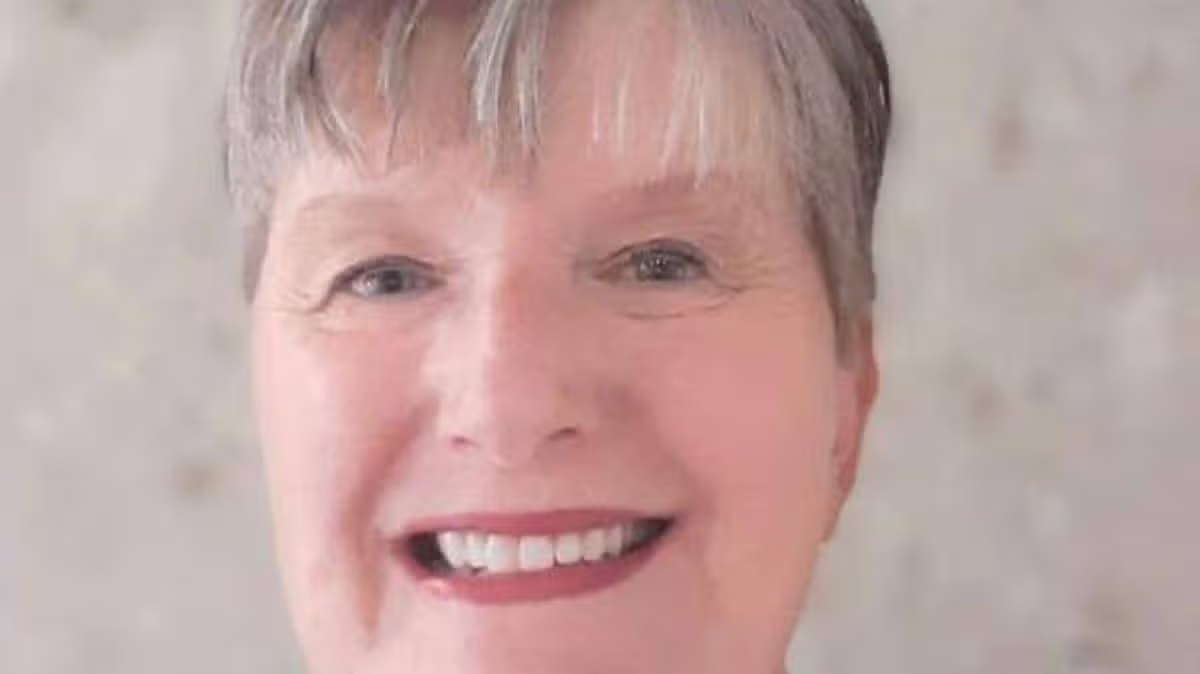
This is Christine Campbell who was diagnosed with ovarian cancer five years ago and given a prognosis of four to six months to live back in 2023. Now thanks to a new treatment, she is living with cancer and feeling well

Advertisement

Christine, from Dundonald was first diagnosed with ovarian cancer in April 2021 after a gynaecological appointment. She is still living with the disease, but it’s currently stable and there are no new tumours.

Annually, almost 204 women are diagnosed with ovarian cancer in Northern Ireland, and 120 women die from this disease. In the Republic of Ireland, approximately 400 women are diagnosed with ovarian cancer, and almost 300 women die.

Ovarian cancer is the fourth leading cause of cancer death in women in Ireland, after lung, breast, and colorectal cancer. It is considered one of the more common cancers in Ireland, yet new statistics from the Irish Network for Gynaecological Oncology show that less than one in three women (29%) feel confident they would recognise the symptoms.

Christine displayed the classic symptoms of ovarian cancer, but had no idea until her diagnosis. She knew something was wrong but looking back now, she wishes she had been more aware of what to look out for.

Advertisement

“My symptoms actually started in November 2020, but I didn’t realise they were symptoms of ovarian cancer,” she told RSVP Magazine. “In April 2021, I was eventually diagnosed with stage 4 ovarian cancer as an emergency patient.

“I was really lucky, I got a cancelled gynaecological appointment. I was red flagged in February for an appointment after seeing my GP and had been referred to the hospital, but because it was still the pandemic, I was told it could be months before I got an appointment.

“In April, I got a cancelled appointment and was diagnosed with stage four. I had heard of ovarian cancer but I didn’t really know the signs and symptoms and I hadn’t recognised any of those signs and symptoms in myself. As a 55-year-old woman at that time, I really should have known. There’s no screening process for ovarian cancer so raising awareness of the signs and symptoms is so important.”

Christine was suffering from the typical symptoms of the cancer but it wasn’t until she began to bleed that she really knew something was going on.

“The first symptom I noticed was bloating and stomach distention,” she explains. “My waist had actually gone from 32 inches to 42 inches in the space of a couple of months. I was asked at the hospital whether I could be pregnant, as they could see the swelling of my stomach.

“I then noticed that I was going to the toilet a lot more and having to get up in the middle of the night, which had never happened before. I was also having bowel accidents, which was really embarrassing. It turned out, it was because there was a tumour pressing on my bowel and blocking it.

“Just before my diagnosis, I noticed that I couldn’t look at food or stand the smell of food. I couldn’t cook, it would make me feel ill. I lost my appetite completely – I was surviving on yogurt and cream crackers.”

Advertisement

She concludes: “The key thing for me was that I started to bleed, and I had already been through the menopause so I knew something was wrong.”

Christine went through three rounds of chemotherapy, surgery and further chemo, which she responded really well to. She was then eligible to go on a medication that stopped the blood flow to the cancer cells and stopped them from growing. However, she received the news in July 2023 that it had stopped working.

“My disease had metastasised and spread to other parts of my body,” she says. “When I asked what the prognosis was, I was told I had four to six months.

“I think anybody that receives that news can do one of two things: you can curl up and accept it, and I would not condone anyone for doing that – but I was determined I was going to beat this. I try to keep a positive attitude and hold onto an element of hope.”

Advertisement

She was given maintenance treatment to keep the symptoms and pain at for as long as possible and was eventually told that nothing more could be done and she would be moved onto pain management when she needed it.

However, in April 2024 she was told that a new drug had become available. She got access to it and began taking it in June 2025 and the disease has been stable ever since. For Christine, the quality of her life is more important than the quantity, and she now focuses on living everyday to the fullest, and using her voice as an advocate to inform people about ovarian cancer and its signs.

“It hasn’t gone away, but it’s stayed stable and it’s given me so much extra time and I am forever grateful for it,” she says. “I’ve been fortunate and I have very limited side effects. There’s nothing that stops me living my life with a cancer diagnosis.

Advertisement

“I can do normal day to day things that every person wants to do, with the support of the people out there who are helping me to live my life as well as I can, which includes a palliative care team. They’re very supportive, they talk to me about diet and exercise to build up strength.

“There’s support out there. The likes of OvaCare and the Society of Gynecology run workshops and coffee and chats, which is great for me to meet like minded people. That’s a comfort to me and I think other people find comfort in me as well – the fact that five years after my diagnosis I am still here and I am still fighting this.”

For anyone who is dealing with any of the B.E.A.T. symptoms, Christine urges them to talk to their GP.

“Our bodies go through so many changes – puberty, child birth, perimenopause, menopause, all the rest of it,” she says. “You do understand your body and you know something is wrong, but you maybe just don’t know what it is and I think that’s why awareness is so important. I am using my voice to advocate for awareness around the signs and symptoms and that’s given me a purpose.”

Advertisement

World Ovarian Cancer Day was earlier this year and the theme was #NoWomanLeftBehind, which promotes the urgent need to ensure that all women, regardless of geography, socio-economic background, or access to healthcare, have the knowledge, support, and resources to recognise ovarian cancer symptoms and seek timely care.

The INGO’s research also found that only two percent of women were aware of the B.E.A.T acronym, which represents the key symptoms of ovarian cancer:

  • Bloating that is persistent and doesn’t come and go
  • Eating less and feeling full more quickly
  • Abdominal and pelvic pain you feel most days
  • Toilet changes in urination or bowel habits

If these symptoms occur frequently, are persistent, and represent a change from what is normal for someone, medical advice should be sought. Early detection significantly improves outcomes, making awareness and timely action critical. The clear message is that if a woman experiences any of these symptoms for three weeks or more, she should contact her GP.

For more information, please visit www.thisisGO.ie.

For all the latest news, visit the Belfast Live homepage here and sign up to our daily newsletter here.

Advertisement

Source link

Continue Reading

NewsBeat

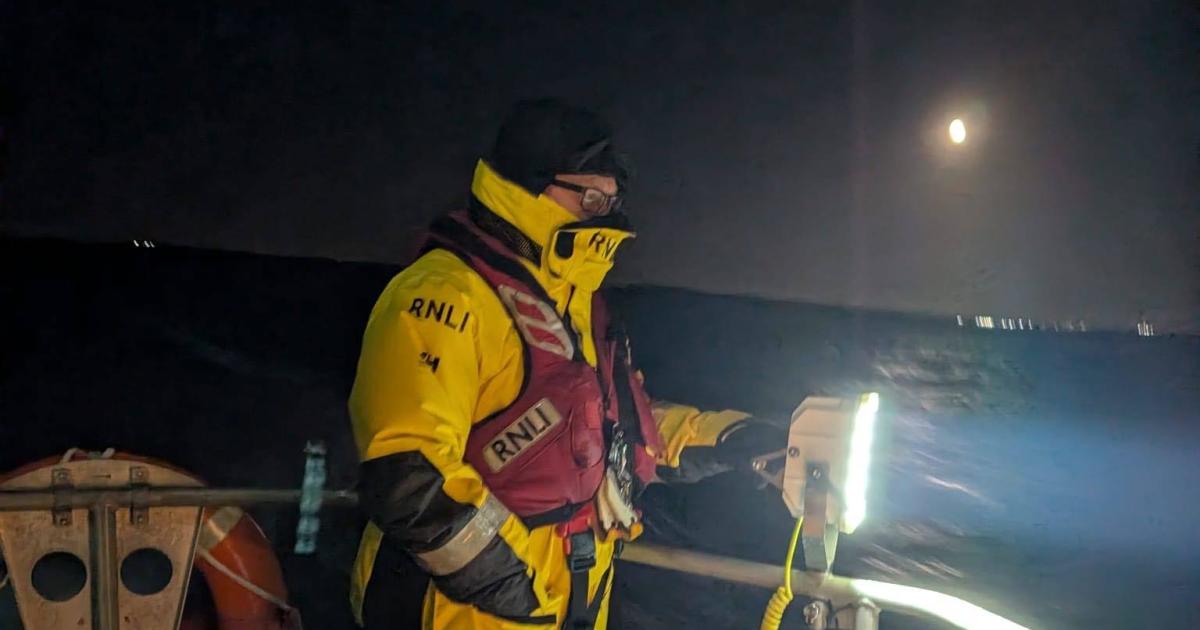
Emergency services looking for person off East Yorkshire coast

Published

on

Emergency services looking for person off East Yorkshire coast

As a subscriber, you are shown 80% less display advertising when reading our
articles.

Those ads you do see are predominantly from local businesses promoting local
services
.

These adverts enable local businesses to get in front of their target audience – the local
community
.

It is important that we continue to promote these adverts as our local businesses need
as much support as possible during these challenging times.

Advertisement

Source link

Advertisement
Continue Reading

NewsBeat

The One Show presenter says it’s ‘lovely to be back’ as she returns to BBC programme

Published

on

Wales Online

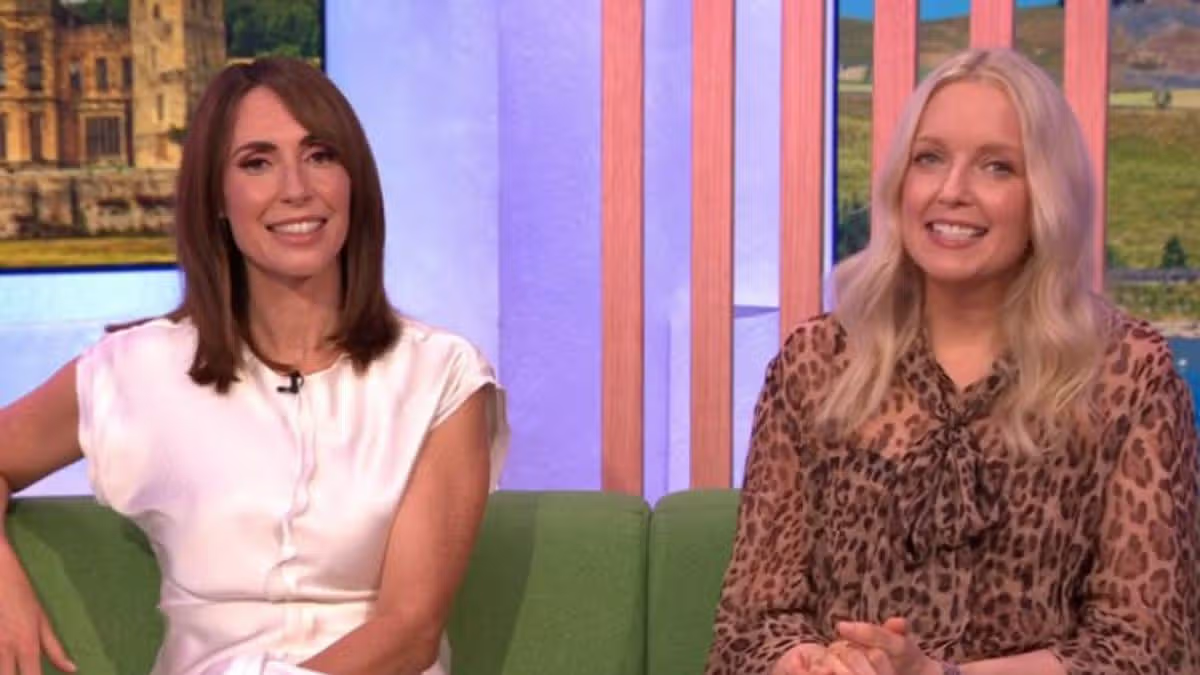
Lauren Laverne hosted the latest instalment of the BBC programme with Alex Jones

TV and radio star Lauren Laverne said it was “so lovely to be back” as she presented The One Show.

Advertisement

The BBC programme had been on its summer break until late in July, and as she presented Tuesday’s instalment (August 4) of the show with Alex Jones, Lauren shared that she was happy to be on the sofa again.

During the summer, the star had revealed to fans that she had been diagnosed with a disorder with “no cure”, reports the Mirror.

She wrote on Instagram in July: “Hey, so personal news. I’m quite a private person by nature but I’m sharing this as one of the many things I’ve learned after going through health challenges in recent years is that talking about this stuff helps people.

“I’ve been diagnosed with something called smouldering myeloma (yes that is a weird name and no I’d never heard of it either). It’s an asymptomatic blood and bone marrow disorder that in some people can develop into blood cancer.”

Advertisement

“Thankfully for me the risk of this happening in my case is pretty low,” the star informed her followers on the platform. “At the moment I feel OK and don’t need treatment.”

She added that there was “no cure yet” and that it meant her immune system was “a bit compromised”.

Lauren addressed her health on The One Show after a feature about hospitals taking services directly into shopping centres, an initiative benefiting patients while simultaneously encouraging people back into town centres.

Advertisement

After it aired, Lauren said to her co-host that she thought it was “a great idea”. “I mean, Al, you know, I have to do quite a lot of outpatient appointments,” she said.

“And actually the idea of doing them somewhere a little bit more relaxed, a little bit more, it’s not quite as kind of medicalised as a hospital, that would be quite nice.”

“It really appeals to me,” she went on.

Advertisement

The TV star opened up about her smouldering myeloma diagnosis two years after she told her fans that she had received the “all clear” following treatment for an unspecified form of cancer.

The One Show airs at 7pm on BBC One on weekdays.

Source link

Advertisement
Continue Reading

Trending

Copyright © 2025