Connect with us
DAPA Banner

NewsBeat

Shotts slimming consultant shares saving tips amid rising food prices

Published

on

Daily Record

Lesley Johnstone is passionate about helping others lose weight without overspending or giving up the foods they enjoy most.

Lesley Johnstone never thought her love of dirty fries would have a place in a weight loss story, yet they sit right at the heart of how she lost an incredible 4st 2lb and changed her life.

Advertisement

Now a Slimming World consultant in Shotts and a recent graduate of the Slimming World Academy, Lesley is passionate about helping others lose weight without overspending or giving up the foods they enjoy most.

“Dirty fries have always been my favourite,” Lesley laughs. “Crispy chips piled high with chilli, chicken and cheese.

“For years they were my comfort food and usually ordered as a takeaway.

“You don’t realise how often you’re ordering until you add it up. It becomes second nature.”

Advertisement

Before joining Slimming World, cooking from scratch felt intimidating. Lesley believed healthy eating would cost more and take longer, and she did not feel confident in the kitchen.

Stepping into her local Slimming World group changed that outlook completely.

“What surprised me most was how realistic it all felt,” Lesley says. “It wasn’t about buying special products or fancy ingredients. It was about using what you already have and planning a bit better.”

One of the first habits Lesley picked up was batch cooking.

Advertisement

READ MORE: Aldi donates over 6,000 meals to families in Lanarkshire over Easter

“If I’m making chilli or a sauce, I make extra,” she explains. “I’ll bulk it out with extra veg and freeze portions.

“Those meals are brilliant for nights when I might otherwise order a takeaway.”

Learning to love her freezer helped Lesley save money without feeling restricted.

Advertisement

She now keeps frozen veg, bread and meat to hand so nothing goes to waste.

“Buying in bulk and freezing portions has been a game changer,” she says. “It means I always have the base for a meal.

READ MORE: Council confirm number of road closures over coming weeks in Wishaw and Shotts

“I plan my meals and go in with a list. I focus on what’s on offer, especially fruit and veg, and build meals around that.

Advertisement

“I also use own-brand tinned foods like tomatoes, beans and pulses they’re cheaper and just as good.”

The biggest revelation, though, was discovering she could still enjoy dirty fries.

“I just make them at home now,” she smiles. “Crispy Slimming World air fryer chips, homemade chilli using mince and tinned tomatoes, lighter cheese and a big salad.

They’re just as tasty, far cheaper and I feel satisfied instead of sluggish.”

Advertisement

READ MORE: Lanarkshire performers invited to compete for money-can’t-buy Broadway prize

By cooking more at home and saving energy with appliances like her slow cooker and air fryer, Lesley noticed changes quickly.

“Meals cost less, I felt more organised and the weight started coming off,” she said. “I wasn’t even trying to save money at first, it just happened naturally.”

As her confidence in the kitchen grew, cooking became something she enjoyed rather than avoided. Fakeaways, batch cooked favourites and simple one pot meals replaced last minute takeaways.

Advertisement

After losing 4st 2lb and transforming her relationship with food, Lesley decided to train as a Slimming World consultant.

She now supports members in Shotts who are struggling with rising food costs as well as their weight.

READ MORE: More acts announced for ‘Heather on the Hill’ music festival

She added: “So many people think healthy eating costs more. I love showing them that with a bit of planning and support, you can eat really well, lose weight and save money too.

Advertisement

“I never imagined my own weight loss journey would lead me here. Now I get to help others feel happier, healthier and less stressed about food. And yes, dirty fries are still on the menu just done my way now.”

Lesley runs the Shotts Slimming World group every Wednesday at 7pm in the Brass Band Hall, Windsor Street, Shotts. To join, pop along or contact Lesley on 07842 201642.

*Don’t miss the latest headlines from around Lanarkshire. Sign up to our newsletters here.

And did you know Lanarkshire Live had its own app? Download yours for free here.

Advertisement

READ MORE: Motherwell mum ‘disgusted’ as delivery driver caught on camera brazenly stealing hanging plant


Source link

Continue Reading
Click to comment

You must be logged in to post a comment Login

Leave a Reply

NewsBeat

Then and Now explores what freedom means to Brits, 80 years after the second world war

Published

on

Then and Now explores what freedom means to Brits, 80 years after the second world war

Marking the 80th anniversary of the end of the second world war, Our Freedom: Then and Now is a nationwide photography project exploring how communities understand freedom.

The show opened at London’s Southbank Centre in April and is now touring the UK. This exhibition offers an alternative perspective to the idea that this is currently a nation divided. From the Highlands of Scotland to libraries in southwest England, it asks a simple yet powerful question: what did freedom mean in 1945, and what does it mean now?

The Socially Engaged Photography Network sent 22 photographers to work closely with community projects, ensuring the photographs were created in collaboration with participants. This approach is distinct from traditional photojournalism, which often speaks about rather than with the people photographed.

By spending time in places such as Maesteg Town Hall and libraries in Stornoway, artists including Johannah Churchill, Sam Ivin and Leticia Valverdes have focused on making photographs that portray the viewpoints of the people involved.

Advertisement

Image by Leticia Valverdes.
Trinity Centre Bristol

Projects marking the 80th anniversary of the end of the second world war can easily lapse into cliche, but Our Freedom: Then and Now avoids sentimentality. In fact, part of its power lies in engaging with the complexities of contemporary society and culture. It avoids simple slogans and instead the photographs foreground thoughtful reflections on conflict and the ongoing importance of finding common ground and sustaining connection.

As Stephanie Peacock, the UK’s minister for sport, tourism, civil society and youth, said at the launch, the project comes at an important time. With fewer people having direct memories of the war, sharing their reminiscences alongside the voices of schoolchildren and young artists creates a conversation between those who remember 1945 and those who will shape 2045.

Advertisement
Portrait of a soldier

Image by Johannah Churchil.
Queen’s Hall Arts Centre Hexham

This exchange fosters two forms of understanding: participants learn about themselves, and viewers learn about others. According to Simon Mellor, Arts Council England’s deputy chief-executive, these works bring local experiences into national conversations, offering a valuable space for dialogue in difficult times.

This was certainly my experience. I left the gallery surprised by the many ways freedom is experienced and understood across the UK. Whether it’s a veteran in Wolverhampton or a student in Hartlepool, the cumulative effect of individuals’ thoughts about freedom and community was fascinating and thought-provoking.

The exhibition is grounded by poet laureate Simon Armitage’s specially commissioned poem, Freedom Road. Echoing the participant photographs, the poem shifts its focus from grand images of liberation to the simple, everyday actions that make up real freedom. He writes:

You can’t dig up freedom like a potato

from the verges of Freedom Way, or pan it

from Freedom Beck like inklings of gold;

Advertisement

it won’t be delivered to Freedom Avenue

gift-wrapped in silver string.

Armitage suggests that freedom is most real when it goes unnoticed, such as the ability to disagree with a neighbour, walk where we want, and live as we choose. This idea aligns with the exhibition’s main goal: to show that freedom is something we live every day – not just a piece of history to remember now and then, but something current and vital.

The exhibition on tour

The exhibition’s tour is as ambitious as the work itself. After starting at the Southbank Centre, it travels to places like Eden Court in Inverness, the McKechnie Institute in South Ayrshire and the Strand Arts Centre in Belfast, bringing the art back to the communities that helped create it.

Advertisement
Three people laughing, the woman in the middle plays a drum held on her lap.

Image by Karina Lax.
The Art House Wakefield

This return is important because it shows that art doesn’t just happen in big cities; it grows from local libraries and community centres and derives its power from these regional identities. In 2025, more than 530,000 people took part in the events and performances leading up to this exhibition.

By steering clear of easy sentimentality, Our Freedom: Then and Now does something more meaningful. It offers an honest look at how we live together. The exhibition recognises the difficult parts of our shared histories while reminding us of our shared humanity.

In a nation that can feel divided, Our Freedom: Then and Now uses photography to highlight what people have in common and where we might work harder to find those commonalities. It’s a reminder that, even though freedom requires work, it is not only worth it but necessary.

Advertisement

Source link

Continue Reading

NewsBeat

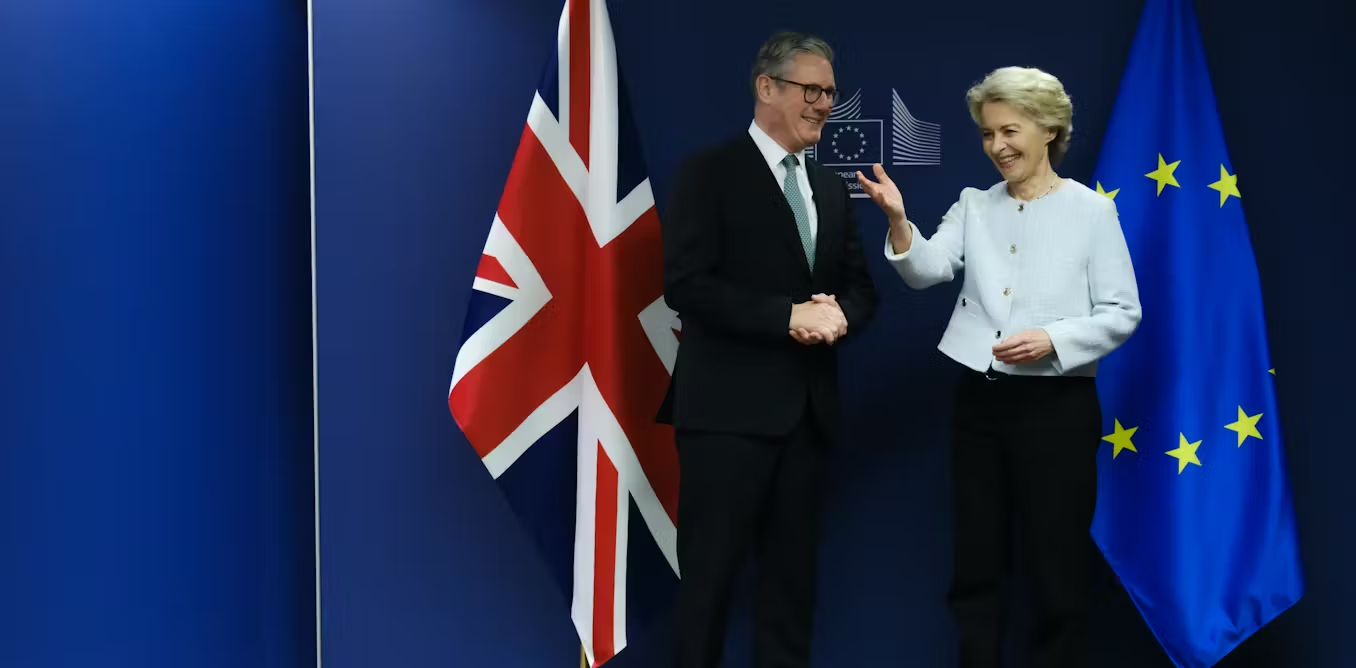
With talk of closer EU alignment, the UK is signalling to Europe that it’s a partner worthy of trust

Published

on

With talk of closer EU alignment, the UK is signalling to Europe that it’s a partner worthy of trust

It is now almost a decade since the UK voted for Brexit and since the tariffs of US president Donald Trump’s first term increased global trade frictions. Brexit removed the UK from the European single market for goods and services. Now though, the country is proposing a pivot back towards alignment with EU regulations.

What could have not been widely predicted back in 2016 was the COVID pandemic, nor a war on European soil. The UK has been exposed to these shocks without the EU support system. So what may once have been impossible to imagine is now on the cards: adopting EU single market rules under new UK legislation.

In May 2025, the UK and EU reached a new trade agreement, paving the way for both sides to move closer on their economies and business. This was hastened by unpredictable US trade tariffs and a weakening of the US-UK-EU relationship. In addition, it has been estimated in a comprehensive study that Brexit has reduced the size of the UK economy by 6-8%.

Politically, the approach announced by the UK prime minister, Keir Starmer, is a courageous step. UK legislation would allow the country to adopt new EU laws without the need for parliament to vote each time. But any plan is certain to provoke strong opposition from the Conservatives and Reform UK.

Advertisement

However, it is a signal of the seriousness of the UK’s intentions to move closer to the EU by adapting to its regulations and giving up independence from EU law. That is a costly move for the UK in terms of its credibility, but the U-turn should reinforce its commitment to the EU.

But beyond this, there are three clear benefits to the UK.

  1. The EU is built on rules and regulations that guide the bloc’s labour market, trade and security systems. Alignment would clearly help UK businesses, consumers and individual workers to manoeuvre within these systems.

  2. By breaking from the single market, the UK chose a costlier approach to trading and investing across the EU border. Aligning regulations would reduce cross-border bureaucracy.

  3. The EU is looking for new trading partners after supply chain disruptions from COVID and the Ukraine war – not to mention the current impact on oil and gas supplies. The EU does not need to rely on the UK, but a new direction in the relationship could reduce the threat of supply chain disruption in future.

A better deal for consumers?

So what could this mean for UK businesses and consumers? Food producers trading within the UK-EU zone would have a quicker turnaround of their fresh produce. This would reach shop shelves in the UK and EU more quickly, giving shoppers better-quality fresh foods.

Reducing the amount of complex paperwork and export health certificates at borders would allow a free flow of fresh food even between Great Britain and Northern Ireland (which remained part of the single market). This trade has been disrupted since Brexit and affects both trade between food producers due to paperwork and border delays, and food security.

Advertisement

Border checks, paperwork and adapting to legal requirements are expensive and so increase food prices (and with that, inflation). Bringing trade between the EU and the UK closer could reduce these costs, and should also allow producers to benefit more from global value chains.

UK products like meat and dairy must carry ‘not for EU’ labels due to differing regulations.
EPA/Marie Therese Hurson

US tariffs are at their highest levels since the second world war, and the knock-on cost effects of supply chain disruption in the Middle East make a strong case for strengthening ties between neighbours.

Going forward, it will be resilience rather than efficiency in trade that will be important for both businesses and nations. Both will want to be able to reconfigure networks at speed. If inflation rises due to product shortages, governments have limited fiscal space to offer direct support to citizens (which would mean increased levels of spending), or to cut taxes.

Advertisement

Another benefit could come in the form of foreign direct investment into the UK from overseas. In 2025, this began shifting from low-cost developing countries towards capital-intensive and technologically-driven investments in developed countries – and especially in the EU (Germany, Italy and France).

Alignment with EU regulation could give investors more confidence to commit to the UK. Foreign direct investment in renewable energy and AI products, for example, would benefit both the UK’s workers and its consumers.

This is a time of new geopolitical alliances, cooperation and blocs. Trading and investment options could help secure economic, political and societal stability in a volatile world. So far, this is a relatively small step by the UK – but starting to align to EU regulations could ease a complex relationship.

Advertisement

Source link

Continue Reading

NewsBeat

Popular Spanish airport to close for a month with all flights cancelled

Published

on

Popular Spanish airport to close for a month with all flights cancelled

A popular Spanish airport is set to close for five weeks this spring to carry out construction on its runways.

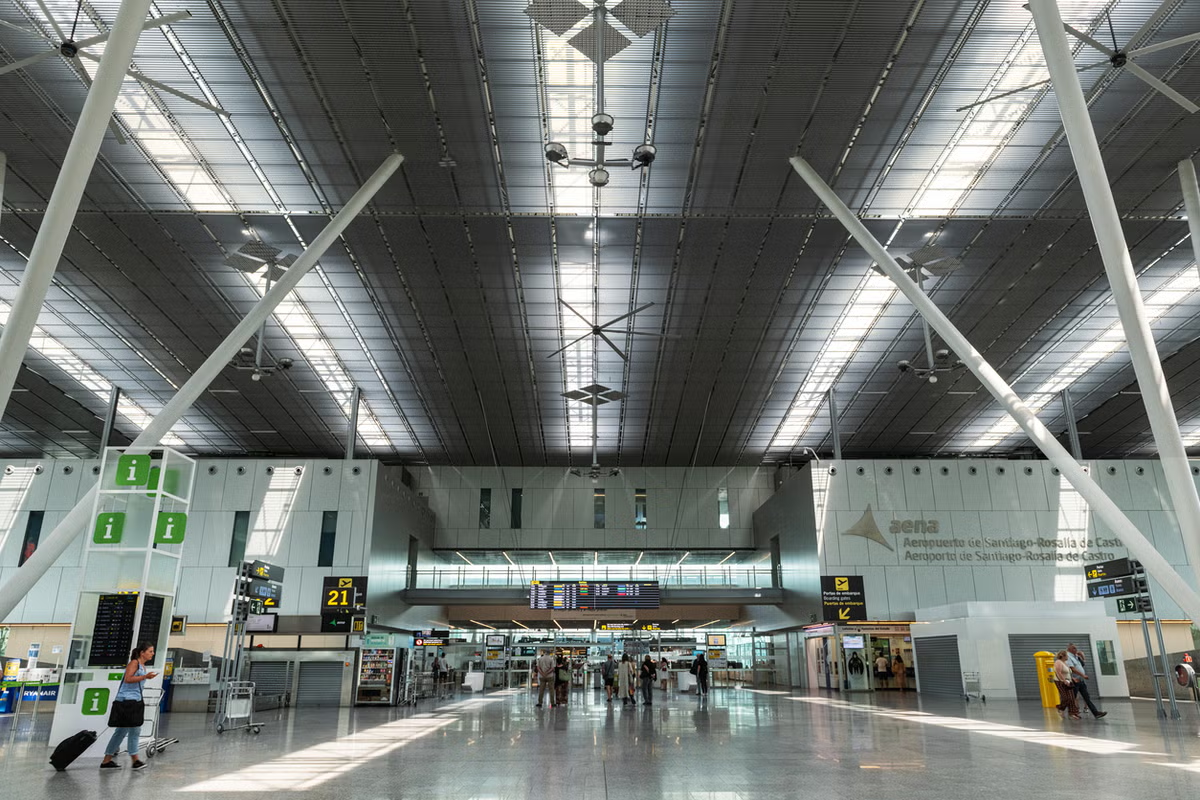
Santiago-Rosalia de Castro airport in northern Spain will be closed from 23 April to 27 May for runway resurfacing works.

During this period, the airport will be closed to all air traffic, and no take offs or landings will take place.

Airport operator Aena said: “If you have any questions about your flight status, schedule changes, or possible rebooking, we recommend contacting your airline.

Advertisement

The airport near Santiago de Compostela is the busiest airport in Galicia and the second-busiest in northern Spain.

Several airlines operate flights out of the aviation hub, including British Airways, Ryanair and Vueling, with hundreds of journeys expected to be impacted during May half-term.

Elsewhere in Spain, holidaymakers face severe disruption as airport staff stage an “indefinite” strike across the country.

Industrial action by ground staff has been ongoing at 12 major airports, including Barcelona, Madrid, Alicante, Palma, Ibiza, Malaga and the Canary Islands since 30 March.

Advertisement

Groundforce and Menzies employees are on strike over an ongoing pay dispute.

Spanish airport operator Aena said in a notice: “Groundforce staff have called an indefinite strike starting 30 March. Partial work stoppages will take place on Mondays, Wednesdays and Fridays during three time slots: 5-7am, 11am-5pm, and 10pm-midnight.

“Please contact the airline to find out the status of your flight.”

Read more: All the airlines cancelling flights and adding extra charges amid jet fuel crisis

Advertisement

Source link

Continue Reading

NewsBeat

London marathon 2027 ballot: How to apply for next year’s race

Published

on

London marathon 2027 ballot: How to apply for next year's race

More than a million people applied for a place at this year’s race in the ballot, and next year’s race is expected to be just as popular.

Source link

Advertisement
Continue Reading

NewsBeat

UK weather maps show 26C surge as 74 counties face May scorcher

Published

on

Cambridgeshire Live

Weather maps predict temperatures will surge to 26C across parts of the UK at the start of May, with 74 counties including Cambridgeshire expected to see highs of 20C or above

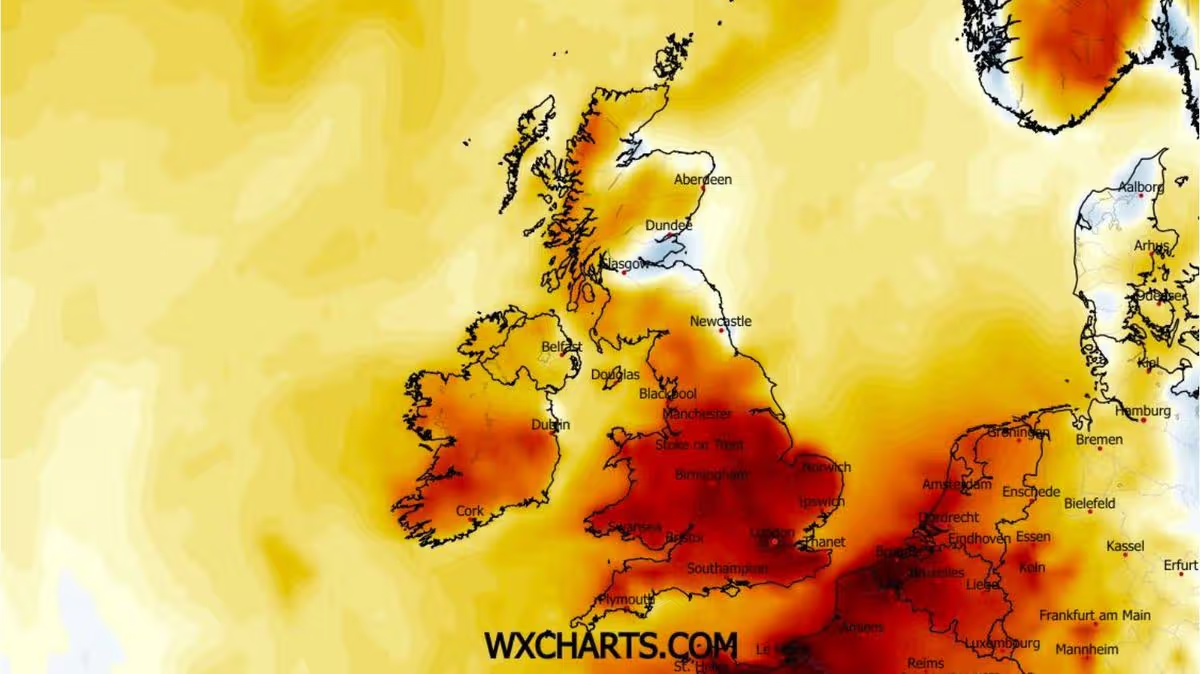
Weather forecasting maps indicate that temperatures could climb to as high as 26C in certain parts of the UK in the coming days.

The data reveals that up to 74 counties across England, Scotland and Wales are set to experience temperatures of 20C or above at the beginning of May. Northern Ireland is forecast to reach a slightly lower peak of 19C.

Advertisement

According to the GFS weather model, the temperature rise will begin on 4 May, with 21C and 22C expected across much of southern and central England. North Wales could also enjoy highs of 21C at around 6pm.

The mercury is forecast to continue climbing throughout the week, reaching 24C in the south-east on 5 May, with London benefiting most from the warmth. Parts of Scotland could touch 20C at 6pm, while Wales may see highs of 23C.

The GFS model data suggests 6 May will be the hottest day, with temperatures of up to 26C in and around London. The Midlands, Yorkshire and East Anglia could all record highs of between 24C and 25C, though Northern Ireland and Scotland are expected to remain considerably cooler, reports the Mirror.

Advertisement

Across this three-day period, the maps indicate that 74 counties or county boroughs could reach 20C or above, with the south-east of England experiencing the most intense heat.

UK regions facing 20C or above in May

England

  • Bedfordshire
  • Berkshire
  • Bristol
  • Buckinghamshire
  • Cambridgeshire
  • Cheshire
  • City of London
  • Cornwall
  • County Durham
  • Cumbria
  • Derbyshire
  • Devon
  • Dorset
  • East Riding of Yorkshire
  • East Sussex
  • Essex
  • Gloucestershire
  • Greater London
  • Greater Manchester
  • Hampshire
  • Herefordshire
  • Hertfordshire
  • Isle of Wight
  • Kent
  • Lancashire
  • Leicestershire
  • Lincolnshire
  • Merseyside
  • Norfolk
  • North Yorkshire
  • Northamptonshire
  • Northumberland
  • Nottinghamshire
  • Oxfordshire
  • Rutland
  • Shropshire
  • Somerset
  • South Yorkshire
  • Staffordshire
  • Suffolk
  • Surrey
  • Tyne and Wear
  • Warwickshire
  • West Midlands
  • West Sussex
  • West Yorkshire
  • Wiltshire
  • Worcestershire

Wales

  • Gwynedd
  • Conwy
  • Denbighshire
  • Flintshire
  • Wrexham
  • Powys
  • Ceredigion
  • Pembrokeshire
  • Carmarthenshire
  • Swansea
  • Neath Port Talbot
  • Bridgend
  • Vale of Glamorgan
  • Cardiff
  • Rhondda Cynon Taf
  • Merthyr Tydfil
  • Caerphilly
  • Blaenau Gwent
  • Torfaen
  • Monmouthshire
  • Newport

Scotland

  • Roxburghshire
  • Kirkcudbrightshire
  • Morayshire
  • Banffshire

Despite the scorching conditions, this hot period at the beginning of May is unlikely to be classified as an official heatwave. A heatwave is formally declared when temperatures meet or surpass the heatwave threshold for three days running.

The heatwave threshold ranges from 25C to 28C throughout the UK. It sits at 28C in the south-east of England where conditions tend to be hotter, and falls to 25C the further north you travel.

Advertisement

Source link

Continue Reading

NewsBeat

Shaun Murphy blasts audience member for X-rated taunt at World Snooker Championship

Published

on

Shaun Murphy blasts audience member for X-rated taunt at World Snooker Championship

Shaun Murphy has blasted an audience member who berated one of his shots during the opening session of his first-round match against Fan Zhengyi at the World Snooker Championship in Sheffield.

Murphy said he lost concentration after a spectator in the front row muttered “s*** shot” during a gruelling battle which the former champion edged 5-4, ahead of Tuesday evening’s conclusion.

Murphy wrote on Instagram: “Just a friendly reminder that if you’re sat on the front row in the Crucible and I play a shot that may not work for a particular reason, it’s probably best not to say ‘s*** shot’ out loud. I’ve got ears.”

Murphy joked: “I missed my last shot as I was contemplating which end (of) my cue to hit him with.”

Advertisement
Shaun Murphy said he lost concentration after a spectator in the front row muttered
Shaun Murphy said he lost concentration after a spectator in the front row muttered “s*** shot” (Getty)

Judd Trump hauled back an early 3-1 deficit to nudge 5-4 in front of Gary Wilson in a match that was also due to conclude on Tuesday night.

Wilson made a superb break of 139 as he moved into a commanding lead but Trump responded brilliantly with breaks of 128 and 77 as he looked to go deep in the tournament and protect his current status as world number one.

Liam Pullen made four half-centuries but still trails 13th seed Chris Wakelin 5-4 after the first session of their first-round match that concludes on Wednesday.

Pullen, 20, looked unfazed on his tournament debut and delivered a crucial break of 58 to win the final frame of the morning and keep himself well in contention.

Source link

Advertisement
Continue Reading

NewsBeat

Who is calling the shots in Iran?

Published

on

Who is calling the shots in Iran?

Following the last round of talks between the United States and Iran in Islamabad, Iran’s foreign minister and negotiator Abbas Araghchi declared in a post on X on April 17 that the Strait of Hormuz was “completely open”. This came after he also signalled that his government could be flexible over the issue of nuclear enrichment as well as Iran’s support for its proxies in the region.

Then came an abrupt correction. Mohammad Bagher Zolghadr, a former commander in the Islamic Revolutionary Guards Corps (IRGC) who was recently appointed as secretary of the Supreme National Security Council, is understood to have complained to the IRGC, submitting a report that criticised Araghchi for “deviation from the delegation’s mandate”.

The negotiating team was called back to Tehran. Araghchi was attacked by state-run media which said his post had “provided the best opportunity for Trump to go beyond reality, declare himself the winner of the war and celebrate victory.” And the Strait of Hormuz was declared closed.

This episode demonstrates the new reality in the Islamic Republic, where the IRGC increasingly calls the shots in all matters of statecraft and government. The rest of the state is a façade at most.

Advertisement

Over the six weeks of war, Iran’s former leadership has been decimated: the supreme leader, Ali Khamenei, was killed in a US strike on the first day of US and Israeli attacks. Many of his senior colleagues have also been killed. Iran is no longer best understood as a state with a powerful militia. It has become, more precisely, a powerful militia with a state – a political order with the IRGC at its core.

The other traditional centres of power – the government and the clergy – have effectively been relegated to mere front organisations. Amid the fog of war, even the new supreme leader, Mojtaba Khamenei, appears merely as a legitimising ornament. In any case, Khamenei is reported to have been severely injured in the attack that killed his father and is apparently taking no part in government.

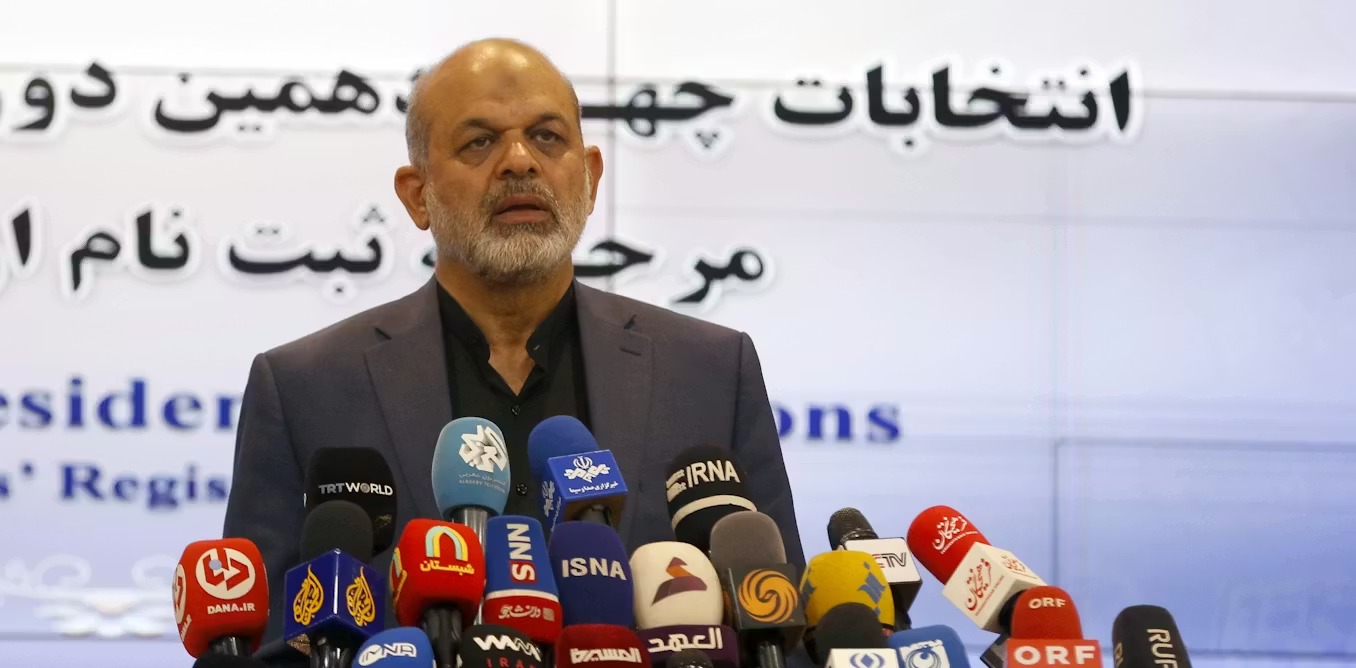
So who is running the country? The answer points unmistakably to the IRGC and its leader, Ahmad Vahidi.

Guardians of the revolution

The IRGC was created after the 1979 revolution, precisely because Ayatollah Ruhollah Khomeini and his allies did not trust the conventional state apparatus to defend the revolution. Over time it grew beyond its role as guardians of the revolution into an all-encompassing, all-channel network. It became a military, an intelligence service, an economic conglomerate and a regional expeditionary network. Its internal security force, the Basij, gave it an arm of mass social control inside Iran. The Quds force was set up to export the revolution across Iran’s proxies in Lebanon, Iraq, Syria, Yemen and beyond.

Advertisement
Iran’s foreign minister, Abbas Araghchi, and parliamentary speaker, Mohammad Bagher Qalibaf, arriving in Pakistan for ceasefire negotiations with the US, April 11 2026.
Pakistan Ministry of Foreign Affairs via AP

Far from destroying this architecture, sanctions deepened it. They led to the creation of front companies linked to the IRGC doing illicit deals and operating circuits of patronage that enriched those closest to the centre of power. What emerged was a parallel state that gradually outgrew the formal one.

The IRGC is organised as a network with a core and a periphery. Its central hub decides strategy. This is surrounded by a network of decentralised cells capable of operating with a high degree of autonomy. This is called Iran’s “mosaic defence doctrine”. And it was built to operate precisely the way it is now: to keep fighting amid attempts at decapitation and disruption.

A new leader emerges

After IRGC chief Mohammad Pakpour was killed on the opening day of the conflict, Ahmad Vahidi, a former interior minister and a founding member of the IRGC, has emerged to take his place. After being appointed in an emergency capacity after his predecessor was killed, he has consolidated effective control as the civilian presidency has been hollowed out.

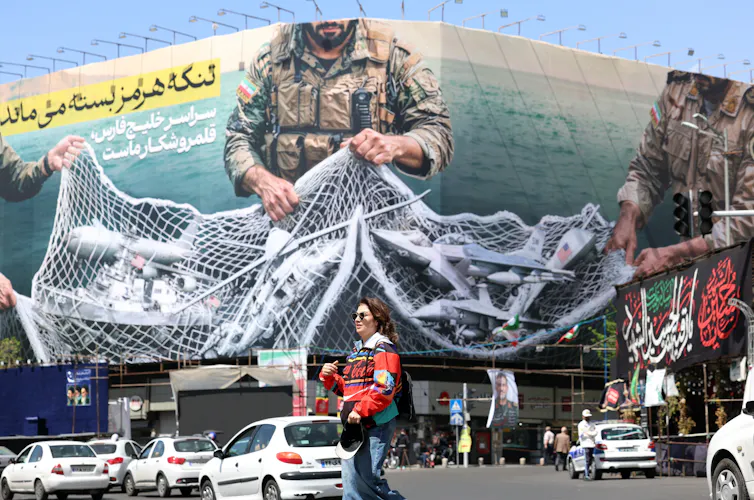
A poster in Tehran shows Iranian fighters holding a net over the Strait of Hormuz reading 'The Strait of Hormuz remains closed'
In central Tehran, a poster with the words: ‘The Strait of Hormuz remains closed’ spells out Iran’s uncompromising position.
EPA/Abedin Taherkenareh

With the new supreme leader apparently incapacitated and the clergy sidelined, Vahidi and his group of allies – IRGC commanders and security council hardliners such as Ali Akbar Ahmadian and Mohammad Bagher Zolghadr – have set the mandate and red lines for the ceasefire talks.

The IRGC’s red lines are clear: it will not surrender uranium enrichment altogether; it wants to preserve its missile program and the axis of resistance; it wants sanctions to lifted and access to Iranian assets overseas that are presently frozen. Room for negotiation only exists on technical details about enrichment levels, timelines for lifting sanctions or the language of any deals that are agreed.

Advertisement

In times of war, states tend to centralise as civilian institutions shrink. Hard men tend to rise, especially after many of the influential political pragmatists, such as Ali Larijani, the former secretary of the security council, were deliberately taken out by Israel.

The IRGC was not suddenly conjured by this war, but prepared by decades of institutional entrenchment, economic capture and delegated coercion. The IRGC’s military dictatorship in the making needed this war to consolidate its influence over competing nodes in the network – most importantly the clergy.

This has profound consequences for the negotiations. Instead of being straightforward bargaining between statesmen, Washington’s real estate moguls turned negotiators are speaking to Iranian counterparts who are on a short lead held by the IRGC. Progress in negotiations should not be judged by what Iran’s diplomats say in public, but by what the guard allows to be implemented in practice.

Trump and Israel’s failed decapitation strategy leaves a potent system in place that feels emboldened by the desperation in the White House to find a diplomatic off-ramp. To think that this war-hardened system of hardliners will capitulate is wishful thinking.

Advertisement

The past few days have made it clear that the IRGC is now a militia with a state using the civic and military institutions of the Islamic Republic as its outer skin. While there is room for negotiation to build a mutually acceptable deal, the US administration needs to be realistic about where the IRGC’s red lines are and what card it actually has to play against a resilient network with a very high threshold for pain.

Source link

Advertisement
Continue Reading

NewsBeat

Man died from ‘cocaine effects’ at Oakdale Golf Course

Published

on

Man died from 'cocaine effects' at Oakdale Golf Course

Donovan Tanaka Mkutchwa, 26, was found dead on Oakdale Golf Course in Harrogate on Thursday, January 29.

Coroner Mark Armitage gave Mr Mkutchwa’s cause of death as being from the effects of cocaine.

He told Northallerton Coroners’ Court that Mr Mkutchwa’s body was identified by a police officer on the scene.

The coroner adjourned the inquest to a later date after the brief hearing on Tuesday (April 21).

Advertisement

Mr Mkutchwa’s family has described him as a “deeply loved son, brother and friend whose life was complex but whose character and potential should not be forgotten”.

A family spokesperson previously told The Press the death of Mr Mkutchwa, who grew up in Harrogate and attended Harrogate Grammar School, has left an “unimaginable void” in the lives of his loved ones.

Donovan Tanaka Mkutchwa as a schoolboy (Image: Family)

Speaking after the hearing on Tuesday, the family spokesperson said they “acknowledged that [Mr Mkutchwa’s] death has been attributed to cocaine use”, but added: “As a family, we do not consider the current explanation to be complete or sufficiently supported by the known circumstances.

“There remain material gaps in the factual narrative that require careful and thorough examination.

Advertisement

“In particular, there is no clear or coherent account of how [Mr Mkutchwa] came to be at the golf course, nor how he could have ingested a substance in a quantity said to be fatal without any apparent intervention, incident, or witness account in what is understood to be a public setting.”

The family spokesperson said there were also “specific factual matters that remain unexplained” such as Mr Mkutchwa’s personal items, including his phone, jacket and head covering, not being accounted for.

‘We will continue to engage fully with the inquest,’ says family

They added that Mr Mkutchwa’s clothing was found to be “heavily soiled with mud” when his body was found and there were “visible blood spots present on his t-shirt”.

“These are material factors that, in our view, require proper forensic consideration and explanation within the evidential record,” the family spokesperson said.

Advertisement

“Taken together, these issues raise legitimate questions about the sequence of events leading up to his death and whether all relevant circumstances have been fully established.

“We therefore expect that the inquest process will rigorously examine all available evidence, including toxicology, forensic findings, timeline reconstruction, witness testimony, and any potential third-party involvement, to ensure that no line of inquiry is left unexplored.

“We will continue to engage fully with the inquest and reserve our position pending the outcome of a comprehensive and evidence-based investigation.

“Our focus remains on establishing a clear and complete account of what occurred in the period leading up to our son’s death.”

Advertisement

They urged anyone with information about his death to contact North Yorkshire Police quoting reference number 12260017377.

Mr Mkutchwa’s death followed him being released from a four year and 10-month jail sentence which he received in May 2024 after pleading guilty to four drug dealing charges. He was arrested after being stopped by police in Harrogate in May 2023, when he was already serving a suspended sentence for drugs offences.

Current guidelines in England state that offenders sentenced to four years or more are eligible for release halfway or 40 per cent of the way through their sentence. Some serious offenders are released at the two-thirds point, according to the Sentencing Council.

The family spokesperson said that while Mr Mkutchwa “did have a run-in with the law in recent years”, he had “taken responsibility and paid for those offences through the court system”.

Advertisement

They said the family believes Mr Mkutchwa “was in a period of reflection and was working toward reshaping and rebuilding his life” before his death.

“Like many young people, mistakes can happen,” they said of Mr Mkutchwa’s jail sentence. “But those mistakes do not define the whole of a person’s life. Donovan had faced the consequences and was looking toward turning things around and moving forward.”

  • The Samaritans say that whatever you’re going through, you can call them for free, at any time, from any phone, on 116 123.

Source link

Advertisement
Continue Reading

NewsBeat

Ready to take charge: three innovative types of energy storage

Published

on

Ready to take charge: three innovative types of energy storage

Energy storage is a crucial component of the UK’s power network, but these systems range radically in terms of scale and function. From mammoth molten salt-filled thermal storage units to systems that use liquid air, here’s the latest in storage tech

Renewable energy is all very well, but how do you keep the lights on when the sun doesn’t shine and the wind doesn’t blow? It’s a hackneyed complaint, but it contains a germ of truth.

As Nathan Ritson, technical manager at renewable energy supplier Good Energy, says, “With the good old British weather, you find you’re over-generating at certain times, and under-generating at others.” Solar and wind already account for over one-third of the UK’s electricity, and that proportion is growing rapidly. But their inherent intermittency is an ongoing issue.

Advertisement

A key part of the solution is to store surplus electricity. Batteries can play a vital role here, explains Ritson, both in the commercial and domestic space. Grid-scale battery storage is becoming increasingly common too, balancing supply and demand across the country.

The ability to store surplus electricity is becoming crucial, as more renewables come online. YoungNH

Advertisement

But batteries aren’t the only storage game in town. Here are three emerging technologies that may well play a valuable supporting role in keeping our lights on in the future.

Spinning into the future with flywheels 

Flywheels have been around for a while. Leonardo da Vinci conceptualised one. Three centuries later, Scottish engineer James Watt was using them to help his steam engines run smoothly. The basic principle is that a source of power – for example renewables – sends a rotor spinning, storing energy as motion that can later be released to generate electricity.

Independent energy consultant Eugene Bryce lists the flywheel’s advantages: it can last for decades, unlike batteries, which degrade much sooner; it’s super-efficient (up to 90%); and it can be charged and discharged very rapidly. The latter makes it ideal to deliver power as and when needed, which is precisely what today’s electricity grid requires.

Advertisement

Less ideal is the fact that its upfront costs are relatively high, and you’d need an awful lot of flywheels to store enough power to light a city. But in combination with batteries, says Bryce, they could prove useful indeed.

They’re starting to appear as storage devices across the globe; the world’s largest has just been connected to the grid in China’s Shanxi province. A cutting-edge example of the technology, the Dinglun Flywheel Energy Storage Power Station consists of 120 high-speed magnetic levitation (MAGLEV) flywheels, with a combined capacity of 30MW. That’s enough electricity to power around 10,000 UK homes.

A better way to power your home
Could you generate more of your own electricity with a bespoke solar system? Good Energy helps households move towards greater energy independence, lower bills, and less exposure to price spikes
Get a quote

Making power out of thin air 

Advertisement

Liquid air sounds like a contradiction in terms, but it could have a place in the energy storage landscape. Unlike the flywheel, this is a relatively new technology, first mooted seriously in the 1970s.

Essentially, it works like this: air is taken in and compressed to a very high pressure using surplus electricity. The pressurised air is then cooled, via a complex form of heat exchanger, until it reaches a liquid state. When energy is needed again, the liquid is pumped out as a gas and used to drive turbines to generate electricity – a little like steam does in a conventional power station.

As the demand for energy storage has grown, it’s spurred fresh interest in this method. Now the world’s first commercial-scale application is taking shape in Manchester, where liquid air specialists Highview Power are building a plant due to come online in 2027. It will make money by using electricity when it’s cheapest to create the storage solution, and then release the air to generate power when demand is high relative to available supply.

Energy storage specialist Shaylin Cetegen of the Massachusetts Institute of Technology told the BBC that, while the initial economics may seem challenging, liquid air “stands out as a particularly cost-effective option for large-scale storage”.

Advertisement

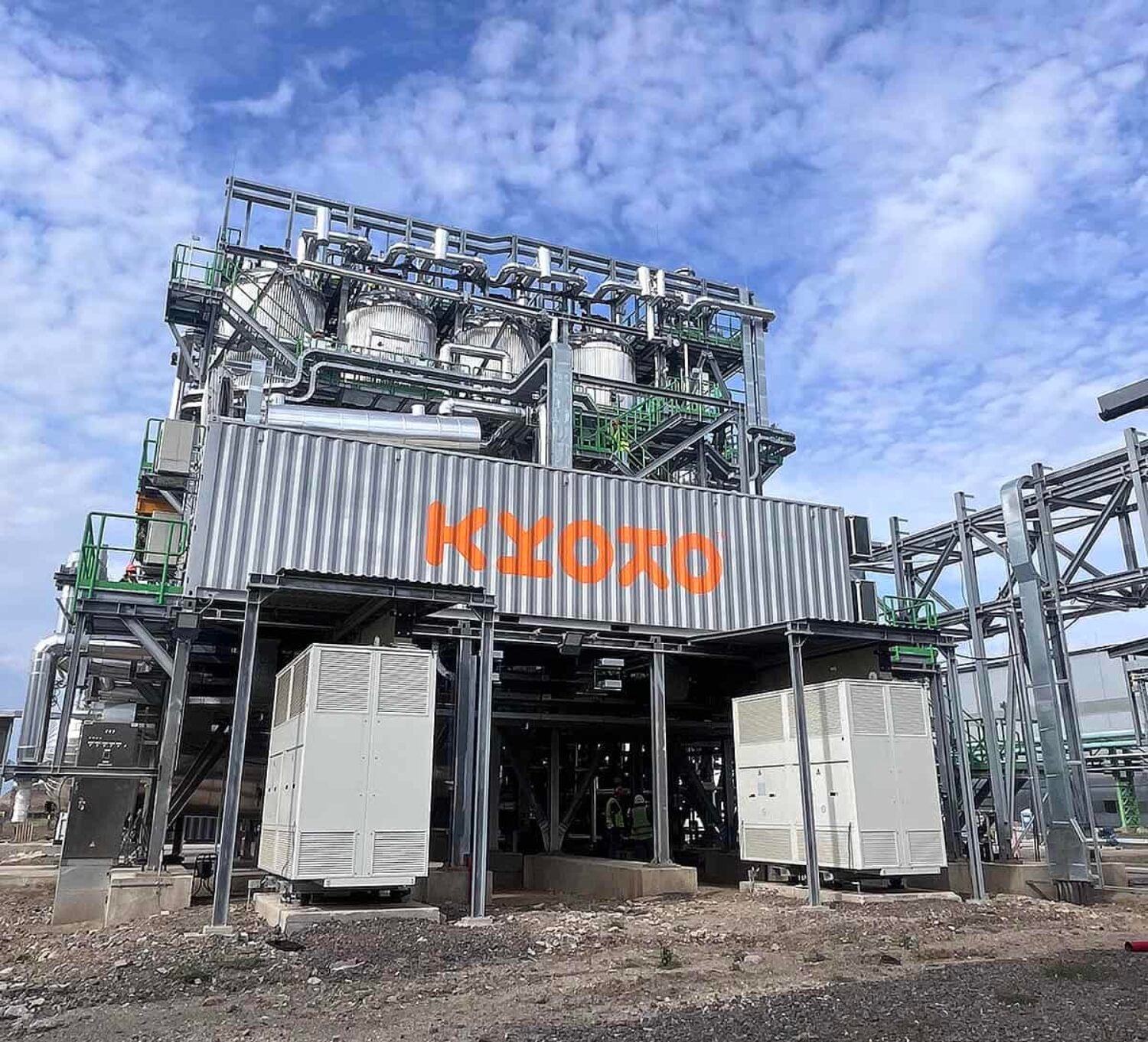
The ‘heatcube’ design uses renewable electricity to heat up tanks of salt when prices are low. Image: Kyoto Group

Some like it hot 

Advertisement

How can solar power produce electricity in the dead of night? It sounds like a riddle – and the answer is … salt.

Molten salt, to be precise. In Spain, Morocco and elsewhere, concentrated solar plants use vast arrays of mirrors to heat thermal oil to the point where it can produce steam to drive turbines and so generate electricity. Some plants focus the heat on special mixtures of salts, which can retain it for long periods of time – including overnight. When electricity is required, the hot molten salt is pumped to a steam generator, producing super heated steam to drive turbines.

Liquid air sounds like a contradiction in terms, but it could have a place in the energy storage landscape

But electricity isn’t the only type of energy that industry needs – heat is often essential, and there is growing interest in using salt to store it for industrial processes. One promising application comes courtesy of Norway’s Kyoto Group. Its ‘heatcube’ design uses renewable electricity to heat up tanks of salt when prices are low. The heat, in the form of steam, can then be used on-site – to sterilise goods as part of food production, for example.

It’s one of a range of innovations – using salt, sand or other mediums – that promise to revolutionise the way we generate and store heat for industry and, conceivably, domestic use, too. But it’s salt that is capturing a significant amount of attention. Storage expert Robert Barthorpe of the University of Sheffield told The Guardian: “[Molten salt] is a fantastic technology, offering high temperatures at industrial scale. [It’s] going to be an important part of the energy mix.


Advertisement

Illustration by Studio Ianus

Source link

Advertisement
Continue Reading

NewsBeat

Robbins defends actions in Mandelson case after being fired by Starmer

Published

on

Robbins defends actions in Mandelson case after being fired by Starmer

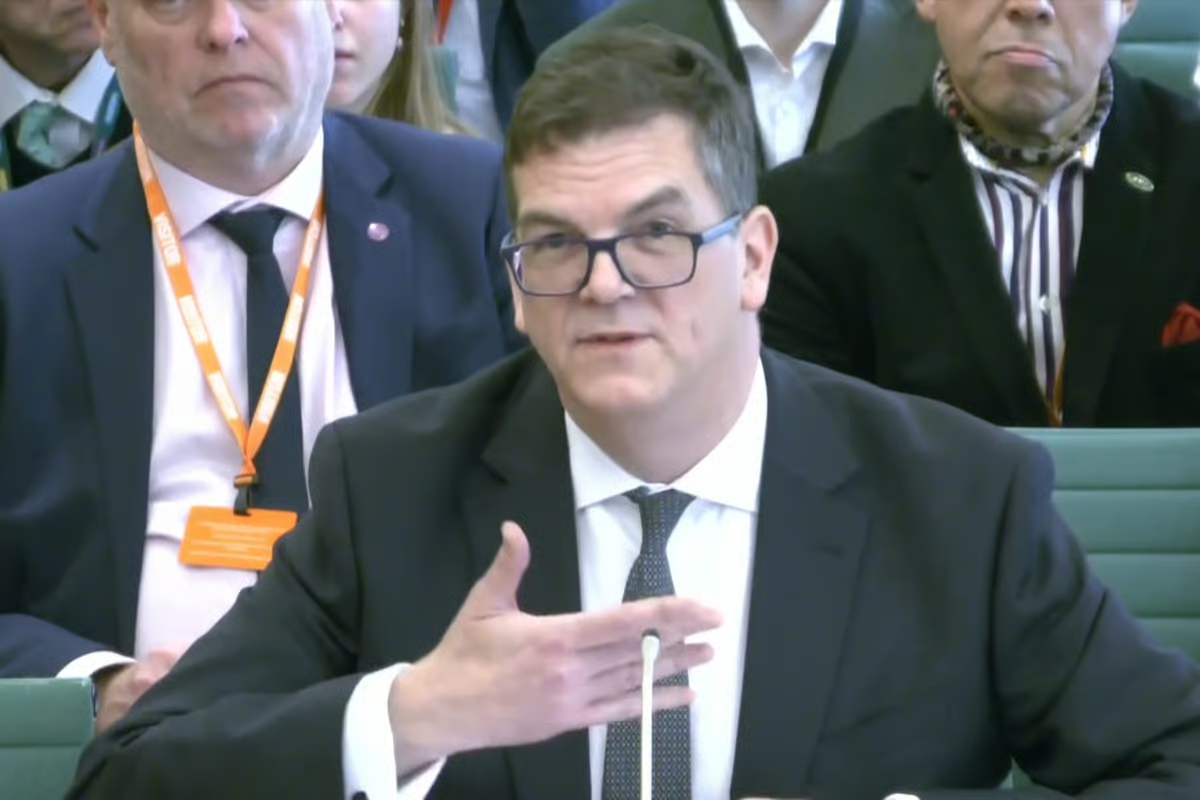
When Sir Olly took over in the Foreign Office on January 20, Lord Mandelson had already gone through the Cabinet Office’s “due diligence” process, approval had been given by the King, the US had agreed to him, he was already allowed in the building and was being granted access to “highly classified briefings” on a case-by-case basis – without his security clearance being confirmed.

Source link

Continue Reading

Trending

Copyright © 2025