Connect with us
DAPA Banner

NewsBeat

Silent Witness’ stars on the new series, their characters and more

Published

on

Silent Witness' stars on the new series, their characters and more

The drama, that focuses on CSI investigators returns for series 29, as Nikki, Jack, Harriet and Kit open the doors to the Sir William Bowman Centre of Excellence in Birmingham for the first time.

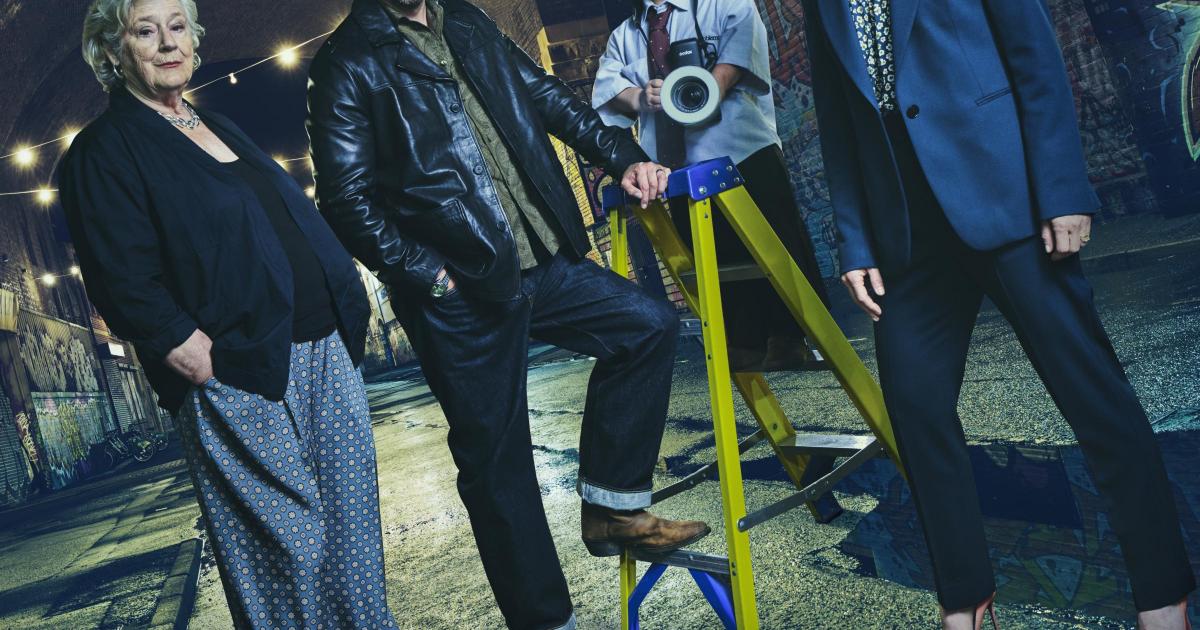
Back for five captivating new stories told over 10 episodes, the team has relocated to Birmingham and Dr Nikki Alexander (Emilia Fox), Jack (David Caves), Harriet (Maggie Steed) and Kit (Fran Mills) face some of their toughest cases yet…

Emilia Fox (Dr Nikki Alexander)

Tell us what we can expect from your character this series

Advertisement

Jack and Nikki are starting married life in Birmingham, so they have to find a new home to live in and settle into a new workspace. I think that this has quite an effect on Jack and on their relationship together.

When I look back on the series there is always a theme to them and the last series was definitely about love. The theme of this series, across the stories, is trust and what we can believe in and what’s real. That crosses from stories about AI, to trust in relationships and Jack has some big storylines in this series.

What was it like filming in Birmingham?

It’s a really beautiful city. There are some incredible industrial buildings where the history of Birmingham feels very present. That was as exciting to discover as the beautiful countryside, which is close to Birmingham, which we were also fortunate to film in. I think it gives the series a different aesthetic feel.

Advertisement

The canals are so striking, and I think that all helps give the show different evolutions, different regular characters and different locations for the show to be based in.

We’ve been welcomed by people in the city; people have been very friendly. I have loved exploring.

I didn’t know about the different quarters. I mostly explored through going to eat, like in the jewellery quarter when I had one of the best Italian meals I have ever had.

Then going to the Balti triangle and having a Balti – you have to do that when you are in Birmingham!

Advertisement

Did you pick up any local Birmingham phrases while filming?

Yes! “Alright Bab” and “Ta’ra-a-bit”

What makes you want to return to this role?

I know how lucky I am to have played Nikki for 21 years now. That is a rarity for an actor, to really get to know a character like that. I always say she is like a sort of best friend. We have lived alongside each other and no matter what I have been through in my life she has been a constant in life. I feel the stability of that, but also that we are always expected to do different things as characters within each story, so we never know what is coming next for her. So, there is a real sense of excitement and challenge in that.

Advertisement

Silent Witness still attracts millions of viewers each week, why do you think people love it so much?

I think it’s the premise of the story. I always like to think of it as a behind the scenes of crime solving.

The credit should really go to the late, great Nigel McCrery who came up with the idea in the first place and to Amanda Burton, playing Sam Ryan.

It’s thanks to the legacy that they left us that the show continues. Just the idea of looking at crime solving behind the scenes and seeing the amazing work that people do to assist the police or an investigation through science and medicine.

Advertisement

I think it’s also this look at human beings and what they are capable of – the good and the bad.

There is something reassuring about a team of people who are doing good, trying to make sense of things and get justice.

What is the most interesting thing you have learnt in this role?

How to do a postmortem.

Advertisement

What is it like filming with Maggie, David and Fran?

It is fun. I know we are doing a show that has a dark subject matter and has to be treated with respect, but between us we have a lot of laughs.

I mean all three of them are extremely funny and they are very supportive and generous, which is a nice environment to work in. And a nice experience to be able to explore and have fun with.

It’s lovely doing postmortems with Maggie as I have someone to bounce off and share those very long scenes with. We’re both very interested in the subject matter.

Advertisement

David Caves I know so well, we have a good working relationship and shorthand with each other where we can get the best out of the scenes and the characters.

Fran is just dynamite. She has got such an infectious positive energy to her, and she is just so natural at making information interesting.

I feel very lucky.

Do people ever mistake you for your character on the street?

Advertisement

I get called Nikki a lot, even when by crew, but also by people who have watched the show. I don’t mind.

I’m very happy to be thought of as a character who I admire and respect. I understand we’re going into people’s houses, so they think of me as Nikki not as Emilia.

The things I have loved hearing are when people have said they used to watch the show with their kids or their family and now have chosen to go into the profession in some way.

I think very often people think I might have medical knowledge and would be able do something in a real situation.

Advertisement

I definitely wouldn’t be the right person but I do know the people who are the right people to turn to.

David Caves (Jack Hodgson)
A man in a green patterned shirt looks to camera as a light shines through the darkness behind him

Tell us what we can expect from your character this series

Jack and Nikki are settling into a new home in Birmingham and getting used to The Bowman Centre, trying to find a bit of balance.

Jack is still the same stubborn, sarcastic fella, just with a bit more self-awareness. He’s older and more mature.

Advertisement

He’s more affected by the trials and tribulations of his work and we see that play out majorly in this series. Jack is really tested in one story, a very personal odyssey he must go on alone.

This series the team move to Birmingham. Tell us how that comes about in the storyline.

The set-up happened at the end of the previous series. It’s woven into the story nicely – the team is adapting to new surroundings, new faces, and a slightly different pace of life.

It’s a proper reset, but of course, being Silent Witness we don’t exactly get a quiet start.

Advertisement

What was it like filming in Birmingham?

The people were brilliant, really welcoming and genuinely excited that we were there filming in their city.

Birmingham has this mix of grit and heart that suits the show down to the ground. Plus, the food was great.

I might’ve finished filming a few pounds heavier.

Advertisement

What makes you want to return to this role?

The thing I love about Jack is that he’s tough but can be vulnerable.

He can fight but knows how to control it. He’s a truth-seeker, a righteous crusader, a bit of a warrior-monk, really.

There’s always something new to find with him. And honestly, the cast and crew feel like family now, the kind you don’t mind seeing again every year.

Advertisement

Silent Witness still attracts millions of viewers each week, why do you think people love it so much?

It’s got everything, gripping stories, interesting science, and characters people have grown up with.

It’s comforting in a strange way, even though it’s about death. Death is a mystery, “the undiscovered country from whose bourn no traveller returns” to quote Hamlet. But life is mysterious too and we always try to balance the negative with the positive.

I think people enjoy the odd bit of gallows humour anyway.

Advertisement

The show is very science based. What is the most interesting thing you have learnt in this role?

I think if you’re careful and humble, acting can help you on your way to becoming an authentic human being.

It can, of course, do the opposite! But I think it’s taught me to be a bit braver in life, on stage or on screen.

To take risks, to enjoy it and not take it too seriously. It’s a privilege to have the opportunity to do it at all.

Advertisement

There’s so little time for on-set learning of facts about forensic science and pathology, so I’d be useless in a pub quiz! Listening to our on-set experts is always very interesting.

They are the really fascinating people with stories galore.

Tell us what it is like filming with Emilia, Maggie and Fran.

It’s brilliant. We’ve got such a good mix. I love them all dearly.

Advertisement

There’s a lot of trust between us, which means we can have a laugh but also go to those heavy emotional places when the story needs it.

It’s honestly a lovely set to come back to.

Without spoilers, what was your favourite scene to film this series?

Too many to choose from but there’s a story later in the series that’s just really raw – not flashy, just honest.

Advertisement

Those are the ones that stick with me. But I won’t lie, I also love any excuse to run about outside the lab.

Do you see any of yourself in your character?

Yes, there’s a fair bit of overlap. I’ve got the sarcasm down, and probably the same habit of hiding behind humour when things get tough.

The science, though, not a chance.

Advertisement

Do people ever mistake you for your character on the street? Are there any funny stories from talking with the public?

On the tube once I sat next to a woman watching Silent Witness on her phone. Jack popped up on her screen, and I said “good show, that” as I got off the train. She looked rather confused.

Another fan on a different train leaned in and asked me if I was Jack.

He said he loved the character because he walked the line between good and bad. Like we all do.

Advertisement

He cited John Wick as another example. I was really flattered by that. I have an affinity for characters like that, myself. I’m drawn to them.

Not good, not bad, somewhere in the middle.

Not really heroes, undoubtedly courageous but shadowy, flawed men trying their best to be good in a topsy-turvy world.

People are lovely genuinely passionate about the show.

Advertisement

It’s a nice reminder of how beloved the show is and how lucky we all are to be a part of it.

Source link

Advertisement
Continue Reading
Click to comment

You must be logged in to post a comment Login

Leave a Reply

NewsBeat

Lessons learned in ’70s have made US, world economies less vulnerable to oil shocks

Published

on

Iran formalizes its chokehold over the Strait of Hormuz

WASHINGTON (AP) — The world economy is experiencing a disorienting flashback to the 1970s.

Oil prices are once again surging in the wake of war in the Middle East, driving up the cost of gasoline, diesel and jet fuel and threatening a return to stagflation – the toxic mix of higher prices and slower growth that made economic life so miserable a half century ago.

But the U.S. and world economies are less vulnerable now than they were when Saudi Arabia and other Middle Eastern petroleum producers withheld oil supplies to punish countries that supported Israel in the 1973 Yom Kippur War.

In response to that shock – and another triggered six years later by the Iranian revolution — countries embarked on a new course to increase their energy efficiency, reduce their dependence on Middle Eastern oil, stockpile fuel against future threats, and find and develop alternative sources of energy.

Advertisement

“We have decades of experience now dealing with these kinds of oil shocks,’’ said Amy Myers Jaffe, research professor at New York University’s Center for Global Affairs.

Of course, the notion that the current Iran energy shock could have been worse is little comfort to frustrated American motorists paying $4 or more for a gallon of gasoline, to European farmers contending with skyrocketing fertilizer prices and to street vendors in India who can’t get enough gas to cook curries and samosas for their customers.

And the sheer scale is unprecedented. In response to attacks by the United States and Israel that began Feb. 28, Iran effectively shut off the Strait of Hormuz, through which 20 million barrels of oil — or one-fifth of global production — flowed daily.

Lutz Kilian, director of the Federal Reserve Bank of Dallas’ Center for Energy and the Economy, figures that 5 million daily barrels can either be rerouted from the Persian Gulf to the Red Sea or continue to transit through the Strait of Hormuz. But that still means that roughly 15 million barrels — or 15% — of daily global oil production is missing, compared with just 6% in the 1973 embargo and after Iraq’s invasion of Kuwait in 1990.

Advertisement

Cushioning the blow

Changes the U.S. and other countries made over the past five decades have limited the economic fallout from the war. In 1973, oil accounted for almost half — 46% — of world energy supplies. By 2023, oil’s share had fallen to 30%, according to the International Energy Agency.

The world still uses more oil than ever: Consumption topped 100 million barrels a day last year, up from fewer than 60 million barrels a day in 1973. But a much bigger share of global energy is coming from other sources — such as natural gas, nuclear, solar — compared to five decades ago.

The United States, in particular, has weaned itself away from dependence on foreign oil.

When the ’73 oil shock hit, America’s domestic energy production was in decline and its reliance on oil imports was growing alarmingly. But the rise of fracking — pumping high-pressure water deep underground to extract previously hard-to-get oil or gas from rock – rejuvenated U.S. energy production in the 21st century. By 2019, America had become a net petroleum exporter.

“The U.S. economy is much better positioned than it was in the 1970s,” when it was “particularly vulnerable to an oil price shock,” said Sam Ori, executive director of the University of Chicago’s Energy Policy Institute.

In the early ‘70s, for example, the United States got about 20% of its electricity from oil, Ori said. But a law enacted in 1978 prohibited the use of petroleum in power plants. Now the United States gets no electricity from oil — aside from a few generators in, say, the far reaches of Alaska.

Advertisement

Dimming the lights

The 1973 oil embargo was a wakeup call, creating shortages that led to long lines at U.S. gasoline stations.

On Nov. 25, 1973, President Richard Nixon went on television to ask the American people to make sacrifices. To conserve fuel, he urged gasoline stations to shut their pumps from Saturday night through Sunday, hoping to discourage long-distance weekend driving.

He asked Congress to lower the maximum speed limit to 50 miles an hour (lawmakers settled for 55 miles an hour) and to ban ornamental and most commercial lighting (they balked at that). Nixon himself promised to dim the White House Christmas lights.

But while those memories may have left a lasting imprint on some, Jaffe of New York University’s Center for Global Affairs says that today, “a repeat of long gasoline lines, fuel rationing, and outright fuel shortages in the U.S seems highly unlikely.”

Advertisement

Other countries took aggressive action following the 1973 oil embargo as well.

The United Kingdom, contending with a coal strike as well as the energy crisis, cut the work week to three days to slash electricity consumption. France ordered offices to turn off the lights at night.

Japan, almost entirely dependent on imported oil, passed a series of “sho-ene’’ laws — combining the Japanese words for “save’’ or “reduce’’ with “energy’’ — mandating energy efficiency in shipping, buildings, machinery, automobiles and homes.

Japan also encouraged the use of liquefied natural and gas and the rapid growth of nuclear power, an effort set back after a 2011 earthquake and tsunami damaged the Fukushima nuclear plant. Overall, Japan ranks No. 21 in the world in per-capita energy consumption, according to International Energy Agency data, as a result of its efficiency drive and widespread use of buses and trains. The United States is No. 9.

Advertisement

More fuel efficient cars, new oil fields

The U.S. government began imposing fuel economy standards in 1975. Fuel economy has risen from 13.1 miles per gallon for model year 1975 vehicles to 27.1 mpg in model year 2023, according to the Environmental Protection Agency. The World Bank, in fact, attributes most of the drop in the global economy’s dependence on oil to stricter fuel efficiency requirements for vehicles around the world.

The ’70s shocks also set off a search for oil outside the Middle East — Prudhoe Bay in Alaska, the North Sea fields off the coasts of the United Kingdom and Norway and Canada’s oil sands deposits.

As fracking boomed, U.S. oil production shot up from 5 million barrels a day in 2008 to 13.6 million barrels a day last year. Over the same period, U.S. natural gas production has more than doubled.

Countries also began stockpiling oil and set up the Paris-based International Energy Agency in 1975 to coordinate responses to energy shocks. Last month, the agency’s 32 member countries agreed to release 400 million barrels of oil in an effort to calm the oil market; included were 172 million barrels from the U.S. Strategic Petroleum Reserve, set up in 1975.

Advertisement

Central banks such as the Federal Reserve also learned lessons. In the ‘70s, they reduced interest rates to protect the economy from the oil shocks. In so doing, they overlooked the threat posed by higher energy costs — and inflation, already elevated, got worse.

In a Feb. 17 commentary – 11 days before the United States and Israel attacked Iran – the Dallas Fed’s Kilian wrote that the Fed erred in cutting rates to boost the economy when the 1970s oil shocks hit: “What we can learn from the 1970s is that a well-intentioned policy of stimulating the economy by lowering interest rates has the potential of inadvertently reigniting inflation.’’

Trump undoes efforts to reduce oil dependence

While much has changed, the University of Chicago’s Ori cautions: “Oil is still king, the No. 1 fuel in the U.S. economy.’’ Cars, planes, trucks and ships get about 90% of their delivered energy from petroleum. “The lifeblood of the economy – the transportation sector —is still overwhelmingly reliant on petroleum fuel, the price of which is set in a global market,’’ Ori said, “and a disruption anywhere affects the price everywhere.’’

He also notes that President Donald Trump is undoing many of the policies meant to reduce America’s dependence on petroleum and to encourage the use of electric vehicles.

Advertisement

Trump’s sweeping tax bill last year ended consumer credits of up to $7,500 for EV purchases. He has announced a proposal to weaken U.S. fuel economy standards and repealed fines on automakers that don’t meet those standards.

“You take all that together, and the fact is, the U.S. is going in the opposite direction of making big changes to further insulate the economy from oil shocks and oil price volatility,’’ Ori said.

_____

Kageyama reported from Tokyo.

Advertisement

Source link

Advertisement
Continue Reading

NewsBeat

DWP change lets some claimants try work without reassessment

Published

on

DWP change lets some claimants try work without reassessment

The measures, brought forward by the Department for Work and Pensions (DWP), are designed to remove what ministers say is one of the biggest barriers preventing people from entering employment.

The changes are due to come into force later this month.

What the new law changes

Under the new rules, starting a job will no longer automatically trigger a reassessment of benefits for some claimants.

Advertisement

This applies to people receiving:

  • Employment and Support Allowance
  • Personal Independence Payment
  • The health element of Universal Credit

Claimants will also be able to volunteer without fear of reassessment, a move aimed at helping people build confidence and move gradually towards work.

Why the change is being made

Government figures suggest more than a third of disabled people who want to work feel unable to do so because they fear losing financial support.

There are currently around 2.8 million people out of work due to long-term sickness in the UK.

Ministers say the reforms are intended to provide reassurance that trying a job will not immediately put benefits at risk.

Advertisement

Sir Stephen Timms, minister for social security and disability, said removing that fear is “vital” both for individuals and for the wider economy.

The legislation forms part of a wider package of welfare reforms aimed at increasing employment.

The government says it will invest £3.5 billion in tailored employment support by the end of the decade, alongside programmes designed to help people find and stay in work.

Charities have broadly welcomed the changes, saying they could help rebuild trust in the benefits system.

Advertisement

Mental Health UK said fear of reassessment has long been a major barrier for people considering a return to work.

Mind said the reforms could help people build confidence and skills, particularly with the inclusion of volunteering as a stepping stone into employment.

Meanwhile, Mencap said protecting benefits during the transition into work is “particularly important” for people with learning disabilities.


Recommended reading:

Advertisement

Part of wider welfare reform

The changes come alongside other adjustments to the benefits system, including reforms to the health-related element of Universal Credit.

Ministers say these are intended to reduce long-term dependency on welfare while encouraging more people into work.

However, the success of the latest measures may depend on whether they address long-standing concerns among claimants about financial risk and stability.

For many, the question will be whether the new “right to try” work provides enough confidence to take that first step.

Advertisement

Source link

Continue Reading

NewsBeat

Two boys arrested after ‘stolen’ car crash in Hartlepool

Published

on

Two boys arrested after 'stolen' car crash in Hartlepool

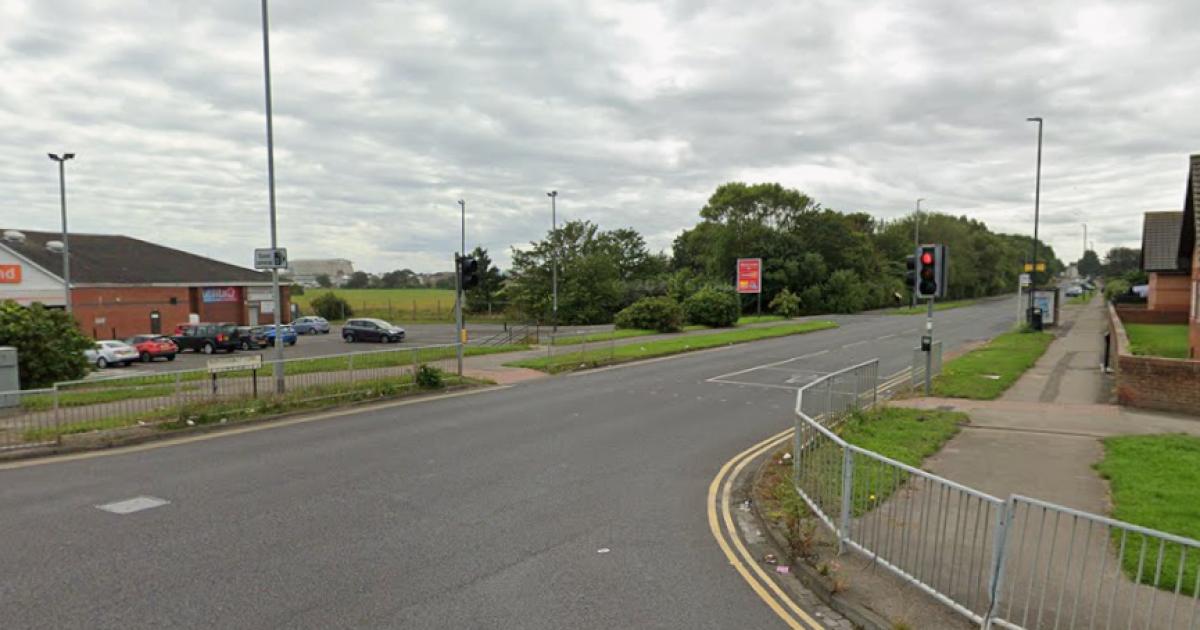
The incident took place when a red Ford Ka, which had been reported stolen overnight, collided with a Mercedes Vito taxi today (Sunday, April 12). 

The crash, at the junction of Winterbottom Avenue and Warren Road just before 5.25am, then saw both vehicles strike a pedestrian barrier. 

A 12-year-old boy and a 16-year-old boy in the Ka were injured in the crash, with the older boy losing consciousness and several teeth. 

Advertisement

The younger boy sustained cuts and bruises, and both were taken to the University Hospital of North Tees, in Stockton. 

They have each been arrested on suspicion of several driving offences and will be questioned.

The 49-year-old man driving the Mercedes sustained a head injury and he remains in the University Hospital of North Tees receiving treatment.

It is believed someone else ran from the Ka before officers arrived. 

Advertisement

Cleveland Police is now appealing for anyone with information or any relevant doorbell, dash cam or private CCTV footage who has not yet spoken to police to contact the force on the 101 number or via the website, quoting ref 068120.

If you don’t want to speak to police, please consider passing information anonymously to Crimestoppers online or by phoning them on 0800 555 111.

Source link

Advertisement
Continue Reading

NewsBeat

PSNI issue appeal for missing teenage girls who may have travelled to Dublin

Published

on

Belfast Live

The 14 and 13-year-olds are missing from the Bangor area

Police are seeking the public’s help to locate two missing teenagers who may have travelled to Dublin.

Advertisement

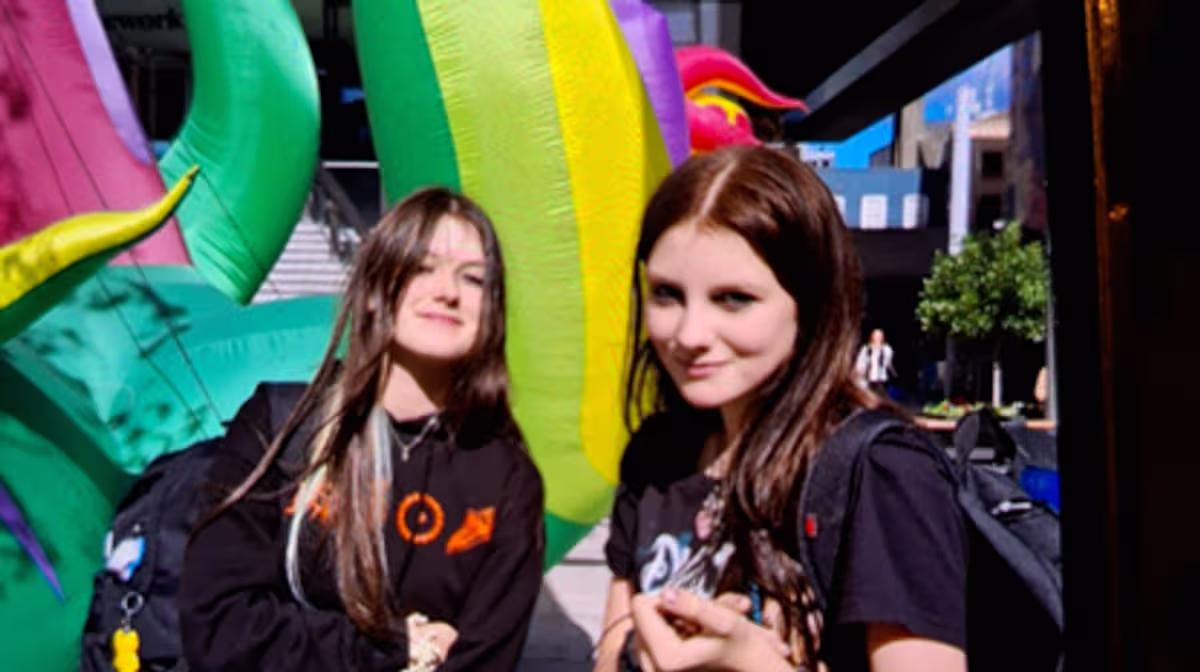
14-year-old Amber Pollock and 13-year-old Bay Giltrap, who are missing from the Bangor area, are believed to be together and were last seen on Saturday, 11th April.

A PSNI spokesperson said: “Amber is approximately 5ft 6, slim build with long dark hair that has a blonde streak. She has a septum piercing and is believed to be wearing a black hoodie, black tracksuit bottoms and black converse.

READ MORE: NIFRS update after ‘devastating’ Corries Meats fire brought under controlREAD MORE: Eamonn Holmes’ GB News co-star shares update as presenter recovers in hospital

“Amber is believed to be carrying a black backpack which has approximately 20 coloured badges on the main face of the backpack.

Advertisement

“Bay is approximately 5ft 7, slim build with long red/brown hair. They are believed to be wearing black jeans, black boots, black top and a black hat. Bay may also be carrying a Nike bag and a sleeping bag.”

Police enquiries have determined that Amber and Bay boarded an early-morning train on Saturday from Bangor to Grand Central Station in Belfast.

The spokesperson continued: “It is believed Amber and Bay may have travelled to Dublin.

“We are appealing to anyone who may have been on the 11:11am train from Bangor to Belfast and seen two young people matching Amber and Bay’s descriptions or where they may went to after they have disembarked, to get in touch with us.

Advertisement

“If you have any information in relation to their whereabouts, or you believe you may have seen them, please contact police on 101 quoting reference numbers 1309 11/04/25 and 1325 11/04/25.”

For all the latest news, visit the Belfast Live homepage here and sign up to our daily newsletter here.

Source link

Advertisement
Continue Reading

NewsBeat

Jet2 ’12 hours’ update for all UK travellers

Published

on

Cambridgeshire Live

Jet2 has issued an advisory to passengers

Jet2 has issued a 12-hour check-in alert to passengers with flights booked on the carrier this year.

Advertisement

The UK’s third-largest airline has provided crucial guidance to travellers, encouraging them to check the ‘latest travel information’ on Jet2’s website no less than 12 hours before departure to ensure they are kept fully up to date. The full message to passengers states: “Please check this section of the website at least 12 hours before your flight for the latest flight information. Further information can be found by using the [above] search panel by entering your flight number or route.

“We recommend arriving at the airport at least 2 hours before your scheduled departure time. Please remember – check-in desks close 40 minutes before this.

“In the event of flight disruption our dedicated Operations teams are working hard behind the scenes at our UK-based HQ to get you on your way as soon as possible.”

Jet2 currently flies from approximately 14 UK airports, among them London Gatwick, Luton, and Stansted, as well as Liverpool John Lennon, Belfast International, and Manchester. Those travelling with Jet2 have access to upwards of 75 destinations across Europe and further afield. Jet2 also offers ‘Twilight Check-in’, a free service allowing travellers to deposit hold luggage at the airport the evening before their flight.

Advertisement

This means on the day of travel, you can bypass the check-in desks completely and head straight to security, though availability is dependent on your flight time and departure airport.

Source link

Continue Reading

NewsBeat

Golden eagles could be seen over England’s skies again soon – here’s how | News UK

Published

on

Golden eagles could be seen over England's skies again soon - here's how | News UK
The stunning birds could make their return to England (Picture: PA)

Bird lovers could see golden eagles return to England after the Government announced new funding to explore their reintroduction.

Mentioned more than 40 times in Shakespeare’s work, the bird of prey has a huge two-metre wingspan and plays a vital role in keeping the whole ecosystem in balance as an apex predator.

The species was once widespread across England, but it was virtually wiped out by sheep farmers and gamekeepers in the Victorian era, who viewed them as a threat to lambs and game birds.

Only a handful of pairs have been seen in England in the last 150 years, with the last eagle dying in the Lake District in 2016, though they are still found in Scotland.

Advertisement

A study by Forestry England, published on Sunday, found that England now has the capacity to sustain golden eagle populations again.

Sign up for all of the latest stories

Start your day informed with Metro’s News Updates newsletter or get Breaking News alerts the moment it happens.

Advertisement

The paper identified eight potential ‘recovery zones’ as the most suitable areas, mostly in the north of England, although it could take more than a decade until breeding populations are established in the area.

Undated handout photo issued by the Department for Environment, Food and Rural Affairs (Defra) of the release of Hamlet a golden eagle which was injured by shooting and has been cared for by the Scottish SPCA. Bird lovers could see golden eagles return to England, the Government has said, as it announced new funding to explore their reintroduction. Issue date: Sunday April 12, 2026. PA Photo. Photo credit should read: Phil Wilkinson /Restoring Upland Nature (RUN)/PA Wire NOTE TO EDITORS: This handout photo may only be used in for editorial reporting purposes for the contemporaneous illustration of events, things or the people in the image or facts mentioned in the caption. Reuse of the picture may require further permission from the copyright holder.
The birds essentially died out in England during the Victorian era (Picture: PA)

Environment Secretary Emma Reynolds has since approved £1 million in additional funding to help pave the way for a recovery programme.

This could include reintroduction efforts that would see juveniles aged six to eight weeks old released as early as next year.

Ms Reynolds said: ‘This government is committed to protecting and restoring our most threatened native wildlife – and that includes bringing back iconic species like the golden eagle.

‘Backed by £1 million of government funding – we will work alongside partners and communities to make the golden eagle a feature of English landscapes once again.’

Advertisement

In Southern Scotland, golden eagle populations have recovered to record numbers because of a major project to restore their populations in the area.

A Golden Eagle (Aquila chrysaetos) in the Highlands of Scotland, United Kingdom..
The awe-inspiring birds could soon breed again in England (Picture: Getty)

It is hoped the new funding will help to support these birds in England, coupled with targeted reintroductions.

Forestry England’s research found that Scottish birds could be seen across northern England within 10 years, but it will take longer for breeding golden eagles to become established in England.

Mike Seddon, Forestry England chief executive, said: ‘The detailed findings of our feasibility study will guide us with our partners, Restoring Upland Nature, to take the next steps to explore the recovery of golden eagles in northern England.’

Ministers said the charity Restoring Upland Nature (RUN) will lead the new project alongside other partners, including Forestry England, seeking to replicate the success of the south of Scotland project.

Advertisement

Cat Barlow, RUN chief executive, said: ‘This presents a truly exciting and potentially game-changing moment for the return of golden eagles to Northern England.

‘Our priority will be to listen, to work in partnership, and to ensure that golden eagle recovery supports both nature and the people who manage these landscapes, so that everyone can enjoy the thrill of seeing golden eagles flying high once again across the uplands of the UK.’

The funding comes as part of the £60 million in species recovery funding announced by the Environment Department last week.

It ties into work aimed at meeting the UK’s legally binding target to halt the decline in species abundance by 2030 and reduce species extinction risk by 2042 against 2022 levels.

Advertisement

Get in touch with our news team by emailing us at webnews@metro.co.uk.

For more stories like this, check our news page.

Advertisement

Source link

Continue Reading

NewsBeat

Streeting blasts Trump’s “incendiary, provocative, outrageous” language as Iran talks stall

Published

on

Streeting blasts Trump’s “incendiary, provocative, outrageous” language as Iran talks stall

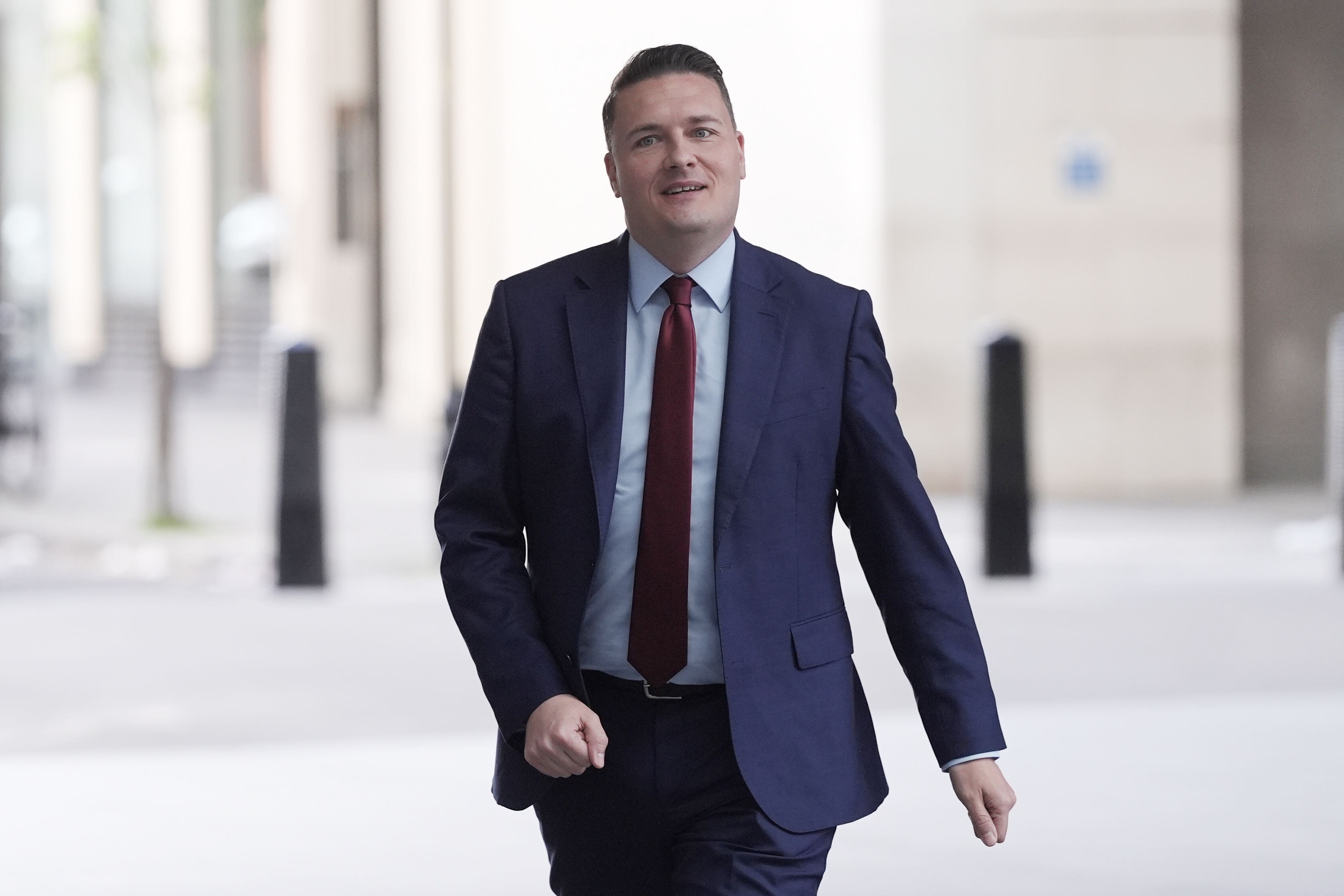
Wes Streeting has branded Donald Trump’s language as “incendiary, provocative, outrageous” – but insisted people must draw a distinction between what the US president “says and what he does”.

The health secretary launched a tirade against the US president on Sky News’s Sunday Morning With Trevor Phillips programme as he reacted to the rapidly changing picture in the Middle East following the collapse of talks between the US and Iran.

Mr Streeting, who is still being seen as a potential leadership candidate to replace Keir Starmer, praised the prime minister’s refusal to enter the war.

But, unlike Sir Keir, who simply criticised Mr Trump’s values, the health secretary did not hold back on recent statements made by the US president.

Advertisement

The health secretary said: “Over the course of the last week, President Trump has said some pretty bold – in Yes Minister language – incendiary, provocative, outrageous things on social media.

“I think we’ve all come to learn that you judge President Trump through what he does, not just what he says.”

Mr Streeting was also critical of the way the US president has focused very personal attacks on the prime minister, such as comparing him to Neville Chamberlain and saying “he is no Winston Churchill”.

The senior minister said: “You’ve seen some of the criticisms he’s levelled at this country.

Advertisement
The health secretary used uncharacteristically critical terms to describe the president
The health secretary used uncharacteristically critical terms to describe the president (PA Wire)

“The prime minister has sought throughout the time they’ve both been in office simultaneously to influence effectively, to make sure we’re leveraging the bilateral relationship.”

The health secretary described Nigel Farage as a “plastic patriot” and attacked the Reform UK leader and Tory leader Kemi Badenoch for initially wanting to join Trump in his attack on Iran.

But Mr Streeting admitted disagreements over the Iran war, Greenland and the Chagos Islands deal had “undoubtedly strained things with the Trump administration”.

He added: “But on so many other things, our interests as the UK and the US are intertwined. We are old and close friends, and we’ve got a shared outlook as democratic countries, and we’ve got shared security interests.

”So all of that work, all of that partnership continues to go on. And the point I’m making is you have to distinguish between some of the rhetoric, which people might find shocking, and then the reality.”

Advertisement
Mr Streeting was commenting on Donald Trump’s warning wanted this week that “a whole civilisation” would die
Mr Streeting was commenting on Donald Trump’s warning wanted this week that “a whole civilisation” would die (AP)

It came as Mr Streeting insisted that the long-awaited Defence Investment Plan, which has already been delayed by six months, will be published “shortly”.

He told the BBC that he would not agree to money being redirected from health spending to defence to fund an increase to 3 per cent of GDP to boost military readiness.

He said: “The defence investment plan is coming. It will be published when it is ready, when it is robust, and it is a plan that can be delivered.”

He contrasted that with the “pie in the sky promises” made by the previous Tory government, saying Labour “do action, not words”.

Asked when the spending document will be published, Mr Streeting said: “Shortly. I understand it is being finalised.”

Advertisement

Source link

Continue Reading

NewsBeat

Nationwide ‘no set timescale’ update for members

Published

on

Cambridgeshire Live

The building society recently issued an update

Nationwide Building Society has shed light on a rule that affects customers accessing services online. The update after a query was raised by a member on social media.

Advertisement

The customer explained that they had switched to a new phone several weeks prior and were unable to activate biometrics on their new device. They asked: “How long is the waiting period to get these back?” Biometric authentication is a security feature that uses a unique personal identifier to verify account access. This can include fingerprint scanning or facial recognition to confirm a user’s identity. In response to the question, Nationwide stated: “If you get a new phone, you’ll need to wait to re-qualify for biometric authentication on that device.”

Regarding how long this can take, the group said: “There’s no set timescale, and we’ll usually notify you by text message when it becomes available.” The building society also pointed the customer towards an information page on the Nationwide website detailing how to set up biometric authentication.

State Pensioners to face major tax change

The feature can be set up for everyday banking purposes, allowing customers to log into the app and authorise both small and recurring payments through either the app or internet banking portal. Biometrics can also be used to verify your identity when logging into internet banking.

Customers also have the option to set up biometrics within the app, to provide an extra layer of security for more sensitive transactions. This includes larger payments or resetting your passnumber.

Advertisement

With account biometrics enabled, there will be no need to use your card reader or debit card to log in or make payments. Nationwide recently issued guidance on how to identify counterfeit currency, following reports of fake notes appearing at one of its branches.

Counterfeit cash warning

A spokesperson said: “We are aware of a rise in scammers using fake banking notes to pay people for goods and would urge consumers to always check. Suspected counterfeits should be reported to the police, and guidance is available on the Bank of England website.”

Counterfeit notes frequently feature a thick plastic sticker concealing the hologram, which if peeled away may reveal the words: ‘for props only’. Another indicator that a banknote is fraudulent is if some of the UV numbers can be easily scratched off.

You may also want to look out for features such as the hologram and colour-shifting inks on the bank note, to make sure they appear exactly as they should.

Advertisement

Source link

Continue Reading

NewsBeat

Pictures as Bedale welcomes hundreds to annual Point-to-Point

Published

on

Pictures as Bedale welcomes hundreds to annual Point-to-Point

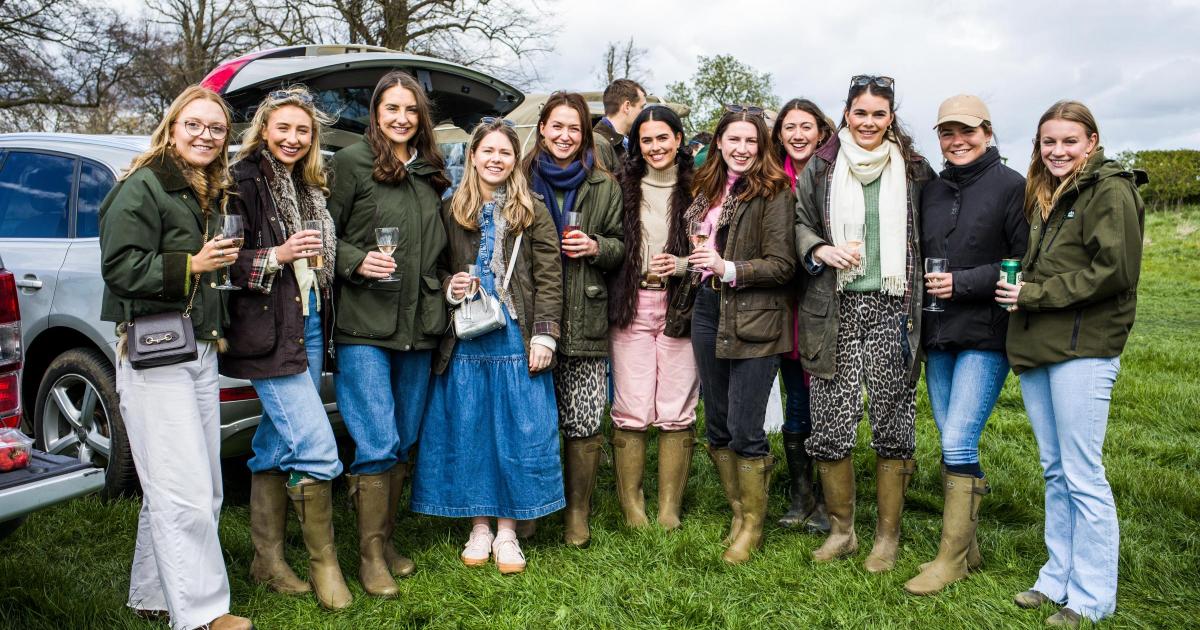
The Point-to-Point meeting has been taking place for more than a century in various locations around the Bedale area, before settling in the parkland of Hornby Castle in 1947.

It takes place each year and sees a series of races with the first being held at 12.30pm.

There was entertainment for all with food vendors, a beer tent and a bouncy castle for kids, with coverage of the Grand National at Aintree as I Am Maximus won the coveted race.

Organisers once again put on a successful event, with the Point-to-Point continuing to prove a popular day out for both racing fans and families alike in the region.

Advertisement

Bedale point to point. 11.4.2026. Photograph: Stuart Boulton/The Northern Echo(Image: STUART BOULTON)

Bedale point to point. 11.4.2026. Photograph: Stuart Boulton/The Northern EchoBedale point to point 2026. (Image: STUART BOULTON)

Bedale point to point. 11.4.2026. Photograph: Stuart Boulton/The Northern EchoBedale point to point 2026. (Image: STUART BOULTON)

Bedale point to point. 11.4.2026. Photograph: Stuart Boulton/The Northern EchoBedale point to point 2026. (Image: STUART BOULTON)

Bedale point to point. 11.4.2026. Photograph: Stuart Boulton/The Northern EchoBedale point to point 2026. (Image: STUART BOULTON)

Bedale point to point. 11.4.2026. Photograph: Stuart Boulton/The Northern EchoBedale point to point 2026. (Image: STUART BOULTON)

Bedale point to point. 11.4.2026. Photograph: Stuart Boulton/The Northern EchoBedale point to point 2026. (Image: STUART BOULTON)

Bedale point to point. 11.4.2026. Photograph: Stuart Boulton/The Northern EchoBedale point to point 2026. (Image: STUART BOULTON)

Bedale point to point. 11.4.2026. Photograph: Stuart Boulton/The Northern EchoBedale point to point 2026. (Image: STUART BOULTON)

(Image: STUART BOULTON)

Bedale point to point. 11.4.2026. Photograph: Stuart Boulton/The Northern EchoBedale point to point 2026. (Image: STUART BOULTON)

Bedale point to point. 11.4.2026. Photograph: Stuart Boulton/The Northern EchoBedale point to point 2026. (Image: STUART BOULTON)

Bedale point to point. 11.4.2026. Photograph: Stuart Boulton/The Northern EchoBedale point to point 2026. (Image: STUART BOULTON)

Bedale point to point. 11.4.2026. Photograph: Stuart Boulton/The Northern EchoBedale point to point 2026. (Image: STUART BOULTON)

Bedale point to point. 11.4.2026. Photograph: Stuart Boulton/The Northern EchoBedale point to point 2026. (Image: STUART BOULTON)

Bedale point to point. 11.4.2026. Photograph: Stuart Boulton/The Northern EchoFrom left, Issey Gill, Lucy Gloag, Yasmin Bell, Annabel Hill, Helen Peach, Amy Simes, Clara Levitt and Charlotte Martinson. (Image: STUART BOULTON)

Bedale point to point. 11.4.2026. Photograph: Stuart Boulton/The Northern EchoFrom left, Graham and Lizzie Schofield and Sophie Pedlar. (Image: STUART BOULTON)

Bedale point to point. 11.4.2026. Photograph: Stuart Boulton/The Northern EchoFrom left, Rob Blakey, Alex Dobson and Lydia Wormald. (Image: STUART BOULTON)

Bedale point to point. 11.4.2026. Photograph: Stuart Boulton/The Northern EchoBedale point to point 2026. (Image: STUART BOULTON)

Bedale point to point. 11.4.2026. Photograph: Stuart Boulton/The Northern EchoBedale point to point 2026. (Image: STUART BOULTON)

Bedale point to point. 11.4.2026. Photograph: Stuart Boulton/The Northern EchoBedale point to point. From left, Freya Williams, Isobel Hart, Caroline Hartley, Anabel Nuttall, Evie Boon, Maddie Sinclair, May Smith, Senara Laity, Bethan Robinson, Jess McLeod and Phoebe Eglington. 11.4.2026. Photograph: Stuart Boulton/The Northern Echo (Image: STUART BOULTON)

Bedale point to point. 11.4.2026. Photograph: Stuart Boulton/The Northern EchoBedale point to point 2026. (Image: STUART BOULTON)

Bedale point to point. 11.4.2026. Photograph: Stuart Boulton/The Northern EchoFrom left, Ruby Wilkinson and Lauren Milner. (Image: STUART BOULTON)

Bedale point to point. 11.4.2026. Photograph: Stuart Boulton/The Northern EchoFrom left, Jess Seed, Olivia Greensmith and Holly Scott. (Image: STUART BOULTON)

Bedale point to point. 11.4.2026. Photograph: Stuart Boulton/The Northern EchoFrom left, Ellie Greenway, Abigail Sutton, Harriet Hymas and Lily Watkinson. (Image: STUART BOULTON)

Bedale point to point. 11.4.2026. Photograph: Stuart Boulton/The Northern EchoFrom left, Rupert and Lisa Scales, Jonathan Lawson-Brown and Martin Williams. (Image: STUART BOULTON)

Bedale point to point. 11.4.2026. Photograph: Stuart Boulton/The Northern EchoFrom left, Natasha Ropner, Darcy Wyvill, Mellissa Wyvill, Henry Ropner and Imogen Wyvill. (Image: STUART BOULTON)

Bedale point to point. 11.4.2026. Photograph: Stuart Boulton/The Northern EchoBedale point to point 2026. (Image: STUART BOULTON)

Bedale point to point. 11.4.2026. Photograph: Stuart Boulton/The Northern EchoFrom left, Emma Jenks, Arthur York, Alexander and Rose Wyvill. (Image: STUART BOULTON)

Bedale point to point. 11.4.2026. Photograph: Stuart Boulton/The Northern EchoBedale point to point 2026. (Image: STUART BOULTON)

Bedale point to point. 11.4.2026. Photograph: Stuart Boulton/The Northern EchoGerry and Janet Tvedt (Image: STUART BOULTON)

Bedale point to point. 11.4.2026. Photograph: Stuart Boulton/The Northern EchoFrom left, June, Peter, Eliza and Charlie Barker. (Image: STUART BOULTON)

Bedale point to point. 11.4.2026. Photograph: Stuart Boulton/The Northern EchoBedale point to point 2026. (Image: STUART BOULTON)

Bedale point to point. 11.4.2026. Photograph: Stuart Boulton/The Northern EchoBedale point to point 2026. (Image: STUART BOULTON)

Bedale point to point. 11.4.2026. Photograph: Stuart Boulton/The Northern EchoBedale point to point 2026. (Image: STUART BOULTON)

Bedale point to point. 11.4.2026. Photograph: Stuart Boulton/The Northern EchoBedale point to point 2026. (Image: STUART BOULTON)

Source link

Continue Reading

NewsBeat

The famous Cambridge clock that crowds swarm to

Published

on

Cambridgeshire Live

The clock was unveiled to the public in 2008 and still gathers crowds who are drawn to its uniqueness

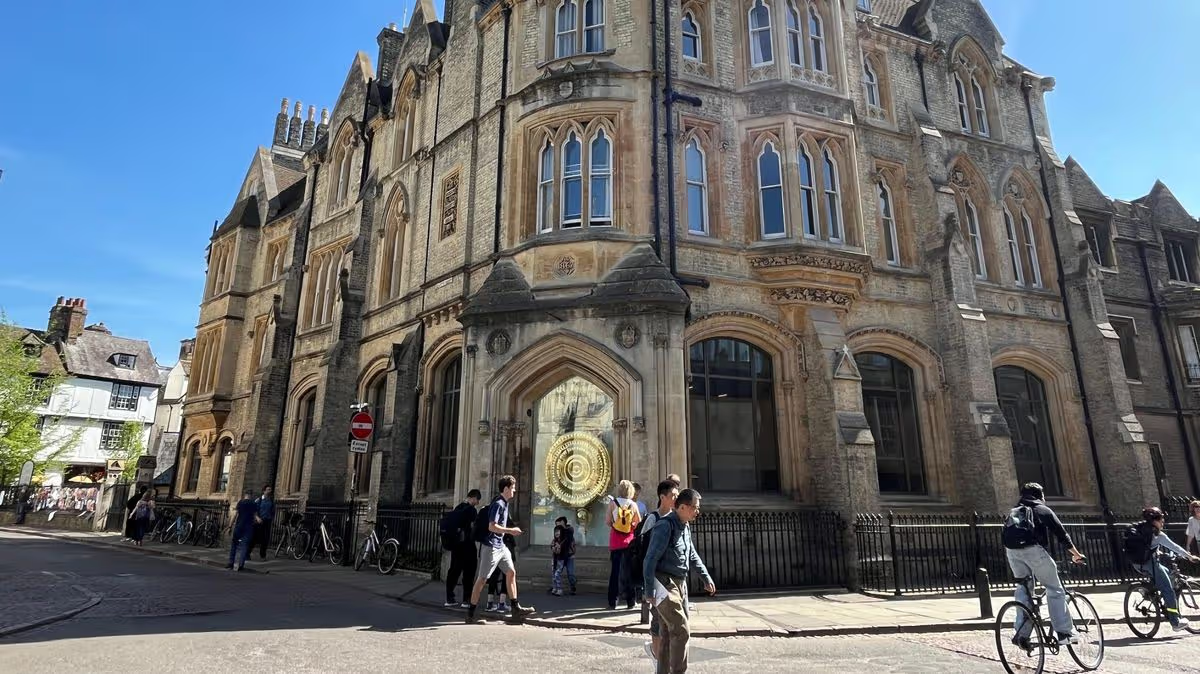
Cambridge is full of many weird and wonderful things. One that can’t be missed is a large gold clock with a grasshopper on top, on the corner junction of Bene’t Street and Trumpington Street.

Advertisement

This is the Corpus Clock, one of the city’s most unique landmarks. Crowds always gather around the clock to admire this striking time piece. It was created by Dr John C Taylor, who studied natural sciences at Cambridge University. It was officially unveiled to the public by Professor Stephen Hawking in September 2008.

What makes the clock unusual is the large grasshopper on top of it, also known as Chronophage or time eater. The large insect on top is an example of the grasshopper escapement mechanism invented in the 1700s by John Harrison, who also invented the marine chronometer that meant sailors could work out longitude.

The clock mouth opens at 30 seconds past each minute, but then closes when the minute is over. Then, when it strikes on the hour, it doesn’t chime like people may think. Instead, its chains rustle and a hammer hits a wooden coffin. Unlike a normal clock, the Corpus Clock has no hands or digital numbers. Instead, it has Vernier slits cut into its face.

Advertisement

In 2023, the clock was vandalised when the glass protecting it was smashed with a hammer. After it was damaged, the landmark was left out of action for nearly two months. However, it made its triumphant return in June of that year. Since then, crowds continue to gather every day to admire this unusual piece.

Source link

Continue Reading

Trending

Copyright © 2025