

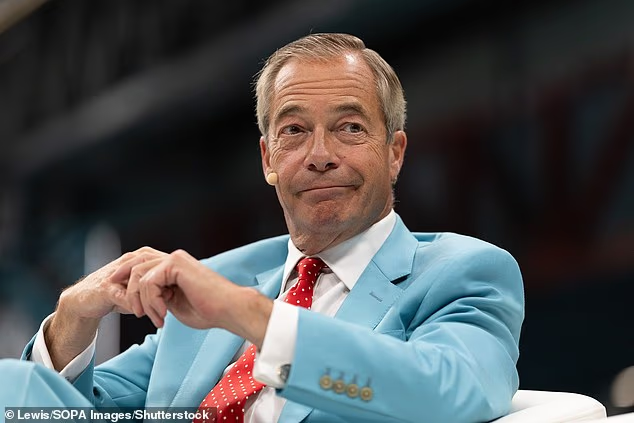
Reform is rolling in the money. With two donations of £36 million each, it has smashed the previous record for the biggest single donation to a party from an individual.
Until last week, that record stood at a comparatively paltry £10 million, a legacy from Lord John Sainsbury to the Tories in 2022.
Such a robust war chest has left Reform well ahead of its rivals in raising money to fight the next general election. It’s also a far cry from where the party was in 2024.
Reform says it will use the money to do two things. The first is to appoint ‘campaign managers’ up and down the country.
One of Reform’s objectives is to establish vibrant local parties in every constituency. This can help support and stimulate local activity, providing it with the activists who are willing to go out canvassing, deliver leaflets, make phone calls and distribute the party’s messages on social media.
It has already made considerable progress towards meeting these goals even before the latest cash injection, finding 5,000 candidates to stand in May’s local elections.
Pictured: Nigel Farage on the third day of Reform’s national conference at National Exhibition Centre in Birmingham on September 5, 2026
Secondly, the cash will be used to support research and analysis as Reform develops its programme for government.
In 2024, it was still an outsider, and the party’s proposals were not subject to the same degree of scrutiny as those of Conservative and Labour. The same is unlikely to be true at the next election.
And in many areas, Reform’s policy platform is still relatively thin. Polls suggest many voters believe the party is not ready for government. Now, though, it should be able to employ staff who can provide some intellectual underpinning to its policy positions and prop it up to resemble a genuinely alternative government.
This will leave Reform better placed to fight the next election. But it is no guarantee it will win. On their own, local party activists – the troops on the ground – do not win elections. They need ‘air cover’ from effective nationwide campaigning. And even the best research will not persuade voters to back a party if they do not believe in its objectives.
Look at the Liberal Democrats, who campaigned to reverse Brexit in 2019, and were given what was then a record £8 million by another member of the Sainsbury family, Lord David. The party returned just 11 MPs, while their leader, Jo Swinson, lost her seat. Moreover, despite already being ahead in the donations race this year, Reform support is actually down five points since January.
Meanwhile, its opponents will no doubt seize the opportunity to leverage these donations to raise questions in voters’ minds about how the party is funded. They will allege it is being bankrolled by two men who have not been living in the UK and who have made a lot of money via cryptocurrency, a financial asset Nigel Farage supports.
They will question whether Reform really does have Britain’s interests – and those of the many working-class people who currently support the party – at heart.
Money can help, of course. But as Reform has already learnt in recent weeks, it can sometimes come with difficult baggage.
John Curtice is professor of politics at Strathclyde University, and senior fellow at the National Centre for Social Research.















































You must be logged in to post a comment Login