Connect with us

NewsBeat

Solar eclipse LIVESTREAM: Watch live as the moon covers the face of the sun

Published

on

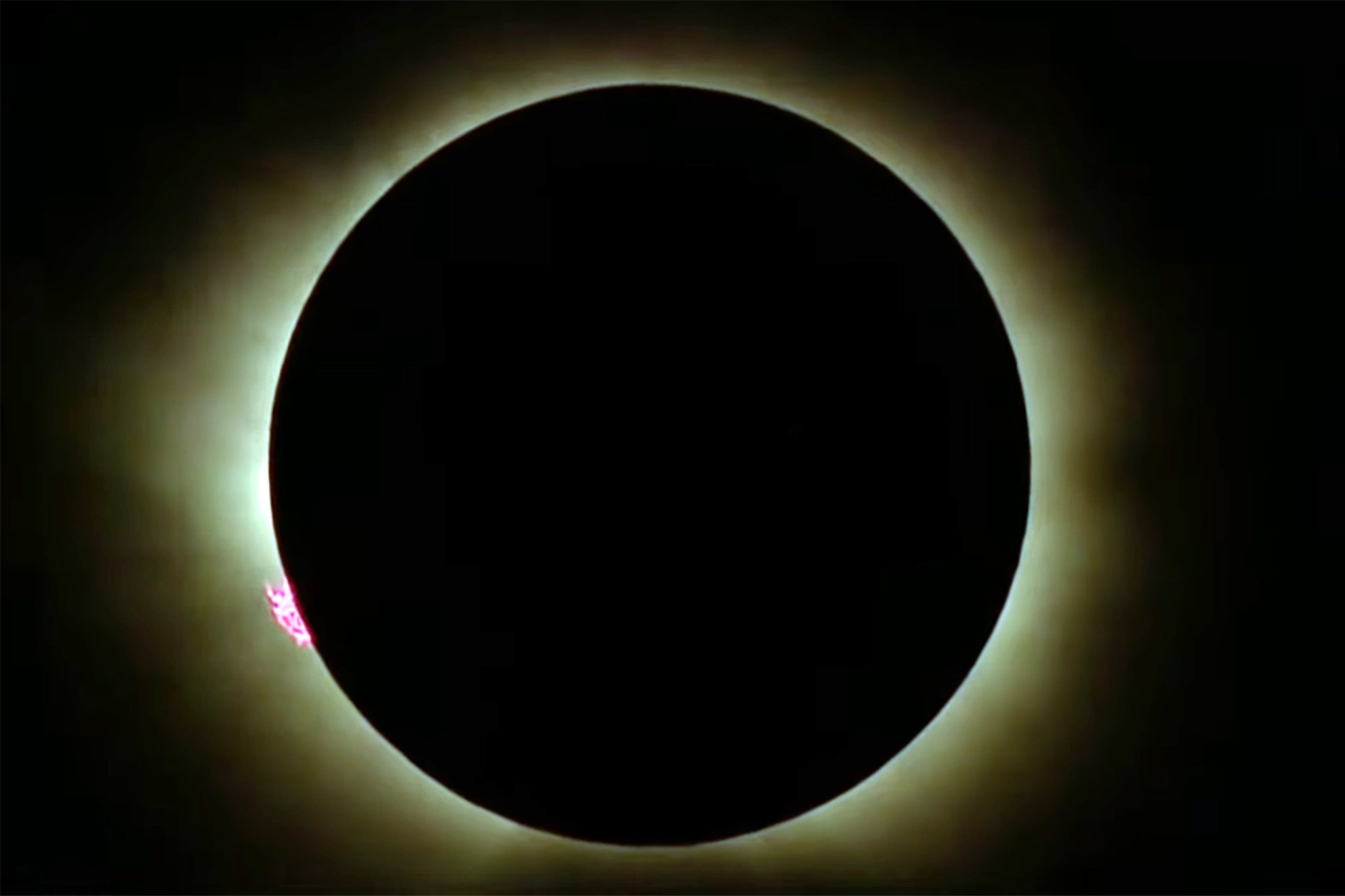
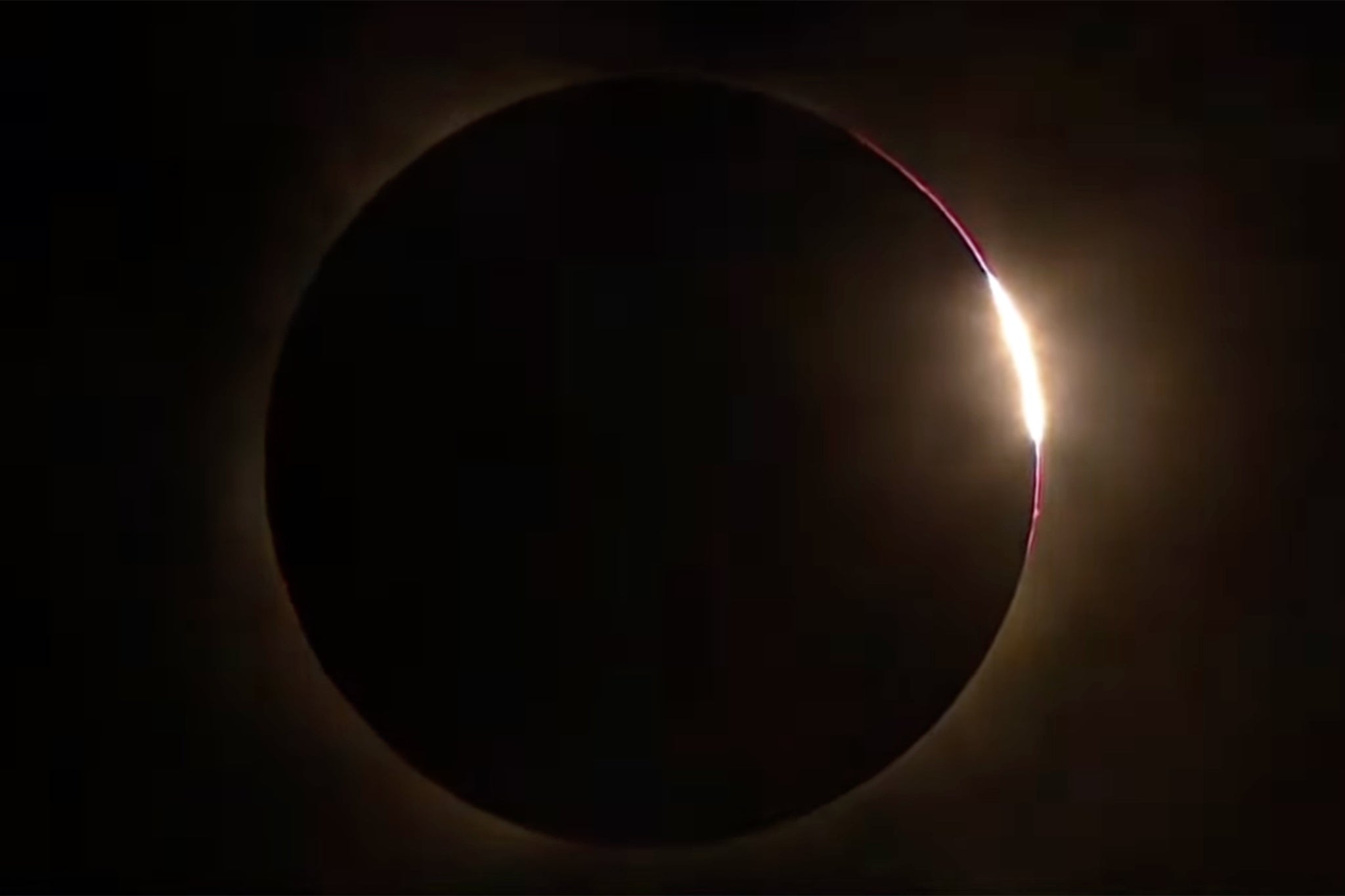
If bad weather or a lack of eclipse glasses has scuppered your plan to watch the solar eclipse tonight, you can still watch NASA's livestream of the whole event

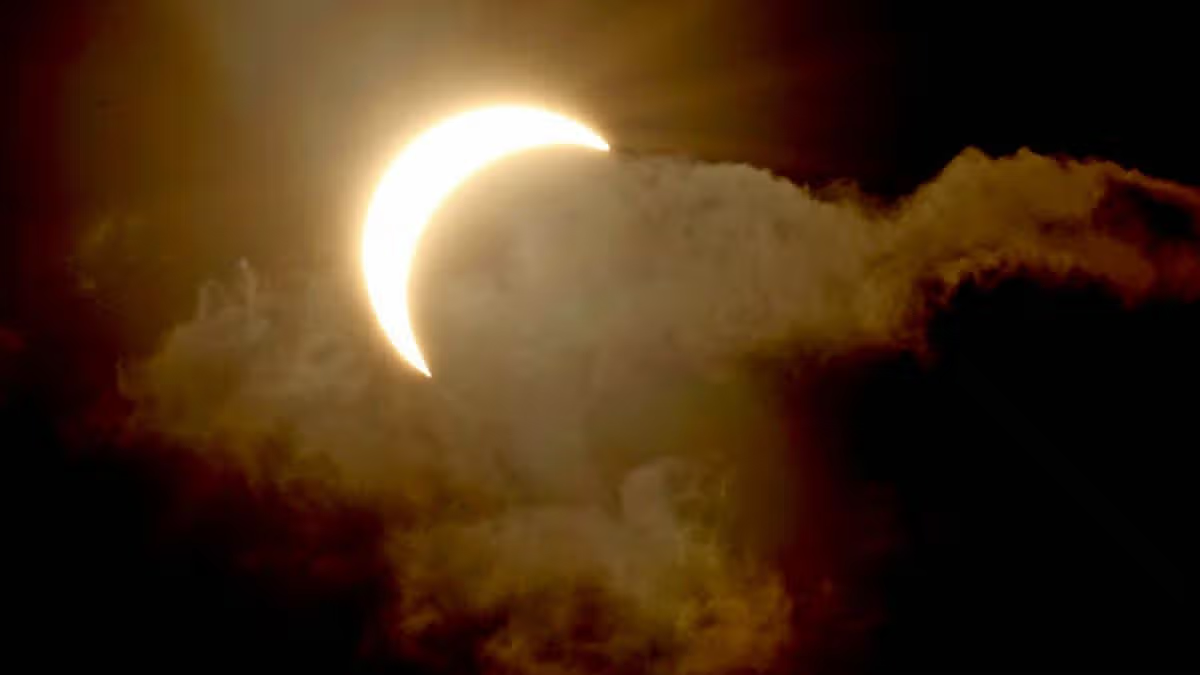
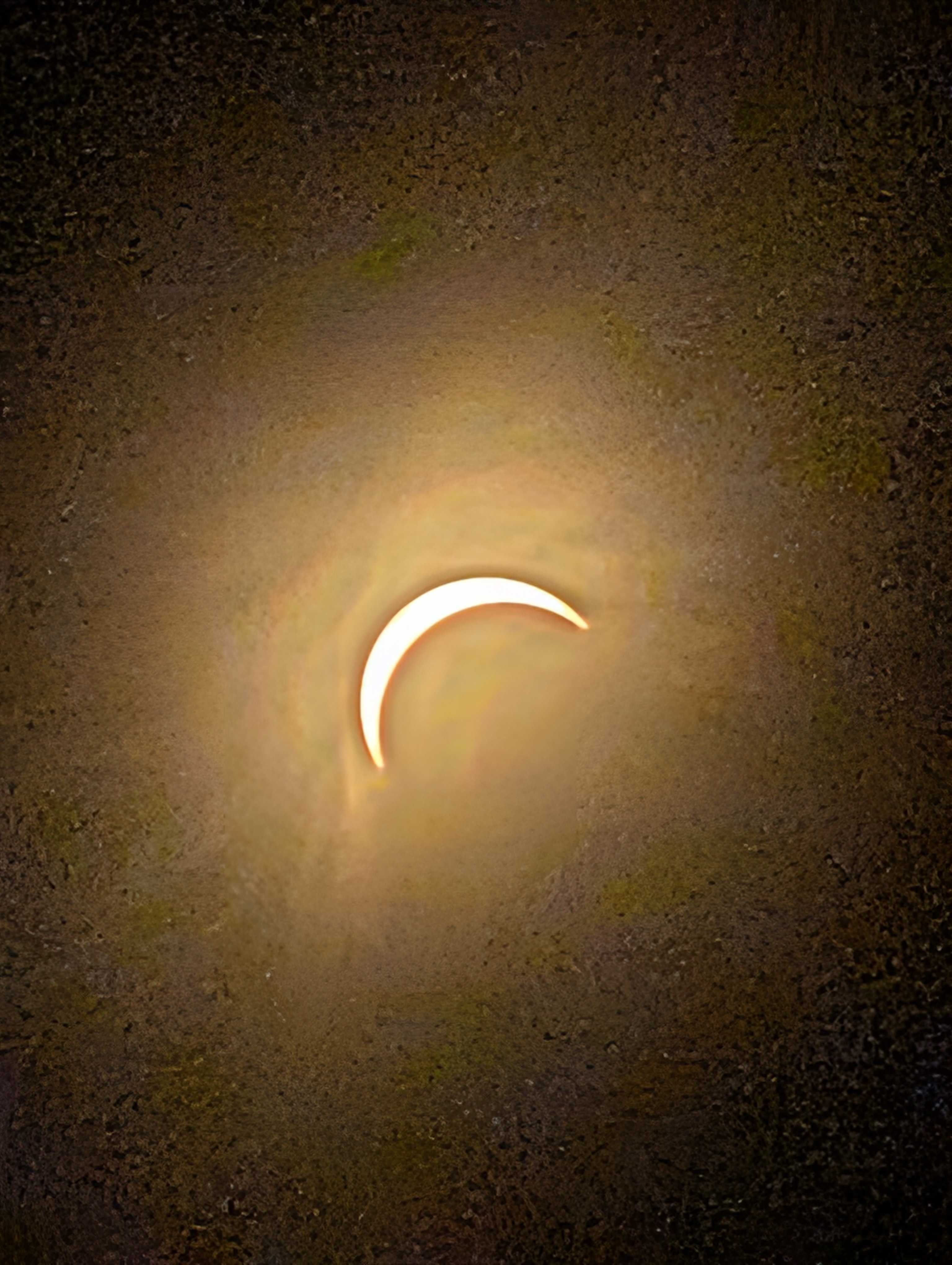
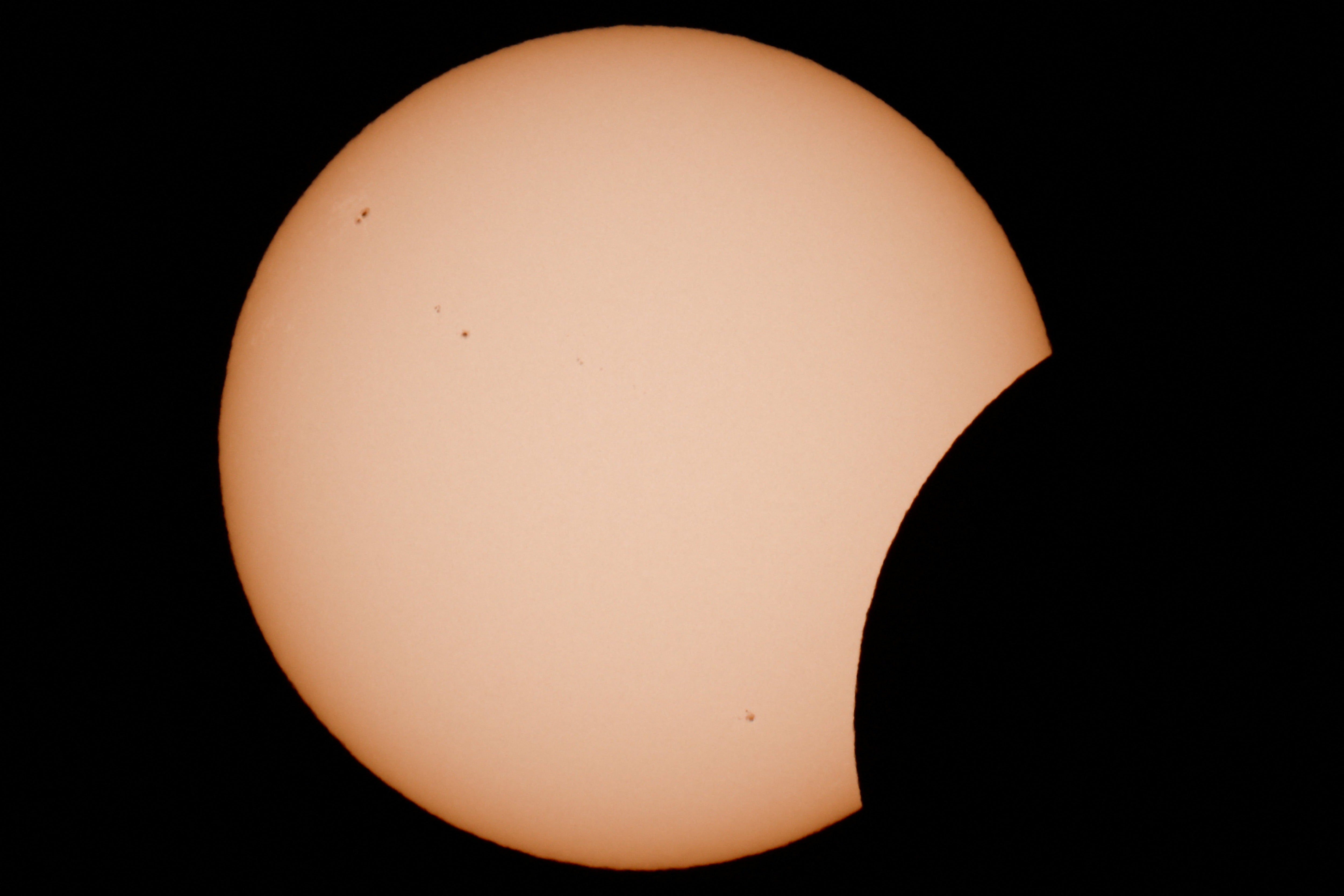
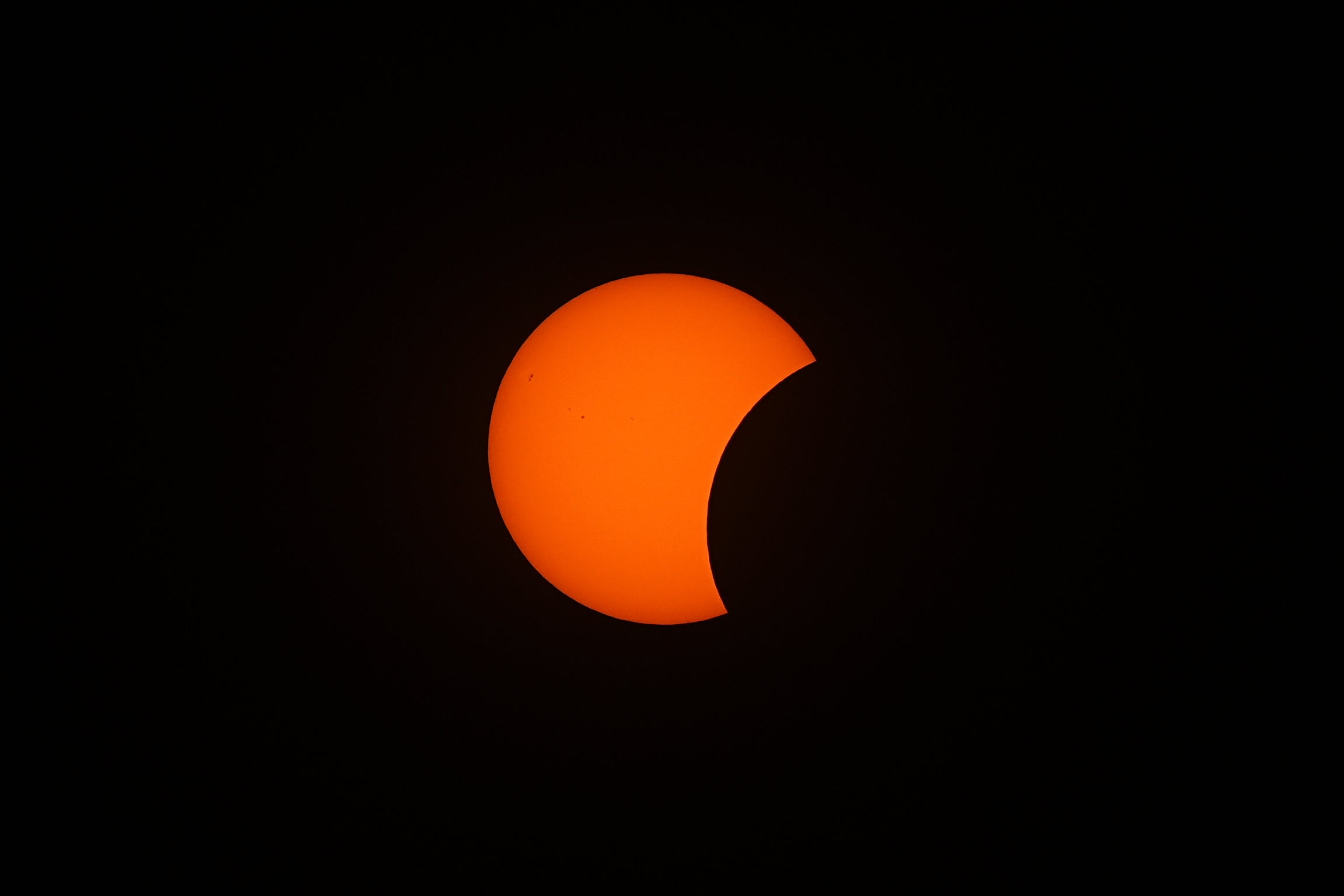
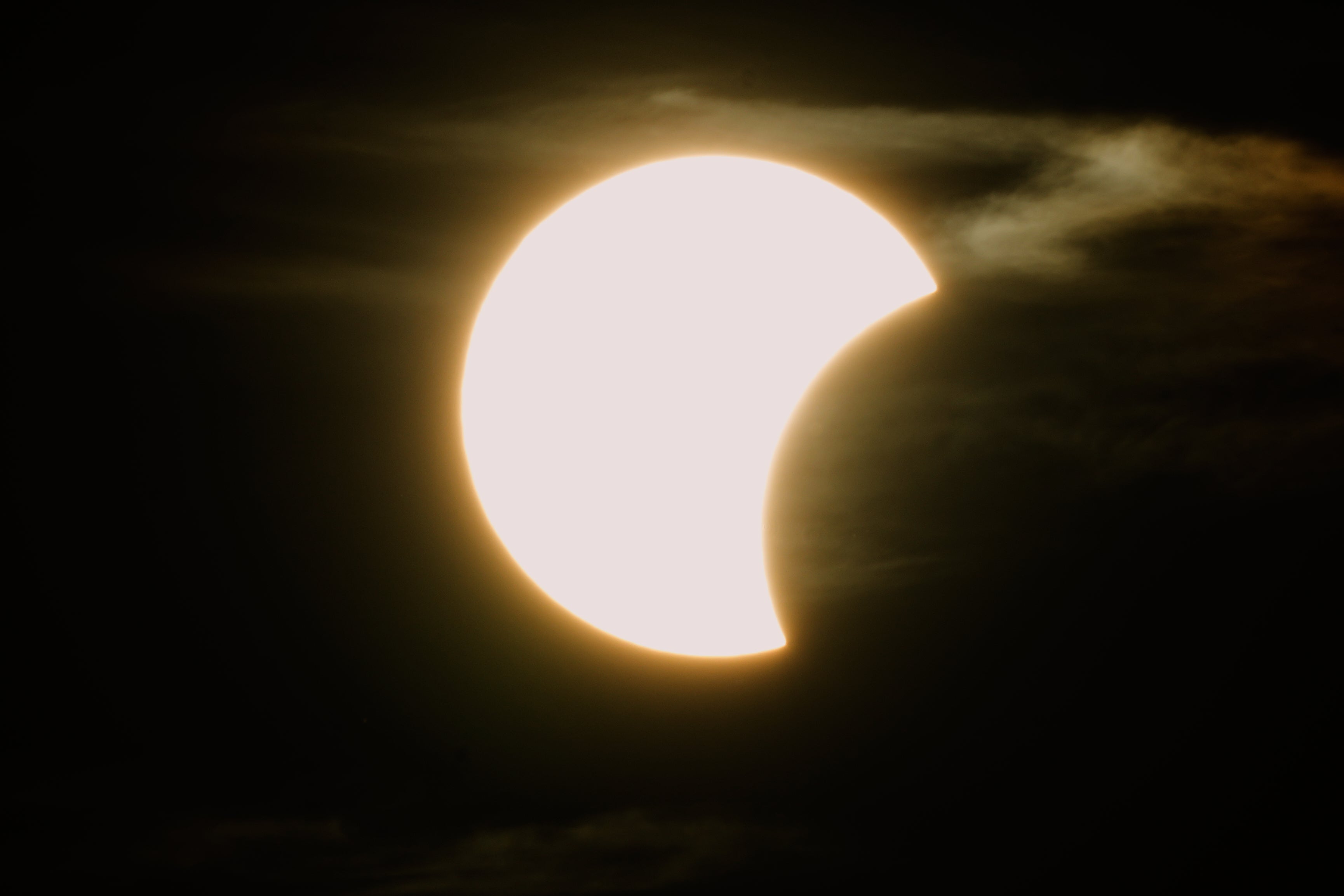
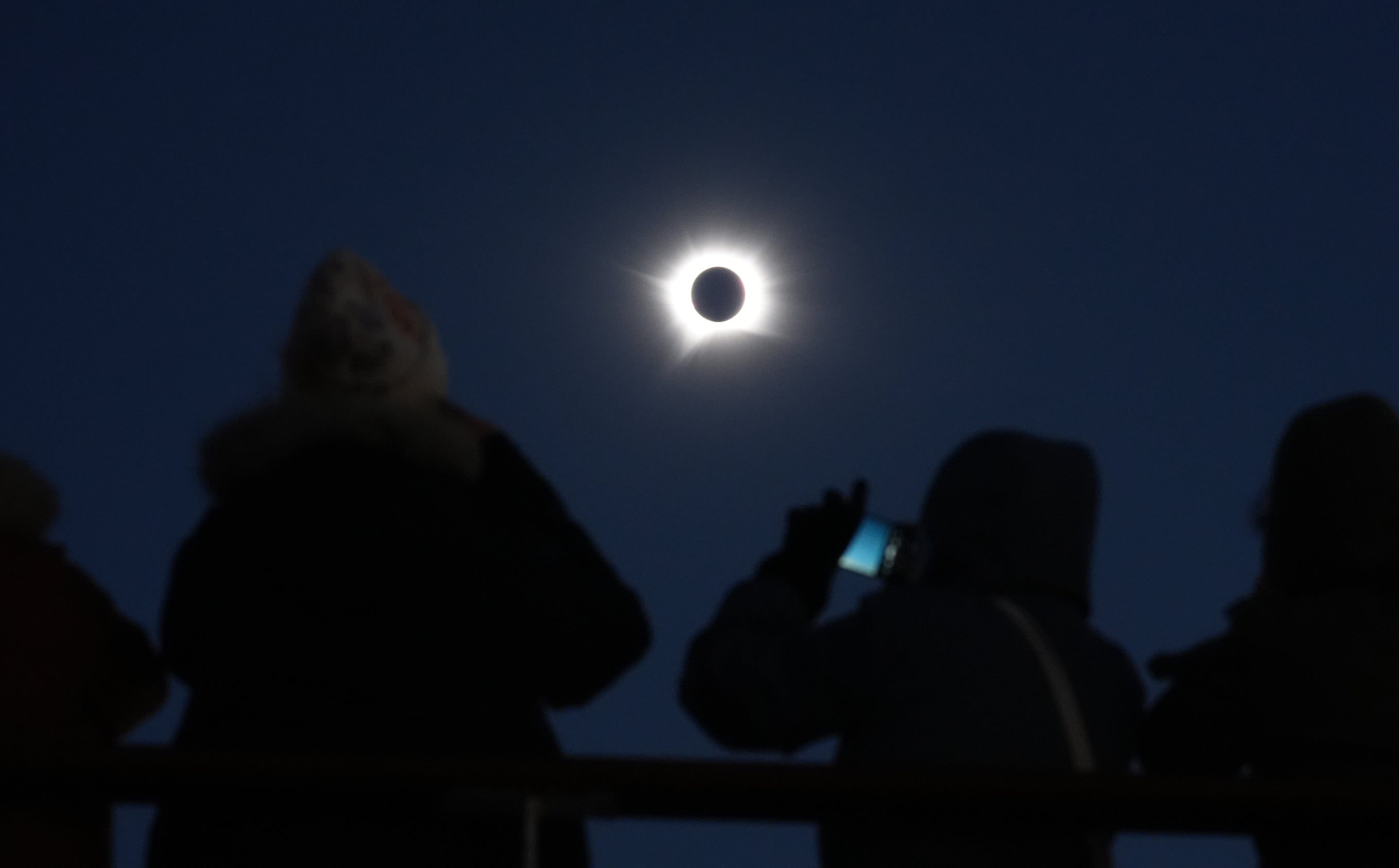
The best solar eclipse in a generation has officially started, with skies beginning to darken over the UK.

If bad weather or a shortage of eclipse glasses have scuppered your viewing plans, there’s no need to worry.

You can follow along with the whole event by tuning into NASA‘s live broadcast below.

And you’ll even get a better view than anyone currently watching from the UK.

Advertisement

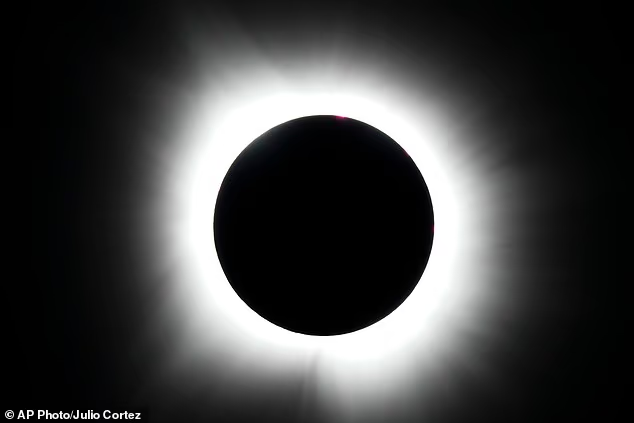
Most of the UK will see over 90 per cent of the sun vanish, but this stream will capture the moment of totality as the moon covers the entire face of the sun.  

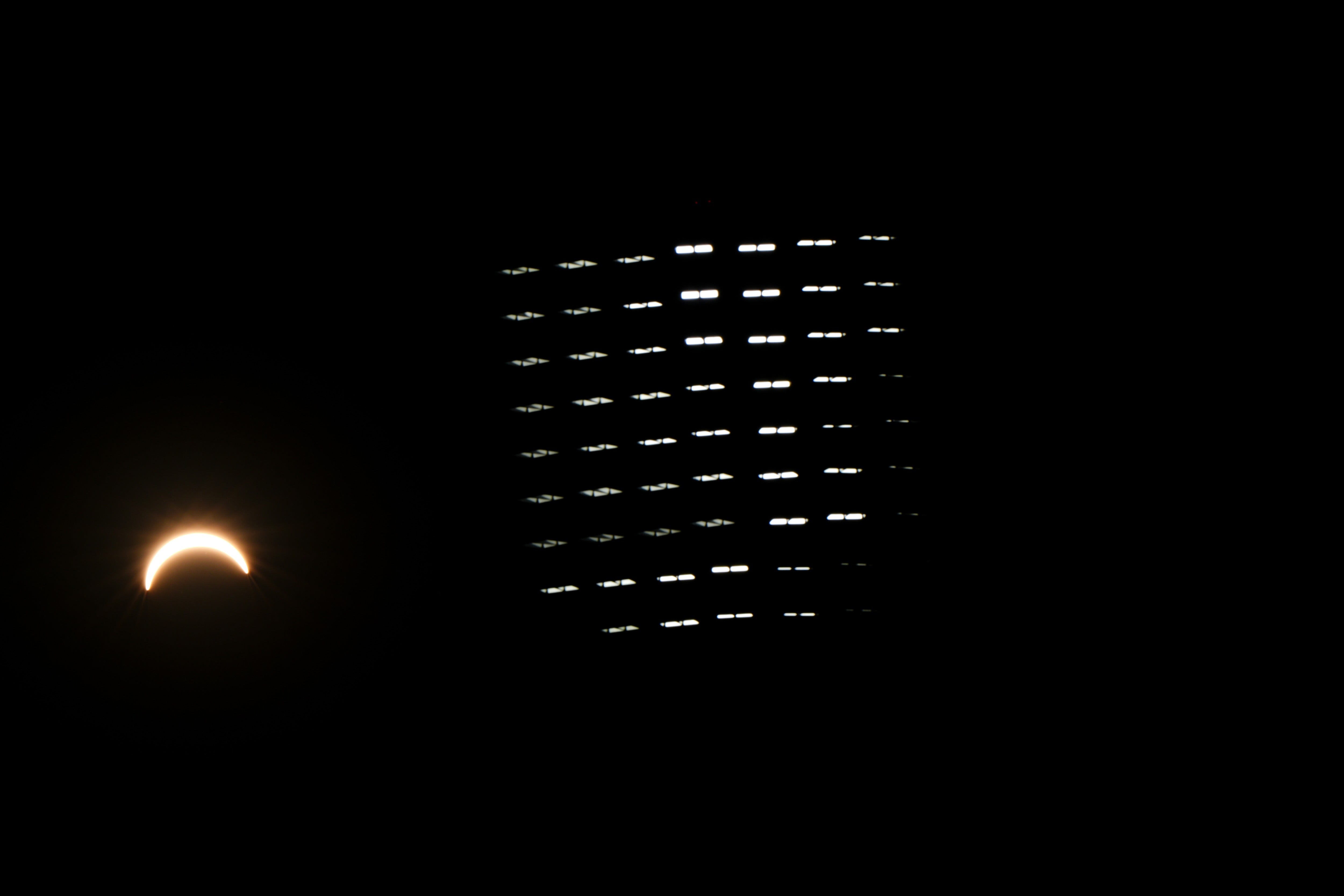
From Britain, first contact – the moment the moon’s shadow first moves over the sun – starts shortly after 18:00, with maximum coverage an hour later.

However, NASA’s coverage will be coming live from the path of totality in Iceland and Spain, so expect slightly different timings.

The broadcast will launch at 18:15 BST, and the first glimpse of totality should come about 30 minutes later from NASA’s telescopes in Iceland. 

Advertisement

If bad weather or a lack of eclipse glasses has scuppered your plan to watch the solar eclipse tonight, you can still watch NASA’s livestream of the whole event 

Britons have been left scrambling to get their hands on eclipse glasses, as shortages spark enormous queues. Pictured: Queues form outside the National Maritime Museum, Greenwich

Britons have been left scrambling to get their hands on eclipse glasses, as shortages spark enormous queues. Pictured: Queues form outside the National Maritime Museum, Greenwich 

Advertisement

While the UK is being treated to the best eclipse in over 27 years, true totality will only be visible in a narrow path between 108 and 122 miles (174 to 196 km) across.  

However, viewers of NASA’s livestream won’t just get one chance to witness totality. 

At 19:28 BST, shortly after maximum coverage in the UK, the space agency will broadcast footage of the totality from Spain.

Even more excitingly, NASA has also launched a WB–57 high–altitude jet to chase the totality.

Advertisement

A NASA–funded team will climb 50,000ft (9.5 miles) above the ground to escape the water vapour, clouds, and turbulence that could interfere with scientific readings.

Flying at 460 miles per hour (740 km/h), the jet will follow the moon’s shadow and stretch totality out to three minutes.

Meanwhile, a suite of four specialised cameras hidden in the nose–cone will snap images of the sun at least 20 times a second.

NASA hopes that this will reveal new information about the sun’s corona, the outer atmosphere of the sun which is normally hidden by the bright surface. 

Advertisement
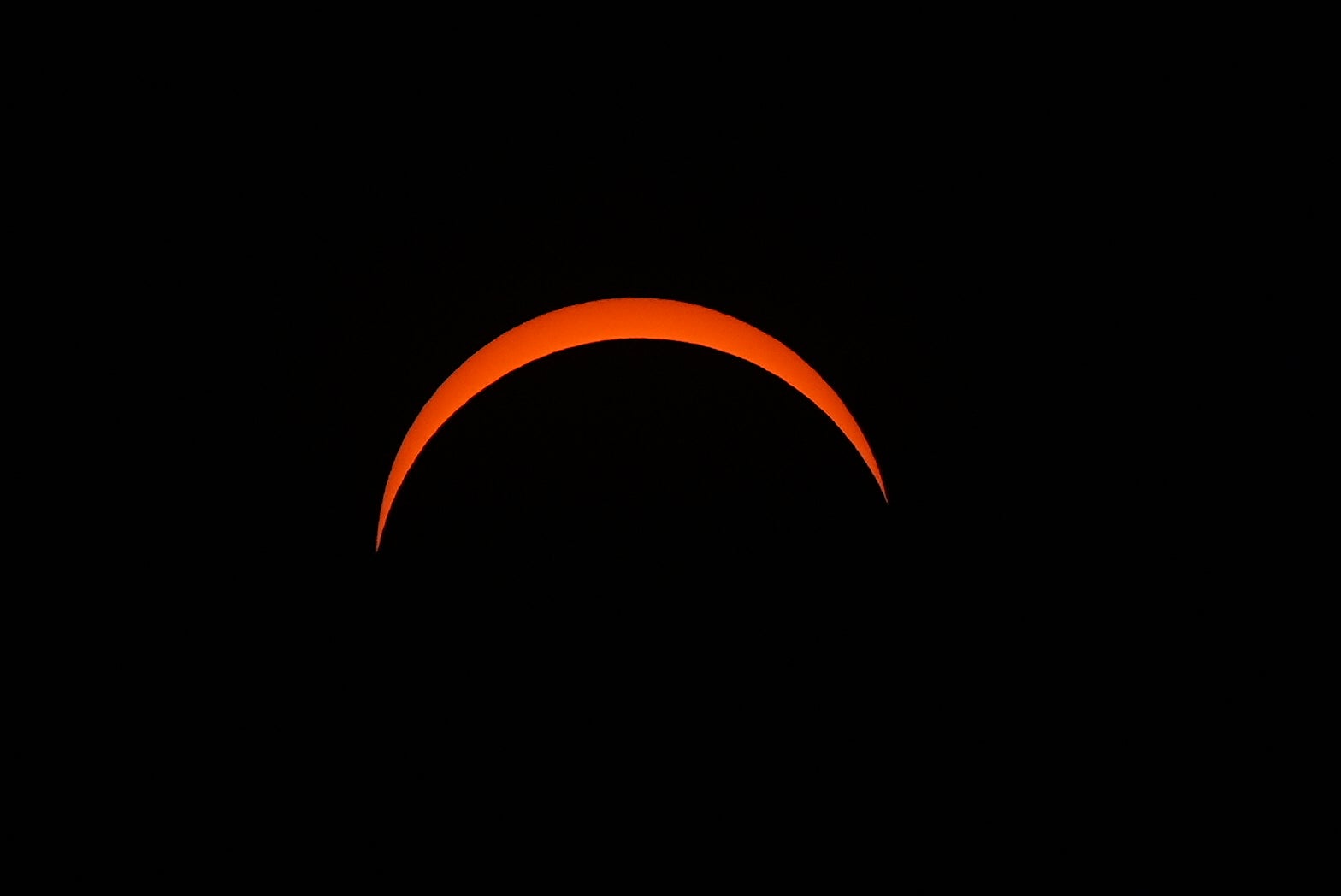
Up to 96 per cent of the sun will be obscured during the eclipse, but NASA's livestream will broadcast from the path of totality, revealing the spectacular total eclipse

Up to 96 per cent of the sun will be obscured during the eclipse, but NASA’s livestream will broadcast from the path of totality, revealing the spectacular total eclipse 

NASA will also be launching a high-altitude jet to chase the moon's shadow, extending totality to three minutes and capturing scientific data about the sun's atmosphere

NASA will also be launching a high–altitude jet to chase the moon’s shadow, extending totality to three minutes and capturing scientific data about the sun’s atmosphere 

When will the eclipse be visible in the UK?

When to see the solar eclipse  
Location Eclipse starts  Maximum eclipse  Eclipse ends  
Edinburgh 18:08 19:05 20:00 
Glasgow 18:08 19:05  20:06 
Dublin  18:12  19:10  20:04 
Manchester  18:13  19:10 20:04 
Liverpool  18:13 19:10  20:04 
Birmingham  18:15 19:11  20:04 
Bristol  18:17 19:12  20:06 
London   18:17 19:12  20:06 
Cardiff  18:17 19:12  20:06 
Truro  18:18 19:16  20:10 


<!- – ad: https://mads.dailymail.co.uk/v8/de/sciencetech/none/article/other/mpu_factbox.html?id=mpu_factbox_1 – ->

Advertisement

At the same time, the space agency will also be launching 80 scientific balloons in Iceland and six in Spain that will be gathering photos and atmospheric measurements.

Live commentary throughout the broadcast will be keeping you updated on all these scientific observations, so you can learn how researchers are making the most of this rare spectacle.

For an alternative viewing option, you can also tune into the Royal Observatory Greenwich’s live stream of the partial solar eclipse.

Advertisement

Astronomers will be recording the eclipse with one of their modern telescopes, so you can safely see what the eclipse looks like over London without your own eclipse glasses.

What is an eclipse?

Dr Shyam Balaji, an astrophysicist at King’s College London, told the Daily Mail: ‘During a total solar eclipse, the moon’s orbit puts it directly in front of the sun.

‘This obscures the sunlight that can pass directly towards the Earth, enabling us to see just the corona of the sun, which is the outer rim.’

Although the moon is between Earth and the sun every new moon, solar eclipses are much rarer, only occurring once every 18 months or so.

Advertisement

This is because the moon’s orbit is tilted by about five degrees relative to the plane on which the Earth travels around the sun.

Advertisement

That means that it is quite rare for all three bodies to be precisely lined up in such a way that the moon perfectly blocks the sun. 

In fact, it is only due to an incredible cosmic coincidence that such a perfect solar eclipse can occur on Earth.

While the moon is about 400 times smaller than the sun, it also happens to be about 400 times closer to Earth.

By pure chance, this allows the moon to perfectly obscure the sun, something which is completely unique in the solar system.

Advertisement

When is the next eclipse?

If you want to see another eclipse from the UK, the next good opportunity won’t be until November 14, 2050.

During that partial eclipse, over 80 per cent of the sun will be obscured from all parts of the UK except the far south and south west of England.

NASA's broadcast will launch at 18:15 BST, and the first glimpse of totality should come about 30 minutes later from NASA's telescopes in Iceland. Pictured: NASA researchers prepare equipment in Burgos, Spain

NASA’s broadcast will launch at 18:15 BST, and the first glimpse of totality should come about 30 minutes later from NASA’s telescopes in Iceland. Pictured: NASA researchers prepare equipment in Burgos, Spain 

However, if you want to see totality from the comfort of the UK, you’ll be waiting until September 23, 2090.

Advertisement

For less discerning eclipse chasers, there will be a few smaller partial eclipses in the coming years that could be worth seeing from Britain.

On June 1, 2030, viewers will be able to see 50 per cent of the sun obscured just after sunrise.

Then, on August 21, 2036, Britain will be treated to a partial eclipse obscuring 60 to 70 per cent of the sun. 

Outside of the UK, a rare ‘Ring of Fire’ eclipse will be visible in parts of South America and Africa on February 6, 2027.

Advertisement

Meanwhile, the next true total eclipse won’t come until August 2, 2027, and will be visible in southern Spain, North Africa, Saudi Arabia, and Yemen.

Source link

Continue Reading
Click to comment

You must be logged in to post a comment Login

Leave a Reply

NewsBeat

Solar Eclipse 2026 LIVE as incredible celestial display peaks over Greater Manchester

Published

on

Manchester Evening News

Breaking news guys, the sales of colanders are UP.

John Lewis said colander sales have increased nearly 40% compared to last year, as Nasa recommends the kitchen item as a way to watch the eclipse by viewing the shadows it casts on the ground.

A spokesperson said: “Colander sales have surged nearly 40% compared to last year, as shoppers prepare for tonight’s eclipse. We’ve still got plenty of stock for anyone wanting to view this solar phenomenon safely, and, unlike eclipse glasses, you can use it to strain your spaghetti for dinner afterwards.”

Advertisement

I do love that there’s potentially people out there who have never owned a colander before but decided the eclipse markes the perfect occasion to invest. Think of all the pasta you can drain now!

Source link

Continue Reading

NewsBeat

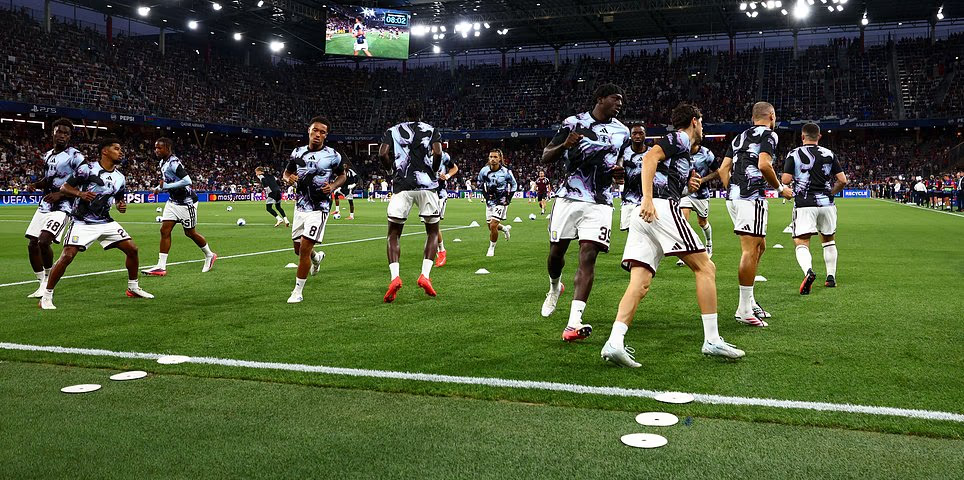
PSG vs Aston Villa – UEFA Super Cup LIVE: Emery’s new era at Villa kickstarts against Champions League winners in Salzburg

Published

on

PSG vs Aston Villa - UEFA Super Cup LIVE: Emery's new era at Villa kickstarts against Champions League winners in Salzburg

Advertisement

Follow Daily Mail Sport’s live coverage for the latest score, team news and updates as PSG take on Aston Villa in the UEFA Super Cup at the Salzburg Stadium in Austria.

Advertisement

Source link

Advertisement
Continue Reading

NewsBeat

New Forest wildfire continues as temperatures rise

Published

on

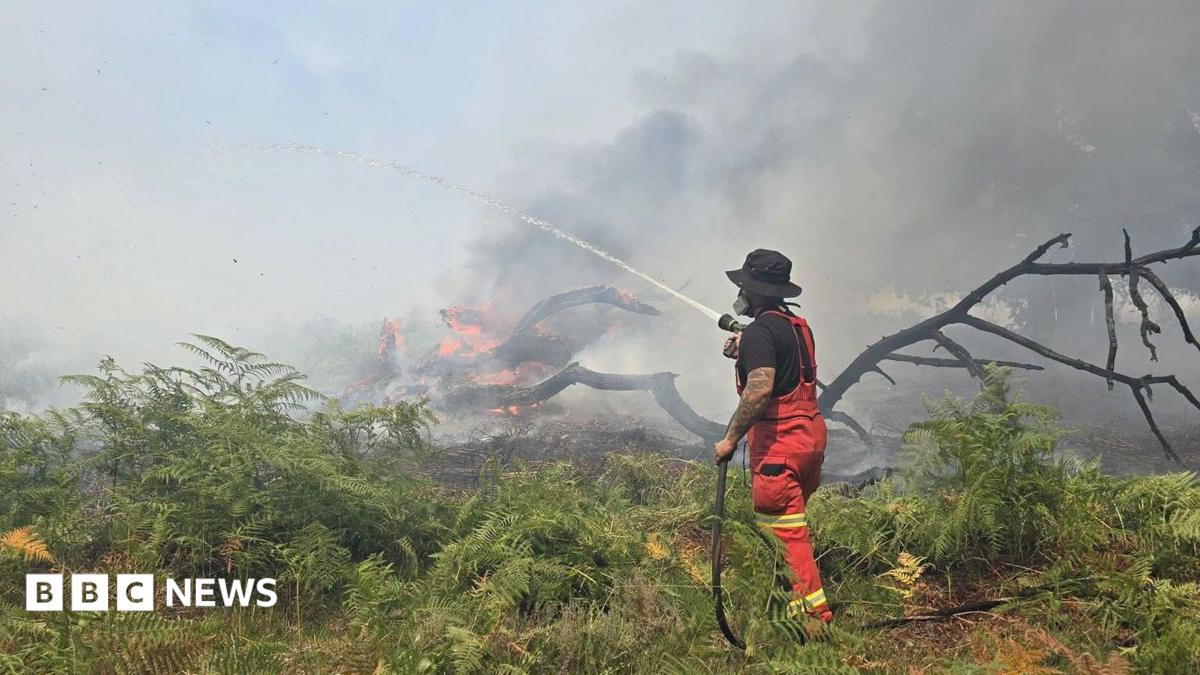
A firefighter standing in a field wearing protective clothing and holding a fire hose. They are facing away from the camera and a wildfire burns in the background. A tree is lying on its side and in flames and there are large plumes of smoke in the air.

England and Wales have seen as many wildfires in 2026 so far as there were in the whole of last year, new figures have revealed, as the Prime Minister is set to convene an emergency meeting about the extreme weather facing the country.

Some 1,017 wildfires have been recorded in England and Wales this year, according to data shared by the National Fire Chiefs Council (NFCC), the same as last year’s record-breaking total.

Prime Minister Andy Burnham said the New Forest fire is a “great concern”.

“There is obviously a significant problem of wildfires in the South,” he said.

Advertisement

Burnham confirmed that he is considering a ban on disposable BBQs after the wildfire prompted further warnings about using them in high risk areas.

HIWFRS said: “It only takes one careless action to start a wildfire.

“A single discarded cigarette, campfire or barbecue can rapidly escalate into a serious wildfire, causing widespread damage to wildlife and the countryside, endangering firefighters and putting additional pressure on already stretched emergency resources.”

People are advised to take home litter, avoid smoking and using barbecues, and not to light campfires or bonfires.

Advertisement

The fire service also warned drivers not to park on dry grass as the underside of vehicles can reach over 400C.

Source link

Continue Reading

NewsBeat

Eurovision bosses announce huge rule change to prevent winners involved in ‘armed conflict’ from hosting amid backlash over Israel’s involvement in the contest

Published

on

The organisers of the Eurovision Song Contest have announced a huge change to the rules, amid growing backlash over Israel's involvement. Pictured: Israel's 2026 entrant, Noam Bettan

The organisers of the Eurovision Song Contest have announced a huge change to the rules ahead of the 2027 competition.

The annual music competition is set to return in May, with Bulgaria as hosts after singer Dara was crowned the winner of this year’s event with her song Bangaranga.

But it’s now been announced that new rules will mean that the ‘winning broadcaster will automatically be ineligible to host’ the competition if their state is involved in an ‘armed conflict’ or ‘sensitive geopolitical situation’.

The changes were made after a review by Eurovision bosses. The rules around hosting were first called into question in 2022, when the United Kingdom stepped in to host on behalf of winners Ukraine, due to their conflict with Russia.

Advertisement

Israel’s involvement in the contest has come under increased scrutiny in recent years, with Spain, the Netherlands, Ireland, Iceland and Slovenia all boycotting the contest this year.

This year, Israel’s contestant Noam Bettan was heavily booed by the audience in Austria during his performances in the semi-finals and the final.

The organisers of the Eurovision Song Contest have announced a huge change to the rules, amid growing backlash over Israel’s involvement. Pictured: Israel’s 2026 entrant, Noam Bettan

Advertisement

Outside the venue, Vienna became a focal point for large-scale demonstrations, with more than 1,000 musicians and cultural figures signing open letters urging organisers to bar Israel from the contest altogether.

Security was significantly tightened ahead of the final following days of unrest in the Austrian capital.

Despite the mounting pressure, Eurovision chiefs stood firm, defending Israel’s inclusion and maintaining that the competition must remain ‘neutral’.

While Israel briefly led during the voting drama, the combined jury scores ultimately saw them slip into second place.

Advertisement

Scenes of jubilation erupted among the Bulgarian delegation as they won and confetti poured from the ceiling, marking a landmark moment in the nation’s Eurovision history.

Across the Austrian capital, pro-Palestine protesters took to the streets waving Palestinian flags and holding signs saying ‘don’t mention Palestine’ and ‘united by genocide’ ahead of the final.

One protester, Viktoria Eibensteiner said: ‘I think it’s very important to show a symbol of Austria being against war crimes, about not offering a stage for Israeli crimes in Palestine, in Lebanon, wherever.

‘We want to take a stance against genocide, against war crimes, and that’s why we’re here today, it’s a celebration that serves to counteract the Eurovision Song Contest and the normalisation of war crimes.’

Advertisement
Israel's involvement in the contest has come under increased scrutiny in recent years, with many countries boycotting the contest this year. Pictured: Israel's 2025 entrant, Yuval Raphael

Israel’s involvement in the contest has come under increased scrutiny in recent years, with many countries boycotting the contest this year. Pictured: Israel’s 2025 entrant, Yuval Raphael

Jamil Sawalmeh, the Country Director for ActionAid Palestine, said: ‘Justice cannot be a song Europe sings for some and silences for others.

‘As Eurovision takes centre stage across Europe today, the humanitarian crisis in Gaza continues, with Palestinians facing bombardment, forced displacement and deepening suffering, while the Israeli Government steps up its assault on Palestinian life and rights in the West Bank.’

The boycotts were a financial blow to Eurovision, which is funded largely by participating broadcasters, and to public broadcasters at a time when many are under financial pressure from government funding cuts and competition from social media.

Advertisement

Long a forum for good-natured and sometimes more pointed national rivalries, Eurovision has found it hard to separate pop and politics in recent years.

Russia was expelled in 2022 after its full-scale invasion of Ukraine.

Tensions rose again after Hamas’ October 7, 2023, attack on Israel, which killed some 1,200 people, and Israel’s subsequent campaign in Gaza that has left more than 70,000 people dead.

The last two Eurovision contests have seen pro-Palestinian protests both outside the venues and inside, forcing organisers to clamp down on political flag-waving.

Advertisement

Several performers and countries have called for the exclusion of Israel, which has competed in Eurovision since 1973, one of a few non-European countries to do so.

The 2024 contest in Malmo, Sweden, and last year’s event in Basel, Switzerland, saw pro-Palestinian protests that called for Israel to be expelled over the conduct of its war against Hamas in Gaza and allegations it ran a rule-breaking marketing campaign to get votes for its contestant after Israel finished second last year.

When organisers declined to kick Israel out, five countries announced in December that they would not participate this year.

The European Broadcasting Union, which runs Eurovision, has toughened voting rules in response to the vote-rigging allegations, halving the number of votes per person to 10 and tightening safeguards against ‘suspicious or coordinated voting activity’.

Advertisement

Source link

Continue Reading

NewsBeat

Lindsay Clancy’s bloodstained clothes she wore during children’s stranglings are put on full display in stunned courtroom: Live updates

Published

on

Lindsay Clancy's bloodstained clothes she wore during children's stranglings are put on full display in stunned courtroom: Live updates

Tearful teacher reveals Lindsay Clancy’s daughter’s concerning behavior just one day before killings

Susan Bertolo also worked at Learning Sprouts preschool that Cora and Dawson attended.

She looked after the ‘Sunflower’ room – which Cora attended three days a week in the mornings.

On Thursday, Bertolo teared up as she described Cora as an ‘amazing’ and ‘wonderful’ preschool student who she was ready to go into kindergarten.

Advertisement

Cora’s preschool teacher teared up as she recalled the last day she saw Cora.

On the morning of January 23, 2023, Cora was dropped off at preschool.

That day, she needed to use the bathroom more than normal, Bertolo said. She noted that she was concerned because this was out of the ordinary for the child, and told another teacher.

When she told Clancy at pickup, she said she had a doctor’s appointment for Cora the next day.

Advertisement

The five-year-old was complaining that her tummy hurt and didn’t want to get up from her nap, her second teacher of the day, Stephanie Williams, told the court.

Williams told Clancy this when she picked her daughter up that afternoon.

Instead of Cora getting up and meeting her mom at the door to the classroom – as the children normally do – Clancy had to walk into the room and gently coax the girl to leave.

Clancy scooped up the little girl from her cot, saying to her: ‘Oh baby, come on let’s go get Dawson and we’ll go home.’

Advertisement

When asked if she noticed anything different about Clancy that day – or any day – she said: She was just a very loving mother who cared very much for her children.’

Source link

Advertisement
Continue Reading

NewsBeat

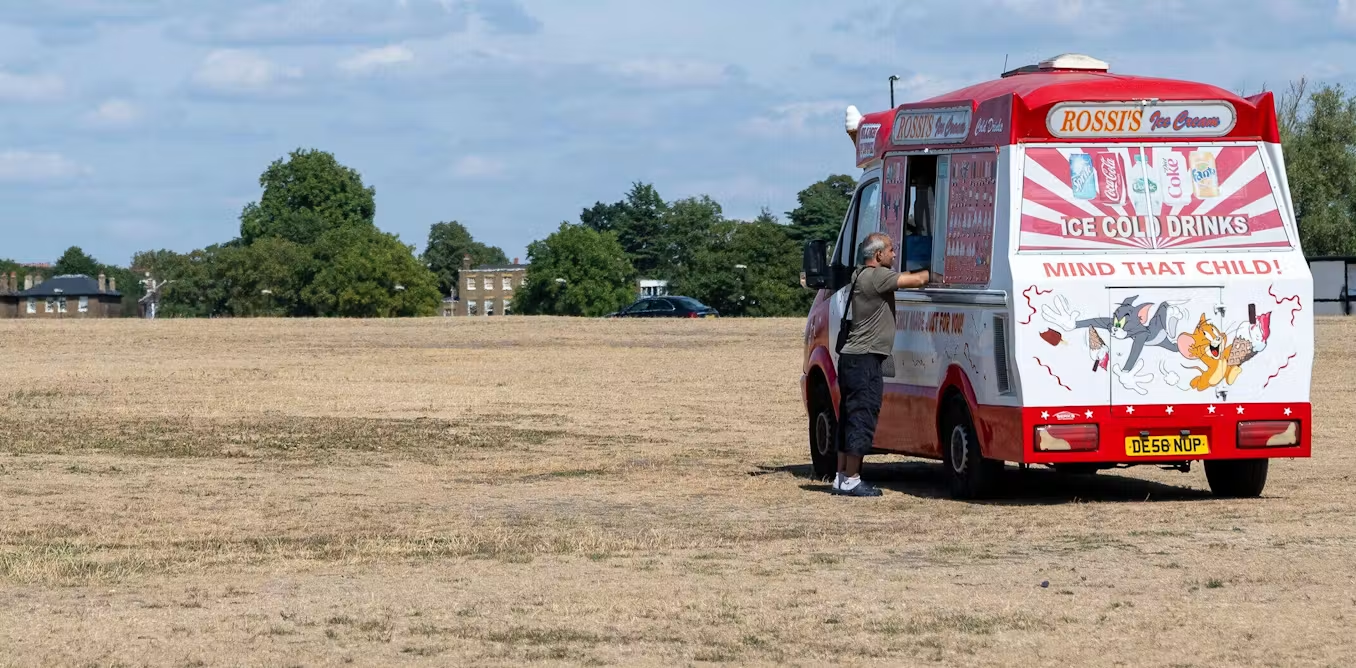
Why has Britain’s grass turned yellow? A plant scientist explains what happens next

Published

on

Why has Britain’s grass turned yellow? A plant scientist explains what happens next

Fields, parks and lawns across Europe have turned to straw this summer. Landscapes thousands of years old have been revealed as green outlines against yellow backgrounds, where ancient underground walls and ditches retain enough water to sustain pockets of grass above them. Lawns and parklands have been especially affected because what water is available is being directed to homes and farms.

July was the driest month ever recorded in England and Wales, and droughts have affected parts of Britain in four of the last five years. As heatwaves become more frequent with global warming, this raises an uncomfortable question for a country that takes particular pride in its greenery: what happens to “England’s green and pleasant land” if summers like this become the norm?

No, not wildebeest in the Serengeti. Cows in Buckinghamshire.
Stephen Chung / Alamy

The news isn’t all bad. As a group, grasses are good at surviving dry conditions, and their resilience has helped make them one of the most successful groups of plants on Earth. They now include more than 11,000 species and cover more than 40% of the Earth’s land area, from tropical savannas to Arctic steppe.

Advertisement

They are also much older than scientists once thought. The earliest fossil grasses date to around 55 million years ago, but distinctive mineral deposits in their leaves have since been found in fossilised dinosaur faeces from the late Cretaceous period so we now know that grasses were around tens of millions of years earlier.

Grasslands only spread across the world later, about 20 to 30 million years ago, when they took advantage of a climate that was becoming cooler and more arid. In those conditions, grasses could survive better than many other types of vegetation.

British grass is used to damp summers

The main grasses used in British lawns, however, are not necessarily as well adapted to dry conditions as some of their relatives elsewhere. But even species already native to northern Europe and well adapted to cool, damp conditions have ways of surviving drought. They can slow water loss from their leaves and, where possible, send roots deeper into the soil in search of moisture.

But under really dry conditions, such as those we are seeing at the moment, they have no choice but to shut down and wait for better conditions. They move what water remains to the parts of the plant that will produce new leaves, which are protected deep inside the outer leaves. These outer leaves dry out and die, giving some of their water to the critical growing parts, which survive and are ready to produce new leaves when it rains again. The growing centres also accumulate sugars that help draw in water and protect their cells from drying out.

Advertisement

That’s why a yellow lawn can be deceptive. After previous droughts, apparently dead expanses of stalks have slowly recovered when rain comes back. Our lawns will return this time too.

yellow parkland with London skyline in background

Brockwell Park in south London will turn green again in the autumn. And your garden will too.
Jordan Pettitt / Alamy

But they will still dry out again in future summers. In much of the world, grass is green in winter and yellow in summer. Is the British public willing to accept this as the norm? If not, it may make sense to introduce different varieties that are better adapted to warmer conditions, although these may be less suited to Britain’s colder months.

Weird weather, yellow grass

One problem is that it isn’t necessarily easy to guess what the new normal will be, or even if there will be one. Climate change isn’t just making the weather warmer, it is also making it less predictable, a phenomenon that has been called “global weirding”.

July 2026 in Britain was exceptionally dry, as it was in 2022, but rainfall was 70% above average in July 2023. Which do we plan for?

Advertisement

To some degree, people in Britain and similar countries could alter their lifestyles to adapt to new conditions if they are consistent (even if countries nearer to the equator cannot). But ultimately there’s no magic grass variety that will keep Britain green and pleasant whatever the weather. Instead, the public may need to accept that lawns will be yellow during dry summers. In a warmer, less predictable climate, adapting to the new environment may mean rethinking what we expect parks and gardens to look like.

Source link

Advertisement
Continue Reading

NewsBeat

Pentagon review says US strikes killed 153 civilians in Yemen last year

Published

on

Pentagon review says US strikes killed 153 civilians in Yemen last year

Washington (AP) — U.S. airstrikes targeting Iranian-backed Houthi rebels in Yemen last year killed more than 150 civilians, according to a Pentagon review of the attacks, which comes as concerns rise over civilian casualties during military campaigns under the Trump administration.

The unclassified assessment, obtained by The Associated Press, was sent to Congress as part of an annual report on civilian casualties and reported earlier by NBC News. A Pentagon official, who was not authorized to discuss the matter publicly and spoke on condition of anonymity, said the department will submit the report in the coming months but had nothing more to announce.

The Pentagon review focused on three airstrikes in April 2025 that were launched during the U.S. campaign against the Houthis. The militants were attacking commercial ships in the Red Sea, a crucial global trade route that leads to the Suez Canal and into the Mediterranean, as well as Israel.

Those strikes targeted hostile forces in or near Yemen’s rebel-held capital city of Sanaa as well as the Ras Isa port, the report said. A total of 153 civilians were killed and 243 were injured.

Advertisement

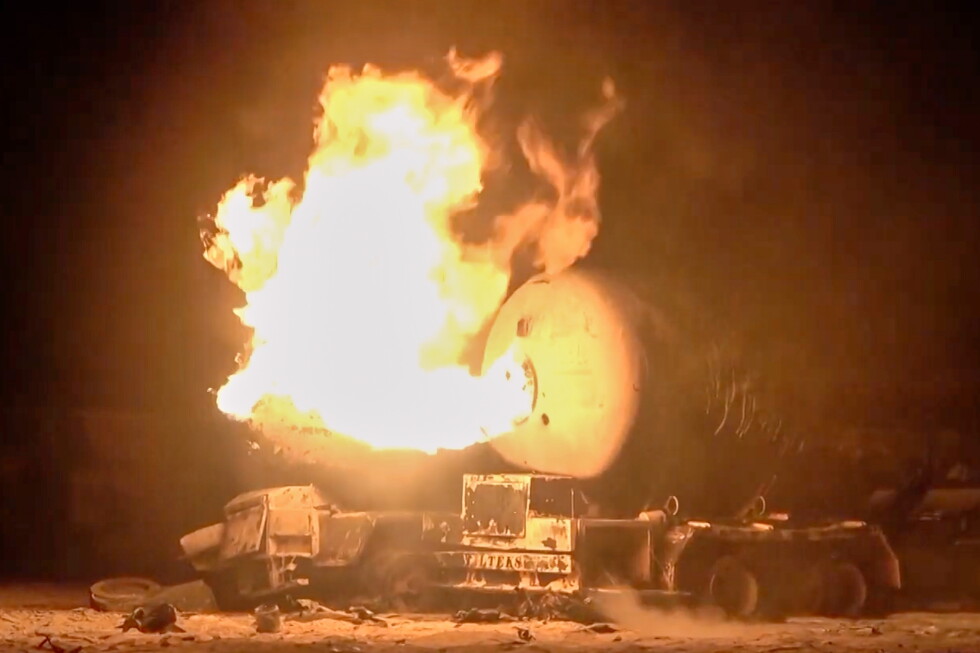
The strike on the port was the most deadly, killing 80 people and injuring 171 others. It sent massive fireballs billowing skyward and turned tanker trucks into burning wrecks. The Houthis aired graphic footage of the aftermath on their al-Masirah satellite news channel, showing corpses strewn about the port.

U.S. Central Command, which oversees military operations in the Middle East, said at the time that the “strike was not intended to harm the people of Yemen.”

“U.S. forces took action to eliminate this source of fuel for the Iran-backed Houthi terrorists and deprive them of illegal revenue that has funded Houthi efforts to terrorize the entire region for over 10 years,” U.S. Central Command said in its statement in April 2025.

The command determined that the three strikes “more likely than not” resulted in civilian harm, the review said. The information was based on U.S. intelligence sources, imagery and open-source reporting.

Advertisement

Civilian casualties from U.S. military operations have drawn concerns, including from lawmakers in Congress, after a U.S. missile struck an Iranian primary school in the opening days of this year’s war, killing up to 168 people. Defense Secretary Pete Hegseth is said to have slashed the size of an office focused on reducing civilian harm, the AP has reported.

The Pentagon assessment comes as the Houthis are carrying out a growing number of strikes against government forces in Yemen and oil facilities in neighboring Saudi Arabia, which supports the Yemeni government, and the kingdom’s shipping in the Red Sea.

Fears are growing that the renewed violence could reignite Yemen’s civil war following a 2022 truce and open a new front in the Middle East war.

Advertisement

Source link

Continue Reading

NewsBeat

First solar eclipse photos as spectacular display turns the skies dark

Published

on

First solar eclipse photos as spectacular display turns the skies dark

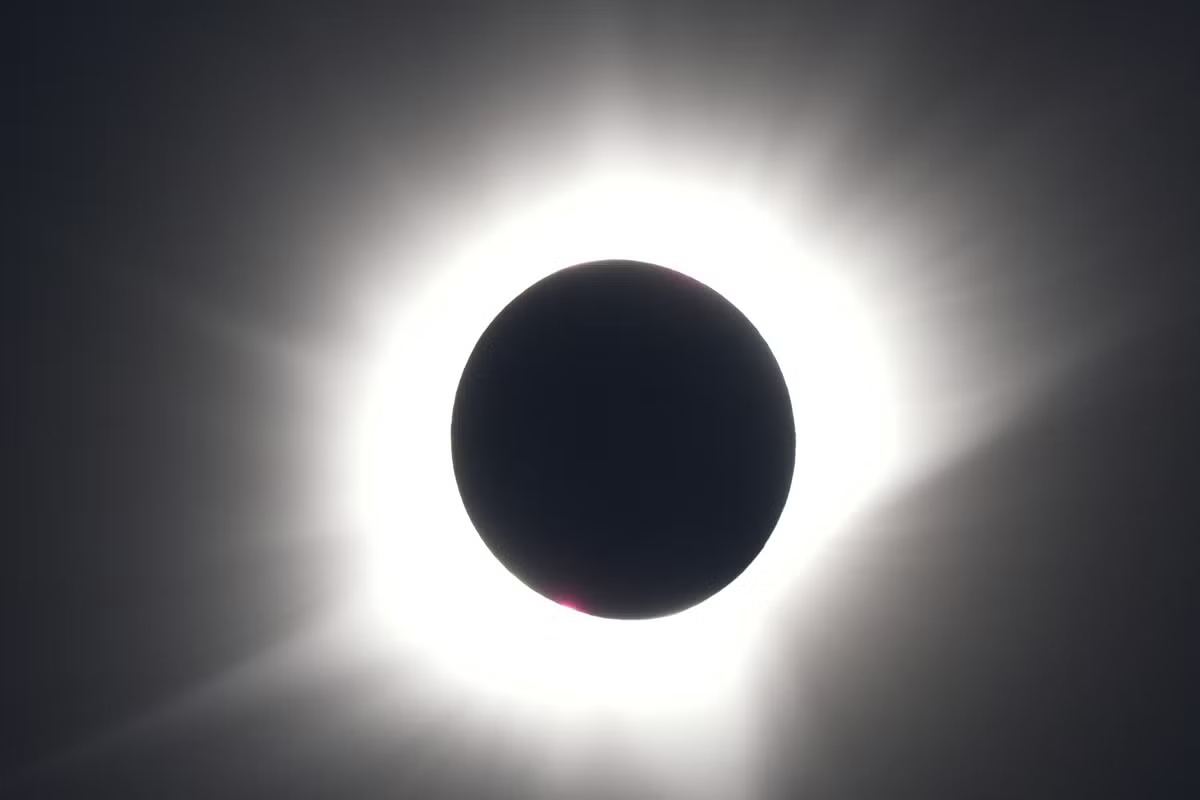
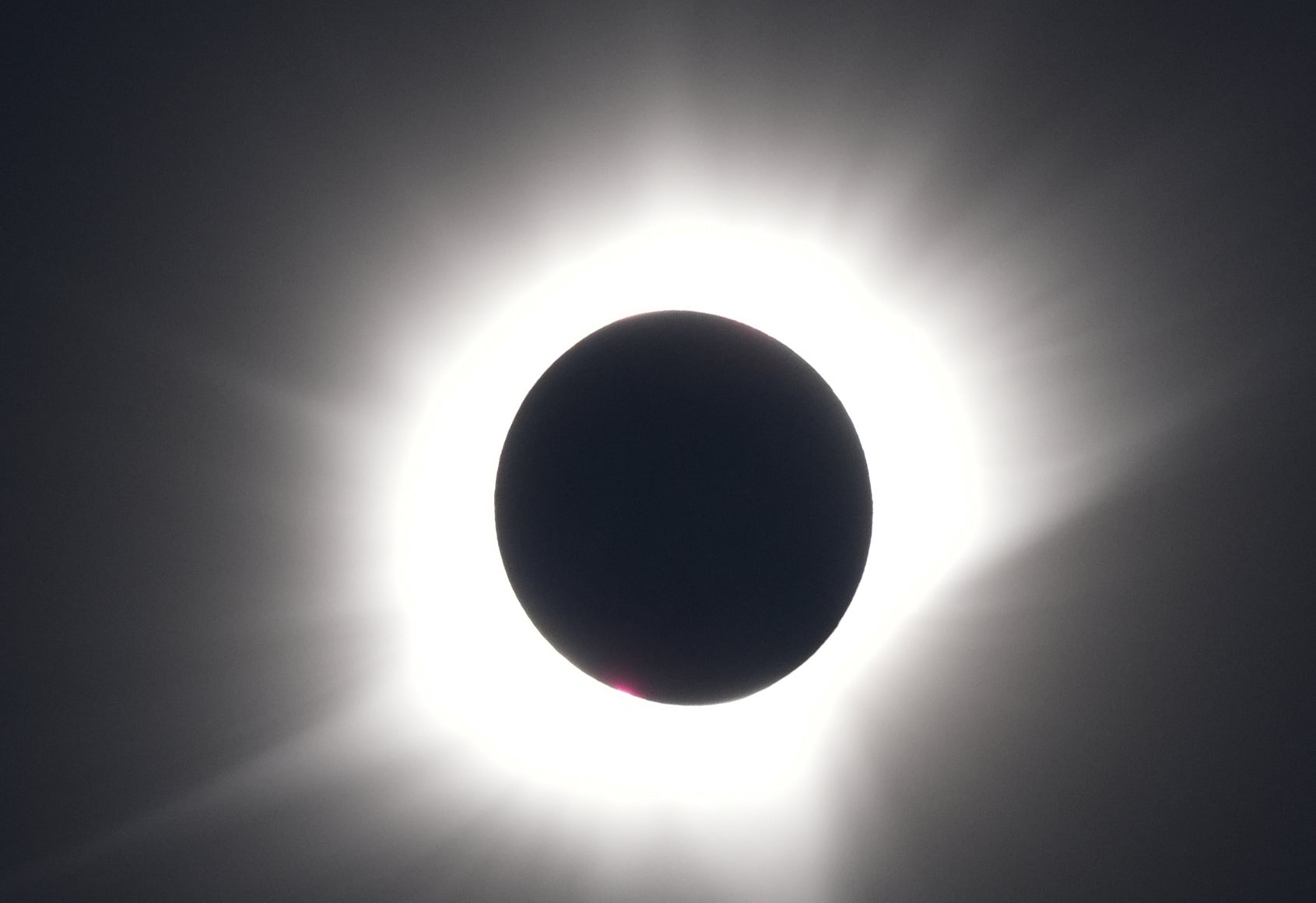
Stunning images show the solar eclipse as millions of people around the world gathered to witness Europe’s first total eclipse in 27 years.

Huge groups sat under clear skies in cities and towns across Spain Wednesday, equipped with folding lawn chairs, sun umbrellas, and hats while eagerly waiting for the celestial spectacle.

Vast crowds across a wide band of northern and central Spain had front-row seats for some of mainland Europe’s best viewing opportunities.

Narrow slivers of Iceland and Greenland were also positioned to observe the sun, moon, and Earth align, briefly casting portions of the planet into darkness.

Advertisement
A view of the total eclipse as seen from the Ambassador cruise ship Ambition, off the coast of Greenland
A view of the total eclipse as seen from the Ambassador cruise ship Ambition, off the coast of Greenland (Owen Humphreys/PA Wire)
Total eclipse seen from Iceland
Total eclipse seen from Iceland (Sky News)

The period of totality — when the moon completely covers the sun’s light — was projected to last under 2 1/2 minutes, peaking off the western coast of Iceland.

As the alignment moves toward a small slice of Portugal and into Spain just prior to sunset, totality will shrink to around a minute or so before concluding over the Mediterranean.

The sun emerging from the side of the moon after the total eclipse in Iceland
The sun emerging from the side of the moon after the total eclipse in Iceland (Sky News)
The solar eclipse seen from King's Stairs Gardens in Bermondsey, south London
The solar eclipse seen from King’s Stairs Gardens in Bermondsey, south London (Aaron Chown/PA Wire)
The solar eclipse as seen from Perry Barr's Alexander Stadium, Birmingham
The solar eclipse as seen from Perry Barr’s Alexander Stadium, Birmingham (Martin Rickett/PA Wire)

The celestial event happens when the moon passes in front of the sun, obscuring its light.

That produces a stunning ring of fire around the lunar surface, as well as eerie events such as the day dramatically dimming and confused birds singing.

The Iberian Peninsula last saw a total solar eclipse in 1912 and it is set to experience another on August 2, 2027, and an annular eclipse in January 2028, completing the so-called “Iberian Eclipse Trio.”

U.S. space agency NASA plans to fly a high-altitude WB-57 aircraft from Iceland to follow the Moon’s shadow, and NASA-funded teams will launch balloons to study how the sudden darkness and cooling affect the lower atmosphere.

Advertisement
In Weymouth, Dorset, England
In Weymouth, Dorset, England (The Independent)
The partial eclipse seen from Observatorielunden park in central Stockholm, Sweden
The partial eclipse seen from Observatorielunden park in central Stockholm, Sweden (TT NEWS AGENCY/AFP via Getty Ima)
A few of the moon partially covering the sun during a solar eclipse as seen from Arija, Spain
A few of the moon partially covering the sun during a solar eclipse as seen from Arija, Spain (REUTERS)
The Moon passes between the Earth and the Sun 6.38pm at the start of the solar eclipse as seen from King's Stairs Gardens in Bermondsey, south London
The Moon passes between the Earth and the Sun 6.38pm at the start of the solar eclipse as seen from King’s Stairs Gardens in Bermondsey, south London (Aaron Chown/PA Wire)
The solar eclipse seen from Berlin, Germany
The solar eclipse seen from Berlin, Germany (AP Photo/Markus Schreiber)
Cruise passengers take in the total eclipse from a cruise ship off the coast of Greenland
Cruise passengers take in the total eclipse from a cruise ship off the coast of Greenland (Owen Humphreys/PA Wire)

Source link

Continue Reading

NewsBeat

Mourners pay their respects to ‘murdered’ ex-Tory minister Ann Widdecombe as she is laid to rest today near Devon home

Published

on

Ann Widdecombe's coffin is carried out of Buckfast Abbey following the requiem mass

Mourners gathered to pay their respects to ex-Tory minister Ann Widdecombe as she was laid to rest near her Devon home today.  

Her funeral took place at the Catholic abbey where she regularly worshipped, with a private requiem mass held for the former MP at Buckfast Abbey in Devon.

At the poignant service the Reform MP spokeswoman was remembered for her ‘unwavering convictions and sharp intellect.’

Police officers, including sniffer dogs, could be seen searching the grounds ahead of the funeral, which included a homily from the Rt Rev David Charlesworth, Abbot of Buckfast. 

Advertisement

Around 100 family, friends and colleagues attended the service which lasted around 90 minutes. 

Those who paid their respects to Miss Widdecombe today included shadow chancellor Mel Stride, former justice minister Crispin Blunt and broadcaster Iain Dale. 

Miss Widdecombe died on July 8 after she was hit over the head with a hammer 21 times at her home in Haytor on Dartmoor, Devon, while eating her lunch.

Joshua Kerry, 28, of Rotherham, South Yorkshire, was charged with her murder on July 20.

Advertisement

Ann Widdecombe’s coffin is carried out of Buckfast Abbey following the requiem mass

A photo issued by Buckfast Abbey of the funeral of former Tory minister Miss Widdecombe

A photo issued by Buckfast Abbey of the funeral of former Tory minister Miss Widdecombe

Priests led the mourners through the vigil service at Buckfast Abbey

Priests led the mourners through the vigil service at Buckfast Abbey 

Advertisement
Mourners hug as they arrive for the former Tory minister's funeral in Devon

Mourners hug as they arrive for the former Tory minister’s funeral in Devon

A statement from the abbey said Miss Widdecombe would be ‘missed and fondly remembered’ and ‘many in our worshipping community knew her as a kind and warm character’.

‘Ann was a woman of profound faith, a faith which found expression in the public forum of politics,’ the statement said.

‘Ann was unafraid to express her unwavering convictions, formed through her Roman Catholic faith. She had a sharp intellect and was a dedicated public servant.’

Advertisement

In a post on LBC’s website on Wednesday, Mr Dale paid tribute to his friend and said he hopes to meet her in heaven one day. 

A statement issued by her family last month confirmed that a public memorial will follow later in the year.

‘While we are very grateful for the wide expression of condolences, the family would ask that this initial service is limited to those closest to Ann,’ it read.

The order of service for the requiem mass shows tributes paid by the Rev Roger Widdecombe, Miss Widdecombe’s nephew, and Sir Christian Sweeting, a close friend.

Advertisement

It states that donations made in memory of Miss Widdecombe will be divided between the Leprosy Mission and Abound, supporting the projects of the Christian Endeavour Hostel (CEH) in India.

The order of service for Miss Widdecombe's private memorial, which was held today at Buckfast Abbey in Devon

The order of service for Miss Widdecombe’s private memorial, which was held today at Buckfast Abbey in Devon

Miss Widdecombe's personal assistant Harriet Bastide was among the guests gathering outside the church

The funeral procession for former Tory minister Ann Widdecombe at Buckfast Abbey

The funeral procession for former Tory minister Ann Widdecombe at Buckfast Abbey

The funeral procession for former Tory minister Ann Widdecombe at Buckfast Abbey

Advertisement
Miss Widdecombe's coffin lay in wait before the funeral service

Miss Widdecombe’s coffin lay in wait before the funeral service 

Mourners arrive for the funeral of Miss Widdecombe, who died on July 8 after she was hit over the head with a hammer 21 times

Mourners arrive for the funeral of Miss Widdecombe, who died on July 8 after she was hit over the head with a hammer 21 times

Family and friends enter the church for the private requiem mass at Buckfast Abbey

Family and friends enter the church for the private requiem mass at Buckfast Abbey

Mourners gathered outside the church's ground this afternoon before the service began

Mourners gathered outside the church’s ground this afternoon before the service began

Advertisement
Police officers in the grounds of Buckfast Abbey in Buckfastleigh, Devon, ahead of the funeral of Miss Widdecombe

Police officers in the grounds of Buckfast Abbey in Buckfastleigh, Devon, ahead of the funeral of Miss Widdecombe

A police officer looks into a drain during a security search in the grounds of Buckfast Abbey

A police officer looks into a drain during a security search in the grounds of Buckfast Abbey

A requiem mass was held for the former MP, who later became a Reform UK spokeswoman, at Buckfast Abbey in Devon (pictured)

A requiem mass was held for the former MP, who later became a Reform UK spokeswoman, at Buckfast Abbey in Devon (pictured)

A floral arrangement is carried into Buckfast Abbey in Buckfastleigh, Devon

A floral arrangement is carried into Buckfast Abbey in Buckfastleigh, Devon

Advertisement
Inside Buckfast Abbey, where Miss Widdecombe was a regular worshipper

Inside Buckfast Abbey, where Miss Widdecombe was a regular worshipper

Miss Widdecombe was found dead at her home in Haytor on Dartmoor, Devon, on July 9

Miss Widdecombe was found dead at her home in Haytor on Dartmoor, Devon, on July 9

Police officers outside the house of Miss Widdecombe in Haytor on July 11, 2026

Police officers outside the house of Miss Widdecombe in Haytor on July 11, 2026

Miss Widdecombe was first elected as a Conservative MP in Kent in 1987, was a prisons minister in the 1990s and later became an MEP for the Brexit Party.

Advertisement

At the time of her death she was a spokeswoman on immigration and justice for Reform UK.

She also found fame outside of politics on Strictly Come Dancing and Celebrity Big Brother.

Counter-terror police investigating Miss Widdecombe’s death announced last week it had reopened a probe into a firebombing incident at Nigel Farage’s home. 

Police said they had ‘identified a line of inquiry’ about the attack which was ‘not identified and pursued… at the time’.

Advertisement

Mr Farage has described the incident in April 2025 as an ‘outright arson attempt’ rather than the ‘attempted burglary’ described by police. 

He was not home at the time and found the damage when he returned. ‘Luckily it had burned itself out on the porch,’ he said.

Devon and Cornwall Police has faced criticism for prematurely announcing there was ‘nothing to suggest’ that the killing of Miss Widdecombe was politically motivated – only for counter-terrorism officers to take over the case days later after new evidence emerged.

Source link

Advertisement
Continue Reading

NewsBeat

Why Is My Period Irregular In Summer? A Doctor Explains Seasonal Cycle Changes

Published

on

Why Is My Period Irregular In Summer? A Doctor Explains Seasonal Cycle Changes

As someone with endometriosis, fibroids and adenomyosis, I have a LOT of beef with my menstrual cycle. I don’t ever have a calm period and I usually am confined to the sofa until it’s over with. It’s grim.

This summer, however, it has been WILD. The one thing I can always rely on is my period being on around the same day every single month. It’s a small win but a significant one in terms of understanding where I am in my cycle, what to expect and when it’s safe to make plans. Until these past couple of months when that has gone OUT the window.

My periods this summer have been late. My last period was very, very light to the point that I wondered if it was implantation bleeding and I was actually pregnant. This month? It’s diabolical. I am getting through sanitary towels faster than I thought possible and my cramps are unbelievable. Energy levels? Depleted. RIP to feeling awake.

I wondered if this could have anything to do with the heatwaves we’ve been experiencing and while there is limited research on this matter, Dr Suzanne Wylie, GP and medical adviser for IQdoctor did have some insights for me.

Advertisement

How summer can impact menstrual cycles

Dr Wylie says: “When it comes to heatwaves and periods, the research is still relatively limited, but that doesn’t mean women’s experiences should be dismissed. We know that the reproductive hormone system is closely linked to the rest of the body, so anything that places additional stress on it, including prolonged periods of very hot weather, has the potential to influence the timing of ovulation and, in turn, the menstrual cycle.

“During a heatwave, people may become dehydrated, sleep less well, feel physically exhausted or experience higher levels of physiological stress, all of which could contribute to temporary changes in hormone regulation in some individuals. That means some women may notice their period arriving earlier than expected, later than usual, experiencing a lighter or heavier bleed, or even spotting between periods.”

She advised that while we don’t have strong evidence showing that heatwaves directly cause widespread menstrual disruption, “it is certainly plausible that extreme heat may affect some women more than others, particularly when combined with other factors such as stress, travel or illness, and this is an area where more research would undoubtedly be helpful.”

Advertisement

Honestly, this makes a lot of sense. I am definitely struggling with the temperatures this summer and have been well out of my usual routine as I am throwing myself into summer socialising. My body is likely completely out of whack and I’m not surprised on reflection that my periods have been impacted by this.

Dr Wylie urges, though, that if you’re concerned about your periods, you should speak to your GP, saying: “I would also advise seeking medical advice if several periods have been missed without an obvious explanation, if menstrual cycles suddenly become much more irregular than usual, if bleeding is unusually heavy, persistent or occurring between periods, or if there is a positive pregnancy test accompanied by pain or bleeding, as these are situations where we would want to investigate further to rule out any underlying medical concerns.”

Source link

Advertisement
Continue Reading

Trending

Copyright © 2025