




Labour announced in the Autumn Budget 2025 that it would change the tax allowance rules
A major tax change is set to be introduced imminently that will impact certain state pensioners. The significant policy shift will alter the amount of tax some pensioners are obliged to pay.
Labour revealed in the Autumn Budget 2025 that it would modify the tax allowance regulations so that individuals receiving solely the state pension without additional increments will be exempt from paying income tax. This new provision was announced as the full new state pension is forecast to surpass the personal allowance threshold from next April, forcing those whose only income is the state pension into paying income tax.
At present, you can earn £12,570 per year without incurring income tax under the personal allowance. However, the full new state pension now delivers £241.30 weekly, or £12,547.60 annually.
The triple lock mechanism guarantees state pension payments rise each April in line with whichever is highest among three measures: average earnings growth, inflation or 2.5 per cent. As a result, the full new state pension will inevitably exceed the threshold and incur a tax liability following the April 2027 increase.
Nevertheless, the Government has yet to set out the complete details of how the new tax exemption will operate. Kate Smith, head of public affairs at investment platform Aegon UK, commented on the change: “State pensioners receive either the new or old basic state pension.
“At £12,547 a year, the new state pension is edging closer to the standard annual personal allowance of £12.570, which is frozen until April 5, 2031. The Government has committed that no one receiving only the new or old state Pension, without increments, will have to pay income tax during this Parliament.”
Ms Smith offered her perspective on what putting the new tax policy into practice is likely to entail. She said: “We still have no details on how this will work in practice, but we expect there to be a new allowance for pensioners identified by HM Revenue and Customs as receiving only the state pension and having no other pension income.
“This will need to be updated annually to ensure it keeps pace with triple lock increases to the state pension.” Senior HMRC officials have previously indicated that legislation would likely need to be introduced to bring this into effect, and that this could form part of the autumn finance bill, reports the Liverpool Echo.
The Treasury was recently approached for an update on the tax change policy. An HM Treasury spokesperson said: “Anyone whose only income is the full new or basic state pension without any increments will not pay income tax and we are committed to that over this Parliament.
“By keeping the triple lock, 12 million pensioners will see their income rise by up to £470 this year, and they continue to benefit from the highest personal allowance in the G7.”
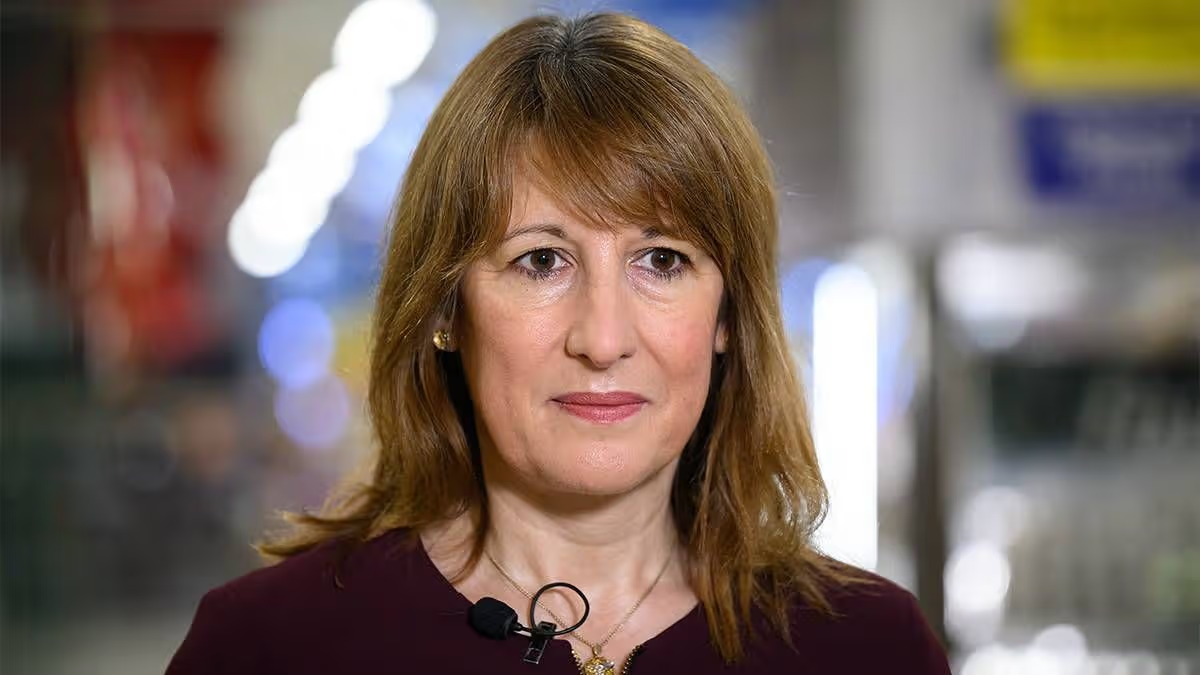
The department further confirmed that work on this policy is currently progressing, and that further details will be announced in due course. Chancellor Rachel Reeves was previously questioned about the policy amendment in March. She told the Treasury Committee: “We are working on how that will work at the moment, but we have been clear that, if your only income is from the new state pension, you will not be subject to income tax during the course of this Parliament. We will set out details later this year on how that will happen.”
Another major alteration to the state pension on the horizon relates to the age at which people become entitled to the DWP benefit, which is due to rise gradually. The qualifying age will climb in phases from 66 to 67, between April 2026 and April 2028.
Legislation is also already in place for a further increase from 67 to 68, planned to occur between 2044 and 2046. To verify how much state pension you are expected to receive, you can utilise the state pension forecast tool accessible on the Government website.
An individual typically requires 35 years of National Insurance contributions to receive the full new state pension. If there are shortfalls in your record, you may be permitted to make voluntary payments to address them. This can only be done for up to six tax years retrospectively.



















































You must be logged in to post a comment Login