Very strong winds may cause some damage and travel disruption
11:38, 02 Apr 2026Updated 11:41, 02 Apr 2026
Storm Dave is set to arrive just in time for Easter weekend, bringing strong winds and possible travel disruption.
The Met Office has issued a yellow warning for wind from 2pm on Saturday, April 4, until 2am on Easter Sunday, April 5. The weather warning covers all parts of Northern Ireland this weekend.
The weather forecaster said Storm Dave will bring a spell of very strong winds on Saturday and into Easter Sunday morning which may cause some damage and travel disruption.
A Met Office spokesperson added: “A rapidly deepening area of low pressure, Storm Dave, is likely to move northeastwards close to or across northwestern parts of the UK during Saturday evening and night, clearing northwards by Sunday.
“Whilst there is some uncertainty over the exact track, intensity and shape of this area of low pressure, a period of strong southwesterly veering northwesterly winds is expected during Saturday night and into the first part of Easter Sunday, before gradually easing through the day.
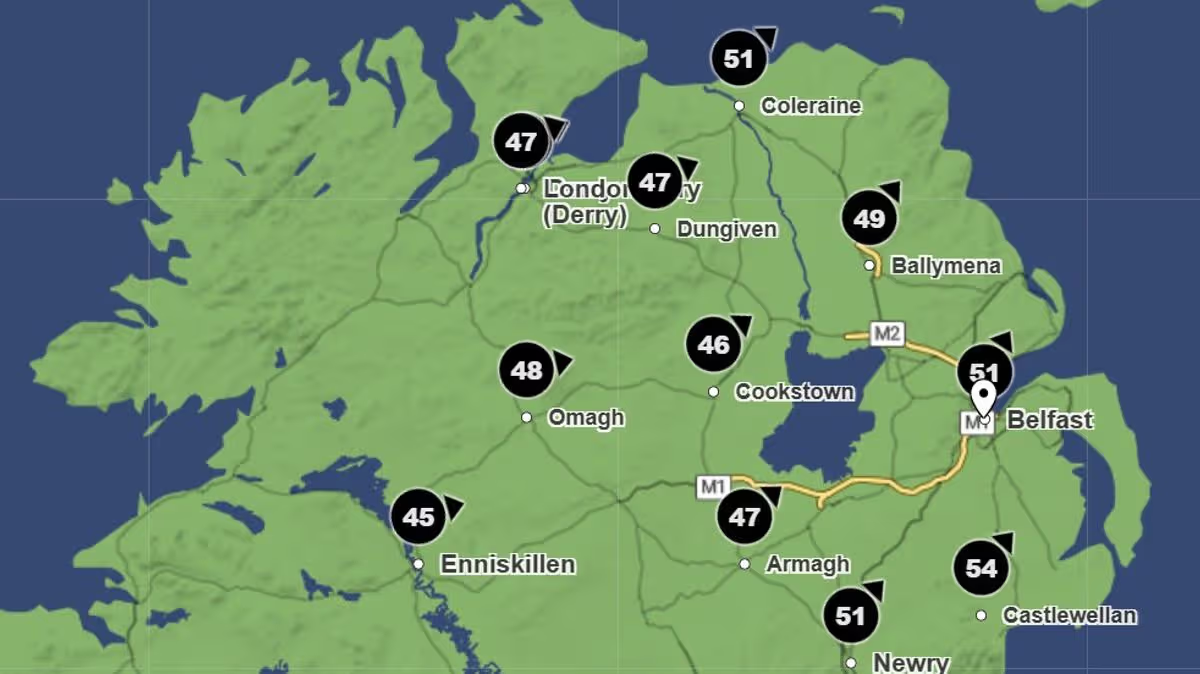
“Peak gusts of 50-60 mph will be possible fairly widely, with 60-70 mph in more exposed locations. Large waves may lead to some dangerous conditions around windward coasts.”
Advertisement
What should I expect?
Road, rail, air and ferry services may be affected, with longer journey times and cancellations possible
Some roads and bridges may close
There is a slight chance that power cuts may occur, with the potential to affect other services, such as mobile phone coverage
There is a small chance of injuries and danger to life from flying debris
There is a slight chance of some damage to buildings, such as tiles blown from roofs
There is a small chance that injuries and danger to life could occur from large waves and beach material being thrown onto sea fronts, coastal roads and properties
Here’s what to expect on the weather front for the coming days in Northern Ireland:
Tonight:
A cloudy evening with outbreaks of rain. Rain clearing to the east overnight with a few showers lingering and some clearer spells developing. Winds strong this evening then easing overnight. Minimum temperature 2°C.
Friday:
A mixed day with some bright and sunny spells but also blustery showers feeding in from the west. Maximum temperature 10°C.
Outlook for Saturday to Monday:
Rain and strong winds spreading north on Saturday with a risk of gales. Blustery showers with gale risk easing on Sunday. Mostly dry with sunny spells and strong winds Monday.
Call the Midwife star Jessica Raine leads the cast of BBC’s new eight-part drama Two Weeks in August
Olivia Wheeler Content Editor Screen Time
18:18, 22 Apr 2026
The BBC has released a first glimpse at a Call the Midwife actress’ thrilling new eight-part series.
Written and created by Sally4Ever’s Catherine Shepherd, the new ‘witty and painfully relatable’ series Two Weeks in August boasts an all-star cast and follows a group of friends who reunite for a summer getaway.
Advertisement
Headlining the cast is Call the Midwife’s Jessica Raine, who portrayed Nurse Jennifer Lee in the beloved BBC medical drama, as she steps into the role of Zoe. The 43 year old actress has previously appeared in Patrick Melrose and The Devil’s Hour.
Joining Jessica is Brassic and Bergerac star Damien Molony, who takes on the role of Dan. Further cast members include The Good Doctor and Misfits actress Antonia Thomas as Jess, Marcella’s Nicholas Pinnock as Solomon, I Hate Suzie’s Leila Farzad as Nat and Fleabag’s Hugh Skinner as Jacob.
Rounding out the impressive ensemble are Dracula’s Dolly Wells, Baby Reindeer’s Tom Goodman-Hill, Mary and George’s Dylan Brady, Gangs of London’s Maria Almeida, The Lost Boys’ Khalil Gharbia, The New Look’s Florence Banks, Industry’s Sonny Poon Tip and Doctor Who’s Cassius Hackforth, reports the Mirror.
Advertisement
In the newly released images from Two Weeks in August, Zoe and Dan are pictured on an afternoon stroll, while Zoe is also seen contemplating life from atop a rocky outcrop.
Elsewhere, Jess lounges poolside as Solomon takes a swim. Additional shots capture Nat and Jacob soaking up the villa’s views, while the group of friends head to a party “they’ll never forget”.
A synopsis for the new series reveals: “Set in Greece, Two Weeks in August tells the story of a woman who goes on holiday with her family and friends to rediscover joy in her life. But, here in paradise, what starts with an illicit kiss quickly turns the dream vacation into a nightmare.
Advertisement
“Zoe begins to act on her deepest desires and the holiday she hoped for becomes a reckoning for a group of adults who refuse to grow up.
“When they discover they are trapped on the island, and become faced with real life-or-death situations, the group soon turn on each other to find out who is to blame.
“Is Zoe responsible for the drama and destruction around her or, as heaven turns to hell, are bigger forces at play? We are in Greece after all, the land of the ancient Gods…”
Advertisement
Tom George, known for his work on This Country and Sherwood, serves as lead director for Two Weeks in August, helming episodes one through four. Matthew Moore from Colin from Accounts directed episodes five through eight. Production took place in Malta and Gozo last year.
All episodes of Two Weeks in August will be available on BBC iPlayer next month and will air at 9pm on BBC One.
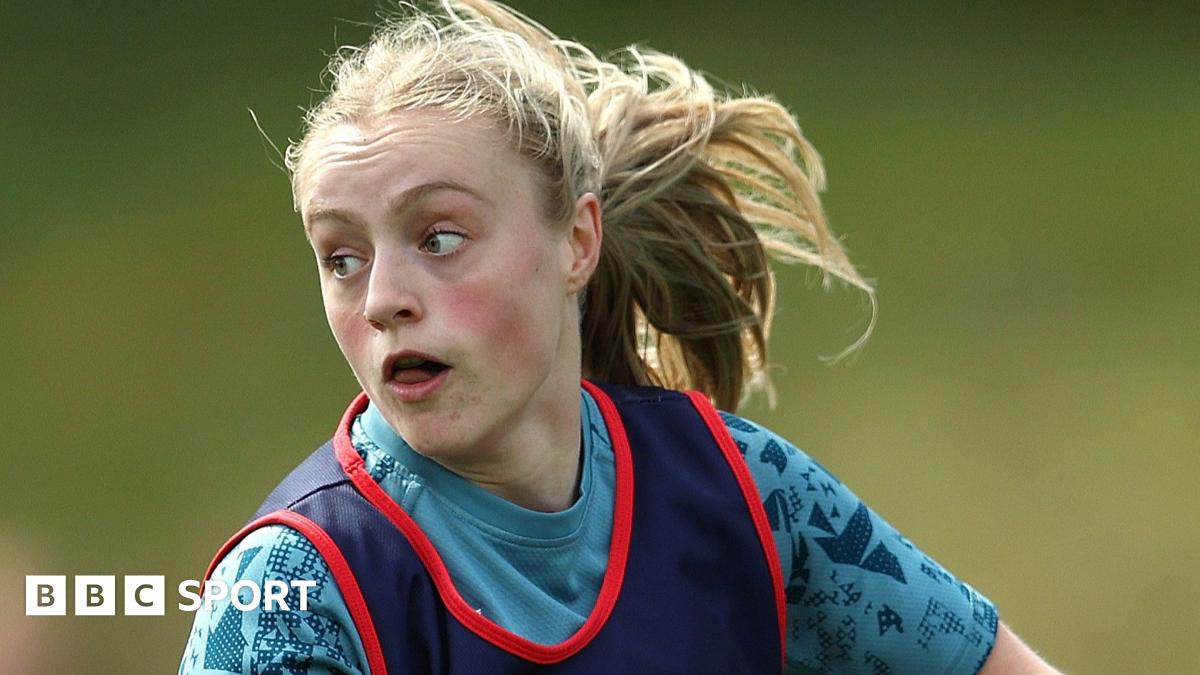
Elsewhere, England are down to a near fourth-choice second row combination, with Lilli Ives Campion, who has suffered a knee injury, becoming the latest lock to be sidelined.
Zoe Stratford, Abbie Ward and Rosie Galligan are all pregnant, while Morwenna Talling has been ruled out of the tournament with a leg injury sustained in the opening-weekend win over Ireland.
Abi Burton, a back row, and Delaney Burns, who won the most recent of her three previous caps back in 2023, will be paired in the engine room.
The fly-half shirt changes hands once more with Holly Aitchison back in at 10 in place of rival Zoe Harrison.
Advertisement
Props MacKenzie Carson and Sarah Bern are promoted off the bench and into the starting line-up along with 113-cap flanker Marlie Packer.
Despite the disruption and debuts, England’s strength in depth is likely to be enough to see off a Wales side who have finished bottom of the table in the past two Six Nations campaigns.
England: Kildunne; David, Jones (capt), Rowland, Moloney-MacDonald; Aitchison, L Packer; Carson, Cokayne, Bern, Burton, Burns, Kabeya, M Packer, Feaunati.
Chelsea fans may opt for perspective for their own sanity. Unlike their north London rivals Tottenham, their club is not facing the real prospect of relegation – things could always be worse. But the reality is Tuesday night’s spineless display at Brighton took Chelsea to a low not suffered since the sinking of the Titanic. This is a club in crisis.
Anguish at the Amex was only the latest blow in a cataclysmic run of form, one that has occurred at the most important stage of the season. A run of five league losses on the bounce, all without scoring a goal, has all but ended the Blues’ hopes of finishing inside the top five.
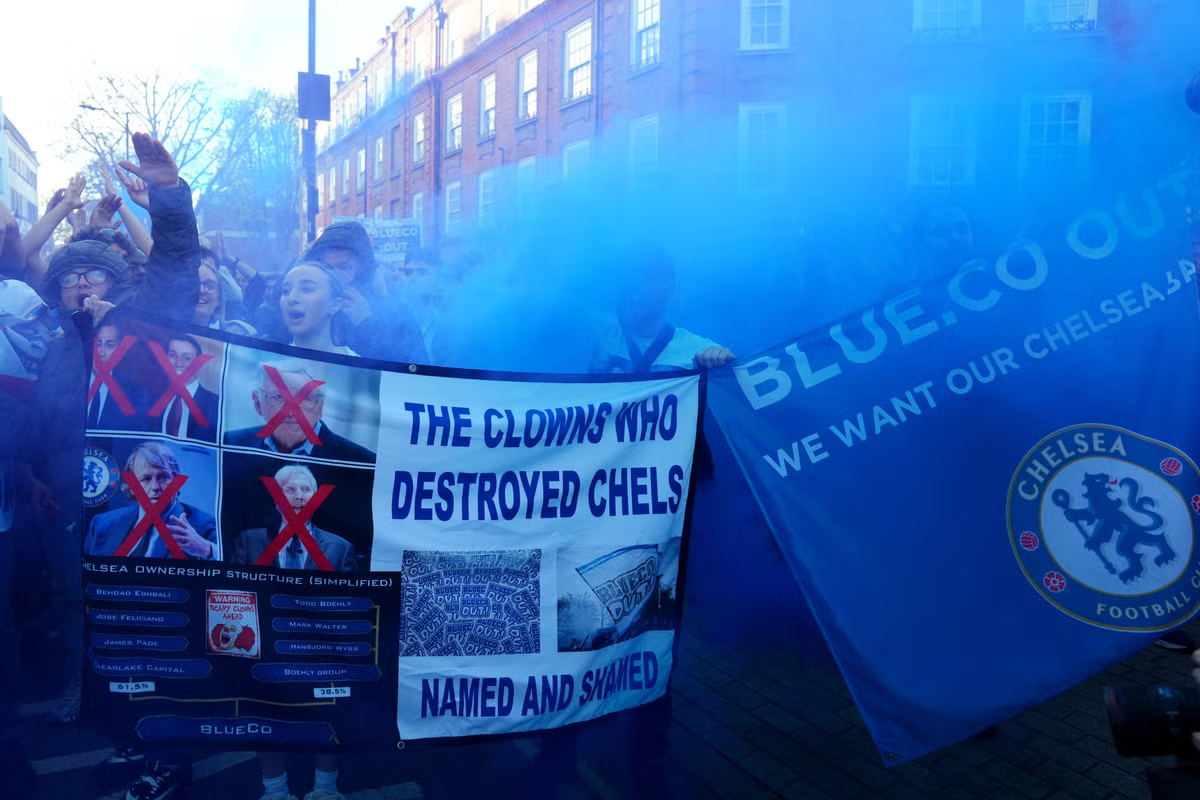
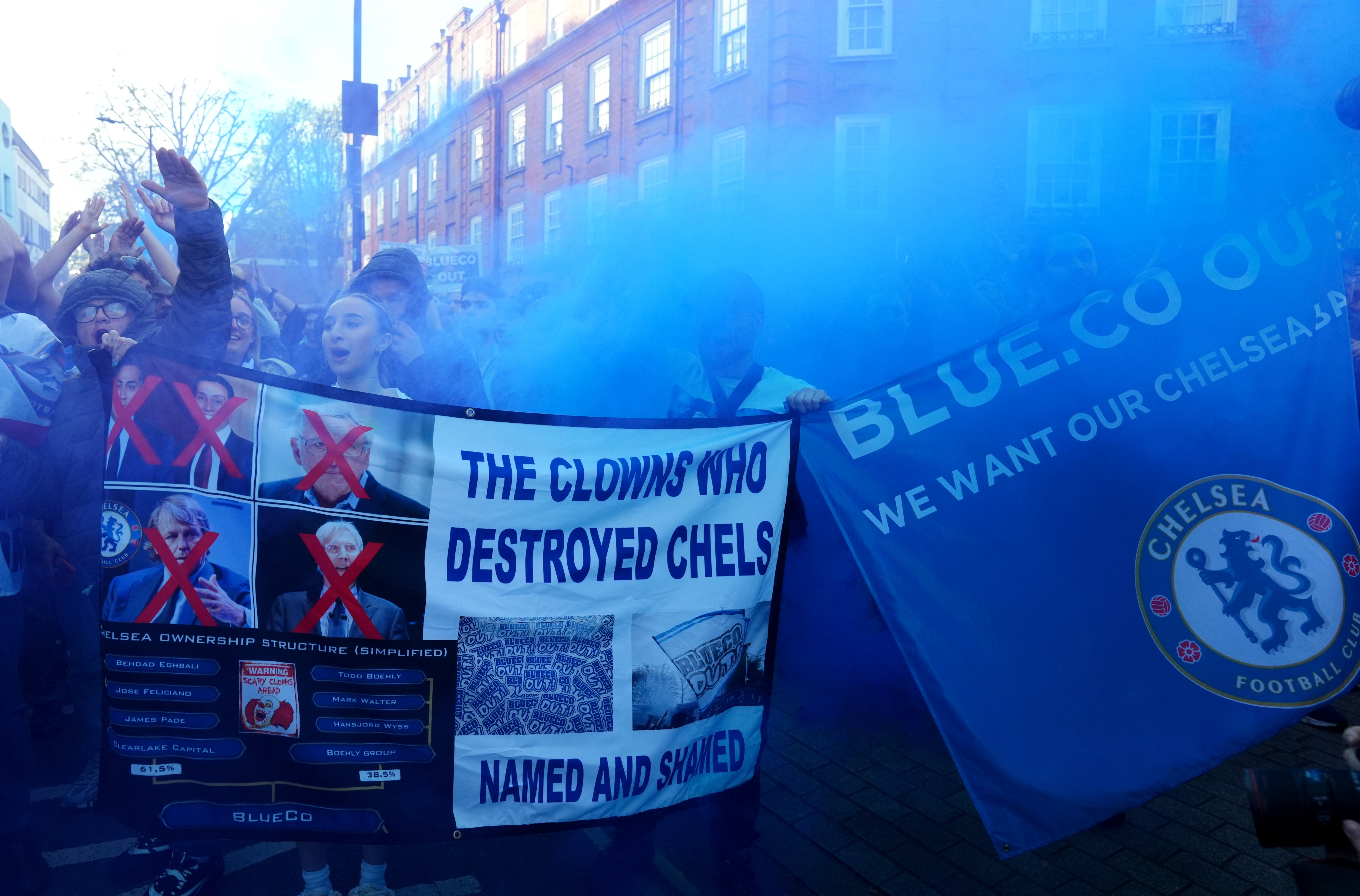
The drop-off under Liam Rosenior, dismissed from his role on Wednesday, in recent weeks has coincided with the ramping up of fan protests against Chelsea’s ownership. “This is not about short-term results,” a Chelsea Supporters’ Trust spokesperson said. “It is about trust, and at this moment in time, that trust has not been earned.”
There are now more fractures than ever within a team that has had £1.87bn pumped into it since the arrival of BlueCo four years ago. A second manager this season has been moved on. Top players are opening the door to moves away as the club nears another dismal finish in this maligned era, which has only delivered Champions League qualification once. So who is to blame?
Advertisement
When assessing Chelsea’s failings of recent years, most will point the finger straight to the top.
BlueCo’s strategy has been nothing short of disastrous since taking over, as first evidenced solely by performance. A team that was once branded the “blue billion-pound bottle jobs” are close to becoming the two-billion-pound bottle jobs. For all their investment in players, Chelsea should now be fighting for the title – but after four years, they still can’t safely secure a place at Europe’s top table.
Central to their transfer shortcomings is the heavy emphasis on acquiring young talent. More than £1bn has been spent on players 24 and under, having splashed out more on teenagers than the rest of the Premier League’s “big six” combined. It’s a strategy harnessed by many a Fifa Career Mode player over the years – buying footballers with high potential under the assumption it will be reached – but in the real game, BlueCo has proved it as largely ineffective.
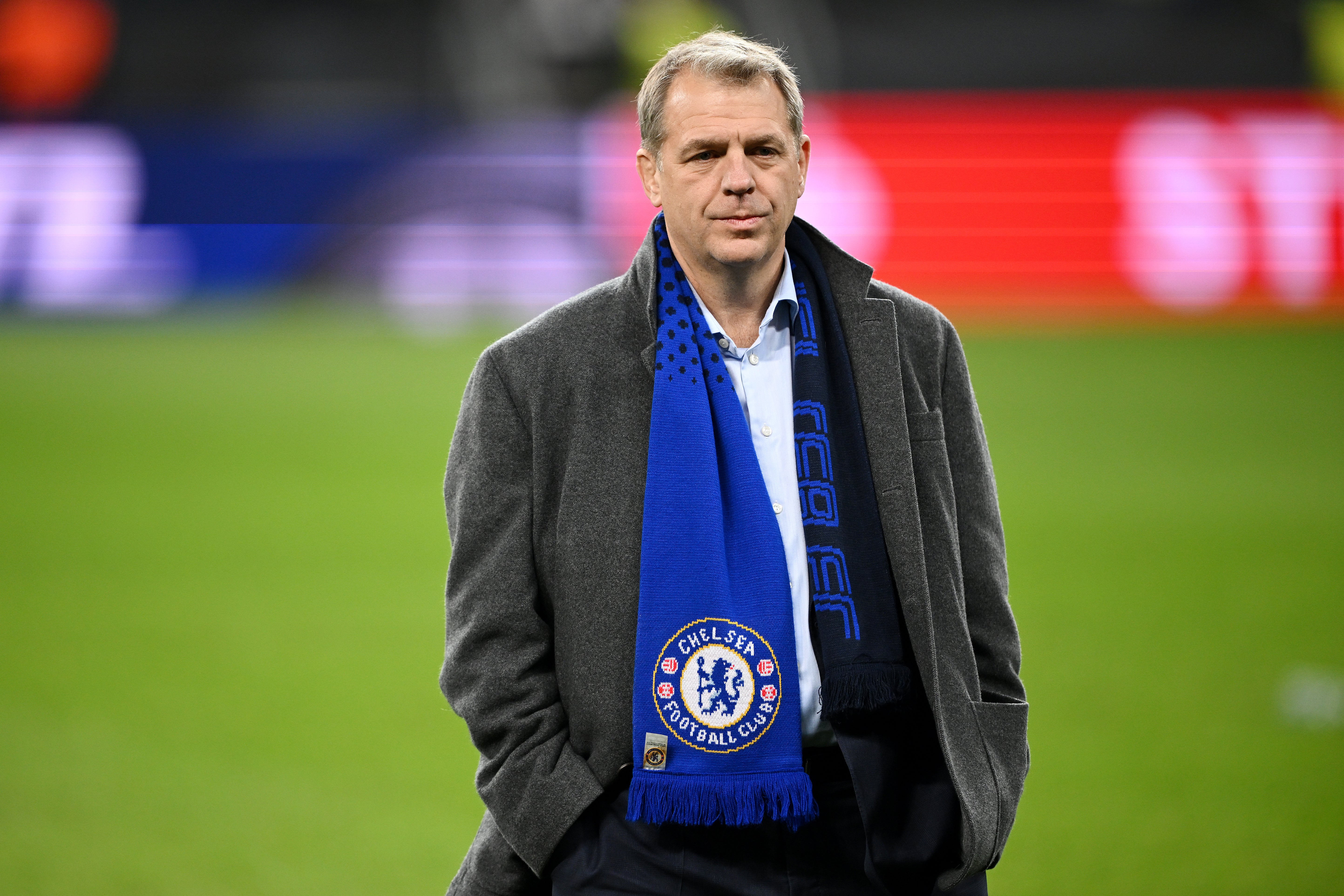
Chelsea owner Todd Boehly has come under fire from supporters (PA Wire)
Of the 52 signings sanctioned by Todd Boehly since the summer of 2022, just four have gone on to become indispensable: Moises Caicedo, Enzo Fernandez, Marc Cucurella and Cole Palmer. Brazilian sensation Estevao looks set to become a fifth rare success story for the ownership once he’s fully unleashed – the 18-year-old is still currently having his minutes managed. This hit rate does not justify the five sporting directors – primarily Paul Winstanley and Laurence Stewart, supported by Joe Shields, Sam Jewell and Dave Fallows – that formulate the club’s recruitment.
And from the wheat, there’s a whole lot of chaff. A raft of big-money signings have simply gone on to become fringe players; a trend that again shows issues with recruitment rather than the players themselves. The likes of Wesley Fofana and Romeo Lavia – signed for a combined £124m – almost instantly became glued to the treatment table, raising questions about how either of them passed their medicals. And when it comes to all that youth investment, the majority are shipped out without making a dent on the team; their only real impact being a collective one, as managers have wrapped their heads around an unbelievably bloated squad. It’s something that Enzo Maresca was vocal about, leading to the creation of a “bomb squad”.
Advertisement
Some of these youngsters are admittedly sold for a profit despite barely playing, which you could call good business. But when taking a glance at the books, you can’t really give BlueCo much credit in that regard.
Chelsea fans protest their owners BlueCo (PA)
A report by The Athletic highlights that Chelsea’s operating losses under BlueCo over the past three years total £689m – or £692,000 every single day. BlueCo has taken on £1.39bn in debt to fund its activities. Crucially, the return on investment just doesn’t seem to be there, either on or off the pitch – Chelsea’s commercial income of £200.9m trails their nearest “big six” rival by over £60m. Behdad Eghbali has previously made the point that the club were poorly managed from a commercial point of view under Roman Abramovich. Stones in glass houses.
The pitfalls of Chelsea’s operation warrant the protests that have intensified in recent weeks. It is undeniable that this is the root cause of their long-term problems. But for this particular crisis in performance, other individuals must be subject to accountability.
Some of the club’s top stars have not exactly helped the cause with their off-field antics. Fernandez wound up with a two-match internal ban for courting Real Madrid in an interview. The Argentinian, who cost Chelsea £106.8m and could very well leave for significantly less than that in the summer, is back with the squad but looked despondent with the club’s state of affairs after full-time against Brighton. He was shrugging his shoulders to the away fans, almost as if to ask: “What more can I do?” BlueCo may argue that toeing the line would have helped.
Enzo Fernandez shrugs his shoulders at the away fans after defeat to Brighton (Reuters)
Cucurella, meanwhile, has publicly questioned the project, namely the club’s decision to fire Maresca mid-season, and is this week facing further scrutiny after reports that his barber leaked the team news for the Brighton trip. “[Cole] Palmer and Joao Pedro injured tonight. There’s your exclusive,” he posted on X, accompanied by an image of the left-back getting his hair cut.
Blame also must lie in the dugout. Rosenior is a young manager at 41 and feels a victim of being groomed for this role by BlueCo – from the outset, it seemed this step up had come way too soon. He was thrown into the deep end thanks to the petulance of his predecessor, with Maresca’s press conference rants putting his bosses in a very difficult position. For all his managerial prowess, the Italian left having created instability.
Advertisement
But despite a promising start in the hot seat, Rosenior’s inexperience has been shown by how his team have responded to adversity. Past weeks have been defined by muddled tactics and a lack of fight. There had been speculation, denied by the club, that he has lost the dressing room, something which may have coincided with him ditching his policy of defending his players no matter what. “To be even accused of throwing the towel in is unacceptable,” he fumed after the fateful Brighton loss.
Liam Rosenior fumed at his players after an ‘indefensible’ display against Brighton (PA Wire)
The decision of Chelsea’s hierarchy to part ways with Rosenior just four months after he was brought in as BlueCo’s own pet project was, in a way, understandable. But that’s inherently what it comes down to – Chelsea are in this mess because of the decisions of their owners.
This is their making, this is their fault – and the project has reached breaking point. BlueCo is already fighting a civil war against an enraged fanbase in Strasbourg, whose supporters loathe their perceived “pawn of Chelsea” status under multi-club ownership. A similar mutiny is brewing at Stamford Bridge.
During pregnancy, a mother’s body undergoes vast structural and functional changes. But what many might not know is that the after-effects of these changes can last long after giving birth – and can even result in the development of new health conditions.
Here are just a few of the common conditions a mother can develop after giving birth:
1. Gallstones
One common condition that arises after pregnancy is gallstones. Approximately 12% of women are affected.
Gallstones are hard deposits commonly made of cholesterol that form in the gallbladder (an organ that releases bile to help the body digest fats). If these stones leave the gallbladder and become stuck in the ducts connecting the gallbladder and intestines, they can cause intense, sharp pain under the ribs (usually on the right-hand side) which may radiate into the back and shoulder. Gallstones can also cause vomiting and darkened urine.
Advertisement
During pregnancy, a mother’s gastrointestinal system slows down so that as many nutrients as possible can be delivered to the developing baby.
This gastrointestinal slowdown also slows bile leaving the gallbladder. Combined with the increase in cholesterol that happens in order to support foetal tissue development, this creates the perfect environment for gallstones to form.
But after giving birth, digestive motility increases again. This can sometimes force any stones that have formed to be flushed out the gallbladder.
Stones may need to be dissolved or the gallbladder removed in cases of severe symptoms.
Advertisement
2. Vision changes
The eyes can also be affected after pregnancy. The most common issues are blurry vision and dry eyes. These problems are caused by hormonal changes in the immediate period after delivery – namely the sharp drop in the hormones oestrogen and progesterone.
During pregnancy, changing oestrogen and progesterone levels cause fluid retention. This causes many tissues to swell – including the eyes. It also causes the eyes to gradually change shape.
But when hormones levels return to normal after pregnancy, any visual changes that have occurred can become more noticeable. Usually, these self-resolve – though for some the vision changes can remain as near- and far-sightedness.
In very rare cases, sight loss can even occur post-pregnancy – something which recently happened to one British mum. This was probably caused by optic neuritis, a condition where the protective layer of the optic nerve is attacked by the body’s own immune system.
Advertisement
During pregnancy, the maternal immune system is modified so it doesn’t attack and reject the foetus. But once the baby is born, mum’s immune system goes back to its pre-pregnancy state. In some, this results in the immune system over-reacting and attacking its own tissues.
Optic neuritis can be treated using corticosteroids which can restore vision. But in this mum’s recent case, these didn’t work.
She ended up having a plasma exchange – a procedure where the body’s plasma (the blood’s liquid component which carries hormones, nutrients and blood cells) is removed and replaced with donor plasma. Once she recieved the new plasma, her vision was mostly restored.
This condition affects the thyroid. This gland produces hormones that help control metabolism, growth, energy levels and development. The thyroid is affected by the immune system’s postpartum rebound.
The thyroid gland controls many important processes. Explode/ Shutterstock
Postpartum thyroiditis first causes the thyroid to become overactive (hyperthyroidism), leading to weight loss, anxiety, heat intolerance and tremors due to the thyroid hormones’ overstimulating effect on the nervous system.
The reason the thyroid is initially overactive is because it releases the hormonal stores it has built up. Once these stores are depleted, it’s function is reduced.
Advertisement
Both conditions can be treated with prescription drugs. Many mums can stop taking these after a few months, once inflammation in the thyroid has decreased.
4. Postpartum pre-eclampsia
One of the more life-threatening post-pregnancy conditions is postpartum pre-eclampsia. This condition can affect as many as 27% of mums and is characterised by high blood pressure after birth. It can happen anytime from hours after birth to six weeks after delivery.
For many, symptoms are mild and may even be unnoticed. But it can also present as severe headaches, shortness of breath, abdominal pain and vision changes, which represent the more severe symptoms.
The condition can happen both in mums who had pre-eclampsia during pregnancy and those that didn’t. If left untreated, it can lead to brain damage, stroke or even death.
Pulmonary embolism (a blood clot in a major artery in the lungs) is a rare but dangerous postpartum condition. It’s one of the leading overall causes of maternal death and has a sixty-fold increase in risk compared to non-pregnant women.
During and after pregnancy, a mother’s body is in a “hyperclotting” state to reduce blood loss after delivery. This hyperclotting state can subsequently cause blood clots to form elsewhere in the body, such as veins in the legs. These clots can become dislodged, travelling to the major arteries in the lungs and blocking them.
Pregnancy makes large-scale changes to a mother’s body. But as soon as the baby is delivered, these changes usually reverse back to baseline – often quicker than they happened during pregnancy. This sometimes means the body fails to adapt, leading to various health conditions.
If you’re a mother who has recently given birth and feel something isn’t right, it’s best to see your GP.
Jay Jones was found dead in his bedroom at the Roseberry Park Hospital in Middlesbrough, run by the Tees, Esk and Wear Valleys NHS Trust, on December 27, 2022.
Teesside Coroners’ Court heard on Tuesday (April 21) how an independent review into Jay’s care was requested by TEWV workers to determine what more could be done to help him.
A jury was told the TEWV commissioned an independent review of Jay’s care shortly before his death.
Dr Sagarika Nag said a multidisciplinary meeting concluded clinicians were struggling to find further ways to help him. Specialist Anna Hay carried out the review on December 15 and notes were recorded on December 21, days before he died.
Advertisement
The review examined whether Jay’s care plan was meeting his needs, and, the inquest was told, concluded his original diagnosis of autism may have been overlooked and masked by mental health issues.
But Dr Nag told the hearing she did not believe the diagnosis had been ignored, and the jury was told a plan had also been created to support Jay’s care, setting out his preferences and aversions to help staff better support him, as they attempted to navigate his autism and other diagnoses.
Despite that, the jury heard Jay posed a “chronic and constant” risk to himself through repeated instances of self-harm.
Dr Nashwa Dandash, a community consultant psychiatrist responsible for Jay when he was not in hospital, said there were major concerns about him being both in and out of the mental health unit. She explained that while he faced a significant risk of death due to his behaviour in the community, there were also fears his behaviour could escalate if he was admitted to hospital.
Advertisement
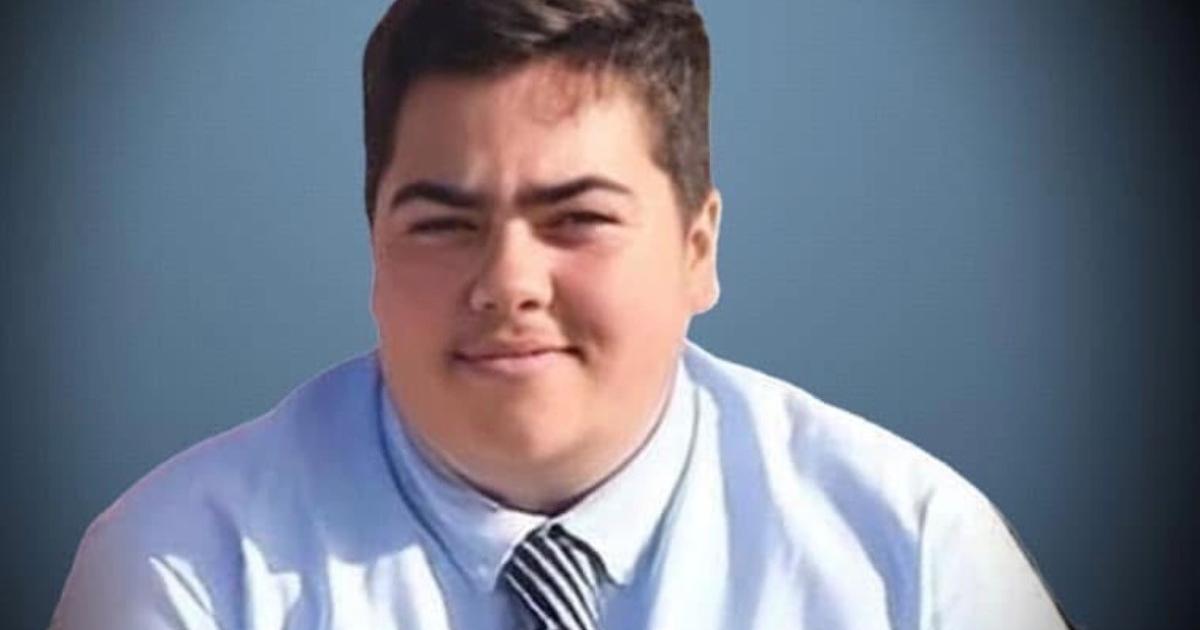
23-year-old trans man Jay Jones who died in his room at Roseberry Park, Middlesbrough (Image: FAMILY)
Emma Broughton, a mental health nurse, said records showed the risks Jay posed to himself increased during hospital admissions and because of this the admissions were often kept short.
Emma’s evidence also noted a significant escalation in the level of risk he posed to himself during the period leading up to his death.
The court then heard from Nicola Willis, a care coordinator and community psychiatric nurse with the Middlesbrough Effective Outreach Team, whose role included coordinating Jay’s care while he was in the community.
She said it was often difficult to maintain regular engagement with him, adding: “At times Jay would say that he did not wish to work with me and at other times he was happy to engage.”
Advertisement
Roseberry Park Hospital in Middlesbrough. (Image: NORTHERN ECHO)
Jay was born as Tia Hope Jones, in Northallerton in December 1999 and later moved to Middlesbrough at the start of Covid in 2020. The court heard he had hoped to train as a paramedic.
He had a long history of self-harm and suicide attempts and had been admitted to hospital 26 times in the 34 months before his death.
On the afternoon of December 27, 2022 staff saw him at around 3pm sitting on a sofa in a communal lounge speaking with others before he returned to his bedroom.
During a routine patrol at about 4pm he was found unresponsive in his room. Staff began CPR and an emergency response team arrived about ten minutes later and continued resuscitation efforts for around twenty minutes before he was pronounced dead.
Advertisement
A postmortem examination carried out at James Cook University Hospital found cocaine and other drugs in his system. The cause of death was recorded as a method commonly associated with suicide, with multiple other injuries consistent with self harm.
In a video tribute shown to jurors, his mother Donna Watson said he was one of six siblings and was always “fighting for attention”, but remembered him as the “funniest person” and a “ball of energy”.
She added that he was “so caring behind all his mental health problems”.
The new sixth form centre at Pocklington School follows several years of planning and consultation, involving staff, students and the wider school community.
Recommended reading:
Tim Morris, head of sixth form, said: “This is an important investment in our Sixth Form and in the experience of our students. We want to provide an environment that reflects the next stage of their journey, with high-quality spaces for both independent study and collaboration.
“The new centre will give students greater ownership of their learning, while also offering a comfortable and welcoming place to relax and connect with others. It is designed to support not only strong academic outcomes, but also the confidence and independence that students need as they move on to university and beyond.”
Advertisement
Designs for Pocklington School’s new sixth form centre (Image: Pocklington School)
He said the redesigned space will provide a clearer, more purposeful layout, with dedicated areas for both independent study and social interaction.
And that the redevelopment will transform the existing two-floor centre into a high-quality environment that better reflects the needs of Sixth Form students as they prepare for life beyond school.
The upper floor will become a contemporary study zone, featuring individual study pods, collaborative workspaces and improved supervision. Designs include integrated lighting, power access and carefully planned layouts to support focused, independent learning.
On the lower floors, the space will be reimagined as a comfortable and mature social and study environment, with flexible seating, improved storage and café style areas designed to support both collaboration and relaxation. The redesign will include new flooring, lighting and a refreshed colour scheme, alongside the introduction of natural materials and planting to enhance the overall environment.
Advertisement
The project is being delivered in partnership with design and build specialists TS Booker, working closely with the school’s estates team. The redevelopment includes a £100,000 investment in high-quality, bespoke furniture and will be completed over the summer, ready for September 2026.
Mr Morris said the investment reflects Pocklington School’s ongoing commitment to providing an environment that supports both academic success and personal development.
He said the sixth form centre plays a central role in student life, offering space to study, collaborate and develop the independence and skills required for university and future careers.
“By creating a more clearly defined and purposeful environment, the redevelopment will further enhance the Sixth Form experience and support students in achieving their full potential,” he said.
The world’s oldest known meteor shower will be visible this week – and you might be able to spot it from London.
First spotted in 687 BC, the Lyrid meteor shower, which comes from debris from Comet Thatcher, passes by Earth once a year.
The comet itself has not been visible from Earth since 1861, and won’t be seen for another 257 years, but if you look up at the skies at the right time on Wednesday, you could see a celestial spectacle.
Here is everything you need to know about the Lyrid meteor shower.
Advertisement
The Lyrid meteor shower over London in 2020
Getty Images
What is the Lyrid Meteor Shower?
The Lyrid meteor shower gets its name from the Lyra constellation, where the meteors appear to originate from in the sky, even though they actually have nothing to do with the stars.
The shooting stars come from debris from Comet Thatcher burning up as it hits our atmosphere.
Advertisement
Up to 100 meteors can be seen per hour during the shower’s peak, flying past Earth at around 30 miles per second.
The meteors move so fast that air particles in front can’t get out of the way in time, instead becoming rapidly compressed and heating up to temperatures as high as 1600C, causing them to shine brightly as they soar through the sky.
The Lyrids are known for leaving trails in the sky that can last for several seconds as the ionised gas hangs in the air.
Other distinctive features of the Lyrids are their colours and brightness, and occasionally bright fireballs, which outshine the planet Venus.
Advertisement
A meteor shower in Somerset
PA Media
The Lyrid meteor shower began on Thursday April 16 and will be visible until Saturday April 25 but it is set to peak between midnight on Wednesday and the early hours of Thursday morning, when Lyra is highest in the sky.
Experts say that the best time to see the meteors will be from around 2am once the Moon has set and the Earth has spun towards the cloud of debris the Lyrids originate from.
The chance of seeing the shower is greater this year, as the moon will only be a crescent and is due to set in the early evening around the peak, reducing the glare of moonlight that could obscure the light of shooting stars.
Advertisement
Where is the best place to see the shower?
The meteors will appear to come from near Vega, the bright star at the topmost tip of the Lyra constellation. This will be in the eastern part of the sky, but they will then streak away from Vega, making it advisable to simply look straight up.
The meteor shower is visible with the naked eye, so no specialist equipment like telescopes or binoculars is needed.
No phone is required either – there is almost no chance of capturing a photo or video of a meteor on a phone camera, while light from the screen will reduce chances of spotting one.
Advertisement
Along with light pollution, cloud cover is the biggest obstacle to seeing the meteors – and thankfully there is little cloud in the forecast this evening.
Greenwich Observatory in south-east London
PA Archive
While there are spots to see the event in London, experts advise more remote areas away from light pollution for the best view.
Scientist and meteorite expert Dr Ashley King says: “The darker the skies, the better your chances of seeing the really faint meteors as well.
Advertisement
“You could go to the coast or stand on a hill in the middle of the countryside somewhere.”
Dr King also urged patience, saying you may not initially see anything while your eyes adjust to the dark.
He added: “Once you get used to the low light levels you’ll begin to notice more and more. So don’t give up too quickly.”
Greenwich Observatory said the best way to see the showers is to lie down in a dark area with an unobstructed view of the sky.
Advertisement
The observatory said: “The number of meteors you actually see will depend on all sorts of things, from the time of night to the level of background light.
“A bright sky will drown out the fainter meteors, making them much more difficult to see.”
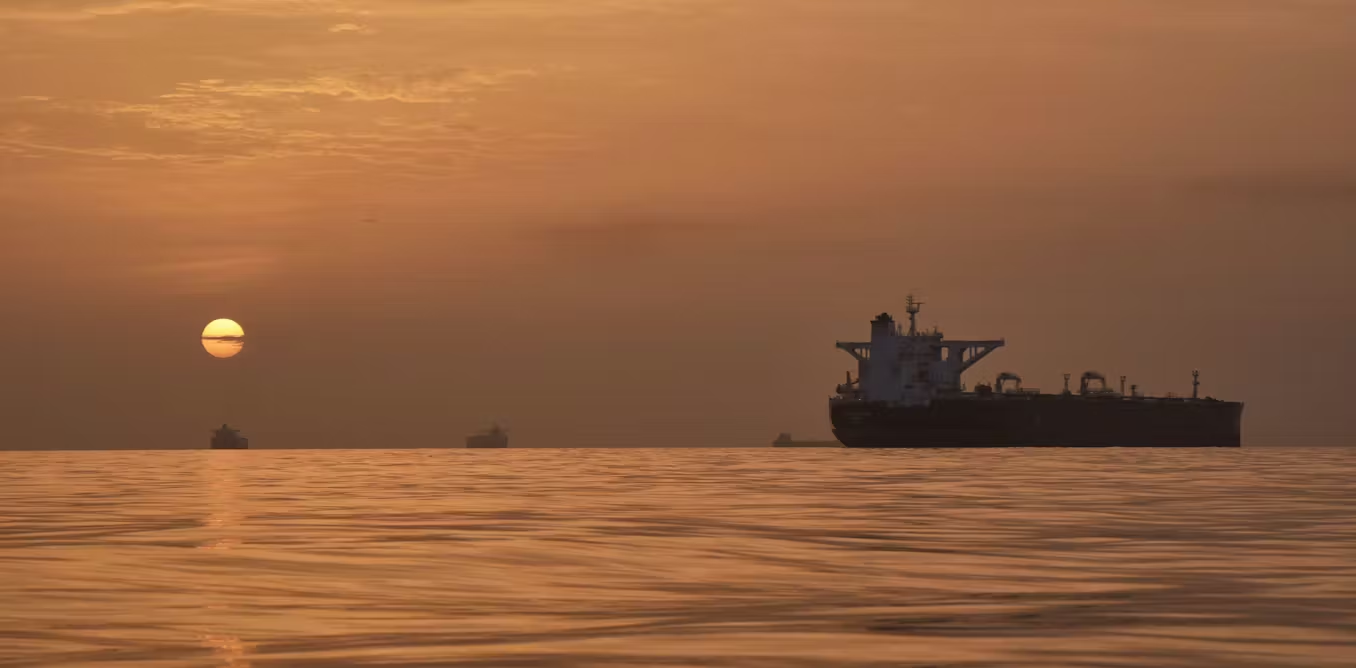
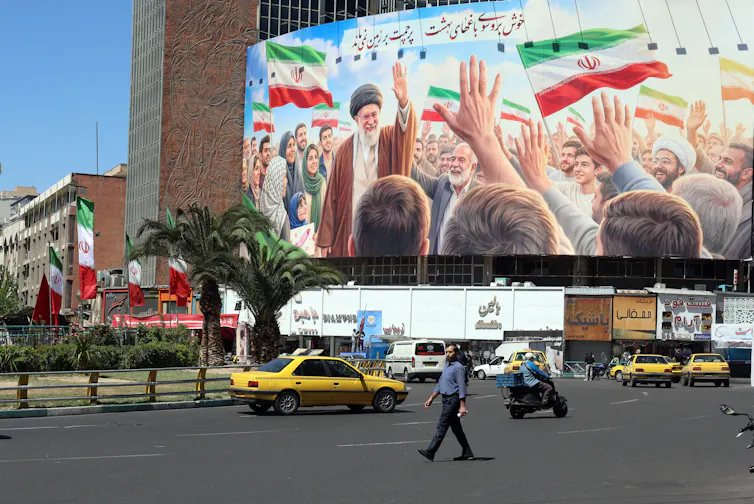
Donald Trump’s deadline for Iran to reopen the Strait of Hormuz or face a renewal of American bombardment was due to expire this week, but was extended at the last moment, this time with no defined time limit. But the risk of renewed escalation remains real, as both sides continue to block traffic through the Strait of Hormuz, one of the world’s most important – and contested – waterways..
Yet, despite hardline rhetoric on both sides, diplomacy has not collapsed. In fact, several plausible off‑ramps exist that could allow Washington and Tehran to cool tensions without either side appearing to capitulate.
Research in conflict resolution suggests that warring parties will be more likely to come to an agreement when both sides can take away what they consider a winning result. Often, this comes in trade-offs between what you are willing to give away in order to gain elsewhere. Nevertheless, it’s axiomatic in conflict resolution that it’s much easier to start a war than to stop it.
The most viable pathway to a settlement remains a reset of the nuclear file broadly along the lines of the 2015 Joint Comprehensive Plan of Action (JCPOA), albeit under a new political brand.
Advertisement
Iranian officials have proposed a staged arrangement that would cap uranium enrichment at 3.67%, well below the level needed for a nuclear weapon. Such an arrangement would return intrusive International Atomic Energy Agency inspections with the prospect of ultimately transferring stocks of higher‑enriched uranium out of the country in exchange for phased sanctions relief.
This would not represent a fundamental concession by Tehran. These were the parameters it accepted 11 years ago under the deal brokered by Barack Obama. But it would significantly lengthen Iran’s nuclear “breakout time” (the time it takes to produce enough weapons-grade uranium). It would also restore transparency that has been steadily eroded since the first Trump administration pulled out of the JCPOA in 2018.
For Washington, such a deal would fall short of longstanding demands for “zero enrichment” – but that position has so far proved unattainable. Even US officials now appear more focused on verifiable constraints than absolute prohibitions, understanding that China recognises the right to enrich uranium as a matter of sovereignty.
A capped and monitored programme would allow the US president to claim that Iran had been forced back under strict controls, while avoiding a further costly regional war. The irony is that this would largely put Iran back into an agreement that Obama agreed and which Trump, with considerable bluster, withdrew from in 2018. This appears to be a stumbling block for the US president.
Advertisement
Donald Trump is reported to be seeking a nuclear deal with Iran which is better for the US than the treaty agreed by Barack Obama. EPA/Daniel Heuer/pool
A second and related off‑ramp concerns the duration rather than the existence of enrichment limits. Recent talks have stalled over US demands for a 20‑year moratorium on enrichment, which Iran has countered with proposals closer to five years. A compromise, such as a seven to ten-year limit with built‑in reviews, would give both sides something to sell domestically. It would represent long‑term risk reduction for Washington and for Tehran it would be a reaffirmation of Iran’s right to a nuclear future.
Time‑limited arrangements have precedent in arms control. They are known as confidence and security building measures and are often used in conflict prevention and resolution to build trust between parties while working towards a resolution. And they may be more politically durable than maximalist demands that are more likely to collapse as political conditions change.
Beyond the nuclear issue, the Strait of Hormuz has emerged as Iran’s most potent source of leverage. Roughly one-fifth of global oil passes through the waterway, and even limited disruption has sent energy prices climbing this year. Former Russian president, Dmitry Medvedev – a close ally of Vladimir Putin – recently described the strait as Iran’s “real nuclear weapon”. It’s a comment that captures how central maritime pressure has become to Tehran’s strategy.
An agreement guaranteeing the strait’s unconditional reopening without harassment, tolls, or threats, would provide immediate economic relief worldwide and give Washington a highly visible diplomatic win.
Advertisement
But Gulf states have expressed concern that such a bargain could end up managing rather than dismantling Iran’s leverage. It would effectively normalise – rather than remove – Iran’s ability to threaten shipping during crises.
Iran has shown it can absorb pressure and play for time. EPA/Abedin Taherkenareh
For neighbouring countries, stabilisation without broader de‑escalation risks entrenching a dangerous precedent. This makes it all the more important that any Hormuz‑focused deal be tied to wider commitments on restraint and established confidence-building measures.
Lowering the stakes
Process matters as much as substance. Increasingly, mediators such as Pakistan, Oman and China appear to favour “sequenced de‑escalation”. This is where limited reciprocal steps, including mutual adherence to ceasefire agreements, shipping guarantees and relaxation of both sides’ maritime blockades, are locked in before negotiations widen to sanctions relief and regional security.
This approach lowers the political stakes of any single concession and reduces the risk that talks collapse under the weight of unresolved disputes. However, this scenario would make it harder for the US administration to define the agreement as a victory.
Similarly, there is the question of political narrative. The US president has vacillated between threats of overwhelming force and signals of fatigue with the conflict. This suggests he has a strong desire for an exit that can be framed as victory.
Advertisement
A narrowly defined agreement that could be rebranded, front‑loaded with Iranian compliance and heavy on enforcement language may prove more acceptable than a comprehensive treaty – even if its substance closely resembles older Obama-era frameworks.
The problem is the Trump administration’s failure to maintain a consistent narrative of what it wants from Iran. This presents a challenge to the established research on conflict resolution. The US president, in particular, has made understanding the US position difficult. In years to come, this crisis may be a useful case study when it comes to exploring conflict resolution theory. But, right now, it makes a settlement very hard to envisage.
York Theatre Royal has announced a new wave of shows for 2026, which also includes a one-off appearance from Michelin-starred chef Tommy Banks.
Tommy Banks will bring Spinning Plates: LIVE! to the Main House for one night only on Friday 17 July at 7.30pm. The show blends live storytelling and immersive cinema, charting the chef’s journey in hospitality across three timelines, from the past 25 years to the opening day of his latest pub. It also explores the pressures facing the industry, including rising costs and closures.
Sean Walsh is heading to York Theatre Royal. (Image: York Theatre Royal)
The following day, Saturday 18 July at 2.30pm, Dinosaur Adventure Live: Danger on T-Rex Mountain takes over the Main House.
The interactive family show invites audiences to join rangers on a mission to save dinosaurs, featuring lifelike creatures, audience participation and a post-show meet-and-greet in the foyer. The production runs for one hour with no interval.
Advertisement
Dinosaur Adventure Live is coming to York Theatre Royal.
Music fans can catch Wilko: Love And Death And Rock ‘N’ Roll from Thursday 10 to Saturday 12 September. Performances are at 7.30pm on 10 and 11 September, with two shows on 12 September at 2.30pm and 7.30pm.
Wilko: Love And Death And Rock ‘N’ Roll from Thursday 10 to Saturday 12 September. (Image: York Theatre Royal)
The play with live music tells the story of Dr Feelgood founder Wilko Johnson, from his terminal cancer diagnosis in 2012 to his unexpected recovery. It arrives in York following runs in London and Hornchurch.
Sean Walsh is heading to York Theatre Royal. (Image: York Theatre Royal)
Comedian Sean Walsh returns on Friday 6 November at 8pm with This Is Torture, a new stand-up show as part of a UK tour. The performance runs for 110 minutes including an interval and is strictly for ages 14 and over.
Priority booking for York Theatre Royal members opened at 1pm on Wednesday 22 April, with general sale scheduled for 1pm on 27 April.
Advertisement
Tickets and further details are available via the York Theatre Royal box office.





















































You must be logged in to post a comment Login