Connect with us

NewsBeat

Swansea casino shuts for good as employee blasts ‘unfair’ redundancy detail

Published

on

Wales Online

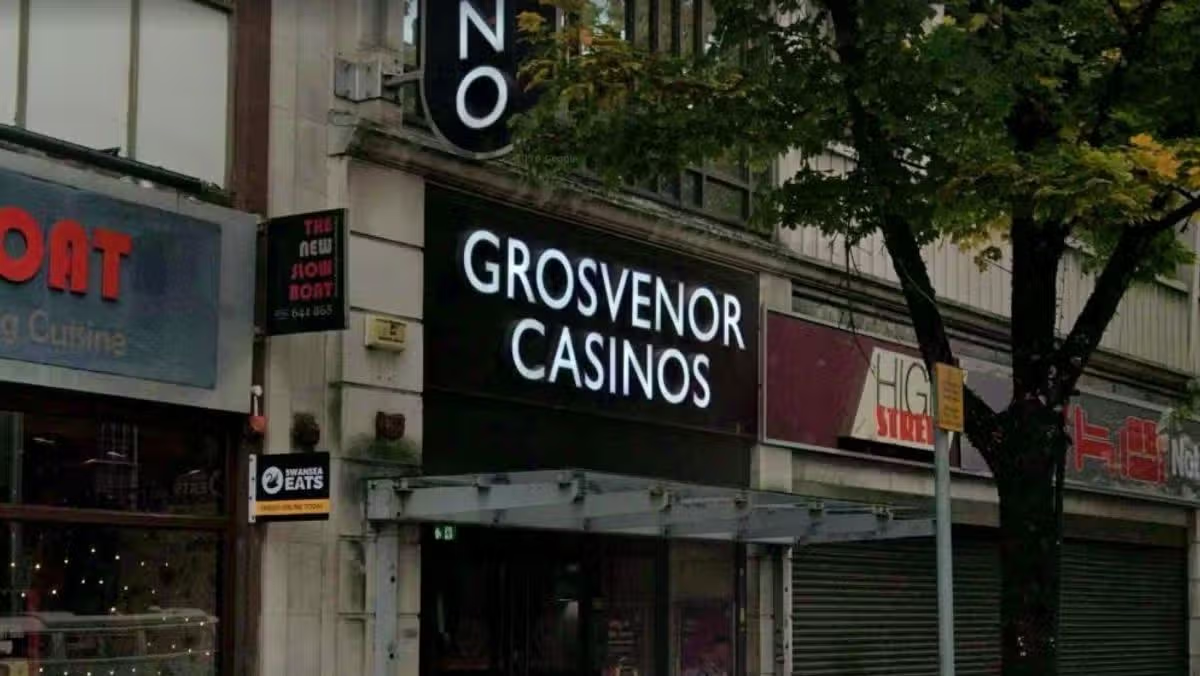
Grosvenor Casino closed its doors on Sunday, August 30, leaving its staff looking for new jobs

Grosvenor Casino in Swansea has closed its doors for good, with employees claiming terms have been changed in their redundancy agreement.

Advertisement

The venue stopped trading on Sunday, August 30. WalesOnline previously reported that the firm blamed “significant and sustained financial challenges” at its High Street casino, with an operating loss of £73,000 during the financial year ending June 28 and a revenue performance £635,000 below budget.

The casino also explained how operating costs had increased by 11% in the last three years, and that profitability had declined by 107% in the last ten years. Never miss a Swansea story by signing up to our newsletter here.

A letter, seen by WalesOnline, updating employees on the results of the consultation process, reads as follows: “The consultation process has now formally concluded and Grosvenor Casino will close at the close of business on Sunday, August 30.

“A redundancy payment will be made on termination of employment and should be free of tax and national insurance deductions.

Advertisement

“This will be paid by BACS transfer in the October payroll.”

However, an employee has claimed that it was agreed in employees’ collective constitution process that their redundancy pay, and any further amounts the company still owed employees, would get paid on their last payday, September 8.

He described news that they would not be paid until October as “really unfair”, and claimed the date of payment had been changed “without their knowledge and after consultation meetings.”

WalesOnline put the claims to Grosvenor Casino. A spokesman said: “After a thorough consultation process we have made the difficult decision to close Grosvenor Casino Swansea.

Advertisement

“This is not a decision that we have taken lightly but we need to remain focused on the longer-term health of the business.

“We sincerely thank our colleagues for their professionalism, dedication and contribution to Grosvenor Casinos over the years especially during this difficult period.”

Get Swansea news updates on your phone by joining our WhatsApp community here. We occasionally treat members to special offers, promotions and ads from us and our partners. See our Privacy Notice.


Source link

Advertisement
Continue Reading
Click to comment

You must be logged in to post a comment Login

Leave a Reply

NewsBeat

Huntingdon men killed after being ‘ejected’ from car in crash, inquest hears

Published

on

Cambridgeshire Live

The vehicle was ‘severely damaged’ and ‘lying on its side’, the inquest heard

Two men died after a car crashed off a major Cambridgeshire road, an inquest has heard. Jordan Moore, 27, and Imran Hafiz, 33, both from Huntingdon, were involved in a single vehicle crash on the A1198 near Hilton on January 11.

Advertisement

The inquests into their deaths were held on September 1 by Area Coroner for Cambridgeshire and Peterborough Caroline Jones. The silver Volkswagen Golf left the road and crashed into “a number of trees and hedgerow”, the inquest heard.

Both men were pronounced dead at the scene. The reason the vehicle left the road is “unknown” but the inquest heard it was likely to be from a combination of cocaine drug use and low tyre tread depth in wet conditions.

Both Mr Moore, the driver, and Mr Hafiz, the passenger, were “ejected from the vehicle” by the impact of the crash. Both men were found outside the vehicle and emergency services were called by a passerby.

A passenger of a vehicle who was driving along the road saw a branch lying across the lane. The driver manoeuvred around it but saw a vehicle as they passed by. A road policing officer described the car as “severely damaged” and “lying on its side”.

Advertisement

Another man who stopped searched around the car and found a person who he thought was dead. Emergency services attended and identified a male, confirmed as Mr Moore, who had received “catastrophic head injuries”.

A toxicology report determined Mr Moore, the driver, had quantities of cocaine together with other medications in his system. No alcohol was identified in his blood.

Upon searching the area with a torch, a police officer found the body of a second person. This person was identified as Mr Hafiz via DNA analysis by comparing tissue samples and a toothbrush.

Coroner Jones said a toxicology report found the 33-year-old front passenger was “significantly intoxicated” with alcohol as well as cocaine and THC.

Advertisement

Mr Moore’s death was confirmed at 10.35pm and Mr Hafiz’s was confirmed at 10.45pm. A post-mortem carried out on Mr Moore’s death confirmed he died of a head injury.

Coroner Jones concluded Mr Hafiz’s cause of death was a head injury and that the pair died as a result of a road traffic collision.

The families of Mr Moore and Mr Hafiz paid tribute to them after their deaths. Mr Hafiz’s family said he was “charming, cheeky and mischievous”. They also said he “lived up to his name” and was the “brightest shining star” in their lives.

Mr Hafiz was also a father of two. His family added: “Our lives will never be the same but we will always remember him with biggest smiles on our faces as that is what he would have wanted – until we meet again fly high our angel we love you more than words could ever express, a huge loss to our entire family.”

Advertisement

Mr Moore’s family said he will be “truly missed” and his absence left a “profound void” in his family’s lives. They added: “He was loved so deeply by so many, and his kindness, warmth, and spirit touched everyone who knew him.”

He was also described as a “devoted son, cherished grandson, proud dad, fantastic partner and much-loved nephew and cousin”.

Coroner Jones offered her condolences to the families for the loss of Mr Moore and Mr Hafiz.

Source link

Advertisement
Continue Reading

NewsBeat

London’s Ulez linked to healthier lung growth in children

Published

on

London’s Ulez linked to healthier lung growth in children

Seven years after London introduced its Ultra Low Emission Zone, researchers are moving beyond pollution readings to measure what cleaner air is doing to people’s health – with striking results for children’s lungs

When London introduced its Ultra Low Emission Zone (Ulez) in April 2019, the aim was to cut traffic pollution and protect the health of the people breathing it. For years, evidence of its impact has largely come from roadside monitors, exhaust emissions and changing vehicle numbers. Seven years on, researchers are increasingly able to measure something more tangible: what cleaner air appears to be doing to people’s bodies.

The latest findings come from a five-year study involving more than 3,400 primary school children in London and Luton. Researchers led by Queen Mary University of London recruited children aged six to nine from schools within or bordering the original central London Ulez and compared them with children in Luton, a similar urban area without a comparable clean-air zone.

Advertisement

The children underwent annual lung-function tests between 2018 and 2022, allowing scientists to compare how their lungs developed before and after Ulez was introduced.

Before the scheme came into force, the London children had lower lung capacity than those in Luton and were exposed to higher levels of nitrogen dioxide (NO₂), a harmful pollutant strongly associated with vehicle exhausts. After 2019, however, NO₂ levels fell faster in London while the children’s lungs grew more rapidly.

Solutions every Saturday
Uplift your inbox with our weekly newsletter. Positive News editors select the week’s top stories of progress, bringing you the essential briefing about what’s going right.
Sign up

One key measure was FEV₁, the amount of air a person can forcibly breathe out in one second after taking a deep breath. At the beginning of the study, average FEV₁ was around 38ml lower among the London children. Over the following four years, annual growth was around 10ml greater than among children in Luton and, by the end of the study, the difference had effectively disappeared.

Advertisement

A second measure, forced vital capacity (FVC), also improved faster among London children, although that gap had not completely closed.

Prof Chris Griffiths, one of the study’s senior authors at Queen Mary University of London, told the BBC he was “absolutely stunned” by the speed of the improvement.

“This shows an ambitious clean air zone can drive pollution levels down, rapidly restoring children’s stunted lung growth,” he said.

Prof Anna Hansell, of the University of Leicester, who was not involved in the research, said the improved lung function was “likely to have lifelong benefits for their health”, while cautioning that an observational study cannot prove that every difference between the London and Luton children was caused by Ulez.

Advertisement

Initially covering central London, Ulez expanded to inner London in 2021 and across the capital in August 2023. Image: Alena Kravchenko

The findings mark a significant development in how the effects of the scheme can be assessed. Until relatively recently, most arguments over Ulez revolved around how far emissions had fallen, whether drivers were switching to cleaner vehicles and what pollution monitors were recording. Researchers are now beginning to build evidence of what those changes could mean for the people exposed to the air itself.

Advertisement

Children are an especially revealing group because developing lungs are vulnerable to traffic pollution. Poor lung growth during childhood can persist into adulthood and is associated with increased risk of respiratory and cardiovascular disease later in life.

The latest findings also follow earlier research from the same study suggesting that Ulez changed the way some children travelled. Researchers found that 42% of London children who had previously been driven to school switched to walking, cycling or public transport after the zone was introduced, compared with 20% of children in Luton. The shift towards active travel was particularly pronounced among children who lived further from school.

For Rosamund Adoo-Kissi-Debrah, the consequences of London’s polluted air had already been devastatingly clear. Her nine-year-old daughter, Ella, died following an asthma attack in 2013 after years of exposure to high levels of pollution near the family’s home in Lewisham. In 2020, Ella became the first person in the UK to have air pollution listed as a cause of death.

This shows an ambitious clean air zone can drive pollution levels down, rapidly restoring children’s stunted lung growth

Her mother has since campaigned for legally enforceable clean-air standards aligned with World Health Organization recommendations through the campaign known as Ella’s Law.

Advertisement

Speaking to the BBC following publication of the new research, Adoo-Kissi-Debrah said the first steps towards improving London’s air through Ulez had “clearly been worth it”, while emphasising that further action was still needed.

London has made substantial progress on nitrogen dioxide since Ulez began. The capital passed the government’s national compliance assessment for the legal annual NO₂ limit for the first time in 2024, although some individual monitoring sites have continued to record concentrations above that level and UK limits remain considerably weaker than WHO guidelines. UK regulations allow an annual average of up to 40 µg/m³, compared with the WHO guideline of 10 µg/m³.

Initially covering central London, Ulez expanded to inner London in 2021 and across the capital in August 2023. The policy has been politically contentious, particularly over the £12.50 daily charge levied on drivers of older, more polluting vehicles, with critics arguing that the cost could fall disproportionately on lower-income households and businesses.

Advertisement

A five-year study involving more than 3,400 primary school children found significant improvement in children’s lung function following the introduction of Ulez. Image: Annandistock

Against that debate, the evidence of falling pollution has become increasingly substantial. City Hall estimates that roadside NO₂ concentrations across London in 2024 were 27% lower than they would have been without Ulez and its expansions. Across the capital more broadly, population-weighted NO₂ exposure fell by 41% between 2019 and 2024, while exposure to PM2.5 – tiny particles capable of entering the lungs and bloodstream – fell by 28%. Those wider reductions cannot be credited to Ulez alone, as other clean-air policies and changes took place over the same period.

Some of the largest gains have been recorded in communities that historically breathed London’s dirtiest air. City Hall analysis estimated that among some of the most deprived communities near busy roads, the number of people exposed to illegal pollution levels was around 80% lower than it would have been without Ulez.

Advertisement

Evidence of wider health effects is also beginning to emerge. A 2026 Imperial College London study found that the introduction of the earlier T-Charge and Ulez was associated with significant reductions in cardiovascular and all-cause emergency hospital admissions, although the reduction in respiratory admissions was not statistically significant.

Separate analysis estimates that the number of deaths attributable to air pollution across London fell by around 40% between 2019 and 2024. Researchers again stress that the decline cannot be attributed solely to Ulez, but taken alongside the emerging evidence on hospital admissions and children’s lungs, it suggests that London’s cleaner air is beginning to show up in more than pollution monitors.

“Traffic pollution in cities damages children’s health and development,” Griffiths told the Guardian. “We provide the strongest evidence yet on how these harms can be prevented. Ambitious clean-air zones should be considered a priority for cities globally with traffic-related air pollution.”

Main image: iStock / dusanpetkovic

Advertisement

Be part of the solution

At Positive News, we’re not chasing clicks or profits for media moguls – we’re here to serve you and have a positive social impact. We can’t do this unless enough people like you choose to support our journalism.

Give once from just £1, or join 1,800+ others who contribute an average of £3 or more per month. Together, we can build a healthier form of media – one that focuses on solutions, progress and possibilities, and empowers people to create positive change.

Support Positive News

Advertisement

Source link

Continue Reading

NewsBeat

More staff snooping incidents than first reported – North Yorks NHS

Published

on

More staff snooping incidents than first reported - North Yorks NHS

​The York and Scarborough Teaching Hospitals NHS Foundation Trust has said that more cases of wrongful access to patient records by staff have taken place than it originally stated in response to a Freedom of Information (FOI) request.

​Since 2021, there have been 29 cases of inappropriate access to patient records, of which 10 were reported to the Information Commissioner’s Office (ICO).

​In July, the trust inaccurately said 18 employees wrongfully accessed medical records and eight cases were referred to the ICO, in response to the FOI submitted by the Local Democracy Reporting Service (LDRS).

​A spokesperson for the York and Scarborough NHS Trust said: “We identified that due to an error in collating the total number of cases, not all incidents were included in the overall figure provided, as they had been initially reported through a different route rather than directly through information governance.

Advertisement

​“This came to light through our routine data quality and assurance processes, and the correct information was duly provided. We have reviewed our reporting approach to ensure this information is brought together consistently in future.”

​The trust’s information governance team also offered its “apologies for this error” and regretted “any confusion caused”.

​The issue of wrongful access to medical records has received increased attention after staff at other NHS trusts in England were dismissed and investigated for inappropriately accessing the records of victims of the 2023 Nottingham attack and the Southport knife attack in 2024.

Scarborough Hospital. Courtesy Numminen/Ldrs

​Paul Arnold, chief executive officer at the ICO, has warned of a “worrying trend that requires a serious response across the healthcare sector” as a whole.

Advertisement

​“Recent high-profile cases point not to isolated incidents but to a worrying trend that requires a serious response across the healthcare sector,” he said.

​“When a local incident becomes national news – a serious crime, a public tragedy, a story that captures widespread attention – there is an increased risk that healthcare staff could be tempted to look at records they have no reason to view.”

York Hospital. Courtesy Numminen/LDRS

​In August, the NHS also updated its national guidance to health and care professionals on stopping unlawful access to records.

​“Accessing health and care records out of personal curiosity or for personal reasons is illegal. It causes real harm to patients and service users and could end your career,” the guidance states.

Advertisement

​The York and Scarborough NHS Trust previously said that all staff were expected to “uphold the highest standards when accessing patient information”.

​“Access is permitted only when it is directly relevant to a patient’s care, is closely monitored and audited, and any suspected breach of policy is thoroughly investigated.”

​A spokesperson added: “Where inappropriate access is substantiated, appropriate action is taken, which may include disciplinary action or referral to professional regulators.

​“All staff complete mandatory information governance training, with annual refresher training, and are regularly reminded of their responsibility to keep patient information safe.”

Advertisement

(Image: Newsquest)

Source link

Continue Reading

NewsBeat

Major franchise to close 66 restaurants and pubs this week – full list | News UK

Published

on

Major franchise to close 66 restaurants and pubs this week - full list | News UK
Fans have shared their disappointment about the closures. (Picture: TripAdvisor)

More than 60 restaurants and bars are closing this week as Premier Inn owner Whitbread confirms more shutdowns.

Back in July, Whitbread announced that 200 Beefeater and Brewers Fayre restaurants would close in September 2026.

This week, the same company is shutting 66 restaurants and pubs across three chains: popular steakhouse chain Bar + Block; Cookhouse + Pub; and family-friendly pub chain Table Table.

All affected locations will shut on September 3, just one week before the 200Brewers Fayre and Beefeater restaurants are planned to shut on September 7 and 10 respectively.

Advertisement

So which restaurants are shutting?

Sign up for all of the latest stories

Start your day informed with Metro’s News Updates newsletter or get Breaking News alerts the moment it happens.

All Bar + Block closures

Bar + Block Steakhouse
The popular steakhouse chain is closing all branches, including several in London. (Picture: TripAdvisor)

A total of 20 Bar + Block locations will close on September 3rd, including seven branches located in London.

  • The Brickfield
  • Butterfley Park
  • Birmingham, Exchange Street
  • Birmingham, Waterloo Street
  • Edinburgh
  • Glasgow
  • Leamington Spa
  • London, Aldgate
  • London, Hammersmith
  • London, King’s Cross
  • London, Paddington
  • London, Southwark
  • London, Sutton
  • London, Wimbledon
  • Milton Keynes
  • Newcastle
  • Nottingham
  • Portsmouth
  • Whiteley
  • Winnersh

The restaurant chain shared a heartfelt post on Instagram last week, thanking customers and staff for their continued support.

The post reads: ‘We are immensely grateful to every guest who came through our doors, and to our passionate team who made every experience unforgettable.

‘Before we mix our final drink and serve our last steak on September 3, we’d love to welcome you back one last time.’

Advertisement

It continued: ‘Come raise a glass, savour your favourite dish, and toast to the memories we’ve made together.’

Full list of all Table Table closures

Bar + Block Steakhouse
Whitbread has announced further closures for next week, affecting Brewers Fayre and Beefeater restaurants. (Picture: TripAdvisor)

All 32 Table Table pub and restaurant locations will shut on September 3, including:

  • Ashbridge Inn, Cwmbran
  • Balkerne Gate, Essex
  • Barley Twist, Yorkshire
  • Barum Gate, Devon
  • The Bishopsgate, Lancashire
  • Bowling Green, Essex
  • The Callywith, Cornwall
  • The Colliers, Staffordshire
  • The Derby Lodge, Merseyside
  • French Connection, Kent
  • The Gateway, Hampshire
  • The Harbour, Gwynedd
  • Horse & Jockey, Bedfordshire
  • John Milne, Lancashire
  • Langton Inn, Leicestershire
  • The Lee Burn, Lanarkshire
  • Marine Court, Kent
  • Mill of Mundurno, Aberdeenshire
  • Morfa, Denbighshire
  • The Nelson, Norfolk
  • The Ormonde, Suffolk
  • Pantruthn Farm, Mid Glamorgan
  • Parc Britannia, Gwynedd
  • Pentrebach House, Merthyr Tydfil
  • The Red Lion, Hampshire
  • The Ridgacre, West Midlands
  • The Showground, Norfolk
  • Smugglers Retreat, Kent
  • The Stanhope Arms, Staffordshire
  • Swinging Bridge, Lancashire
  • The Trevithick Inn, Cornwall
  • Willow Farm, Essex

Every Cookhouse + Pub location shutting this week

Table Table
Park Britannia is one of the 14 Table Table branches closing on Thursday. (Picture: Google Maps)

Finally, the Cookhouse + Pub chain is shutting all 14 of its locations this week, including:

  • The Brickfield, Kent
  • Butterfley Park, Derby
  • Cotton Mill, Kilmarnock 
  • The Freeman, Bridlington 
  • The Highwayman, St Neots
  • Honourable Pilot, Kent
  • Inn on the Park, Enfield
  • Lockyers Quay, Plymouth
  • Penhale Round, Cornwall
  • Potters Arms, Harlow
  • The Queen Inn, West Midlands
  • The Steamboat, Skegness
  • Three Piers, Blackpool
  • Woodhorn Grange, Ashington

The closures come as Whitbread moves to shut all of its standalone restaurant chains, pivoting instead to an ‘integrated food and beverage offer’.

It also comes as the UK high street continues to face an onslaught of closures.

Earlier this week, mini-supermarket group Foreways announced that it was closing all five of its locations in Carlisle, Cumbria.

Meanwhile, accessories brand Radley shut all of its shops and website last month, Morrisons announced plans to close 100 of its Daily convenience store locations, and Quiz Clothing shut its doors, too.

Advertisement

Source link

Advertisement
Continue Reading

NewsBeat

Microsoft is bribing people to pre-order Modern Warfare 4 on Xbox instead of PS5

Published

on

Microsoft is bribing people to pre-order Modern Warfare 4 on Xbox instead of PS5
Have you pre-ordered Modern Warfare 4 yet? (Activision)

If you’ve pre-ordered the new Call Of Duty through the Xbox or Microsoft store, you’re eligible to receive a gift card a month after launch.

After last year’s Call Of Duty: Black Ops 7 flopped hard enough for Activision to publicly apologise for it, there is undoubtedly a lot of pressure to ensure this year’s follow-up, Call Of Duty: Modern Warfare 4, regains player trust in the franchise.

Unfortunately for Activision, there’s very little it can meaningfully address in just a year and Modern Warfare 4’s beta has done little to raise excitement, especially given the poor reception to the story campaign teaser.

So, it’s perhaps not surprising to see Microsoft offer a new incentive on Modern Warfare 4 pre-orders, although the option they’ve gone for is pretty bizarre – especially as its only for Xbox.

Advertisement

If you pre-order any edition of the game on Xbox Series X/S or on PC via the Microsoft store, you will receive a digital Xbox gift card worth £4.

This is also in conjunction with a loyalty discount on Modern Warfare 4’s Vault Edition, which is 10% cheaper if you’ve purchased any Call Of Duty game since 2019.

Expert, exclusive gaming analysis

Sign up to the GameCentral newsletter for a unique take on the week in gaming, alongside the latest reviews and more. Delivered to your inbox every Saturday morning.

The offer was quietly made over the weekend, on the Call Of Duty X account, to coincide with Modern Warfare 4’s open beta, which suggests Microsoft only came up with the idea recently – especially since it’s already set to expire tomorrow morning on September 2 at 4:59am.

Advertisement

However, according to Microsoft’s website, the offer applies to any pre-orders made since May 28, so if you’ve already pre-ordered Modern Warfare 4 through either the Xbox or Microsoft store, you’re eligible to receive the gift card.

You’ll receive a pop-up notification either on your Xbox console or via the Xbox app on PC to let you know when you’ve received the gift card, within 35 days after Modern Warfare 4’s launch on October 23. So, late November is the absolute latest it’ll arrive.

While this is Microsoft taking full advantage of its ownership of Activision, it also reads as Microsoft trying to discourage people from pre-ordering the game on PlayStation 5 and bumping up Xbox pre-order numbers.

Considering the company’s returned to embracing console exclusives again, maybe it’s kicking itself a bit for agreeing to keep Call Of Duty multiplatform.

Advertisement

Even after the buyout, Call Of Duty remains most popular on PlayStation 5, simply by virtue of there being more PlayStation consoles in the world than the Xbox Series X. Also, Microsoft’s ploy to raise Xbox player numbers by bringing new Call Of Duty games to Xbox Game Pass at launch backfired so badly that it’s since sworn not to do it again.

It’s not just Call Of Duty that’s taken a hit popularity-wise, though. Microsoft has been running out of good will for years, thanks in part to regular layoffs. Just this summer, a further 3,200 employees have been affected, with Doom developer id Software reportedly gutted in a manner that can only be described as vandalism.

Just recently, id Software producer Andrew Willis told Insider Gaming how he and his team went through a ‘brutal’ crunch period to get Doom: The Dark Ages | Revelations out the door and despite it being a fantastic DLC expansion, most of the team was rewarded by being let go.

‘We had people that worked in Hollywood for 20 years and game development for 10 and said that this was the worst crunch they’d been a part of,’ said Willis.

Advertisement
Protagonist in Doom: The Dark Ages DLC Revelations
The Doom team deserved better (Bethesda)

Email gamecentral@metro.co.uk, leave a comment below, follow us on Twitter.

To submit Inbox letters and Reader’s Features more easily, without the need to send an email, just use our Submit Stuff page here.

For more stories like this, check our Gaming page.

Advertisement

Source link

Advertisement
Continue Reading

NewsBeat

No local politicians join board of Warrenpoint Harbour amid ongoing smell issue

Published

on

Belfast Live

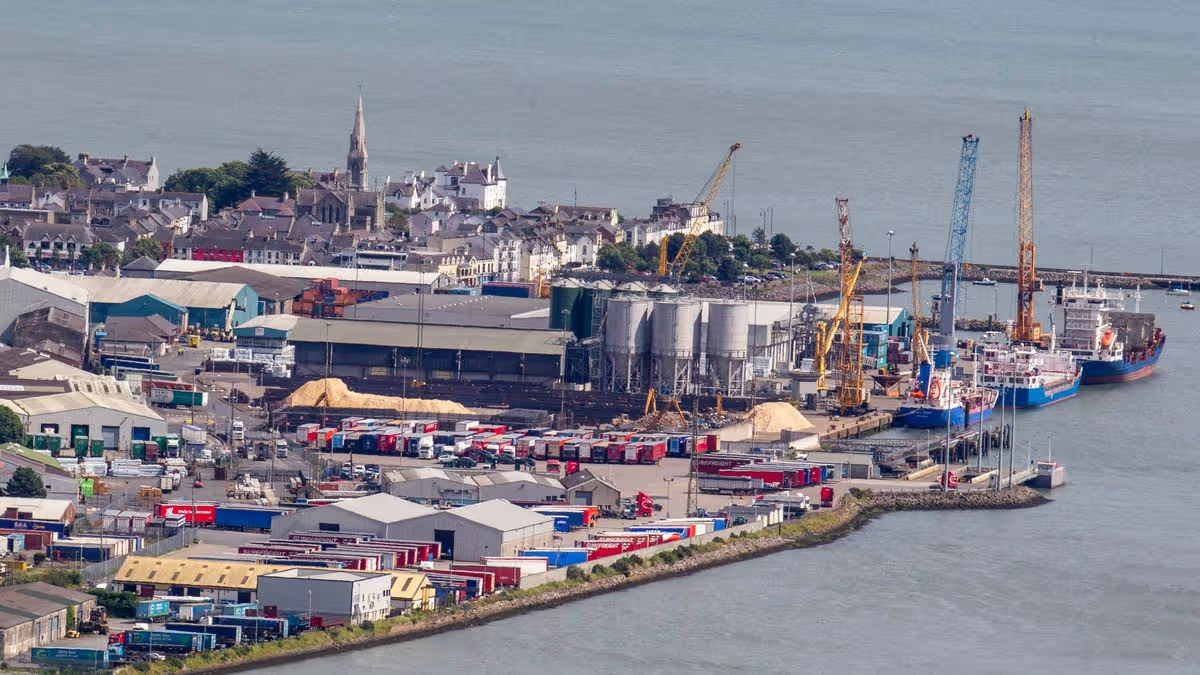
Warrenpoint Harbour Authority has been at the centre of a controversial odour with residents’ complaints leading to a community forum to resolve the stench issue.

One of Northern Ireland’s busiest ports has failed to attract any councillors to its board amid a long running Co Down stink problem.

Advertisement

Warrenpoint Harbour Authority has been at the centre of a controversial odour with residents’ complaints leading to a community forum to resolve the stench issue.

However, all councillors have now resigned from the harbour board with a deadline from the Department for Infrastructure for new applicants now closed.

READ MORE: Council refuses to reveal CCTV monitoring details despite ‘grave concerns’.

READ MORE: Newry parklet scheme delays causes eyesore concerns amid imminent launch.

Advertisement

A DfI spokesperson said:“The closing date for applications from councillors was 12noon on Friday 28 August 2026. No applications were received.”

All political parties on the council also confirmed to the Local Democracy Reporting Service (LDRS) that they had not put any councillor forward to the board.

WHA is the third largest port in Northern Ireland and became a trust in 1971, before new legislation in 1974 allowed for council representation on its board.

DfI added:“There is no statutory requirement for councillors to serve on the board.

Advertisement

“While the legislation permits up to three commissioners to be council members, it does not state a minimum number.

“The board remains properly constituted and can continue to operate effectively even in the absence of any councillors serving as commissioners.”

Environment groups and local residents have raised concerns for the last three years over a perceived stink at the port, they claim is linked to waste bales at the harbour to be shipped for Newry recycling company Re-Gen.

Advertisement

The bales are exported to be incinerated in Scandinavian areas.

Former WHA board members, councillors Jim Brennan ( Sinn Fein ) and Laura Devlin ( SDLP ) resigned last year in solidarity with local people complaining of the bad smell.

The last councillor on the board, independent Crotlieve elected member Jarlath Tinnelly has now also confirmed his resignation in early August.

The LDRS has contacted WHA over the councillor resignation, which has left the board completely empty of elected Newry, Mourne and Down District Council members.

Advertisement

The councillors had been appointed for terms of four years back in 2024, with a potential situation now presenting itself of all three board seats remaining vacated indefinitely.

Councillors appointed to the board by the DfI minister can expect to be paid “£8,772 per year for up to two business days per month” according to a DfI letter presented to the council.

In September (2025), WHA stated that it had extensive engagement with Re-Gen, with the Newry company agreeing to remove all RDF (refuse derived fuel) bales from the port, with a proposal to no longer store the waste there, but instead transport it directly to ships for export.

Only SRF (solid recovered fuel) bales were to be stored in future on the site, which the WHA was told should be non-odorous.

Advertisement

As a result of extensive talks and an independent environmental audit report, the WHA set up the community forum to provide a key communication basis on potential bad smells from the port located in the centre of the town.

However, in April this year, forum member Fionnuala McKinley, who lives just yards from port, stepped down and called for an independent environmental impact study.

For all the latest news, visit the Belfast Live homepage here and sign up to our daily newsletter here.

Source link

Advertisement
Continue Reading

NewsBeat

Jury retires in the Willington pub manslaughter trial

Published

on

Steven Shevels 'killed' outside Willington Queen's Head pub

Martin Greensmith saw his biological father for the first time when Steven Shevels turned up at the Queen’s Head in Willington on Christmas Eve last year.

Mr Shevels, 61, was causing a nuisance in the bar before he was asked to leave by the barman, Teesside Crown Court heard.

Moments later, 37-year-old Greensmith pushed over his dad in the beer garden after he claimed he tried to block his way back into the pub, the jury was told.

The jury heard how Mr Shevels was annoying members of his son’s family, including his mother Angela, and his nanna, after sitting next to them.

Advertisement

Jolyon Perks, prosecuting, said the fatal push was unlawful because it was born out of frustration.

He said the defendant was not acting in self-defence and urged the jury to consider that a reasonable and sober person would realise that the push would result in some harm.

“It does not matter whether the defendant thought he was acting legally at the time,” he said.

Paul Rooney, representing Greensmith, reminded the jury that the defence do not have to prove anything and that it is down the prosecution to prove that he did not act in self-defence.

Advertisement

He said that Christmas Eve was the first time that Greensmith had encountered his ‘dad’ who was acting bizarrely after drinking at least 13 pints.

He added that Mr Greensmith didn’t punch or slap Mr Shevels, he pushed him.

Police outside the Queen’s Head in Willington on Christmas day (Image: THE NORTHERN ECHO)

The CCTV shows the defendant was simply trying to walk back into pub and get away from this “drunken and aggressive man”, he said.

CCTV captured Mr Shevels hitting his head on the concrete surface in the beer garden of the Willington pub on Christmas Eve.

Advertisement

Paramedics spent an hour trying to revive the 61-year-old, but he was declared dead at the scene.

Pathologist Jennifer Bolton told the court that Mr Shevels suffered a cardiac arrest while unconscious and never recovered.

She said the cause of death was triggered by the fall and not an underlying heart condition he had.

Greensmith, of Rockingham Road, Sunnybrow, Willington, denies a charge of manslaughter and maintains that he acted in self-defence.

Advertisement

The trial continues.

Source link

Advertisement
Continue Reading

NewsBeat

Google Maps Criticized For Changing ‘Lake Ontario’ To ‘Lake America’ After Trump Name Change

Published

on

Google Maps Criticized For Changing 'Lake Ontario' To 'Lake America' After Trump Name Change

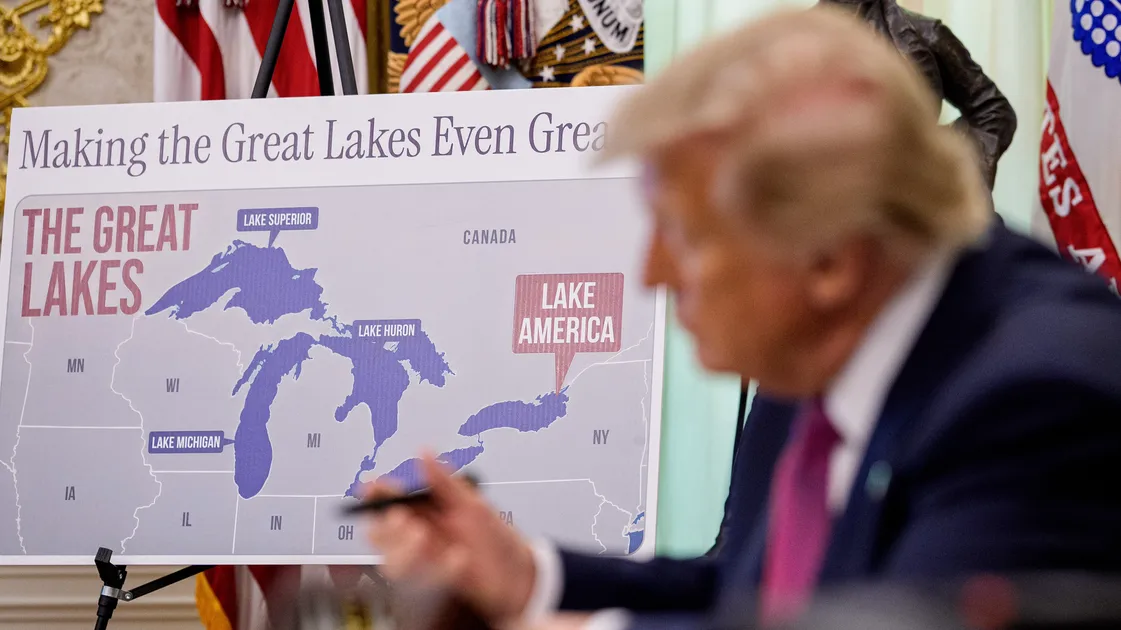
Google has announced it’s falling in line with President Donald Trump’s executive order to rename Lake Ontario to Lake America, changing the name of the body of water for those in the US using its Google Maps service.

The online search giant explained that the move is part of its “long-standing” policy to make updates when there’s name changes in official government sources, thus, those in the US will see “Lake America,” a name cooked up by Trump on Thursday as a result of the ongoing trade war with Canada.

The company noted that America’s northern neighbours will continue to see Lake Ontario, a name that’s been around since the 17th century (predating Canada and the US) and, per scholars, stems from the Iroquois word meaning “shining sea” or “beautiful lake.”

The rest of the world, according to Google, will see “Lake Ontario (Lake America)” when hovering over the body of water on the platform.

Advertisement

The change is similar to an earlier move by the tech giant after Trump, in his first day back in office, signed an executive order calling on federal agencies to rename the Gulf of Mexico to the “Gulf of America.”

The move — which also saw the company changing Denali in Alaska back to Mount McKinley on its maps service — sparked backlash at the time, with critics pointing to Google and Alphabet CEO Sundar Pichai’s attending Trump’s inauguration earlier that month. In the wake of the change, Google Maps reportedly deleted reviews slamming the new name.

Advertisement

One critic on X described the company’s latest act of renaming as “genuinely disturbing.”

“like this will obviously just be changed back day 1 after trumps regime is over but its just deeply sad, not even demoralizing, just pathetic,” wrote @CantEverDie on X.

Another user on the platform blasted the move as “weak,” adding, “no one is calling it that.”

And at least one user shared their disappointment in the company, writing, “One of the things I’m most going to take away from the Trump era is how many people and institutions and corporations don’t actually stand for anything and will capitulate to bad people at a moments notice when having principles is even slightly inconvenient to them.”

Advertisement

Source link

Continue Reading

NewsBeat

Holcombe Moor rewetting peat scheme to provide fire resilience

Published

on

Holcombe Moor rewetting peat scheme to provide fire resilience

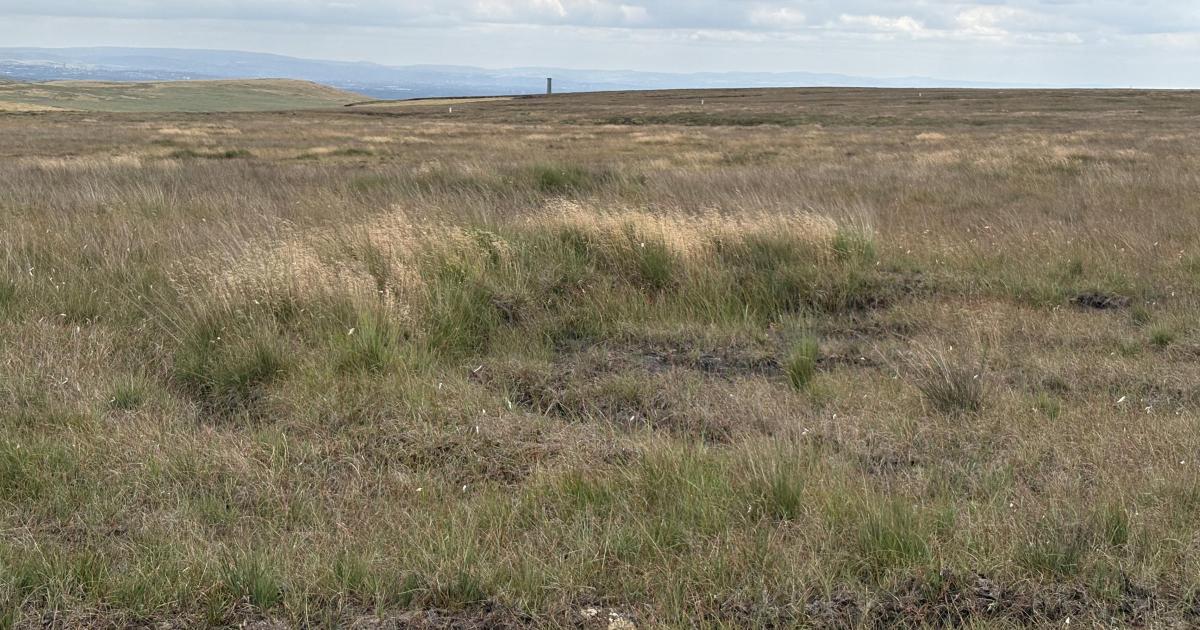
More than 3,000 scallop-shaped embankments have been built across Holcombe Moor in a National Trust-led scheme to restore degraded peatland and boost resilience to wildfire and flooding.

The semi-circular “scallop bunds” are made of peat and covered with vegetation. They trap rainwater across thousands of spots, creating pools and boggy ground that support wildlife and help re-establish water-holding sphagnum moss.

The National Trust has planted around 1.5 million clumps of sphagnum so far as part of the restoration.

Advertisement

Nik Taylor, area ranger and supervisor for the project, said: “We’ve proven that actually on the ground, it doesn’t make a massive difference to the landscape characteristics, the aesthetics of the place.

“But it can create so many benefits, one of which is wildfire resilience.”

Restoration work has also taken place on the charity’s Stubbins Estate.

This has included damming gullies, installing “leaky dams” lower down the hillside, and protecting exposed peat.

Advertisement

The project serves multiple purposes: rewetting peat to store carbon, supporting rare moorland wildlife, and slowing water flow to reduce flooding in the River Irwell catchment.

Holcombe Moor, like much of the UK’s uplands, has suffered from centuries of burning, drainage, grazing, and pollution.

This has left deep, damaged peat—up to 4.5 metres thick in places—cut through with gullies and “weather edges” where erosion exposes the peat to further damage.

While traditional peatland schemes often focus on damming gullies to allow water to spread more slowly across the moor, the scallop bunds accelerate the process by holding water in thousands of small pools.

Advertisement

Mr Taylor said: “First of all trying to stop the rot, stop the degradation.

“Then we rewet and plant sphagnum that in time allows us to accumulate peat, that’s a millennial process, but at least it means it’s not deteriorating, so we start to sequester, not lose (carbon).”

He estimates the landscape is about three-fifths restored, but that full recovery could take up to 50 years.

The National Trust has worked closely with commoners who have grazing rights, bringing them into a Countryside Stewardship scheme that rewards reduced livestock and supports the peatland work.

Advertisement

Other project partners include the Environment Agency, Defra, Natural England, the Ministry of Defence, United Utilities, and tenant farmers.

Ben Eardley, nature recovery project manager at the National Trust, said: “With climate change, these extreme weather patterns are locked in now; it’s the new normal, so we need to rethink our relationship with rivers in these catchments.

“With peatland restoration, what you’re doing is trying to restore ecosystem function to a whole habitat, so then you get multiple benefits, during all weather conditions.”

On Holcombe Moor, the ground remained wet even during a recent dry summer that saw wildfires break out elsewhere.

Advertisement

Mr Taylor demonstrated the impact by driving a stick into the peat and finding it damp just below the surface.

He also squeezed water from a handful of sphagnum moss.

The newly created wet conditions have already benefitted wildlife. Dunlin, a bird species that was “just hanging on,” has seen its numbers increase.

Communities downstream have also noticed changes, with no flooding reported during a recent storm, just weeks after a new set of leaky dams was completed.

Advertisement

The wet ground conditions have also improved wildfire resilience.

Mr Taylor said: “It’s stayed wetter in the areas where we’ve done the scallop bunding on deep peat.

“It stays wetter for longer, and the groundwater level rises closer to the surface for longer, and that makes the ground more resilient to those deep fires that can get into the peat.”

Advertisement

Source link

Continue Reading

NewsBeat

How algorithms are making our environments bland

Published

on

How algorithms are making our environments bland

The Pantone colour of the year for 2026 is white. It’s called Cloud Dancer, which is described as a “lofty white”. This choice reflects a growing trend away from colour in our visual world.

You might have noticed this yourself. Where an area once had a distinct sense of place we are seeing more cookie cutter developments popping up. Take the London borough of Elephant and Castle, which has seen billions of pounds of development in recent years. The area has gone from a Latin American enclave full of distinct and varied buildings to what Oli Mould, professor of social, cultural and historical geography, has warned is an “identikit homogeneous gentrified place”, which risks “destroying the very thing that makes a community thriving and beautiful in the first place”.“

There is a similar increasing sense of uniformity and sameness in urban design around the world. In 1993, architect Rem Koolhaas travelled 360,000km around the world, observing the rationalisation of urban design (the movement towards efficiency rather than creativity in the process) through what he termed the “generic city”. Functional, efficient, but colourless.

Algorithms of taste

This trajectory towards blandness is reinforced and sustained by the increasing tendency to allow algorithms to mediate the choices we make. This has the effect of
training perspectives to converge in “a strong pull toward sameness”.

Advertisement

Algorithms make predictions based upon our choices, from music to home furnishings. The algorithm takes that choice and suggests similar products based upon it, ultimately reinforcing and producing a monotonous and generic aesthetic taste. For instance, like a pop song by Sabrina Carpenter, you will then get served a lot of songs exactly like it until you find your Spotify Wrapped says that you are in the top listeners of something they’ve bafflingly called “Pink Pilates Princess Strut Pop”.

These sorts of algorithms in turn reinforce the production of products to meet those generic tastes, ultimately flattening the diversity of creative work, in everything from the songs we listen to to the urban surroundings in which we live.

Algorithmically driven taste results in a monoculture where art, pets and everything in between are chosen to match the generic palette of an algorithmic world.

The experience of eating a basic McDonald’s burger is the same in France as it would be in Thailand because the process has been standardised to ensure that. We are seeing this approach to efficiency and experience seep into the design of our environments.
New Africa/Shutterstock

This generic algorithmic taste is also having an impact at the design stage, particularly where metrics and investment desires overwhelm other considerations. Environments are increasingly considered by key decision makers like developers not in terms of their contribution to lived experience and cultural life, but as investment objects or financial assets, readily translated and transacted. The result is a flattening not only of our visual environment but also our engagement with that environment. And this loss is significant for our social wellbeing.

Advertisement

Back in 1983, the American sociologist George Ritzer introduced the concept of the “McDonaldization” of society to explain the business rationalisation of moving the design process towards faster, easier to manage, cheaper and more predictable outcomes. Like a McDonald’s burger, the production process becomes standardised. The burger is the same no matter where in the world you have one. Ritzer describes this happening in environments across a range of examples from restaurants to hospitals.

Ritzer acknowledged some of the advantages, like cost saving and customers knowing what to expect. However, the main problem he identified with this streamlining is there is no space for experimentation or personality because creativity and design are organised around efficiency. In this control of process we paradoxically lose control because we lose choice and creativity.

Living in colour

The issue goes beyond a loss of control of our spaces. The loss of colour is also a loss of expression. My work in law and aesthetics includes exploration of aesthetic welfare and the link between aesthetic experience and wellbeing. This includes how colour and expression in our built environment and surrounding spaces affects people.

Over 50 years ago, the American philosopher Monroe Beardsley introduced the concept of “aesthetic welfare” to explain the quality and availability of aesthetic experience through our environment, including colour and the impact it has on social and cultural wellbeing and resilience.

Advertisement

Attention to colour in our surroundings is linked to environmental enrichment as well as social and cultural participation through that environment. One study observed that students exposed to art under controlled experimental conditions expressed and engaged with colour differently from those without such experiences, consistent with the “pivotal role” of colour “in visual communication and emotional expression”.

Lack of opportunities to engage with colour and contrast in our environment risk making us less able to understand, appreciate, and use colour effectively. And this is particularly concerning if the primary way in which colour is otherwise delivered into our lives is through screens.

It is perhaps no coincidence that an idiom for malaise is to be “off-colour”. We need to move away from rational design and stop letting algorithms make our choices. We need to live in more colour.

Advertisement

Source link

Continue Reading

Trending

Copyright © 2025