Connect with us
DAPA Banner
DAPA Coin
DAPA
COIN PAYMENT ASSET
PRIVACY · BLOCKDAG · HOMOMORPHIC ENCRYPTION · RUST
ElGamal Encrypted MINE DAPA
🚫 GENESIS SOLD OUT
DAPAPAY COMING

NewsBeat

Teenager hospitalised as air ambulance and coastguard respond to beach incident

Published

on

Daily Record

Emergency services including the air ambulance and a coastguard helicopter descended on Formby Beach in Merseyside after concerns were raised for the safety of a teenage girl, who has since been taken to hospital

Emergency crews rushed to Formby Beach this afternoon amid fears for a teenage girl’s welfare.

Advertisement

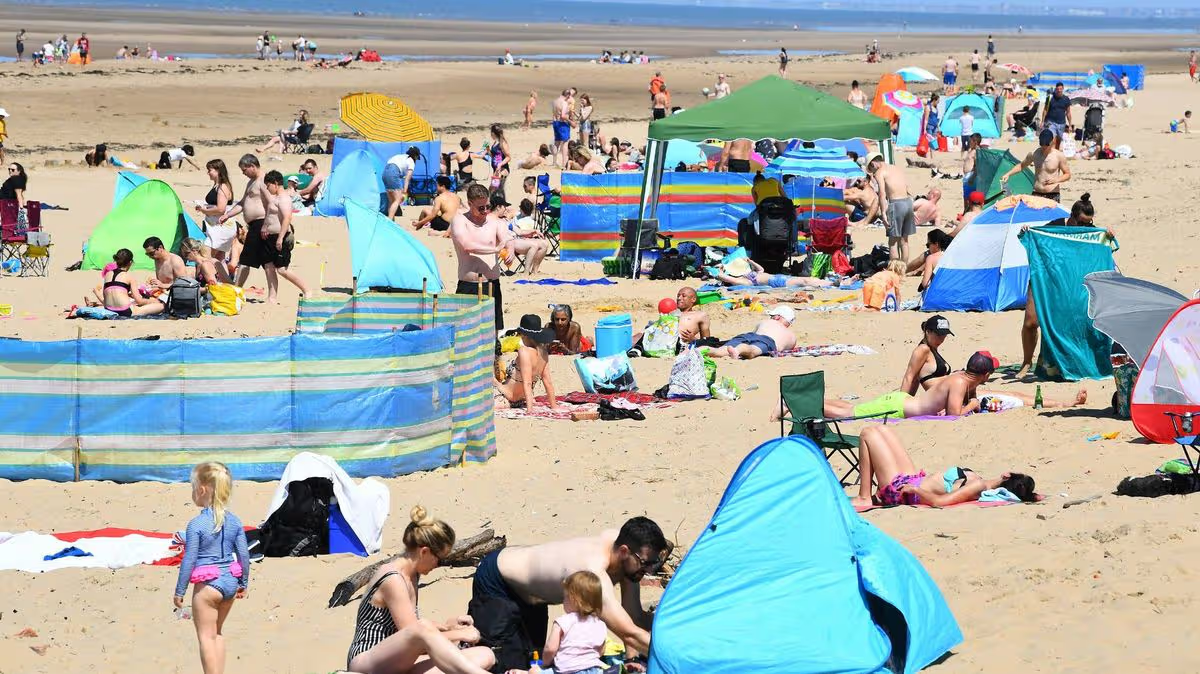
Merseyside Police, coastguard teams and North West Ambulance Service were scrambled to Formby Beach on Albert Road at approximately 3.30pm on Monday, May 25.

Officers confirmed a 15 year old girl was transported to hospital following the incident, with her family notified. The operation saw a substantial emergency response, featuring an air ambulance, coastguard helicopter and multiple police incident response units.

A force spokesperson confirmed: “We can confirm that emergency services are in Formby following an incident this afternoon, Monday, May 25.

“At around 3.30pm, police, the coastguard and NWAS were called to Formby Beach, Albert Road to reports of a concern for the safety of a 15-year-old girl.

Advertisement

“She has been taken to hospital and her family are aware. Enquiries are ongoing at the scene.”, reports the Liverpool Echo.

“Further updates will be issued when appropriate.”

Serious traffic congestion has brought chaos to the beach vicinity, with nearby roads experiencing gridlock as emergency personnel remain at the scene.

Officers have implemented a temporary one-way system in a bid to alleviate the tailbacks, although considerable delays persist throughout the locality.

Advertisement

Drivers are being advised to steer clear of the area if feasible to ensure emergency vehicles can reach the scene unimpeded.


Source link

Continue Reading
Click to comment

You must be logged in to post a comment Login

Leave a Reply

NewsBeat

Why staying hydrated is essential for people as they age

Published

on

Why staying hydrated is essential for people as they age

HYDRATION is something many people do not think about until they feel thirsty. But by that point, the body is already running a little low on fluids.

As we get older, staying hydrated becomes even more important for everyday health and wellbeing.

READ MORE: Fitness expert explains why short challenge can kickstart your health journey

Advertisement

The body changes over time. One of those changes is that the sense of thirst can become less strong. This means you might not feel thirsty even when your body needs water.

At the same time, the body can hold on to less water than it used to. This makes regular drinking throughout the day more important than ever.

Water plays a big role in how you feel. One of the first signs of not drinking enough is low energy. You may feel more tired, sluggish or less motivated. Sometimes people think it is just age or lack of sleep, but it can simply be low fluid intake.

Hydration is also important for joints. Water helps keep the joints cushioned and moving smoothly. When you are not drinking enough, you may notice more stiffness, especially in the morning or after sitting for a while.

Advertisement

Staying hydrated can help the body feel looser and more comfortable.

Digestion is another area where water makes a big difference. It helps food move through the system and can prevent issues like constipation. Many people find that increasing water intake helps them feel lighter and more comfortable after meals.

Even your brain is affected by hydration. Not drinking enough water can impact focus, memory and mood. You might feel a bit foggy or less sharp without realising why. Something as simple as a glass of water can often help improve concentration.

The good news is that improving hydration does not need to be complicated. You do not have to drink huge amounts all at once. It is better to sip water regularly throughout the day. Keeping a bottle nearby is a simple habit that makes a big difference.

Advertisement

You can also get fluids from food. Fruit and vegetables like cucumber, oranges and tomatoes all contain water. Soups and herbal teas also count towards your daily intake.

Another simple tip is to drink a glass of water first thing in the morning. After a night’s sleep, your body is often slightly dehydrated, so this helps kick start your system.

As the weather warms up, especially in spring and summer, you may also need more fluids than usual. Being active, walking more or exercising will increase your needs even further.

The main message is simple. Hydration is not just about quenching thirst. It supports your energy, your joints, your digestion and your overall health.

Advertisement

Source link

Continue Reading

NewsBeat

US military says it has launched new strikes on southern Iran

Published

on

US military says it has launched new strikes on southern Iran

CBS News, the BBC’s US partner, has reported that US intelligence believes Iran’s Supreme Leader Mojtaba Khamenei – who was injured in an Israeli strike on the first day of the war which killed his father and predecessor – is holed up in an undisclosed location, making communication with his envoys difficult and therefore delaying pace of talks with the US.

Source link

Continue Reading

NewsBeat

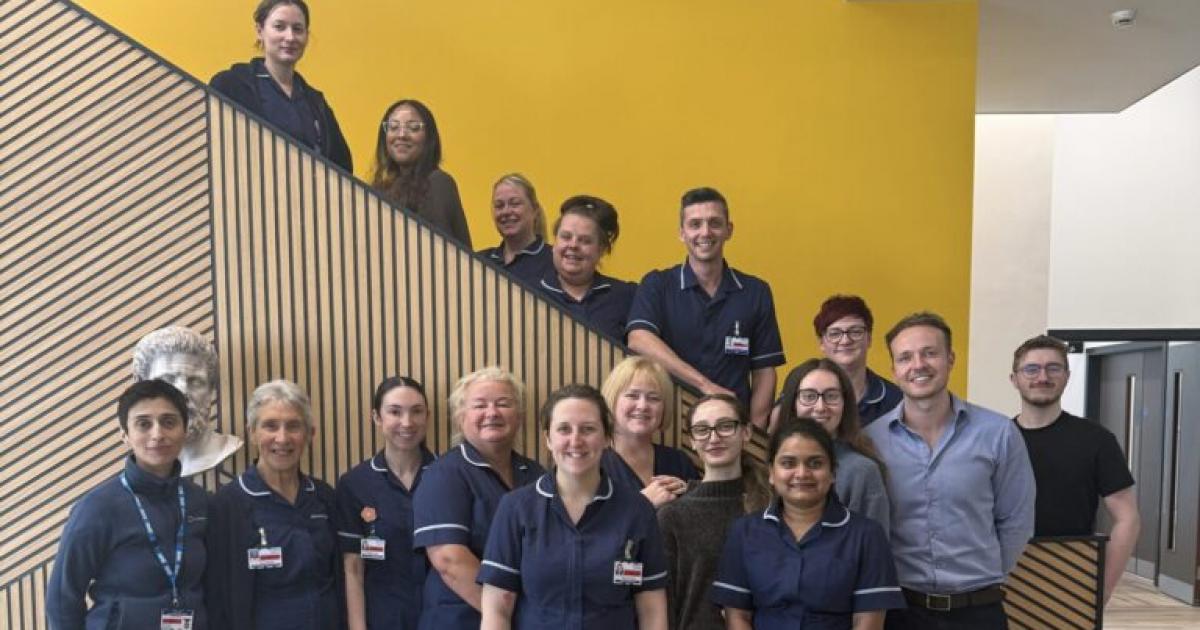
6,000 people take part in Bolton NHS clinical trials

Published

on

6,000 people take part in Bolton NHS clinical trials

Bolton NHS Foundation Trust recruited the participants across more than 50 studies over the past year.

The research focused on areas including reproductive health, genetics, neonatal care and community-based trials, and coincides with International Clinical Trials Day.

Alison Loftus, head of research and development at Bolton NHS Foundation Trust, said: “It’s been another remarkable year when it comes to delivering world-leading research studies in Bolton.

Advertisement

“We would like to thank everyone, from our colleagues who help to support research to our individuals who consent to taking part, as without them we wouldn’t be able to continue our work to discover new ways of treating illnesses and conditions.”

One major study currently underway is OBS UK, which tests a standardised care bundle to manage heavy bleeding during and after childbirth.

Another is the Generation Study, a genomic screening project for newborns to detect more than 200 rare but treatable genetic conditions.

Neonatal services at the trust have exceeded recruitment goals in several studies, thanks to support from across medical, nursing, midwifery and Allied Health Professional teams.

Advertisement

There has also been a shift towards delivering research in community settings, in line with the National Institute for Health and Care Research’s goal of making clinical trials more accessible and inclusive.

Recent community-based studies include the TRICEPS trial, which is exploring whether nerve stimulation and home-based rehabilitation can improve arm and hand recovery following a stroke.

The REDUCe-2 study is examining whether long-term abdominal drains can improve the quality of life for people with advanced cirrhosis.

Bolton is also contributing to Genes & Health, the world’s largest community-based genetics and health study focused on British Bangladeshi and British Pakistani populations.

Advertisement

Ms Loftus said: “Our continued focus to work beyond traditional hospital settings to deliver ground-breaking research is creating potentially life-changing outcomes.”

If you would like to find out more about research opportunities in Bolton, visit Bolton NHS Foundation Trust’s website.

Source link

Advertisement
Continue Reading

NewsBeat

UK extreme heat warning: NHS tells elderly to stay indoors during 36C heatwave

Published

on

Manchester Evening News

Temperatures in the UK are set to reach a record 36C on Tuesday, and the NHS has issued a ‘stay inside’ warning between 11am and 3pm

As temperatures continue to rocket across the UK, a ‘stay inside’ warning has been issued, urging elderly Britons in particular to keep safe during the extreme conditions.

Temperatures are forecast to reach a record 36C on Tuesday, rising from the already sweltering highs of Monday, and alongside the benefits of the warm weather come some more worrying health risks.

Advertisement

The heat can trigger dehydration, heatstroke and overheating, which can aggravate symptoms for those who already suffer from heart or breathing problems.

While a heatwave can affect everybody, those most vulnerable include older people.

The NHS states that those aged over 75, particularly women, are likely to feel the effects of the heat most acutely.

People who live alone or in a care home are also at greater risk, as are those taking multiple medications or living with Alzheimer’s disease.

Advertisement

The health service advises staying out of the heat where possible, especially during the sunniest periods, predicted between 11am and 3pm.

The warning states: “If you have to go outside, stay in the shade especially between 11am and 3pm, wear sunscreen, a hat and light clothes, and avoid exercise or activity that makes you hotter.”

When remaining indoors, it is also essential to keep your living space as cool as possible.

It is advised to keep windows shut during the day and open them at night once the outside temperature has dropped.

Advertisement

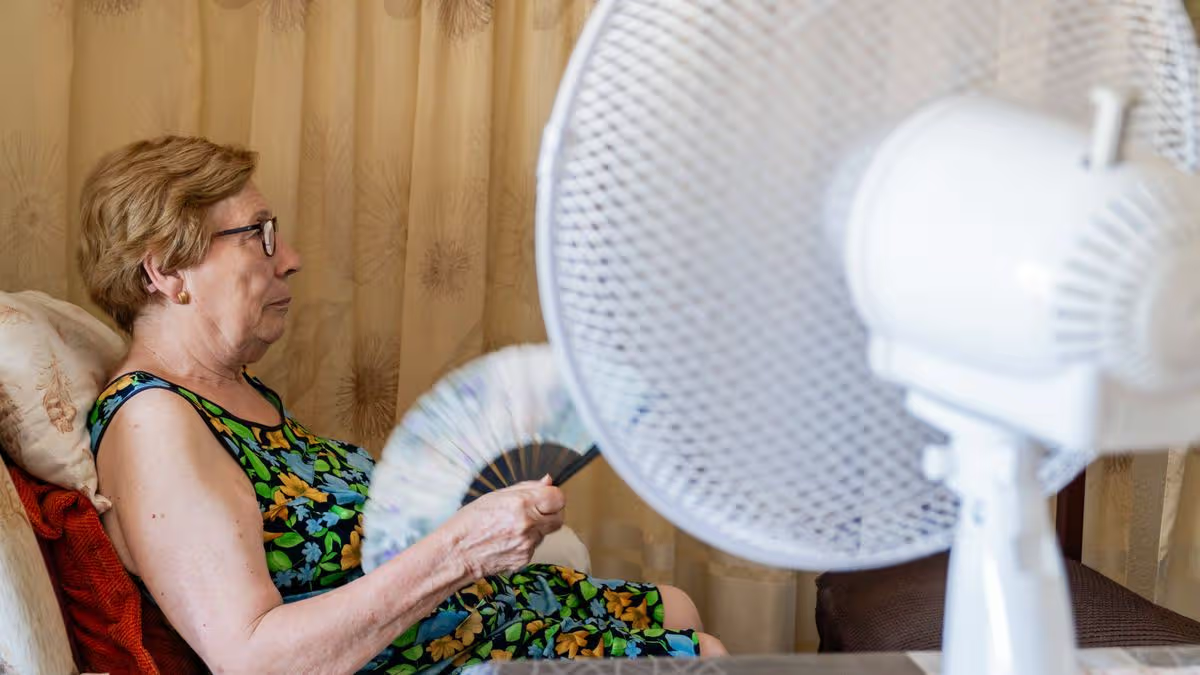
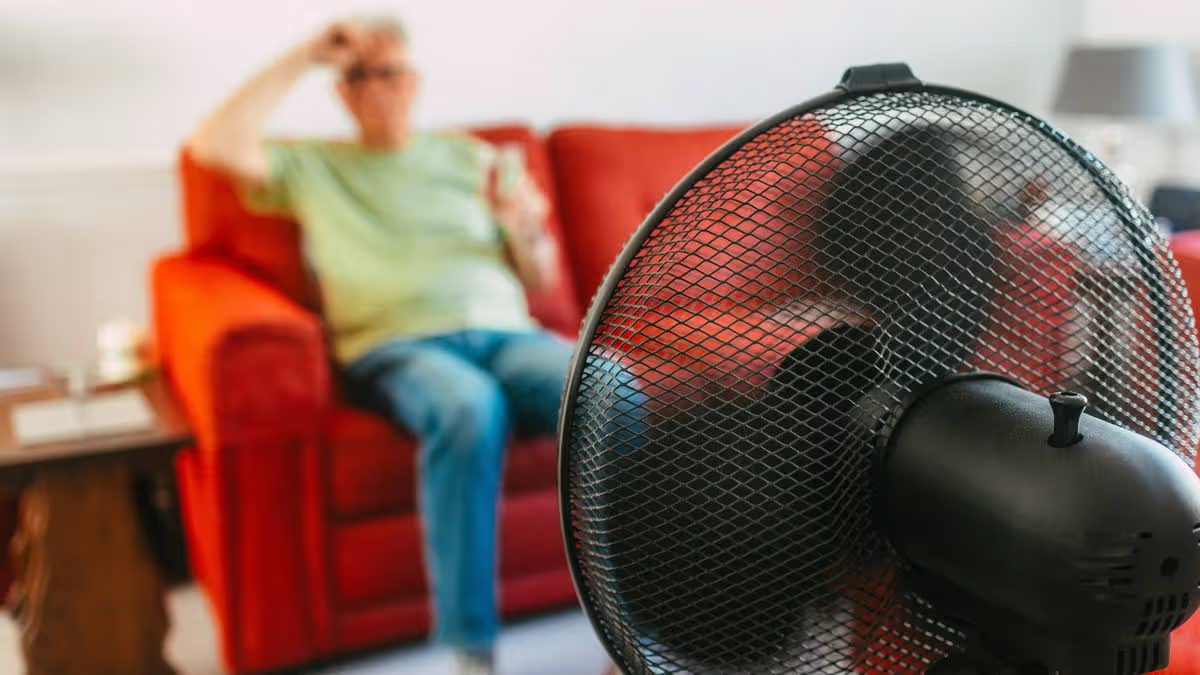
Electric fans can provide relief if the temperature is below 35 degrees. The NHS urges people to check the temperature of rooms, particularly those where individuals at higher risk sleep and spend time.

It is essential to keep a close eye on anyone who feels unwell with a high temperature during hot weather, as this could be a sign of heat exhaustion or heatstroke.

The health service also stresses the importance of keeping cool, staying hydrated with cold food and drinks, and applying cool water to your skin.

The guidance warns that during heatwaves, significantly more people than usual become seriously ill or lose their lives, making it vital to take every precaution to stay as cool as possible as the warm weather persists.

Advertisement

Source link

Continue Reading

NewsBeat

NHS heatwave warning: Elderly urged to stay indoors as UK temperatures forecast to hit 36C

Published

on

Daily Mirror

The NHS has issued a heatwave warning urging elderly people and other vulnerable groups to stay indoors as UK temperatures are forecast to reach a record 36C

As temperatures continue to rocket across the UK, a ‘stay inside’ warning has been issued, particularly for elderly Brits, urging them to keep safe during the extreme conditions.

Advertisement

Temperatures are forecast to reach a record 36C on Tuesday, rising from the already sweltering peaks of Monday, and alongside the pleasures of the warmth come some rather worrying health risks.

The heat can trigger dehydration, heatstroke and overheating, which can worsen symptoms for those who already suffer from heart or breathing difficulties.

While a heatwave can affect everybody, those most vulnerable include older people.

The NHS states that particularly those aged over 75 and women are likely to feel the effects of the weather more acutely.

Advertisement

Those living alone or in a care home are also at greater risk, as are people taking multiple medications or living with Alzheimer’s disease.

The health service advises staying out of the heat where possible, particularly during the sunniest spells, anticipated between 11am and 3pm.

The warning states: “If you have to go outside, stay in the shade especially between 11am and 3pm, wear sunscreen, a hat and light clothes, and avoid exercise or activity that makes you hotter.”

When remaining indoors, it is equally essential to keep your living space as cool as possible.

Advertisement

It is advised to keep windows shut during the day and open them at night once outdoor temperatures have dropped.

Electric fans can provide relief if the temperature is below 35 degrees.

The NHS urges people to monitor room temperatures, particularly in areas where those most vulnerable are living and sleeping.

It is crucial to keep a close eye on anyone who feels unwell with a high temperature during hot weather, as this could be a sign of heat exhaustion or heatstroke.

Advertisement

The healthcare provider also stresses the importance of cooling yourself down, consuming cold food and drinks, and applying cool water to your skin.

The guidance cautions that during heatwaves, significantly more people than usual fall seriously ill or lose their lives, making it vital to take every precaution to stay as cool as possible as the scorching weather persists.

Source link

Advertisement
Continue Reading

NewsBeat

Alarm raised as healthy life expectancy drops sharply in Bolton

Published

on

Alarm raised as healthy life expectancy drops sharply in Bolton

Bolton & District Pensioners Association shared its concerns after new Office for National Statistics figures revealed the second largest drop in Greater Manchester.

In Bolton, men are now expected to live just 54.6 years in good health, a reduction of five years since 2019 to 2021, while women’s healthy life expectancy has fallen from 60.4 years to 55.3 years, a drop of 5.1 years.

Alan Johnson, chairman of the association, said: “As a group, we are not just concerned about the well-being of pensioners.

Advertisement

“We care deeply about what the future holds for our children and grandchildren.

“They could become the first generation worse off than their parents.”

John Reehill, who spoke at a recent meeting, said the figures reflected the long-term impact of austerity and growing inequality on public health.

Mr Reehill said: “It is becoming increasingly clear that austerity is not only making people unhealthy, it is costing lives.”

Advertisement

The association has launched a campaign against further NHS cuts and privatisation.

Following the release of the latest data, members agreed to broaden the campaign to emphasise the value of investment in prevention, housing, employment, mental health support, and wider public health services.

The group said the report should act as a wake-up call for both local and national decision-makers.

The decline in healthy life expectancy marks the lowest recorded in Bolton since the ONS began reporting on the measure in 2011 to 2013.

Advertisement

Source link

Continue Reading

NewsBeat

Andy Burnham needs a lesson from the City before ever becoming Prime Minister

Published

on

Andy Burnham needs a lesson from the City before ever becoming Prime Minister

That is the rationale, that somehow Burnham brings a magic touch, injecting excitement and pizazz into a government that in two years has lost its way. The Sir Keir Starmer administration is marooned, holed, driven on to the rocks by torpor and a sheer inability to get things done. All that promise, which secured Starmer a landslide, lost in a swirling sea of scandal and uselessness. Starmer, we now realise, is ill-suited to No 10, he is not a commander, a doer, not even, as one captain of industry said to me this week, “a COO”. Ouch. Starmer, he said, would be a competent down table senior manager, “on the executive committee, but as the lawyer”.

Source link

Continue Reading

NewsBeat

Jet2 pilot ‘suffers heart attack’ at 30,000ft as plane forced to make emergency landing

Published

on

Daily Mirror

Jet2 Flight LS1266 from Tenerife to Birmingham was cruising at 30,000ft when the incident occurred in the early hours of Friday, May 22 – the plane, carrying 220 passengers

A flight from a popular tourist spot to the UK was forced to divert to Portugal after the pilot suffered a suspected heart attack mid-flight.

Advertisement

Jet2 Flight LS1266 from Tenerife to Birmingham was cruising at 30,000ft when the incident occurred in the early hours of Friday, May 22. The plane, carrying 220 passengers, was forced to make an unscheduled landing at Francisco Sa Carneiro Airport near Porto, Portugal.

Passengers said cabin crew rushed down the aisle, asking if anyone onboard had medical training. They described lights flickering during the rapid descent, while children wailed as the plane quickly lost altitude.

“My partner and I were asleep when we were woken by chaos,” a passenger told The Sun.

Advertisement

“Lights began flashing and hostesses who were visibly upset, seeking a doctor. Our two-year-old began crying like many other children on board because the aircraft was dropping so quickly for an emergency landing.”

The aircraft landed in Porto at 2.11 am local time and emergency services boarded immediately. Medical staff attended to the pilot in the cockpit before he was taken to the hospital.

Passengers are understood to have remained on board for over an hour before disembarking and then spent about 13 hours in the terminal while the airline organised replacement crew.

A pilot flew in from Manchester to take travellers to Birmingham on a different aircraft.

Advertisement

“We were stranded in Portugal for over 13 hours without accommodation… There was nowhere to stay. They said accommodation was too expensive,” one passenger reportedly said.

Jet2 said the incident was due to one of the pilots feeling unwell.

“Flight LS1266 from Tenerife to Birmingham diverted to Porto on Thursday (21st May), due to one of the pilots feeling unwell,” Jet2 told The Sun.

Advertisement

“At no point was safety compromised, and customers subsequently continued their journey. We would like to apologise to customers for this unforeseen delay.”

Source link

Continue Reading

NewsBeat

Tiny blue deep-sea octopus discovered near Galapagos confirmed as new species

Published

on

Tiny blue deep-sea octopus discovered near Galapagos confirmed as new species

A palm-sized blue octopus first spotted off the Galapagos Islands in 2015 has been identified as a new deep-sea species, according to a new study.

The octopus, now named Microeledone galapagensis, was spotted during a deep-sea expedition aboard the research vessel EV Nautilus.

The vessel’s crew had deployed a remotely operated robot to explore the seafloor near Darwin Island at the northern edge of the Galápagos archipelago. As the robot moved near an underwater mountain, its camera caught the strange octopus about 5,800ft below the surface.

The crew collected the octopus and filmed two others that looked like it.

Advertisement

The researchers collected several specimens during the expedition but the blue octopus, about the size of a golf ball, stood out.

The octopus was preserved in alcohol and formalin and sent to the Chicago Field Museum for research.

“Right away, I knew it was something really special. I’d never seen anything like it,” said Janet Voight, an author of a new study on the octopus published in the journal Zootaxa.

Newly discovered octopus species
Newly discovered octopus species (Charles Darwin Foundation)

The Chicago scientists faced a hurdle as they had a single specimen to look at. “When you describe a new species of octopus, you have to look at all the parts, including the mouth, the beak and the teeth,” Dr Voight explained.

“And to see those things, you have to cut the specimen open. We only had the one specimen, so I didn’t want to take it apart.”

Advertisement

To conduct a much more thorough analysis of the specimen at hand, the researchers took CT scans.

“Because CT imaging is non-destructive, it’s especially important for type specimens like this one,” said Stephanie Smith, another author of the study.

“And that’s great for me because people are often bringing me these incredibly rare and stunningly beautiful specimens that I get the privilege of virtually opening up.”

Combining multiple CT scans of a specimen can help create a fairly accurate 3D model.

Advertisement

The scans revealed fine details of the octopus’s internal organs, including its mouth, and helped prove it was indeed a new species to science.

“These are little octopuses that live in the deep sea and hardly anybody on Earth has ever gotten to see them. I just feel lucky that I got to work with them,” Dr Voight said. “If you took all the land on the Earth and pieced it together, you wouldn’t cover the Pacific Ocean. The oceans are so big and there’s so much left to explore.”

The discovery of the octopus species, the researchers note, is a reminder of how much of the ocean around the Galápagos Islands remained unexplored.

“Every new species helps us better understand these hidden ecosystems, and why protecting them matters,” Salome Buglass, marine scientist from the University of California Los Angeles, said.

Advertisement

Source link

Continue Reading

NewsBeat

‘Gripping’ real-life police documentary set in Belfast leaves BBC viewers hooked

Published

on

Belfast Live

BBC audiences are gripped by a new six-part documentary series following real PSNI officers on the frontline in Belfast

BBC audiences have uncovered a new compelling watch that they’ve likened to police drama, Blue Lights.

Presented by broadcaster Stephen Nolan, Peelers: The PSNI for Real, is a six-part series that tracks members of the Police Service of Northern Ireland as they navigate the realities of frontline policing throughout Belfast.

From violent encounters and substance dependency problems to highly emotional domestic confrontations, the programme offers viewers an unfiltered glimpse at the pressures officers encounter daily, which mirrors many of the subjects examined in Blue Lights.

Advertisement

Following its arrival on BBC iPlayer on 27 April, the series swiftly captured viewers’ attention, with many confessing they consumed all six episodes consecutively.

The documentary features Stephen Nolan accompanying police officers in Belfast as they attend a broad spectrum of incidents impacting local neighbourhoods, including public disturbances, drug misuse and domestic violence cases, reports the Mirror.

According to the official synopsis: “It also gives viewers a revealing sense of what it’s like to be a police officer and the teamwork that’s required in fast-changing and often uncertain situations.”

Advertisement

Viewers have praised the documentary as both moving and enlightening. One viewer posted on X: “Brilliant show, loved it. Binge-watched the whole series. Hope there’s more.”

Another posted: “Just finished watching all six episodes of Peelers: The PSNI for real with @StephenNolan and I have to admit it’s one of the best documentaries I’ve ever seen on TV. Honestly, I had tears in my eyes one minute and laughed the next.”

A third audience member remarked: “Finished Peelers: The PSNI for Real and loved it. It’s important the people of Northern Ireland see what officers have to deal with and out of their uniforms, they are human like all of us.”

Advertisement

Meanwhile, another admirer commended the officers appearing in the programme, stating: “Absolutely brilliant series!! These men and women of the PSNI work their [explicit] off day in day out!”

Reflecting on his two-year journey embedded with police forces across Northern Ireland, presenter Stephen explained: “Peelers is an unfiltered insight into the reality of front-line policing. It’s based on the hundreds of hours that I spent with officers going about their everyday work.

“I’ve been with them as they tackled drug dealers, chased stolen cars and dealt with hostile crowd situations. What I saw was fascinating and unexpected. It blew my mind and I know that BBC audiences will feel the same.”

Advertisement

Peelers: The PSNI For Real is available to watch on BBC iPlayer

Source link

Continue Reading

Trending

Copyright © 2025