Connect with us
DAPA Banner
DAPA Coin
DAPA
COIN PAYMENT ASSET
PRIVACY · BLOCKDAG · HOMOMORPHIC ENCRYPTION · RUST
ElGamal Encrypted MINE DAPA
🚫 GENESIS SOLD OUT
DAPAPAY COMING

NewsBeat

the Britons who supported the War of Independence

Published

on

the Britons who supported the War of Independence

The American revolution was not a straightforward contest between colonists and mother country, despite what the Declaration of Independence said about dissolving the bonds between one people and another. There were, of course, loyalists in America who refused to join the rebel cause. And in Britain, there were many who took the side of the revolution.

Just like in the colonies themselves, people’s choice of allegiance was sometimes a matter of self-interest. Merchants and manufacturers, whose livelihoods depended on trade with America, were some of the most vocal opponents of the British government’s aggressive policies in the 1760s and 1770s. When fighting broke out in 1775, they organised petitions calling for peace and reconciliation.

But the revolution was also a question of principle – a struggle over the nature and limits of freedom – and plenty of British people treated it that way too.

In fact, since the 1760s, the American colonists’ dispute with the government had been closely tied to questions about corruption, oligarchy and executive tyranny in Britain itself. The London-based journalist and politician John Wilkes had catalysed a popular opposition movement, making himself the champion of a coalition of London merchants and labourers. They believed the king was gathering too much power, using bribes and jobs to control parliament and keep it from truly representing the people.

Advertisement

It was this political background that produced Thomas Paine, who moved to Philadelphia in 1774 with a recommendation from Benjamin Franklin (who himself was based in London from 1757 until 1775 when he headed home to join the revolution). A new collection of Paine’s writings suggests that he was far more active than previously thought in the newspaper and pamphlet debates of the 1760s and early 1770s. He did not become a revolutionary in America, but in Britain.

English-born political philosopher Thomas Paine was an important figure in America’s fight for independence.
Wikimedia Commons

Meanwhile American colonists’ arguments about their own lack of representation, and their abuse by corrupt ministers, resonated across the Atlantic. Wilkes never really won Franklin’s respect, but he did work closely with the Virginian Arthur Lee, who wrote frequently in opposition newspapers while he lived in London between 1770 and 1776. Once “arbitrary rule” was established in the colonies, Lee warned, it would “speedily traverse the ocean, and finally fix itself in England.”

Among those who linked the growing American crisis to the question of representative government was the antislavery activist and lawyer Granville Sharp. He published a pamphlet in 1774 declaring “the people’s natural right to a share in the legislature,” in which he argued that “all British subjects,” including those in America and Ireland, were “equally free by the law of nature.” Irish legislative independence was indeed one of the outcomes of the transatlantic revolutionary struggle.

Working against despotism

As the crisis lurched into outright rebellion in 1775, the historian Catharine Macaulay accused the government of working to speed up “the slow but steady progress of despotism” throughout Britain and its empire. Indeed, Macaulay’s History of England championed the republican revolutionaries of the 17th century.
Advertisement
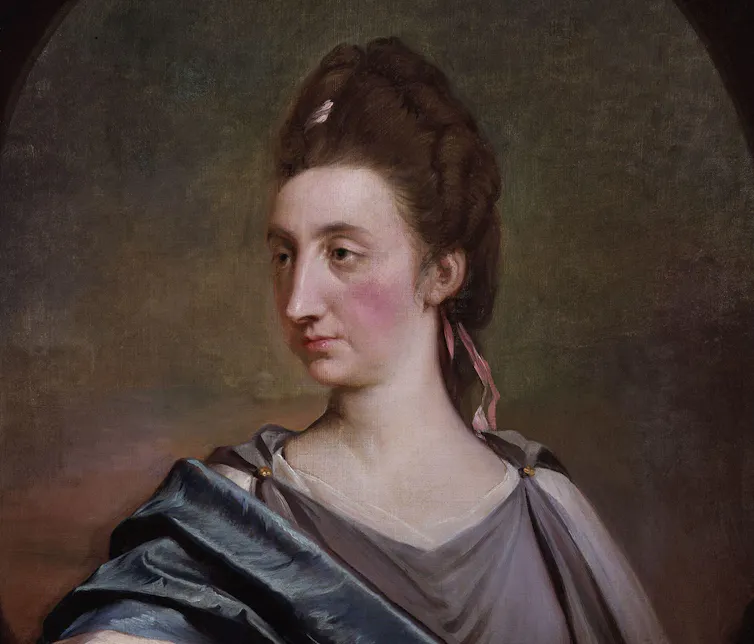
Portrait of an 18th-century woman, a public intellectual.
Catharine Macaulay, the first Englishwoman to become a published historian, supported the American revolution, arguing that the people have the right to overthrow their monarch for their own natural rights.
Portrait by Robert Edge Pine

As the historian Mary Sarah Bilder has recently shown, it inspired Thomas Jefferson’s text of the Declaration of Independence. Macaulay’s brother, John Sawbridge, was one of Wilkes’ leading allies in parliament.

The patriot cause in the colonies also won strong support among Britain’s dissenting Protestants – those who refused to toe the Church of England line and therefore suffered various exclusions from civil life in Britain. Dissenters had their own tradition of fighting for liberty, which fed into the joint struggles over parliamentary reform and American rights.

In the mid-1770s, dissenting schoolteacher James Burgh published a three-volume catalogue of “public errors, defects, and abuses” in the British political system. “When the people take redress into their own hands,” he predicted, “woe to the tyrants”.

Spirit of revolution

Perhaps the most influential pro-American tract published in Britain, though, was the work of the Welsh dissenting intellectual and preacher, Richard Price. His Observations on Civil Liberty sold 60,000 copies, its circulation boosted by the flurry of indignant responses from friends of the government.

Price emphasised that liberty depended on popular sovereignty – the rule of all people equally – which he said was being abused on both sides of the ocean. Revolution in America, he argued, was part of an approaching “revolution in the affairs of this kingdom”.

Advertisement
Portrait of an 18-th-century British intellectual.
Welshman Richard Price wrote several influential pamphlets in support of the American revolution, including his Observations on the Nature of Civil Liberty, the Principles of Government, and the Justice and Policy of the War with America, which sold 60,000 copies in Britain.
National Library of Wales

Price’s book (according to its detractors) made an impression on Britain’s ordinary working people, “taylors, tallow-chandlers, soap-boilers … chimney sweeps” and so on, not to mention “female patriots”. It was certainly read by James Aitken – “John the Painter” – a house painter who had been radicalised to the revolutionary cause while living in the American colonies in the early 1770s. Aitken set fire to the Portsmouth naval dockyard in late 1776 as part of a campaign to cripple the Royal Navy. He was caught and executed in 1777. By then, authorities were seriously worried about the impact the American Revolution was having close to home.

Most British people never sided with the rebels. Even Price and his fellow sympathisers did not go as far as Paine had done (in Common Sense) and call for the end of the monarchy itself. When Britain’s longstanding Catholic enemy, France, entered the war on the American side in 1778, public opinion swung more firmly behind the government.

Still, at the Gordon Riots two years later people were said to have shouted: “Peace with America, and war with France!” Anger at Britain’s corrupt and oligarchic politics was still widespread.

When the British war effort at last petered out following defeat at Yorktown in 1781, a new government took over led by men who had opposed war in the first place. They took some reforming steps before collapsing into infighting.

Price, along with plenty of like-minded people, took hope from the outcome. “The struggle has been glorious on the part of America,” he wrote his American friend Benjamin Rush in 1783, “and it has now issued just as I wished it to issue, in the emancipation of the American states and the establishment of their independence”.

Advertisement

Source link

Continue Reading
Click to comment

You must be logged in to post a comment Login

Leave a Reply

NewsBeat

The 2026 World Cup is the greatest architectural experiment in the tournament’s history

Published

on

The 2026 World Cup is the greatest architectural experiment in the tournament’s history

When football commentators analyse a World Cup match, they tend to focus on tactics, technical ability, physical conditioning and psychology. If a team wins away from home, we hear about mentality. If a player scores a spectacular goal, we praise their vision or instinct. Yet there is another factor that receives remarkably little attention: the stadium itself.

The 2026 Fifa World Cup, hosted across the United States, Mexico and Canada, presents perhaps the greatest architectural experiment in the tournament’s history. Sixteen stadiums, spread across the three countries, are staging matches in environments that differ dramatically in size, scale, form, lighting conditions and spatial character.

Some are purpose-built football grounds. Others are enormous NFL arenas adapted for the world’s game. Several feature retractable roofs. Others remain open to the elements. Together, they create a fascinating question: can the architecture of a stadium influence player performance?

As an interior designer, I have spent several years researching the relationship between footballers, spatial awareness and stadium design. My research began with a simple observation: across football, teams consistently perform better at home than away.

Advertisement

Traditional explanations focus on crowd support, yet during the COVID pandemic, when matches were played behind closed doors, home advantage did not disappear. This suggests there may be more complex factors at work.

Playing the space

A player receiving a pass rarely begins processing information at the moment the ball arrives. Long before that pass is played, they have already built a mental picture of their surroundings. They understand where they are positioned in relation to the touchline, the penalty area, teammates and opponents. But they also orient themselves through a series of architectural cues embedded within the stadium itself.

These cues can be obvious or subtle. The angle of a stand. The location of a tunnel. The shape of a roof. The position of advertising. The colour surrounding the pitch. The direction of sunlight. The edge of a seating tier. Together, these become reference points that help players orient themselves and make decisions faster.

John Beck, Cambridge City manager in the early 1990s, would set up key markers in each of the four corners of the team’s home ground. The markers would be hoardings printed with the word “quality”. When full backs would receive a ball deep in their own half they would look up and were asked to hit the ball as hard as they could towards the quality signs. These were nicknamed “quality passes”. While quite a primitive tactic, it was effective for Beck; he guided the club to two successive promotions and to two successive quarter-final appearances in the FA Cup.

Advertisement
Mercedes-Benz Stadium in Atlanta, Georgia is one of the 16 venues for the 2026 World Cup.
Kurtis Toliver/Shutterstock

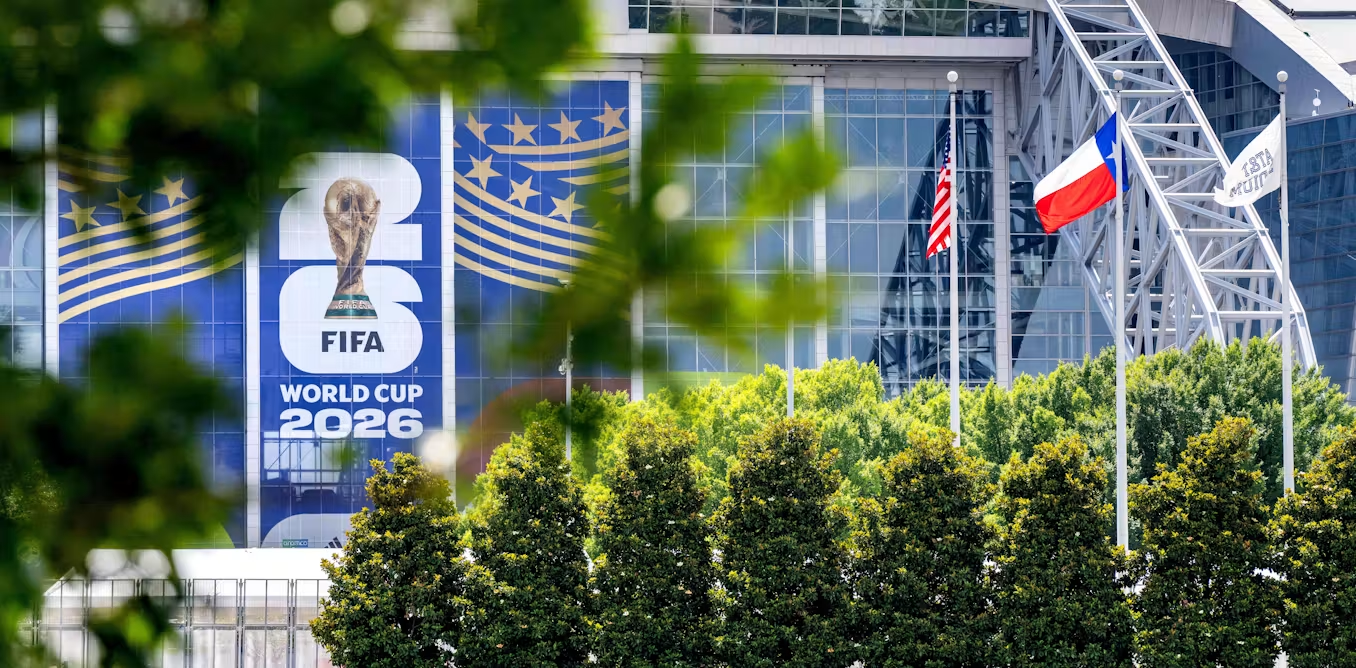
At the 2026 World Cup, players have encountered some of the most distinctive football environments ever assembled for a single tournament. In Dallas, matches are taking place inside a stadium capable of holding more than 90,000 spectators. For many players, this will be the largest enclosed sporting environment they have ever experienced.

Suspended above the field are giant video screens so large they have become part of the stadium’s identity. Whether consciously or unconsciously, such dominant visual elements contribute to the player’s reading of space.

In Atlanta, a retractable roof and climate-controlled interior create conditions unlike those found in most traditional football grounds. The stadium’s vast pinwheel-esque roof structure and glass end wall produce a highly controlled environment where wind, temperature and external distractions are largely removed.

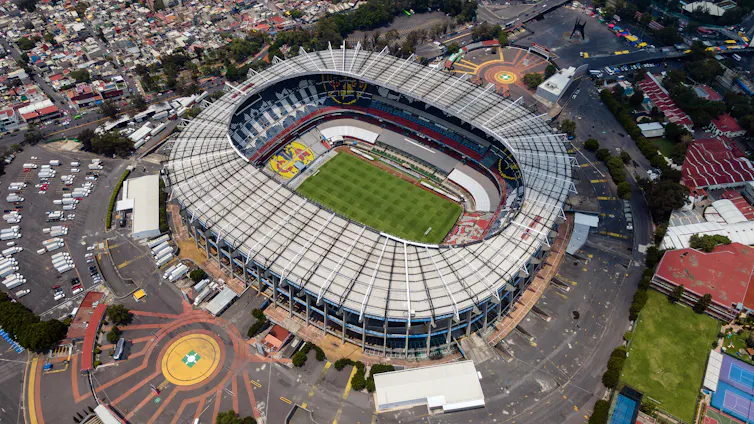
Mexico City’s Estadio Azteca provides a very different experience. It is one of football’s great cathedrals, steeped in memory and history. Generations of players have competed there, from Pelé in 1970 to Maradona in 1986. Unlike many newer venues, the Azteca was designed specifically for football, creating a spatial relationship between players and spectators that feels fundamentally different from many multipurpose grounds.

Advertisement


À lire aussi :
Pelé was more than a great footballer – he revolutionised Brazil’s football industry


Meanwhile, venues such as Vancouver’s BC Place, with its retractable cable-supported roof, or Seattle’s Lumen Field, with its dramatic open end framing the city skyline, create visual identities that players must quickly learn to navigate and interpret.

Estadio Azteca in Mexico City
Estadio Azteca in Mexico City is one of football’s great cathedrals.
Macbeth_GP/Shutterstock

From a football perspective, the challenge is adaptation. The German footballer Thomas Müller once described himself as an “interpreter of space”, a phrase that captures something important about elite performance. Great footballers appear to slow down time. They often know what they are going to do before the ball reaches them. This ability is developed through experience and familiarity.

The more often players operate within a particular environment, the more effectively they build what psychologists call cognitive maps. Over time, the surroundings become familiar and require less conscious processing. This familiarity creates fractions of a second of additional thinking time. At the elite level, those fractions can make the difference between scoring and missing, winning and losing.

The challenge of a World Cup is that players rarely have this luxury. Teams move rapidly between venues. Conditions change from match to match. Architectural cues that were familiar in one stadium disappear in the next. Players must repeatedly rebuild their understanding of space and place. This is why preparation becomes so important.

Advertisement

For decades, coaches have analysed opposition tactics in meticulous detail. Yet comparatively little attention has been paid to preparing players for the architectural characteristics of the stadium itself. Understanding sightlines, lighting conditions, pitch orientation, roof structures and spatial landmarks could offer marginal gains that become decisive in elite competition.

From a design perspective, this raises an equally interesting question. Modern stadiums are increasingly designed around fan experience, hospitality and commercial revenue. Yet the primary performers within these spaces remain the players themselves. If architecture can influence orientation, perception and decision-making, should stadium design place greater emphasis on players? Perhaps this will be the next frontier in sporting performance.

Source link

Advertisement
Continue Reading

NewsBeat

Man appears in court on attempted murder and arson charges after Glider fire

Published

on

Belfast Live

He was allegedly involved in setting fire to the Glider and a property at McMaster Street.

A man was remanded into custody today, charged with attempted murder during racial rioting on the streets of Belfast.

Advertisement

Christopher McLaughlin, 29, is also accused of arson attacks on a Glider bus and a house in the east of the city earlier this month.

Violent disorder erupted on June 9 in the aftermath of a serious knife attack allegedly carried out by a Sudanese asylum seeker.

A series of protests developed into unrest breaking out across Belfast and other parts of Northern Ireland, with vehicles torched and some families forced to flee their homes.

McLaughlin, of Devon Drive in the city, appeared at the city’s Magistrates Court on charges of riotous assembly and two counts of arson endangering life with intent.

Advertisement

He was allegedly involved in setting fire to the Glider and a property at McMaster Street.

McLaughlin is further charged with the attempted murder of a man as part of the same series of incidents.

All of the alleged offences were committed on June 9.

A PSNI detective involved in the investigation said she could connect the accused to all four charges.

Advertisement

No further details about the circumstances were disclosed during the brief hearing, and McLaughlin did not seek bail.

A defence solicitor told the court he has no suitable address at this stage.

District Judge Natasha Fitzsimons remanded McLaughlin custody until July 28.

For all the latest news, visit the Belfast Live homepage here and sign up to our daily newsletter.

Advertisement

Source link

Continue Reading

NewsBeat

England vs DR Congo: World Cup 2026 prediction, kick-off time, TV, live stream, team news, h2h results, odds

Published

on

England vs DR Congo: World Cup 2026 prediction, kick-off time, TV, live stream, team news, h2h results, odds

It is a first-ever meeting between the two nations, with either co-hosts Mexico or Ecuador lying in wait in the last 16 at Mexico City’s Estadio Azteca on Sunday night.

Source link

Advertisement
Continue Reading

NewsBeat

Charlotte Tilbury coming to Boots in Cambridgeshire shopping centre

Published

on

Cambridgeshire Live

The Cambridgeshire shopping centre announced the news at the end of June

A Cambridgeshire shopping centre is welcoming a new brand this summer. In recent months, Peterborough’s Queensgate Shopping Centre has welcomed a number of new shops and restaurants.

Advertisement

This includes Seoul Plaza, the UK’s leading Korean food retailer as well as coffee shop Jamaica Blue. On its social media, Queensgate announced it will be welcoming Charlotte Tilbury to its Boots store.

According to Boots, from July 3, the brand will open in 31 stores across the nation. Stores will stock the luxury beauty brand – from its iconic Magic Cream to its Airbrush Flawless Finish.

Announcing the upcoming opening, a spokesperson for Queensgate Shopping Centre said: “You asked for it.. and it’s finally happening. Charlotte Tilbury is coming to Boots at Queensgate VERY soon. Stay tuned for all the glam updates – you won’t want to miss this one.”

Reacting to the announcement, people commented that this was “fantastic news” and that they are “so excited”. Another commented: “OMG best news I’ve heard all year.”

Advertisement

Other stores to stock the highly-popular brand include Bury St Edmunds, Stockton-on-Tees and Lincoln. Queensgate shopping centre houses more than 90 shops, 15 places to eat and thousands of brands.

Source link

Continue Reading

NewsBeat

Middlesbrough man charged after police stop Vauxhall Astra

Published

on

Middlesbrough man charged after police stop Vauxhall Astra

The 53-year-old was arrested in Middlesbrough on Monday (June 29) after a Vauxhall Astra was stopped on Marshall Avenue in Brambles Farm, around 3.45pm.

Anthony Siviter, of Rainsford Crescent in Middlesbrough, was arrested on suspicion of possession with intent to supply class A drugs, driving while disqualified and using a motor vehicle without insurance.

Suspected crack cocaine and cash were recovered from the car, and police said further suspected class A drugs were found during a search in custody.

Advertisement

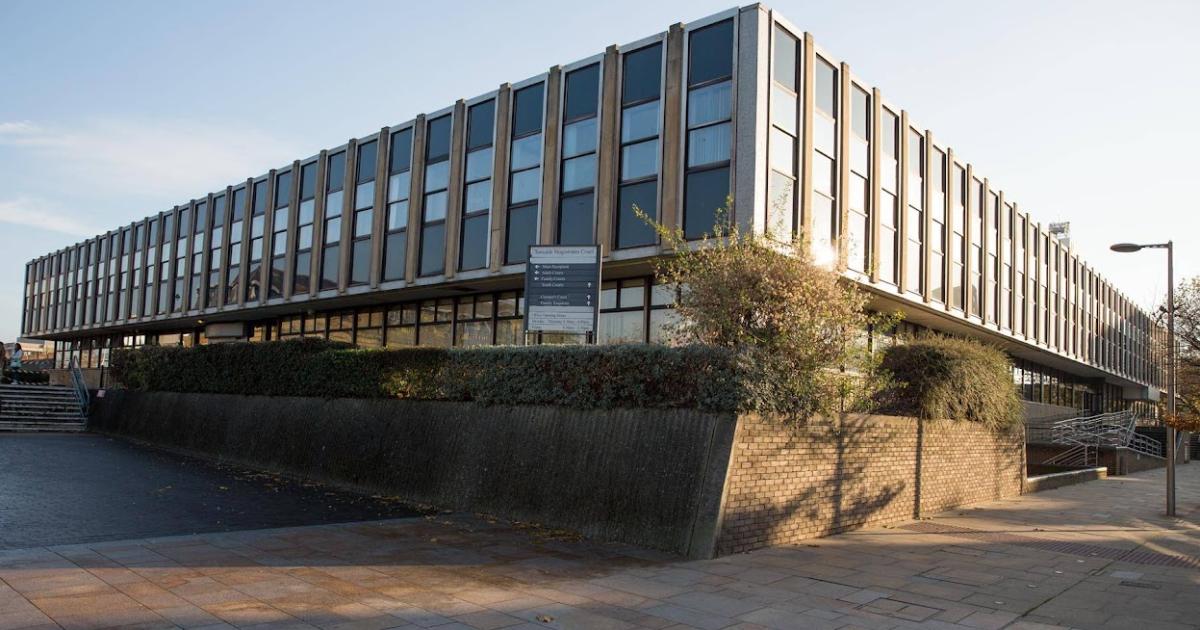
Siviter was charged with driving while disqualified and without insurance, and is due to appear at Teesside Magistrates’ Court in July.

He remains on police bail in relation to the drugs offences. The Astra was seized by police.

Source link

Advertisement
Continue Reading

NewsBeat

Rain and thunderstorms in parts of UK before weekend temperatures could hit 30C

Published

on

Rain and thunderstorms in parts of UK before weekend temperatures could hit 30C

A yellow rain warning has been issued for parts of central Scotland from 2pm until 9pm on Tuesday, which could lead to temporary flooding, while a yellow thunderstorm warning for large parts of Northern Ireland is in place from midday until 6pm, where hail, thunderstorms and flooding is forecast, the Met Office said.

Source link

Continue Reading

NewsBeat

Two arrested over attack in Murton as man remains critical

Published

on

Two arrested over attack in Murton as man remains critical

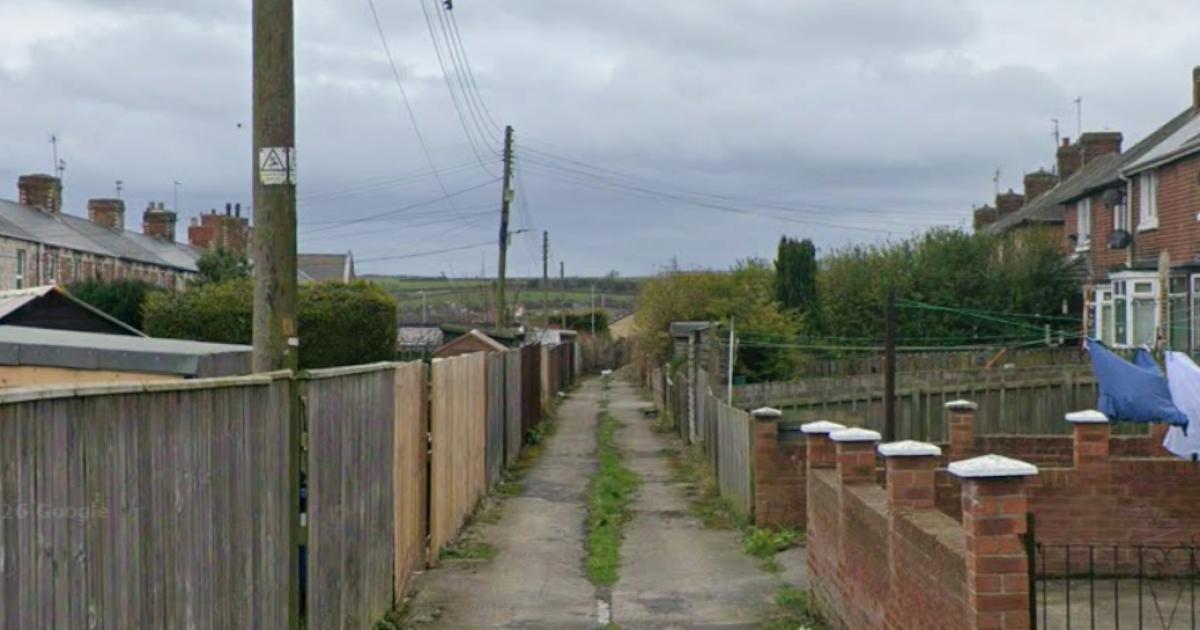
Emergency services, including an air ambulance, were called to the back lane behind Wood’s Terrace on Saturday (June 27) after a man was found injured. 

He was taken to hospital by ambulance crews and remains there fighting for his life in a critical condition today (June 30). 

Durham Police has now confirmed that two people have been arrested in connection with the incident and remain in custody this afternoon. 

Advertisement

A brief statement said: “Two people have been arrested in connection with the incident and remain in custody this afternoon.

“The victim remains in a critical condition in hospital.”

Ambulance crews were called to the incident just after 1pm on Saturday.

A Great North Air Ambulance Service (GNAAS) spokesperson previously said: “Our critical care team was activated at 1.17pm to reports of an assault in Murton. 

Advertisement

“We had a paramedic and doctor on board our aircraft and they arrived on scene at 1.28pm. 

“Our team worked alongside the North East Ambulance Service (NEAS) to assess and treat a patient. 

“The patient was taken to hospital by a NEAS road crew, accompanied by our team.”

Anyone who has any information that could help should call police on 101, quoting crime reference number CRI00690607, or contact the force online.

Advertisement

Information can also be submitted anonymously to Crimestoppers on 0800 555 111, or online.

Source link

Advertisement
Continue Reading

NewsBeat

Cows cause rail chaos as West Coast Main Line blocked for several hours

Published

on

Daily Record

Cross border trains have been affected after a number of cows blocked the West Coast Main Line in Staffordshire.

Thousands of train passengers are suffering disruption after a herd of cows wandered onto one of the UK’s busiest railway lines.

Advertisement

Information on National Rail Enquiries shows the West Coast Main Line has been blocked in Staffordshire between Lichfield Trent Valley and Rugeley Trent Valley for more than three hours.

This is causing delays and cancellations for Avanti West Coast and Lumo services between London Euston and Scotland, as well as London Northwestern Railway and West Midlands Railway services.

The Press Association understands there were difficulties contacting the farmer responsible for the animals.

The incident was reported at 8.57am and passengers are being warned to expect disruption until 4pm.

Advertisement

Tickets are being accepted on certain alternative routes.

Get more Daily Record exclusives by signing up for free to Google’s preferred sources. Click HERE.

Source link

Continue Reading

NewsBeat

Four trapped after residential building collapses in Athens

Published

on

Four trapped after residential building collapses in Athens

Four people are trapped after a four-storey apartment block collapsed on Tuesday in the Petralona area of Athens, the fire brigade said.

Firefighters and police were deployed to the area to help with the rescue operation, which is ongoing.

Footage on local media showed rescue workers walking amid the rubble.

Emergency personnel work at the site of a building collapse in the Petralona neighbourhood of Athens
Emergency personnel work at the site of a building collapse in the Petralona neighbourhood of Athens (Reuters)

It was not clear what caused the collapse of the building, which included seven apartments.

Construction work was underway in an adjacent building, local media reported.

Advertisement

This is a breaking news story, more to follow…

Source link

Continue Reading

NewsBeat

World Cup 2026: Didier Deschamps finding balance in superstar squad

Published

on

An image of Didier Deschamps and Kylian Mbappe hugging during the World Cup 2026

It is hard to argue against the suggestion that France have the best squad in international football.

You might therefore think managing such an elite group of players is an easy task – but this is not necessarily true.

For evidence, look at the number of occasions when clubs have crumbled under the wealth of talent signed or the challenge of managing the personalities of superstars.

Since taking the France job in 2012, Didier Deschamps has continually reinvented his sides and got the most from France’s huge pool of talent.

Advertisement

Even more impressively, he has earned a reputation for doing so mid-tournament – tweaking his system game by game to land on formulas that win the World Cup or come very close to doing so.

This familiar pattern seems to be emerging in this World Cup too.

Deschamps has been especially adept at maximising his top attacking talent and appears to have prioritised getting the most from Kylian Mbappe.

Mbappe, now 27, prefers to be involved in the game rather than just being a last-line runner to finish off moves – as he did so brilliantly as a 19-year-old in France’s 2018 win.

Advertisement

Fitting him in as a number nine while making the rest of the team tick is Deschamps’ big challenge at this World Cup.

In qualifying, Deschamps had built a logical, if unusual, system. On paper, it was a lopsided 4-2-4 or a 4-2-3-1.

Hugo Ekitike played on the left, with Mbappe dropping deep and pulling wide, close to the Liverpool forward. Ekitike, from the wing, or Dembele – from a more standard number 10 position – could both move into centre-forward positions. Michael Olise played on the right wing.

In the opening game of this World Cup against Senegal, Deschamps set France up in a similar manner, with Desire Doue coming in for the injured Ekitike.

Advertisement

Source link

Continue Reading

Trending

Copyright © 2025