Since it began with US-Israeli airstrikes in late February, the Iranwar has grounded tens of thousands of flights and pushed jet fuel to its highest price in years. Europe‘s jet fuel inventories have fallen 50 per cent, and Goldman Sachs warned this week that stocks could drop below the International Energy Agency’s (IEA) critical 23-day shortage threshold in June – with the UK identified as most at risk.
Many airlines are facing a financial crunch as a result, with jet fuel averaging $181 a barrel globally, roughly double its pre-war level. Lufthansa has axed 20,000 flights through October. Spirit Airlines collapsed after a government bailout fell through. American Airlines faces $4bn more in fuel costs this year, and Delta is looking at a $2bn spike in the second quarter alone.
The crisis has brought renewed attention to the hunt for other fuel sources, and there is one in particular that the industry has been talking about for years but is yet to deploy at scale. Known as sustainable aviation fuel, or SAF, it is typically made from used cooking oil, agricultural waste, and captured carbon. But how close are we to actually flying planes with it?
SAF currently makes up just 0.7 per cent of global kerosene consumption, according to the International Air Transport Association. Around two million tonnes were produced last year. The IEA’s net zero scenario requires at least 250 million tonnes of SAF annually by 2050, while some think-tanks say we should be targeting closer to 500 million tonnes by that date.
Advertisement
The most accessible feedstock – and the one most people imagine when they think of sustainable jet fuel – is used cooking oil. Almost all SAF currently in use is made from it. But the global supply of waste cooking oil is finite.
“While it’s difficult to assess exactly how much could be available, the figures you can find in the literature is something around 20 million tonnes maximum,” says Frédérique Rigal, co-author of a study published earlier this year on how aviation can decarbonise and move to sustainable fuels. Whichever projection you go by, that’s a small fraction of what is required by 2050.
The next generation of SAF – made from woody waste, agricultural residues and fermented alcohol – is more scalable but not yet commercially deployed at meaningful volumes.
Rigal admits there are some “hard limitations” on how quickly SAF production can be scaled up, partly because it requires large amounts of land, and partly because existing producers are mostly geared towards making fuel for cars not planes.
Advertisement
But she says the biggest problem of all is the fact that airlines themselves are not committing to buy SAF in advance. “Airlines are not moving quickly enough and are not giving enough offtake promises to these projects so that they can be realised,” she says.
A worker refuels a plane at Belgrade Nikola Tesla airport as airports across Central and Eastern Europe are bracing for potential jet fuel shortages and flight disruptions linked to the Middle East crisis, in Belgrade, Serbia (Reuters)
Instead of looking to new alternatives, the short-term response from airlines to the shortage has come from conventional sources. US refiners have stepped up production, with exports of jet fuel to Europe surging more than 400 per cent to 94,000 barrels per day in April compared to February, according to Kpler data. The European Commission has launched a programme called AccelerateEU, which includes measures to optimise jet fuel distribution between EU member states.
But supply chain bottlenecks will persist for months even if a peace deal is reached, analysts warn. And the dominoes are falling across regions. South Korea, which supplies more than 80 per cent of the US West Coast’s jet fuel imports, has lost crucial crude from the Middle East, threatening West Coast supply.
Another alternative fuel is called electro-SAF or e-SAF, which uses green electricity to combine captured carbon with hydrogen produced from water electrolysis, creating a synthetic kerosene. There is no hard upper limit on how much e-SAF can be produced, but Rigal says it is constrained by investment and industrial capacity, not feedstock. It remains expensive, and the technology is still maturing.
The EU and UK have set mandates requiring airlines to blend increasing proportions of SAF into their fuel, with e-SAF submandates starting at 1.2 per cent in 2030. But airlines have been calling for those targets to be pushed back, citing a lack of available supply.
Advertisement
The producers say that’s not the case. In a collective letter to the European Commission, e-SAF developers said they “firmly disagreed” with airlines’ assessment, stating that “a significant number of eSAF projects are currently under development across Europe” and that “many of these projects are progressing towards final investment decision and are designed to deliver volumes within the ReFuelEU timeframe”.
Mahesh Roy, programme director for SAF at the Green Finance Institute, said the current crisis has begun to shift the conversation around these fuels. SAF mandates in the UK and EU have been almost entirely couched in the language of the climate crisis and sustainability. The Strait of Hormuz blockade has reframed them as a question of energy security and sovereignty.
“The energy trilemma was what they used to talk about – energy security, energy sustainability, and energy affordability,” Roy says. “Now you can see that security and price are really driving what people are thinking about.” The crisis has not changed what SAF is, he said, but it has changed who is asking about it and why.
Airlines that had already secured SAF supply agreements before the crisis are now quietly benefiting, because SAF supply chains do not run through the Middle East.
Advertisement
“The imperative has always been there, and now we’re just being reminded that finding better technologies to do things isn’t just about global warming, even though that’s a very good reason to do it in the first place,” Roy says.
The financial pressure on airlines to move faster on SAF is growing, regardless of the current crisis. Global airline compliance costs under environmental policies – SAF blending mandates, EU and UK emissions trading systems, and the UN’s Corsia carbon offsetting scheme – are set to nearly quadruple to $48 billion by 2035, up 256 per cent from 2026, according to BloombergNEF research published this week.
Roy says the doubling of jet fuel prices had already changed the terms of the debate. “All of jet fuel is going up by this amount due to this conflict,” he said.
“Those fluctuations can’t be guaranteed not to happen again anytime soon. That reframes it – is this just something in the realm of net zero, or is it also something that can help reduce the cost and energy security burden placed on economies that rely on fossil fuel imports?”
Advertisement
First Minister John Swinney holds a hydrogen cell during a visit to Glasgow airport (Getty)
European carriers face the heaviest burden. Ryanair’s unit operating costs are projected to rise 38 per cent from environmental policies alone by 2035, pushing the airline’s margin per available seat-kilometre into negative territory. Airlines are likely to pass higher costs onto passengers, reduce capacity, or reroute long-haul flights from European hubs to avoid the highest compliance costs – a shift that could itself increase emissions by lengthening journey distances.
The investment required to close the supply gap is staggering. According to the ATAG Waypoint 2050 report, total cumulative capital expenditure for new renewable fuel plants over 2020-2050 ranges from $4.2 trillion to $8.1 trillion, depending on SAF yield assumptions. For context, total global oil and gas capital expenditure over the entire period from 2014 to 2021 was also $4.2 trillion.
Can any of this respond to the current crisis? No, experts say. However, the direction of the travel is clear.
“It’s probably something more like four or five years” before the projects currently in development begin producing meaningful volumes, Roy says.
“If you think that the Russian invasion of Ukraine was four years ago, and then if there was another similar shock in about four years’ time, those projects that are being planned now – if they can get off the ground and be properly supported – then yeah, that would shift,” he says.
Offaly v Kilkenny Live stream and TV information, throw-in time, betting odds and all you need to know ahead of today’s Leinster Hurling Championship clash
Offaly face Kilkenny in Round 3 of the Leinster Senior Hurling Championship at Glenisk O’Connor Park, Tullamore on Sunday afternoon. Here’s everything you need to know about the game including kick-off time and TV details
Offaly take on Kilkenny this afternoon in Round 3 of the Leinster Senior Hurling Championship.
Advertisement
The Faithful County opened their campaign with a thrilling draw against Dublin, demonstrating they can compete at this level. However, they fell short of their best in defeat to Galway last time out, and must rediscover their opening-day form if they’re to have any hope of toppling the Cats today.
Here’s everything you need to know about the fixture:
WASHINGTON (AP) — The Supreme Court on Monday restored broad access to the abortion pill mifepristone, blocking a lower-court ruling that had threatened to upend one of the main ways abortions are provided across the nation.
The order signed by Justice Samuel Alito temporarily allows women seeking abortions to obtain the pill at pharmacies or through the mail, without an in-person visit to a doctor.
The latest order will remain in effect for another week while both sides respond and the high court considers the issue more fully.
Advertisement
Most abortions use pills rather than procedures
The majority of abortions in the U.S. are obtained through medications. Some Democratic-led states have laws that seek to give legal protection to those who prescribe the drugs via telehealth to patients in states with bans.
Those prescriptions have blunted the impact of abortion bans that most Republican-led states have sought to enforce since the 2022 Supreme Court ruling that overturned Roe v. Wade. One recent report suggested that in the 13 states where abortion is banned at all stages of pregnancy, more women obtained abortions with pills prescribed by telehealth last year than by traveling to other states.
Louisiana sued to roll back the Food and Drug Administration’s rules on how mifepristone can be prescribed, asserting that the policy undermines the ban there. The case also questioned the safety of the drug, which was approved 25 years ago and has repeatedly been deemed safe and effective by FDA scientists.
Mifepristone is usually taken with a second drug, misoprostol, for abortions. According to the FDA label on mifepristone, the combination completes medical abortion 97.4% of the time.
Misoprostol can also be used alone for terminating pregnancies, with some studies putting its effectiveness at around 80% or higher.
In countries where mifepristone is banned or unavailable, misoprostol is frequently used alone.
Unlike mifepristone, misoprostol has never been formally approved by the FDA for abortion. The drug is most commonly used to treat stomach ulcers, but it has been adapted by doctors for use in medication abortions. Because the FDA never cleared the drug for ending pregnancies, it has faced far less scrutiny from anti-abortion groups.
Advertisement
Several groups that prescribe abortion pills by telehealth made the switch over the weekend to misoprostol only, a regimen that can cause longer-lasting side effects.
Dr. Angel Foster, founder of The Massachusetts Abortion Access Project, said her organization was prepared to send misoprostol only on Monday afternoon but was able to switch back to the two-drug combination.
“Regardless of what happens with this regulatory issue, we and other groups will continue to provide high-quality abortion care to patients in all 50 states,” she said.
Rapid rulings have created confusion
Foster said her organization spent the weekend guiding different groups of patients: those who were sent mifepristone but had not received it yet; those who had been approved for the drugs but had not paid or been sent them; and those who reached out with initial requests.
Advertisement
For now, she said, they are asking patients to approve being sent pills with or without mifepristone — in case of another change.
Monday’s ruling offers more time to figure out a course of action in case mifepristone prescriptions are curtailed again.
“We have a little bit more time to navigate this new landscape with the stay,” said Julie Burkhart, the founder of Wellspring Health Access, a Wyoming abortion clinic that provides roughly 100 abortions a year through pills prescribed by telehealth.
Elizabeth Ling, associate director of legal services at If/When/How, which provides legal guidance for people considering abortion, said that wherever the legal battle goes next, there’s one thing women need to understand: “The outcome is not going to make it a crime for people to access care.”
Advertisement
None of the state laws currently include any punishment for women who obtain abortions.
The court fight continues
Anti-abortion groups vowed to continue the legal battle.
Monday’s ruling “is a temporary procedural step that leaves unresolved the very real concerns about the safety of these drugs and the decision under the Biden administration’s FDA to recklessly remove longstanding safeguards,” Carol Tobias, president of National Right to Life, said in a statement.
Louisiana Attorney General Liz Murrill, who filed the lawsuit against the FDA along with a woman who says her boyfriend coerced her into taking abortion pills to end a pregnancy, criticized drug companies for their role in the case.
Advertisement
“Big abortion pharma claims they need an emergency stay because they will lose massive amounts of money if they can’t kill more babies quickly and efficiently by mail without medical oversight,” Murrill said in a statement. “The administrative stay is temporary, and I am confident life and the law will win in the end.”
___
Mulvihill reported from Haddonfield, New Jersey. Associated Press Writer Matthew Perrone contributed to this article.
___
Advertisement
A previous version of this story had a typo in a quote from Dr. Angel Foster.
The single pearl earring, nose ring and knitted cream polo scream millennial barista more than member of the world’s oldest secret society. Beneath the vaulted art deco ceilings of the Metropolitan Grand Lodge, however, London’s Freemasons are welcoming an image update. Along with maintaining the traditions formalised in the capital in 1717, its Gen Z and millennial brethren are popping up on the Freemasons’ TikTok account, trading grand dinners for nights out at Nando’s, and featuring in homespun grime videos.
That includes Luke Nutkins, the well-dressed 36-year-old who works in streaming at the BBC. Does its current push to attract younger members mean Freemasonry has finally become cool? “Cool is generous,” he mulls. “I don’t think it’s trendy. [But] it has a coolness about it.”
The exact origins of Freemasonry are unclear, but the theory goes that it was modelled on the customs of medieval stonemasons, who built Britain’s castles and cathedrals and would employ unique words and gestures (like handshakes) to recognise one another when working far from home.
A society of kings and trailblazers
Advertisement
There are 170,000 members of the United Grand Lodge of England (UGLE) belonging to 7,000 lodges spanning the country; notable brethren have included Sir Winston Churchill and Rudyard Kipling, Ernest Shackleton, Buzz Aldrin, Wolfgang Amadeus Mozart and royals from King George VI to Prince Philip. The vast majority of lodges are male-only, but two admit women.
Today, symbolism still abounds. Brethren are to embark on a journey through three ranks that will see them transform from rough ashlar, a coarse stone, to a perfect ashlar; they wear lambskin aprons in a nod to their stonemason forebears, black suits to demonstrate that every brother is equal, and white gloves to represent “purity” (I see one tourist purchase a pair in the upstairs gift shop; the aproned rubber duckies go untouched). While Freemasonry was once a byword for the white middle classes and replete with “toffs”, per Nutkins, now, some centre around more modern pursuits, with groups dedicated to Formula One or rugby, rum and cigars.
Electronic music being laid over videos of dancing brethren on TikTok (where they have more than 43,000 followers) and producing their own grime music (lyrics: “faith, hope, charity; man walk the walk”) have also helped to give Freemasonry a refresh. Yet the long-held accusations — that they are a shadowy network secretly pulling the strings behind major institutions — persist. Is it a secret society? “I don’t think so,” says Nutkins. “Do I think it’s a society of secrets? Yes.” When I put the question to Yves Davis, a 22-year-old digital marketing student, he answers with an identical turn of phrase.
Davis became a brother when he was 18, making him the third generation of his family to join the UGLE (he is wearing his late grandfather’s Masonic ring when we meet). Others have come to Freemasonry through more eclectic means, like the 27-year-old from Turkey whose interest was piqued by Dan Brown books; and a 25-year-old for whom the idea got legs at a house party.
Advertisement
“I feel like I’m part of something”
Joe Southwood, 26
Mayfair restaurant manager Joe Southwood, 26, was pottering by the UGLE’s Holborn HQ a couple of years ago when he “happened to pop in, not really knowing what it was, and ended up on a tour accidentally.” That was enough to get him to apply via the unsponsored route (most would-be brothers are vouched for by an existing member), and “I just fell in love with it.”
For Southwood, dressed in a natty spotted shirt and surprisingly chipper at spending his day off — one of the hottest in April for 80 years — in a signal-less side room in Holborn, the community the brotherhood provides has been a lifeline. “I don’t have a girlfriend; I don’t have any friends outside of work — I live quite a solitary existence,” he says. “Through this I’ve been introduced to, and met, so many fantastic people… I feel like I’m part of something.”
Advertisement
The Connaught Club, next door, has been hosting Freemason meetings for under-35s since 2007 — a hub for young men who, like Southwood, find themselves seeking connection. Over the past decade, the number of under-35s reporting that they have either one or no close friends has risen from seven to 22 per cent; the UK also has the highest rates of lonely young adults in Europe. Where men his age might once have gathered at church, lodges are “like a little parish,” Southwood thinks, “where instead of a vicar you have a Worshipful Master”.
Coming out as a Freemason
What actually goes on in these meetings, which typically happen four or five times a year per lodge (brethren can be members of multiple lodges) is more opaque. One ceremony is said to involve being blindfolded and put into a coffin-like box; Nutkins describes them as “like a play; there’s words to learn, there’s a hierarchy you have to respect; there’s funny handshakes and symbols and stuff” (his girlfriend describes its trappings as “a bit silly”). When I ask Davis what his initiation entailed, he says that divulging the details would be “a bit like spoilers… [keeping quiet] is more to surprise people for this really amazing story.”
Inevitably, this hush-hush approach continues to fuel what the men describe as “myths” surrounding Freemasonry — though none will identify the specific claims they find egregious. I can hazard a guess at some of the accusations on which they are none too keen: that it is a cult, or offshoot of mythical secret sect the Illuminati; that members seek one another out via secret handshakes and offer members favourable treatment in the corridors of power. In December, the Metropolitan Police ordered that staff declare if they are Freemasons due to it being a “hierarchical” group that “requires members to support and protect each other”, with more than 300 admitting to an affiliation.
Advertisement
The young men I meet at the Goose and Gridiron, named after the alehouse where the idea for Freemasonry was first discussed (now a café selling uninspiring sandwiches) include a Gen Z brother who doesn’t want to disclose his last name; another exits when I ask to record our chat. “I have found that not everyone likes to be outed, which was a difficult conversation I’ve had with Masons in the past,” says Nutkins, who has been a member for 15 years. “I don’t think it’s a shameful secret.”
For Lee Townsend, a brother of 14 years’ standing, his star turn in the recent grime TikTok was “like my coming out video”. Now 49, he had told few people outside of his family about his affiliation with the group — despite being a highly active member of multiple lodges. “There’s a lot of stigma and taboo around it,” he thinks. But “for an organisation that’s added so much value to me as a person and the way I operate and move, why should I hide it under a bushel? So here it is.”
Townsend is yet to be called up for a sequel to his music video — but he can scratch the itch at lodge meetings, where he seeks to “perform the socks off” centuries-old scripture. “It just really is a motivating and encouraging thing to know that kings, presidents and prime ministers have learned those same words,” says Townsend, who works for a social enterprise.
The spectre of members past looms large at UGLE HQ, where a cavernous marble lobby is framed by stained glass windows up the stairways reading “Audi, Vide, Tace” (part of a longer phrase meaning to “hear, see and hold your tongue”). The first floor houses a library and museum including an enormous gilded blue throne made for King George IV in 1791; there too are oil paintings and portraits.
Advertisement
While flirting with modernity appears to be the goal, not all brethren are sold
I am unable to see the shiny gold Grand Temple for myself as there is a shoot going on (it is a popular filming destination, having appeared on the likes of Spooks, Poirot and The Hitchhiker’s Guide to the Galaxy), though the 56-year-old PR officer-cum-TikTok-manager asks, “Is that Eddie Sheeran?” as a lookalike passes us on his way to set.
While flirting with modernity appears to be the goal — at least, on social media — not all brethren are sold. “We don’t need to do the TikTok thing; we don’t need to be on Instagram,” Nutkins thinks. “If we were to suddenly turn around and have everyone dressed in cool clothes, big baggy trousers and hoodies and doing TikToks, it would just feel a bit disingenuous.”
Instead, he wants to trumpet the organisation’s charity work; and the value of young and old mixing in ways they otherwise never would. The coolest brother in his lodge, he says, is a “gnarled” 97-year-old organist who drinks triple whiskies, “looks a bit like Yoda” and has previously carried Nutkins home after a night out.
Advertisement
It is these connections, and the financial and emotional support provided by the UGLE, that have got him through the darkest of times, he adds — including the death of his sister, his cousin’s suicide and a work discrimination case. “It wouldn’t be hyperbole to say I would not be on this Earth right now were it not for them,” according to Nutkins. “It’s really saved me.”
The immersive scare maze event attracted people from all across the country
A popular horror attraction that was cancelled earlier this year is set to return at a new Cambridgeshire location. ‘Horror Mania’, previously Horror at Hinchingbrooke House is set to send chills down spines on the grounds of Skylark Garden Centre, in Wimblington.
Advertisement
The immersive scare maze event grew to become one of the UK’s most recognised Halloween events. It attracted people from all across the country.
The event was set inside the grounds and building of Hinchingbrooke House, which is part of Hinchingbrooke School. However, it was announced that the spook-tastic event would not be returning this year after “after careful consideration” by the school, due to “lasting damage” it caused on the school grounds.
Robert Gough, director of the event, said that there was always a worry that the event would not come back following the cancellation and it “would take the right venue” for them to continue – which he believes they have found at Skylark. Robert added: “Skylark reached out to us among other places but we found that the space and the area that they had met the needs that we need for the scare attraction.”
The director said that himself, alongside the team, are especially excited because it has “revitalised the creativity and created a new challenge”. Robert explained that there’s “more potential” at the new venue due to Hinchingbrooke School’s restriction to half term only. Whereas now, Horror Mania could potentially run longer in the future and allow the event to become “bigger and better”.
Advertisement
The venue offers woodland, large spaces and parking. Although the event no longer has Hinchingbrooke House as a backdrop, the team will be replacing it with more outdoor scare areas for even more spooky scenes.
Robert has said that the reaction has been “overwhelmingly positive” and the ticket sales are going fast. The new location will offer thrill-seekers an hour of terror and jumps with their favourite frights expected to make a return. Known for chainsaw freaks, creepy clowns and demonic monsters, the new event will feature more than 100 actors.
Fermanagh take on Longford in the opening round of the Tailteann Cup at Brewster Park, Enniskillen, with throw-in at 3pm
Fermanagh and Longford go head-to-head today in the opening round of the Tailteann Cup.
Advertisement
Last year, Longford failed to progress beyond the group stage, while Fermanagh reached the semi-finals before being knocked out by Kildare, who ultimately lifted the trophy.
Their most recent encounter came in last year’s group stage, with Fermanagh running out convincing winners over Longford by 2-19 to 0-7.
Here’s everything you need to know ahead of today’s clash:
DUBAI, United Arab Emirates (AP) — The British military said a ship caught fire Sunday after being hit by an unknown projectile off the coast of Qatar.
The United Kingdom Maritime Trade Operations Centre said the attack caused a small fire on the bulk carrier, which was extinguished.
The attack happened 23 nautical miles (43 kilometers) northeast of Qatar’s capital, Doha, the UKMTO said.
There were no reported casualties, it said.
Advertisement
It was the latest attack on vessels in the Persian Gulf since a shaky ceasefire stopped fighting between the United States and Iran.
The newly completed Bishop Auckland Bus Station. 8.5.2026. Photograph: Stuart Boulton/The Northern Echo. (Image: Stuart Boulton)
The newly completed Bishop Auckland Bus Station. 8.5.2026. Photograph: Stuart Boulton/The Northern Echo. (Image: Stuart Boulton)
The newly completed Bishop Auckland Bus Station. 8.5.2026. Photograph: Stuart Boulton/The Northern Echo. (Image: Stuart Boulton)
The newly completed Bishop Auckland Bus Station. 8.5.2026. Photograph: Stuart Boulton/The Northern Echo. (Image: Stuart Boulton)
The bus station will feature new and improved passenger information with live updates; CCTV; toilet facilities, including accessible toilets, a changing places unit and a parent and child facility; and a retail kiosk
Alongside the bus station, there will also be a new 124-space car park, with accessible spaces for wheelchairs and Blue Badge holders and parking for motorcycles.
The area surrounding the bus station has also been landscaped, with paved areas, drainage systems, and street lighting installed. There will also be electric vehicle charging points and bicycle parking.
Advertisement
The new facility is located on the site of the former bus station, which was demolished to make way for the redevelopment in 2023. Work started on the site in February 2024 and was developed using £11.8 million from the Government’s Future High Streets Fund.
Once the bus station has opened, work will start to remove the temporary bus stops on Newgate Street, Tenters Street and Saddler Street.
Tim McGuinness, cabinet member for rural, farming and transport, said: “This has been an ambitious project to ensure the people of Bishop Auckland have a safe, modern, and efficient transport hub to help them access opportunities within County Durham and the wider region.”
Advertisement
The bus station was constructed by Esh Construction and designed by Jacobs on behalf of Durham County Council.
Steven Garrigan, divisional director at Esh Construction, said: “Esh is proud to have delivered a modern, fully accessible transport hub that will play an important role in supporting Bishop Auckland’s regeneration and strengthening local connectivity.
“Working closely with Durham County Council, this project reflects our commitment to delivering high-quality infrastructure that serves communities across the region, while also creating meaningful social value and opportunities locally.”
Neil Haigh’s Comedy Masterclass Ruined by Stewart Wright arrives at The Old Paint Shop at York Theatre Royal on June 17, looking to provide an immersive and unpredictable night of laughter.
The 90-minute show begins as a structured comedy workshop led by Neil Haigh, before being hilariously hijacked by Stewart Wright in what quickly unravels into fully improvised mayhem.
Mr Wright said: “This show is about embracing the unexpected; every night is completely different, and that’s what makes it so exciting.
Advertisement
“We’re inviting the audience into the chaos and creativity with us, and there’s something really special about discovering where it goes together.”
Described as a blend of character comedy, improvisation, and spontaneous storytelling, each performance is entirely shaped by audience interaction.
Created by long-time collaborators Haigh and Wright, the show has already drawn praise for its originality and energy, with some likening its fast-paced style to Whose Line Is It Anyway?
Haigh is known for his work with the acclaimed improvised theatre company Cartoon De Salvo, while Wright has built a 30-year career as a comic actor.
Advertisement
The show is recommended for audiences aged 15 and over.
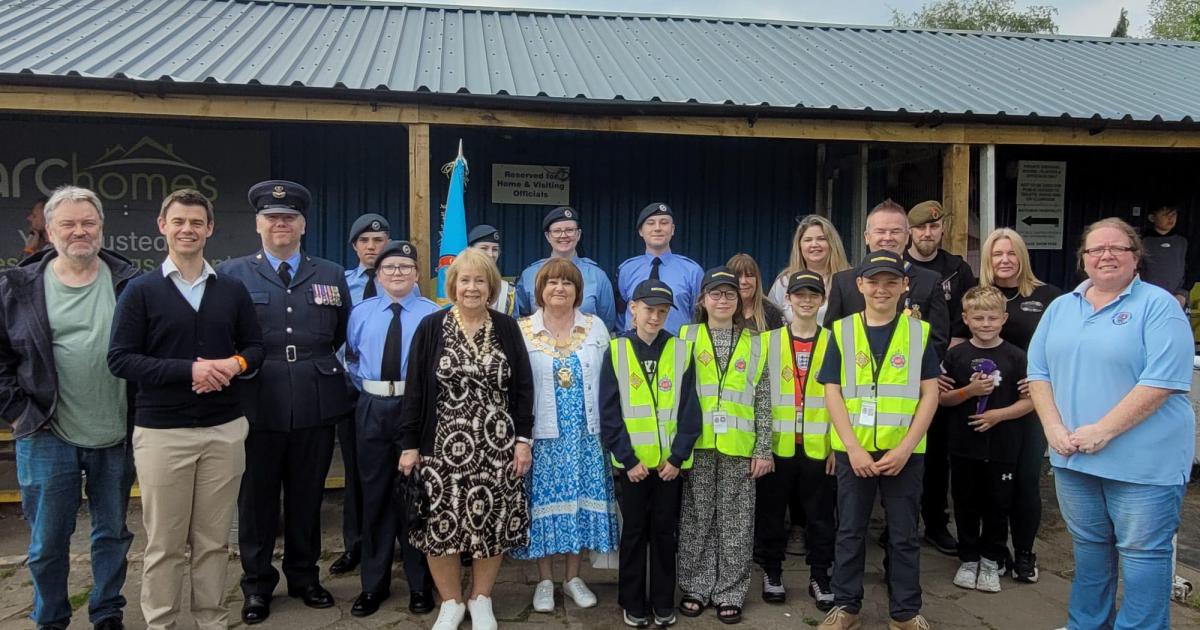
The match was played at Daisy Hill Football Club between representatives of veterans’ charity The Darren Deady Foundation and members of Greater Manchester Police.
Founded by his mother Julie, brother Daniel, and close friends, the foundation operates in honour of former Kingsman Darren Deady, who tragically lost his life in 2010 while serving in Afghanistan.
Representatives of the Royal British Legion (Image: Westhoughton Town Council)
Former Westhoughton Mayor Gillian Wroe said: “A heartfelt thanks go to the Darren Deady Foundation for inviting me, and my Mayoress Cllr Deirdre McGeown, to this wonderful community event.
“Before the match kick off the teams were joined on the pitch by Darren Deady’s mum Julie Hall and members of the DD Association, Westhoughton Royal British Legion, cadets, marching band, the mini police, the Mayoress and me, Phil Brickell MP and Cllr John McHugh.
Advertisement
“The event was well attended with families and groups taking advantage of the dry weather to visit the stalls, enjoy the inflatables, listen to the music, get something to eat and drink and of course watch the football!
Marching band at the event (Image: Westhoughton Town Council)
“I hope that all the hard work that went into organising the day has raised a lot of money for the charity.”
This was Cllr Wroe’s final engagement as Westhoughton mayor before she handed the chain over to Cllr Sarita Chohan on May 5 – it was also her hundredth engagement in total.
GMP won a narrow victory in the event, outscoring the Darren Deady reps 3-2.
Advertisement
The Darren Deady foundation provides essential support for veterans in the area, including support services, advice, short-term accommodation provision, and education.
Army vehicle at the event (Image: Westhoughton Town Council)
The group also promotes social inclusion amongst veterans and HM forces reservists to help them reintegrate into civilian life and avoid social exclusion.
Other services include food bank assistance, debt relief, and help on filling out forms, all in honour of Darren.
CAPE CANAVERAL, Fla. (AP) — A new study suggests that a tiny, icy world beyond Pluto harbors a thin, delicate atmosphere that may have been created by volcanic eruptions or a comet strike.
Just 300 miles (500 kilometers) or so across, this mini Pluto is thought to be the solar system’s smallest object yet with a clearly detected global atmosphere bound by gravity, said lead researcher Ko Arimatsu of the National Astronomical Observatory of Japan.
“This is an amazing development, but it sorely needs independent verification. The implications are profound if verified,” said Southwest Research Institute’s Alan Stern, the lead scientist behind NASA’s New Horizons mission to Pluto and beyond. He was not involved in the study.
The finding offers fresh insight into our solar system’s farthest, coldest objects in a region known as the Kuiper Belt. Researchers used three telescopes in Japan to observe the object in 2024 as it passed in front of a background star, briefly dimming the starlight.
Advertisement
“It changes our view of small worlds in the solar system, not only beyond Neptune,” Arimatsu said in an email. Finding an atmosphere around such a small object was “genuinely surprising,” he added, and challenges “the conventional view that atmospheres are limited to large planets, dwarf planets and some large moons.”
This so-called minor planet — formally known as (612533) 2002 XV93 — is considered a plutino, circling the sun twice in the time it takes Neptune to complete three solar orbits. At the time of the study, it was more than 3.4 billion miles (5.5 billion kilometers) away, farther than even Pluto, the only other object in the Kuiper Belt with an observed atmosphere.
This cosmic iceball’s atmosphere is believed to be 5 million to 10 million times thinner than Earth’s protective atmosphere, according to the the study appearing Monday in the journal Nature Astronomy.
It’s 50 to 100 times thinner than even Pluto’s tenuous atmosphere. The likeliest atmospheric chemicals are methane, nitrogen or carbon monoxide, any of which could reproduce the observed dimming as the object passed before the star, according to Arimatsu.
Advertisement
Further observations, especially by NASA’s Webb Space Telescope, could verify the makeup of the atmosphere, according to Arimatsu.
“That is why future monitoring is so important,” he said. “If the atmosphere fades over the next several years, that would support an impact origin. If it persists, or varies seasonally, that would point more toward ongoing internal gas supply” from ice volcanoes.
___
The Associated Press Health and Science Department receives support from the Howard Hughes Medical Institute’s Department of Science Education and the Robert Wood Johnson Foundation. The AP is solely responsible for all content.


























































You must be logged in to post a comment Login