Connect with us
DAPA Banner
DAPA Coin
DAPA
COIN PAYMENT ASSET
PRIVACY · BLOCKDAG · HOMOMORPHIC ENCRYPTION · RUST
ElGamal Encrypted MINE DAPA
🚫 GENESIS SOLD OUT
DAPAPAY COMING

Tech

So you’ve heard these AI terms and nodded along; let’s fix that

Published

on

Artificial intelligence is changing the world, and simultaneously inventing a whole new language to describe how it’s doing it. Spend five minutes reading about AI and you’ll run into LLMs, RAG, RLHF, and a dozen other terms that can make even very smart people in the tech world feel insecure. This glossary is our attempt to fix that. We update it regularly as the field evolves, so consider it a living document, much like the AI systems it describes.


Artificial general intelligence, or AGI, is a nebulous term. But it generally refers to AI that’s more capable than the average human at many, if not most, tasks. OpenAI CEO Sam Altman once described AGI as the “equivalent of a median human that you could hire as a co-worker.” Meanwhile, OpenAI’s charter defines AGI as “highly autonomous systems that outperform humans at most economically valuable work.” Google DeepMind’s understanding differs slightly from these two definitions; the lab views AGI as “AI that’s at least as capable as humans at most cognitive tasks.” Confused? Not to worry — so are experts at the forefront of AI research.

An AI agent refers to a tool that uses AI technologies to perform a series of tasks on your behalf — beyond what a more basic AI chatbot could do — such as filing expenses, booking tickets or a table at a restaurant, or even writing and maintaining code. However, as we’ve explained before, there are lots of moving pieces in this emergent space, so “AI agent” might mean different things to different people. Infrastructure is also still being built out to deliver on its envisaged capabilities. But the basic concept implies an autonomous system that may draw on multiple AI systems to carry out multistep tasks.

Think of API endpoints as “buttons” on the back of a piece of software that other programs can press to make it do things. Developers use these interfaces to build integrations — for example, allowing one application to pull data from another, or enabling an AI agent to control third-party services directly without a human manually operating each interface. Most smart home devices and connected platforms have these hidden buttons available, even if ordinary users never see or interact with them. As AI agents grow more capable, they are increasingly able to find and use these endpoints on their own, opening up powerful — and sometimes unexpected — possibilities for automation.

Advertisement

Given a simple question, a human brain can answer without even thinking too much about it — things like “which animal is taller, a giraffe or a cat?” But in many cases, you often need a pen and paper to come up with the right answer because there are intermediary steps. For instance, if a farmer has chickens and cows, and together they have 40 heads and 120 legs, you might need to write down a simple equation to come up with the answer (20 chickens and 20 cows).

In an AI context, chain-of-thought reasoning for large language models means breaking down a problem into smaller, intermediate steps to improve the quality of the end result. It usually takes longer to get an answer, but the answer is more likely to be correct, especially in a logic or coding context. Reasoning models are developed from traditional large language models and optimized for chain-of-thought thinking thanks to reinforcement learning.

(See: Large language model)

Techcrunch event

Advertisement

San Francisco, CA
|
October 13-15, 2026

This is a more specific concept that an “AI agent,” which means a program that can take actions on its own, step by step, to complete a goal. A coding agent is a specialized version applied to software development. Rather than simply suggesting code for a human to review and paste in, a coding agent can write, test, and debug code autonomously, handling the kind of iterative, trial-and-error work that typically consumes a developer’s day. These agents can operate across entire codebases, spotting bugs, running tests, and pushing fixes with minimal human oversight. Think of it like hiring a very fast intern who never sleeps and never loses focus — though, as with any intern, a human still needs to review the work.

Advertisement

Although somewhat of a multivalent term, compute generally refers to the vital computational power that allows AI models to operate. This type of processing fuels the AI industry, giving it the ability to train and deploy its powerful models. The term is often a shorthand for the kinds of hardware that provides the computational power — things like GPUs, CPUs, TPUs, and other forms of infrastructure that form the bedrock of the modern AI industry.

A subset of self-improving machine learning in which AI algorithms are designed with a multi-layered, artificial neural network (ANN) structure. This allows them to make more complex correlations compared to simpler machine learning-based systems, such as linear models or decision trees. The structure of deep learning algorithms draws inspiration from the interconnected pathways of neurons in the human brain.

Deep learning AI models are able to identify important characteristics in data themselves, rather than requiring human engineers to define these features. The structure also supports algorithms that can learn from errors and, through a process of repetition and adjustment, improve their own outputs. However, deep learning systems require a lot of data points to yield good results (millions or more). They also typically take longer to train compared to simpler machine learning algorithms — so development costs tend to be higher.

(See: Neural network)

Advertisement

Diffusion is the tech at the heart of many art-, music-, and text-generating AI models. Inspired by physics, diffusion systems slowly “destroy” the structure of data — for example, photos, songs, and so on — by adding noise until there’s nothing left. In physics, diffusion is spontaneous and irreversible — sugar diffused in coffee can’t be restored to cube form. But diffusion systems in AI aim to learn a sort of “reverse diffusion” process to restore the destroyed data, gaining the ability to recover the data from noise.

Distillation is a technique used to extract knowledge from a large AI model with a ‘teacher-student’ model. Developers send requests to a teacher model and record the outputs. Answers are sometimes compared with a dataset to see how accurate they are. These outputs are then used to train the student model, which is trained to approximate the teacher’s behavior.

Distillation can be used to create a smaller, more efficient model based on a larger model with a minimal distillation loss. This is likely how OpenAI developed GPT-4 Turbo, a faster version of GPT-4.

While all AI companies use distillation internally, it may have also been used by some AI companies to catch up with frontier models. Distillation from a competitor usually violates the terms of service of AI API and chat assistants.

Advertisement

This refers to the further training of an AI model to optimize performance for a more specific task or area than was previously a focal point of its training — typically by feeding in new, specialized (i.e., task-oriented) data. 

Many AI startups are taking large language models as a starting point to build a commercial product but are vying to amp up utility for a target sector or task by supplementing earlier training cycles with fine-tuning based on their own domain-specific knowledge and expertise.

(See: Large language model [LLM])

A GAN, or Generative Adversarial Network, is a type of machine learning framework that underpins some important developments in generative AI when it comes to producing realistic data — including (but not only) deepfake tools. GANs involve the use of a pair of neural networks, one of which draws on its training data to generate an output that is passed to the other model to evaluate.

Advertisement

The two models are essentially programmed to try to outdo each other. The generator is trying to get its output past the discriminator, while the discriminator is working to spot artificially generated data. This structured contest can optimize AI outputs to be more realistic without the need for additional human intervention. Though GANs work best for narrower applications (such as producing realistic photos or videos), rather than general purpose AI.

Hallucination is the AI industry’s preferred term for AI models making stuff up – literally generating information that is incorrect. Obviously, it’s a huge problem for AI quality. 

Hallucinations produce GenAI outputs that can be misleading and could even lead to real-life risks — with potentially dangerous consequences (think of a health query that returns harmful medical advice).

The problem of AIs fabricating information is thought to arise as a consequence of gaps in training data. Hallucinations are contributing to a push toward increasingly specialized and/or vertical AI models — i.e. domain-specific AIs that require narrower expertise – as a way to reduce the likelihood of knowledge gaps and shrink disinformation risks.

Advertisement

Inference is the process of running an AI model. It’s setting a model loose to make predictions or draw conclusions from previously seen data. To be clear, inference can’t happen without training; a model must learn patterns in a set of data before it can effectively extrapolate from this training data.

Many types of hardware can perform inference, ranging from smartphone processors to beefy GPUs to custom-designed AI accelerators. But not all of them can run models equally well. Very large models would take ages to make predictions on, say, a laptop versus a cloud server with high-end AI chips.

[See: Training]

Large language models, or LLMs, are the AI models used by popular AI assistants, such as ChatGPT, Claude, Google’s Gemini, Meta’s AI Llama, Microsoft Copilot, or Mistral’s Le Chat. When you chat with an AI assistant, you interact with a large language model that processes your request directly or with the help of different available tools, such as web browsing or code interpreters.

Advertisement

LLMs are deep neural networks made of billions of numerical parameters (or weights, see below) that learn the relationships between words and phrases and create a representation of language, a sort of multidimensional map of words.

These models are created from encoding the patterns they find in billions of books, articles, and transcripts. When you prompt an LLM, the model generates the most likely pattern that fits the prompt.

(See: Neural network)

Memory cache refers to an important process that boosts inference (which is the process by which AI works to generate a response to a user’s query). In essence, caching is an optimization technique, designed to make inference more efficient. AI is obviously driven by high-octane mathematical calculations and every time those calculations are made, they use up more power. Caching is designed to cut down on the number of calculations a model might have to run by saving particular calculations for future user queries and operations. There are different kinds of memory caching, although one of the more well-known is KV (or key value) caching. KV caching works in transformer-based models, and increases efficiency, driving faster results by reducing the amount of time (and algorithmic labor) it takes to generate answers to user questions.   

Advertisement

(See: Inference)  

A neural network refers to the multi-layered algorithmic structure that underpins deep learning — and, more broadly, the whole boom in generative AI tools following the emergence of large language models. 

Although the idea of taking inspiration from the densely interconnected pathways of the human brain as a design structure for data processing algorithms dates all the way back to the 1940s, it was the much more recent rise of graphical processing hardware (GPUs) — via the video game industry — that really unlocked the power of this theory. These chips proved well suited to training algorithms with many more layers than was possible in earlier epochs — enabling neural network-based AI systems to achieve far better performance across many domains, including voice recognition, autonomous navigation, and drug discovery.

(See: Large language model [LLM])

Advertisement

Open source refers to software — or, increasingly, AI models — where the underlying code is made publicly available for anyone to use, inspect, or modify. In the AI world, Meta’s Llama family of models is a prominent example; Linux is the famous historical parallel in operating systems. Open source approaches allow researchers, developers, and companies around the world to build on top of one another’s work, accelerating progress and enabling independent safety audits that closed systems cannot easily provide. Closed source means the code is private — you can use the product but not see how it works, as is the case with OpenAI’s GPT models — a distinction that has become one of the defining debates in the AI industry.

Parallelization means doing many things at the same time instead of one after another — like having 10 employees working on different parts of a project at the same time instead of one employee doing everything sequentially. In AI, parallelization is fundamental to both training and inference: modern GPUs are specifically designed to perform thousands of calculations in parallel, which is a big reason why they became the hardware backbone of the industry. As AI systems grow more complex and models grow larger, the ability to parallelize work across many chips and many machines has become one of the most important factors in determining how quickly and cost-effectively models can be built and deployed. Research into better parallelization strategies is now a field of study in its own right.

RAMageddon is the fun new term for a not-so-fun trend that is sweeping the tech industry: an ever-increasing shortage of random access memory, or RAM chips, which power pretty much all the tech products we use in our daily lives. As the AI industry has blossomed, the biggest tech companies and AI labs — all vying to have the most powerful and efficient AI — are buying so much RAM to power their data centers that there’s not much left for the rest of us. And that supply bottleneck means that what’s left is getting more and more expensive.

That includes industries like gaming (where major companies have had to raise prices on consoles because it’s harder to find memory chips for their devices), consumer electronics (where memory shortage could cause the biggest dip in smartphone shipments in more than a decade), and general enterprise computing (because those companies can’t get enough RAM for their own data centers). The surge in prices is only expected to stop after the dreaded shortage ends but, unfortunately, there’s not really much of a sign that’s going to happen anytime soon.  

Advertisement

Reinforcement learning is a way of training AI where a system learns by trying things and receiving rewards for correct answers — like training your beloved pet with treats, except the “pet” in this scenario is a neural network and the “treat” is a mathematical signal indicating success. Unlike supervised learning, where a model is trained on a fixed dataset of labeled examples, reinforcement learning lets a model explore its environment, take actions, and continuously update its behavior based on the feedback it receives. This approach has proven especially powerful for training AI to play games, control robots, and, more recently, sharpen the reasoning ability of large language models. Techniques like reinforcement learning from human feedback, or RLHF, are now central to how leading AI labs fine-tune their models to be more helpful, accurate, and safe.

When it comes to human-machine communication, there are some obvious challenges — people communicate using human language, while AI programs execute tasks through complex algorithmic processes informed by data. Tokens bridge that gap: they are the basic building blocks of human-AI communication, representing discrete segments of data that have been processed or produced by an LLM. They are created through a process called tokenization, which breaks down raw text into bite-sized units a language model can digest, similar to how a compiler translates human language into binary code a computer can understand. In enterprise settings, tokens also determine cost — most AI companies charge for LLM usage on a per-token basis, meaning the more a business uses, the more it pays.

So again, tokens are the small chunks of text — often parts of words rather than whole ones — that AI language models break language into before processing it; they are roughly analogous to “words” for the purposes of understanding AI workloads. Throughput refers to how much can be processed in a given period of time, so token throughput is essentially a measure of how much AI work a system can handle at once. High token throughput is a key goal for AI infrastructure teams, since it determines how many users a model can serve simultaneously and how quickly each of them receives a response. AI researcher Andrej Karpathy has described feeling anxious when his AI subscriptions sit idle — echoing the feeling he had as a grad student when expensive computer hardware wasn’t being fully utilized — a sentiment that captures why maximizing token throughput has become something of an obsession in the field.

Developing machine learning AIs involves a process known as training. In simple terms, this refers to data being fed in in order that the model can learn from patterns and generate useful outputs. Essentially, it’s the process of the system responding to characteristics in the data that enables it to adapt outputs towards a sought-for goal — whether that’s identifying images of cats or producing a haiku on demand.

Advertisement

Training can be expensive because it requires lots of inputs, and the volumes required have been trending upwards — which is why hybrid approaches, such as fine-tuning a rules-based AI with targeted data, can help manage costs without starting entirely from scratch.

[See: Inference]

A technique where a previously trained AI model is used as the starting point for developing a new model for a different but typically related task – allowing knowledge gained in previous training cycles to be reapplied. 

Transfer learning can drive efficiency savings by shortcutting model development. It can also be useful when data for the task that the model is being developed for is somewhat limited. But it’s important to note that the approach has limitations. Models that rely on transfer learning to gain generalized capabilities will likely require training on additional data in order to perform well in their domain of focus

Advertisement

(See: Fine tuning)

Weights are core to AI training, as they determine how much importance (or weight) is given to different features (or input variables) in the data used for training the system — thereby shaping the AI model’s output. 

Put another way, weights are numerical parameters that define what’s most salient in a dataset for the given training task. They achieve their function by applying multiplication to inputs. Model training typically begins with weights that are randomly assigned, but as the process unfolds, the weights adjust as the model seeks to arrive at an output that more closely matches the target.

For example, an AI model for predicting housing prices that’s trained on historical real estate data for a target location could include weights for features such as the number of bedrooms and bathrooms, whether a property is detached or semi-detached, whether it has parking, a garage, and so on. 

Advertisement

Ultimately, the weights the model attaches to each of these inputs reflect how much they influence the value of a property, based on the given dataset.

Validation loss is a number that tells you how well an AI model is learning during training — and lower is better. Researchers track it closely as a kind of real-time report card, using it to decide when to stop training, when to adjust hyperparameters, or whether to investigate a potential problem. One of the key concerns it helps flag is overfitting, a condition in which a model memorizes its training data rather than truly learning patterns it can generalize to new situations. Think of it as the difference between a student who genuinely understands the material and one who simply memorized last year’s exam — validation loss helps reveal which one your model is becoming.

This article is updated regularly with new information.

When you purchase through links in our articles, we may earn a small commission. This doesn’t affect our editorial independence.

Advertisement

Source link

Continue Reading
Click to comment

You must be logged in to post a comment Login

Leave a Reply

Tech

Testing Various Ways To Waterproof FDM Printed Parts

Published

on

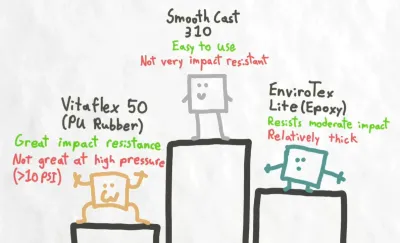
Along with layer lines, FDM printers are notorious for being neither air- nor water-tight due to the countless very small gaps between the layers. This is very unfortunate if you are trying to FDM print something that should keep water either inside or outside. Although a variety of potential solutions exist, it’s hard to easily compare them. Correspondingly [Half-Baked-Research] decided that the best approach here was to just try everything and pit them against each other.

These solutions include various coatings either in- or outside the part, as well as the foam solution that he tried previously joined by a number of community-suggested alternatives that should not get waterlogged. To properly test them, the water pressure at a depth of about 10 meters would be good enough, but rather than find a really deep swimming pool or try his luck at nearby bodies of water, compressed air was used to ramp up the pressure of a what is basically a big bucket of water.

For the pressure chamber a Vevor vacuum chamber was modified to contain the 1 bar (103 kPa) of pressure, which was a fair bit of work and required a CNCed metal top plate. Among the printed and treated samples were also a couple of wild cards: a PETG cube with a TPU printed cover, a PU molded part and PETG with thicker walls.

Advertisement

Along with the long soak, percussive testing was also performed to see how it’d affect the water intrusion resistance. After all that, there were three winners: internal epoxy coating and two types of internal PU coating, though epoxy held up the best after repeated abuse. PU rubber also got a thumbs-up if you don’t need as high a pressure resistance but are more concerned with resisting physical abuse.

Advertisement

Source link

Continue Reading

Tech

Out of the blue, Acer just dropped two smart glasses that look pretty stylish

Published

on

In 2026, the smart glasses conversation is mostly dominated by a handful of names: Meta, Samsung, and Google. There are other companies that already have products in the market, but they might not have thought about competition from this PC and laptop brand that has suddenly entered the market.

I’m talking about Acer. The company has quietly dropped two pairs of glasses ahead of Computex 2026, and neither of them looks like an experiment.

What can Acer’s wired AR headset do?

Out of the two smart glasses, the AR Vision GR0 is the more immersive one. 

It connects to your phone, laptop, or tablet via a wired connection, and then projects dual micro OLED displays (one per eye) at 1920 x 1080 resolution in 2D or 3840 x 1080 in 3D, simulating a 172-inch screen viewed from roughly 20 feet away.

At just 69 grams, it is quite light for a wired AR device. You can also get it with the optional detachable light shield and myopia magnetic lens support, which make it more practical than most glasses in this category.  

Advertisement

The device is compatible with Android, iOS, and Windows and doesn’t come with a platform lock-in. You can purchase the AR Vision GR0 in North America at $499.99.

The company also has a Meta Ray-Ban competitor 

The Acer GI0 AI Glasses are slightly different. They’re closer to Meta’s Ray-Ban smart glasses than to an AR headset. 

They offer wireless connectivity, connect with your phone via Bluetooth and Wi-Fi, and feature Google Gemini as the AI assistant of choice. 

Features include a 12MP camera for first-person photo and video capture, real-time AI translation, live captions, and voice recording, which, yet again, makes them similar to the Meta Ray-Ban smart glasses.

All the data is stored on the device’s 32GB onboard storage. These glasses are compatible with Android and iOS via the Acer AspireSync companion app. At 46 grams for the frames alone, these are light enough for daily usage. You can get the smart glasses for $299.99 in North America. 

Advertisement

Source link

Continue Reading

Tech

Sandisk is launching new SATA SSDs in 2026 because NVMe prices are out of control

Published

on


Spotted by hardware leaker momomo_us on Amazon UK, both drives use the familiar 2.5-inch, 7mm-thick format, making them suitable for a wider range of PCs and laptops. The Sandisk 320 is the mainstream model, with capacities from 250GB to 2TB and sequential speeds of up to 545 MB/s read and…
Read Entire Article
Source link

Continue Reading

Tech

I wasn’t convinced that the Logitech G Pro X2 Superstrike would be that special, but I was wrong: this is a revolution for gaming mice

Published

on

Why you can trust TechRadar


We spend hours testing every product or service we review, so you can be sure you’re buying the best. Find out more about how we test.

Logitech G Pro X2 Superstrike: Two-minute review

The Logitech G Pro X2 Superstrike pictured on a black marble surface, in the box, with wireless dongle, adapter, and USB cable.

(Image credit: Future)

I should probably preface this review by saying that I’ve long been a fan of Logitech‘s mice, having used a G502 Lightspeed Wireless as my daily driver for more than five years. In fact, I love it so much that when mine finally gave up the ghost back in 2024, I literally just bought another identical model.

If you’re familiar with my work, you might suspect a slight degree of bias in this review – and I’m sure that the coveted five-star rating above won’t assuage those suspicions.

Advertisement

Source link

Advertisement
Continue Reading

Tech

Disney Plus: 30 Best TV Shows You Should Stream Right Now

Published

on

Disney Plus is one of the best streaming platforms available today. I’m not being hyperbolic: Just take a look at the programming lineup available on the Disney-owned platform.

You want Star Wars? You got it — all of it. The same can be said for Marvel‘s expansive universe of movies and TV shows. Plus, you can never go wrong with Bluey, which is the animated gift that keeps on giving. I’m just cracking the surface with these examples.

Disney Plus is chock-full of engaging content, including top reality shows and educational documentaries, plus a deep well of Disney classics to keep you entertained.

Advertisement

Scroll on to find the best original programming Disney Plus has to offer. Please check back monthly, as I update this list regularly as new content arrives.

Read more: Cut Your Monthly TV Bill With the Best Streaming Deals Available Right Now

Marvel Television
Advertisement

Marvel takes the meta-comedy route with Wonder Man, which follows a struggling actor named Simon Williams who is looking for his big break in Hollywood. That chance comes in the form of the starring role in a superhero movie. The only issue: He’s got his own superpowers he has been keeping secret. 

Disney Plus

Advertisement

Taylor Swift: The End of an Era

Disney Plus’s six-episode docuseries peels back the curtain to go inside the production of Taylor Swift’s massively successful Eras tour. Whether you’re a fan of her music or not, this series is a riveting look into the organized chaos that comes with putting on a world tour. And if you’re a fan of her music, why have you not watched this yet?

Advertisement

Photo by Chuck Zlotnick/Marvel Studios

What makes Hawkeye entertaining is the dynamic between Jeremy Renner and Hailee Steinfeld. Their relationship as Clint Barton and Kate Bishop provides the emotional foundation for the series. There are connective elements from this series to the likes of Echo and Daredevil, but other than those cool details, this street-level program is a fun holiday romp through the streets of New York. And sometimes, that’s all you really need.

Advertisement
Disney

Fire and Water: Making the Avatar Films

Advertisement

In 2009, James Cameron pushed the special effects envelope with the release of Avatar, a groundbreaking cinematic achievement that remains the highest-grossing movie of all time. The 2022 sequel, Avatar: The Way of Water, is the third-highest-grossing movie of all time, which proves that Cameron is doing something right with these career-defining releases. This new two-part docuseries takes audiences behind-the-scenes of the sci-fi franchise to show how this magical world is brought to life.

Marvel Television
Advertisement

Marvel Zombies, which is technically a spin-off of Marvel’s What If…? series, takes inspiration from the comics by Robert Kirkman and Sean Phillips, which means there’s some bona fide zombie drama. Heroes like Ms. Marvel, Ironheart and Hawkeye get thrown into the mix. You want a post-apocalyptic zombie-infested MCU? You got it.

Disney/Pixar

Dream Productions takes place between the events of Inside Out and Inside Out 2 and heads back into the mind of young Riley. Instead of focusing on her emotions, this four-episode mockumentary-style series delves into the production company in charge of her dreams. As Riley grows, her emotions require extra processing, and that’s where the folks at Dream Productions come in. Paula Pell and Richard Ayoade star; the voices of Amy Poehler, Maya Rudolph, Tony Hale, Lewis Black and Phyllis Smith are also featured.

Advertisement

Marvel

The newest Marvel series to hit Disney Plus takes place following the events of Black Panther: Wakanda Forever and follows Riri Williams (Dominique Thorne) as she creates her own suit of armor inspired by Tony Stark’s. Part coming-of-age story and part journey of self-discovery, the series finds the brilliant young woman grappling the with intersection of magic and technology while striving to find her place in the world.

Advertisement
National Geographic

You may be used to animal series narrated by the likes of, say, Richard Attenborough or Morgan Freeman to add gravitas to the informative program. Underdogs takes a different route. Ryan Reynolds takes the voice-over helm on this one to explore Mother Nature’s odd creatures. Misfits to some, weirdos to others, the Deadpool star gives these quirky animals their due in this fun series.

Des Willie/Lucasfilm Ltd.
Advertisement

Simply put, I think Andor is the best Star Wars series Disney Plus has made. The program ditches the flashy, and often clichéd, production values of its predecessors and goes all-in on some intense ground-level storytelling. Expanding the story of the characters featured in the one-off film Rogue One, Andor comes through with the emotional stakes thanks to its smart writing and the excellent performances of its cast. Phenomenal stuff, right here.

Giovanni Rufino/Marvel Television

Daredevil: Born Again finds Matt Murdock once again fighting for justice, both in the courtroom and on the streets. The series acts as a reboot of sorts and reunites Charlie Cox with Vincent D’Onofrio’s (who reprises his role as Wilson Fisk) to once again battle for the soul of Hell’s Kitchen. 

Advertisement

Check out our bone-crushing review of the series.

Marvel Animation

Advertisement

Your Friendly Neighborhood Spider-Man

A new spin on Spider-Man lore unfolds in the streamer’s new animated series, Your Friendly Neighborhood Spider-Man. The show, presented in a nostalgic animation style, explores a different timeline in which Peter Parker (Hudson Thames) is mentored by Norman Osborn (Colman Domingo), who you may know better as the villainous Green Goblin. This’ll be interesting.

Advertisement

Pixar

Pixar’s first original animated series follows a middle school softball team and their journey to the championship. The eight-episode season takes place over one week and follows different characters as they explore the same events from different perspectives. SNL alums Will Forte and Melissa Villaseñor lend their voices alongside Better Call Saul’s Rhea Seehorn, Lil Rey Howery, Rosa Salazar, Flula Borg and Jo Firestone.

Advertisement
Disney/Francisco Roman

Justin Long led the first installment of Disney Plus’ YA series, and David Schwimmer takes up the mantle of creepy adult in the show’s second season. The gateway horror series takes inspiration from R.L. Stine’s iconic book series. Each season follows a group of teens wrapped up in a supernatural mystery. 

Matt Kennedy/Lucafilm Ltd.
Advertisement

Star Wars: Skeleton Crew dials the tone back to the Amblin days of the 1980s. There’s no trace of Luke Skywalker in this show. Instead, Skeleton Crew takes place in a reality where stories of the Jedi are viewed as fairy tales. That is, until a ragtag group of kids stumble upon an abandoned starship and accidentally shoot themselves into space. The result: a (literally) out-of-this-world adventure.

Chuck Zlotnick/Marvel

Agatha All Along isn’t a direct sequel to WandaVision, but the stories are definitely related. Kathryn Hahn reprises her deliciously devilish role in the spooky new series, which follows Agatha and a group of ragtag witches on a journey down the Witches Road to help Ms. Harkness get her powers back. Spoiler: It ain’t gonna be easy.

Advertisement

Lucasfilm Ltd.

Star Wars: Visions is a fun and edgy animated anthology series that adds an exciting new element to Lucasfilm’s long-established franchise. Seven Japanese animation studios were tapped to create nine unique noncanonical episodes for the program. Additional episodes from Spain, Ireland, Chile, the United Kingdom, South Korea, France, India, Japan and South Africa were released in the show’s second installment. 

Advertisement
Disney Plus

Doctor Who celebrated its 60th anniversary, and since then, the sci-fi series has undergone multiple revamps. Actors like David Tennant and Matt Smith helped bring the iconic Time Lord into the present day with the program’s run of modern-era seasons. Ncuti Gatwa is the latest actor to take the reins as the Doctor, marking the first time in the program’s history that a Black actor has stepped into the role. Doctor Who made the move to Disney Plus in 2023, and after two years, the contract between the streamer and the BBC has expired. Still, these newer seasons and a few older episodes are still available to watch on the streamer. 

Ludo Studio
Advertisement

Bluey is a phenomenon, plain and simple. The kids’ show, which follows a family of anthropomorphic dogs — Bluey, her sister Bingo, dad Bandit and mom Chilli — was the most streamed series in 2023, and for good reason. Nearly all the episodes run at around 8 minutes in length, making it an easy binge. And while the tone remains light and playful, the series digs into relevant and poignant topics in a way that never talks down to its audience. Who knew a show about an Australian dog family would be so addictive? Disney Plus knew.

Disney Plus

Advertisement

Percy Jackson and the Olympians

This fresh take on Rick Riordan’s cherished books aims to erase the live-action movies from our collective memories. And for the most part, it accomplishes its task. The eight-episode first season follows the events of Lightning Thief, the first book in the series. Thanks to a younger cast and lighter stakes, this Percy Jackson series is positioned to be a YA hit for Disney Plus.

Advertisement

Lucasfilm Ltd.

Dave Filoni and Jon Favreau took their love of Star Wars to new heights with The Mandalorian. It’s the first live-action Star Wars series to hit Disney Plus and it set the standard for everything that came after. Stylistically inspired by things like the Lone Wolf and Cub manga, Akira Kurosawa’s Yojimbo and Sergio Leone’s iconic Dollars trilogy (which starred Clint Eastwood as the Man With No Name), the series follows a lone bounty hunter who gets a second chance at life when he’s hired to protect a little green alien you may know simply as Baby Yoda.

Advertisement
Apple Corps Ltd

This three-part documentary series puts us smack-dab in the creative maelstrom of one of the world’s biggest musical groups. Directed by Oscar-winner Peter Jackson, The Beatles: Get Back gives a cinéma vérité-style look at a band at the top of their game and on the precipice of collapse. This previously unseen footage shows John Lennon, Paul McCartney, George Harrison and Ringo Starr in rehearsal for their infamous rooftop concert at their Apple Corps headquarters on London’s Savile Row. It was their last live performance. It’s breathtaking, inspiring and heartbreaking. And definitely worth a watch.

Marvel Studios

Marvel Animation
Advertisement

X-Men: The Animated Series ended its five-season run in 1997. Almost three decades later, X-Men ’97 continues the story of everyone’s favorite mutant superhero crew. The pacing is quick, the writing is tight, and the 2D animation style acts as a nice bow tying together this lovely nostalgic gift for ’90s kids everywhere.

Chuck Zlotnick/Marvel Studios

Echo (Alaqua Cox) was first introduced in a three-episode arc in Hawkeye. Marvel’s Echo is centered on the hearing-impaired antihero. She’s also a member of the Choctaw Nation, which leads the series to wonderfully explore these aspects of her identity. Her association with Wilson Fisk (Vincent D’Onofrio) further connects the MCU shows on Disney Plus with those previously on Netflix — and sets up the arrival of Matt Murdock (Charlie Cox) and crew quite nicely.

Advertisement

Lucasfilm Ltd.

The Bad Batch is an intense, action-packed spin-off of the celebrated Star Wars animated series The Clone Wars. Audiences have seen the fallout of Order 66 take shape in various forms throughout the Star Wars franchise, but never like this. The Bad Batch follows a squad of elite clone troopers with genetic defects. They may have special abilities, but that doesn’t make them invisible to the top-secret execution order. In turn, the animated series fills in some blanks in Star Wars lore. It does so in an incredibly entertaining way.

Advertisement
Disney Plus

Ms. Marvel is a breath of fresh air for the Marvel Cinematic Universe. The Disney Plus series flips the script on what we have grown to expect from Marvel shows on the streamer. Iman Vellani is a revelation as the titular hero. It’s a challenge for a show to balance the heavy responsibilities of being a superhero with the trials and tribulations of high school. The story pulls it off, and does so with a welcome helping of Muslim representation.

Disney Plus
Advertisement

WandaVision started it all on Disney Plus. It’s the first original series in the Marvel Cinematic Universe to hit the streamer. It’s a genre-bending adventure that finds Wanda and Vision living out different realities inspired by TV sitcoms, from I Love Lucy and The Dick Van Dyke Show to The Brady Bunch and Family Ties. How does the emotional fallout of Avengers: Endgame (and Vision’s death, specifically) affect Wanda? Well, let’s just say her grief takes her down one heck of a weird rabbit hole.

Read our full WandaVision review.

Gareth Gatrell/Marvel/Disney Plus
Advertisement

Tom Hiddleston has appeared as Loki, the God of Mischief, throughout the Marvel Cinematic Universe for the past decade. Thanks to Disney Plus, he finally leads his own odd adventure. The quirky sci-fi series puts Loki in the unlikely position of hero. Here, he works with a barrage of interesting characters, including Owen Wilson’s Mobius M. Mobius, to correct the timeline. It’s an offbeat, fun and thoroughly weird series that appeals to die-hard fans and newbs alike.

Chuck Zlotnick/Marvel Studios

Advertisement

The Falcon and the Winter Soldier

What happens when Captain America hangs up his shield? That’s the question going into Marvel’s The Falcon and the Winter Soldier. Here, Sam Wilson (better known as Falcon) and Bucky Barnes (aka the Winter Soldier) buddy up in a surprisingly funny and heartfelt series that deals with trauma, grief and classism as the world picks up the pieces from the earth-shattering events of Avengers: Endgame.

Advertisement

Disney

Moon Knight stars Oscar Isaac as Steven Grant, a troubled man with dissociative identity disorder. These aren’t simple anxiety issues — no, Grant actually shares his body with a mercenary named Marc Spector. The discovery of this alter-ego leads Grant on an adventure that pits him against a sinister cult leader named Arthur Harrow (Ethan Hawke) and a gang of formidable Egyptian gods. It’s a trippy ride that may even scratch that Indiana Jones itch.

Read our full Moon Knight review.

Advertisement

Source link

Continue Reading

Tech

Cybercrime Crew Claims It Hacked Mike Lindell’s MyPillow

Published

on

The United States military has known for years that enemies could use location data to track troops’ phones—and it’s also long been aware of easy fixes for the problem. The Pentagon adopted almost none of these protections, though, in spite of admitting in a letter exposed this week that US adversaries are actually using the data to target soldiers in war. Meanwhile, US law enforcement warned this week about “anti-tech extremism” as AI backlash grows around the country.

After a nearly 90-day internet shutdown, connectivity started to trickle back into Iran this week amid internal political power struggles and ongoing negotiations with the US to end its war with Tehran. Researchers cautioned that it is unclear how extensive the restoration will be and whether connectivity will only return temporarily.

As cybercriminals and offensive hackers ramp up their use of AI to exploit vulnerabilities and develop hacking tools, the technology is also radically changing the dynamics of how security researchers hunt for vulnerabilities. And scammers are using real hotel reservation data and other travel details to conduct effective spear-phishing campaigns, potentially accessing customer data from 350 hotels and vacation rentals around the world.

And there’s more. Each week, we round up the security and privacy news we didn’t cover in depth ourselves. Click the headlines to read the full stories. And stay safe out there.

Advertisement

Play, a Russian-language ransomware operation that has affected more than 900 organizations since 2022, posted to its dark-web leak site on Monday claiming it had pulled “private and personal confidential data, clients’ documents, budget, payroll, IDs, taxes,” and other financial records from MyPillow. The Minnesota-based home goods company is run by Mike Lindell, who is among at least 10 Republicans seeking the party’s nomination for governor of Minnesota in August’s primary. Lindell is also one of the most prolific backers of Donald Trump’s false claims of victory in the 2020 election.

Play reportedly set a Friday deadline for MyPillow to make contact before publishing the data online. Lindell told Straight Arrow News, which broke the story of the ransomware claims on Tuesday, that his company was not hacked and that allegations that it was are a political hit job.

“This is another hit job by outside sources because I’m running for governor,” Lindell said. “I guarantee it. We do not have any breaches in our data at all.”

Lindell has been on the losing end of two recent defamation rulings over his 2020 election claims: A federal jury in Colorado last year found that he had defamed Eric Coomer, a former Dominion Voting Systems director, and ordered Lindell and his media platform, FrankSpeech, to pay $2.3 million in damages; a federal judge in Minnesota separately ruled in September that Lindell had defamed Smartmatic through 51 false statements about its voting machines, with damages still to be set at trial.

Advertisement

In recent years, ransomware groups have become more aggressive and ruthless in their efforts to obtain money from victims. Most of these criminal hackers now focus on stealing data and extorting companies rather than using malware to lock computer systems. But in rare occasions, ransomware groups have been seen directly threatening executives, or contacting people named in stolen data, to try to obtain payment. The FBI said this week that one ransomware group is going even further: sending people to steal data directly from companies IRL.

Among more traditional social engineering techniques, the FBI says the Silent Ransom Group (SRG), which is targeting law firms, has sent people to company offices to directly get access to computers. “By sending someone in person to the victim’s location to facilitate the intrusion, SRG actors exfiltrate data to an external hard drive or USB drive inserted by the threat actor into the victim’s computer,” the FBI said in an alert. Security researchers say the tactic has not been seen before. The FBI did not provide any information about who the Russian-speaking ransomware group was sending to conduct its attacks, but researchers believe they could be paying freelancers who do not necessarily know who they are working for.

The AI surveillance company BusPatrol, which has installed its cameras in tens of thousands of US school buses, says that it will now turn those cameras into automatic license plate readers that will record the location of every vehicle a BusPatrol school bus passes and make the data available to law enforcement without a warrant. The initiative would turn the familiar yellow buses into what 404 Media aptly described as “roaming surveillance vehicles.” BusPatrol technology, and school bus surveillance tech more broadly, was originally intended to be used for ticketing vehicles that illegally pass stopped buses—a critical safety issue for children.

University of Chicago sociology professor Rob Vargas found this month that the Chicago Police Department was four minutes faster in responding to the most urgent non-gunshot 911 calls in the six-month period after Mayor Brandon Johnson shut down ShotSpotter gunshot detection tech in 12 neighborhoods in September 2024. Analyzing Chicago city data as well as data obtained through public records requests, Vargas compared the time period with the preceding six months during which ShotSpotter was still active. The data couldn’t be used to assess response times for calls specifically related to gunshots, but it indicated that ShotSpotter alerts may have been occupying officers with false positives and delaying them in responding to other types of critical 911 calls. “It is clear that ShotSpotter wasted officers’ time by sending them on wild-goose chases,” Vargas told WTTW News.

Advertisement

Source link

Continue Reading

Tech

Wikipedia editors plot strike and banner sabotage after Wikimedia layoffs

Published

on

Software

Foundation sparks revolt after disbanding team responsible for many community-requested fixes and moderation tools

The Wikimedia Foundation (WMF) has sparked a revolt among Wikipedia editors after disbanding the engineering team responsible for many community-requested fixes and moderation tools.

The Register was tipped off this week to growing unrest inside the Wikipedia editing community following the WMF’s decision to disband its Community Tech team, the group responsible for triaging and developing editor-requested bug fixes, moderation tools, and workflow improvements through the long-running Community Wishlist process.

Advertisement

Wikimedia’s internal forums have turned into a running argument over how editors should respond. Some are calling for editing strikes, while others want volunteers to stop handling vandalism cleanup for a period of time. There have also been discussions about replacing fundraising banners with messages criticizing the layoffs.

The foundation confirmed to The Register that the restructuring affected six staff roles connected to the Community Wishlist program, including engineers and a manager. 

It said the decision came after months of internal reviews that started last year. According to the foundation, leadership concluded that relying on a single dedicated team to process editor requests was no longer working well.

“We learned from these assessments that it is rarely possible to fulfill community wishes through a single team due to the vast breadth of the software we support and the number of channels through which we receive wishes,” a spokesperson for the foundation said.

Advertisement

Under the new structure, responsibility for Community Wishlist requests will be spread across the wider Product and Technology department rather than handled by a dedicated team.

The foundation said affected employees remain employed for now while being considered for other internal roles. Staff who are not placed elsewhere inside the organization will leave next month with severance packages.

That explanation has gone down badly with parts of the editor community, where some contributors accuse Wikimedia leadership of becoming increasingly disconnected from the unpaid volunteers who maintain Wikipedia itself. Several editors have also questioned why an organization reporting nearly $300 million in assets in its latest annual report is restructuring an engineering team dedicated specifically to editor support.

The situation has become even messier because several affected employees were reportedly involved in early unionization efforts linked to a newly created labor group called Wiki Workers United. One of the laid-off engineers created the union page on Wikimedia Meta earlier this month, fueling accusations from some editors that the restructuring amounted to union busting.

Advertisement

The foundation denied that outright, telling The Register: “The decision to disband the Community Tech team is not in any way connected to discussions about unionizing, nor have we terminated any staff for their participation in those discussions.”

The WMF also stressed that no formal request for union recognition has been submitted and said it would respect the legal process if staff eventually vote to unionize.

Meanwhile, editors continue to discuss protest options that could create highly visible problems for the world’s largest online encyclopedia. Since much of Wikipedia’s moderation infrastructure is maintained by volunteers rather than foundation employees, even a temporary pullback in anti-vandalism work could turn parts of the site into an open sewer of spam, hoaxes, and defacement. ®

Source link

Advertisement
Continue Reading

Tech

Apple could be about to launch a Spotify-like free tier, but users are worried there might be a major downside

Published

on


  • There’s evidence for a new free tier for Apple Music
  • It will no doubt come with certain limitations
  • Users are worried that there will be adverts involved

The streaming, unlimited listening component of Apple Music differs from Spotify in that you can’t use it for free — you have to pay a monthly subscription. According to code spotted in the latest Apple Music app for Android, that might be about to change.

Discovered by tipster Aaron Perris (via 9to5Mac), the code snippets mention limits on track skipping, and a “Premium access required” message, which are both consistent with some kind of subscription-free tier for the Apple Music streaming catalog.

Source link

Advertisement
Continue Reading

Tech

Tello Mobile Plan Review (2026): Low Cost, Reliable Service

Published

on

But Tello’s latency was significantly higher in general—not enough to affect a game of Royal Match, but maybe you have higher demands. The download speeds were also lower for Tello in any given location, but not by a whole lot.

At home, my cellular 5G data speeds tend to run at about 800 to 900 megabits a second on T-Mobile. With the Tello phone, it was around 30 percent slower. But both these speeds are well into 5G territory. They’re also a full order of magnitude faster than you’d ever need for 4K video. I had no problem streaming my usual dose of Josh Johnson comedy, if that’s what you’re wondering.

Image may contain Text Electronics Mobile Phone and Phone

Curiously, upload speed was actually faster with the Motorola Razr using Tello than with the old iPhone using T-Mobile. After consulting with my colleague Julian Chokkattu, who has covered phone advances for years, I’m likely to chalk this up to improved modem performance by the newer Motorola, not a secret backdoor to faster uploads by Tello.

It’s only in areas with degraded or 4G reception that I started to see real lapses in Tello’s performance. In the outskirts of Portland near its forested northwestern ridge, Tello got fewer bars than T-Mobile—and the data arrived at speeds slow enough to bother me. A couple of speed tests timed out. Uploads also began to crawl in low reception areas as compared to my T-Mobile phones, sometimes dipping down into only a quarter of the speed of T-Mobile’s network.

Which is to say: Most of the time, Tello worked just as well as T-Mobile. Except for the stray moments when it didn’t. The moments when Tello’s performance is noticeably worse are usually the moments at which you’re demanding the most from your phone: clinging to a stray bar of reception, or streaming a video while riding a train.

Advertisement

When Would I Want Tello Instead of T-Mobile?

Whether the trade-off is worth it will depend on what type of phone user you are. Family discounts are better with the big providers. Frequent international travelers should also probably stick with the big boys. International roaming will cost you with Tello, as will texts to and from most countries outside Latin America and Europe. Travel is also when you’re most likely to use up lots of data outside Wi-Fi networks.

The other big financial differentiator is how often you upgrade your phone. With Tello, you’re on your own when it comes to procuring a device, while T-Mobile and other postpaid plans keep you hooked to their high-priced plans by offering you the latest and greatest gee-whiz phones at steep discounts.

Source link

Advertisement
Continue Reading

Tech

Keychron K2 HE Concrete Edition Review: Rock-Solid Typing

Published

on

The stabilizers are PCB-mounted, which is preferable to the typical plate-mounted units that many keyboards use, and are lubricated from the factory. The lube on these stabilizers, while a bit excessive (there were small clumps of lube visible on the outside housings, which is not typical), feels great. The stabilized keys are smooth and consistent, with no audible rattling or sticking when typing.

But as it turns out, the greatest downside of this keyboard is, also, the material choice. As much as unsealed, raw concrete is quirky and fun, it is ultimately a utilitarian material: It’s heavy, has an inconsistent texture, and stains easily. During my time with this keyboard, it gathered quite a few smudges and stains, nearly all of which had unknown-to-me origins. Maybe they came from cleaning sprays, or from something on my hands, but I honestly have no clue. Depending on your perspective, this can be a flaw or a bonus. What some consider dirty, others will see as “patina.” But as someone who likes keeping their electronics squeaky-clean for as long as possible, it’s definitely a bit of a bummer to me.

(Being concrete, I would assume there are dozens of ways to get nearly any stain out of this keyboard, such as a power washer or a can of brake cleaner. However, I didn’t have the gumption to try it out for myself, and as such, I can’t guarantee that it’s possible.)

Gaming on Granite

Despite my multiple complaints about Keychron’s all-ceramic keyboard, I was still fond of the Tunneling Magnetoresistance (TMR) switches inside. They were innovative, functional, and novel, with notable advantages over standard Hall Effect (HE) switches. Because of that, I was surprised to see this keyboard going back to standard HE switches. They’re still great switches, of course, but going back to an inferior option for a similarly unique keyboard doesn’t quite make sense to me.

Advertisement

Regardless, these switches are still impressive by any other standard of comparison. They feel smooth, have a reasonable weight, snap back quickly when pressed. This keyboard both feels good to type on, and is responsive enough for gaming, especially with the 1,000 Hz polling rate.

Plastic parts of keyboard buttons

Photograph: Henri Robbins

Source link

Continue Reading

Trending

Copyright © 2025