Connect with us

NewsBeat

The modern book burners: The tech giants buying thousands of second-hand books – so they can tear off their spines, scan their precious contents… then destroy them

Published

on

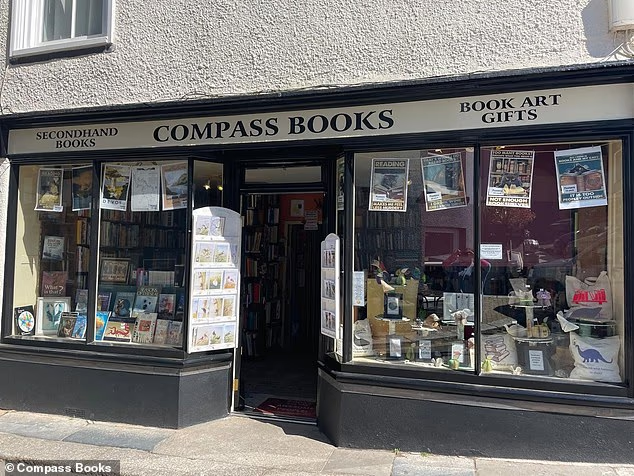
Pictured: Compass Books in Dartmouth, Devon, whose books have been pillaged by Silicon Valley tech firms to train AI

The geology of western Peru. Cornish pioneers in South Africa. The defunct Eastern Counties Railway. Cheeses of the world. The jewellery of Hong Kong.

When Compass Books in Dartmouth, Devon, received an order earlier this summer for second-hand volumes on these subjects and many more, seller Lucy Hingston was delighted – if a little baffled.

And when she discovered that the buyer appeared to be a shipping company based at Heathrow airport, her suspicions increased.

Soon the 49-year-old was speaking to other second-hand dealers around the country – and discovered that Compass Books wasn’t alone.

Advertisement

There is now a growing realisation that Britain’s second-hand bookshops are being pillaged – not by voracious collectors of prized first editions but by Silicon Valley tech firms for a far more insidious purpose.

Today, the Daily Mail explains how millions of second-hand books are being bought in bulk and sent to warehouses across America, where the pages are sliced from the spine before being fed into industrial scanners, harvested for their text, and later destroyed.

This process, known as ‘destructive scanning’, is the latest method of gathering the vast reams of data being used by Big Tech to train its AI chatbots.

‘It’s a moral dilemma,’ says Lucy. ‘They’re my books, my babies. I feel like we’ve been eaten by the AI monster. It’s difficult.

Advertisement

‘I want the sale, but not to somebody who will b****r up everybody’s books.’

Pictured: Compass Books in Dartmouth, Devon, whose books have been pillaged by Silicon Valley tech firms to train AI 

Pictured: A warehouse used by Anthropic to store books. Today, the Daily Mail explains how millions of second–hand books are being bought in bulk and sent to warehouses across America

Pictured: A warehouse used by Anthropic to store books. Today, the Daily Mail explains how millions of second-hand books are being bought in bulk and sent to warehouses across America

Advertisement

Aside from the obvious concerns over copyright – of which more later – there are fears tech firms could be destroying rare books – even the last remaining editions of some historical tomes. As Lucy herself admitted, some of the books purchased from her store are ‘collectable and valuable’.

‘Bulk-buying books just to rip them apart to scan is shocking, but it’s just the tip of the iceberg when it comes to the brazen theft of copyright materials by the tech giants,’ says Dan Conway, CEO of the Publishers Association.

He adds: ‘They’re not just destroying books. Through their shameless actions – including the illegal use of content from books and journals without payment or permission – they are harming our world-leading creative industries and the livelihoods of authors, illustrators and journalists. This behaviour needs to stop.’

Last year, the Daily Mail launched a campaign, Make It Fair – backed by numerous celebrities and entrepreneurs including Sir Elton John, X Factor impresario Simon Cowell and Universal Music boss Sir Lucian Grainge – to stop Big Tech from stealing Britain’s creative genius.

Advertisement

This latest twist in the drive to satisfy AI’s insatiable hunger for content proves the imperative to resist is greater than ever. But with so many books already available online, why are tech firms turning to niche, second-hand bookstores and obscure volumes to train their AI models?

Court documents released earlier this year revealed that Anthropic – the AI giant behind the popular chatbot Claude – had been engaged in ‘destructive scanning’ since early 2024 as part of a secret initiative known as ‘Project Panama’.

‘We don’t want it to be known that we are working on this,’ declared one employee in an internal memo.

Court documents showed the firm ‘spent many millions of dollars to purchase millions of print books’ and then ‘stripped the books from their bindings, cut their pages to size, and scanned the books into digital form – discarding the paper originals’.

Advertisement

Join the discussion

Should tech giants be allowed to destroy old books just to feed their AI algorithms?

The books are bought by the AI companies and then destroyed after they are finished with them

The books are bought by the AI companies and then destroyed after they are finished with them 

Lucy Hingston (right) with comedian Susan Calman. When Ms Hingston received her order for a large volume she was delighted but became suspicious very quickly

Lucy Hingston (right) with comedian Susan Calman. When Ms Hingston received her order for a large volume she was delighted but became suspicious very quickly 

Advertisement

AI ‘large language models’ – such as Claude and OpenAI’s ChatGPT – are ‘trained’ on vast amounts of text, audio, pictures and film footage. Type a ‘prompt’ into the chatbot, such as ‘tell me about the geology of western Peru’, and the response, and the rest of the conversation with the bot, will be based on the incomprehensibly huge bank of material it has previously absorbed.

This will include, for practical purposes, more or less everything available on the searchable internet, but also enormous amounts of pre-internet-era material that has already been digitised.

Now the companies are turning to books that have not previously been uploaded to the internet to widen their databases further.

Previously, Anthropic had trained Claude on more than seven million digitised books without paying a penny to the authors or publishers.

Advertisement

The company did so by sourcing the books from ‘pirate’ websites on which copyrighted material is illegally shared.

Five million books were taken from one of these sites alone.

Earlier this month a federal judge in San Francisco approved Anthropic’s $1.5billion (£1.1billion) out-of-court settlement following a class-action lawsuit filed by three affected authors in California in 2024. It was the documents from this case that revealed the firm had since pivoted to buying physical books.

Doing so avoids copyright infringement issues or illegality because under American law’s ‘first sale doctrine’, established by the Supreme Court as long ago as 1908, the buyer of a physical product can do whatever they want with it, including throwing it away.

Advertisement
Most book–lovers would find the practice of destroying huge numbers of physical volumes stomach–churning. Scenes of grinning young Nazis burning towering pyres of 'un–German' books in university cities across the Third Reich in 1933 are seared in the public memory

Most book-lovers would find the practice of destroying huge numbers of physical volumes stomach-churning. Scenes of grinning young Nazis burning towering pyres of ‘un-German’ books in university cities across the Third Reich in 1933 are seared in the public memory

In other words, if Anthropic buys a physical book, it is legally – though not, many would argue, ethically – entitled to use it to ‘train’ Claude by scanning and destroying the physical copy.

This also means that any future user of Claude will be able to use the information contained in the now-destroyed book more or less for free.

Most book-lovers would find the practice of destroying huge numbers of physical volumes stomach-churning. Scenes of grinning young Nazis burning towering pyres of ‘un-German’ books in university cities across the Third Reich in 1933 are seared in the public memory: a ‘cultural genocide’ that continues to horrify us.

Advertisement

Of course, the AI companies would argue they are doing something different: rather than destroying books to censor the material they contain, as the Nazis did, they are destroying them in order to disseminate their contents more widely.

Nevertheless, the thought of those once-loved, out-of-print volumes being shredded for the financial benefit of faceless tech giants is deeply dystopian.

As the recent court documents explained, Anthropic has been seeking to train its AI models on ‘good’ writing in order to create better chatbots for its customers.

But rather than hire writers to create high-quality sample writing, the firm reasoned that it would be cheaper to purchase existing books.

Advertisement

Hence the Silicon Valley giants buying millions of books from around the world, including Britain, to train their chatbots without paying anything more than the low cost of the second-hand volumes. And Anthropic is not the only one at it. An investigation by 404Media found that an Amazon warehouse outside Las Vegas known as VGT3 was also being used to scan incalculable numbers of second-hand volumes.

‘I work at VGT3 here in Vegas, and all we do is scan books,’ revealed one anonymous Amazon whistleblower on an online forum.

AI 'large language models' – such as Claude and OpenAI's ChatGPT – are 'trained' on vast amounts of text, audio, pictures and film footage

AI ‘large language models’ – such as Claude and OpenAI’s ChatGPT – are ‘trained’ on vast amounts of text, audio, pictures and film footage

Second-hand books on sale in London. The Daily Mail has established that tech firms are especially targeting second–hand dealers, where the price per copy can be in pennies or a few pounds at most

Second-hand books on sale in London. The Daily Mail has established that tech firms are especially targeting second-hand dealers, where the price per copy can be in pennies or a few pounds at most

Advertisement

‘Some are assigned to cut books, and others go to receive where they get books and scan the bar codes.’

Leaving aside the question of whether or not books should be scanned at all, the practice of cutting off the spines of books and destroying them afterwards has caused uproar.

So much so that even Elon Musk took to X last month to assure supporters: ‘I’ve asked the SpaceXAI team to preserve any rare books in a library and scan them the hard way [physically turning the pages] vs just cutting off the spine and scanning.’

It is, of course, possible to scan books in such a way that the text and binding are preserved – assuming the practice of feeding this information into the insatiable AI models is a worthy pursuit at all. But cutting the pages out first is ‘significantly faster’ and guarantees ‘shadow-free scans’, according to specialist scanner eRecordsUSA.

Advertisement

So which books do tech firms want most, and which bookshops are being targeted?

The Daily Mail has established that tech firms are especially targeting second-hand dealers, where the price per copy can be in pennies or a few pounds at most.

However, only shops with online catalogues appear to have been approached.

Intriguingly, the firms appear to be interested only in books published before 2022, the year in which generative AI achieved mainstream popularity following the launch of ChatGPT.

Advertisement

Books published before that period are highly likely to be free from AI-written text – whereas many authors of more recent books are, whether they admit it or not, using AI, while many books available for purchase online are entirely AI-written.

Training AI models on text written by AI can lead to what experts call ‘model collapse’.

Shelves of books in Camden Market. The thought of those once–loved, out–of–print volumes being shredded for the financial benefit of faceless tech giants is deeply dystopian

Shelves of books in Camden Market. The thought of those once-loved, out-of-print volumes being shredded for the financial benefit of faceless tech giants is deeply dystopian

‘It’s the AI equivalent of a feedback loop gone wrong,’ explains Yarin Gal, Associate Professor of Computer Learning at Oxford University. ‘The more models feed on their own output, the further they drift from reality. Model collapse threatens to create an AI echo chamber.’

Advertisement

In other words, chatbots need to be trained on high-quality, human-written text. That means books published before the arrival of AI are guaranteed to be an effective ‘dataset’.

Which brings us back to the boom in second-hand book sales across Britain. Finn Windle, 30, works at The Minster Gate Bookshop in York. ‘We had an unusual batch order in May, quite a lot of books, and none of them were related subjects,’ he says.

‘It was quite confusing. There was local history, geology, a real mix of things, academic books and books for the general reader. Generally, non-fiction.

‘The purchaser was in the USA: Zoom Books. They’ve only ordered twice. Other people had had orders from them, so they seemed legitimate. But thankfully it’s gone quiet since.

Advertisement

‘If we knew destructive scanning is what they were doing, we wouldn’t have authorised the order. We’re not pleased about it – it’s awful.

‘Some of these titles aren’t even in print any more and there are no other copies available.’

Other booksellers as far afield as Germany, New Zealand and Australia have reported receiving orders from Zoom Books. The company has since denied being involved in destructive scanning. However, this does not rule out Zoom Books being the middleman responsible for collecting books for an AI giant.

It’s a similar story in Felixstowe, Suffolk, where Helen Bott, 64, runs Treasure Chest Books. ‘It started in early May,’ she says. ‘First, we got an order from Zoom Books in America. We got two or three orders for five or six books, and then a week later there were massive orders for 340 books, all to this place in America called Zoom Books. We’d never heard of it. I specialise in transport and railway books and the sheer randomness of the orders was noticeable. Fifty per cent were on railways, then Latin, or school history, or shipping companies.

Advertisement

‘We noticed these were all non-fiction. It felt like they were looking for unusual books: a history of a village in Devon, for example. You don’t want to see books destroyed. But I’m conflicted about it. From a business point of view, it’s good. But destroying books, that is the last thing we want to see.’

Meryl Halls, managing director of the Booksellers Association, agrees. ‘The potential scenario of tech companies bulk-ordering second-hand books to train their large language models is a concerning development,’ she says. ‘If true, it is another example of the lengths some AI companies may go to in order to access copyright-protected material without transparency or compensation.’

However, not everyone shares her concerns. ‘We have been joking and hoping that that would happen to us!’ says Patrick Kelly of Book Mongers in Brixton, south London. ‘We could use the business. My suspicion is that you need a catalogue of your inventory [for the AI companies to buy from you] – something we don’t have. To be honest, I don’t understand why the shops affected are complaining.’

And this attitude gets to the heart of the dilemma. For booksellers operating on tight margins, selling hundreds of books to AI firms makes sense. But, as every book-lover knows, Faustian pacts don’t end well.

Advertisement

A spokesperson for Anthropic told the Daily Mail: ‘Claude is trained on a mix of publicly available web data, commercially acquired datasets, and data we generate ourselves.

‘Sourcing books is a widely used approach for training large language models across the AI industry. None of our data acquisition programs buy and destroy rare or antiquarian books.’

A spokesperson for Amazon added: ‘Amazon purchases books through commercial channels to help develop and improve the products and services our customers use.’

Another infamous mass destructions of books was the ‘Bonfire of the Vanities’ in Renaissance Florence, when the friar Savonarola presided over the burning of books deemed immoral.

Advertisement

A new wholesale destruction of books appears to be underway again, some of which will never be printed again.

This time, however, the motivation is purely to enrich technology companies already enjoying wealth far beyond Savonarola’s dreams.


Source link

Advertisement
Continue Reading
Click to comment

You must be logged in to post a comment Login

Leave a Reply

NewsBeat

As Casualty bosses admit the show was an attack on Thatcher, can you recognise these superstars whose careers were launched on the show?

Published

on

As Casualty bosses admit the show was an attack on Thatcher, can you recognise these superstars whose careers were launched on the show?

The creators of the BBC medical drama Casualty have finally admitted that the show was designed as an attack on Margaret Thatcher‘s health policies.

Paul Unwin and Jeremy Brock, who launched the show in 1986, say they were inspired to write the drama because of what they saw as the Conservative government’s dire neglect of the NHS.

The two men have come clean at last about the show’s political origins in an interview to mark its 40th birthday next Sunday.

On today’s edition of Radio 4’s The Reunion, presenter Kirsty Wark asks Unwin directly if the show was designed to be critical of Mrs Thatcher’s Government.

Advertisement

He replies: ‘Yes. In fact, our original pitch began with the line, “In 1948, a dream was born. In 1985, the dream was in tatters”. Pretentious? A little bit. 

‘But we did really mean it, and we really did feel the BBC was behind us in trying to say this great national institution was under real pressure.’

Even the programme’s title had political undertones. TV bosses initially planned to call the programme Front Line or City Hospital, before realising the name Casualty was more in keeping with its political agenda.

Brock said: ‘I think Casualty came up as a consequence of us realising there was a lovely double meaning in the title. 

Advertisement
Pictured: Cast members from Casualty appearing in the show's 40th anniversary special

Pictured: Cast members from Casualty appearing in the show’s 40th anniversary special

Paul Unwin and Jeremy Brock said the show was inspired by the neglect of the NHS during Margaret Thatcher's time in government

Paul Unwin and Jeremy Brock said the show was inspired by the neglect of the NHS during Margaret Thatcher’s time in government

Advertisement

Join the discussion

Should TV dramas use their platform to push political messages about the NHS and government policy?

‘You had the casualties who came in and then you had the staff who were the casualties of a system that was under-funding them and putting them under incredible pressure.’

Catherine Shipton, who played Nurse Duffy, one of the show’s most popular characters, recalled producer Geraint Morris telling staff about the show’s mission statement. 

Advertisement

She said: ‘Geraint gave us this speech. It just felt like a huddle. This was a maverick group of people, and he said this is anti-cuts, pro-NHS, that is what we are doing here.

‘It just chimed with everything I personally believed, and I just thought I can’t believe that every word that’s going to come out of my mouth, I’ll believe it.’

Although Casualty was an instant hit, many viewers agreed with Edwina Currie, the then junior health minister, that it was too negative about the state of the NHS. 

At the time, the BBC refuted suggestions of political bias, claiming the show was just honest.

Advertisement

The political heat which surrounded the show in its early days had serious consequences for Peter Salt, a real-life nurse who was also its medical consultant.

He was warned that his NHS career might be affected if he continued with the television role.

He told The Reunion: ‘My career nearly ended or abruptly came to a stop very early on.

‘When the show started the hospital authorities were saying, “This is great. Shining a light on the hospital is very, very good”.

Advertisement

‘As soon as the Government started getting their tuppence worth in, I was approached and told, “Are you sure you want to keep doing this? You might want to be running this department one day”.’ Salt said he interpreted that as a threat.

Casualty, which aired its 41st series earlier this year, is one of the world’s longest-running dramas. Over the years, it has helped launch the careers of some of the world’s biggest stars.

Titanic star Kate Winslet, Lord Of The Rings actor Orlando Bloom and Star Wars actress Daisy Ridley all appeared in the show when they were complete unknowns.

Ms Winslet was only 17 when she appeared as an anxious babysitter in a 1993 episode.

Advertisement

Catherine Shipton recalled a young actress who had little time for the on-set banter which occurred between takes.

She said: ‘She [Kate] was about 17. She was very concentrated… She would just take herself to one side and stay in the zone and not enter into the banter. 

‘But I did sense somebody who loved her profession and who worked really hard at her profession.’

The Reunion is on BBC Radio 4 today at 10am and is available via the BBC Sounds app.

Advertisement

The broadcaster is also promising a ‘gripping’ 40th anniversary Casualty double-bill special that ‘centres on a high-stakes major incident that throws Holby into chaos’. It will be aired on BBC iPlayer on Saturday.

Source link

Continue Reading

NewsBeat

Police respond to shooting at Switzerland rave with ‘several victims’ reported

Published

on

Boy, 15, arrested for attempted murder after armed attack on school teacher

A major police operation is under way in Aarau in northern Switzerland after shots were fired at a rave party, with reports indicating that there are multiple people injured.

The shooting happened shortly after 2.30am on Sunday at a horse racing track in Schachen, on the edge of the town, where a rave was being held.

“Aarau: Nighttime shots at event in Schachen. Several victims. Major police operation underway. Stay away from the area. More info to follow,” police said in a post on X.

The police have urged the public to avoid the area. The Aarau Cantonal Disaster Response Unit (KKE) and an army Super Puma helicopter were also deployed at the site, according to Blick.

Advertisement

“It is not yet clear what exactly happened,” media spokesperson for the Aargau Cantonal Police, Vanessa Rumpold, told the newspaper. The police can currently only confirm “several shots being fired at a large group of people.”

More follows

Source link

Advertisement
Continue Reading

NewsBeat

PC Harper’s killers to stay in jail as PM announces early release scheme changes

Published

on

Andy Burnham wears a dark suit sitting on a chair speaking with Roger Johnson who wears a dark suit. They are both sitting on red chairs.

The prime minister said that will be achieved in-part through ending Imprisonment for Public Protection sentences, or IPPs.

These were available between 2005 and 2012, and were given to offenders who pose a significant risk of causing serious harm to the public.

Once a minimum term has been served, the prisoner can be released only once the Parole Board is satisfied they no longer need to be confined for public safety, meaning many are being held indefinitely.

Burnham said he had applied “common sense” on the treatment of IPPs, which he had “long-standing concerns” about.

Advertisement

“I was faced with a situation where people on those sentences who have more than served their time, not being released when others who’ve committed very serious crimes being released early,” he told the BBC.

“The judgement I’ve made is the public, in my view, would prefer a situation where people who have served their time to be considered for release before those who haven’t.”

According to Ministry of Justice data, 2,271 people are serving IPP sentences as of June. Of those, 856 have never been released because the Parole Board thought it was not safe to do so.

Burnham conceded that of those offenders, there will be “individuals who will pose a risk to communities”, and said a cross-party oversight group would be established.

Advertisement

The government will table legislation to terminate the sentences by the “end of this Parliament”, he added.

Pressed on how many foreign prisoners could be returned, Burnham said it was “hundreds”.

The government has said powers will be implemented early next year to deport some foreign criminals immediately after sentencing.

Those powers would block foreign prisoners from ever returning to the country while “keeping those in prison for the most serious crimes locked up for a substantial period before they are removed”.

Advertisement

The government is not thought to have signed any additional prisoner returns agreements with other countries.

It is understood that work has also begun to create more cells in existing prisons by adapting space used for other purposes, but that is also expected to take months.

None of the measures announced by Burnham are likely to create much additional prison capacity by the time the first batch of prisoners are released early in October.

The prime minister is said to have taken a “political decision” to use some of the remaining capacity in the prison system to ensure the changes announced today could be implemented immediately.

Advertisement

In addition to those in jail for manslaughter, the prime minister said prisoners convicted of indecent assault offences and death by dangerous driving will also remain in prison.

Historic child sex offences and causing or allowing the death of a child will also be exempted from the early release scheme, while new “restriction zones” to better protect domestic violence survivors from perpetrators released early will be introduced.

Burnham said the additional changes announced on Sunday would result in “hundreds” more prisoners staying behind bars.

The justice secretary is expected to give a more precise figure for how many people will be affected when he gives a statement in Parliament on Tuesday.

Advertisement

Earlier this month, Burnham announced prisoners guilty of rape, serious child sex offences and grooming will be excluded from early release eligibility.

Source link

Continue Reading

NewsBeat

PC Andrew Harper’s killers to remain in prison as Andy Burnham announces changes to early release scheme

Published

on

PC Andrew Harper's killers to remain in prison as Andy Burnham announces changes to early release scheme

He told the BBC: “We’ve come up with a proposal which will allow not just those guilty of manslaughter, the people involved in the killing of PC Harper, but those who have been convicted for indecent assault, those convicted for death by dangerous driving, all of these offenders now will remain in prison. Hundreds of them.

Source link

Continue Reading

NewsBeat

Grosmont railway opens heritage skills training classroom

Published

on

Grosmont railway opens heritage skills training classroom

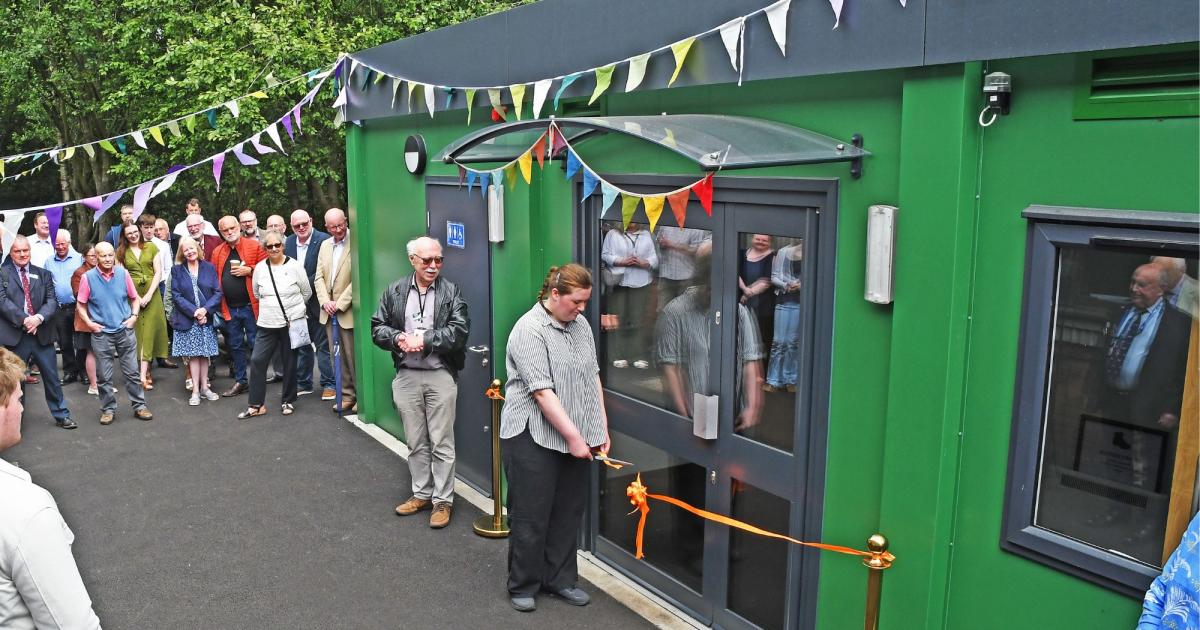
The facility, supplied by Portakabin, will support specialist training in railway preservation and heritage skills.

Located in Grosmont, the project faced significant logistical challenges due to its remote setting in the North York Moors.

Modules had to be transported along narrow, windswept roads and through overgrown hedgerows, with final delivery requiring travel along a closed railway track.

Advertisement

Laura Strangeway, CEO at NYMR, said: “As someone who is passionate about both preserving our heritage and securing our future, the opening of the MIC was a particularly special day.

“It represents the very best of our industry’s culture, and I am incredibly proud that we are continuing that legacy for future generations.”

The new classroom replaces an outdated building that served the railway for more than 30 years but lacked essential facilities such as toilets, washrooms and community space.

The modern MIC can accommodate up to 70 people and will be used for training sessions, rotating classes and social events.

Advertisement

It will support the development of skills needed to maintain historic locomotives, carriages and railway infrastructure.

The MIC also marks the first step in a planned heritage skills village, which will offer hands-on learning and pathways to recognised qualifications.

Ian Matthews, managing director of GB sales at Portakabin, said: “This project really demonstrates what modular construction can achieve when the site presents a challenge.

“Transporting the modules through the North York Moors and into position required careful planning, precision and close collaboration with the NYMR team.

Advertisement

“But the installation is only one part of a very large, historical story.

“What makes this project particularly special is what the building will enable.

“It will give people a dedicated place to learn, share knowledge and develop the specialist skills needed to protect railway heritage for years to come.”

Advertisement

Source link

Continue Reading

NewsBeat

How much TV presenters are REALLY paid: Our investigation reveals the staggering salaries of some of the nation’s most beloved names… and why some of their co-stars will be ‘absolutely fuming’

Published

on

Wayne Rooney rakes in a hefty £8,000 for each episode of Match of the Day he appears on

Many avid television-watchers feel they know almost everything about their favourite stars: their sense of humour, their love lives – and even their favourite clothing brands.

But there’s one thing that our celebrities tend to keep firmly to themselves: how much they earn.

But today, a Daily Mail investigation can shed some light on the matter. For we have learned the salaries of some of TV’s biggest names, and the figures are not only likely to shock their fans, but perhaps their co-stars, who earn considerably less.

Take Wayne Rooney, for example. His role as a pundit on Match of the Day has transformed him from veteran footballer and failed manager to one of the small screen’s most compelling sports commentators.

Advertisement

And it’s certainly lucrative. We can reveal that Rooney rakes in a hefty £8,000 for each episode of Match of the Day he appears on.

Though the runtime of the show can vary depending on fixtures, based on a standard 75-minute highlight episode, that salary roughly works out at just over £107 for every minute he spends on air in the show’s Salford studio. 

While Rooney’s Beeb salary isn’t quite as generous as his heady days playing as striker for Manchester United, where he earned more than £200,000 per week, it has left some colleagues gobsmacked.

Advertisement

Wayne Rooney rakes in a hefty £8,000 for each episode of Match of the Day he appears on

Gabby Logan, Mark Chapman and Kelly Cates make up the trio of Match of the Day's main presenters. Logan and Chapman earn roughly a third of what Wayne Rooney makes from a single show

Gabby Logan, Mark Chapman and Kelly Cates make up the trio of Match of the Day’s main presenters. Logan and Chapman earn roughly a third of what Wayne Rooney makes from a single show

The former England captain, 40, made his transition from management to punditry last year when he signed a lucrative deal with the BBC, a welcome financial boost for the father of four, who left third-tier team Plymouth Argyle by mutual consent on New Year’s Eve in 2024.

He appeared regularly during the BBC’s coverage of the World Cup this summer, amusing viewers with his dry wit.

Advertisement

My insider said: ‘Wayne is on a lot of money, it’s quite eye-watering really, but people want to hear what he has to say about football. Everyone loves Wayne, but once this comes out there might be some who feel very hard done by.

‘When it comes to football, the BBC believe that the viewers want to hear his expertise. Some people think that he is grossly overpaid but the audience love him.’

One of those who may be feeling hard done is Rooney’s co-host, Gabby Logan – who anchors MOTD.

She is paid £3,000 for each show, which equates to £40 per minute when the microphones are live.

Advertisement

The mother of two was given the esteemed position by Corporation bosses to make up their three-person presenting team, which also includes Kelly Cates and Mark Chapman after Gary Lineker left the show, following a torrid impartiality row.

Chapman, known as ‘Chappers’ to fans, 52, is paid the same as Logan.

His most recent instalment of Match of the Day, last Saturday evening, saw him pocket £37 per minute for their coverage of the Premier League’s 2026-27 opening weekend – a third of Rooney’s rate.

‘You have to wonder if they will be absolutely fuming to know what Wayne earns,’ says my television insider. ‘But actually, even they have to realise that he has a specialism and he’s running all the way to the bank with it.’

Advertisement

Another of the BBC’s big earners is nepo baby Roman Kemp, 33, who earns a tidy fee for anchoring long-running favourite The One Show – which regularly pulls in an audience of about 3million viewers.

Another of the BBC¿s big earners is nepo baby Roman Kemp (pictured with co-presenter Alex Jones), who earns £2,000 each time he anchors The One Show, which regularly pulls in an audience of about 3million viewers

Another of the BBC’s big earners is nepo baby Roman Kemp (pictured with co-presenter Alex Jones), who earns £2,000 each time he anchors The One Show, which regularly pulls in an audience of about 3million viewers

This Morning¿s stand-in presenter, Craig Doyle, is paid £3,000 each time he fronts the show

This Morning’s stand-in presenter, Craig Doyle, is paid £3,000 each time he fronts the show

The presenter and DJ, who is the son of actor Martin Kemp, 64, has negotiated a £2,000 appearance fee for each episode he anchors on the green sofa. For a 30-minute programme, that means his rate per minute is £66.

Advertisement

He joined the show in 2022 with a host of other well-known faces, including popular host Alex Jones, following the departure of former Blue Peter star Matt Baker.

The show has been branded ‘nuts’ by some licence-fee payers for its eclectic segments. But, perhaps unsurprisingly given his remuneration, Kemp has leapt to its defence.

He said in 2023: ‘When Alex and I [present the show] it feels like anything can happen. It gets a bit wild with the guests, and it just descends into carnage. He added swiftly: ‘Controlled carnage’.

‘Roman hosts three shows per week sometimes, so that can amount to £24,000 per month,’ says a source familiar with The One Show. ‘It’s a pretty good salary for him really, he must be thrilled. But it will be interesting to know what the licence-fee payers make of that.’

Advertisement

The BBC is not alone in shelling out the big bucks to its talent. The Daily Mail has discovered that ITV This Morning’s stand-in presenter, Craig Doyle, is paid £3,000 each time he fronts the show.

For each of the 150 minutes it is on air, the Irish heart-throb makes £20 – making him a much cheaper hire than others.

He first joined the show in 2021, when it was still considered to be in its heyday, fronted by Philip Schofield and Holly Willoughby.

After impressing bosses and becoming ‘eye candy’ with viewers, then producer Martin Frizell made him a regular relief presenter.

Advertisement

He quickly became a safe pair of hands in the aftermath of the scandal which engulfed the show and threatened its future when Schofield admitted to an ‘unwise but not illegal’ affair with a much-younger colleague.

Craig’s television career began in the mid-90s when he broke into children’s programming for the channel, hosting Disney Club.

The father of four, who lives in County Wicklow in Ireland with his wife Doon, made his name in the early noughties when he began presenting major sporting events for BBC Sport.

‘Craig loves doing This Morning,’ says my source. ‘ITV know that the women love him, so he’s worth every penny of his £3,000 pay cheque.’

Advertisement

Meanwhile, Doyle’s co-star Rylan Clark is thought to be paid £5,000 per show – £33 per minute he is on air.

Doyle¿s co-star Rylan Clark is thought to be paid £5,000 per show - £33 per minute he is on air

Doyle’s co-star Rylan Clark is thought to be paid £5,000 per show – £33 per minute he is on air

Elsewhere in the ITV studios, leading Loose Women hosts are paid approximately £1,000

Elsewhere in the ITV studios, leading Loose Women hosts are paid approximately £1,000 

Clark, 37, who got his ‘big break’ from The X Factor as its novelty act in 2012, was originally welcomed into the fold as a guest entertainment reporter, reporting on behind-the-scenes gossip on the tenth series of the now defunct singing competition.

Advertisement

Thanks to his work at the time on other shows such as Big Brother, he was handed more responsibility, later becoming a relief presenter and once hosted with Schofield, filling in at the last minute for Ms Willoughby when she was unwell.

A source said: ‘He is so in demand and he knows the viewers love him.’

Elsewhere in the ITV studios, leading Loose Women hosts are paid approximately £1,000 for each of their contributions to its 60-minute episodes.

That includes Kaye Adams, Coleen Nolan, Jane Moore, Janet Street-Porter and former stars Denise Welch and Sherrie Hewson.

Advertisement

It works out at just over £16 for each minute they’re sat on their stools, though the anchor – usually the likes of experienced presenters Christine Lampard or Ruth Langsford – is paid more. As indeed was Stacey Solomon, whose popularity meant she commanded a bigger salary.

‘It seems a lot but is it really?’ asks my source. ‘The problem is that there are four of them and that adds up for ITV, who have had to make huge cuts to their programmes.

Presenter pay per episode

WAYNE ROONEY – £8K (£107/minute)

Advertisement

RYLAN CLARK – £5K (£34/minute)

CRAIG DOYLE – £3K (£20/minute)

GABY LOGAN – £3K (£40/minute)

MARK CHAPMAN – £3K (£40/minute)

Advertisement

ROMAN KEMP – £2K (£66/minute)

LOOSE WOMEN – £1K (£16/minute)

<!- – ad: https://mads.dailymail.co.uk/v8/de/tvshowbiz/none/article/other/mpu_factbox.html?id=mpu_factbox_1 – ->

Advertisement

‘The fact that some earn more than others has made for a sometimes-unpleasant atmosphere behind the scenes, because it’s a real case of survival of the fittest.’

Each of the roughly 20 panellists on Loose Women’s current rotating roster has experienced a notable drop in their earnings recently, following ITV’s decision to cut the programme to just 30 out of the 52 weeks in the year.

They also lost their live audience – and have been forced to share the same set as This Morning, leaving the crew with just a three-minute ad break between the shows to reset the sets.

Advertisement

In total, over 200 staff working in ITV daytime lost their jobs because of the cuts, and those who remained were moved out of its headquarters at Television Centre to Covent Garden in central London.

What would they make of their more famous colleagues’ turbo-charged salaries?

Source link

Advertisement
Continue Reading

NewsBeat

How Manchester United should line up vs Ipswich Town in Old Trafford return

Published

on

Manchester Evening News

Man United host Ipswich Town at Old Trafford this afternoon hoping to bounce back from the opening day defeat to Hull City

Manchester United are back in Premier League action this afternoon as they host Ipswich Town. United are aiming to bounce back from the sobering 2-0 defeat to Hull City last weekend, and the pressure is already on Michael Carrick to get a good result.

Advertisement

United have been buoyed by the news that Mason Mount is once again available. He has been out since the pre-season friendly against Paris Saint-Germain with a knock. Carrick confirmed on Friday he trained with the group this week.

Amad is out having picked up an issue before the Hull game. Matthijs de Ligt will also be missing as he recovers from a long-term back injury.

MEN Sport has asked our United writers to pick their teams for the opening home match of the campaign.

Tyrone Marshall

Changes are a must after last week. Lisandro Martinez should be fit enough to start now and his partnership with Harry Maguire was strong under Carrick last season. I’d also bring Diogo Dalot in for Noussair Mazraoui at right-back.

The partnership between Andrey Santos and Youri Tielemans hasn’t clicked yet and with Mount back fit, I’d go back to Santos and Mount. They had an excellent understanding in pre-season and deserve a chance to continue that.

I’m not sure Benjamin Sesko is yet fit enough to start, so Mbeumo has to play as the No.9 ahead of Matheus Cunha. The Brazilian can return to the left and I’d start Rashford on the right to offer a little more goal threat.

Advertisement

Jack Flintham

Ayden Heaven was caught out for the opener last weekend and should be replaced. Martinez was so far off the pace the last time we saw him, so I would be tempted to start Leny Yoro with Maguire.

I would also recall Mount to play alongside Santos. That is the only midfield partnership that has clicked so far and it makes sense to reunite them against Ipswich.

Advertisement

In attack, I would risk Sesko. He is the only focal point United have and even if he can only play 45 minutes, that could be the difference this week. That would allow Mbeumo to play on the right and Rashford to start on the left in place of Patrick Dorgu.

Source link

Advertisement
Continue Reading

NewsBeat

Why Piercebridge is perfect for a bank holiday day out

Published

on

Why Piercebridge is perfect for a bank holiday day out

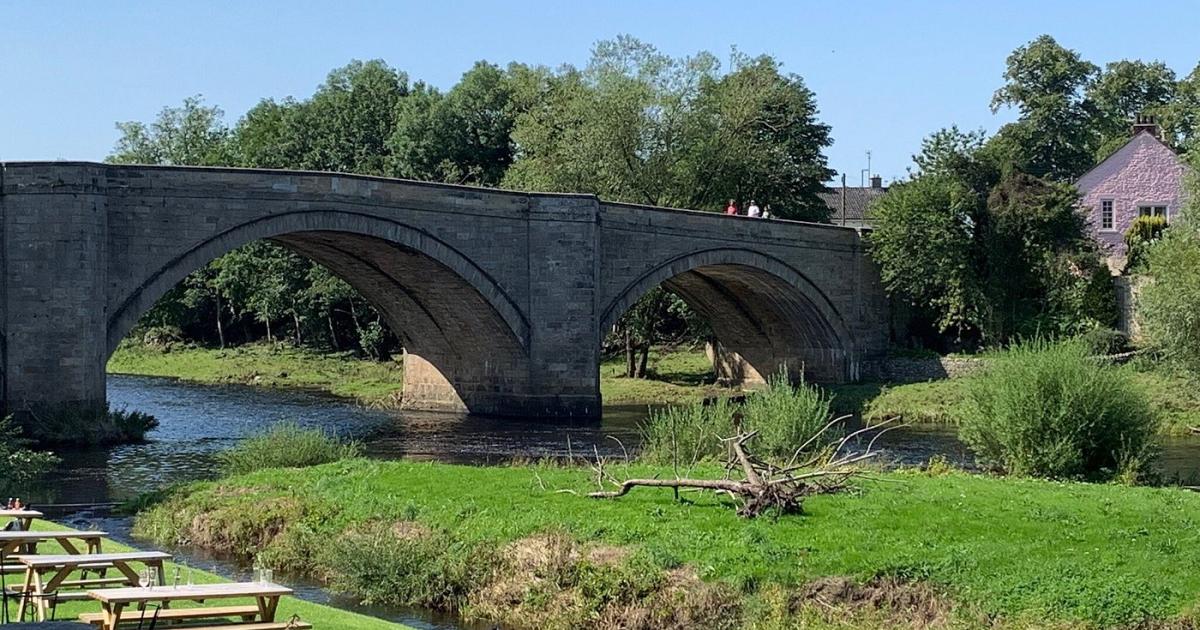
Just a few miles west of Darlington, the village of Piercebridge offers a mix of countryside, history and local food that makes it an ideal spot for a leisurely day out.

Sitting on the banks of the River Tees, the village combines scenic riverside views with a rich Roman past and one of the area’s most talked-about farm shops and cafes.

At the heart of the village is Piercebridge Farm Shop and Café, which has earned a loyal following among visitors.

A look at the picturesque scenery in and around Piercebridge. (Image: Tripadvisor)

Tripadvisor reviewers have described it as a “hidden gem”, praising its atmosphere, friendly staff and location.

Advertisement

One visitor called it an “absolute must to visit”, highlighting homemade sausage roll, chicken stew and cakes among the menu favourites.

Another reviewer said the farm shop’s lemon iced ginger cake was “truly amazing”, while praising the range of produce and welcoming service.

The café provides a handy stopping point before or after a walk through the village.

Visitors can pick up coffee and cake, browse locally sourced produce and enjoy views of one of South Durham’s prettiest corners.

Advertisement

What makes Piercebridge particularly appealing is that there is more to discover than simply a place to eat.

The village is steeped in history, having grown around the site of a Roman crossing of the River Tees.

Today, traces of that past remain, giving visitors the chance to combine a relaxing walk with a glimpse into the area’s heritage.

(Image: SARAH CALDECOTT)

A stroll through the village quickly reveals why it remains a favourite among those who know it.

Advertisement

Stone cottages line quiet streets, the river winds gently past the settlement and there are plenty of spots to pause and take in the view.

For families looking to make a day of it, there is ample opportunity for a gentle riverside wander before returning for lunch or a sweet treat.

In an age when many weekend outings involve crowded retail parks or expensive attractions, Piercebridge offers something refreshingly simple: a chance to slow down.

Advertisement

Source link

Continue Reading

NewsBeat

Locals say new business park with HGV area would be ‘unacceptable burden’

Published

on

Cambridgeshire Live

The applicant has sought permission for a site near the A14

Plans for a huge new “employment park” next to a major Cambridgeshire park have faced backlash, with one person claiming it would be an “unacceptable burden”. Lolworth Developments Limited (LDL) is seeking permission to deliver a huge employment floorspace accommodating a mix of logistics, mid-technology, and research uses for new and existing companies to invest, expand, and occupy.

Advertisement

The employment park would deliver around 240,000 square metres of floor space on land next to Junction 25 of the A14 between Bar Hill and Northstowe. The development, called ‘Cambridge 25’, would provide around 2,900 new jobs and training opportunities near existing and planned future homes.

If approved, a nature park would be created for future employees and visitors. It would deliver more structural landscaping and tree planting, community facilities, better walking and cycling connections, and large HGV areas with parking bays.

Additionally, it would deliver “high-quality” and “sustainable” employment premises for new and existing companies to invest, expand and occupy. The applicant said: “There is a current deficit in the supply of land for future employment uses and a specific shortfall in industrial and logistics floorspace.”

Once in operation, the development activity is predicted to generate around £117.1m in Gross Value Added (GVA) annually, equal to 0.7 per cent of Greater Cambridge’s total GVA in 2031. GVA is the value that producers have added to the goods and services they have bought.

Advertisement

A planning document said: “There is an urgent need for the provision of land which can accommodate high quality I&L premises (industrial and logistics), including those towards the larger size ranges. There is a critical undersupply of land and premises to meet the needs of the I&L sector and this is particularly severe in relation to large units.”

Since its submission in July, the plans have received some backlash. One person objected to the Cambridge 25 development due to its “unacceptable scale and impact on Oakington and the surrounding countryside”.

The objector wrote: “My main concerns are the loss of 103 hectares of greenfield habitat, visual and landscape harm, 24/7 noise and light pollution, and significant flood-risk concerns. I am deeply concerned that up to 350,000 litres of treated effluent per day could be discharged into Oakington Brook, a watercourse that can become very low or dry in summer, creating serious risks to local ecology and residents.

“I’m also concerned about the additional HGV traffic on the ‘local’ A14 bypass road and other small roads, which are unsuitable for such volumes of heavy vehicles. The ‘jug handle’ for travel towards Bar Hill roundabout will cause massive problems, especially as this area will also face increasing pressure from the ongoing development of Northstowe, making the cumulative impact on congestion, road safety and local communities even more concerning.”

Advertisement

They fear the development would “fundamentally urbanise this rural setting and place an unacceptable burden on local infrastructure”.

Bar Hill Parish Council also lodged an objection to the plans. A spokesperson for the council said the development would lead to “significant increases in traffic on the A1307 and B1050 as well as the A14”.

The objection said: “The pathway is used by pedestrians, cyclists and horse riders whose safety will be impacted by the large numbers of HGVs crossing the path into the site. The number of junctions could cause confusion for drivers.

“The increase in vehicles at junction 25 of the A14 may lead to drivers going along the A1307 to use junction 24 of the A14 at Swavesey or go through Dry Drayton to avoid the congestion. The increase in traffic increases the likelihood of any incident on any of the roads near the junction 25 roundabout blocking access to Bar Hill due to the village only having one road in and out.”

Advertisement

The parish council also urged the development to accommodate all HGVs when they arrive and provide suitable welfare facilities for the drivers, including overnight. The spokesperson said: “On road parking of HGVs in local villages including Bar Hill is a regular problem as Swavesey services are unable to cope with the current number of HGVs on the road system.”

The Environment Agency objected to the proposed development as submitted because it “involves the use of a non-mains foul drainage system in circumstances where it may be feasible for the development to be connected to a public sewer but inadequate justification has been provided for the use of a non-mains system”. The public body recommended that the application, as it stands, be refused on this basis.

Another person said the facility could potentially serve thousands of workers. As a result, they raised an objection because it could “create a huge amount of sewage, with possible dire consequences for the local environment, wildlife and residents”.

Source link

Advertisement
Continue Reading

NewsBeat

North Yorkshire’s HECK! launches chicken Cumberland sausage

Published

on

North Yorkshire's HECK! launches chicken Cumberland sausage

HECK! has launched new Chicken Cumberland Sausages, aimed at people looking for a high-protein and leaner alternative to pork sausages.

The new Chicken Cumberland Sausages, which will be available nationwide at Morrisons and Tesco stores from mid-September, are made with lean chicken and a blend of bold black pepper, fragrant sage and warming spice notes.

RECOMMENDED READING:

Advertisement

Weighing 340g and priced at £3.50, the sausages are designed to be a versatile addition to various meals, from mash and sausage sandwiches to stir-fries and tray bakes.

The new product is part of HECK!’s expanding range of lean sausages, burgers, seasoned mince, and sausage rashers.

These products are aimed at people wanting to boost their protein intake without compromising on flavour.

All items in the HECK! chicken range are gluten-free and naturally lower in fat.

Advertisement

Source link

Continue Reading

Trending

Copyright © 2025