Connect with us

NewsBeat

The mysterious rise of osteopenia in under-50s: Scientists reveal the THREE common lifestyle choices that are fuelling the surge – and how to reverse your brittle bones

Published

on

Harriet Kelsall, then 46, was out for a run when she stumbled and hit the pavement hard

It began with what Harriet Kelsall describes as ‘a dramatic scene’. The mother-of-two, then 46, was out for a run when she stumbled and hit the pavement hard. ‘I grazed my knee and there was blood everywhere,’ she says. ‘Instinctively I’d thrown out my left hand to break the fall – and that was what really hurt.’

But finding that she could still move all her fingers, Harriet decided simply to go home. ‘I used an old wrist support and strapped two fingers together, which was uncomfortable but worked for the time being,’ she says. ‘But after about two weeks, I realised my hand had gone purple and I thought, this isn’t normal.

‘I went to the doctor and a scan revealed I’d broken two very small bones in my left hand and one in my wrist.’

Despite this, Harriet considered the whole thing to be mainly an inconvenience. ‘I was stupid for not seeing a doctor sooner,’ she admits.

Advertisement

However, after telling friends she’d broken her hand from a simple fall, they encouraged her to have a bone density scan. The results showed she was suffering from osteopenia, a bone-thinning condition that precedes osteoporosis – a debilitating condition also known as brittle bone disease.

Affecting some seven million people in the UK, osteopenia causes bones to lose strength but usually has no symptoms, meaning many people have no idea they have it until they break one. Left untreated, it can progress to osteoporosis, which leaves bones so fragile they can fracture after a minor fall or even a cough or sneeze.

‘I’d never heard of osteopenia,’ says jeweller Harriet, now 55. ‘I knew a little bit about osteoporosis, but thought it was a condition affecting only old people.

Advertisement

Harriet Kelsall, then 46, was out for a run when she stumbled and hit the pavement hard.

‘If it wasn’t for my friends pushing me to go for the bone density scan, I definitely wouldn’t have known I had it.’

Since her diagnosis, and on her GP’s advice, Harriet has started hormone replacement therapy (HRT), takes a high-dose vitamin D supplement and has overhauled her lifestyle – all measures proven to help improve or maintain bone density and cut the risk of osteopenia progressing to osteoporosis.

She now exercises about five times a week – combining sessions on her Peloton stationary bike, a weekly run and weight training – while cutting back on refined sugar and increasing her protein intake to support muscle and bone health.

Advertisement

‘I understand now that it’s all about making sure your muscles can support your bones,’ she says.

‘If I do fall over, hopefully my muscles will help protect them.

‘I haven’t had another scan yet to see if my bone density has improved, but I’ve tripped a few times since and been thrown off my paddleboard without breaking anything – which I’m taking as a good sign.’

Harriet’s diagnosis may seem surprising for someone relatively young. But while bone density loss is most strongly linked to ageing – it’s estimated up to 40 per cent of over-50s have osteopenia – doctors say they are seeing a growing number of younger adults diagnosed with the condition.

Advertisement

Experts describe it as an early warning sign, meaning your bones are weaker than normal but not weak enough to be classified as full-blown osteoporosis. Among the condition’s most famous sufferers is Hollywood actress Gwyneth Paltrow, now 53, who was diagnosed at just 37 after blood tests showed her vitamin D levels were critically low.

While osteopenia is still thought to be uncommon in under 50s, experts now believe they have pinpointed a series of potential triggers that could be driving diagnoses in younger people.

Crucially, they also argue that tackling these triggers could prevent countless cases from occurring in the future.

Professor Alex Comninos, consultant endocrinologist and head of the Imperial College Healthcare NHS Trust Endocrine Bone Unit, now sees a steady stream of under‑50s with fragile bones.

Advertisement

‘Most didn’t realise they were at risk until they’d had a fracture,’ he says.

So what exactly is this condition, and what are its causes?

Osteopenia is when bone mineral density is lower than normal, weakening the skeleton and increasing the risk of fractures. It causes no pain or early warning signs, with many unaware they have it until it is picked up after a fracture or during a bone density scan carried out because of other risk factors.

Osteopenia is diagnosed using a DEXA scan, which measures bone mineral density and compares it with that of a healthy adult of the same sex.

Advertisement

Unlike osteoporosis, which often requires medication to reduce the risk of fractures, osteopenia can often be improved through lifestyle changes such as weight-bearing and resistance exercise, and adequate calcium and vitamin D intake.

Importantly, osteopenia does not inevitably progress to osteoporosis, with the risk depending on age, sex, genetics, hormone levels, lifestyle and any underlying medical conditions. Factors such as heavy alcohol use, lack of exercise and poor nutrition also play a role.

‘A lot of people view osteopenia and osteoporosis as inevitable conditions that happen as a normal part of ageing,’ says Dr Richie Abel, associate professor of musculoskeletal sciences at Imperial College London. ‘It should be viewed for what it is – a totally preventable and treatable disease.’

He adds that some scientists are now viewing osteoporosis as a childhood disease – not a disease of old age.

Advertisement
Among the condition’s most famous sufferers is actress Gwyneth Paltrow, now 53, who was diagnosed at just 37 due to low vitamin D. She is pictured working out on TikTok last week

Among the condition’s most famous sufferers is actress Gwyneth Paltrow, now 53, who was diagnosed at just 37 due to low vitamin D. She is pictured working out on TikTok last week

‘When you’re young, you build, grow and develop the bones in your body,’ he says. ‘If you eat well, exercise regularly and have no nasty diseases or treatments, you should be able to build solid, healthy bones.

‘Scientists believe we reach peak bone mass between 25 and 30. This means that even throughout early adulthood, people should be really conscious of building a fit, healthy body – which means avoiding known harms such as smoking.

‘If you don’t build this bone when young, there is less to lose when you get older, meaning you’re more likely to have a fracture.’

Advertisement

The problem is that only those who suffer a serious fracture are routinely scanned. But in recent years, experts say there have been a number of breakthroughs in understanding the potential causes. Perhaps the strongest evidence is for the link between osteopenia and low vitamin D and calcium levels.

Vitamin D helps the body absorb calcium and other minerals from food, building strong bones.

Experts worry today’s young people, who spend more time indoors and are often less physically active, may fail to build the strongest skeleton possible.

Because sunlight is the body’s main source of vitamin D, spending little time outdoors – as well as obesity, which can trap the vitamin in body fat – may increase the risk of deficiency.

Advertisement

Smoking and heavy drinking can also accelerate bone loss.

Smoking reduces protective oestrogen levels and interferes with the body’s use of calcium and vitamin D, while excessive alcohol disrupts bone formation and calcium absorption, increasing the risk of osteopenia and osteoporosis.

Researchers believe several factors may be driving the rise in younger people developing the condition – one of the biggest being low oestrogen.

While levels naturally fall after the menopause, they can also drop much earlier because of early menopause – when periods stop before the age of 45 – or premature ovarian insufficiency (POI), where the ovaries stop functioning before 40.

Advertisement

Oestrogen can also be depleted by cancer treatments such as chemotherapy, surgery to remove the ovaries and conditions that disrupt normal hormone production, including eating disorders, being significantly underweight and excessive exercise.

Professor Comninos says oestrogen is one of the body’s main bone-protecting hormones. When levels fall too early, bone breakdown begins to outpace rebuilding, leaving them weaker and more prone to fractures.

He regularly sees women in their 20s, 30s and early 40s with low bone density caused by anorexia, not eating enough to fuel intense exercise, premature menopause or POI. For women whose oestrogen levels fall prematurely, particularly because of POI, doctors will often recommend HRT.

Autoimmune conditions can also play a role. Coeliac disease, for example, damages the lining of the small intestine, making it harder to absorb calcium and vitamin D – two nutrients essential for healthy bones.

Advertisement

The condition appears to be on the rise in the UK, driven by better diagnostics, greater clinical awareness and a genuine increase in cases. Studies suggest 70 per cent of new coeliac patients have low bone density.

‘If you’re given the diagnosis of osteopenia, it’s not a reason to panic – it’s a wake‑up call to think about your bone health,’ says Professor Comninos.

The good news, he says, is that simple changes to diet, vitamin D, exercise and – where needed – hormones or medication can stop osteopenia progressing and, in some cases, actually improve bone strength.

‘It’s all about leading a healthy lifestyle,’ says Kirsty Carne, senior specialist osteoporosis nurse at the Royal Osteoporosis Society. She recommends its calculator at thegreatbritishbonecheck.org.uk to assess your risk.

Advertisement

‘We always recommend avoiding smoking as it can have quite a significant impact on bone health,’ she says. ‘And while it’s absolutely fine to have a drink now and again, excessive alcohol can interfere with bone growth and density.’

Alongside a healthy diet, experts say the most effective intervention is exercise. When you lift weights or do impact movements, the physical pull of your muscles and gravity trigger bone-forming cells to build a thicker, more resilient skeleton.

Weight-bearing exercises – walking, dancing or jogging – stimulate bone formation by placing strain on the skeleton. And exercises such as tai chi improve balance and muscle strength, reducing the risk of falls that could lead to fractures.

‘You can start small and find your own way of doing exercise – like joining a dance club or doing salsa classes,’ says Dr Abel.

Advertisement

‘If you find something you enjoy, you will keep going with it rather than getting bored and quitting. This will be more beneficial in the long run, improving both your mental and physical health.’

Experts stress that it is never too early to start protecting bone health. ‘Prevention is so important as – in the worst case – osteoporosis can lead to life-changing fractures that could put you in a care home when you’re older and carry a significant risk of mortality,’ adds Dr Abel.

‘It is very important that people understand just how damaging osteoporotic fractures are. When the choice is between preventing them or not, the answer is simple.’

How Phoebe rebuilt her bones

When a bone density scan revealed that Phoebe Lieling had osteoporosis at just 24, she was stunned.

Advertisement

‘It was scary. I never saw it coming,’ she says. ‘I remember thinking, am I really that fragile?’

In Phoebe’s case, the osteoporosis was caused by a combination of premature menopause and undiagnosed coeliac disease. She first realised something was wrong when her periods failed to return after she stopped taking the progesterone-only pill at 22.

After a year of trying different treatments, blood tests revealed very low oestrogen levels, while a bone-density DEXA scan showed she had already progressed beyond osteopenia to full-blown osteoporosis.

Phoebe Lieling, from London, found out she had osteoporosis aged just 24

Phoebe Lieling, from London, found out she had osteoporosis aged just 24

Advertisement

‘I was told to be careful not to fall or even be knocked over in case I broke a bone. But instead of seeing it as a death sentence, I decided to treat it as a challenge.’

Prescribed HRT, Phoebe, pictured, also transformed her diet and lifestyle, adding supplements and strength training.

By the age of 30, follow-up DEXA scans showed that her bone density had returned to the normal range.

Now 36 and working as a nutritional therapist in London, she encourages her clients to get calcium from foods such as dairy products and to prioritise strength training, particularly exercises that place healthy stress on the skeleton to help build bone.


Advertisement

Source link

Advertisement
Continue Reading
Click to comment

You must be logged in to post a comment Login

Leave a Reply

NewsBeat

How to watch Arsenal FC vs Borussia Dortmund FOR FREE: TV channel and live stream for Emirates Cup today

Published

on

How to watch Arsenal FC vs Borussia Dortmund FOR FREE: TV channel and live stream for Emirates Cup today

With the serious business just around the corner, this is one of Arsenal’s final pre-season friendlies before taking on Manchester City in the Community Shield and the kicking off the new Premier League campaign at home to Coventry City.

Source link

Advertisement
Continue Reading

NewsBeat

Woman and five-month-old baby are killed after boat overturns near Statue of Liberty as desperate mission to save a dozen passengers is launched

Published

on

Multiple emergency response units were seen in the water on Saturday night after reports that a boat overturned

Advertisement

A woman and five-month-old baby have died after a boat capsized near the State of Liberty in New York City on Saturday night.

Passengers on board a boat in New York Harbor plunged into the water after the ship turned over at around 10.30pm. 

A 27-year-old woman and a five-month-old girl were airlifted to NYU Langone Hospital in Brooklyn in critical condition, police said.

Both the woman and girl were later declared to have died, ABC News reported. 

Advertisement

It remains unclear if the two victims who died were related and exactly how many passengers were aboard. 

A large search and rescue operation was launched after the incident, as 12 people were rescued with minor injuries and transported to hospital.

Multiple units from the FDNY, Harbor, Scuba and Aviation, responded to the scene. 

Advertisement

Multiple emergency response units were seen in the water on Saturday night after reports that a boat overturned 

Police sources told multiple outlets that a woman and child were airlifted to the hospital in critical condition and dozens were rescued. The woman and child were later pronounced dead

Police sources told multiple outlets that a woman and child were airlifted to the hospital in critical condition and dozens were rescued. The woman and child were later pronounced dead 

Divers with the New York Police Department were also seen in the water rescuing passengers.

Footage from the scene showed multiple emergency vessels in the water flashing lights. 

Advertisement

Harrowing cries from loved ones of the victims could be heard at the hospital, the New York Post reported.

‘No. Why? Why? No,’ a relative reportedly screamed in horror.

People at the hospital were also reportedly still holding their life jackets.

The Daily Mail has reached out to the NYPD, FDNY and Coast Guard for more information.  

Advertisement
Blurry footage captured multiple emergency response crews in the water late on Saturday night

Blurry footage captured multiple emergency response crews in the water late on Saturday night 

Emergency responders rushed to Liberty Island on Saturday night after a boat overturned. A woman and child were rushed to a hospital in Brooklyn

Emergency responders rushed to Liberty Island on Saturday night after a boat overturned. A woman and child were rushed to a hospital in Brooklyn 

It is unclear what led to the incident and how many people were on board. Police crews were seen rushing to the scene

It is unclear what led to the incident and how many people were on board. Police crews were seen rushing to the scene 

Advertisement

Advertisement

Source link

Continue Reading

NewsBeat

Five Teesside and Yorkshire farm shops worth a visit

Published

on

Five Teesside and Yorkshire farm shops worth a visit

Take a look at five farm shops and cafés worth paying a visit to across the region this summer.

Five Houses Farm Shop, Yarm

Five Houses Farm Shop in Yarm. (Image: Provided)

This family-run favourite is loved for its quality local produce and well-stocked butchery counter on the outskirts of Yarm.

Shoppers can pick up fresh meat, fruit, vegetables, baked goods and deli items, with many products sourced from local suppliers.

Complete with a café, this should be a regular stop for anyone wanting to support local while stocking up for summer barbecues and gatherings.

Advertisement

Hutchinson Hobbs Farm Shop, Yarm

Hutchinson Hobbs in Yarm. (Image: GOOGLE)

In the countryside on the outskirts of Yarm, Hutchinson Hobbs blends a traditional farm shop with a modern café.

Enjoy browsing local produce and artisan foods before settling down for breakfast, lunch or coffee. Its rural setting draws visitors looking for a peaceful escape.

Fletchers Farm, Great Ayton

Fletchers Farm in Great Ayton. (Image: Provided)

Fletchers Farm is a top spot for families, set with views across the North York Moors.

The farm shop sits alongside a café, bakery and ice cream parlour, making it popular for a day out for families with children.

Advertisement

Its mix of food, drink and beautiful countryside keeps visitors returning.

Crathorne Farm Dairy

Crathorne Farm Dairy. (Image: Crathorne Farm Diary)

Crathorne Farm Dairy is known for ‘award-winning dairy products’ and offers some of the region’s finest milk, cream and cheese.

The business has become renowned for championing local produce and sustainability while maintaining its family farming roots.

For those wanting to try food produced just a short distance from where it was made, it provides a true farm-to-table experience.

Advertisement


The Farm Shop and Café at Wynyard Hall and Gardens, Wynyard

Wynyard Hall and Gardens. (Image: NORTHERN ECHO)

Set on the Wynyard Hall estate, the Farm Shop and Café champions local foods, gifts and seasonal ingredients.

The café’s menu uses regional produce, and visitors often combine shopping with strolls in the gardens – a perfect summer outing.

With a growing appetite for local food and supporting independent businesses, farm shops have become much more than places to pick up supplies.


Whether you’re searching for fresh produce, a hearty lunch or ingredients for your next barbecue, these destinations offer a chance to discover some of the best food and drink Teesside and North Yorkshire has to offer.

Advertisement

Source link

Continue Reading

NewsBeat

Why you should have enough protein with every meal

Published

on

Why you should have enough protein with every meal

IF you have been to the supermarket recently, you will probably have noticed the word protein everywhere.

There are protein yoghurts, protein cereals, protein bars, protein drinks and even protein chocolate. It seems like every week there is another product promising to help you get more protein into your diet.

Protein is one of the most important nutrients our bodies need. It helps repair muscles, supports our immune system and keeps our bodies working properly. It also becomes even more important as we get older.

Advertisement

As we age, we naturally lose muscle. This is completely normal, but losing too much muscle can make everyday life more difficult. Climbing stairs, carrying shopping or even getting out of a chair can become harder if we do not look after our muscles.

That is why eating enough protein and doing some regular strength training go hand in hand.

Protein also helps your body recover after exercise. Whether you have been walking, gardening, swimming or lifting weights, your muscles need protein to repair themselves and become stronger.

Another reason protein has become so popular is because it helps keep you feeling full. A meal that includes a good source of protein is often much more satisfying than one that is mostly made up of refined carbohydrates. This can help reduce snacking and make it easier to manage your weight.

Advertisement

One question I get asked a lot is whether people need all these new protein products. For most people, the answer is no.

You can get plenty of protein from everyday foods without spending extra money.

Chicken, turkey, fish, eggs, lean beef, milk, Greek yoghurt, cottage cheese, beans, lentils and chickpeas are all excellent sources of protein.

The aim is to include some protein with each meal rather than eating most of it at the end of the day.

Advertisement

For breakfast, try eggs on wholemeal toast or Greek yoghurt with fruit.

For lunch, choose chicken, tuna or cottage cheese in a sandwich or salad.

For your evening meal, include lean meat, fish or beans alongside plenty of vegetables and some potatoes, rice or pasta.

A good guide for most adults is to aim for around 20 to 30 grams of protein with each main meal. You do not need to count every gram, but having a rough target helps build balanced meals.

Advertisement

With regular movement and strength training, it can help you stay stronger, recover better and continue doing the things you enjoy for many years to come.

Source link

Advertisement
Continue Reading

NewsBeat

The new, painful side effect of Mounjaro no one is talking about – and no, it’s not hair loss, sagging skin or any of the others. Our top expert reveals what’s going on and how to protect yourself

Published

on

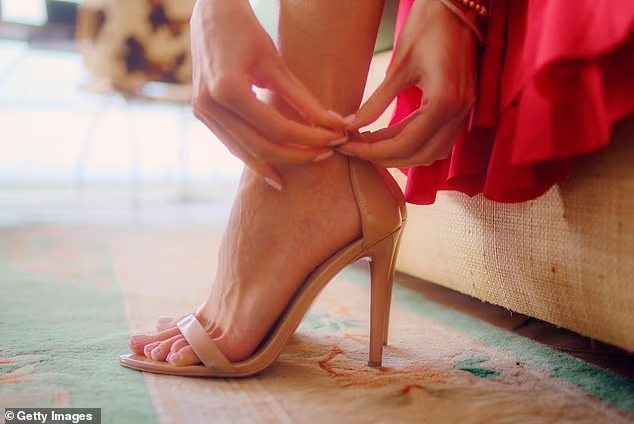
'Ozempic feet' are surprisingly common; fat loss on the sole of the foot causes more pressure on the ball and toes, meaning walking in heels can be especially painful for those suffering it

Of all the side-effects of weight-loss jabs, this might just be the strangest one yet: Welcome to the rise of ‘Ozempic feet’.

For some, the weight loss of dropping down a dress size also sees them develop painful foot conditions.

Jatender Chaggar, senior foot health practitioner at the Foot-Map clinic, says he’s seen a 4 per cent increase in ‘patients experiencing rapid “foot fat” loss due to GLP-1 weight-loss medications’.

The fat loss on the sole of the foot is like an inflatable being slowly let down, resulting in more pressure on the ball and toes.

Advertisement

Although there is no strong evidence that GLP-1 medications directly cause foot problems, the physical changes associated with major weight loss, including reduction of naturally cushioning fat pads, changes in muscle mass, gait and pressure distribution, may result in stress and pain on certain areas of the foot.

So if you’ve lost weight on the jabs and are struggling in your mules this summer, that might be why.

‘Ozempic feet’ are surprisingly common; fat loss on the sole of the foot causes more pressure on the ball and toes, meaning walking in heels can be especially painful for those suffering it

Advertisement

This loss of padding can also be exacerbated by hormonal shifts in menopause and reduced collagen from ageing. Leading podiatrist and brand founder Margaret Dabbs warns: ‘As we age, the fat pads in our feet can migrate and become thinner and GLP-1s may potentially reduce soft tissue support further. This natural cushioning normally helps absorb impact when walking and supports the foot structure.’

Which is why many of us – particularly when wearing high heels – find it more tiring being on our feet as we get older.

So, what is the best way to ease Mounjaro or Meno Foot without resigning yourself to a life of slippers? Here’s what our experts advise…

1. Get support

Dabbs says, ‘There is not just one cause of heel or metatarsal pain [a burning or tingling on the ball of the foot] and your first point of call should be to book a podiatrist appointment for a full diagnostic assessment (available from £85 at margaretdabbs.co.uk).’

Advertisement
Leading podiatrist and brand founder Margaret Dabbs says the natural cushioning in our feet becomes thinner with ageing, but custom shoe inserts or foot creams can help

Leading podiatrist and brand founder Margaret Dabbs says the natural cushioning in our feet becomes thinner with ageing, but custom shoe inserts or foot creams can help

Moulded orthotics, custom-made shoe inserts to support the foot and provide shock absorption, are also worth investing in (assessments from £90, prescription orthotics from £400).

2. Fill your feet

‘The plantar fat pads act as shock absorbers,’ says Dr Manav Bawa, Medical Director of Time Clinic. ‘So when that cushioning reduces, patients may experience increased pressure in the heel and forefoot, tenderness on hard surfaces, or a sensation that their feet tire more quickly. 

‘In some cases, it can even unmask or worsen underlying issues such as metatarsalgia [pain on the ball of the foot] or plantar fasciitis [stabbing pain on the bottom of the heel linked to repetitive strain].’

Advertisement

Dermal filler, such as Juvéderm, can replace cushioning. Often known as a ‘Loub Job’ – a phrase inspired by Christian Louboutin heels – filler is placed into the heel and ball of the foot to improve shock absorption (from £400). The results can last 6-12 months with maintenance treatments once or twice a year. 

Filler in the feet must be administered conservatively by an injector with strong anatomical knowledge, says aesthetician Dr Sophie Shotter, ‘Because the tissues are thinner and there are important blood vessels and structures that can be at risk if product is placed incorrectly.’ She adds: ‘It’s also important to understand that addressing volume loss doesn’t change the underlying cause, so maintaining stable weight and wearing supportive footwear is just as important.’

Chaggar, whose clinic is linked to Altimus sportswear in Kensington, recommends trainers such as Asics Metaspeed or Asics Kayano (£180, altimusoutdoor.com).

3. Keep fit

To ease ‘Ozempic feet’, Dabbs recommends foot exercises twice a day. These reduce stiffness, improve circulation, maintain joint flexibility and strength. Try ten reps for each foot, which only takes three to five minutes.

Advertisement
Foot exercises, including using a resistance band, can reduce stiffness and increase strength

Foot exercises, including using a resistance band, can reduce stiffness and increase strength

  • Toe raises/heel raises: Stand with feet hip-width apart. Slowly lift your heels off the ground, balancing on your toes for three seconds, then lower.
  • Toe curls: Sit on a chair, place a towel on the floor, and try to scrunch it toward you with your toes. Hold the position for three seconds then relax.
  • Ankle circles: Sit or lie down. Lift one foot and slowly rotate the ankle clockwise, then counterclockwise.
  • Heel-to-toe walking: Walk in a straight line, placing your heel directly in front of the toes of the other foot each step.
  • Resistance band exercises: Loop a resistance band around the ball of your foot. Push your foot away (plantarflexion) or pull it toward you (dorsiflexion).
  • Calf stretch/Achilles stretch: Stand facing a wall, one foot behind the other, heel on the ground. Lean forward to stretch the back leg. Hold for five seconds and then alternate.

4. Cream matters

‘Skin on our feet is 15 times thicker than other parts of the body, which is why foot lotion is advised,’ says Dabbs. 

‘Applying with a short massage helps circulation, bringing nutrients to the area and relieving muscle tension.’

Pedicurist Bastien Gonzalez (pedicure £145, mandarinoriental.com) says fat pads can be plumped with massage.

Try Margaret Dabbs Miracle Foot Cream (£24, margaretdabbs.co.uk), The Body Shop Peppermint Invigorating Foot Cream (£12, thebodyshop.com) and Reverence de Bastien Le Baum (£95, niche-beauty.com).

Advertisement

5. Audit your socks

‘When fat pads thin out, the nerves on top of the foot become hypersensitive,’ points out Chaggar.

‘Switch to seamless, moisture-wicking socks to reduce friction and prevent the burning sensations (paresthesia) often triggered by fabric rubbing against the skin.’

Try Bamboo Ankle Socks from Panda Food (£18.71, pandafood.co.uk).

Source link

Advertisement
Continue Reading

NewsBeat

Harry Potter star ‘earns more on OnlyFans in one year than her entire acting career’

Published

on

Harry Potter star ‘earns more on OnlyFans in one year than her entire acting career’
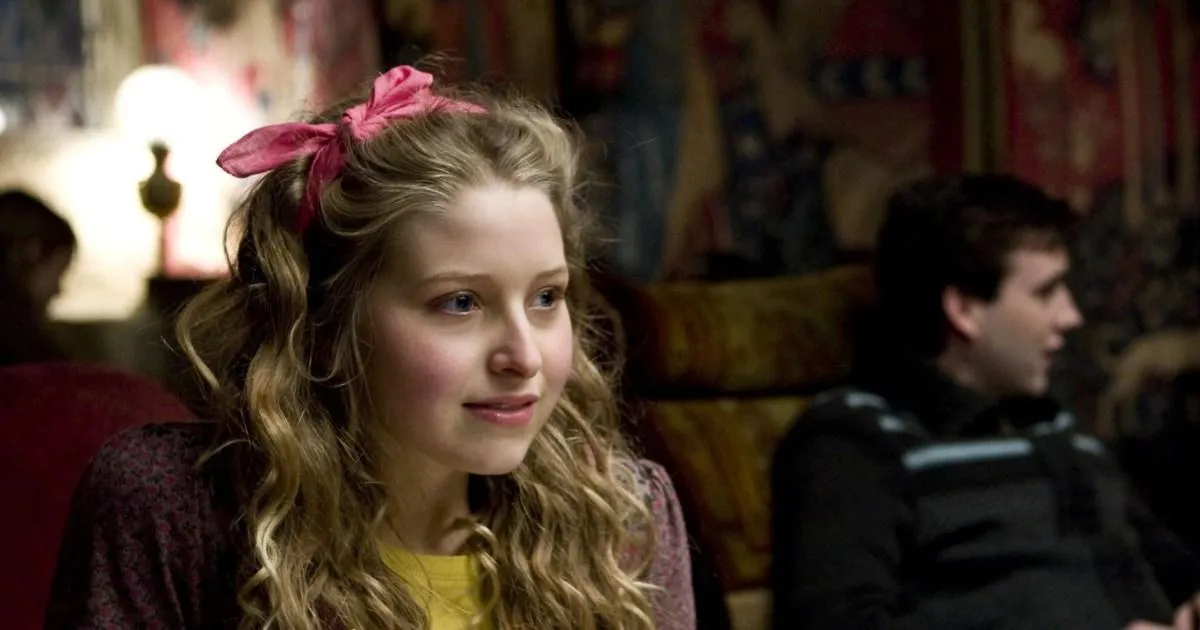
Jessie Cave played Lavender Brown in the Harry Potter films (Picture: Warner Bros. Pictures)

Former Harry Potter child star Jessie Cave has spoken about turning to OnlyFans after her acting career slowed down. 

The 39-year-old played Lavender Brown in the Harry Potter films as a teenager and went on to land roles in Call the Midwife and on the West End.

But the mother-of-four has now detailed how work started to slow down last year and she didn’t know where to turn.

In a new interview, Cave said she couldn’t afford to do a new degree and couldn’t get a job in a supermarket, because of childcare costs and fears of customers ‘shouting Harry Potter spells’ at her.

Advertisement

Describing it as a ‘point of complete desperation,’ Cave told The Times she had a ‘breakdown’.

In March 2025, she joined the mostly-explicit content sharing platform OnlyFans, with a viral first post that got her 3,500 subscribers. 

LONDON, ENGLAND - NOVEMBER 21: (FOR EVENING STANDARD USE ONLY) Jessie Cave attends the press night performance of
Cave joined OnlyFans in March last year and posts hair content to the platform (Picture: Jed Cullen/Dave Benett/Getty Images)
HCE4CF HARRY POTTER AND THE HALF-BLOOD PRINCE, from left: Rupert Grint, Jessie Cave, 2009. ?Warner Bros./courtesy Everett Collection
The mother-of-four said she reached a ‘point of complete desperation’ (Picture: Alamy Stock Photo/Everett Collection Inc)

Cave posts fully clothed ‘hair content’, in which she brushes her hair, which falls to her pelvis, while dressed as characters including Lavender Brown.

‘I thought I’d make five grand, be on it for a few months and it would buy me time to work out what we’re going to do,’ she told the publication. ‘But it’s now been over a year and a half and it’s genuinely saved our lives.’

She added: ‘My rule is the hair is the main character. That’s how I justify it. It’s literally about hair: the texture of hair. The fetish. It’s very, very niche.’

Advertisement

Cave said her subscribers pay $6 a month, with additional revenue coming from paid-for messages. She said that in one day, she made £15,000 and that in one year, she’s earned more than during her entire acting career.

What has Jessie Cave acted in?

Before scoring the Harry Potter role, Jessie Cave acted in the CBBC drama Summerhill in early 2008.

She landed Lavender Brown through an open casting call, beating 7,000 other girls for the Harry Potter and the Half-Blood Prince part.

Cave has continued to notch several IMDb credits in the years since, including in Industry, Am I Being Unreasonable? and Black Mirror.

Advertisement

Her longest-running roles have been in the TV shows Buffering, an ITV sitcom created by and starring Iain Stirling, and the Sky sitcom Trollied, about a fictional supermarket’s staff.

Jessie Cave 'Sunday Brunch' TV programme, London, Britain - 22 Nov 2015 Mandatory Credit: Photo by Steve Meddle/REX (5412315en)
Cave does not do explicit content, but said she routinely gets asked to (Picture: Steve Meddle/Rex/Shutterstock)

Earlier this year, she underwent breast enlargement surgery, which she said her subscribers paid for and something she did in part because her hair ‘can only do so much’.

While Cave does not do explicit content, she said she does routinely get asked to do ‘gross stuff’ on the platform, which she admitted gets to her. 

Advertisement

The actress also told the publication she suspects she will only have a limited time on the platform, given that performing explicit content is a line she will not cross.

However, said that she anticipates more artists will sign up to OnlyFans in the future. Kate Nash and Lily Allen have both previously admitted to turning to the platform to subsidise their music careers.

Advertisement

Source link

Advertisement
Continue Reading

NewsBeat

Daughter of murder victim urges court not to release killer until he reveals where her mum’s body is

Published

on

Daily Mirror

EXCLUSIVE: The family of Linda Razzell will this week appeal to the High Court to keep a mum’s killer behind bars as he has refused to tell them where her body is located

The daughter of a murder victim will urge the High Court this week not to release the killer from prison until he reveals where her mum’s body has been hidden.

Advertisement

Mum-of-four Linda Razzell, 41, vanished without trace on her way to work in Swindon, in May 2002 and was last seen parking her car. Her estranged husband Glyn Razzell, now 67, was arrested when traces of her blood were found in the car he was using. He was convicted of murder and sentenced to life with a minimum tariff of 16 years.

Now, the eldest of their four children, Cat, 38, will tell a High Court hearing that her father is not safe to be released. She believes Razzell “still clearly poses a risk to the public” and “demonstrates continuing cruelty” to his children by not telling them where he hid their mum’s body.

In a statement on behalf of the family she said: “We still do not know where our mother’s body is. Our father continues to deny he killed her, has done nothing to address his abusive behaviour, and refuses to tell us what he did with her remains.

Advertisement

“We do not believe a convicted murderer should progress through the prison system while denying the offence, showing no remorse, and withholding the only information that could bring our family any measure of peace or closure.”

She adds: “I don’t have a wish for my dad to die in prison. This is about giving us information that we need and it’s about us, as a society, saying ‘this is unacceptable and there will be repercussions’. Because, currently, failing to disclose a body doesn’t carry meaningful or effective consequences.”

Following their mother’s murder, the four children, all under 14, were lovingly raised by close members of Linda’s family.

Linda and Razzell, originally from Somerset, had been in the middle of divorce proceedings when she went missing. She had visited a local bank with a court order to freeze his bank accounts the week before she vanished.

Advertisement

At first he made a public appeal for her return, before being arrested and charged with her murder.He was found guilty after a trial and sentenced to life in prison, with a minimum term of 16 years, which expired in 2019.

Razzell applied for parole and was refused three times – including in 2021 when he became the first prisoner to be denied parole under Helen’s Law.

Helen’s Law made it a legal requirement for parole judges to consider non-disclosure by a killer of a body’s remains. It was established after a long campaign by Marie McCourt – mother of missing murder victim Helen, who was killed in 1988.

Advertisement

But on the fourth hearing in January 2026, the Parole Board decided to release him, ruling: “…the panel was satisfied that imprisonment was no longer necessary for the protection of the public.”

However, this decision will now be reviewed by the High Court for a second judicial check, after the Secretary of State for Justice used the new parole referral power, established in December last year. It is a discretionary power that can only be used if it is believed that release would undermine public confidence in the Parole Board. This is the first time a referral has resulted in a High Court hearing.

Cat and other family members will attend the two-day hearing in person to read their Victim Impact Statements. Until now, they have endured their grief in private. But finding themselves in the ‘last chance saloon’ has compelled them to speak out.

Cat said: “Having to do this publicly, just in the hopes of getting some kind of justice is very difficult. But I don’t believe the Parole Board has properly taken into consideration the spirit of Helen’s Law in deciding to grant parole to a man who has done nothing to help his victims grieve the whole time he has been detained?’

Advertisement

“It’s a case of ‘You killed your wife. You took away four children’s mother, you’re not going to say what you did. Here’s 16 years, we’ll keep you in prison for a further five or so, and then you’re free to go.’ That’s not alright, is it?

“There is no evidence that my father is any less dangerous now than on the day he committed that crime. So why is it that he is eligible for parole and he’s been provisionally granted it? That’s something that I think represents a real failure.”

Linda, she said, experienced abuse that was physical, emotional and financial after the couple separated. “When you’re 12 years old, you don’t really understand the fullness of what’s happening in this adult scenario that’s really toxic. But what I could understand is that my dad was hurting my mum.

“Twice, she took my dad to court for assault – but he was acquitted, leaving him free to kill her in the ultimate act of control.”

Advertisement

The family were stunned that the Parole Board recommended release – while acknowledging that Razzell has information about where and how his wife’s remains were disposed of which he has not disclosed, had used significant violence against her on several occasions and could reduce the family’s pain ‘in a moment’ by saying what he did after the murder.

Campaigner Marie McCourt, now 83, is also urging the decision to be reversed. In a statement issued by the family, she said: “I was appalled to learn of the decision and urged ministers to challenge it. My daughter’s killer was released, just before Helen’s Law was adopted, despite hiding her body. It almost destroyed me.

“Human rights laws ruled out No Body No Parole that I had originally fought for. I was advised that a legal requirement to consider non-disclosure was the next best thing – and, once in place, could be tightened. Over six years, I have called for set questions to be asked of killers in hearings and the involvement of an independent forensic psychologist – but to no avail.”

Marie is now calling on Westminster to follow the lead of Northern Ireland which is introducing a ‘stronger’ version of Helen’s Law where hiding a body will result in a longer sentence.

Advertisement

Cat told how they have not been able to grieve properly, explaining: “It is a ritual – both to honour who that person was and for the living to remember the dead. Taking that away takes away a piece of the humanity of the person that died and the ability to grieve for the people that remain. And to do that to your own kids… I just can’t fathom how someone can live with the guilt.

“It might have been really difficult and extremely painful to know what happened at the time but it might have meant less suffering in the long term. Because I couldn’t properly grieve, I couldn’t properly think about what happened for a really long time until I was much older.

“The continuing impact of the decision not to tell us what happened has meant that my family’s suffering has been just extended. So aside from the need to lay somebody to rest, which is just fundamental, there’s also this greater harm that continues to ripple out.”

Prior to the time of abuse which left Linda ‘a frightened, anxious’ person, Cat has fond memories of her ‘amazing’ mum. She said: “I remember her being just an amazing, amazing, mother – thinking always of other people, being generous with her time and money. She was a fantastic cook and really emotionally intelligent.

Advertisement

“She understood what it was like to lose a parent. She lost her own mum when she was eight and, I think, wanted to show us how much she loved us. And that’s abundantly clear in the fact that, we’ve worked hard to make successes of our lives, despite the challenges. I think there’s no greater testament to her.”

Source link

Continue Reading

NewsBeat

Transfer news LIVE: Arsenal FC hijack Barcola bid; Alvarez ‘signs’; Liverpool medical; Man Utd; Chelsea latest

Published

on

Transfer news LIVE: Arsenal FC hijack Barcola bid; Alvarez 'signs'; Liverpool medical; Man Utd; Chelsea latest

The summer window continues to ramp up as the likes of Arsenal, Manchester United, Chelsea, Liverpool and Tottenham work on deals to improve their squads. The Gunners are on the lookout for attacking targets, and could reignite their interest in Julian Alvarez, amid interest in Bradley Barcola and lliman Ndiaye, while Ezri Konsa and Tottenham captain Cristian Romero are of interest in defence.

Source link

Continue Reading

NewsBeat

Man City vs Atletico Madrid LIVE goal and score updates as Reis and Savinho start final friendly

Published

on

Manchester Evening News

Maresca’s team will be out soon, so let’s see how it differs from the XI that he used in training. That was: Donnarumma, Nunes, Dias, Reis, Gvardiol, Kovacic, Reijnders, Foden, Savinho, Semenyo, Marmoush

They were working meticulously and it feels like Maresca will want to see what he saw yesterday on the ball. That is a strong team that wouldn’t look out of place starting the Community Shield given the absences City have got.

Source link

Advertisement
Continue Reading

NewsBeat

Tribe’s management deal with Harrah’s can’t be enforced with vacancy at federal watchdog

Published

on

Tribe's management deal with Harrah's can't be enforced with vacancy at federal watchdog

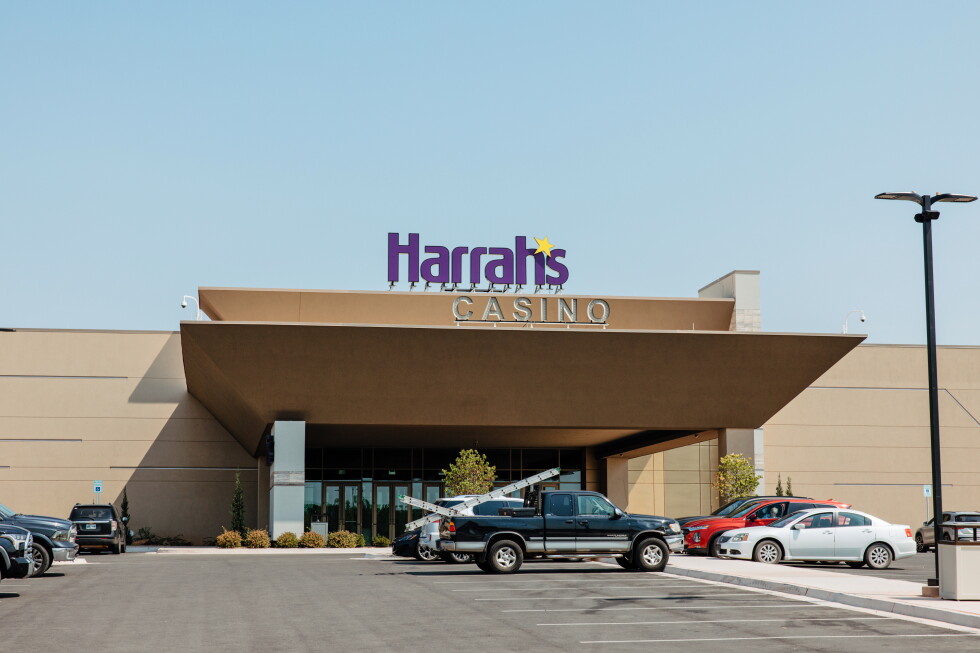
ALBUQUERQUE, N.M. (AP) — On opening day at the Iowa Tribe of Oklahoma’s new Harrah’s-branded casino, the tribe’s chairman watched customers pack the gambling floor while a queue of cars spilled out of the parking lot.

“We couldn’t let them in because we were so full,” Chairman Jacob Keyes said. “That’s a direct impact from the Harrah’s name.”

But a vacancy in Washington is preventing the tribe’s partnership with the gambling giant from moving beyond branding. Plans for Harrah’s parent company to take over day-to-day management of the casino in Chandler, Oklahoma, stalled after it opened in April, because no one is at the helm of the federal commission that oversees tribal gambling.

The last chairperson of the National Indian Gaming Commission stepped down from the role in January. President Donald Trump has not nominated anyone to fill the vacancy. Absent a chair, the commission is unable to perform some key responsibilities, like enforcing legal and safety violations, approving new tribal gambling laws and certifying management agreements between tribes and casino operators.

Advertisement

Industry leaders say the agency’s inertia risks delaying business deals, weakening oversight and leaving tribes without a key advocate in Washington as they grapple with an emerging threat posed by online prediction markets.

“At this crucial time, the (National Indian Gaming Commission) is operating with one arm tied behind its back,” said Jonodev Chaudhuri, a former NIGC chair from 2013 to 2019 and a citizen of the Muscogee (Creek) Nation. “That’s a very precarious position for tribes and Indian gaming.”

There’s a lot at stake for tribes that rely heavily on casino revenue to fund healthcare, housing, education and other vital services. Tribal gambling brought in a record $46 billion in 2025, nearly triple the annual casino revenue of gambling powerhouse Nevada.

The commission’s core powers are vested in its chair

With its Harrah’s contract stuck in limbo, the Iowa Tribe’s small government staff finds itself managing the 175,000-square-foot (16,258 square-meter) casino, a mammoth task it had intended to outsource.

Advertisement

“It’s discouraging. We’re paying a fee and not getting the full value,” Keyes said.

The decision to outsource management was strategic: Harrah’s branding would bring in more business than existing staff could accommodate. Instead, staff has to balance management with other priorities like preparing tribal budgets and overseeing social programs, Keyes said.

The three-member gaming commission was formed in 1988 to regulate casino-style gambling and promote economic development on tribal lands. Some 250 tribal governments across 29 states now operate 545 gambling facilities, the commission said.

Under federal law, its enforcement powers are vested solely in the chairperson. Industry leaders say its inability to cite casinos for violating federal law or force the emergency closure of unsafe facilities is particularly troubling.

Advertisement

In a typical year, the commission issues several citations to tribes for operating casinos on unauthorized lands, failing to submit required financial statements, misusing revenues and other violations. The commission’s last enforcement action was issued on Jan. 12 — the same day acting chairperson Sharon Avery’s term expired. She remains on the commission.

The commission declined an interview request and said in an emailed statement that tribal officials and its field staff provide “excellent regulation” amid the leadership gap. But Steven Light, an expert in tribal gambling law at the University of Nevada, Las Vegas, said the lack of enforcement power could discourage investment in tribal gambling and slow business growth.

Advertisement

“Markets function best when there’s stability and certainty around processes and rules,” Light said.

Prediction markets have emerged as a new threat to tribal gaming

The commission vacancy comes as the popularity of online prediction markets like Kalshi and Polymarket explodes. Tribal leaders fear those platforms, which allow users to wager on the outcome of virtually any event, could violate their sovereignty and take a bite out of gambling revenue.

“Every dollar generated by Indian gaming goes to fund healthcare for our people, education for our children, housing for our elders,” said David Bean, chairman of the Indian Gaming Association and a citizen of the Puyallup Tribe.

At least eight tribes have sued prediction market platforms, alleging they accept bets from tribal lands and in states where tribes have exclusive gambling rights in violation of the Indian Gaming Regulatory Act, which the gaming commission is tasked with enforcing.

Advertisement

Prediction markets argue their users are engaging in futures trading, not gambling, and dispute claims that they are circumventing regulation.

The commission chairperson typically serves as an advocate for the tribal gambling industry in Washington, according to former commissioners and staffers. Yet it’s been conspicuously silent while the federal government weighs how to regulate prediction markets, said Joe Valandra, the commission’s chief of staff from 2005 to 2007 and a citizen of the Rosebud Sioux Tribe.

James Siva, who leads the California Nations Indian Gaming Association and is vice chairman of the Morongo Band of Mission Indians, said the Trump administration’s support of and business ties to the prediction markets industry could explain why it hasn’t filled the vacancy.

“These things are happening in conjunction with each other,” Siva said in April at a news conference with the Indian Gaming Association. “It is not a coincidence by any means.”

Advertisement

The leadership gap spans two administrations

The commission’s last Senate-confirmed chairperson termed out under former President Joe Biden without a successor in place.

A White House spokesperson called the commission a “valued board” but did not say when a new nomination will be made.

In April, Trump appointed Assistant Secretary for Indian Affairs Billy Kirkland, a citizen of the Navajo Nation, to the commission. That’s raised questions about potential executive branch influence over an agency designed to be independent.

“This crosses that threshold in an uncomfortable way,” said Shannon O’Loughlin, the commission’s chief of staff from 2015 to 2017 and a citizen of the Choctaw Nation of Oklahoma.

Advertisement

Keyes said a crucial opportunity to develop his tribe’s economy hangs in the balance. He doesn’t see the commission vacancy as partisan play.

“I don’t want to sound like sour grapes, but when have Native American issues ever been prioritized by the federal government?” he said.

Advertisement

Source link

Continue Reading

Trending

Copyright © 2025