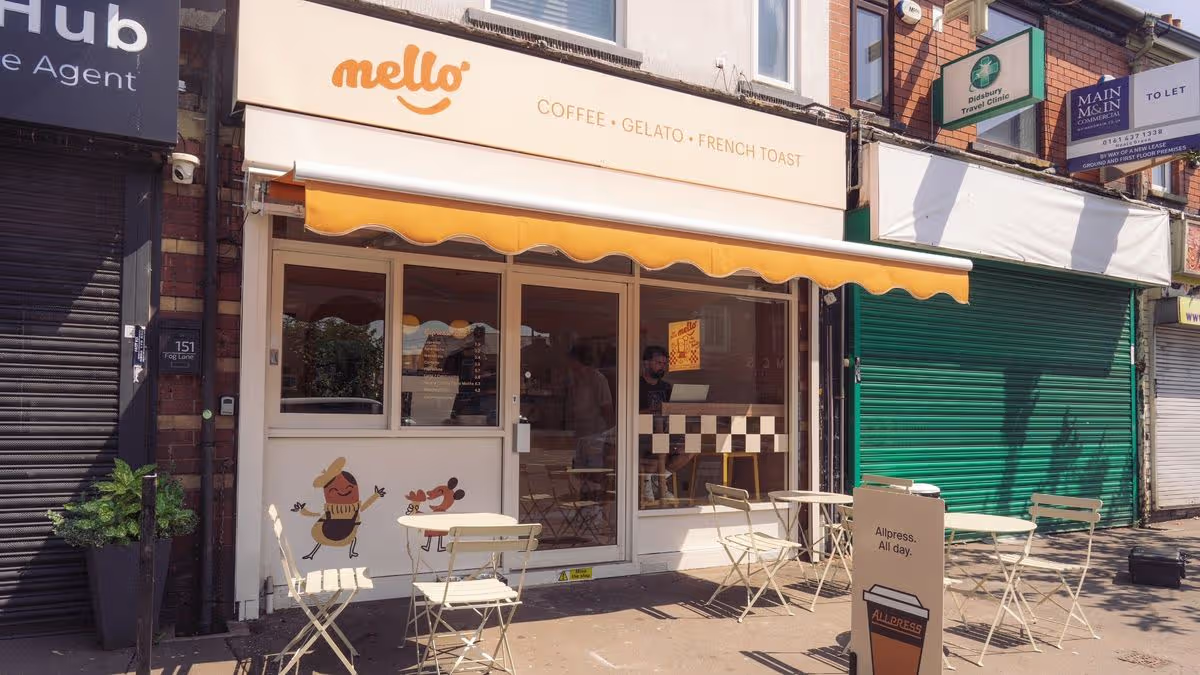
The team behind a popular Didsbury brunch spot have announced plans for a New York-inspired gelato and French Toast café opening this weekend.
Advertisement
Caramello first opened on Whitechapel Street in the south Manchester suburb ten years ago and has become known for its patisseries, waffles and gelato ever since and has been hailed as the first halal brunch spot in the city.
Now, founder Sham Sadique has unveiled details of his next site Mello, which will open on Fog Lane this Saturday (June 27). Inspired by the coffee shops in the Big Apple, the venue will serve up ‘proper’ Italian gelato and coffee, as well as overloaded French Toasts and pastries.
Click here for the latest on Manchester’s food & drink scene, gigs and more in our CityLife newsletter
“Mello has been a dream of mine since I started Caramello,” Sadique explained. “I always wanted to merge my love for New York and Italy as a coffee and dessert brand, and we’ve finally made it happen. I can’t wait for you all to try the new French Toast too.”
Advertisement
The bright spot has been created to bring the buzz of New York and the vibes of the city together through an uplifting design that aims to bring a ‘bit of sunshine on a grey Manchester day all year round’.
To coincide with the launch on Saturday, Mello will be giving out hundreds of prizes to celebrate the ‘start of something delicious’ – including free pots of gelato as well as tote bags, t-shirts and more.
On June 27 from 12pm to 4pm, guests will be able to spin the prize wheel to determine their welcome gift – with prizes also including French Toast and drinks. There is no purchase necessary.
Advertisement
The arrival of Mello comes as Didsbury experiences a period of glory for its pubs, restaurants, bars and cafes. Just this month, Irish bar Kennedy’s was named one of the best town pubs in the entire country, whilst Albert’s in Didsbury was recently named as one of the top spots for outdoor dining.
Mello will be open 9am to 5pm on Monday to Friday, 9am to 6pm on Saturday and 9am to 5pm on Sunday.
Mello is on 153 Fog Lane, Manchester, United Kingdom M20 6FJ.
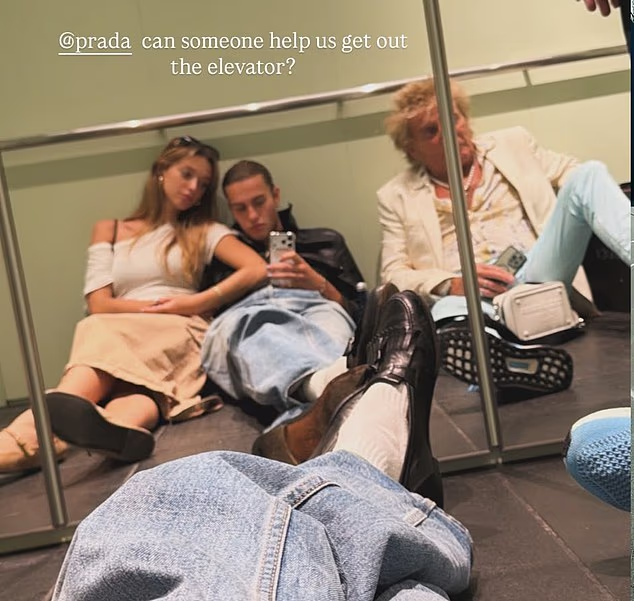
Sprawling on the floor of a lift looking hot and bothered, Sir Rod Stewart is clearly having one of those up-and-down days.
The star was getting some retail therapy at Prada with his son Alastair, 20, and Alastair’s girlfriend Mell Ratto, when the trio found themselves trapped in the store elevator – and clearly wishing they’d taken the stairs.
Despite the Maggie May singer being one of the world’s biggest music stars – having sold more than 100 million records and earned two inductions into the Rock & Roll Hall of Fame – help was not immediately at hand.
Eventually, the trio gave up waiting, sat down on the floor and got in touch with Prada via Instagram with the understated plea: ‘Can someone help get us out of the elevator?’
Advertisement
While being trapped in a lift is a nightmare for many, Sir Rod, 81, and company appeared more bored than panicked as they waited to be rescued during the drama last week.
Perhaps they were thinking of ways to describe their plight by reimagining some of the star’s lyrics – Wake up Prada I think I got something to say to you (for instance).
It’s the latest in a string of minor setbacks for the singer. In June, he was forced to use an oxygen tank during a concert in West Valley City, Utah, after almost fainting on stage, taking breaths from the apparatus throughout the remainder of the performance.
The drama came just a week after he cancelled a concert in California citing health concerns, only to fly by private jet to Boston 24 hours later to watch Scotland take on Haiti in the World Cup.
Advertisement
The decision did not sit well with fans who had been expecting to see him perform.
Join the discussion
Should celebrities get special treatment during emergencies, or should they wait like everyone else?
Advertisement
Rod Stewart (right) was stuck in a lift with his son Alastair last week in a Prada store
Suki rocks the glam look at Lollapalooza
Most people would be happy to succeed in one career – but not Suki Waterhouse. Not only is she a supermodel, but she’s also an in-demand singer, appearing on Friday at the Lollapalooza festival in Chicago in a Seventies rock-inspired outfit of tiny hotpants and pink, ruffled cape.
She has revealed several tracks on her third album, Loveland, were inspired by her Hollywood actor fiance Robert Pattinson – including Notting Hill, about the boujie flat where the couple fell in love, and one about missing the Batman star while he was travelling, called Weirdo. Now that’s a pet name if ever there was one!
Suki Waterhouse performed during the 2026 Lollapalooza Festival at Grant Park on July 31
Advertisement
Dua is a Tua star
Forfet Dua Lipa… meet Tua Lipa. That’s the nickname given to the star after her insistence on having tulips at her wedding in June.
The tulip season runs from March to May but that didn’t deter Dua, 30, who held a huge wedding party in Sicily with actor hubby Callum Turner, 36.
‘The flowers had to be imported at vast expense,’ my source says. ‘The wedding florists are calling her Tua Lipa.
Dua Lipa and Callum Turner celebrated their wedding in Palazzo Valguarnera Gangi in Italy
Advertisement
Lila’s solo
Lila Moss looked every inch like her supermodel mother Kate in Ibiza last week, trying on feather mini-shorts and bejewelled corsets at trendy clothes shop Annie’s Ibiza.
But my spies tell me Lila, 23, was without one usual accessory… her on-and-off boyfriend Yoni Helbitz.
‘Lila has outgrown him,’ my source tells me. The pair have already broken up and got back together once this year, but my source confirms: ‘This time, it’s for real.’
Lila Moss and Yoni Helbitz attended Wimbledon Tennis Championships on day seven on July 9
Advertisement
Do all wizards look the same? Fans often mix up Gandalf actor Sir Ian McKellen and the late Michael Gambon as Dumbledore.
Sir Ian recalls Gambon once admitting that: ‘They hand over their wretched 8×10 [photos] of you and I just sign your name.’
Ian McKellen, pictured playing Gandalf on the left, is being mixed up with Michael Gambon, who plays Dumbledore in the Harry Potter and the Goblet of Fire
Congratulations to David Linley’s daughter Margarita Armstrong-Jones, 24, who has won a coveted spot at Mayfair’s Dover Street Market exhibition.
Advertisement
Princess Margaret’s granddaughter, who makes Matita Jewellery, has finished a tough course in her craft at Alchimia, in Florence.
Lady Margarita Armstrong-Jones attended Tatler’s Little Black Book Party in November 2023
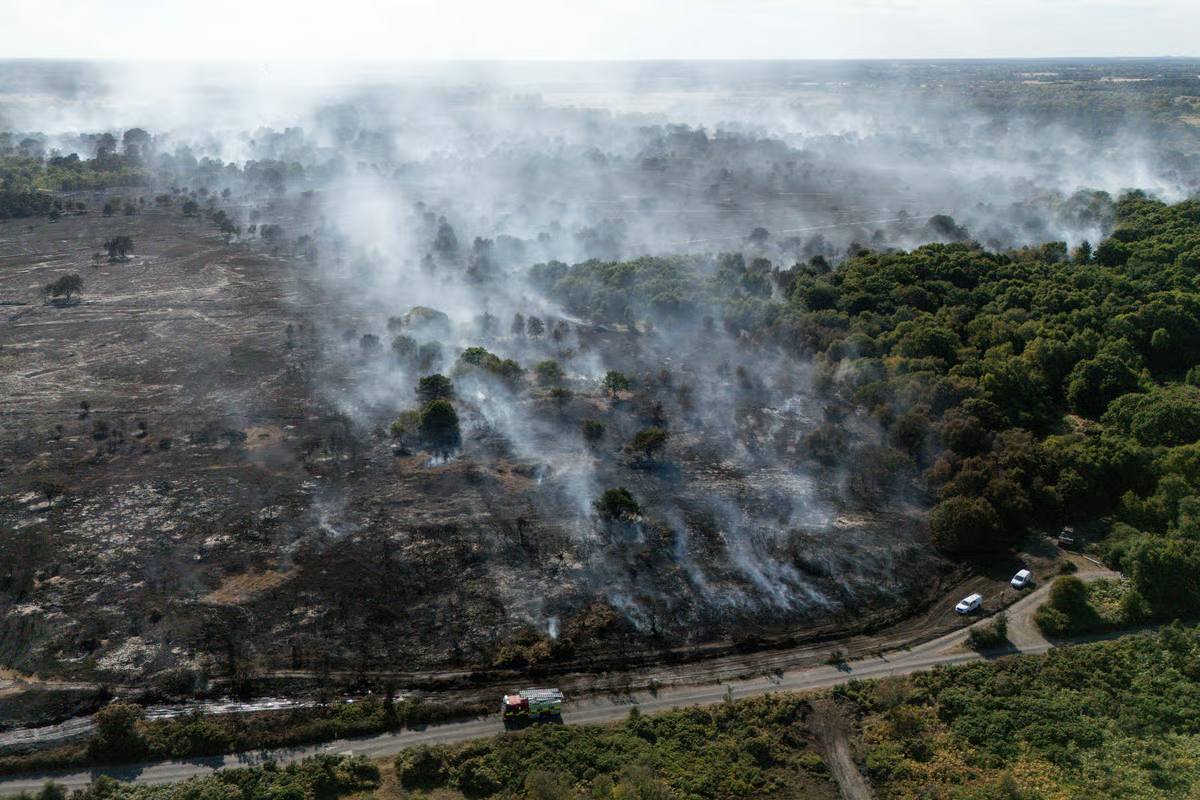
Crews in Lincolnshire, Derbyshire, Cheshire, London, North Wales, Yorkshire, Co Durham and Darlington, Berkshire, Leicestershire, Bedfordshire, Greater Manchester, Hampshire and the Isle of Wight, Humberside, Dorset and Wiltshire, Devon and Somerset, Nottinghamshire, Cambridgeshire, Kent, Merseyside, West Sussex, Surrey, and Norfolk have all reported dealing with fires in the open.
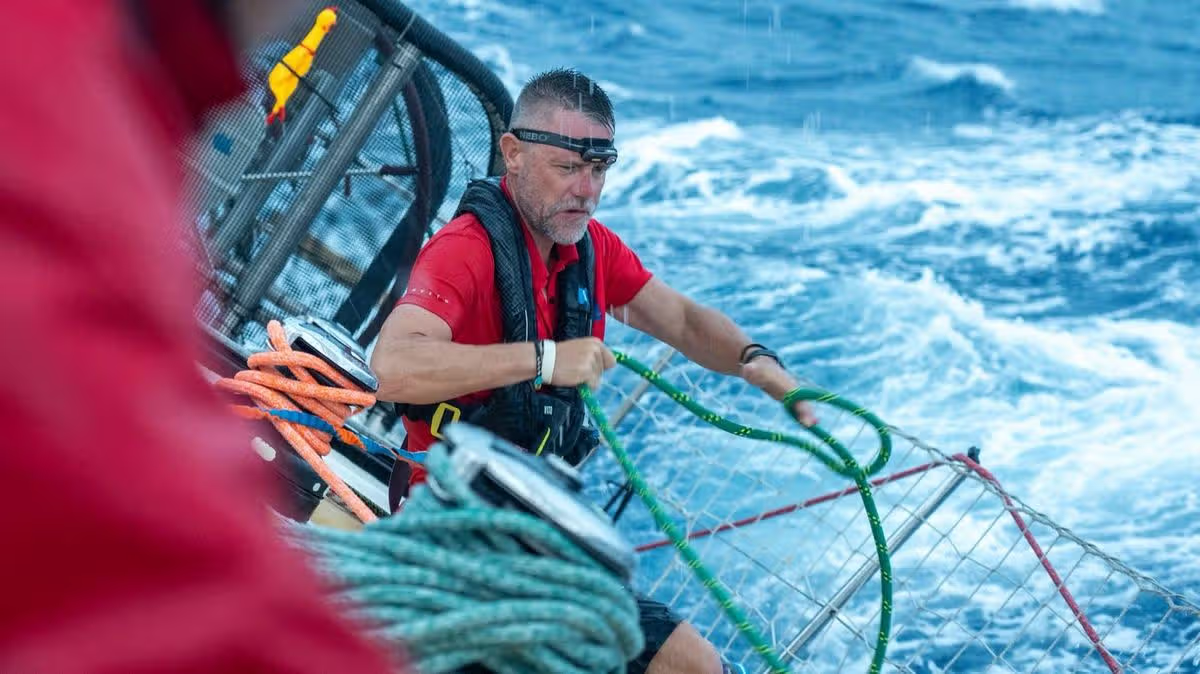
Skipper Gav Rees and his crew came second in an 11-month round-the-world Clipper race
A Welsh sailor is back from the voyage of a lifetime after 11-months at sea braving 70mph winds, 15 metre waves, sharks and medical emergencies navigating the globe.
Advertisement
Gav Rees, from Abergavenny, was skipper for a crew which changed along the route for The Clipper Round the World Yacht Race and included some who had never sailed before ranging in age from 18 to 75.
Racing on the the 70ft yacht, The London Business School, they took second place in the legendary Clipper race, the only round the world race which admits people who have never sailed before. Sign up for our free daily briefing on the biggest issues facing the nation sign up to the Wales Matters newsletter here.
Gav, a father-of-two, skippered the boat, competing against nine other identical racers. He was also acting chief medical officer and engineer – all on no more than four hours sleep a night and no showers for the entirety of the near year-long voyage.
“I was acting doctor, engineer, meteorologist and skipper,” says Gav, who left his job with a pharmaceutical company to take part in the race, sometimes dubbed the toughest endurance challenge of its kind.
The crew crossed oceans from Europe, to Africa, Australia, Asia and America, skirting the Southern Ocean near Antarctica and in near tropical conditions around the Philippines.
Covering 45,000 nautical miles, equivalent to more than 50,000 land miles, they faced down raging storms, waves the height of houses, broken sails and a first mate with a broken leg.
Magical moments included pods of whales filling the Southern Ocean near Antarctica at sunset, a flock of 10 booby birds joining the vessel for a stretch and seeing dolphins and albatross as they headed through some of the most remote waters on the planet.
Advertisement
Christmas dinner on the waves was cooked on a four ring hob in a galley kitchen the size of a phone box but was complete with turkey, ham, roasties and gravy.
It was harder for Gav to keep track of the Welsh rugby and World Cup football scores with satellite Wi-Fi covering just one email and phone for the vessel.
The Clipper Round the World yacht Race is the only event of its kind that trains everyday people to sail around the world on 10 identical racing yachts. The race is split into eight legs, with race crew choosing to take on one, multiple or all eight of the legs.
Lou Boorman, from Haverfordwest, who now lives in Malta, skippered for rival Team Tongyeong in the race.
Advertisement
For most of the challenge Gav and his crew fed on easy-to-store dried food like pasta while in cold conditions it was safe to keep nets of fruit and veg bought on the brief stops as they raced on.
The vessel, built for speed not comfort, only had enough bunks for the crew to take turns sleeping and a bucket and sponge did for washing. Swimming was banned as it could slow them and be risky while the boat sped on.
There was just one toilet, without a seat, for all 16. Staying on the toilet as the yacht surfed over house-high waves and lurched from side to side was not always easy, so the crew had to pick their moments for comfort breaks.
“Sleep is a privilege rather than a right and the toilet, flushed through with sea water by pump, can be an adventurous place to be on a boat being thrown around,” said Gav.
Advertisement
“We take the seat off because it could be dangerous. There was no shower, just a bucket and sponge and wet wipes.”
The unique sights as they crossed the Atlantic, the Southern Ocean and the Pacific made it all worthwhile, says the former officer cadet in the Royal Regiment of Wales, now the Royal Welsh Fusiliers.
Gav’s crew was made up 16 at a time from a 55-person squad, some of whom were on-board for the whole 11-months and some for as little as a week. The longest leg at sea was five weeks before they hit land.
Advertisement
All this was only possible with the strong bonding, daily crew meeting and joint ambition to have the experience of their lives whilst staying safe, says Gav.
Staying safe was at times easier than others, he admits.
The worst moment came when his first mate Zoe Longley broke her leg in several places a week’s voyage from Cape Town a few months into the race when a sail fell on her in October 2025.
“There’s no real text book for these things,” admits Gav as he describes how the main sail had then swung to one side in strong winds making the boat go backwards instead of forwards. For an hour there was a huge task righting the boat all whilst getting Zoe to safety.
Advertisement
Gav has high level first aid training and a vet was also on board and they made the decision to keep Zoe comfortable while they made it to a hospital in Cape Town, rather than have her helicoptered off.
While other boats could be contacted none nearby had any better kit to help.
“We set up sleeping bags on the floor next to her bunk, immobilised her and gave her pain relief. She had dislocated her ankle and her tibia and fibia were fractured in three places but she only had paracetamol and ibuprofen.
“It was significant and not pleasant and the boat was precarious as the sails were on the wrong side leaning the wrong way,” recalls Gav.
Advertisement
Less than four months later Zoe was out of hospital and re-joined the boat as it neared the Philippines in January 2026.
To get to this point the crew had to sail through “huge breaking waves” going from Cape Town to Australia near Antarctica.
“The Southern Sea is cold and grey but a very special place,” says Gav. “The wildlife was incredible with huge pods of whales. One evening there was a flat sea and pilot whales everywhere surfacing and blowing. It was magical.
“We also saw albatross, which are only unlucky if you kill or injure them, and lots of dolphins on the race.
Advertisement
“We saw sharks and turtles and in the Pacific booby birds took up residence on the boat. We didn’t feed them and I don’t know why they stayed, maybe for a rest. They weren’t bothered by us, they were just remarkably comfortable with 10 on one night.”
The race, which started in August 2025 in Portsmouth, took a route via Spain to Uruguay, South Africa, Australia, Indonesia, the Philippines, China, Japan and South Korea.
It went through the Caribbean to the USA and out through the Panama Canal. From there the route went across the Atlantic to Oban in Scotland and back to Portsmouth where the race ended and Gav and his crew came in second on July 25.
Advertisement
Back on dry land Gav is now wondering what to do next.
“People were selfless when conditions were awful and I was proud we had a really strong bond,” he says. “We enjoyed each other’s company and there was unity.
“These boats are designed for racing and surf up and down the waves which can be quite fun. Our top speed was 30 knots.”
It is the first time that Gav, a lifelong sailor, has done the Clipper Race, let alone skippered for it.
Advertisement
“It is a lot of responsibility and I wanted to bring everyone back safe. I have always had a passion for team work since being an officer cadet in the Royal Regiment of Wales.”
This week Gav is glad to be back home with wife Vicky and daughters Mollie, 16 and Bethan, 10 and plans to take it easy before planning his next adventure.
“I am taking a lie down in a darkened room for now,” he jokes.
Get daily breaking news updates on your phone by joining our WhatsApp community here. We occasionally treat members to special offers, promotions and ads from us and our partners. See our Privacy Notice.
It was owned by an Oxford university college for over 700 years
Across Cambridgeshire, there is history right on peoples’ doorstep, with many parts of the county dating back to ancient periods. Many of the buildings that stand in the county today are hundreds, or even thousands, of years old.
Advertisement
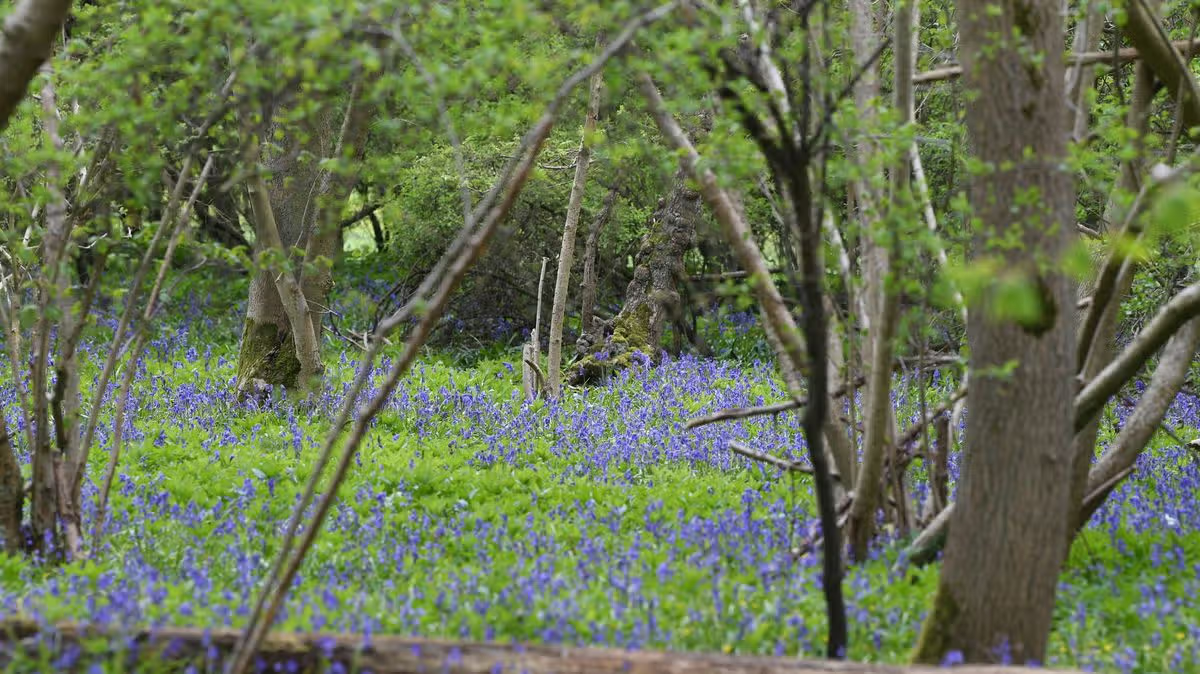
However, there are natural sights that are even older. One woodland that dates back thousands of years is the ancient Gamlingay Woods.
The 48 hectare woodland is at least 1,000 years old. The Wildlife Trust, which oversees the woods, describes it as “magical” woodland that is “atmospheric at any time of year”.
The woodland has played an important role over time for the local community. It was useful as it was used as a source for building materials and firewood. There are conifers planted across the woods that were first planted during the Second World War. However, the Wildlife Trust is gradually removing these.
An array of wildlife inhabits the woodland, including a myriad insects like the speckled wood and purple hairstreak butterflies, longhorn beetles and different species of dragonfly.
Advertisement
A Wildlife Trust spokesperson said: “Along the grassy rides and paths, clouds of butterflies rise up from the flowers, then, as dusk gathers, bats hawk along the rides to take advantage of the abundance of moths. Birds are active year-round, whether trilling warblers, tapping woodpeckers or hooting owls.”
Despite being in Cambridgeshire, part of the woodlands were once owned by the University of Oxford. From 1268 to 1959, parts of the woods were owned by Merton College.
The reserve is a popular site for people to visit. There are numerous pathways for people to enjoy a walk around including the 3km Rippengal’s walk, named after Robert Rippengal, who was an archeologist. He founded and directed a Cambridge-based company selling wood-fuelled renewable heating systems. Robert enjoyed walking through the woods. After he died, his family and friends felt naming a walk after him would be a fitting tribute.
It’s worth bearing in mind that there is no dedicated parking when planning a visit to Gamlingay Woods. The nearest parking is 200m away to the west of allotments on Church End Road.
Traders from across the North East spent the day dishing out everything from sweet treats to salty snacks and handmade artisan products.
Meanwhile, visitors soaked up the atmosphere and stocked up on goodies to take home.
At some stalls, children begged their parents to let them buy brownies, cakes and more, including fresh takes on the normal baked fayre like ‘cookie pizzas’.
Others dined on paellas packed with flavour and Yorkshire pudding wraps stuffed with meat and roasties.
Advertisement
Elsewhere, focaccias with every topping you could want, mac and cheese, foot-long Geordie Banger sausages, and warming build-your-own crumbles were on offer.
Some knocked back a tipple while others relaxed on sunloungers sipping from hollowed-out pineapples.
At the TV cookery stage, returnee Chris Bavin once again hosted events and welcomed demonstrations from celebrity chefs including Masterchef 2012 winner Shelina Permalloo and Indian chef Cyrus Todiwala.
The festival continues on Sunday (August 2) from 10am til 4pm, with more traders, live music and attractions set to draw crowds back for a second day.
Advertisement
Here are 47 pictures from the opening day of Seaham Food Festival 2026 – can you spot yourself in the crowds?:
Seaham Food Festival takes place in the town. (Image: Chris Booth)
Seaham Food Festival takes place in the town. (Image: Chris Booth)
Seaham Food Festival takes place in the town. (Image: Chris Booth)
Seaham Food Festival takes place in the town. (Image: Chris Booth)
Seaham Food Festival takes place in the town. (Image: Chris Booth)
Seaham Food Festival takes place in the town. Celebrity cook Shelina Permaloo and host Chris Bavin. (Image: Chris Booth)
Seaham Food Festival takes place in the town. (Image: Chris Booth)
Seaham Food Festival takes place in the town. (Image: Chris Booth)
Seaham Food Festival takes place in the town. (Image: Chris Booth)
Seaham Food Festival takes place in the town. (Image: Chris Booth)
Seaham Food Festival takes place in the town. (Image: Chris Booth)
Seaham Food Festival takes place in the town. Macaroons on offer. (Image: Chris Booth)
Seaham Food Festival takes place in the town. (Image: Chris Booth)
Seaham Food Festival takes place in the town. Celebrity cook Shelina Permaloo and host Chris Bavin. (Image: Chris Booth)
Seaham Food Festival takes place in the town. (Image: Chris Booth)
Seaham Food Festival takes place in the town. (Image: Chris Booth)
Seaham Food Festival takes place in the town. (Image: Chris Booth)
Seaham Food Festival takes place in the town. (Image: Chris Booth)
Seaham Food Festival takes place in the town. (Image: Chris Booth)
Seaham Food Festival takes place in the town. (Image: Chris Booth)
Seaham Food Festival takes place in the town. Macaroons on offer. (Image: Chris Booth)
Seaham Food Festival takes place in the town. (Image: Chris Booth)
Seaham Food Festival takes place in the town. (Image: Chris Booth)
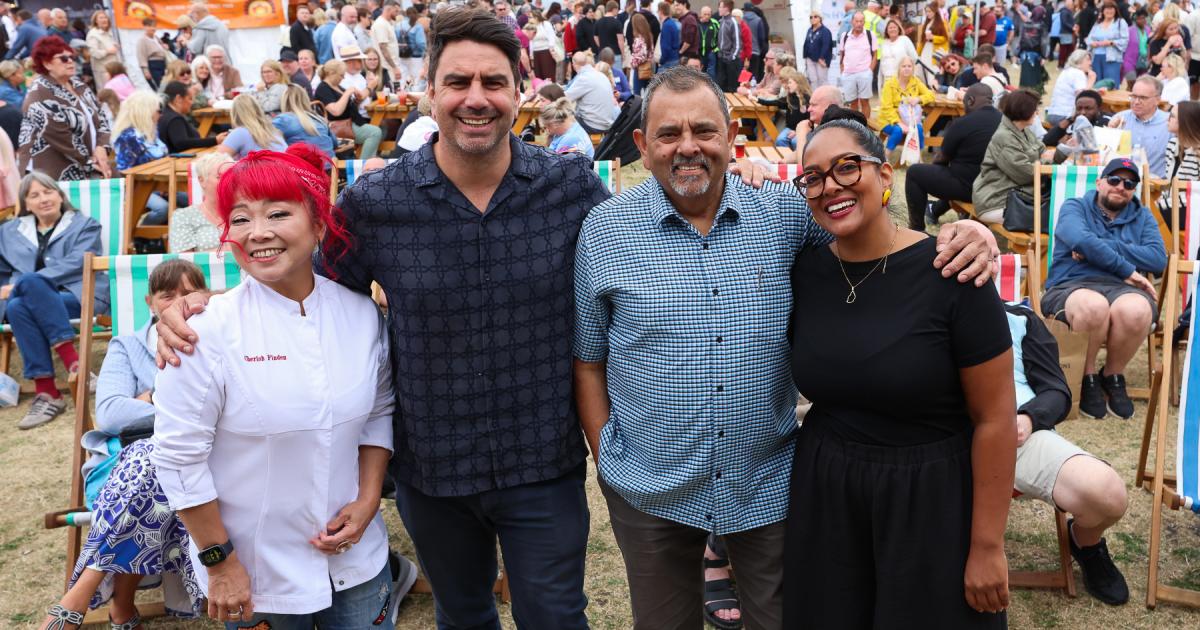
Seaham Food Festival takes place in the town. Celebrity cook Cherish Finden, weekend host Chris Bavin, and celebrity cooks Cyrus Todiwala and Shelina Permaloo. (Image: Chris Booth)
Seaham Food Festival takes place in the town. Celebrity cook Cherish Finden, weekend host Chris Bavin, and celebrity cooks Cyrus Todiwala and Shelina Permaloo. (Image: Chris Booth)
Seaham Food Festival takes place in the town. (Image: Chris Booth)
Seaham Food Festival takes place in the town. Bell & Bullock present ‘The Garden Show’. (Image: Chris Booth)
Seaham Food Festival takes place in the town. Celebrity cook Cherish Finden, weekend host Chris Bavin, and celebrity cooks Cyrus Todiwala and Shelina Permaloo. (Image: Chris Booth)
The festival continues tomorrow (August 2) from 10.00am to 4.00pm, with more traders, live
Seaham Food Festival takes place in the town. Bell & Bullock present ‘The Garden Show’. (Image: Chris Booth)
Seaham Food Festival takes place in the town. Bell & Bullock present ‘The Garden Show’. (Image: Chris Booth)
Shane Richie’s circle fear over his ‘gruelling schedule and nineties drinking buddies’ as his wife ‘walks away from their business’ – after he was arrested for drink driving
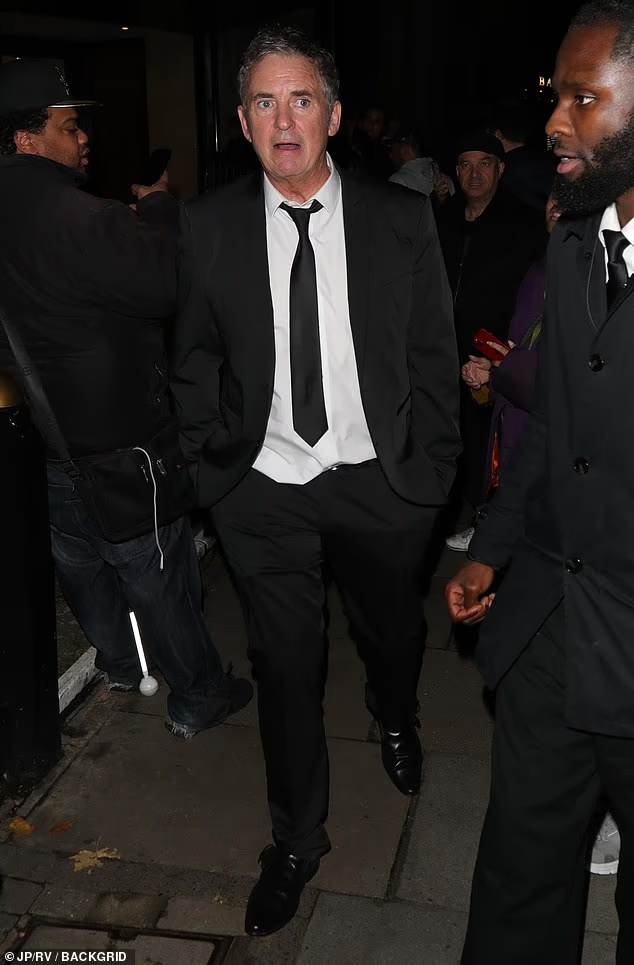
There are reportedly fears within Shane Richie‘s circle over his ‘gruelling schedule’ and ‘nineties drinking buddies’ amid claims his wife has walked away from their business together.
It emerged on Friday the EastEnders star has been charged with drink-driving after police were called following a row with petrol station staff.
Richie, 62, who plays Alfie Moon on the BBC soap, was challenged after he was seen vaping at the Tesco petrol station in Harlow, Essex.
Footage of the incident, which unfolded just after 11pm on Wednesday, saw Richie tell staff ‘I don’t give a f***’ when warned about the dangers of using any kind of smoking device around petrol.
Advertisement
Now a new report in The Sun has claimed those close to Shane think he could be ‘spiralling’ and could end up being let go from the soap.
A source told the publication: ‘This has been a long time coming. Shane has been struggling to keep up with the demands of his workload and it appears it has all got a bit much. Everyone is so concerned about him.
There are reportedly fears within Shane Richie’s circle over his ‘gruelling schedule’ and ‘nineties drinking buddies’ amid claims that his wife has walked away from their business together
Advertisement
It emerged on Friday that the EastEnders star has been charged with drink-driving after police were called following a row with petrol station staff
‘Since his character Alfie took over as landlord of the Queen Vic, he has been filming all the time because he is at the centre of the show.’
‘It is a pretty gruelling schedule. Plus he’s got a big tour in September which he has been rehearsing for. When Shane gets stressed he does like a drink, he has made no secret of that.’
The source went on to claim that BBC bosses ‘won’t take the incident lightly’, adding: ‘It wouldn’t be a surprise if they suspended him.’
Advertisement
Next month Shane is due to perform in nationwide theatre tour Prat Pack alongside Bradley Walsh, Brian Conley and Joe Pasquale but the publication claims there are fears he will be away with his ‘drinking buddies from the nineties’ for a whole month.
There are now also reported questions over his marriage to actress Christie Goddard who he wed in 2007. They have three children together.
The publication claims that Christie was terminated as director of their joint company Bluebelle Skye Productions in June so now has no control over the business empire they have run together since 2017.
A representative for Shane has been contacted by The Daily Mail for comment.
Advertisement
The row at the petrol station this week began after Richie, real name Shane Roche, drove his white Hyundai onto the forecourt seemingly with a flat tyre.
After exiting his vehicle and being spotted with a large vape by staff, the actor was told he could not smoke at the station.
Brandishing the vape, Richie replied: ‘It’s not smoking.’ Upon realising he was being filmed, the EastEnders star then claimed: ‘This is not a vape.’
Join the discussion
Advertisement
Should stars facing personal struggles step back from the spotlight or does the show always go on?
It has been claimed that his wife Christie was terminated as director of their joint company Bluebelle Skye Productions in June so now has no control over the business empire they have run together since 2017
He was previously married to Loose Women star Coleen Nolan from 1990-1999. They share son Shane, 37. Shane was unfaithful to Coleen during the marriage
After staff told him the vape ‘is a risk’, the actor, while reaching back inside his car and with his back to the employee, said: ‘I don’t give a f***.’
Advertisement
As the manager of the petrol station phoned police, claiming Richie was being ‘aggressive,’ he told the man filming: ‘Someone’s coming to change my tyre.’
Police were later seen arriving at the forecourt.
Richie was arrested and later charged with drink-driving. He is set to appear in court next month.
It is a criminal offence to smoke a cigarette at a petrol station due to the danger posed by sparks in the proximity of fuel, which is highly flammable.
Advertisement
It is not a specific offence to vape on forecourts, but firms strictly prohibit it over concerns about the same risk.
A spokesman for Essex Police said: ‘Officers were called to reports of a suspected drink-driver in Church Langley Way, Harlow, shortly before 11.20pm on Wednesday July 29.
‘On arrival, officers arrested a man. A charge of drink-driving has subsequently been authorised against Shane Roche, 62, of Surrey.
‘He is due to appear at magistrates’ court on Wednesday, September 9.’
Advertisement
Richie is best known for his EastEnders role, having appeared on the soap for multiple stints since 2002, and his character has currently been part of the line-up since 2022.
He portrayed Alfie Moon again in a six-part spin-off Redwater in 2017.
A representative for Richie was contacted for comment on Saturday morning.
Shane has had a complicated past with his relationships and was previously married to Loose Women star Coleen Nolan from 1990-1999. They share son Shane, 37.
Advertisement
Shane was unfaithful to Coleen during the marriage.
‘He was so brilliant at convincing me I was wrong,’ Coleen said in 2017.
‘He would look me right in the eyes and convince me I was wrong,’ she said. ‘He made me feel paranoid.
‘I remember that feeling of elation when I found out [he was having an affair] I went ‘Yes! I knew it.’
Advertisement
‘It was a feeling of euphoria before the absolute devastation hit me – he still convinced me to stay.’
In 1996 Shane had an affair with dancer Claire Tyler while married to Coleen, and admitted his deception in his 2003 autobiography Rags to Richie: The Story So Far.
Shane once confessed: ‘I lost my first wife through my drinking. A bottle of Jack Daniel’s and I was off.’
The city and the river have both seen their names evolve over the centuries
Cambridgeshire is known for its many natural landmarks and among the most famous is the River Cam. People may think that the city was named after the river, but it was actually the other way around.
Advertisement
Long before the university, there was an Anglo-Saxon trading town on the river ‘Granta’, which likely meant ‘Muddy Waters’. This Old English town was called ‘Grantabrycge’, or ‘Granta Bridge’. It centred on the Great Bridge that features on the city’s crest.
After the Norman Conquest of 1066, French-speaking nobles struggled with pronouncing Anglo-Saxon placenames. ‘Grantabrycge’ evolved into the more elegant ‘Cantebrigge’ by the late 14th century before the middle was thrown out entirely to form ‘Cambridge’.
All the while the river continued to bear its Anglo-Saxon name, ‘Granta’. But as ‘Cambridge’ grew in popularity, its inhabitants started to question its source of life.
Assuming the town was named after the river, they changed its name. By the 17th century, the River Cam had usurped the Granta.
Advertisement
Beyond the city walls the ancient moniker survives. Residents upstream from the Mill Pond embrace the River Granta, as does the Granta pub on Newnham Terrace. Indeed ‘Grantchester’ itself survived the fate of ‘Granta Bridge’.
Grantchester joins the hundreds of other Old English placenames that proudly survived the Norman Conquest.
A number of criminals have been caged in Scotland after French authorities cracked the highly encrypted EncroChat messaging service in 2020.
Gangsters, drug lords, weapons dealers and county lines runners have been rounded up after their dodgy dealings were exposed on the app.
The Record’s new series will explore Scotland’s biggest encrochat busts – and the individuals behind the deals who believed they were untouchable.
“Elpazzo” and the Wonka bars
Aaron Bradford was the first person in Scotland to be convicted following a trial using EncroChat evidence.
Advertisement
The drug trafficker, who operated under the EncroChat handle “Elpazzo”, was caught flooding the country with cocaine, amphetamine and cannabis laced ‘Wonka’ chocolate bars.
The 35-year-old believed his conversations about his drugs empire were hidden from law enforcement on the encrypted platform. But French authorities infiltrated the messaging service, favoured by criminals and gangsters.
The breakthrough triggered Operation Venetic – a UK-wide investigation that exposed organised crime groups operating across Europe.
Bradford, from Dundee, was jailed for eight years at the High Court in Aberdeen after being found guilty of being concerned in the supply of controlled drugs.
Advertisement
The court heard Bradford was involved in plans to distribute significant quantities of cocaine, amphetamine and cannabis products, including cannabis-laced “Wonka” chocolate bars.
Investigators uncovered messages in which he discussed a £17,000 drugs deal. He also flaunted a photograph of a large block of cocaine while using the messaging platform.
Advertisement
Police raided his home in June 2020 as part of Operation Venetic. Detectives recovered equipment linked to large-scale drug dealing.
They also seized a blender, hydraulic press and digital scales, along with paperwork detailing drug debts, customer names and amounts owed.
The offences were aggravated by a connection to serious organised crime, with prosecutors also beginning confiscation proceedings under the Proceeds of Crime Act to recover any criminal profits.
Advertisement
The case was the first of many to follow, with Encrochat communications forming evidence for some of the biggest crime busts.
Following the sentencing, Sineidin Corrins, Deputy Procurator Fiscal for Specialist Casework at the Crown Office and Procurator Fiscal Service, said: “This was a coordinated effort to release a sizable quantity of drugs into Dundee.
“But now, thanks to the efforts of Police Scotland and COPFS, this individual faces a lengthy prison sentence.
“We will continue to target all those who threaten communities across Scotland, not only drug couriers but also those who direct their movements.
Advertisement
“With each case of this kind we can help reduce the harm these drugs inflict on those communities.
“COPFS will continue working with the police and other agencies as a member of Scotland’s Serious and Organised Crime Taskforce to ensure that these crimes are detected and those responsible prosecuted using all measures at our disposal.
“Proceeds of Crime proceedings have now been commenced to ensure the profits obtained through criminal conduct are confiscated.”
Advertisement
Detective Inspector Julia Ogilvie, of Police Scotland’s Organised Crime Unit in Dundee, said the case highlighted the success of international cooperation against organised crime.
She said: “There is no doubt the excellent working partnership between law enforcement agencies is paying dividends.
“We will continue to carry out systematic, targeted operations which lead to arrests and cause significant disruption to the criminal fraternity. This sentencing underlines our commitment to the Serious Organised Crime Taskforce and the country’s Serious Organised Crime Strategy.
“We remain committed to our fight against those involved in serious and organised crime to ensure our communities are safe.”
Advertisement
EncroChat was an encrypted communications service marketed as offering complete privacy through modified mobile phones with disappearing messages and a remote “panic wipe” function.
Although owning an EncroChat handset was not illegal, the platform became widely used by organised crime groups across Europe. In 2020, French investigators infiltrated the network, allowing police to read messages exchanged by thousands of users and leading to hundreds of arrests under Operation Venetic.
Get more Daily Record exclusives by signing up for free to Google’s preferred sources. Click HERE.
More than 500 of the supplement drops have been bought in the past month on Amazon
This article contains affiliate links, we will receive a commission on any sales we generate from it. Learn more
Advertisement
For one mum, feeling tired had become the norm after nearly 10 years of poor sleep – but she says a simple addition to her morning routine has helped her feel ‘much better’, with her energy levels higher than before. The BlueIron Liquid Iron Supplement with Nordic Blueberries + Vitamin C is now down to £13.60, from £16, on Amazon in a limited-time deal.
The product is a liquid iron supplement designed to make it easy to add iron to a daily routine, with a 10ml serving from the 250ml bottle costing around 55p a day. It can be mixed into food or drinks and contains iron, which contributes to the reduction of tiredness and fatigue and normal energy-yielding metabolism, the brand says.
Feeling tired all the time, which is sometimes dubbed TATT, or ‘Tired All The Time’, has become something many people simply accept as part of modern life. But iron plays an important role in the body, including normal oxygen transport and the formation of red blood cells and haemoglobin, meaning getting enough can be important for overall wellbeing.
READ MORE:
Advertisement
BlueIron has also launched its High Strength Drops (50ml) formula for those looking for a higher-strength option. It is priced at £10.35, down from £13, and delivers 20mg of iron per daily serving, equivalent to 142% of an adult’s recommended daily intake of iron, the brand says. It comes in a 50ml bottle with an easy-to-use pipette.
The original BlueIron Liquid Iron comes in a 250ml bottle and is made with wild Nordic blueberries, giving it a naturally fruity flavour. It also contains vitamin C, which contributes to normal immune function and helps with iron absorption, while the liquid format is designed to be easy to take.
The BlueIron Liquid Iron Supplement is available from Amazon
The brand uses a micro encapsulated form of iron, which is designed to be released in the intestine, and says the formula is gentle on the stomach. The supplement is suitable for vegetarians and vegans and can also be used during pregnancy, although anyone considering an iron supplement should check that it’s suitable for them with a healthcare professional.
BlueIron is available through Amazon, as well as Holland & Barrett, where the 250ml liquid supplement is currently listed at £16. With women particularly vulnerable to iron deficiency due to factors including menstruation and pregnancy, the brand is tapping into growing awareness around how nutritional deficiencies can contribute to tiredness.
Advertisement
However, persistent or unexplained fatigue can have many causes, so it’s worth speaking to a GP rather than assuming low iron is responsible. An alternative option is the Kiki Health Ionic Iron Liquid Concentrate (50ml) for £20 from LookFantastic.
This is described as an iron supplement drink that is designed to be added to water. Each serving contains 5mg of iron, which is 36% of the recommended daily intake, the site says, and it contributes to normal cognitive function, energy-yielding metabolism, red blood cell and haemoglobin production and oxygen delivery.
Or at Superdrug, there’s the Vitabiotics Feroglobin B12 Iron Supplement Liquid (200ml) for £4.99. The site says Feroglobin is specially formulated with a gentle source of moderate level iron, vitamins and co-factors, ideal to help support health and vitality for the whole family.
Advertisement
The BlueIron Liquid Iron Supplement on Amazon has been rated highly by shoppers. One said: “I have suffered badly from low iron on and off for nearly 10 years, since I had my children. Tablets make me feel nauseous and give me an awful tummy, so when I found out about Liquid Iron, I had to try it out. Wow!!! It’s absolutely fabulous! A wonderful taste with no metallic aftertaste! Within a couple of days I felt a difference, my sleep is much better, and my energy levels are higher. So easy to include into your morning routine! Great price. Will most definitely buy again!”
A second said: “Since purchasing BlueIron, I feel less tired. My sleep routine has been terrible and I really feel that taking BlueIron has given me back a restful night’s sleep, which means my days have been full of energy. The taste is great, meaning I am happy to keep taking it. Will keep on top of things.”
Others, however, deducted stars and left feedback. One said: “Blueberry flavour doesn’t fully cover the bloody taste of an iron supplement, but it does help. Very thick liquid, almost like gel. I used it in the second trimester of my pregnancy and it worked great.”
Advertisement
Another said: “Not a bad taste, not too sure of the texture being syrup-like. But it’s high quality and drinkable.”
Overall, though, most were happy with their purchase. Another reviewer commented: “I love this product, BlueIron Liquid Iron Supplement is above any beyond the standard of other supplements with its delicious Nordic blueberries and vitamin C, B12, Folic Acid. I would say this is the best Iron supplement on the market.”
Enlli Thompson has had chemotherapy, lost her hair, had a full hysterectomy, had to freeze her eggs, and entered immediate menopause all before turning 20
Enlli Thompson was 19 when she first went to her GP for help with the persistent headaches and stomach issues she was suffering from. What followed was a journey resulting in a diagnosis of ovarian cancer. Since then, she has had chemotherapy, lost her hair, had a full hysterectomy, had to freeze her eggs, and entered immediate menopause all before turning 20.
Advertisement
Her story is one of life-changing medical procedures, and understandable physical and mental strain. It is also a story of what she believes were missed chances to diagnose her, but it is one of hope, and strength, because she says her cancer, the treatment and all she went through – and continues to do so – has changed her life for the better.
March 2024 is where Enlli starts her story, but her symptoms had actually started before that. She was underweight and was struggling a lot with stomach pains and migraines so she went to her GP.
She was on the birth control pill and the GP recommended she come off that, wait for two cycles, and return if things hadn’t improved. They hadn’t and the pain was unmanageable.
In October 2024 she went to A&E at Ysbyty Gwynedd hospital in Bangor with suspected appendicitis. When her blood test came back clear, she was told she wasn’t a priority because it wasn’t appendicitis and she had a total 16 hour wait. Enlli says a junior doctor told her it was likely a urine infection, and that she shouldn’t be wasting A&E time.
When she was told she would be discharged, she asked for a second opinion.
A senior doctor then arrived, the 20-year-old said. “He barely examined me, and he could see the pain I was in, and he just instantly told me, ‘You need a CT scan’.”
It was that which revealed a mass in her pelvic area. She says she was told in the waiting room and told she would be taken to the gynaecological ward. “I was just sat there then, millions of thoughts in my head. I instantly thought, ‘I have cancer’,” she explains.
Advertisement
After an ultrasound and other tests she asked that question aloud and was told they couldn’t say.
In the first week of December she went back for another ultrasound and eventually a 10cm mass was found. She says it wasn’t until she was put under the care of Richard Peever’s team, a leading cancer specialist gynaecologist, she felt she was taken seriously.
“I could never ask for a better team from then. Honestly, if it wasn’t for them and the senior doctor in A&E, I would not be here today, which is really scary. Especially the senior doctor in A&E, if he wouldn’t have listened to me, I would definitely not be here today,” she says.
In February 2025, she had one ovary, a tube and the tumours removed, and biopsies were carried out but it actually took until the following month for her to have an official diagnosis of cancer.
Enlli, from just outside Caernarfon, immediately had to go through fertility treatment in the hope of one day having a family.
“I always knew I wanted a family of my own, but at 19 I had no plans of having children for a good while. It wasn’t on the agenda.
“I wanted to get my career on the go, I wanted to do everything else. I wanted to get married,” she says.
Advertisement
Then in May 2025, she had a full hysterectomy which put her into immediate menopause. She was 19.
How did she keep going through the diagnosis, chemo, surgery and then menopause? “It was hard, but I think I’m quite grateful that I’m the type of person who can’t sit still. Even when I was in agony, I was going 100 miles an hour. I was desperate to get back to work,” she said.
She went into remission on November 6, 2025, just before her 20th birthday. She continues to have checks, every few months, but remains on medication.
Of the many changes she’s faced, another is her career. She loved training as a mechanic, but had to give it up due to the physical effect of cancer. She initially began work as an NHS admin, but that too had to stop.
Advertisement
“I had suffered a real bad burnout. But I always knew after being diagnosed, I wanted to do something with cancer, being a public speaker advocating for people, or advocating for better knowledge and awareness for gynaecological cancers and young people’s cancers.
“If that means me going into the medical world and becoming a specialist nurse I am not sure at the moment, but I am absolutely loving the public speaking at the moment,” she says.
“I think cancer has changed me for the better, because it’s given me this passion for advocating and gaining awareness and fighting for change.
“Whilst I was going through treatment, I was doing a lot of TikToks, and I tried to not show the negative side at that point, because I felt enough of that was in the media. When I got diagnosed, I was watching a show where someone got diagnosed with cancer, and I thought, ‘Oh my God, that’s what I’m going to be like’. So, I wanted to show you can actually still smile, you can still be dancing whilst you’re going through treatment.”
Advertisement
One of the first things she did with Tenovus was a fashion show, at the suggestion of her specialist nurse, some with wigs, some without.
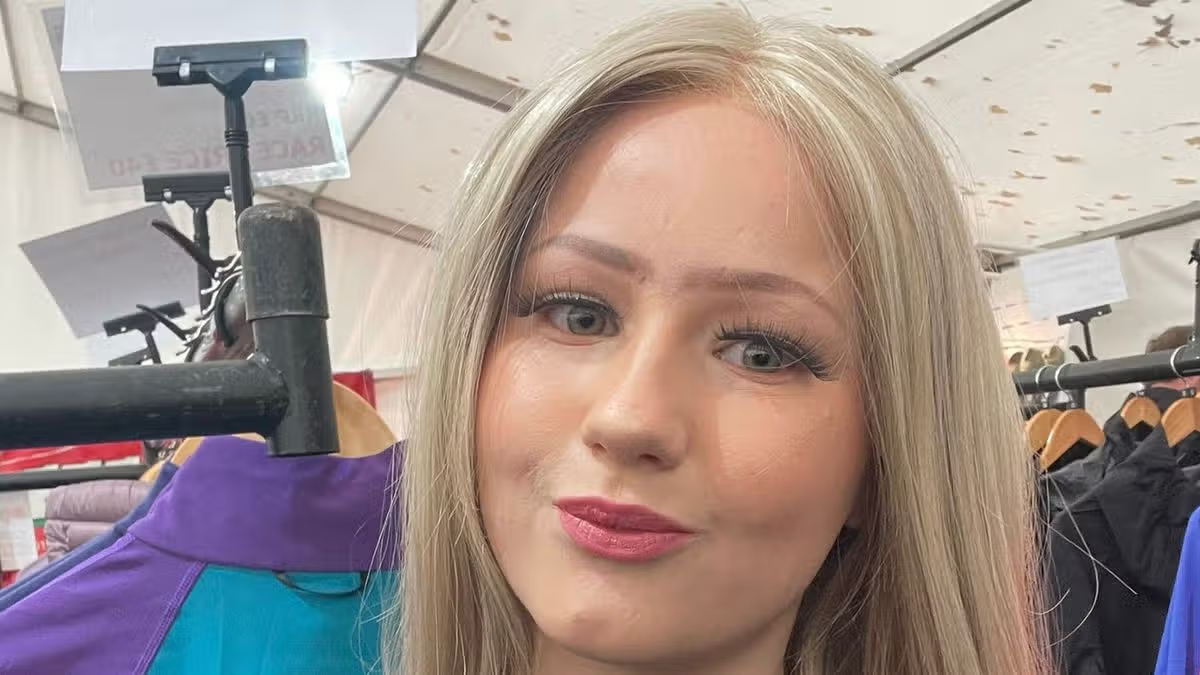
“I could not say no to that. I was so excited and so grateful I got that chance, and from that I think I gained a lot more confidence because I went on without a wig, I went on with a blonde wig and then I went on at the end with a brown wig as well, which I loved,” she says.
Between the menopause symptoms and heatwave, she has had to put wearing a wig to one side for now. Instead, she is embracing the curls that have grown after her chemo.
Advertisement
“Everyone knew that I was a patient as well, and again, I think that shows that cancer’s not just all this depressing stuff. You can still live your life when you can,” she said.
Every year, there are nearly 1,200 cases of gynaecological cancers in Wales and around 470 women die of the disease and targets for timely cancer treatment are not being met, while women report feeling dismissed, delayed and unheard when presenting with symptoms.
The survey found 34% of GPs feared over-referring patients to the NHS, there was limited consultation time for GPs as well as difficulty distinguishing cancer symptoms from other benign issues.
For Enlli all that rings true. She doesn’t, she says, blame her GP for not immediately suspecting cancer but she does think her diagnosis and treatment were delayed because of her age and gender. She was repeatedly told her symptoms could be due to anxiety or her mental health.
“If I was a bit older, I don’t think they would have been saying ‘Yeah, it’s mental health’. Even after my diagnosis and my treatment and being in remission, they’d still tend to say, ‘Oh yeah, it’s anxiety. It’s this, it’s that’.
Advertisement
“I do also think it’s because I am a woman, because they were not fussed about the gynaecological aspect to it.
“I did tell them that I was getting really bad pains, and my periods were getting much more painful that even when I was not on my period, I was getting a lot of pelvic pain. A lot of things to do with that, my periods were getting heavier, which was not usual for me and they never thought to refer me to a gynaecologist.
“I was young, I had bleach blonde, long hair. I looked very girly, but I was a mechanic so I wasn’t one of those girls who would complain, ‘Oh, I’m in pain’ after stubbing my toe. I was like, ‘Get on with it’.
“I do think they just saw what I looked like. I think, ‘Oh yeah, she’s not really in pain. She’s just a young girl that has a low pain tolerance’ but realistically, I was working full-time as an apprentice as a mechanic in constant pain.”
Advertisement
A number of times, as she explains her story, she says she “regrets” not speaking up sooner.
Of the period between scans, she says: “I regret letting them do that looking back, because once you’ve heard that you’ve got a mass, I personally, I regret I didn’t advocate for myself in that time, asking them to do more tests then, and not being discharged,” she said.
“Maybe if I had advocated for myself earlier, it wouldn’t have reached stage three,” she says.
Advertisement
Referencing the finding that GPs said they didn’t have time to look at notes properly, she says: “If they had looked at my symptoms in the time that I was going back and forth between March and October, I was going nearly every month at this point and I was complaining about the same issues, and a lot of it was a gynaecological issues.
“I don’t blame them for not thinking cancer, because who does expect ovarian cancer in an 18-year-old?
“I don’t blame them for that. I blame them for not taking the gynaecological issue seriously, because it points to so many different gynaecological issues.”
She says even now, when she arrives at an appointment, the bulk of time is spent with her explaining her history.
Advertisement
“I still have to advocate for myself, I’m still not listened to. Even after everything I’ve been through, I’m still not listened to, and it’s still pointed to anxiety or my age or whatever,” she says.
A Welsh Government spokesperson said: “As a new government, we are taking decisive action on cancer by developing a 10-year National Cancer Strategy to transform how the health service prevents, diagnoses, and treats the disease, with a focus on earlier diagnosis.
“We are determined to ensure women’s pain is taken seriously. The Deputy Minister for Women’s Health recently brought together clinicians, researchers and women with lived experience at a summit to tackle the normalisation of pain in women’s healthcare.
“Following this, minimum standards for service user engagement will be drafted to ensure women’s voices continue to shape the Women’s Health Plan.”



















































You must be logged in to post a comment Login