Connect with us
DAPA Banner
DAPA Coin
DAPA
COIN PAYMENT ASSET
PRIVACY · BLOCKDAG · HOMOMORPHIC ENCRYPTION · RUST
ElGamal Encrypted MINE DAPA
🚫 GENESIS SOLD OUT
DAPAPAY COMING

NewsBeat

The ocean system that shapes Europe’s climate

Published

on

The ocean system that shapes Europe’s climate

For generations, the mild and temperate climate of north-western Europe has been credited to one legendary force: the Gulf Stream. This idea is so deeply entrenched in our cultural identity that in James Joyce’s Ulysses, the protagonist Stephen Dedalus refuses to take a bath, arguing that “all Ireland is washed by the Gulf Stream”.

However, the Gulf Stream is just one part of a much more complex system called the Atlantic Meridional Overturning Circulation or AMOC.

To explain this better, scientists often use the image of a giant ocean conveyor belt, where warm waters move northwards across the surface of the Atlantic from the tropics. As these waters reach the North Atlantic, they release their heat into the atmosphere, much like a radiator. The AMOC also carries the moisture that gives us our temperate landscape. After the waters have released their heat, they become colder and denser, which makes them sink into the deep ocean. These waters then return southward, at great depths.

When scientists talk about the AMOC “slowing down” or “changing,” they are essentially describing a reduction in the strength of our natural radiator. Specifically, they measure how much water is moving north and south at different depths across the Atlantic. This allows them to estimate how much heat is being carried from the tropics toward the North Atlantic and back again at depth.

Advertisement

More than a conveyor belt

Although this “conveyor belt” analogy is a helpful starting point, modern research suggests it is incomplete and potentially misleading. For example, the system is incredibly sensitive to how seawater changes its weight and density as it interacts with the atmosphere, freshwater, ice and incoming solar radiation. Because of these additional processes, the AMOC behaves less like a single, steady loop and more like a network of interconnected regional components.

Different parts of the system can change independently, sometimes with only regional effects and sometimes with consequences for the entire system.

The Subpolar Gyre (SPG), a system of wind-driven ocean currents occupying the region from the Labrador Sea to the west of Ireland, is a powerful example of why the network perspective matters. This regional AMOC component can show a significant degree of independence from the global AMOC. It is controlled by local winds and pulses of freshwater, linked to changes in sea-ice.

Crucially for those of us in Ireland and the UK, a sudden weakening of the SPG could trigger abnormally cold winter weather, similar to conditions seen during the “little ice age”. This period of intense regional cooling, which lasted roughly from the early 14th century to the mid-19th century, was characterised by winters so severe that the River Thames froze over.

Advertisement

Scientific research suggests that this cold period was likely sustained and amplified by a regional change in the SPG while the AMOC remained relatively stable. This means we could face local climate shifts, including increased storminess and colder winters, because of a “flicker” in our regional component of the AMOC network, long before the entire global circulation reaches a tipping point.

This is why scientists are now focused on identifying early warning signs of instability within the AMOC.

The UK’s climate is mild and wet – but it may not stay that way.
William Barton/Shutterstock

Are there signs that the AMOC has already begun to change? While climate models agree that it is likely that the AMOC will destabilise this century due to global warming, direct scientific observations of the AMOC are still too short to give us a definitive answer.

Networks of monitoring tools like Rapid or OSNAP that measure the transport of water both at depth and at the surface have only been in place for about 20 years. In the life of a massive ocean system, this is just a heartbeat. Scientists estimate we may need 30 to 40+ years of continuous observations to clearly detect a long-term AMOC decline against the ocean’s natural variability.

Advertisement

Why does it matter?

For generations, societies, economies and infrastructures in north-western Europe have been built around a stable, mild and wet climate. If this natural radiator fails or even significantly weakens the consequences will ripple across Ireland, the UK and the European continent.

We should care about this because the AMOC currently moves a massive amount of heat
from the tropics to the North Atlantic, where it is released into the atmosphere. A weakening of this system means that a portion of this tropical warmth is no longer delivered to our region as effectively, leading to cooling across northwestern Europe.

While Hollywood depicted a sudden ice age in the film The Day After Tomorrow (2004), the scientific reality of a slowdown is no less concerning. We could face significantly colder winters resulting in more frequent harsh freezes, snow and severe frosts. During the little ice age a weaker SPG led to agricultural failures and famines. We could also experience an increase in storminess shifting rainfall patterns, and drier summers, all of which could damage critical infrastructures like roads and crop harvests.

The AMOC is also essential for keeping carbon and heat stored in the deep ocean, effectively locking it away from the atmosphere. At the moment the world’s oceans absorb approximately 25-30% of all human-made carbon dioxide emissions each year.

Advertisement

However, should the AMOC slow down it is expected that the rate at which carbon is stored in the deep ocean also slows down. The AMOC also redistributes the nutrients that sustain marine ecosystems. A disruption here wouldn’t just change our weather; it would weaken the ocean’s ability to act as a carbon sink, potentially accelerating global warming in a dangerous feedback loop.

Keeping an eye on the AMOC is a matter of national and regional security.

Whether the decline is gradual or approaches a tipping point, the impact on our way of life will be profound. By listening to the signals coming from the deep ocean today, we can better prepare for the climate of tomorrow.

Advertisement

Source link

Continue Reading
Click to comment

You must be logged in to post a comment Login

Leave a Reply

NewsBeat

Halifax and Lloyds down LIVE as customers report app and online banking issues

Published

on

Manchester Evening News

On Down Detector, users can leave comments detailing the issues they are having.

One person, Chery Chadwick, who has reported an issue with Halifax, says: “Nearly had to put our shopping back! Fortunately I had some cash and enough in my account to cover the total bill!

“This is humiliating with a queue of people behind you, watching you not being able to pay for your food!”

Advertisement

Source link

Continue Reading

NewsBeat

PM accuses Farage of exploiting Nowak case to sow ‘division’ and denies ‘two-tier policing’ claim

Published

on

PM accuses Farage of exploiting Nowak case to sow 'division' and denies 'two-tier policing' claim

The incident, which is being investigated by the policing watchdog, prompted a wave of political reaction on Monday, including a video clip filmed by Farage in which he said the police response was evidence of “two-tier Britain,” and called for an end to “anti-white prejudice”.

Source link

Continue Reading

NewsBeat

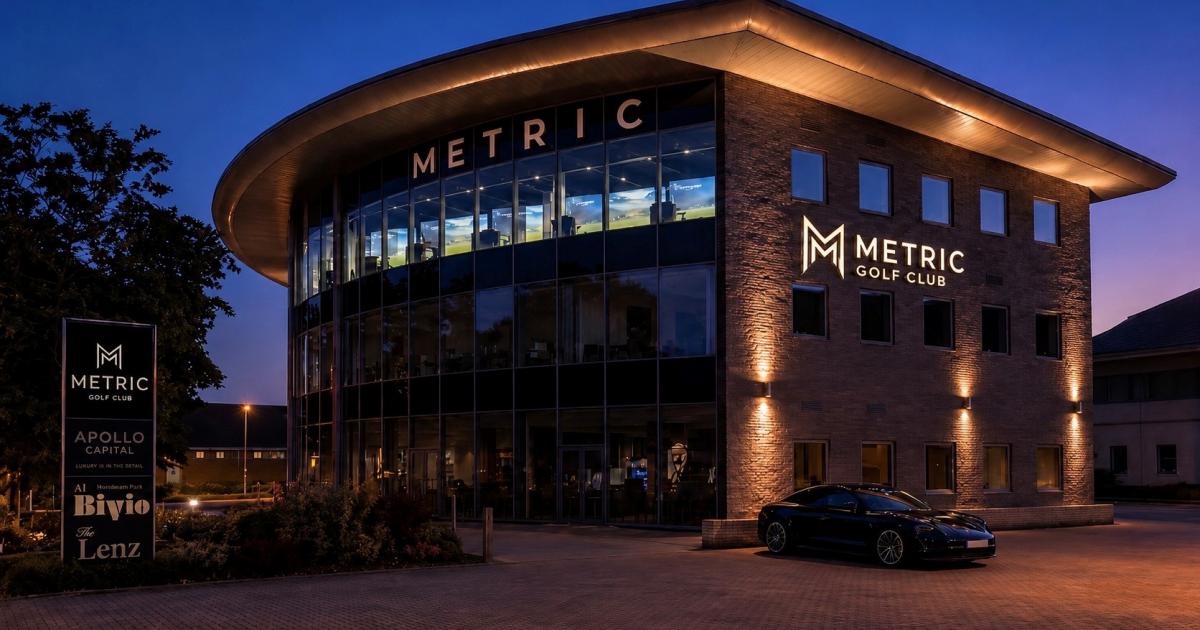
Metric Golf Club to open hi-tech indoor centre in Harrogate

Published

on

Metric Golf Club to open hi-tech indoor centre in Harrogate

Located at Hornbeam Park within the landmark Lenz building, Metric Golf Club promises to combine world-class technology, expert coaching, premium practice facilities and a modern clubhouse environment to create a year-round home for golfers who want to improve their game.

Unlike entertainment-led simulator venues, Metric Golf Club says its scheme has been designed around performance, coaching and community.

The venue will feature six premium TrackMan-powered simulator bays, dedicated coaching and club-fitting facilities, performance training spaces, and a modern clubhouse atmosphere where members and guests can work, socialise and connect.

Advertisement

RECOMMENDED READING:
Aldi to revamp its Harrogate supermarket this summer

Metric Golf Club was founded by Harrogate entrepreneur Martin Brailsford alongside PGA Professional Ollie White, who joins the business as Co-Founder and will lead the day-to-day operation and performance standards of the club.

Ollie White is widely regarded as one of Yorkshire’s leading young PGA professionals and has built a strong reputation as both a coach and competitive player, currently playing on the Clutch Pro Tour.  

Having worked with golfers of all ages and abilities, from beginners and juniors through to elite amateur players, he brings a modern coaching philosophy and a deep understanding of player development. 

Advertisement

As Co-Founder, he will oversee coaching, player development, junior programmes, club fitting, member engagement and daily operations, ensuring that every aspect of the venue remains focused on helping golfers improve and enjoy the game.

Martin Brailsford said: “Golf has evolved dramatically over the last decade, but many of the places where people practise and improve haven’t evolved with it.

“Metric Golf Club has been created to bridge that gap. We wanted to build a facility that combines the best technology in golf with a premium clubhouse environment and a community of people who genuinely enjoy getting better.

“From the outset, it was important that this wasn’t simply a technology venue. We wanted someone at the heart of the business who understands golfers, understands coaching and shares the vision for what I’m trying to create.

Advertisement

“Ollie has been involved from the earliest conversations and has played a huge role in shaping the club. His reputation, energy and commitment to developing players make him the ideal person to lead the day-to-day operation of Metric.”


Ollie White added: “What excites me most about Metric is that we’re building something completely different to what currently exists in the region.

“Yes, the technology is incredible, but ultimately this is about people. It’s about creating an environment where golfers can practise with purpose, learn from great coaches, spend time with like-minded people and enjoy being part of a genuine golf community.

Advertisement

“Whether you’re a beginner, a junior golfer, a competitive amateur or simply someone who loves the game, Metric will provide a place where you can improve all year round.”

Alongside memberships, the venue will offer coaching programmes, junior academies, club fitting, corporate events, leagues, competitions and social golf experiences.

The club is expected to attract golfers from across Yorkshire and beyond, while also creating a new destination within Harrogate’s growing business and leisure community.

Further announcements regarding memberships, coaching partners, opening events and launch opportunities will be made in the coming months.

Advertisement

For updates and opening information, visit www.metricgolf.club or follow @metricgolfclub on Instagram.

Source link

Advertisement
Continue Reading

NewsBeat

Is Halifax down? Users report issues with bank app and login

Published

on

Is Halifax down? Users report issues with bank app and login

Bank account holders were left unable to use the bank app properly.

Issues started at around 11am with users complaining that they couldn’t get the app to load or their login to work, according to Downdetector.

Is Halifax down? Login and app not working

Problems were recorded by Halifax users across the UK on Downdectector, including London, Birmingham, Leeds and Liverpool.

Advertisement

Of the problems reported, 67% relate to problems with the Halifax while 13% reported problems with login.

A further 10% of problems were linked to fund transfers.

One customer said on Downdetector: “Cannot login to my account.

Advertisement

“Halifax fix this immediately!!!”

Another commented: “Cannot make any payments or transactions with my banking details?”

Someone else said: “Banking app says they’re having technical issues and to try again later.”

Halifax issues update to bank users

The Halifax app has informed customers using the app that it is “having a few technical problems”.

Advertisement

The notice reads: “You’ve been logged out

“Sorry, we’re having a few technical problems.

“Logging in again may fix the issue, but if this doesn’t help, please try again later. (503).”

What is Downdetector?

Downdetector is an online website that allows users of popular services, including X, Instagram, Facebook, Virgin Media and more, to report if they are having trouble with the services.

Advertisement

The site only reports an incident when the number of problem reports is significantly higher than the typical volume for that time of day.

Describing itself on its website, Downdetector is “where people go when services don’t work.”

The website monitors disruptions to various key services, including the internet, web hosting platforms, banks, social media and more.

You can see the full methodology and learn more about how Downdetector collects status information and detects problems via its website.

Advertisement

In short, users can get involved by submitting any issue reports on the platform.

Problem indicators are also collected from social media and other factors on the web, Downdetector explained.

These reports are then validated and analysed in real-time.

An incident is then detected if the number of reports is significantly higher than the typical average for that particular service.

Advertisement

When a user goes to investigate the issue, they can see what the most reported problems are currently and check if their areas are in one of the outage hotspots.

Are you having issues with Halifax? Tell us in the comments below.
Source link

Advertisement
Continue Reading

NewsBeat

Lloyds Bank and Halifax down live: App outage means thousands ‘can’t pay bills’

Published

on

Daily Mirror

A fed up Lloyds cutomer has tried switching to Santander after struggling to access his online banking.

Writing to the official Santander account on X, the customer said: “I bank with Lloyds. Please take my business. Any switch deals?”

Earlier, the user wrote to Lloyds saying: “Your systems are so useless that not only can I not access my account, but you suggest I make a complaint.

Advertisement

“When I try and make a complaint and spend five minutes filling in the form with all the inadequacies that you are providing. Guess what?,” he said, with an attached screenshot showing a ‘Service Interruption’ warning.

Content cannot be displayed without consent

Source link

Continue Reading

NewsBeat

Bellway releases designs of Lancaster Fold, Boroughbridge

Published

on

Bellway releases designs of Lancaster Fold, Boroughbridge

The move from Bellway Homes comes just days before it launches its Lancaster Fold development this Saturday, along with launch prices and details of how the homes will look.

The development, which opens on Saturday 6th June at 11am, is being built off Chapel Hill to the south of the fast-growing town.

Melanie Smith, Bellway Yorkshire’s sales director, said: “There’s always a lot of excitement in the build up to a new development and it’s certainly gaining ever more momentum the closer we get to the sales launch on Saturday.

Advertisement

RECOMMENDED READING:
Bellway Homes to launch Lancaster Fold in Boroughbridge

“I’m sure news of the prices and the newly released images will provide yet another level of interest and lead to an extremely busy opening weekend.”

Bellway’s Lancaster Fold will comprise 195 new homes and feature everything from one-bedroom semi-detached homes to five-bed detached properties. The mix of homes also includes terraces and bungalows.

Melanie  added: “The wide cross section of house types alone would give us a great deal of confidence ahead of the opening weekend.

Advertisement

“But when you add in the location – which combines great transports links and a popular market town location – then we are preparing to open with a real belief that Lancaster Fold will quickly become one of our most popular and fastest selling developments in Yorkshire.”

The homes being built by Bellway will feature a range of house types from The Bellway Collection, which the developer says showcases the best in contemporary home design, while also celebrating the artisan traditions at the heart of Bellway’s rich heritage.

 They include EV charters, thicker loft insulation, waste water heat recovery systems, thermally broken lintels, PV diverters and enhanced ventilation systems aiming to reduce energy running costs.

Advertisement

Source link

Continue Reading

NewsBeat

Transfer news LIVE: Arsenal FC get Rogers response, Alvarez bid; Man Utd sign Ederson; Diomande to Liverpool

Published

on

Transfer news LIVE: Arsenal FC get Rogers response, Alvarez bid; Man Utd sign Ederson; Diomande to Liverpool

Rafael Leao has also been linked with a more to north London, but it is Manchester United who have made their first move to sign the AC Milan forward. Michael Carrick is also eyeing up Newcastle pair Sandro Tonali and Lewis Hall. Ederson, from Atalanta, is expected to be their first new arrival to replace Casemiro. Incoming Chelsea manager Xabi Alonso is set to be given far more control of new signings than his predecessors, but his first business could be the exits of Enzo Fernandez and Marc Cucurella, who are both attracting interest with Spain, and Alejandro Garnacho, who is simply not wanted. Crystal Palace’s Adam Wharton and West Ham captain Jarrod Bowen are both of interest.

Source link

Continue Reading

NewsBeat

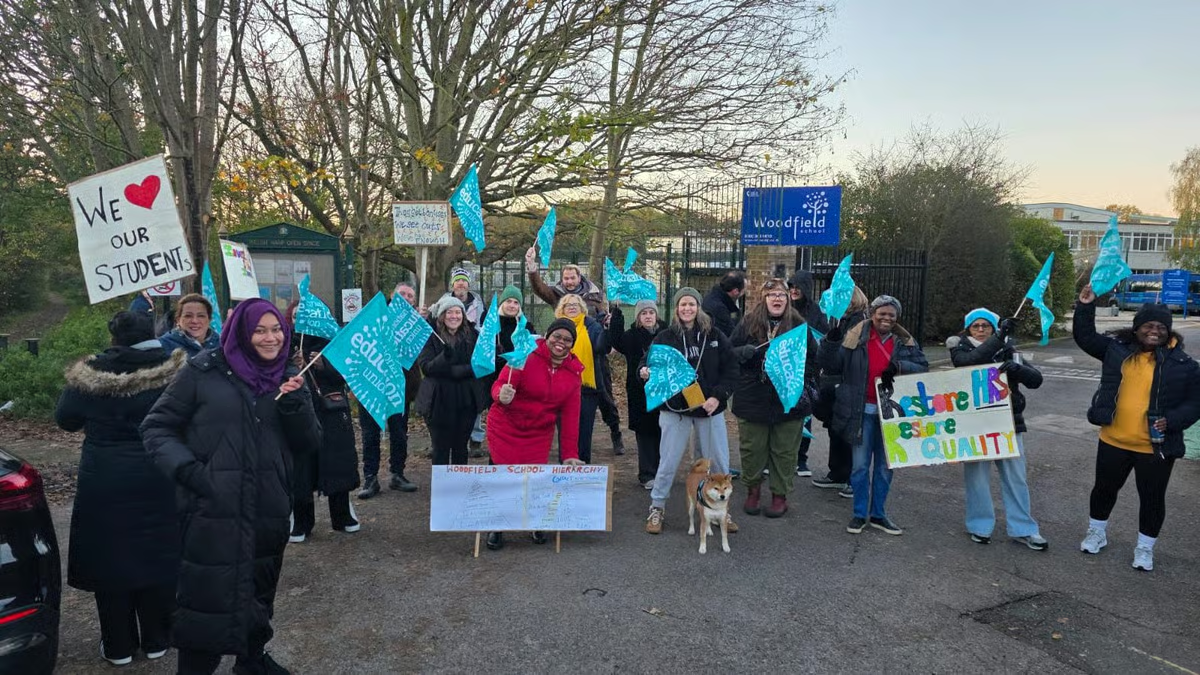
Staff at north London school strike over ‘deeply punitive’ fire and rehire ‘plan’

Published

on

Staff at north London school strike over 'deeply punitive' fire and rehire 'plan'

Cllr Grahl added: “The dispute […] could still be resolved through meaningful negotiations with staff and their recognised union, the NEU. Teaching assistants are central to delivering high-quality SEND provision, and their pay and conditions should reflect the skill, care and consistency their work requires.”

Source link

Continue Reading

NewsBeat

Trump ‘absolutely’ would have gone to prison if he wasn’t president, Attorney General claims | News US

Published

on

Trump 'absolutely' would have gone to prison if he wasn't president, Attorney General claims | News US
Todd Blanche claimed that Trump could have faced prison (Picture: AP)

Acting Attorney General Todd Blanche has stated that Donald Trump would have ‘absolutely’ gone to prison if he lost the 2024 presidential election.

While appearing on Fox News’ Hang Out with Sean Hannity podcast, the former prosecutor spoke with the TV presenter — who is known for his pro-Trump coverage — about the president’s 34 felony convictions.

He suggested winning the presidency for the second time likely changed Trump’s fate dramatically.

Hannity said: ‘[Trump] was convicted on 34 felony charges. So, is it an accurate statement to say, “He either wins in 2024, wins the White House — it’s either the White House or the big house?”‘

Advertisement

The ‘big house’ is an American slang term that means prison or a penitentiary.

Without hesitation, Blanche responded: ‘Yes. I mean, oh yeah, absolutely.’

The Attorney General, who led Trump’s defense team in the infamous Stormy Daniels hush money trial, added: ‘He had a D.C. case breathing down his neck. He had the Florida case, which had been dismissed, but they were appealing it.

‘And then he had a judge in New York. There’s no scenario in which he wasn’t going to send President Trump to prison, and he didn’t after the president won.’

Advertisement
Blanche was on Trump’s hush money defense team (Picture: Andrew Harnik/Getty Images)

Back in 2024 — three years after Trump’s first presidency — he was convicted of falsifying business records to conceal a $130,000 payment to Stormy Daniels.

The American adult film actress and director claimed that she and Trump had sex, and that she accepted $130,000 from the president’s former lawyer before the 2016 presidential election in exchange for her silence about the alleged affair.

Trump, who was 77 at the time, became the first former US president to be tried for a crime, which led to his 34 counts of fraud charges.

However, Trump was granted an unconditional discharge by the judge. This is a court sentence in which a defendant is found guilty of a minor offence, but the judge decides that no punishment, further supervision, or fines are necessary.

Advertisement

Still, it cemented Trump’s status as a convicted felon.

Todd Blanche: The DOJ Room Full of Evidence Nobody Knew Existed | Hang Out with Sean Hannity
Blanche spoke with Sean Hannity on his podcast (Picture: Hang Out with Sean Hannity/Fox News)

Meanwhile, Hannity questioned whether Trump would have faced federal prosecution had he not ran for a second presidential campaign.

He put to Blanche: ‘If he had decided not to run, all of this, none of this would have happened.’

The Attorney General then replied: ‘Without a doubt. And those smug prosecutors would say, “Oh no, this has nothing to do with the fact that he’s running.” All right. Yeah, you should work on that in the mirror.’

Alongside his convictions, Trump was also impeached during his first term as president. The impeachment made him the third US president to be impeached by the House of Representatives, after Andrew Johnson in 1868 and Bill Clinton in 1998.

Advertisement

However, Trump is the only US president and only federal official to have been impeached twice. In each case, he was acquitted on all counts by the Senate.

FILE PHOTO: U.S. President Donald Trump speaks during the signing ceremony for an executive order on mail ballots, in the Oval Office of the White House in Washington, D.C., March 31, 2026. REUTERS/Evan Vucci/File Photo
Trump was convicted of 34 felonies (Picture: REUTERS)

The first was in December 2019. Just one week before Christmas, the House voted to impeach Trump over allegations that he sought help from Ukraine to boost his chances of re-election.

Trump was accused of breaking the law by pressuring the newly elected Ukrainian president, Volodymyr Zelensky, to find damaging information regarding Joe Biden, his political rival, who eventually won the presidency in 2020.

Democrats responded by saying it is illegal to request help from foreign entities to win a US election.

The second was in January 2021, when an article of impeachment was launched against Trump that charged him with ‘incitement of insurrection’, linked to the January 6 Capitol riots.

Advertisement

In a video, Trump asked supporters to ‘peacefully and patriotically’ make their voices heard. However, he also told them to ‘fight like hell’ after he said the election had been falsely stolen from him.

After his speech, many broke into the Capitol and the building was placed on lockdown. Five people died during the incident.

Source link

Advertisement
Continue Reading

NewsBeat

How methane policy will make or break the climate crisis

Published

on

How methane policy will make or break the climate crisis

There’s no sign that methane emissions are declining globally.

That’s according to the International Energy Agency’s latest report on methane, which revealed a worrying implementation gap in current policies. The UN has warned repeatedly that getting methane emissions under control is critical to address the climate crisis. Methane emissions have a powerful greenhouse effect, with 1 tonne of methane causing 80 times more warming than 1 tonne of carbon dioxide over 20 years. That is why reducing methane emissions has been described as an emergency brake for addressing climate change.

With scientists warning of dangerous feedback loops, where global warming triggers large stores of methane to be released from underneath melting ice sheets, stabilising emissions is becoming increasingly urgent.

Our team’s analysis at Oxford University’s Climate Policy Monitor aligns with the International Energy Agency’s finding about an implementation gap in this area. The Climate Policy Monitor is an online database powered by a pro bono network of more than 60 law firms which assesses how policies and regulations are aligned – or not – with global climate goals. The analysis spans 37 jurisdictions, including 36 countries and one large sub-national economy (California).

Advertisement

We recently identified over 100 methane policies across 32 jurisdictions. However, fewer than one-third of these policies are mandatory. Four countries – India, Indonesia, Thailand and Tanzania – had no identifiable methane policies at all. This is concerning as India and Indonesia together account for more than 12% of global methane emissions.

The recent analysis indicates continued interest in methane regulation – with around 20% of policies issued in 2024 and 2025. Yet implementation and enforcement remains weak. Over two-thirds of methane policies showed little sign of implementation, such as evidence of sanctions for non-compliance.

Signs of progress

On methane policies related to fossil fuels, most policies targeted oil and gas: methane is burned off (or flared) during oil extraction, and as the main component of natural gas it can leak from faulty pipes. However, even in this comparatively well-regulated sector, few policies required public disclosure, third-party verification or standardised methods for measuring emissions.

Japan stands out as a leader on robust policymaking on fossil methane. Japan’s Act on Promotion of Global Warming Countermeasures (1998) mandates public disclosure of facility-level emissions and third-party verification of emission inventories. Japan successfully reduced methane emissions by roughly 40% between 1990 and 2022.

Advertisement

In the current context of high energy prices, cutting methane emissions can also help improve energy security and reduce wastage of natural resources.

Coal methane – the methane that either escapes during coal mining or builds up in disused mines – remains a global policy gap. Less than half of the jurisdictions analysed (15 out of 37) had policies covering coal methane. Coal methane remains a problem in countries like Poland which are phasing out coal, since methane venting can continue long after mines are closed. This highlights the urgent need for action in this area.


À lire aussi :
MethaneSat: the climate spy satellite that went quiet


A global blindspot

Agriculture makes up largest human source of methane emissions, accounting for around 40% of methane emissions, mainly from cow burps (with the remainder coming from fossil methane and food waste). Yet the management of agricultural methane remains a global blindspot.

Advertisement

Comparison of methane policies in G7 countries (UK methane policies were not analysed in 2025 but will be added in 2026).
Oxford Climate Policy Monitor

Fewer than half of the 100 methane policies we identified targeted agriculture specifically. Thirteen jurisdictions – including the EU, France and Poland – did not have any agricultural methane policies. Together, these jurisdictions account for more than 20% of global methane emissions.

Agricultural policies were also less likely to be mandatory – only 20% (13 out of 66) policies were found to be mandatory compared to 44% for the electricity sector. This imbalance suggests governments continue to prioritise tackling energy-sector methane while overlooking agricultural emissions.

The lack of ambition in methane regulation extends to the agri-food sector. The campaign organisation Changing Markets Foundation recently found that only three of the largest dairy and coffee companies have a target to reduce methane emissions by 2030.

Advertisement

As the monitor’s annual review noted, the focus on energy neglects other mitigation pathways, such as dietary changes in developed countries, primarily through cutting beef and dairy consumption. This could be transformative in putting an emergency brake on climate change. Shifts toward more sustainable diets would also have additional co-benefits for the environment and public health.

Backsliding amid global growth

The Climate Policy Monitor report found a trend of backsliding by one country in particular – the US. In 2025, amid other announcements, the US Environmental Protection Agency delayed methane regulations for oil and gas facilities that were issued in 2024. More recently, the EU has been lobbied by the US to delay penalties for oil and gas importers on methane, although investors urged the EU to resist pressure from US politicians to water down the regulation.

However, there are signs of hope at the global level. More than half of recent methane policies emerged in African and Latin American jurisdictions. This highlights how developing and emerging economies are prioritising climate action through rule-making based on their distinct contexts.

Despite backsliding in some jurisdictions, the overall global trend is moving towards stronger climate policies. With strong policy and enforcement, there is still a chance for the world to get to grips with methane emissions.

Advertisement

Source link

Continue Reading

Trending

Copyright © 2025